
Bathroom and Toilet Facilities on Nepal Treks: The Honest Guide
Western flush, squat, pit, and open-air
Common below 2,500m, rare above 4,000m
Most common type at all altitudes
Never flush it -- use the bin provided
Minus 5 to minus 20 degrees C at altitude
TP, hand sanitizer, headlamp, ziplock bags
Namche Bazaar, lower Annapurna villages
Above 4,500m on all routes
Nobody wants to talk about toilets, but let us face it: on a 12-14 day trek in the Himalayas, you will use the bathroom roughly 50-80 times. The quality and type of facilities you encounter will range from perfectly comfortable Western flush toilets to a rock behind a ridge with a spectacular mountain view. This is one of those aspects of trekking that surprises and sometimes distresses first-timers, but with the right preparation and mindset, it becomes completely manageable.
This guide covers every type of toilet you will encounter on Nepal treks, how to use them, what to bring, and specific tips for nighttime bathroom visits at altitude -- plus honest advice for women trekkers. We do not sugarcoat anything here because being mentally prepared makes the actual experience far less stressful.
For related comfort and hygiene information, see our tea house trekking guide and our hot showers guide.
Types of Toilets on Nepal Treks
Western Flush Toilets
What you know from home: a standard sit-down toilet with a flush mechanism.
Where you find them: Lower altitude tea houses (below 2,500m), hub villages like Namche Bazaar (3,440m), upgraded lodges along popular routes, and towns with road access like Lukla, Besisahar, and Jomsom.
Condition: Variable. Lower-altitude toilets along the Annapurna Circuit and in villages with road access tend to be the best maintained. Even "Western" toilets in Nepal may differ from what you are accustomed to:
- Seats may be missing or broken
- Flush mechanisms may not work properly -- a bucket of water beside the toilet is your backup flush
- Pipes are narrow and cannot handle toilet paper (more on this below)
- Toilet seats may be wet or dirty from previous users who stood on them (squat position) rather than sitting
The Universal Toilet Paper Rule in Nepal
Never flush toilet paper in Nepal. The plumbing throughout the country -- in cities, in villages, in tea houses -- uses narrow pipes that clog easily. Every bathroom has a small bin or basket for used toilet paper. Place your used paper in the bin, not in the toilet. This is not optional. Clogged pipes at a remote tea house create a serious sanitation problem that affects everyone. If there is no bin, carry a ziplock bag and pack your paper out.
Squat Toilets
The most common toilet type across Nepal, especially above 2,500m. A squat toilet is a porcelain or concrete basin set into the floor with foot platforms on either side.
Where you find them: Everywhere. From Kathmandu restaurants to the highest tea houses on the EBC route. Above 3,000m, squat toilets are the dominant type.
How to use a squat toilet (if you have never used one):
- Enter and face the correct direction: Face toward the door or toward the hooded end of the toilet basin (the end with the splash guard)
- Position your feet: Place your feet on the textured foot platforms on either side of the basin. Feet should be flat, shoulder-width apart
- Squat down: Lower yourself into a deep squat. Your thighs should be roughly parallel to the ground, weight on your heels
- Do your business: Gravity helps. This position is actually more anatomically natural for bowel movements than sitting
- Clean yourself: Use toilet paper (place in bin, not toilet) or the water hose/tap and your left hand (local method). Carry your own toilet paper always
- Flush: Pour water from the bucket or tap into the basin to flush. One or two scoops of water usually suffices
- Wash hands: Use the tap if available, then hand sanitizer
The Squat Toilet Practice
Common challenges with squat toilets:
- Balance: The deep squat position can be unstable, especially with tired trekking legs. Hold a wall or door frame if available
- Aim: This improves with practice. Position yourself carefully over the center of the basin
- Wet floors: Squat toilet bathrooms are often wet from the flushing water system. Wear sandals or your trekking shoes (not socks) to the bathroom
- Knee issues: Trekkers with knee problems may find deep squatting painful. In this case, seek out Western toilets where possible or use an assisted squat holding the wall
Outdoor Pit Toilets
A step below squat toilets -- a wooden or stone structure over a pit, often with just a hole in a platform.
Where you find them: High-altitude locations above 4,000m on less-developed routes, basic tea houses, camping trek sites, and emergency stops.
What to expect:
- A small wooden or stone shed, sometimes with a door, sometimes with just a curtain or nothing at all
- A platform (wood, stone, or concrete) with a hole leading to a pit below
- No flushing mechanism
- Usually no light
- Smell varies from mild to intense depending on how frequently the pit is maintained
- The "seat" may be nothing more than two planks over a hole
Tips for pit toilets:
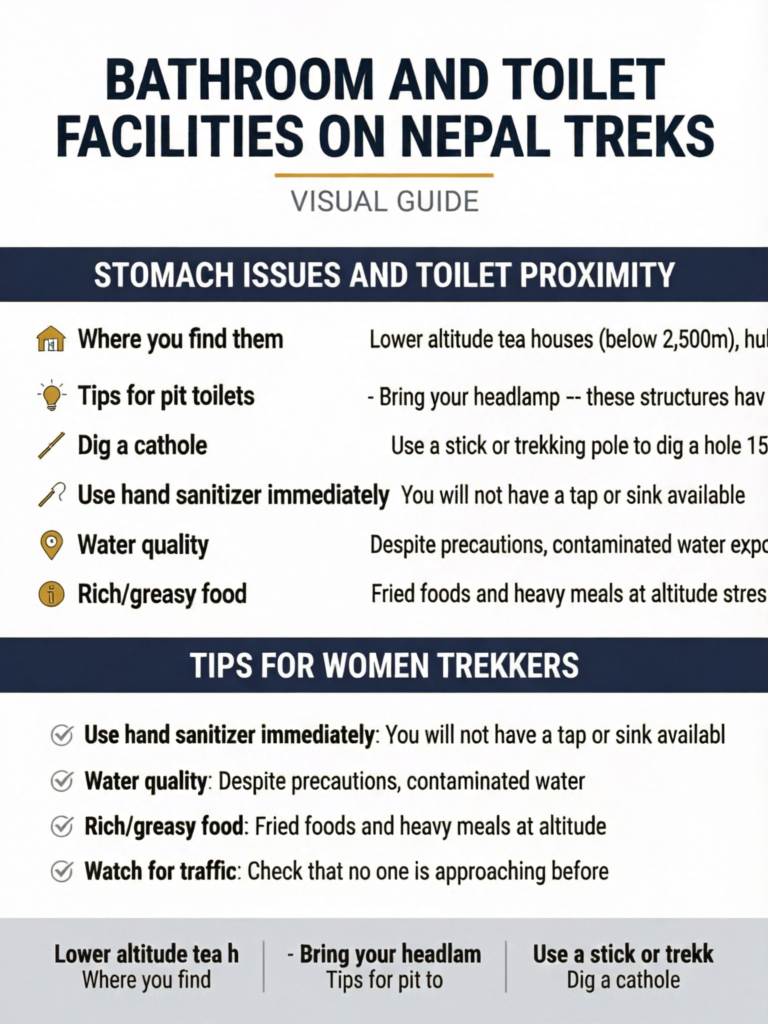
- Bring your headlamp -- these structures have no lighting
- Watch your step entering and exiting, especially at night
- Do not drop anything into the pit (phone, glasses, headlamp). Keep valuables secured
- Breathe through your mouth if the smell is strong
- Used toilet paper goes in the pit unless a bin is provided
The Open-Air Option
On camping treks, trail sections between villages, and at the very highest points on some routes, there simply are no toilet facilities. You will need to go behind a rock, in a crevice, or in whatever privacy the landscape offers.
When this happens:
- Camping treks in remote regions (Upper Dolpo, Makalu, Kanchenjunga)
- Long trail sections between tea houses (particularly on the Manaslu Circuit and Three Passes Trek)
- Emergency situations on any route when stomach illness strikes between stops
- Above established tea house zones on peak climbing treks
How to handle it responsibly:
- Move at least 60 meters away from any water source, trail, or camping area
- Dig a cathole: Use a stick or trekking pole to dig a hole 15-20cm deep. Do your business into the hole and cover it completely with soil
- Pack out toilet paper: Always. Carry ziplock bags specifically for this purpose. Toilet paper does not decompose at high altitude -- it takes years to break down in cold, dry conditions
- Use hand sanitizer immediately: You will not have a tap or sink available
- Respect other trekkers: Move well off the trail where you cannot be seen and where others will not walk
Leave No Trace at Altitude
The Himalayas face a growing sanitation problem from trekker waste. Toilet paper, wipes, and human waste deposited irresponsibly along popular routes create both health hazards and environmental damage. Always dig a cathole when toilet facilities are not available, always pack out your toilet paper, and use established toilet facilities whenever they exist. This is not just good practice -- it is essential for preserving these environments.
Toilet Facilities by Altitude
The quality of bathroom facilities follows the same altitude gradient as all other tea house amenities. Here is what to expect:
Below 2,500m
- Type: Mix of Western flush and squat toilets. Better lodges offer attached or en-suite bathrooms
- Cleanliness: Generally maintained. Cleaned daily at most lodges
- Running water: Available for flushing and hand washing
- Toilet paper: Sometimes provided (low quality), but always bring your own
- Lighting: Electric lights in bathrooms
- Location: Often attached to or very near rooms (2-10 meter walk)
2,500m to 3,500m
- Type: Predominantly squat toilets. Western toilets available at hub villages (Namche, Manang) and upgraded lodges
- Cleanliness: Variable. Busier lodges during peak season can be challenging
- Running water: Usually available, though pipes may freeze overnight in winter
- Toilet paper: Rarely provided. Bring your own
- Lighting: Dim electric light in some, none in others. Bring headlamp
- Location: Shared facilities, typically at the end of a hallway or in a separate building (10-30 meter walk from rooms)
3,500m to 4,500m
- Type: Almost exclusively squat toilets
- Cleanliness: Basic. Cold temperatures limit odor but also limit cleaning
- Running water: May freeze overnight. Bucket flushing common
- Toilet paper: Never provided. Always bring your own
- Lighting: No lighting in most bathrooms. Headlamp essential
- Location: Often in a separate outdoor structure (15-50 meter walk from rooms, requiring going outside)
Above 4,500m
- Type: Basic squat or pit toilets
- Cleanliness: Minimal. These are functional, not comfortable
- Running water: Frozen pipes are common. Bucket water for flushing if available
- Toilet paper: Absolutely never provided
- Lighting: None. Complete darkness without your headlamp
- Location: Outdoor structures up to 50 meters from sleeping quarters, requiring walking through freezing conditions
The Nighttime Bathroom Visit
The nighttime bathroom trip at altitude is one of the most discussed (and dreaded) aspects of tea house trekking. Here is the full picture.
Why Night Visits Are Frequent at Altitude
At high altitude, your body produces more urine than normal as part of its acclimatization process. Good hydration (essential for preventing altitude sickness) means your bladder fills faster. The combination means most trekkers need to urinate 1-3 times per night above 3,500m.
The Night Visit Process Above 4,000m
Here is what a typical 2:00 AM bathroom visit looks like at a tea house above 4,000m:
- Wake up in your sleeping bag, needing to urinate
- Find your headlamp (keep it next to your head or around your neck while sleeping)
- Put on boots (unlaced is fine, but you need them for the cold floor and outdoor walk)
- Put on a jacket over whatever you are sleeping in
- Navigate dark hallways with thin plywood walls, trying not to wake other trekkers
- Walk outside into freezing temperatures (minus 10 to minus 20 degrees Celsius)
- Find the toilet building (20-50 meters away in pitch darkness)
- Use the squat toilet while balancing with a headlamp, tired legs, and numb fingers
- Walk back and try to fall back asleep in your now-slightly-cooled sleeping bag
This entire process takes 5-15 minutes and happens 1-3 times per night. Multiply by 5-7 nights at high altitude and you can see why many trekkers look for alternatives.
The Pee Bottle Solution
Many experienced trekkers (both men and women) use a designated pee bottle for nighttime urination. This avoids the entire ordeal of leaving your sleeping bag.
For men: A wide-mouth Nalgene bottle (1 liter capacity) works perfectly. Sit up in your sleeping bag, use the bottle, cap it tightly, and deal with it in the morning.
For women: A female urination device (FUD) like a Shewee, GoGirl, or pStyle combined with a wide-mouth bottle makes this practical. Practice at home before the trek. Alternatively, some women simply use a wide-mouth container or a dedicated ziplock bag.
Key rules for pee bottles:
- Mark it clearly: Use tape, a marker, or a distinctly different bottle so you never accidentally drink from it
- Use a wide mouth: Standard narrow-mouth water bottles are disaster-prone in the dark
- Cap it immediately: Accidents in sleeping bags are universally terrible
- Empty in the morning: Pour into the toilet during your morning bathroom visit
- One bottle per person: Never share, never reuse for drinking water
The Pee Bottle Is Not Embarrassing
Stomach Issues and Toilet Proximity
Digestive problems are common on Nepal treks. Approximately 30-50 percent of trekkers experience some form of stomach upset during their trip, ranging from mild discomfort to full-blown traveler's diarrhea.
Why Stomach Issues Happen
- Unfamiliar bacteria: New food preparation environments introduce bacteria your gut is not adapted to
- Altitude effects: High altitude can cause nausea, reduced appetite, and digestive changes
- Water quality: Despite precautions, contaminated water exposure happens
- Hand hygiene: Limited hand washing facilities increase transmission of stomach bugs
- Rich/greasy food: Fried foods and heavy meals at altitude stress digestion
When Diarrhea Strikes on Trek
If you develop diarrhea:
- Stay hydrated: Oral rehydration salts (ORS) are critical. Add to purified water and drink frequently
- Know where the toilet is: At every tea house, locate the bathroom immediately upon arrival
- Request a room near the toilet: Tea house owners understand. Ask for "toilet najik ko kotha" (room close to toilet)
- Carry emergency supplies: Toilet paper, wet wipes, hand sanitizer, and a ziplock bag should always be in your day pack, not your main duffel
- Consider timing: If diarrhea is severe, consider resting an extra day rather than trekking
- Medication: Carry Imodium (loperamide) for emergency use and antibiotics prescribed by your travel doctor for bacterial infections
For comprehensive food safety advice, see our food safety on Nepal treks guide.
Diarrhea Plus Altitude Is Dangerous
Diarrhea at altitude is more than just uncomfortable -- it causes dehydration, which worsens altitude sickness symptoms. If you cannot keep fluids down or diarrhea persists for more than 24-48 hours at altitude, consider descending and seek medical help. Dehydration combined with altitude sickness can become life-threatening. Always carry oral rehydration salts and know how to use them.
Essential Bathroom Kit for Nepal Trekking
Pack these items and keep most of them accessible in your daypack:
Must-Have Items
- Toilet paper: 2-3 rolls for a 14-day trek. Flatten them for packing. Resupply is possible in larger villages but unreliable
- Hand sanitizer: 2-3 small bottles (60-100ml each). Use after every toilet visit without exception
- Headlamp: Essential for all bathroom visits from late afternoon onward. Keep it accessible at all times
- Ziplock bags: Several quart-size bags for packing out used toilet paper when no bin is available, and for storing your TP roll to keep it dry
- Wet wipes: For personal cleaning when water is not available
- Small quick-dry towel: For hand drying
Highly Recommended
- Pee bottle: Labeled wide-mouth bottle for nighttime use (especially above 3,500m)
- Sandals or camp shoes: For walking to shared bathrooms at tea houses (do not go barefoot)
- Female urination device: For women who want to use a pee bottle or who prefer standing urination on the trail
- Oral rehydration salts: 6-10 packets for managing dehydration from stomach illness
- Anti-diarrheal medication: Imodium for emergency use
- Portable bidet bottle: Small squeeze bottle for water washing (used throughout South Asia and preferred by many over toilet paper)
Nice to Have
- Toilet seat cover (foldable): Some trekkers bring a portable toilet seat cover for pit toilets
- Antibacterial wipes: For wiping down surfaces before use
- Small air freshener: A tiny spray for particularly challenging bathroom encounters
The Daypack Bathroom Pouch
Tips for Women Trekkers
Women face additional bathroom challenges on trek. Here is practical advice from experienced female trekkers:
Trail Urination
On long trail sections between tea houses, nature calls. For women:
- Find a spot off-trail: Move at least 20-30 meters from the trail, behind a rock or vegetation
- Watch for traffic: Check that no one is approaching before squatting
- Consider a FUD (Female Urination Device): Devices like the Shewee allow standing urination, which is faster and avoids full undressing
- Pee cloths: A small, dedicated antimicrobial cloth for wiping reduces toilet paper use and waste. Hang it on the outside of your pack to dry (in a less conspicuous spot)
- Layer management: Practice the "drop and squat" with your trekking pants and base layer at home so it becomes fast and natural
Nighttime Strategies for Women
- Use a FUD plus pee bottle: Practice the technique at home until it is reliable
- Sleep in easy-access clothing: Avoid complicated layers that make nighttime bathroom visits slower
- Request rooms closest to the toilet: This minimizes the cold outdoor walk
- Use a sarong or large towel as a quick wrap for hallway walks to the bathroom
Privacy Considerations
- Door locks: Many bathroom doors have basic latches or locks. Always check before using. If there is no lock, have a trekking partner stand outside
- Cultural modesty: In conservative mountain villages, discretion about bathroom activities is appreciated
- Communicate with your group: If trekking with guides and porters, establish a clear signal for bathroom breaks on the trail (a simple "I need a break" works)
You Are Not Alone in This
Every single person who treks in Nepal deals with these bathroom realities. The trekkers who enjoy their experience most are those who prepare practically and approach it with humor. After the first day of using squat toilets and packing out toilet paper, it all becomes completely normal. By the end of your trek, you will wonder why you ever worried about it.
Toilet Facilities Comparison by Route
| Factor | EBC Route | Annapurna Circuit | Langtang | ABC Trek |
|---|---|---|---|---|
| Western toilets (lower) | Common in Lukla, Namche | Common with road access | Some in Syabrubesi | Common in Ghandruk, Chhomrong |
| Western toilets (higher) | Rare above Dingboche | Rare above Manang | Rare above Langtang Village | Rare above Deurali |
| Squat toilet quality | Good -- well-maintained | Variable -- newer on road sections | Good -- rebuilt post-2015 | Good -- well-trafficked route |
| Pit toilets | Gorak Shep area | Thorong Phedi/High Camp | Not common | Not common |
| Running water | Available to about 4,500m | Available to about 4,000m | Available throughout | Available throughout |
| Nighttime access | Outdoor walk at most lodges | Outdoor walk above Manang | Outdoor walk above Lama Hotel | Outdoor walk above Deurali |
| Toilet paper provided | Very rarely | Occasionally at lower altitude | Rarely | Occasionally at lower altitude |
| Best facilities | Namche Bazaar | Besisahar to Chame, Jomsom | Syabrubesi | Ghandruk, Chhomrong |
Frequently Asked Questions
Final Advice
The bathroom situation on Nepal treks is one of those things that seems daunting before the trip and completely mundane after the first day. Pack your toilet paper, hand sanitizer, headlamp, and ziplock bags. Learn the squat if you do not already know it. Consider a pee bottle for high-altitude nights. And then stop worrying about it -- you will adapt faster than you think, and your trek memories will be of mountains and sunrises, not toilets.
As one veteran trekker put it: "The bathroom at 4,500 meters had the worst facilities and the best view of my entire life." That about sums it up.