
A Typical Day of Trekking in Nepal: Hour-by-Hour Guide to Life on the Trail
5:30-6:30 AM (2:00-4:00 AM on pass days)
6:00-7:30 AM
5-8 hours per day (including breaks)
11:00 AM-1:00 PM (45-90 minutes)
1:00-3:00 PM ideal
6:00-7:00 PM
8:00-9:00 PM
8-16 km depending on terrain
What does a typical trekking day in Nepal actually look like? Not the highlights-reel version with dramatic sunrise photos and summit celebrations, but the real, hour-by-hour rhythm of daily life on the trail. Understanding this rhythm before you arrive helps you pack the right gear, set realistic expectations, manage your energy, and enjoy the experience rather than constantly wondering what comes next.
This guide walks you through a standard trekking day from wake-up to lights out, then covers the important variations: pass days, rest days, and arrival/departure days. We include practical advice on pacing, energy management, and what to do during the quiet hours at tea houses.
If you are completely new to Nepal trekking, start with our first Nepal trek guide and our tea house trekking overview for broader context.
The Standard Trekking Day: Hour by Hour
5:30-6:30 AM: Wake Up
Your day begins before dawn at most altitudes. The exact time depends on your guide's schedule, the day's distance, and altitude:
- Below 3,000m: Wake-up is typically 6:00-6:30 AM. Days are less demanding and distances shorter
- 3,000-4,500m: Wake-up moves to 5:30-6:00 AM. Longer trekking days and slower altitude pace require earlier starts
- Above 4,500m: 5:00-5:30 AM or earlier for demanding high-altitude stages
What wake-up feels like at altitude: Cold. Your room temperature may be near or below freezing. Your water bottle might have ice in it. The sleeping bag is the only warm place. Getting out of it requires genuine willpower, especially on the third or fourth morning in a row.
Morning routine (15-30 minutes):
- Dress in the sleeping bag (put on base layers, fleece, and trekking pants while still cocooned)
- Pack your sleeping bag and personal items
- Use the bathroom (bring headlamp if it is still dark)
- Wash face and hands with warm water (if available) or wet wipes
- Apply sunscreen and lip balm (critical at altitude, even on cloudy days)
- Fill water bottles (purification tablets or filter)
- Head to the dining room
The Night-Before Pack Strategy
6:00-7:30 AM: Breakfast
Breakfast in a Nepal tea house follows a predictable pattern:
Ordering: You ordered breakfast the night before (tea house kitchens prepare meals to order, not buffet-style). If you did not pre-order, expect a 30-45 minute wait as the kitchen fires up.
Common breakfast options:
- Tibetan bread with honey or jam: A deep-fried bread, filling and popular
- Porridge (oatmeal): Often made with milk and sugar. Good for energy
- Eggs: Fried, scrambled, or as an omelet (boiled eggs are safest at altitude)
- Pancakes: Thick, filling pancakes with honey or chocolate
- Chapati with peanut butter: Simple and effective fuel
- Toast: Basic bread toast with butter and jam
- Muesli with milk: Available at many lodges below 3,500m
- Dal bhat for breakfast: Not traditional but some trekkers swear by starting the day with a full dal bhat plate. Heavy but extremely sustaining
Beverages: Tea (black, milk, or lemon), coffee, hot chocolate. Many trekkers drink 2-3 cups of hot liquid at breakfast for hydration and warmth. Budget NPR 150-350 per hot drink.
Breakfast duration: 30-60 minutes. Kitchens at altitude are slow. Water takes longer to boil at elevation, and cooks prepare meals individually. Patience is essential.
Pre-Order Everything the Night Before
Tea house kitchens cook to order. Telling them your breakfast choice the evening before means the kitchen can prep ingredients and start earlier. This can save you 20-30 minutes in the morning. Order dinner and the next day's breakfast at the same time. This is standard practice and appreciated by kitchen staff.
7:00-7:30 AM: Pack Up and Departure
After breakfast, final preparations:
- Settle your room: Make sure nothing is left behind (check under beds, behind doors, in bathroom)
- Hand duffel to porter: If you have a porter, your main duffel bag needs to be ready and weighed. Porters typically depart before or at the same time as trekkers
- Fill water bottles: Get hot water or filtered water for the day. Most lodges charge NPR 100-300 for boiled water. Carry at least 2-3 liters for a full trekking day
- Apply sunscreen again: The morning sun at altitude is fierce
- Layer up: Start with a breathable base layer plus mid-layer. You will likely be cold for the first 15-20 minutes until your body warms up, then strip off the mid-layer
- Final bathroom visit: Do not skip this. The next toilet may be 2-4 hours away
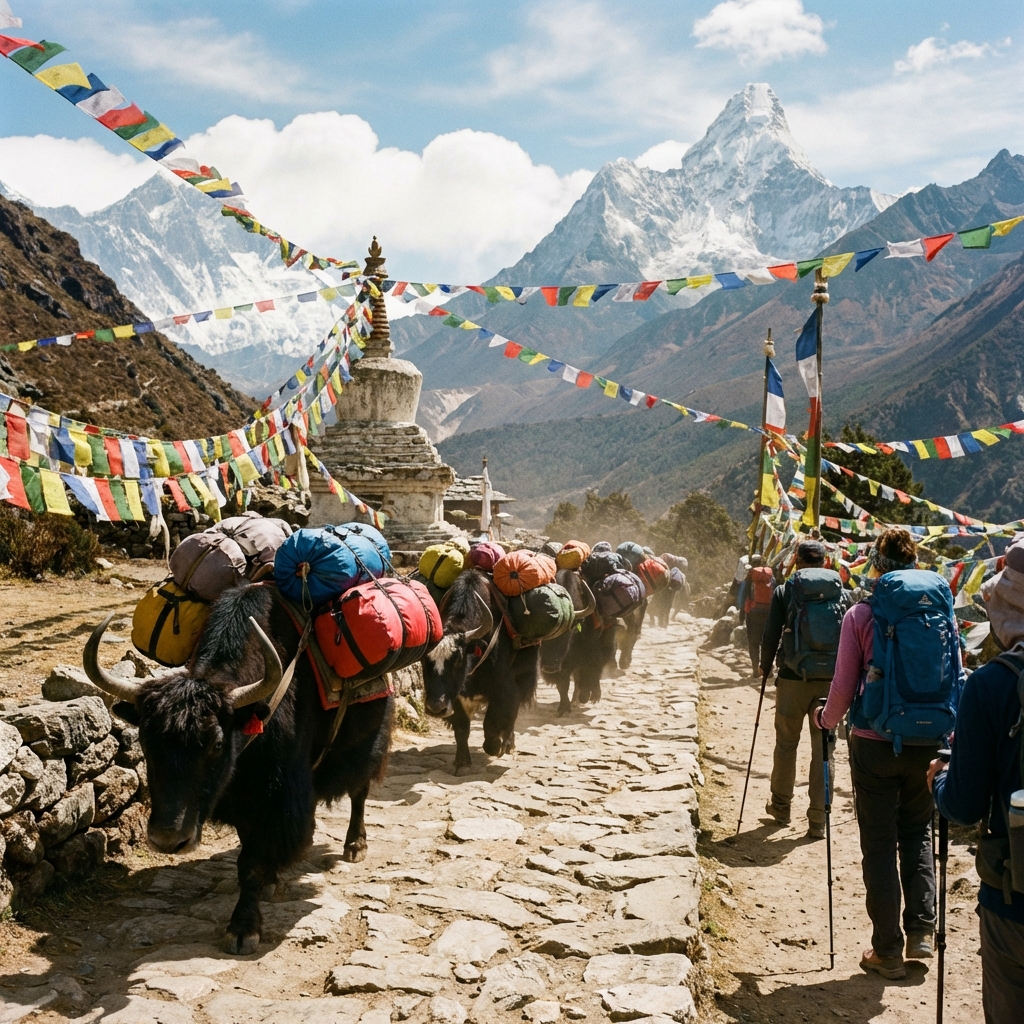
The first steps: Leaving the tea house each morning, you enter the trail routine. Trekking poles click, boots crunch on the path, and the Himalayan landscape opens up around you. The first 20-30 minutes are often the stiffest as your body warms up from cold muscles and yesterday's fatigue.
7:30 AM-12:00 PM: Morning Trekking (The Productive Hours)
Morning is when you cover the majority of your daily distance. The air is coolest, visibility is typically best, and your energy is highest.
What trekking actually involves:
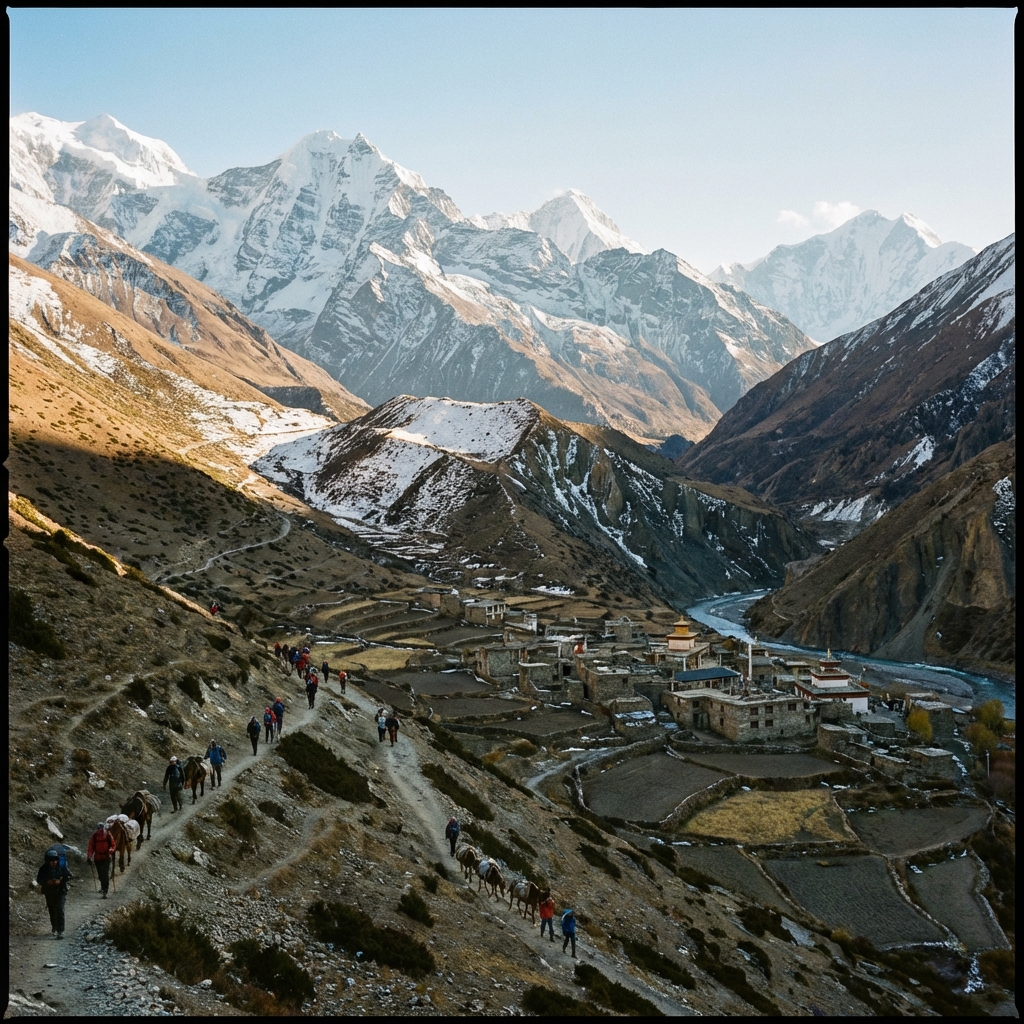
The trail in Nepal is not a smooth, flat hiking path. Depending on the route and section, you may encounter:
- Stone steps: Thousands of them. Endless stone staircases up hillsides, through villages, and along river gorges
- Suspension bridges: Iconic steel-cable bridges spanning deep river valleys. Some swing dramatically underfoot
- Forest trails: Shaded paths through rhododendron, pine, and bamboo forests
- River crossings: Stepping stones, wooden bridges, or wading through shallow streams
- Rocky scrambles: Sections requiring hands-on-rock climbing, particularly on pass approaches
- Gradual inclines: Long, steady climbs that test endurance
- Descents: Knee-punishing descents on stone steps and loose terrain
Pace and rhythm:
- Average speed: 2-3 km per hour on level ground, 1-2 km per hour ascending, varying with terrain
- Altitude factor: Above 4,000m, your pace slows significantly. What would take 1 hour at sea level might take 2 hours at 5,000m
- Rest stops: Brief pauses every 45-60 minutes for water, snacks, photos, and catching your breath
- "Slowly, slowly": The most important Nepali trekking phrase. Your guide will say this constantly, and they are right. There is no prize for speed. Steady, sustainable pacing is the key to enjoying the trek and avoiding altitude problems
Mid-morning break (10:00-10:30 AM):
Most trekking groups stop for a 15-20 minute break mid-morning at a trail tea house:
- Hot tea or coffee (NPR 100-300)
- A quick snack (biscuits, chocolate, energy bars)
- Refill water if needed
- Use the bathroom
- Adjust layers (shed jackets as the day warms)
- Photography stop if the views are exceptional
The Morning Photography Window
11:00 AM-1:00 PM: Lunch Stop
Lunch is a significant event on a Nepal trek -- it is your main refueling stop and a genuine rest period.
Where you eat: A trail tea house or the dining room of a lodge. Your guide selects the stop based on timing, distance, and the quality of available food. The same tea house may also serve as a charging opportunity.
Duration: 45-90 minutes. Meals at altitude take a long time to prepare. Expect a 30-45 minute wait between ordering and receiving your food. Use this time to rest, charge devices, journal, or chat with fellow trekkers.
The lunch menu:
The universal trekker lunch choice is dal bhat, and for good reason:
- Dal bhat power, 24 hour: This is the saying and it is true. A plate of rice, lentil soup, vegetable curry, and pickle provides sustained energy for the afternoon
- Unlimited refills: The magic of dal bhat. Ask for "aru bhat" (more rice) or "aru dal" (more lentils) and you will be served again for free
- Nutritional balance: Carbohydrates from rice, protein from lentils, vitamins from vegetables, and electrolytes from pickle
- Fastest kitchen option: Because dal bhat is cooked in large batches, it is usually ready faster than made-to-order items like pizza or pasta
Other lunch options: Fried rice, noodle soup (thukpa), momos (dumplings), pasta, sandwiches, or pizza (quality declines with altitude).
Lunch cost: NPR 600-1,200 depending on altitude and what you order.
Eat a Full Lunch Every Day
Skipping lunch or eating only a snack is a common beginner mistake. Afternoon trekking on an empty stomach leads to energy crashes, poor decision-making, and increased susceptibility to altitude sickness. Dal bhat at lunch provides 800-1,200 calories of sustained energy. Force yourself to eat a full meal even if appetite is reduced at altitude. This is not the time for dieting.
12:30-3:00 PM: Afternoon Trekking
After lunch, you complete the day's remaining distance. Afternoon trekking is typically shorter than the morning session -- 1.5 to 3 hours of walking.
Afternoon challenges:
- Heat (lower altitudes): Below 3,000m, afternoon sun can be intense. Stay hydrated and use sun protection
- Cloud build-up (higher altitudes): Mountains often disappear behind clouds by early afternoon. Weather can deteriorate with rain, sleet, or snow
- Energy dip: The post-lunch slump is real. The first 20 minutes after lunch are often the hardest of the day
- Mental fatigue: By afternoon, tired legs and a tired mind can make the trail feel endless. This is where mental discipline matters
Afternoon pace: Slower than morning. Accept it. Your body has been working for 6-8 hours. The afternoon session is about steady forward movement, not speed.
Arrival at the tea house (1:00-3:00 PM):
The ideal arrival time at your overnight tea house is between 1:00 and 3:00 PM:
- 1:00-2:00 PM: Best room selection, first access to charging stations, warmest solar-heated shower water
- 2:00-3:00 PM: Still good room selection, reasonable charging availability
- After 3:00 PM: Reduced room options in peak season, cold shower water, crowded charging stations
- After 4:00 PM: Risk of being assigned last-choice rooms or dining room floor during busy periods
2:00-5:30 PM: Afternoon at the Tea House
Once you arrive and settle into your room, the afternoon is free time. This is the part of the trekking day that surprises many first-timers -- there is a lot of downtime.
Common afternoon activities:
- Hot shower or wet wipe bath: If the lodge has solar showers, early afternoon is when the water is warmest. See our hot showers guide for details
- Charge devices: Plug in phones, cameras, and power banks immediately upon arrival. Outlets fill up fast
- Wash clothes: Hand-wash socks, underwear, and base layers. Hang them near the dining room stove or in the sun to dry
- Rest and nap: Sleep is precious at altitude. A 30-60 minute afternoon nap improves recovery and next-day performance
- Acclimatization walk: On rest days or at altitude, a short walk uphill from the tea house and then returning helps your body adjust
- Journaling or reading: Many trekkers keep a daily journal. Books and e-readers are popular evening entertainment
- Photography: Late afternoon light on mountains can be spectacular
- Cards and games: A deck of cards is the most popular entertainment item in tea house dining rooms. UNO, poker, rummy -- games transcend language barriers
- Socializing: The dining room is the social hub. Chat with fellow trekkers, swap route information, share stories. Some of your best trek memories will come from these conversations
Bring a Pack of Cards
5:30-6:00 PM: Pre-Dinner
As the sun sets and temperatures drop, everyone migrates to the dining room:
- The stove gathering: The yak dung or wood stove is lit, and the warmest seats in the house are claimed. Arriving early to the dining room gets you a prime spot near the heat
- Hot drinks: Tea, coffee, or hot lemon are ordered. This is a key hydration opportunity -- drink 2-3 cups of hot liquid between afternoon arrival and dinner
- Dinner ordering: Study the menu and place your dinner order. Kitchens prepare meals individually, so ordering early means eating earlier. Pre-ordering the night before for breakfast is also done now
6:00-7:30 PM: Dinner
Dinner is the main social event of the day. Everyone in the tea house eats together in the communal dining room.
Dinner choices:
- Dal bhat: Yes, again. Many trekkers eat dal bhat for both lunch and dinner. The dinner version often comes with more accompaniments
- Soup: Garlic soup is popular at altitude for both warmth and the (debated) altitude sickness prevention properties of garlic
- Pasta or noodles: Spaghetti, chow mein, or thukpa (Tibetan noodle soup)
- Pizza: Available at lower altitudes. Quality ranges from surprisingly good to regrettable
- Potatoes: Baked, fried, or as hash browns. A reliable energy source at any altitude
- Momos: Tibetan dumplings, steamed or fried. Vegetable momos are safer than meat ones at altitude
Dinner cost: NPR 600-1,500 depending on altitude and selection.
Dinner atmosphere: The dining room at dinner is the heartbeat of the trekking experience. Tables of trekkers from around the world share stories, compare route conditions, debate the merits of various sleeping bags, and bond over the shared experience of sore legs and cold rooms. Guides share trail wisdom. Lodge owners tell stories about the mountain. Music sometimes plays from a phone speaker. This communal evening is one of the things that makes tea house trekking in Nepal unique.
7:30-8:30 PM: Evening Wind-Down
After dinner, the evening routine:
- Final hot drinks: One more tea or hot chocolate for warmth and hydration
- Bathroom visit: The last comfortable trip before the cold nighttime options
- Fill water bottles: Ask the kitchen for hot water (NPR 100-300) to fill your bottles. Use one as a hot water bottle inside your sleeping bag for warmth
- Pre-order breakfast: Tell the kitchen what you want for breakfast so they can prepare early
- Check gear: Headlamp working? Water purified? Warm clothes laid out for morning? Snacks accessible?
- Brush teeth: In the dining room or bathroom. Some trekkers do this at the table since bathrooms are cold and dark
8:30-9:00 PM: Lights Out
By 8:30-9:00 PM, most trekkers are in their sleeping bags:
- Room temperature: Already cold and dropping. At altitude, rooms can be below freezing before you even get to bed
- Sleeping strategy: Full base layer, warm socks, hat, and neck gaiter inside your sleeping bag. Hot water bottle at your feet
- Earplugs: Essential. Thin walls mean you hear every cough, snore, and zipper from neighboring rooms
- Headlamp: Positioned where you can grab it instantly for nighttime bathroom visits
- Water: Keep a bottle inside your sleeping bag to prevent it from freezing and for nighttime hydration
Sleep quality at altitude: Expect disrupted sleep above 3,500m. Altitude affects sleep patterns -- lighter sleep, more frequent waking, and sometimes periodic breathing (alternating deep breaths and pauses). This is normal and improves with acclimatization. Trekkers who sleep poorly at altitude are not failing -- they are adjusting.
Sleep Hygiene at Altitude
Good sleep at altitude requires deliberate preparation. Avoid caffeine after 2:00 PM. Eat dinner at least 90 minutes before lying down. Use earplugs. Stay warm -- cold causes restlessness. Stay hydrated but stop drinking an hour before bed to minimize nighttime bathroom trips. If you consistently sleep poorly, talk to your guide about adjusting your ascent rate. Poor sleep can be an early sign of altitude stress.
Variation 1: Pass Day (2:00-4:00 AM Start)
The most demanding day variation. Major pass crossings (Thorong La at 5,416m on the Annapurna Circuit, Cho La at 5,420m on Three Passes Trek, or Kongma La at 5,535m) require extremely early starts.
The Pass Day Schedule
- 2:00-4:00 AM: Wake up. The dining room is cold and dark. A thermos of tea and some biscuits or porridge may be all that is available for breakfast
- 3:00-5:00 AM: Depart in complete darkness, headlamps on. The trail is marked but navigation in the dark requires attention
- 5:00-7:00 AM: Sunrise on the approach to the pass. This is often the most spectacular visual moment of the entire trek
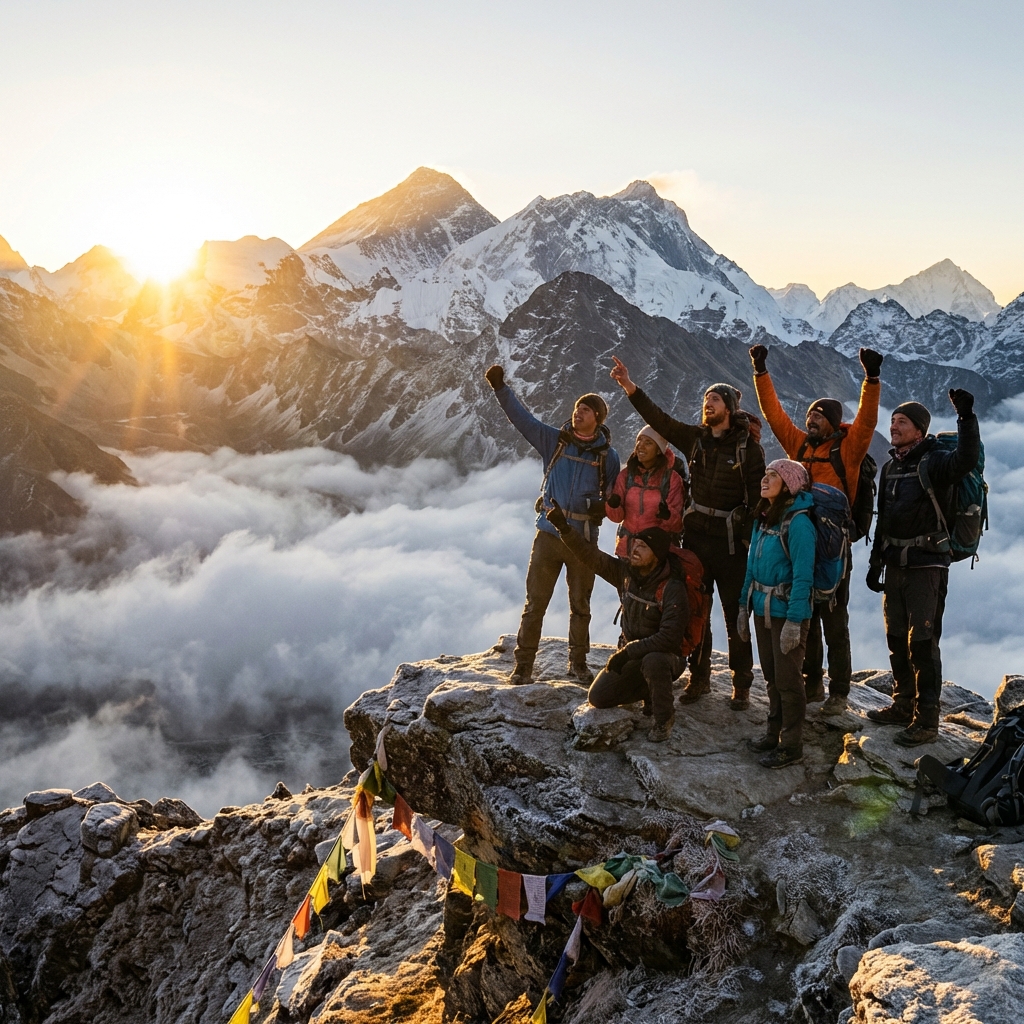
- 7:00-10:00 AM: Summit of the pass. Photos, prayer flags, brief celebration. The altitude and cold mean you cannot linger
- 10:00 AM-2:00 PM: Descent to the next village. This section can be more dangerous than the ascent due to tired legs, steep terrain, and potential ice/snow
- 2:00-4:00 PM: Arrive at the next tea house. Exhaustion, relief, and potentially the best meal of the trek
Why Start So Early?
- Weather: Mountain weather deteriorates through the day. Passes are safest before afternoon clouds, wind, and precipitation arrive
- Snow conditions: Early morning frozen snow is firmer and safer to walk on than afternoon slush
- Daylight: You need enough daylight hours to complete both the ascent and descent
- Emergency buffer: If something goes wrong (altitude sickness, injury, weather change), an early start gives you time to deal with it
Pass Days Are the Hardest Days
Do not underestimate pass days. A 12-16 hour day starting at 3:00 AM, ascending to above 5,000m, and descending thousands of meters on the other side is physically and mentally the most demanding day on most treks. Eat well the day before, hydrate aggressively, sleep as much as possible, and be prepared for the toughest day of your trek. If you feel unwell the morning of a pass day, tell your guide immediately -- pushing through altitude sickness on a pass can be life-threatening.
Variation 2: Rest and Acclimatization Day
Rest days are built into most trekking itineraries at key altitude milestones. They are not optional luxuries -- they are essential for safe altitude adjustment.
Common Rest Day Locations
- EBC route: Namche Bazaar (3,440m) and Dingboche (4,410m)
- Annapurna Circuit: Manang (3,540m)
- Langtang: Langtang Village (3,430m) or Kyanjin Gompa (3,830m)
- Manaslu Circuit: Samagaon (3,530m)
The Rest Day Schedule
- 7:00-8:00 AM: Wake up later than trekking days. Enjoy the luxury of not packing
- 8:00-9:00 AM: Leisurely breakfast with no time pressure
- 9:00 AM-12:00 PM: Acclimatization hike. The key activity: "climb high, sleep low." Hike 300-500 meters above your sleeping altitude, spend 30-60 minutes there, then descend to your lodge. This trains your body to handle higher elevations
- 12:00-1:00 PM: Lunch at your tea house or a village restaurant
- 1:00-5:00 PM: Free time. Options include:
- Explore the village (markets in Namche, monasteries in Tengboche)
- Visit local sights (Everest View Hotel hike from Namche, Ice Lake from Manang)
- Laundry and personal maintenance
- Read, journal, play cards
- Nap (your body needs recovery)
- Hot shower (acclimatization stop villages usually have the best shower facilities)
- 5:00-9:00 PM: Normal evening routine -- dinner, socializing, early bed
Why Rest Days Matter
- Physiological adaptation: Your body needs time to produce more red blood cells and adjust to lower oxygen levels
- Prevents altitude sickness: Rushing through altitude gains without rest is the primary cause of AMS
- Physical recovery: Your muscles, joints, and feet need repair time
- Mental reset: Trekking every day for two weeks is mentally tiring. Rest days prevent burnout
- Enjoyment: Rest day village exploration often produces the best cultural experiences and photography opportunities
Do Not Skip the Acclimatization Hike
Variation 3: Arrival and Departure Days
Trek Starting Day (Usually from Lukla or a Trailhead)
- 5:00-6:00 AM: Flight to Lukla (EBC) or drive to trailhead (Annapurna, Langtang). Nerves and excitement
- 8:00-10:00 AM: Arrive at trailhead. Meet your full team (guide, porter). Begin trekking
- 10:00 AM-2:00 PM: First trekking section. Usually short and easy -- designed to ease you into the routine
- 2:00-3:00 PM: Arrive at first tea house. Everything is new -- the room, the dining room, the bathroom, the menu, the routine
- Evening: Early bed. Adrenaline from the day fades and exhaustion from travel kicks in
Trek Ending Day
- 6:00-7:00 AM: Early start for final trekking section
- 10:00 AM-12:00 PM: Arrive at trailhead or Lukla
- Afternoon: Flight or drive back to civilization. The shower, the cold beer, the phone signal, the real bed
- Emotional state: A mix of accomplishment, relief, sadness that it is over, and the beginning of post-trek soreness
Daily Distance and Elevation Targets
Understanding daily targets helps you pace yourself:
| Trek Section | Daily Distance | Elevation Gain | Trekking Time | Difficulty |
|---|---|---|---|---|
| Below 3,000m (approach) | 12-16 km | 500-900m | 5-7 hours | Moderate |
| 3,000-4,000m (mid-altitude) | 8-14 km | 400-700m | 5-7 hours | Moderate to challenging |
| 4,000-4,500m (high altitude) | 6-10 km | 300-500m | 5-7 hours | Challenging |
| Above 4,500m (very high) | 4-8 km | 200-400m | 4-6 hours | Very challenging |
| Pass day | 8-16 km | 500-1,000m+ | 10-16 hours | Extreme |
| Descent | 12-20 km | 600-1,200m loss | 5-8 hours | Moderate (hard on knees) |
Key observation: Daily distance decreases with altitude, but difficulty increases. Walking 5 km at 5,000 meters feels harder than walking 15 km at 2,000 meters.
What to Do During Downtime at Tea Houses
The 3-5 hours of free time each afternoon and evening are a significant part of the trekking experience. First-timers often wonder what they will do with themselves. Here are tested options:
Entertainment to Bring
- Playing cards: The number one entertainment item on trek. Weighs nothing, provides hours of fun
- Book or e-reader: A Kindle loaded with books is ideal. Physical books work too but add weight
- Journal and pen: Many trekkers keep a daily journal. You will want to remember details that photos cannot capture
- Downloaded content: Podcasts, audiobooks, or shows downloaded to your phone for solo evening entertainment
- Small travel game: Compact travel chess, a book of crossword puzzles, or Sudoku
Social Activities
- Card games in the dining room: Join or start a game with fellow trekkers
- Route sharing: Compare notes on trail conditions, lodge quality, and upcoming sections with trekkers heading the opposite direction
- Language exchange: You will meet people from dozens of countries. Learning a few phrases in each other's language is a popular dining room activity
- Talking with your guide: Ask about local culture, history, and their experiences. Guides have fascinating stories and are usually happy to share when not working
Productive Activities
- Photography editing: Review and edit the day's photos
- Route planning: Study maps and guidebook information for upcoming days
- Gear maintenance: Dry boots, air out sleeping bags, check equipment
- Stretching: Yoga or gentle stretching in your room or the dining room helps recovery
- Letter or email writing: Compose messages to send when you next have WiFi
The Dining Room Is Your Living Room
Pacing and Energy Management Tips
Physical Pacing
- Start slow: The first hour of each day should feel almost too easy. If you are breathing heavily in the first 30 minutes, you are going too fast
- Pressure breathing: At altitude, practice forced exhalation through pursed lips. This helps oxygenate your blood
- Rest step: On steep ascents, pause briefly on each step. Lock your downhill leg straight and rest your weight on the skeletal structure rather than muscles
- Match your guide's pace: If your guide is a Nepali mountain professional, they know the optimal pace. Trust their rhythm
- Never race: There is zero benefit to arriving first. The trekker who arrives relaxed and energized has a better experience than the one who sprints and collapses
Nutrition and Hydration Timing
- Drink before you are thirsty: Sip water every 15-20 minutes throughout trekking hours. By the time you feel thirsty, you are already dehydrating
- Eat before you are hungry: Trail snacks (biscuits, chocolate, dried fruit, energy bars) every 1-2 hours maintain blood sugar and energy
- Hot drinks at every stop: Hot tea or lemon water at mid-morning breaks and afternoon arrivals. Hot liquids hydrate and warm simultaneously
- Full meals at breakfast and lunch: These are your fuel loads. Do not skip or minimize them
Mental Energy Management
- Break the day into segments: Morning trek, mid-morning break, late morning trek, lunch, afternoon trek. Each segment is manageable. Do not think about the whole day at once
- Set micro-goals: The next bridge. The next village. The next turn in the trail. Small goals make distance manageable
- Accept bad hours: Every trekker has stretches where everything hurts and motivation evaporates. This passes. Keep walking steadily and it gets better
- Celebrate small wins: Reaching a pass, arriving at a tea house, completing a steep section. Acknowledge your progress
Frequently Asked Questions
The Daily Rhythm Summary
After 2-3 days on the trail, the daily rhythm becomes second nature:
Wake, pack, breakfast, trek, break, trek, lunch, trek, arrive, shower/wash, charge, rest, stove-time, dinner, order breakfast, hot water bottle, sleep. Repeat.
This simplicity is one of the great gifts of trekking. Your entire daily concerns reduce to: walk, eat, sleep, stay warm, stay hydrated. There are no emails, no meetings, no notifications. The rhythm of the trail strips away complexity and leaves you with the fundamentals of human experience -- physical effort, natural beauty, shared meals, and genuine rest.
Most trekkers report that by the time they return to civilization, they miss this rhythm more than they miss any comfort they went without.