
Food Safety on Nepal Treks: What to Eat, What to Avoid & Staying Healthy
Nothing derails a Nepal trek faster than a bout of food poisoning. You have trained for months, flown halfway across the world, invested thousands of dollars, and suddenly you are confined to a tea house bed with stomach cramps, nausea, and the grim realization that the nearest hospital is a multi-day walk or an expensive helicopter evacuation away. It happens to roughly 30 to 50 percent of trekkers to some degree, but the vast majority of cases are entirely preventable.
Food safety on a Nepal trek is not about paranoia or avoiding local cuisine. Nepali food, when properly prepared, is among the safest and most nutritious trekking fuel on Earth. The iconic dal bhat has fueled Himalayan journeys for centuries precisely because it is freshly cooked, served hot, and nutritionally complete. The challenge lies in understanding which foods carry risk at altitude, how tea house kitchens operate, and what habits keep your digestive system functioning through two weeks of mountain trekking.
This comprehensive guide covers everything you need to know about eating safely on Nepal treks, from the golden rules that prevent most illness to specific food-by-food risk assessments, water purification methods, medication to carry, and what to do if you do get sick on the trail.
30-50% of trekkers experience some GI issues
Contaminated water, not food, causes most illness
Freshly cooked dal bhat served hot
Raw salads, untreated water, meat at high altitude
Most mild cases resolve in 24-48 hours
Azithromycin (prescription antibiotic)
Hand hygiene + safe water + cooked food
Kathmandu or Pokhara (days from most trails)
Why Food Safety Matters More on a Trek Than Anywhere Else
Getting a stomach bug at home is unpleasant. Getting one on a Himalayan trek can be genuinely dangerous, and here is why the stakes are so much higher.
Remote Location and Limited Medical Care
On most trekking routes in Nepal, you are days away from proper medical facilities. The CIWEC Hospital in Kathmandu and the hospitals in Pokhara are the nearest facilities with reliable diagnostic equipment and trained gastroenterologists. While the Himalayan Rescue Association operates small aid posts at Pheriche (4,371m) on the Everest Base Camp route and Manang (3,519m) on the Annapurna Circuit, these are designed for altitude sickness, not comprehensive gastrointestinal treatment. A serious case of food poisoning could mean an emergency helicopter rescue costs $1,800-$5,000 depending on location (EBC to Lukla $1,800-$2,500, EBC to Kathmandu $4,500-$5,000)to $5,000, and that assumes the weather cooperates.
Dehydration Risk at Altitude
At elevations above 3,000m, your body loses water at an accelerated rate through respiration and the dry mountain air. You need to drink 3 to 4 liters of water daily just to maintain baseline hydration. Now add vomiting and diarrhea to that equation, and dehydration becomes a serious medical concern within hours. Severe dehydration at altitude compounds the risk of Acute Mountain Sickness (AMS) and makes recovery from any illness significantly harder.
A Ruined Trek
Beyond the medical risks, food poisoning can simply destroy the experience you worked so hard to plan. Losing two to three days of your trek to illness can mean missing Annapurna Base Camp entirely, or being too weak to enjoy the summit views you came for. Prevention is dramatically easier than dealing with the consequences.
Altitude Suppresses Your Immune System
Research shows that altitude itself mildly suppresses immune function. Above 3,500m, your body's ability to fight off bacterial infections decreases, meaning you are more susceptible to foodborne illness precisely when you are most vulnerable to its effects.
The Golden Rules of Food Safety on Trek
These five rules will prevent the overwhelming majority of food-related illness on your trek. Memorize them, follow them consistently, and you dramatically reduce your risk.
Rule 1: Eat Food That Is Freshly Cooked and Served Hot
Heat kills bacteria. Food that has been boiled, fried, baked, or otherwise cooked to a high temperature and served immediately is safe to eat. This is the single most important rule for trekking food safety. The phrase "boil it, cook it, peel it, or forget it" exists for excellent reason.
Pro Tip
Order food that is cooked to order, not reheated. In busy tea houses, ask if your meal is fresh. If a dish seems lukewarm or has been sitting out, politely ask for something freshly prepared. Tea house owners understand and will not be offended.
Rule 2: Never Drink Untreated Water
Untreated water is the number one cause of gastrointestinal illness on Nepal treks, not food. Every sip of water that has not been boiled, filtered, or chemically treated is a risk. This includes water used to brush your teeth, rinse your mouth, or wash food. We cover water purification methods in detail below.
Rule 3: Wash or Sanitize Your Hands Before Every Meal
Your hands touch trail surfaces, tea house doors, rupee notes, and shared facilities all day. Transferring bacteria to your food through your hands is one of the most common infection routes. Carry hand sanitizer (at least 60% alcohol content) and use it religiously before every meal and snack.
Rule 4: Avoid Raw, Uncooked, and Reheated Foods
Raw vegetables, salads, uncooked garnishes, and cold foods that have been sitting out are the highest-risk items on any tea house menu. Even if the ingredients themselves are fresh, they may have been washed in contaminated water or handled with unwashed hands.
Rule 5: When in Doubt, Choose Dal Bhat
When you are uncertain about the kitchen, the hygiene standards, or the food options, dal bhat is almost always the safest choice. It is freshly cooked to order, served boiling hot, made from simple ingredients that are boiled thoroughly, and it is what the kitchen prepares most often (meaning the freshest ingredients and most practiced preparation).
Safe Foods: What to Eat on Your Nepal Trek
Understanding which foods are generally safe allows you to eat confidently and enjoy the surprisingly diverse menu options available on most trekking routes.
Dal Bhat: The Safest Choice
Dal bhat is not just Nepal's national dish; it is the safest meal you can order on trek. The lentils are boiled for extended periods, the rice is steamed at high temperature, the vegetable curry is cooked fresh, and the entire meal is served piping hot. The combination provides complete nutrition (protein, carbohydrates, fiber, vitamins) and unlimited refills. There is a reason experienced trekkers eat it twice a day.
Boiled and Fried Foods
Any food that has been submerged in boiling water or cooked in hot oil is safe:
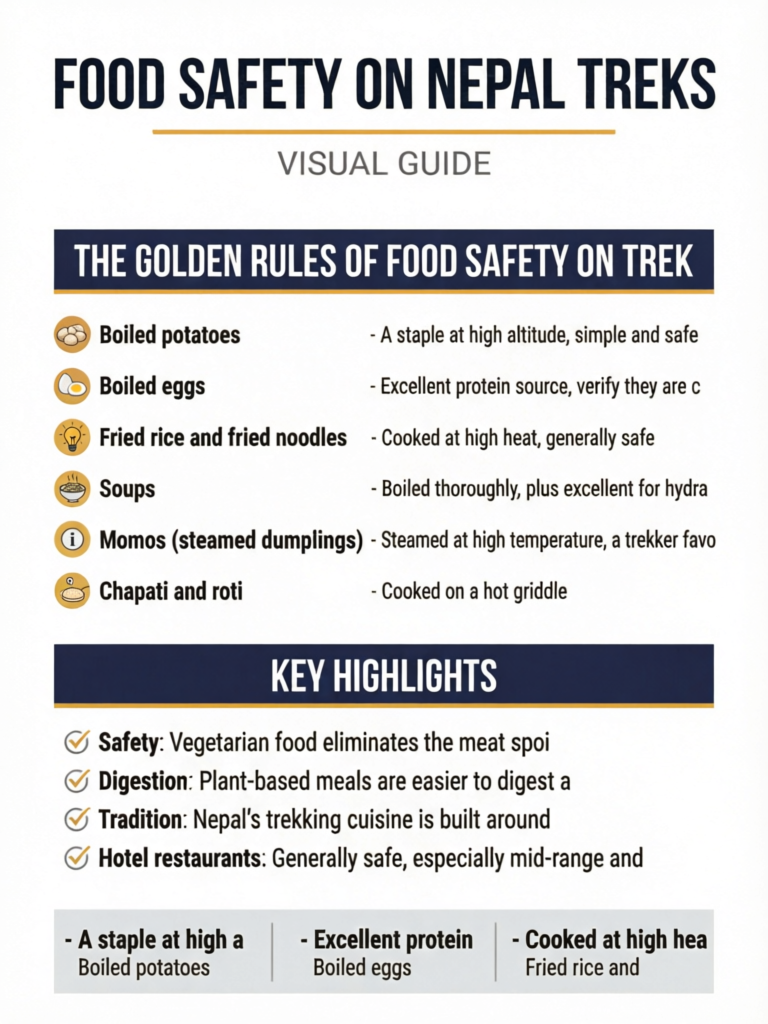
- Boiled potatoes - A staple at high altitude, simple and safe
- Boiled eggs - Excellent protein source, verify they are cooked through
- Fried rice and fried noodles - Cooked at high heat, generally safe
- Soups - Boiled thoroughly, plus excellent for hydration
- Momos (steamed dumplings) - Steamed at high temperature, a trekker favorite
Fresh Bread and Baked Goods
Items baked or cooked fresh are safe:
- Chapati and roti - Cooked on a hot griddle
- Tibetan bread - Deep fried, served hot
- Pancakes - Cooked to order on a hot pan
- Toast - Heated sufficiently to be safe
- Fresh pizza (cooked to order) - The high oven temperature kills bacteria
Well-Cooked Eggs
Eggs are an excellent and safe protein source when fully cooked:
- Hard-boiled eggs - The safest option
- Well-done fried eggs - No runny yolk
- Scrambled eggs - Cooked through completely
- Egg curry - Boiled eggs in cooked sauce
Avoid Undercooked Eggs
Runny or soft-boiled eggs can harbor Salmonella bacteria. Always request your eggs well-done. If your fried egg arrives with a runny center, send it back or break the yolk and let it cook further on the hot plate.
Porridge and Hot Cereals
Porridge (oatmeal) cooked with boiled water is a safe and warming breakfast option. It is easy on the stomach, provides sustained energy, and the cooking process eliminates any pathogens. Many tea houses offer porridge with honey, which is an excellent high-altitude breakfast.
Fruit You Can Peel
Fruits with thick, peelable skins are safe because the interior has not been exposed to contaminated water:
- Bananas - Available at lower altitudes, the perfect safe snack
- Oranges and mandarins - Common in lower altitude villages
- Apples - Available in the Annapurna region, peel before eating
Risky Foods: What to Avoid or Approach with Caution
These items carry elevated risk and should be avoided or consumed only under specific conditions.
Salads and Raw Vegetables
Raw salads are the single riskiest menu item on most tea house menus. The vegetables themselves may be perfectly fresh, but they have been washed in local water that may contain bacteria, parasites, or amoebas. No amount of washing with untreated water removes these pathogens. Even vinegar washes are insufficient to eliminate all risk.
- Green salads - Avoid entirely above 2,500m
- Raw tomato slices - Often washed in untreated water
- Cucumber - Absorbs water, difficult to make safe
- Raw onion garnish - Common but unnecessary risk
The Salad Trap
Many trekkers who avoid salads for the first week let their guard down when they feel comfortable. The bacteria have not changed. A salad on day 10 carries the same risk as on day 1. Stay consistent with your food safety rules throughout the entire trek.
Meat Above 3,500m
Meat becomes increasingly risky as you gain altitude for practical reasons:
- No refrigeration - Tea houses above 3,500m rarely have refrigeration. Meat may have been carried up the trail for days without proper cold storage
- Slow cooking at altitude - Water boils at lower temperatures at high altitude (approximately 85 degrees Celsius at 4,500m versus 100 degrees at sea level), meaning meat takes longer to cook thoroughly
- Lower turnover - Fewer trekkers order meat at high altitude, meaning it may sit longer before being served
- Longer supply chain - Meat must be carried by porter or pack animal from lower elevations
Pro Tip
Below 2,500m, chicken and dal bhat with meat curry are generally fine at busy, popular tea houses. Above 3,500m, switch to vegetarian options. The protein from dal (lentils), eggs, and peanut butter is more than sufficient. Your stomach will thank you.
Dairy Products at Altitude
Dairy becomes problematic at high altitude:
- Milk - May not be pasteurized, especially from local sources
- Yogurt/curd - Safe at lower altitudes from established shops, risky above 3,000m
- Cheese - Hard cheese (like yak cheese) is generally safe. Soft, fresh cheese is riskier
- Butter - Used in cooking and generally safe when heated
Ice and Cold Drinks
Never consume ice in drinks, even in Kathmandu and Pokhara. Ice is made from local water that may not have been treated. Cold drinks served in opened bottles should also be treated with suspicion.
Buffet-Style Food
Any food that has been sitting out at room temperature for extended periods is a bacterial breeding ground. This applies to:
- Breakfast buffets at larger lodges
- Food laid out for group bookings
- Dishes that are clearly not freshly prepared
If a buffet is the only option, choose items that are still hot or have clearly just been cooked.
Cold Meats and Processed Foods
Cold deli-style meats, processed sausages, and similar items have no place in your high-altitude diet. They may have been transported without refrigeration and stored improperly.
Water Safety: The Most Critical Factor
Water is the single most important food safety concern on your trek. More trekkers get sick from contaminated water than from contaminated food. Every water source on the trail should be considered unsafe unless properly treated.
Why Nepal's Water Is Unsafe to Drink
Nepal's mountain streams may look crystal clear, but they can contain:
- Giardia lamblia - A parasite causing severe diarrhea, bloating, and cramps
- E. coli bacteria - From animal and human waste upstream
- Cryptosporidium - Resistant to some chemical treatments
- Hepatitis A virus - Though vaccination protects against this
- Various other parasites and bacteria - From livestock, villages upstream, and human activity
Even streams above 5,000m can be contaminated by yak waste, porter camps, and other human activity.
Water Purification Methods
You have several effective options for making water safe. For a complete breakdown, see our dedicated water purification guide.
Boiling: The most reliable method. Water boiled for one minute (three minutes above 3,000m is sometimes recommended, though one minute is sufficient according to the WHO at any altitude) kills all pathogens. Many tea houses sell boiled water for NPR 100-300 per liter. This is the method used by locals and is time-tested.
UV Purification (SteriPen): Battery-powered UV devices like the SteriPen purify one liter in 90 seconds. Highly effective against bacteria, viruses, and parasites. The downside is battery dependence at cold temperatures and the need for relatively clear water. Carry backup batteries and a pre-filter.
Chemical Treatment (Tablets): Chlorine dioxide tablets (such as Aquamira or Micropur) are lightweight, reliable, and effective against all pathogens including Cryptosporidium. The treatment time is 30 minutes for bacteria and viruses, and up to 4 hours for Cryptosporidium. Iodine tablets work faster but leave a taste and are not recommended for long-term use.
Water Filters: Pump or gravity filters (such as Sawyer, Katadyn, or MSR) physically remove bacteria and parasites. Some include activated carbon for taste improvement. They do not remove viruses, so they are best used in combination with chemical treatment or in areas where viral contamination is less of a concern.
Pro Tip
Carry two purification methods in case one fails. A SteriPen plus chemical tablets as backup is an excellent combination. The SteriPen handles daily use, and the tablets serve as your fallback if the device malfunctions or the batteries die in the cold.
Safe Water Stations
Several organizations have established safe water refill stations along popular trekking routes, where you can refill your bottle with purified water for a small fee (typically NPR 50-100). These stations reduce plastic bottle waste and provide reliable clean water. They are most common on the Annapurna Circuit and the Everest Base Camp route.
Buying Boiled Water from Tea Houses
Most tea houses sell boiled water. Verify that it has been properly boiled (a full rolling boil, not just heated). Some tea houses may heat water without reaching boiling temperature. If you can see the kitchen operation, look for water that has been boiled in a kettle and allowed to cool naturally. The cost increases with altitude, from NPR 100 at lower elevations to NPR 300 or more above 4,000m.
Hand Hygiene: Your First Line of Defense
Hand hygiene is the most underrated element of trekking food safety. Studies from CIWEC Hospital in Kathmandu consistently show that improved hand hygiene alone reduces traveler's diarrhea by 30 to 50 percent.
What to Carry
- Alcohol-based hand sanitizer (60% or higher) - Carry a small bottle in your jacket pocket for easy access. Use before every meal, after using toilet facilities, and after handling money
- Biodegradable soap - For hand washing when water is available
- Small quick-dry towel - For drying hands after washing
When to Sanitize
- Before every meal without exception
- Before handling any snacks
- After using toilet facilities
- After handling money or shared objects
- After blowing your nose (respiratory illness spreads easily on treks)
Pro Tip
Attach a small hand sanitizer bottle to the outside of your pack or keep it in your jacket pocket. If it is buried in your bag, you will skip it. Convenience drives compliance, and compliance prevents illness.
Proper Hand Washing Technique
When soap and water are available, wash for at least 20 seconds, scrubbing between fingers and under nails. Dry with a clean towel, not a shared towel hanging in the tea house. If only untreated water is available, use hand sanitizer instead, as washing with contaminated water defeats the purpose.
Common Illnesses: Symptoms, Prevention, and Treatment
Understanding the common gastrointestinal illnesses on Nepal treks helps you recognize symptoms early and respond appropriately.
Traveler's Diarrhea (TD)
The most common illness among trekkers, affecting 30 to 50 percent of visitors to varying degrees.
Symptoms:
- Three or more loose or watery stools in 24 hours
- Abdominal cramps
- Nausea
- Urgency
- Mild fever in some cases
- Generally resolves in 2 to 3 days without treatment
Causes:
- Enterotoxigenic E. coli (ETEC) is the most common cause
- Contaminated water or food
- Poor hand hygiene
Prevention:
- Follow the golden rules above
- Stay hydrated with treated water
- Maintain hand hygiene
Treatment:
- Oral rehydration salts (ORS) - Replace fluids and electrolytes
- Continue eating if possible (bland foods, rice, toast)
- Loperamide (Imodium) - For symptom relief during travel days only, not as primary treatment
- Azithromycin (prescription) - For moderate to severe cases, take as prescribed by your doctor
When Diarrhea Becomes Dangerous
Seek medical attention immediately if you experience: bloody stool, fever above 38.5 degrees Celsius, inability to keep fluids down for more than 6 hours, signs of severe dehydration (dizziness, confusion, very dark urine, no urination), or symptoms lasting more than 3 days without improvement. These may indicate dysentery or a serious parasitic infection requiring medical intervention.
Giardiasis (Giardia)
A parasitic infection from the Giardia lamblia parasite, common in Nepal's water sources.
Symptoms:
- Watery, foul-smelling diarrhea
- Excessive gas and bloating
- Stomach cramps
- Nausea
- Symptoms may appear 1 to 3 weeks after exposure
- Can become chronic if untreated
Prevention:
- Water purification is critical, as Giardia cysts are common in Nepal's waterways
- UV treatment, boiling, and filtration are all effective
- Chemical tablets require extended treatment time for Giardia
Treatment:
- Tinidazole or Metronidazole (prescription) - Specific anti-parasitic medication
- Available at CIWEC Hospital in Kathmandu
- Requires proper diagnosis, so see a doctor post-trek if symptoms persist
Bacterial Dysentery
More severe than standard traveler's diarrhea, caused by Shigella or invasive E. coli.
Symptoms:
- Bloody or mucus-containing stool
- High fever
- Severe abdominal pain
- Vomiting
Prevention:
- Same food and water safety practices
- Extra vigilance with hand hygiene
Treatment:
- Requires antibiotic treatment (Azithromycin or Ciprofloxacin)
- Seek medical attention as soon as possible
- Maintain aggressive hydration with ORS
- Consider evacuation if symptoms are severe and you are at high altitude
Hepatitis A
A viral infection affecting the liver, transmitted through contaminated food and water.
Prevention:
- Vaccination is the best prevention - Get the Hepatitis A vaccine at least 2 weeks before travel
- Follow all food and water safety practices
Symptoms:
- Fatigue, nausea, abdominal pain
- Jaundice (yellowing of skin and eyes)
- Dark urine
- Symptoms appear 2 to 6 weeks after exposure
Treatment:
- No specific treatment; supportive care and rest
- Usually resolves in weeks to months
- Prevention through vaccination is far preferable
Essential Medications to Carry
Prepare a trekking medical kit that includes these gastrointestinal medications. Consult your travel doctor before departure to get prescriptions and dosage instructions.
Prescription Medications
- Azithromycin (Zithromax) - Broad-spectrum antibiotic for moderate to severe traveler's diarrhea and bacterial infections. Typically prescribed as a 3-day course (500mg day 1, then 250mg days 2-3) or a single 1,000mg dose for acute TD
- Tinidazole - Anti-parasitic for Giardia and amoebic infections. Single 2g dose is effective
- Ciprofloxacin - Alternative antibiotic, though resistance is increasing in South Asia
Over-the-Counter Medications
- Oral Rehydration Salts (ORS) - Carry at least 6 to 8 packets. These are the single most important treatment for any diarrheal illness. Available cheaply in Kathmandu pharmacies
- Loperamide (Imodium) - Slows gut motility for symptom relief. Use for travel days when you need to keep moving, but do not use as primary treatment and never use with bloody diarrhea or high fever
- Bismuth subsalicylate (Pepto-Bismol) - Can help with mild nausea and non-specific stomach upset. Chewable tablets are most practical for trekking
- Antacids - For acid reflux or heartburn, which can be triggered by altitude and spicy food
- Activated charcoal tablets - Some trekkers carry these for general stomach upset, though evidence is mixed
Pro Tip
Ask your travel doctor for a "standby" prescription for Azithromycin before your trip. Having the antibiotic in your pack means you can begin treatment immediately if moderate to severe diarrhea strikes, rather than waiting days to reach medical care. Discuss proper usage and when to take it versus when to wait.
Altitude and Food: How Elevation Affects Your Appetite and Digestion
Altitude changes your relationship with food in ways that catch many trekkers off guard. Understanding these changes helps you maintain proper nutrition when your body needs it most.
Decreased Appetite Is Normal
Above 3,000m, most trekkers experience significant appetite reduction. This is a normal physiological response to altitude, driven by changes in hormones that regulate hunger. At 4,500m and above, many trekkers find the thought of food genuinely unappealing.
The Importance of Eating Despite Low Appetite
Here is the paradox: your calorie needs increase at altitude (3,500 to 5,000 calories per day for active trekking), but your desire to eat decreases. You must eat even when you do not feel hungry. Inadequate nutrition at altitude leads to faster fatigue, slower acclimatization, reduced cognitive function, and increased susceptibility to AMS.
Strategies for eating at altitude:
- Eat smaller, more frequent meals rather than three large ones
- Choose calorie-dense foods (peanut butter, nuts, chocolate, cheese)
- Eat your largest meal at the lowest point of the day (lunch is often the best appetite window)
- Snack constantly between meals
- Hot soup before dinner can stimulate appetite
- Garlic soup is a popular altitude food (locals believe it helps with acclimatization)
Carbohydrate-Heavy Diet at Altitude
Your body preferentially burns carbohydrates at altitude because they require less oxygen to metabolize than fats or proteins. This is why dal bhat (rice and lentils) is the ideal altitude food. Aim for approximately 60 to 70 percent of your calories from carbohydrates above 3,500m.
Best high-altitude carbohydrate sources:
- Rice (dal bhat)
- Noodles (fried or soup noodles)
- Potatoes (boiled, fried, or in curry)
- Bread and chapati
- Porridge
- Pasta
Digestive Slowdown
Digestion slows at altitude. Your stomach takes longer to process food, and heavy meals can cause discomfort, bloating, and nausea. This is another reason to favor smaller, more frequent meals and avoid heavy, greasy foods above 4,000m.
The Garlic Soup Tradition
Garlic soup is a beloved trekker tradition, especially in the Everest region. While scientific evidence for garlic's altitude benefits is limited, it is warm, hydrating, easy to digest, and the allicin in garlic does have mild antibacterial properties. Whether it helps with acclimatization or is simply a comforting bowl of hot broth at 4,000m, it has earned its place on the altitude menu.
Tea House Kitchen Hygiene: What to Look For
Understanding how tea house kitchens operate helps you make informed decisions about where and what to eat.
Are Tea House Kitchens Safe?
The short answer is: mostly yes, with some variation. Tea house kitchens along popular routes like the Everest Base Camp trek and Annapurna Base Camp have improved dramatically over the past decade. Competition between lodges, trekker reviews, and government health inspections have raised standards significantly.
However, standards do vary, and kitchens at very high altitude operate under genuinely challenging conditions: limited water supply, no refrigeration, inconsistent electricity, and supplies carried in by porter or pack animal.
Signs of a Clean Kitchen
- Visible hand washing by kitchen staff
- Food covered and stored off the ground
- Clean cooking surfaces and utensils
- Busy kitchen (high turnover means fresher food)
- Separate raw and cooked food areas
- Staff wearing clean clothes and potentially hair coverings
- Good reviews from other trekkers or your guide
Red Flags
- Visibly dirty cooking surfaces
- Food sitting out uncovered
- Flies in the kitchen
- Staff handling food and money without washing hands
- Very quiet kitchen with few customers (food may have been sitting)
- Unpleasant smells from the kitchen area
Pro Tip
Your trekking guide, if you have hired one, will know which tea houses have the best kitchens. Experienced guides from reputable trekking agencies have established relationships with lodge owners and will steer you toward the cleanest, safest options. This is one of the underappreciated benefits of hiring a guide.
Food Safety Tips by Altitude Zone
Your food safety strategy should evolve as you gain altitude. Here is a zone-by-zone approach.
Below 3,000m: More Options, Lower Risk
At lower altitudes, you have the widest variety of safe food options:
- Fresh vegetables are more available and more likely to have been properly handled
- Meat is safer due to better refrigeration and faster turnover
- Dairy products from established shops are generally reliable
- Fruit is abundant and diverse
- Kitchen facilities tend to be better equipped
- More competition between lodges drives higher standards
Safe to enjoy: Most cooked dishes, eggs, fresh fruit (peeled), meat from busy restaurants, hot beverages
Still avoid: Raw salads, untreated water, street food of uncertain origin, ice in drinks
3,000m to 4,000m: Increasing Caution
This is the transition zone where food safety becomes more critical:
- Meat becomes riskier as refrigeration becomes unreliable
- Vegetable variety decreases (more potatoes, cabbage, fewer fresh options)
- Water quality may decline as you move further from towns
- Tea houses may be less well-equipped
- Your immune system is beginning to face altitude stress
Recommended approach: Shift toward vegetarian options, stick to well-cooked food, increase hand hygiene vigilance, ensure water purification is consistent
Above 4,000m: Maximum Caution
At high altitude, adopt the strictest food safety practices:
- Eat only freshly cooked food
- Avoid all meat
- Avoid dairy except hard cheese
- Stick to dal bhat, noodle soup, fried rice, boiled potatoes, porridge, and eggs
- Purify all water meticulously
- Use hand sanitizer before every meal and snack
- Eat smaller, more frequent meals
The Higher You Go, The Simpler You Eat
Above 4,000m, simplicity equals safety. The tea houses with the most limited menus are often the safest choices because they focus on what they can prepare well with the ingredients available. A perfectly executed bowl of dal bhat at 4,500m is vastly preferable to an ambitious but poorly executed pizza with suspect cheese.
When to Eat Meat vs. Vegetarian on Trek
This is one of the most practical food safety decisions you will make, and it evolves throughout your trek.
The Case for Going Vegetarian on Trek
Many experienced trekkers, including dedicated carnivores at home, choose to eat exclusively vegetarian while trekking in Nepal. The reasons are compelling:
- Safety: Vegetarian food eliminates the meat spoilage risk entirely
- Freshness: Vegetable-based dishes are more likely to be freshly prepared
- Cost: Vegetarian meals are cheaper (NPR 500-700 versus NPR 700-1,000 for meat dishes)
- Digestion: Plant-based meals are easier to digest at altitude
- Tradition: Nepal's trekking cuisine is built around vegetarian dal bhat
For a comprehensive guide to plant-based trekking, see our vegetarian and vegan trekking guide.
When Meat Is Acceptable
If you want to eat meat on trek, follow these guidelines:
- Below 2,500m at busy lodges: Chicken curry and meat momos are generally safe at popular, high-turnover establishments
- Kathmandu and Pokhara: Established restaurants with refrigeration are fine for meat dishes
- Fresh chicken: Some lower-altitude tea houses slaughter chickens to order, which is as fresh as it gets
- Avoid above 3,500m: The risk-reward ratio shifts decisively against meat at higher elevations
Eggs: The Perfect Compromise
Eggs offer high-quality protein without the spoilage risks of meat. They are available at virtually every tea house at every altitude, they are easy to verify as properly cooked (no runny yolk), and they store without refrigeration. Two or three well-cooked eggs a day can meet most of your protein needs when combined with dal.
Street Food in Kathmandu and Pokhara: Pre-Trek Eating
Most trekkers spend a day or two in Kathmandu or Pokhara before heading to the trail. A stomach bug picked up here can ruin your trek before it begins.
Safe Bets in Kathmandu
- Established restaurants in Thamel: Higher hygiene standards, accustomed to tourist stomachs. See our Thamel guide
- Hotel restaurants: Generally safe, especially mid-range and above
- Busy Nepali restaurants: High turnover means fresh food
- Freshly cooked momos from popular shops: Look for long lines of locals
What to Avoid Pre-Trek
- Street food from small vendors - Tempting but risky when your trek depends on your health
- Salad bars - Even in tourist restaurants
- Tap water and ice - Always drink bottled or purified water
- Raw juice - May be made with untreated water
- Cut fruit from street vendors - Washed in tap water and sitting in open air
Pro Tip
In the 48 hours before your trek begins, be extra conservative with food choices. Eat at established restaurants, avoid anything adventurous, and stay well hydrated. Your body needs to start the trek in peak condition. Save the adventurous eating for after your trek when a stomach bug means a trip to the pharmacy, not a ruined expedition.
Post-Trek Recovery and Eating
After completing your trek, see our post-trek recovery guide for detailed advice on reintroducing foods, recovering from any gastrointestinal issues, and when to seek medical attention for persistent symptoms.
Key Post-Trek Food Tips
- Reintroduce rich, heavy foods gradually
- Continue drinking purified water in Nepal
- If diarrhea persists for more than a week after returning from trek, see a doctor for stool analysis (Giardia and amoeba can have delayed onset)
- CIWEC Hospital in Kathmandu specializes in traveler's illnesses and can provide rapid diagnosis
Frequently Asked Questions
Is the food safe on Nepal treks?
Yes, most food served in tea houses along popular trekking routes is safe, provided you follow basic food safety principles. Stick to freshly cooked food served hot, avoid raw salads and untreated water, maintain hand hygiene, and choose vegetarian options at high altitude. The dal bhat that is the staple of Nepal's trekking cuisine is among the safest meals you can eat, as it is cooked fresh at high temperatures and served immediately.
What is the most common cause of illness on Nepal treks?
Contaminated water is the leading cause of gastrointestinal illness among trekkers, followed by poor hand hygiene and consuming raw or undercooked food. Proper water purification and consistent hand sanitizer use prevent the vast majority of cases.
Should I eat meat on a Nepal trek?
Meat is generally safe below 2,500m at busy, well-established tea houses. Above 3,500m, the risk increases significantly due to lack of refrigeration, slower turnover, and longer supply chains. Most experienced trekkers switch to vegetarian food at higher altitudes. Eggs are an excellent alternative protein source that is available and safe at all altitudes.
How do I avoid traveler's diarrhea on a Nepal trek?
Follow the golden rules: eat only freshly cooked food served hot, never drink untreated water, wash or sanitize hands before every meal, avoid raw vegetables and salads, and choose dal bhat when uncertain. Carry oral rehydration salts and a prescription antibiotic (Azithromycin) as standby treatment.
Can I drink the water in Nepal?
No. Never drink untreated water in Nepal, including in Kathmandu and Pokhara. All water must be purified through boiling, UV treatment (SteriPen), chemical tablets, or filtration. You can buy boiled water from tea houses or refill at safe water stations on popular routes.
What should I do if I get food poisoning on trek?
Begin oral rehydration immediately with ORS packets mixed in purified water. Rest if possible. For mild symptoms, most cases resolve in 24 to 48 hours with hydration and bland food. For moderate to severe symptoms (frequent watery diarrhea, inability to keep fluids down, fever), begin your standby Azithromycin course. Seek medical attention if symptoms include bloody stool, high fever, or do not improve within 3 days.
Is dal bhat safe to eat every day?
Dal bhat is the safest meal on the trekking menu and is nutritionally designed for sustained physical activity. Many trekkers eat it twice daily for the entire trek. The unlimited refills ensure adequate calorie intake, and the combination of lentils, rice, vegetables, and pickle provides balanced nutrition. It is also what tea house kitchens prepare most often, meaning ingredients are freshest.
Should I take probiotics before or during my Nepal trek?
Some travel medicine specialists recommend starting probiotics 1 to 2 weeks before travel and continuing during the trek. The evidence is mixed but generally supportive. Saccharomyces boulardii is the most studied probiotic for traveler's diarrhea prevention. Consult your travel doctor for specific recommendations.
Are the kitchens in tea houses clean?
Kitchen hygiene standards have improved significantly along popular routes over the past decade. Most tea houses on the Everest and Annapurna routes maintain reasonable kitchen hygiene. Standards tend to be higher at lower altitudes and at busier lodges. Your guide can recommend the cleanest options. You can also observe the kitchen area before ordering.
What snacks should I carry for food safety?
Carry sealed, packaged snacks that do not require refrigeration: energy bars, trail mix, nuts, dried fruit, peanut butter packets, crackers, and chocolate. These provide safe calories between meals and serve as backup if tea house food is not available or not trustworthy. Buy these in Kathmandu or Pokhara before your trek, as options at altitude are limited and expensive.
Can I eat street food in Kathmandu before my trek?
Exercise caution with street food before your trek. While many street food stalls in Kathmandu serve delicious food, a stomach bug picked up 24 hours before your trek could derail the entire trip. Stick to established restaurants in Thamel or your hotel for pre-trek meals. Save the adventurous eating for after your trek when the consequences are less severe.
How much water should I drink while trekking?
Aim for 3 to 4 liters of purified water daily, more on strenuous days or at higher altitudes. Monitor your urine color: pale yellow indicates adequate hydration, dark yellow or amber means you need to drink more. Carry at least 1 to 2 liters on the trail between tea houses, and top up at every opportunity.
Food safety on a Nepal trek comes down to consistent habits rather than constant worry. Follow the golden rules, trust in freshly cooked local food like dal bhat, purify your water religiously, and keep your hands clean. Thousands of trekkers complete Nepal's trails every season without any stomach issues at all. With the right knowledge and preparation, you will almost certainly be one of them.
For more on Nepal trekking nutrition, see our complete food and dining guide and dal bhat guide.