Nepal in April: Weather, Best Treks & Rhododendron Season Guide
Nepal in April is the peak of spring trekking season: warm, dry mornings, daytime temperatures of 18-26°C in the lowlands and 12-18°C at mid-altitude, and hillsides ablaze with rhododendron blooms between 2,000-4,000m. April is the year's second-busiest trekking month after October, with stable morning weather and afternoon cloud buildup on 60-70% of days.
April represents the pinnacle of Nepal's spring trekking season—the month when warming temperatures, blooming rhododendron forests, and stable weather converge to create one of the year's most spectacular trekking experiences. While autumn (October-November) claims the crown for absolute weather stability, April offers compelling advantages: temperatures 5-8°C warmer than October making high-altitude trekking more comfortable, spectacular rhododendron blooms transforming lower forests into explosions of red, pink, and white, the excitement of Everest expedition season at Base Camp, and slightly fewer crowds than October's absolute peak.
However, April brings specific considerations that distinguish it from autumn: afternoon cloud buildup occurs on 60-70% of days (limiting mid-day mountain views), precipitation increases compared to winter months as pre-monsoon patterns begin, temperatures can feel hot at lower elevations during midday, and the Nepali New Year (mid-April) creates a brief domestic tourism surge. Understanding April's unique character—both its considerable strengths and particular challenges—is essential for maximizing what many consider the most colorful and comfortable month for Himalayan trekking.
This comprehensive guide provides detailed weather analysis across all altitude zones and regions, complete rhododendron bloom calendars with specific viewing locations, route-specific recommendations for April conditions, crowd management strategies during Nepali New Year, gear requirements for April's warmer temperatures, honest comparisons with October to help you choose between seasons, booking timelines, photography tips for rhododendron season, and everything you need for successful April trekking in Nepal.
Excellent (Spring Peak Season)
Warm with afternoon clouds
Excellent mornings, clouds afternoons
5-8°C warmer at all elevations
Very High (85-90% of October)
Peak season (2,000-4,000m)
Mid-April (April 13-15 typically)
3-4 months for popular routes
Why April Is Peak Spring Season: The Compelling Advantages
April's reputation as Nepal's premier spring trekking month reflects a combination of favorable conditions that create an experience distinctly different from—but arguably equal to—autumn's peak season.
1. Rhododendron Bloom Explosion: Nepal's Most Colorful Month
April is unquestionably the best month to witness Nepal's iconic rhododendron forests in full bloom. At elevations between 2,000-4,000m, entire hillsides explode in brilliant reds, pinks, whites, and purples—creating one of the Himalayas' most spectacular natural displays.
Where to See Rhododendrons:
- Annapurna Conservation Area: Ghorepani-Poon Hill trek showcases vast rhododendron forests, particularly the Ghorepani-Deurali section
- Langtang region: Ascent from Syabrubesi to Lama Hotel passes through stunning rhododendron groves
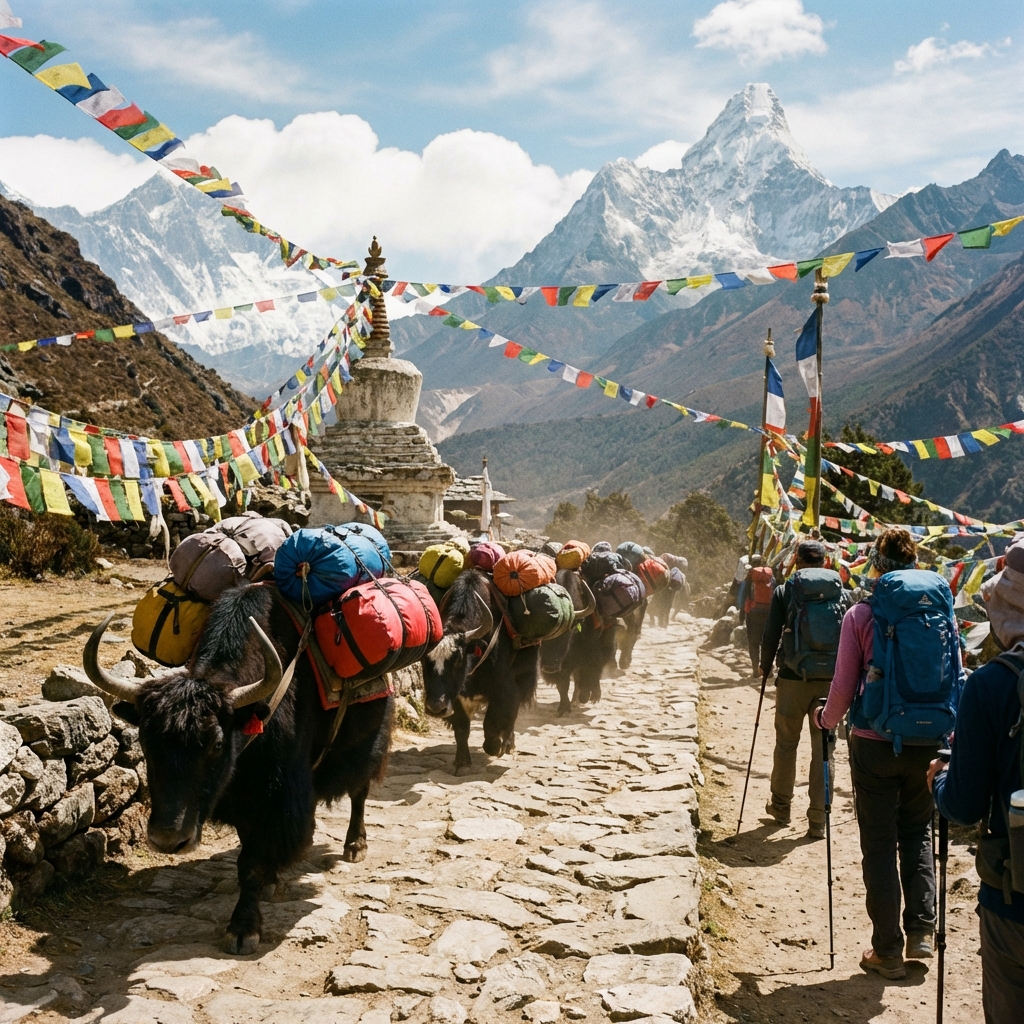
- Everest region: Lower Khumbu between Jorsalle and Namche features pockets of blooming rhododendrons
- Manaslu Circuit: Lower stages through Philim and Deng offer excellent rhododendron displays
- Mardi Himal: Entire trek route features spectacular rhododendron forests
Peak Bloom Timing by Elevation:
- 2,000-2,500m: Late March to early April
- 2,500-3,000m: Early to mid-April (peak viewing)
- 3,000-3,500m: Mid to late April
- 3,500-4,000m: Late April to early May
Photography Impact: The combination of blooming rhododendrons in the foreground with snow-capped peaks in the background creates extraordinary photographic opportunities unavailable in any other month. Morning light filtering through pink and red blossoms is particularly dramatic.
2. Warmest Comfortable Trekking Temperatures: 5-8°C Above October
April's significantly warmer temperatures compared to autumn make high-altitude trekking notably more comfortable, reduce cold-weather gear requirements, and lower the risk of altitude-related cold exposure.
Temperature Comparison (April vs October):
- Lower elevations (2,000-3,000m): April 18-24°C vs October 15-20°C
- Mid-elevations (3,000-4,000m): April 12-18°C vs October 10-14°C
- High elevations (4,500m+): April 5-10°C vs October 0-5°C
- Night temperatures: April 3-5°C warmer at all elevations
Practical Benefits:
- Less extreme sleeping bag requirements (-10°C vs -15°C for similar comfort)
- Reduced risk of water bottles freezing overnight
- More comfortable early morning starts for pass crossings
- Better battery performance in warmer temperatures
- Less energy expenditure maintaining body warmth
- More comfortable evening hours at high-altitude lodges
3. Everest Base Camp Expedition Atmosphere: Unique Cultural Experience
April coincides with the heart of Everest's climbing season (mid-April to late May). Base Camp transforms from a desolate snow field into a vibrant tent city with 300-400 climbers and support staff preparing for summit pushes.
What This Means:
- Witness expedition teams acclimatizing and preparing
- Potential to see climbers returning from successful summits
- Busy, energetic atmosphere at Base Camp (contrast with autumn's quiet emptiness)
- Helicopter traffic between Base Camp and Kathmandu creates spectacle
- Meeting international climbers adds cultural richness to the trek
- Puja ceremonies for expedition teams visible at Base Camp and Gorak Shep
Documentary Appeal: April offers unique storytelling opportunities—your trek becomes part of the broader Everest climbing season narrative that captures global attention.
4. Excellent Weather Stability (Though Less Than Autumn)
While autumn offers the year's most stable weather, April provides very good stability with only occasional pre-monsoon weather systems affecting trekking.
April Weather Characteristics:
- Morning conditions: Clear skies, excellent visibility, calm winds
- Afternoon pattern: Cloud buildup begins 11 AM-1 PM, peaks 2-4 PM, often clears by evening
- Precipitation: Low to moderate (35-65mm monthly depending on region)
- Clear morning percentage: 75-85% (compared to October's 90-95%)
Practical Impact: Plan viewpoint visits (Kala Patthar, Poon Hill, Gokyo Ri) for early morning. By starting sunrise hikes at 4-5 AM, you'll catch peak clarity before afternoon clouds develop.
5. Slightly Lower Crowds Than October: More Breathing Room
April sees approximately 85-90% of October's trekker volumes—still very busy, but with noticeably more breathing room on popular trails and less competition for lodge beds.
Crowd Comparison:
- October daily trekkers (Lukla): 700-900 starting EBC trek
- April daily trekkers (Lukla): 600-750 starting EBC trek
- Lodge availability: Easier than October; 2-3 month advance booking usually sufficient vs 4-5 months in October
- Viewpoint congestion: Still crowded but less "queuing" for photos than October peak
- Trail density: High but not the shoulder-to-shoulder experience of mid-October
Sweet Spot Timing: Early April (April 1-10) offers optimal conditions before Nepali New Year, while late April (April 20-30) sees crowds thin by 15-20% but approaches pre-monsoon weather patterns.
6. Green Landscapes and Vibrant Trail Life
Unlike autumn's post-monsoon browns and golds at lower elevations, April features lush green landscapes—monsoon rains are still 6-8 weeks away, but winter's dormancy has ended.
Visual Character:
- Terraced rice paddies vibrant green with new growth
- Wildflowers blooming at all elevations below 4,500m
- Waterfalls at healthy flow (not monsoon torrents, but more than autumn's trickle)
- Villages bustling with spring agricultural activity
- Birds actively nesting and calling—more wildlife activity than winter
Pro Tip
The April Sweet Spot Window: April 5-18 offers optimal timing for most treks. This window avoids the tail end of March's cooler conditions, captures peak rhododendron blooms at mid-elevations (2,500-3,500m), and concludes before Nepali New Year's domestic tourism surge (typically April 13-15). Weather remains excellent, afternoon clouds are manageable, and crowds haven't yet reached late April's peak. This is when experienced spring trekkers plan their Nepal adventures.
April Weather Breakdown: Detailed Conditions by Altitude
Understanding how April's conditions vary by elevation is crucial for appropriate preparation and realistic expectations across different trek profiles.
Kathmandu and Pokhara in April (City Weather)
Before you reach the trail, you'll spend a day or two in Nepal's main hubs. April in Kathmandu (1,400m) and Pokhara (820m) is warm and pleasant—the cities sit at low elevation and feel like early summer.
- Kathmandu: Daytime highs of 23-28°C, nights around 13-16°C, mostly dry with occasional brief pre-monsoon thundershowers late in the month.
- Pokhara: Slightly warmer and more humid, daytime highs of 25-30°C, nights 16-18°C, clear Annapurna views best in early morning.
- What to wear in the cities: Light, breathable clothing for sightseeing; you won't need warm layers until you gain altitude.
This means you can comfortably handle pre-trek logistics—permit collection, gear shopping in Thamel, and acclimatisation walks—in t-shirt weather. See our Kathmandu arrival guide for trekkers and Pokhara guide for planning your hub days.
Lower Elevations (1,000-2,500m)
Representative Locations: Pokhara (820m), Lukla (2,860m), Jiri (2,003m), Besisahar (760m), Phakding (2,610m), Salleri (2,390m)
Daytime Temperatures: 18-26°C (64-79°F) Nighttime Temperatures: 10-16°C (50-61°F) Conditions: Warm to hot during midday, pleasant mornings and evenings, occasional afternoon showers
What This Means:
- Mornings start comfortable at 12-15°C; by 11 AM temperatures climb to 20-24°C
- Midday trekking can feel hot—start early or take extended lunch breaks in shade
- T-shirt hiking from 9 AM onward at these elevations
- Evenings remain warm and pleasant—no insulation needed until bedtime
- Sleeping bags rated to +5°C to +10°C sufficient for comfort
- Sun protection critical—UV intensity high, sunburn risk significant
- Hydration essential—warmer temperatures increase water needs
- Occasional afternoon thundershowers possible (15-20% of days)
April vs October Difference: Approximately 5-7°C warmer, particularly noticeable at midday. October feels more comfortable for daytime trekking; April can feel hot and requires more sun protection and hydration management.
Practical Recommendations:
- Start trekking by 7-8 AM to avoid midday heat
- Lightweight, breathable clothing essential
- Wide-brimmed hat and quality sunglasses critical
- Sunscreen reapplication every 2-3 hours
- 3-4 liters daily water intake recommended
- Light rain shell for afternoon shower possibility
Mid Elevations (2,500-4,000m)
Representative Locations: Namche Bazaar (3,440m), Ghorepani (2,870m), Tengboche (3,860m), Manang (3,540m), Lama Hotel (2,470m), Kyanjin Gompa (3,870m)
Daytime Temperatures: 12-18°C (54-64°F) Nighttime Temperatures: 4-10°C (39-50°F) Conditions: Comfortable trekking temperatures, warm afternoons in sun, cool evenings, regular afternoon cloud buildup
What This Means:
- Perfect trekking temperature zone—neither too hot nor cold
- Mornings start cool (6-10°C) but warm quickly once sun hits valleys (8-9 AM)
- Layering system essential: start with base layer + fleece, shed to t-shirt by mid-morning
- Afternoon clouds develop 60-70% of days—expect reduced visibility 2-5 PM
- Evenings cool but comfortable—light down jacket or fleece sufficient
- Lodge common rooms cozy; heating (if available) appreciated but not critical
- Sleeping bags rated to -5°C to -10°C provide good comfort margin
- Hot showers widely available and pleasant (not the rushed experience of winter cold)
- Water sources abundant; no freezing concerns
Rhododendron Bloom Peak: This elevation zone features the most spectacular rhododendron displays in April, particularly 2,800-3,500m.
April vs October Difference: 4-6°C warmer overall. April afternoons can feel warm in direct sun; October feels crisper and more alpine. Both months excellent for this elevation zone.
Practical Recommendations:
- Flexible layering system for rapid temperature changes
- Morning viewpoint visits before cloud buildup (depart by 5-6 AM)
- Afternoon cloud patterns: plan trekking hours for early/late day clarity
- Sunglasses essential—snow glare combines with stronger April sun
- Camera waterproofing for afternoon shower possibility
- Enjoy longer evening daylight compared to October (sun sets 6:30-7 PM vs 5:30-6 PM)
High Elevations (4,000-5,000m)
Representative Locations: Dingboche (4,410m), Lobuche (4,940m), Thorong High Camp (4,925m), Gokyo (4,790m), Samagaon (3,530m, but approaches 5,000m on acclimatization hikes)
Daytime Temperatures: 5-12°C (41-54°F) Nighttime Temperatures: -5 to 3°C (23-37°F) Conditions: Cool but comfortable days, cold nights, afternoon clouds common, occasional snow possible
What This Means:
- Multiple insulation layers needed: base layer + fleece + light/medium down jacket
- Mornings cold (0-3°C) until sun exposure; once sun hits, can feel surprisingly warm
- Afternoons comfortable in sun but any wind or cloud cover feels cold immediately
- Strong diurnal temperature variation—20°C swing from afternoon high to overnight low
- Evenings and nights genuinely cold—warm sleeping bag essential
- Sleeping bags rated to -10°C to -15°C recommended for comfort and safety margin
- Water bottles can freeze overnight if not kept in sleeping bag or warm location
- Battery performance begins declining—keep phone/camera warm
- Afternoon clouds reduce temperatures noticeably—carry layers accessible
- Acclimatization critical at these elevations regardless of comfortable temperatures
April Advantage: Significantly warmer than October at these elevations—5-8°C difference makes high camps notably more comfortable. April's -5°C overnight at Lobuche feels far more manageable than October's -12°C.
April vs October Difference: April offers substantial temperature advantage at high elevations. Daytime comfort similar, but April nights are considerably warmer, reducing cold stress and improving sleep quality.
Practical Recommendations:
- Start high pass crossings very early (3-5 AM) for stable weather before afternoon clouds
- Layering system that handles 20°C temperature swings
- Insulated down jacket minimum 600-700 fill power
- Warm hat, neck gaiter, and gloves essential for early mornings
- Sleeping bag liner adds 5°C comfort without extra weight
- Altitude acclimatization schedule unchanged—warm weather doesn't reduce AMS risk
- Keep electronics in sleeping bag overnight to preserve battery life
Extreme High Elevations (5,000m+)
Representative Locations: Gorak Shep (5,164m), Kala Patthar (5,545m), Thorong La Pass (5,416m), Cho La Pass (5,420m), Renjo La Pass (5,360m), Larkya La Pass (5,160m), Everest Base Camp (5,364m)
Daytime Temperatures: 0-8°C (32-46°F) Nighttime Temperatures: -10 to -3°C (14-27°F) Conditions: Cold throughout day, very cold nights, wind chill significant, afternoon cloud buildup common, possible snow squalls
What This Means:
- Full winter trekking kit required despite spring calendar: insulated down jacket (700+ fill), expedition gloves, warm hat
- Mornings very cold (-5 to -10°C) even before factoring wind chill
- Pass crossings require early starts (3-5 AM) in genuine cold—April's advantage is these temperatures are tolerable vs October/November
- Afternoon clouds and potential snow squalls reduce visibility and drop temperatures further
- Wind chill makes temperatures feel 5-10°C colder than thermometer reading
- Sleeping bags rated to -15°C minimum; -20°C provides better comfort and safety margin
- Water management critical—wide-mouth Nalgene bottles kept in sleeping bag or insulated sleeves
- All electronics affected by cold—cameras, phones, headlamps need insulation
- High-calorie food intake essential for maintaining core temperature
- Despite cold, April offers significantly warmer conditions than autumn/winter for these elevations
April's Major Advantage: At extreme elevations, April's 6-8°C temperature advantage over October becomes critically important. The difference between -15°C (October) and -8°C (April) overnight at Gorak Shep significantly affects comfort, sleep quality, cold injury risk, and overall trekking experience.
High Pass Crossing Conditions:
- Thorong La (5,416m): Excellent conditions in April; warmer than October; start 3-4 AM
- Cho La (5,420m): Snow and ice present but manageable; crampons sometimes helpful on icy sections
- Renjo La (5,360m): Good conditions; less crowded than Cho La; stunning April views
- Larkya La (5,160m): Prime conditions; warmer than autumn crossings
April vs October Difference: April provides substantial comfort and safety advantages at extreme elevations. Both months offer excellent pass crossing conditions, but April's warmer temperatures reduce cold-related stress and risk.
Practical Recommendations:
- Expedition-grade down jacket (minimum 700-fill, ideally 800-fill)
- Layered glove system: liner gloves + insulated mittens or gloves
- Balaclava or face covering for wind protection
- Goggles or glacier glasses for snow glare and wind protection
- -20°C sleeping bag for genuine comfort margin
- Chemical hand/toe warmers for pass crossings
- Insulated water bottle sleeves or keep bottles inside pack/jacket
- Early morning starts for passes—weather window typically 4 AM to 10 AM
- Afternoon return to lower elevations when possible to avoid overnight cold
| Month | High | Low | Conditions | Crowds | Notes |
|---|---|---|---|---|---|
| Lower (1,000-2,500m)Best | 18-26°C | 10-16°C | Low (30-50mm) | Very High | Warm to hot midday, perfect mornings/evenings, rhododendrons blooming |
| Mid (2,500-4,000m)Best | 12-18°C | 4-10°C | Low-Moderate (35-60mm) | Very High | Perfect trekking temps, peak rhododendron zone, afternoon clouds |
| High (4,000-5,000m)Best | 5-12°C | -5-3°C | Moderate (40-70mm, some snow) | High | Comfortable days, warmer than autumn, cold nights manageable |
| Extreme (5,000m+)Best | 0-8°C | -10--3°C | Moderate (45-75mm, mostly snow) | Moderate-High | Cold but warmer than Oct/Nov, excellent pass conditions |
April Weather by Region: Regional Variations and Recommendations
April conditions vary by region due to different monsoon influences, elevations, and exposure to pre-monsoon weather systems.
Everest Region (Khumbu): Excellent Conditions with Expedition Atmosphere
Overall April Rating: Excellent ★★★★★
April Characteristics:
- Visibility: Excellent early mornings (6-10 AM), afternoon clouds 60-70% of days
- Precipitation: Low to moderate (40-65mm monthly, occasional afternoon showers or snow at altitude)
- Temperature Range: Lukla 16-20°C days, Namche 12-15°C days, Gorak Shep 2-6°C days
- Night Temperatures: Lukla 8-12°C, Namche 4-8°C, Gorak Shep -8 to -3°C
- Crowd Level: Very High (especially mid to late April)
- Trail Conditions: Excellent, dry, well-maintained
- Pass Accessibility: All passes open and in excellent condition
- Unique April Feature: Everest Base Camp expedition season—vibrant tent city atmosphere
Best Routes for April:
- Everest Base Camp — Peak spring conditions, expedition atmosphere, very crowded
- Gokyo Lakes — Stunning clarity, 30% fewer people than EBC, excellent April choice
- Three Passes Trek — All passes in prime condition, challenging but ideal
- Everest View Trek — Shorter option, excellent visibility, rhododendrons at lower elevations
April Advantages:
- 5-8°C warmer than October at all elevations—particularly noticeable at high camps
- Everest Base Camp expedition activity creates unique cultural experience
- Less extreme sleeping bag requirements than autumn
- Slightly fewer crowds than October (though still very busy)
April Challenges:
- Afternoon clouds reduce mid-day mountain views
- Occasional pre-monsoon snow squalls at high elevations
- Higher precipitation than autumn (though still low overall)
- Lukla flights can have afternoon weather delays
Booking Lead Time: 3-4 months for Lukla flights and popular lodges like Namche, Tengboche, Dingboche, Lobuche
Photography Tips:
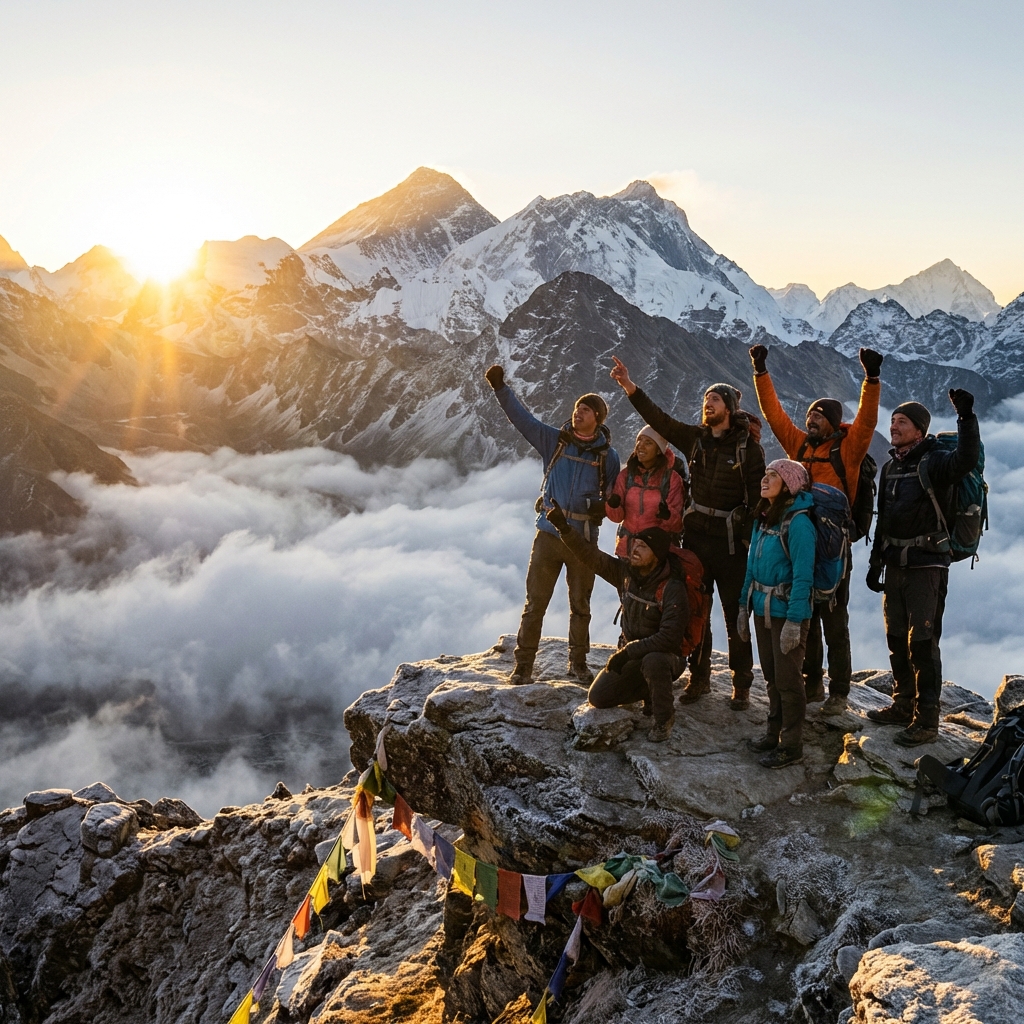
- Plan Kala Patthar sunrise (depart Gorak Shep 4:30-5 AM for optimal light)
- Morning Everest views superior to afternoon (before clouds)
- Expedition tents at Base Camp create colorful foreground elements
- Lower Khumbu rhododendron blooms near Jorsalle/Namche excellent
Annapurna Region: Peak Rhododendron Season
Overall April Rating: Excellent ★★★★★
April Characteristics:
- Visibility: Excellent mornings, afternoon clouds very common (70-80% of days)
- Precipitation: Moderate (50-70mm monthly, higher than Everest region due to proximity to monsoon moisture)
- Temperature Range: Ghorepani 15-18°C days, Manang 12-16°C days, Thorong High Camp 3-8°C days
- Night Temperatures: Ghorepani 6-10°C, Manang 3-7°C, Thorong High Camp -8 to -3°C
- Crowd Level: Very High (especially Poon Hill and ABC routes)
- Trail Conditions: Excellent, occasional muddy sections after afternoon showers
- Thorong La Pass: Excellent crossing conditions—warmer than autumn
- Unique April Feature: Most spectacular rhododendron blooms in Nepal—entire hillsides in color
Best Routes for April:
- Annapurna Circuit — Classic route, perfect Thorong La conditions, rhododendrons on Ghorepani section if included
- Annapurna Base Camp — Very popular, spectacular, crowded, excellent April choice
- Poon Hill — THE premier rhododendron trek, shorter duration, sunrise views spectacular despite afternoon clouds
- Mardi Himal — Less crowded alternative to ABC, excellent rhododendron forests throughout
- Khopra Ridge — Off-beaten path, superb rhododendrons, fewer crowds
Rhododendron Bloom Highlights:
- Ghorepani-Poon Hill: Peak blooms April 5-20, spectacular forests between Ghorepani and Tadapani
- ABC route via Jhinu: Rhododendrons from Jhinu Danda up to Chhomrong area
- Mardi Himal: Entire route through rhododendron zone (2,500-3,500m)
- Annapurna Circuit (Ghorepani section): If route includes Ghorepani-Tatopani, excellent blooms
April Advantages:
- Best rhododendron viewing month for entire Annapurna region
- Warmer temperatures make high camps (ABC sanctuary, Thorong High Camp) more comfortable
- Lush green landscapes and vibrant trail life
- Waterfalls at healthy flow creating photogenic scenes
April Challenges:
- Afternoon clouds more persistent than Everest region (proximity to monsoon moisture)
- Poon Hill sunrise often has clouds by 7-8 AM—very early starts essential (4:30-5 AM departure)
- Higher precipitation than autumn—pack rain protection
- Very crowded on Poon Hill and ABC routes
Booking Lead Time: 2-3 months for popular routes (Poon Hill, ABC); Circuit lodges more available with walk-up possible early April
Photography Tips:
- Sunrise viewpoints require very early starts (Poon Hill depart 4:30 AM)
- Rhododendron macro and wide-angle opportunities throughout mid-elevations
- Afternoon clouds create moody, atmospheric images if you adapt expectations
- Machapuchare views best early morning before cloud buildup
Langtang Region: Excellent Choice with Lower Crowds
Overall April Rating: Excellent ★★★★★
April Characteristics:
- Visibility: Very good mornings, afternoon clouds moderate (50-60% of days, less than Annapurna)
- Precipitation: Moderate (45-65mm monthly)
- Temperature Range: Lama Hotel 14-17°C days, Kyanjin Gompa 10-14°C days, Tserko Ri 4-8°C days
- Night Temperatures: Lama Hotel 5-9°C, Kyanjin 2-6°C, high camps -6 to 0°C
- Crowd Level: High (but significantly less than Everest/Annapurna—30-40% fewer trekkers)
- Trail Conditions: Excellent, well-maintained post-2015 earthquake reconstruction
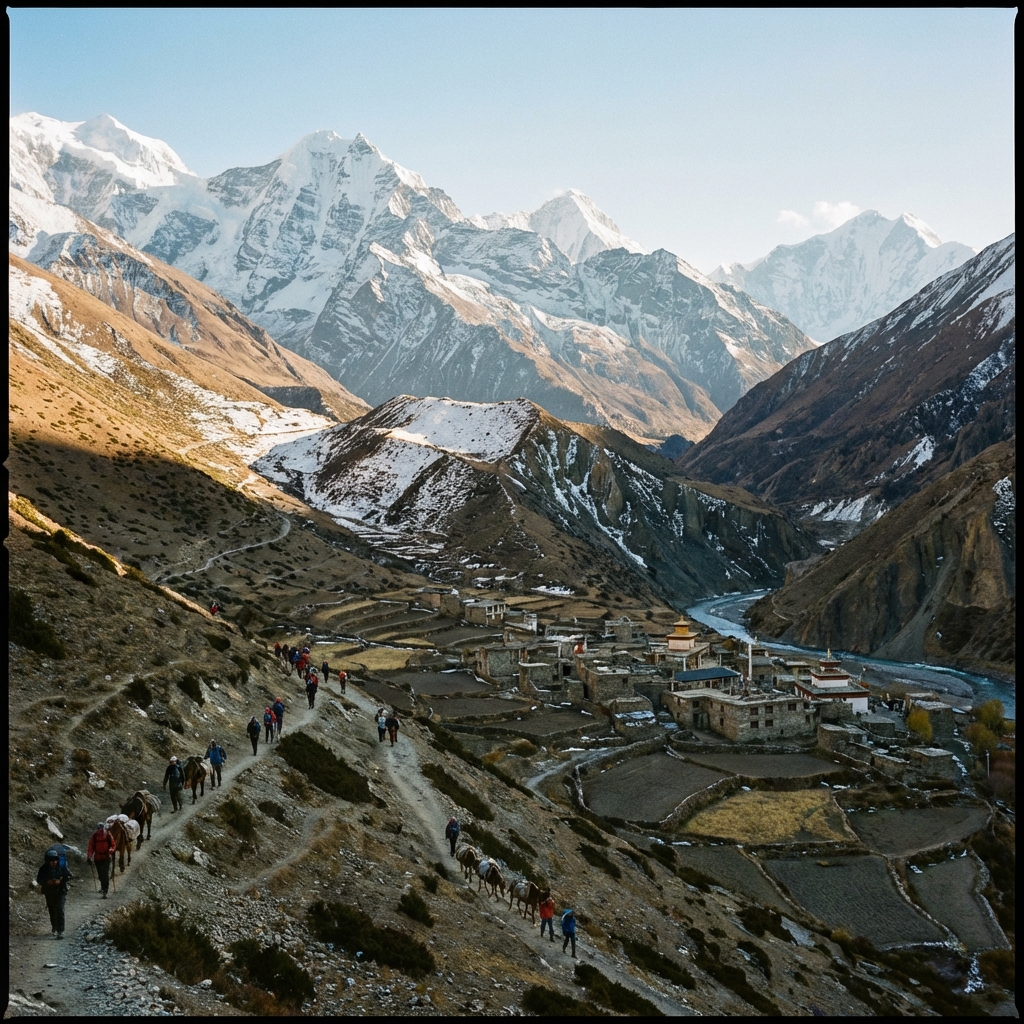
- Accessibility: Easy from Kathmandu (7-8 hour drive to Syabrubesi trailhead)
Best Routes for April:
- Langtang Valley — Classic route, manageable crowds, excellent weather
- Gosainkunda — Sacred lakes, warming temperatures at altitude, good April choice
- Tamang Heritage Trail — Cultural route, fewer crowds, rhododendrons at lower elevations
- Langtang-Gosainkunda Loop — Combined route, challenging, rewarding
Rhododendron Viewing:
- Lower Langtang Valley (Syabrubesi to Lama Hotel): Good rhododendron displays
- Not as spectacular as Annapurna region, but still beautiful
- Mid-elevations (2,500-3,500m) feature nice pockets of blooms
April Advantages:
- Significantly fewer crowds than Everest/Annapurna while maintaining excellent conditions
- Warmer temperatures at high camps (Kyanjin Gompa area)
- Easy access from Kathmandu—no mountain flight risk
- Lower crowds mean easier lodge availability—walk-up trekking often possible
- Tserko Ri (4,984m) viewpoint excellent in April with warmer summit temperatures
April Challenges:
- Afternoon clouds reduce mid-day mountain views
- Spring avalanche risk in certain areas—stick to established trails
- Some high passes (Laurebina La if continuing to Gosainkunda) may have snow
Booking Lead Time: 1-2 months generally sufficient; walk-up trekking possible in early April
Photography Tips:
- Tserko Ri sunrise (depart Kyanjin 4-5 AM) for peak clarity
- Langtang Lirung views best early morning
- Less dramatic rhododendrons than Annapurna, but valleys more intimate
- Tibetan cultural elements (prayer flags, monasteries) excellent subjects
Manaslu Region: Prime Conditions for Circuit
Overall April Rating: Excellent ★★★★★
April Characteristics:
- Visibility: Excellent mornings, afternoon clouds moderate (55-65% of days)
- Precipitation: Moderate (50-70mm monthly)
- Temperature Range: Samagaon 12-16°C days, Samdo 10-14°C days, Larkya La 0-6°C
- Night Temperatures: Samagaon 2-6°C, Samdo -2 to 3°C, Dharamsala (pre-pass camp) -8 to -3°C
- Crowd Level: High (but 40-50% less than Everest/Annapurna)
- Trail Conditions: Excellent for Larkya La crossing
- Permit Requirements: Restricted area permit required (arrange 2-3 months advance)
Best Routes for April:
- Manaslu Circuit — Excellent conditions for Larkya La pass, warmer than autumn
- Tsum Valley extension — Cultural side valley, remote, April conditions good
April Advantages:
- Larkya La Pass (5,160m) in excellent condition—warmer than October crossing
- Remote atmosphere with fewer crowds than more popular regions
- Lower Manaslu features rhododendron blooms
- Warming temperatures make high camps more comfortable
April Challenges:
- Restricted area permits add cost and require organized trek (no independent)
- Afternoon clouds reduce visibility
- Some snow possible on Larkya La—early starts essential (3 AM typical)
Booking Lead Time: 2-3 months for permits and organized logistics
Upper Mustang: Good Conditions
Overall April Rating: Very Good ★★★★☆
April Characteristics:
- Visibility: Excellent—rain shadow protection from monsoon influence
- Precipitation: Very low (15-30mm monthly) — arid region stays dry
- Temperature Range: Lo Manthang 14-18°C days, 2-8°C nights
- Crowd Level: Moderate (restricted permits limit numbers)
- Trail Conditions: Dry, dusty, excellent
- Wind: Can be strong in afternoon
Best Routes for April:
- Upper Mustang — Excellent conditions, warming from winter cold, dust can be challenging
- Lower Mustang (Jomsom-Muktinath) — Part of Annapurna Circuit, good April choice
April Advantages:
- Warming temperatures—more comfortable than winter
- Minimal precipitation even as pre-monsoon patterns develop elsewhere
- Unique Tibetan culture and landscapes
- Less crowded than main trekking regions
April Challenges:
- Dust and wind can be intense in afternoons
- Expensive restricted area permits
- Limited rhododendron/green landscapes—arid terrain
Booking Lead Time: 3-4 months for restricted area permits
| Month | High | Low | Conditions | Crowds | Notes |
|---|---|---|---|---|---|
| Everest RegionBest | 12-15°C (Namche) | 4-8°C | Low-Moderate (40-65mm) | Very High | Peak spring, expedition atmosphere, afternoon clouds, excellent overall |
| Annapurna RegionBest | 15-18°C (Ghorepani) | 6-10°C | Moderate (50-70mm) | Very High | BEST rhododendron blooms, afternoon clouds common, spectacular color |
| Langtang RegionBest | 10-14°C (Kyanjin) | 2-6°C | Moderate (45-65mm) | High | Fewer crowds than EBC/ABC, excellent weather, good rhododendrons |
| Manaslu RegionBest | 12-16°C (Samagaon) | 2-6°C | Moderate (50-70mm) | Moderate-High | Larkya La excellent, remote feel, permit required |
| Upper MustangBest | 14-18°C | 2-8°C | Very Low (15-30mm) | Moderate | Warming from winter, rain shadow dry, windy afternoons, permit required |
Best Treks for April: Detailed Route Analysis
April's warm temperatures, stable morning weather, and rhododendron blooms make virtually all Nepal treks excellent choices. Here's detailed analysis of top routes.
1. Annapurna Base Camp (ABC) — Peak Rhododendron Experience
Duration: 7-12 days depending on route variation Max Altitude: 4,130m (Annapurna Base Camp) Difficulty: Moderate April Rating: ★★★★★ (Excellent—top choice for April)
Why April Is Perfect:
- Spectacular rhododendron forests along entire route, particularly Jhinu-Chhomrong section
- Warmer temperatures at ABC sanctuary make overnight more comfortable than autumn
- Lush green terraced fields and vibrant valley life
- Morning mountain views from ABC excellent before afternoon clouds
- Comfortable temperatures for steep ascents and descents
April Specifics:
- Daytime temperatures: 15-18°C at Chhomrong, 8-12°C at MBC, 5-8°C at ABC
- Nighttime temperatures: 6-10°C at Chhomrong, 0-4°C at MBC, -5 to 0°C at ABC
- Rhododendron peak bloom: 2,500-3,500m elevation (Jhinu to Deurali section)
- Afternoon clouds typically obscure Annapurna massif 2-5 PM—plan ABC arrival for morning if possible
April Challenges:
- Very crowded—among Nepal's busiest treks in April
- Afternoon clouds reduce mid-day views
- Occasional afternoon showers in lower elevations
- Popular lodges book ahead—reserve 2-3 months advance
Crowd Management:
- Consider Mardi Himal as alternative (60% fewer people, similar rhododendrons)
- Start trek early April to avoid mid/late month peak crowds
- Less popular route variations (via Pothana vs Jhinu) slightly less crowded
Rhododendron Viewing:
- Best sections: Jhinu to Sinuwa, Sinuwa to Chhomrong, Chhomrong to Bamboo
- Peak timing: April 8-20 for mid-elevations (2,700-3,200m)
- Photography: Morning and late afternoon light best; overcast creates soft, even lighting for flower details
2. Poon Hill Trek — THE Rhododendron Showcase
Duration: 4-5 days Max Altitude: 3,210m (Poon Hill) Difficulty: Easy to Moderate April Rating: ★★★★★ (Excellent—arguably the best month for this trek)
Why April Is THE Best Month:
- Unquestionably the best rhododendron trek in Nepal—entire forests in peak bloom
- Shorter duration perfect for limited time plus rhododendron priority
- Ghorepani-Tadapani section passes through vast rhododendron groves
- Comfortable temperatures throughout (no extreme cold)
- Cultural Gurung villages vibrant with spring agricultural activity
April Specifics:
- Daytime temperatures: 15-18°C at Ghorepani, 18-22°C at lower villages
- Nighttime temperatures: 6-10°C at Ghorepani
- Rhododendron bloom: Absolute peak April 10-20
- Sunrise viewpoint crowded but spectacular—Dhaulagiri, Annapurna ranges visible early morning
April Challenges:
- Very crowded—one of Nepal's busiest short treks
- Poon Hill sunrise extremely popular (100-200 people on summit)
- Afternoon clouds often obscure mountain views by 8-9 AM
- Lodge booking essential 2-3 months ahead for Ghorepani
Crowd Management:
- Start sunrise hike 4:30 AM to reach Poon Hill before main crowds
- Consider extending to Khopra Ridge (3-4 extra days, 70% fewer people)
- Trek mid-week if possible (weekends see more crowds from Pokhara)
Rhododendron Experience:
- Ghorepani to Tadapani: Single most spectacular rhododendron forest walk in Nepal
- Colors: Reds, pinks, whites, purples—multiple species blooming simultaneously
- Photography: Wide-angle landscapes, macro flower details, intimate forest scenes all excellent
- Peak bloom window: April 8-25, with absolute peak April 12-18
Best Route Variation:
- Nayapul → Tikhedhunga → Ghorepani → Poon Hill → Tadapani → Ghandruk → Nayapul
- This route maximizes rhododendron exposure and includes beautiful Gurung village of Ghandruk
3. Everest Base Camp Trek — Spring Expedition Atmosphere
Duration: 12-14 days Max Altitude: 5,545m (Kala Patthar) Difficulty: Moderate to Challenging April Rating: ★★★★★ (Excellent)
Why April Is Excellent:
- Unique expedition season atmosphere—Base Camp transformed into vibrant tent city
- Significantly warmer than October at high camps (5-8°C difference)
- Excellent weather stability for high-altitude trekking
- Morning mountain views exceptional before afternoon clouds
- More comfortable sleeping conditions at Lobuche/Gorak Shep than autumn
April Specifics:
- Daytime temperatures: 16-20°C Lukla, 12-15°C Namche, 2-6°C Gorak Shep
- Nighttime temperatures: 8-12°C Lukla, 4-8°C Namche, -8 to -3°C Gorak Shep
- Kala Patthar sunrise conditions: Cold (-5 to 0°C) but significantly warmer than October's -10 to -5°C
- Base Camp expedition tents: 300-400 people in camp mid-April through May
April Advantages:
- Warmer high camps mean better sleep quality and less cold stress
- Expedition atmosphere unique to spring season
- Potential to witness returning summit teams (late April/May)
- Less extreme sleeping bag needed (-15°C vs -20°C)
April Challenges:
- Very crowded—600-750 trekkers/day starting from Lukla
- Afternoon clouds reduce mid-day mountain views (60-70% of afternoons)
- Popular lodges (Namche, Tengboche, Dingboche, Lobuche) require advance booking
- Lukla flights can have afternoon weather delays
Booking Lead Time: 3-4 months for Lukla flights; 2-3 months for popular lodges
Crowd Management:
- Consider Gokyo Lakes alternative (30% fewer people, equally spectacular)
- Book early morning Lukla flights to avoid afternoon weather delays
- Mid-week trekking slightly less crowded than weekends
Photography Tips:
- Kala Patthar sunrise essential (depart Gorak Shep 4:30-5 AM)
- Everest views best 6-10 AM before clouds develop
- Expedition tent colors at Base Camp create vibrant foreground elements
- Lower Khumbu has rhododendron pockets near Jorsalle/Phakding
4. Langtang Valley Trek — Excellent Value with Lower Crowds
Duration: 7-10 days Max Altitude: 4,984m (Tserko Ri viewpoint) Difficulty: Moderate April Rating: ★★★★★ (Excellent)
Why April Works Perfectly:
- Significantly fewer crowds than EBC/ABC (40% less) while maintaining excellent conditions
- Warmer temperatures at Kyanjin Gompa and Tserko Ri
- Good rhododendron blooms in lower valley
- No mountain flight dependency (drive from Kathmandu)
- Intimate valley experience with vibrant Tamang culture
April Specifics:
- Daytime temperatures: 14-17°C Lama Hotel, 10-14°C Kyanjin, 4-8°C Tserko Ri
- Nighttime temperatures: 5-9°C Lama Hotel, 2-6°C Kyanjin
- Rhododendrons: Lower valley (Syabrubesi to Lama Hotel) features blooms
- Tserko Ri summit comfortable mid-morning (8-10 AM) vs autumn's extreme cold
April Advantages:
- Walk-up trekking often possible (unlike EBC/ABC requiring advance booking)
- Easy access—no Lukla flight weather dependency
- Lower crowds create more authentic experience
- Warming temperatures make Kyanjin acclimatization days pleasant
April Challenges:
- Afternoon clouds reduce Langtang Lirung views
- Some avalanche-prone areas—stick to established trails
- Less spectacular rhododendrons than Annapurna region
Crowd Level: Moderate to High (busy but manageable compared to EBC/ABC)
Best Itinerary Addition:
- Kyanjin Ri (4,773m) — Easier than Tserko Ri, excellent views
- Langshisa Kharka day hike — Upper valley exploration
- Cheese factory visit at Kyanjin — Unique cultural element
5. Annapurna Circuit — Classic Journey
Duration: 15-20 days (depending on route variation) Max Altitude: 5,416m (Thorong La Pass) Difficulty: Moderate to Challenging April Rating: ★★★★★ (Excellent)
Why April Is Prime Season:
- Thorong La Pass in excellent condition—warmer than autumn crossing
- If route includes Ghorepani section, spectacular rhododendron blooms
- Diverse ecosystems showcased in spring growth patterns
- Warmer high camps (Thorong High Camp, Yak Kharka) than autumn
- Comfortable temperatures across massive elevation range
April Specifics:
- Thorong La crossing conditions: Good, early starts essential (3-4 AM), temperatures -8 to -3°C at pass
- Daytime temps: 18-22°C lower elevations, 12-16°C Manang, 3-8°C Thorong High Camp
- Pass typically clear early morning, clouds develop 10 AM-noon
- Snow possible on pass but trail well-established
April Advantages:
- Warmer temperatures make Manang acclimatization comfortable
- High Camp overnight more tolerable than October
- Diverse spring vegetation and blooming patterns
- Cultural festivals in villages (Nepali New Year mid-April)
April Challenges:
- Afternoon clouds common throughout route
- Higher precipitation than autumn (though still moderate overall)
- Popular lodges require booking (especially Manang, High Camp)
- Thorong La early start in cold (though warmer than autumn)
Route Variations:
- Include Ghorepani-Poon Hill section for rhododendron maximization
- Tilicho Lake side trip — still cold in April but accessible
- Nar-Phu Valley extension — restricted area, excellent April conditions
Booking Lead Time: 2-3 months for popular stops; some flexibility for walk-up
6. Gokyo Lakes Trek — EBC Alternative with Fewer Crowds
Duration: 12-14 days Max Altitude: 5,357m (Gokyo Ri) Difficulty: Moderate to Challenging April Rating: ★★★★★ (Excellent)
Why April Is Outstanding:
- 30% fewer trekkers than EBC route—more peaceful experience
- Equally spectacular mountain views—Everest, Cho Oyu, Makalu visible from Gokyo Ri
- Warmer temperatures at Gokyo village and viewpoint
- Turquoise lakes partially thawing in April—beautiful color contrasts
- Same Khumbu access, similar conditions, less crowded
April Specifics:
- Daytime temps: 12-15°C Namche, 5-9°C Gokyo village
- Nighttime temps: 4-8°C Namche, -5 to 0°C Gokyo
- Gokyo Ri summit: 0-5°C mid-morning (warmer than autumn)
- Lakes: Partially frozen early April, mostly thawed late April
April Advantages:
- Significantly less crowded than EBC
- Equally stunning scenery
- Warmer temperatures make high camps more comfortable
- Lodge availability better—booking easier than EBC
April Challenges:
- Afternoon clouds reduce views (same as EBC)
- High altitude acclimatization equally challenging
- Gokyo Ri early summit still cold (though warmer than Oct)
Combination Options:
- Combine with EBC via Cho La Pass (5,420m) for full circuit
- Three Passes Trek includes Gokyo as one section
7. Mardi Himal Trek — Hidden Gem with Rhododendrons
Duration: 5-7 days Max Altitude: 4,500m (Mardi Himal Base Camp) Difficulty: Moderate April Rating: ★★★★★ (Excellent—top April choice)
Why April Showcases This Trek:
- Excellent rhododendron forests throughout route
- 60% fewer crowds than ABC—peaceful despite proximity
- Comfortable temperatures across all elevations
- Intimate Machapuchare (Fishtail) views
- Shorter duration than ABC with similar rhododendron rewards
April Specifics:
- Rhododendron bloom excellent from 2,500-3,500m (most of trek)
- Temperatures comfortable throughout—15-18°C mid-elevations
- High Camp (3,900m) warmer than autumn—good sleeping conditions
- Morning Machapuchare views before afternoon clouds
April Advantages:
- Less crowded alternative to ABC
- Shorter duration fits tight schedules
- Excellent rhododendron viewing rivaling Poon Hill
- Walk-up trekking possible (no advance booking required typically)
April Challenges:
- Afternoon clouds common
- Trail can be muddy after afternoon showers
- Less teahouse infrastructure than major routes (but sufficient)
Ideal For:
- Trekkers wanting rhododendron experience with fewer crowds
- Limited time (5-7 days from Pokhara)
- Moderate difficulty preference
- Photography focus on flowers and intimate mountain views
8. Manaslu Circuit Trek — Remote Classic
Duration: 14-18 days Max Altitude: 5,160m (Larkya La Pass) Difficulty: Challenging April Rating: ★★★★★ (Excellent)
Why April Excels:
- Larkya La Pass in prime condition—warmer than autumn
- Remote valleys feature spring vegetation awakening
- Lower elevations have rhododendron blooms
- Fewer crowds than Everest/Annapurna (40-50% less)
- Restricted permit limits numbers—controlled crowds
April Specifics:
- Larkya La crossing: 3 AM starts typical, -8 to -2°C at pass, excellent conditions
- Dharamsala (pre-pass camp): -8 to -3°C overnight—warmer than autumn
- Lower valleys: 15-20°C comfortable trekking
- Snow possible on pass but manageable
April Advantages:
- Pass warmer than autumn—critical for overnight at Dharamsala
- Remote experience with excellent weather
- Lower valley rhododendrons and spring growth
- Restricted permits mean controlled, moderate crowds
April Challenges:
- Organized trek required (no independent—permits require agency)
- Larkya La early start in cold (though warmer than Oct)
- Higher cost than unrestricted treks
- Longer duration required
Booking Lead Time: 2-3 months for permits and logistics
Pro Tip
April Route Selection Priority: If your primary goal is rhododendron viewing, prioritize Poon Hill, ABC, or Mardi Himal. If you want warmest comfortable high-altitude trekking, choose EBC, Gokyo, or Manaslu Circuit (April's temperature advantage most significant at 4,500m+). If you want excellent conditions with fewer crowds, Langtang or Gokyo are optimal April choices.
Rhododendron Bloom Guide: April's Natural Spectacle
April is synonymous with rhododendron blooms in Nepal—one of the Himalayas' most spectacular natural displays. Understanding bloom timing, locations, and viewing strategies enhances your April trekking experience.
Rhododendron Species and Colors
Nepal hosts over 30 rhododendron species, ranging from small shrubs to massive 20m trees. April sees multiple species blooming simultaneously.
Common Species You'll See:
- Rhododendron arboreum (Lali Gurans) — Nepal's national flower, brilliant red blooms, 2,000-3,500m
- R. campanulatum — Pink to purple flowers, 3,000-4,000m
- R. barbatum — Deep crimson blooms, 2,500-3,800m
- R. grande — Large white to pale pink flowers, 3,000-4,000m
- R. wallichii — Purple to lavender blooms, 3,500-4,500m
Color Range:
- Reds: Deep crimson to bright scarlet
- Pinks: Light rose to magenta
- Whites: Pure white to cream
- Purples: Lavender to deep purple
Bloom Calendar by Elevation
Rhododendron blooms progress up-mountain as temperatures warm. Timing your trek elevation to match peak blooms maximizes viewing.
Late March to Early April:
- Elevation: 2,000-2,500m
- Regions: Lower Annapurna foothills, lower Langtang valley entry
- Peak: March 25 - April 5
- Status in April: Past peak at 2,000m, good at 2,500m
Early to Mid-April:
- Elevation: 2,500-3,000m
- Regions: Ghorepani area, Jhinu-Chhomrong (ABC), Lama Hotel (Langtang)
- Peak: April 5-15
- Status: Absolute peak bloom for most Annapurna treks
Mid to Late April:
- Elevation: 3,000-3,500m
- Regions: Ghorepani-Tadapani, upper ABC sections, Kyanjin approach
- Peak: April 12-22
- Status: Peak bloom for mid-elevations
Late April to Early May:
- Elevation: 3,500-4,000m
- Regions: Highest rhododendron zones, near tree line
- Peak: April 22 - May 5
- Status: Late-season blooms at maximum elevation
Best Rhododendron Trekking Routes (Ranked)
1. Poon Hill Trek (Ghorepani-Tadapani)
- Rating: ★★★★★ (Best rhododendron trek in Nepal)
- Elevation range: 2,800-3,200m (perfect bloom zone)
- Peak timing: April 8-20
- Why best: Entire trek passes through rhododendron forests; Ghorepani to Tadapani section is single most spectacular forest walk
- Bloom density: Exceptional—entire hillsides in color
- Duration: 4-5 days
2. Annapurna Base Camp (via Jhinu)
- Rating: ★★★★★
- Elevation range: 2,000-3,500m rhododendron zones
- Peak timing: April 6-18 for lower sections
- Best sections: Jhinu to Sinuwa, Chhomrong to Bamboo
- Bloom density: Excellent throughout lower/mid sections
- Duration: 7-12 days
3. Mardi Himal
- Rating: ★★★★★
- Elevation range: 2,500-3,500m (entire trek in bloom zone)
- Peak timing: April 8-20
- Why excellent: Entire route through rhododendron forest; less crowded than ABC/Poon Hill
- Bloom density: Excellent
- Duration: 5-7 days
4. Langtang Valley
- Rating: ★★★★☆
- Elevation range: 2,500-3,500m lower valley
- Peak timing: April 10-22
- Best section: Syabrubesi to Lama Hotel
- Bloom density: Good (not as dense as Annapurna region but still beautiful)
- Duration: 7-10 days
5. Annapurna Circuit (if including Ghorepani)
- Rating: ★★★★★ (if route includes Ghorepani section)
- Peak timing: April 8-20 for Ghorepani
- Best section: Same as Poon Hill if route variation includes it
- Note: Standard circuit bypasses main rhododendron zone unless specifically routed via Ghorepani
6. Khopra Ridge
- Rating: ★★★★★
- Elevation range: 2,800-3,600m
- Peak timing: April 10-22
- Why excellent: Off-beaten, spectacular rhododendrons, 70% fewer people than Poon Hill
- Duration: 7-9 days
Rhododendron Photography Tips
Equipment:
- Wide-angle lens (16-35mm) for forest landscapes showing blooms in mountain context
- Macro lens (90-105mm) for flower detail shots
- Polarizing filter to enhance color saturation and reduce haze
- Tripod for low-light forest interiors
Timing:
- Early morning (6-9 AM): Soft light, dew on flowers, fewer people on trails
- Overcast days: Excellent for flower photography—soft, even lighting prevents blown highlights
- Late afternoon (4-6 PM): Warm golden light backlighting flowers creates dramatic effects
Composition Strategies:
- Wide shots with mountains backdrop—position rhododendrons as foreground/mid-ground element
- Isolate flower clusters against dark forest or sky backgrounds
- Include trekking trails winding through blooming forests for context
- Capture local people harvesting flowers or wood in rhododendron forest for cultural element
Technical Settings:
- Overcast forest interiors: ISO 400-800, wide aperture (f/2.8-4), stabilization essential
- Bright sunlight: Shoot in shade or wait for clouds; harsh sunlight creates difficult contrast
- Macro work: f/8-11 for sufficient depth of field on flower details
- Landscape: f/11-16 for maximum sharpness throughout scene
Cultural Significance
National Symbol: Red rhododendron (Lali Gurans - Rhododendron arboreum) is Nepal's national flower
Traditional Uses:
- Flowers used to make juice, pickle, and chutney
- Wood traditionally used for fuel and tool handles
- Bark has medicinal properties in traditional medicine
- Religious significance in some Hindu and Buddhist practices
Conservation: Rhododendron forests protect watersheds and prevent erosion; trekking fees support conservation
Pro Tip
Optimal Rhododendron Trek Timing: For absolute peak bloom viewing across the widest elevation range, trek April 8-18. This window captures peak blooms at 2,500-3,200m (the most spectacular zones) while still catching displays at 2,000-2,500m and beginning blooms at 3,200-3,500m. For Poon Hill specifically, April 10-16 represents absolute peak—the single best week for rhododendron viewing in Nepal.
Festivals in Nepal in April: Cultural Highlights
April adds cultural colour to your trek. Unlike October's long Dashain-Tihar period, April's festivals are shorter and cause minimal disruption to mountain logistics.
- Nepali New Year (Navabarsha): The biggest event, typically April 13-15. Villages celebrate with feasts and gatherings; impact on high-altitude teahouses is minimal (see the Nepali New Year section below for logistics).
- Bisket Jatra (Bhaktapur): A dramatic chariot-pulling festival in Bhaktapur around mid-April—worth timing a Kathmandu Valley day around if you're sightseeing pre-trek.
- Spring wildlife season: April is pre-breeding season for many Himalayan birds and mammals, making it one of the best months for bird watching while trekking in Sagarmatha and Annapurna conservation areas.
- Everest expedition season: Mid-April through May is the heart of the climbing season—Base Camp becomes a vibrant tent city, a cultural spectacle unique to spring.
For a full month-by-month festival calendar, see our Nepal festivals and trekking calendar.
April vs October: Choosing Between Nepal's Two Peak Seasons
April and October represent Nepal's premier trekking months, but they offer distinctly different experiences. Understanding their differences helps you choose the season that best matches your priorities.
Weather Comparison
| Factor | April | October | Advantage |
|---|---|---|---|
| Temperature | 5-8°C warmer at all elevations | Cooler, crisp alpine feel | April (comfort) |
| Weather stability | Very good (75-85% clear mornings) | Excellent (90-95% clear) | October (stability) |
| All-day visibility | Morning excellent, afternoon clouds 60-70% | All-day excellent 80-90% | October (clarity) |
| Precipitation | Low-moderate (35-70mm monthly) | Very low (15-35mm monthly) | October (drier) |
| Cloud patterns | Regular afternoon buildup | Minimal cloud development | October (consistent views) |
| Morning clarity | Excellent (very similar to October) | Excellent | Tie |
Verdict: October offers superior weather stability and all-day visibility. April provides warmer, more comfortable temperatures. Both have excellent morning conditions.
Temperature Details: The 5-8°C Difference Matters
At Mid-Elevations (3,000-4,000m):
- April: 12-18°C days, 4-10°C nights
- October: 10-14°C days, 0-6°C nights
- Difference: April 4-6°C warmer—noticeable but both comfortable
At High Elevations (5,000m+):
- April: 0-8°C days, -10 to -3°C nights
- October: -2 to 5°C days, -15 to -8°C nights
- Difference: April 5-8°C warmer—significantly more comfortable, especially overnight
Sleeping Bag Requirements:
- April: -10°C to -15°C rated bag comfortable
- October: -15°C to -20°C rated bag necessary
- Savings: April allows lighter, less expensive sleeping bag
Impact: April's warmer temperatures are most significant at high camps (Gorak Shep, Thorong High Camp, Lobuche, Gokyo). The difference between -8°C (April) and -15°C (October) overnight dramatically affects sleep quality, comfort, and cold stress.
Landscape and Natural Beauty
| Aspect | April | October | Advantage |
|---|---|---|---|
| Mountain views | Excellent mornings, afternoon clouds | Excellent all day | October |
| Rhododendrons | Peak bloom season—spectacular | Not blooming (autumn foliage) | April |
| Lower valleys | Lush green, vibrant spring growth | Post-monsoon green fading to brown | April |
| Peak snow | Less fresh snow (melting season) | Fresh post-monsoon snow, dramatic | October |
| Waterfalls | Healthy flow | Lower flow | April |
| Wildflowers | Blooming at all elevations | Minimal flowering | April |
| Photography variety | Flowers + mountains | Mountains + autumn tones | Depends on preference |
Verdict: If rhododendrons and lush green landscapes are priorities, April wins decisively. If you prioritize all-day mountain views with fresh snow, October is superior. Both offer excellent photography but with different character.
Crowds and Logistics
| Factor | April | October | Advantage |
|---|---|---|---|
| Trekker volume | Very High (85-90% of October) | Very High (100% - peak season) | April (slightly less) |
| Popular lodge booking | 2-3 months advance needed | 4-5 months advance needed | April (easier) |
| Trail congestion | High but manageable | Very High, some "queuing" | April |
| Flight availability | Good with 2-3 month booking | Tight, book 4-5 months ahead | April |
| Pricing | High (5-10% below Oct peak) | Highest of year | April (slight savings) |
| Festival crowds | Nepali New Year (mid-April, brief) | Dashain + Tihar (Oct 1-25, long) | April (shorter) |
Verdict: April offers slightly easier logistics and marginally fewer crowds, but both months are very busy and require advance planning.
Festival Timing
October Festivals:
- Dashain: Nepal's biggest festival (usually late September to mid-October)
- Tihar: Festival of lights (usually mid to late October)
- Combined impact: Approximately October 1-25 sees elevated domestic tourism
- Teahouse availability: Reduced as Nepali staff return to villages
- Cultural experience: Rich—festivals visible throughout trek
April Festival:
- Nepali New Year (Navabarsha): Mid-April (typically April 13-15)
- Duration: Brief 2-3 day impact vs October's 3-4 weeks
- Impact: Moderate domestic tourism surge in hill stations near Kathmandu/Pokhara, minimal in high mountains
- Cultural experience: Villages celebrate but less disruption to trekking
Verdict: April's festival impact is minimal and brief. October's festivals create significant logistics challenges but rich cultural immersion.
Best Routes by Season
Better in April:
- Poon Hill — Rhododendron peak makes April clearly superior
- Annapurna Base Camp — Rhododendrons throughout lower sections give April edge
- Mardi Himal — Rhododendron forests favor April
- Any rhododendron-focused trek — April is the obvious choice
Better in October:
- Everest Base Camp — October's all-day clarity gives slight edge (though April excellent too)
- Gokyo Lakes — October's consistent views throughout day favored
- Three Passes Trek — Weather stability advantage for complex high-altitude route
- Any trek prioritizing all-day mountain photography — October superior
Equally Excellent in Both:
- Annapurna Circuit — Both months offer excellent conditions; choose based on temperature preference
- Langtang Valley — Both excellent
- Manaslu Circuit — Both excellent for Larkya La crossing
High-Altitude Comfort Comparison
For treks reaching 5,000m+ (EBC, Gokyo, Three Passes, Thorong La), April offers measurable comfort advantages:
April Advantages at Extreme Altitude:
- 5-8°C warmer overnight temperatures
- Better sleep quality in warmer conditions
- Reduced cold stress and shivering
- Less extreme gear requirements
- Water less likely to freeze overnight
- Battery performance better in warmer temperatures
- Psychologically more comfortable
October Advantages at Extreme Altitude:
- Superior all-day visibility for summit/viewpoint days
- More predictable weather for multi-day high-altitude exposure
- Slightly less afternoon cloud development on passes
Verdict: For cold-sensitive trekkers or those concerned about extreme high-altitude cold, April provides significant comfort advantages. For those prioritizing all-day visibility and maximum weather predictability, October edges ahead.
Month-by-Month Verdict
Choose October if you prioritize:
- Maximum weather stability and predictability
- All-day mountain visibility without afternoon clouds
- The absolute lowest precipitation of the year
- Classic "peak season" atmosphere
- Experiencing Nepali festivals (Dashain/Tihar)
- Fresh post-monsoon snow on peaks
- You don't mind colder temperatures
Choose April if you prioritize:
- Warmer temperatures (especially at high camps)
- Spectacular rhododendron blooms
- Lush green landscapes and spring vibrancy
- Everest expedition season atmosphere at Base Camp
- Slightly easier booking and marginally fewer crowds
- More comfortable high-altitude sleeping conditions
- You don't mind afternoon clouds
The Honest Answer: Both months are excellent. The "better" choice depends entirely on your priorities:
- Temperature-sensitive trekkers: April's 5-8°C advantage is significant
- Photography purists: October's all-day clarity wins
- Rhododendron enthusiasts: April is the only choice
- Weather stability prioritizers: October edges ahead
April vs October: Complete Comparison
| Feature | April | October | Winner |
|---|---|---|---|
| Weather Stability | Very Good (75-85% clear mornings) | Excellent (90-95% all-day clear) | October |
| Temperature Comfort | Warm (5-8°C above Oct) | Cooler (crisp alpine) | April |
| Rhododendron Blooms | Peak season - spectacular | None (autumn season) | April |
| All-Day Mountain Views | Morning excellent, afternoon clouds | Excellent throughout day | October |
| Precipitation | Low-Moderate (35-70mm) | Very Low (15-35mm) | October |
| Crowd Levels | Very High (85-90% of Oct) | Very High (peak season 100%) | April |
| Booking Difficulty | High (2-3 mo advance) | Very High (4-5 mo advance) | April |
| Pricing | High (5-10% below Oct) | Highest of year | April |
| Festival Impact | Minimal (New Year 2-3 days) | Significant (Dashain/Tihar 3-4 weeks) | April |
| High-Altitude Comfort (5000m+) | Warmer (-8°C overnight typical) | Colder (-15°C overnight typical) | April |
| Lower Valley Scenery | Lush green, vibrant spring | Post-monsoon green fading | April |
| Peak Snow Freshness | Less fresh (melting) | Fresh post-monsoon | October |
Crowds and Booking: April Logistics Planning
April ranks as Nepal's second-busiest trekking month (after October), requiring advance planning but offering slightly more flexibility than autumn peak.
Crowd Timeline Through April
Early April (April 1-7):
- Crowd level: High (80-85% of mid-October levels)
- Characteristics: Post-March buildup, steady crowds, good lodge availability early month
- Booking needs: 2 months advance for popular routes
- Best for: Those wanting to avoid Nepali New Year, catching early rhododendron blooms
Mid-April (April 8-15):
- Crowd level: Very High (approaching October levels, 90-95%)
- Characteristics: Peak season crowds, Nepali New Year (typically April 13-15) adds domestic tourism
- Booking needs: 3-4 months advance essential for popular lodges
- Challenges: Nepali New Year sees many teahouse staff return to villages temporarily
- Best for: Peak rhododendron blooms, expedition atmosphere at EBC
Late April (April 16-30):
- Crowd level: High to Very High (85-90% of October)
- Characteristics: Continued high crowds, approaching May pre-monsoon season
- Booking needs: 2-3 months advance
- Weather note: Late April (April 25-30) sees increasing pre-monsoon weather patterns
- Best for: Slightly fewer crowds than mid-April, still excellent conditions
Booking Timeline for April Treks
5-6 Months Before Trek (October-November for April Trek)
If targeting very popular routes (EBC, ABC, Poon Hill):
- Research and finalize specific trek and dates
- Book international flights to/from Kathmandu
- Begin researching trekking agencies for guided treks
- Consider booking Lukla flights if doing EBC (especially for mid-April dates)
4 Months Before Trek (December for April Trek)
Action Items:
- Book Lukla flights if trekking Everest region (critical for mid-April)
- Book organized trek if using agency (guides, porters, logistics)
- Arrange TIMS card and permit applications
- Book Kathmandu/Pokhara accommodation for pre/post trek
- Purchase travel insurance with trekking coverage
3 Months Before Trek (January for April Trek)
Action Items:
- Finalize all domestic logistics (Kathmandu-Pokhara flights or buses if needed)
- Begin gear acquisition and testing
- Book popular lodges if trekking independently (Namche, Tengboche, Dingboche for EBC)
- Arrange altitude medication prescriptions
- Confirm all permits processed
2 Months Before Trek (February for April Trek)
Action Items:
- Complete gear acquisition
- Break in trekking boots on training hikes
- Test all equipment (sleeping bag, layers, pack)
- Reconfirm all bookings (flights, agencies, permits)
- Physical conditioning intensification
- Research current trail conditions and weather patterns
1 Month Before Trek (March for April Trek)
Action Items:
- Final gear checks and replacements
- Pack and test pack weight
- Final fitness preparation
- Reconfirm Lukla flights (if applicable)
- Download offline maps and guidebooks
- Final medical checkup and vaccinations if needed
- Currency exchange planning
Popular Lodge Booking Requirements
Everest Region:
- Namche Bazaar: 2-3 months advance for preferred lodges mid-April
- Tengboche: 3 months advance (very limited capacity, high demand)
- Dingboche: 2-3 months advance
- Lobuche: 2 months advance
- Gorak Shep: Walk-up often possible (limited stay duration)
- Alternative: Gokyo route has better availability with walk-up often possible
Annapurna Region:
- Ghorepani (Poon Hill): 2-3 months advance essential (very popular)
- Tadapani: 1-2 months advance
- Chhomrong (ABC): 2 months advance
- Deurali/MBC/ABC: Walk-up possible (limited capacity but fewer people reach)
- Manang (Circuit): 1-2 months for preferred lodges
- Thorong High Camp: 1-2 months advance
Langtang Region:
- Lama Hotel: Walk-up usually fine
- Langtang Village: Walk-up usually fine
- Kyanjin Gompa: 1 month advance recommended for preferred lodges
- Overall: Most flexible major region for walk-up trekking
Lukla Flight Booking Critical Timing
Lukla flights represent the single most important booking for Everest region treks. April is second only to October for flight demand.
Booking Timeline:
- 4-5 months advance: Preferred for mid-April dates (April 10-20 peak demand)
- 3 months advance: Minimum for most April dates
- Late bookings: Possible early April or late April but risk delays/waitlists
Flight Logistics:
- Flights operate Kathmandu-Lukla (or Ramechhap-Lukla during peak seasons)
- Early morning departures (6-8 AM) most reliable weather window
- Afternoon flights higher delay/cancellation risk
- Weather delays common—build 2-3 buffer days into itinerary
Ramechhap Alternative: During peak April season, many flights operate from Ramechhap (132km from Kathmandu, 4-5 hour drive):
- Reduces Kathmandu airport congestion
- Requires overnight in Ramechhap or very early morning drive (2-3 AM departure from Kathmandu)
- Same weather dependency as Lukla
- Check when booking if your flight departs Ramechhap vs Kathmandu
Walk-Up Trekking Feasibility
Possible in April (with flexibility):
- Langtang Valley: Most feasible—good lodge network, moderate crowds
- Gokyo Lakes: Possible with flexibility on specific lodges
- Manaslu Circuit: Impossible (permits require organized trek)
- Upper Mustang: Impossible (restricted area permits)
Not Recommended in April:
- Everest Base Camp: Too crowded; popular lodges fully booked
- Annapurna Base Camp: High risk of no beds at popular stops
- Poon Hill: Very crowded; lodge scarcity at Ghorepani
Walk-Up Strategy if Attempting:
- Start trek early April (lower crowds)
- Be flexible on specific lodges (accept whatever has space)
- Have backup itinerary if lodges full
- Trek mid-week vs weekends when possible
- Consider hiring guide/porter who can call ahead for bed arrangements
Nepali New Year Impact (Mid-April)
Typical Timing: April 13-15 (exact dates vary yearly—verify for your trek year)
Impact on Trekking:
- Domestic tourism surge: Hill stations near Kathmandu/Pokhara see increased Nepali visitors
- Teahouse staffing: Some teahouse staff return to villages for celebrations (especially in lower elevations)
- High mountain impact: Minimal—remote teahouses mostly unaffected
- Lodge availability: Slightly reduced at lower/mid-elevations during 3-day period
- Cultural experience: Villages celebrate—colorful, festive atmosphere
- Services: Most teahouses remain open; some with reduced staff/menu
Strategy:
- If possible, be at high elevations (4,000m+) during New Year period—minimal impact
- If at lower elevations, enjoy cultural festivities
- Book lodges for New Year dates specifically (April 13-15)
- Expect possible reduced menu options during festival days
Group Size Considerations
Solo Trekkers:
- Feasible in April with advance booking on popular routes
- Very social atmosphere—easy to meet fellow trekkers
- Hiring guide recommended for EBC/ABC due to logistics complexity
- Langtang excellent for solo walk-up trekking
Couples/Pairs:
- Ideal for independent April trekking with advance booking
- Easier lodge arrangements than large groups
- Flexibility to adjust pace and itinerary
Groups 3-6 People:
- Excellent size for organized treks
- Agencies can coordinate multi-room bookings
- Social but not unwieldy
Groups 7+ People:
- Require organized agency trek
- Lodge booking complex (multiple rooms needed each night)
- 4-5 month advance booking essential
- Consider tent-supported trek option for very large groups
Pro Tip
Optimal April Booking Strategy: Book 3-4 months in advance for mid-April dates on popular routes (EBC, ABC, Poon Hill). For early April (1-10) or late April (20-30), 2-3 months usually suffices. For Langtang or Gokyo alternatives, 1-2 months typically adequate. Always book Lukla flights first (4 months ahead), then organize lodge/guide arrangements.
Packing for April: Gear Requirements for Spring Trekking
April's warmer temperatures compared to autumn reduce cold-weather gear requirements but introduce other considerations. Here's comprehensive packing guidance.
Clothing Layers: The April System
Base Layers:
- 2-3 lightweight merino wool or synthetic short-sleeve base shirts
- 1 long-sleeve lightweight base layer (for high altitude/early mornings)
- 1-2 merino wool or synthetic base layer bottoms (for sleeping, high camps)
- 2-3 pairs merino wool hiking socks (mid-weight, not heavyweight winter socks)
- 1-2 pairs lightweight liner socks
Mid Layers:
- 1 fleece jacket or synthetic insulated jacket (lighter weight than October requirements)
- 1 lightweight down jacket or insulated synthetic jacket (600-700 fill sufficient vs October's 700-800)
- Optional: 1 fleece or wool vest for layering flexibility
Outer Layers:
- 1 waterproof/breathable rain jacket (essential for afternoon showers)
- 1 waterproof rain pants or overpants
- 1 pair trekking pants (zip-off/convertible useful for lower elevations)
- 1 pair lightweight shorts or convertible pants legs
- Optional: 1 pair lightweight insulated pants for high camps (less critical than October)
Extremities:
- 1 warm hat (wool or fleece—lighter weight than winter hat)
- 1 sun hat or baseball cap with neck protection
- 1 pair lightweight gloves or liner gloves
- 1 pair warmer gloves or mittens (for high passes/early mornings—lighter than winter expedition gloves)
- 1 neck gaiter or buff (sun/wind protection)
- Sunglasses with UV protection (critical—snow glare + strong April sun)
April vs October Gear Differences
Lighter Requirements in April:
- Sleeping bag: -10°C to -15°C rated vs October's -15°C to -20°C (lighter, less bulk, cheaper if renting)
- Insulated jacket: 600-700 fill down vs October's 700-800 fill (slightly lighter)
- Gloves: Lightweight insulated vs winter expedition gloves
- Base layers: Can use lighter weight vs October's heavier thermals
Additional April Requirements:
- Sun protection: More critical due to stronger April sun (higher sun angle)
- Rain gear: More essential due to afternoon shower possibility
- Lightweight clothing: T-shirts and shorts useful at lower elevations (too hot for long sleeves)
Sleeping System
Sleeping Bag:
- Rating needed: -10°C to -15°C comfort rating (minimum)
- Why lighter than October: April nighttime temperatures 5-8°C warmer at high camps
- Rent vs buy: Renting in Kathmandu/Pokhara viable option ($1-2/day for quality bag)
- Liner option: Silk or fleece liner adds 5°C warmth and keeps bag clean
Sleeping Pad:
- Not needed for teahouse trekking (lodges provide mattresses)
- Optional: Lightweight inflatable pad for extra comfort/insulation at high camps
Footwear
Primary Trekking Boots:
- Mid to full-height hiking boots with ankle support
- Waterproof membrane (Gore-Tex or equivalent) essential for afternoon showers
- Well broken-in before trek (50+ km minimum)
- Moderate insulation acceptable (lightweight boots sufficient vs October's insulated boots)
Camp Shoes:
- Lightweight sandals, camp shoes, or trail runners for evenings
- Lodge walking, river crossings, giving feet break from boots
- Don't underestimate value—evening comfort significant
Socks Strategy:
- 3-4 pairs quality hiking socks (merino wool ideal)
- 1-2 pairs liner socks (reduce blistering, can wear alone at lower elevations)
- Ability to wash and dry socks during trek (April warmth aids drying)
Technical Equipment
Trekking Poles:
- Highly recommended (reduce knee strain on descents by 25-30%)
- Collapsible aluminum or carbon fiber
- Useful for stream crossings, steep sections, stability on varied terrain
Headlamp:
- Essential for early morning starts (Kala Patthar, Thorong La, Poon Hill all require 4-5 AM departures)
- Extra batteries (cold reduces battery life even in April)
- Red light mode for night use without disturbing others
Water System:
- 2 x 1-liter water bottles (wide-mouth Nalgene ideal)
- Water purification: tablets, SteriPEN, or filter (tap water not safe to drink)
- Insulated bottle sleeve optional (less critical in April than winter but useful at 5,000m+)
- Hydration bladder optional (can freeze valve at extreme altitude)
Backpack:
- 40-50L capacity for teahouse trekking (porter carries main duffel if using porter)
- 60-70L if carrying everything yourself
- Rain cover essential (afternoon showers common)
- Comfortable hip belt (weight on hips not shoulders)
Sun Protection (Critical in April)
April's combination of high altitude, snow glare, and higher sun angle creates extreme UV exposure.
Sunscreen:
- SPF 50+ broad spectrum
- 100-150g total for 12-14 day trek
- Reapply every 2-3 hours when trekking
- Don't forget ears, back of neck, hands
Lip Protection:
- SPF 30+ lip balm with UV protection
- Multiple sticks (they get lost)
- Reapply frequently
Sunglasses:
- UV400 protection minimum
- Category 3-4 lenses (dark tint for snow glare)
- Wraparound or side shields prevent glare from edges
- Glacier glasses for high passes and viewpoints above 5,000m
- Backup pair recommended
Sun Clothing:
- Long-sleeve lightweight sun shirts (can be very lightweight in April warmth)
- Neck gaiter or buff to protect neck
- Hat with wide brim or cap with neck flap
First Aid and Medications
Essential Medications:
- Diamox (acetazolamide) for altitude sickness prevention (prescription required)
- Ibuprofen or acetaminophen for headaches, pain
- Antihistamine for allergies (spring pollen at lower elevations)
- Anti-diarrheal medication
- Prescription medications in original containers
First Aid Supplies:
- Adhesive bandages various sizes
- Blister treatment (Compeed, moleskin)
- Antiseptic wipes or cream
- Athletic tape or medical tape
- Pain relief cream for muscle soreness
Altitude Considerations:
- Pulse oximeter (optional but useful for monitoring O2 saturation)
- Diamox (acetazolamide) dosage: 125mg twice daily for prevention, 250mg twice daily for treatment. Begin day before ascent, continue first 2 days at altitude. starting 1 day before altitude gain
- Consult doctor before trek regarding altitude medication
Hygiene and Toiletries
Personal Hygiene:
- Toothbrush and toothpaste
- Biodegradable soap (multi-use for body, clothes, dishes)
- Quick-dry towel (small—lodges sometimes provide towels)
- Wet wipes or baby wipes (showers less available at high altitude)
- Hand sanitizer
- Feminine hygiene products if needed (bring sufficient supply—not readily available en route)
Toilet Paper:
- Most lodges provide basic toilet paper, but quality varies
- Bring personal supply for comfort and emergencies
- Biodegradable options available
Electronics
Photography:
- Camera with spare batteries (cold affects battery life even in April)
- Extra memory cards
- Protective bag for rain/dust
- Lens cleaning cloth and kit
- Portable solar or battery charger (lodge charging available but expensive and unreliable at high elevations)
Communication:
- Smartphone (limited signal but available in some areas)
- Portable battery bank (10,000-20,000 mAh)
- Charging cables and adapters
- Offline maps downloaded (Maps.me, Gaia GPS)
Power Management:
- Lodge charging typically costs $2-5 per device (increases with altitude)
- Solar chargers work but afternoon clouds in April limit effectiveness
- Battery banks most reliable power solution
April-Specific Additions
Rain Protection:
- Quality rain jacket essential (afternoon showers more common than October)
- Rain pants or overpants
- Pack rain cover
- Dry bags for electronics and sleeping bag inside pack
Heat Management:
- Lightweight/breathable fabrics for lower elevations (warmer than October)
- Bandana or buff that can be wetted for cooling
- More frequent water intake (warmer weather = higher water needs)
What NOT to Pack (Common Mistakes)
Avoid Bringing:
- Heavy winter sleeping bag (-20°C or colder) — unnecessary weight in April
- Expedition-grade down parka — overkill for April temperatures
- Multiple pairs of jeans or cotton clothing — heavy, slow to dry
- Large quantities of snacks from home — available locally, adds weight
- Hair dryer, curling iron — no reliable power at altitude
- Excessive toiletries — bring minimal, can purchase basics in Namche/Manang
- Books (physical) — bring e-reader or use lodge book exchanges
Rental vs Purchase in Kathmandu/Pokhara
Good Items to Rent:
- Sleeping bag ($1-2/day) — saves cost and luggage space
- Down jacket ($1-2/day) — if you won't use after trek
- Trekking poles ($0.50-1/day)
Should Purchase (Not Rent):
- Boots — rental boots rarely fit well, blister risk high
- Socks — hygiene
- Base layers — hygiene and fit important
- Backpack — fit is personal
Quality Warning:
- Rental gear quality varies dramatically
- Inspect carefully before accepting
- North Face and other brand knock-offs common—test zippers, insulation, waterproofing
Pro Tip
April Packing Priority: Focus on layering flexibility rather than extreme warmth. April's variable conditions (hot midday at lower elevations, cold mornings at altitude) mean you'll add/remove layers frequently. A lighter sleeping bag (-10°C vs -20°C) combined with quality rain gear creates the ideal April system—warmer than October requires, prepared for afternoon showers.
Frequently Asked Questions: April Trekking in Nepal
General April Trekking Questions
Q1: Is April a good month to trek in Nepal?
Yes, April is excellent—Nepal's peak spring season. You'll experience warm comfortable temperatures (5-8°C above October), spectacular rhododendron blooms at mid-elevations (2,000-4,000m), lush green landscapes, and very good weather stability. Morning visibility is excellent (similar to October), though afternoon clouds develop 60-70% of days. April ranks as the second-best trekking month after October, with some trekkers preferring it due to warmer conditions and spring color.
Q2: How does April compare to October for trekking?
April and October are both excellent but different:
- Weather stability: October superior (90-95% clear all-day vs April's 75-85% clear mornings)
- Temperature: April 5-8°C warmer at all elevations (significant comfort advantage at high camps)
- Scenery: April has rhododendron blooms and lush greenery; October has fresh snow on peaks and post-monsoon clarity
- Crowds: Similar (April 85-90% of October levels)
- Visibility: Both excellent mornings; October better all-day
Choose October for maximum weather predictability, April for warmth and rhododendrons.
Q3: What are the disadvantages of trekking in April?
- Afternoon clouds reduce mid-day mountain views (60-70% of days vs October's all-day clarity)
- Higher precipitation than autumn (35-70mm vs 15-35mm monthly)
- Hotter at lower elevations during midday (can feel uncomfortable 2,000-3,000m)
- Nepali New Year (mid-April) creates brief domestic tourism surge
- Slightly less predictable weather than October (though still very good)
Q4: Is April too hot for trekking?
At lower elevations (below 3,000m), midday temperatures can reach 22-26°C—warm but not extreme. Start trekking early (7-8 AM) to avoid midday heat. At mid-elevations (3,000-4,000m where most trekking occurs), April is ideal: 12-18°C daytime temperatures. At high elevations (5,000m+), April is definitely not too hot—it's cold, just less cold than October (0-8°C vs -2 to 5°C). Overall, April is comfortable for trekking, not too hot.
Q5: Does it rain a lot in April in Nepal?
No. April has low to moderate precipitation (35-70mm monthly depending on region—about 1-2 inches total). This is significantly less than summer monsoon (300-500mm) and spring months like May (80-120mm). Precipitation usually occurs as brief afternoon showers at lower elevations or light snow squalls at high elevations. Mornings are typically dry and clear. Carry rain gear for afternoon shower possibility, but April is not a rainy month overall.
Q6: Can beginners trek in Nepal in April?
Yes, absolutely. April is excellent for beginner trekkers. Warm temperatures are more forgiving than winter cold, morning weather stability is excellent, and trails are in good condition. Recommended beginner routes for April:
- Poon Hill (4-5 days, 3,210m max, spectacular rhododendrons)
- Mardi Himal (5-7 days, 4,500m, moderate difficulty)
- Langtang Valley (7-10 days, 3,900m, good acclimatization)
- Ghorepani-Ghandruk loop (5-7 days, 3,210m max)
Avoid beginner mistakes: hire guide for first trek, allow proper acclimatization time, don't rush itinerary.
Weather and Conditions
Q7: What is the temperature in Nepal in April at different elevations?
- Lower elevations (2,000-3,000m): Days 18-24°C (64-75°F), nights 10-16°C (50-61°F)
- Mid-elevations (3,000-4,000m): Days 12-18°C (54-64°F), nights 4-10°C (39-50°F)
- High elevations (4,000-5,000m): Days 5-12°C (41-54°F), nights -5 to 3°C (23-37°F)
- Extreme elevations (5,000m+): Days 0-8°C (32-46°F), nights -10 to -3°C (14-27°F)
April is 5-8°C warmer than October at all elevations—very noticeable at high camps.
Q8: Is there snow on the trails in April?
At lower and mid-elevations (below 4,000m): No snow on trails—completely dry and clear.
At high elevations (4,500m+): Possible light snow on trails, especially after April snow squalls. High passes (Thorong La, Cho La, Renjo La, Larkya La) may have snow sections, but trails are well-established and well-trafficked. April snow is manageable; it's significantly less than winter (December-February) and melts faster.
Summit viewpoints (Kala Patthar, Gokyo Ri, Poon Hill): May have snow early April, unlikely late April.
Overall, April snow is minimal and doesn't impede trekking on major routes.
Q9: When do rhododendrons bloom in Nepal?
Rhododendron bloom timing varies by elevation:
- 2,000-2,500m: Late March to early April (peak: March 25 - April 5)
- 2,500-3,000m: Early to mid-April (peak: April 5-15) — BEST VIEWING ZONE
- 3,000-3,500m: Mid to late April (peak: April 12-22)
- 3,500-4,000m: Late April to early May (peak: April 22 - May 5)
Absolute best rhododendron viewing: April 8-18 captures peak blooms across widest elevation range.
Best regions: Annapurna (especially Poon Hill, ABC routes), Langtang lower valley, Mardi Himal.
Q10: What is the weather like at Everest Base Camp in April?
At Everest Base Camp (5,364m) in April:
- Daytime: 0-5°C (32-41°F), can feel warmer in sun
- Nighttime: -10 to -5°C (14-23°F)
- Conditions: Cold but significantly warmer than October (-15 to -8°C nights)
- Precipitation: Low (occasional light snow possible)
- Visibility: Excellent early morning, afternoon clouds common
- Atmosphere: Vibrant expedition season—300-400 climbers in tent city
You'll need winter trekking gear (down jacket, warm sleeping bag rated -15°C minimum), but April is more comfortable than autumn for sleeping at EBC/Gorak Shep.
Q11: Can you see Everest clearly in April?
Yes, excellent Everest views in April, especially early morning. From Kala Patthar viewpoint (5,545m), Everest appears in stunning clarity before 10 AM on most days. Afternoon clouds develop 60-70% of days (reducing visibility 2-5 PM), but early morning views rival October's all-day clarity.
Strategy: Start Kala Patthar sunrise hike 4:30-5 AM from Gorak Shep to reach summit for peak clarity (6-8 AM).
Overall visibility: Very good to excellent, just concentrate viewpoint visits in early morning vs October when all-day viewing possible.
Rhododendrons and Nature
Q12: Where is the best place to see rhododendrons in April?
Best rhododendron viewing routes (ranked):
- Poon Hill Trek (Ghorepani-Tadapani) — Single best rhododendron trek; entire forests in bloom
- Annapurna Base Camp (via Jhinu) — Spectacular blooms Jhinu-Chhomrong sections
- Mardi Himal — Entire trek through rhododendron forest; less crowded than ABC
- Khopra Ridge — Off-beaten, superb rhododendrons, 70% fewer people
- Langtang Valley (lower sections) — Good blooms Syabrubesi to Lama Hotel
Absolute peak timing: April 10-16 for mid-elevations (2,500-3,200m) where most spectacular displays occur.
Q13: What colors are rhododendrons in Nepal?
Nepal's 30+ rhododendron species bloom in diverse colors:
- Red: Brilliant scarlet to deep crimson (most common—national flower R. arboreum)
- Pink: Light rose to deep magenta
- White: Pure white to cream
- Purple: Lavender to deep purple
Often multiple colors bloom simultaneously on the same hillside, creating spectacular multi-color displays. Mid-elevations (2,800-3,200m) feature the greatest color diversity.
Q14: Are there wildflowers other than rhododendrons in April?
Yes, April features diverse wildflowers at all elevations:
- Lower elevations (2,000-3,000m): Primulas, orchids, magnolias
- Mid-elevations (3,000-4,000m): Alpine wildflowers beginning to bloom
- High elevations: Limited flowering (too cold), but mosses and lichens vibrant
Rhododendrons are the dominant and most spectacular April bloom, but the overall landscape is colorful with various flowering plants.
Crowds and Logistics
Q15: How crowded is Nepal in April for trekking?
April is very busy—second-busiest month after October:
- Trekker volumes: 85-90% of October peak levels
- Popular routes (EBC, ABC, Poon Hill): Very crowded—expect company throughout
- Mid-popularity routes (Langtang, Gokyo): Busy but manageable
- Off-beaten routes: Moderate crowds
Advance booking essential (2-3 months for popular routes, 3-4 months for mid-April peak). Lodges fill up, especially at bottleneck locations (Ghorepani, Namche, Chhomrong, Manang).
Fewer crowds than October but still peak season atmosphere.
Q16: How far in advance should I book an April trek?
Popular routes (EBC, ABC, Poon Hill): 3-4 months advance
- Lukla flights (if Everest region): 4 months minimum
- Lodge reservations: 2-3 months
- Organized trek packages: 3 months
Moderate routes (Langtang, Gokyo): 2-3 months advance
- Domestic logistics: 2 months
- Lodge flexibility: Higher, but book preferred stops
Less popular routes: 1-2 months typically sufficient
Nepali New Year consideration (mid-April): Add 1 month to above timelines if trekking during April 13-15 period.
Q17: Is it possible to do a walk-up trek in April?
Feasible with flexibility:
- Langtang Valley: Best option for walk-up; moderate crowds, good lodge availability
- Gokyo Lakes: Possible if flexible on specific lodges
- Less popular routes: Generally fine
Not recommended:
- Everest Base Camp: Too crowded; popular lodges fully booked
- Annapurna Base Camp: High risk of no beds at bottleneck stops
- Poon Hill: Very crowded; Ghorepani lodges scarce
- Annapurna Circuit: Thorong High Camp and Manang often fully booked
Walk-up success factors: Trek early April (lower crowds), be flexible on lodge choices, trek mid-week, hire guide who can call ahead.
Q18: When is Nepali New Year and how does it affect trekking?
Nepali New Year (Navabarsha) typically falls April 13-15 (exact dates vary—verify for your trek year).
Impact on trekking:
- Duration: Brief 2-3 day impact (vs October festivals' 3-4 weeks)
- Domestic tourism: Hill stations see increased Nepali visitors
- Teahouse staffing: Some staff return to villages; services reduced
- High mountains: Minimal impact—remote teahouses mostly unaffected
- Cultural atmosphere: Festive, colorful village celebrations
Strategy: If possible, be at high elevations (4,000m+) during New Year for minimal disruption, or enjoy cultural festivities if at lower elevations.
Overall: Much less disruptive than October's Dashain/Tihar festivals.
Specific Routes
Q19: Is April good for Everest Base Camp trek?
Yes, April is excellent for EBC:
- Weather: Very good morning stability, excellent early views
- Temperature: Significantly warmer than October (5-8°C)—critical comfort advantage at Gorak Shep
- Unique feature: Expedition season atmosphere—Base Camp vibrant tent city with 300-400 climbers
- Visibility: Excellent early morning (Kala Patthar sunrise spectacular)
- Challenge: Afternoon clouds 60-70% of days, very crowded
April vs October for EBC: April warmer and more comfortable for sleeping; October better all-day visibility. Both excellent—choose based on temperature vs visibility priority.
Q20: Is April good for Annapurna Base Camp?
Yes, April is arguably the BEST month for ABC:
- Rhododendrons: Spectacular blooms throughout lower route (Jhinu-Chhomrong)
- Temperature: Comfortable at sanctuary (5-8°C warmer than October at 4,130m)
- Scenery: Lush green valleys, blooming forests, snow-capped peaks
- Weather: Good morning visibility, afternoon clouds common
Challenge: Very crowded (one of Nepal's busiest April treks), afternoon cloud buildup.
If rhododendrons are a priority, ABC in April is unmatched.
Q21: Is Poon Hill worth it in April?
Absolutely—April is arguably THE best month for Poon Hill:
- Rhododendrons: Peak bloom—entire Ghorepani-Tadapani forest walk spectacular
- Short duration: 4-5 days perfect for limited time
- Sunrise views: Annapurna and Dhaulagiri ranges excellent (early morning before clouds)
- Accessibility: Easy trek suitable for beginners
- Value: Maximum rhododendron experience, minimal time commitment
Challenge: Very crowded (100-200 people on Poon Hill for sunrise), afternoon clouds often obscure views by 8-9 AM.
Strategy: Start sunrise hike 4:30 AM to reach before crowds and before clouds develop.
Q22: Can you trek Annapurna Circuit in April?
Yes, April is excellent for Annapurna Circuit:
- Thorong La Pass (5,416m): Excellent crossing conditions—warmer than autumn
- Weather: Good stability, manageable snow on pass
- Temperatures: Comfortable for high camps (warmer than Oct by 5-8°C)
- Diversity: Full ecosystem diversity showcased in spring growth
- Challenge: Afternoon clouds common, early pass starts essential (3-4 AM)
Route variation: Include Ghorepani-Poon Hill section for rhododendron maximization.
Booking: 2-3 months advance for Manang, Thorong High Camp.
Q23: Is Langtang good in April?
Yes, Langtang is excellent in April:
- Fewer crowds: 40% less than EBC/ABC—more peaceful
- Weather: Very good morning stability
- Rhododendrons: Good blooms in lower valley (Syabrubesi-Lama Hotel)
- Temperature: Warm enough for comfortable Kyanjin Gompa stay
- No flight dependency: Drive from Kathmandu—no Lukla flight weather risk
- Walk-up feasible: Less crowded means easier lodge availability
Best for: Trekkers wanting excellent April conditions with lower crowds and no mountain flight dependency.
Preparation and Planning
Q24: What should I pack for trekking in Nepal in April?
Essential April-specific gear:
- Sleeping bag: -10°C to -15°C rated (lighter than October's -15°C to -20°C)
- Insulated jacket: 600-700 fill down (lighter than October)
- Rain gear: Quality rain jacket and pants (afternoon showers more common than Oct)
- Layering system: Base layer, fleece, down jacket
- Sun protection: SPF 50+ sunscreen, UV sunglasses, sun hat (April sun stronger than Oct)
- Lightweight clothing: T-shirts, shorts for lower elevations (warmer than Oct)
April allows lighter cold-weather gear than autumn but requires better rain protection.
Full packing list in Packing section above.
Q25: Do I need a guide for April trekking?
Not legally required for most routes, but highly recommended for:
- First-time trekkers in Nepal
- Complex high-altitude routes (EBC, Three Passes, Manaslu)
- Solo trekkers (safety, companionship)
- Those unfamiliar with altitude sickness management
Independent trekking feasible for:
- Experienced trekkers with previous Nepal or high-altitude experience
- Well-traveled routes with good trail marking (Poon Hill, ABC, Langtang)
- Those comfortable with altitude risks and navigation
Required for:
- Manaslu Circuit (restricted area—organized trek mandatory)
- Upper Mustang (restricted area)
- Kanchenjunga region (restricted area)
Benefits of guide: Navigation, cultural interpretation, altitude monitoring, lodge booking assistance, emergency support.
Q26: What fitness level do I need for April trekking?
Moderate treks (Poon Hill, Mardi Himal, Langtang):
- Ability to hike 4-6 hours/day with 500-800m elevation gain
- Basic cardiovascular fitness
- 3-4 weeks training sufficient (regular hiking, cardio, stairs)
Challenging treks (EBC, ABC, Annapurna Circuit, Manaslu):
- Ability to hike 6-8 hours/day with 800-1,200m elevation gain
- Good cardiovascular fitness and leg strength
- 8-12 weeks training recommended (hiking with pack, cardio, strength training)
April's warmer temperatures reduce physical stress compared to winter, but altitude remains the primary challenge (fitness doesn't prevent altitude sickness).
Training recommendations:
- Hiking with weighted pack (8-10kg)
- Stair climbing or hill repeats
- Cardio 3-4x/week (running, cycling, swimming)
- Leg strength exercises (squats, lunges)
- Practice hiking 4-6 hours consecutive days (simulating trek)
Q27: What permits do I need for April trekking?
Most routes require:
- TIMS Card (Trekkers' Information Management System): $20 USD
- National Park or Conservation Area Entry Permit: $30 USD (varies by region)
Restricted areas require additional permits:
- Manaslu Circuit: Restricted Area Permit (~$75 Sept-Nov, ~$100 Dec-Aug) + Conservation fee
- Upper Mustang: Restricted Area Permit (USD 50 per person per day (no minimum days required))
- Kanchenjunga: Restricted Area Permit (~$20) + Conservation fee
Where to obtain:
- Kathmandu: Nepal Tourism Board office, trekking agencies
- Pokhara: Tourism office, agencies
- Some permits available at trail entry checkpoints
Organized treks: Agency handles all permit arrangements.
Independent trekking: Obtain permits yourself in Kathmandu/Pokhara before trek start.
Processing time: 1-3 days; plan accordingly before trek departure.
Final Recommendations: Making April Work for Your Trek
April offers an outstanding trekking experience in Nepal—warm comfortable temperatures, spectacular rhododendron blooms, lush green landscapes, and the vibrant atmosphere of spring in the Himalayas. While October claims the title of absolute peak season, April presents compelling advantages that many trekkers prefer: significantly warmer conditions (5-8°C above October), easier high-altitude sleeping, spring's natural color explosion, and slightly fewer crowds despite remaining very busy.
Who Should Choose April
April is ideal for:
- Temperature-sensitive trekkers who prefer warmer conditions and comfortable high-camp sleeping
- Rhododendron enthusiasts seeking Nepal's most colorful natural display (no other month compares)
- Photographers wanting diverse subjects (blooms + mountains vs autumn's mountains alone)
- First-time Himalayan trekkers appreciating warmer, more forgiving conditions
- Everest expedition culture seekers wanting to experience Base Camp during climbing season
- Those avoiding extreme cold who find October/November too cold at high altitudes
April is less ideal for:
- Purists demanding maximum weather stability (October superior)
- All-day mountain view prioritizers (afternoon clouds reduce mid-day visibility)
- Budget travelers (December-February offers better cost savings)
- Crowd avoiders (March or late November less busy)
Key Success Factors for April
1. Timing Within April:
- Best overall: April 8-18 (peak rhododendrons, good weather, post-New Year)
- Avoid if possible: April 13-15 (Nepali New Year creates logistics challenges)
- Late April caveat: After April 25, pre-monsoon patterns intensify
2. Route Selection:
- Maximize rhododendrons: Choose Poon Hill, ABC, Mardi Himal
- Maximize warmth advantage: Choose high-altitude routes (EBC, Gokyo, Manaslu) where April's temperature edge most significant
- Avoid crowds: Consider Langtang, Gokyo over EBC, Mardi Himal over ABC
3. Booking and Logistics:
- Book 3-4 months advance for mid-April popular routes
- Book 2-3 months for early/late April or moderate routes
- Lukla flights: 4 months minimum for Everest region
- Build buffer days: For potential flight delays (afternoon weather in April)
4. Gear Priorities:
- Lighter sleeping bag than October (-10°C to -15°C vs -15°C to -20°C)
- Quality rain gear essential (afternoon showers more common than autumn)
- Sun protection critical (stronger April sun + snow glare + altitude)
- Layering flexibility for variable conditions (hot lower elevations, cold high camps)
5. Maximizing Visibility:
- Schedule viewpoints for early morning (Kala Patthar, Poon Hill, Gokyo Ri—all require 4-5 AM starts)
- Accept afternoon clouds as normal (60-70% of days) rather than disappointment
- Understand April pattern: Excellent 6-10 AM, clouds 2-5 PM, often clearing 6-7 PM
6. Managing Expectations:
- April is not October: Accept reduced all-day visibility as tradeoff for warmth and rhododendrons
- You will see spectacular mountain views: Just concentrate in early morning
- Rhododendrons are extraordinary: If you value this, April's flower displays justify any weather tradeoffs
The Bottom Line
April represents Nepal trekking at its most colorful, comfortable, and vibrant. While October may edge ahead on pure weather metrics, April's combination of warmth, natural beauty, and cultural atmosphere creates an experience many trekkers consider superior. The question isn't whether April is "good enough"—it's whether April's specific character (warm, blooming, slightly less predictable) matches your priorities better than October's (crisper, more stable, all-day visibility).
For those prioritizing comfort, natural spectacle, and the energy of spring in the Himalayas over absolute maximum weather predictability, April is not a compromise—it's the optimal choice.
Plan thoughtfully, book early, embrace early morning starts for viewpoints, pack appropriately for variable conditions, and you'll experience Nepal's mountains in their most vibrant, welcoming season.
April in Nepal: Where spring blooms meet Himalayan grandeur—warm, colorful, and spectacular.
Planning your April 2026 trek?
Lock in Lukla flights, permits, and the best rhododendron-season lodges before they fill. Plan your route and book with a verified local agency.
Related Reading
Last updated: June 2026. Weather patterns and conditions subject to annual variation. Always check current forecasts before departure and maintain flexibility for weather-related itinerary adjustments.