
Leeches in Nepal: Complete Trekking Prevention, Removal, and Insect Guide
Leeches in Nepal are harmless land worms that live in wet forests between roughly 500m and 3,000m, and they are only active during and just after the monsoon (June-September). They transmit no diseases. To avoid them, trek in October-November or March-April, choose routes above 3,000m, tuck trousers into socks, and treat boots and socks with salt or DEET. If one attaches, slide a fingernail under its sucker or apply salt - never rip it off.
If altitude sickness is the fear that keeps trekkers up at night before a Nepal trip, leeches are the thing that makes them squirm. There is something uniquely unsettling about discovering a blood-filled creature attached to your ankle, happily feeding away without you having felt a thing. The good news: leeches in Nepal are completely harmless. The bad news: they are remarkably persistent, surprisingly sneaky, and in the right conditions, absolutely everywhere.
But leeches are just the beginning of the creepy-crawly conversation. Nepal's diverse ecosystems -- from subtropical lowland jungles to temperate forests to alpine meadows -- host a range of insects and arachnids that trekkers should be aware of. Some are merely annoying (sand flies, gnats), some are genuinely concerning from a disease perspective (mosquitoes carrying malaria or dengue), and some are just unpleasant surprises (the occasional bedbug in a tea house).
This guide covers everything you need to know about the bugs you might encounter on Nepal treks: where they are, when they are active, how to prevent encounters, how to deal with them when prevention fails, and critically, which ones actually pose a health risk versus which ones are just gross.
June-September (monsoon)
500m-3,000m in wet forests
Negligible above 1,500m
Kathmandu, Pokhara, Chitwan (below 2,000m)
Rare but possible in tea houses
DEET (30-50%) or salt on socks/boots
Harmless -- no disease transmission
Lower Annapurna, Langtang approach, Helambu
Leeches on Nepal Treks: The Complete Guide
Leeches are by far the most talked-about insect-adjacent creatures on Nepal treks (technically they are annelid worms, not insects, but trekkers do not care about taxonomy when one is crawling up their leg). Understanding their habits, habitats, and seasons will help you prepare mentally and practically.
Understanding Nepal's Leeches
Nepal has two main types of leeches that trekkers encounter:
Land Leeches (Haemadipsa spp.)
- The ones you will encounter on forest trails
- Small (1-3 cm when not feeding), thin, and remarkably fast
- Attach to skin as you brush through vegetation or walk on damp trails
- Found on leaves, grass, rocks, and trail edges
- Sense heat, vibration, and carbon dioxide to locate hosts
Aquatic Leeches (Hirudinaria spp.)
- Found in still or slow-moving water (rice paddies, ponds, streams)
- Larger than land leeches
- Encountered when wading through streams or walking through flooded rice paddies
- Less common for trekkers than land leeches
When and Where Leeches Are Worst
Leeches need moisture to survive and are most active during and immediately after the monsoon season. Their activity correlates directly with rainfall and humidity.
Seasonal Risk:
| Month | Leech Activity Level | Notes |
|---|---|---|
| January-March | None to Very Low | Dry season; leeches are dormant |
| April-May | Low to Moderate | Increasing with pre-monsoon rains |
| June-July | Very High | Monsoon begins; peak leech season |
| August-September | Extremely High | Peak monsoon; maximum leech activity |
| October | Moderate to Low | Monsoon ends; activity declining rapidly |
| November-December | None to Very Low | Dry, cool conditions; leeches dormant |
Altitude Risk:
| Altitude Range | Leech Presence | Notes |
|---|---|---|
| Below 500m (Terai) | Moderate | Present in jungle areas, rice paddies |
| 500m-1,500m | High | Dense subtropical forest; prime leech habitat |
| 1,500m-2,500m | Moderate to High | Temperate forest; common in wet conditions |
| 2,500m-3,000m | Low to Moderate | Present in wet forest, especially rhododendron zones |
| Above 3,000m | Rare to None | Too cold and dry for leeches |
The Worst Trails for Leeches
Based on trekker reports and local knowledge, these trail sections have the heaviest leech presence during monsoon:
1. Lower Annapurna Region (Ghorepani-Poon Hill Approach) The trail from Nayapul to Ghorepani passes through dense subtropical and temperate forest between 1,000m and 2,800m. During monsoon, this section is notorious for leeches. The stone steps and wet forest floor are prime leech territory.
2. Langtang Valley Approach (Syabrubesi to Lama Hotel) The first day of the Langtang trek, climbing through dense forest from Syabrubesi (1,460m) to Lama Hotel (2,480m), passes through prime leech habitat. The trail follows a river valley with constant moisture.
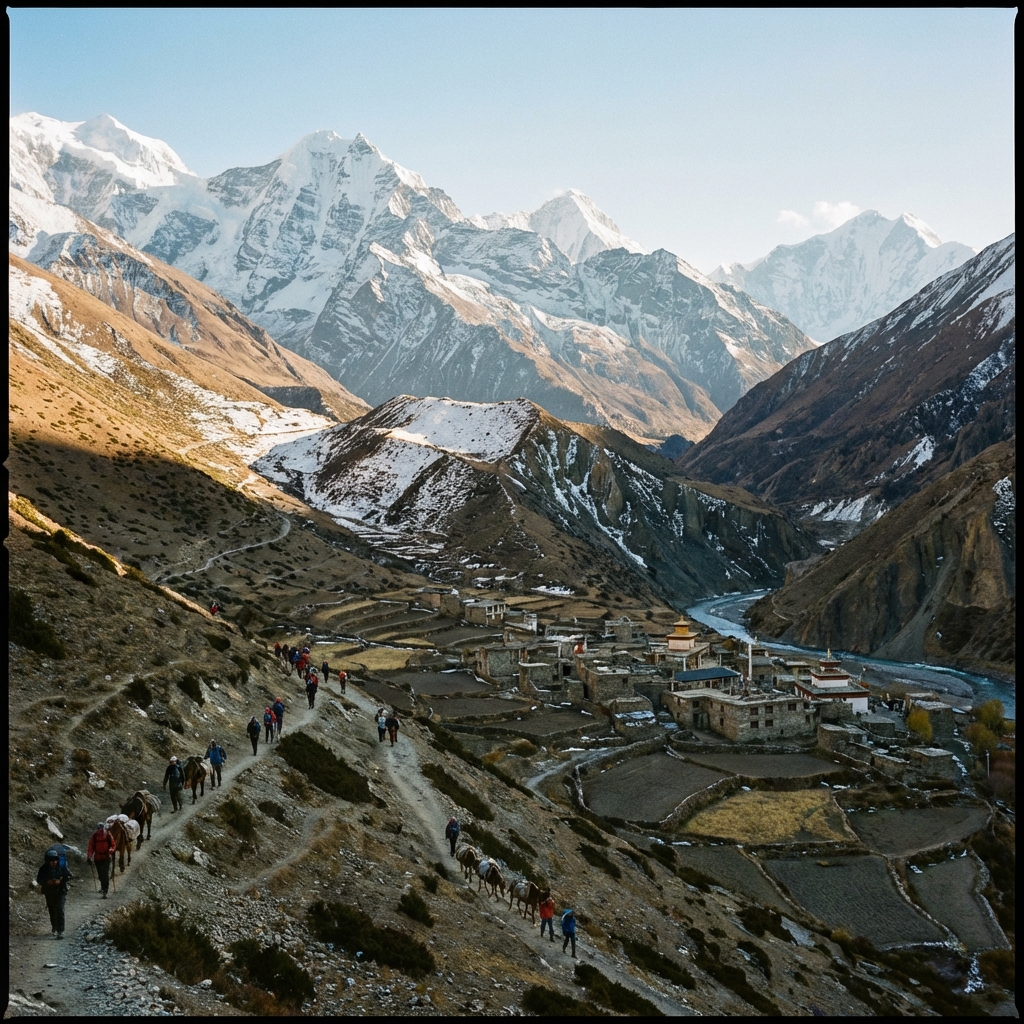
3. Helambu Trek The entire Helambu circuit, being at moderate altitude (2,500m-3,600m) through forested terrain, has significant leech populations during the wet months.
4. Annapurna Circuit (Lower Sections) The trail from Besisahar to Chame passes through lower altitude forests where leeches are active in wet conditions.
5. Manaslu Circuit (Lower Sections) Similar to Annapurna Circuit, the lower approach valleys through forest zones harbor leeches during monsoon.
High-Altitude Treks Are Leech-Free
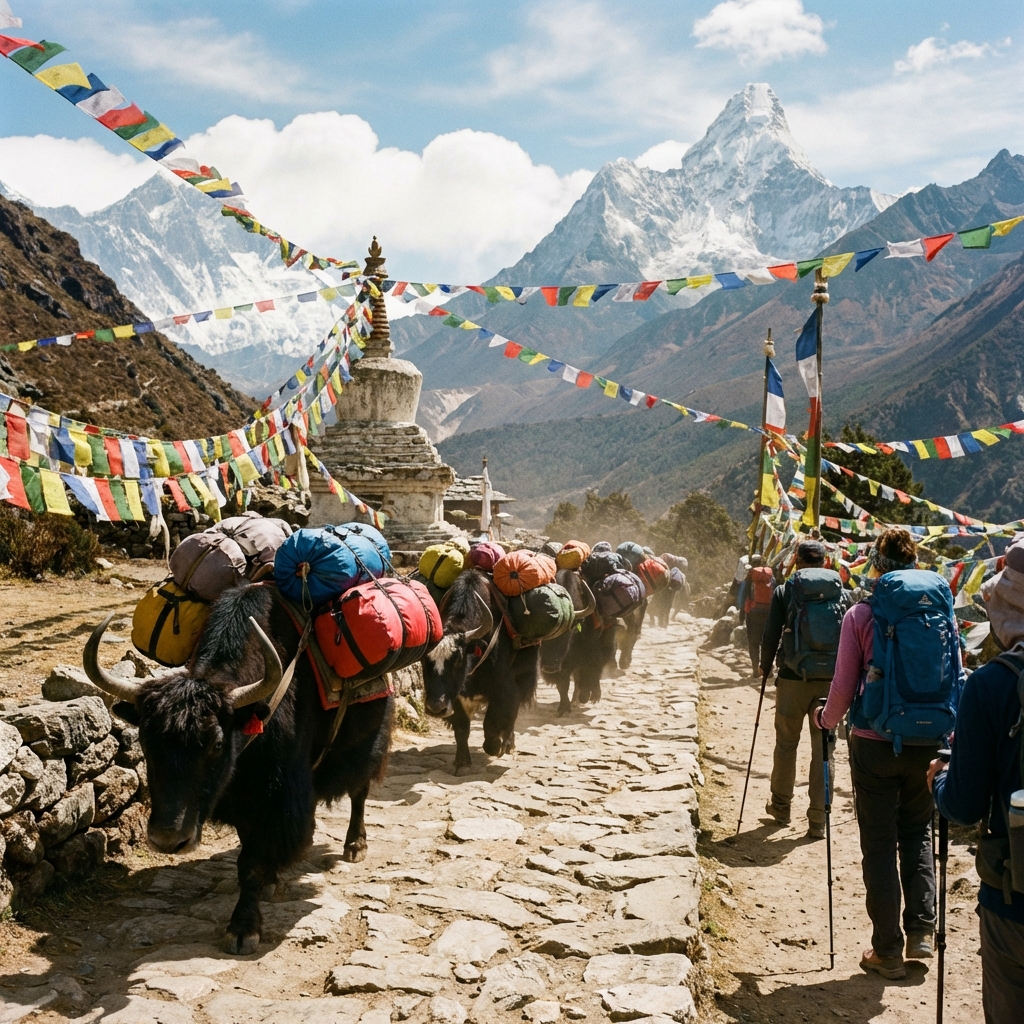
If leeches genuinely disturb you, plan your trek for October-November and choose high-altitude routes. The classic Everest Base Camp trek via Lukla starts at 2,860m and climbs from there -- well above leech territory. The upper sections of the Annapurna Circuit (above Manang) are similarly leech-free. Essentially, once you are above the treeline and into alpine terrain, leeches are not a concern regardless of season.
Leech-Free Treks for Monsoon Season (Rain-Shadow Regions)
If you want to trek during the June-September monsoon but avoid leeches entirely, head to Nepal's rain-shadow regions. These areas sit behind the main Himalayan range, shielded from the heavy monsoon rains, so they stay dry, arid, and leech-free even in July and August:
- Upper Mustang -- a high desert plateau behind the Annapurna and Dhaulagiri massifs. Dry, dusty, and culturally rich, with zero leeches in any season
- Dolpo -- a remote trans-Himalayan region with arid terrain and no monsoon forests to harbour leeches
- Nar Phu Valley -- a partly rain-shadowed valley off the Annapurna Circuit
- Jomsom to Muktinath -- the lower Mustang trail, dry from Jomsom upward
These rain-shadow treks are the best way to enjoy monsoon trekking in Nepal without packing salt and gaiters. For everything else about the wet season, see our monsoon trekking guide.
Leech Prevention Strategies
You cannot eliminate leech encounters entirely during monsoon trekking in lower altitude forests, but you can dramatically reduce them.
Physical Barriers:
- Tuck trousers into socks and secure with rubber bands or gaiters. Leeches climb upward from the ground; blocking their path at ankle level is your first defense
- Wear gaiters. Purpose-built leech gaiters (or standard hiking gaiters) create a physical barrier by sealing the gap between boots and trousers where leeches crawl in through shoelace eyelets. Some trekkers in Nepal use tightly wound cloth strips around their lower legs
- Wear leech socks. Tightly woven cotton/polyester over-socks that pull on over your regular socks and tie just below the knee are sold cheaply in Kathmandu and Pokhara before your trek. They are one of the most effective barriers local guides recommend
- Wear closed-toe trekking boots, not sandals or low-cut shoes
- Do regular buddy checks. Stop every 20-30 minutes on leech-heavy trails to inspect your own boots, socks, and legs, and have your trekking partner check yours. Catching a leech crawling on the outside of a boot takes two seconds; finding it after it has reached skin is far less pleasant
Chemical Repellents:
- DEET (30-50%). Apply generously to boots, socks, lower trouser legs, and exposed skin. Reapply every 2-3 hours or after getting wet
- Permethrin. Treat your socks, trouser legs, and gaiters with permethrin spray before the trek (it lasts through several washes). This is highly effective
- Salt. A traditional and very effective leech deterrent. Rub salt onto your socks, boot tops, and lower trouser legs. Carry a small bag of salt. When a leech is spotted, a pinch of salt causes it to release and shrivel
- Salt and mustard oil paste (the classic Nepali guide method). Local guides mix common table salt with pure mustard oil and rub the paste onto boots and gaiters before setting out. The oil makes the salt stick to wet leather and fabric far longer than dry salt alone, so a leech that touches the surface drops off on contact. This is the single most-cited local prevention trick in monsoon Nepal
- Tobacco. Many Nepali guides rub tobacco on their socks and legs to deter leeches. The most common technique is to wrap raw tobacco or chewing tobacco (khaini) in a thin cloth or mesh, dip it in water, and rub the tobacco juice onto boots and lower legs - the nicotine acts as a strong natural repellent. It works, though the smell is not for everyone, and the same juice repels mosquitoes and sand flies to a lesser degree
- Essential oils (citronella, eucalyptus, tea tree). Some trekkers report moderate success spraying a concentrated water-and-essential-oil mix on gear, but these are less reliable than DEET, salt, or mustard oil
Behavioral Strategies:
- Stay on the trail center. Leeches wait on vegetation at trail edges; the middle of a well-trodden path has fewer
- Avoid resting on the ground in leech areas; sit on rocks, tree stumps, or your pack
- Move at a steady pace. Leeches need time to attach; stopping frequently gives them more opportunities
- Avoid brushing against wet vegetation where leeches may be waiting
Pro Tip
The "leech sock" technique used by experienced Nepal trekkers: Wear a thin, tight pair of long socks over your trouser legs (yes, socks over trousers). Treat these outer socks with salt and DEET. Leeches grab onto the outer sock but cannot easily penetrate through to skin. You can quickly spot and remove them from the white sock surface. It looks ridiculous but works remarkably well.
Leech Removal
Despite your best prevention efforts, you will likely find a leech or two attached to your skin during monsoon trekking in lower forests. Do not panic -- leech bites are harmless.
How to remove a leech:
- Do NOT pull it off with your fingers. Forceful removal can leave the leech's mouth parts embedded in your skin, increasing infection risk
- Use salt. A pinch of salt on the leech causes it to release immediately and shrivel up
- Use a fingernail or flat edge. Slide your fingernail under the leech's sucker (the narrow end attached to skin), breaking the seal. Then flick the broader end
- Use DEET or insect repellent. Apply directly to the leech -- it will release
- Use a lighter flame held near (not on) the leech. The heat causes it to release (be careful not to burn yourself)
After removal:
- Clean the bite with antiseptic (alcohol wipe, iodine, or clean water)
- The bite will bleed -- sometimes for 30-60 minutes. This is because leech saliva contains an anticoagulant (hirudin). This is normal and not dangerous
- To stop the bleeding, apply firm pressure with clean gauze or tissue. A trick Nepali guides use is pressing a small piece of clean, dry paper onto the wound -- it helps the blood seal over the puncture. A non-porous (waterproof) plaster also works well
- Apply a small bandage or plaster to keep the wound clean
- The bite may itch for several days as it heals. Antihistamine cream or hydrocortisone can help
- Watch for signs of infection over the following days (increasing redness, swelling, warmth, pus) -- though infection from leech bites is uncommon
Do Not Use Fire Directly on Leeches
A common but inadvisable technique is to hold a cigarette or lighter flame directly to the leech. This can cause the leech to regurgitate its stomach contents into the wound, potentially introducing bacteria. It can also burn your skin. Using salt, DEET, or the fingernail technique is safer and equally effective.
Are Leeches Dangerous?
No. Nepal's trekking leeches are medically harmless. They do not transmit diseases to humans (unlike mosquitoes). The bite itself is painless (leech saliva contains an anesthetic) and the blood loss from a single leech is trivial (typically 1-5 ml).
The main risks from leech bites are:
- Secondary infection -- if the bite wound is not kept clean, bacteria can enter. This is the most realistic concern
- Allergic reaction -- rare, but some people react to leech saliva with excessive swelling, itching, or hives
- Psychological distress -- genuine leech phobia (bdellophobia) exists, and for some people, multiple leech encounters can significantly impact their trekking experience
- Prolonged bleeding -- the anticoagulant in leech saliva means bites bleed longer than a normal cut. This is messy but not dangerous
Mosquitoes and Mosquito-Borne Diseases in Nepal
While leeches are gross but harmless, mosquitoes are the insects that pose the most genuine health risk in Nepal due to the diseases they carry.
Malaria Risk in Nepal
The key fact for trekkers: Malaria risk on standard Nepal trekking routes is negligible. Malaria-carrying mosquitoes (Anopheles species) are found primarily in the Terai lowlands (below 500m elevation) along the Indian border, and risk decreases rapidly with altitude. Above 1,500m, malaria transmission is essentially zero.
| Area | Altitude | Malaria Risk | Prophylaxis Recommended? |
|---|---|---|---|
| Terai (Chitwan, Lumbini, Bardia) | Below 500m | Low to Moderate (seasonal) | Consult your travel doctor |
| Kathmandu Valley | 1,350m | Negligible | No |
| Pokhara | 827m | Very Low | Generally not, but consult doctor |
| Trekking routes above 1,500m | Above 1,500m | None | No |
| Everest region (entire trek) | 2,860m+ | None | No |
| Annapurna region above Besisahar | Above 800m | Very Low to None | No |
When malaria prophylaxis IS recommended:
- Extended stays in Chitwan National Park or Bardia National Park (especially during monsoon)
- Travel in the Terai lowlands during June-September
- Overnight stays in rural lowland areas
When malaria prophylaxis is NOT needed:
- Standard trekking routes (EBC, ABC, Annapurna Circuit, Langtang, Manaslu)
- Stays limited to Kathmandu and Pokhara
- High-altitude travel
Dengue Fever Risk
Dengue is a growing concern in Nepal's urban and peri-urban areas. Unlike malaria, dengue-carrying mosquitoes (Aedes aegypti and Aedes albopictus) bite during the daytime and can be found at somewhat higher altitudes.
Key facts:
- Dengue outbreaks have been reported in Kathmandu (1,350m) and Pokhara (827m) in recent years
- Peak transmission occurs during and after the monsoon (July-November)
- No prophylactic medication exists for dengue -- prevention is entirely about avoiding mosquito bites
- Symptoms include high fever, severe headache, pain behind the eyes, joint/muscle pain, and rash
- Most cases are self-limiting, but severe dengue (dengue hemorrhagic fever) can be life-threatening
Dengue risk areas for trekkers:
- Kathmandu (especially during monsoon, before and after your trek)
- Pokhara (before/after ABC or Annapurna Circuit treks)
- Chitwan and other Terai areas
- Urban areas at lower altitudes
On the trail: Dengue risk drops significantly above 2,000m, and is essentially zero on high-altitude trekking sections.
Dengue Has No Vaccine or Prophylaxis
Unlike malaria (which has prophylactic medication) and Japanese Encephalitis (which has a vaccine), dengue fever has no preventive medication or widely available vaccine for travelers. Prevention relies entirely on avoiding mosquito bites. Dengue-carrying Aedes mosquitoes bite during daylight hours, peaking at dawn and dusk, which means the standard advice of "use a mosquito net at night" is not sufficient. You must use repellent, wear long sleeves, and take precautions throughout the day while in Kathmandu, Pokhara, and other urban areas below 2,000m during monsoon season. If you develop high fever with severe headache and body pain after visiting these areas, seek medical attention promptly.
Pro Tip
Your highest mosquito-borne disease risk is in the cities, not on the trail. Most trekkers spend days in Kathmandu and Pokhara before and after their trek, often staying in Thamel guesthouses or lakeside hotels where mosquitoes are present. Use repellent, sleep under a mosquito net (or in air-conditioned rooms with closed windows), and wear long sleeves during dawn and dusk hours while in urban areas. On the trek itself above 2,500m, mosquitoes are minimal to absent.
Japanese Encephalitis
Japanese Encephalitis (JE) is present in Nepal's Terai lowlands and some lower hill areas, particularly near rice paddies and pig farms. The risk for standard trekkers is very low, but vaccination is recommended for:
- Extended stays (more than one month) in rural Nepal
- Travel to Chitwan or other Terai areas during monsoon
- Trekkers spending significant time below 1,000m in rural areas
The JE vaccine is widely available at travel clinics before departure. Consult your travel doctor about whether it is recommended for your specific itinerary.
Mosquito Prevention Strategies
| Strategy | Effectiveness | When to Use |
|---|---|---|
| DEET repellent (30-50%) | High | Urban areas, lower altitude trails, Terai |
| Permethrin-treated clothing | High | All areas below 2,000m |
| Long sleeves and pants at dawn/dusk | Moderate | Urban areas, tea houses at lower altitudes |
| Mosquito net for sleeping | High | Tea houses and hotels below 2,000m |
| Avoiding standing water areas | Moderate | Urban and rural lower areas |
| Electric mosquito coils | Moderate | Tea house rooms (available for purchase) |
| Plug-in repellent devices | Moderate | Hotels in Kathmandu and Pokhara |
For vaccination recommendations including Japanese Encephalitis, see our vaccinations for Nepal trekking guide.
Bedbugs in Tea Houses
Bedbugs are not insects you encounter on the trail but rather in your overnight accommodation. While Nepal's tea houses are generally clean, bedbug infestations can occur anywhere, particularly in heavily trafficked tea houses during peak season.
How Common Are Bedbugs?
Bedbugs in Nepal tea houses are relatively uncommon but not unheard of. They tend to be more of an issue in:
- Very busy tea houses during peak October-November season (high turnover of guests)
- Older, less maintained tea houses with wooden bed frames
- Lower-altitude tea houses and budget guesthouses in Kathmandu/Pokhara
- Tea houses that rarely air and sun their mattresses
Higher-altitude tea houses (above 4,000m) tend to have fewer bedbug issues, partly because the cold temperatures slow bedbug reproduction and activity.
Recognizing Bedbug Bites
- Bites appear as small, red, itchy welts, often in lines or clusters
- They typically appear on exposed skin (arms, shoulders, neck, face)
- Bites are usually noticed in the morning after an overnight stay
- Not everyone reacts to bedbug bites -- some people show no visible marks
Prevention Strategies
- Use a sleeping bag liner (silk or synthetic) as a barrier between you and the mattress
- Inspect the mattress before settling in -- look for small brown bugs, tiny dark spots (fecal matter), or blood smears on sheets
- Use your own sleeping bag rather than tea house blankets
- Keep your pack off the bed and use the luggage rack or hang it from a hook
- If you suspect bedbugs, ask to switch rooms or move to a different tea house
Treatment
- Bedbug bites are not medically dangerous -- they do not transmit diseases
- Treat itching with antihistamine cream or oral antihistamines
- Avoid scratching, which can lead to secondary infection
- Bites typically resolve within 1-2 weeks
Bedbug-Proofing Your Gear
If you encounter bedbugs, prevent them from hitchhiking home in your gear. When you reach your next stop, remove all clothing from your bag and shake it out thoroughly. If possible, leave your pack in direct sunlight for several hours (UV and heat discourage bedbugs). Upon returning home, wash all trek clothing and your sleeping bag liner in hot water (60°C or higher) and dry on high heat. Inspect your backpack seams and pockets before storing.
Other Insects and Arachnids
Sand Flies (Phlebotomine Flies)
Sand flies are tiny biting flies found in lower altitude areas of Nepal, particularly the Terai and lower hills (below 1,000m). Their bites are painful and itchy, and in some regions, they can transmit leishmaniasis (a parasitic disease). For trekkers, the risk is mainly in lowland areas before and after the trek.
Prevention:
- DEET repellent
- Permethrin-treated clothing
- Fine-mesh mosquito nets (standard nets may be too coarse for tiny sand flies)
- Sand flies are most active at dawn and dusk
Ticks
Ticks are found in grassland and scrub areas at lower and middle altitudes in Nepal. They are not a major concern on most trekking routes but can be encountered in:
- Grasslands in the Terai
- Lower hill areas with tall grass
- Livestock grazing areas along lower altitude trails
Prevention and removal:
- Check your body for ticks daily, especially behind ears, hairline, armpits, and groin
- Wear long pants tucked into socks in grass areas
- Use DEET or permethrin
- Remove ticks with fine-tipped tweezers, grasping close to the skin and pulling steadily upward
- Clean the bite area with antiseptic
- Monitor for unusual rash or fever in the weeks following a tick bite
Bees, Wasps, and Hornets
Nepal's forests host several species of bees, wasps, and hornets, including the Himalayan giant honeybee (Apis laboriosa), which builds massive cliff-hanging hives. Stinging insects are generally not aggressive unless disturbed, but they can be a serious concern for people with known sting allergies.
Key advice:
- If you have a known bee/wasp allergy, carry an epinephrine auto-injector (EpiPen) and ensure your trekking companions know how to use it
- Avoid bright-colored clothing and strong perfumes in forest areas
- If you encounter a bee or wasp swarm, move away slowly -- do not swat or run
- Himalayan honey-hunting areas (some lower trekking routes pass near cliff hives) can have increased bee activity
Fleas
Fleas can occasionally be encountered in tea houses, particularly in rooms shared with or recently occupied by animals (dogs, yaks). Flea bites appear as small red dots, usually around ankles and lower legs, and are intensely itchy.
Prevention:
- Use a sleeping bag rather than tea house blankets
- If you notice animals sleeping in or near your room, request a different room
- Flea bites respond well to antihistamine cream
Spiders
Nepal has various spider species, but medically significant spider bites are extremely rare for trekkers. Most Nepal spiders are harmless. There are no highly venomous spider species of concern on standard trekking routes. The occasional spider in a tea house room is harmless and best left alone (they eat mosquitoes and flies).
Building Your Insect Defense Kit
Every trekker should carry basic insect prevention and treatment supplies. Here is a recommended kit.
| Item | Purpose | Weight | Priority |
|---|---|---|---|
| DEET repellent (30-50%), 100ml | Primary insect repellent | 120g | Essential |
| Permethrin spray | Pre-treat socks, gaiters, trousers | 150g (leave in hotel after treatment) | Highly recommended |
| Small bag of salt | Leech removal and deterrent | 50g | Essential for monsoon treks |
| Antihistamine tablets (cetirizine) | Reduce itching from bites | Minimal | Essential |
| Hydrocortisone cream (1%) | Topical anti-itch treatment | 30g | Recommended |
| Antiseptic wipes or povidone-iodine | Clean bite wounds | 50g | Essential |
| Fine-tipped tweezers | Tick removal, splinter removal | 20g | Recommended |
| Sleeping bag liner | Barrier against bedbugs and tea house bedding | 150-250g | Highly recommended |
| Mosquito head net | Protection in heavy mosquito/sand fly areas | 30g | Optional (monsoon/Terai) |
| Leech gaiters or standard gaiters | Physical barrier against leeches | 100-200g | Essential for monsoon treks |
For a complete first aid kit checklist, see our first aid and medical kit guide.
Pro Tip
Buy DEET and salt in Kathmandu if you forget to pack them. Pharmacies in Thamel sell DEET-based insect repellent (brand name "Odomos" is common in Nepal), and salt is available at any shop. You do not need to carry these items from home. However, permethrin spray is harder to find in Nepal, so treat your clothing before departure if possible.
Season-by-Season Insect Guide
| Season | Leeches | Mosquitoes | Bedbugs | Sand Flies | Bees/Wasps |
|---|---|---|---|---|---|
| Spring (Mar-May) | Low (increasing with pre-monsoon rain) | Moderate in lowlands | Low | Moderate in Terai | Active in forests |
| Monsoon (Jun-Sep) | Very High below 3,000m | High in lowlands and cities | Moderate | High in Terai | Active |
| Autumn (Oct-Nov) | Low to None (declining rapidly) | Low (declining) | Moderate (peak season crowding) | Low | Active then declining |
| Winter (Dec-Feb) | None | Very Low | Low | Very Low | Dormant |
Frequently Asked Questions
Will I definitely encounter leeches on the Everest Base Camp trek?
No. The Everest Base Camp trek starts at Lukla (2,860m), which is above the typical leech altitude range. Even during monsoon, leeches are not a significant concern on the EBC route. The trail passes through some forest between Lukla and Namche, but the altitude and relatively drier conditions make leech encounters rare. If you are flying to Lukla (not walking from Jiri), leech encounters on the EBC trek are extremely unlikely in any season.
How bad are leeches on the Annapurna Base Camp trek in October?
By October, leech activity is declining rapidly as the monsoon ends and conditions dry out. Early October may still have some leech presence on the lower sections (Nayapul to Ghorepani, and the initial climb through bamboo forest toward ABC), but by mid to late October, encounters are uncommon. The upper sections (above 3,000m approaching ABC) are above leech territory entirely. If you are particularly leech-averse, late October is a good time to minimize encounters while still having good weather.
Do I need malaria prophylaxis for trekking in Nepal?
For standard trekking routes (Everest Base Camp, Annapurna Circuit/Base Camp, Langtang, Manaslu), the answer is almost always no. These routes are above the altitude where malaria-carrying mosquitoes operate. You only need to consider malaria prophylaxis if your itinerary includes extended time in the Terai lowlands (Chitwan National Park, Bardia, Lumbini) during monsoon season. Consult your travel doctor with your specific itinerary for personalized advice.
What is the best insect repellent for Nepal trekking?
DEET-based repellent at 30-50% concentration is the most effective and widely recommended option. Apply to exposed skin and spray on socks and trouser legs. For added protection, pre-treat clothing with permethrin spray (which lasts through multiple washes). Picaridin-based repellents are a reasonable DEET alternative if you prefer. Natural repellents (citronella, eucalyptus) provide some protection but are less effective and shorter-lasting than DEET.
Does rubbing tobacco on your skin keep leeches and mosquitoes away?
Yes, to a degree -- it is a long-standing Nepali guide technique. Guides wrap raw or chewing tobacco (khaini) in cloth, dip it in water, and rub the tobacco juice onto their boots, gaiters, and lower legs; the nicotine deters leeches on contact and discourages mosquitoes and sand flies to a lesser extent. Apply it to footwear and clothing rather than broken skin. For reliable, all-day protection against biting insects, DEET (30-50%) is still more effective and longer-lasting than tobacco, but tobacco is a cheap, locally available backup -- and against leeches specifically, salt or a salt-and-mustard-oil paste works just as well.
Should you use salt to remove a leech?
Salt is the fastest, most reliable field method and is widely used across Nepal: a pinch causes the leech to release and drop off within seconds. The one caveat is that any harsh removal -- salt, vinegar, alcohol, fire -- can make a feeding leech regurgitate slightly into the wound, which marginally raises infection risk. For a leech that is already firmly attached and feeding, the gentlest option is to slide a fingernail or flat edge under the narrow sucker end to break the seal, then flick it off. For leeches still crawling on boots or socks, salt is perfectly fine and convenient. Either way, clean the bite with antiseptic afterwards.
Can leeches transmit diseases?
No. Unlike mosquitoes and ticks, leeches are not known to transmit diseases to humans. While leech saliva contains various bioactive compounds (anticoagulants, vasodilators, anesthetics), none of these cause disease. The only health risk from leech bites is secondary bacterial infection if the wound is not kept clean, and allergic reactions in rare cases.
How do I deal with leeches psychologically? I have a genuine phobia.
Leech phobia (bdellophobia) is real and understandable. If you have a genuine phobia, consider: (1) Trekking in October-November or March-April when leeches are minimal; (2) Choosing high-altitude routes above 3,000m where leeches do not exist; (3) Wearing comprehensive protection (gaiters, tucked pants, DEET) so encounters are minimal; (4) Having a trekking partner who is comfortable handling leech removal for you; (5) Practicing exposure therapy before your trip if your phobia is severe. Many trekkers who dread leeches before their trip find that after the first encounter and removal, the anxiety decreases significantly.
Are there poisonous spiders or scorpions on Nepal trekking routes?
Medically significant spider and scorpion encounters on standard Nepal trekking routes are extremely rare. Nepal does have some scorpion species in lower altitude areas (Terai and lower hills), but they are not commonly encountered by trekkers. There are no highly venomous spider species of significant concern on trekking routes. Standard precautions apply: shake out boots before putting them on in the morning, and do not put your hands into spaces you cannot see.
How do I prevent bedbugs in tea houses?
Use your own sleeping bag rather than tea house blankets, inspect the mattress for signs of bedbugs (small brown insects, dark fecal spots, blood smears) before settling in, keep your backpack off the bed and on a rack or hook, and use a sleeping bag liner as an additional barrier. If you suspect an infestation, ask to change rooms or switch to a different tea house. Bedbug encounters are uncommon in most tea houses, but being prepared minimizes the small risk.
Is dengue fever a real risk for trekkers in Nepal?
Dengue is a growing concern in Nepal's urban areas, particularly Kathmandu and Pokhara during and after monsoon (July-November). For trekkers, the risk is mainly during the days spent in these cities before and after the trek, not during the trek itself at altitude. Use mosquito repellent, wear long sleeves at dawn and dusk, and sleep in rooms with screens or air conditioning while in urban areas. There is no vaccine or prophylactic medication for dengue -- prevention depends entirely on avoiding mosquito bites.
Should I bring a mosquito net for my Nepal trek?
For tea house treks above 2,000m, a mosquito net is generally not necessary. Mosquitoes are minimal at these altitudes, and most tea houses have screened windows or are at altitudes where mosquitoes are scarce. However, a mosquito net is worth considering if you are: (1) trekking during monsoon season at lower altitudes; (2) spending multiple nights in Chitwan or other Terai areas; (3) staying in very basic tea houses or camping. A lightweight travel net weighs only about 250g and provides peace of mind.
What should I do if I get hundreds of leech bites during a monsoon trek?
Multiple leech bites, while deeply unpleasant, are not medically dangerous. The main concern is keeping the bite wounds clean to prevent infection. Clean all bites with antiseptic, apply bandages to the ones that are actively bleeding, take an antihistamine for itching, and change into clean dry socks and clothing. The anticoagulant in leech saliva means bites bleed for 30-60 minutes -- this looks dramatic but the actual blood loss is minimal. If you experience excessive swelling, spreading redness, or signs of allergic reaction, seek medical attention.
Key Takeaways
The insect and leech situation on Nepal treks is manageable with proper preparation and realistic expectations:
- Leeches are harmless but unpleasant. They are a monsoon and lower-altitude phenomenon. Peak season (October-November) treks above 3,000m are largely leech-free
- Mosquito-borne disease risk is mainly in cities and lowlands, not on high-altitude trekking routes. Use repellent in Kathmandu and Pokhara
- DEET is your best friend. A single bottle of 30-50% DEET repellent handles leeches, mosquitoes, and most other biting insects
- Bedbugs are uncommon but possible. Use your own sleeping bag and liner as protection
- No panic necessary. None of these creatures should dissuade you from trekking in Nepal. With basic prevention, they are minor inconveniences at most
For related health preparation, see our first aid and medical kit guide, monsoon trekking guide, and vaccinations guide.
This guide provides general health information for educational purposes. For personalized medical advice regarding insect-borne disease prevention, including malaria prophylaxis and vaccination recommendations, consult a travel medicine specialist before your trip.