
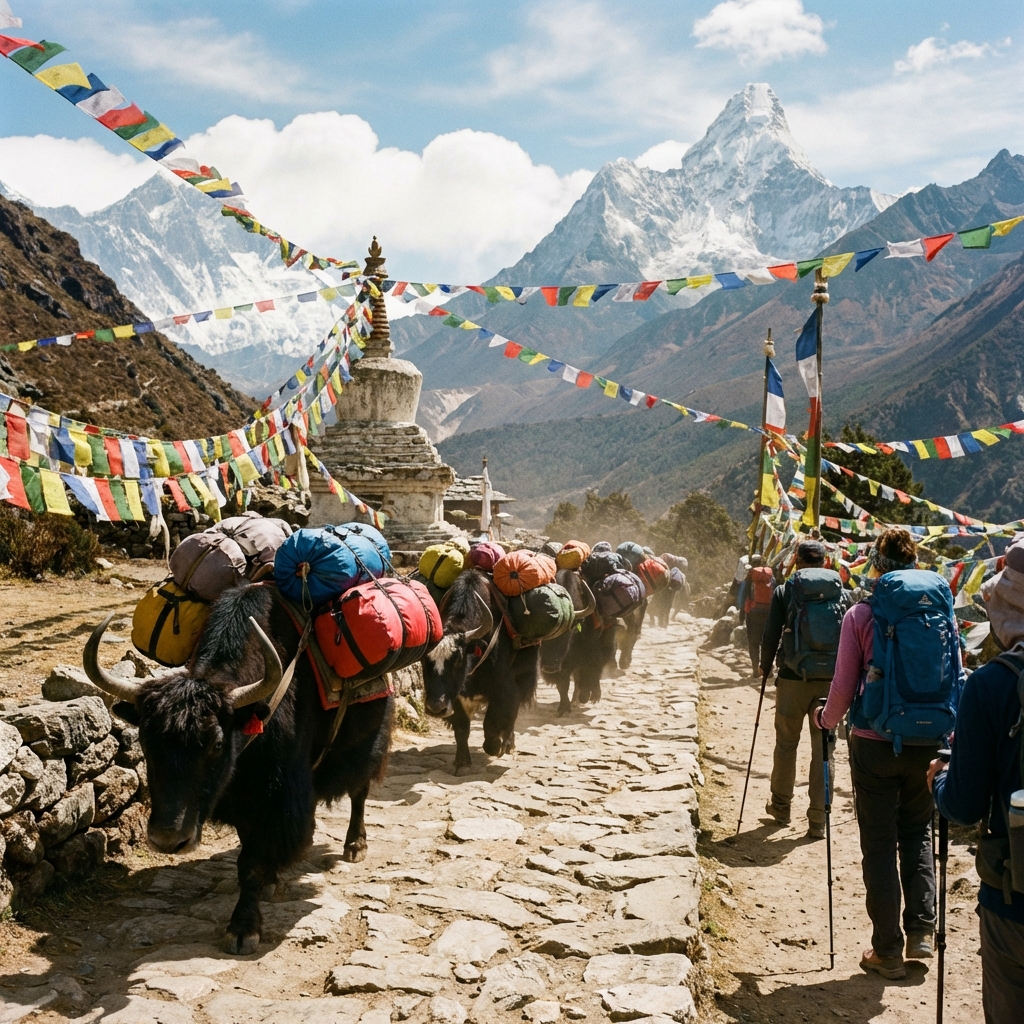
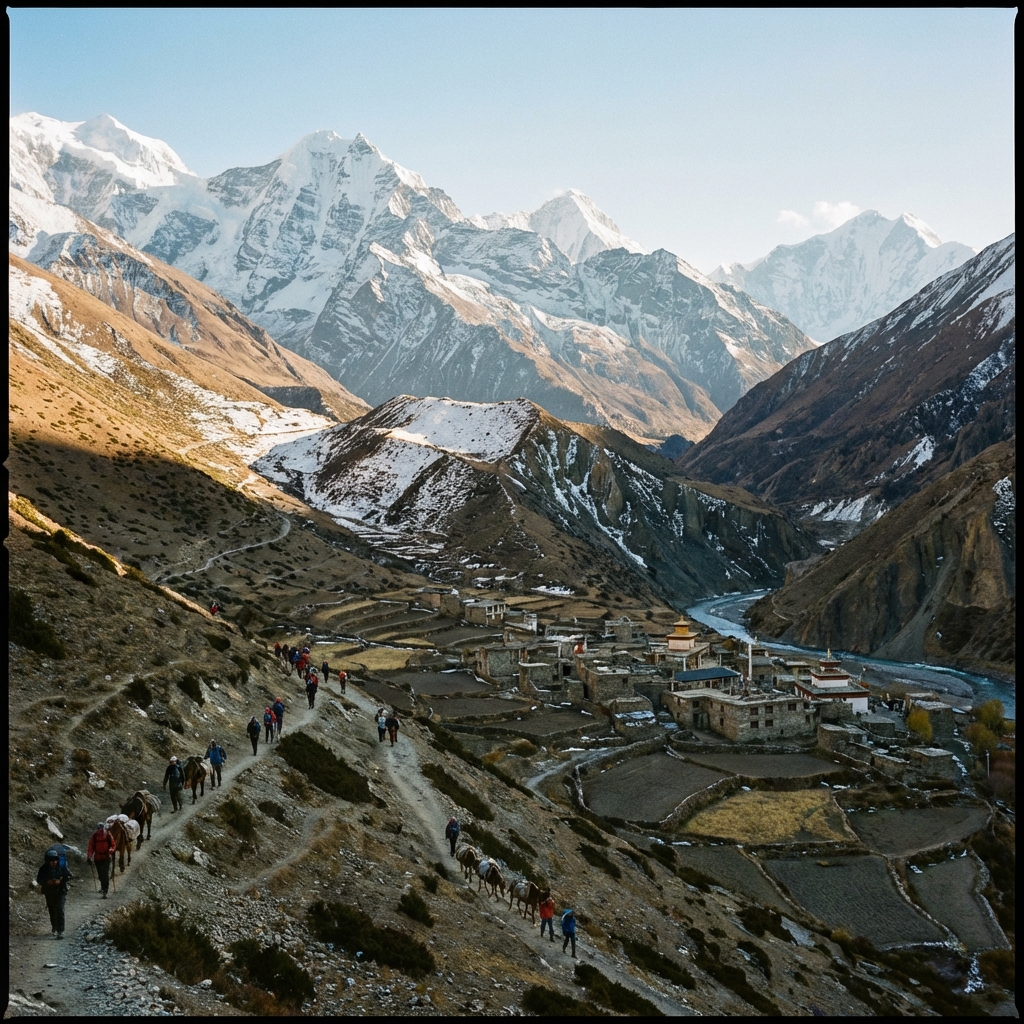
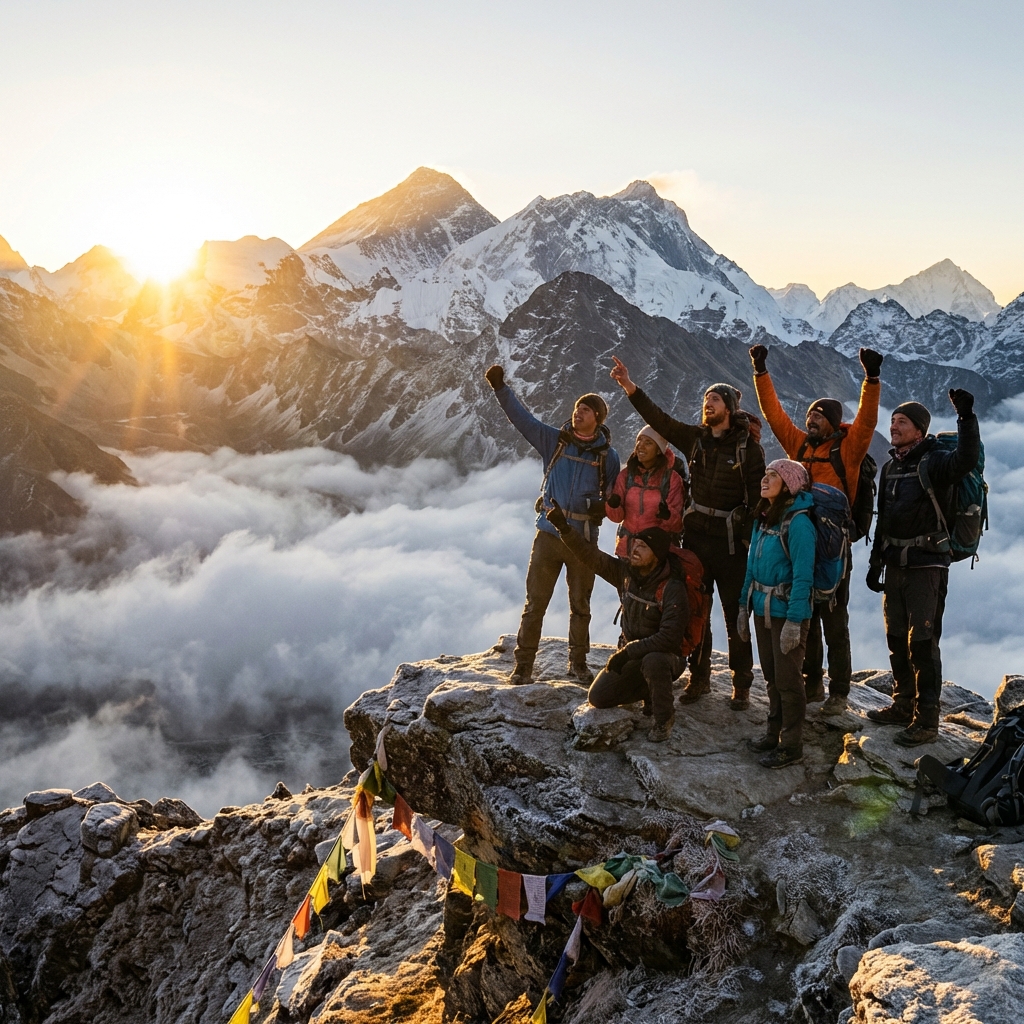
Sir Edmund Hillary, the first person to summit Mount Everest, once called the view from Pikey Peak "the finest viewpoint in the entire Himalaya." Standing at 4,065m on a clear morning, you understand why. From this modest summit in the Solukhumbu district, an unbroken panorama stretches from Kanchenjunga (8,586m) in the east to Dhaulagiri (8,167m) in the west, encompassing Everest (8,849m), Lhotse (8,516m), Makalu (8,485m), and a dozen more giants in a single, breathtaking sweep.
The remarkable thing about Pikey Peak is not just the view -- it is how easy it is to get there. No expensive Lukla flights. No two-week commitment. No altitudes above 5,000m. No crowds. The Pikey Peak trek takes just 4-7 days, starts from a trailhead reachable by road from Kathmandu, peaks at a manageable 4,065m, and costs a fraction of what Everest Base Camp demands.
For trekkers who want world-class Himalayan mountain views without the time, budget, or altitude challenges of EBC, Pikey Peak is one of Nepal's best-kept secrets. This guide covers everything you need to plan this outstanding short trek.
4-7 days
4,065m (13,336 ft)
Easy to Moderate
Oct-Nov, Mar-May
Dhap or Jiri (drive from Kathmandu)
No - entirely road accessible
TIMS + Local municipality fee
~$25-35
No (but recommended)
Basic teahouses and homestays
Very few - highly uncrowded
Everest, Kanchenjunga, Makalu, Lhotse, Dhaulagiri, and more
Why Pikey Peak?
Edmund Hillary's Endorsement
Sir Edmund Hillary's connection to Pikey Peak goes beyond a casual comment. After decades of working in the Solukhumbu district building schools and hospitals through the Himalayan Trust, Hillary had intimate knowledge of virtually every vantage point in the Everest region. His identification of Pikey Peak as the "finest viewpoint" carried the weight of unparalleled experience. The summit offers what few other accessible points provide: a complete Himalayan panorama stretching roughly 300 kilometers from east to west.
The View: What You Actually See
From Pikey Peak on a clear morning, you can identify the following peaks:
| Peak | Height | Direction | Distance |
|---|---|---|---|
| Kanchenjunga | 8,586m | East | ~150 km |
| Makalu | 8,485m | Northeast | ~80 km |
| Lhotse | 8,516m | North-Northeast | ~70 km |
| Everest (Sagarmatha) | 8,849m | North-Northeast | ~75 km |
| Cho Oyu | 8,188m | North | ~90 km |
| Gauri Shankar | 7,134m | Northwest | ~50 km |
| Langtang Lirung | 7,227m | Northwest | ~120 km |
| Ganesh Himal | 7,422m | West-Northwest | ~140 km |
| Manaslu | 8,163m | West | ~160 km |
| Annapurna range | 8,091m | West | ~200 km |
| Dhaulagiri | 8,167m | West | ~230 km |
This means you can see four of the world's five highest peaks (Everest, Kanchenjunga, Lhotse, Makalu) and six of the world's fourteen 8,000m peaks from a single point. Very few viewpoints anywhere in the Himalayas can match this.
Pro Tip
Sunrise is the magic hour on Pikey Peak. Plan to camp at or near the summit the night before (or at the nearby monastery) and reach the summit by 5:30-6:00 AM. The first golden light hitting Everest and its neighbors creates one of the most photographable moments in all of Nepal trekking. Bring a tripod for long exposures in the pre-dawn blue light.
The Practical Advantages
Beyond the stunning views, Pikey Peak solves several problems that plague more popular treks:
No Lukla flight required. The trailhead is reached by driving from Kathmandu (7-10 hours to Dhap or Jiri). This eliminates the expense ($180-350 return), unpredictability, and anxiety of the Lukla flight. No weather delays, no cancellations, no lost trekking days.
Manageable altitude. At 4,065m, Pikey Peak is over 1,000 meters lower than Everest Base Camp (5,364m). Altitude sickness risk is significantly reduced, and most reasonably fit trekkers can reach the summit without the 12-14 days of gradual acclimatization that EBC requires.
Short duration. A complete Pikey Peak trek takes just 4-7 days, compared to 12-14 for EBC. For travelers with limited vacation time, this is transformative.
Budget-friendly. Without flight costs, expensive Sagarmatha National Park permits ($30 vs $3,000+ for Everest area foreigners under newer fee structures), or two weeks of teahouse stays, Pikey Peak costs a fraction of EBC.
Uncrowded. While EBC sees hundreds of trekkers daily during peak season, you may encounter only a handful of others on the entire Pikey Peak route. On many days, you will have the trail entirely to yourself.
Route Options
Option 1: Standard Pikey Peak Trek from Dhap (4-5 Days)
The most direct route, starting from the roadhead at Dhap.
| Day | Route | Altitude | Hours | Notes |
|---|---|---|---|---|
| 1 | Kathmandu to Dhap (drive) | 2,850m | 8-10 hrs | Long but scenic drive through middle hills |
| 2 | Dhap to Pikey Base Camp | 3,640m | 5-6 hrs | Through forest and Sherpa villages |
| 3 | Pikey BC to Pikey Peak (4,065m) to Junbesi | 2,675m | 7-8 hrs | Summit at dawn; long descent |
| 4 | Junbesi to Salleri/Phaplu | 2,400m | 5-6 hrs | Through historic Sherpa trading town |
| 5 | Phaplu/Salleri to Kathmandu (drive or flight) | - | 10-12 hrs drive | Or 30-min flight from Phaplu |
Option 2: Extended Pikey Peak Trek via Jiri (6-7 Days)
A longer route starting from the historic Jiri trailhead (the original Everest approach before Lukla flights existed).
| Day | Route | Altitude | Hours | Notes |
|---|---|---|---|---|
| 1 | Kathmandu to Jiri (drive) | 1,905m | 7-8 hrs | Historic EBC trailhead town |
| 2 | Jiri to Shivalaya | 1,770m | 4-5 hrs | Gentle start through farming villages |
| 3 | Shivalaya to Deorali | 3,050m | 6-7 hrs | Significant climb; forest trail |
| 4 | Deorali to Pikey Base Camp | 3,640m | 5-6 hrs | Approach through high pastures |
| 5 | Pikey BC to Pikey Peak (4,065m) to Junbesi | 2,675m | 7-8 hrs | Summit and descent |
| 6 | Junbesi to Phaplu/Salleri | 2,400m | 5-6 hrs | Trading town with monastery |
| 7 | Phaplu/Salleri to Kathmandu | - | 10-12 hrs | Drive or flight |
Option 3: Pikey Peak as Extension to Jiri-Lukla Historic Route
For trekkers walking the historic Jiri-to-Lukla route (the path Hillary and Tenzing used), Pikey Peak is a natural 1-2 day side trip.
Which Route to Choose?
The 4-5 day route from Dhap is the most efficient and popular option. The Jiri route adds cultural depth and a gentler acclimatization profile but requires 2 extra days. If time permits, the Jiri approach is the richer experience, passing through the historic Sherpa trading route that all Everest expeditions used before 1964 when the Lukla airstrip was built.
Detailed Itinerary: 5-Day Standard Route
Day 1: Kathmandu to Dhap (Drive)
Duration: 8-10 hours by jeep Altitude: 2,850m
The drive from Kathmandu to Dhap follows the Arniko Highway toward the Tibetan border before turning south through the Ramechhap district. The road is paved for most of the journey but becomes rough for the final 1-2 hours. This is not a glamorous start, but the drive through Nepal's middle hills is scenic, passing through terraced farmland, river valleys, and small market towns.
Tips for the drive:
- Depart Kathmandu by 6-7 AM to arrive before dark
- Bring snacks and water; roadside stops are basic
- Motion sickness medication recommended for the winding mountain roads
- A private jeep (arranged through your agency or independently) costs $150-250 for the vehicle
- Shared local transport is cheaper ($15-25 per person) but slower and less comfortable
Day 2: Dhap to Pikey Base Camp
Duration: 5-6 hours trekking Altitude: 2,850m to 3,640m (gain: 790m)
The trail climbs steadily through mixed forest (rhododendron, oak, birch) and passes through small Sherpa settlements. The path is well-maintained and clearly marked, ascending gradually with several tea stops along the way. As you gain altitude, views begin to open up with glimpses of the Everest range to the north.
Pikey Base Camp (also called Pikey Danda or the monastery area) has basic teahouses and a small monastery. Spend the afternoon acclimatizing with a short hike above camp for preview views.
Day 3: Pikey Peak Summit and Descent to Junbesi
Duration: 7-8 hours total (2-3 hours to summit, 5-6 hours descent to Junbesi) Altitude: 3,640m to 4,065m (summit), then down to 2,675m
This is the highlight day. Wake before dawn (4:00-4:30 AM), pack a headlamp and warm layers, and ascend the final 425m to Pikey Peak summit in approximately 1.5-2.5 hours. The pre-dawn climb is cold but non-technical, following a clear trail.
At the summit, a Hindu temple and Buddhist prayer flags mark the highest point. As the sun rises, the full Himalayan panorama reveals itself. On a clear morning, the view is genuinely staggering -- wall-to-wall Himalayan giants spanning your entire field of vision.
After absorbing the sunrise (plan to spend 1-2 hours at the summit), descend toward the south through beautiful forest to the historic Sherpa trading town of Junbesi (2,675m). Junbesi was an important stop on the original Jiri-to-Everest trekking route and has a significant monastery and traditional Sherpa community.
Pro Tip
Carry a thermos of hot tea or coffee for the summit. The pre-dawn temperatures at 4,065m can be very cold (minus 5 to minus 15 degrees Celsius depending on season), and having a warm drink while watching the sunrise transforms the experience. Your teahouse can fill a thermos the night before.
Day 4: Junbesi to Phaplu/Salleri
Duration: 5-6 hours trekking Altitude: 2,675m to 2,400m
A pleasant walk through the Dudh Kosi valley, passing through Ringmo (not to be confused with Ringmo in Dolpo) and apple orchards. The trail follows the old Jiri-Everest route, rich in history. Phaplu has a small airport with occasional flights to Kathmandu, and Salleri is the district headquarters with more services.
Day 5: Return to Kathmandu
Duration: 10-12 hours by road (or 30-minute flight from Phaplu if available)
The drive from Phaplu/Salleri to Kathmandu is long but straightforward. Alternatively, Phaplu airport offers occasional flights to Kathmandu (approximately $120-150), though these are not daily and cancellations are common. Most trekkers drive back for reliability.
Difficulty Assessment
Physical Demands
Pikey Peak is rated Easy to Moderate, making it accessible to a wide range of trekkers:
- Daily walking: 5-7 hours on most days
- Maximum altitude gain in a day: Approximately 800m (Day 2)
- Summit day: 425m gain from base camp, but at altitude; 1,662m total descent to Junbesi
- Trail quality: Mix of forest paths, village trails, and some rocky sections; well-marked
- Technical difficulty: None; no scrambling, no exposure, no equipment needed beyond trekking boots
Who Can Do This Trek?
Ideal candidates:
- Beginners with basic hiking fitness
- Day hikers stepping up to multi-day trekking
- Trekkers who want Everest views without Everest commitment
- Budget-conscious travelers avoiding flight costs
- Photographers seeking mountain panoramas without high-altitude challenges
- Senior trekkers comfortable with moderate daily walking
- Families with older children (10+)
Fitness requirements:
- Ability to walk 5-7 hours per day on hilly terrain
- Comfort with 800m elevation gain in a single day
- No prior trekking experience needed (though helpful)
- No altitude pre-acclimatization needed for the 4,065m summit
Altitude Risk Assessment
At 4,065m, Pikey Peak sits below the threshold where serious altitude sickness commonly occurs. While mild symptoms (headache, slight breathlessness) are possible, the risk of AMS, HACE, or HAPE is very low with the gradual ascent profile of the standard itinerary. This makes Pikey Peak an excellent choice for trekkers who are concerned about altitude sickness or want to avoid the extensive acclimatization schedules required for treks above 5,000m.
For more treks with lower altitude sickness risk, see our guide to the best treks without altitude sickness risk.
Best Season
Season Comparison
| Season | Months | Views | Temperature | Trail | Crowds | Rating |
|---|---|---|---|---|---|---|
| Autumn | Oct-Nov | Exceptional | Cool days, cold nights | Excellent | Very Low | Best |
| Spring | Mar-May | Good (some haze) | Warm; rhododendrons in bloom | Good | Very Low | Very Good |
| Early Winter | Dec-Jan | Excellent (clearest) | Very cold at summit (-15 to -20C) | Snow possible | Almost None | Good (for experienced) |
| Late Winter | Feb | Very Good | Cold but warming | Snow possible above 3,500m | Almost None | Good |
| Monsoon | Jun-Sep | Poor (cloud/rain) | Warm | Muddy; leeches | None | Not Recommended |
Optimal Timing
Late October through mid-November is the prime window. Post-monsoon skies are at their clearest, temperatures are cold but manageable, and the autumn light produces the best photography conditions.
March-April is the second-best window, offering rhododendron blooms in the forest sections and warming temperatures, though visibility may be reduced by spring haze.
Pro Tip
For the absolute clearest views, trek Pikey Peak in late November or early December. The post-monsoon clarity peaks in this window, and the cold temperatures (while demanding) keep the air crystal clear. You may need warmer sleeping gear and be prepared for potential frost on the trail, but the visual rewards are unmatched.
Cost Breakdown
Budget Estimate: 5-Day Standard Route (Per Person)
| Category | Budget | Mid-Range | Notes |
|---|---|---|---|
| Transport (KTM-Dhap, Phaplu-KTM) | $50-100 | $100-200 | Shared vs private vehicle |
| Permits (TIMS + local fees) | $25-35 | $25-35 | Standard |
| Guide (5 days, optional) | $0 | $100-150 | $20-30/day |
| Porter (5 days, optional) | $0 | $70-100 | $14-20/day |
| Accommodation (4 nights) | $16-28 | $28-40 | $4-10/night |
| Meals (5 days) | $50-75 | $75-125 | $10-25/day |
| Contingency | $20-40 | $40-80 | Tips, snacks, extras |
| Total | $161-278 | $438-730 | Per person |
Comparison with Everest Base Camp Cost
| Cost Factor | Pikey Peak (5 days) | EBC Trek (14 days) |
|---|---|---|
| Domestic Flights | $0 | $300-400 |
| Permits | $25-35 | $60-80+ |
| Agency Package | $300-700 | $1,500-3,000 |
| Duration | 4-7 days | 12-14 days |
| Total Savings | 60-80% less than EBC | - |
Road Quality Advisory
The drive from Kathmandu to Dhap includes a final section (last 1-2 hours) on rough, unpaved mountain road. During monsoon, this section can be difficult or impassable. In the dry season, any 4WD vehicle can handle it. Confirm road conditions with your driver or agency before departing during marginal seasons (late May, early October).
Accommodation and Teahouses
What to Expect
Pikey Peak teahouses are basic but functional:
| Location | Accommodation | Quality | Meals | Notes |
|---|---|---|---|---|
| Dhap | Teahouse/lodge | Basic-Moderate | Good variety | Road-accessible village |
| Along trail to BC | Small teahouses | Basic | Dal bhat, noodles | Limited options |
| Pikey Base Camp | Basic lodge/monastery | Basic | Simple meals | Cold at night; bring sleeping bag |
| Junbesi | Teahouse | Moderate | Good variety | Historic village; better lodges |
| Phaplu/Salleri | Lodge/hotel | Moderate-Good | Good variety | Town facilities available |
Accommodation Tips
- Bring a sleeping bag: Essential for comfort at Pikey Base Camp (3,640m) where nights are cold and blankets may be thin
- Book ahead in peak season: Pikey Base Camp has limited beds; during October-November, arriving late may mean sharing or sleeping in the monastery
- Homestays available: Several villages offer homestay options for a more cultural experience
- Hot water: Not consistently available; bring wet wipes for hygiene between showers
- Meals: Dal bhat, noodle soups, and eggs are reliably available; bring supplementary snacks
Cultural Highlights
Sherpa Heritage of Solukhumbu
The Pikey Peak trail passes through the Solukhumbu district, ancestral homeland of the Sherpa people. Unlike the heavily touristed Khumbu Valley above Lukla, the lower Solukhumbu villages around the Pikey Peak route maintain a more traditional pace of life.
Key cultural features:
- Monasteries: Junbesi Gompa (Thubten Choling) is one of the largest and most important monasteries in the Solukhumbu, founded by Tulshig Rimpoche. It houses a thriving monastic community and welcomes visitors
- Sherpa villages: Traditional stone-and-wood houses with prayer flags, mani walls, and terraced barley fields
- The Jiri-Everest heritage trail: The route passes through villages that hosted every Everest expedition before the Lukla airport was built in 1964
- Local festivals: If your trek coincides with Mani Rimdu (October-November) or Losar (February), you may witness traditional Sherpa celebrations
Junbesi: The Hidden Gem
Junbesi (2,675m) deserves special mention. This beautiful Sherpa village was a key waypoint on the original Everest trekking route and retains significant cultural importance. The Thubten Choling Monastery above town is an active center of Buddhist learning. The village's apple orchards produce some of Nepal's best apples, and local apple brandy is a regional specialty.
Pro Tip
Plan to spend an extra night in Junbesi if your schedule allows. The Thubten Choling Monastery is a 1-2 hour hike above the village and houses over 300 monks and nuns. Morning prayers (6-7 AM) are open to respectful visitors. The monastery and its surrounding community provide one of the most authentic Buddhist cultural experiences accessible on a short trek in Nepal.
Comparison with Other Everest View Treks
| Factor | Pikey Peak | Everest Base Camp | Everest View Hotel Trek | Gokyo Ri |
|---|---|---|---|---|
| Duration | 4-7 days | 12-14 days | 8-10 days | 12-14 days |
| Max Altitude | 4,065m | 5,364m | 3,962m | 5,357m |
| Everest View | Distant panorama | Close-up | Distant | Close-up |
| Flight Needed | No | Yes (Lukla) | Yes (Lukla) | Yes (Lukla) |
| Difficulty | Easy-Moderate | Moderate-Hard | Moderate | Moderate-Hard |
| Cost Range | $200-700 | $1,500-3,500 | $1,000-2,500 | $1,500-3,500 |
| Crowds | Almost None | Very High | Moderate | Moderate |
| Mountain Panorama | Exceptional (300km) | Good (close-up) | Good | Excellent |
| AMS Risk | Very Low | Moderate-High | Moderate | Moderate-High |
When Pikey Peak Wins Over EBC
Pikey Peak is the better choice when:
- You have fewer than 10 days
- Your budget is limited (no flight costs, shorter duration)
- You want to avoid altitude sickness risk
- You prefer uncrowded trails
- You want the broadest possible mountain panorama (not close-up views)
- You prefer not to fly to Lukla
- You want a gentler, more accessible introduction to the Everest region
When EBC Wins
EBC is the better choice when:
- You want the iconic Everest Base Camp experience
- Close-up views of Everest and the Khumbu Icefall are your goal
- You have 2+ weeks available
- The Sherpa culture of the Khumbu (Namche Bazaar, Tengboche) is important to you
- You want the achievement of reaching 5,364m
Pikey Peak for Photography
Recommended Gear
- Wide-angle lens (14-24mm): Essential for capturing the full panorama from the summit
- Telephoto lens (70-200mm or longer): For isolating individual peaks, especially Everest
- Tripod: For pre-dawn long exposures and sharp panoramas
- Filters: Polarizing filter for reducing haze; graduated ND for balanced sky/mountain exposures
- Extra batteries: Cold temperatures drain batteries quickly; keep spares warm in inner pockets
- Headlamp with red light mode: For pre-dawn setup without ruining night vision
Best Photo Opportunities
- Summit sunrise: The defining shot; plan to be in position 30 minutes before sunrise
- Alpenglow on Everest: The first red-gold light hitting Everest's summit is extraordinary
- Panoramic sweep: Use a tripod and overlap frames for a panoramic stitch spanning the entire range
- Star trails/night sky: At 4,065m with no light pollution, conditions are exceptional for astrophotography
- Forest trails: Rhododendron-lined paths make beautiful leading-line compositions
- Village life: Sherpa settlements provide cultural documentary opportunities
Photography Weather Window
The absolute best photography conditions at Pikey Peak occur between late October and early December. Post-monsoon air clarity reaches its annual peak, producing razor-sharp mountain views with minimal haze. Visibility can exceed 200 km on the best mornings. If photography is your primary motivation, plan for this window.
Health and Safety
Altitude
At 4,065m, Pikey Peak presents very low altitude sickness risk:
- Well below the 4,500m threshold where serious AMS commonly begins
- Only 1 night spent above 3,500m (at base camp)
- Gradual ascent profile over 2 days
- Most trekkers experience no altitude symptoms
Precautions: Stay hydrated (2-3 liters daily), avoid alcohol at base camp, ascend at a comfortable pace on summit day, and be aware that headache and mild breathlessness are possible but not dangerous at this altitude.
Trail Safety
- Trails are well-established with no technical sections
- No river crossings or exposed ridges
- The summit approach is a straightforward walking trail
- Main risks are typical trekking hazards: twisted ankles, sunburn, dehydration
Medical Facilities
- Basic health posts exist in larger villages (Junbesi, Salleri)
- The nearest hospital is in Salleri (district headquarters)
- Helicopter evacuation is available but rarely needed for a trek of this altitude
- Standard travel insurance is sufficient; specialized high-altitude coverage is not essential
Frequently Asked Questions
Can I see Everest from Pikey Peak?
Yes, clearly. Everest (8,849m) is visible to the north-northeast at a distance of approximately 75 km. On clear days, it is unmistakable as the highest point on the horizon. You can also see Lhotse, Makalu, Cho Oyu, Kanchenjunga, and many other peaks. The breadth of the panorama is Pikey Peak's greatest strength.
How difficult is the Pikey Peak trek?
Easy to Moderate. The trek involves 5-7 hours of walking per day on established trails with a maximum altitude of 4,065m. No technical skills, no scrambling, and no prior trekking experience are required. Basic hiking fitness (ability to walk uphill for several hours) is sufficient.
Do I need a guide for Pikey Peak?
A guide is not legally required, and the trail is reasonably well-marked. However, a guide provides cultural context, navigation confidence (especially in fog), and practical help with teahouse arrangements. For first-time Nepal trekkers, a guide is recommended. Experienced independent trekkers can navigate the route with a good map or GPS app.
How much does the Pikey Peak trek cost?
A budget trekker can complete the 5-day route for under $300 (including transport, food, and accommodation). A mid-range trek with a guide costs $440-730. This is 60-80% less than an Everest Base Camp trek, primarily due to the elimination of Lukla flights and shorter duration.
Is the Pikey Peak trek crowded?
No. Pikey Peak sees very few trekkers compared to Everest or Annapurna routes. During peak season (October-November), you might encounter 5-15 other trekkers over the entire trek. On many days, you will have the trail entirely to yourself. This solitude is a major appeal.
Can I trek Pikey Peak during winter?
Possible but cold. December through February brings very cold temperatures at the summit (minus 15 to minus 20 degrees Celsius), potential snow above 3,500m, and shorter daylight hours. However, winter also brings the clearest skies of the year. Experienced trekkers with proper cold-weather gear will find winter Pikey Peak rewarding. The trail may have snow patches requiring caution.
How do I get from Kathmandu to the Pikey Peak trailhead?
Drive from Kathmandu to Dhap (8-10 hours by jeep) or to Jiri (7-8 hours). No flights are needed. The drive is long but straightforward on paved roads for most of the distance. Private jeep hire costs $150-250 for the vehicle; shared transport costs $15-25 per person.
Is Pikey Peak a good alternative to Everest Base Camp?
It depends on your priorities. If you want the broadest possible Himalayan panorama, a short trek, budget savings, and low altitude risk, Pikey Peak is an excellent alternative. If you want the iconic EBC experience, close-up Everest views, and the achievement of reaching 5,364m, EBC remains unique. Many trekkers do Pikey Peak as an appetizer or complement to EBC rather than a replacement.
What food is available on the Pikey Peak trek?
Dal bhat is the staple at every stop. Noodle soups, fried rice, eggs, and basic snacks are available at most teahouses. Food variety is more limited than on Everest or Annapurna routes. Bring supplementary snacks (energy bars, trail mix, chocolate) for the summit day and between-meal energy.
Can I combine Pikey Peak with other treks?
Yes. Pikey Peak can be combined with:
- The Jiri-Lukla historic route: Walk the original Everest approach, including Pikey Peak as a side trip
- Everest Base Camp: Do Pikey Peak first, then fly from Phaplu to Lukla (or vice versa)
- Numbur Cheese Circuit: A longer trek in the same region, connecting through Pikey Peak
Is there phone signal on the Pikey Peak trek?
Sporadic NTC signal is available at some villages but not reliable. At Pikey Base Camp and the summit, expect no coverage. Junbesi and Phaplu/Salleri have moderate coverage. Plan for 1-2 days without reliable communication.
When was the trail to Pikey Peak established?
The trail follows ancient trading and pilgrimage routes used by local communities for centuries. It became recognized as a trekking destination in the 2000s after Edmund Hillary's comments about the viewpoint gained wider attention. The trail has been gradually improved with teahouse development and signage.
For more short trek options, see our comparison of the best short treks in Nepal.
Final Thoughts
Pikey Peak is proof that the best Himalayan experiences do not require the highest altitudes, the longest treks, or the biggest budgets. In 4-7 days, without a single domestic flight, for a fraction of what Everest Base Camp costs, you stand on a summit that Sir Edmund Hillary himself singled out as the finest viewpoint in the Himalayas.
The trek will not give you the bragging rights of reaching Everest Base Camp. It will not put you face-to-face with the Khumbu Icefall. What it will give you is a panoramic experience that is, in many ways, more visually complete than anything EBC offers -- a 300-kilometer wall of the world's greatest peaks, seen from a quiet summit with no one else around.
For first-timers, budget travelers, time-pressed adventurers, and anyone who simply wants to see the Himalayas at their most majestic without the complications of high-altitude trekking, Pikey Peak is not a compromise. It is a discovery.