
Trekking Nepal for Seniors: Your Complete Guide to Himalayan Adventures After 55
Age is just a number when it comes to experiencing the majesty of the Himalayas. Every year, thousands of trekkers in their 60s, 70s, and even 80s successfully complete Nepal's iconic trekking routes, from the gentle hills of Poon Hill to the challenging heights of Everest Base Camp. This comprehensive guide will show you how to safely and confidently embark on your Himalayan adventure, regardless of your age.
Why Age Is Not the Barrier You Think It Is
The most important truth about trekking in Nepal as a senior: your fitness level, mental determination, and proper preparation matter infinitely more than the number on your birthday cake. Here's why:
The 70-Year-Old on Kala Patthar
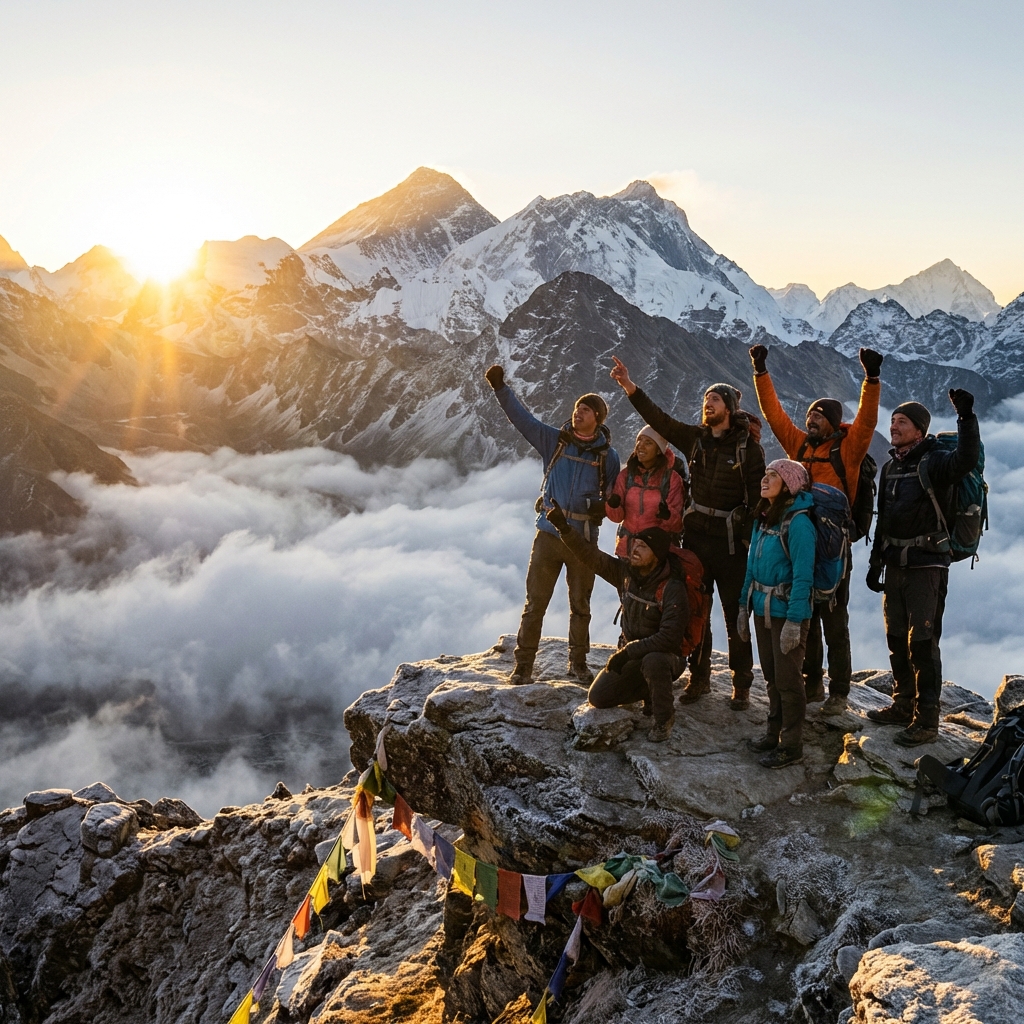
Meet Margaret Chen, who summited Kala Patthar (5,545m/18,192ft) at age 72. "I was slower than the young folks," she recalls, "but I was also more consistent. I never rushed, I listened to my body, and I made it to the top while watching younger trekkers turn back due to altitude sickness." Margaret's story isn't unique—it's increasingly common.
What Actually Determines Trekking Success
Research from the Himalayan Rescue Association shows that trekking success depends on:
- Cardiovascular fitness (40% of success factor)
- Proper acclimatization pace (30% of success factor)
- Mental resilience (20% of success factor)
- Prior hiking experience (10% of success factor)
Notice what's not on that list? Age. In fact, studies show that well-prepared seniors often outperform younger trekkers who underestimate the challenges and over-rely on youth.
The Advantages of Being an Older Trekker
Believe it or not, senior trekkers often have several advantages:
- Patience and pacing: Decades of life experience teach you not to rush
- Better judgment: You're more likely to recognize warning signs and turn back when necessary
- Financial resources: You can afford better guides, porters, and accommodations
- Time flexibility: No vacation day limits mean you can take longer, safer itineraries
- Mental toughness: You've overcome challenges before; you know how to persevere
The Secret Advantage of Senior Trekkers
Best Treks for Seniors: Difficulty Ratings and Recommendations
Not all Himalayan treks are created equal. Here's a comprehensive breakdown of the best options for senior trekkers, organized by difficulty level.
Easiest: Poon Hill Trek (3-5 Days)
Maximum Altitude: 3,210m (10,531ft) Daily Walking: 4-6 hours Best For: First-time senior trekkers, ages 55-85+ Success Rate: 99% for adequately prepared seniors
The Poon Hill trek is the perfect introduction to Himalayan trekking. The relatively low altitude minimizes altitude sickness risk, while the spectacular Annapurna and Dhaulagiri views rival those of much harder treks.
Why It's Perfect for Seniors:
- Gentle altitude gain with no extreme heights
- Well-established trail with frequent rest stops
- Excellent tea house facilities with comfortable beds
- Short daily distances allow for leisurely pace
- Can be shortened or extended based on energy levels
- Medical facilities available in Pokhara (1-day away)
Real Senior Experience: Robert, age 78: "My cardiologist approved this trek, and I'm so glad he did. The sunrise from Poon Hill was the most beautiful thing I've ever seen. I walked at my own pace with a guide, took plenty of breaks, and never felt pushed beyond my limits."
Easy-Moderate: Ghorepani-Ghandruk Loop (5-7 Days)
Maximum Altitude: 3,210m (10,531ft) Daily Walking: 5-7 hours Best For: Moderately fit seniors ages 55-75 Success Rate: 95% for adequately prepared seniors
This extended version of Poon Hill adds cultural immersion in Gurung villages while maintaining manageable altitude.
Senior-Friendly Features:
- Same maximum altitude as Poon Hill
- Cultural experiences in traditional villages
- Well-developed infrastructure
- Multiple exit points if needed
- Porter support readily available
Moderate: Langtang Valley Trek (7-10 Days)
Maximum Altitude: 4,984m (16,350ft) at Kyanjin Ri Daily Walking: 5-7 hours Best For: Fit seniors ages 55-70 with some trekking experience Success Rate: 85% for well-prepared seniors
The Langtang Valley offers spectacular mountain scenery with a shorter approach than Annapurna or Everest regions.
Why Seniors Choose Langtang:
- Closer to Kathmandu (shorter travel time)
- Gradual altitude gain aids acclimatization
- Less crowded than Annapurna or Everest routes
- Strong tea house network
- Kyanjin Ri summit is optional (can stay lower if needed)
- Relatively short overall distance
Medical Considerations: At nearly 5,000m, altitude sickness becomes a real concern. Seniors should plan extra acclimatization days at Kyanjin Gompa (3,870m) before attempting Kyanjin Ri.
Altitude Threshold for Medical Consultation
Moderate-Challenging: Annapurna Base Camp (10-14 Days)
Maximum Altitude: 4,130m (13,549ft) Daily Walking: 6-8 hours Best For: Very fit seniors ages 55-68 with trekking experience Success Rate: 75% for well-prepared seniors
ABC offers one of the world's most spectacular mountain amphitheaters, surrounded by peaks over 7,000m and 8,000m.
Senior Considerations:
- Significant altitude gain requires careful acclimatization
- Steep sections demand good knee and joint health
- Longer overall duration requires sustained stamina
- Weather-dependent (can be cold even in peak season)
- Excellent tea house facilities throughout
Joint Protection Critical: The descent from ABC is particularly hard on knees. Seniors should use trekking poles, take frequent breaks, and consider hiring a porter to reduce pack weight to near zero.
Success Story: Linda, age 65: "I trained for eight months, lost 15 pounds, and hired both a guide and porter. The trek was challenging but absolutely within my capabilities. Standing at ABC surrounded by those peaks brought tears to my eyes. Age didn't stop me—lack of preparation would have."
Challenging: Everest Base Camp (14-18 Days)
Maximum Altitude: 5,364m (17,598ft) Daily Walking: 5-8 hours Best For: Exceptionally fit seniors ages 55-65 with significant trekking experience Success Rate: 60% for well-prepared seniors (vs. 70% for younger trekkers)
Everest Base Camp remains one of the world's most iconic treks. While challenging for any age, properly prepared seniors complete it successfully every season.
Why It's More Challenging for Seniors:
- Extended time at high altitude (multiple days above 4,000m)
- Altitude affects older adults more severely on average
- Longer overall duration (2-3 weeks total)
- Cold temperatures harder on aging joints
- Cardiovascular system works harder at extreme altitude
How Seniors Succeed at EBC:
- Add 3-4 extra acclimatization days to standard itinerary
- Consider hiring helicopter evacuation insurance (age-specific)
- Prioritize slower daily pace over covering distance
- Consider stopping at Kala Patthar (5,545m) instead of continuing to EBC itself
- Use supplemental oxygen if recommended by guide (no shame in this)
- Train for 8-12 months beforehand
Real Success: James, age 71: "I've hiked my whole life, but EBC was my biggest challenge. My secret? I took a 20-day itinerary when most do it in 14. Those extra acclimatization days made all the difference. I moved slowly, rested often, and reached Base Camp on my 71st birthday. Best birthday ever."
Very Challenging: Everest Three Passes Trek (18-21 Days)
Maximum Altitude: 5,545m (18,192ft) Daily Walking: 6-9 hours Best For: Extremely fit seniors ages 55-62 with extensive high-altitude experience Success Rate: 40% for seniors over 60
This trek is mentioned for completeness, but most guides recommend against it for seniors over 65 due to the sustained altitude exposure and technical challenges.
The Two-Trek Strategy
Medical Clearance and Pre-Trek Health Assessment
Proper medical preparation is the foundation of safe trekking for seniors. Here's exactly what you need to do.
Essential Medical Tests Before Trekking
Cardiac Stress Test (Mandatory) For anyone over 60 planning to trek above 3,500m, a cardiac stress test is essential—not optional. This test evaluates how your heart performs under exertion and can identify hidden cardiovascular issues.
What to Request:
- Full exercise stress test (treadmill or bike)
- ECG during and after exertion
- Blood pressure response to exercise
- Recovery heart rate assessment
Why It Matters: At altitude, your heart must work 30-50% harder to deliver the same amount of oxygen to your body. A heart that struggles at sea level will face serious challenges at 4,000-5,000m.
Physician Consultation Schedule a comprehensive appointment with your primary care physician at least 3-4 months before your trek. Bring detailed information about:
- Exact trek you're planning (name, altitude, duration)
- Daily distance expectations
- Altitude profile (how high, how fast)
- Medical facilities available on route
Pre-Existing Conditions Assessment Certain conditions require special consideration:
Hypertension (High Blood Pressure):
- Generally manageable at altitude with medication adjustments
- May require increased dosage due to altitude effects
- Blood pressure typically increases at altitude
- Consult cardiologist about medication timing
Diabetes:
- Altitude affects blood sugar regulation
- Glucose meters may be less accurate at altitude
- Pack extra medication and testing supplies
- Consider continuous glucose monitor for better tracking
- Inform guide of condition and emergency protocols
Arthritis and Joint Issues:
- Downhill sections are particularly challenging
- Anti-inflammatory medications essential
- Trekking poles non-negotiable
- Consider shorter daily distances
- Cold weather exacerbates symptoms—plan accordingly
Respiratory Conditions (Asthma, COPD):
- Altitude significantly challenges respiratory system
- Treks above 3,500m may be contraindicated
- Carry extra inhalers and medications
- Pulse oximeter essential for monitoring
- Consider low-altitude treks only (Poon Hill, lower Langtang)
Heart Disease or Prior Cardiac Events:
- Requires specialized high-altitude medical clearance
- May need portable ECG device
- Helicopter evacuation insurance essential
- Cardiologist must explicitly approve trek
- Consider treks below 3,500m only
Absolute Contraindications for High-Altitude Trekking
Vaccinations and Preventive Care
Recommended Vaccinations:
- Hepatitis A and B
- Typhoid
- Tetanus-Diphtheria booster (within 10 years)
- Japanese Encephalitis (for terai region travel)
- Rabies (pre-exposure, recommended for all trekkers)
- COVID-19 (up to date)
- Influenza (seasonal)
Dental Health: Complete a dental check-up 2-3 months before your trek. Dental problems at altitude can be excruciating and there are no dentists in the mountains.
Medications to Bring
Altitude Sickness Prevention:
- Acetazolamide (Diamox): 125-250mg twice daily
- Dexamethasone (emergency treatment only)
- Consult physician about dosage for your specific situation
Personal Medications:
- Bring 150% of what you think you'll need
- Keep medications in original containers with prescriptions
- Carry both brand and generic names in writing
- Split medications between carry-on and checked luggage
- Inform guide of all medications you're taking
First Aid Medications:
- Ibuprofen or naproxen (anti-inflammatory)
- Loperamide (diarrhea)
- Ciprofloxacin (bacterial infection, prescription required)
- Antihistamines
- Throat lozenges
- Blister treatment supplies
- Personal prescription medications
Altitude Considerations for Older Adults
Altitude affects everyone differently, but research shows older adults face unique challenges that require specific strategies.
How Altitude Affects Aging Bodies
Cardiovascular Response: At altitude, your body compensates for lower oxygen by increasing heart rate and cardiac output. For seniors:
- Resting heart rate may increase 10-20 beats per minute
- Maximum heart rate reserve is already lower with age
- Heart must work proportionally harder
- Blood pressure often increases at altitude
- Hypertension medications may need adjustment
Respiratory Changes: Lung capacity naturally decreases with age (approximately 1% per year after age 35). At altitude:
- You're starting with reduced lung capacity
- Breathing rate increases significantly
- Oxygen saturation drops more than in younger trekkers
- Recovery from exertion takes longer
- Pre-existing respiratory conditions are exacerbated
Hydration and Fluid Balance: Older adults are more susceptible to dehydration because:
- Thirst sensation decreases with age
- Kidney function naturally declines
- Diuretic medications are more common
- Altitude itself causes increased urination
- Dry mountain air increases fluid loss through breathing
Sleep Quality: Altitude significantly disrupts sleep, and seniors often experience:
- Periodic breathing (Cheyne-Stokes respiration)
- More frequent awakening
- Lighter, less restorative sleep
- Increased fatigue during the day
- Greater need for rest days
Acclimatization Strategy for Seniors
The Golden Rule: Slower is Better While standard itineraries might work for younger trekkers, seniors should follow more conservative timelines.
Recommended Altitude Gain:
- Standard advice: gain no more than 300-500m of sleeping altitude per day above 3,000m
- Senior recommendation: Gain no more than 300-400m per day above 3,000m
- Include a rest/acclimatization day every 3-4 days
- If you feel symptoms, don't ascend further
Sample Acclimatization Timeline for EBC (Senior-Friendly):
- Day 1-2: Kathmandu (1,400m) - arrive, rest, sightsee
- Day 3: Fly to Lukla (2,840m), walk to Phakding (2,610m)
- Day 4: Trek to Namche Bazaar (3,440m) - only 830m gain
- Day 5: Acclimatization day in Namche
- Day 6: Acclimatization hike to Everest View Hotel, return to Namche
- Day 7: Trek to Khumjung (3,790m) - 350m gain
- Day 8: Rest day in Khumjung
- Day 9: Trek to Tengboche (3,860m) - minimal gain
- Day 10: Trek to Dingboche (4,410m) - 550m gain
- Day 11: Acclimatization day in Dingboche
- Day 12: Acclimatization hike to Nagarjun Hill, return to Dingboche
- Day 13: Trek to Lobuche (4,940m) - 530m gain
- Day 14: Rest day in Lobuche
- Day 15: Trek to Gorak Shep (5,164m), afternoon to EBC (5,364m), return to Gorak Shep
- Day 16: Kala Patthar sunrise (5,545m), descend to Pheriche (4,371m)
- Day 17-21: Gradual descent
This 21-day itinerary compares to the standard 14-day version, adding 7 extra days for acclimatization and rest.
The Overnight Altitude Rule
Recognizing Altitude Sickness Symptoms
Acute Mountain Sickness (AMS) can affect anyone, but seniors must be especially vigilant:
Mild AMS Symptoms:
- Headache (most common)
- Nausea or loss of appetite
- Fatigue beyond normal tiredness
- Dizziness or lightheadedness
- Difficulty sleeping
Serious AMS Symptoms (Descend Immediately):
- Severe headache not relieved by ibuprofen
- Vomiting
- Confusion or altered consciousness
- Loss of coordination (ataxia)
- Shortness of breath at rest
HAPE (High Altitude Pulmonary Edema) - Medical Emergency:
- Severe shortness of breath, even at rest
- Coughing (may produce pink/frothy sputum)
- Chest tightness or congestion
- Blue lips or fingernails
- Extreme fatigue
HACE (High Altitude Cerebral Edema) - Medical Emergency:
- Severe headache
- Loss of coordination
- Confusion or irrational behavior
- Drowsiness leading to coma
Age-Specific Warning: Seniors are more likely to attribute symptoms to "normal aging" or "just being out of shape." This is dangerous. Any unusual symptoms at altitude should be assumed to be altitude-related until proven otherwise.
Monitoring Tools for Seniors
Pulse Oximeter (Essential): A pulse oximeter measures blood oxygen saturation. Bring one and use it daily.
- Normal at sea level: 95-100%
- Normal at 3,000m: 90-95%
- Normal at 4,000m: 85-90%
- Normal at 5,000m: 80-85%
- Concerning at any altitude: Below 80%
Age Consideration: Seniors may have naturally lower oxygen saturation even at sea level. Know your baseline before departure.
Heart Rate Monitor: Track your resting and exertion heart rates:
- Morning resting rate increasing daily = poor acclimatization
- Heart rate staying elevated after rest = potential problem
- Inability to recover to baseline = consider rest day
Hydration Protocol for Seniors
Proper hydration is critical for altitude adaptation and seniors need a structured approach:
Daily Water Intake:
- Below 3,000m: 3-4 liters per day
- 3,000-4,000m: 4-5 liters per day
- Above 4,000m: 5-6 liters per day
Hydration Indicators:
- Urine should be clear to pale yellow
- Dark urine = dehydration (drink more immediately)
- Urinating every 2-3 hours during waking hours is ideal
Electrolyte Balance: Water alone isn't enough. Use:
- Electrolyte tablets or powder
- Salty snacks throughout the day
- Soups at tea houses
Medication Considerations: If you take diuretics (water pills) for blood pressure, consult your physician about altitude-specific dosing adjustments.
Fitness Preparation: The 6-Month Training Plan
Physical preparation is the most important controllable factor in your trekking success. Here's exactly how to prepare.
Starting Point Assessment (Month 1)
Baseline Fitness Testing: Before starting training, establish your current fitness level:
Walking Test:
- Walk 5 kilometers (3.1 miles) on flat terrain
- Note your time and how you feel
- This is your baseline pace
Stair Test:
- Climb 3 flights of stairs at normal pace
- How quickly does your heart rate recover?
- Can you carry on a conversation immediately after?
Hills Test:
- Find a gradual hill and walk up for 10 minutes
- Note your heart rate and breathing difficulty
- This identifies your starting cardiovascular capacity
The 6-Month Training Program
Months 1-2: Building Base Endurance
Cardiovascular Training (5 days/week):
- Week 1-2: 20-30 minute walks, flat terrain
- Week 3-4: 30-40 minute walks, gentle hills
- Week 5-6: 45-60 minute walks, moderate hills
- Week 7-8: 60-75 minute walks, steeper hills
Strength Training (2 days/week):
- Bodyweight squats: 2 sets of 10-15
- Lunges: 2 sets of 10 per leg
- Calf raises: 2 sets of 15-20
- Wall sits: 2 sets of 30 seconds
- Core exercises: planks, bridges
Rest Days:
- 2 days per week complete rest or gentle yoga/stretching
Months 3-4: Building Strength and Duration
Cardiovascular Training (5-6 days/week):
- 3 days: 60-90 minute hikes with elevation gain
- 2 days: 45-60 minute brisk walks
- 1 day: Long hike (2-3 hours) with backpack (5-7kg)
Strength Training (2-3 days/week):
- Weighted squats: 3 sets of 12-15
- Step-ups (knee height): 3 sets of 12 per leg
- Lunges with weights: 3 sets of 10 per leg
- Calf raises with weights: 3 sets of 20
- Core work: 15-20 minutes
Flexibility (daily):
- 10-15 minutes of stretching
- Focus on hip flexors, hamstrings, calves, quadriceps
Months 5-6: Trek-Specific Training
Long Hikes (2 days/week):
- 4-6 hour hikes with significant elevation gain
- Carry backpack (8-10kg) to simulate trek conditions
- Practice on uneven terrain, stairs, rocky paths
- Include descents to strengthen knees
Interval Training (2 days/week):
- Stair climbing: 30-45 minutes
- Hill repeats: Find a steep hill, climb 10-15 times
- Improves cardiovascular capacity for altitude
Endurance Walks (2 days/week):
- 90-120 minute moderate-pace walks
- Focus on consistent, sustainable pace
Strength Maintenance (2 days/week):
- Continue leg strengthening exercises
- Add balance work (single-leg stands, balance board)
Rest and Recovery:
- 1 full rest day per week
- Consider monthly massage for muscle recovery
Training Success Marker
Age-Specific Training Considerations
For 55-65 Age Group:
- Focus on maintaining current fitness
- Emphasize cardiovascular conditioning
- Joint protection through proper warm-up
- 1-2 rest days per week minimum
For 65-75 Age Group:
- Longer warm-up and cool-down periods
- Lower intensity, longer duration training
- More emphasis on consistency than intensity
- Consider personal trainer for form checking
- 2 rest days per week minimum
For 75+ Age Group:
- Medical supervision throughout training
- Focus on walking and gentle strength work
- Avoid high-impact activities
- Daily movement more important than intense sessions
- Consider working with physical therapist
Cross-Training Options
Swimming: Excellent low-impact cardiovascular training that protects joints while building endurance.
Cycling: Builds leg strength and cardiovascular capacity without impact stress. Stationary bikes work well for interval training.
Yoga: Improves flexibility, balance, and core strength. Particularly valuable for preventing falls on uneven terrain.
Nordic Walking: Perfect trek simulation—uses poles like you'll use on trail while building upper body and core strength.
Pace Strategy: The Slow and Steady Approach
Your daily pacing strategy can make or break your trek. Here's how to get it right.
The "Pole Pole" Philosophy
In Swahili, "pole pole" means "slowly, slowly." While the term comes from Kilimanjaro, the concept is universal in altitude trekking.
The Science Behind Slow:
- Slower pace reduces cardiovascular strain
- Lower heart rate improves oxygen utilization
- Steady rhythm prevents exhaustion
- Consistent speed aids acclimatization
- Mental stress decreases with comfortable pace
What "Slow" Actually Means:
- You should be able to hold a conversation while walking
- If you're breathing too hard to talk, you're going too fast
- Your guide should never have to wait for you (they should match your pace)
- Think "marathon pace" not "race pace"
Daily Distance Recommendations
Standard trekking itineraries often push aggressive daily distances. Seniors should modify:
Standard Itinerary vs. Senior Itinerary:
Lukla to Namche Bazaar:
- Standard: Complete in one day (5-7 hours, 830m gain)
- Senior-friendly: Split into two days via Phakding
- Day 1: Lukla to Phakding (2-3 hours, gentle)
- Day 2: Phakding to Namche (5-6 hours, 830m gain)
Namche to Tengboche:
- Standard: Direct route (5-6 hours)
- Senior-friendly: Add overnight in Khumjung
- Breaks the day into two shorter segments
- Extra acclimatization at intermediate altitude
Maximum Daily Recommendations:
- Age 55-65: 6-7 hours walking, 600-800m elevation gain
- Age 65-75: 5-6 hours walking, 400-600m elevation gain
- Age 75+: 4-5 hours walking, 300-400m elevation gain
These are maximums, not targets. Shorter days are always acceptable.
The Two-Hour Rule
Rest Day Strategy
Rest days aren't lazy days—they're essential altitude adaptation days.
How to Use Rest Days:
Morning:
- Sleep in, have leisurely breakfast
- Gentle walk around village (30-60 minutes)
- Light stretching or yoga
Midday:
- Acclimatization hike (climb 200-300m higher)
- Return to sleeping altitude for lunch
- Rest for 1-2 hours
Afternoon:
- Read, journal, socialize with other trekkers
- Hydrate continuously
- Light snacks
Evening:
- Early dinner
- Early to bed (8-9 PM)
Recommended Rest Days for Seniors:
Poon Hill Trek:
- 1 rest day in Ghorepani (already short enough for most seniors)
Langtang Valley:
- Day 5: Rest in Lama Hotel or Langtang Village
- Day 8: Full rest day in Kyanjin Gompa
- Day 9: Second day in Kyanjin (acclimatization hike)
Annapurna Base Camp:
- Day 5: Rest in Chhomrong or Bamboo
- Day 8: Rest in Machapuchare Base Camp or Deurali
- Day 11: Rest at ABC (enjoy the location)
Everest Base Camp (Senior Itinerary):
- Day 5: Rest in Namche
- Day 6: Acclimatization hike in Namche
- Day 8: Rest in Khumjung
- Day 11: Rest in Dingboche
- Day 12: Acclimatization hike from Dingboche
- Day 14: Rest in Lobuche
Managing Energy Throughout the Day
Morning Routine (5:30-7:30 AM):
- Wake naturally (no alarms create stress)
- Gentle stretching before getting out of bed
- Hot tea or coffee (tea houses provide)
- Substantial breakfast (porridge, eggs, bread)
- Pack bags without rushing
- Use bathroom before departure (next one may be far)
- Start walking between 7-8 AM
Walking Technique:
- Small steps, not large strides
- Uphill: slight forward lean, use poles
- Downhill: poles in front, bend knees, go slowly
- Rest step technique: lock knee briefly with each step on steep sections
- Breathe rhythmically (in-in-out, or whatever works for you)
Midday Management:
- Stop for lunch at established tea house (11:30 AM - 1 PM typical)
- Order warm food (soup + main dish)
- Rest for 60-90 minutes minimum
- Remove boots, elevate feet
- Don't rush afternoon start
Afternoon Approach:
- Afternoon is often harder (cumulative fatigue)
- Take more frequent breaks
- Slow pace even further if needed
- Arrive at destination by 3-4 PM
- Avoid pushing until exhaustion
Evening Recovery:
- Change into dry clothes immediately
- Hydrate with warm fluids
- Elevate legs for 20-30 minutes
- Gentle stretching
- Early dinner (6-7 PM)
- Early to bed (8-9 PM)
Hiring Support: Guides, Porters, and Why They Matter
For senior trekkers, professional support isn't luxury—it's smart planning that dramatically increases success rates and safety.
Why Guides Are Essential for Seniors
Navigation and Route Finding: While main trekking routes are well-marked, many sections involve choices. A guide ensures you take the safest, most gradual routes.
Altitude Expertise: Experienced guides recognize altitude sickness symptoms before you do. They've seen thousands of trekkers and know when to push forward, when to rest, and when to descend.
Medical Support: Most professional guides have wilderness first aid training and carry emergency medications. They can arrange helicopter evacuation if needed.
Cultural Bridge: Guides speak both English and Nepali, facilitating tea house negotiations, explaining local customs, and enriching your experience.
Pace Management: A good guide matches your pace perfectly and prevents you from overexerting (which many seniors tend to do, wanting to "keep up").
Peace of Mind: You can focus on enjoying the trek rather than worrying about logistics, routes, or what comes next.
Choosing the Right Guide
Age-Appropriate Guide: Request a guide who has specific experience with senior trekkers. This person understands:
- Slower acclimatization needs
- Joint and mobility challenges
- Medical considerations
- Patient, encouraging approach
Questions to Ask:
- How many years have you been guiding?
- How many clients over 60/70 have you guided?
- What's your wilderness first aid certification?
- Have you managed altitude sickness emergencies?
- Are you comfortable with my planned pace?
- What's your approach to rest days and acclimatization?
Red Flags:
- Promises like "everyone makes it to the top"
- Reluctance to add rest days
- No first aid certification
- Very low price (may indicate inexperience)
- Can't provide references from senior trekkers
Cost of Quality Guides
The Porter Advantage for Seniors
Carrying a heavy backpack significantly increases cardiovascular strain, joint stress, and injury risk. Porters eliminate this concern.
What Porters Carry:
- Your main duffel bag (up to 15kg)
- Allows you to carry only a small daypack (2-3kg)
- Daypack contains: water, snacks, camera, extra layers, medications
Physical Benefits:
- Reduced knee and hip strain (especially downhill)
- Lower cardiovascular workload
- Better balance and stability
- More energy for actual trekking
- Faster recovery each evening
Cost Consideration: Porters cost $20-$30 per day. For a 14-day trek, that's $280-420 total. This relatively small investment massively improves your experience and success probability.
Ethical Considerations:
- Ensure your porter has proper clothing and equipment
- Use reputable trekking companies that treat porters fairly
- Porters should carry no more than 20kg total (including their own gear)
- Provide tips at trek end (10-15% of porter fee is standard)
The Guide + Porter Combination
For seniors attempting moderate to challenging treks (Langtang, ABC, EBC), hiring both a guide and porter is strongly recommended.
Total Cost:
- Guide: $35/day × 14 days = $490
- Porter: $25/day × 14 days = $350
- Total: $840 for two weeks
Value Proposition: This $840 investment:
- Increases your success probability from ~60% to ~85%
- Provides medical safety net
- Eliminates navigation stress
- Reduces physical strain by 40-50%
- Creates personalized pace and itinerary
- Provides cultural enrichment
Most seniors who attempt major treks with a mandatory licensed guide/porter support either fail to complete them or struggle significantly more than necessary.
Going Solo vs. Group Treks
Solo with Guide: Advantages:
- Complete flexibility with pace and schedule
- Can add rest days as needed
- No pressure to keep up with group
- Can turn back if necessary without affecting others
Disadvantages:
- Higher per-person cost
- Less social interaction
- No shared motivation
Small Group (2-6 seniors): Advantages:
- Shared costs for guide and porters
- Social support and motivation
- Shared experiences and friendships
- Safety of group numbers
Disadvantages:
- Must match group pace
- Less schedule flexibility
- May feel pressure to continue when you should rest
Recommendation for Seniors: Solo with guide or very small group (2-3) of similarly-aged, similarly-fit trekkers is ideal. Large groups almost always include pace disparities that disadvantage seniors.
Travel Insurance: Critical Coverage for Senior Trekkers
Standard travel insurance often excludes or limits coverage for seniors, especially at altitude. Here's what you need.
Age-Related Insurance Challenges
Common Age Limits:
- Many insurers cap coverage at age 70
- Some exclude trekking above 3,000m for anyone over 60
- Premiums increase significantly with age
- Pre-existing conditions often excluded
Why Standard Insurance Isn't Enough:
- May not cover helicopter evacuation (costs $5,000-15,000)
- Altitude-related illness sometimes excluded
- Age + altitude combination triggers exclusions
- Maximum coverage amounts may be too low
Specialized Trekking Insurance for Seniors
Recommended Providers with Senior Coverage:
World Nomads:
- Covers up to age 70 (some policies to 75)
- Trekking up to 6,000m included
- Medical evacuation covered
- Pre-existing condition add-on available
- Cost: $200-400 for 2-week Nepal trek
IMG Global:
- Patriot Travel Medical covers seniors
- Emergency evacuation unlimited
- Coverage up to age 99
- High medical limits ($500,000+)
- Cost: $300-600 for seniors on 2-week trek
Ripcord Rescue Travel Insurance:
- Specializes in adventure travel
- No age limit (though premiums increase)
- Specific high-altitude coverage
- Partners with Himalayan rescue operations
- Cost: $120-$280 for senior trekkers
GeoBlue:
- Covers up to age 84
- Excellent medical network
- Evacuation coverage robust
- Pre-existing conditions covered with add-on
- Cost: $350-650
Essential Coverage Components
Medical Evacuation (Minimum $100,000): Helicopter rescue from remote areas is expensive:
- Lukla to Kathmandu: $5,000-8,000
- Everest region high camps: $10,000-15,000
- Includes medical flight crew and equipment
Emergency Medical (Minimum $250,000): Hospital treatment in Kathmandu, or medical evacuation to your home country if needed.
Trip Cancellation/Interruption: If you must cancel due to health issues (yours or immediate family), this reimburses:
- Flight costs
- Trekking permits
- Guide/porter deposits
- Accommodation deposits
Pre-Existing Condition Waiver: Critical for seniors with common conditions (hypertension, diabetes, arthritis). Requirements:
- Usually must purchase within 14-21 days of initial trip deposit
- Conditions must be stable/controlled
- May require physician statement
- Adds 20-40% to premium cost but essential for peace of mind
24/7 Emergency Assistance: Emergency coordination services that can:
- Arrange helicopter evacuation
- Locate nearest adequate medical facility
- Communicate with guides and local services
- Contact family members
- Facilitate payment to medical providers
What to Check Before Purchasing
Altitude Limits: Confirm your policy explicitly covers trekking at your maximum planned altitude. Some policies have limits:
- Basic coverage: up to 3,000m
- Standard adventure: up to 4,500m
- Premium adventure: up to 6,000m
Trekking vs. Mountaineering: Trekking (walking on established trails) is different from mountaineering (technical climbing with ropes/ice axes). Ensure trekking is covered and mountaineering exclusions don't apply.
Age-Specific Exclusions: Read the fine print for phrases like:
- "Coverage subject to age-related limitations"
- "Maximum coverage reduced for ages 70+"
- "Altitude restrictions apply for ages 65+"
Pre-Existing Condition Definition: Understand what counts as pre-existing:
- Anything you've been treated for in past 60-180 days (varies by policy)
- Ongoing prescriptions
- Chronic conditions even if stable
Double Coverage Strategy
Claims Process and Documentation
Keep Everything:
- All medical receipts
- Guide statements about evacuation necessity
- Helicopter charter invoices
- Pharmacy receipts
- Hospital bills
- Doctor reports
Take Photos:
- Document any injuries
- Photograph receipts immediately (ink fades)
- Photo of helicopter if evacuation occurs
Get Written Statements:
- Guide should document reason for evacuation
- Tea house owners can confirm dates/symptoms
- Fellow trekkers can provide witness statements
File Promptly: Most policies require claims within 30-90 days of return. Don't delay.
Joint Health and Knee Protection
Descending from high altitude with tired legs is one of the biggest challenges for senior trekkers. Prevention is key.
Why Downhill Is Harder Than Uphill
Biomechanical Reality:
- Downhill hiking puts 3-4 times your body weight through each knee
- Eccentric muscle contractions (lengthening under load) cause more fatigue
- Gravity acceleration increases impact forces
- Tired legs mean less muscular knee protection
- Multi-day descents create cumulative damage
Age-Related Factors:
- Cartilage naturally thins with age
- Arthritis is more common in seniors
- Muscle mass decreases (sarcopenia)
- Recovery between days takes longer
- Prior injuries become symptomatic
Trekking Poles: Non-Negotiable for Seniors
Trekking poles reduce knee strain by 20-30% and should be considered essential equipment.
Proper Pole Usage:
Uphill:
- Poles slightly shorter than level-ground setting
- Plant poles behind you, push to propel upward
- Opposite arm-leg movement
- Take weight off legs and onto upper body
Downhill (Most Important):
- Lengthen poles 5-10cm from level setting
- Plant both poles ahead of you
- Transfer weight to poles before stepping down
- Poles act as "brakes" reducing impact on knees
- Small steps, deliberate placement
Level Ground:
- Adjust so forearm is parallel to ground when holding grip
- Natural walking rhythm
- Adds stability on uneven terrain
Pole Selection for Seniors:
- Lightweight: Carbon fiber reduces fatigue (worth the extra cost)
- Adjustable: Essential for Nepal's varied terrain
- Shock absorption: Spring-loaded systems reduce wrist/elbow stress
- Cork grips: More comfortable for long days than foam or rubber
- Proper straps: Should support wrist without tight grip
Technique Practice: Practice with poles for 2-3 months before your trek. Proper technique requires muscle memory.
Knee-Strengthening Exercises
Start 4-6 months before your trek:
Quadriceps Strengthening:
- Wall sits: 3 sets of 45-60 seconds
- Leg extensions: 3 sets of 15
- Step-ups: 3 sets of 12 per leg (use actual stairs)
Hamstring Strengthening:
- Bridges: 3 sets of 15
- Hamstring curls: 3 sets of 12
- Romanian deadlifts (light weight): 3 sets of 10
Eccentric Training (Critical for Downhill):
- Slow descending squats (5-second down, 1-second up)
- Downhill walking practice with resistance
- Single-leg lowering from step
Balance and Stability:
- Single-leg stands: 30-60 seconds per leg
- Balance board work: 10-15 minutes, 3× per week
- Wobble cushion squats: 2 sets of 10
Protective Gear and Support
Knee Braces: Many seniors benefit from compression knee sleeves or light support braces:
- Provide proprioceptive feedback (better joint awareness)
- Mild compression supports joint
- Warmth helps in cold mountain environments
- Choose breathable fabric to avoid moisture buildup
When to Consider Braces:
- History of knee pain or arthritis
- Prior knee injuries or surgery
- Feeling of "instability" in knees
- Swelling after long walks
Recommended Types:
- Compression sleeve (mild support): Most seniors
- Hinged brace (moderate support): History of ligament issues
- Custom orthotics: Severe arthritis or instability
Gaiters: While primarily for keeping debris out, gaiters also:
- Provide mild ankle support
- Keep lower legs warm
- Protect shins from trekking pole tips
Anti-Inflammatory Protocol
Preventive Approach: Some seniors find daily low-dose anti-inflammatories helpful during trekking:
Options:
- Ibuprofen: 200-400mg twice daily with food
- Naproxen: 220-440mg twice daily with food
- Topical diclofenac gel: Applied to knees evening
Important Considerations:
- Consult physician before using NSAIDs daily
- Take with food to protect stomach
- Not recommended if you have kidney issues, stomach ulcers, or take blood thinners
- Some evidence that NSAIDs may slightly impair altitude acclimatization
- Consider alternating days rather than daily use
Natural Alternatives:
- Turmeric/curcumin supplements: 500-1000mg daily
- Omega-3 fatty acids: 2-3g daily
- Glucosamine/chondroitin: 1500mg/1200mg daily (start 2-3 months before trek)
Downhill Technique Mastery
The "Caterpillar Step": Instead of long strides downhill:
- Take very small steps
- Keep knees slightly bent (never locked)
- Land on heel, roll to toe
- Use poles for each step
- Slow and deliberate is faster than rushed and painful
Zigzag Approach: On steep descents:
- Don't go straight down
- Traverse back and forth across the trail
- Reduces grade effectively
- Makes descent gentler on knees
- Takes longer but preserves your joints
Rest Frequency: Downhill requires more frequent breaks than uphill:
- Stop every 20-30 minutes
- Sit down, elevate legs
- Gentle knee circles and stretches
- 5-10 minute breaks
- Don't wait until pain starts
Managing Knee Pain During Trek
If Pain Begins:
Day 1 of Pain:
- Increase anti-inflammatory dosage (if safe for you)
- Apply cold therapy in evening (ask tea house for ice)
- Elevate legs above heart level for 30+ minutes
- Consider rest day at next opportunity
Day 2-3 of Pain:
- Seriously consider additional rest day
- Use knee brace if not already
- Shorten daily distances
- Discuss with guide about adjusted itinerary
Persistent or Worsening Pain:
- This is your body's warning system
- Continuing risks serious injury
- Consider ending trek early
- No summit is worth permanent knee damage
Know When to Stop
Medications at Altitude: What Changes
High altitude affects how medications work and how your body responds to them. Seniors must understand these interactions.
Blood Pressure Medications
Altitude's Effect on Blood Pressure:
- BP typically increases at altitude
- Your normal dosage may become insufficient
- Close monitoring essential
Common BP Medications and Altitude:
ACE Inhibitors (Lisinopril, Enalapril):
- Generally safe at altitude
- May need dosage increase
- Monitor for excessive cough (altitude can cause cough independently)
- Stay hydrated (dehydration increases side effects)
Beta Blockers (Metoprolol, Atenolol):
- Reduce maximum heart rate
- May impair body's normal altitude response
- Can mask some altitude sickness symptoms
- Generally safe but discuss with cardiologist
- Don't stop taking them for the trek
Calcium Channel Blockers (Amlodipine, Nifedipine):
- Actually beneficial at altitude
- Nifedipine specifically used to prevent/treat HAPE
- Usually safe to continue normal dose
Diuretics (Hydrochlorothiazide, Furosemide):
- Complicate hydration management
- Altitude already increases urination
- May need dosage adjustment
- Essential to increase water intake
- Monitor electrolytes
Monitoring Protocol:
- Check BP daily at same time (some tea houses have monitors)
- Bring your own BP cuff if possible
- Record readings
- Contact guide if readings are 20+ points higher than normal
Diabetes Medications
Altitude Effects on Blood Sugar:
- Glucose regulation changes at altitude
- Meter accuracy decreases above 4,000m
- Exercise and cold affect readings
- Stress hormones alter insulin sensitivity
Insulin Users:
- Bring 2-3× the insulin you think you'll need
- Store properly (insulated case, keep from freezing)
- Injection sites may absorb differently with cold/exercise
- Test more frequently (every 4 hours while active)
- Consider continuous glucose monitor
Oral Medications (Metformin, etc.):
- Generally safe at altitude
- Maintain regular dosing schedule
- Monitor for lactic acidosis symptoms (rare but serious)
- Adjust for reduced food intake if appetite suppressed
Hypoglycemia Risk:
- Intense exercise can lower blood sugar unexpectedly
- Always carry fast-acting carbohydrates
- Inform guide of symptoms and treatment
- Fellow trekkers should know you're diabetic
Aspirin and Blood Thinners
Low-Dose Aspirin (81mg):
- Generally recommended to continue
- May help prevent altitude-related blood clotting
- Some evidence it aids altitude adaptation
- Take with food
Warfarin/Coumadin:
- Requires careful monitoring
- INR levels can change with diet changes
- Tea house food different from home diet
- Bring extra testing supplies if you self-monitor
- Discuss extensively with doctor before trek
Novel Anticoagulants (Eliquis, Xarelto):
- Generally more stable than warfarin
- Continue regular dosing
- Be cautious of injury risk (bleeding harder to stop)
- Ensure guide knows you're anticoagulated
Altitude Sickness Medications
Acetazolamide (Diamox): Most seniors should use acetazolamide for altitude prevention.
Dosing:
- Start 125-250mg twice daily
- Begin 1-2 days before ascending above 3,000m
- Continue until descending below 3,000m
Side Effects:
- Increased urination (already an issue at altitude)
- Tingling fingers/toes (harmless but annoying)
- Carbonated drinks taste flat
- Mild fatigue initially
Contraindications:
- Sulfa allergy (Diamox is sulfonamide)
- Severe kidney disease
- History of kidney stones (relative contraindication)
Why Seniors Should Use It:
- Proven to reduce AMS incidence by 50%
- Especially helpful for those with slower acclimatization
- Low risk when used properly
- Far safer than getting altitude sickness
Dexamethasone: Emergency treatment for severe altitude sickness only.
- Don't use preventively
- Only under guide or medical supervision
- 4mg every 6 hours for severe AMS/HACE
- Must descend while taking it (doesn't cure, only buys time)
Sleep Medications
Altitude Sleep Problems: Altitude severely disrupts sleep for most people, worse for seniors:
- Periodic breathing (Cheyne-Stokes respiration)
- Frequent awakening
- Vivid dreams or nightmares
- General sleep quality reduction
Medication Considerations:
Acetazolamide: Actually improves sleep at altitude despite being a diuretic:
- Reduces periodic breathing
- Improves oxygen saturation during sleep
- Most effective sleep aid for altitude
Prescription Sleep Aids:
- Generally NOT recommended at altitude
- Can suppress respiratory drive
- May worsen oxygen levels during sleep
- If you must use, discuss with altitude medicine specialist
Antihistamines (Benadryl):
- Sometimes used for sleep at sea level
- Not recommended at altitude
- Can dry you out (already an issue)
- May cloud symptoms of altitude sickness
Natural Alternatives:
- Melatonin: 3-5mg is relatively safe, may help
- Valerian root: Likely safe but limited evidence
- Best approach: Accept that sleep will be poor, rest when possible
Bringing Medications to Nepal
Packing Strategy:
- Bring 150-200% of what you need
- Split between carry-on and checked luggage
- Keep in original containers with prescriptions
- Bring both brand and generic names written down
Documentation:
- Prescription copies
- Doctor's letter explaining medications
- Contact information for your physician
- List of generic names (Nepali pharmacies may not know brand names)
Customs Considerations:
- Nepal is generally relaxed about personal medications
- Controlled substances (opioids, etc.) should have prescription
- Don't bring excessive quantities that look like trafficking
Altitude Effects on Storage:
- Most medications stable at altitude
- Insulin requires temperature protection
- Suppositories may melt (rare issue but possible)
- Liquids may leak due to pressure changes
Medication Timing at Altitude
Tea House Comfort and Practical Considerations
The physical environment of tea houses presents unique challenges for seniors. Here's what to expect and how to maximize comfort.
Tea House Basics
What Are Tea Houses: Tea houses (also called lodges) are simple guesthouses along trekking routes offering:
- Basic sleeping rooms (usually 2 twin beds)
- Communal dining area with heating
- Shared bathroom facilities
- Meals ordered from menu
- Charging stations (for fee)
Quality Variations by Trek:
- Poon Hill/Ghorepani: Well-developed, relatively comfortable
- Langtang: Good facilities, improving constantly
- Annapurna: Excellent, wide range of options
- Everest: Good but simpler at higher elevations
Sleeping Arrangements
Bed Considerations:
- Beds are typically 60-75cm from floor (lower than Western beds)
- Mattresses are thin (3-5cm foam)
- Pillows are often hard
- Getting up at night with sore legs can be challenging
Senior Solutions:
- Bring inflatable sleeping pad for extra cushioning
- Pack small inflatable pillow
- Practice getting up from low positions before trek
- Consider bottom bunk if bunks are offered (less climbing)
- Request room near bathroom if possible
Temperature Management:
- Rooms are unheated (even when below freezing)
- You sleep in sleeping bag with all clothes on
- Multiple layers essential
- Hot water bottles available at some tea houses (ask)
Bedding Checklist:
- 4-season sleeping bag rated to -10°C to -15°C
- Sleeping bag liner (adds warmth and hygiene)
- Long underwear for sleeping
- Warm hat (lose lots of heat from head)
- Bed socks
- Hand warmers for sleeping bag (optional comfort item)
Bathroom Realities
Types of Facilities:
Attached Bathroom (Rare, Higher Cost):
- Some tea houses offer private bathrooms
- Usually basic squat toilet
- Cold water only (or heated for fee)
- Worth extra cost for seniors
Shared Western Toilet:
- Most common at lower elevations and popular routes
- Sit-down toilet
- Usually one per floor or building
- May be 5-15 meters from room
Shared Squat Toilet:
- Traditional Asian style
- Common at higher elevations
- Challenging for seniors with knee issues
- Practice technique before trek if unfamiliar
Outdoor Facilities:
- Some tea houses have outhouses
- Can be 20-30 meters from building
- Challenging at night in cold/dark
- Bring headlamp
Senior Bathroom Strategies:
Night Trips:
- Limit fluid intake after 7 PM
- Use bathroom right before bed
- Keep headlamp, warm jacket by bed
- Consider pee bottle for emergencies (men)
- Women: female urination device (FUD) like PStyle or GoGirl
Squat Toilet Technique:
- Use trekking poles for stability
- Hold onto door frame or wall
- Don't try if you have serious knee issues
- Request Western toilet room when possible
Hygiene:
- Bring hand sanitizer (soap/water not always available)
- Wet wipes for cleaning
- Toilet paper (not always provided)
- Headlamp (toilets often dark)
Dining Hall and Social Areas
Heating:
- Central stove (usually yak dung or wood burning)
- Only in dining hall, not individual rooms
- Evening gathering spot for all trekkers
- Smoke can irritate eyes/throat for some
Seating:
- Benches or low stools common
- Not always back support
- May be uncomfortable for extended sitting
Meal Timing:
- Breakfast: 7-8 AM
- Lunch: 12-1 PM (wherever you are on trail)
- Dinner: 6-7 PM
- Kitchens close early (order by 8 PM)
Senior Dining Tips:
- Order early (first meals cook fastest)
- Choose simple dishes (cook faster, easier digestion)
- Hot soups are excellent (hydration + calories + warmth)
- Avoid dairy at high altitude (harder to digest)
- Eat even if not hungry (need calories for warmth)
Charging and Electricity
Power Availability:
- Lower elevation: usually reliable electricity
- Higher elevation: solar power or generator
- Above 4,000m: may be limited hours only
Charging Fees:
- Typically 200-500 rupees per device per charge
- Some tea houses charge by hour
- Bring multiple charging cables (USB-C, USB-A, etc.)
Senior Power Needs:
- Phone (communication, photos)
- Camera batteries
- Headlamp (rechargeable recommended)
- Power bank (highly recommended)
- E-reader or tablet
- Possibly CPAP machine (see medical equipment section)
Power Bank Strategy: Bring 20,000+ mAh power bank:
- Charge fully in Kathmandu/Pokhara/Lukla
- Can recharge phone 4-6 times
- Reduces dependence on tea house power
- Lighter than multiple spare batteries
Hot Showers
Availability:
- Most tea houses offer hot showers for 300-700 rupees
- Heated by solar, gas, or electricity
- Not always available at high altitude or bad weather
- Temperature and pressure vary wildly
Senior Shower Strategy:
When to Shower:
- Every 2-3 days is usually sufficient
- Afternoon (solar hot water warmest)
- Before dinner (dining hall warmest time)
- Not at high altitude if you're cold (chilling risks)
Shower Technique:
- Keep it brief (3-5 minutes)
- Dry hair completely before going outside
- Warm clothes ready immediately
- Don't shower if you feel ill or have altitude symptoms
Alternatives:
- Baby wipes for daily washing
- Compress towel with warm water
- Focus on face, armpits, groin
- Hair doesn't need washing often in dry mountain air
Medical Equipment and CPAP Machines
CPAP Users: Some seniors require CPAP for sleep apnea. This is challenging but not impossible:
Power Solutions:
- Battery-powered CPAP (ResMed AirMini, etc.)
- Deep cycle battery (heavy but possible with porter)
- Negotiate tea house power (may be expensive)
- Solar charging during day
Altitude Considerations:
- CPAP pressure may need adjustment for altitude
- Consult sleep physician before trek
- Some sleep doctors recommend NOT using CPAP at extreme altitude
- Dry mountain air requires humidifier adjustment
Practical Reality: CPAP at altitude is very challenging. Many users do without for the trek duration after consulting physicians. This is very individual.
Other Medical Equipment:
- Glucose meters: Bring extra batteries, accuracy decreases at altitude
- Blood pressure cuffs: Manual works better than electric
- Pulse oximeter: Essential for monitoring
- Inhalers: Keep warm (work better at body temperature)
Communication and WiFi
WiFi Availability:
- Most tea houses offer WiFi for 300-500 rupees/day
- Quality decreases with altitude
- Often works only in dining hall
- Video calls usually impossible
- Email and messaging usually work
Phone Service:
- Nepal Telecom and Ncell work on most trails
- Everest region: coverage surprisingly good
- Annapurna: spotty in valleys
- Can purchase SIM card in Kathmandu (bring passport)
Emergency Communication:
- Satellite phone or communicator recommended for remote areas
- Garmin inReach allows SOS and messaging
- Some guides carry satellite phones
- Important for seniors (peace of mind for family)
Family Communication Strategy
Best Time for Senior Trekkers
Seasonal timing significantly affects comfort, safety, and success rates for older trekkers.
Peak Season: October-November
Advantages:
- Clearest skies and best mountain views
- Stable weather patterns
- Comfortable daytime temperatures (10-20°C at moderate altitudes)
- Trails are driest
- All tea houses open and fully staffed
Challenges:
- Most crowded period
- Tea houses may be full (book ahead)
- Higher prices
- Trails can feel rushed/busy
Best For:
- First-time senior trekkers
- Those who want guaranteed good weather
- Photographers
- Social trekkers who enjoy meeting others
Temperature Ranges:
- Lukla/Namche: 15-20°C day, 0-5°C night
- Dingboche: 5-10°C day, -10 to -15°C night
- Gorak Shep: 0-5°C day, -15 to -20°C night
Senior Considerations: Cold nights require good sleeping bag and cold tolerance. Mornings start very cold, warming by 9-10 AM.
Second Best: March-April
Advantages:
- Rhododendron blooms (spectacular)
- Warming temperatures
- Less crowded than October-November
- Longer days (more daylight for trekking)
- Wildlife more active
Challenges:
- More afternoon clouds (views better in morning)
- Occasional pre-monsoon storms
- Dustier trails
- Higher altitude snow may still block some passes
Best For:
- Nature enthusiasts
- Those who prefer fewer crowds
- Seniors who prefer warmer conditions
- Flexible itineraries (weather more variable)
Temperature Ranges:
- Generally 5-10°C warmer than autumn
- Less extreme cold at night
- More comfortable for seniors with circulation issues
Senior Considerations: Warmer temperatures are easier on older bodies, but afternoon clouds mean earlier starts for best views.
Shoulder Seasons: September and May
September (Early Autumn):
- Monsoon recently ended
- Trails can be muddy
- Leeches at lower elevations
- Clouds more common
- Beautiful green landscapes
May (Late Spring):
- Warmer temperatures (sometimes hot at low elevations)
- Afternoon storms more likely
- High passes may still have snow
- Dust can be significant
- Fewer trekkers
Senior Considerations: These months are possible but not ideal. Weather unpredictability adds stress, and muddy conditions increase fall risk for older trekkers.
Winter: December-February
Characteristics:
- Very cold, especially at altitude
- Clear skies and visibility
- Few trekkers (solitude)
- Many tea houses closed above 4,000m
- Short days
Feasibility for Seniors:
- Low altitude treks (Poon Hill): Very feasible and pleasant
- Medium altitude (Langtang Valley to ~4,000m): Possible for hardy seniors
- High altitude (EBC, ABC): Generally not recommended for seniors due to extreme cold
Temperature Ranges:
- Daytime: Can be pleasant (0-10°C)
- Nighttime: Extreme (-20 to -30°C at high camps)
- Risk of frostbite increases significantly
Monsoon: June-August
Conditions:
- Heavy rain (especially afternoons)
- Leeches at lower elevations
- Clouds obscure mountains
- Landslide risk on some trails
- Flight cancellations common
Senior Recommendation: Avoid monsoon trekking. The combination of slippery trails, limited views, and travel disruptions creates unnecessary risk for older trekkers.
Recommended Timing for Specific Treks
Poon Hill:
- Best: October-November, March-April
- Acceptable: September, December-February, May
- Avoid: June-August
Langtang Valley:
- Best: October-November, March-April
- Acceptable: September, May
- Possible: December-February (cold but doable)
- Avoid: June-August
Annapurna Base Camp:
- Best: October-November, March-April
- Acceptable: September, May (check pass conditions)
- Not recommended: December-February (too cold for most seniors)
- Avoid: June-August
Everest Base Camp:
- Best: October-November (better weather), March-April (warmer)
- Acceptable: Late September, early May
- Not recommended: December-February (extreme cold dangerous for seniors)
- Avoid: June-August
The October Sweet Spot
Success Stories: Real Senior Trekkers
Real experiences from older adults who've successfully trekked in Nepal provide both inspiration and practical insights.
Margaret Chen, Age 72: Kala Patthar Success
"I'd hiked all my life but never at serious altitude. At 72, I decided Everest Base Camp region was my bucket list trip. My preparation:
- 8 months of training, walking 5 days per week
- Lost 20 pounds to reduce joint stress
- Hired both guide and porter
- Took a 21-day itinerary (vs. standard 14)
- Added extra acclimatization days at Namche, Dingboche, and Lobuche
The hardest part was accepting my slower pace. Young trekkers would pass me constantly. My guide, Pemba, kept reminding me: 'You're doing great. Slow is how you succeed.'
At Gorak Shep, I felt terrible—headache, nausea, no appetite. I seriously considered skipping Kala Patthar. Pemba said, 'Rest today. We try tomorrow. If you feel same, we don't go.'
The next morning, I felt better. We started at 4:30 AM for sunrise. It took me 2.5 hours to climb what young people do in 90 minutes. But I made it. Standing at 5,545m, watching sunrise light up Everest—I cried. At 72, I'd done something I never imagined possible.
My advice: Train seriously, hire good support, accept extra time, and listen to your body. Age didn't stop me. Lack of preparation would have."
Robert Thompson, Age 78: Poon Hill Inspiration
"My cardiologist said, 'If you were 20 years younger, I'd say absolutely not. But you're in better shape than most 60-year-olds. Just take it slow.'
I chose Poon Hill specifically because it stays below 3,500m. Smart choice. At 78, I didn't need to prove anything by going higher.
The 4-day trek was perfect. I walked 4-5 hours per day, stayed in comfortable tea houses, ate well, and enjoyed every minute. The sunrise from Poon Hill—with Annapurna, Dhaulagiri, and Machhapuchhare glowing pink—was worth every step.
What made it work:
- Realistic expectations (I wasn't climbing Everest)
- Perfect physical preparation (6 months of walking and stairs)
- Excellent guide who matched my pace
- Porter carrying everything but my day pack
- Taking breaks every hour
I saw 30-year-olds struggling while I felt strong. Why? They rushed. I didn't.
If you're in your 70s and wondering if you can do this: Yes, if you prepare properly and choose the right trek. Start with something manageable. Success builds confidence for maybe something bigger next time."
Linda Patterson, Age 65: Annapurna Base Camp Achievement
"I turned 65 and decided retirement meant adventure, not a rocking chair. Annapurna Base Camp became my goal.
Preparation was key:
- Joined hiking club and did local mountains every weekend
- Lost 25 pounds over 6 months
- Strength trained 3× per week
- Hired personal trainer for last 2 months
- Did practice trek in Colorado (14,000 ft peak)
The actual trek was hard—I won't lie. Days 8-10 (pushing toward ABC) were brutal. The altitude hit me harder than expected. But I'd prepared for this:
- Extra acclimatization day at Deurali
- Slow, slow pace (my guide was endlessly patient)
- Acetazolamide from day 3
- Trekking poles that saved my knees on descent
Standing at ABC (4,130m), surrounded by a complete amphitheater of 7,000m+ peaks, I felt invincible. Not because I'm special—because I prepared thoroughly and didn't give up.
The descent destroyed my knees despite poles and braces. By the time I reached Chhomrong, I could barely walk downstairs. But I healed. Two months later, I was hiking locally again.
Worth it? Absolutely. Would I do EBC? No. ABC was my perfect challenge. Know your limits, push them gently, and celebrate your achievements."
James Wilson, Age 71: Everest Base Camp Triumph
"71st birthday at Everest Base Camp—that was my goal. People thought I was crazy. My wife worried constantly. My doctor was skeptical but supportive after stress tests came back excellent.
My secret weapon: time. I took a 20-day itinerary when the standard is 14. Those six extra days (5 acclimatization days + 1 buffer) made all the difference.
Critical decisions:
- Hired premium guide with altitude medicine training
- Hired porter (carried everything but water and camera)
- Started Diamox at Namche
- Accepted that some days I'd only walk 3 hours
- Took rest days even when I felt good
The trek challenged me in ways I didn't expect. Not just physically—mentally. There were moments I doubted myself. At Lobuche (4,940m), I felt awful. Headache, no appetite, exhausted. I told my guide, 'Maybe this is it. Maybe I should stop here.'
He said, 'Let's take an extra rest day. See how you feel.'
That rest day saved my trek. I spent it reading, hydrating, and resting. The next day, I felt renewed. We did a short day to Gorak Shep. Another rest. Then Base Camp.
I won't say it was easy. But at 71, standing at 5,364m, I proved that age is truly just a number if you combine preparation, patience, and perseverance.
For seniors considering EBC:
- Be in the best shape of your life
- Add extra acclimatization days
- Hire the best support you can afford
- Be willing to turn back if needed
- Trust the process
I returned home 23 days after leaving, 10 pounds lighter, with a lifetime of memories and proof that we're never too old for big adventures."
Dorothy Kim, Age 68: Langtang Valley Perfection
"I wanted mountains and culture without extreme altitude. Langtang Valley was perfect.
At 68, with arthritis in both knees, I was realistic about limitations. I trained for 6 months, focused on knee strengthening, and invested in the best trekking poles money could buy.
The trek was absolutely gorgeous—fewer tourists than Annapurna or Everest, beautiful Tamang culture, and the valley itself is stunning. Kyanjin Gompa (3,870m) was my happy place. I spent two nights there, did an optional acclimatization hike to Kyanjin Ri (4,773m).
I didn't summit Kyanjin Ri. Got to about 4,600m and decided that was enough. No regrets. I enjoyed the climb, had spectacular views, and knew my limits.
What worked for me:
- Realistic goal setting (valued experience over summit)
- Proper knee support (braces and poles)
- Patient guide who never pressured me
- Shorter daily distances than standard itinerary
- Focusing on cultural experiences, not just mountain views
Langtang is perfect for seniors who want authentic Himalayan experience without the extremes of EBC or the crowds of Annapurna Circuit. The tea houses were comfortable, the people incredibly kind, and the mountains absolutely majestic.
At 68, I proved to myself that adventure isn't just for the young. It's for anyone willing to prepare, adapt, and embrace the journey."
Common Thread in All Success Stories
Age-Specific Risks and Mitigation Strategies
Understanding and preparing for age-related risks is essential for safe trekking.
Cardiovascular Risks
Heart Attack and Acute Cardiac Events:
Risk Factors:
- Age itself increases risk
- Pre-existing heart disease
- High altitude increases cardiac workload 30-50%
- Dehydration increases blood viscosity
- Cold temperatures constrict blood vessels
Mitigation:
- Mandatory cardiac stress test before trek
- Cardiologist clearance for ages 60+
- Consider portable ECG device (AliveCor, etc.)
- Daily aspirin (if approved by doctor)
- Recognize warning signs: chest pressure, unusual fatigue, shortness of breath at rest
- Immediate descent and evacuation if cardiac symptoms
Arrhythmias: Irregular heart rhythms more common with age and altitude.
Prevention:
- Electrolyte balance (sodium, potassium, magnesium)
- Adequate hydration
- Limit caffeine at altitude
- Continue regular medications
- Monitor with pulse oximeter (also shows heart rate)
Stroke Risk
Age + Altitude = Increased Risk:
- Dehydration increases stroke risk
- Altitude increases blood viscosity
- Cold temperature raises blood pressure
- Exertion adds stress
Prevention:
- Aggressive hydration (4-6 liters daily)
- Blood pressure monitoring
- Continue antiplatelet therapy (aspirin, etc.)
- Gradual altitude gain
- Recognize symptoms: sudden weakness, facial drooping, speech difficulty, severe headache
- Immediate helicopter evacuation if stroke suspected
Orthopedic Injuries
Falls and Fractures:
Increased Risk Factors:
- Balance declines with age
- Bone density decreases (osteoporosis)
- Recovery from falls slower
- Uneven terrain everywhere
- Altitude affects coordination
Prevention:
- Trekking poles (non-negotiable)
- Proper footwear with ankle support
- Slower pace on uneven ground
- Adequate rest (fatigue increases fall risk)
- Headlamp for early morning/evening walking
- Consider bone density scan before trek if osteoporosis concerns
Knee Injuries: Covered extensively in Joint Health section, but worth repeating:
- Trekking poles reduce knee stress 20-30%
- Downhill technique crucial
- Anti-inflammatories as preventive
- Recognize early warning signs and rest
Altitude-Related Complications
Seniors and AMS/HACE/HAPE:
While age alone doesn't increase altitude sickness risk, complications can be more serious:
Higher Stakes:
- Less physiological reserve
- Medical evacuation more complex
- Pre-existing conditions worsen outcomes
- Recovery takes longer
Enhanced Prevention:
- More conservative ascent profile
- Earlier Diamox initiation
- More rest/acclimatization days
- Lower threshold for descent
- Pulse oximeter monitoring
- Don't push through symptoms
Hypothermia
Age-Related Vulnerability:
- Metabolism slows with age (less heat production)
- Less subcutaneous fat (less insulation)
- Circulation often reduced
- Shivering response diminished
- May not recognize symptoms as quickly
Prevention:
- Layer system (easy to adjust)
- Always carry extra warm layer
- High-calorie snacks (fuel for heat production)
- Keep moving (don't sit in cold)
- Stay dry (wet = dangerous)
- Recognize early symptoms: uncontrollable shivering, confusion, slurred speech
Treatment:
- Get to shelter immediately
- Remove wet clothing
- Add dry layers
- Warm (not hot) liquids
- Skin-to-skin contact for severe cases
- Don't ignore mild hypothermia—it progresses quickly
Dehydration and Electrolyte Imbalance
Why Seniors Are More Vulnerable:
- Thirst mechanism less sensitive
- Kidney function naturally declines
- Many take diuretic medications
- May limit fluids to avoid bathroom trips
Consequences:
- Altitude sickness worsens
- Blood viscosity increases (stroke/clot risk)
- Kidney stress
- Fatigue and confusion
- Reduced performance
Prevention:
- Scheduled drinking (not thirst-based)
- 4-6 liters daily minimum
- Electrolyte supplements
- Monitor urine color
- Track intake (write it down)
Vision Issues at Altitude
Snow Blindness: UV radiation increases 10% per 1,000m elevation:
- Seniors may have existing eye issues (cataracts, etc.)
- Snow blindness is painful and incapacitating
- Full recovery takes 24-48 hours
Prevention:
- UV400 sunglasses (100% UV protection)
- Side shields or wraparound style
- Glacier glasses above 4,000m
- Extra pair (in case of loss/damage)
Existing Eye Conditions:
- Cataracts: No specific altitude contraindication, but bring excellent eye protection
- Glaucoma: Altitude may affect intraocular pressure; consult ophthalmologist
- Macular degeneration: UV protection critical; bring medications
Medication Side Effects at Altitude
Covered in depth in Medications section, but key points:
Age + Altitude + Medications = Complex Interactions:
- Standard dosages may need adjustment
- Side effects may be amplified
- New symptoms may emerge
- Drug-drug interactions possible
Constant Monitoring:
- Daily vital signs
- Symptom journal
- Communication with guide about any changes
- Conservative approach (when in doubt, descend)
Psychological Challenges
Mental Health at Altitude:
While not strictly age-specific, seniors face unique psychological stressors:
Imposter Syndrome: Feeling like you don't belong among younger trekkers; doubting your abilities despite good preparation.
Performance Anxiety: Worry about "holding up" guides or other trekkers; pressure to keep pace.
Decision-Making Stress: Summit or turn back? Push through discomfort or rest? These decisions carry weight.
Mitigation:
- Solo trek or small group of similar-age peers
- Clear communication with guide about fears
- Realistic expectation setting
- Practice self-compassion
- Remember: you paid for this experience; it's yours to enjoy at your pace
The Buddy System for Solo Senior Trekkers
When to Turn Back: Knowing Your Limits
The hardest decision in trekking is choosing to descend before reaching your goal. For seniors, this wisdom can save your life.
No Shame in Descending
Reframing 'Failure':
- Turning back is success in judgment and self-awareness
- Reaching the summit isn't the only victory
- Living to trek another day is always the right choice
- Every meter you climbed is an achievement
Statistics to Remember:
- 30-40% of EBC attempts don't reach base camp
- Most successful senior trekkers have turned back on at least one trek
- Professional mountaineers regularly turn back short of summits
- Survival and safety always trump summit success
Clear Turn-Back Criteria
Immediate Descent Required:
Severe Altitude Sickness:
- Confusion or altered mental state
- Loss of coordination (can't walk straight line)
- Severe headache unrelieved by medication
- Vomiting
- Shortness of breath at rest
- Chest tightness or pain
Cardiac Symptoms:
- Chest pressure or pain
- Irregular heartbeat that's new
- Extreme fatigue disproportionate to exertion
- Dizziness or fainting
Respiratory Distress:
- Inability to catch breath
- Coughing up blood or pink frothy sputum
- Crackling sounds when breathing
Serious Injury:
- Fracture or suspected fracture
- Severe sprain preventing walking
- Head injury with confusion
Consider Descent:
Moderate Altitude Symptoms Not Improving:
- Headache for 24+ hours despite medication and rest
- Persistent nausea
- Insomnia for multiple nights
- Fatigue not relieved by rest day
Deteriorating Performance:
- Getting weaker each day (should get stronger as you acclimatize)
- Oxygen saturation dropping rather than stabilizing
- Heart rate not recovering normally
- Persistent loss of appetite
Injury or Pain:
- Knee pain limiting your ability to descend safely
- Ankle or foot injury affecting gait
- Chest pain (even if mild)
- Sustained back pain
Weather or Conditions:
- Dangerous weather forecast
- Trail conditions beyond your ability
- Seasonal window closing
The 24-Hour Rule
If you're experiencing symptoms but they're not severe:
The Protocol:
- Stop ascending immediately
- Rest for 24 hours at current altitude
- Monitor symptoms closely
- If improved after 24 hours: consider slow ascent
- If unchanged or worse: descend to lower altitude
For Seniors: Apply this rule more conservatively:
- Don't wait full 24 hours if symptoms are worsening
- Descend to last comfortable altitude, not just slightly lower
- Remember: descent always makes you feel better
Communicating with Your Guide
How to Express Concerns:
Be direct and specific:
- ❌ "I'm not feeling great" (too vague)
- ✅ "I have a headache that's been getting worse for 6 hours, and ibuprofen isn't helping"
Information to Share:
- Exact symptoms and when they started
- Severity on 1-10 scale
- What makes them better or worse
- How you're feeling compared to yesterday
- Your gut feeling about whether you should continue
Questions to Ask Guide:
- "In your experience, are these symptoms concerning?"
- "Should we take a rest day or descend?"
- "What will the next day involve if we continue?"
- "How difficult would evacuation be from our next destination?"
Trust Professional Judgment: Experienced guides have seen thousands of trekkers. If they recommend descent, take it seriously. They want you to succeed but not at the cost of your safety.
The Partial Success Option
You don't have to choose between "complete the full trek" or "abandon everything."
Intermediate Goals:
Everest Base Camp Trek:
- Namche Bazaar (3,440m): Spectacular views, rich culture, achievable for most seniors
- Tengboche (3,860m): Incredible monastery and mountain panorama
- Dingboche (4,410m): High-altitude experience without extreme elevation
- Kala Patthar (5,545m): Many choose this over EBC for superior views
Annapurna Base Camp:
- Poon Hill (3,210m): Can be done as standalone short trek
- Chhomrong (2,170m): Beautiful Gurung village, excellent mountains views
- Machapuchare Base Camp (3,700m): Stunning views, 430m lower than ABC
Langtang Valley:
- Lama Hotel (2,480m): Forest and river experience
- Langtang Village (3,430m): Cultural immersion and moderate altitude
- Kyanjin Gompa (3,870m): Excellent destination without pushing to Kyanjin Ri
The Perspective Shift: What if you planned for Everest Base Camp but "only" made it to Tengboche? You've still:
- Trekked in the Himalayas at nearly 4,000m
- Experienced Sherpa culture
- Saw Everest, Lhotse, and Ama Dablam
- Challenged yourself at altitude
- Created unforgettable memories
That's not failure. That's success.
Planning for Flexibility
Build Flexibility Into Your Trip:
Time Buffer:
- Add 3-5 extra days to your Nepal stay
- Allows for rest days or shorter daily distances
- Reduces pressure to push through problems
Financial Buffer:
- Keep $2,000-3,000 emergency fund
- Covers helicopter evacuation, extra nights, itinerary changes
- Peace of mind reduces stress
Mental Flexibility:
- Define success broadly (not just "reaching the destination")
- Celebrate daily achievements
- Focus on experience, not just endpoint
Alternative Plans:
- If you must descend from ABC, spend extra days exploring lower Annapurna region
- If EBC isn't possible, pivot to Gokyo Lakes or shorter Everest trek
- If high altitude isn't working, switch to lower-altitude cultural trek
The Wisdom of Knowing When to Stop
Sample Itineraries with Extra Acclimatization
Detailed day-by-day itineraries designed specifically for senior trekkers, with conservative altitude gain and ample rest days.
Poon Hill Senior-Friendly Itinerary (6 Days)
Day 1: Kathmandu to Pokhara
- Mode: Tourist bus (6-7 hours) or flight (25 minutes)
- Altitude: 1,400m to 820m (descending)
- Accommodation: Hotel in Pokhara
- Activities: Arrive, rest, light walk around Lakeside, prepare for trek
- Senior note: Flight is easier but more expensive; bus is very long but scenic
Day 2: Pokhara to Tikhedhunga (1,577m)
- Drive: Pokhara to Nayapul (1.5 hours)
- Trek: 3-4 hours, 640m gain
- Accommodation: Tea house
- Highlights: Entering Annapurna Conservation Area, Modi Khola river
- Senior note: Relatively easy first day; good warm-up
Day 3: Tikhedhunga to Ghorepani (2,874m)
- Trek: 5-6 hours, 1,297m gain
- Accommodation: Tea house
- Highlights: Climbing through rhododendron forests, Ulleri stairs (3,000+ steps)
- Senior note: Most challenging day; Ulleri stairs are tough but breaks every 100m; absolutely use trekking poles
Day 4: Poon Hill Sunrise & Rest Day in Ghorepani
- Morning: Poon Hill summit (3,210m) - 1 hour up, 45 min down
- Afternoon: Rest and explore Ghorepani village
- Accommodation: Same tea house
- Highlights: Sunrise panorama (Dhaulagiri, Annapurna, Machhapuchhare)
- Senior note: Early start (4:30-5 AM) for sunrise; return to tea house for breakfast and rest all afternoon
Day 5: Ghorepani to Tadapani (2,630m)
- Trek: 4-5 hours, mostly level with slight descent
- Accommodation: Tea house
- Highlights: Walking through rhododendron forests, mountain views
- Senior note: Easy day allows recovery from previous days
Day 6: Tadapani to Pokhara
- Trek: 3-4 hours descent to Ghandruk
- Drive: Ghandruk to Pokhara (2-3 hours)
- Accommodation: Hotel in Pokhara
- Highlights: Traditional Gurung village, beautiful stone houses
- Senior note: Downhill can be hard on knees; poles essential; take it slow
Total Trek Duration: 6 days Success Rate for Prepared Seniors: 99% Best Months: October-November, March-April
Langtang Valley Senior-Friendly Itinerary (12 Days)
Day 1: Kathmandu to Syabrubesi (1,503m)
- Drive: 7-8 hours on rough mountain roads
- Altitude: 1,400m to 1,503m
- Accommodation: Tea house
- Senior note: Long, rough drive; consider splitting journey with overnight stop in Trishuli
Day 2: Syabrubesi to Lama Hotel (2,480m)
- Trek: 5-6 hours, 977m gain
- Accommodation: Tea house
- Highlights: Entering Langtang National Park, forest walking
- Senior note: Moderate first day; good acclimatization start
Day 3: Lama Hotel to Langtang Village (3,430m)
- Trek: 5-6 hours, 950m gain
- Accommodation: Tea house
- Highlights: Opening views of Langtang Lirung, entering Tamang cultural zone
- Senior note: Significant altitude gain; watch for symptoms
Day 4: Rest and Acclimatization Day in Langtang Village
- Morning: Short acclimatization hike toward Kyanjin (1-2 hours)
- Afternoon: Rest, explore village, visit monastery
- Accommodation: Same tea house
- Highlights: Cultural experience, rest day
- Senior note: Critical acclimatization day; don't skip
Day 5: Langtang Village to Kyanjin Gompa (3,870m)
- Trek: 3-4 hours, 440m gain
- Accommodation: Tea house
- Highlights: Arriving at Kyanjin, stunning mountain views
- Senior note: Short day but at significant altitude
Day 6: First Rest Day in Kyanjin Gompa
- Morning: Walk to cheese factory, explore monastery
- Afternoon: Complete rest
- Accommodation: Same tea house
- Highlights: Acclimatization, yak cheese tasting
- Senior note: Gentle movement, mostly rest
Day 7: Acclimatization Hike from Kyanjin
- Option A: Kyanjin Ri (4,773m) - 4-5 hours round trip, 903m gain
- Option B: Tserko Ri base (4,500m) - 3-4 hours round trip, 630m gain
- Option C: Langshisha Kharka (4,084m) - 3-4 hours round trip, 214m gain
- Accommodation: Same tea house
- Senior note: Choose based on how you're feeling; Option C is perfectly respectable; return to Kyanjin for night (climb high, sleep low)
Day 8: Second Rest Day in Kyanjin
- Activities: Gentle village walk, rest, photography
- Accommodation: Same tea house
- Highlights: Complete rest and altitude adaptation
- Senior note: Two full rest days at 3,870m prepares body well for safe descent
Day 9: Kyanjin Gompa to Lama Hotel (2,480m)
- Trek: 6-7 hours, 1,390m descent
- Accommodation: Tea house
- Highlights: Retracing route, feeling stronger at lower altitude
- Senior note: Long descent; hard on knees; frequent breaks; poles essential
Day 10: Lama Hotel to Syabrubesi (1,503m)
- Trek: 4-5 hours, 977m descent
- Accommodation: Tea house
- Highlights: Completing the trek, feeling of accomplishment
- Senior note: Final trek day; celebrate!
Day 11: Syabrubesi to Kathmandu
- Drive: 7-8 hours
- Accommodation: Hotel in Kathmandu
- Senior note: Long drive but you're done!
Day 12: Rest Day in Kathmandu
- Activities: Massage, sightseeing, relaxation
- Senior note: Physical recovery day
Total Trek Duration: 12 days Success Rate for Well-Prepared Seniors: 85% Best Months: October-November, March-April
Annapurna Base Camp Senior-Friendly Itinerary (14 Days)
Day 1: Pokhara to Jhinu Danda (1,780m)
- Drive: Pokhara to Nayapul
- Trek: 5-6 hours
- Accommodation: Tea house
- Highlights: Hot springs nearby
- Senior note: Moderate start
Day 2: Jhinu Danda to Chhomrong (2,170m)
- Trek: 5-6 hours, 390m gain (with some descent and reascent)
- Accommodation: Tea house
- Highlights: Large Gurung village, spectacular Annapurna South views
- Senior note: Multiple ascents/descents; challenging but manageable
Day 3: Rest Day in Chhomrong
- Activities: Explore village, short walks, rest
- Accommodation: Same tea house
- Highlights: Cultural experience, views
- Senior note: Early rest day helps with later altitude
Day 4: Chhomrong to Bamboo (2,310m)
- Trek: 4-5 hours, steep descent then gradual ascent
- Accommodation: Tea house
- Highlights: Descending to Chhomrong Khola, ascending through forest
- Senior note: Knee-challenging descent; poles essential
Day 5: Bamboo to Deurali (3,230m)
- Trek: 5-6 hours, 920m gain
- Accommodation: Tea house
- Highlights: Forest zone ending, entering alpine zone
- Senior note: Significant altitude gain; monitor symptoms
Day 6: Rest and Acclimatization in Deurali
- Activities: Short walks, rest, hydration
- Accommodation: Same tea house
- Highlights: Mountain views, acclimatization
- Senior note: Critical rest before final push
Day 7: Deurali to Machapuchare Base Camp (3,700m)
- Trek: 2-3 hours, 470m gain
- Accommodation: Tea house
- Highlights: Entering the sanctuary, close-up mountain views
- Senior note: Short day but at high altitude
Day 8: Machapuchare Base Camp to Annapurna Base Camp (4,130m)
- Trek: 2-3 hours, 430m gain
- Afternoon: Rest, photography, celebration
- Accommodation: Tea house
- Highlights: Reaching ABC, 360° mountain amphitheater
- Senior note: Short distance allows arrival before altitude affects you too much
Day 9: Rest Day at Annapurna Base Camp
- Activities: Sunrise views, photography, rest
- Accommodation: Same tea house
- Highlights: Full day to enjoy this spectacular location
- Senior note: Enjoy the accomplishment; rest before descent
Day 10: ABC to Bamboo (2,310m)
- Trek: 6-7 hours, 1,820m descent
- Accommodation: Tea house
- Highlights: Rapid descent improves how you feel
- Senior note: Very hard on knees; slowest pace of entire trek required; many, many breaks
Day 11: Bamboo to Chhomrong (2,170m)
- Trek: 4-5 hours, with significant climb out of valley
- Accommodation: Tea house
- Highlights: Nearly out of high mountains
- Senior note: Uphill with tired legs; moderate pace
Day 12: Chhomrong to Ghandruk (1,940m)
- Trek: 5-6 hours
- Accommodation: Tea house
- Highlights: Beautiful Gurung village, cultural museum
- Senior note: Easier day, back at comfortable altitude
Day 13: Ghandruk to Pokhara
- Trek: 2-3 hours to road
- Drive: 2-3 hours to Pokhara
- Accommodation: Hotel in Pokhara
- Highlights: Trek completion, hot shower, comfortable bed!
- Senior note: Celebration time
Day 14: Rest and Recovery in Pokhara
- Activities: Massage, lakeside relaxation, sightseeing
- Accommodation: Hotel
- Senior note: Physical recovery day
Total Trek Duration: 14 days Success Rate for Fit Seniors (Ages 55-70): 75% Best Months: October-November, March-April (avoid December-February due to cold)
Everest Base Camp Senior-Friendly Itinerary (21 Days)
This itinerary adds 6-7 days compared to standard routes, specifically designed for senior safety and success.
Day 1-2: Kathmandu
- Arrive, rest, acclimatize to 1,400m
- Trek permits, gear check
- Hotel accommodation
- Senior note: Arrive 2 days early for rest and preparation
Day 3: Fly to Lukla (2,840m), Trek to Phakding (2,610m)
- Flight: 35 minutes (weather dependent)
- Trek: 3-4 hours, mostly downhill
- Accommodation: Tea house
- Highlights: First day in Khumbu, Dudh Kosi river
- Senior note: Short first day; altitude is already significant
Day 4: Phakding to Namche Bazaar (3,440m)
- Trek: 5-6 hours, 830m gain
- Accommodation: Tea house
- Highlights: Entering Sagarmatha National Park, first Everest glimpse (maybe), arriving at Namche
- Senior note: Biggest single-day gain so far; watch for symptoms
Day 5: First Rest Day in Namche Bazaar
- Morning: Short walk to market
- Afternoon: Complete rest
- Accommodation: Same tea house
- Highlights: Namche market (if Saturday), village exploration
- Senior note: First critical acclimatization day
Day 6: Acclimatization Hike in Namche
- Morning: Hike to Everest View Hotel (3,880m) - 2-3 hours up
- Afternoon: Return to Namche for lunch, rest
- Accommodation: Same tea house
- Highlights: Spectacular Everest, Lhotse, Ama Dablam views
- Senior note: Perfect "climb high, sleep low" day
Day 7: Namche to Khumjung (3,790m)
- Trek: 2-3 hours, 350m gain
- Accommodation: Tea house
- Highlights: Hillary School, Khumjung Monastery with "yeti scalp"
- Senior note: Very short day allows gradual acclimatization
Day 8: Rest Day in Khumjung
- Activities: Village exploration, rest, yak cheese factory visit
- Accommodation: Same tea house
- Highlights: Cultural experience, more acclimatization
- Senior note: Second village rest day before pushing higher
Day 9: Khumjung to Tengboche (3,860m)
- Trek: 4-5 hours, minimal net gain (with descent and reascent)
- Accommodation: Tea house
- Highlights: Tengboche Monastery, evening prayers, spectacular mountain views
- Senior note: Short day maintains altitude without major gain
Day 10: Tengboche to Dingboche (4,410m)
- Trek: 5-6 hours, 550m gain
- Accommodation: Tea house
- Highlights: Crossing into higher Khumbu, Imja Valley views
- Senior note: Significant altitude; monitor closely
Day 11: First Rest Day in Dingboche
- Activities: Complete rest, short village walks
- Accommodation: Same tea house
- Highlights: Acclimatization at 4,410m
- Senior note: Critical rest day; hydrate extensively
Day 12: Acclimatization Hike from Dingboche
- Morning: Hike to Nagarjun Hill (5,100m) - 3-4 hours round trip
- Afternoon: Return to Dingboche, rest
- Accommodation: Same tea house
- Highlights: Spectacular 360° views, excellent acclimatization
- Senior note: Don't skip this; it prepares you for Lobuche/Gorak Shep
Day 13: Dingboche to Lobuche (4,940m)
- Trek: 5-6 hours, 530m gain
- Accommodation: Tea house
- Highlights: Memorials to fallen climbers, entering high Khumbu
- Senior note: Significant altitude; may feel breathless; normal at this height
Day 14: Rest Day in Lobuche
- Activities: Minimal walking, rest, hydration
- Accommodation: Same tea house
- Highlights: Mental and physical preparation for final push
- Senior note: Extra rest day not in standard itineraries; crucial for seniors
Day 15: Lobuche to Gorak Shep (5,164m)
- Trek: 3-4 hours, 224m gain
- Afternoon: Optional EBC attempt (2-3 hours round trip) OR rest
- Accommodation: Tea house
- Highlights: Reaching highest sleeping altitude
- Senior note: Short morning trek; many seniors rest afternoon before EBC next day
Day 16: Gorak Shep to Everest Base Camp (5,364m) and Return
- Trek: 3-4 hours round trip, 200m gain
- Return: Gorak Shep
- Accommodation: Same tea house (or descend to Lobuche if feeling unwell)
- Highlights: Standing at Everest Base Camp!
- Senior note: Early start; some seniors skip EBC and do Kala Patthar only (better views)
Day 17: Kala Patthar Sunrise (5,545m), Descend to Pheriche (4,371m)
- Early morning: Kala Patthar climb (2-3 hours up)
- Afternoon: Descend to Pheriche
- Accommodation: Tea house
- Highlights: Best Everest views of entire trek; accomplishment!
- Senior note: Final major achievement; descending to sleep is crucial
Day 18: Pheriche to Namche Bazaar (3,440m)
- Trek: 6-7 hours, 931m descent
- Accommodation: Tea house
- Highlights: Rapid descent makes breathing feel wonderful
- Senior note: Long day but much easier breathing; knees will be tired
Day 19: Namche to Lukla (2,840m)
- Trek: 6-7 hours, 600m descent
- Accommodation: Tea house
- Highlights: Trek completion celebration!
- Senior note: Final trek day; celebrate with team
Day 20: Fly Lukla to Kathmandu
- Flight: 35 minutes (weather dependent, may be delayed)
- Accommodation: Hotel in Kathmandu
- Senior note: Build in buffer day for weather delays
Day 21: Rest Day in Kathmandu
- Activities: Recovery, massage, celebration dinner
- Senior note: Physical recovery before international flight home
Total Trek Duration: 21 days Success Rate for Very Fit Seniors (Ages 55-65): 70% Success Rate for Exceptional Seniors (Ages 65-75): 50% Best Months: October-November (better weather), March-April (warmer but cloudier)
The Extra Days Investment
FAQ: 30+ Questions from Senior Trekkers
General Questions
Q1: I'm 67 years old. Am I too old to trek in Nepal? Absolutely not. Age is a number; fitness is what matters. We regularly see successful trekkers in their 70s and occasionally even 80s. The key is choosing the right trek for your fitness level, preparing thoroughly, and being willing to go at your own pace. Start with a medical evaluation, train for 6 months, and choose a trek that matches your capabilities.
Q2: How fit do I need to be? You should be able to hike for 4-6 hours with breaks, carrying a light daypack (3-5kg), on uneven terrain with moderate inclines. If you can climb 3-4 flights of stairs without stopping and have a conversation immediately after, you have a good fitness base. But don't attempt a trek at your current fitness—train for 6 months to improve cardiovascular capacity and leg strength.
Q3: Can I trek if I have arthritis in my knees? Many people with knee arthritis successfully trek in Nepal. Key factors: proper preparation (knee-strengthening exercises for months before), using trekking poles religiously, taking anti-inflammatory medications, choosing treks with gradual terrain (avoid very steep routes), and being willing to slow down on descents. Downhill is the hardest part, so master downhill technique with poles before you go.
Q4: I take blood pressure medication. Is high-altitude trekking safe? Most people on blood pressure medication can safely trek at altitude with proper precautions: get explicit cardiologist clearance, bring extra medication, monitor your BP daily (bring a portable cuff), understand that altitude may increase your BP requiring dosage adjustment, stay extremely well-hydrated, and use a very conservative ascent profile with extra acclimatization days.
Q5: What's the best trek for a first-time senior trekker? Poon Hill (3-5 days) is ideal for first-timers. It offers spectacular Himalayan views, stays below 3,500m (minimizing altitude concerns), has excellent tea house facilities, requires only moderate fitness, and succeeds in building confidence. If that goes well, consider Langtang Valley or Annapurna Base Camp the following year.
Medical and Health Questions
Q6: Do I need a cardiac stress test before trekking? Yes, absolutely, if you're over 60 and planning to trek above 3,500m. High altitude increases cardiac workload by 30-50%. A stress test identifies hidden heart issues that could become dangerous at altitude. If you have any cardiac history, this is non-negotiable.
Q7: What vaccinations do I need? Recommended: Hepatitis A and B, typhoid, tetanus-diphtheria (within 10 years), rabies (pre-exposure), Japanese encephalitis (if visiting lowlands), influenza, and COVID-19 (up to date). Consult a travel medicine specialist 2-3 months before departure.
Q8: Can I trek if I'm diabetic? Yes, many diabetics successfully trek in Nepal. Requirements: excellent glucose control before departure, bring 3x the supplies you think you'll need, test more frequently at altitude (every 4 hours while active), understand that altitude and exercise affect glucose unpredictably, inform your guide and carry emergency glucose, consider a continuous glucose monitor, and get explicit clearance from your endocrinologist.
Q9: How do I know if I have altitude sickness? Symptoms of Acute Mountain Sickness (AMS): headache (most common), nausea or loss of appetite, fatigue beyond normal tiredness, dizziness, difficulty sleeping. Serious symptoms requiring immediate descent: severe headache not relieved by medication, vomiting, confusion, loss of coordination, shortness of breath at rest, chest tightness. If in doubt, assume it's altitude-related and stop ascending or descend.
Q10: Should I take Diamox (acetazolamide)? Most seniors should use Diamox for altitude prevention when trekking above 3,000m. It reduces altitude sickness incidence by ~50% and improves sleep at altitude. Standard dosing: 125-250mg twice daily, starting 1-2 days before ascent. Contraindicated if you have sulfa allergy or severe kidney disease. Side effects include increased urination and tingling fingers (harmless). Discuss with your doctor.
Q11: What if I need emergency evacuation? helicopter rescue costs $1,800-$5,000 depending on location (EBC to Lukla $1,800-$2,500, EBC to Kathmandu $4,500-$5,000) depending on location. Your travel insurance must explicitly cover this. In an emergency, your guide will arrange evacuation—this is why hiring experienced guides is crucial. You'll need insurance pre-authorization (your guide can help coordinate). Evacuation helicopter can reach most trekking areas within 1-3 hours in good weather, but bad weather can delay evacuation for days.
Q12: Can I trek with a pacemaker or defibrillator? Possibly, but requires explicit clearance from your cardiologist and ideally a high-altitude medicine specialist. Factors: altitude affects heart rate regulation, device functionality is generally not affected by altitude, but your underlying cardiac condition may contraindicate altitude exposure. If cleared, trek only with experienced guide aware of your condition, carry all device documentation, and choose lower-altitude treks.
Training and Preparation Questions
Q13: How long should I train before a trek? Minimum 3 months; recommended 6 months; ideal 8-12 months for major treks like EBC. Training should include: cardiovascular conditioning (walking/hiking 5+ days per week), leg strengthening (squats, lunges, step-ups), long hikes with elevation gain (working up to 4-6 hours), and backpack training (carrying 5-10kg for final 2 months).
Q14: What's the single most important preparation? Cardiovascular fitness. Your heart and lungs will work 30-50% harder at altitude. If they're already struggling at sea level, altitude will overwhelm them. Focus on gradually increasing your aerobic capacity through consistent walking, hiking, and cardio exercise over months.
Q15: Should I do practice hikes at altitude? If possible, yes, but it's not essential. If you live near mountains, doing practice hikes at 2,500-3,500m helps you understand how your body responds to altitude. If not accessible, don't worry—proper acclimatization on your Nepal trek will work. The physical training matters more than altitude exposure beforehand.
Q16: What gear is absolutely essential for seniors? Trekking poles (non-negotiable), high-quality hiking boots with ankle support, 4-season sleeping bag (-10°C to -15°C rating), multiple clothing layers (not cotton), headlamp, personal first aid kit, medications, pulse oximeter, sunglasses with 100% UV protection, and water purification (tablets or filter). Also bring knee braces if you have any joint concerns.
Logistics and Planning Questions
Q17: Should I trek independently or with a guide? Strongly recommend guide + porter for seniors. A guide provides: route finding, pace management, altitude sickness recognition, emergency response capability, cultural translation, and peace of mind. A porter carries your main bag, reducing physical strain by 40-50%. This combination dramatically increases success probability and safety for older trekkers.
Q18: How much does a trek cost? Varies significantly:
- Poon Hill (5 days): $600-900 total (guide, permits, accommodation, food)
- Langtang (12 days): $1,200-1,800
- ABC (14 days): $1,400-2,200
- EBC (21 days): $2,500-3,500
Add international flights ($800-1,500), insurance ($300-700 for seniors), gear ($500-1,000 if buying new), and Kathmandu accommodation/meals ($300-600).
Q19: When should I book my trek? Book 3-6 months in advance for peak season (October-November). This ensures: guide availability (best guides book early), tea house availability (some popular spots fill up), better flight deals, time for training, and time to arrange insurance and medical clearances.
Q20: Can I change my itinerary during the trek? Yes, absolutely. Flexibility is crucial for seniors. You can: add rest days if needed (pay tea house for extra night), shorten daily distances, turn back if altitude is problematic, extend the trek if you're doing well, or change routes. Good guides accommodate these changes. This is another reason to build extra time into your Nepal stay.
Q21: What about travel insurance age limits? Many standard insurers cap coverage at age 70-75. Specialized adventure travel insurers (World Nomads, IMG Global, Ripcord, GeoBlue) cover older trekkers, though premiums increase with age. Expect to pay $300-700 for comprehensive coverage including medical evacuation for a 2-3 week Nepal trek if you're over 65.
Trek-Specific Questions
Q22: Is Everest Base Camp realistic for a 70-year-old? Realistic for an exceptionally fit, well-prepared 70-year-old with significant prior trekking experience. Requirements: excellent health (cleared by cardiologist), 8-12 months of serious training, 20-21 day conservative itinerary (not 14 days), guide + porter support, willingness to turn back if needed, and mental toughness. Success probability: 40-50% for septuagenarians. Consider Langtang or ABC as alternatives that offer spectacular experiences with lower altitude stress.
Q23: What's the hardest part of ABC trek for seniors? The steep descent from ABC back down (4,130m to 2,000m over 2-3 days). This is extremely hard on knees and requires excellent downhill technique with trekking poles, frequent breaks, and slow, deliberate steps. Many seniors report this descent as harder than the ascent. Knee-strengthening exercises before the trek and anti-inflammatory medications during the descent are essential.
Q24: Can I do Everest Base Camp if I've never trekked before? Not recommended as your first trek, especially if you're over 60. Better progression: Year 1 - Poon Hill (learn what trekking involves), Year 2 - Langtang Valley (experience moderate altitude), Year 3 - ABC (if Langtang went well), Year 4 - EBC (if you're still fit and motivated). This progression builds experience, confidence, and proves to yourself that your body handles altitude well.
Q25: How crowded are the trails? Varies by route and season:
- EBC in October-November: Very crowded, tea houses often full
- ABC in October-November: Moderately crowded
- Langtang: Less crowded, more peaceful
- Poon Hill: Popular but short, so turnover is high
- All treks in December-February: Much quieter
- March-April: Moderate crowds
Crowds can actually be helpful for seniors (more people = more help available if needed, more social interaction, well-worn trails).
Comfort and Practical Questions
Q26: What are tea houses like? Will I be comfortable? Tea houses are basic but adequate. Expect: simple room with two twin beds, thin mattress (bring sleeping pad for extra comfort), no heating in bedrooms, shared bathrooms (often squat toilets at high altitude), communal dining room with stove, basic menu (Dal Bhat, noodles, soup, eggs, bread), charging available for fee. Comfort varies—lower elevations are better; higher elevations are more basic. You won't be luxurious, but most seniors adapt fine.
Q27: What about bathroom facilities? Lower elevations often have sit-down western toilets. Higher elevations typically have squat toilets. Bathrooms are usually shared (one per floor or building). At night, you may need to walk 10-30 meters outside your room. Bring: headlamp, hand sanitizer, wet wipes, toilet paper, and consider a pee bottle for nighttime (men) or female urination device (women). The bathroom situation is manageable but requires adjustment.
Q28: Can I shower on the trek? Hot showers available at most tea houses for $3-7. Water is heated by solar, gas, or electricity. Quality varies wildly. Recommendations for seniors: shower every 2-3 days (not daily), afternoon when water is warmest, keep it brief, dry hair completely before going outside, don't shower if you're cold or feeling ill. Baby wipes work well for daily hygiene between showers.
Q29: What about food? Can I eat safely? Food is generally safe at tea houses (they're accustomed to foreign trekkers). Stick to: cooked-to-order hot food (avoid buffets), vegetarian options (meat may not be fresh at high altitude), simple dishes (cook faster, easier to digest), and bottled or purified water only. Dal Bhat (rice, lentils, vegetables) is safe, nutritious, and available everywhere. Avoid: raw vegetables, dairy at high altitude, tap water, and ice.
Q30: How do I handle laundry? Most trekkers don't do laundry during the trek. Instead: bring quick-dry synthetic underwear and socks (wash in sink, dry overnight), layer system allows rewearing clothes, baby wipes for daily hygiene, and save full laundry for return to Kathmandu/Pokhara. Some lower-elevation tea houses offer laundry service, but drying time at high altitude is long.
Mental and Emotional Questions
Q31: What if I can't keep up with younger trekkers? You're not in competition with anyone. Trek at your own pace with your guide. Most seniors find that once they accept their pace and stop comparing, the experience becomes much more enjoyable. Often, "slow and steady" seniors reach destinations while rushed younger trekkers turn back due to altitude sickness. Your pace is your pace—own it with pride.
Q32: How do I deal with fear of failure? Redefine success. Success isn't just "reaching the destination"—it's: challenging yourself, experiencing Himalayan culture, trekking at any altitude in Nepal, improving your fitness, proving to yourself that age doesn't define limits, and having an adventure. If you trek to 4,000m instead of 5,000m, that's still a massive achievement. Build in mental flexibility from the start.
Q33: What do I tell my family who thinks I'm crazy? Share your research, your training plan, your guide information, and your safety measures (insurance, evacuation plans, medical clearances). Explain that thousands of people your age do this safely every year. Offer regular check-ins during the trek. Involve them in your training (walk together). Often, seeing your preparation reduces their concerns. If they remain unsupportive, remember: this is your life and your adventure.
Q34: Is it lonely trekking as an older person among young backpackers? Not as much as you'd think. Many seniors trek Nepal, and you'll find peers on the trail and in tea houses. Plus, age mixing is common—many young trekkers enjoy conversations with older, more experienced travelers. Your guide provides constant companionship. And the Nepali tea house owners treat everyone warmly regardless of age. Many seniors report the social aspect as a highlight.
Final Success Tips
Q35: What's the #1 mistake senior trekkers make? Underestimating preparation time. Many seniors think "I walk regularly, I'll be fine" and don't train specifically for the trek. Then they struggle. The trek requires months of progressive training, not just general fitness. Start training 6 months out, increase intensity gradually, and train specifically (hills, stairs, weighted backpack). Preparation determines success more than any other single factor.
Q36: If you could give just one piece of advice, what would it be? Choose the right trek for YOUR fitness level, not the trek you think you "should" do. There's no shame in Poon Hill—it's spectacularly beautiful and a huge achievement. Don't let ego push you to attempt EBC if your body isn't ready. Match your trek choice to your honest assessment of your capabilities. Success at a moderate trek beats failure at an extreme one every time.
- Everest Base Camp Trek Complete Guide
- Annapurna Base Camp Trek Guide
- Langtang Valley Trek Complete Guide
- Poon Hill Trek Guide
- Best Time to Trek in Nepal
- Nepal Trekking Permits Guide
- Altitude Sickness Prevention and Treatment
- What to Pack for Nepal Trekking
- Hiring Trekking Guides in Nepal
- Nepal Trekking Insurance Guide
- Tea House Trekking in Nepal
- Physical Training for High-Altitude Treks
- Kathmandu Pre-Trek Preparation
- Understanding Acclimatization
- Trekking in Nepal: Complete Beginner's Guide
- Monsoon Trekking in Nepal
- Winter Trekking in Nepal
- Solo Trekking in Nepal
- Photography Tips for Nepal Treks
- Sustainable Trekking Practices
- Nepal Trekking Seasons Explained
- Trekking Poles Guide and Techniques
- Knee Protection for Trekkers
- Medical Preparation for High-Altitude Treks
- Diamox (Acetazolamide) Guide for Trekkers
Final Thoughts: Your Himalayan Adventure Awaits
Age is not a barrier to experiencing the majesty of the Himalayas—it's simply a factor to plan around. Every year, thousands of trekkers in their 60s, 70s, and beyond stand at Annapurna Base Camp, Kala Patthar, and Kyanjin Ri, proving that with proper preparation, realistic goal-setting, and smart decision-making, the mountains are accessible to all who dream of them.
The key themes throughout this guide bear repeating:
Preparation is Everything: Six months of dedicated training, medical clearances, and proper gear selection will determine your success far more than your age.
Choose Wisely: Match your trek to your honest fitness level. There's profound beauty and achievement at every altitude—you don't need to climb to 5,500m to have an authentic Himalayan experience.
Slow and Steady: The tortoise really does win this race. Conservative acclimatization, extra rest days, and patient pacing lead to success while rushed schedules lead to failure.
Professional Support: Hiring experienced guides and porters isn't an admission of weakness—it's smart planning that dramatically improves your odds and enjoyment.
Flexibility and Wisdom: The willingness to turn back, take extra rest days, or adjust your goals shows wisdom, not weakness. The mountains will always be there; your health won't wait.
Redefine Success: Summit success is wonderful, but the true achievement is challenging yourself, experiencing new cultures, pushing your boundaries, and proving that life's great adventures don't end at retirement—they often begin there.
You've spent decades building strength, wisdom, and resilience. Now it's time to use those qualities for one of life's great adventures. The Himalayas are calling. Are you ready to answer?
Remember: The person who summits at 72 isn't exceptional because of age—they're exceptional because they prepared thoroughly, made smart choices, and refused to let a number define their limits. You can be that person.
Ready to start planning? Here are your next steps:
- Medical clearance: Schedule appointments with your doctor and specialists
- Trek selection: Choose the trek that matches your current (not hoped-for) fitness level
- Training plan: Start the 6-month program today, not tomorrow
- Guide research: Find reputable trekking companies with senior trekker experience
- Insurance: Get comprehensive coverage with age-appropriate limits
- Gear acquisition: Start building your kit, breaking in boots immediately
- Set your date: Having a committed departure date motivates training
The journey of a thousand miles begins with a single step. Take that step today. Your Himalayan adventure is waiting.
Namaste, and may your trails be clear, your health strong, and your summit successful.