
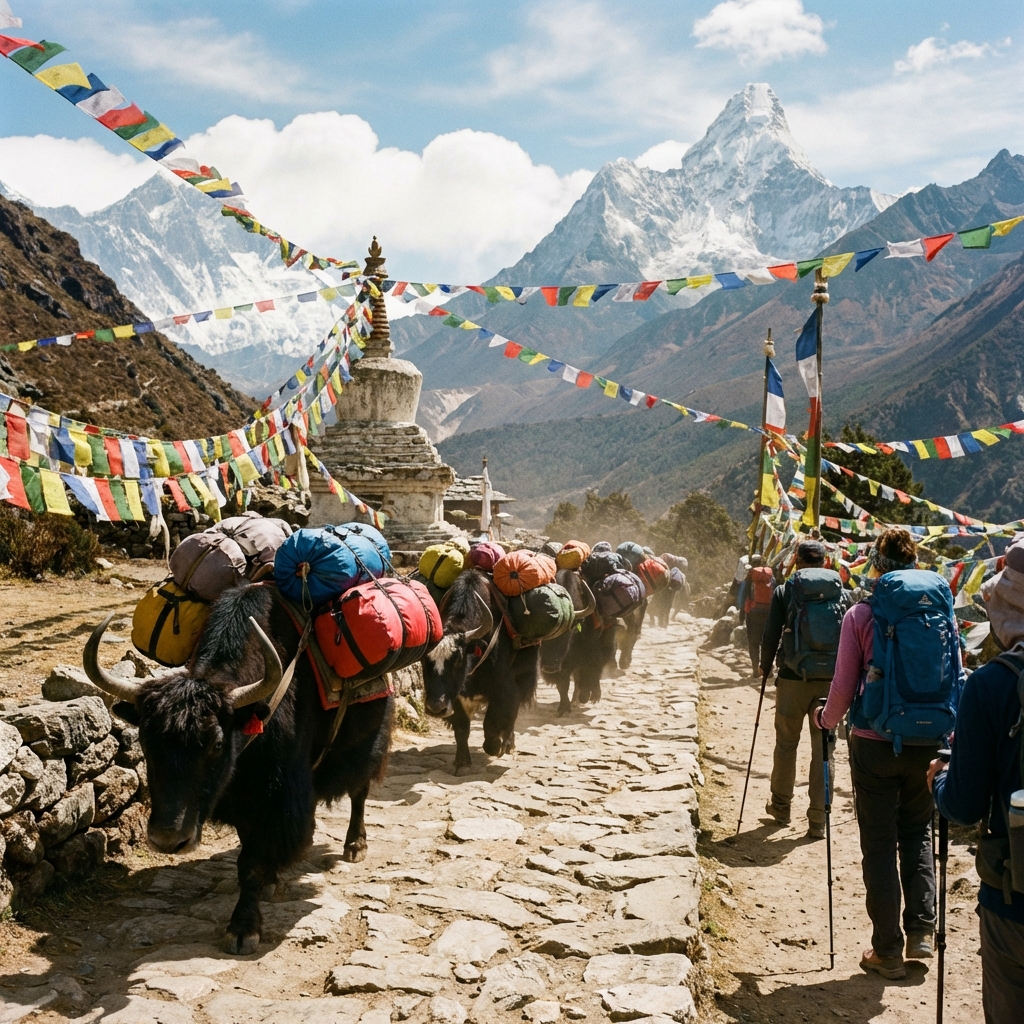
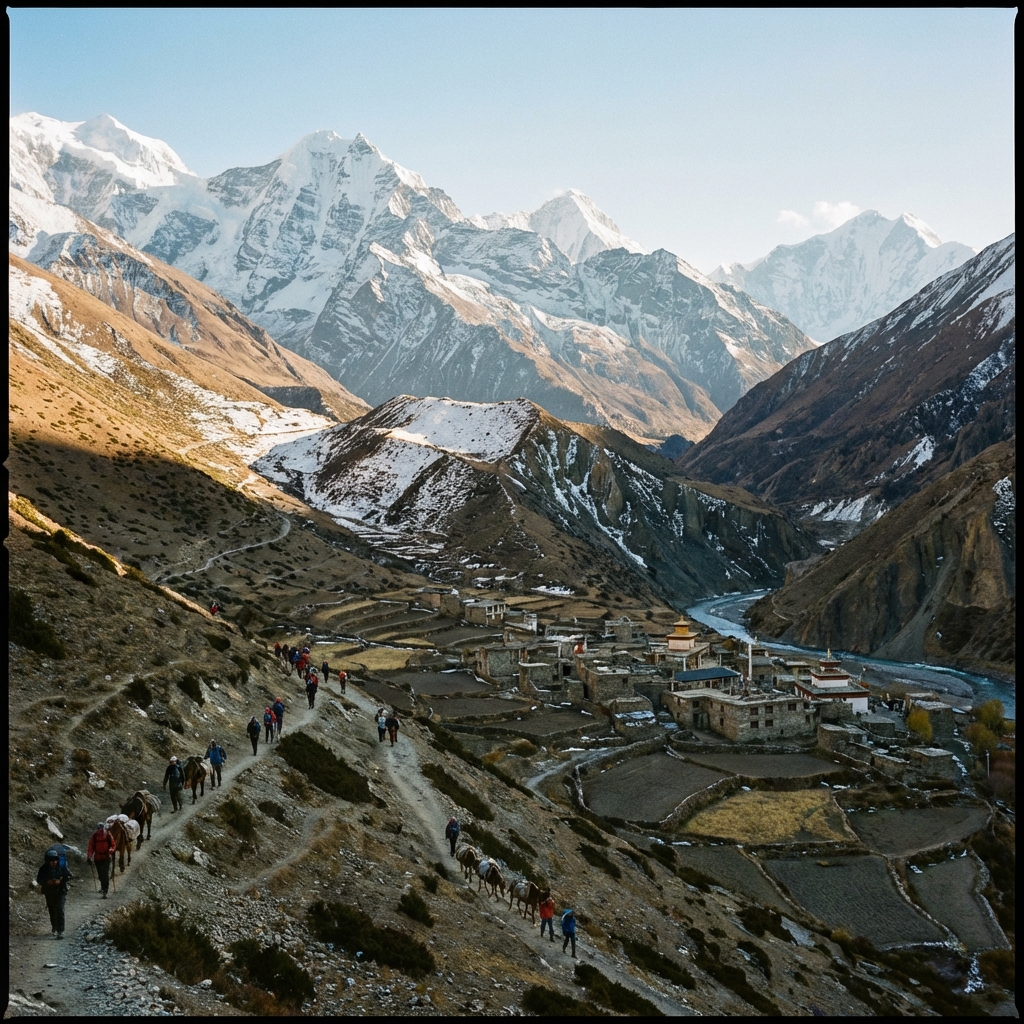
What if you could experience authentic Sherpa village culture, walk through ancient rhododendron forests, visit centuries-old Buddhist monasteries, and enjoy panoramic Himalayan views -- all within a 2-hour drive from Kathmandu, with no flights required, in as few as 5 days?
The Helambu trek is one of Nepal's most underrated trekking experiences. While crowds flock to Everest Base Camp and Annapurna, Helambu offers a quiet, culturally rich alternative that is accessible to beginners, budget-friendly, and remarkably close to the capital. The region is home to the Hyolmo people (a Sherpa subgroup), whose traditional villages, monasteries, and way of life remain largely untouched by mass tourism.
This guide covers everything you need to plan a Helambu trek: multiple itinerary options, how to combine with Gosaikunda and Langtang, seasonal advice, and why this underappreciated region deserves a place on every Nepal trekking shortlist.
5-7 days (basic circuit)
3,650m (Tharepati)
4,610m (Laurebina Pass)
Easy to Moderate
Oct-May (year-round possible)
Sundarijal (2-hr drive from Kathmandu)
Langtang National Park + TIMS
~$38 (NPR 3,000 + NPR 2,000)
No (but recommended)
Teahouses and homestays
No - entirely road accessible
Very few - highly uncrowded
Why Choose Helambu?
The Closest Real Trek to Kathmandu
Helambu's greatest logistical advantage is proximity. The trailhead at Sundarijal is just 15 km from central Kathmandu, reachable by taxi or local bus in under 2 hours. No domestic flights, no long bus rides, no weather-dependent connections. You can literally have breakfast in Thamel and start trekking the same morning.
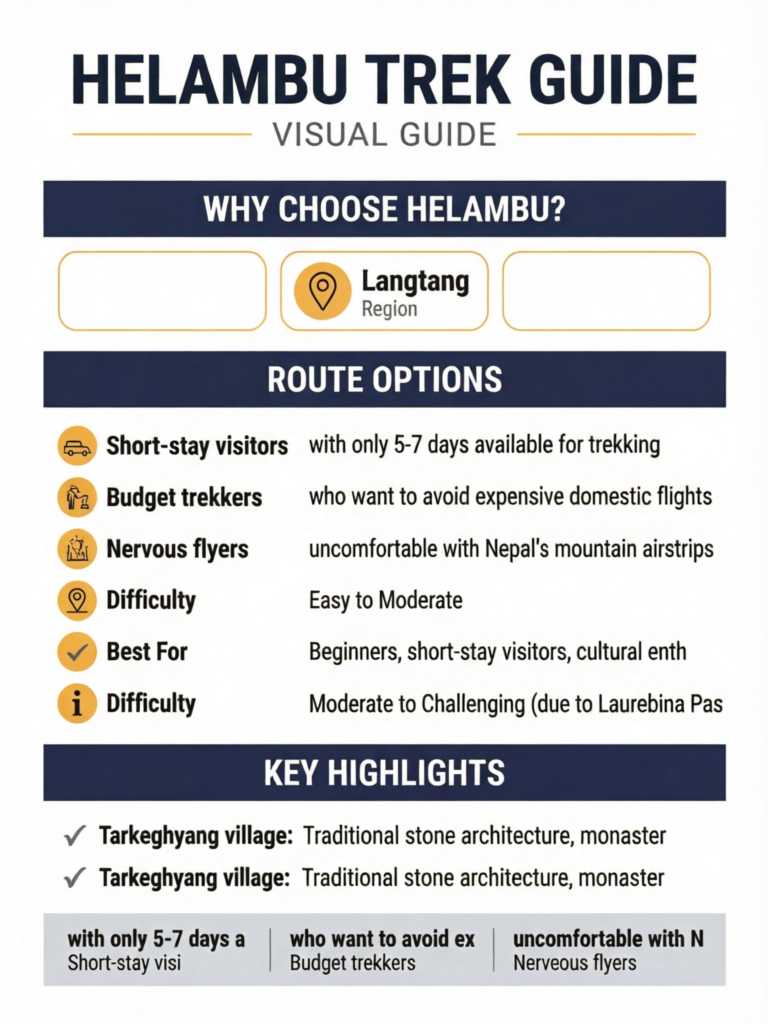
This accessibility makes Helambu ideal for:
- Short-stay visitors with only 5-7 days available for trekking
- Budget trekkers who want to avoid expensive domestic flights
- Nervous flyers uncomfortable with Nepal's mountain airstrips
- Flexible planners who can decide to trek on short notice without flight bookings
Rich Hyolmo Sherpa Culture
The Helambu region is the ancestral home of the Hyolmo (also spelled Yolmo) people, a Sherpa subgroup with a distinct cultural identity. Hyolmo villages like Tarkeghyang, Sermathang, and Melamchi Gaon contain some of Nepal's most beautiful rural monasteries, centuries-old homes with intricately carved wooden windows, and communities that maintain traditional agricultural and spiritual practices.
Unlike the more tourist-oriented Sherpa villages of the Khumbu (Everest region), Helambu's Hyolmo communities see relatively few foreign visitors. Interactions are genuine, unhurried, and deeply cultural. Monastery visits, home-cooked meals, and village walking tours provide an intimate cultural experience that more popular treks cannot match.
Year-Round Viability
Helambu is one of the few Nepal treks that can be done almost year-round, including during the monsoon season (June-August). While monsoon brings rain and leeches to the lower trails, the higher sections receive less rainfall than Annapurna or Everest, and the lush green landscapes and blooming wildflowers are beautiful in their own right. Winter (December-February) is cold at the higher points but generally clear and uncrowded.
Pro Tip
Helambu is one of Nepal's best monsoon trekking options. While the lower approach from Sundarijal will be wet and leech-prone, the villages above 2,500m receive less monsoon rain than the Annapurna or Everest regions. If you can only visit Nepal during July-August, consider Helambu over more popular routes that are genuinely miserable in monsoon conditions.
Route Options
Option 1: Helambu Circuit (5-7 Days)
The standard circuit loop from Sundarijal through the main Hyolmo villages and back.
| Day | Route | Altitude | Hours | Notes |
|---|---|---|---|---|
| 1 | Kathmandu to Sundarijal to Chisapani | 2,215m | 4-5 hrs | Drive to trailhead; climb through forest |
| 2 | Chisapani to Kutumsang | 2,470m | 5-6 hrs | Ridge walk; Himalayan views on clear days |
| 3 | Kutumsang to Tharepati | 3,650m | 5-6 hrs | Through rhododendron forest; highest point |
| 4 | Tharepati to Tarkeghyang | 2,740m | 4-5 hrs | Descent to historic Hyolmo village |
| 5 | Tarkeghyang to Sermathang | 2,590m | 3-4 hrs | Short day; explore village and monastery |
| 6 | Sermathang to Melamchi Bazaar | 870m | 5-6 hrs | Long descent; bus to Kathmandu |
Difficulty: Easy to Moderate Best For: Beginners, short-stay visitors, cultural enthusiasts
Option 2: Helambu to Gosaikunda (10-12 Days)
Extend the Helambu circuit northward to the sacred Gosaikunda Lakes, crossing the Laurebina Pass at 4,610m.
| Day | Route | Altitude | Hours | Notes |
|---|---|---|---|---|
| 1 | Kathmandu to Sundarijal to Chisapani | 2,215m | 4-5 hrs | Standard approach |
| 2 | Chisapani to Kutumsang | 2,470m | 5-6 hrs | Ridge trail |
| 3 | Kutumsang to Tharepati | 3,650m | 5-6 hrs | Highest point of Helambu circuit |
| 4 | Tharepati to Phedi | 3,630m | 4-5 hrs | Approach Gosaikunda direction |
| 5 | Phedi to Gosaikunda | 4,380m | 5-6 hrs | Ascend to sacred lakes |
| 6 | Gosaikunda Exploration | 4,380m | 3-4 hrs | Visit all sacred lakes; acclimatization |
| 7 | Gosaikunda to Laurebina Pass (4,610m) to Sing Gompa | 3,330m | 6-7 hrs | Cross the high pass; dramatic descent |
| 8 | Sing Gompa to Dhunche | 1,960m | 5-6 hrs | Descent to road head |
| 9 | Dhunche to Kathmandu | 1,400m | 7-8 hrs bus | Return by road |
Difficulty: Moderate to Challenging (due to Laurebina Pass at 4,610m) Best For: Trekkers wanting more altitude challenge and sacred lake experience
For a dedicated Gosaikunda guide, see our Gosaikunda trek guide.
Option 3: Helambu to Langtang Valley (12-16 Days)
The most ambitious combination connects Helambu to the Langtang Valley via Gosaikunda, creating an epic traverse of the entire Langtang region.
| Phase | Route Summary | Days | Max Altitude |
|---|---|---|---|
| Phase 1: Helambu | Sundarijal to Tharepati | 3 days | 3,650m |
| Phase 2: Gosaikunda | Tharepati to Gosaikunda to Laurebina to Sing Gompa | 3-4 days | 4,610m |
| Phase 3: Langtang Valley | Syabrubesi to Kyanjin Gompa and return | 5-7 days | 4,773m (Tserko Ri) |
| Total | Complete Langtang region traverse | 12-16 days | 4,773m |
Difficulty: Moderate to Difficult Best For: Experienced trekkers with 2+ weeks wanting the complete Langtang experience
The Grand Langtang Traverse
Combining Helambu, Gosaikunda, and Langtang Valley into a single trek is one of Nepal's most rewarding multi-region experiences. You traverse three distinct zones -- Hyolmo cultural hills, sacred alpine lakes, and the dramatic Langtang glacier valley -- with no repeated trails and entirely by road access from Kathmandu (no flights needed). This combination is excellent value for trekkers with 2 weeks available.
Difficulty Assessment
Physical Demands
Helambu is one of Nepal's easier treks, but "easy" in Himalayan trekking still means:
- Daily walking: 4-6 hours per day, mostly on established trails
- Elevation changes: Significant daily ascents and descents (500-1,000m per day)
- Trail surface: Mix of stone steps, forest paths, and village trails; generally well-maintained
- Maximum altitude: 3,650m (Tharepati) on the basic circuit; 4,610m if extending to Gosaikunda
Who Is This Trek For?
Ideal candidates:
- First-time trekkers in Nepal with reasonable fitness
- Day hikers looking to try multi-day trekking
- Cultural travelers who want village immersion over mountain summits
- Budget travelers avoiding flight costs
- Monsoon-season visitors needing a viable option
- Families with older children (10+ years)
- Senior trekkers (the circuit stays below 3,700m)
This trek may not satisfy:
- Trekkers seeking dramatic high-altitude mountain scenery (views are present but not as dramatic as EBC or ABC)
- Those wanting above-5,000m experiences (unless combining with Gosaikunda extension)
- Trekkers who need consistent mountain panoramas (views are weather and forest dependent)
Altitude Considerations
The basic Helambu circuit tops out at 3,650m (Tharepati), presenting minimal altitude sickness risk for most people. Standard acclimatization advice applies: stay hydrated, ascend gradually, and be aware of symptoms.
The Gosaikunda extension raises the stakes significantly with Laurebina Pass at 4,610m. This requires proper acclimatization (typically 1-2 nights above 3,500m before attempting the pass) and awareness of AMS symptoms.
Pro Tip
If you are a beginner concerned about altitude, the Helambu circuit (without the Gosaikunda extension) is one of the safest choices in Nepal. The maximum altitude of 3,650m at Tharepati is below the threshold where serious altitude sickness typically begins, and you only spend one night at this altitude before descending. This makes Helambu an excellent confidence-builder before attempting higher treks.
Best Season for Helambu
Season-by-Season Analysis
| Season | Months | Weather | Trail | Views | Crowds | Special Features |
|---|---|---|---|---|---|---|
| Autumn | Oct-Nov | Clear, dry, cool | Excellent | Best | Low | Peak foliage colors |
| Winter | Dec-Feb | Cold, clear, dry | Good (snow above 3,000m possible) | Excellent | Very Low | Crisp mountain views |
| Spring | Mar-May | Warming, increasing haze | Good | Moderate (haze) | Low | Rhododendron bloom (Mar-Apr) |
| Monsoon | Jun-Sep | Wet, leeches below 2,500m | Muddy lower sections | Limited (cloud) | Almost None | Lush green; wildflowers |
Rhododendron Season (March-April)
Helambu's forests contain magnificent rhododendron stands that bloom spectacularly from mid-March through April. The trail between Kutumsang and Tharepati passes through dense rhododendron forest that erupts in red, pink, and white blooms. This is one of the best rhododendron trekking experiences in Nepal, comparable to the famous Ghorepani-Poon Hill rhododendron forests.
Monsoon Viability (June-August)
Helambu's reputation as a monsoon-viable trek is well-deserved but comes with caveats:
- Below 2,500m: Expect rain, mud, and leeches (leech socks recommended)
- Above 2,500m: Less rainfall, but still cloudy; mountain views are rare
- Cultural experience: Villages are fully functional and welcoming in monsoon
- Crowds: Virtually no other trekkers; maximum solitude
Monsoon Leech Warning
If you trek Helambu during monsoon (June-August), you will encounter leeches on the forest trails below approximately 2,500m. They are harmless but unsettling. Leech socks (tight-fitting gaiters), insect repellent applied to socks and boots, and tucking pants into socks provide effective protection. Do not let leech fear prevent you from an otherwise excellent trek -- the bites are painless and stop bleeding within minutes.
Permits and Costs
Required Permits
| Permit | Cost | Where to Obtain | Notes |
|---|---|---|---|
| Langtang National Park Entry | NPR 3,000 (~$23) | Sundarijal gate or Kathmandu | Mandatory |
| TIMS Card | NPR 2,000 (~$15) | Nepal Tourism Board, Kathmandu | Standard requirement |
| Total Permits | ~$38 | Among cheapest in Nepal |
No restricted area permit is required. No guide is legally mandatory (though recommended for first-timers). No minimum group size.
Cost Breakdown: 7-Day Helambu Circuit
| Category | Budget | Mid-Range | Notes |
|---|---|---|---|
| Transport (KTM to Sundarijal, Melamchi to KTM) | $15-30 | $30-50 | Local bus vs. private taxi |
| Permits | $38 | $38 | Same for all |
| Guide (optional, 7 days) | $0 | $140-210 | $20-30/day |
| Porter (optional, 7 days) | $0 | $100-140 | $14-20/day |
| Accommodation (7 nights) | $28-42 | $42-70 | $4-10/night teahouses |
| Meals (7 days) | $70-105 | $105-175 | $10-25/day |
| Contingency | $30-50 | $50-100 | Tips, snacks, extras |
| Total | $181-265 | $505-783 | Per person |
Pro Tip
Helambu is arguably Nepal's most budget-friendly multi-day trek. With permits under $40, no flights needed, cheap local transport, and affordable teahouses, a solo budget trekker can complete the circuit for under $300 total including everything. This makes it an outstanding option for budget-conscious adventurers who do not want to compromise on cultural quality.
Cultural Highlights
Hyolmo (Yolmo) People
The Hyolmo are a Tibetan-origin ethnic group who settled in the Helambu region centuries ago. They practice Tibetan Buddhism (specifically the Nyingma tradition), speak a Tibeto-Burman language related to Sherpa, and maintain cultural traditions that blend Tibetan heritage with uniquely local customs.
Key cultural elements:
- Ghewa ceremony: Elaborate death anniversary rituals involving community feasting and religious performances
- Lhosar festival: Tibetan New Year celebrations (February) with traditional dances and monastery ceremonies
- Traditional architecture: Stone houses with intricately carved wooden windows, flat roofs for grain drying
- Agriculture: Terraced fields of rice, millet, maize at lower elevations; potatoes and buckwheat higher up
Key Villages and Monasteries
Tarkeghyang (2,740m) The cultural heart of Helambu. Features one of the region's largest and most important monasteries, recently restored with significant cultural artifacts. Traditional stone houses line narrow lanes. The gompa welcomes visitors for morning prayers (typically 6-7 AM).
Sermathang (2,590m) A picturesque village with its own monastery and a government cheese factory (an incongruous but interesting stop). The village hosts important festivals and has several well-maintained traditional homes.
Melamchi Gaon (2,530m) A larger village with a health post, school, and active community life. Good base for exploring the broader Melamchi Valley.
Chisapani (2,215m) Though not a Hyolmo village, Chisapani offers one of the trek's best viewpoints: on clear mornings, you can see Langtang Lirung, Ganesh Himal, Dorje Lakpa, and even distant views toward the Everest range from the ridge above the village.
Homestay Opportunities
Several Helambu villages offer community-managed homestay programs where you stay with local families:
- Authentic meals: Home-cooked dal bhat, dhindo (millet porridge), local vegetable dishes, and butter tea
- Cultural exchange: Learn about daily life, agricultural practices, and spiritual traditions
- Community benefit: Homestay fees go directly to host families rather than lodge owners
- Comfort level: Basic but clean rooms with mattresses; shared family facilities
Accommodation and Teahouses
Teahouse Quality
| Location | Quality | Meals | WiFi | Hot Shower | Notes |
|---|---|---|---|---|---|
| Chisapani | Good | Good variety | Some lodges | Some lodges | Popular trekking stop |
| Kutumsang | Moderate | Basic | No | Bucket only | Smaller village; fewer options |
| Tharepati | Basic | Basic | No | No | Highest point; cold at night |
| Tarkeghyang | Moderate-Good | Good (homestays) | Limited | Some | Cultural highlight |
| Sermathang | Moderate | Good | Limited | Some | Growing tourism infrastructure |
What to Expect
Helambu teahouses are simpler than those on Everest or Annapurna routes but perfectly adequate:
- Rooms: Basic twin or double rooms with mattresses and pillows; bring a sleeping bag or liner
- Bathrooms: Shared; squat toilets are common; Western toilets at some newer lodges
- Meals: Dal bhat (reliable everywhere), noodle soups, fried rice, eggs, pancakes at larger stops
- Heating: None in most rooms; common dining areas may have a wood stove
- Electricity: Available at most stops; charging possible (sometimes with a small fee)
Health and Safety
Altitude
The basic Helambu circuit presents minimal altitude risk:
- Maximum altitude is 3,650m (Tharepati), below the typical threshold for serious AMS
- You spend only 1 night at this altitude before descending
- Standard hydration and gradual ascent are sufficient precautions
The Gosaikunda extension (4,610m Laurebina Pass) requires proper acclimatization. Spend 2 nights above 3,500m before attempting the pass. Carry Diamox as a precaution.
Trail Safety
- Trails are well-established but less maintained than Everest or Annapurna routes
- Some sections traverse steep hillsides; trekking poles helpful for stability
- River crossings on simple bridges are straightforward
- The Sundarijal approach through Shivapuri National Park is well-marked
Communications
| Location | Mobile Signal | WiFi |
|---|---|---|
| Sundarijal | Full (NTC + Ncell) | Yes |
| Chisapani | Moderate | Some lodges |
| Kutumsang | Weak | Rarely |
| Tharepati | Weak to None | No |
| Tarkeghyang | Moderate | Limited |
| Sermathang | Moderate | Limited |
| Melamchi Bazaar | Full | Yes |
Unlike remote treks, Helambu maintains sporadic mobile coverage at most villages. You will not be completely disconnected, though signal is unreliable above 3,000m.
Comparison with Other Short Nepal Treks
| Factor | Helambu | Poon Hill | Mardi Himal | Langtang Valley |
|---|---|---|---|---|
| Duration | 5-7 days | 3-5 days | 5-7 days | 7-10 days |
| Max Altitude | 3,650m | 3,210m | 4,500m | 4,773m (Tserko Ri) |
| Difficulty | Easy-Moderate | Easy-Moderate | Moderate | Moderate |
| Crowds | Very Low | High | Moderate | Low-Moderate |
| Cultural Depth | Excellent | Good | Moderate | Good |
| Mountain Views | Moderate | Excellent | Excellent | Excellent |
| Flight Needed | No | No | No | No |
| Cost (Budget) | $180-265 | $250-400 | $250-400 | $400-600 |
| Monsoon Viable | Yes | Difficult | Difficult | Difficult |
| Permits | $38 | ~$38 | ~$38 | ~$38 |
When Helambu Wins
Helambu is the best choice when:
- You want cultural depth over mountain scenery
- You have fewer than 7 days available
- You are trekking during monsoon season
- Budget is a primary concern (no flight costs, cheapest overall)
- You want the least crowded experience
- You are a beginner wanting a low-altitude, low-risk first trek
When Other Treks Win
Choose alternatives when:
- Mountain panoramas are your top priority (Poon Hill, Mardi Himal)
- You want glacier valley experiences (Langtang Valley)
- You prefer more established teahouse infrastructure (Poon Hill)
For beginner-friendly trek comparisons, see our guide to the best beginner treks in Nepal.
Getting There and Away
Starting from Sundarijal (Most Common)
| Route | Mode | Duration | Cost | Notes |
|---|---|---|---|---|
| Thamel to Sundarijal | Taxi | 45-60 min | $10-15 | Most convenient |
| Thamel to Sundarijal | Local bus (Ratnapark) | 1.5-2 hrs | $1-2 | Cheapest; crowded |
| Thamel to Sundarijal | Hired car | 45-60 min | $20-30 | Most comfortable |
Exiting from Melamchi Bazaar (Circuit Endpoint)
| Route | Mode | Duration | Cost | Notes |
|---|---|---|---|---|
| Melamchi Bazaar to Kathmandu | Local bus | 3-4 hrs | $3-5 | Regular departures |
| Melamchi Bazaar to Kathmandu | Hired jeep | 2-3 hrs | $50-80 | Faster but expensive for solo |
Alternative Approach: Melamchi to Tarkeghyang Direct
Some trekkers skip the Sundarijal-Chisapani-Kutumsang-Tharepati ridge approach and drive directly to Melamchi Bazaar, then trek uphill to Tarkeghyang (1 day). This saves 2-3 days but misses the ridge walk and Chisapani viewpoint. It works for trekkers with extremely limited time who want to maximize village cultural time.
No Flights Means No Flight Delays
One of Helambu's underappreciated advantages is zero flight dependency. Unlike Everest (Lukla flight) or some Annapurna approaches, Helambu is entirely road-accessible. You will never lose trekking days to flight cancellations, weather delays, or booking chaos. For time-pressed trekkers, this reliability is invaluable.
Tips for Maximizing the Helambu Experience
Cultural Immersion Strategies
- Stay in homestays: The single best way to experience Hyolmo culture
- Ask about monastery visits: Morning prayers are typically open to visitors; your host or guide can arrange timing
- Learn basic Nepali greetings: "Namaste" and "dhanyabad" (thank you) go a long way
- Carry small gifts: Tea (leaf, not bags), pencils for children, or photographs of your home country are appreciated
- Slow down: Two nights in Tarkeghyang reveals far more than one; the village opens up when you linger
Photography Opportunities
- Chisapani sunrise: Dawn views of the Langtang and Ganesh Himal ranges from the ridge
- Rhododendron forest: March-April for bloom; the tunnel-like forest trails are photogenic year-round
- Tarkeghyang village: Traditional stone architecture, monastery, terraced fields
- Local portraits: Always ask permission; showing the photo on your camera screen builds rapport
- Monastery interiors: Ask monks for permission; natural light through windows creates atmospheric shots
Pro Tip
The sunrise from Chisapani on a clear autumn morning is one of the best panoramic mountain views accessible within a single day's walk from Kathmandu. On exceptional days, you can see from Langtang Lirung in the north to peaks near the Everest range in the east. Bring a headlamp and walk to the ridge viewpoint above the village before dawn.
Frequently Asked Questions
Is the Helambu trek good for beginners?
Yes, Helambu is one of the best beginner treks in Nepal. The maximum altitude of 3,650m (on the standard circuit) presents minimal altitude risk, the trails are well-established, teahouses are available, and the proximity to Kathmandu means easy access and exit. It is an excellent confidence-builder before attempting higher treks.
Do I need a guide for Helambu?
A guide is not legally required for Helambu, making it one of the few Nepal treks where truly independent trekking is straightforward. However, a guide significantly enhances the cultural experience (translating conversations, arranging homestays, providing cultural context). For first-time Nepal trekkers, a guide is recommended. Experienced trekkers comfortable with basic navigation you must trek with a licensed guide (mandatory since April 2023).
Can I trek Helambu during monsoon (June-August)?
Yes. Helambu is one of Nepal's most viable monsoon trekking options. Expect rain and leeches at lower elevations (below 2,500m) but drier conditions in the villages. Mountain views will be limited by cloud cover, but the lush green landscape, blooming wildflowers, and complete solitude have their own appeal. Pack rain gear and leech socks.
How does Helambu compare to Poon Hill?
Poon Hill offers better mountain panoramas (Dhaulagiri, Annapurna, Machapuchare). Helambu offers better cultural depth, fewer crowds, lower cost (no Pokhara transport), and monsoon viability. If mountain views are your priority, choose Poon Hill. If cultural immersion and budget matter more, choose Helambu.
Can I combine Helambu with Gosaikunda?
Absolutely, and this is a highly recommended combination. The Helambu-Gosaikunda route is a natural extension that adds the sacred Gosaikunda Lakes and the 4,610m Laurebina Pass to your trek, increasing duration to 10-12 days. This combination offers cultural villages, alpine lakes, and a proper high-altitude pass crossing in a single road-accessible trek.
Can I combine Helambu with Langtang Valley?
Yes, the grand Helambu-Gosaikunda-Langtang traverse is possible in 12-16 days. This connects Helambu's cultural villages with Gosaikunda's sacred lakes and Langtang's dramatic glacier valley in one continuous trek, entirely without flights. It is one of the best multi-region trek combinations in Nepal.
What is the maximum altitude on the Helambu trek?
The standard Helambu circuit reaches 3,650m at Tharepati. If you extend to Gosaikunda, the maximum is 4,610m at Laurebina Pass. If you continue to Langtang Valley and climb Tserko Ri, the maximum is 4,773m.
Is Helambu affected by the 2015 earthquake?
The 2015 earthquake damaged some villages in the Helambu region, but reconstruction is largely complete. Trails are fully functional, teahouses have been rebuilt, and communities welcome trekkers. The trek is fully operational. Some monasteries are still undergoing restoration, which is itself interesting to observe.
How much does the Helambu trek cost?
A budget-conscious trekker can complete the 7-day circuit for under $300, making it one of Nepal's cheapest multi-day treks. Mid-range with a guide and porter costs $500-780. The key savings come from eliminating flight costs (road access from Kathmandu) and low permit fees ($38 total).
Is there WiFi on the Helambu trek?
Limited WiFi is available at some teahouses in Chisapani, Tarkeghyang, and Sermathang, though it is slow and unreliable. Mobile phone signal (NTC) is available intermittently at most villages. You should not expect consistent connectivity but will not be completely cut off for extended periods.
Can families with children do the Helambu trek?
Yes, Helambu is well-suited for families with children aged 10 and older. The moderate altitudes, short daily walking distances, available teahouses, and proximity to Kathmandu (easy exit if needed) make it one of the safest family trekking options in Nepal. Shorter variations (3-4 days) are possible by starting from Melamchi Bazaar.
What food is available on the Helambu trek?
Dal bhat is the staple at every stop. Most teahouses also offer noodle soups, fried rice, eggs, pancakes, and basic pasta. In Tarkeghyang and Sermathang, homestays serve traditional Hyolmo food including dhindo (millet porridge), gundruk (fermented vegetable), and butter tea. Food variety is reasonable but not comparable to Everest or Annapurna routes.
Final Thoughts
The Helambu trek occupies a unique position in Nepal's trekking landscape: it is the most accessible, most affordable, and most culturally intimate multi-day trek within reach of Kathmandu, yet it remains one of the least visited. Where Everest offers spectacle and Annapurna offers variety, Helambu offers something rarer and perhaps more valuable -- quiet, genuine cultural immersion in traditional Himalayan village life.
If you have limited time in Nepal, a tight budget, or simply want to escape the crowds that now characterize more famous routes, Helambu delivers an experience that punches far above its modest profile. The Hyolmo villages, the ancient monasteries, the rhododendron forests, and the ridge-line Himalayan views are not consolation prizes for missing Everest -- they are genuine highlights in their own right.
For those with more time, the Helambu-Gosaikunda combination or the grand Helambu-Gosaikunda-Langtang traverse represent some of the best value multi-week trekking in Nepal, all without a single domestic flight. In an age of crowded trails and rising costs, that combination of quality, culture, and accessibility makes Helambu one of Nepal's smartest trekking choices.