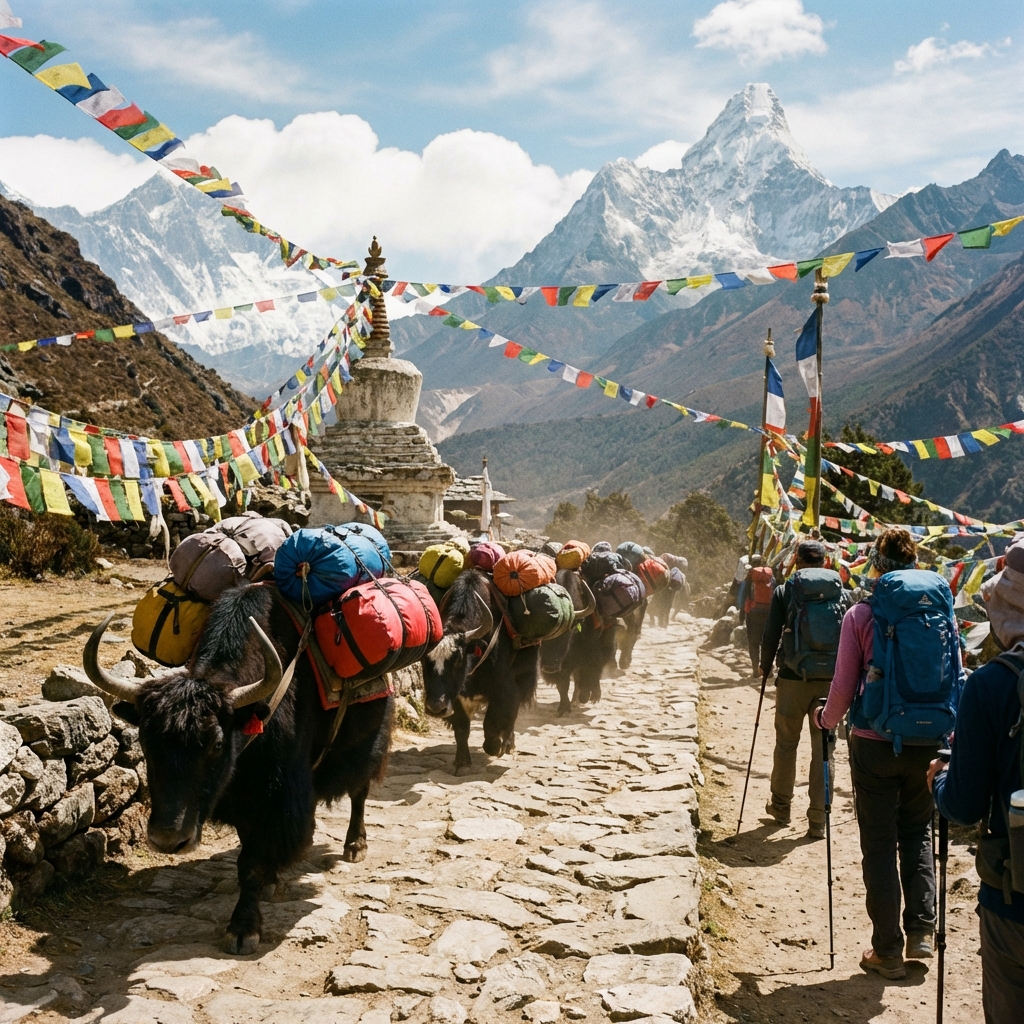
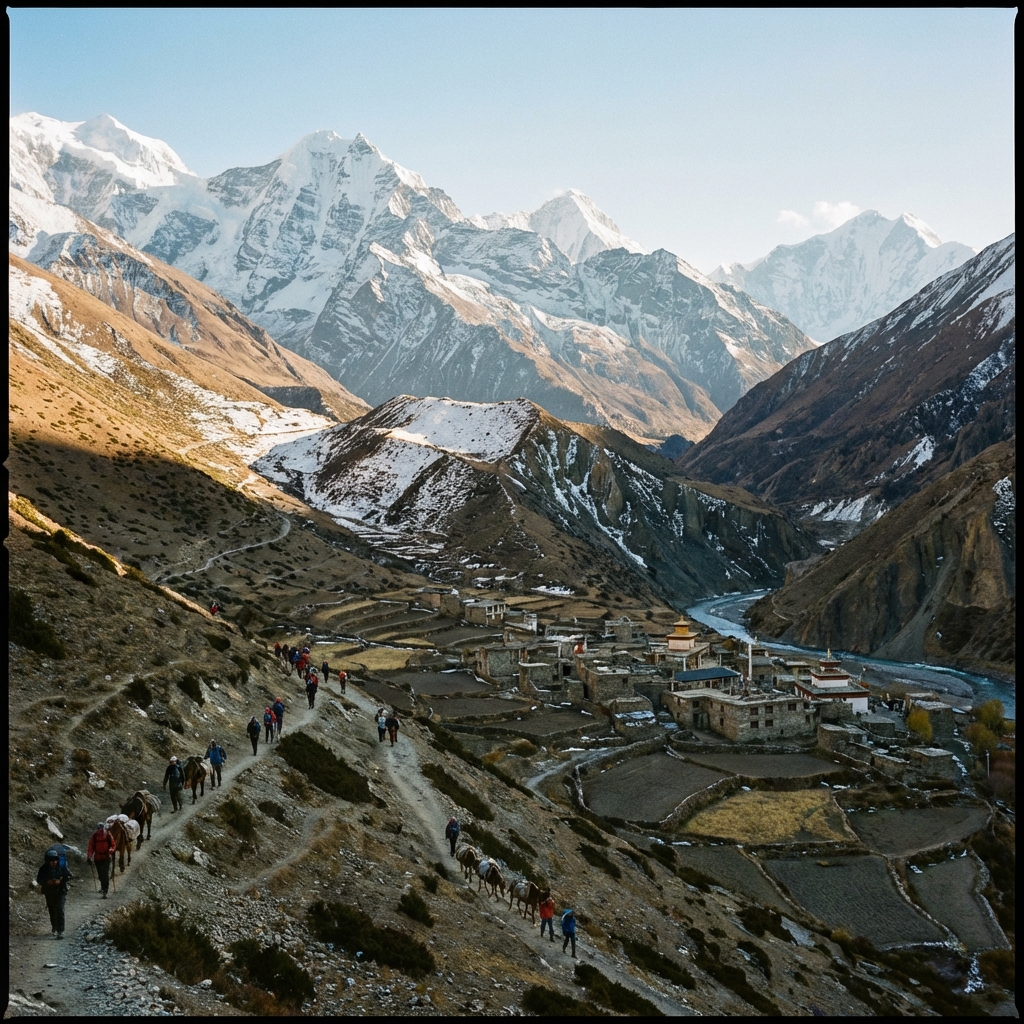
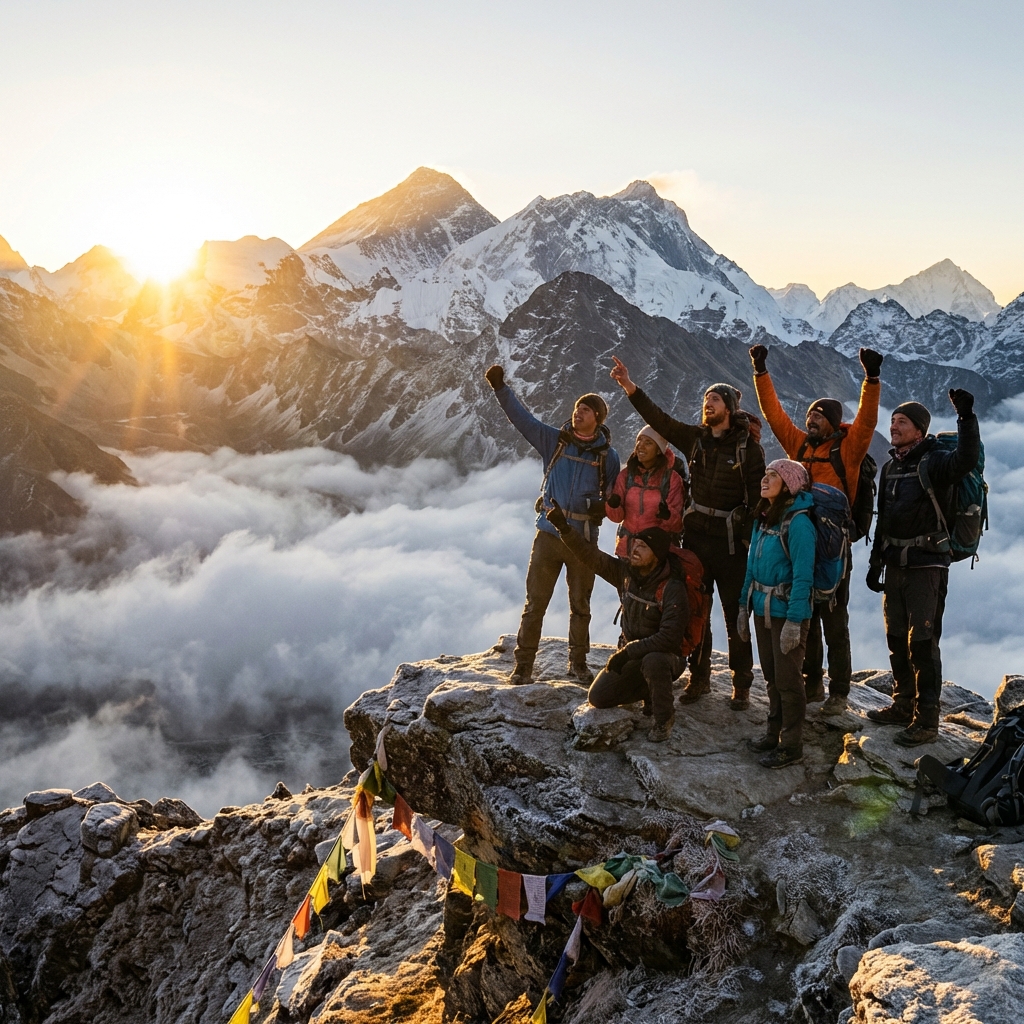
Standing at Pang Pema (5,143m), with the north face of Kanchenjunga filling the entire horizon in a wall of ice and rock stretching nearly 3,500 vertical meters above you, the word "spectacular" feels wholly inadequate. This is the world's third highest mountain, and you are at its base, having spent three weeks walking through some of the most biologically diverse and culturally varied terrain in the Himalayas to get here.
The Kanchenjunga Base Camp trek is one of Nepal's last great wilderness adventures. Tucked into the far northeast corner of the country, bordering both Sikkim (India) and Tibet (China), this restricted area trek sees fewer than 2,000 trekkers per year. Compare that to the 50,000+ visiting Everest Base Camp annually, and you begin to understand the scale of solitude on offer.
This guide covers everything you need to plan your Kanchenjunga expedition: both North and South base camp options, detailed itineraries, permit requirements, wildlife encounters, cultural experiences, and the honest reality of what this demanding trek involves.
20-25 days (circuit: 25-28 days)
5,143m (16,877 ft)
4,730m (15,518 ft)
220-260 km (circuit)
Very Difficult / Expedition Grade
Oct-Nov (Autumn), Apr-May (Spring)
Taplejung (flight to Suketar or jeep)
$10/week RAP + KCA entry + TIMS
Yes - mandatory (restricted area)
2 trekkers (restricted area requirement)
Basic teahouses + camping sections
Fewer than 2,000
Why Kanchenjunga? Understanding the Appeal
The Sacred Third Summit
Mount Kanchenjunga (8,586m) means "Five Treasures of Snow" in Tibetan, referring to its five summits, each said to contain one of nature's treasures: gold, silver, gems, grain, and sacred texts. The mountain is revered by local communities as a deity, and out of respect, all summit attempts traditionally stop a few meters short of the true peak. This reverence pervades the entire region and shapes the trekking experience.
What Makes This Trek Exceptional
Dual base camp opportunity. Kanchenjunga is the only major Himalayan peak where trekkers can visit both the North Base Camp (Pang Pema, 5,143m) and South Base Camp (Oktang, 4,730m) on a single trek. The circuit route connects both through high passes, offering completely different perspectives of the massive Kanchenjunga massif.
Extraordinary biodiversity. The Kanchenjunga Conservation Area (KCA) encompasses 2,035 square kilometers, ranging from subtropical forests at 1,200m to arctic zones above 5,000m. This elevation range supports remarkable biodiversity, including red pandas, snow leopards, Himalayan black bears, and over 250 bird species.
Cultural kaleidoscope. Unlike more homogeneous trekking regions, the Kanchenjunga trek passes through communities of Limbu, Rai, Sherpa, and Tibetan peoples, each with distinct languages, customs, and spiritual traditions. You experience four distinct cultural zones on a single trek.
Genuine remoteness. Most of the route lies days from any road. Mobile phone coverage disappears within the first few days. Teahouse infrastructure is basic at best and absent in some sections. This is real wilderness trekking.
Pro Tip
The Kanchenjunga trek is significantly less expensive than other restricted area treks like Upper Dolpo (USD 50/day) or Upper Mustang (USD 50/day). The KCA restricted area permit costs just $10 per week, making this one of the most affordable restricted area experiences in Nepal. The main cost driver is the 20-25 days of trekking logistics.
North Base Camp vs South Base Camp vs Circuit
Trekkers have three main options for Kanchenjunga:
Option 1: North Base Camp Only (Pang Pema)
| Aspect | Details |
|---|---|
| Duration | 18-22 days |
| Maximum Altitude | 5,143m |
| Route | Taplejung to Pang Pema and return |
| Highlights | North face of Kanchenjunga, Wedge Peak, Nepal Peak |
| Difficulty | Very Difficult |
| Best For | Those wanting the most dramatic Kanchenjunga views |
The north base camp at Pang Pema delivers the most iconic Kanchenjunga experience. The north face rises over 3,400 meters directly above camp in one of the most impressive mountain walls in the Himalayas. The approach follows the Ghunsa Valley through beautiful forests and past traditional Sherpa and Tibetan villages.
Option 2: South Base Camp Only (Oktang)
| Aspect | Details |
|---|---|
| Duration | 16-20 days |
| Maximum Altitude | 4,730m |
| Route | Taplejung to Oktang and return |
| Highlights | South face, Yalung Glacier, Rathong face |
| Difficulty | Difficult |
| Best For | Those with fewer days or wanting a somewhat less demanding route |
The south approach via the Yalung Valley offers different perspectives and lower maximum altitude. While less dramatic than the north face, the south side has its own grandeur, with the Yalung Glacier providing a massive foreground to the Kanchenjunga massif.
Option 3: Full Circuit (Both Base Camps)
| Aspect | Details |
|---|---|
| Duration | 25-28 days |
| Maximum Altitude | 5,143m |
| Route | North BC to South BC (or reverse) via Sele La and Sinon La |
| Highlights | Complete Kanchenjunga experience, both faces, high passes |
| Difficulty | Expedition Grade |
| Best For | Experienced trekkers with sufficient time for the complete adventure |
The circuit connects both base camps via the Sele La (4,290m) and Sinon La (4,660m) passes, creating a comprehensive circumnavigation of the Kanchenjunga massif. This is the ultimate option but requires the most time and fitness.
Which Option Should You Choose?
If you have 3 weeks, choose the North Base Camp route for the most spectacular views. If you have 4 weeks, the full circuit is the definitive Kanchenjunga experience and eliminates backtracking. The South Base Camp route alone is less commonly chosen but makes sense for trekkers with limited time who want to avoid the highest altitudes.
Detailed Itinerary: North Base Camp (22 Days)
| Day | Route | Altitude | Hours | Notes |
|---|---|---|---|---|
| 1 | Fly to Bhadrapur; drive to Birtamod/Ilam | 200m | - | Arrive eastern Nepal |
| 2 | Drive to Taplejung | 1,820m | 8-10 hrs | Jeep on winding mountain roads |
| 3 | Taplejung to Chirwa | 1,270m | 6-7 hrs | Descent through Limbu villages |
| 4 | Chirwa to Sekathum | 1,640m | 6-7 hrs | Follow Tamur River through subtropical forest |
| 5 | Sekathum to Amjilosa | 2,510m | 6-7 hrs | Steep climb; vegetation changes dramatically |
| 6 | Amjilosa to Gyabla | 2,730m | 5-6 hrs | Enter higher valley; first Sherpa villages |
| 7 | Gyabla to Ghunsa | 3,595m | 5-6 hrs | Major Sherpa village; rest day recommended |
| 8 | Rest Day in Ghunsa | 3,595m | - | Acclimatization; explore village and gompa |
| 9 | Ghunsa to Khambachen | 4,050m | 5-6 hrs | Beautiful valley; views of Jannu peak |
| 10 | Rest Day at Khambachen | 4,050m | - | Acclimatization hike toward Jannu views |
| 11 | Khambachen to Lhonak | 4,780m | 5-6 hrs | Enter high alpine zone; sparse vegetation |
| 12 | Lhonak to Pang Pema (North BC) | 5,143m | 4-5 hrs | Reach North Base Camp; massive views |
| 13 | Pang Pema Exploration | 5,143m | 4-5 hrs | Explore glacier viewpoints; photography |
| 14 | Pang Pema to Lhonak | 4,780m | 3-4 hrs | Begin descent |
| 15 | Lhonak to Khambachen | 4,050m | 4-5 hrs | Reverse route |
| 16 | Khambachen to Ghunsa | 3,595m | 5-6 hrs | Return to Sherpa village |
| 17 | Ghunsa to Gyabla | 2,730m | 5-6 hrs | Descent continues |
| 18 | Gyabla to Amjilosa | 2,510m | 5-6 hrs | Through forest |
| 19 | Amjilosa to Sekathum | 1,640m | 5-6 hrs | Back to river valley |
| 20 | Sekathum to Chirwa | 1,270m | 5-6 hrs | Subtropical zone |
| 21 | Chirwa to Taplejung | 1,820m | 6-7 hrs | Final trekking day |
| 22 | Drive to Bhadrapur; fly to Kathmandu | - | 8-10 hrs drive | Long travel day |
Pro Tip
Do not skip the rest days at Ghunsa and Khambachen. These acclimatization stops are critical for safely reaching 5,143m at Pang Pema. Use rest days for acclimatization hikes: at Ghunsa, hike up toward Tseram viewpoint; at Khambachen, hike toward the Jannu glacier moraine for exceptional views of Jannu (7,711m).
Detailed Itinerary: Full Circuit (27 Days)
For the complete circuit connecting both base camps:
| Day | Route | Altitude | Hours | Notes |
|---|---|---|---|---|
| 1-13 | Same as North BC itinerary above | - | - | Follow Days 1-13 as listed |
| 14 | Pang Pema to Lhonak | 4,780m | 3-4 hrs | Begin circuit connection |
| 15 | Lhonak to Khambachen | 4,050m | 4-5 hrs | Descend to valley |
| 16 | Khambachen to Ghunsa | 3,595m | 5-6 hrs | Return to Ghunsa |
| 17 | Ghunsa to Sele La BC | 4,100m | 6-7 hrs | Approach Sele La pass |
| 18 | Cross Sele La (4,290m) to Tseram | 3,870m | 7-8 hrs | Traverse to south side |
| 19 | Tseram to Ramche | 4,360m | 5-6 hrs | Approach South BC |
| 20 | Ramche to Oktang (South BC) | 4,730m | 4-5 hrs | Reach South Base Camp |
| 21 | Oktang to Tseram | 3,870m | 5-6 hrs | Begin return from south |
| 22 | Tseram to Tortong | 3,100m | 6-7 hrs | Descend through forest |
| 23 | Tortong to Yamphudin | 1,660m | 6-7 hrs | Major descent day |
| 24 | Yamphudin to Mamankhe | 1,835m | 5-6 hrs | Through Limbu villages |
| 25 | Mamankhe to Taplejung | 1,820m | 7-8 hrs | Final trekking day |
| 26 | Drive to Bhadrapur | 200m | 8-10 hrs | Long drive day |
| 27 | Fly Bhadrapur to Kathmandu | 1,400m | 1 hr | Return flight |
Circuit Route Pass Crossings
The Sele La (4,290m) and Sinon La (4,660m) passes connecting the north and south routes are not technically difficult but require good weather. These passes can be snow-covered and impassable outside the main trekking seasons. Always have a contingency plan to return via the approach route if conditions prevent the circuit completion.
Permits and Regulations
Required Permits
| Permit | Cost | Where to Obtain | Processing Time |
|---|---|---|---|
| Kanchenjunga Restricted Area Permit (RAP) | $10/week | Department of Immigration, Kathmandu | 2-3 business days |
| Kanchenjunga Conservation Area (KCA) | NPR 2,000 (~$15) | KCA check post or Kathmandu | Same day |
| TIMS Card | NPR 2,000 (~$15) | Nepal Tourism Board | Same day |
Mandatory Requirements
- Licensed trekking agency: Required for restricted area permit processing
- Licensed guide: At least one registered trekking guide must accompany the group
- Minimum 2 trekkers: Solo trekking is not permitted in restricted areas
- Permit carries at all times: Multiple check posts verify permits along the route
Pro Tip
At $10 per week, the Kanchenjunga RAP is remarkably affordable compared to Upper Mustang (USD 50/day) or Upper Dolpo (USD 50/day). This makes Kanchenjunga arguably the best value among Nepal's restricted area treks. The total permit cost for a 4-week circuit is approximately $55 (RAP + KCA + TIMS), a fraction of what other restricted areas charge.
For a comprehensive overview of all Nepal trekking permits, see our trekking permits guide.
Getting to Taplejung: Access Logistics
Reaching the trailhead at Taplejung is itself an adventure and represents the biggest logistical challenge of the trek.
Option 1: Fly to Bhadrapur + Drive (Recommended)
| Segment | Mode | Duration | Cost | Notes |
|---|---|---|---|---|
| Kathmandu to Bhadrapur | Flight | 1 hour | $120-160 | Multiple daily flights |
| Bhadrapur to Taplejung | Jeep/Bus | 8-10 hours | $20-40 | Winding mountain roads |
Option 2: Fly to Suketar (Taplejung)
| Segment | Mode | Duration | Cost | Notes |
|---|---|---|---|---|
| Kathmandu to Suketar | Flight | ~1 hour | $160-200 | Limited flights; frequently cancelled |
Flights to Suketar airstrip near Taplejung save the long drive but are unreliable. The airstrip is short, mountainous terrain causes frequent cancellations, and flights may not operate at all during some seasons. Most experienced operators recommend the Bhadrapur + jeep route for reliability.
Option 3: Overland from Kathmandu
| Segment | Mode | Duration | Cost | Notes |
|---|---|---|---|---|
| Kathmandu to Taplejung | Bus/Jeep | 18-24 hours | $25-40 | Exhausting but cheapest |
Travel Day Realities
Whichever route you choose to reach Taplejung, budget for at least one full travel day each way. The jeep ride from Bhadrapur to Taplejung on winding mountain roads is genuinely exhausting, and arriving with some energy reserve is important since trekking begins the next morning.
Accommodation and Food on the Trail
Teahouse Availability
Kanchenjunga teahouse infrastructure has improved significantly in recent years but remains basic compared to Everest or Annapurna:
| Section | Teahouse Quality | Meals Available | Notes |
|---|---|---|---|
| Taplejung to Ghunsa | Basic to Moderate | Dal bhat, noodles, rice dishes | Most villages have lodges |
| Ghunsa to Khambachen | Basic | Limited menu; dal bhat standard | Fewer options; book ahead in peak season |
| Khambachen to Pang Pema | Very Basic / Camping | Minimal; bring supplements | May need camping above Lhonak |
| Circuit sections (Sele La) | Camping Required | None available | Full camping logistics needed |
| South side (Tseram to Yamphudin) | Basic | Simple meals available | Developing teahouse network |
Food Expectations
Expect dal bhat (rice with lentil soup and vegetable sides) as the staple meal at virtually every stop. Noodle soups, fried rice, and basic pasta are usually available at lower elevations. Above Khambachen, food variety decreases significantly.
Bring supplementary food: Energy bars, trail mix, chocolate, instant coffee/tea, and electrolyte packets. These become important above 4,000m where appetites decrease and available food becomes monotonous.
Teahouse vs Camping Debate
A full camping setup is necessary for the circuit route and recommended for the highest sections of any route. However, the north-only and south-only routes can now be completed largely on teahouses, with camping only needed for 1-3 nights at the highest points.
Most agencies offer a hybrid approach: teahouses where available, supplemented by camping tents and a cook for sections without lodging. This is the most practical and comfortable arrangement.
Wildlife of the Kanchenjunga Conservation Area
The KCA is one of Nepal's most biodiverse protected areas, spanning an extraordinary range of ecosystems from subtropical forests to permanent snowfields.
Mammals
| Species | Conservation Status | Likelihood of Sighting | Where to Look |
|---|---|---|---|
| Red Panda | Endangered | Moderate (20-30%) | Bamboo forests between 2,500-4,000m |
| Snow Leopard | Endangered | Very Low (below 5%) | Above 4,000m; Lhonak area |
| Himalayan Black Bear | Vulnerable | Low | Lower forests; usually shy |
| Musk Deer | Endangered | Moderate | Forest zones 2,800-4,200m |
| Himalayan Tahr | Near Threatened | Moderate-High | Rocky terrain 3,000-5,000m |
| Blue Sheep (Bharal) | Least Concern | High (above 4,000m) | Alpine meadows and rocky slopes |
| Pika | Common | Very High | Rocky areas above 3,500m |
Red Panda: The Star Attraction
The Kanchenjunga Conservation Area is one of the best places in Nepal to spot the endangered red panda. These elusive, cat-sized mammals live in bamboo-dominated forests between 2,500m and 4,000m. The stretch between Sekathum and Ghunsa passes through prime red panda habitat.
Pro Tip
Red panda sightings are most likely in the early morning (6-8 AM) and late afternoon (4-6 PM) when they are most active feeding in bamboo stands. Walk quietly through the forest sections, look upward into the trees, and listen for rustling sounds in bamboo. A skilled local guide familiar with red panda habits significantly increases your chances.
Birds
With over 250 species recorded, the KCA is a birding paradise. Notable species include:
- Himalayan Monal: Nepal's national bird; iridescent plumage; common in forest zones
- Blood Pheasant: Colorful ground bird; moderate to high elevations
- Satyr Tragopan: Rare, brilliantly colored pheasant
- Lammergeier (Bearded Vulture): Massive wingspan; commonly seen soaring above valleys
- Grandala: Striking blue bird found at high elevations
Cultural Experiences Along the Trail
Limbu Communities (Lower Valleys)
The trek begins through Limbu territory, one of Nepal's indigenous Kirat peoples. Limbu culture features:
- Mundhum: Oral religious tradition predating Hinduism and Buddhism in Nepal
- Tongba: Traditional millet beer served warm in wooden cylinders, sipped through bamboo straws
- Unique architecture: Traditional houses with bamboo-mat walls and thatched roofs
Rai Communities (Middle Valleys)
Rai people share Kirat heritage with the Limbu but have distinct languages and customs. Their villages feature terraced agriculture and traditional shamanic practices alongside Hindu worship.
Sherpa and Tibetan Buddhist Communities (Upper Valleys)
Above Ghunsa, the cultural landscape shifts to Sherpa and Tibetan Buddhist traditions:
- Monasteries (Gompas): Ghunsa has a significant gompa with prayer wheels and flags
- Mani walls and chortens: Buddhist stone structures line the trail
- Yak herding: High pastures support traditional yak-based livelihoods
- Tibetan influence: Architecture, food, and spiritual practices reflect proximity to Tibet
Cultural Etiquette Reminders
Always pass mani walls and chortens on the left side (keeping them to your right). Ask permission before photographing people or religious sites. Remove shoes before entering monasteries. Do not touch religious objects. Carrying a small gift of tea, pencils, or notebooks for local families is appreciated but giving candy to children is discouraged.
Cost Breakdown
Per-Person Budget Estimate (22-Day North BC Route)
| Category | Budget Range | Notes |
|---|---|---|
| Flights (KTM-Bhadrapur return) | $240-320 | Domestic flights |
| Transport (Bhadrapur-Taplejung return) | $40-80 | Shared jeep or private |
| Permits (RAP + KCA + TIMS) | $40-55 | Very affordable restricted area |
| Guide (22 days) | $440-660 | $20-30/day for experienced guide |
| Porter/s (22 days) | $300-440 | $14-20/day per porter |
| Accommodation | $110-220 | $5-10/night basic teahouses |
| Meals (22 days) | $330-550 | $15-25/day |
| Camping Equipment Rental | $200-400 | If camping sections needed |
| Contingency | $200-300 | Buffer days, tips, emergencies |
| Total (Independent with Guide) | $1,900-3,025 | Budget to mid-range |
| Total (Agency Package) | $2,800-4,500 | All-inclusive |
Circuit Route Additional Costs
The full circuit adds 5-7 days and requires more camping logistics, increasing total costs by approximately $800-1,500 per person.
Difficulty Assessment
Physical Demands
The Kanchenjunga trek is rated Very Difficult for good reasons:
- Duration: 20-28 days of continuous trekking with limited rest days
- Daily walking: 5-8 hours per day over varied terrain
- Elevation gain: Cumulative elevation gain exceeds 10,000m on the circuit
- Altitude exposure: Extended time above 4,000m with the high point at 5,143m
- Trail conditions: Poorly maintained in sections; river crossings, steep climbs
- Isolation: Days from medical facilities or evacuation points
Who Should Attempt This Trek
Ideal candidates:
- Prior multi-day trekking experience at altitude (EBC, Annapurna Circuit, or equivalent)
- Cardiovascular fitness to walk 6-8 hours daily for 3+ weeks
- Comfort with basic accommodation and limited amenities
- Mental resilience for extended periods of isolation
- Previous experience above 4,500m strongly recommended
This trek is not suitable for:
- First-time trekkers in Nepal
- Those uncomfortable with basic hygiene facilities
- Trekkers requiring daily communication with home
- Those with unmanaged altitude-related medical conditions
Training Recommendations
Begin structured training 12-16 weeks before departure:
- Cardiovascular base: Build to 5+ hours of sustained hiking with elevation gain
- Back-to-back training days: Practice consecutive days of 5-7 hour hikes
- Weighted pack training: Gradually increase pack weight to 8-10 kg
- Stair climbing: Excellent simulation of the constant climbing and descending
- Altitude pre-acclimatization: If possible, complete a shorter high-altitude trek (such as Langtang Valley or Poon Hill) 2-4 weeks before the Kanchenjunga trek
For detailed acclimatization strategies, see our acclimatization guide.
Best Season for Kanchenjunga
Season Analysis
| Season | Months | Temperature | Weather | Trail | Crowds | Rating |
|---|---|---|---|---|---|---|
| Autumn | Oct-Nov | Cold above 4,000m; pleasant lower | Clear skies, stable | Good | Low | Best |
| Spring | Apr-May | Warming; snow on high passes | Generally clear; afternoon cloud | Snow possible above 4,500m | Very Low | Very Good |
| Pre-monsoon | Jun | Warming; humid lower | Increasing rain lower valleys | Leeches begin | Almost None | Fair |
| Monsoon | Jul-Sep | Warm lower; cold high | Heavy rain; trails slippery; leeches | Dangerous; landslides possible | None | Not Recommended |
| Winter | Dec-Feb | Very cold; extreme above 4,000m | Clear but bitterly cold | Snow blocks high passes | None | Not Recommended |
Autumn (October-November): The Prime Window
October-November delivers the best combination of clear skies, stable weather, manageable temperatures, and dry trails. November is slightly colder but offers the clearest visibility. Most trekkers and agencies target this window.
Spring (April-May): The Alternative
Spring brings warmer temperatures and blooming rhododendrons at lower elevations. However, visibility may be hazy, and lingering snow on high passes above 4,500m can be challenging. Late April through mid-May is optimal for spring treks.
Pro Tip
Late October offers the perfect balance for Kanchenjunga: skies are crystal clear after the monsoon, temperatures are cold but manageable, and the autumn colors in lower valleys are spectacular. Time your departure from Kathmandu for around October 10-15 to reach the high camps during the clearest weather window.
Health, Safety, and Emergency Protocols
Altitude Sickness Risk
The Kanchenjunga trek involves significant altitude exposure with the route spending multiple days above 4,000m and reaching 5,143m at North Base Camp.
Risk mitigation strategies:
- Follow the recommended itinerary with built-in acclimatization days
- Climb high, sleep low: take acclimatization hikes from Ghunsa and Khambachen
- Stay well hydrated: drink 3-4 liters of water daily above 3,000m
- Monitor for symptoms: headache, nausea, dizziness, loss of appetite
- Carry Diamox (Acetazolamide) as a preventive option (consult your doctor)
- Immediate descent is the definitive treatment for serious AMS symptoms
Medical Facilities
There are no medical facilities on the trekking route beyond basic first aid at some villages. The nearest hospital is in Taplejung, which itself has limited capabilities. Serious medical cases require evacuation to Kathmandu.
Evacuation
Helicopter evacuation is possible from most points along the route but:
- Response time is 4-12 hours minimum, depending on weather and location
- Weather can prevent helicopter access for days
- Ensure your insurance explicitly covers helicopter rescue at altitudes above 5,000m in remote eastern Nepal
- Your agency should carry a satellite phone or satellite communicator for emergency contact
Insurance Is Non-Negotiable
Standard travel insurance does not cover trekking above 4,000m or helicopter evacuation from remote areas. Purchase specialized trekking insurance that explicitly covers: helicopter rescue at altitudes above 5,000m, remote area evacuation, and trip interruption. Verify the policy covers eastern Nepal and the Kanchenjunga Conservation Area specifically. Global Rescue and Ripcord are among the providers experienced with Nepal mountain evacuation.
Communication and Connectivity
| Location | Mobile Signal | WiFi | Notes |
|---|---|---|---|
| Taplejung | NTC + Ncell | Limited | Last reliable connection |
| Chirwa-Sekathum | Weak NTC | None | Sporadic at best |
| Ghunsa | None | None | Complete disconnect |
| Khambachen and above | None | None | Satellite only |
| South side villages | Weak NTC in some | None | Unreliable |
Recommendation: Inform family and friends that you will be out of contact for 2-3 weeks. Arrange check-in protocols through your agency in Kathmandu, who can relay messages via satellite phone if your team carries one.
Environmental Responsibility
The Kanchenjunga Conservation Area is community-managed, meaning local communities bear responsibility for environmental protection. As a trekker, your impact matters:
- Pack out all non-biodegradable waste: Limited waste management exists on the route
- Use water purification instead of buying plastic bottles: Reduces plastic entering the ecosystem
- Stay on established trails: Prevents erosion in fragile alpine environments
- Do not disturb wildlife: Maintain distance from all animals, especially red pandas and nesting birds
- Support local communities: Buy meals at local teahouses, hire local porters, contribute to conservation fees willingly
Comparison with Other Major Nepal Treks
| Factor | Kanchenjunga | Everest Base Camp | Annapurna Circuit | Manaslu Circuit |
|---|---|---|---|---|
| Duration | 20-28 days | 12-14 days | 12-21 days | 14-18 days |
| Max Altitude | 5,143m | 5,364m | 5,416m | 5,160m |
| Daily Trekkers | 5-15 | 200-500+ | 50-200+ | 20-50 |
| Teahouse Quality | Basic | Good to Excellent | Good to Excellent | Basic to Good |
| Cost (Agency) | $2,800-4,500 | $1,500-3,000 | $1,200-2,500 | $2,000-3,500 |
| Restricted Area | Yes | No | No | Yes |
| Wildlife | Exceptional | Moderate | Moderate | Good |
| Cultural Diversity | Very High | Moderate | High | Moderate |
| Physical Demand | Very High | Moderate-High | Moderate-High | High |
| Remoteness | Extreme | Low | Low-Moderate | Moderate |
For more remote and off-beaten-path trek options, see our comprehensive guide to off-beaten-path treks in Nepal.
Choosing an Agency for Kanchenjunga
Not all agencies operate in the Kanchenjunga region. The remote eastern location requires:
- Eastern Nepal logistics expertise: Getting supplies and support to Taplejung is harder than Lukla or Pokhara
- Experienced high-altitude guide staff: Your guide needs Kanchenjunga-specific experience, not just general trekking credentials
- Camping capability: Even predominantly teahouse itineraries need camping backup for high sections
- Emergency communications: Satellite phone access is essential for safety in this remote region
Questions to ask potential agencies:
- How many times has your proposed guide completed the Kanchenjunga trek?
- Do you carry a satellite phone on the trek?
- What is your emergency evacuation plan from Pang Pema?
- Do you provide camping equipment for high-altitude sections?
- What is your maximum group size?
Frequently Asked Questions
How difficult is the Kanchenjunga trek compared to Everest Base Camp?
Significantly more difficult. While EBC reaches a similar altitude (5,364m), it is a 12-14 day trek on well-maintained trails with excellent teahouse infrastructure. Kanchenjunga is 20-28 days on rougher trails, with basic to non-existent lodging at higher elevations, and extreme isolation from medical facilities and evacuation. Prior EBC or Annapurna Circuit experience is strongly recommended before attempting Kanchenjunga.
Can I trek Kanchenjunga solo?
No. As a restricted area, Kanchenjunga requires a minimum of 2 trekkers, a licensed guide, and arrangements through a registered trekking agency. Solo trekking is not permitted. If you are a solo traveler, your agency can pair you with another trekker or arrange a private trip meeting the 2-person minimum with your guide counted as the second person in some arrangements (verify this with the Department of Immigration).
Is there mobile phone signal on the Kanchenjunga trek?
Only at the very beginning of the trek near Taplejung and some lower villages. From approximately Day 3 onward, you should expect zero mobile phone coverage for 2-3 weeks. Plan accordingly for communication with family and employers.
What is the best month to trek Kanchenjunga?
Late October to mid-November offers the best conditions: clear skies, stable weather, and manageable temperatures. Late April to mid-May is the best spring window, offering warmer temperatures and rhododendron blooms but slightly less clear visibility.
Do I need camping equipment for Kanchenjunga?
For the standard North Base Camp route, teahouses cover most of the trek, but camping equipment is needed for 1-3 nights at the highest elevations (Lhonak to Pang Pema section). For the full circuit, camping is mandatory for the connecting sections between north and south routes. Your agency should provide all camping equipment.
How much does the Kanchenjunga trek cost?
Budget $1,900-3,025 for an independent arrangement with a guide and porter, or $2,800-4,500 for an all-inclusive agency package. The circuit route adds $800-1,500. These are per-person costs. Kanchenjunga is more affordable than Upper Mustang or Upper Dolpo but more expensive than Everest or Annapurna due to longer duration and logistics.
Can I see red pandas on the Kanchenjunga trek?
The Kanchenjunga Conservation Area is one of Nepal's best red panda habitats. Sightings are possible in bamboo forests between 2,500m and 4,000m, particularly on the lower sections of the route. Probability is estimated at 20-30% with an experienced guide. Early morning and late afternoon offer the best chances.
Is the Kanchenjunga trek safe?
Yes, with proper preparation, experienced guides, and appropriate insurance. The main risks are altitude sickness (mitigated by proper acclimatization), remoteness from medical facilities (mitigated by satellite phone and evacuation insurance), and weather (mitigated by choosing the right season). There are no significant security concerns in the region.
How do I get to Taplejung from Kathmandu?
The most reliable route is flying from Kathmandu to Bhadrapur (1 hour) and then taking a jeep to Taplejung (8-10 hours). Direct flights to Suketar airstrip near Taplejung exist but are frequently cancelled. An overland journey from Kathmandu takes 18-24 hours and is exhausting but functional.
What food is available on the Kanchenjunga trek?
Dal bhat (rice, lentil soup, vegetables) is the staple at every teahouse. Noodle soups, fried rice, and basic pasta are usually available at lower elevations. Food variety decreases significantly above Ghunsa. Bringing supplementary snacks (energy bars, trail mix, chocolate) is strongly recommended for the entire trek.
Can I extend the trek to include other destinations?
Yes. Some trekkers combine Kanchenjunga with the Makalu Base Camp trek for an epic eastern Nepal expedition (6-8 weeks total). Others add a few days exploring the Ilam tea gardens before or after the trek. However, Kanchenjunga itself is a substantial commitment, and most trekkers find 3-4 weeks more than sufficient for a single trip.
Final Thoughts
The Kanchenjunga Base Camp trek is Nepal trekking at its most authentic and most demanding. You will not have WiFi, comfortable beds, or hot showers. You will not see other trekking groups most days. What you will have is an unbroken three-week immersion in Himalayan wilderness, from subtropical forest to glacial moraine, through four distinct cultural zones, with the world's third highest peak as your constant companion.
This trek rewards patience, preparation, and the willingness to accept discomfort in exchange for experiences that have become vanishingly rare in our connected world. If you have the time, fitness, and appetite for genuine adventure, Kanchenjunga will not disappoint.