
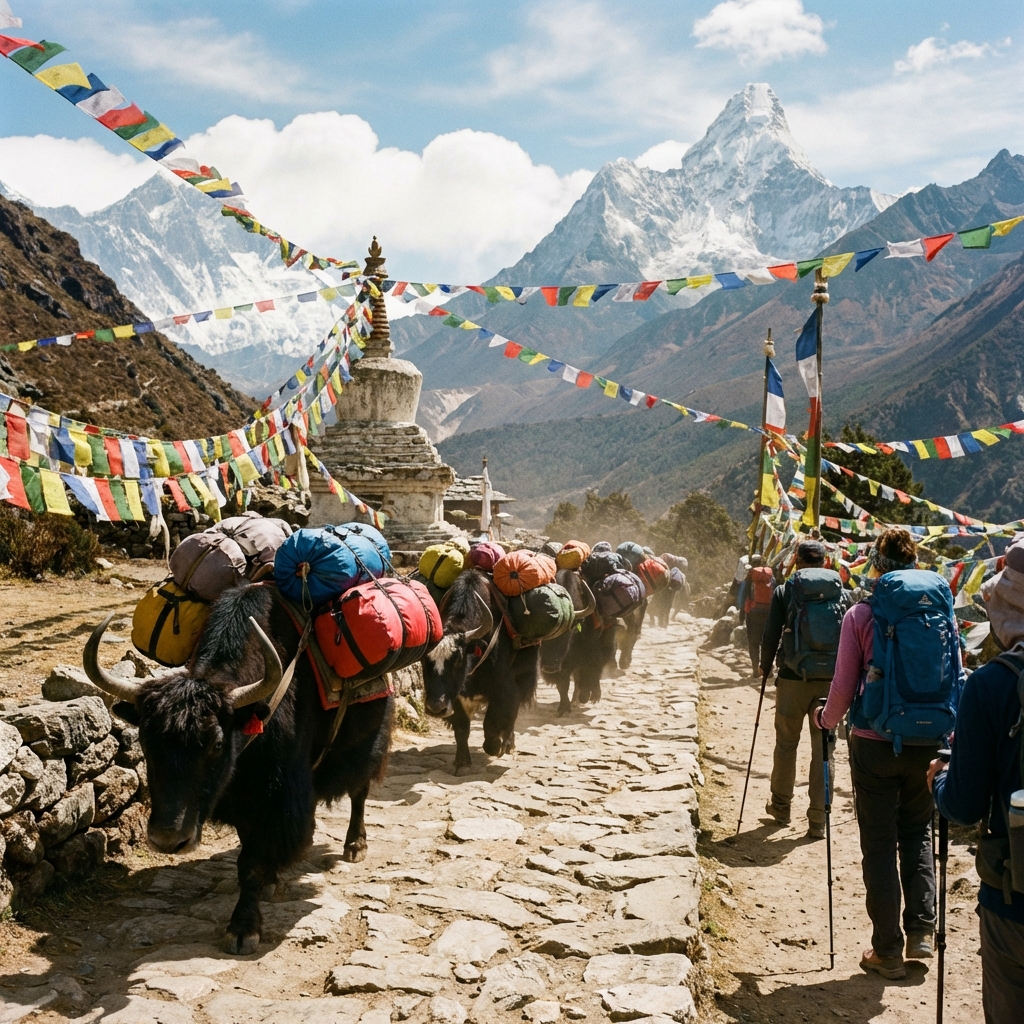
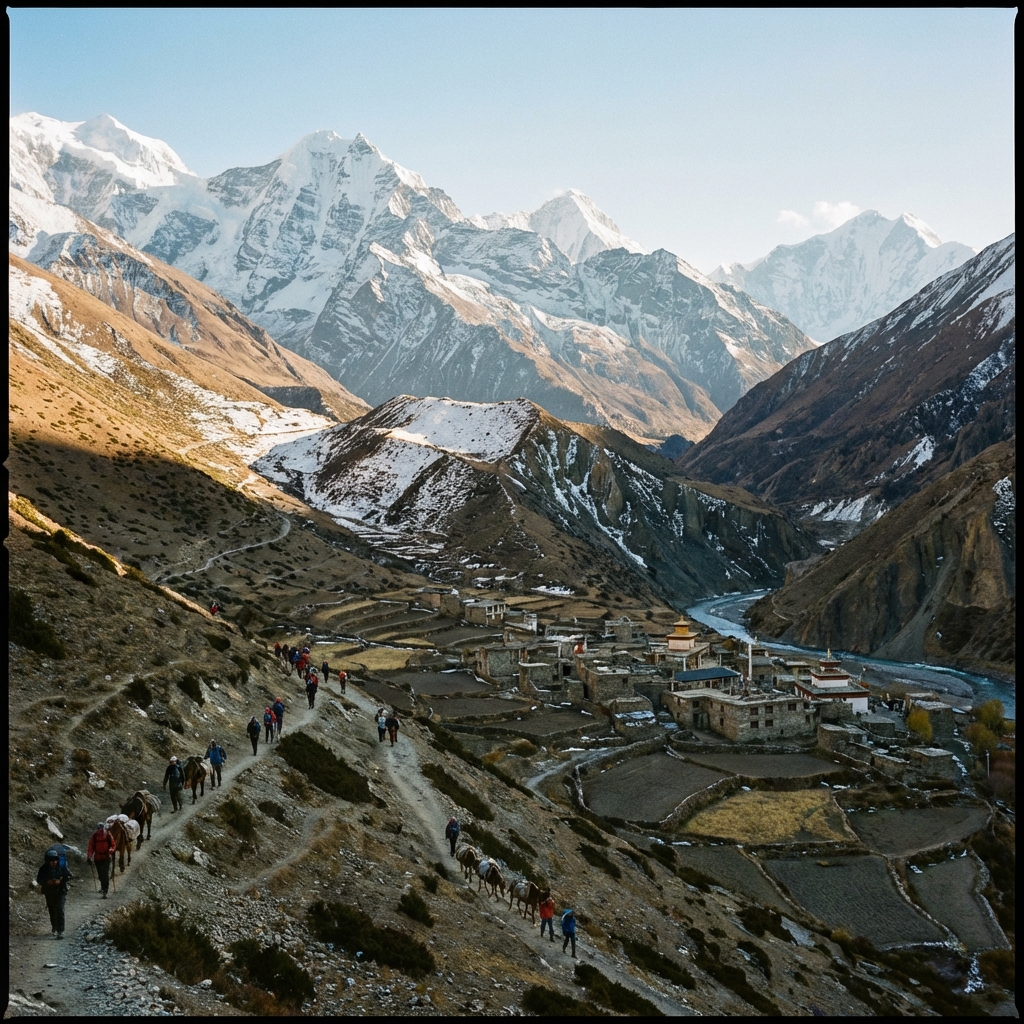
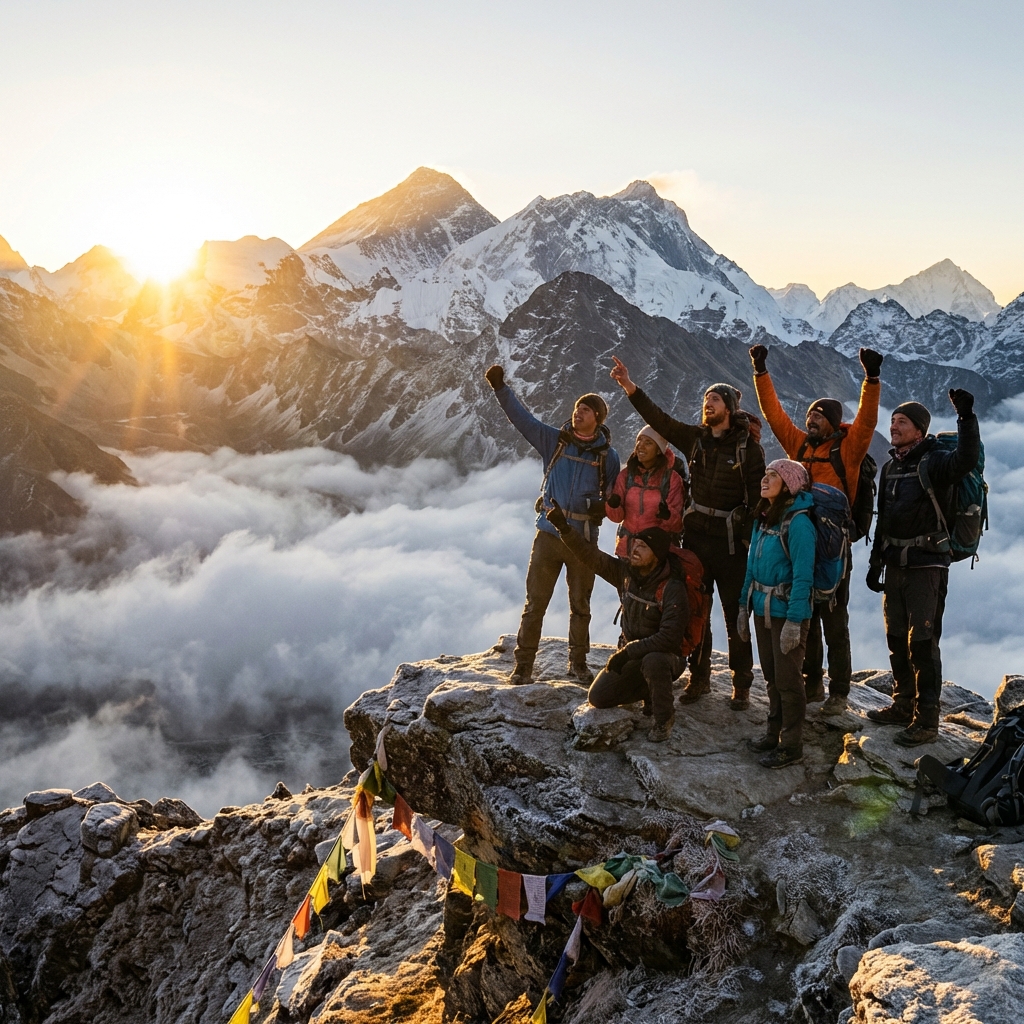
Every Nepal trek begins with a fundamental choice: will you sleep in tea houses (also called lodges) along established routes, or will you carry tents and camp in the wilderness? This decision shapes everything about your experience, from the weight on your back to the food on your plate, the routes available to you, the people you meet, and ultimately, the version of Nepal you encounter.
Tea house trekking and camping trekking are not simply two accommodation options. They represent different philosophies of mountain travel, each with genuine advantages and real limitations. Understanding these differences before you book prevents the disappointment that comes from choosing the wrong style for your priorities.
This guide provides a thorough, honest comparison based on current 2026 conditions. We cover daily costs with real budget breakdowns, comfort levels at every altitude, which routes require which style, the hybrid approach that combines both, equipment requirements, and a decision framework to match your trekking style to the right accommodation format.
Who should read this guide:
- First-time Nepal trekkers unsure which style to choose
- Experienced tea house trekkers considering a camping upgrade
- Trekkers eyeing remote routes that require camping
- Budget-conscious planners comparing actual costs
- Anyone choosing between a teahouse agency package and a camping expedition
Quick Comparison: Side-by-Side Overview
$30-60/day for independent budget trekkers. $50-100/day in mid-range agency packages.
$80-200/day (agency-organized). Camping treks cannot realistically be done independently.
Tea house: basic private room, bed, dining hall. Camping: tent sleeping, camp kitchen, more rustic.
Tea house: limited to routes with lodges. Camping: access to all routes, including the most remote.
Tea house: daypack only (5-8 kg). Camping: daypack (5-8 kg, porters carry camp gear).
Tea house: standard trekking menu (dal bhat, noodles, soups). Camping: dedicated cook, often better variety and freshness.
Tea house: meet fellow trekkers nightly in dining halls. Camping: isolated group experience, more intimate.
Tea house: you must trek with a licensed guide (mandatory since April 2023) with a guide. Camping: requires full agency support team.
Tea house: popular routes, social trekking, budget. Camping: remote routes, wilderness seekers, premium experience.
Tea house: minimal planning. Camping: significant planning, equipment, and staff coordination.
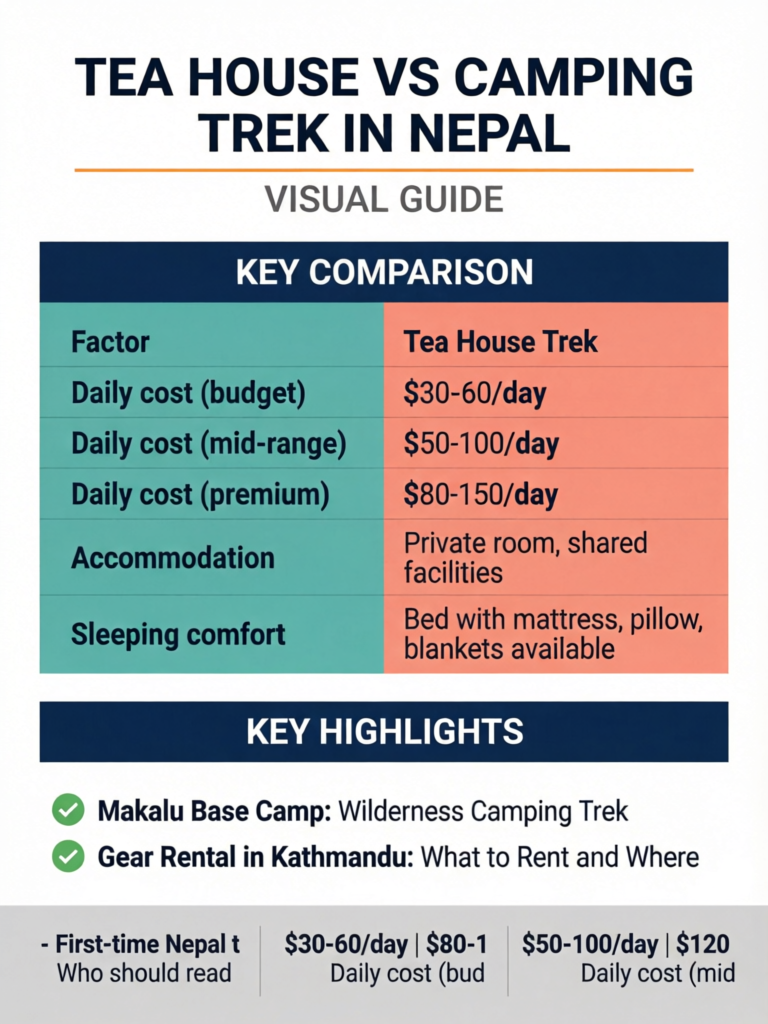
Side-by-Side Comparison Table
| Factor | Tea House Trek | Camping Trek | Advantage |
|---|---|---|---|
| Daily cost (budget) | $30-60/day | $80-150/day | Tea house |
| Daily cost (mid-range) | $50-100/day | $120-200/day | Tea house |
| Daily cost (premium) | $80-150/day | $150-300+/day | Tea house |
| Accommodation | Private room, shared facilities | Tent (2-person), sleeping mat provided | Tea house |
| Sleeping comfort | Bed with mattress, pillow, blankets available | Sleeping pad + your bag on ground | Tea house |
| Warmth | Heated dining room (wood/yak dung stove) | No heating; tent insulation only | Tea house |
| Privacy | Private room (thin walls) | Private tent (more outdoor privacy) | Camping |
| Toilet facilities | Shared lodge toilets (squat or Western) | Portable toilet tent or wilderness | Tea house |
| Food variety | Standard trekking menu; limited but adequate | Dedicated cook; more variety, fresher | Camping |
| Food quality | Consistent but repetitive | Often superior; cook adapts to preferences | Camping |
| Route options | Popular established routes only | All routes, including roadless remote areas | Camping |
| Weight carried by trekker | 5-8 kg daypack | 5-8 kg daypack (same; porters carry gear) | Tie |
| Support staff required | Guide (mandatory); porter optional | Guide, cook, kitchen staff, porters | Tea house (simpler) |
| Social interaction | High; dining halls full of trekkers | Low; your group only | Tea house |
| Wilderness immersion | Moderate; villages and lodges along route | High; camp in wilderness locations | Camping |
| Flexibility | High; adjust itinerary day-to-day | Lower; camp sites planned in advance | Tea house |
| Booking lead time | 2-4 weeks for popular routes in peak season | 4-12 weeks (equipment and staff coordination) | Tea house |
| Environmental impact | Lodge infrastructure exists; waste managed locally | Leave-no-trace possible; but fuel and waste carried | Tie |
| Shower availability | Hot showers at lodges (paid) | Bucket wash or river; limited | Tea house |
| Charging electronics | Available at lodges (paid) | Solar panels or power banks | Tea house |
| WiFi/connectivity | Available at most lodges (slow, paid) | None unless satellite device | Tea house |
1. The Tea House Experience: What to Expect
What Is a Tea House?
Tea houses (also called lodges or bhattis) are family-run guesthouses built along established trekking routes. They range from simple stone buildings with a few rooms to multi-story lodges with 20 or more rooms, a large dining hall, and basic amenities.
The term "tea house" dates to the era when small roadside shelters offered tea and simple food to travelers. Today's tea houses have evolved far beyond that, though the name persists. On popular routes like Everest Base Camp and the Annapurna Circuit, tea houses provide comfortable (if basic) accommodation that allows trekkers to carry only a daypack.
Daily Life in a Tea House Trek
Typical tea house day:
- 6:00 AM: Wake up in your private room. The bed is a simple wooden frame with a thin foam mattress. Your sleeping bag provides warmth (rooms are unheated). The walls are thin plywood or stone.
- 6:30 AM: Head to the dining hall, where a wood or yak-dung stove has been lit. Order breakfast from the menu: porridge, eggs, Tibetan bread, pancakes, tea, or coffee.
- 7:30-8:00 AM: Depart for the day's trek. Carry only your daypack (5-8 kg) with water, snacks, rain gear, warm layer, camera, and sun protection.
- 12:00-1:00 PM: Stop at a mid-trail tea house for lunch. Dal bhat, fried noodles, or soup. Tea houses along popular routes appear every 30-60 minutes of walking.
- 2:00-4:00 PM: Arrive at your destination tea house. Check in, claim a room (first come, first served unless pre-booked). Drop your bag.
- 4:00-6:00 PM: Rest, explore the village, socialize in the dining hall, charge electronics, take an optional hot shower.
- 6:00-7:30 PM: Dinner in the communal dining hall. The stove is the social hub. Meet trekkers from around the world. Share stories, compare itineraries, exchange tips.
- 8:00-9:00 PM: Retire to your room. Most trekkers are in bed by 8:30 PM at altitude.
Tea House Accommodation Standards
Tea house quality varies by route, altitude, and traffic volume:
Popular Routes (EBC, Annapurna Circuit, ABC):
- Private double or twin rooms with plywood walls
- Foam mattress on wooden bed frame; pillow provided
- Shared bathroom (squat or Western toilet)
- Hot shower available (NPR 400-700 / $3-5)
- Dining hall with heating stove
- Charging available (NPR 400-600 per device)
- WiFi available (slow, NPR 400-600 per hour)
- Menu with 15-25 items
Moderate Routes (Langtang, Khopra Ridge, Mardi Himal):
- Similar to popular routes but fewer lodge choices
- Room quality slightly more basic
- Hot showers less consistent
- Charging and WiFi available but less reliable
Basic Routes (Pikey Peak, Helambu, community lodge treks):
- Simpler rooms, sometimes dormitory style
- Shared squat toilets only
- Hot shower rare or unavailable
- Limited or no charging/WiFi
- Smaller menu selection
Pro Tip
On popular routes during peak season (October), pre-book your tea house accommodation through your guide or agency. Walking in without a reservation above 3,500m on the EBC or Annapurna circuit risks finding no beds. Off-peak, walk-in availability is usually fine. Always confirm hot shower availability before paying; some lodges advertise showers that are not actually functioning.
Tea House Costs: Detailed Breakdown
Budget Tea House Trek ($30-60/day):
| Item | Daily Cost (NPR) | Daily Cost (USD) |
|---|---|---|
| Room | NPR 200-500 ($1.50-4) | Free with meal commitment at some lodges |
| Breakfast | NPR 500-800 | $4-6 |
| Lunch | NPR 600-1,000 | $5-8 |
| Dinner | NPR 600-1,000 | $5-8 |
| Tea/drinks | NPR 200-400 | $1.50-3 |
| Snacks | NPR 200-300 | $1.50-2.50 |
| Daily total (food + room) | $19-32 | |
| Guide (shared cost) | $12-18/person | |
| Porter (shared cost) | $8-12/person | |
| Total daily cost | $30-60 |
Mid-Range Agency Package ($50-100/day):
- All-inclusive: room, meals, guide, porter, permits
- Better lodge selection (pre-booked premium rooms)
- Experienced, English-speaking guide
- Meals included (sometimes with more choices)
- Group size: 4-8 trekkers typically
Premium Agency Package ($80-150/day):
- Best available lodges at each stop
- Private guide (1:1 or 1:2 ratio)
- All meals with wider selection
- Porter for each trekker
- All logistics handled
Tea House Routes in Nepal
The following major routes have well-developed tea house infrastructure:
| Route | Tea House Quality | Lodge Density | Notes |
|---|---|---|---|
| Everest Base Camp | Excellent | High (every 1-2 hours) | Best infrastructure in Nepal |
| Annapurna Circuit | Very good | High | Well-developed; ACAP managed |
| Annapurna Base Camp | Very good | High | Popular; lodges at every stop |
| Langtang Valley | Good | Moderate | Rebuilt after 2015 earthquake |
| Poon Hill / Ghorepani | Very good | High | Short trek, well-serviced |
| Mardi Himal | Good | Moderate | Newer route; lodges improving |
| Manaslu Circuit | Good | Moderate | Developing; sufficient for comfort |
| Khopra Ridge | Good (community) | Moderate | Community lodges; charming |
| Gokyo Lakes | Good | Moderate | Adequate but fewer options |
| Helambu | Basic to good | Moderate | Close to Kathmandu |
2. The Camping Trek Experience: What to Expect
What Is a Camping Trek?
A camping trek involves carrying all accommodation, cooking, and dining equipment. Your agency provides tents, sleeping mats, a kitchen tent, a dining tent (with table and chairs), a toilet tent, cooking equipment, food supplies, and the staff to manage it all. You sleep in tents pitched at designated camping spots or wilderness locations.
Camping treks are the traditional style of Himalayan expedition, predating the tea house network that developed from the 1970s onward. Today, they are essential for accessing Nepal's most remote and spectacular regions where no lodges exist.
Daily Life on a Camping Trek
Typical camping trek day:
- 5:30 AM: Wake-up call from your guide or camp staff. A cup of hot tea or coffee is brought to your tent.
- 6:00 AM: Wash up at the portable basin set up by staff. Breakfast is served in the dining tent: eggs, porridge, toast, fruit, tea, coffee. The cook has been working since 5:00 AM.
- 7:00-7:30 AM: Break camp. Porters and staff dismantle tents, pack equipment, and load up. They will pass you on the trail and arrive at the next camp before you.
- 12:00-1:00 PM: Lunch, either at a pre-arranged spot where the cook has set up, or a packed lunch eaten trailside.
- 2:00-4:00 PM: Arrive at the next campsite. Your tents are already pitched, dining tent set up, and hot drinks waiting.
- 4:00-6:00 PM: Explore the surroundings, rest, write in your journal. The campsite may be a high meadow, a riverbank, or a glacial moraine with no other humans in sight.
- 6:00-7:30 PM: Dinner in the dining tent. Expect 3-4 courses: soup, main dish (often dal bhat with multiple sides, pasta, or stew), dessert (pancakes, fruit, pudding), tea. The cook's skill is often remarkable given the altitude and conditions.
- 8:00-9:00 PM: Retire to your tent. Stars are extraordinary without light pollution. Silence is total.
Camping Trek Accommodation Standards
Your tent:
- Two-person dome tent (typically one per trekker or shared)
- Waterproof, wind-resistant, 3-season or 4-season depending on altitude
- Ground sheet and sleeping mat provided
- You bring your own sleeping bag (agency may provide one for rent)
Dining tent:
- Large tent with folding table and chairs
- Provides shelter for meals and socializing
- Doubles as gathering space in bad weather
Kitchen tent:
- Dedicated cooking area with kerosene or gas stoves
- Professional cook and kitchen assistant
- Surprising variety of meals produced in basic conditions
Toilet tent:
- Portable toilet set up at camp
- Moved daily; waste managed by staff
- More hygienic than some remote tea house toilets
Camping Trek Costs: Detailed Breakdown
Camping treks are substantially more expensive due to equipment, staff, and logistics.
Standard Camping Trek ($80-150/day per person):
| Item | Cost |
|---|---|
| Guide (certified trek leader) | $30-40/day |
| Cook | $20-25/day |
| Kitchen assistant | $15-20/day |
| Porters (3-5 for equipment) | $60-100/day total |
| Camping equipment rental | $15-25/day |
| Food and cooking supplies | $15-25/day |
| Fuel (kerosene/gas) | $5-10/day |
| Permits | Varies by route |
| Per-person daily cost (group of 4) | $80-150 |
Premium Camping Trek ($150-300+/day per person):
- Better tents (4-season, more spacious)
- Superior cook (experienced, varied menu)
- More support staff (better porter-to-trekker ratio)
- Higher quality food provisions
- Additional comfort items (camp chairs, wash facilities)
Why Camping Treks Cannot Be Done Independently
Unlike tea house trekking where you need only a guide and optionally a porter, camping treks require a full support team: guide, cook, kitchen assistant, and multiple porters to carry tents, cooking equipment, food, fuel, and supplies. Organizing this independently is theoretically possible but practically impractical and rarely cheaper than using an established agency. The logistics of procuring camping equipment, food supplies for multi-week trips, and coordinating 5-10 staff members requires agency infrastructure.
Routes That Require Camping
These routes have no tea house infrastructure and require full camping support:
| Route | Duration | Why Camping Required |
|---|---|---|
| Upper Dolpo | 18-25 days | Extremely remote; no permanent settlements on trail |
| Makalu Base Camp | 18-22 days | Remote eastern Nepal; minimal to no lodges above Seduwa |
| Dhaulagiri Circuit | 14-18 days | Technical route through uninhabited valleys |
| Kanchenjunga (portions) | 20-28 days | Remote; some tea houses but camping needed for segments |
| Rolwaling Valley | 12-16 days | Isolated valley; no established lodges |
| Far West treks (Rara, Khaptad) | 10-18 days | Minimal infrastructure; camping essential |
| Tashi Lapcha Pass | 10-14 days | Technical pass; no lodges on route |
| Numbur Cheese Circuit | 12-15 days | Remote eastern trail; camping required |
Routes Where Camping Is Optional (Hybrid)
Some routes offer a choice or combination:
| Route | Tea House Sections | Camping Sections |
|---|---|---|
| Manaslu Circuit | Lodges throughout (basic) | Camping possible for better comfort |
| Kanchenjunga | South and north base camp approaches have some lodges | Higher sections and connections may need camping |
| Everest Three Passes | Main trail has lodges | Cho La, Renjo La approaches may benefit from camping |
3. Detailed Factor Comparison
Comfort
Tea house comfort advantages:
- Actual bed with mattress (however thin)
- Heated dining room (the stove is your best friend above 3,500m)
- Walls and a roof providing insulation and wind protection
- Hot showers available (paid)
- You can leave your sleeping bag on the bed and return to a "made" room
Camping comfort advantages:
- More privacy (your own tent, no thin-wall neighbors)
- Choose your campsite (often with better views than lodge locations)
- Dedicated toilet tent (no middle-of-the-night shared bathroom visits)
- Morning tea delivered to your tent (a luxury)
- No noisy generators or fellow trekkers in adjacent rooms
The honest truth: Tea houses are more comfortable for most people. A bed beats a sleeping pad. A heated dining room beats an unheated tent. Hot showers beat bucket washes. But camping offers a wilderness immersion that tea houses cannot match. At extreme altitude (above 5,000m), both options are equally uncomfortable.
Food
Tea house food:
- Standard trekking menu: dal bhat, fried rice, fried noodles, soup, eggs, porridge, bread
- Repetitive after 10-14 days
- Quality varies by lodge; generally consistent but uninspiring
- Ingredients carried up by porters; freshness decreases with altitude
- Dal bhat offers the best value (unlimited refills)
- Price: NPR 600-1,200 per meal ($5-9)
Camping food:
- Dedicated cook prepares meals tailored to group preferences
- Greater variety: fresh vegetables (first few days), pasta, stews, curries, baked items, desserts
- Multiple courses at dinner (soup, main, dessert)
- Cook adapts to dietary requirements more effectively
- Ingredients carried from Kathmandu; fresher at start, decreasing over time
- Included in package price
The honest truth: Camping trek food is often better than tea house food, especially on longer treks. A skilled camp cook produces surprisingly diverse, flavorful meals despite altitude and basic equipment. Tea house menus become monotonous by the second week. However, the dal bhat at a good tea house is hard to beat for nutrition and value.
Pro Tip
If you are doing a tea house trek and tiring of the standard menu, dal bhat is always the right choice. It provides the most calories and nutrition per dollar, with unlimited rice and curry refills. Asking the kitchen if they can prepare anything "special" (local style, off-menu) sometimes yields pleasant surprises at less-visited lodges.
Social Experience
Tea house social advantages:
- Communal dining halls create natural social environments
- Meet trekkers from around the world every evening
- Share stories, compare routes, exchange tips
- The stove becomes a gathering point where strangers become friends
- Solo trekkers find easy companionship
- Lodge owners and staff provide cultural connection
Camping social dynamic:
- Your group is your entire social world
- Deeper bonds form within small groups (4-8 people) over 2-3 weeks
- Staff (guide, cook, porters) become integral to the experience
- No "outside" interaction; more intimate but potentially isolating
- Excellent for established friend groups, couples, or families
- Can feel lonely for solo trekkers joining a small group
The honest truth: Tea house dining halls are one of Nepal trekking's greatest pleasures. The cross-cultural exchange around a yak-dung stove at 4,500m creates connections that people remember for years. Camping sacrifices this for wilderness intimacy. Neither is better; they are fundamentally different social experiences.
Environmental Impact
Tea house environmental considerations:
- Lodge infrastructure already exists (no ground disturbance from your trek)
- Waste management handled by lodge systems (varying quality)
- Wood and yak-dung burning for heating contributes to local deforestation and air quality issues
- Water usage (showers, laundry) strains local resources at altitude
- Toilet waste management varies widely in quality
Camping environmental considerations:
- Potential for true leave-no-trace practices (if agency is responsible)
- Portable toilets prevent ground contamination (when used properly)
- Fuel carried in (kerosene/gas) rather than burning local wood
- Risk of ground disturbance at campsites
- Food waste management depends entirely on agency ethics
- Some agencies are excellent; others leave trash
Choose Your Camping Agency Carefully
The environmental impact of a camping trek depends almost entirely on your agency's ethics. Responsible agencies practice genuine leave-no-trace: carry out all waste, use portable toilets, minimize ground disturbance, and pay fair wages. Irresponsible agencies leave trash, burn waste, and damage campsites. Ask specific questions about waste management policies before booking. Check reviews mentioning environmental practices.
Flexibility
Tea house flexibility:
- Adjust your itinerary day-to-day based on weather, energy, and interest
- Stay an extra day at a village that captivates you
- Skip a planned stop and push further if feeling strong
- Change your route entirely (within the lodge network)
- No pre-arranged campsite commitments
- Guide adjusts plans easily
Camping flexibility:
- Campsites must be identified in advance (water source, flat ground, shelter)
- Food provisions are calculated for specific duration; adding days is complicated
- Staff and porter arrangements are planned for set number of days
- Route changes require rethinking campsite availability
- Weather delays are more consequential (no backup lodges)
- Experienced guides build flexibility into plans, but limits exist
The honest truth: Tea house trekking is significantly more flexible. The ability to change plans on the fly, extend or shorten days, and adjust to conditions without logistical consequences is a genuine advantage. Camping treks require more commitment to the planned itinerary.
4. The Hybrid Approach: Best of Both
Many trekkers and agencies now offer hybrid treks that combine tea house and camping segments. This approach is particularly effective on routes where lodge networks end but the trek continues into remote territory.
How Hybrid Treks Work
- Tea house accommodation where lodges are available (lower sections, populated valleys)
- Transition to camping where lodges do not exist (high passes, remote valleys)
- One support team manages both styles throughout
Ideal Routes for Hybrid Approach
| Route | Tea House Section | Camping Section |
|---|---|---|
| Kanchenjunga Circuit | Lower approaches (both north and south) | Higher camps and connecting trail |
| Manaslu + Tsum Valley | Main Manaslu circuit has lodges | Tsum Valley side trip has limited/no lodges |
| Everest to Rolwaling | EBC route tea houses | Tashi Lapcha Pass and Rolwaling descent |
| Great Himalaya Trail sections | Populated valley sections | Remote connections between valleys |
Hybrid Cost Estimates
Hybrid treks cost more than pure tea house treks but less than full camping treks, typically $60-120/day per person depending on the ratio of camping to tea house nights and the group size.
Pro Tip
The hybrid approach is the ideal choice if you want to experience both styles. Ask your agency about combining tea house accommodation on the main trail with one or two nights of camping at scenic wilderness locations. Some agencies offer "luxury camping" add-ons to standard tea house treks, where you camp at a spectacular viewpoint for one night and sleep in lodges for the rest. This provides the camping experience without the full cost.
5. Equipment Requirements
Tea House Trek Gear
What you carry (daypack, 5-8 kg):
- Water bottles/hydration system (2L)
- Rain jacket and pack cover
- Warm layer (fleece or down jacket)
- Sun protection (hat, sunglasses, sunscreen)
- Camera and phone
- Snacks and trail food
- Basic first aid kit
- Headlamp
- Trekking poles (optional but recommended)
What your porter carries (15-25 kg duffel):
- Sleeping bag (rated to minus 10 to minus 20 degrees Celsius depending on season/altitude)
- Additional clothing layers
- Toiletries
- Chargers and electronics
- Extra shoes/sandals for lodge evenings
- Books/entertainment
What you do NOT need to bring:
- Tent (lodge provides room)
- Sleeping pad (lodge provides mattress)
- Cooking equipment (lodge kitchen)
- Dishes and utensils (lodge provides)
- Water purification (some lodges have safe water; bring purification tabs as backup)
Gear rental in Kathmandu: Sleeping bags, down jackets, and trekking poles are all available for rent in Thamel at $1-3/day per item. Quality varies; inspect before renting. See our gear rental guide for recommended shops.
Camping Trek Gear
What you carry (daypack, same 5-8 kg):
- Same daypack contents as tea house trek
- Personal items needed during the day
What the agency provides (carried by porters):
- Two-person tent (per trekker or shared)
- Sleeping pad/mat
- Dining tent with table and chairs
- Kitchen tent and cooking equipment
- Portable toilet
- All food and fuel
- Water purification system
- First aid equipment (more comprehensive than tea house)
What you must bring additionally:
- Sleeping bag (rated to minus 20 to minus 25 degrees Celsius for high-altitude camping)
- Warmer clothing layers (no heated dining room to retreat to)
- Insulated water bottle (water freezes overnight in tent)
- Personal camping comfort items (inflatable pillow, ear plugs)
- Headlamp with extra batteries (no lodge charging)
- Power bank for electronics (no lodge charging)
- More comprehensive personal first aid supplies
Which Style Is Cheaper?
Tea house trekking is significantly cheaper at $30-60/day for independent trekkers vs $80-200/day for camping treks. Camping requires a full agency team (guide, cook, porters, equipment) that cannot be done independently. A 14-day tea house EBC trek costs $1,200-2,500, while a comparable camping trek costs $2,500-4,500+. See our budget vs luxury trekking guide for detailed cost breakdowns.
Which Style Is More Comfortable?
Tea houses offer more consistent comfort: a private room with a bed, dining hall with stove, and varied food menu at every stop. Camping offers more wilderness immersion but with tent sleeping and less predictable conditions. However, premium camping treks with a dedicated chef often provide better food variety and freshness than tea house menus. At altitude above 4,500m, tea house rooms and tents are similarly cold. Check our sleeping bag guide and complete gear list.
Which Style Opens More Routes?
Camping dramatically expands your route options. Tea house trekking is limited to routes with lodge infrastructure (EBC, Annapurna Circuit, Langtang, etc.). Camping unlocks remote routes like Upper Dolpo, Makalu Base Camp, Kanchenjunga, and the Great Himalayan Trail that have no lodges. If Nepal's most remote and pristine regions call to you, camping is the only option.
6. Who Should Choose What
Choose Tea House Trekking If:
- This is your first Nepal trek. Tea houses provide structure, comfort, and social support that ease first-time high-altitude anxiety. The dining hall community is reassuring.
- Budget is a primary concern. Tea house trekking costs 40-60% less than camping treks. The difference over a 14-day trek is significant: $400-800 saved or more.
- You value social interaction. Tea house dining halls are where lifelong friendships form. If meeting fellow trekkers from around the world enriches your experience, this is your format.
- Flexibility matters. Being able to change your itinerary day-to-day, extend or shorten stops, and adjust to conditions without logistical complexity is a genuine advantage.
- You are trekking a popular route. EBC, Annapurna Circuit, ABC, Langtang, Poon Hill, Mardi Himal, Manaslu, Gokyo, and other established routes all have excellent tea house infrastructure. There is no reason to camp on these routes unless you specifically want the camping experience.
- Comfort is important. A bed, a heated room, hot showers, and a menu of food options are meaningful comforts after 6-8 hours of trekking.
Choose Camping Trekking If:
- Your chosen route has no tea houses. Upper Dolpo, Makalu Base Camp, Dhaulagiri Circuit, Rolwaling Valley, and other remote routes require camping. There is no choice to make.
- Wilderness immersion is your priority. Camping in a high meadow with no other humans, no buildings, and no lights delivers an experience tea houses cannot replicate. If the reason you trek is to feel the vastness of the mountains, camping is your format.
- You want better food on a long trek. On treks of 14 or more days, a dedicated camp cook produces more varied, fresher meals than the repetitive tea house menu. This matters more than most people expect.
- You prefer privacy and solitude. Camping with a small group (4-8 people) in remote locations provides peace that busy tea house dining halls do not.
- You have the budget. Camping treks cost more but deliver a different experience category. If budget is not the primary constraint, the camping experience on a remote route is extraordinary.
- You are experienced and seeking new challenges. If you have done the popular tea house routes and want to go deeper into Nepal's wilderness, camping treks access regions that few trekkers ever see.
Choose Hybrid If:
- You want one trek that combines both experiences
- Your route transitions from developed to remote areas
- You want a few nights of wilderness camping without committing to full camping logistics
- Budget allows for some camping comfort on an otherwise tea house itinerary
7. Safety Considerations
Tea House Safety
Advantages:
- Lodge owners are experienced with altitude sickness recognition
- Other trekkers nearby provide safety-in-numbers benefit
- Communication (WiFi, phone) available for emergency coordination
- Helicopter landing zones near most lodges on popular routes
- Medical posts (HRA) along popular routes (Pheriche, Machermo, Manang)
- Established evacuation protocols
Risks:
- Lodge fire risk (wood construction, heating stoves)
- Food hygiene varies between lodges
- Crowded conditions can spread respiratory illness
- Over-reliance on lodge infrastructure may reduce self-sufficiency awareness
Camping Safety
Advantages:
- Your guide has full control over the group's safety (no external factors)
- Food preparation under your cook's hygienic control
- Camp location can be adjusted for weather or safety
- Group carries more comprehensive first aid and emergency equipment
- No fire risk from lodge stoves
Risks:
- More remote locations mean longer evacuation times
- No backup lodge if tent is damaged by weather
- Fewer people around to assist in emergencies
- Communication limited to satellite devices in remote areas
- Weather exposure greater in tents than lodges
- Flash flood and rockfall risk at poorly chosen campsites
Remote Camping Trek Safety
On remote camping treks (Dolpo, Makalu, Dhaulagiri), evacuation by helicopter can take 4-12 hours depending on location and weather. Ensure your travel insurance covers high-altitude helicopter evacuation with no altitude exclusion. Carry a satellite communication device (your agency should provide one). Your guide should carry a comprehensive first aid kit and have wilderness first aid training.
Frequently Asked Questions
Can I do a tea house trek with a mandatory licensed guide?
No. Since 2026, Nepal requires all foreign trekkers to have a licensed guide or porter. True solo trekking is no longer permitted on any route. You can organize an independent tea house trek (booking your own guide and lodges) or join an agency package, but a licensed guide must accompany you.
How much cheaper is tea house trekking compared to camping?
On average, tea house trekking costs 40-60% less than camping. A 14-day tea house trek might cost $700-1,400 per person (excluding permits and flights), while the same duration camping trek costs $1,400-2,800 per person. The difference comes from the camping trek's requirement for additional staff (cook, kitchen assistant, extra porters) and equipment.
Can I rent camping equipment in Kathmandu?
Individual items (tent, sleeping pad) can be rented from shops in Thamel for $3-10/day. However, organizing a full camping trek independently (tent, kitchen equipment, dining tent, toilet tent, food supplies, fuel, and hiring cook/porters) is impractical. Use an established trekking agency for camping treks.
Which style is better for photography?
Camping often provides superior photography opportunities. You camp in locations tea house trekkers never reach, with no light pollution and the flexibility to position yourself at sunrise/sunset viewpoints. Tea house treks are constrained to lodge locations, which may not be optimal for photography. That said, tea house routes cover some of Nepal's most photogenic terrain.
Is camping trekking safe for beginners?
If organized by a reputable agency with experienced staff, camping trekking is safe for trekkers of any experience level. The agency handles all logistics; you need only trek and enjoy. However, routes requiring camping tend to be more remote and challenging than popular tea house routes, so beginners should consider their fitness and altitude tolerance. A first Nepal trek is usually better as a tea house experience.
How many porters does a camping trek require?
A camping trek for 4 trekkers typically requires 8-12 porters to carry: 2-4 tents, dining tent, kitchen tent, toilet tent, cooking equipment, food supplies, fuel, tables, chairs, and personal porter loads for trekkers. Each porter carries approximately 25-30 kg. Larger groups need proportionally more porters.
Can I combine tea house and camping on one trek?
Yes, and this hybrid approach is increasingly popular. Many agencies offer itineraries that use tea houses on developed sections and transition to camping for remote segments. This works particularly well on routes like the Kanchenjunga Circuit, Manaslu with Tsum Valley, or custom Great Himalaya Trail sections.
Do I need a better sleeping bag for camping vs tea house trekking?
Yes, typically. Tea house beds with blankets supplement your sleeping bag, so a minus 10 to minus 15 degrees Celsius bag suffices for most tea house treks. Camping at altitude with no supplementary insulation requires a minus 20 to minus 25 degrees Celsius bag. Down bags are lighter but must be kept dry; synthetic bags are heavier but perform when damp.
What happens if it rains heavily during a camping trek?
Quality agencies provide waterproof tents rated for Himalayan conditions. The dining tent provides a dry gathering space. Camp cooks prepare meals regardless of weather. Heavy rain is more of a comfort issue than a safety issue with proper equipment. That said, extended heavy rain (monsoon or pre-monsoon) can make camping miserable. Season choice matters more for camping than tea house trekking.
Are camping trek cooks really that good?
Many are surprisingly skilled. Nepal's best camping trek cooks have decades of experience preparing multi-course meals at altitude using basic equipment. They can produce fresh bread, cakes, stir-fries, soups, curries, pasta, and desserts from a two-burner kerosene stove at 5,000m. Ask your agency about their cook's experience and request references if food quality matters to you.
How do camping treks handle waste and toilet facilities?
Responsible agencies provide a portable toilet tent with a container system. Waste is carried out and disposed of properly in towns. Kitchen waste is either burned (where safe), carried out, or buried according to leave-no-trace principles. Ask your agency specifically about their waste management. Irresponsible agencies that leave waste behind are a serious environmental problem in remote areas.
Related Resources
- Tea House Trekking Explained: Complete Guide
- Camping Treks in Nepal: Route Directory
- Upper Dolpo Trek: Nepal's Most Remote Route
- Makalu Base Camp: Wilderness Camping Trek
- Gear Rental in Kathmandu: What to Rent and Where
Final Verdict: Match the Style to Your Route and Priorities
The tea house versus camping decision is rarely about preference alone. It is usually determined by your chosen route.
If your route has tea houses (EBC, Annapurna, Langtang, Manaslu, and dozens more), tea house trekking is the default choice. It is cheaper, more flexible, more social, and provides adequate comfort. There is no compelling reason to camp on a tea house route unless you specifically seek the camping experience.
If your route requires camping (Dolpo, Makalu, Dhaulagiri Circuit, Rolwaling, Far West), the decision is made for you. These are Nepal's most spectacular and remote wilderness areas, accessible only with full camping support. The higher cost buys access to places most trekkers will never see.
If you can afford it and want both, the hybrid approach or a dedicated camping trek on a remote route is the premium Nepal trekking experience. Better food, total wilderness immersion, and the privilege of sleeping in places with no permanent human habitation create memories that transcend the standard trek.
Neither style is better. Tea houses are better for most trekkers on most routes. Camping is essential for the remote routes that represent Nepal's wildest places. The best choice is the one that matches your route, your budget, and your vision of what a Himalayan trek should feel like.
Last updated: February 2026. Costs verified against current agency pricing and tea house rates from the 2026/2027 trekking season. Route classifications current as of January 2026. Always verify specific route lodge availability with your agency before booking.