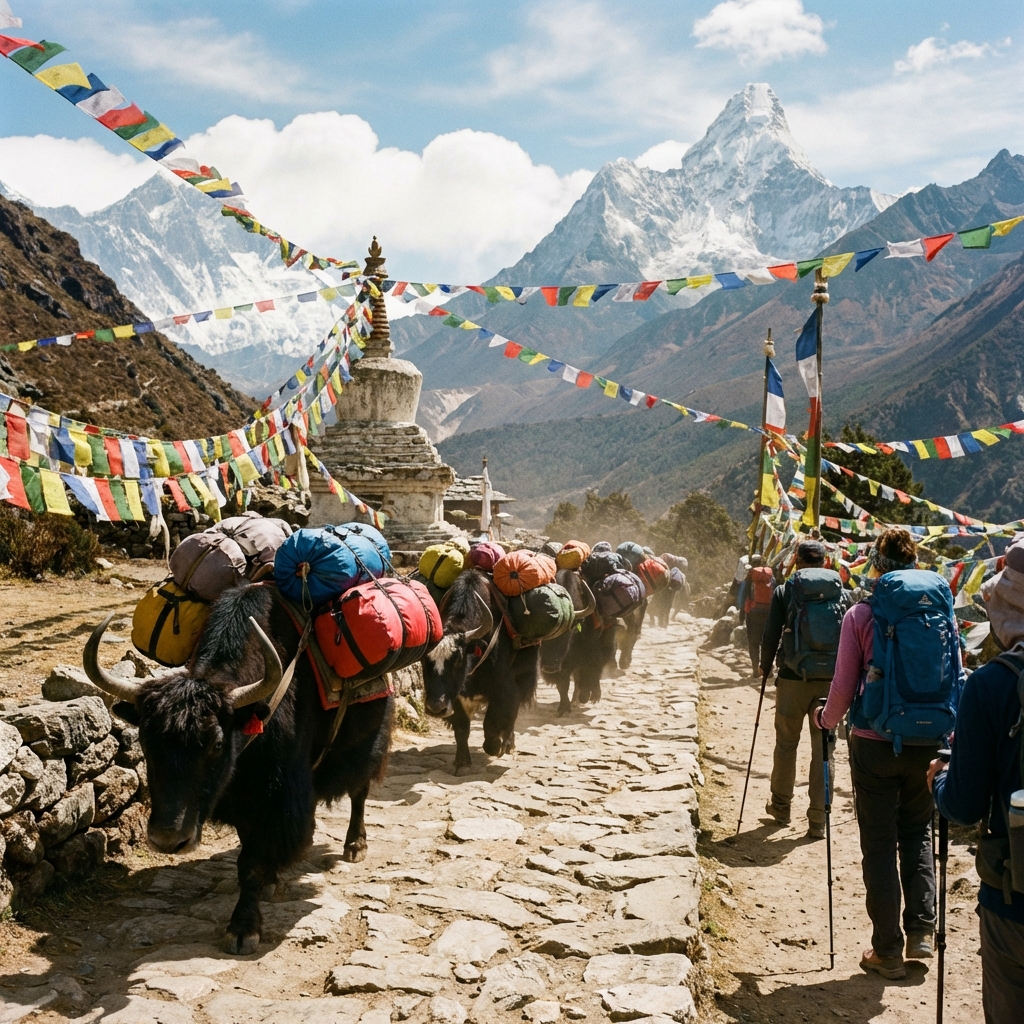
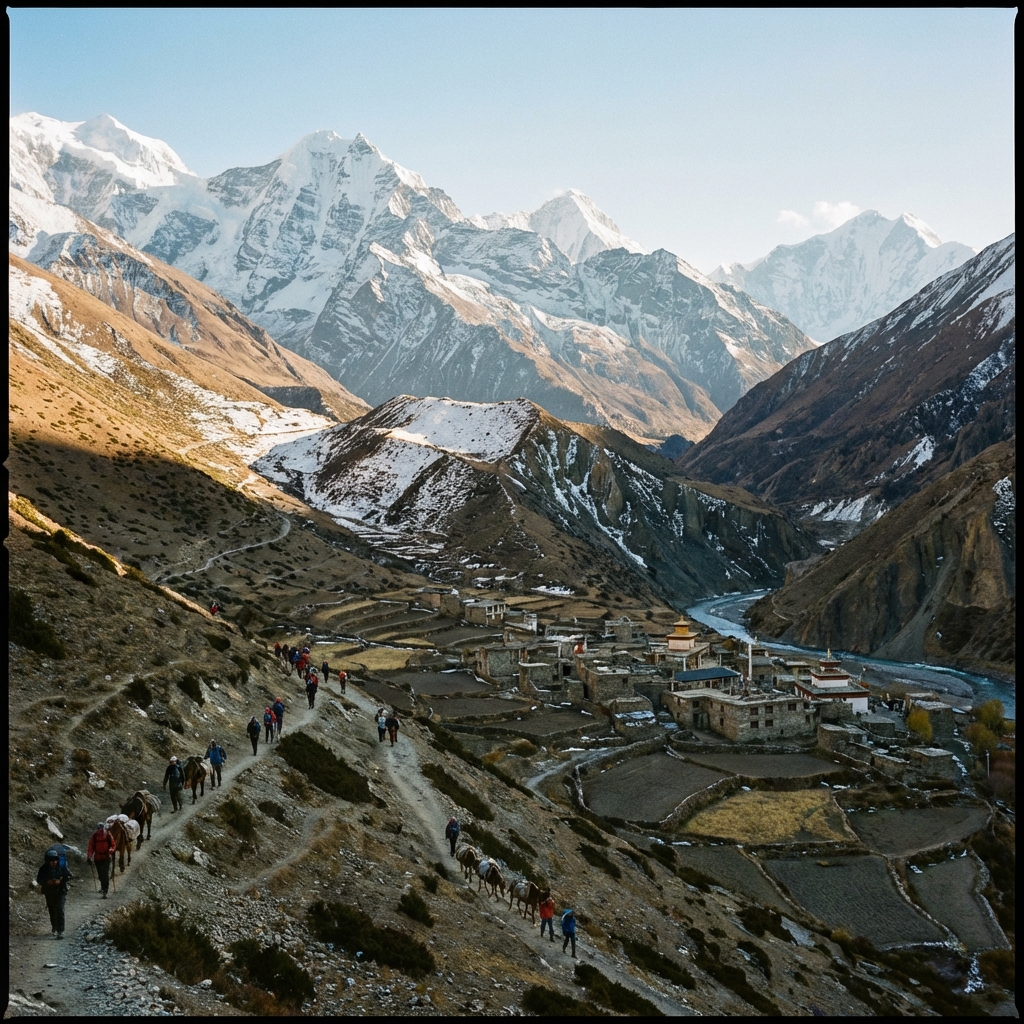
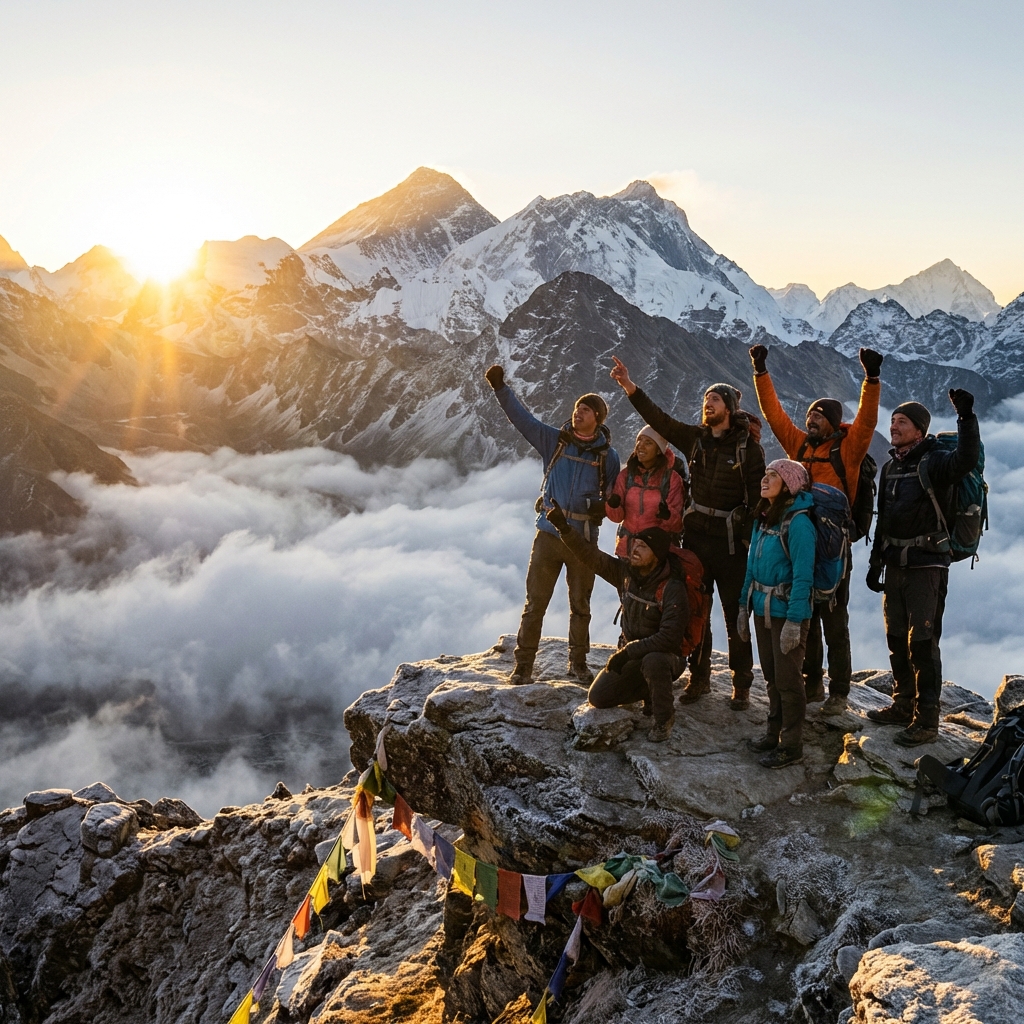
Nepal's trekking landscape offers two distinct experiences: comfortable tea house treks with lodge accommodations, and rugged camping expeditions that venture into the country's most remote wilderness areas. While tea house trekking has become increasingly popular and accessible, camping treks remain the gateway to Nepal's most pristine and uncharted territories, offering adventurers an authentic wilderness experience far from the crowds.
This comprehensive guide explores everything you need to know about camping and expedition-style trekking in Nepal, from understanding when camping is necessary versus optional, to the logistics, costs, and preparation required for these challenging adventures.
Understanding Camping vs Tea House Trekking
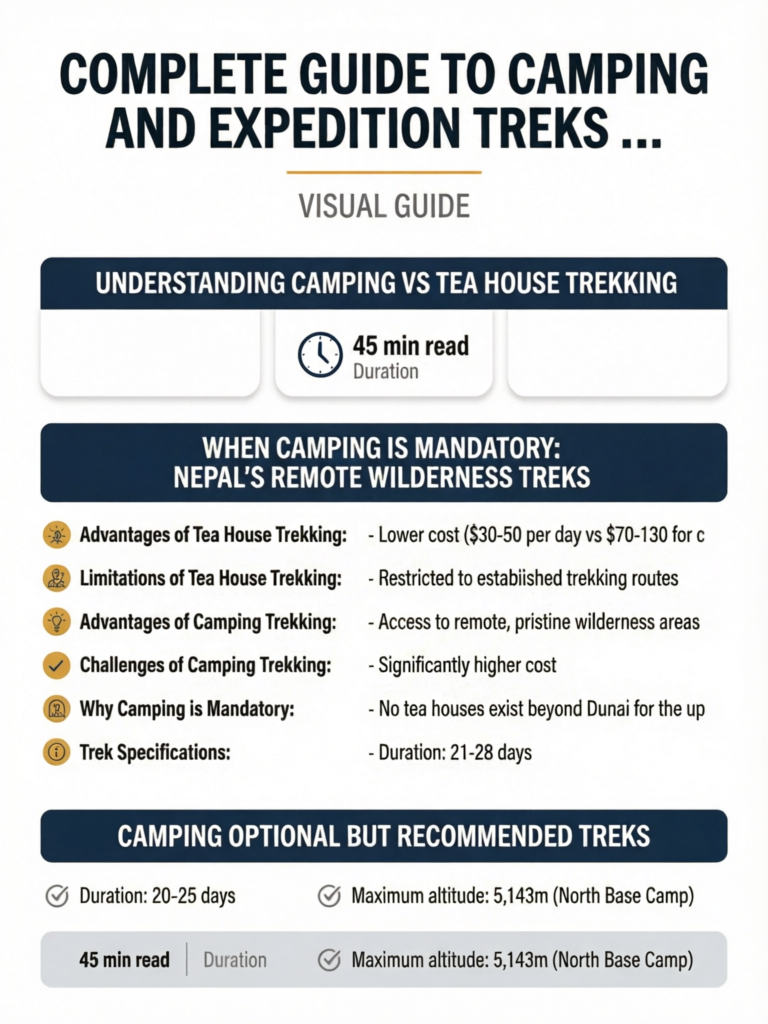
The choice between camping and tea house trekking fundamentally shapes your Himalayan experience. Understanding the differences, advantages, and scenarios for each style is crucial for selecting the right trek.
Tea House Trekking: The Lodge-Based Experience
Tea house trekking involves walking from village to village, staying in family-run lodges that provide basic beds, meals, and hospitality. This style has become the standard for popular routes like Everest Base Camp, Annapurna Circuit, and Langtang Valley.
Advantages of Tea House Trekking:
- Lower cost ($30-50 per day vs $70-130 for camping)
- Cultural immersion with local communities
- Less crew required (just a guide and/or porter)
- Lighter environmental footprint per trekker
- Easier logistics and flexibility
- Social atmosphere meeting other trekkers
- Supporting local economy directly
Limitations of Tea House Trekking:
- Restricted to established trekking routes
- Less privacy and flexibility
- Variable lodge quality and availability
- Crowded during peak seasons
- Limited menu options
- Fixed stopping points
- Less wilderness experience
Camping Trekking: The Expedition Experience
Camping treks involve carrying all accommodation, food, and equipment with a full support crew. You're entirely self-sufficient, camping in wilderness areas far from any settlements.
Advantages of Camping Trekking:
- Access to remote, pristine wilderness areas
- Complete flexibility in camp locations
- Better food quality and variety
- More privacy and solitude
- Stronger team bonding experience
- Authentic expedition atmosphere
- Freedom from lodge availability constraints
- Better acclimatization control
Challenges of Camping Trekking:
- Significantly higher cost
- Larger environmental impact requiring careful management
- More complex logistics and planning
- Larger crew requirement
- Less cultural interaction with locals
- More time required for camp setup/breakdown
- Greater dependency on weather conditions
- More equipment to manage
When Camping is Mandatory: Nepal's Remote Wilderness Treks
Several trekking routes in Nepal have no tea house infrastructure, making camping the only option. These treks penetrate deep into restricted or extremely remote areas where no permanent settlements exist along the route.
Upper Dolpo Trek: The Forbidden Kingdom
The Upper Dolpo trek ventures into one of Nepal's most isolated regions, immortalized in the book and film "The Snow Leopard." This area remained closed to foreigners until 1989 and still requires special permits and full camping support.
Why Camping is Mandatory:
- No tea houses exist beyond Dunai for the upper route
- 10-14 days of continuous camping required
- Extreme remoteness with 5-7 days from nearest road
- Altitudes up to 5,360m (Kang La pass)
- Ancient Tibetan Buddhist culture in Shey Gompa region
Trek Specifications:
- Duration: 21-28 days
- Maximum altitude: 5,360m (Kang La)
- Difficulty: Challenging to strenuous
- Permit cost: USD 50/day (no minimum days), $50/day additional
- Best season: May-June, September-October
- Crew requirement: 12-18 people for full support
The Upper Dolpo region offers spectacular landscapes of high desert terrain, turquoise Phoksundo Lake, ancient monasteries, and the possibility of snow leopard sightings. The camping infrastructure must support extended periods in complete wilderness with no resupply options.
Kanchenjunga Base Camp Trek: Nepal's Far East Frontier
The Kanchenjunga trek explores the world's third-highest mountain from both north and south base camps. This restricted area trek requires full camping support for most of the journey.
Why Camping is Necessary:
- Very limited tea house infrastructure beyond Ghunsa and Amjilosa
- Remote location in far eastern Nepal
- Two base camps requiring wilderness camping
- 8-12 days of camping typically required
- Pristine wilderness conservation area
Trek Specifications:
- Duration: 20-25 days
- Maximum altitude: 5,143m (North Base Camp)
- Difficulty: Challenging
- Permit cost: $20/week for first 4 weeks
- Best season: March-May, September-November
- Crew requirement: 10-15 people
While some basic tea houses exist in lower villages like Ghunsa and Yamphudin, the approaches to both base camps and connecting routes require camping. Many trekkers choose full camping support for better food quality and flexibility even where lodges exist.
Makalu Base Camp Trek: The Wild East
The Makalu Base Camp trek ventures into the Makalu-Barun National Park, one of Nepal's most diverse ecosystems. The upper sections beyond Tashigaon require camping.
Why Camping is Required:
- No permanent settlements beyond Tashigaon (2,100m)
- Base camp at 4,870m is 5-6 days from nearest lodge
- Crossing high passes over 4,000m
- Conservation area with no lodge development
- Variable weather requiring self-sufficiency
Trek Specifications:
- Duration: 18-22 days
- Maximum altitude: 4,870m (Base Camp)
- Difficulty: Challenging to strenuous
- Permit cost: Makalu-Barun NP entry + restricted area permit
- Best season: March-May, September-November
- Crew requirement: 10-14 people
The Makalu region transitions from subtropical forests to alpine wilderness, requiring camping equipment suitable for a wide range of temperatures and conditions.
Great Himalayan Trail Sections: The Ultimate Wilderness Challenge
The Great Himalayan Trail traverses Nepal from east to west, covering 1,700km of the most remote mountain terrain. Most sections require extensive camping.
Remote GHT Sections Requiring Camping:
- Humla to Mugu (Far West Nepal)
- Dolpo to Mustang traverse
- Manaslu to Ganesh Himal section
- Kanchenjunga to Makalu traverse
- Rolwaling to Everest region crossing
GHT Camping Specifications:
- Duration: 20-150+ days depending on section
- Maximum altitude: Multiple passes over 5,000m
- Difficulty: Extremely challenging
- Crew requirement: Varies with section, 8-20 people
- Permits: Multiple restricted area permits required
GHT camping treks represent the ultimate wilderness experience, often requiring 2-4 weeks between any road access or resupply points.
Other Mandatory Camping Treks
Ganesh Himal Trek:
- Limited tea house development
- Remote valleys north of Kathmandu
- 12-16 days with 8-10 days camping
- Altitude up to 4,200m
Tsum Valley (Extended Routes):
- Upper Tsum beyond Mu Gompa requires camping
- Ancient Tibetan Buddhist culture
- Can combine with Manaslu Circuit camping sections
Dhaulagiri Circuit:
- Circumnavigates world's 7th highest peak
- Requires crossing 5,360m French Pass
- 14-18 days full camping
- Extremely challenging technical sections
Camping Optional but Recommended Treks
Some treks offer basic tea house infrastructure but provide a significantly better experience with camping support. These routes allow you to choose based on budget, preference, and desired comfort level.
Manaslu Circuit: Hybrid Camping Options
The Manaslu Circuit has seen tea house development in recent years, but many sections benefit from camping support, particularly for better acclimatization and comfort.
Where Camping Improves the Experience:
- Samagaun to Dharamsala: Better acclimatization control
- Larkya La crossing day: Flexible timing and rest stops
- Samdo area: Limited lodge capacity, better comfort camping
- Side trips to Manaslu Base Camp or Tsum Valley
Manaslu Camping Benefits:
- Better food quality than basic lodges
- Flexibility in acclimatization days
- Privacy and quieter experience
- Guaranteed accommodation (lodges often full)
- Superior comfort before/after high pass crossing
Specifications:
- Can do fully camping or hybrid (camping key sections)
- Partial camping adds $20-40/day to costs
- Recommended for groups of 4+ for cost efficiency
- Best season: March-May, September-November
Nar Phu Valley: Enhanced Wilderness Experience
The Nar Phu Valley, a restricted area extension of the Annapurna Circuit, has minimal lodge infrastructure. While basic tea houses exist, camping offers much better quality.
Camping Advantages in Nar Phu:
- Very basic lodges with limited facilities
- Better food and hygiene with camping
- Flexibility to camp in scenic locations
- Privacy in Buddhist village areas
- Reliable accommodation during shoulder seasons
Specifications:
- 7-10 day addition to Annapurna Circuit
- Camping recommended for 4-6 nights in Nar Phu section
- Maximum altitude: 5,416m (Kang La pass)
- Restricted area permit required
Upper Mustang: Luxury Camping Option
While Upper Mustang has tea house infrastructure in every village, luxury camping has become increasingly popular for comfort and unique experiences.
Why Choose Camping in Mustang:
- Significantly better comfort than basic lodges
- Privacy and flexibility
- Superior food quality
- Ability to camp in scenic locations between villages
- Better photography opportunities (flexibility in timing)
- Avoiding variable lodge conditions
Specifications:
- Can be done entirely tea house or camping
- Luxury camping commands premium prices ($150-200/day)
- Best for groups wanting high comfort in remote setting
- Restricted area requiring $500 permit
Everest Three Passes Trek: Strategic Camping
The Everest Three Passes can be completed entirely in tea houses, but strategic camping on pass-crossing days can enhance the experience.
Strategic Camping Benefits:
- Camp before high passes for early morning crossings
- Flexibility in weather windows
- Better acclimatization control
- Privacy away from busy lodges
- Quality meals at critical points
Specifications:
- Hybrid approach: lodges most nights, camping 3-5 nights
- Particularly useful for Cho La and Renjo La crossings
- Adds $150-300 to overall trek cost
- Requires advance booking with camping operator
Complete Camping Expedition Logistics
Understanding the full logistics of a camping trek helps you prepare mentally and physically for the expedition experience. Unlike tea house treks where you simply arrive at lodges, camping treks require a complex support system.
The Full Camping Crew Structure
A proper camping expedition requires a substantial team to handle all aspects of camp life, meals, and porter support.
Essential Crew Members:
1. Trekking Guide (Sirdar)
- Overall trek leadership and safety
- Route finding and decision making
- Client liaison and problem solving
- Typically English-speaking and licensed
- Ratio: 1 guide per 4-6 clients
2. Cook (Staff)
- Meal planning and preparation
- Food safety and hygiene
- Kitchen equipment management
- Often trained in expedition cooking
- Ratio: 1 cook per 6-8 clients
3. Kitchen Helpers (Assistant Cooks)
- Food preparation assistance
- Cleaning and sanitation
- Water purification
- Camp kitchen setup/breakdown
- Ratio: 1-2 per cook
4. Porters
- Carry all camping equipment, food, and client gear
- Maximum load: 20-25kg per porter
- Equipped with proper clothing and equipment
- Ratio: 1 porter per 20kg of total gear
5. Yak/Dzopkyo Handlers (Higher Altitudes)
- Manage pack animals above 3,500-4,000m
- Traditional knowledge of high routes
- Animal care and loading/unloading
- Replace porters in high-altitude sections
6. Assistant Guides (Larger Groups)
- Support main guide with client management
- Help with acclimatization monitoring
- Lead smaller groups for flexibility
- Safety backup
Sample Crew Size for 6 Trekkers on Upper Dolpo:
- 1 Sirdar (head guide)
- 1 Assistant guide
- 1 Cook
- 2 Kitchen helpers
- 8-10 Porters/yak handlers
- Total: 13-15 crew members
This means a group of 6 clients requires a team of nearly 20 people total, highlighting the complexity and cost of camping expeditions.
Complete Camping Equipment Inventory
Camping treks require transporting a complete mobile camp system. Understanding what's provided versus what you should bring helps with preparation.
Equipment Provided by Trekking Agency:
Sleeping Infrastructure:
- Sleeping tents (usually 2-person capacity, one per person or shared)
- Foam mattresses or sleeping pads
- Dining tent with tables and chairs
- Kitchen tent with cooking equipment
- Toilet tent with portable toilet
- Crew sleeping tents
- Ground sheets and tent footprints
Kitchen and Dining:
- Complete cooking equipment (pots, pans, utensils)
- Pressure cookers for high altitude
- Gas stoves and fuel (kerosene or gas)
- Dining tables and folding chairs
- Plates, bowls, cups, and cutlery
- Water purification system
- Storage containers for food
- Washing basins and cleaning supplies
General Camp Equipment:
- Solar panels or charging systems (some operators)
- Emergency medical kit
- Communication equipment (satellite phone)
- Rope and emergency equipment
- Tarps for weather protection
- Lanterns and lighting
Equipment You Should Bring:
Essential Personal Gear:
- Quality sleeping bag rated to -15°C to -20°C (0-20°F)
- Sleeping bag liner (adds warmth and hygiene)
- Personal headlamp with extra batteries
- Trekking poles (highly recommended)
- Personal water bottles or hydration system
- Sunglasses and sun protection
- Personal first aid and medications
- Toiletries and hygiene products
- Camera and electronics with charging solutions
Clothing for Camping Treks:
- Base layers (merino wool or synthetic)
- Insulating layers (fleece or down)
- Waterproof/windproof shell jacket and pants
- Down jacket for high altitude and camp
- Trekking pants and shirts
- Warm hat, sun hat, gloves
- Quality hiking boots (broken in)
- Camp shoes (down booties or sandals)
- Multiple sock layers
Optional Comfort Items:
- Inflatable pillow
- Book or e-reader
- Playing cards or games
- Personal snacks and treats
- Wet wipes and hand sanitizer
- Earplugs for better sleep
- Portable charger/power bank
Pro Tip
Daily Camp Routine: What to Expect
Understanding the typical daily schedule on a camping trek helps set realistic expectations and prepare mentally for the routine.
Morning Routine (5:30-8:00 AM):
- 5:30-6:00 AM: Wake-up call with bed tea/coffee delivered to tent
- 6:00-6:30 AM: Washing water provided in basins
- 6:30-7:00 AM: Breakfast in dining tent (porridge, eggs, toast, etc.)
- 7:00-7:30 AM: Pack personal gear, prepare for day's trek
- 7:30-8:00 AM: Crew begins breaking camp while you start trekking
- 8:00 AM: Depart for day's destination
During Trekking (8:00 AM-2:00 PM):
- Trek at your own pace with guide
- Crew overtakes to set up lunch spot ahead
- 11:00-12:00 PM: Hot lunch served in temporary dining setup
- 12:30-1:00 PM: Resume trekking after lunch break
- 2:00-3:00 PM: Arrive at camp (crew already setting up)
Afternoon/Evening (2:00-9:00 PM):
- 2:00-3:00 PM: Arrive at camp, tents ready, wash water provided
- 3:00-4:00 PM: Hot tea/coffee and snacks in dining tent
- 4:00-6:00 PM: Rest, explore camp area, enjoy scenery
- 6:00-7:00 PM: Dinner served (multi-course meal)
- 7:00-8:30 PM: Social time, briefing for next day
- 8:30-9:00 PM: Hot water for bottles, retire to sleeping tent
- 9:00 PM: Lights out, crew completes camp duties
Key Differences from Tea House Trekking:
- Earlier wake-ups (crew needs time to pack camp)
- Longer midday break (while crew moves ahead)
- More structured schedule
- Better meals but less flexibility
- More social/group time in dining tent
- Complete darkness at night (no lodge lights)
Food and Meals on Camping Treks
One of the significant advantages of camping treks is dramatically better food quality compared to basic mountain lodges. The crew carries fresh ingredients and cooking equipment to prepare diverse, nutritious meals.
Typical Camping Trek Menu:
Breakfast Options:
- Porridge with honey, dried fruits, nuts
- Eggs (scrambled, fried, omelets)
- Pancakes or French toast
- Tibetan bread or toast with jam
- Cereals with milk powder
- Fresh fruit (in lower elevations)
- Hot beverages: tea, coffee, hot chocolate
Lunch (Usually Hot Meal):
- Dal bhat (rice, lentils, vegetables)
- Pasta dishes
- Fried rice or noodles
- Sandwiches with hot soup
- Momos (dumplings)
- French fries or hash browns
- Salads (lower elevations)
Dinner (Multi-Course):
- Soup (vegetable, noodle, or garlic soup)
- Main course: pasta, rice dishes, pizza, curry, stir-fry
- Vegetables and sides
- Dal bhat option always available
- Dessert: fruit cocktail, pudding, or cake
- Hot drinks
Snacks and Drinks:
- Tea, coffee, hot chocolate throughout day
- Popcorn in evening
- Biscuits and cookies
- Fresh-baked items when possible
- Purified drinking water unlimited
Dietary Accommodations:
- Vegetarian (standard on most treks)
- Vegan (possible with advance notice)
- Gluten-free (limited but manageable)
- Food allergies (must notify in advance)
- Religious dietary restrictions (Halal, Kosher preparation limited)
Food Quality Factors:
- Much better than basic tea house food
- Fresh ingredients in lower sections
- More variety and portion sizes
- Better hygiene and food safety
- Cooked specifically for your group
- Can accommodate preferences
Pro Tip
Environmental Impact and Waste Management
Camping treks have a larger environmental footprint than tea house treks, making responsible waste management and Leave No Trace principles absolutely critical.
Waste Management Systems:
Human Waste:
- Portable toilet tents with systems
- Toilet paper burned or carried out
- Higher camps: bury waste properly or carry out
- Never within 60m of water sources
- Some areas require carrying out all waste
Food and Organic Waste:
- Food scraps carried to lower elevations for disposal
- No burning of food waste (attracts animals)
- Composting when possible in appropriate locations
- Leftover food given to crew when culturally appropriate
Non-Burnable Waste:
- All plastic, metal, glass carried out
- Batteries and electronics taken to Kathmandu
- Medical waste carried in separate bags
- No burying of non-organic materials
- Some treks require showing waste at checkpoints
Burnable Waste:
- Paper and cardboard burned completely
- Only in safe, designated locations
- Never in high-fire-risk areas
- Ashes buried or dispersed
Water Management:
- Washing 60m+ from water sources
- Biodegradable soap only (bring your own)
- Gray water dispersed away from trails and water
- Minimize detergent use
- Water purification systems to reduce plastic bottles
Energy and Fuel:
- Efficient stoves and fuel management
- No wood burning above treeline
- Kerosene or gas for cooking
- Solar charging when available
- Minimize fuel consumption
Leave No Trace Camping Principles:
-
Plan Ahead and Prepare
- Proper equipment to minimize impact
- Repackage food to reduce waste
- Know regulations for the area
-
Travel and Camp on Durable Surfaces
- Use established campsites when possible
- Avoid damaging vegetation
- Don't create new tent platforms
- Disperse use in pristine areas
-
Dispose of Waste Properly
- Pack it in, pack it out
- Use toilet systems properly
- Leave campsites cleaner than found
-
Leave What You Find
- Don't take cultural or natural artifacts
- Don't build structures
- Minimize campsite alterations
-
Minimize Campfire Impacts
- Use stoves for cooking only
- No campfires above treeline
- No wood collection in fragile areas
-
Respect Wildlife
- Store food properly
- Don't feed animals
- Observe from distance
- Avoid nesting areas
-
Be Considerate of Others
- Camp away from trails when possible
- Keep noise down
- Respect local customs
- Share popular campsites
Choosing Responsible Operators: When selecting a camping trek operator, ask about:
- Waste management policies
- Staff training in environmental practices
- Participation in cleanup campaigns
- Adherence to Leave No Trace principles
- Use of sustainable equipment
- Support for local conservation efforts
Camping Trek Costs: Understanding the Investment
Camping treks represent a significant financial investment compared to tea house trekking. Understanding the cost breakdown helps justify the expense and budget appropriately.
Cost Comparison: Camping vs Tea House
Tea House Trek Daily Cost Breakdown:
- Accommodation: $3-8 per night
- Meals: $15-25 per day
- Guide: $25-30 per day (divided by group)
- Porter: $20-25 per day (divided by group)
- Total: $30-50 per person per day for organized trek
Camping Trek Daily Cost Breakdown:
- Base camping cost: $70-130 per person per day
- Permits (often higher for restricted areas)
- Transportation (often longer/more expensive)
- Equipment rental if needed
- Total: $90-180+ per person per day
Cost Difference: $40-80+ more per day for camping
What's Included in Camping Trek Costs
Base Package Typically Includes:
- All camping equipment (tents, sleeping mats, dining setup)
- Full crew (guide, cook, assistants, porters)
- Three meals daily plus snacks
- Camping permits and fees
- Group climbing gear if needed
- First aid kit and emergency equipment
- Transportation Kathmandu to/from trailhead
Additional Costs:
- Personal trekking permits (TIMS, area permits)
- Sleeping bag rental: $2-3/day
- Down jacket rental: $1-2/day
- Personal travel insurance (mandatory)
- International flights
- Kathmandu accommodation
- Tips for crew (10-15% of trek cost)
- Personal equipment purchase
- Extra drinks and snacks
- Emergency evacuation insurance
- Visa fees for Nepal
Sample Camping Trek Cost Examples
Upper Dolpo (26 days):
- Base trek cost: $3,500-4,500 per person (group of 4-6)
- Permits: $500 per person
- Equipment rental: $75-100
- Tips: $350-450
- Kathmandu accommodation: $200-300
- Total: $4,625-5,850 per person
Kanchenjunga Base Camp (22 days):
- Base trek cost: $2,200-3,000 per person (group of 4-6)
- Permits: $120-$280 per person
- Equipment rental: $60-90
- Tips: $250-300
- Kathmandu costs: $150-250
- Total: $2,760-3,790 per person
Manaslu Circuit with Camping (16 days):
- Base trek cost: $1,600-2,200 per person (group of 4)
- Permits: $100 per person
- Equipment rental: $50-75
- Tips: $180-220
- Kathmandu costs: $100-150
- Total: $2,030-2,745 per person
Makalu Base Camp (20 days):
- Base trek cost: $2,500-3,200 per person (group of 4-6)
- Permits: $70-100 per person
- Equipment rental: $65-85
- Tips: $280-320
- Kathmandu costs: $150-200
- Total: $3,065-3,905 per person
Cost Optimization Strategies
1. Group Size Optimization:
- Solo: Pay 100% of costs (most expensive)
- Pair: Share costs 50/50 (still expensive)
- 4 people: Sweet spot for cost vs experience
- 6-8 people: Most economical per person
- 10+ people: Cheapest but less intimate experience
2. Season Selection:
- Peak season (Oct-Nov, Mar-Apr): Full prices
- Shoulder season (Sep, Dec, May): 10-15% discounts possible
- Off-season: 20-30% discounts but weather risks
3. Operator Selection:
- Budget operators: $70-90/day (basic service)
- Mid-range operators: $100-120/day (standard quality)
- Premium operators: $130-180/day (best equipment/food)
- Direct booking vs through agency markup
4. Route Selection:
- Shorter treks reduce overall investment
- Less remote areas slightly cheaper
- Avoiding restricted areas saves permit costs
5. Equipment Strategy:
- Rent in Kathmandu vs bringing: saves baggage fees
- Buy used gear in Kathmandu: good quality available
- Borrow from friends who've trekked before
- Mix renting critical items, bringing what you own
Camping vs Tea House Cost Comparison (20-Day Trek)
| Name | Features |
|---|---|
| Tea House Trek | Accommodation: $100-160Meals: $300-500Guide/Porter: $200-300 (shared)Permits: $50-100Total: $650-1,060 per person |
| Camping Trek | Base camping package: $1,800-2,600Permits: $100-500 (often restricted)Equipment rental: $60-80Tips: $200-300Total: $2,160-3,480 per person |
Best Camping Treks by Difficulty Level
Selecting the right camping trek based on your experience, fitness, and altitude comfort is crucial for a successful expedition.
Moderate Camping Treks
Ideal for: First-time camping trekkers, good fitness, some altitude experience helpful
1. Langtang Trek with Camping (12-14 days)
- Maximum altitude: 4,984m (Tserko Ri)
- Why camping: Luxury option, usually done tea house
- Difficulty factors: Moderate altitude, well-established trails
- Highlights: Close to Kathmandu, beautiful Langtang Valley
- Cost: $1,200-1,800 per person
2. Lower Dolpo (18-20 days)
- Maximum altitude: 5,200m (Numa La)
- Why camping: Limited tea houses beyond Dunai
- Difficulty factors: Long duration, high passes, remote
- Highlights: Phoksundo Lake, Tibetan culture
- Cost: $2,200-3,000 per person
3. Tsum Valley with Camping (14-16 days)
- Maximum altitude: 4,200m (Mu Gompa area)
- Why camping: Better comfort than basic lodges
- Difficulty factors: Moderate altitude, cultural sensitivity required
- Highlights: Ancient Tibetan Buddhist culture, isolated valley
- Cost: $1,600-2,200 per person
Challenging Camping Treks
Ideal for: Experienced trekkers, excellent fitness, altitude experience essential
1. Kanchenjunga Base Camp (20-24 days)
- Maximum altitude: 5,143m (North Base Camp)
- Why mandatory camping: Remote, limited infrastructure
- Difficulty factors: Long duration, high altitude, remote sections
- Highlights: Third highest mountain, diverse ecosystems
- Cost: $2,500-3,500 per person
2. Manaslu Circuit Full Camping (16-18 days)
- Maximum altitude: 5,160m (Larkya La)
- Why camping chosen: Better acclimatization, comfort
- Difficulty factors: High pass, weather-dependent, restricted area
- Highlights: Eighth highest mountain, less crowded than Annapurna
- Cost: $1,800-2,600 per person
3. Makalu Base Camp (18-22 days)
- Maximum altitude: 4,870m (Makalu BC) + optional 6,200m viewpoint
- Why mandatory camping: No lodges beyond Tashigaon
- Difficulty factors: Steep terrain, variable weather, very remote
- Highlights: Fifth highest mountain, incredible biodiversity
- Cost: $2,600-3,600 per person
4. Nar Phu Valley Circuit (16-18 days)
- Maximum altitude: 5,416m (Kang La)
- Why camping recommended: Basic lodges, better experience
- Difficulty factors: High pass, exposure, narrow trails
- Highlights: Medieval Tibetan villages, dramatic gorges
- Cost: $1,900-2,700 per person
Extremely Challenging Camping Treks
Ideal for: Very experienced trekkers, exceptional fitness, significant altitude experience, technical skills helpful
1. Upper Dolpo Circuit (24-28 days)
- Maximum altitude: 5,360m (Kang La)
- Why mandatory camping: Completely remote, no infrastructure
- Difficulty factors: Extreme remoteness, multiple high passes, long duration
- Highlights: Most remote trek in Nepal, Snow Leopard territory, Shey Gompa
- Cost: $3,800-5,200 per person
2. Great Himalayan Trail Sections (20-40+ days)
- Maximum altitude: Multiple passes over 5,000m
- Why mandatory camping: Extremely remote, no settlements for weeks
- Difficulty factors: Everything - altitude, remoteness, duration, terrain
- Highlights: Ultimate Nepal wilderness experience
- Cost: $4,000-8,000+ per person depending on section
3. Dhaulagiri Circuit (18-20 days)
- Maximum altitude: 5,360m (French Pass)
- Why mandatory camping: No infrastructure, technical sections
- Difficulty factors: High altitude, glacier crossing, technical terrain
- Highlights: Seventh highest mountain, dramatic landscapes
- Cost: $3,200-4,500 per person
4. Kanchenjunga North-South Traverse (28-32 days)
- Maximum altitude: 5,143m (multiple high points)
- Why mandatory camping: Ultimate remote traverse
- Difficulty factors: Extreme duration, remoteness, continuous high altitude
- Highlights: Complete Kanchenjunga experience, rarely done route
- Cost: $4,200-5,800 per person
5. Rolwaling Valley to Everest via Tashi Lapcha (20-24 days)
- Maximum altitude: 5,755m (Tashi Lapcha La)
- Why mandatory camping: Remote valley, technical pass
- Difficulty factors: Glacier crossing, fixed ropes, ice climbing skills useful
- Highlights: Connecting two famous regions, technical challenge
- Cost: $3,000-4,200 per person
Pro Tip
Permits and Regulations for Camping Treks
Most camping treks venture into restricted or conservation areas requiring multiple permits and adhering to specific regulations.
Common Permit Types for Camping Treks
1. Restricted Area Permits (RAP)
Required for politically or culturally sensitive areas with limited tourist access.
Upper Dolpo:
- Cost: USD 50 per day (no minimum) days
- Additional: $50 per day beyond 10 days
- Season: Valid specified months only
- Requirements: Must trek with registered agency and guide
- Processing: 1-2 weeks advance booking recommended
Kanchenjunga:
- Cost: $20 per week for first 4 weeks, $25/week after
- Requirements: Minimum 2 trekkers, registered guide
- Processing: Can be obtained in Kathmandu in 2-3 days
Upper Mustang:
- Cost: $500 per person for 10 days
- Additional: $50 per day beyond 10 days
- Requirements: Minimum 2 people, registered agency
- Processing: 3-5 days in Kathmandu
Manaslu:
- Cost: $100 per person September-November
- Cost: $75 per person December-August
- Requirements: Minimum 2 trekkers, registered guide
- Processing: 1-2 days in Kathmandu
Nar Phu Valley:
- Cost: $100 per person September-November
- Cost: $75 per person December-August
- Requirements: Added to Annapurna permits
- Processing: 1-2 days
2. Conservation Area Permits
Required for protected national parks and conservation areas.
Annapurna Conservation Area (ACAP):
- Cost: NPR 3,000 ($30) per person
- Valid: Entire Annapurna region including Nar Phu
- Obtain: Nepal Tourism Board, Kathmandu or Pokhara
- Processing: Same day
Makalu-Barun National Park:
- Cost: NPR 3,000 ($30) per person
- Valid: Makalu region trekking
- Obtain: Nepal Tourism Board or park entrance
- Processing: Same day
Langtang National Park:
- Cost: NPR 3,000 ($30) per person
- Valid: Langtang, Helambu, Gosainkunda
- Obtain: Park entrance or Kathmandu
- Processing: Same day
Sagarmatha (Everest) National Park:
- Cost: NPR 3,000 ($30) per person
- Valid: Everest region including camping routes
- Obtain: Park entrance at Monjo or Kathmandu
- Processing: Same day
3. TIMS Card (Trekkers' Information Management System)
Status Change (2023): TIMS is no longer required for most trekking areas including Annapurna and Everest regions. However, still required for some areas.
Where Still Required:
- Some restricted area treks
- Varies by region and regulation changes
- Check current requirements with agency
Cost (where required):
- Green Card (independent): NPR 2,000 ($20)
- Blue Card (with agency): NPR 1,000 ($10)
Permit Application Process
Working with Trekking Agencies:
All camping treks and restricted area treks must be booked through registered Nepali trekking agencies. They handle permit applications on your behalf.
Required Documents:
- Passport (copies and original)
- 4 passport-size photos
- Travel insurance details
- Arrival/departure dates
- Signed permit application forms
- Agency registration documents
Timeline:
- Standard permits: 1-3 days
- Restricted area permits: 3-7 days
- Peak season: Add extra time
- Recommendation: Start process 2-3 weeks before trek
Permit Checking:
- Checkpoints along trek routes verify permits
- Carry permits at all times
- Some areas check waste management
- Penalties for trekking without permits
Special Regulations for Camping Areas
Environmental Regulations:
- Some areas prohibit certain campsites
- Waste management requirements may be checked
- Firewood collection banned above certain altitudes
- Stay on designated trails and campsites
Cultural Regulations:
- Respect Buddhist sites and customs
- Photography restrictions at some monasteries
- Dress codes in village areas
- Campsite distance from religious sites
Safety Regulations:
- Register with embassies for very remote treks
- Satellite phone or emergency communication recommended
- Insurance proof required
- Guide qualifications verified
When to Choose Camping Over Tea House Trekking
Understanding when camping is the better choice—or the only option—helps you select the right trek for your goals and preferences.
Situations Where Camping is the Clear Choice
1. Accessing Truly Remote Wilderness
If your goal is to experience pristine wilderness far from tourist infrastructure, camping treks deliver unparalleled remoteness. Tea house routes, even less-traveled ones, follow established trails with regular villages. Camping routes venture days beyond the last permanent settlement.
Best for:
- Photographers seeking unspoiled landscapes
- Wildlife enthusiasts (better chances in true wilderness)
- Adventurers wanting isolation and solitude
- Those seeking transformative wilderness experiences
2. Exploring Restricted or Conservation Areas
Many of Nepal's most spectacular and culturally significant areas remain restricted or have minimal development. Camping enables access while preserving these areas' integrity.
Examples:
- Upper Dolpo's ancient Bon Buddhist culture
- Kanchenjunga's pristine ecosystems
- Upper Mustang's Tibetan heritage
- Remote Great Himalayan Trail sections
3. Seeking Superior Comfort and Food
While tea houses provide basic shelter, camping treks with quality operators offer significantly better comfort, food variety, hygiene standards, and service.
Advantages:
- Guaranteed clean sleeping conditions
- Restaurant-quality meals with dietary accommodations
- Private facilities and reduced crowding
- Predictable comfort standards
- Better sanitation and hygiene
4. Group Bonding and Team Experiences
Camping creates a shared expedition experience. The dining tent becomes the social hub where your group bonds over meals, stories, and the day's adventures. There's no splitting up to different lodges or competing for resources.
Benefits:
- Shared dining space for entire group
- Team-building through expedition life
- Privacy from other trekking groups
- Flexible social dynamics
- Stronger memories and relationships
5. Photography and Flexibility
Camping allows you to position yourself in spectacular locations for sunrise/sunset photography, camp at scenic viewpoints, and adjust schedules for optimal light conditions—luxuries impossible on fixed tea house routes.
Photography Advantages:
- Camp at prime photographic locations
- Flexible wake-up times for sunrise
- No crowds at key viewpoints
- Ability to wait out weather for better light
- Freedom to explore without time pressures
6. Complete Acclimatization Control
On camping treks, you determine exactly where you sleep each night, enabling optimal acclimatization profiles. You can ascend conservatively, add rest days anywhere, or adjust altitude gains based on how you feel.
Acclimatization Benefits:
- Camp at ideal altitudes for adaptation
- Rest days don't require backtracking
- Gradual altitude gain profiles
- Flexibility to adjust itinerary
- Better safety outcomes
When Tea House Trekking Might Be Better
Choose Tea House Trekking When:
- Budget is primary concern ($40-80/day savings)
- Cultural interaction is your main goal
- You prefer spontaneity over planning
- You're trekking solo or with one person (camping very expensive)
- You want environmental simplicity (smaller footprint per person)
- The route has quality lodge infrastructure
- You enjoy meeting other trekkers
- You prefer traveling light with less logistics
Tea House Works Well For:
- Everest Base Camp trek
- Annapurna Circuit
- Langtang Valley
- Everest High Passes (mostly)
- Ghorepani Poon Hill
- Gokyo Lakes trek
Selecting a Camping Trek Operator
Choosing the right trekking agency is the most important decision you'll make for a camping expedition. The operator's quality determines your safety, comfort, and overall experience.
What to Look for in Camping Trek Operators
1. Specialized Camping Experience
Not all trekking agencies excel at camping operations. Look for:
- Years operating camping treks (10+ years preferred)
- Specific experience on your chosen route
- References from camping treks, not just tea house treks
- Crew trained in camping logistics
- Quality camping equipment inventory
2. Safety Record and Protocols
Essential Safety Indicators:
- First aid trained guides and crew
- Emergency evacuation procedures and insurance
- Satellite communication equipment
- Comprehensive first aid kits
- Weather monitoring systems
- Contingency planning
- Safety briefings before trek
- Acclimatization protocols
3. Environmental and Ethical Practices
Look for Operators Who:
- Follow Leave No Trace principles
- Have waste management systems
- Provide proper crew equipment and wages
- Participate in mountain cleanup campaigns
- Support local communities
- Train crew in environmental practices
- Use sustainable equipment and fuels
- Limit group sizes for lower impact
4. Equipment Quality
Essential Equipment Standards:
- Sleeping tents: Quality, weatherproof, appropriate for season
- Dining tent: Spacious with adequate seating
- Toilet tent: Proper system, privacy, maintenance
- Kitchen equipment: Complete and well-maintained
- Sleeping mats: Comfortable, insulated
- Group safety gear: Proper and current
5. Crew Quality and Treatment
Indicators of Good Crew Management:
- Fair wages above industry minimum
- Proper crew equipment (boots, clothing, sleeping gear)
- Insurance coverage for crew
- Training programs
- Long-term crew relationships
- Career development for staff
- Respect and professional treatment
6. Food Quality and Safety
What Quality Operators Provide:
- Experienced expedition cooks
- Varied, nutritious menus
- Dietary accommodation capabilities
- Food safety and hygiene protocols
- Fresh ingredients sourced along route
- Purified water systems
- Adequate food quantities
- Special occasion meals
Questions to Ask Potential Operators
Logistics and Planning:
- How many times have you operated this specific trek?
- What is the guide-to-client ratio?
- What happens if weather forces itinerary changes?
- How do you handle altitude sickness and emergencies?
- What communication equipment do you carry?
- What is your evacuation procedure and insurance coverage?
Equipment and Comfort: 7. What brand/type of tents do you use? 8. Are sleeping tents single or shared occupancy? 9. What type of sleeping mats are provided? 10. Describe your toilet system. 11. What dining setup do you provide? 12. What kitchen and cooking equipment do you use?
Crew and Service: 13. How many crew members for our group size? 14. What are your crew's qualifications? 15. How do you ensure crew welfare and fair treatment? 16. What language skills do guides have? 17. How long have your key crew members worked for you?
Food and Health: 18. Can you accommodate dietary restrictions (specify yours)? 19. What is a typical menu? 20. How do you ensure food safety at altitude? 21. What water purification systems do you use? 22. What medical supplies do you carry?
Environmental and Ethical: 23. What waste management systems do you use? 24. How do you minimize environmental impact? 25. What community support or conservation efforts do you participate in? 26. What are your Leave No Trace protocols?
Financial and Legal: 27. What exactly is included in the quoted price? 28. What are potential additional costs? 29. What is your cancellation policy? 30. Are you registered with Nepal Tourism Board? 31. What permits will you obtain, and are costs included? 32. What insurance do you require from clients?
Reputable Camping Trek Operators
While not exhaustive, these agencies have established reputations for quality camping expeditions:
Premium/High-End Operators:
- Asian Trekking
- Mountain Monarchs
- Nepal Hiking Team
- Himalayan Guides Nepal
- Nepal Hiking
- Snow Leopard Trek
Mid-Range Quality Operators:
- Himalayan Glacier
- Ace the Himalaya
- Himalayan Adventure
- Nepal Wilderness Trekking
- Third Rock Adventures
- Mountain Sherpa Trekking
Budget-Conscious Options:
- Friendship Treks and Expedition
- Eco Trek Nepal
- Nepal Trekking Routes
- Himalayan Glacier Trekking
Operator Selection Tips:
- Don't choose based solely on price
- Read recent reviews on TripAdvisor, Google, Trustpilot
- Contact past clients if possible
- Verify registration with Nepal Tourism Board
- Meet in Kathmandu before committing if possible
- Compare detailed itineraries, not just price
- Ask about sustainability practices
Pro Tip
Best Time for Camping Treks
Seasonal timing significantly impacts camping trek success, with weather, trail conditions, temperature, and permit availability varying dramatically throughout the year.
Peak Seasons for Camping Treks
Spring Season (March-May)
Advantages:
- Warming temperatures, especially at lower elevations
- Rhododendron forests in full bloom (spectacular in March-April)
- Increasingly stable weather as season progresses
- Good visibility for mountain views
- Longer daylight hours
- Wildlife more active
- Most routes accessible by mid-March
Challenges:
- Late March-May can be hot at lower elevations
- Afternoon clouds increasingly common in May
- Building humidity (pre-monsoon)
- Popular routes moderately crowded
- Higher prices during peak weeks
Best For:
- First-time camping trekkers
- Photography (especially wildflowers)
- Lower elevation treks
- Anyone who prefers warmer weather
Ideal Spring Camping Treks:
- Kanchenjunga (April-May best)
- Makalu Base Camp (April-May)
- Manaslu Circuit (March-May)
- Lower Dolpo (May-June)
- Ganesh Himal (April-May)
Fall Season (September-November)
Advantages:
- Most stable weather of the year
- Clearest mountain views
- Comfortable temperatures at all elevations
- Dry trails and campsites
- Post-monsoon fresh, green landscapes
- Festival season (Dashain, Tihar in Oct-Nov)
- Reliable conditions for high passes
Challenges:
- Peak tourist season (especially October)
- Higher prices and full bookings
- More crowded on popular routes
- Very cold at night at high camps (Nov)
- Early snowfall possible in November
- Shorter daylight hours than spring
Best For:
- First-time Himalayan trekkers
- Photography (crystal-clear views)
- High-altitude camping treks
- Guaranteed weather windows
- Group treks (easier to organize)
Ideal Fall Camping Treks:
- Upper Dolpo (September-October)
- Kanchenjunga (Oct-Nov)
- Makalu Base Camp (Oct-Nov)
- Manaslu Circuit (Sept-Nov)
- Nar Phu Valley (Sept-Oct)
- All GHT sections
Shoulder Seasons
Early Spring (February-Early March)
Conditions:
- Cold, especially at high altitudes
- Possible snow at passes
- Fewer trekkers (good for solitude)
- Clear skies often
- Many tea houses still closed (advantage for camping)
- Lower prices and easier booking
Suitable For:
- Experienced winter trekkers
- Lower altitude camping routes
- Photography (crisp clarity)
- Those avoiding crowds
Possible Routes:
- Lower Dolpo (lower sections)
- Kanchenjunga (lower altitudes)
- Langtang camping (with caution)
Late Fall (December)
Conditions:
- Cold temperatures, especially nights
- Clear skies and excellent visibility
- Snow at high passes (many closed)
- Very few trekkers
- Shorter days
- Very dry conditions
Suitable For:
- Experienced winter campers
- Lower elevation routes only
- Extreme solitude seekers
- Budget travelers (significant discounts)
Possible Routes:
- Lower Dolpo (lower sections only)
- Lower Kanchenjunga sections
- Avoid high passes (Larkya La, Kang La likely closed)
Monsoon Season (June-August)
Generally Not Recommended for Camping Treks
Challenges:
- Heavy rainfall at most elevations
- Wet camping conditions
- Leeches in forested sections
- Landslide risks on trails
- Cloud cover obscuring views
- Difficult logistics for crew
- Muddy, slippery trails
- Equipment moisture problems
Exceptions - Rain Shadow Areas: Some high-altitude desert regions receive little monsoon rain:
Upper Dolpo (June-August possible):
- Behind monsoon barrier
- Relatively dry
- Warm temperatures
- Fewer trekkers
- Lower prices
- Still some rain possible
Upper Mustang (June-August workable):
- Rain shadow region
- Mostly dry
- Warm days
- Cheaper and quieter
- Some afternoon showers possible
Note: Even in rain shadow areas, access trails may be affected by monsoon, and cloud cover can obscure views.
Regional Timing Variations
Different regions have slightly different optimal windows:
Far West Nepal (Dolpo, Humla):
- Best: May-June and September-October
- Avoid: November-April (very cold, snow)
- Monsoon: Upper sections relatively dry June-August
Eastern Nepal (Kanchenjunga, Makalu):
- Best: April-May and October-November
- Avoid: December-March (cold, snow) and June-September (heavy monsoon)
- Spring: Generally better than fall (less crowded)
Manaslu Region:
- Best: March-May and September-November
- Avoid: December-February (Larkya La closed) and monsoon
- October: Peak month but crowded
Nar Phu Valley:
- Best: September-November (stable weather)
- Spring: March-May good but more variable
- Avoid: December-February (very cold, possible snow closure)
Camping Trek Seasons Comparison
| Name | Features |
|---|---|
| Spring (Mar-May) | Warming weather, blooming floraIncreasing stability as season progressesGood but not perfect visibilityModerate crowdsPremium prices peak season |
| Fall (Sep-Nov) | Most stable weatherClearest mountain viewsComfortable temperaturesPeak crowds (especially Oct)Highest prices |
| Winter (Dec-Feb) | Very cold, especially nightsHigh passes often closedCrystal clear when not snowingVery few trekkersSignificant discounts |
| Monsoon (Jun-Aug) | Heavy rain most regionsUpper Dolpo/Mustang possibleWet camping conditionsVery few trekkersLowest prices |
Sample Camping Trek Itineraries
Detailed sample itineraries help you understand pacing, acclimatization, and daily expectations for major camping treks.
Upper Dolpo Circuit (26 Days)
Overview: The ultimate remote camping trek exploring Nepal's hidden Tibetan Buddhist culture and pristine wilderness.
Day 1: Fly Kathmandu to Nepalgunj Day 2: Fly Nepalgunj to Juphal (2,475m), trek to Dunai (2,140m) - 2-3 hours Day 3: Trek Dunai to Tarakot (2,540m) - 5-6 hours Day 4: Trek Tarakot to Laini (3,370m) - 6-7 hours [Camping begins] Day 5: Trek Laini to Nawarpani (3,545m) - 6-7 hours Day 6: Trek Nawarpani to Dho Tarap (4,040m) - 5-6 hours Day 7: Rest and acclimatization day in Dho Tarap, explore valley Day 8: Trek Dho Tarap to Numa La Base Camp (4,440m) - 3-4 hours Day 9: Cross Numa La (5,190m) to Pelung Tang (4,465m) - 7-8 hours Day 10: Trek Pelung Tang to Shey Gompa (4,390m) - 5-6 hours Day 11: Rest day at Shey Gompa, explore monastery and area Day 12: Trek Shey Gompa to Namduna Gaun (4,800m) via Saldang - 6-7 hours Day 13: Trek Namduna Gaun to Shimen (4,600m) via Kang La (5,360m) - 7-8 hours Day 14: Trek Shimen to Tinje (4,110m) - 4-5 hours Day 15: Trek Tinje to Rapka (3,840m) - 5-6 hours Day 16: Trek Rapka to Chharka Bhot (4,370m) - 5-6 hours Day 17: Rest day in Chharka Bhot, explore village Day 18: Trek Chharka Bhot to Norbulung (4,760m) - 6-7 hours Day 19: Trek Norbulung to Molumbasne (4,890m) - 5-6 hours Day 20: Cross Molum La (5,030m) to Shimengaon (3,620m) - 7-8 hours Day 21: Trek Shimengaon to Tichurong (3,130m) - 5-6 hours Day 22: Trek Tichurong to Ghalden (2,940m) - 5-6 hours Day 23: Trek Ghalden to Dunai (2,140m) - 6-7 hours [Camping ends] Day 24: Rest day in Dunai, pack up Day 25: Trek Dunai to Juphal (2-3 hours), fly to Nepalgunj Day 26: Fly Nepalgunj to Kathmandu
Key Features:
- 15+ continuous camping days
- Two high passes over 5,000m
- Ancient Tibetan Buddhist culture
- Complete wilderness remoteness
- Snow leopard habitat
- Spectacular high desert landscapes
Kanchenjunga Base Camp Circuit (22 Days)
Overview: Exploring both north and south base camps of the world's third-highest mountain with camping support throughout.
Day 1: Fly Kathmandu to Bhadrapur, drive to Taplejung (1,820m) Day 2: Drive Taplejung to Mitlung, trek to Chirwa (1,270m) - 5-6 hours Day 3: Trek Chirwa to Sekathum (1,660m) - 6-7 hours [Camping begins] Day 4: Trek Sekathum to Amjilosa (2,308m) - 5-6 hours Day 5: Trek Amjilosa to Gyabla (2,730m) - 5-6 hours Day 6: Trek Gyabla to Ghunsa (3,595m) - 5-6 hours Day 7: Rest and acclimatization day in Ghunsa Day 8: Trek Ghunsa to Kambachen (4,050m) - 5-6 hours Day 9: Rest day in Kambachen, acclimatization hike Day 10: Trek Kambachen to Lhonak (4,785m) - 3-4 hours Day 11: Trek Lhonak to Kanchenjunga North Base Camp (5,143m) and return to Lhonak - 6-7 hours Day 12: Trek Lhonak to Ghunsa (3,595m) - 7-8 hours Day 13: Trek Ghunsa to Phale (3,140m) - 6-7 hours Day 14: Trek Phale to Yamphudin (2,080m) via Sele La (4,290m) - 8-9 hours Day 15: Trek Yamphudin to Mamankhe (1,920m) - 6-7 hours Day 16: Trek Mamankhe to Yamphudin (2,080m) - 5-6 hours Day 17: Trek Yamphudin to Tseram (3,870m) - 6-7 hours Day 18: Trek Tseram to Ramche (4,580m) - 3-4 hours Day 19: Trek to Kanchenjunga South Base Camp (4,610m) and return to Ramche - 4-5 hours Day 20: Trek Ramche to Tseram (3,870m) - 3-4 hours Day 21: Trek Tseram to Lali Kharka and drive to Taplejung - 6-7 hours [Camping ends] Day 22: Drive Taplejung to Bhadrapur, fly to Kathmandu
Key Features:
- Both north and south base camps
- 16+ continuous camping days
- Crossing Sele La (4,290m)
- Diverse ecosystems from subtropical to alpine
- Remote eastern Nepal wilderness
Makalu Base Camp (20 Days)
Overview: Trekking to the base of the world's fifth-highest peak through incredibly diverse landscapes.
Day 1: Fly Kathmandu to Tumlingtar, drive to Num (1,560m) Day 2: Trek Num to Seduwa (1,500m) - 6-7 hours Day 3: Trek Seduwa to Tashigaon (2,100m) - 5-6 hours [Last settlement, camping begins] Day 4: Trek Tashigaon to Khongma (3,500m) - 6-7 hours Day 5: Acclimatization day, explore Khongma area Day 6: Trek Khongma to Dobate (3,650m) - 5-6 hours Day 7: Trek Dobate to Yangri Kharka (3,557m) - 6-7 hours Day 8: Trek Yangri Kharka to Langmale Kharka (4,410m) - 5-6 hours Day 9: Trek Langmale Kharka to Makalu Base Camp (4,870m) - 4-5 hours Day 10: Exploration day at Makalu Base Camp, optional hike to higher viewpoint Day 11: Trek Makalu Base Camp to Yangri Kharka (3,557m) - 6-7 hours Day 12: Trek Yangri Kharka to Dobate (3,650m) - 5-6 hours Day 13: Trek Dobate to Khongma (3,500m) - 5-6 hours Day 14: Trek Khongma to Tashigaon (2,100m) - 5-6 hours [Camping ends] Day 15: Trek Tashigaon to Seduwa (1,500m) - 6-7 hours Day 16: Trek Seduwa to Num (1,560m) - 6-7 hours Day 17: Drive Num to Tumlingtar Day 18: Fly Tumlingtar to Kathmandu Days 19-20: Buffer days for weather delays
Key Features:
- 11 continuous camping days
- Altitude from 500m to 4,870m
- Incredible biodiversity
- Pristine wilderness
- Optional higher viewpoints (6,000m+)
Manaslu Circuit with Camping (16 Days)
Overview: Circling the world's eighth-highest peak with camping support for better comfort and acclimatization.
Day 1: Drive Kathmandu to Soti Khola (710m) - 7-8 hours Day 2: Trek Soti Khola to Machha Khola (900m) - 6-7 hours [Can camp or use lodge] Day 3: Trek Machha Khola to Jagat (1,340m) - 6-7 hours Day 4: Trek Jagat to Deng (1,804m) - 6-7 hours [Camping recommended starts] Day 5: Trek Deng to Namrung (2,660m) - 6-7 hours Day 6: Trek Namrung to Lho (3,180m) - 4-5 hours Day 7: Trek Lho to Samagaun (3,530m) - 4-5 hours Day 8: Acclimatization day in Samagaun, optional hike to Manaslu Base Camp or Pungyen Gompa Day 9: Trek Samagaun to Samdo (3,860m) - 3-4 hours Day 10: Acclimatization day in Samdo, optional hike toward Tibet border Day 11: Trek Samdo to Dharamsala/Larkya Phedi (4,460m) - 3-4 hours Day 12: Cross Larkya La (5,160m) to Bimthang (3,720m) - 8-9 hours Day 13: Trek Bimthang to Tilije (2,300m) - 5-6 hours [Can end camping] Day 14: Trek Tilije to Dharapani (1,860m) - 5-6 hours Day 15: Drive Dharapani to Kathmandu via Besisahar Day 16: Buffer day for weather delays
Key Features:
- 10 camping days
- Crossing Larkya La (5,160m)
- Better acclimatization than lodge route
- Eighth-highest peak circumnavigation
- Restricted area requiring permits
Pro Tip
Frequently Asked Questions About Camping Treks in Nepal
Related Resources and Further Reading
Conclusion: Embracing the Camping Trek Adventure
Camping treks in Nepal represent the pinnacle of Himalayan adventure—journeys that push beyond the established tourist infrastructure into pristine wilderness areas where you become part of a self-contained expedition. While more expensive and logistically complex than tea house trekking, camping opens access to Nepal's most remote and spectacular regions: the high deserts of Upper Dolpo, the dual base camps of Kanchenjunga, the pristine biodiversity of Makalu-Barun, and countless other treasures inaccessible any other way.
The investment—both financial and physical—yields profound rewards: transformative solitude in landscapes untouched by mass tourism, authentic expedition experiences that forge deep bonds with landscapes and teammates, flexibility to craft ideal acclimatization profiles and photography opportunities, and access to cultural treasures in restricted regions where ancient ways of life persist.
Choosing camping over tea house trekking isn't about comfort—though good operators provide surprising comfort—it's about accessing remoteness, embracing the expedition mindset, and experiencing Nepal's wild heart. Whether you're tracking snow leopards in Dolpo's high desert, standing at Kanchenjunga's base camps in utter solitude, or traversing Great Himalayan Trail sections, camping expeditions deliver the authentic wilderness adventure that draws mountaineers to Nepal.
Start with proper research and planning: select routes matching your fitness and experience level, book with reputable operators committed to safety and environmental responsibility, prepare physically for months before departure, and embrace the adventure with realistic expectations and flexible attitudes. The challenges—higher costs, basic conditions, weather uncertainties, physical demands—are inseparable from the rewards. They're what makes summiting that high pass, reaching that remote base camp, or witnessing that snow leopard footprint so profoundly meaningful.
Nepal's camping treks offer something increasingly rare in our modern world: genuine wilderness adventure requiring self-sufficiency, teamwork, and human perseverance in the face of nature's grandeur. If you're ready to venture beyond the comfortable into the truly wild, to trade certainty for authenticity and convenience for remoteness, then camping trekking in Nepal awaits. The mountains, the silence, the stars, the challenge, and the transformation are calling. Will you answer?