
Gear Rental in Kathmandu: Complete Guide to Thamel's Outdoor Shops
Renting gear in Kathmandu can save you hundreds of dollars and spare you from hauling bulky equipment halfway around the world. Thamel's rental shops offer everything from sleeping bags rated to -30C to four-season expedition tents, and the system is well-established for trekkers. However, quality varies dramatically, and knowing where to rent, what to inspect, and how to negotiate ensures you get reliable equipment at fair prices.
This guide covers the complete gear rental landscape in Kathmandu, from deciding what to rent versus buy to finding the best shops and avoiding common problems.
Thamel District, Kathmandu
Per day, with trek-length discounts
Usually 100% of item value
$1-3/day depending on rating
$1.50-4/day depending on quality
1-2 days before trek for best selection
Cash preferred, some accept cards
Always inspect before paying
Rent vs Buy: Making the Right Choice
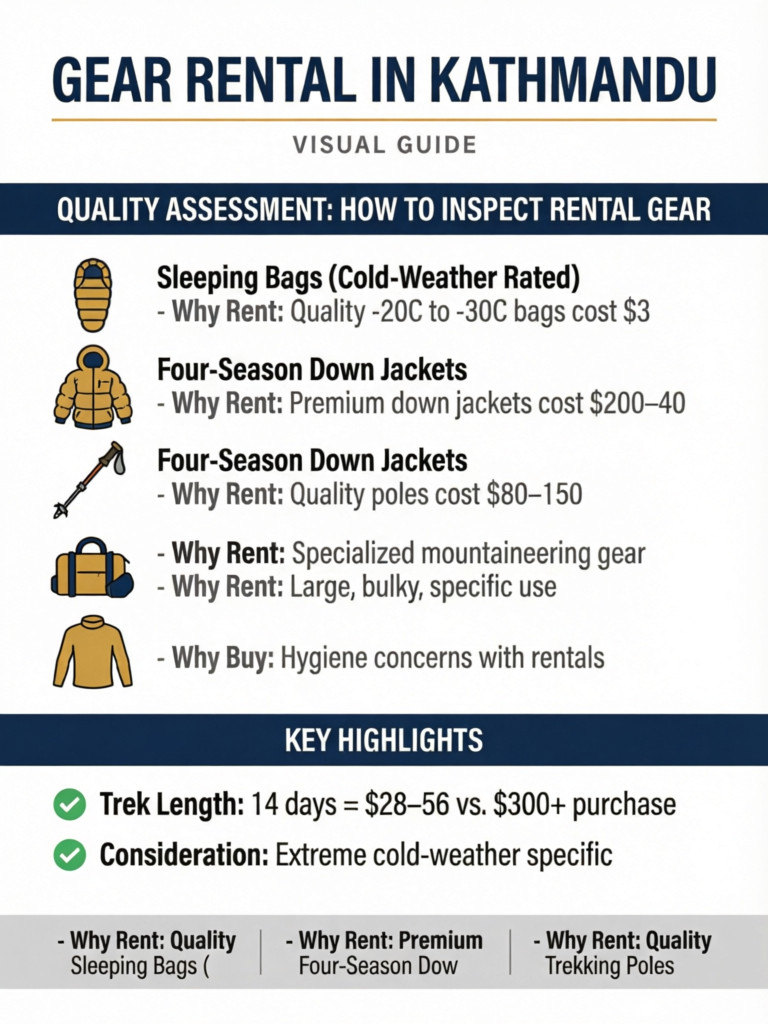
Before heading to Thamel's shops, understand which items make sense to rent versus buy. This decision depends on your trekking frequency, budget, and quality requirements.
Items Best to Rent
These items are bulky, expensive to transport, and you probably won't need them after your Nepal trip:
Sleeping Bags (Cold-Weather Rated)
- Why Rent: Quality -20C to -30C bags cost $300-500 new
- Rental Cost: $1.50-3/day
- Trek Length: 14 days = $21-42 vs. $400+ purchase
- Consideration: Weight and bulk for flights
Four-Season Down Jackets
- Why Rent: Premium down jackets cost $200-400
- Rental Cost: $2-4/day
- Trek Length: 14 days = $28-56 vs. $300+ purchase
- Consideration: Extreme cold-weather specific
Trekking Poles (Adjustable)
- Why Rent: Quality poles cost $80-150
- Rental Cost: $0.75-1.50/day
- Consideration: If you don't trek regularly at home
Crampons and Ice Axes
- Why Rent: Specialized mountaineering gear
- Rental Cost: $3-5/day
- Consideration: Only needed for specific high passes
Duffel Bags (Porter/Expedition Style)
- Why Rent: Large, bulky, specific use
- Rental Cost: $0.50-1/day
- Consideration: Unless you need it for other travel
Items Best to Buy in Kathmandu
These items are cheap locally, fit-sensitive, or you'll use again:
Thermal Base Layers
- Why Buy: Hygiene concerns with rentals
- Kathmandu Cost: $5-15 per piece
- Note: Plenty of cheap options available
Trekking Socks
- Why Buy: Personal hygiene item
- Kathmandu Cost: $3-8 per pair
- Note: Stock up, they wear out
Buffs and Neck Gaiters
- Why Buy: Very cheap, personal use
- Kathmandu Cost: $2-5
- Note: Good souvenirs too
Glove Liners
- Why Buy: Inner gloves are cheap and personal
- Kathmandu Cost: $3-8
- Note: Outer shells can be rented
Water Bottles
- Why Buy: Cheap, useful everywhere
- Kathmandu Cost: $5-15 (Nalgene copies)
- Note: Keep for your travels
Items to Bring from Home
Some gear is worth the luggage space:
Trekking Boots
- Why Bring: Fit is critical, break-in required
- Risk of Rental: Blisters, discomfort, injury
- Exception: Emergency replacement available in Thamel
Daypack
- Why Bring: Personal fit, daily use item
- You'll use it beyond trekking
Rain Jacket
- Why Bring: Quality matters, personal fit
- Rental quality often poor
Headlamp
- Why Bring: Small, cheap, critical safety item
- Rental batteries unreliable
The Hybrid Approach
Quality Assessment: How to Inspect Rental Gear
Rental gear quality in Kathmandu ranges from excellent to dangerously inadequate. Here's how to assess what you're getting:
Sleeping Bag Inspection
Temperature Rating Check:
- Ask for the rated temperature (often on tags)
- -20C bags for EBC, -15C usually sufficient for ABC
- "Warm" or "comfortable" ratings without numbers are red flags
Condition Assessment:
- Loft test: Shake the bag vigorously; quality down expands fully
- Smell test: Musty odors indicate moisture damage (reduced insulation)
- Zipper test: Open and close fully; broken zippers are common
- Seam check: Look for holes, tears, or loose stitching
- Compression sack: Ensure it has one and it's functional
What to Avoid:
- Bags with flat spots (down clumping = cold spots)
- Bags with permanent stains (hygiene concerns)
- Bags without temperature ratings
- Bags with broken or sticky zippers
Down Jacket Inspection
Quality Indicators:
- Fill power: Higher numbers (650+) mean better warmth-to-weight
- Down vs synthetic: Down is warmer, lighter, but loses insulation when wet
- Baffles: Check stitching patterns; down should be evenly distributed
- Closures: Test all zippers, snaps, and velcro
- Hood fit: Adjustable hoods protect against wind
Condition Check:
- Hold to light: Thin spots or holes will show
- Check for down leakage (feathers poking through)
- Verify elastic cuffs are intact
- Ensure pockets zip closed
Trekking Pole Inspection
- Lock mechanism: Twist-lock or lever-lock; test that it holds
- Adjustment: Extend and collapse several times
- Tips: Carbide tips should be sharp and secure
- Baskets: Snow baskets for high altitude treks
- Grips: Check for cracks or excessive wear
- Straps: Should be adjustable and intact
General Rental Tips
- Test everything in the shop before paying
- Take photos of item condition and any existing damage
- Get a written receipt listing all items with condition notes
- Confirm return terms (time, condition expectations)
- Ask about late return policies
The Cold-Weather Test You Can't Do in Thamel
The unfortunate reality is you can't truly test cold-weather gear until you're on the mountain. This is why renting from reputable shops with good return policies matters more than saving a few dollars at questionable stores. If gear fails at 5,000m, your trek could be ruined or worse.
Top Gear Rental Shops in Kathmandu
These shops have established reputations for quality rental equipment. Prices are approximate and subject to change.
Premium Rental Shops
Shona's Alpine
- Location: Thamel Marg, near Kathmandu Guest House
- Specialty: High-end rental gear, genuine branded equipment
- Rental Items: Sleeping bags, down jackets, mountaineering gear
- Price Range: Premium (20-30% above average)
- Deposit: Credit card hold or cash equal to item value
- Why Choose: Best quality, well-maintained gear, reliable
- Contact: Walk-in or ask at Kathmandu Guest House
Typical Rental Rates at Shona's:
| Item | Daily Rate | Weekly Rate |
|---|---|---|
| Sleeping Bag (-20C) | $3-4 | $18-24 |
| Down Jacket (Premium) | $3-4 | $18-24 |
| Trekking Poles (pair) | $1.50 | $9 |
| Crampons | $4-5 | $25-30 |
High Camp Adventure
- Location: Near Pilgrims Bookshop
- Specialty: Complete trekking setups, package deals
- Rental Items: Full gear packages available
- Price Range: Mid-premium
- Deposit: Cash or passport copy
- Why Choose: Good selection, knowledgeable staff
- Note: Will negotiate on multi-item rentals
The North Face Nepal (Official)
- Location: Thamel Marg
- Specialty: Genuine North Face rental gear
- Rental Items: Limited selection but authentic quality
- Price Range: Premium
- Deposit: Credit card preferred
- Why Choose: Guaranteed authentic, warranty-backed
- Note: Smaller rental inventory than dedicated rental shops
Mid-Range Rental Shops
Mountain House
- Location: Thamel Marg
- Specialty: Mix of branded and quality local gear
- Rental Items: Sleeping bags, jackets, poles, accessories
- Price Range: Mid-range (good value)
- Deposit: Cash preferred
- Why Choose: Balance of quality and price
Typical Rental Rates at Mountain House:
| Item | Daily Rate | Weekly Rate |
|---|---|---|
| Sleeping Bag (-15C) | $1.50-2 | $10-12 |
| Sleeping Bag (-20C) | $2-2.50 | $12-15 |
| Down Jacket (Good) | $2-3 | $12-18 |
| Trekking Poles (pair) | $1 | $6 |
| Duffel Bag | $0.75 | $4 |
Himalayan Outdoor Gear
- Location: JP Road (Jyatha)
- Specialty: High-altitude equipment
- Rental Items: Cold-weather sleeping bags, expedition gear
- Price Range: Mid-premium
- Deposit: Cash
- Why Choose: Good for serious high-altitude needs
Everest Hardware Store
- Location: Chaksibari Marg
- Specialty: Accessories and smaller items
- Rental Items: Poles, gaiters, smaller equipment
- Price Range: Budget to mid-range
- Why Choose: Good for supplementary gear
Budget Rental Options
Thamel General Rental Shops Multiple unmarked shops offer budget rentals. Quality varies significantly.
Typical Budget Rates:
| Item | Daily Rate |
|---|---|
| Sleeping Bag (unrated) | $1-1.50 |
| Down Jacket (basic) | $1-2 |
| Trekking Poles (pair) | $0.50-0.75 |
Caution: Budget shops often have:
- Older, worn equipment
- Unknown temperature ratings
- Less reliable return policies
- Limited recourse if gear fails
When Budget is Acceptable:
- Lower altitude treks (under 4,000m)
- Shoulder season with milder weather
- Supplementary/backup gear only
- Very short treks (3-5 days)
Hotel and Agency Rentals
Many hotels and trekking agencies offer gear rental:
Advantages:
- Convenience (same location as accommodation)
- Sometimes included in package prices
- Trustworthy arrangements
Disadvantages:
- Usually higher prices than Thamel shops
- Limited selection
- Less specialized knowledge
The Two-Shop Strategy
Price Ranges and Negotiation
Understanding fair prices helps you negotiate effectively and avoid overpaying.
Standard Rental Price Ranges (2026)
| Item | Budget | Mid-Range | Premium |
|---|---|---|---|
| Sleeping Bag (-10C) | $1/day | $1.50/day | $2/day |
| Sleeping Bag (-20C) | $1.50/day | $2.50/day | $3.50/day |
| Sleeping Bag (-30C) | $2/day | $3/day | $4.50/day |
| Down Jacket (light) | $1/day | $2/day | $3/day |
| Down Jacket (heavy) | $2/day | $3/day | $4/day |
| Trekking Poles (pair) | $0.50/day | $1/day | $1.50/day |
| Fleece Jacket | $0.50/day | $1/day | $1.50/day |
| Gaiters | $0.50/day | $0.75/day | $1/day |
| Crampons | $2/day | $3.50/day | $5/day |
| Ice Axe | $2/day | $3/day | $4/day |
| Duffel Bag (large) | $0.50/day | $0.75/day | $1/day |
Negotiation Tactics
Multi-Day Discounts:
- Ask for weekly rates (typically 5-6 days' price for 7 days)
- Request package deals for multiple items
- Longer treks (14+ days) should get 15-20% discounts
Multi-Item Bundles:
- Renting sleeping bag + jacket + poles together usually gets 10-15% off
- Ask: "What's your best price for everything?"
Off-Season Advantages:
- June-August (monsoon) and December-February see fewer trekkers
- Shops are more flexible on prices
- Better selection available
Negotiation Script:
- Ask the initial price
- Inspect the gear thoroughly
- Note any wear or concerns
- Offer 20-30% below asking price
- Settle at 10-20% discount
- Get everything in writing
What You Can't Negotiate:
- Premium shop rates are often fixed
- Deposits are non-negotiable
- Peak season (October-November) prices are firm
Deposit Requirements and Policies
Deposits are standard practice and protect both parties. Here's how they typically work:
Deposit Types
Cash Deposit:
- Most common method
- Equal to estimated value of items
- Returned upon return of gear in good condition
- Keep your receipt!
Credit Card Hold:
- Premium shops may accept card authorization
- No actual charge unless damage/loss occurs
- Verify your card's international policy
Passport Copy:
- Some shops accept as deposit alternative
- Combined with partial cash deposit
- Less common now due to regulations
Typical Deposit Amounts
| Item | Approximate Deposit |
|---|---|
| Sleeping Bag (-20C) | $100-200 |
| Down Jacket | $100-150 |
| Trekking Poles (pair) | $40-80 |
| Crampons | $80-120 |
| Complete Package | $300-500 |
Important Deposit Policies
Before You Pay:
- Document existing damage with photos
- Get written acknowledgment of pre-existing wear
- Clarify what constitutes "normal wear" vs. damage
- Understand late return fees
Common Issues:
- Shops claiming damage you didn't cause
- Difficulty getting deposit back if shop is busy
- Exchange rate disputes (pay and receive in same currency)
Protecting Yourself:
- Take photos of gear before leaving and upon return
- Return during business hours with time to inspect together
- Get deposit return in same form you paid (cash for cash)
- Keep all receipts until deposit is returned
Passport as Deposit
While some shops still accept passport copies as deposit, this practice is declining. Never leave your actual passport - it's illegal for shops to hold passports, and you need it for permit checkpoints. If asked for your actual passport, choose a different shop.
Rental Packages and Common Setups
Many shops offer pre-built packages for popular treks. Here are typical setups:
Everest Base Camp Package
Standard Package Includes:
- Sleeping bag (-20C to -25C)
- Down jacket (heavy)
- Trekking poles (pair)
- Optional: duffel bag
Typical Price: $4-6/day for complete package 14-Day Trek Cost: $56-84 total
Annapurna Base Camp Package
Standard Package Includes:
- Sleeping bag (-15C to -20C)
- Down jacket (medium weight)
- Trekking poles (pair)
Typical Price: $3-5/day for complete package 10-Day Trek Cost: $30-50 total
Three Passes/High Altitude Package
Standard Package Includes:
- Sleeping bag (-25C to -30C)
- Heavy down jacket
- Down pants (optional)
- Trekking poles
- Gaiters
Typical Price: $6-9/day for complete package 18-Day Trek Cost: $108-162 total
Mountaineering Add-Ons
For passes requiring technical gear:
- Crampons: $3-5/day
- Ice axe: $2-4/day
- Climbing harness: $2-3/day
- Helmet: $2-3/day
What to Do If Gear Fails on the Trek
Even quality gear can fail. Here's your backup plan:
On-Trail Options
Tea House Rentals:
- Larger villages (Namche, Lukla, Manang) have gear shops
- Prices are 50-100% higher than Kathmandu
- Selection is limited but basics available
Emergency Purchases:
- Major trail towns have gear available
- Quality varies significantly
- Budget $50-150 for emergency replacements
Guide/Porter Assistance:
- Your guide may have backup items
- Porters can sometimes source local solutions
- Don't be embarrassed to ask for help
Specific Failure Scenarios
Sleeping Bag Not Warm Enough:
- Request extra blankets from tea house
- Sleep in all your layers
- Consider doubling up with a rented blanket (most tea houses have them)
- In emergency, purchase local quilts
Down Jacket Zipper Breaks:
- Safety pins as temporary fix
- Wear fleece underneath
- Purchase replacement in major villages
Trekking Pole Breaks:
- Find a suitable walking stick (bamboo common on lower trails)
- Purchase budget poles at trail shops
- Many trekkers donate poles at trek end - ask at tea houses
Boot Problems:
- This is why you bring your own broken-in boots
- Emergency: some villages have basic trekking shoes
- Consider helicopter out if serious foot injury risk
Insurance Considerations
Equipment Loss/Damage:
- Travel insurance may cover rental gear damage
- Check your policy's equipment coverage limits
- Keep receipts for all rentals
Trek Cancellation:
- If gear failure forces early return, insurance may cover costs
- Document the failure with photos
- Get written statement from rental shop about equipment condition
The Emergency Backup Kit
Returning Gear: Process and Common Issues
The return process should be straightforward but can have complications.
Return Process
Standard Steps:
- Return during shop hours (usually 9 AM - 7 PM)
- Return all items together
- Shop inspects each item
- Any damage assessment and discussion
- Deposit return (minus any damage charges)
- Get receipt/confirmation of return
Best Practices:
- Return a day before your flight (in case of disputes)
- Don't return during peak hours (rushed inspection)
- Bring your original rental receipt
- Have photos from initial rental ready
Common Return Issues
Damage Disputes:
- Shop claims damage you believe was pre-existing
- Solution: Your pre-rental photos should document original condition
- If no photos, negotiate reasonably
Cleanliness Charges:
- Some shops charge for dirty gear
- Fair for excessively dirty items
- Shake out sleeping bags before return
Missing Items:
- Stuff sacks, compression bags often forgotten
- Check all pockets before returning
- Full value charged for missing items
Exchange Rate Differences:
- If you paid deposit in one currency, receive in same
- Clarify this before paying deposit
Dispute Resolution
If you can't resolve issues with the shop:
- Stay calm and negotiate
- Ask to speak with owner/manager
- Suggest reasonable compromise
- As last resort, contact Tourist Police
- Accept fair wear charges - excessive fighting rarely wins
Alternatives to Thamel Rentals
Pokhara Rentals
If starting an Annapurna trek from Pokhara:
- Lakeside has numerous gear shops
- Prices similar to Kathmandu
- Selection slightly smaller
- Same inspection and negotiation rules apply
Major Pokhara Shops:
- Lakeside outdoor shops
- Hotel rental services
- Agency-arranged rentals
Online Pre-Booking
Some shops offer online reservation:
- Reserve specific items in advance
- Guaranteed availability during peak season
- Usually requires small deposit
- Pick up on arrival
Agency-Inclusive Packages
Many trekking agencies include gear in their packages:
Advantages:
- Convenience
- No deposit hassles
- Quality assured (usually)
- Included in trek price
Disadvantages:
- Less choice in specific items
- May not fit perfectly
- Can't inspect before trek starts
Final Checklist: Before You Rent
Use this checklist when renting gear:
Before Visiting Shops:
- Know your trek dates and duration
- Research temperatures for your specific trek
- Decide what to rent vs. buy vs. bring
- Check current exchange rates
- Prepare deposit funds
At the Shop:
- Inspect all items thoroughly
- Test zippers, locks, closures
- Check for damage, wear, odors
- Photograph everything with condition visible
- Get written receipt with condition notes
- Confirm return date and policies
- Clarify deposit return process
- Ask about late return fees
Before Leaving Kathmandu:
- Test all gear at your hotel
- Verify everything fits properly
- Pack gear correctly in your bag
- Store rental receipts safely
On the Trek:
- Handle gear carefully
- Store properly when not in use
- Note any issues that arise
- Keep receipts accessible
Upon Return:
- Return on time
- Have original receipt ready
- Have condition photos accessible
- Get deposit return confirmation
Renting gear in Kathmandu is a smart, economical choice for most trekkers. With proper preparation, inspection, and documentation, you'll get quality equipment at a fraction of purchase prices, making your Nepal trek more affordable without sacrificing safety or comfort.
Prices current as of February 2026. Rates vary by season and shop. Always verify current prices locally.
Is It Better to Rent or Buy Trekking Gear in Kathmandu?
The answer depends on how often you trek. For one-time trekkers, renting sleeping bags, down jackets, and trekking poles in Kathmandu saves hundreds of dollars and avoids hauling bulky equipment internationally. For frequent trekkers, buying quality gear at home and bringing it makes more economic sense over multiple trips.
Frequently Asked Questions
How much does it cost to rent a sleeping bag in Kathmandu?
Sleeping bag rental costs $1.50-3 per day depending on temperature rating. A -20C bag for a 14-day EBC trek costs $21-42 total versus $300-500 to purchase new.
Are rental trekking poles worth it in Kathmandu?
Yes. Quality adjustable poles rent for $0.75-1.50 per day. For a 14-day trek, that is $10-21 versus $80-150 to buy. Inspect the locking mechanism before accepting them.
What should I inspect when renting gear in Thamel?
Check sleeping bag zippers fully, test down loft by squeezing and releasing, verify jacket zipper function, and confirm trekking pole lock mechanisms. Always try on down jackets before paying.
Do I need to leave a deposit for rental gear?
Yes. Most shops require a deposit equal to the full replacement value of the item, typically held as cash or a passport photocopy. Get a written receipt listing items, deposit amount, and return date.
When is the best time to rent gear in Thamel?
Rent 1-2 days before your trek for the best selection. During peak season (October-November), popular sizes of sleeping bags and down jackets sell out quickly. Arrive early in the morning for first pick.