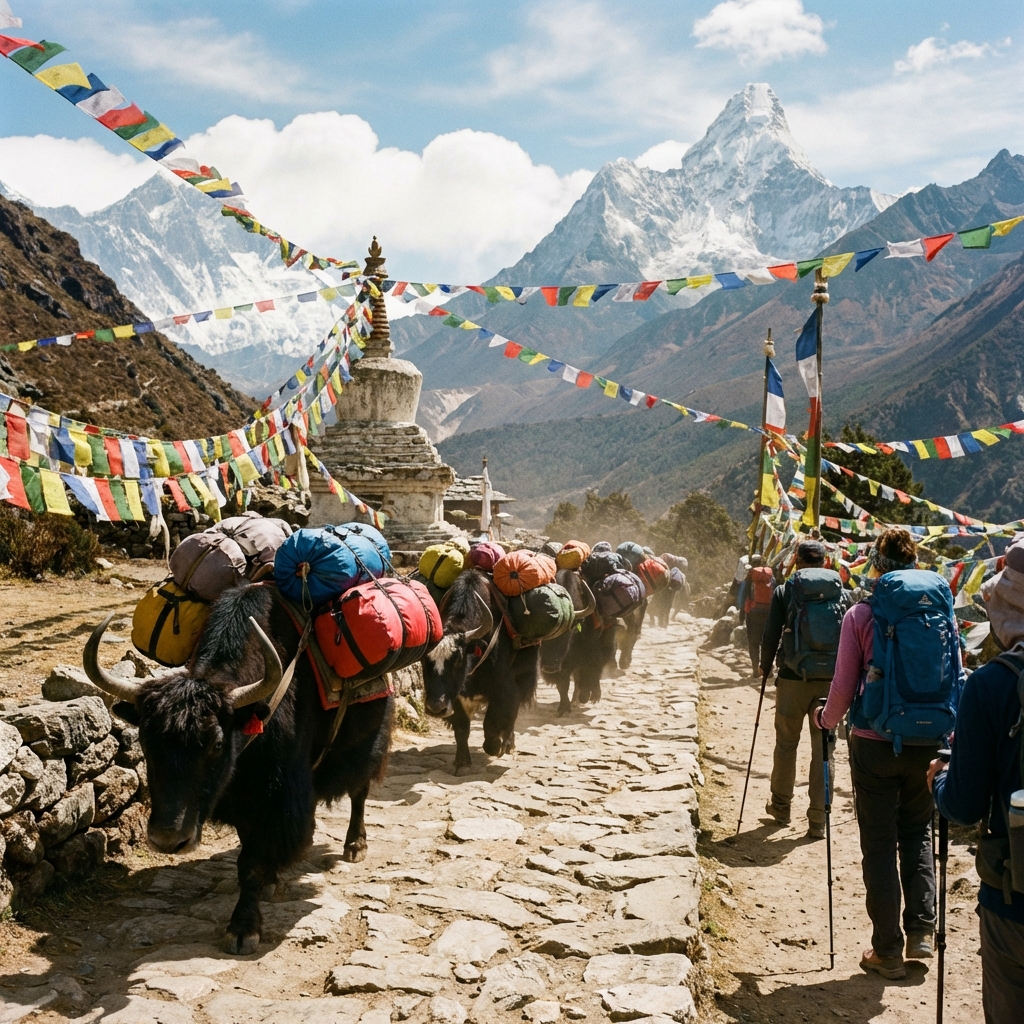
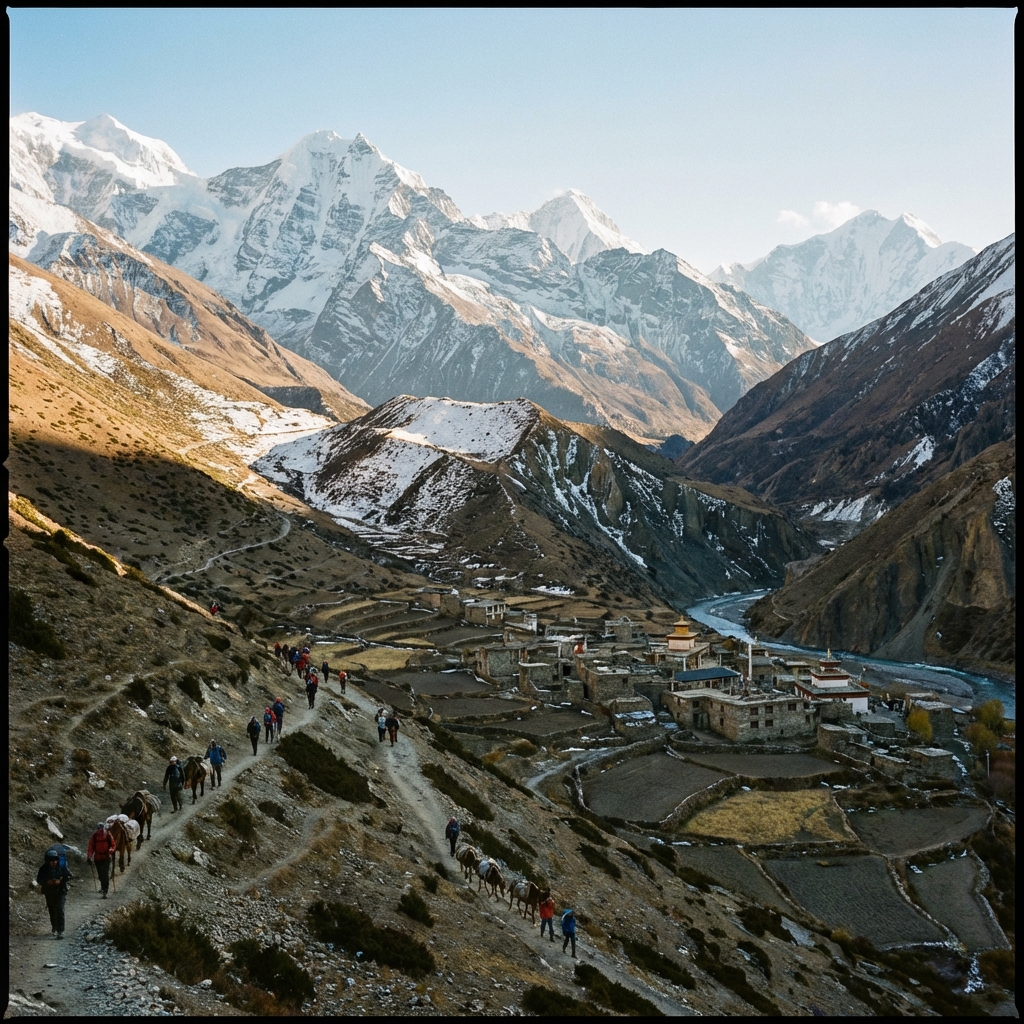
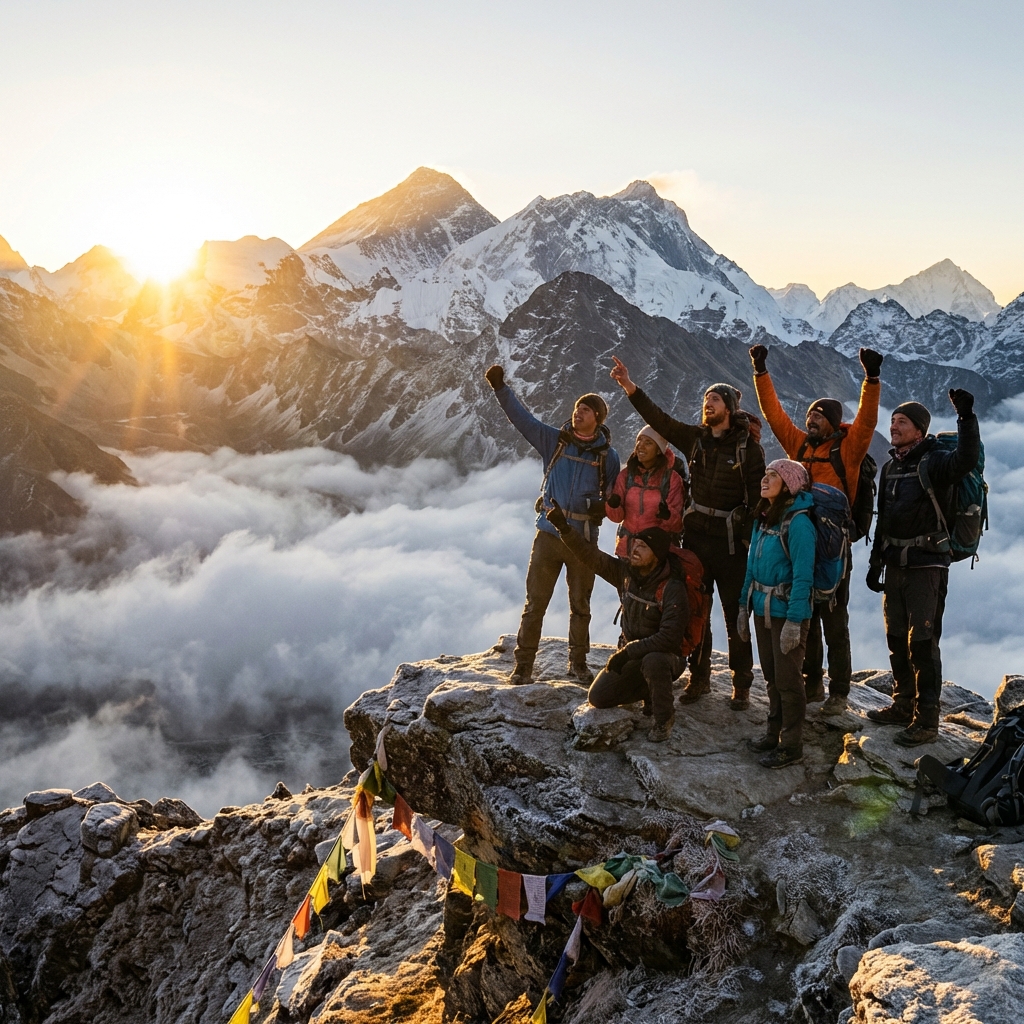
The Annapurna Base Camp packing checklist below covers every essential item for the trek to 4,130m. Proper packing can make the difference between an unforgettable journey and a miserable slog through the Himalayas. This comprehensive guide provides everything you need to pack perfectly for ABC, with specific considerations for the trek's unique characteristics.
10-11 kg base weight
4,130m (13,549 ft)
-15°C to 20°C (5°F to 68°F)
Excellent in Pokhara
15 kg maximum
3-5 days before departure
Why ABC Packing Differs from Other Himalayan Treks
While the Annapurna Base Camp trek reaches significant altitude, it requires a notably different packing approach compared to higher-elevation treks like Everest Base Camp or Manaslu Circuit. Understanding these differences is crucial for packing efficiently.
Key ABC Packing Considerations
Lower Maximum Altitude: At 4,130m, ABC sits nearly 1,500m lower than EBC's 5,545m, meaning slightly less extreme cold-weather gear is needed. You won't face the brutal temperatures of Gorak Shep or the windswept passes of high-altitude routes.
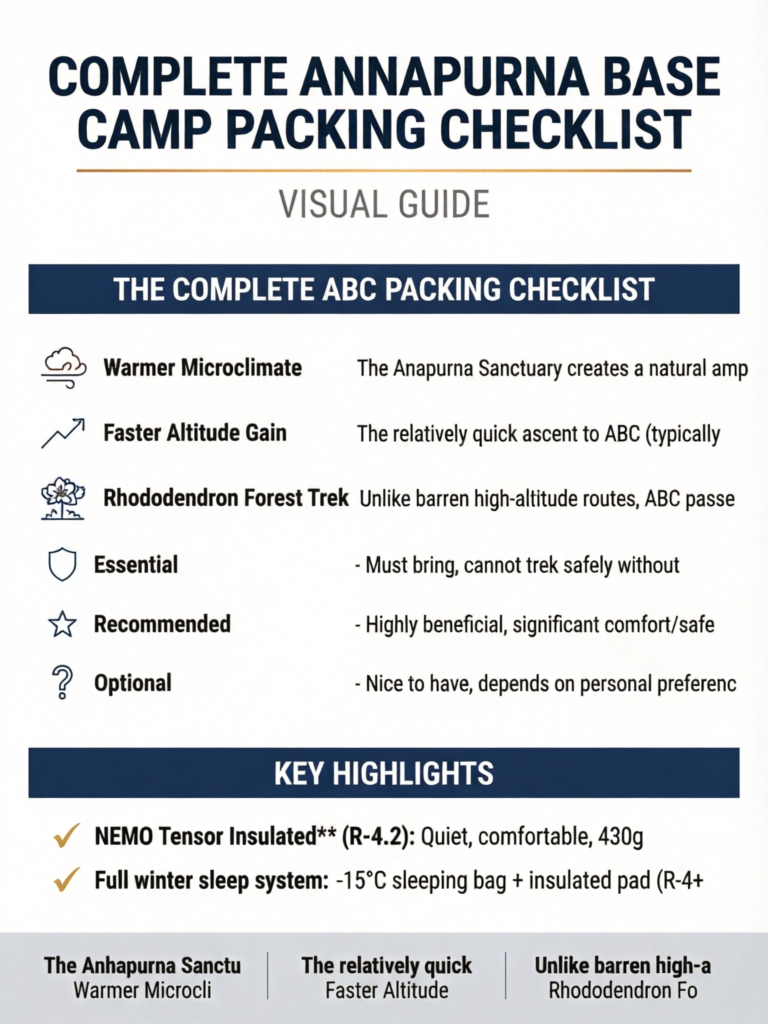
Warmer Microclimate: The Annapurna Sanctuary creates a natural amphitheater that traps warmer air, making ABC Base Camp typically 3-5°C warmer than equivalent altitudes in other regions. This unique geography allows for lighter sleeping bags and less bulky insulation compared to Everest Base Camp packing requirements.
Faster Altitude Gain: The relatively quick ascent to ABC (typically 5-7 days from Nayapul to base camp) means your body has less time to acclimatize. Pack medications and health items accordingly, with special attention to altitude sickness prevention.
Rhododendron Forest Trek: Unlike barren high-altitude routes, ABC passes through lush rhododendron forests, especially spectacular during spring. This means more sun protection for forest hiking and consideration for different trail conditions.
Tea House Abundance: The ABC trail features well-developed tea house infrastructure, allowing for lighter packing compared to camping treks like Upper Dolpo or Kanchenjunga Circuit.
ABC vs EBC Packing Philosophy
The Complete ABC Packing Checklist
This comprehensive checklist covers every item you might need for the Annapurna Base Camp trek. Items are marked with priority levels to help you decide what's essential versus optional.
Legend
- ✓ Essential - Must bring, cannot trek safely without
- ○ Recommended - Highly beneficial, significant comfort/safety improvement
- △ Optional - Nice to have, depends on personal preference/season
- ◇ Conditional - Needed only in specific circumstances
Clothing: Upper Body
The key to ABC packing is versatile layering. Temperature swings of 30°C+ between morning starts and midday sun are common, especially in shoulder seasons.
Base Layers
-
✓ Merino wool or synthetic base layer top (2) - One to wear, one to wash. Merino is superior for multi-day wear and odor control. Brands: Icebreaker 200-weight, Smartwool Merino 250, Patagonia Capilene.
-
○ Long-sleeve sun shirt (1) - Lightweight, breathable UPF 50+ shirt for hot lower elevations. Essential if trekking March-May when lower valleys reach 25°C+. Columbia Silver Ridge, ExOfficio BugsAway, or similar.
-
△ Short-sleeve t-shirt (1) - Only for October/November when lower elevations are warmest. Otherwise, the weight isn't justified for ABC's quick elevation gain.
Mid Layers
-
✓ Fleece jacket or pullover (1) - 200-300 weight fleece. This is your constant companion at higher elevations. Patagonia R2, Arc'teryx Kyanite, or budget option: Decathlon Forclaz fleece.
-
✓ Down or synthetic insulated jacket (1) - 600-800 fill power down or synthetic equivalent. Critical for warmth at ABC and evening tea house lounging. Down packs smaller; synthetic maintains warmth when wet. Recommended: Montbell Plasma 1000 (ultralight), Arc'teryx Cerium LT, Patagonia Down Sweater, or Rab Microlight Alpine.
Down vs Synthetic for ABC
- ○ Lightweight insulated vest (1) - Adds core warmth without arm bulk when active. Excellent for April/October when days are warm but mornings frigid. Can replace the insulated jacket for warmer season treks.
Outer Layers
-
✓ Waterproof hardshell jacket (1) - Gore-Tex or equivalent 3-layer shell with hood. Essential for protection against rain, wind, and snow. Must have: pit zips for ventilation, helmet-compatible hood, internal pockets. Recommended: Arc'teryx Beta AR, Outdoor Research Interstellar, Patagonia Torrentshell (budget option).
-
○ Softshell jacket (1) - Wind-resistant, water-resistant, breathable alternative for dry conditions. Excellent for active climbing days when a hardshell is too warm. Black Diamond Dawn Patrol, Arc'teryx Gamma MX, or Outdoor Research Ferrosi.
-
△ Rain poncho (1) - Covers both you and your backpack. Useful during afternoon rain showers in monsoon season. Local Nepal brands available in Pokhara for $5-10. Only necessary if trekking outside prime seasons.
Specialty Upper Body Items
-
✓ Warm beanie/wool hat (1) - Essential for sleeping and high-altitude mornings. Merino wool or fleece-lined. Should cover ears completely.
-
○ Sun hat or cap with brim (1) - Critical for rhododendron forest sections where sun exposure is intense. Wide-brimmed hat (Outdoor Research Sombriolet) or baseball cap with neck flap.
-
○ Buff or neck gaiter (1-2) - Incredibly versatile: sun protection, dust mask, wind protection, warmth, sweat management. Bring two if trekking in dusty spring conditions.
-
△ Lightweight glove liners (1 pair) - Silk or merino liner gloves for photography, phone use, and minor tasks in cold conditions.
-
✓ Insulated winter gloves or mittens (1 pair) - Waterproof, insulated to -10°C minimum. Mittens are warmer; gloves offer more dexterity. Black Diamond Mercury Mitts, Outdoor Research Alti Mitts, or similar.
Clothing: Lower Body
Base Layers
- ✓ Thermal leggings/long underwear (2) - Merino wool or synthetic. One to wear, one to wash. Essential for sleeping and high-altitude days. Brands: Icebreaker 200, Smartwool, Patagonia Capilene Thermal Weight.
Trekking Pants
-
✓ Convertible hiking pants/zip-off pants (1-2) - The most versatile option for ABC. Quick-dry, comfortable, converts to shorts for hot lower sections. North Face Horizon convertibles, Columbia Silver Ridge, Outdoor Research Ferrosi convertibles.
-
○ Trekking shorts (1) - Only necessary if you don't have convertible pants. Useful for hot afternoons below 2,500m.
-
○ Lightweight trekking pants (1 additional pair) - Second pair for rotation and washing. Reduces wear and provides backup if first pair gets damaged or wet.
Outer Layers
-
✓ Waterproof hardshell pants (1) - Full side zips for easy on/off over boots. Must-have for rain, snow, and wind protection. Marmot PreCip, Outdoor Research Helium, or Arc'teryx Beta AR pants.
-
△ Insulated pants (1) - Only necessary for December-February treks or if you're particularly cold-sensitive. Most trekkers manage with base layer + shell pants. Montbell Thermawrap or similar packable synthetic pants.
Other Lower Body Items
-
✓ Moisture-wicking underwear (4-5 pairs) - Quick-dry synthetic or merino wool. ExOfficio, Smartwool, or similar. Rotate daily for hygiene.
-
✓ Hiking socks (4-5 pairs) - Merino wool blend, medium cushion. Darn Tough, Smartwool PhD, or Icebreaker Hike+ socks. Bring more pairs than you think you need - fresh socks boost morale enormously.
-
○ Sock liners (2-3 pairs) - Thin synthetic or silk liners prevent blisters by reducing friction. Injinji liner socks or Wright Double Layer socks.
-
△ Camp socks/sleeping socks (1 pair) - Thick, warm socks exclusively for sleeping. Keeps your sleeping bag cleaner and adds warmth. Smartwool mountaineering socks or similar.
-
△ Gaiters (1 pair) - Optional for ABC unless trekking during or immediately after snow. More critical for spring treks when melting snow creates muddy trails. Outdoor Research Crocodile Gaiters or similar.
ABC Clothing Weight Comparison: October vs April
| Name | Features | Total |
|---|---|---|
| October (Peak Season) | Base layers: 400gInsulation: 650g down jacketShell: 450g hardshellPants: 2 pairs (700g)Accessories: 300g | ~2.5 kg total clothing weight |
| April (Warmer Spring) | Base layers: 350g (lighter weight)Insulation: 500g vest or light jacketShell: 350g lighter shellPants: 1 convertible pair (350g)Accessories: 250g | ~1.8 kg total clothing weight |
Footwear
Footwear is arguably the most critical gear category for ABC. The trail varies from stone staircases to muddy forest paths to rocky alpine terrain.
Primary Footwear
- ✓ Waterproof hiking boots (1 pair) - Mid to high ankle support, Gore-Tex or equivalent waterproofing, Vibram sole. MUST be broken in before the trek (50+ km of hiking). The ABC trail has steep stone stairs that destroy ankles in unsupportive boots. Recommended: Salomon Quest 4 GTX, Lowa Renegade GTX, Asolo Fugitive GTX, Scarpa Zodiac Plus GTX.
Boot Break-In Timeline
- ○ Trail running shoes or approach shoes (1 pair) - Lighter alternative for experienced trekkers or as backup footwear. Only recommended if you have strong ankles and the weather forecast is stable. Altra Lone Peak, Salomon Speedcross, or La Sportiva TX4.
Camp & Backup Footwear
-
✓ Lightweight camp shoes or sandals (1 pair) - Essential for tea house evenings, bathroom trips, and giving your feet a break. Crocs, Teva sandals, or ultralight camp booties. Many trekkers underestimate how much joy camp shoes bring after 8 hours in hiking boots.
-
△ Flip-flops (1 pair) - For showering (if tea houses have showers) and as backup camp shoes. Super lightweight. Local flip-flops available in any Nepali village for $2-3.
Foot Care Essentials
-
✓ Moleskin or blister prevention tape - Leukotape P or Compeed blister prevention patches. Apply to hot spots BEFORE blisters form. Bring enough for 10+ applications.
-
✓ Foot powder - Keeps feet dry, prevents fungal issues during multi-day trekking. Gold Bond or similar antifungal powder.
-
○ Trekking pole rubber tips (if using poles) - Tea house owners prefer rubber tips indoors. Also required in some conservation areas to prevent trail erosion.
Backpack & Bags
Primary Backpack
- ✓ Trekking backpack 50-65L (1) - Your capacity needs depend on whether you're hiring a porter. With porter: 40-50L daypack. Without porter: 60-65L to carry all gear plus sleeping bag. Must-have features: hip belt (carries 80% of weight), chest strap, hydration compatible, rain cover included or available, external attachment points for trekking poles.
Top recommendations:
- Osprey Atmos/Aura AG 65: Industry-leading comfort, ventilated back panel, excellent organization
- Gregory Baltoro/Deva 65: Maximum load-carrying comfort, adjustable torso
- Deuter Aircontact Lite 65: Budget-friendly, durable, proven on thousands of Himalayan treks
- Granite Gear Crown2 60: Ultralight option (1.1 kg) for weight-conscious trekkers
Porter or No Porter?
- ✓ Waterproof pack liner or dry bags - Pack covers protect from rain but water seeps through zippers and bottom fabric. Use a pack liner (large garbage bag works) or multiple dry bags for electronics, sleeping bag, and spare clothes.
Secondary Bags
-
○ Small daypack 15-20L (1) - If using a porter, this carries your daily essentials: water, snacks, camera, layers, first aid. Osprey Daylite, REI Flash 18, or similar.
-
✓ Stuff sacks or packing cubes (3-5) - Organization system that keeps gear categories separated and compressed. Use different colors for easy identification: blue for clothes, red for electronics, green for food, etc.
-
✓ Waterproof dry bags (2-3 varying sizes) - Critical for protecting electronics, documents, and spare clothes. Sea to Summit, Outdoor Research, or budget options from Pokhara shops.
-
△ Porter duffel bag (1) - If hiring a porter, they prefer duffels over backpacks. 80-100L capacity, lockable zippers. North Face Base Camp Duffel or local Nepal brands. Many trekking agencies provide these if you book through them.
Sleeping System
ABC tea houses provide blankets, but cleanliness varies and warmth is often inadequate above 3,000m. Your sleeping system directly impacts recovery and enjoyment.
Sleeping Bags
- ✓ Sleeping bag rated to -10°C to -15°C (5°F to 14°F) - This is the sweet spot for ABC year-round. Down bags pack smaller; synthetic works when wet. Season-specific guidance:
- October-November: -10°C rating sufficient
- December-February: -15°C minimum, consider -20°C
- March-May: -10°C comfortable, -5°C works for warm sleepers
Top recommendations:
- Feathered Friends Egret 20°F (-7°C): Premium 900-fill down, 850g
- Western Mountaineering UltraLite (-12°C): Legendary quality, expensive, worth it for multi-trek investment
- Sea to Summit Spark SpII (-9°C): Excellent weight-to-warmth, 600g ultralight
- REI Magma 15°F (-9°C): Best value down bag, 850g
- Mountain Hardwear Lamina (-12°C): Synthetic option, 1,100g
Sleeping Bag Rental vs Purchase
- ○ Sleeping bag liner (1) - Silk or synthetic liner adds 5-10°C warmth, keeps bag cleaner (extending time between washes), and can be used alone in tea houses on hot lower elevations. Sea to Summit Reactor liner adds significant warmth; silk liners are lighter but less warm.
Sleeping Pads
- ✓ Insulated sleeping pad (1) - Tea house beds range from wooden planks to thin foam mattresses. A quality pad prevents cold from ground and adds crucial comfort for sleep quality. R-value of 4.0+ recommended.
Top recommendations:
-
Therm-a-Rest NeoAir XTherm (R-6.9): Warmest inflatable, 430g, packs tiny, expensive but gold standard
-
Sea to Summit Ether Light XT Insulated (R-4.2): Comfortable, 490g, excellent value
-
NEMO Tensor Insulated (R-4.2): Quiet, comfortable, 430g
-
Therm-a-Rest Z-Lite Sol (R-2.0): Foam pad, indestructible, 410g, use as supplement under inflatable
-
△ Foam pad (1) - Closed-cell foam backup or supplement. Adds R-value, provides backup if inflatable fails, can sit on during breaks. Z-Lite Sol is popular choice.
Pillow
-
○ Inflatable camping pillow (1) - Quality sleep is crucial for altitude acclimatization. Proper pillow significantly improves comfort. Sea to Summit Aeros, Nemo Fillo, or Therm-a-Rest Compressible pillow.
-
△ Stuff sack filled with clothes - Budget option. Fill your down jacket stuff sack with soft clothes for makeshift pillow.
Electronics & Technology
Modern trekking increasingly involves electronics for navigation, photography, and communication. ABC tea houses have charging facilities (₹200-500 per device), but reliable personal power is better.
Navigation & Communication
-
✓ Smartphone (1) - Primary navigation (offline maps), camera backup, communication (limited reception), boarding pass storage, emergency contact. Ensure fully charged before departure.
-
✓ Offline map apps - Download ABC trail maps before departure. Recommended: Maps.me (free, works offline), Gaia GPS (premium features, $40/year), Organic Maps (open source, free).
-
○ GPS device or satellite communicator - Garmin inReach Mini 2 provides satellite messaging, SOS function, and GPS tracking. Excellent for solo trekkers or peace of mind for family. $400 device + $15-65/month subscription.
-
△ Two-way radio (pair) - Only useful if trekking with a group that wants to split up occasionally. Otherwise unnecessary weight.
-
△ Physical map (1) - Backup navigation. Nepa Maps' Annapurna Base Camp map (waterproof, detailed) available in Pokhara for ₹500.
-
△ Compass (1) - Backup navigation tool. Essential if you're serious about backcountry navigation, otherwise the trail is well-marked.
Power Solutions
- ✓ Power bank 20,000+ mAh (1-2) - Charging facilities become expensive and unreliable above 3,000m. A 20,000 mAh bank charges an iPhone 4-5 times. Anker PowerCore, RAVPower, or similar. Bring two if you're a heavy phone user or trekking in winter (cold drains batteries faster).
Cold Weather Battery Management
-
✓ Charging cables (2+ sets) - Bring backups. USB-C, Lightning, or micro-USB depending on your devices. Cables break, get lost, or left behind.
-
○ Wall adapter with multiple USB ports - One adapter charges multiple devices simultaneously. Anker 4-port charger or similar. Check that it handles 220V (Nepal's voltage).
-
△ Solar charger (1) - Limited usefulness on ABC due to tree cover, short days in winter, and cloud cover. Only bring if you have one already. BigBlue 28W or similar if you must bring one.
-
○ Universal travel adapter - Nepal uses Type C, D, and M plugs (Indian/European style). Most tea houses have Indian-style outlets, but adapters ensure compatibility.
Camera Equipment
-
○ Camera (DSLR, mirrorless, or action camera) - ABC offers spectacular photography opportunities. Weight and photography passion determine what to bring. Options:
- Smartphone only: Most modern phones (iPhone 14+, Samsung S22+) take excellent photos. Saves 500g+ and simplifies charging.
- Action camera: GoPro Hero 11/12, DJI Osmo Action 3. Great for video, wide-angle landscapes, weather-resistant. 150g.
- Mirrorless: Sony A7 series, Fuji X-T series, Canon R series. Superior image quality. 600-800g body + lenses.
- DSLR: Canon 5D/6D, Nikon D750/850. Heavy (900g+) but unmatched quality for serious photographers.
-
○ Extra camera batteries (2-3) - Cold drains batteries rapidly. Bring 2-3x the batteries you'd normally need. Sleep with batteries in sleeping bag.
-
○ Memory cards (2+ with 128GB+ capacity) - Bring more capacity than you think you need. Shooting RAW fills cards quickly. Having backup prevents disaster if a card fails or gets lost.
-
△ Lightweight tripod - Gorilla Pod or ultralight travel tripod for long exposures, star photography, and group photos. Manfrotto Pixi, 3 Legged Thing, or similar.
-
△ Camera cleaning kit - Dust and moisture are constant threats. Bring: lens cloth, rocket blower, lens pen.
Other Electronics
-
✓ Headlamp with extra batteries - Essential for pre-dawn starts, evening tea house navigation, and emergencies. 200+ lumen output recommended. Petzl Actik Core, Black Diamond Spot 400, or similar. Bring 1-2 sets spare batteries (lithium batteries perform better in cold).
-
○ Reading device (Kindle/e-reader) - Evenings at tea houses are long, especially if traveling solo. E-reader is lighter than books and holds dozens of titles. Fully charge before departure; battery lasts weeks.
-
△ Entertainment device (tablet, etc.) - Downloaded movies, TV shows, or audiobooks for rest days or weather delays. Only if you value entertainment over weight savings.
Trekking Poles & Walking Aids
The ABC trail involves approximately 8,000 stone steps on the descent from Sinuwa alone. Trekking poles dramatically reduce knee strain and improve stability.
- ✓ Trekking poles (pair) - Adjustable, collapsible poles reduce knee impact by 20-30% on descents, improve balance on stream crossings, and provide upper body workout on ascents. Cork grips are most comfortable; foam grips acceptable. Black Diamond Distance Carbon Z, LEKI Makalu, or budget option: Cascade Mountain Tech poles.
Trekking Pole Technique for ABC's Stone Stairs
-
○ Pole tip protectors/rubber tips - Required in some tea houses (stone floors are expensive to repair from carbide tips). Also reduces environmental impact. Most poles include these.
-
△ Snow baskets - Only necessary for December-February treks or if trekking immediately after heavy snowfall. Standard baskets work fine for most ABC conditions.
Toiletries & Hygiene
Hygiene maintenance prevents illness and boosts morale. Tea houses have varying levels of cleanliness; assume you'll need to be self-sufficient.
Essential Toiletries
-
✓ Biodegradable soap (1 small bottle) - Dr. Bronner's or similar. Use for body, hair, laundry, and dishwashing. Biodegradable is essential for environmental protection.
-
✓ Toothbrush and toothpaste (travel size) - Cut toothbrush handle to save weight. Use minimal water when brushing to conserve purified water.
-
✓ Toilet paper (1-2 rolls) - Tea houses provide toilet paper inconsistently. Bring your own supply. Remove cardboard core to save space. Store in waterproof bag.
-
✓ Hand sanitizer (100ml bottle) - 70%+ alcohol content kills most pathogens. Use before eating, after toilet use. Purell or similar.
-
✓ Wet wipes/baby wipes (20-30) - For "showers" when water isn't available or is too cold. Face and underarm wipes dramatically improve morale. Unscented, biodegradable preferred.
-
○ Towel (1 quick-dry microfiber) - PackTowl or similar. Small (40×80cm) size is sufficient. Most tea houses don't provide towels.
-
○ Deodorant (travel size, optional) - Stick deodorant or crystal. Spray deodorant may leak at altitude. Honestly, everyone smells on multi-day treks; it's optional.
Personal Care
-
✓ Sunscreen SPF 50+ (100ml) - UV exposure increases dramatically with altitude. Reapply every 2-3 hours on sunny days. Mineral sunscreen (zinc oxide) is more environmentally friendly. Neutrogena Sport, Blue Lizard, or Thinksport.
-
✓ Lip balm with SPF (2) - Bring backup. Chapped lips are miserable and altitude exacerbates it. SPF 30+ minimum. Burt's Bees, Aquaphor, or similar.
-
○ Moisturizer/lotion (small bottle) - Dry mountain air destroys skin. Face and hand cream prevents cracking and improves comfort. CeraVe, Cetaphil, or similar.
-
○ Hairbrush/comb (compact) - Minimal but appreciated comfort item.
-
△ Razor (small disposable) - Only if you're committed to shaving on trek. Most people embrace the mountain beard/natural look.
-
△ Nail clippers (1 small) - For fingernails and toenails. Can prevent ingrown nails during long trekking days.
Female-Specific Items
-
✓ Menstrual products - Bring more than you think you'll need. Altitude and exertion can affect cycle timing. Options:
- Menstrual cup: Reusable, environmentally friendly, no waste to pack out. Diva Cup, Lunette, or Saalt cup.
- Tampons: Compact, familiar. Bring disposal bags; don't flush in tea houses.
- Pads: Bulkier but some prefer them. Absolutely bring disposal bags.
-
○ Female urination device (FUD) - Makes bathroom breaks easier in squat toilets and outdoor situations. Shewee, GoGirl, or similar.
Hygiene Accessories
-
✓ Small pack towel or bandana - Multi-purpose: washcloth, sweat rag, sun protection, emergency bandage.
-
○ Biodegradable laundry soap (small amount) - Tea houses charge $3-5 per item for laundry. Hand-washing your most-worn items (underwear, socks) extends your supply. Bring powder in a small ziplock.
-
△ Mirror (small, unbreakable) - Useful for contact lens insertion/removal, first aid, or if you care about appearance. Most people skip this.
First Aid & Medical Supplies
Comprehensive first aid is crucial. The nearest hospital with altitude sickness treatment is in Pokhara (1-2 days from most trail points). Be prepared for self-treatment.
Altitude Sickness Prevention & Treatment
-
✓ Diamox/Acetazolamide (prescription) - 125-250mg tablets. Helps acclimatization. Consult doctor before trek for prescription. Take starting 1-2 days before reaching 3,000m. Learn more in our altitude sickness prevention guide.
-
✓ Dexamethasone (prescription) - Emergency medication for severe altitude sickness. 4mg tablets. Only use if descending immediately and symptoms are severe. Must have prescription.
-
○ Pulse oximeter (1) - Measures blood oxygen saturation and heart rate. Helps identify early altitude sickness. Normal at sea level: 95-100%; at 4,000m: 85-90%. Under 80% at ABC is concerning. $30-50 from Amazon or pharmacy.
Pain & Inflammation
-
✓ Ibuprofen/Advil (20+ tablets) - 200-400mg doses for headaches, muscle soreness, inflammation. Better than acetaminophen for trekking because it reduces inflammation.
-
○ Acetaminophen/Paracetamol (10-20 tablets) - Alternative pain reliever. Doesn't cause stomach issues like ibuprofen can. 500mg tablets.
-
△ Aspirin (10 tablets) - Mild blood thinner, can help with altitude. Also emergency heart attack medication. 81mg or 325mg.
Gastrointestinal
-
✓ Anti-diarrheal medication (Imodium/Loperamide) - 10-15 tablets. Essential for treating traveler's diarrhea. Note: Don't use if you have fever or bloody stool; these indicate serious infection.
-
✓ Oral rehydration salts (ORS) (5-10 packets) - Replaces electrolytes lost to diarrhea, vomiting, or heavy sweating. Mix with purified water. Available in Nepal as "Jeevan Jal" for ₹10/packet.
-
○ Antibiotics for traveler's diarrhea (prescription) - Ciprofloxacin or Azithromycin. Consult travel doctor. Only use if diarrhea is severe with fever/blood or doesn't respond to Imodium after 24 hours.
-
△ Anti-nausea medication (Dramamine, Ondansetron) - For altitude-induced nausea or motion sickness if driving to trailhead. Prescription Zofran/Ondansetron is more effective.
-
○ Antacids (Tums, Rolaids) - Altitude and spicy dal bhat can cause heartburn. 10-20 tablets.
Wound Care
-
✓ Adhesive bandages/Band-Aids (20+ various sizes) - For blisters, cuts, scrapes. Bring fabric bandages; plastic doesn't breathe well.
-
✓ Blister treatment (Compeed/2nd Skin) - Specialized blister bandages dramatically reduce pain and healing time. Bring 10+ in various sizes.
-
✓ Medical tape (1 roll) - Leukotape P is gold standard for blister prevention. Also secures bandages.
-
✓ Gauze pads (5-10 sterile pads) - For larger wounds or bleeding.
-
○ Antibiotic ointment (small tube) - Neosporin or Polysporin. Prevents infection in cuts and abrasions.
-
○ Moleskin (large sheet) - Cut to size for blister prevention and treatment.
Other Medical Supplies
-
✓ Prescription medications (full supply) - Bring 20% more than needed in case of delays. Keep in original labeled bottles. Carry copy of prescriptions.
-
○ Antihistamine (Benadryl, Cetirizine) - For allergic reactions, insect bites, or sleep aid. 10-20 tablets.
-
△ Hydrocortisone cream (small tube) - For rashes, bug bites, skin irritation.
-
△ Antifungal cream (small tube) - For athlete's foot or fungal rashes from sweaty boots.
-
✓ Tweezers (1 small) - Splinter removal, tick removal (rare but possible in lower elevations).
-
○ Small scissors (1) - For cutting tape, gauze, moleskin. Many multi-tools include scissors.
-
△ Safety pins (5-10) - Secure bandages, repair gear, attach items.
-
△ Thermometer (digital) - Useful for detecting fever which indicates infection versus altitude sickness.
Pre-Trek Medical Consultation
Water Purification & Hydration
Proper hydration at altitude requires drinking 3-5 liters daily. ABC tea houses sell boiled/filtered water but it's expensive and creates plastic waste if buying bottled.
Water Bottles & Bladders
-
✓ Water bottles (2L total capacity) - Two 1L Nalgene bottles or equivalent. Wide-mouth bottles are easier to fill, clean, and add purification tablets to. Keep one bottle insulated for cold weather.
-
○ Insulated bottle (1L) - Hydro Flask or similar keeps water from freezing overnight. Essential for December-February treks. At ABC, uninsulated bottles freeze solid overnight.
-
○ Hydration bladder (2-3L) - CamelBak, Platypus, or similar. Convenient for drinking while walking. Downsides: tube can freeze in cold weather, difficult to monitor water consumption, harder to add purification.
Purification Methods
-
✓ Water purification tablets (50+ tablets) - Aquatabs, Katadyn Micropur, or iodine tablets. Lightweight, cheap, effective against bacteria and viruses. One tablet treats 1L; wait 30 minutes before drinking. Bring 50+ for 7-10 day trek.
-
○ SteriPEN or UV purifier (1) - Battery-powered UV light purifier. Treats 1L in 90 seconds. Fast and easy but requires batteries (bring spares) or charging. SteriPEN Ultra is USB rechargeable.
-
○ Water filter (Sawyer Squeeze, LifeStraw, etc.) - Physical filtration removes bacteria and parasites but not viruses (less concern in mountain water). Sawyer Squeeze is lightweight, reliable, and lasts for thousands of liters. Can freeze in cold weather—sleep with it if trekking in winter.
-
△ Combination system - Many trekkers use filter + purification tablets for belt-and-suspenders approach. Filter removes sediment and improves taste; tablets kill viruses.
Water Purification Methods for ABC
| Name | Features | Total |
|---|---|---|
| Purification Tablets (Aquatabs) | Weight: 10g for 50 tabletsCost: $15Pros: Lightweight, cheap, reliableCons: 30-minute wait, chemical tasteBest for: Budget trekkers, ultralight enthusiasts | Most popular choice |
| Filter (Sawyer Squeeze) | Weight: 90gCost: $40Pros: Fast, no wait time, good tasteCons: Can freeze, requires cleaningBest for: Year-round trekkers, taste-sensitive people | Best value for repeat trekkers |
| UV Purifier (SteriPEN) | Weight: 100gCost: $70-100Pros: Fast (90 seconds), effectiveCons: Requires power, doesn't filter sedimentBest for: Tech-oriented trekkers with power banks | Fastest treatment method |
| Tea House Water Purchase | Weight: 0gCost: ₹50-200/liter (increases with altitude)Pros: No gear needed, supports tea housesCons: Expensive ($25+ total), plastic waste or trust in boilingBest for: Convenience-focused trekkers | Zero-gear option |
Hydration Accessories
-
○ Electrolyte powder/tablets (10+ servings) - Nuun, Liquid IV, or similar. Helps maintain electrolyte balance during heavy sweating. Especially useful for April/May treks. Also makes purified water taste better.
-
△ Insulated bottle cover - If you don't want to buy an insulated bottle, a neoprene cover for your regular bottle prevents freezing.
-
△ Hydration tube insulator - If using hydration bladder in cold weather, insulated tube cover prevents freeze-up. CamelBak sells these.
Food & Snacks
Tea houses provide three meals daily (breakfast, lunch, dinner) included in accommodation or purchased separately. However, having personal snacks boosts energy between meals and provides comfort food.
Energy Snacks
-
✓ Energy bars (10-15) - Clif Bars, RXBAR, Kind bars, or similar. Bring variety to prevent taste fatigue. Each bar provides 200-300 calories for trail energy.
-
○ Trail mix/nuts (500g-1kg) - Homemade mix of nuts, dried fruit, chocolate, seeds. High calorie density (150+ cal/serving), provides sustained energy. Make your own or buy in Pokhara.
-
○ Chocolate bars (5-10) - Morale booster and quick energy. Dark chocolate has more antioxidants. Snickers are famous trekking fuel.
-
△ Dried fruit (250-500g) - Mango, apricots, dates. Natural sugars for quick energy, fiber for digestion.
-
△ Jerky or protein snacks (200-300g) - Beef jerky, turkey jerky, or vegetarian alternatives. Protein helps muscle recovery.
Comfort Foods
-
○ Instant coffee or tea bags (10+) - If you're particular about your morning coffee, bring instant coffee. Tea house coffee is usually Nescafe instant anyway, but quality varies.
-
△ Powdered drink mixes - Crystal Light, Tang, or similar. Makes purified water more palatable. Also provides variety from endless lemon tea.
-
△ Hard candy or lozenges - Helps with throat dryness from altitude. Also nice to share with children in villages.
-
△ Favorite treats from home - Small pack of cookies, candy, or snack that provides psychological comfort during tough moments.
Tea House Food Strategy
Dietary Supplements
-
○ Multivitamin (daily supply) - Covers nutritional gaps from limited tea house variety. One-a-day vitamin is sufficient.
-
△ Protein powder (individual packets) - For muscle recovery if you're concerned about protein intake. 5-7 packets for post-trek days.
-
△ Ginger tablets or candies - Natural anti-nausea remedy. Helps with altitude sickness and upset stomach.
Personal Items & Accessories
Small items that dramatically improve comfort and functionality.
Documents & Money
-
✓ Passport (original + copies) - Required for permits. Make 2-3 photocopies and store separately from original. Carry in waterproof pouch.
-
✓ Passport photos (4-6) - Required for permits (ACAP, TIMS). Bring extras in case of damage or need for additional permits.
-
✓ Permits - ACAP (Annapurna Conservation Area Permit) and TIMS (Trekkers' Information Management System) card. Obtained in Kathmandu or Pokhara before trek. Learn more in our Annapurna permits guide.
-
✓ Travel insurance documents - Print copy of policy and emergency contact numbers. Ensure policy covers helicopter evacuation from 4,500m+. See our Nepal travel insurance guide.
-
✓ Cash (Nepali Rupees) - ATMs only in Pokhara and below. Bring ₹30,000-50,000 ($200-350) in small bills for tea house accommodation, meals, snacks, charging, and tips. Tea houses increasingly accept digital payment (eSewa, Khalti) but cash is king.
-
○ Credit card (backup) - Some higher-end tea houses accept cards but charge 3-5% fees. Mainly for emergency in Pokhara.
-
△ Debit card - Access to ATM in Pokhara for additional cash if needed.
Navigation & Reference
-
○ Guidebook (1) - Lonely Planet Trekking in the Nepal Himalaya or Cicerone Annapurna guide. Digital version saves weight. Provides cultural context, trail info, and backup planning.
-
△ Notebook and pen - Journaling, taking notes, tracking expenses, writing postcards. Small waterproof notebook (Rite in the Rain).
-
△ Book or e-reader - Entertainment for long tea house evenings. Kindle or similar. Many trekkers bring 2-3 books for the week.
Repair & Multi-Tool
-
○ Multi-tool or knife (1 small) - Leatherman Squirt, Victorinox Classic, or similar. Useful for repairs, cutting, opening packages. Must check in luggage for international flight.
-
✓ Duct tape (small roll or wrapped around trekking pole) - Repairs everything: torn clothes, broken backpack straps, leaking bottles, blister prevention. Bring 2-3 meters wrapped around trekking pole to save space.
-
○ Safety pins (10-20) - Attach items, repair clothes, secure bandages.
-
△ Sewing kit (minimal) - Needle, thread, spare buttons. For clothing repairs. Many multi-tools include this.
-
△ Zip ties (5-10 small) - Secure broken backpack straps, attach items, makeshift repairs.
-
△ Cord/paracord (5-10 meters) - Clothesline for drying, securing gear, emergency repairs. 2mm utility cord is sufficient.
Comfort & Miscellaneous
-
○ Sunglasses (1-2 pairs) - 100% UV protection, category 3-4 for high altitude. Wraparound style prevents side glare. Bring backup pair—losing your only sunglasses at altitude is miserable. Julbo, Oakley, or similar.
-
✓ Earplugs (multiple pairs) - Essential for sleeping in tea houses with paper-thin walls, snoring roommates, and barking dogs. Foam earplugs (Howard Leight) or reusable silicone.
-
○ Face mask or buff (for dust) - ABC's lower trail can be dusty, especially during dry season. Also useful for warmth, sun protection, or as makeshift filter.
-
△ Bandana (1-2) - Multi-purpose: sweat rag, dust mask, sun protection, washcloth, towel, napkin.
-
△ Dry bags for organization (various sizes) - Keeps gear organized and dry. Different colors for easy identification.
-
△ Carabiners (2-4 small) - Attach items to backpack exterior, organize gear, hang items in tea house room.
-
△ Stuff sacks (various sizes) - Organization system for clothes, toiletries, electronics, food.
-
△ Ziplock bags (10+ various sizes) - Waterproofing, organization, trash collection, keeping items dry. Gallon-size and quart-size.
-
△ Trash bags (2-3) - Pack out trash (leave no trace), waterproof pack contents, emergency rain gear.
-
○ Hand warmers (chemical, 5-10 pairs) - For particularly cold nights or if you're prone to cold hands. HotHands brand. Useful December-February.
-
△ Whistle (1) - Emergency signaling. Many backpack chest straps include one.
-
△ Lighter or waterproof matches - Emergency fire starting, lighting candles, burning trash (only in designated areas).
-
△ Laundry detergent powder (small amount) - For hand-washing essential items. Sea to Summit Trek & Travel liquid soap works for body and clothes.
Optional Luxury Items
Items that add comfort but aren't strictly necessary. Consider these if you have extra weight capacity or hire a porter.
-
△ Inflatable pillow (additional) - Extra comfort for side sleepers.
-
△ Down booties or camp slippers - Warm footwear for sleeping and tea house lounging. Western Mountaineering Flash Booties, Feathered Friends down booties, or similar.
-
△ Hot water bottle - Tea houses provide boiled water. A Nalgene filled with hot water becomes an excellent sleeping bag warmer. Use your existing Nalgene rather than carrying dedicated hot water bottle.
-
△ Cards or games - Entertainment for group trekkers or making friends. UNO cards are universal language.
-
△ Harmonica or small instrument - If musical, a lightweight instrument provides entertainment and cultural exchange.
-
△ Binoculars - For wildlife viewing and appreciating distant mountains. ABC offers chances to see Himalayan tahr, langur monkeys, and numerous bird species.
-
△ Star chart or astronomy app - The Milky Way at ABC is spectacular. Starwalk app or similar.
Seasonal Packing Variations
ABC's dramatic seasonal weather requires different packing strategies. Here's how to adjust your pack for different seasons.
October-November (Peak Autumn Season)
Weather: Clear skies, stable weather, cold nights (down to -15°C at ABC), warm days at lower elevations (up to 20°C).
Packing adjustments:
- ✓ Full winter sleep system: -15°C sleeping bag + insulated pad (R-4+)
- ✓ Heavy insulated jacket: 800-fill down minimum
- ✓ Warm sleeping socks and down booties (optional but nice)
- ○ Lighter sun protection: UV is strong but lower angle
- △ Minimal rain gear: Very dry season, hardshell jacket is sufficient
Weight target: 10.5-11 kg base weight
October-November advantages: Best views, stable weather, social atmosphere, moderate crowds.
October-November challenges: Cold nights, higher tea house prices, need to book ahead.
December-February (Winter Season)
Weather: Extreme cold (-20°C at ABC), heavy snow possible, shorter days, crystal-clear views when stable.
Packing adjustments:
- ✓ Extreme cold sleep system: -20°C sleeping bag minimum + R-6 insulated pad
- ✓ Expedition-weight down jacket: 900-fill, 200g+ fill weight
- ✓ Insulated pants: Essential for ABC and evenings
- ✓ Heavyweight base layers: Merino 250-weight or expedition-weight
- ✓ Face protection: Balaclava or thick buff, goggles if windy
- ✓ Heavy gloves: Mittens preferred over gloves
- ✓ Multiple hand warmers: Chemical warmers for extremities
- ○ Microspikes: For icy sections, especially December-January
Weight target: 11.5-12 kg base weight (heavier due to extreme cold gear)
Winter advantages: Solitude, lowest prices, pristine snow, incredible clarity.
Winter challenges: Extreme cold, some tea houses closed above Deurali, risk of deep snow blocking trail, shorter daylight hours (need headlamp more).
Winter ABC Viability
March-May (Spring Season)
Weather: Warming temperatures, rhododendron blooms (March-April peak), afternoon clouds, possible rain.
Packing adjustments:
- ○ Lighter sleep system: -10°C sleeping bag sufficient, R-4 pad
- ○ Mid-weight insulation: 650-fill jacket or insulated vest
- ✓ Enhanced rain protection: Waterproof jacket + pants, pack cover
- ✓ Maximum sun protection: SPF 50+ sunscreen, sun hat, sunglasses (UV intensifies with spring sun angle)
- ○ Allergy medication: Pollen from rhododendrons affects some people
- △ Lighter base layers: Merino 150-200 weight sufficient
Weight target: 9.5-10 kg base weight (lightest season)
Spring advantages: Rhododendron forests in bloom (stunning), warming weather, good visibility mornings, wildflowers.
Spring challenges: Afternoon clouds obscure views, more rain, busier trails, pollen for allergy sufferers.
June-September (Monsoon Season)
Not recommended: Heavy rain, leeches below 2,000m, cloud cover obscures mountains, landslide risk. If you must trek during monsoon:
Packing adjustments:
- ✓ Full rain gear: Hardshell jacket + pants + pack cover + dry bags for everything
- ✓ Leech socks or gaiters: Essential below 2,500m
- ✓ Insect repellent: DEET 30%+ for mosquitoes and leeches
- ○ Extra clothes: Everything will be damp; having dry backup is crucial
- △ Lighter sleep system: -5°C bag sufficient (it's warm but humid)
Monsoon challenges: Constant rain, mountain views obscured 80%+ of time, leeches, slippery trails, landslide risk, trail closures possible.
Weight Optimization Strategy
The difference between 15 kg and 10 kg on your back is the difference between suffering and enjoying ABC. Here's how to hit target base weight.
Target Weights by Category
| Category | Target Weight | Notes |
|---|---|---|
| Backpack | 1.2-1.8 kg | Ultralight options go under 1 kg |
| Sleeping system | 1.5-2.0 kg | Bag + pad + pillow |
| Clothing | 2.0-2.5 kg | All layers for shoulder season |
| Footwear | 1.5-2.0 kg | Boots + camp shoes |
| Electronics | 0.8-1.2 kg | Phone, power bank, camera, headlamp |
| Toiletries | 0.4-0.6 kg | Minimal kit |
| First aid | 0.4-0.6 kg | Comprehensive but lightweight |
| Water + purification | 0.3-0.5 kg | Empty bottles + tablets/filter |
| Food | 1.0-1.5 kg | 7 days of snacks |
| Miscellaneous | 0.5-1.0 kg | Documents, repair kit, accessories |
| Total Base Weight | 9.6-13.7 kg | Target 10-11 kg |
Add consumables:
- Water: 2 liters = 2 kg (varies during day)
- Snacks carried: 0.2-0.5 kg daily
Total pack weight while trekking: 12-15 kg
Porter Weight Allowance
Weight-Saving Strategies
Clothing:
- Wear your heaviest items during travel (boots, down jacket)
- Use merino wool—re-wear multiple times without washing
- Skip duplicate items—wash your one pair of trekking pants
- Bring one less underwear/sock pair than days (wash one set)
Sleep system:
- Choose ultralight sleeping bag (saves 200-400g vs standard)
- Use inflatable pad vs foam (saves 200-300g)
- Skip the stuff sacks—use your pack's compression straps
Electronics:
- Smartphone replaces: GPS, camera (maybe), entertainment device, maps, guidebook
- One power bank replaces multiple chargers
- Share electronics with trekking partner (one GPS, one e-reader, etc.)
Toiletries:
- Decant into tiny bottles (10-20ml sizes)
- Dr. Bronner's replaces: body wash, shampoo, laundry soap, hand soap
- Cut toothbrush handle in half (saves 10g—every gram counts!)
- Use solid bar soap instead of liquid (no leak risk, lighter)
Food:
- Don't bring full meals—tea houses provide that
- Calorically-dense snacks only (nuts, chocolate)
- Repackage into ziplock bags, discard original packaging
Gear:
- Ultralight backpack philosophy: Every item must justify its weight
- Titanium pot/mug vs steel (saves 100-200g) if bringing cooking gear (unnecessary for tea house trek)
- Remove gear tags, extra straps, packaging
What NOT to bring:
- ✗ Books (use e-reader or phone)
- ✗ Camping chair (tea houses have benches)
- ✗ Full-size towel (microfiber or skip entirely)
- ✗ Multiple cameras (phone + action camera maximum)
- ✗ Cotton clothes (heavy, don't dry, don't insulate when wet)
- ✗ Jeans (see above—absolutely no cotton)
- ✗ Hair dryer (tea houses don't have power for this)
- ✗ Full toiletry kit (mini-bottles only)
- ✗ More than 2 pairs of shoes (boots + camp shoes)
Pokhara Last-Minute Purchases & Rentals
Pokhara is Nepal's outdoor gear capital, offering extensive shopping and rental options. Many trekkers arrive with partial gear and complete their kit here.
What to Buy in Pokhara
Advantages: Cheaper than Western prices, wide selection, try before you buy, save international baggage weight.
Best items to purchase:
- ✓ Trekking poles: $10-30 for decent quality, $50-80 for name brands
- ✓ Down jacket (replica brands): $30-60 for convincing North Face/Patagonia replicas, actually quite warm
- ○ Sleeping bag: $40-80 for decent synthetic or down bags
- ○ Backpack: $50-120 for quality internal frame pack
- ○ Trekking pants/shirts: $15-30, adequate quality for single trek
- ○ Socks, base layers: $5-15 per item, hit-or-miss quality
- ○ Headlamp: $10-25, check batteries and brightness before buying
- ○ Sunglasses: $10-40, verify UV protection rating
- △ Boots: Available but fit is critical—don't buy boots without testing. Better to bring from home.
Shopping locations in Pokhara:
- Lakeside main street: Densest concentration of gear shops, competitive prices
- Mountain Trail Pvt. Ltd.: One of oldest, most reputable gear shops
- Shona's Alpine: Quality gear, fair prices, knowledgeable staff
- Local markets: Cheaper but quality varies wildly
Replica Gear Reality Check
What to Rent in Pokhara
Rental advantages: Cheaper than buying (especially for one trek), no need to carry gear home, well-maintained by rental shops.
Best items to rent:
- ✓ Sleeping bag: ₹100-200/day ($7-15 total for trek), -15°C to -20°C rated bags available
- ○ Down jacket: ₹80-150/day ($6-12 total)
- ○ Sleeping pad: ₹50-100/day ($4-8 total)
- ○ Backpack: ₹100-150/day if yours isn't adequate
- △ Trekking poles: ₹50-80/day (buying is cheaper for this)
Rental tips:
- Inspect carefully: Check zippers, cleanliness, fill loft on sleeping bags
- Get it in writing: Items rented, daily rate, deposit amount, return date
- Test everything: Sleeping bag zippers, backpack adjustments
- Typical deposit: ₹5,000-10,000 or passport copy (get receipt)
- Return promptly: Late fees add up quickly
Reputable rental shops in Pokhara:
- Himalayan Gear: Large selection, quality equipment
- Shona's Alpine: Rental + sales
- Mountain Trail: Established reputation
- Blue Sky: Good for sleeping bags
Common ABC Overpacking Mistakes
Even experienced trekkers overpack. Here are the most common mistakes and how to avoid them.
Mistake #1: Packing for Everest When Trekking ABC
The error: Bringing extreme cold-weather gear suitable for 5,500m when ABC tops out at 4,130m.
The reality: ABC is notably warmer than higher-altitude treks. A -10°C sleeping bag works for shoulder seasons; -15°C handles winter. You don't need the -25°C expedition bag.
Fix: Research ABC-specific temperature ranges, not general "Himalayan trekking" advice.
Mistake #2: Too Many Clothes
The error: Packing 7+ days of fresh clothes when tea house washing is available.
The reality: You'll wear the same trekking outfit 5-6 days in a row. Merino wool doesn't smell. You only need 2-3 sets of underwear/socks if you wash one set every 2-3 days.
Fix: Pack formula: 1 outfit to wear, 1 to wash, 1 clean backup. That's it.
Mistake #3: Bringing Too Many Electronics
The error: Camera + GoPro + drone + tablet + power banks + laptop = 3+ kg of electronics.
The reality: Most photos end up on phones anyway. Drones are illegal in Annapurna Conservation Area. Laptops are unnecessary weight.
Fix: Phone + small power bank covers 90% of trekkers' needs. Add one camera maximum if photography is a serious hobby.
Mistake #4: Overpacking "Just in Case" Items
The error: Bringing items for unlikely scenarios: snake bite kit, water purification tablets + filter + UV pen, three different rain layers, extensive repair kit.
The reality: ABC is well-trekked with tea houses every 2-3 hours. You're never far from help or supplies.
Fix: Pack for likely scenarios, not every possible contingency. One water purification method suffices. One rain jacket + pants is enough.
Mistake #5: Cotton Clothing
The error: Jeans, cotton t-shirts, cotton underwear, cotton socks.
The reality: "Cotton kills" is mountaineering gospel. Cotton absorbs water, doesn't insulate when wet, takes forever to dry, and becomes heavy when damp.
Fix: Zero cotton rule. Synthetic or wool for everything.
Mistake #6: New, Untested Gear
The error: Buying boots, backpack, or sleeping bag the week before departure without testing.
The reality: Un-broken-in boots cause blisters. Ill-fitting backpacks cause shoulder/hip pain. Sleeping bags with broken zippers ruin sleep.
Fix: Test all major gear 4-6 weeks before departure. Break in boots with 50+ km of hiking. Sleep in your sleeping bag. Load your backpack to trek weight and hike with it.
Mistake #7: Inadequate Sun Protection
The error: Bringing SPF 15 sunscreen, no lip balm, no sun hat.
The reality: UV radiation increases 10% per 1,000m altitude. At ABC (4,130m), UV is 40%+ stronger than sea level. Sunburn is miserable and increases dehydration.
Fix: SPF 50+ sunscreen, SPF 30+ lip balm, wide-brimmed hat or cap, category 3-4 sunglasses. Reapply sunscreen every 2-3 hours.
Mistake #8: Insufficient First Aid
The error: Band-aids and ibuprofen only.
The reality: Blisters, altitude sickness, diarrhea, and minor injuries are common. The nearest hospital is days away.
Fix: Comprehensive first aid kit with blister treatment, altitude medications (Diamox), anti-diarrheals, antibiotics, and wound care supplies. See first aid section above.
ABC-Specific Packing Recommendations
What makes ABC packing unique compared to other Nepal treks?
Lower Altitude = Lighter Insulation
ABC's 4,130m maximum altitude means you can pack 15-20% lighter on insulation compared to Everest Base Camp (5,545m) or Thorong La Pass (5,416m).
Specific differences:
- Sleeping bag: -10°C to -15°C vs -20°C for higher treks
- Insulated jacket: 650-700 fill down vs 800+ fill for extreme altitude
- Insulated pants: Optional for ABC, essential for EBC
- Vapor barrier liner: Unnecessary for ABC, useful for 5,500m+ treks
Sanctuary Microclimate = Warmer Than Expected
The Annapurna Sanctuary's natural amphitheater traps warmer air, creating a microclimate 3-5°C warmer than equivalent altitudes elsewhere.
Packing impact:
- Spring/fall treks can use lighter sleeping bags than altitude would suggest
- Down vests work well instead of full jackets for shoulder seasons
- Less need for extreme weather protection
Rhododendron Forest = Enhanced Sun Protection
Unlike barren high-altitude routes, ABC passes through dense rhododendron forests where sun reflection and exposure are intense.
Packing additions:
- Wide-brimmed sun hat (not just beanie)
- SPF 50+ sunscreen (reapply frequently)
- UPF-rated sun shirt for lower elevations
- Sunglasses with side protection
Fast Ascent = Altitude Medication Priority
ABC's quick altitude gain (sea level to 4,130m in 5-7 days) gives less acclimatization time than gradual routes.
Packing priorities:
- Diamox for acclimatization assistance (discuss with doctor)
- Pulse oximeter to monitor blood oxygen
- Enhanced first aid for altitude sickness
- Consider going slower (8-10 day itinerary) instead of 7-day express
Tea House Trek = Lighter than Camping
ABC's excellent tea house infrastructure means you don't need:
- ✗ Tent, sleeping pad (tea houses provide bed)
- ✗ Stove, fuel, cookware (tea houses provide meals)
- ✗ Large food supply (tea houses have extensive menus)
- ✗ Water storage beyond 2-3L (tea houses sell water or you purify)
This saves 4-6 kg compared to camping treks like Upper Dolpo or Manaslu Circuit camping variation.
Weight Considerations: 10-11kg Base Weight Target
"Base weight" is your pack weight excluding consumables (food, water, fuel). For ABC, target 10-11 kg base weight for optimal comfort and performance.
Why Base Weight Matters
Physiological impact: Carrying 20%+ of body weight increases energy expenditure by 40-60% and significantly raises heart rate. At altitude where oxygen is already scarce, excess weight compounds difficulty.
Acclimatization: Heavy packs increase exertion, which increases breathing rate, which can trigger altitude sickness symptoms. Lighter packs allow steady, measured breathing that aids acclimatization.
Injury prevention: Every kilogram of pack weight increases joint stress. ABC's 8,000+ stone steps on descent are brutal on knees; lighter packs prevent injury.
Enjoyment: The difference between 15 kg and 10 kg is the difference between focusing on suffering and focusing on the incredible landscape.
Base Weight Breakdown by Experience Level
Beginner trekker (first Himalayan trek):
- Base weight target: 11-12 kg
- Reasoning: Less experience optimizing gear, more "just in case" items for peace of mind, possibly renting heavier gear
- Strategy: Hire a porter to carry main load; carry 5-6 kg daypack yourself
Intermediate trekker (2-5 Himalayan treks):
- Base weight target: 10-11 kg
- Reasoning: Know what you actually use, can optimize based on experience, better gear investment
- Strategy: Porter optional; if going solo, keep weight under 11 kg
Advanced trekker (5+ Himalayan treks):
- Base weight target: 9-10 kg
- Reasoning: Dialed-in gear selection, ultralight focus, know exactly what's needed
- Strategy: Porter unnecessary unless prioritizing pure enjoyment
Ultralight enthusiast:
- Base weight target: 7-9 kg
- Reasoning: Specialized ultralight gear, aggressive minimalism, accepting some comfort trade-offs
- Strategy: Cutting luxuries, smaller first aid kit, minimal electronics, ultralight sleeping system
The Porter Decision
Hiring a porter transforms the ABC trek from endurance challenge to mountain enjoyment. Cost: $15-25/day (₹1,800-3,000/day).
Porter benefits:
- Carry only 4-6 kg daypack vs 12-15 kg full pack
- More energy for enjoying views, photography, conversation
- Better acclimatization (reduced exertion)
- Support local economy—portering is primary income for many Himalayan communities
- Cultural exchange—many porters share insights about villages, culture, mountains
Porter considerations:
- Ensure agency treats porters ethically: proper clothing, insurance, food, accommodation, weight limits
- Standard weight limit: 15 kg total (your duffel + porter's personal gear)
- Tip: ₹1,500-2,500 ($12-20) for excellent service
- Read our ethical porter guidelines for responsible hiring
The Porter Math
Packing Timeline: 3-5 Days Before Departure
Last-minute packing leads to forgotten essentials. Follow this timeline for stress-free preparation.
3-4 Weeks Before Departure
- ☐ Create initial packing list - Use this guide as template, customize to your needs
- ☐ Assess current gear - What do you own? What needs purchasing?
- ☐ Order missing items - Allow shipping time for online orders
- ☐ Schedule medical consultation - Get prescriptions for Diamox, antibiotics, update vaccinations
- ☐ Start breaking in new boots - 50+ km of hiking with weighted pack
- ☐ Test sleeping bag - Sleep in it at home to verify warmth and comfort
- ☐ Research Pokhara rental options - If planning to rent certain items
1-2 Weeks Before Departure
- ☐ Make final gear purchases - Last chance for in-store buying
- ☐ Organize gear by category - Lay out all equipment, check off list
- ☐ Test electronics - Charge all devices, verify functionality
- ☐ Prepare first aid kit - Organize medications, check expiration dates
- ☐ Waterproof critical items - Put documents, electronics in dry bags
- ☐ Practice packing backpack - Load it, adjust straps, wear it around house
- ☐ Weigh packed backpack - Verify you're hitting weight targets
- ☐ Make photocopies of documents - Passport, permits, insurance, emergency contacts
3-5 Days Before Departure
- ☐ Final packing - Everything in backpack/duffel
- ☐ Weigh final pack - Make last-minute weight cuts if needed
- ☐ Charge all electronics - Power bank, camera batteries, headlamp, phone
- ☐ Download offline maps - ABC region on Maps.me or Gaia GPS
- ☐ Print key documents - Travel insurance, permits, flight tickets
- ☐ Fill prescriptions - Diamox, antibiotics, any regular medications
- ☐ Get Nepali rupees - Exchange currency or plan ATM usage in Pokhara
- ☐ Review packing list one final time - Catch any forgotten items
Day Before Departure
- ☐ Final electronics charge - 100% on all devices
- ☐ Pack carry-on essentials - Medications, documents, valuables
- ☐ Set aside travel clothes - What you'll wear on flight and during travel days
- ☐ Verify trekking permits - ACAP and TIMS cards ready
- ☐ Confirm trek logistics - Guide meeting point, hotel pickup, etc.
Frequently Asked Questions (FAQ)
General Packing Questions
Q: How much should my pack weigh for ABC?
A: Target 10-11 kg base weight (excluding water and snacks). With water and daily snacks, your loaded pack will be 12-15 kg while trekking. If hiring a porter, they carry 10-12 kg in a duffel while you carry a 4-6 kg daypack.
Q: Can I rent gear in Pokhara instead of bringing everything?
A: Absolutely. Pokhara has excellent gear rental shops offering sleeping bags ($7-15 for full trek), down jackets ($6-12), backpacks, and more. Rental makes sense for one-time trekkers or those traveling long-term who can't carry gear everywhere. Inspect rental items carefully for quality and cleanliness.
Q: What's the most important piece of gear for ABC?
A: Properly broken-in, waterproof hiking boots with good ankle support. The ABC trail has thousands of stone steps and varied terrain. Boots that don't fit well cause blisters; boots without ankle support lead to rolled ankles; boots without waterproofing leave you wet and cold. Invest time breaking them in before departure.
Q: Should I bring a sleeping bag or use tea house blankets?
A: Bring or rent a sleeping bag. Tea house blankets vary wildly in cleanliness and warmth. Above 3,000m, blankets alone are usually insufficient for comfortable sleep. A -10°C to -15°C rated sleeping bag ensures good sleep, which is critical for altitude acclimatization.
Q: How much cash should I bring for ABC trek?
A: Budget ₹30,000-50,000 ($200-350) in Nepali rupees. This covers tea house accommodation ($3-10/night), meals ($4-8/meal), snacks, charging fees ($2-5 per device), hot showers ($2-4), and porter/guide tips. ATMs exist only in Pokhara, so withdraw all needed cash before starting. Bring small bills—tea houses rarely have change for ₹1,000 notes.
Clothing Questions
Q: How many pairs of trekking pants do I need?
A: One pair of convertible zip-off pants is sufficient for most trekkers. Bring a second pair if you want rotation or your first pair gets damaged. Also pack thermal leggings for sleeping and cold mornings. Don't bring jeans or cotton pants.
Q: Can I trek in running shoes instead of hiking boots?
A: Possible for experienced trekkers with strong ankles during dry season, but not recommended. ABC's stone staircases, uneven terrain, and potential mud/snow make ankle support and waterproofing valuable. Trail runners work for some people but boots work for everyone.
Q: Do I need gaiters for ABC?
A: Optional for most seasons. Bring gaiters if trekking during/after snow (December-February) or during monsoon when trails are muddy. Spring and autumn treks usually don't need them.
Q: What's the best fabric for base layers?
A: Merino wool is superior for multi-day trekking. It resists odor (can wear 4-5 days without washing), regulates temperature, stays warm when damp, and feels comfortable. Synthetic base layers work but smell worse and don't thermoregulate as well. Avoid cotton completely.
Sleeping System Questions
Q: What temperature rating sleeping bag do I need?
A: Season-dependent:
- October-November: -10°C rating
- December-February: -15°C to -20°C rating
- March-May: -10°C rating
- Consider your personal warmth: Cold sleepers add 5-10°C to ratings
Q: Down or synthetic sleeping bag?
A: Down is better for ABC. It packs smaller, weighs less, and lasts longer. The Annapurna Sanctuary's protected location means less precipitation exposure than other routes. Synthetic bags make sense only if trekking during monsoon shoulder seasons or if you have down allergies.
Q: Do I need a sleeping pad if tea houses have beds?
A: Yes. Tea house beds range from thin foam to wooden planks. A quality sleeping pad (R-value 4.0+) adds insulation from cold, significantly improves comfort, and ensures good sleep. Good sleep is essential for altitude acclimatization. An inflatable pad weighs only 400-500g and compresses to water bottle size.
Q: What's R-value and why does it matter?
A: R-value measures a sleeping pad's insulation. Higher R-value = more insulation = warmer sleep. For ABC, target R-4.0 or higher. Below R-4.0, you'll lose body heat to the ground even in a warm sleeping bag, leading to cold, restless sleep.
Food & Water Questions
Q: Can I rely on tea house food or should I bring meals?
A: Rely on tea houses. They provide breakfast, lunch, and dinner with extensive menus: dal bhat, fried rice, noodles, pasta, pizza, pancakes, eggs, etc. Bring only snacks for trail energy: energy bars, nuts, chocolate. Don't pack freeze-dried meals or cooking gear unless you're camping.
Q: Is tea house water safe to drink?
A: Not without purification. Tea houses sell "boiled water" or filtered water, but safety varies by establishment. Safer to bring your own purification: tablets (lightest, cheapest), filter (fast, good taste), or UV pen (fastest). Alternatively, buy bottled water (₹50-200/liter, increases with altitude) but this creates plastic waste.
Q: How much water should I carry?
A: 2-3 liters capacity. You'll drink 3-5 liters daily at altitude, but you refill frequently at tea houses. Carrying 2L means 2-3 hour autonomy between refills, which is sufficient for ABC's tea house spacing.
Q: What's the best water purification method for ABC?
A: Personal preference. Purification tablets (Aquatabs) are lightest and cheapest but have 30-minute wait time and slight taste. Filters (Sawyer Squeeze) are fast with good taste but can freeze in winter. UV pens (SteriPEN) are fastest but require batteries. Choose based on priorities: weight, speed, taste, cost.
Electronics & Photography Questions
Q: Can I charge devices at tea houses?
A: Yes, but it's expensive and unreliable. Tea houses charge ₹200-500 per device, and power availability decreases above 3,000m. Bring a 20,000+ mAh power bank for self-sufficiency. This charges a smartphone 4-5 times, enough for the trek.
Q: Will my phone work for photos or should I bring a camera?
A: Modern smartphones (iPhone 14+, Samsung S22+, Google Pixel 7+) take excellent photos for most people. If photography is a serious hobby, bring a mirrorless or DSLR. But know that a quality camera system adds 600-1,500g of weight. Many trekkers regret bringing heavy camera gear they barely use.
Q: Do I need a GPS device or is phone navigation sufficient?
A: Phone with offline maps (Maps.me, Gaia GPS) is sufficient for most trekkers. The ABC trail is well-marked and well-trafficked. A dedicated GPS device or satellite communicator (Garmin inReach) adds safety for solo trekkers, provides satellite messaging in emergencies, and gives family peace of mind. But it's not essential for group trekkers or those comfortable with phone navigation.
Q: How do I keep batteries working in cold weather?
A: Lithium batteries lose 20-40% capacity in freezing temperatures. Sleep with electronics in your sleeping bag. Charge devices during warmest part of day (afternoon in tea houses). Keep power bank in an interior jacket pocket. Bring extra camera batteries and rotate them in warm pockets.
Medical & Health Questions
Q: Do I need a prescription for Diamox?
A: Yes, Diamox (acetazolamide) is prescription-only in most countries. Schedule a travel medicine consultation 4-6 weeks before departure. The doctor will prescribe Diamox and possibly antibiotics for traveler's diarrhea. In Nepal, Diamox is available over-the-counter in Kathmandu/Pokhara pharmacies, but getting a prescription at home ensures proper dosing guidance.
Q: What vaccinations do I need for ABC trek?
A: Consult a travel medicine doctor, but typically:
- Recommended: Hepatitis A, Typhoid, Routine boosters (Tetanus, MMR)
- Consider: Hepatitis B, Rabies (if long-term travel or animal contact), Japanese Encephalitis (monsoon season)
- Not needed: Yellow Fever (Nepal doesn't require it)
Q: Should I bring antibiotics?
A: Yes, bring prescription antibiotics (Ciprofloxacin or Azithromycin) for traveler's diarrhea. Severe diarrhea with fever/blood indicates infection that won't respond to Imodium alone. Having antibiotics prevents a 2-day descent to Pokhara hospital. Use only if symptoms are severe or don't respond to Imodium within 24 hours.
Q: How do I prevent altitude sickness?
A: Five key strategies:
- Ascend slowly (no more than 500m per day above 3,000m)
- "Climb high, sleep low" when possible
- Stay hydrated (3-5L water daily)
- Avoid alcohol and sleeping pills
- Consider Diamox (consult doctor)
Read our comprehensive altitude sickness prevention guide for detailed information.
Q: What are the signs of serious altitude sickness?
A: Mild AMS: Headache, nausea, fatigue, dizziness. Rest, hydrate, don't ascend until symptoms resolve.
Serious (requires immediate descent): Severe headache not relieved by ibuprofen, vomiting, confusion, loss of coordination, shortness of breath at rest, gurgling breathing. These indicate HACE or HAPE—life-threatening conditions requiring immediate descent and medical care.
Porter & Guide Questions
Q: Should I hire a porter for ABC?
A: Highly recommended for most trekkers. Benefits: carry only light daypack, more energy for enjoying trek, better acclimatization, support local economy. Cost: $15-25/day ($105-175 total for 7-day trek). Worth it unless you're specifically training for a mountaineering objective or are an experienced ultralight backpacker.
Q: How much weight can a porter carry?
A: Standard limit is 15 kg total, which includes the porter's personal gear (3-5 kg). Your duffel should weigh 10-12 kg maximum. Overloading porters is unethical and dangerous. Use ethical trekking agencies that enforce weight limits and provide proper porter equipment. Learn more in our ethical trekking guide.
Q: Do I need a guide or just a porter?
A: ABC trail is well-marked and well-traveled, so a guide isn't essential for navigation. However, guides provide: cultural insights, language translation, safety oversight, meal ordering assistance, and companionship. Solo trekkers often hire guide-porters who both carry gear and provide guidance. Groups might just hire porters.
Q: How much should I tip my porter or guide?
A: Standard tipping:
- Porter: ₹1,500-2,500 ($12-20) for good service
- Guide: ₹2,500-4,000 ($20-30) for good service
- Tip at trek end, in cash, with personal thank you
Season & Weather Questions
Q: What's the best time to trek ABC?
A: October-November (autumn) and March-May (spring) are prime seasons. October-November offers clearest mountain views, stable weather, and comfortable temperatures. March-April features rhododendron blooms and warming weather. See our complete ABC seasons guide for detailed comparison.
Q: Can I trek ABC in winter (December-February)?
A: Yes, but with proper preparation. Expect extreme cold (-20°C at ABC), possible deep snow, and some tea houses closed above 3,000m. Benefits: solitude, lowest prices, crystal-clear views. Requires -20°C sleeping bag, expedition-weight insulation, and flexibility for weather delays. Check recent trail conditions before committing.
Q: What about monsoon season (June-September)?
A: Not recommended. Heavy rain obscures mountain views 80%+ of time, trails are muddy and leech-infested below 2,500m, and landslide risk increases. If you must trek monsoon, bring comprehensive rain gear, leech socks, and accept that you'll likely see little.
Q: How cold does it get at ABC?
A: Temperature varies by season:
- October-November nights: -5°C to -15°C at ABC
- December-February nights: -15°C to -25°C at ABC
- March-May nights: 0°C to -10°C at ABC
- Daytime: Add 10-20°C to night temperatures for sunny afternoon highs
Training & Fitness Questions
Q: How fit do I need to be for ABC?
A: Moderate fitness required. You'll hike 5-7 hours daily for 7-10 days with altitude. Preparation: 2-3 months of cardio training (running, cycling, hiking) plus some hiking with weighted pack. Stair climbing is excellent specific training. Most moderately fit people complete ABC, but better fitness means more enjoyment.
Q: Can beginners do ABC trek?
A: Yes, ABC is one of the most accessible high-altitude treks in Nepal. It doesn't require technical climbing skills or extreme fitness. However, it does require mental determination, some physical fitness, and acceptance of basic accommodation. Many first-time trekkers successfully complete ABC.
Q: How do I train for ABC's altitude?
A: You can't train for altitude at sea level (your body only acclimatizes at actual altitude). Focus on: cardiovascular fitness (3-4x weekly cardio), leg strength (squats, lunges, step-ups), hiking with weighted pack (building to 12-15 kg). Mental preparation is equally important—read trip reports, understand challenges, visualize success.
Logistics Questions
Q: Where do I get trekking permits for ABC?
A: Two permits required:
- ACAP (Annapurna Conservation Area Permit): ₹3,000 (foreigners), obtained in Kathmandu or Pokhara
- TIMS (Trekkers' Information Management System): ₹2,000 (individual trekkers), obtained in Kathmandu or Pokhara
Process takes 30 minutes with passport photos and passport copy. Most trekking agencies handle this. See our Annapurna permits guide for details.
Q: Do I need travel insurance for ABC?
A: Absolutely essential. Insurance must cover:
- Helicopter evacuation from 5,000m+ altitude
- Medical treatment in Nepal
- Trip cancellation/interruption
- Emergency repatriation
World Nomads, IMG Global, and Seven Corners are popular options. Cost: $50-150 for 2-week coverage. Read our Nepal travel insurance guide for specific recommendations.
Q: Can I buy gear in Kathmandu instead of Pokhara?
A: Yes, Kathmandu's Thamel district has extensive gear shops. However, Pokhara is closer to the trailhead and has equally good selection with slightly better prices. Most trekkers fly Kathmandu→Pokhara, finalize gear in Pokhara, then start trekking. This avoids carrying gear through Kathmandu.
Q: How do I get to ABC trailhead from Pokhara?
A: Most treks start from Nayapul (1.5-2 hour drive from Pokhara). Options:
- Private jeep: ₹3,000-4,000, most comfortable, door-to-door
- Shared jeep: ₹500-700 per person, leaves when full
- Local bus: ₹300-400, slower but cheapest
Most trekking packages include Pokhara-Nayapul transportation. See our getting to ABC trailhead guide for details.
Related Resources & Links
Essential ABC Trek Guides
- Annapurna Base Camp Complete Trekking Guide - Comprehensive overview of the ABC trek
- ABC Best Time to Trek: Seasonal Guide - Month-by-month weather and conditions
- ABC Trek Itinerary: 7-Day, 10-Day, and Express Routes - Detailed day-by-day itineraries
- ABC vs EBC: Which Trek is Right for You? - Compare Annapurna and Everest base camps
- ABC Trek Cost Breakdown: Budget to Luxury - Complete financial planning guide
Permits, Insurance & Logistics
- Annapurna Permits Guide: ACAP and TIMS Explained - How to get required permits
- Nepal Travel Insurance Guide - Insurance requirements and recommendations
- Getting to ABC Trailhead from Pokhara - Transportation options
Health & Safety
- Altitude Sickness Prevention Guide - Comprehensive AMS prevention and treatment
- Nepal Trekking Safety Tips - Essential safety information
- Food Safety in Nepal Tea Houses - Preventing traveler's illness
- Ethical Trekking in Nepal: Porter Rights and Responsible Tourism - Fair treatment of porters and guides
Gear Guides
- Everest Base Camp Packing Checklist - Compare EBC packing to ABC
- Best Trekking Boots for Nepal Himalayas - Boot selection guide
- Sleeping Bag Guide for Himalayan Trekking - Temperature ratings and recommendations
- Ultralight Trekking Gear for Nepal - Weight optimization strategies
Other Annapurna Region Treks
- Annapurna Circuit Complete Guide - The classic Annapurna circuit
- Poon Hill Sunrise Trek - Shorter Annapurna trek option
- Mardi Himal Trek Guide - Off-the-beaten-path Annapurna trek
- Annapurna Region Trek Comparison - All Annapurna area treks compared
Pokhara Resources
- Complete Pokhara Travel Guide - What to do before and after ABC
- Where to Buy Trekking Gear in Pokhara - Shop and rental recommendations
- Pokhara to ABC: Complete Transportation Guide - Getting to the trailhead
General Nepal Trekking
- Nepal Trekking Seasons Overview - Best times for all Nepal treks
- Choosing Your First Nepal Trek - Beginner's guide to Nepal trekking
- Tea House vs Camping Treks in Nepal - Accommodation style comparison
- Nepal Trekking Fitness Preparation - How to train for Himalayan trekking
Final Packing Checklist Summary
Use this condensed checklist for final verification before departure.
Critical Items (Cannot Trek Without)
- ☐ Passport + copies
- ☐ Trekking permits (ACAP + TIMS)
- ☐ Travel insurance documents
- ☐ Cash (₹30,000-50,000)
- ☐ Broken-in waterproof hiking boots
- ☐ Sleeping bag (-10°C to -15°C rating)
- ☐ Insulated jacket
- ☐ Waterproof hardshell jacket + pants
- ☐ Warm layers (fleece, base layers)
- ☐ Water bottles + purification
- ☐ Headlamp + extra batteries
- ☐ First aid kit with altitude meds
- ☐ Sunscreen SPF 50+ and lip balm
Highly Recommended
- ☐ Trekking poles
- ☐ Sleeping pad (R-4.0+)
- ☐ Power bank 20,000+ mAh
- ☐ Camp shoes/sandals
- ☐ Multiple pairs wool socks
- ☐ Warm hat and gloves
- ☐ Sunglasses (UV protection)
- ☐ Small backpack or daypack
- ☐ Dry bags for organization
- ☐ Toiletries kit
- ☐ Snacks and energy bars
Consider Your Needs
- ☐ Camera equipment
- ☐ Entertainment (e-reader, cards)
- ☐ Insulated water bottle
- ☐ Gaiters (winter only)
- ☐ GPS device
- ☐ Additional clothing layers
- ☐ Luxury comfort items
Conclusion: Pack Smart, Trek Better
The difference between a miserable trudge and an unforgettable adventure often comes down to packing. Too much weight slows you down and increases suffering. Missing critical items compromises safety and comfort. Perfect packing hits the sweet spot: everything you need, nothing you don't.
For the Annapurna Base Camp trek specifically, remember these key principles:
Pack lighter than you think you need. ABC's lower altitude, warmer sanctuary climate, and excellent tea house infrastructure allow 15-20% lighter packing than higher-elevation treks. Target 10-11 kg base weight.
Prioritize the big three: boots, sleeping bag, and insulated jacket. Get these right and everything else is details.
Test everything before departure. Break in boots, sleep in your bag, load your pack, verify electronics. Unknown gear = potential problems on trail.
Embrace the porter option. Carrying 5 kg versus 15 kg transforms the experience. The cost ($140-175 for the trek) is worth every rupee for the physical relief and cultural exchange.
Don't overpack for unlikely scenarios. ABC is well-trekked with help never far away. Pack for likely conditions, not every possible contingency.
With proper packing, you'll spend less time managing gear and more time absorbing the incredible beauty of the Annapurna Sanctuary—from the terraced farmland of Ghandruk, through the rhododendron forests, to the spectacular amphitheater of peaks surrounding Annapurna Base Camp itself.
The mountains are waiting. Pack smart, trek light, and create memories that last a lifetime.
Last updated: February 1, 2026
Have questions about ABC packing? Found an error in this guide? Contact us or leave a comment below. Safe travels!