
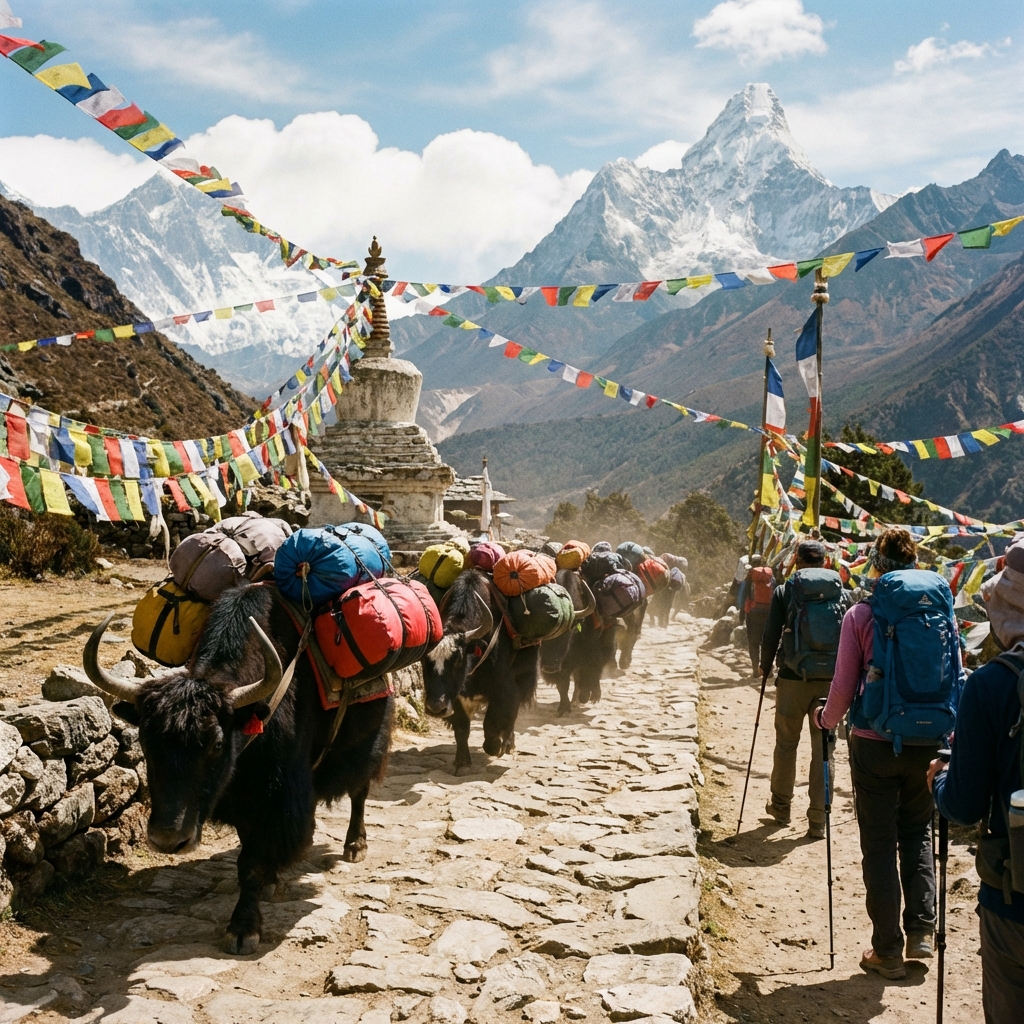
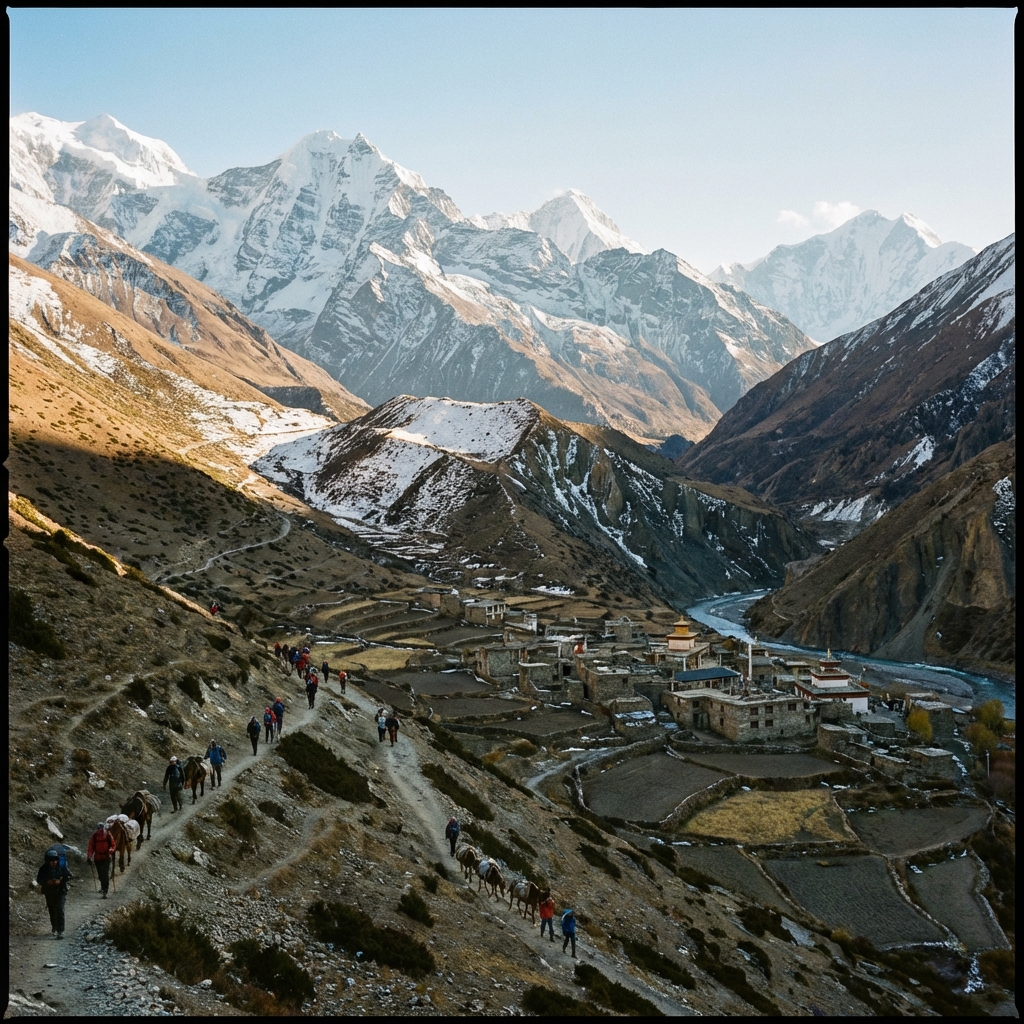
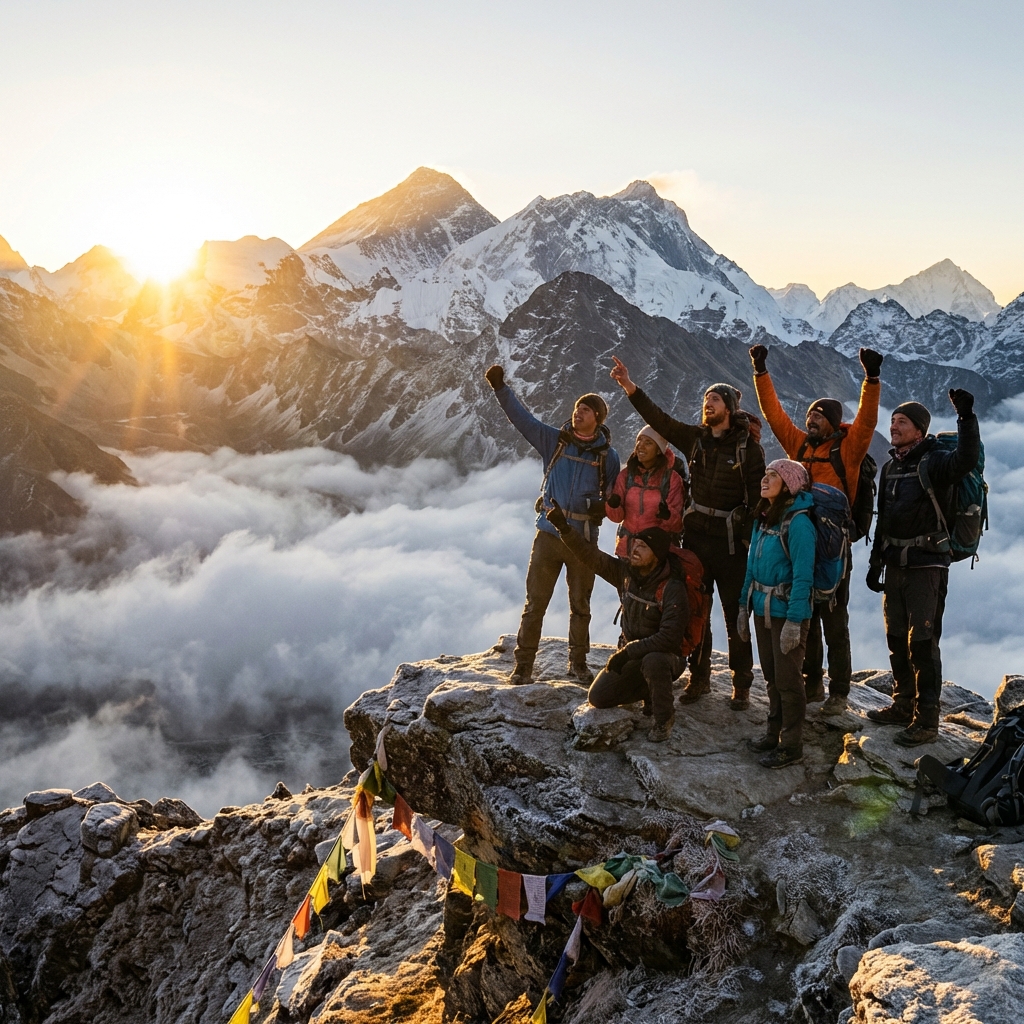
The Annapurna Circuit is widely considered one of the world's greatest long-distance treks, but its standard 15-18 day duration puts it out of reach for many trekkers with limited vacation time. The good news: a shortened 10-12 day Annapurna Circuit is possible, retaining the trek's most spectacular highlights -- including the mighty Thorong La Pass (5,416m) -- while cutting the duration by nearly a week.
The key compromise involves driving to Chame or Manang on the eastern side (skipping the lower forested sections) and/or flying from Jomsom on the western side (skipping the descent to Pokhara). This guide covers exactly what you gain, what you lose, how to do it safely, and a complete day-by-day itinerary for the shortened route.
Key highlights of the short circuit: Cross Thorong La Pass (5,416m), experience the dramatic Manang and Mustang valleys, visit the sacred Muktinath temple, see diverse landscapes from alpine to arid, and complete one of the world's iconic treks in under two weeks.
Quick Facts: Short Annapurna Circuit (10-12 Days)

10-12 days
7-9 days on trail
5,416m (Thorong La Pass)
Chame (2,670m) or Manang (3,540m)
Jomsom (2,720m) with flight out
80-100km (vs 160-230km full circuit)
Challenging (reduced acclimatization)
March-May, September-November
Full Circuit vs. Short Circuit: What Changes
Understanding what you skip and what you keep is essential for deciding whether the shortened version works for you.
What You Keep (The Best Parts)
The 10-day route preserves the core Annapurna Circuit experience:
- Thorong La Pass (5,416m): The emotional and physical climax of the trek. You cross the highest point of the circuit with panoramic views of the Annapurna and Dhaulagiri ranges. This is included in full.
- Manang Valley: The dramatic high-altitude Manang Valley with its Tibetan-influenced villages, ancient monasteries, and arid landscapes. You spend 2-3 days here for acclimatization.
- Muktinath Temple: The sacred Hindu and Buddhist pilgrimage site at 3,800m on the western side of Thorong La. Included in full.
- Jomsom and the Kali Gandaki Valley: The deepest gorge in the world between Annapurna and Dhaulagiri. Included.
- Diverse landscapes: You still experience the transition from alpine forest to arid high desert, one of the circuit's defining features.
- Tibetan Buddhist culture: Manang, Upper Pisang, Braga, and Muktinath all lie within the shortened route.
What You Skip
| Section Skipped | Distance | Days Saved | What You Miss |
|---|---|---|---|
| Besisahar to Chame (lower east) | 50-70km | 3-4 days | Subtropical forest, terraced farmland, hot springs at Chamje, waterfalls, lower Gurung villages |
| Tatopani to Pokhara (lower west) | 50-80km | 2-3 days | Tatopani hot springs, Ghorepani/Poon Hill (if detoured), rice paddies, lowland villages |
| OR: Jomsom to Pokhara (western descent) | 80km | 3-4 days | Kali Gandaki lower gorge, Beni, bus ride through agricultural lowlands |
Honest Assessment: Is it Worth Shortening?
What you gain:
- 5-8 fewer days of vacation needed
- Same maximum altitude and pass crossing
- Preserves 70-80% of the scenic highlights
- Less physical wear on the body
What you lose:
- The gradual cultural transition from Hindu lowlands to Buddhist highlands
- Natural acclimatization through gradual altitude gain
- The sense of a complete journey from start to finish
- Lower elevation diversity (subtropical forests, hot springs)
- The satisfaction of walking the entire circuit
The verdict: If you have 15+ days, do the full circuit -- it is one of the world's great walks for a reason. If you have 10-12 days, the shortened version is absolutely worth doing. The Thorong La crossing and Manang Valley are the undisputed highlights, and you experience them in full.
Pro Tip
The most common regret from trekkers who do the full circuit is spending 3-4 days on the lower eastern section (Besisahar to Chame), which many describe as "road walking" since the expanding jeep road now parallels or replaces much of the old trail. By driving to Chame, you skip this increasingly less scenic section and start where the landscape becomes truly spectacular.
The Three Shortening Strategies
There are three approaches to abbreviating the circuit. Choose based on your time and priorities.
Strategy 1: Drive to Chame, Trek to Jomsom, Fly Out (10-12 Days) -- RECOMMENDED
What it involves: Take a jeep from Kathmandu or Pokhara to Chame (2,670m), trek the circuit through Thorong La to Jomsom (2,720m), then fly from Jomsom to Pokhara.
Days saved: 5-7 days Best for: Trekkers wanting the maximum circuit experience in minimum time Acclimatization concern: Moderate -- you start at 2,670m and have several days before the pass
Strategy 2: Drive to Manang, Trek to Jomsom, Fly Out (8-10 Days) -- AGGRESSIVE
What it involves: Take a jeep directly to Manang (3,540m), acclimatize for 2 days, cross Thorong La, descend to Jomsom, fly out.
Days saved: 7-9 days Best for: Very experienced altitude trekkers with limited time Acclimatization concern: HIGH -- jumping from Kathmandu (1,400m) to Manang (3,540m) in one day is risky. Requires 2-3 full acclimatization days minimum.
Strategy 3: Drive to Chame, Trek Full West Side to Pokhara (12-14 Days)
What it involves: Skip the eastern lower section by driving to Chame, but walk the full western descent from Muktinath through Tatopani to Pokhara.
Days saved: 3-4 days Best for: Trekkers who want to avoid Jomsom flights and prefer walking the complete western section Acclimatization concern: Low -- gradual ascent from Chame
Acclimatization Warning for Shortened Itineraries
The greatest risk of shortening the Annapurna Circuit is inadequate acclimatization. The full circuit provides natural altitude adaptation through 5-7 days of gradual climbing before reaching 4,000m. Starting at Chame (2,670m) or especially Manang (3,540m) by vehicle eliminates this gradual adjustment. If you drive to Chame, you MUST take at least one full rest day in Manang (3,540m) before ascending toward Thorong La. If you drive to Manang, you MUST take at least two full rest days before attempting the pass. AMS, HAPE, and HACE are serious risks if you rush the acclimatization.
Recommended 10-Day Itinerary: Drive to Chame, Fly from Jomsom
This is the most popular shortened Annapurna Circuit itinerary, offering the best balance between time savings and safe acclimatization.
Day-by-Day Overview
| Day | Route | Altitude | Distance | Time | Notes |
|---|---|---|---|---|---|
| 1 | Kathmandu to Chame (drive) | 2,670m | -- | 8-10hr drive | Long drive via Besisahar |
| 2 | Chame to Upper Pisang | 3,310m | 15km | 5-6hr | Enter the Manang Valley |
| 3 | Upper Pisang to Manang | 3,540m | 18km | 6-7hr | Spectacular day through Braga |
| 4 | Manang acclimatization day | 3,540m | 5-8km | 3-5hr | Critical rest day, hike to Ice Lake or Gangapurna |
| 5 | Manang to Yak Kharka | 4,018m | 9km | 4-5hr | Ascending toward the pass |
| 6 | Yak Kharka to Thorong Phedi | 4,450m | 7km | 3-4hr | High camp before the pass |
| 7 | Thorong La Pass to Muktinath | 5,416m / 3,800m | 14km | 8-10hr | The big day -- cross the pass |
| 8 | Muktinath to Jomsom | 2,720m | 22km | 5-6hr | Descent through Kali Gandaki |
| 9 | Fly Jomsom to Pokhara | 822m | -- | 25min | Scenic mountain flight |
| 10 | Pokhara rest day or travel to Kathmandu | 822m/1,400m | -- | -- | Recovery and celebration |
Day 1: Kathmandu/Pokhara to Chame (2,670m) -- Drive
Mode: Private jeep or shared vehicle Duration: 8-10 hours from Kathmandu; 6-7 hours from Pokhara Route: Kathmandu - Mugling - Besisahar - Chame (via Dharapani, Bagarchap, Tal)
This is a long driving day on increasingly rough roads. The highway is smooth from Kathmandu to Besisahar (6-7 hours), then becomes a rugged jeep track from Besisahar to Chame (3-4 hours).
Transport options:
- Private jeep from Kathmandu: $200-250 (seats 4-5)
- Private jeep from Pokhara: $150-200
- Shared jeep from Besisahar: NPR 3,000-4,000 ($23-30) per person
- Local bus Kathmandu-Besisahar + shared jeep onward: $15-35 total
Accommodation in Chame: Several decent lodges. Chame is the district headquarters of Manang and has shops, bakeries, and a health post. Daily costs: Transport $15-65, Lodge $5-10, Meals $10-15. Total: $30-90
Pro Tip
Many trekkers break the drive at Besisahar and spend a night there, then take a morning jeep to Chame. This is less exhausting than the full drive in one day and gives you time to finalize permits (ACAP and TIMS can be obtained at the Besisahar checkpoint). However, it adds a day to the itinerary.
Day 2: Chame to Upper Pisang (3,310m) -- 5-6 Hours
Starting Elevation: 2,670m (Chame) Ending Elevation: 3,310m (Upper Pisang) Elevation Gain: +640m Distance: 15km Difficulty: Moderate
The first trekking day takes you through the transition zone where the landscape begins to change from forested valley to the dramatic, arid Manang region. The trail passes through a dense pine forest with views of Annapurna II (7,937m) and Lamjung Himal (6,983m).
Key waypoints:
- Chame to Bratang (2,960m): 2-2.5 hours, through apple orchards and pine forest
- Bratang to Dhukur Pokhari (3,100m): 1-1.5 hours, dramatic narrow valley
- Dhukur Pokhari to Upper Pisang (3,310m): 1.5-2 hours, climb to the village
Why Upper Pisang over Lower Pisang: Upper Pisang is a traditional Tibetan-style village perched on a ridge with spectacular views of Annapurna II and the entire valley. It has an ancient monastery and feels far more authentic than the roadside Lower Pisang. The extra 30-minute climb is absolutely worth it.
Accommodation: Tea houses in Upper Pisang ($5-10) Daily costs: $25-40
Day 3: Upper Pisang to Manang (3,540m) -- 6-7 Hours
Starting Elevation: 3,310m (Upper Pisang) Ending Elevation: 3,540m (Manang) Elevation Gain: +230m (net, with ups and downs) Distance: 18km Difficulty: Moderate
This is one of the most scenic days on the entire circuit. The trail follows the high route through Ghyaru (3,670m) and Ngawal (3,660m) -- traditional Tibetan villages with ancient gompas and jaw-dropping mountain panoramas -- before descending through Braga to Manang.
High Route vs. Low Route: The Annapurna Circuit has two route options between Pisang and Manang:
- High Route (recommended): Through Ghyaru and Ngawal, more elevation gain but vastly superior views and cultural experience
- Low Route: Through Humde (airport) and Bhraka, flatter but follows the road for stretches
Key waypoints (High Route):
- Upper Pisang to Ghyaru (3,670m): 2-2.5 hours, climb then traverse with Annapurna views
- Ghyaru to Ngawal (3,660m): 1.5-2 hours, spectacular ridge walk
- Ngawal to Braga (3,439m): 1.5-2 hours, descent with monastery visit
- Braga to Manang (3,540m): 30-45 minutes, short walk along the valley floor
Braga Monastery: The 500-year-old Braga monastery is one of the most important in the Manang region. Stop for a visit (small donation requested). The prayer room contains hundreds of terracotta statues and ancient Tibetan Buddhist artifacts.
Accommodation in Manang: Manang is the largest settlement in the upper valley with numerous lodges, shops, bakeries, a health post, and an HRA (Himalayan Rescue Association) aid post. Daily costs: $30-50
Day 4: Manang Acclimatization Day (3,540m) -- 3-5 Hours Hiking
Base Elevation: 3,540m (Manang) Day High Points: Ice Lake (4,620m) or Gangapurna Lake (3,670m) Difficulty: Moderate to Challenging (depending on hike chosen)
This acclimatization day is CRITICAL on the shortened itinerary. Do not skip it. Having driven to 2,670m on Day 1 and climbed to 3,540m by Day 3, your body needs time to adapt before ascending toward Thorong La.
Hike Option A: Ice Lake (4,620m) -- 5-6 hours round trip The classic Manang acclimatization hike. The steep climb to Kicho Lake (commonly called Ice Lake) provides excellent altitude preparation, gaining over 1,000m above your sleeping altitude. The turquoise glacial lake surrounded by 7,000m peaks is spectacular.
Hike Option B: Gangapurna Lake (3,670m) -- 1-2 hours round trip A shorter, easier option. The glacial lake beneath the Gangapurna icefall is easily reached from Manang and provides gentle acclimatization for those feeling the altitude.
Hike Option C: Praken Gompa (3,900m) -- 2-3 hours round trip A moderate hike to an active monastery above Manang with panoramic views of the Annapurna range and the valley.
Afternoon in Manang:
- Attend the HRA altitude lecture (free, usually 3:00 PM during season)
- Explore the village and its old quarter
- Browse shops for supplies
- Rest and hydrate
Accommodation: Same lodge as Day 3 Daily costs: $30-50
Do NOT Skip This Acclimatization Day
On the full Annapurna Circuit, trekkers have 5-7 days of gradual climbing below 3,000m before reaching Manang. On the shortened route, you have had only 2-3 days. This acclimatization day is non-negotiable. Skipping it to save time dramatically increases your risk of AMS, HAPE, or HACE during the Thorong La crossing. Many shortened-circuit trekkers who develop serious altitude sickness report skipping or abbreviating the Manang rest day.
Day 5: Manang to Yak Kharka (4,018m) -- 4-5 Hours
Starting Elevation: 3,540m (Manang) Ending Elevation: 4,018m (Yak Kharka) Elevation Gain: +478m Distance: 9km Difficulty: Moderate
The trail continues up the Marshyangdi Valley, climbing gradually through sparse vegetation and yak pastures. The landscape becomes increasingly alpine and barren. You pass through Tenki Manang (3,540m) and Gunsang (3,920m) before reaching Yak Kharka.
Key waypoints:
- Manang to Tenki Manang (3,540m): 1 hour, gentle climb
- Tenki Manang to Gunsang (3,920m): 1.5-2 hours, moderate ascent
- Gunsang to Yak Kharka (4,018m): 1-1.5 hours, through open yak pastures
Yak Kharka is a small settlement with a few tea houses. The thin air is noticeable, and you should pace yourself carefully. Drink 3-4 liters of water throughout the day.
Accommodation: Tea houses at Yak Kharka ($10-15) Daily costs: $35-55
Day 6: Yak Kharka to Thorong Phedi (4,450m) -- 3-4 Hours
Starting Elevation: 4,018m (Yak Kharka) Ending Elevation: 4,450m (Thorong Phedi) Elevation Gain: +432m Distance: 7km Difficulty: Moderate
A short day to conserve energy for tomorrow's pass crossing. The trail continues ascending through barren, rocky terrain with increasingly dramatic mountain views. Thorong Phedi sits at the base of the Thorong La ascent.
Key waypoints:
- Yak Kharka to Ledar (4,200m): 1.5-2 hours, gradual climb
- Ledar to Thorong Phedi (4,450m): 1.5-2 hours, steeper sections
Alternative: Thorong High Camp (4,850m) Some trekkers push to High Camp (400m above Phedi) to reduce the next day's ascent. This is only recommended if you are well-acclimatized and feeling strong. The accommodation is very basic.
Evening priorities:
- Early dinner (5:00-6:00 PM)
- Pack everything for tomorrow
- Prepare layers and headlamp for 3:00-4:00 AM start
- Fill thermos with hot water
- Set multiple alarms
- Get to bed by 7:00-8:00 PM
Accommodation: Tea houses at Thorong Phedi ($10-20) Daily costs: $35-55
For detailed information on the pass crossing, see our Thorong La Pass guide.
Day 7: Thorong La Pass (5,416m) to Muktinath (3,710m) -- 8-10 Hours
Starting Elevation: 4,450m (Thorong Phedi) High Point: 5,416m (Thorong La Pass) Ending Elevation: 3,800m (Muktinath) Elevation Gain: +966m (ascent) then -1,616m (descent) Distance: 14km Difficulty: Very Challenging
This is the defining day of the Annapurna Circuit -- the crossing of Thorong La Pass at 5,416m. It is the longest, hardest, and most rewarding day of the trek.
Pre-dawn start: Leave Thorong Phedi by 3:30-4:00 AM with headlamp. The early start ensures you cross the pass before afternoon winds pick up, and gives you maximum daylight for the long descent to Muktinath.
The Ascent (4-5 hours):
- Phedi to High Camp (4,850m): 1.5-2 hours, steep switchbacks
- High Camp to Thorong La (5,416m): 2.5-3 hours, gradual then steep final push
The last hour before the pass is the hardest -- steep, rocky terrain at extreme altitude. At 5,416m, oxygen levels are roughly 50% of sea level. Each step requires effort. Move slowly, breathe deliberately, and rest frequently.
At the pass: The prayer flag-festooned summit offers views of the Annapurna range to the east and Dhaulagiri (8,167m) to the west. Celebrate briefly -- you cannot linger at this altitude. Most trekkers spend 15-30 minutes for photos and rest.
The Descent (3-4 hours):
- Thorong La to Charabu (4,230m): 2 hours, steep rocky descent
- Charabu to Muktinath (3,710m): 1.5-2 hours, gentler gradient
The descent from Thorong La to Muktinath drops 1,616m -- a massive elevation loss that is hard on knees and quads. Trekking poles are essential.
Muktinath: The sacred Muktinath temple complex is a pilgrimage site for both Hindus and Buddhists. The 108 water spouts (Muktidhara) and eternal flame (natural gas) are spiritually significant. Even if exhausted, the temple is worth visiting.
Accommodation: Tea houses in Muktinath ($8-15) Daily costs: $35-55
Thorong La Pass Success Tips
The most important factors for a successful Thorong La crossing: (1) Proper acclimatization -- follow the schedule strictly, (2) Early start -- leave by 4:00 AM at the latest, (3) Steady pace -- the biggest mistake is starting too fast, (4) Hydration -- drink from your thermos throughout, (5) Warm clothing -- temperatures at the pass can reach minus 15 to minus 20 degrees Celsius before dawn, (6) Mental preparation -- the last hour is a grind, but every step gets you closer. Listen to your body and your guide.
Pro Tip
Ask your lodge at Thorong Phedi to prepare a thermos of hot sweet tea and a packed breakfast (chapati with peanut butter or similar) for the early morning start. Eating and drinking warm fluids during the ascent is critical for energy and warmth. Most lodges will prepare this for NPR 500-1,000 if you request it the evening before.
Day 8: Muktinath to Jomsom (2,720m) -- 5-6 Hours
Starting Elevation: 3,800m (Muktinath) Ending Elevation: 2,720m (Jomsom) Elevation Loss: -1,080m Distance: 22km Difficulty: Easy-Moderate (downhill, but windy)
The descent from Muktinath to Jomsom follows the upper Kali Gandaki valley, the deepest gorge in the world (flanked by Annapurna I at 8,091m and Dhaulagiri at 8,167m). The landscape is dramatically arid -- desert-like terrain more reminiscent of Tibet than Nepal.
Key waypoints:
- Muktinath to Jharkot (3,550m): 1 hour, descent through medieval Tibetan village
- Jharkot to Kagbeni (2,810m): 2 hours, dramatic canyon landscape
- Kagbeni to Jomsom (2,720m): 2-2.5 hours, along the Kali Gandaki riverbed
Kagbeni: This atmospheric medieval town is the gateway to Upper Mustang (restricted area). Its narrow alleys, mud-brick buildings, and ancient monastery make it one of the most photogenic villages on the circuit. Worth a 30-minute exploration.
Wind warning: The Kali Gandaki valley funnels powerful winds every afternoon (typically starting 11:00 AM-noon). Start early to avoid walking into headwinds on the Kagbeni-Jomsom stretch. By 2:00 PM, winds can reach 40-60 km/h and make walking extremely difficult.
Accommodation in Jomsom: Jomsom is a district headquarters with modern amenities including ATMs, shops, restaurants, and a small airport. Daily costs: $25-45
Day 9: Fly Jomsom to Pokhara -- 25 Minutes
Starting Elevation: 2,720m (Jomsom) Ending Elevation: 822m (Pokhara)
The scenic 25-minute flight from Jomsom to Pokhara offers stunning views of Dhaulagiri, Annapurna South, and Machhapuchre (Fishtail). Flights operate early morning (typically 6:30-8:30 AM) before winds make flying dangerous.
Flight logistics:
- Cost: $110-130 per person (one-way)
- Airlines: Tara Air, Yeti Airlines, Simrik Airlines
- Departure: 6:30-8:30 AM (morning only; afternoon too windy)
- Reliability: 70-80% on schedule (wind delays common)
- Booking: Book through your agency or at the Jomsom airport office the day before
Alternative to flying: Jeep from Jomsom to Pokhara (8-10 hours, NPR 3,000-5,000) via Beni. This is the backup if flights are cancelled and is an adventure in itself along Nepal's most dramatic mountain road.
In Pokhara:
- Transfer to Lakeside hotel
- Celebrate with lakeside dinner
- Optional: Paragliding, boating, massage
Accommodation: Hotel in Pokhara ($10-50) Daily costs: Flight $110-130, Hotel $10-50, Meals $15-25. Total: $135-205
Jomsom Flight Cancellations
Jomsom flights are notoriously weather-dependent. Strong Kali Gandaki winds ground flights 20-30% of the time. If your flight is cancelled, options include: (1) Wait for the next morning -- most delays resolve in one day, (2) Take a jeep to Pokhara (8-10 hours), (3) In rare cases, wait 2-3 days. Always have a buffer day in your schedule and consider the jeep option if time is critical.
Day 10: Pokhara Rest Day or Travel to Kathmandu
Activities: Recovery, celebration, sightseeing, or travel
If you have time, spend a rest day in Pokhara -- Nepal's most relaxed tourist city. Enjoy Phewa Lake, visit the World Peace Pagoda, or simply rest your legs at a lakeside cafe.
If heading to Kathmandu:
- Tourist bus: 7-8 hours, $8-12
- Flight: 25 minutes, $80-120
- Private car: 6-7 hours, $100-150
Daily costs: $30-150 depending on activities and travel
Acclimatization Concerns: The Critical Issue
The single biggest concern with shortening the Annapurna Circuit is acclimatization. Here is a detailed comparison:
Full Circuit Acclimatization Profile
| Day | Full Circuit Location | Altitude | Days Above 2,000m Before This Point |
|---|---|---|---|
| 7-8 | Chame | 2,670m | 6-7 days of gradual climbing |
| 9-10 | Manang | 3,540m | 8-9 days |
| 11 | Manang rest day | 3,540m | 9-10 days |
| 12-13 | Thorong Phedi | 4,450m | 11-12 days |
| 14 | Thorong La Pass | 5,416m | 12-13 days |
Short Circuit Acclimatization Profile
| Day | Short Circuit Location | Altitude | Days Above 2,000m Before This Point |
|---|---|---|---|
| 1 | Chame (driven) | 2,670m | 0 days (arrived by vehicle) |
| 3 | Manang | 3,540m | 2 days |
| 4 | Manang rest day | 3,540m | 3 days |
| 6 | Thorong Phedi | 4,450m | 5 days |
| 7 | Thorong La Pass | 5,416m | 6 days |
The risk: On the shortened itinerary, you have 6 days of altitude exposure before crossing a 5,416m pass, compared to 12-13 days on the full circuit. This roughly doubles your AMS risk.
Mitigating the Acclimatization Risk
- Never skip the Manang rest day. This is the single most important rule on the short circuit.
- Take Diamox (acetazolamide): Consult your doctor before the trek. Starting Diamox (125mg twice daily) from Day 1 can reduce AMS risk by 50-70% on abbreviated itineraries.
- Stay extra-hydrated: Drink 3-4 liters daily from Day 1.
- Hike high on rest day: The Ice Lake hike (to 4,620m) on the Manang rest day is essential for stimulating red blood cell production.
- Monitor symptoms obsessively: Use the Lake Louise AMS scoring system. Any score above 3 means rest; above 5 means descend.
- Consider adding a day: If you feel any AMS symptoms at Manang, add an extra rest day. Better to take 11 days than to risk HAPE or HACE at Thorong La.
- Previous altitude experience helps: If you have been above 4,500m before (even on a different trek), your body retains some adaptation for weeks/months.
Pro Tip
If you are seriously concerned about acclimatization on the short circuit but still want to save time, consider this compromise: drive to Dharapani (1,860m) instead of Chame. This adds one trekking day (Dharapani to Chame) but starts you at a lower altitude, giving your body a gentler introduction to elevation. The total itinerary becomes 11 days but with significantly better acclimatization.
Cost Comparison: Short vs. Full Circuit
| Cost Category | Full Circuit (15-18 days) | Short Circuit (10-12 days) |
|---|---|---|
| Guide (per day) | $375-720 (15-18 x $25-40) | $250-480 (10-12 x $25-40) |
| Porter (per day) | $225-360 (15-18 x $15-20) | $150-240 (10-12 x $15-20) |
| Accommodation | $75-180 | $50-120 |
| Meals on trail | $300-540 | $200-360 |
| Transport to trailhead | $15-30 (bus to Besisahar) | $50-200 (jeep to Chame) |
| Transport from trail | $15-30 (bus from Beni) | $110-130 (Jomsom flight) |
| Permits | $38 | $38 |
| Total (guided) | $1,043-1,898 | $848-1,568 |
| Total (independent) | $443-818 | $598-888 |
Key observation: The short circuit is cheaper overall for guided treks (fewer guide/porter days) but more expensive for independent treks (jeep to Chame and Jomsom flight cost more than buses). The Jomsom flight ($110-130) is the biggest single extra cost.
Permits Required
| Permit | Cost (Foreigners) | Cost (SAARC) | Where to Obtain |
|---|---|---|---|
| Annapurna Conservation Area Permit (ACAP) | NPR 3,000 ($23) | NPR 200 ($1.50) | Kathmandu NTB, Pokhara NTB, or Besisahar checkpoint |
| TIMS Card | NPR 2,000 ($15) | NPR 1,000 ($8) | Kathmandu NTB or TAAN office |
Frequently Asked Questions: Short Annapurna Circuit
Related Planning Resources
- Annapurna Circuit 15-Day Full Itinerary -- the complete standard route
- Thorong La Pass Guide -- detailed pass crossing information
- Annapurna Circuit Difficulty Assessment -- fitness requirements
- Best Time for Annapurna Circuit -- seasonal breakdown
- Budget Trekking in Nepal -- cost-saving strategies
Final Thoughts: Is the Short Annapurna Circuit Right for You?
The 10-day Annapurna Circuit is a pragmatic solution for time-limited trekkers who refuse to miss one of the world's great mountain experiences. By driving past the less scenic lower sections and flying from Jomsom, you retain the trek's crown jewel -- the Thorong La crossing -- along with the stunning Manang Valley, arid Kali Gandaki gorge, and rich Tibetan Buddhist culture.
Choose the 10-day short circuit if:
- You have 10-14 days of total vacation time
- You prioritize the Thorong La pass crossing above all else
- You are comfortable with tighter acclimatization schedules
- You have some previous high-altitude experience (helpful but mandatory since April 2023)
- You do not mind driving the first day instead of walking
Choose the full 15-18 day circuit if:
- You have the time and want the complete experience
- You prefer gradual acclimatization with lower AMS risk
- You enjoy walking every kilometer of a journey
- You want the subtropical-to-alpine ecosystem transition
- This is your first high-altitude trek and you want maximum safety
The Annapurna Circuit, even abbreviated, delivers an experience that few treks on Earth can match. The moment you stand on Thorong La at 5,416m with prayer flags whipping in the wind, Annapurna gleaming to the east and Dhaulagiri blazing to the west, the question of whether to shorten the circuit becomes irrelevant. You are exactly where you are supposed to be.
Namaste, and safe trekking!
Sources:
This guide was researched using data from:
- Nepal Tourism Board -- Annapurna Region Statistics 2026/2027
- Annapurna Conservation Area Project (ACAP) -- Trail and Permit Data
- Annapurna lodge networks and pricing surveys 2026/2027
- Himalayan Rescue Association -- Acclimatization Guidelines for Shortened Itineraries
- Jomsom Airport Authority -- Flight Schedule and Reliability Data