
Three religious sites in Kathmandu stand above all others for trekkers: Boudhanath Stupa, the spiritual center of Tibetan Buddhism in Nepal and the cultural heartland of the Sherpa community; Swayambhunath (the Monkey Temple), offering the valley's finest panoramic views from its ancient hilltop perch; and Pashupatinath Temple, Nepal's holiest Hindu site where the cycle of life, death, and rebirth plays out daily on the banks of the Bagmati River.
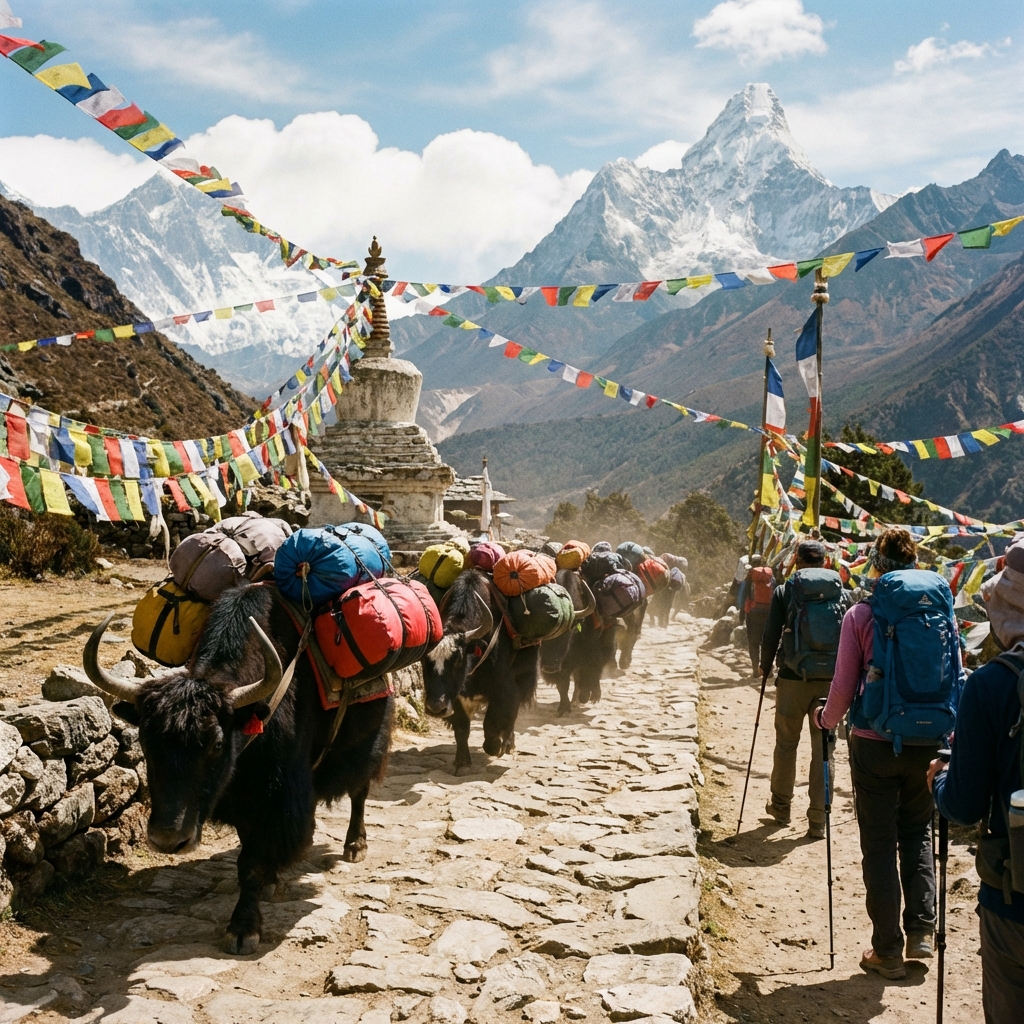
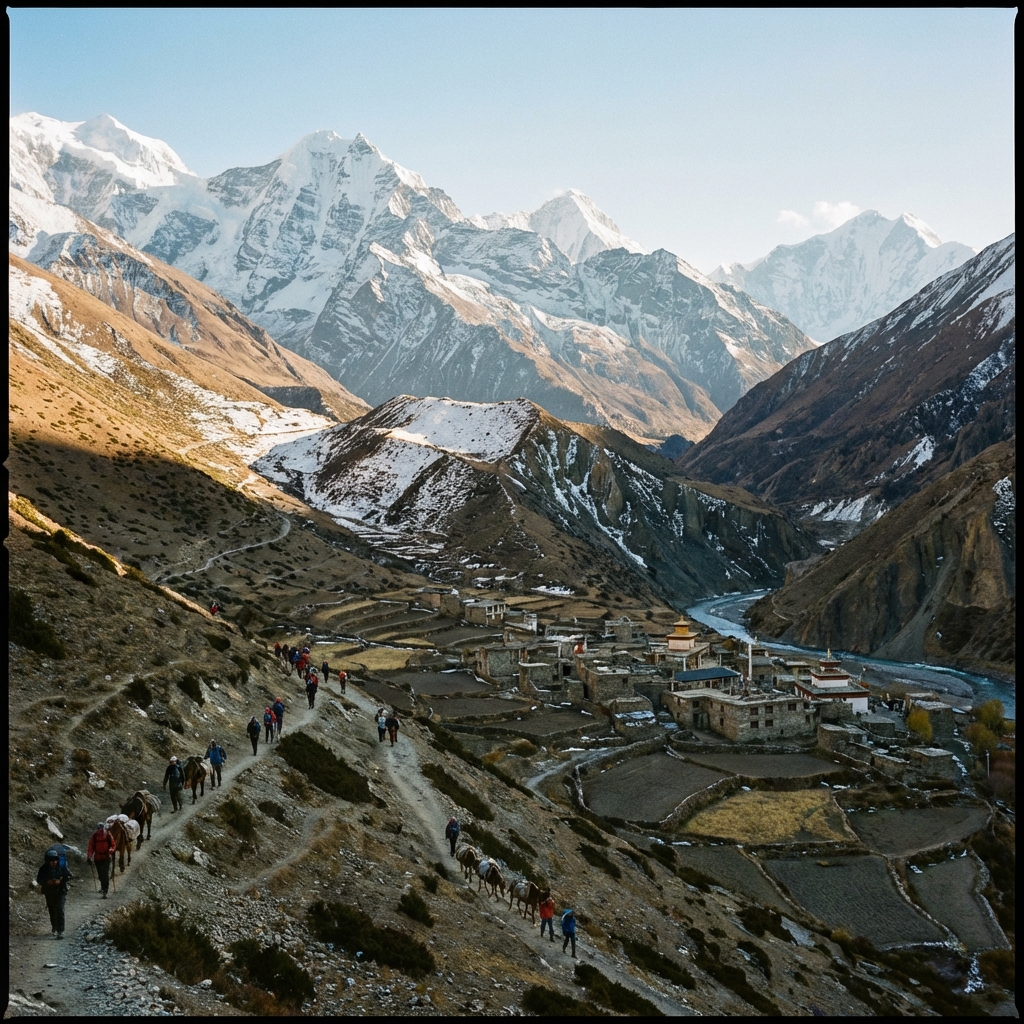
For trekkers, these three sites are not merely tourist attractions. They are the cultural keys to understanding the religious traditions that permeate every trekking route in Nepal. The prayer flags strung across mountain passes originate from the same tradition you see at Boudhanath. The mani stones carved with mantras along the Everest trail follow the same devotional practice visible at Swayambhunath. The Hindu and Buddhist syncretism that defines Nepal's mountain communities is most vividly expressed at these three sites in Kathmandu.
This guide provides everything you need for meaningful visits: historical context, practical logistics, cultural etiquette, photography advice, the best times to visit, and connections to what you will experience on the trail.
4-6 hours (half day)
Dawn for Boudhanath, sunrise for Swayambhunath
Boudhanath to Pashupatinath: 2 km
All three are UNESCO World Heritage Sites
Boudhanath Stupa: The Heart of Tibetan Buddhism in Nepal
History and Significance
Boudhanath is the largest stupa in Nepal and one of the largest spherical stupas in the world. Its origins are debated by scholars, but the stupa dates to at least the 5th century CE and may be considerably older. According to tradition, it was built after the death of the Buddha Kassapa (a predecessor of Gautama Buddha) and contains relics of supreme spiritual importance.
The stupa became the center of Tibetan Buddhist culture in Nepal after 1959, when Tibetan refugees fleeing the Chinese occupation settled in the surrounding neighborhood. Today, over 50 Tibetan Buddhist monasteries (gompas) ring the stupa, representing every major Tibetan Buddhist lineage. The area is sometimes called "Little Tibet" and is the most significant Tibetan Buddhist site outside Tibet itself.
For trekkers: Understanding Boudhanath provides direct context for the Buddhist culture you will encounter in the Everest region (Sherpa Buddhism), the Langtang region (Tamang Buddhism), and the Manaslu region. The monasteries around Boudhanath are the mother institutions of many mountain gompas you will visit during your trek.
The Kora: Walking the Circumambulation Circuit
The kora (clockwise circumambulation) around Boudhanath's base is the centerpiece of any visit. This is not tourism; you are joining a living religious practice that Tibetan Buddhists perform daily, sometimes for hours.
How to walk the kora:
- Enter through any of the four ground-level gates facing the cardinal directions
- Turn right and walk clockwise (always clockwise for Buddhist stupas)
- Keep the stupa on your right side as you walk
- Spin each prayer wheel in the row lining the base as you pass (clockwise)
- Complete at least one full circuit; locals typically do three or more
- Walk at a meditative pace; do not rush
The kora circuit is approximately 400 meters around and takes 10-15 minutes at a slow, mindful pace. During morning and evening hours, you will be walking alongside monks in maroon robes, elderly Tibetan women counting mala beads, and local families performing their daily devotions.
Pro Tip
Monastery Visits Around Boudhanath
The monasteries surrounding Boudhanath welcome respectful visitors. Most are active religious institutions, not museums, so timing your visit around prayer schedules enriches the experience significantly.
Notable monasteries to visit:
| Monastery | Lineage | Special Feature | Visitor Hours |
|---|---|---|---|
| Ka-Nying Shedrub Ling | Nyingma | Beautiful interior murals | 6 AM - 6 PM |
| Shechen Monastery | Nyingma | Rebuilt version of Tibetan original | 6 AM - 6 PM |
| Kopan Monastery | Gelug | Meditation courses available | 6 AM - 5 PM |
| Thrangu Tashi Yangtse | Kagyu | Excellent Buddhist library | 8 AM - 5 PM |
| Jamchen Lhakhang | Gelug | Large prayer hall | 6 AM - 6 PM |
Monastery etiquette:
- Remove shoes before entering prayer halls
- Walk clockwise inside monastery halls
- Do not step over or on religious texts, images, or cushions
- Photography is usually permitted in courtyards but not during prayers
- Sit quietly if prayers are in progress; do not talk or move around
- Small donations (NPR 100-500) in the donation box are appreciated
For a deeper exploration of monastery etiquette that applies on the trekking trail, see our monastery etiquette guide.
Rooftop Cafes and Shopping
The buildings surrounding Boudhanath's plaza house dozens of rooftop restaurants and shops on their upper floors, providing excellent elevated views of the stupa and the kora below.
Best rooftop cafes:
- Cafe du Temple: Directly facing the stupa, excellent espresso, good Tibetan food
- Stupa View Restaurant: Panoramic views, popular at sunset
- Double Dorje: Peaceful atmosphere, good momos, prime photography angle
Shopping: The shops around Boudhanath specialize in Tibetan Buddhist items: singing bowls, thangka paintings, prayer beads (malas), prayer flags, and religious artifacts. Quality is generally higher and prices are more reasonable than Thamel for authentic Tibetan items. If you want a singing bowl or thangka, Boudhanath is the place to buy.
Practical Details
| Detail | Information |
|---|---|
| Entrance Fee | NPR 400 (foreigners) |
| Opening Hours | 24 hours (fee collection approximately 6 AM - 8 PM) |
| Best Time to Visit | Dawn (6:00-7:30 AM) for morning prayers, or sunset |
| Time Needed | 1.5-3 hours |
| Distance from Thamel | 7 km (20-30 min by taxi) |
| Taxi Cost | NPR 500-700 one way |
| Nearest Other Site | Pashupatinath (2 km, 5 min by taxi) |
Boudhanath at Dawn
Swayambhunath: The Monkey Temple
History and Significance
Swayambhunath is the oldest religious site in the Kathmandu Valley, with origins dating back over 2,500 years. According to legend, the Kathmandu Valley was once a lake, and Swayambhunath hill was the first land to emerge when the bodhisattva Manjushri drained the lake with his sword. The self-arisen (swayambhu) lotus at the hilltop became the site of the stupa.
The complex is unique in Nepal for its harmonious blending of Buddhist and Hindu elements. The main stupa is Buddhist, but Hindu shrines, including a temple dedicated to the Hindu goddess Harati (protector of children), share the hilltop. This religious coexistence is a profound expression of Nepal's spiritual identity and helps explain the syncretism you encounter throughout trekking regions.
For trekkers: Swayambhunath introduces the concept of religious coexistence that defines Nepal's mountain communities, where Buddhist prayer flags and Hindu temples exist side by side in the same village. The prayer eyes painted on the stupa are the same eyes you will see on stupas and chortens throughout every trekking route.
The 365 Steps
The eastern approach to Swayambhunath involves climbing 365 steep stone steps from the base of the hill to the stupa platform. This is the traditional and most rewarding approach.
What you will encounter on the climb:
- Stone Buddhas: Ancient seated Buddha statues line the lower steps
- Monkeys: Rhesus macaques are everywhere; protect food and shiny objects
- Painted Buddhas: Colorful rock-face paintings appear on the cliff walls
- Vajra (thunderbolt): A massive bronze vajra sits at the top of the stairs
- Prayer wheels: Line the path near the summit
The climb takes 10-20 minutes depending on fitness and how many photo stops you make. For trekkers, this is an excellent pre-trek fitness indicator. If 365 steps leave you badly winded, you may want to increase your pre-trek training.
Alternative approach: A road leads to the back (western) entrance, accessible by taxi. This avoids the steps but misses the dramatic upward approach and many of the artistic and historical features along the stairway.
Monkey Safety at Swayambhunath
The Hilltop Complex
The summit platform is compact but densely packed with religious structures, viewpoints, and artistic treasures.
Key features:
- Main Stupa: Smaller than Boudhanath but more ornate, with the iconic Buddha eyes and 13 gilded rings representing the 13 stages to enlightenment
- Harati Temple: Hindu temple dedicated to the goddess of smallpox, now considered the protector of children. This temple exemplifies Nepal's Hindu-Buddhist harmony
- Dewa Dharma Monastery: Active monastery with occasional prayer sessions visitors can observe
- World Peace Pond: Small ornamental pond on the western side with prayer flags reflected in its surface
- Astronomical observation platform: Historical site used for celestial observations
Sunrise at Swayambhunath
A sunrise visit to Swayambhunath is one of Kathmandu's most rewarding experiences. On clear mornings (most common October-November and March-April), the Himalayan range is visible from Langtang in the east to the Annapurnas in the west, with the Kathmandu Valley spread below in morning mist.
Sunrise visit logistics:
- Arrive 30-45 minutes before sunrise (check local sunrise time; varies from 5:30 AM in June to 6:45 AM in December)
- The eastern stairway is the best approach for combining the climb with the sunrise
- Bring a headlamp for the pre-dawn climb (steps are unlit)
- The best photography viewpoint is the platform to the left of the main stupa
- Morning prayers by resident monks add atmosphere and sound
Pro Tip
Practical Details
| Detail | Information |
|---|---|
| Entrance Fee | NPR 200 (foreigners) |
| Opening Hours | 24 hours (fee collection during daylight) |
| Best Time to Visit | Sunrise or early morning |
| Time Needed | 1-2 hours |
| Distance from Thamel | 3 km (10-15 min by taxi) |
| Taxi Cost | NPR 300-500 one way |
| Steps | 365 from eastern entrance |
Pashupatinath Temple: Nepal's Holiest Hindu Site
History and Significance
Pashupatinath is the most sacred Hindu temple in Nepal, dedicated to Lord Shiva in his aspect as Pashupati (Lord of Animals). The temple complex sprawls along both banks of the Bagmati River and has been a pilgrimage site for at least 1,500 years. The main pagoda-style temple, with its gilded roof and silver-plated doors, is the masterpiece of Nepali temple architecture.
Non-Hindus cannot enter the main temple compound, but the surrounding complex, cremation ghats, riverside shrines, and sadhu gathering areas are accessible and provide a deeply powerful experience.
For trekkers: Pashupatinath connects to the Hindu traditions present in lower-altitude trekking regions, particularly the Annapurna and Langtang areas. Understanding Hindu cremation practices, the significance of the Bagmati River, and the role of sadhus provides context for the Hindu festivals and traditions you may encounter in mountain villages.
The Cremation Ghats
The cremation ghats (Arya Ghat and Surya Ghat) on the banks of the Bagmati River are where Hindu cremations take place daily, often several simultaneously. This is the most culturally intense experience available to visitors in Kathmandu.
What you will witness:
- Bodies wrapped in white cloth carried to the ghat on bamboo stretchers
- Family members performing ritual bathing of the deceased in the river
- The eldest son or closest male relative lighting the funeral pyre
- Pyres burning for 2-3 hours on raised stone platforms along the river
- Ashes swept into the Bagmati River after cremation
How to observe respectfully:
- Watch from the opposite bank of the river or the designated viewing areas
- Do not photograph close-up views of active cremations without clear permission
- Wide-angle shots from across the river that include the overall scene are generally acceptable
- Do not comment loudly, laugh, or treat the scene as entertainment
- Recognize that this is a deeply personal moment for the families present
Cultural Sensitivity at Cremation Ghats
Sadhus at Pashupatinath
Sadhus (Hindu holy men) gather on the eastern bank of the Bagmati at Pashupatinath, particularly in the area around the Pandra Shivalinga (15 Shiva shrines). Many are genuine renunciants who have given up worldly life. Some dress in elaborate makeup and clothing specifically for tourist photographs.
Photography etiquette with sadhus:
- Most sadhus expect a donation (NPR 100-200) for photographs
- Ask before photographing; most will pose willingly for a fee
- Some sadhus are genuinely meditating; do not disturb them
- The most authentically dressed sadhus (ash-covered, dreadlocked) are often the most photogenic but also the most likely to request larger donations
The Wider Complex
Beyond the main temple and cremation ghats, Pashupatinath's complex contains hundreds of smaller shrines, temples, and religious structures spread across a forested hillside.
Notable areas to explore:
- Gorakhnath Temple: Hilltop shrine with views over the complex
- Guheswari Temple: Important Shakti temple (Hindu goddess worship)
- Deer Park: A fenced area on the eastern bank where deer roam freely
- Pashupati Yoga and Meditation Center: Offers drop-in sessions
- Museum: Small museum with religious artifacts and historical information
Practical Details
| Detail | Information |
|---|---|
| Entrance Fee | NPR 1,000 (foreigners) |
| Opening Hours | 4 AM - 9 PM (main temple area) |
| Best Time to Visit | Late afternoon (4-6 PM) for evening aarti |
| Time Needed | 1-2 hours |
| Distance from Thamel | 6 km (20 min by taxi) |
| Distance from Boudhanath | 2 km (5 min by taxi) |
| Taxi Cost | NPR 500-700 from Thamel |
| Key Restriction | Non-Hindus cannot enter main temple |
Combining All Three Sites
The Ideal Half-Day Route
The most efficient way to visit all three sites is a morning half-day trip combining them in geographical order.
Recommended sequence:
| Time | Activity | Transport |
|---|---|---|
| 5:30 AM | Depart Thamel for Swayambhunath | Taxi (15 min) |
| 5:45 AM | Climb steps, watch sunrise | Walking |
| 7:00 AM | Explore hilltop complex | Walking |
| 7:45 AM | Taxi to Boudhanath | Taxi (25 min) |
| 8:15 AM | Kora circuits, monastery visits | Walking |
| 10:00 AM | Rooftop cafe breakfast | Walking |
| 10:45 AM | Walk or taxi to Pashupatinath | Taxi (5 min) or walk (30 min) |
| 11:00 AM | Explore complex, ghats, sadhus | Walking |
| 12:30 PM | Return to Thamel | Taxi (20 min) |
Total cost: NPR 1,600 entrance fees + NPR 2,000-3,000 in taxi fares + breakfast. Approximately $30-35 USD total.
Alternative evening route: Visit Boudhanath at sunrise (6 AM), Pashupatinath mid-morning, then Swayambhunath for sunset. This captures Boudhanath's morning prayers and Swayambhunath's evening light.
Pro Tip
Cultural Etiquette Across All Sites
Universal Rules
These etiquette guidelines apply to all three sites and to religious sites you will encounter on your trek:
- Always walk clockwise around Buddhist stupas, mani walls, chortens, and prayer wheel rows
- Remove shoes before entering any temple interior or monastery prayer hall
- Dress modestly: Cover shoulders and knees at all religious sites
- Do not touch statues, offerings, or religious objects
- Do not sit with your feet pointing toward religious objects or altars
- Ask before photographing people in prayer or ritual
- Silence phones inside temples and during ceremonies
- Accept blessings graciously: If a priest or monk offers a tika (vermillion dot) or blessed thread, accept it with gratitude
Buddhist-Specific Etiquette (Boudhanath, Swayambhunath)
- Walk clockwise around stupas and chortens (counterclockwise is considered disrespectful)
- Do not climb on stupas or sit on sacred structures
- Prayer wheels should be spun clockwise
- If entering a monastery during prayers, sit quietly at the back and do not leave until a natural pause
- Buddhist monks may not touch women; female visitors should not attempt to shake hands with monks
Hindu-Specific Etiquette (Pashupatinath)
- Leather items should ideally be removed or concealed in the main complex
- The main temple is restricted to Hindus; respect the boundary
- Do not photograph people bathing in the river (ritual purification)
- Do not step on or over offerings placed on the ground
- The cremation ghats demand particular sensitivity; maintain respectful distance
Photography Rules
| Site | Exterior Photos | Interior Photos | Drone |
|---|---|---|---|
| Boudhanath | Freely allowed | Varies by monastery (ask) | Prohibited |
| Swayambhunath | Freely allowed | No flash inside temples | Prohibited |
| Pashupatinath | From respectful distance | Not in main temple area | Prohibited |
Photography Tip
Connections to Trekking Culture
What You See Here, You See on the Trail
The religious practices at these three sites directly prepare you for what you will encounter during your trek:
Prayer flags: The colorful flags strung across Boudhanath and Swayambhunath are the same flags you will see on every mountain pass and tea house. Each color represents an element (blue for sky, white for cloud, red for fire, green for water, yellow for earth), and they are placed where wind can carry their printed prayers across the landscape.
Mani stones: The carved stones around Boudhanath (Om Mani Padme Hum) are identical to the mani walls you walk past on every day of an Everest or Langtang trek. Always pass mani walls on your left (keeping them on your right), maintaining the clockwise direction.
Kora circuits: The circumambulation practice at Boudhanath is the same walking meditation practiced at every stupa and monastery you encounter on the trail, including Tengboche Monastery on the Everest route.
Butter lamps: The flickering butter lamps at Boudhanath and Swayambhunath appear in every monastery and many tea houses along trekking routes.
Incense: The juniper incense burned at all three sites perfumes tea house common rooms and monastery interiors throughout the Himalayas.
For broader cultural knowledge that enhances your trekking experience, see our comprehensive Kathmandu sightseeing guide and our Nepal trekking cultural etiquette guide.
Frequently Asked Questions
Can I visit all three sites in one day?
Yes. A focused half-day (5-6 hours) comfortably covers all three sites. The recommended sequence is Swayambhunath at sunrise, Boudhanath mid-morning, and Pashupatinath late morning or early afternoon. Alternatively, visit Boudhanath at dawn, then Pashupatinath (they are only 2 km apart), and Swayambhunath in the afternoon.
Which site is most important for Everest trekkers?
Boudhanath. The Sherpa community that runs most tea houses and serves as guides in the Everest region is deeply connected to the Tibetan Buddhist traditions centered at Boudhanath. Many Sherpa families in Kathmandu live in the Boudhanath neighborhood. Visiting Boudhanath before an Everest trek provides cultural context that enriches every monastery visit and Buddhist ceremony you encounter on the trail.
Is Pashupatinath appropriate for children?
The cremation ghats may be disturbing for young children. However, the wider Pashupatinath complex, including the deer park, hilltop temples, and forested areas, is appropriate for all ages. Parents can easily avoid the active cremation areas while still exploring the rest of the complex.
How much does it cost to visit all three sites?
Entrance fees total NPR 1,600 (Boudhanath NPR 400 + Swayambhunath NPR 200 + Pashupatinath NPR 1,000), which is approximately $12 USD. Add NPR 2,000-3,000 for taxi transport between sites and to/from Thamel. Total budget: approximately $25-35 USD including transport.
Are the sites wheelchair accessible?
Swayambhunath is not wheelchair accessible due to the 365 steps (the back entrance via road provides partial access to the hilltop). Boudhanath's kora circuit around the base is flat and wheelchair accessible. Pashupatinath has uneven terrain and stairs throughout most of the complex, with limited accessibility.
Do I need a guide for these visits?
A guide adds significant value at Pashupatinath, where the Hindu mythology and rituals are complex and unfamiliar to most Western visitors. At Boudhanath and Swayambhunath, self-guided visits work well because the primary experience is atmospheric and visual rather than interpretive. If budget allows one guided visit, spend it at Pashupatinath.
What should I wear?
Modest clothing that covers shoulders and knees at all three sites. At Pashupatinath, avoid leather items if possible. Comfortable walking shoes are essential (remove them before entering temple interiors). A scarf or shawl is useful for quick coverage if wearing a tank top.
Are there food options at each site?
Boudhanath has the best food options, with dozens of rooftop restaurants surrounding the stupa. Swayambhunath has a few basic cafes at the hilltop. Pashupatinath has limited food options within the complex; eat before or after your visit.
What time do the sites open and close?
All three sites are technically open 24 hours (they are outdoor religious complexes, not museums). However, entrance fee collection occurs during daylight hours (approximately 6 AM to 8 PM at Boudhanath, dawn to dusk at Swayambhunath, and 4 AM to 9 PM at Pashupatinath). You can visit outside these hours without paying the entrance fee, though this is not officially encouraged.
Is the Boudhanath area safe at night?
Yes. The Boudhanath neighborhood is safe and pleasant in the evening. The stupa is beautifully lit at night, and several restaurants and shops remain open until 9-10 PM. The evening kora, with fewer people and a quiet atmosphere, is particularly meditative.
Can I attend Buddhist prayers or Hindu ceremonies?
Buddhist prayers at Boudhanath's monasteries are generally open to respectful visitors. Sit quietly at the back and do not leave during prayers. The evening aarti (fire ceremony) at Pashupatinath is open to all visitors and is a highlight of any visit. Arrive by 5:30 PM to secure a good viewing position.
How do these sites connect to what I will see on my trek?
Directly. The Buddhist traditions at Boudhanath and Swayambhunath are the same traditions practiced in every monastery and village on the Everest, Langtang, and Manaslu trekking routes. The prayer flags, mani stones, butter lamps, and circumambulation practices you learn here will appear daily on your trek. Pashupatinath's Hindu traditions connect to lower-altitude villages and the Hindu festivals that may coincide with your trek dates.
These three sites represent the spiritual foundation of Nepal. For trekkers, they are not optional tourist stops but essential cultural preparation for the mountains ahead. The morning light on Boudhanath's white dome, the prayer wheels spinning in your hands at Swayambhunath, and the smoke rising from Pashupatinath's ghats will stay with you long after the trek itself has ended, enriching your understanding of every prayer flag, monastery, and sacred site you encounter on the trail.
For a broader Kathmandu sightseeing plan incorporating these and other sites, see our Kathmandu sightseeing guide for trekkers. For cultural guidance during your trek, explore our monastery etiquette guide.