
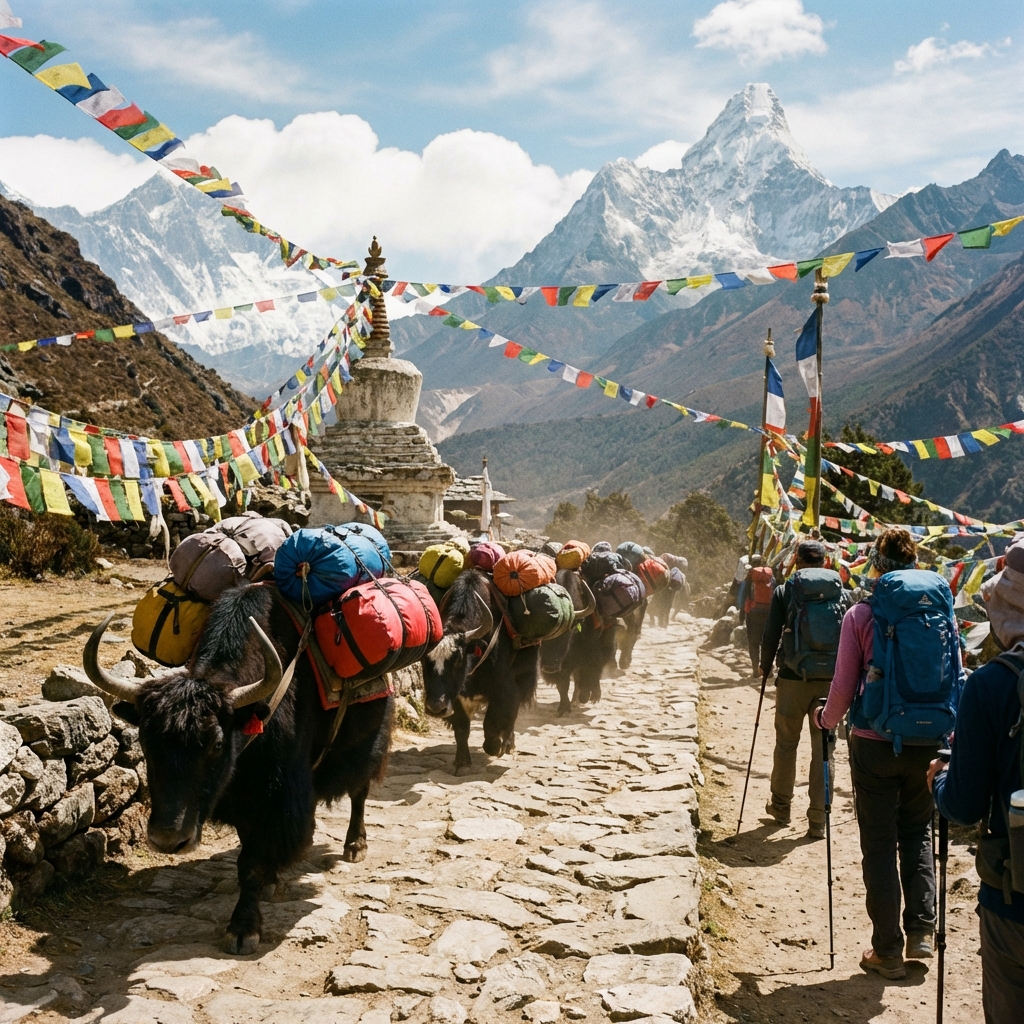
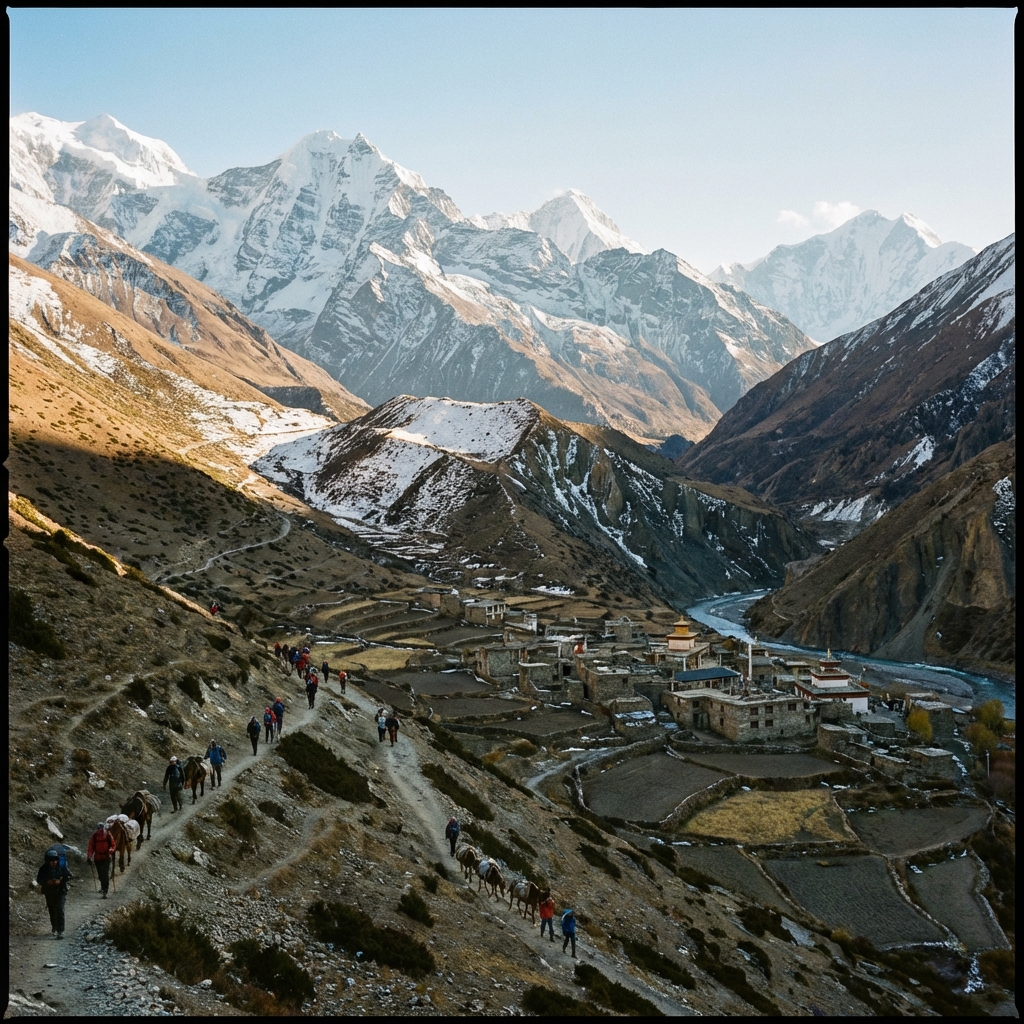
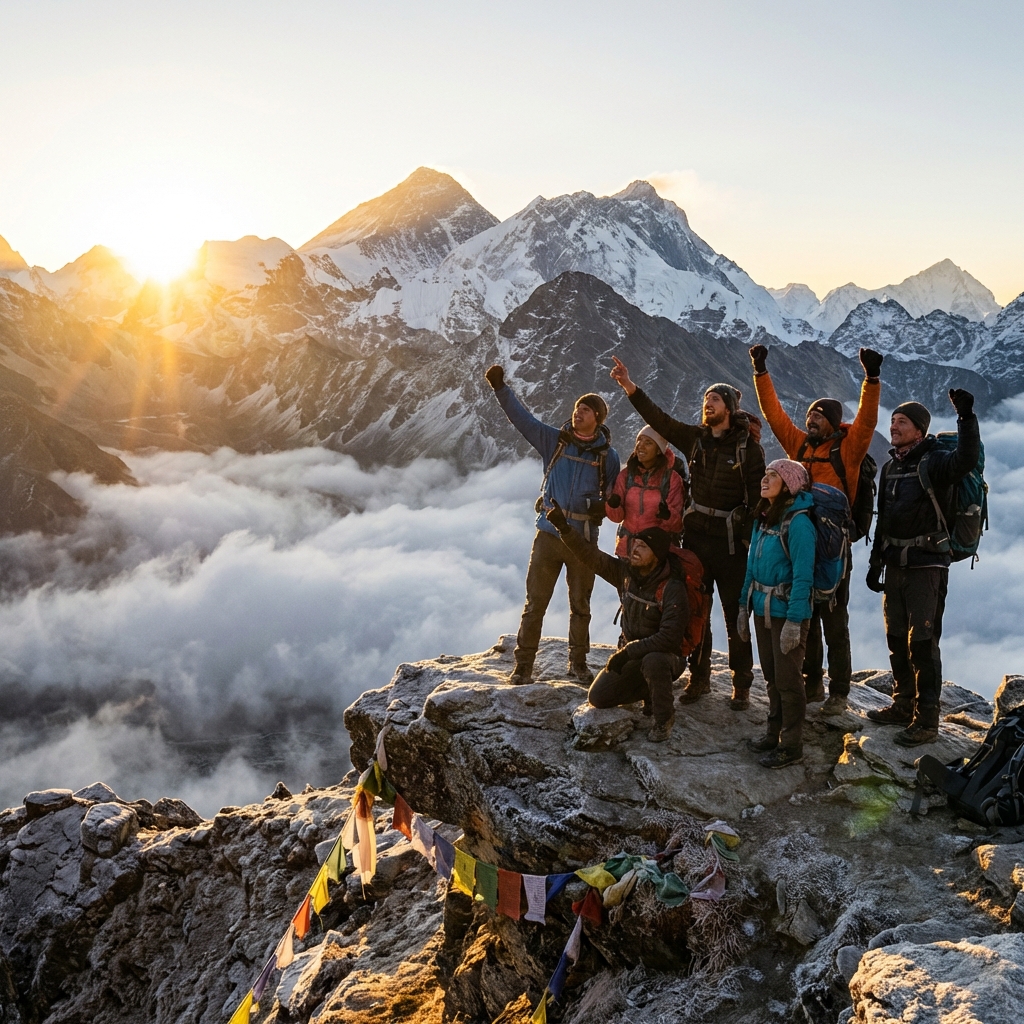
Kathmandu is not simply a launchpad for Himalayan adventures. The Kathmandu Valley holds seven UNESCO World Heritage Site groups packed into an area smaller than most cities, representing over two thousand years of Newari art, architecture, and living culture. For trekkers with one or two days before or after a trek, the challenge is not finding things to see but choosing wisely among an overwhelming wealth of options.
This guide ranks the top 15 sightseeing experiences specifically for trekkers, factoring in physical energy levels (you may be jet-lagged pre-trek or exhausted post-trek), cultural significance, visual impact, and practical logistics. Each listing includes current entrance fees, time required, best visiting hours, and transport options so you can build a custom itinerary that matches your energy and interests.
7 groups in Kathmandu Valley
Early morning (6-9 AM)
NPR 3,000-6,000 for all major sites
Nepali, Newari, English widely understood
Allowed most places, no flash indoors
Taxi, Grab, walking, guided tours
1,400m (4,593 ft)
Nepali Rupees (NPR) cash
Why Trekkers Should Explore Kathmandu
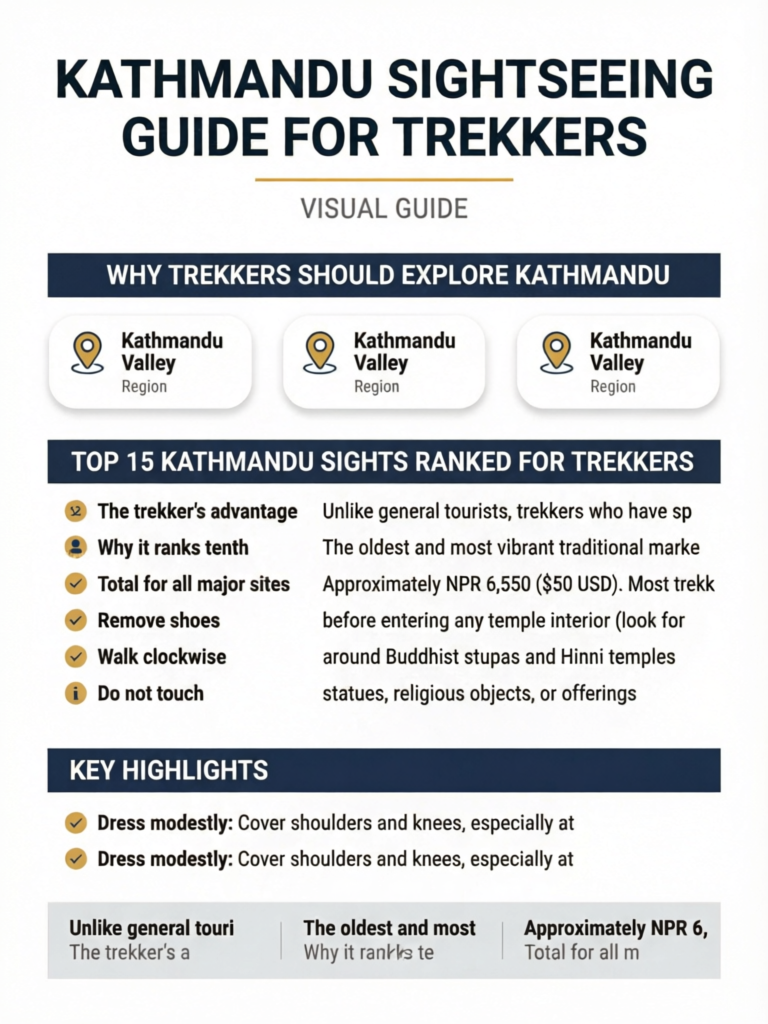
Many trekkers treat Kathmandu as a transit point, arriving late, shopping for gear in Thamel, and heading to the mountains the next day. This is a missed opportunity for several reasons.
Pre-trek benefits: Spending a day exploring temples, plazas, and markets is excellent gentle acclimatization to Nepal's altitude (1,400m), culture shock, and sensory intensity. Walking through Durbar Square or climbing Swayambhunath's steps loosens your legs after a long flight and begins your cultural immersion before you encounter monasteries and mani walls on the trail.
Post-trek benefits: After days or weeks in remote mountain tea houses, Kathmandu's ancient cities provide a completely different dimension to your Nepal experience. You will see the cultural origins of the Buddhist and Hindu traditions you encountered on the trail, and the flat walking is restorative for tired knees.
The trekker's advantage: Unlike general tourists, trekkers who have spent time above 4,000m or shared tea with Sherpa families bring context that makes temple visits richer. The prayer flags at Boudhanath will mean more after you have walked beneath hundreds of them on mountain passes.
Top 15 Kathmandu Sights Ranked for Trekkers
1. Boudhanath Stupa
Why it ranks first: Boudhanath is the spiritual heart of Nepal's Tibetan Buddhist community and the most atmospheric single site in Kathmandu. For trekkers heading to or returning from the Everest region, this is directly connected to the Sherpa Buddhist culture you will experience on the trail. The massive white dome, the all-seeing eyes of Buddha, and the kora (circumambulation) circuit create an experience that is meditative, photogenic, and deeply memorable.
| Detail | Information |
|---|---|
| Entrance Fee | NPR 400 (foreigners) |
| Time Needed | 1.5-2 hours |
| Best Time | Early morning (6-7 AM) or sunset |
| Distance from Thamel | 7 km (20-30 min by taxi) |
| Open Hours | 24 hours (fee collected ~6 AM - 8 PM) |
Walk the kora circuit clockwise with the locals, spin the prayer wheels lining the base, and explore the small monasteries surrounding the stupa. The rooftop restaurants overlooking the stupa serve excellent Tibetan food and provide perfect photography vantage points.
For a deeper understanding of Buddhist sites along trekking routes, see our Boudhanath and Swayambhunath temple guide.
Pro Tip
2. Swayambhunath (Monkey Temple)
Why it ranks second: The 365 stone steps leading up to Swayambhunath are the perfect pre-trek warm-up, and the panoramic view from the top encompasses the entire Kathmandu Valley. This 2,500-year-old stupa complex combines Hindu and Buddhist elements and gives you a comprehensive introduction to Nepal's religious syncretism.
| Detail | Information |
|---|---|
| Entrance Fee | NPR 200 (foreigners) |
| Time Needed | 1-1.5 hours |
| Best Time | Sunrise for views, early morning for calm |
| Distance from Thamel | 3 km (10-15 min by taxi) |
| Open Hours | 24 hours (fee collected during day) |
The resident monkeys are entertaining but protect your belongings and food. The hilltop complex includes a Hindu temple, multiple Buddhist shrines, a Tibetan monastery, and excellent souvenir shops with less aggressive pricing than Thamel.
3. Kathmandu Durbar Square
Why it ranks third: This is the historical center of old Kathmandu, a dense cluster of palaces, temples, and courtyards that served as the seat of the Malla kings. Despite significant earthquake damage in 2015, major restoration work has returned much of the square's grandeur. The living heritage here, with locals worshipping at ancient shrines surrounded by vegetable vendors and schoolchildren, provides an authentic glimpse into Kathmandu life that has continued for centuries.
| Detail | Information |
|---|---|
| Entrance Fee | NPR 1,000 (foreigners), valid multiple days |
| Time Needed | 1.5-2 hours |
| Best Time | Morning for light and fewer crowds |
| Distance from Thamel | 1.5 km (20-minute walk) |
| Key Sites | Kumari Ghar (Living Goddess), Hanuman Dhoka Palace, Taleju Temple |
Durbar Square Ticket Tip
4. Patan Durbar Square
Why it ranks fourth: Many experienced travelers consider Patan (Lalitpur) the most beautiful of the three Durbar Squares. The concentration of Newari architecture, the exceptional Patan Museum (widely regarded as the best museum in Nepal), and the working artisan community in the surrounding streets create a cultural experience that surpasses Kathmandu Durbar Square in depth if not in fame.
| Detail | Information |
|---|---|
| Entrance Fee | NPR 1,000 (foreigners, includes museum) |
| Time Needed | 2-3 hours (with museum) |
| Best Time | Morning for golden light on temples |
| Distance from Thamel | 6 km (20-25 min by taxi) |
| Key Sites | Patan Museum, Krishna Temple, Golden Temple, Mahabouddha |
The Patan Museum inside the old Royal Palace is a masterclass in Himalayan bronze casting, Hindu and Buddhist art, and Newari craftsmanship. Plan at least 45 minutes for the museum alone.
Pro Tip
5. Bhaktapur Durbar Square
Why it ranks fifth: Bhaktapur is the most preserved of the three ancient cities, partly because it charges an entry fee for the entire old town, which funds conservation. The 55 Window Palace, Nyatapola Temple (Nepal's tallest pagoda), and the pottery-making squares of the surrounding neighborhood provide the best time-capsule experience in the valley. Many trekkers find Bhaktapur more rewarding than Kathmandu Durbar Square because the preservation is superior and the atmosphere less chaotic.
| Detail | Information |
|---|---|
| Entrance Fee | NPR 1,800 (foreigners, covers entire old town) |
| Time Needed | 3-5 hours (half day recommended) |
| Best Time | Early morning or late afternoon |
| Distance from Thamel | 14 km (40-60 min by taxi) |
| Key Sites | Nyatapola Temple, 55 Window Palace, Pottery Square, Dattatreya Square |
Bhaktapur Distance and Timing
6. Pashupatinath Temple
Why it ranks sixth: Nepal's holiest Hindu temple and one of the most important Shiva temples in South Asia. Non-Hindus cannot enter the main temple, but the riverside cremation ghats, the sadhu (holy men) gatherings, and the surrounding temple complex are deeply moving. This is not a comfortable tourist experience but rather an encounter with living religious tradition and the Hindu approach to death and the afterlife.
| Detail | Information |
|---|---|
| Entrance Fee | NPR 1,000 (foreigners) |
| Time Needed | 1-1.5 hours |
| Best Time | Late afternoon for evening aarti ceremony |
| Distance from Thamel | 6 km (20 min by taxi) |
| Note | Cremations occur daily; photography from respectful distance |
Combine Pashupatinath with Boudhanath (they are only 2 km apart) for a morning or afternoon that covers both Hindu and Buddhist Nepal in a single outing.
7. Garden of Dreams
Why it ranks seventh: This restored Rana-era European-style garden sits hidden behind high walls just steps from the chaos of Thamel. For trekkers dealing with pre-trek anxiety or post-trek decompression, the manicured lawns, fountains, and pavilions offer a haven of calm. It is the best escape in Kathmandu when sensory overload hits.
| Detail | Information |
|---|---|
| Entrance Fee | NPR 200 |
| Time Needed | 30-60 minutes |
| Best Time | Any time, beautiful in morning light |
| Distance from Thamel | 200 meters (5-minute walk) |
| Facilities | Cafe, WiFi, clean restrooms |
8. Thamel Walking Tour
Why it ranks eighth: Thamel itself is a sightseeing experience. Walking its narrow streets reveals hidden temples, traditional Newari courtyard houses (bahals), and the evolution of a neighborhood from local bazaar to international trekking hub. The best approach is to wander without a strict plan, turning down alleys and exploring the less-touristy side streets where traditional Kathmandu life continues unchanged.
For a detailed breakdown of what to do, eat, and buy in the neighborhood, see our comprehensive Thamel District guide.
| Detail | Information |
|---|---|
| Entrance Fee | Free |
| Time Needed | 1-3 hours |
| Best Time | Morning before shops get crowded |
| Starting Point | Thamel Chowk intersection |
9. Kopan Monastery
Why it ranks ninth: This Tibetan Buddhist monastery on a hilltop north of Boudhanath offers meditation courses, monastery tours, and spectacular views. For trekkers interested in the Buddhist aspects of their upcoming trek, a visit to Kopan provides context for the monasteries, stupas, and prayer flags you will encounter in the mountains.
| Detail | Information |
|---|---|
| Entrance Fee | Free (donations appreciated) |
| Time Needed | 1.5-2 hours |
| Best Time | Morning |
| Distance from Thamel | 9 km (30-40 min by taxi) |
10. Asan Bazaar and Indra Chowk
Why it ranks tenth: The oldest and most vibrant traditional market in Kathmandu stretches from Asan Chowk to Indra Chowk along narrow streets packed with spice vendors, fabric shops, brass traders, and local produce sellers. This is where Kathmandu residents actually shop, and it provides an authentic contrast to the tourist-oriented commerce of Thamel.
| Detail | Information |
|---|---|
| Entrance Fee | Free |
| Time Needed | 1-1.5 hours |
| Best Time | Morning (9-11 AM) for peak activity |
| Distance from Thamel | 800 meters (10-minute walk) |
Pro Tip
11. Changu Narayan Temple
Why it ranks eleventh: The oldest temple in the Kathmandu Valley, dating to the 4th century, sits atop a forested hilltop with sweeping valley views. It is less visited than other UNESCO sites, making it a peaceful alternative for trekkers who prefer quieter experiences. The stone carvings here are among the finest in Nepal.
| Detail | Information |
|---|---|
| Entrance Fee | NPR 300 |
| Time Needed | 1-1.5 hours |
| Best Time | Morning |
| Distance from Thamel | 18 km (45-60 min by taxi) |
12. Narayanhiti Palace Museum
Why it ranks twelfth: The former Royal Palace, site of the 2001 royal massacre, is now a museum preserving the lavish lifestyle of Nepal's last monarchy. For trekkers interested in Nepal's modern history and political transformation from monarchy to republic, this is the most informative site in Kathmandu.
| Detail | Information |
|---|---|
| Entrance Fee | NPR 500 |
| Time Needed | 1-1.5 hours |
| Best Time | Any time during opening hours |
| Distance from Thamel | 1 km (15-minute walk) |
| Open Hours | Thursday-Monday, 11 AM - 4 PM |
13. Kirtipur Old Town
Why it ranks thirteenth: This hilltop Newari town perched on a ridge southwest of Kathmandu offers the valley's best-preserved traditional architecture outside Bhaktapur without the entrance fee or tourist crowds. The views of the Himalayas from Kirtipur on a clear day rival any viewpoint in the valley.
| Detail | Information |
|---|---|
| Entrance Fee | Free |
| Time Needed | 2-3 hours |
| Distance from Thamel | 10 km (30-40 min by taxi) |
14. National Museum of Nepal
Why it ranks fourteenth: A modest but informative museum with collections spanning Nepal's history from the Licchavi period to modern times. The collection of historical weapons, including kukri knives, and the natural history wing with Himalayan wildlife displays are particularly relevant for trekkers.
| Detail | Information |
|---|---|
| Entrance Fee | NPR 150 |
| Time Needed | 1 hour |
| Distance from Thamel | 4 km (15-20 min by taxi) |
| Near | Swayambhunath (combinable visit) |
15. Budhanilkantha (Sleeping Vishnu)
Why it ranks fifteenth: A massive reclining Vishnu statue carved from a single block of black basalt, lying in a recessed water tank, is one of Nepal's most impressive individual sculptures. It is off the main tourist circuit but rewarding for those interested in Hindu art and iconography.
| Detail | Information |
|---|---|
| Entrance Fee | Free |
| Time Needed | 30-45 minutes |
| Distance from Thamel | 9 km (25-35 min by taxi) |
Sample Sightseeing Itineraries for Trekkers
One-Day Pre-Trek Itinerary (Moderate Energy)
This itinerary balances key sights with manageable walking for someone who arrived yesterday and is adjusting to the time zone.
| Time | Activity | Transport | Notes |
|---|---|---|---|
| 6:00 AM | Sunrise at Swayambhunath | Taxi (15 min) | 365 steps, panoramic views |
| 7:30 AM | Breakfast in Thamel | Walk back or taxi | Rest and refuel |
| 9:30 AM | Walk Thamel to Asan Bazaar to Durbar Square | Walking (1.5 hrs total) | Explore market streets |
| 12:00 PM | Lunch near Durbar Square | Walking | Local Newari restaurant |
| 2:00 PM | Boudhanath Stupa entry fee: NPR 400 for foreigners,500-3,500 in taxi fares + meals. |
One-Day Post-Trek Itinerary (Low Energy)
For trekkers returning from the mountains with tired legs who still want meaningful sightseeing.
| Time | Activity | Transport | Notes |
|---|---|---|---|
| 8:00 AM | Garden of Dreams | Walk (5 min) | Peaceful start, coffee |
| 10:00 AM | Boudhanath Stupa | Taxi (25 min) | Slow kora, rooftop lunch |
| 1:00 PM | Patan Durbar Square and Museum | Taxi (20 min) | Sit on temple steps, explore museum |
| 4:00 PM | Return to Thamel | Taxi (20 min) | Rest or massage |
Estimated costs: NPR 1,600 in entrance fees + NPR 2,000-2,500 in taxi fares + meals.
Two-Day Comprehensive Itinerary
Day 1: Swayambhunath (sunrise), Thamel to Asan Bazaar walk, Kathmandu Durbar Square, afternoon rest, Boudhanath and Pashupatinath (evening).
Day 2: Full half-day in Bhaktapur (depart 8 AM, return by 1 PM), afternoon at Patan Durbar Square and Museum, evening in Garden of Dreams.
This covers all five major UNESCO site groups in the valley and provides a thorough cultural introduction to Nepal.
Hiring a Guide for Sightseeing
Transport Options for Sightseeing
Taxis
Metered taxis are available throughout Kathmandu, though drivers often prefer negotiated fares for tourist routes. Expect to pay NPR 300-500 for short trips within central Kathmandu and NPR 800-1,500 for trips to Bhaktapur or the airport.
Ride-Hailing Apps
Pathao and inDrive operate in Kathmandu and typically offer better prices than street taxis. Download the apps before you need them, as Thamel WiFi is sufficient for booking.
Walking
Central Kathmandu is surprisingly walkable despite the chaos. The route from Thamel to Durbar Square via Asan Bazaar is flat and fascinating, though dusty in dry season. Wear comfortable shoes and carry a dust mask during high-pollution days.
Guided Car Tours
Many trekking agencies offer full-day Kathmandu Valley tours by private car with driver and guide for NPR 8,000-15,000 ($60-115 USD). This is the most efficient way to cover multiple sites in one day and works well for small groups splitting the cost.
Tourist Buses to Bhaktapur
Micro-buses run frequently from Kathmandu to Bhaktapur for NPR 30-50. They depart from Bagh Bazaar and take 30-45 minutes. This is the cheapest option but least comfortable, with crowded seating and stops along the route.
Pro Tip
Entrance Fees Summary
| Site | Fee (NPR) | Fee (USD approx.) | Notes |
|---|---|---|---|
| Boudhanath Stupa | 400 | $3 | Valid single entry |
| Swayambhunath | 200 | $1.50 | Valid single entry |
| Kathmandu Durbar Square | 1,000 | $7.50 | Extendable free at office |
| Patan Durbar Square | 1,000 | $7.50 | Includes Patan Museum |
| Bhaktapur Old Town | 1,800 | $14 | Covers entire old town |
| Pashupatinath | 1,000 | $7.50 | Non-Hindus excluded from main temple |
| Garden of Dreams | 200 | $1.50 | Small garden, worth it |
| Changu Narayan | 300 | $2.50 | Remote but uncrowded |
| Narayanhiti Palace | 500 | $4 | Closed Tuesdays and Wednesdays |
| National Museum | 150 | $1 | Near Swayambhunath |
Total for all major sites: Approximately NPR 6,550 ($50 USD). Most trekkers will visit 4-6 of these sites depending on time, spending NPR 2,500-4,000 ($19-30 USD) on entrance fees.
Cash Only for Entrance Fees
Cultural Etiquette at Heritage Sites
Temple Behavior
- Remove shoes before entering any temple interior (look for shoe piles at the entrance)
- Walk clockwise around Buddhist stupas and Hindu temples
- Do not touch statues, religious objects, or offerings
- Ask permission before photographing people praying or performing rituals
- Dress modestly: Cover shoulders and knees, especially at Pashupatinath
Photography Guidelines
- Tripods are generally allowed outdoors but not inside museums
- Flash photography is prohibited inside temples and museums
- Drone photography requires permits and is restricted near heritage sites
- Photographing cremation ceremonies at Pashupatinath requires sensitivity and distance
- Many sadhus at Pashupatinath pose for photos but expect a donation (NPR 100-200)
General Tips
- Carry small NPR bills for donations (NPR 10-50 at donation boxes)
- Leather items should be removed or concealed at Hindu temples
- Do not point your feet at religious objects or people
- Accept tika (vermillion dot) blessings graciously if offered
For more on cultural etiquette during your trek, see our Nepal trekking cultural etiquette guide.
Best Times to Visit Heritage Sites
Early Morning (6:00-8:00 AM)
The golden hour at Swayambhunath and Boudhanath is unmatched. Morning light illuminates temple details beautifully, locals perform morning prayers, and tour groups have not yet arrived. This is the best time for photography and spiritual atmosphere.
Mid-Morning (9:00-11:00 AM)
Good for Durbar Squares when shops and businesses open, adding life to the plazas. Museums open at 10 AM or 10:30 AM. Asan Bazaar is most vibrant during this window.
Midday (12:00-2:00 PM)
The least ideal time for sightseeing due to harsh light, heat (especially March-May), and post-lunch lethargy. Use this time for lunch, rest, or indoor museum visits.
Late Afternoon (3:00-5:00 PM)
Warm light returns, making this excellent for Patan and Bhaktapur. The evening aarti ceremony at Pashupatinath begins around 6 PM and is worth timing your afternoon around.
Sunset (5:00-6:30 PM)
Boudhanath at sunset, with butter lamps being lit around the stupa, is one of Kathmandu's most memorable experiences.
Pro Tip
Connecting Sightseeing with Your Trek
Kathmandu sightseeing is not separate from your trekking experience. It is the cultural foundation that enriches everything you see on the trail.
- Before Everest treks: Visit Boudhanath to understand Sherpa Buddhist culture you will encounter in Namche Bazaar, Tengboche Monastery, and every village in the Khumbu. See our Kathmandu arrival guide for pre-trek logistics.
- Before Annapurna treks: Explore Patan's metalwork heritage to appreciate the bronze statues and temple craftsmanship in Manang and Upper Mustang villages.
- Before Langtang treks: Visit Boudhanath and Swayambhunath to understand the Tamang Buddhist traditions you will experience in Langtang villages.
- After any trek: Return to Boudhanath or a Durbar Square with fresh eyes. The prayer flags, stupas, and temple architecture will resonate differently after days walking among them in the mountains.
Practical Tips for Trekker Sightseers
Managing Energy Levels
Pre-trek trekkers are often jet-lagged and anxious about their upcoming trek. Post-trek trekkers have tired legs and may be fighting minor illnesses. Build rest into your sightseeing schedule and do not try to see everything.
Dust and Pollution
Kathmandu's air quality, particularly during winter (December-February), can be poor. Carry a dust mask or buff for walking between sites, especially along main roads. The neck gaiters and buffs guide covers options that double as trekking gear.
Hydration and Food
Carry a water bottle and snacks. Sightseeing in Kathmandu involves more walking than you expect, and dehydration plus altitude (1,400m) can cause headaches. Clean restrooms are available at most ticketed sites but scarce in between.
Security
Kathmandu is generally very safe for tourists, but petty theft occurs in crowded areas like Durbar Square and Asan Bazaar. Keep valuables in front pockets, do not flash expensive cameras in dense crowds, and be aware of your surroundings in market areas.
Pro Tip
Frequently Asked Questions
How many days do I need for Kathmandu sightseeing?
One full day covers the essential highlights (Swayambhunath, Boudhanath, one Durbar Square). Two days allows you to include Bhaktapur and Patan while maintaining a relaxed pace. Three days is ideal for thorough exploration of all major sites plus hidden gems like Kirtipur and Changu Narayan. Most trekkers have one day pre-trek and one day post-trek, which is sufficient for the top five sites.
Is Kathmandu Durbar Square worth visiting after the 2015 earthquake?
Yes, absolutely. While some structures were damaged or destroyed, extensive restoration has been completed and continues. The Kumari Ghar (Living Goddess house), Hanuman Dhoka Palace, and many temples survived or have been rebuilt. The living cultural heritage of the square, with daily worship, markets, and community life, is unchanged and deeply rewarding.
Which Durbar Square is the best if I can only visit one?
Patan Durbar Square offers the best overall experience for a single visit because it combines exceptional architecture with the outstanding Patan Museum, active artisan workshops in surrounding streets, and a less chaotic atmosphere than Kathmandu Durbar Square. Bhaktapur is equally impressive but requires more time and travel.
Can I visit Boudhanath and Pashupatinath in the same trip?
Yes, they are only 2 km apart and combining them is the most efficient use of a half-day. Visit Boudhanath first (morning light, morning prayers), then take a short taxi ride to Pashupatinath. Plan for 3-4 hours total to see both comfortably.
Are the entrance fees worth paying?
For most sites, yes. The fees fund conservation of genuinely irreplaceable heritage. Bhaktapur at NPR 1,800 may seem expensive by local standards but offers hours of exploration across a beautifully preserved medieval city. The only fee some trekkers skip is Kathmandu Durbar Square, as local entrances allow free access if you walk in from side streets, though this is technically not permitted.
Is it safe to walk between Thamel and Durbar Square?
Yes, the 20-minute walk from Thamel through Asan Bazaar to Kathmandu Durbar Square is safe and rewarding. The route follows busy commercial streets with constant foot traffic. Walk during daylight hours and stay on main streets.
Should I hire a guide for sightseeing or go independently?
A guide adds significant value at Kathmandu Durbar Square, Patan, and Bhaktapur, where the mythology, history, and architectural details are impossible to understand without explanation. Boudhanath and Swayambhunath are enjoyable with a mandatory licensed guide. If budget is tight, invest in a guide for Durbar Square visits and explore the stupas independently.
What is the best way to get from one site to another?
For sites within central Kathmandu (Thamel, Durbar Square, Garden of Dreams, Asan Bazaar), walking is best. For Boudhanath, Pashupatinath, Patan, and Bhaktapur, use taxis or ride-hailing apps. A full-day hired car with driver costs NPR 4,000-6,000 and eliminates all transport hassles.
Are heritage sites accessible for people with mobility issues?
Most Kathmandu heritage sites have uneven terrain, stairs, and limited accessibility infrastructure. Swayambhunath's 365 steps are the most challenging. Boudhanath is the most accessible major site, as the kora circuit around the stupa is flat. Durbar Squares involve some steps but most viewing areas are at ground level.
Do I need to dress differently for temple visits?
Modest dress is expected at all religious sites. Cover shoulders and knees. At Pashupatinath, leather items (belts, shoes) should ideally be removed before entering the main complex. At Buddhist sites the dress code is more relaxed, but shorts and sleeveless tops are still frowned upon inside monastery interiors.
Can I use my Durbar Square ticket on multiple days?
Kathmandu Durbar Square tickets can be extended for free at the Site Conservation Office at the square. Bring your passport and your original ticket. Bhaktapur tickets are technically valid for the same day only, though enforcement varies.
What should I do if it rains during my sightseeing day?
The Patan Museum and Narayanhiti Palace Museum are excellent indoor options. Boudhanath has covered rooftop restaurants for sheltered viewing. In monsoon season (June-September), plan sightseeing for mornings when rain is less likely and keep afternoons flexible. The Garden of Dreams has covered pavilions that provide pleasant rain shelter.
Kathmandu's cultural treasures provide the bookends to any Nepal trekking experience. By spending even a single day exploring the valley's ancient cities, you transform your trip from a hiking vacation into a journey through one of the world's most remarkable living civilizations. Plan your time wisely using the rankings and itineraries in this guide, and you will leave Nepal with memories that extend far beyond mountain panoramas.
For planning your arrival logistics, see our Kathmandu arrival guide for trekkers. For the best places to eat before and after sightseeing, check our best restaurants in Thamel guide.