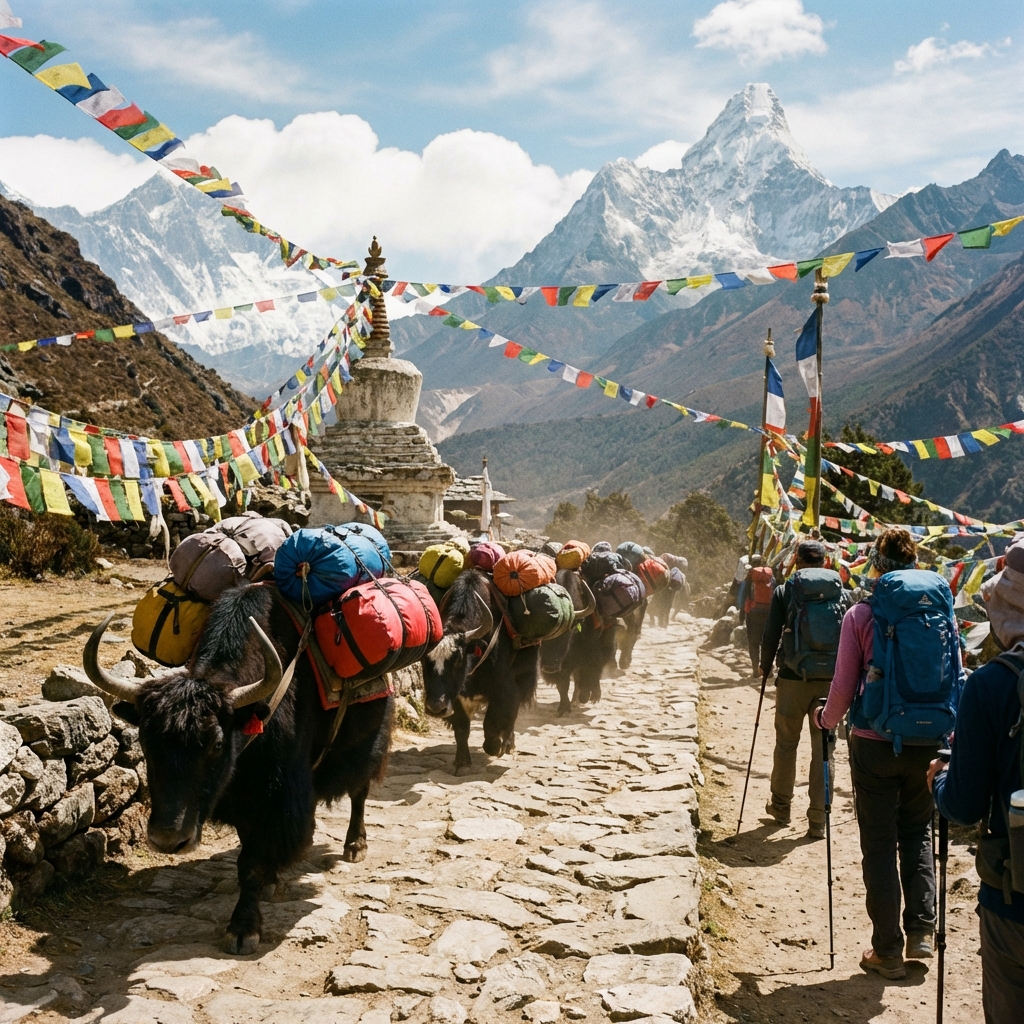
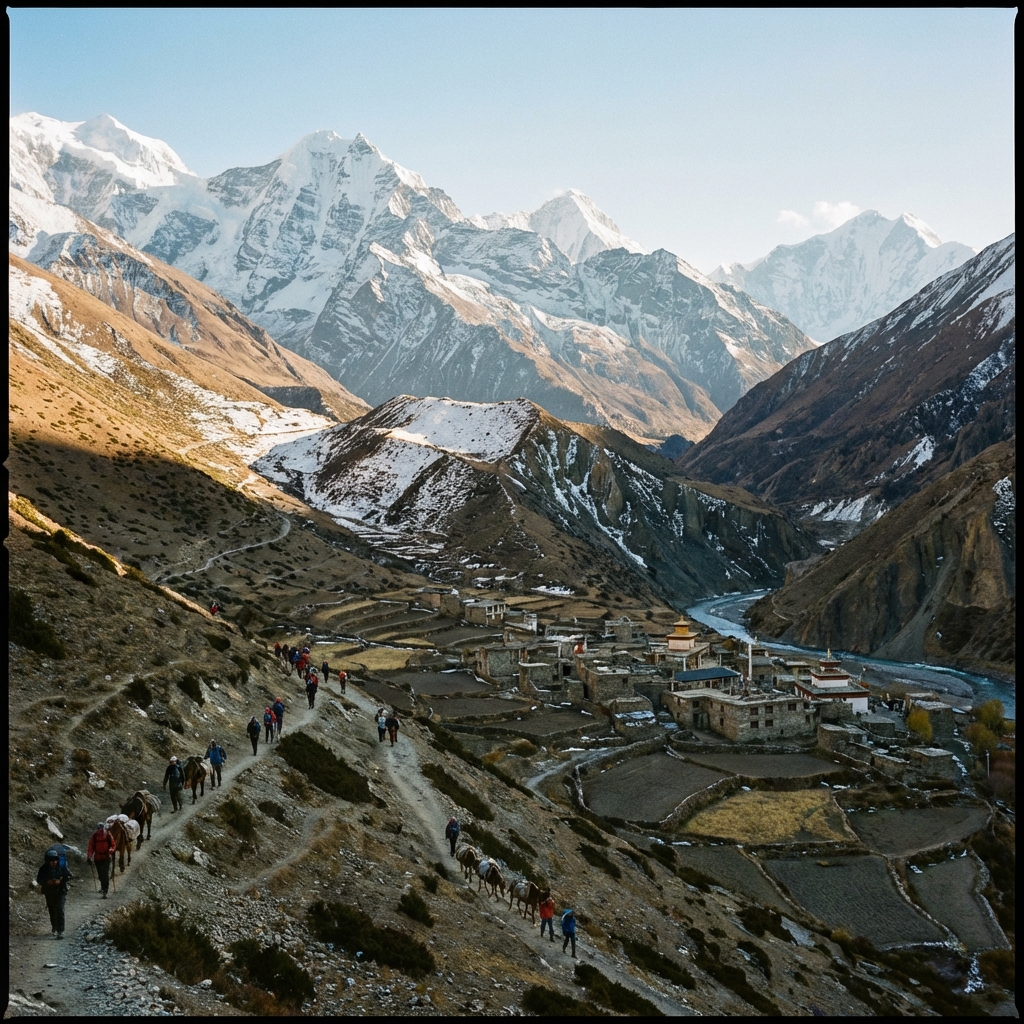
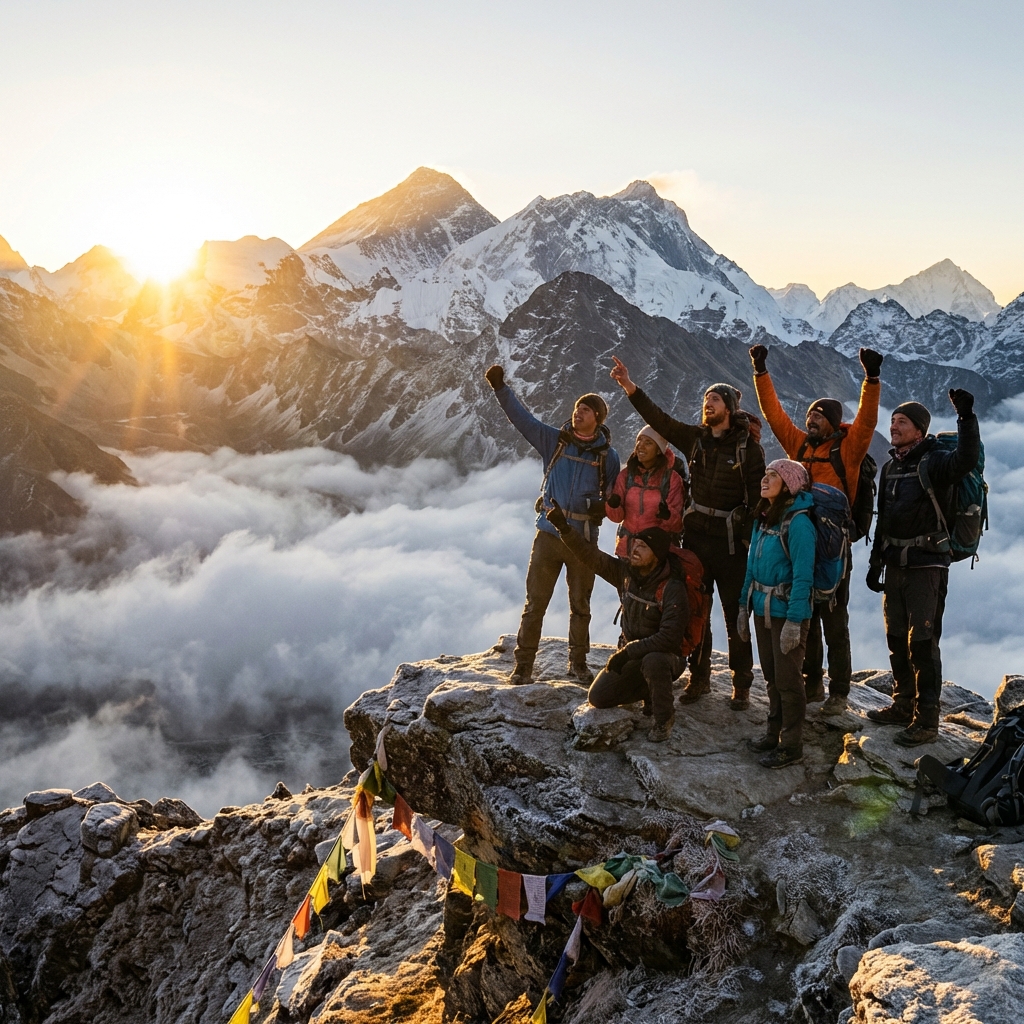
Dolpo is the place where Nepal trekking reaches its purest, most uncompromising form. Tucked behind the Dhaulagiri massif in Nepal's remote northwest, this region offers something that Everest and Annapurna simply cannot: absolute solitude, untouched Tibetan Buddhist culture, and landscapes that look like they belong on another planet.
Most trekkers never make it here. The permits are expensive, the logistics are demanding, and the infrastructure is minimal. But those who do consistently describe Dolpo as the single most meaningful trekking experience of their lives. Whether you opt for the accessible 10-12 day Lower Dolpo trek to the otherworldly Phoksundo Lake or commit to the full 24-28 day Upper Dolpo expedition through the ancient salt-trading corridors near the Tibetan border, this guide covers everything you need to plan your journey into Nepal's last great wilderness.
10-14 days
24-28 days
3,611m (Phoksundo Lake)
5,360m (Kang La Pass)
Moderate to Challenging
Very Difficult / Expedition
May-Oct (esp. Jul-Aug monsoon window)
USD 50/day (no minimum days) + $50/extra day
$20/week (first week), $10/week after
Juphal (flight from Nepalgunj)
Yes - mandatory for Upper Dolpo
Basic teahouses (Lower) / Camping (Upper)
Why Trek in Dolpo?
A Region Unlike Anywhere Else in Nepal
Dolpo occupies a unique geographical and cultural niche. Sitting in the rain shadow of the Dhaulagiri range, the region receives far less monsoon rainfall than the rest of Nepal, creating an arid, Tibetan-plateau landscape of ochre cliffs, turquoise lakes, and wind-sculpted valleys. This rain shadow effect makes Dolpo one of the few viable trekking destinations during the July-August monsoon season when every other region in Nepal is soaked.
Culturally, Dolpo is closer to Tibet than to Kathmandu. Villages practice Bon and Tibetan Buddhism with rituals that have barely changed in centuries. Some communities still organize annual salt-trading caravans to Tibet. Sky burials are performed. Monasteries perched on cliff edges house monks who have never visited a city. This is not cultural tourism staged for visitors; it is living tradition experienced by the rare outsider who makes the effort to reach here.
The Phoksundo Lake Phenomenon
Phoksundo Lake is the crown jewel of Dolpo and one of Nepal's most extraordinary natural wonders. At 3,611m elevation, this oligotrophic lake displays an almost unreal shade of deep turquoise blue, created by high mineral content and zero organic contamination. The lake has no outlet, and local Bon traditions hold it sacred, prohibiting fishing and swimming. The result is water so clear you can see the lakebed at depths exceeding 40 meters.
The lake sits within Shey Phoksundo National Park, Nepal's largest national park covering 3,555 square kilometers. The park protects critical habitat for snow leopards, blue sheep (bharal), Himalayan wolves, and musk deer.
Pro Tip
The best photographs of Phoksundo Lake come in the early morning hours before 8 AM, when the water is perfectly still and the turquoise color is at its most intense. Plan to spend at least two nights at the lake to capture optimal conditions.
Literary and Cinematic Fame
Dolpo gained international recognition through two masterworks: Peter Matthiessen's The Snow Leopard (1978), a spiritual memoir documenting his journey to the Crystal Monastery at Shey Gompa in search of the elusive snow leopard, and Eric Valli's Oscar-nominated film Himalaya (1999), which portrays the yak caravan salt-trading traditions of Dolpo villagers. Both works capture the region's extraordinary combination of cultural depth and natural grandeur.
Understanding the Two Dolpos: Lower vs Upper
The distinction between Lower Dolpo and Upper Dolpo is critical for planning. They are fundamentally different treks in terms of cost, duration, difficulty, and logistics.
Lower Dolpo Trek
| Aspect | Details |
|---|---|
| Duration | 10-14 days |
| Maximum Altitude | 3,611m (Phoksundo Lake) |
| Key Highlights | Phoksundo Lake, Ringmo village, Shey Phoksundo NP |
| Permit Cost | $20/week (first week), $10/additional week |
| Accommodation | Basic teahouses and homestays |
| Difficulty | Moderate to Challenging |
| Camping Required | No (teahouses available throughout) |
| Best For | First-time Dolpo visitors, those with 2 weeks |
Lower Dolpo provides an accessible introduction to the region without the extreme logistics of the upper route. The trek typically starts from Juphal airstrip, follows the Bheri River valley through subtropical forests, climbs through traditional Magar and Thakuri villages, and culminates at the stunning Phoksundo Lake and the Bon village of Ringmo. This route is achievable in under two weeks and does not require a restricted area permit, only the Shey Phoksundo National Park entry fee and standard trekking permits.
Upper Dolpo Trek
| Aspect | Details |
|---|---|
| Duration | 24-28 days (some itineraries extend to 30+) |
| Maximum Altitude | 5,360m (Kang La Pass) |
| Key Highlights | Shey Gompa, Crystal Mountain, Saldang, Kang La |
| Permit Cost | USD 50/day (no minimum days) + $50/extra day |
| Accommodation | Camping required for high-altitude sections |
| Difficulty | Very Difficult / Expedition Grade |
| Camping Required | Yes (mandatory above Shey Gompa) |
| Best For | Experienced trekkers, expedition seekers, 4+ weeks |
Upper Dolpo is one of Nepal's most demanding and expensive treks. Beyond Phoksundo Lake, the route enters restricted territory, crossing into the inner valleys where Matthiessen journeyed. You will visit Shey Gompa (the Crystal Monastery), traverse the 5,360m Kang La pass, explore the medieval village of Saldang (one of the highest permanently inhabited settlements in Nepal), and potentially circle back through the Tarap Valley. This requires full camping logistics, a registered trekking agency, a minimum group of two trekkers, and a significant financial commitment.
Upper Dolpo is an Expedition, Not a Trek
Upper Dolpo should not be underestimated. You will spend 3-4 weeks in extreme isolation with no mobile phone coverage, no hospitals, limited evacuation options, and passes above 5,000m. Prior high-altitude trekking experience (above 5,000m) is strongly recommended. Ensure your travel insurance covers helicopter evacuation from remote areas at altitudes above 5,000m.
Side-by-Side Comparison
| Factor | Lower Dolpo | Upper Dolpo |
|---|---|---|
| Total Cost (all-in) | $2,200-3,500 | $4,500-7,000+ |
| Permit Cost | ~$50 total | $500+ for RAP alone |
| Duration | 10-14 days | 24-28 days |
| Highest Point | 3,611m | 5,360m |
| Accommodation | Teahouses | Camping (high sections) |
| Guide Required | Mandatory (since April 2023) | Mandatory |
| Min Group Size | 1 (solo possible) | 2 (restricted area rule) |
| Altitude Risk | Low-Moderate | High |
| Evacuation Access | Moderate (Juphal within 2-3 days) | Very Limited (5-7 days from road) |
| Physical Demand | Moderate-High | Very High |
| Cultural Immersion | High | Extraordinary |
Detailed Itineraries
Lower Dolpo: 12-Day Itinerary
| Day | Route | Altitude | Hours | Notes |
|---|---|---|---|---|
| 1 | Fly Kathmandu to Nepalgunj | 150m | - | Afternoon flight; overnight Nepalgunj |
| 2 | Fly Nepalgunj to Juphal | 2,475m | - | 30-min mountain flight; trek to Dunai |
| 3 | Dunai to Chhepka | 2,640m | 5-6 hrs | Follow Suli Gad river through forest |
| 4 | Chhepka to Jharana (Waterfall) | 2,760m | 5-6 hrs | Pass dramatic canyon, Nepal's tallest waterfall |
| 5 | Jharana to Ringmo / Phoksundo Lake | 3,611m | 5-6 hrs | Steep climb; first views of the lake |
| 6 | Phoksundo Lake Exploration Day | 3,611m | 4-5 hrs | Circumnavigate lake shores, visit Bon temples |
| 7 | Rest / Exploration Day at Phoksundo | 3,611m | Optional | Photography, village visits, acclimatization |
| 8 | Phoksundo to Jharana | 2,760m | 4-5 hrs | Descent through canyon |
| 9 | Jharana to Chhepka | 2,640m | 5-6 hrs | Riverside trail return |
| 10 | Chhepka to Dunai | 2,140m | 5-6 hrs | Return to district headquarters |
| 11 | Dunai to Juphal; fly to Nepalgunj | 150m | 2 hrs trek | Morning trek, afternoon flight |
| 12 | Fly Nepalgunj to Kathmandu | 1,400m | - | Return to capital |
Pro Tip
Build at least two buffer days into your Dolpo itinerary for weather-related flight delays. The Juphal-Nepalgunj flight is notoriously unreliable during monsoon and post-monsoon, and cancellations of 2-3 days are common. Having buffer days prevents stressful rebooking of international flights.
Upper Dolpo: 26-Day Itinerary
| Day | Route | Altitude | Hours | Notes |
|---|---|---|---|---|
| 1 | Fly Kathmandu to Nepalgunj | 150m | - | Afternoon arrival |
| 2 | Fly Nepalgunj to Juphal | 2,475m | - | Trek to Dunai |
| 3 | Dunai to Tarakot | 2,540m | 6 hrs | Historic fortress village |
| 4 | Tarakot to Laini | 3,420m | 6-7 hrs | Climb through pine forest |
| 5 | Laini to Nawarpani | 3,700m | 5-6 hrs | Enter high alpine zone |
| 6 | Nawarpani to Dho Tarap | 4,090m | 6-7 hrs | Ancient Bon village |
| 7 | Rest Day at Dho Tarap | 4,090m | - | Acclimatization; explore village and monastery |
| 8 | Dho Tarap to Numa La Base Camp | 4,440m | 5-6 hrs | Approach first major pass |
| 9 | Numa La (5,318m) to Danigar | 4,540m | 7-8 hrs | Cross high pass; demanding day |
| 10 | Danigar to Shey Gompa | 4,390m | 6-7 hrs | Crystal Monastery arrival |
| 11 | Rest Day at Shey Gompa | 4,390m | - | Explore monastery, Crystal Mountain views |
| 12 | Shey to Phoksundo Lake (North Shore) | 3,611m | 6-7 hrs | Descent to lake from north |
| 13 | Phoksundo Lake Exploration | 3,611m | - | Full rest day at the lake |
| 14 | Phoksundo to Ringmo to Phoksundo Khola | 3,200m | 5-6 hrs | Begin journey toward Saldang route |
| 15 | Phoksundo Khola to Snowfields Camp | 4,450m | 6-7 hrs | Climb toward Kang La |
| 16 | Cross Kang La (5,360m) to Shey | 4,100m | 8-9 hrs | Most demanding day; highest point |
| 17 | Shey to Saldang | 3,770m | 6-7 hrs | Enter Saldang Valley |
| 18 | Rest Day at Saldang | 3,770m | - | Explore highest inhabited valley |
| 19 | Saldang to Jeng La Base | 4,200m | 5-6 hrs | Approach second circuit pass |
| 20 | Cross Jeng La (4,540m) to Tokyu | 4,160m | 7-8 hrs | Return through high terrain |
| 21 | Tokyu to Dho Tarap | 4,090m | 5-6 hrs | Return to familiar valley |
| 22 | Dho Tarap to Laini | 3,420m | 5-6 hrs | Descent begins |
| 23 | Laini to Tarakot | 2,540m | 6-7 hrs | Retrace earlier route |
| 24 | Tarakot to Dunai | 2,140m | 5-6 hrs | Final trekking day |
| 25 | Dunai to Juphal; fly to Nepalgunj | 150m | - | Subject to flight availability |
| 26 | Fly Nepalgunj to Kathmandu | 1,400m | - | Return home |
Flight Delays Are the Norm, Not the Exception
Domestic flights to Juphal and Nepalgunj are frequently delayed or cancelled due to weather. Budget a minimum of 3 extra days beyond your planned itinerary. Some trekkers have been stranded in Juphal or Nepalgunj for up to 5 days waiting for flights. Always have a backup plan and sufficient cash reserves for extended stays.
Permits and Documentation
Dolpo has one of the most complex permit structures in Nepal. Understanding the requirements for your chosen route prevents costly mistakes and potential legal issues.
Lower Dolpo Permits
| Permit | Cost | Where to Obtain | Notes |
|---|---|---|---|
| Shey Phoksundo National Park Entry | NPR 3,000 (~$23) | Park entrance at Chhepka | Mandatory for all Dolpo trekkers |
| TIMS Card | NPR 2,000 (~$15) | Nepal Tourism Board, Kathmandu | Trekkers' Information Management System |
| Lower Dolpo Restricted Area Permit | $20/week (first), $10/week (subsequent) | Department of Immigration, Kathmandu | Required beyond Dunai toward Phoksundo |
Upper Dolpo Permits
| Permit | Cost | Where to Obtain | Notes |
|---|---|---|---|
| Upper Dolpo Restricted Area Permit | USD 50 per day (no minimum) days | Department of Immigration, Kathmandu | Additional $50 per extra day |
| Shey Phoksundo National Park Entry | NPR 3,000 (~$23) | Park entrance | Same as Lower Dolpo |
| TIMS Card | NPR 2,000 (~$15) | Nepal Tourism Board | Required |
Pro Tip
The $500 Upper Dolpo restricted area permit is per person, regardless of group size. There is no group discount. Factor this significant cost into your budget from the outset. Many trekkers are surprised to learn that the permit alone can exceed $700 for a typical 14-day restricted area stay.
Permit Processing
Upper Dolpo restricted area permits must be processed through a registered trekking agency. You cannot obtain them independently. The process typically takes 3-5 business days in Kathmandu and requires:
- Passport copies (with valid Nepal visa)
- Passport-sized photographs
- A registered agency's application
- Minimum group of 2 trekkers
- Full payment upfront
For comprehensive information on all Nepal trekking permits, see our complete permits guide.
Best Season for Dolpo Trekking
Dolpo's rain shadow position behind the Dhaulagiri range creates a unique seasonal profile that differs dramatically from the rest of Nepal.
Season Comparison
| Season | Months | Weather | Crowds | Verdict |
|---|---|---|---|---|
| Spring | Mar-May | Warming; haze possible; some rain at lower elevations | Very Low | Good for Lower Dolpo; Upper passes may have snow in March |
| Monsoon | Jun-Aug | Rain shadow keeps Dolpo drier; some precipitation at lower elevations | Almost None | Excellent for Upper Dolpo; best photography light |
| Autumn | Sep-Nov | Clear skies; cold nights at altitude; dry trails | Low | Best overall conditions; most popular season |
| Winter | Dec-Feb | Extremely cold; passes blocked by snow; many lodges closed | None | Not recommended; passes dangerous or impassable |
The Monsoon Advantage
Dolpo is one of the few trekking regions in Nepal that works during monsoon season (July-August). While Everest, Annapurna, and Langtang are drenched in daily rainfall, Dolpo's position in the rain shadow means significantly reduced precipitation. This creates a unique window for trekkers who want to explore while the rest of Nepal's trails are quiet.
However, "drier" does not mean "dry." Lower elevations on the approach to Dolpo (the Juphal-Dunai corridor) still receive monsoon rain. Leeches are present below 3,000m. River crossings can be challenging with swollen streams. The advantage kicks in fully above 3,500m, where the rain shadow effect is strongest.
Monsoon Trekking in Dolpo
If you choose the monsoon window (July-August), pack rain gear for the first 2-3 days at lower elevations. Once above Phoksundo Lake, you will experience the rain shadow benefit with predominantly clear skies. This is also peak wildflower season, with alpine meadows blanketed in blue poppies and edelweiss.
Difficulty Assessment and Fitness Requirements
Lower Dolpo: Moderate to Challenging
Lower Dolpo is physically demanding but within reach of reasonably fit trekkers with some multi-day hiking experience. The main challenges are:
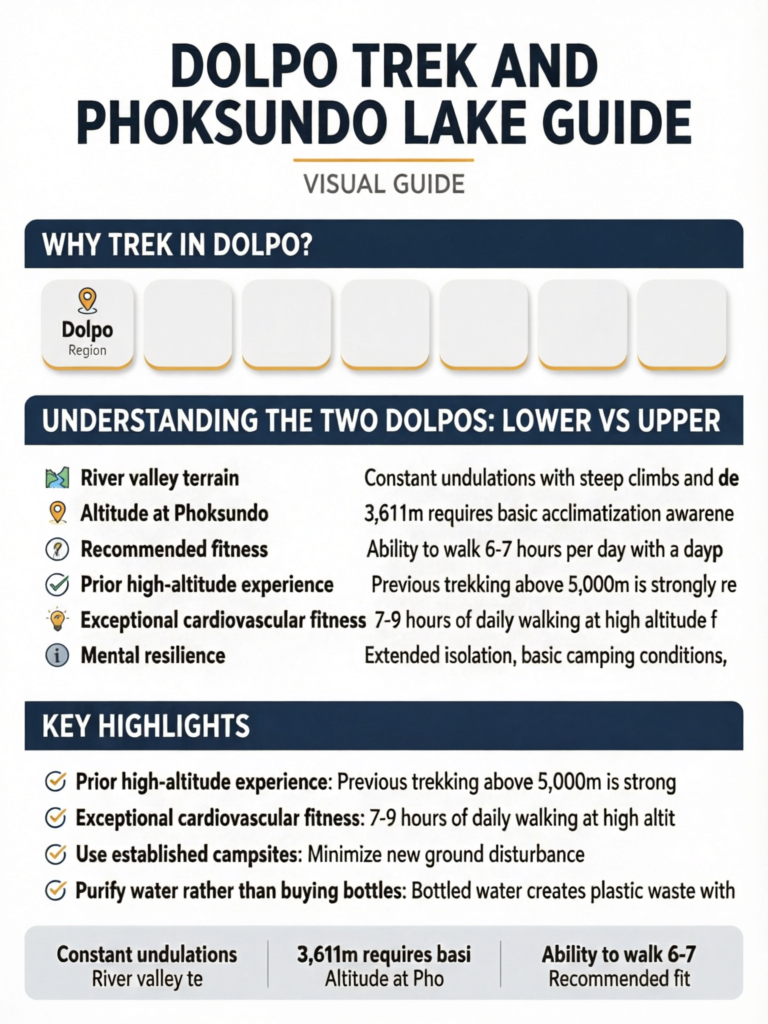
- River valley terrain: Constant undulations with steep climbs and descents through river gorges
- Trail quality: Less maintained than Everest or Annapurna trails; some narrow sections with exposure
- Heat at lower elevations: The Bheri valley approach can be very hot (35+ degrees Celsius) in May-June
- Altitude at Phoksundo: 3,611m requires basic acclimatization awareness, though AMS risk is moderate
Recommended fitness: Ability to walk 6-7 hours per day with a daypack over hilly terrain for consecutive days. Prior multi-day trekking experience is strongly recommended.
Upper Dolpo: Very Difficult / Expedition Grade
Upper Dolpo is among the most physically demanding treks in Nepal. You need:
- Prior high-altitude experience: Previous trekking above 5,000m is strongly recommended
- Exceptional cardiovascular fitness: 7-9 hours of daily walking at high altitude for weeks
- Mental resilience: Extended isolation, basic camping conditions, potential for harsh weather
- Cold tolerance: Nighttime temperatures can drop below minus 15 degrees Celsius at high camps
Recommended preparation: 12-16 weeks of structured training including cardiovascular endurance, strength training (especially legs and core), and if possible, altitude pre-acclimatization through shorter high-altitude treks.
Logistics and Getting There
Getting to Juphal
The standard approach to Dolpo begins with a flight from Kathmandu to Nepalgunj (1 hour), followed by a mountain flight from Nepalgunj to Juphal (30 minutes). Juphal airstrip (2,475m) is the gateway to both Lower and Upper Dolpo.
| Route | Mode | Duration | Cost (approx.) | Notes |
|---|---|---|---|---|
| Kathmandu to Nepalgunj | Flight | 1 hour | $120-150 | Multiple daily flights; book early |
| Nepalgunj to Juphal | Flight | 30 min | $150-180 | Small aircraft; weight limits strict |
| Kathmandu to Nepalgunj | Bus | 10-12 hours | $15-20 | Night bus option to save a day |
| Alternative: Surkhet to Dunai | Jeep/Bus | 12-16 hours | $30-50 | Rough road; possible when flights cancel |
Pro Tip
Book your Nepalgunj-Juphal flights well in advance during autumn season (Sep-Nov). These small aircraft (typically Twin Otter) carry only 15-19 passengers and fill up quickly. Your trekking agency should handle this booking as part of your package, but confirm the flight is actually booked, not just requested.
What to Pack for Dolpo
Beyond standard Nepal trekking gear, Dolpo requires additional preparation:
Lower Dolpo Additions:
- Extra water purification capacity (limited bottled water availability)
- Cash in small denominations (no ATMs beyond Dunai)
- Sturdy footwear for river valley terrain
- Insect repellent and leech socks for monsoon approach
Upper Dolpo Additions (beyond standard high-altitude gear):
- Four-season sleeping bag rated to minus 20 degrees Celsius
- Expedition-grade down jacket
- Snow gaiters and trekking poles (mandatory for pass crossings)
- Personal first aid kit with altitude medication (Diamox, Dexamethasone)
- Minimum 3 weeks of any prescription medications
- Solar charger (no electricity for charging devices)
- Comprehensive maps (no phone signal for GPS apps)
Cost Breakdown
Lower Dolpo: Budget Estimate (Per Person)
| Category | Cost Range | Notes |
|---|---|---|
| Flights (KTM-Nepalgunj-Juphal return) | $500-650 | Domestic flights |
| Permits & Park Fees | $50-80 | Lower Dolpo RAP + SNPN + TIMS |
| Guide (12 days) | $300-400 | Licensed trekking guide |
| Porter (12 days) | $200-300 | One porter per 2 trekkers typical |
| Accommodation & Meals | $350-500 | Basic teahouses; meals included |
| Contingency & Extras | $200-300 | Tips, snacks, emergency fund |
| Total | $1,600-2,230 | Independent with guide/porter |
| Through Agency | $2,200-3,500 | All-inclusive package |
Upper Dolpo: Budget Estimate (Per Person)
| Category | Cost Range | Notes |
|---|---|---|
| Flights (KTM-Nepalgunj-Juphal return) | $500-650 | Same as Lower Dolpo |
| Restricted Area Permit | $500-700+ | $500 base + $50/day over 10 days |
| National Park Fee | $23 | Shey Phoksundo NP |
| TIMS | $15 | Standard |
| Agency Fee (all-inclusive 26 days) | $3,000-5,000 | Guide, cook, porters, camping gear, food |
| Contingency | $300-500 | Buffer days, tips, emergencies |
| Total | $4,500-7,000+ | All-inclusive through agency |
Cost-Sharing Tip for Upper Dolpo
Upper Dolpo becomes significantly more affordable with larger groups because camping logistics costs (cook, porter team, equipment) are shared while the per-person permit cost stays fixed. A group of 4-6 can reduce per-person costs by 20-30% compared to a pair of trekkers.
Wildlife and Natural History
Dolpo's extreme remoteness and protected national park status support some of Nepal's healthiest wildlife populations.
Key Species
| Species | Status | Likelihood of Sighting | Best Location |
|---|---|---|---|
| Snow Leopard | Endangered | Low (5-10% on Upper Dolpo) | Above 4,000m; Shey area |
| Blue Sheep (Bharal) | Common | Very High (90%+) | Throughout alpine areas |
| Himalayan Wolf | Rare | Low | High pastures near Saldang |
| Musk Deer | Vulnerable | Moderate | Forest zones 3,000-4,000m |
| Himalayan Tahr | Moderate | Moderate | Cliff faces near Phoksundo |
| Lammergeier (Bearded Vulture) | Uncommon | High | Soaring above valleys |
| Golden Eagle | Uncommon | Moderate-High | Open alpine areas |
The Shey area is considered one of the best places in the world for potential snow leopard sightings, as the region supports a dense population of blue sheep, the snow leopard's primary prey. While sightings are never guaranteed, the chances here are among the highest anywhere. Upper Dolpo trekkers in winter (when few dare to go) have the best odds, as snow leopards descend to lower elevations.
Cultural Highlights
Bon Religion
Dolpo is one of the last strongholds of the pre-Buddhist Bon religion, a shamanic tradition that predates Tibetan Buddhism by centuries. In villages like Ringmo and parts of Saldang, you will encounter Bon rituals, prayer wheels that turn counter-clockwise (opposite to Buddhist convention), and sacred natural sites. Showing respect for these traditions is paramount, and your guide should brief you on appropriate behavior.
Sky Burials
Some communities in Upper Dolpo still practice jhator (sky burial), where the deceased are ceremonially offered to vultures at designated sites. These are deeply sacred, private ceremonies. Trekkers should never attempt to photograph or observe sky burials without explicit invitation, which is exceptionally rare for outsiders.
The Salt Trade
For centuries, Dolpo communities conducted an annual yak caravan salt trade with Tibet, exchanging Tibetan salt for lowland grain. While the trade has diminished significantly due to the availability of Indian iodized salt, some families still maintain the tradition. Eric Valli's film Himalaya documents this vanishing way of life.
Pro Tip
If you want to understand Dolpo's culture before visiting, read Peter Matthiessen's The Snow Leopard and watch Eric Valli's Himalaya (also known as Caravan). Both provide profound context that will enrich your trek enormously. Your guide can point out specific locations from both works.
Choosing a Trekking Agency for Dolpo
Dolpo requires an experienced, specialized agency. Not all Nepal trekking agencies have the logistics capability or local knowledge to operate effectively in such a remote region.
What to Look For
- Proven Dolpo track record: Ask for references from past Dolpo clients, not just general Nepal trekking experience
- Established local networks: The best agencies have relationships with Dolpo communities for supplies, emergency support, and cultural access
- Realistic itineraries: Beware of agencies that promise Upper Dolpo in fewer than 22 days; they are cutting essential acclimatization
- Emergency protocols: Ask specifically about satellite phone availability, evacuation plans, and staff wilderness first aid training
- Fair porter treatment: Dolpo treks require large support teams; verify the agency pays fair wages and provides proper equipment
For guidance on evaluating trekking agencies, see our comprehensive agency selection guide.
Combining Dolpo with Other Treks
For trekkers with extended time in Nepal, Dolpo can be combined with other adventures:
- Dolpo + Upper Mustang: Both restricted areas in western Nepal; requires 5-6 weeks total but covers Nepal's two most culturally unique regions
- Lower Dolpo + Rara Lake: Nepal's two most remote lake destinations; feasible as a 3-week circuit
- Dolpo as a monsoon trek: Trek Dolpo in July-August, then Everest or Annapurna in the October-November autumn season
For more remote trekking options, see our guide to off-beaten-path treks in Nepal.
Communication and Connectivity
Expect near-total disconnection from the outside world in Dolpo:
| Location | Mobile Signal | WiFi | Notes |
|---|---|---|---|
| Dunai | Basic (NTC) | Limited | District HQ; last reliable contact |
| Juphal | Weak (NTC) | No | Airport area only |
| Phoksundo Lake | None | No | Complete disconnect |
| Upper Dolpo (all areas) | None | None | Satellite phone only |
If staying connected is essential for emergencies, arrange a satellite phone through your agency. Thuraya or Iridium handsets can be rented in Kathmandu for approximately $5-8/day plus call charges. This is strongly recommended for Upper Dolpo.
Environmental Responsibility
Dolpo's pristine environment is fragile. As a trekker in this remote region, you carry significant responsibility:
- Pack out all waste: There is no waste management infrastructure; carry everything out
- Use established campsites: Minimize new ground disturbance
- Purify water rather than buying bottles: Bottled water creates plastic waste with no disposal options
- Respect sacred sites: Do not disturb mani walls, prayer flags, or monastery property
- Minimize firewood use: Fuel is scarce; your team should carry kerosene or gas stoves
Leave No Trace Is Non-Negotiable in Dolpo
Unlike Everest or Annapurna where waste management systems exist (however imperfect), Dolpo has zero waste infrastructure. Every piece of trash your group generates must be carried out. Verify that your agency has a strict carry-out waste policy and that they enforce it. Previous expeditions that left trash in Upper Dolpo have caused lasting damage to pristine campsites.
Health and Safety Considerations
Altitude Profile
Lower Dolpo peaks at 3,611m (Phoksundo Lake), presenting modest altitude risk. Upper Dolpo involves extended time above 4,000m with pass crossings above 5,000m, requiring careful acclimatization.
Medical Facilities
There are no hospitals, clinics, or pharmacies beyond Dunai. Your group must be entirely self-sufficient for medical needs. Carry a comprehensive medical kit and ensure at least one team member has wilderness first aid training.
Evacuation
Helicopter evacuation from Upper Dolpo is theoretically possible but operationally very challenging. High altitudes, unpredictable weather, and extreme remoteness mean evacuations can take 24-48 hours or longer to arrange. Travel insurance that explicitly covers helicopter evacuation from altitudes above 5,000m in remote areas is absolutely essential.
For detailed altitude sickness prevention strategies, see our acclimatization guide.
Frequently Asked Questions
Is Dolpo suitable for beginner trekkers?
Lower Dolpo is achievable for fit beginners with some multi-day hiking experience, though prior Nepal trekking experience is strongly recommended. Upper Dolpo is categorically not suitable for beginners and requires significant prior high-altitude trekking experience.
Can I trek Dolpo independently without an agency?
Lower Dolpo can technically be trekked with just a guide (no agency required), though the logistics are challenging to arrange independently. Upper Dolpo legally requires a registered trekking agency, a mandatory guide, and a minimum group of 2 trekkers for the restricted area permit.
How much does a Dolpo trek cost in total?
Lower Dolpo costs approximately $2,200-3,500 per person through an agency. Upper Dolpo costs $4,500-7,000+ per person. The wide range depends on group size, itinerary length, and agency quality. The restricted area permit alone ($500+ for Upper Dolpo) is a significant fixed cost.
What is the best time of year for Dolpo?
Autumn (September-November) offers the best overall conditions with clear skies and stable weather. However, Dolpo is one of the few Nepal trekking destinations viable during monsoon (July-August) due to its rain shadow position. Spring (April-May) is also good but can be hazy at lower elevations.
How do I get to Dolpo?
The standard route is flying from Kathmandu to Nepalgunj (1 hour), then Nepalgunj to Juphal airstrip (30 minutes). From Juphal, you trek to Dunai (2-3 hours) and onward into Dolpo. Road access from Surkhet to Dunai exists as a backup but takes 12-16 hours on rough roads.
Is Phoksundo Lake worth the trek on its own?
Absolutely. Phoksundo Lake is one of Nepal's most spectacular natural sights, and the 10-14 day Lower Dolpo trek to reach it is a rewarding adventure in its own right. Many trekkers visit Dolpo specifically for the lake without continuing to Upper Dolpo.
What wildlife can I expect to see in Dolpo?
Blue sheep (bharal) are almost guaranteed above 3,500m, often in herds of dozens. Lammergeier vultures and golden eagles are regularly spotted. Snow leopard sightings are possible but rare. The Upper Dolpo region around Shey is considered one of the best snow leopard habitats in the world.
Do I need a satellite phone for Dolpo?
For Lower Dolpo, a satellite phone is recommended but not essential. For Upper Dolpo, it is strongly recommended, especially for groups. There is zero mobile phone coverage in Upper Dolpo, and in a medical emergency, a satellite phone could be the difference between timely evacuation and a dangerous delay.
How physically demanding is Upper Dolpo compared to Everest Base Camp?
Significantly more demanding. While EBC peaks at 5,364m (similar to Upper Dolpo passes), EBC has well-maintained trails, teahouse accommodation, and established evacuation infrastructure. Upper Dolpo involves camping at altitude, poorly maintained trails, multiple passes above 5,000m, and 24-28 days of continuous trekking versus EBC's typical 12-14 days. Prior EBC experience is excellent preparation but not sufficient preparation on its own.
Can I see snow leopards in Dolpo?
It is possible but not guaranteed. Snow leopard sighting rates in the Shey area are estimated at 5-10% for autumn treks. Dedicated wildlife-focused treks of 2-3 weeks in the Shey region during late autumn or early winter offer better odds. Your guide's local knowledge of recent sightings and animal movement patterns is the most important factor.
What happens if flights to Juphal are cancelled?
Flight cancellations are common, especially during monsoon. Options include: waiting for the next available flight (could be 1-5 days), arranging a jeep from Surkhet to Dunai (12-16 hours on rough roads), or chartering a helicopter (extremely expensive). Build buffer days into your itinerary and carry extra cash for extended accommodation in Nepalgunj.
Is Upper Dolpo worth the extra cost over Lower Dolpo?
For experienced trekkers seeking the ultimate remote Himalayan experience, Upper Dolpo is unmatched. The additional cost buys access to Shey Gompa, medieval Saldang village, the Kang La crossing, and true expedition-grade wilderness. However, if this is your first visit to the region and you have limited time, Lower Dolpo with Phoksundo Lake provides an outstanding introduction at a fraction of the cost.
Final Thoughts
Dolpo is not for everyone, and that is precisely what makes it extraordinary. In an era when Everest Base Camp receives over 50,000 trekkers per year and the Annapurna Circuit is being shortened by road construction, Dolpo remains genuinely wild, authentically cultural, and profoundly quiet. Whether you choose the accessible beauty of Phoksundo Lake on a Lower Dolpo trek or commit to the full expedition of Upper Dolpo, you will experience Nepal as it existed before mass tourism transformed its most famous mountains.
The investment of time, money, and physical effort required to reach Dolpo serves as a natural filter, ensuring that those who arrive truly appreciate what they find. If you seek the intersection of wilderness, culture, and solitude at its purest, Dolpo is waiting.