
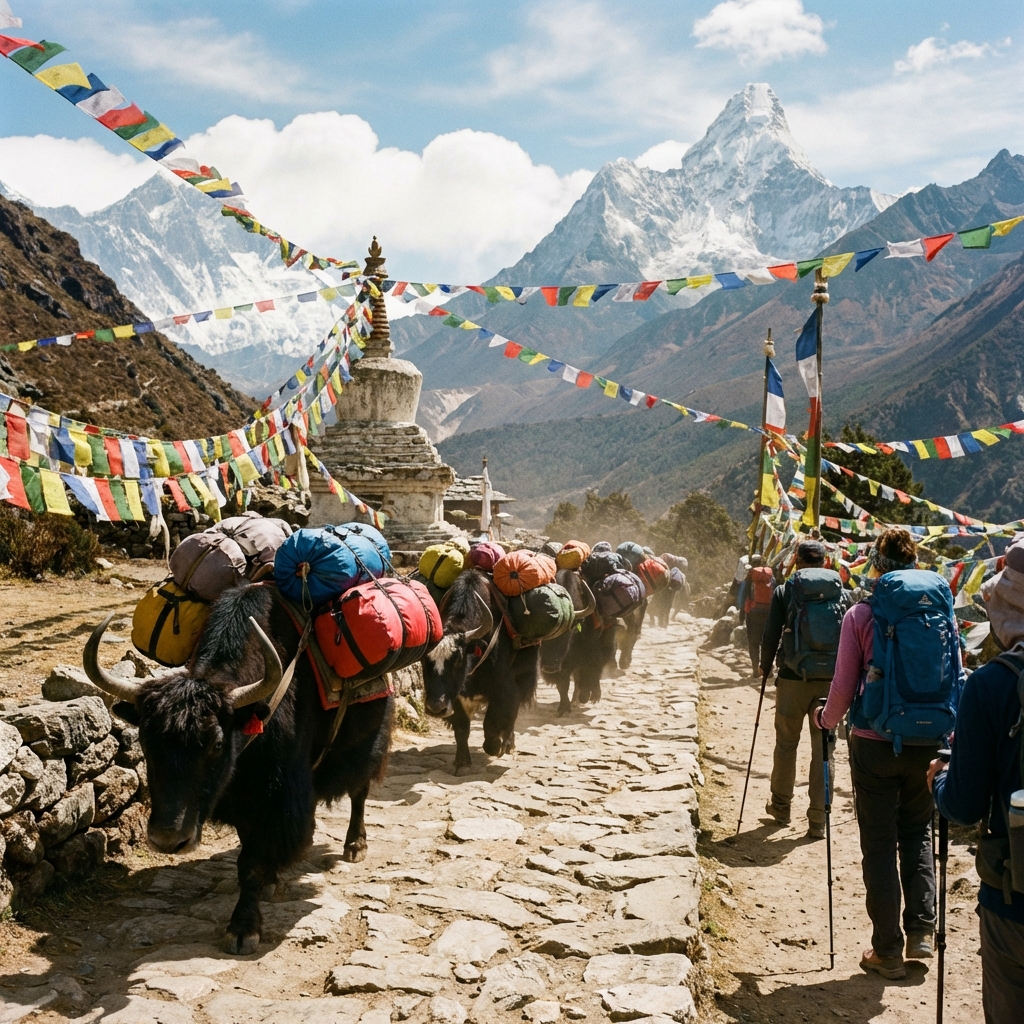
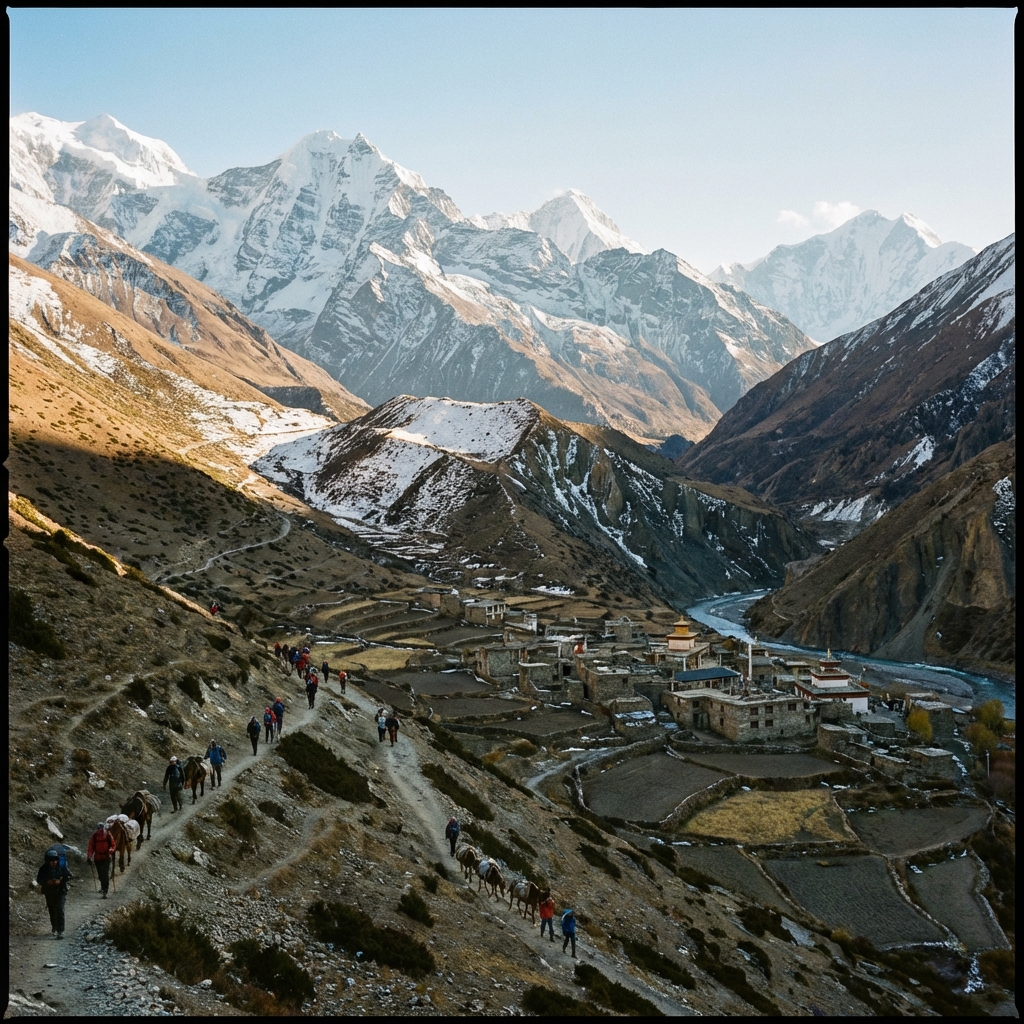
The Mardi Himal trek is one of the newer additions to Nepal's popular trekking routes, and it occupies a peculiar position in the difficulty rankings. On paper, it looks straightforward: five to seven days, a maximum altitude around 4,500 meters, and a starting point just outside Pokhara. Trekking companies often market it as a "moderate" alternative to the Annapurna Base Camp trek or a more adventurous upgrade from Poon Hill.
The reality is more complicated. Mardi Himal packs some of the steepest sustained climbing in the Annapurna region into a compressed timeframe. The ridgeline approach to base camp is narrow, exposed to weather, and unlike anything on the standard Annapurna trails. There are fewer tea houses than on established routes, meaning less flexibility to adjust your daily plan. And the altitude, while lower than EBC, is high enough to cause serious problems for those who ascend too quickly.
This assessment gives you the full picture of what the Mardi Himal trek actually demands.
What Actually Makes Mardi Himal Difficult
The Mardi Himal trek has a deceptively simple profile. It climbs from approximately 2,000 meters near Kande to roughly 4,500 meters at base camp, then returns. But the way it climbs, and the conditions along the route, create challenges that the elevation numbers alone do not reveal.
Factor 1: Steep, Relentless Climbing
Unlike the Annapurna Circuit (which follows river valleys with gradual inclines) or EBC (which alternates between flat sections and climbs), Mardi Himal goes almost straight up. The trail gains most of its altitude through steep, direct ascents with limited flat or downhill sections to provide relief.
The steepest day, typically from Low Camp (2,990m) to High Camp (3,580m) or from Forest Camp directly toward High Camp, can involve over 1,000 meters of climbing in 5-6 hours of walking. At sea level, this would be a demanding day hike. At altitude, with a pack, after previous days of climbing, it is genuinely hard work.
What this means practically: Your quadriceps, glutes, and calves work at a high intensity for longer sustained periods than on most other Nepal treks. Trekkers who have strong cardiovascular fitness but weak legs are disproportionately challenged by Mardi Himal.
The Steep Day Catches People Off Guard
The climb from Low Camp to High Camp is where most trekkers reassess their fitness. The trail ascends through steep alpine meadows and rocky sections with minimal switchbacks. Unlike the long, graded zigzags on Annapurna trails, Mardi Himal's trail often goes directly uphill. If you have not trained specifically for steep sustained climbing (stairs, incline treadmill, or steep hill repeats), this day will be significantly harder than you expect.
Factor 2: The Ridgeline Above High Camp
The section from High Camp (3,580m) to Mardi Himal Base Camp (approximately 4,500m) follows a narrow ridgeline that is unlike anything on the standard Annapurna or Everest trails. This ridge is the defining feature of the Mardi Himal trek, and it introduces challenges you will not find on more established routes.
Narrowness: The ridgeline narrows to a few meters in places. The trail is clear but the terrain drops away on both sides. While not technically dangerous in good conditions, trekkers with a fear of heights or exposure may find this section psychologically challenging.
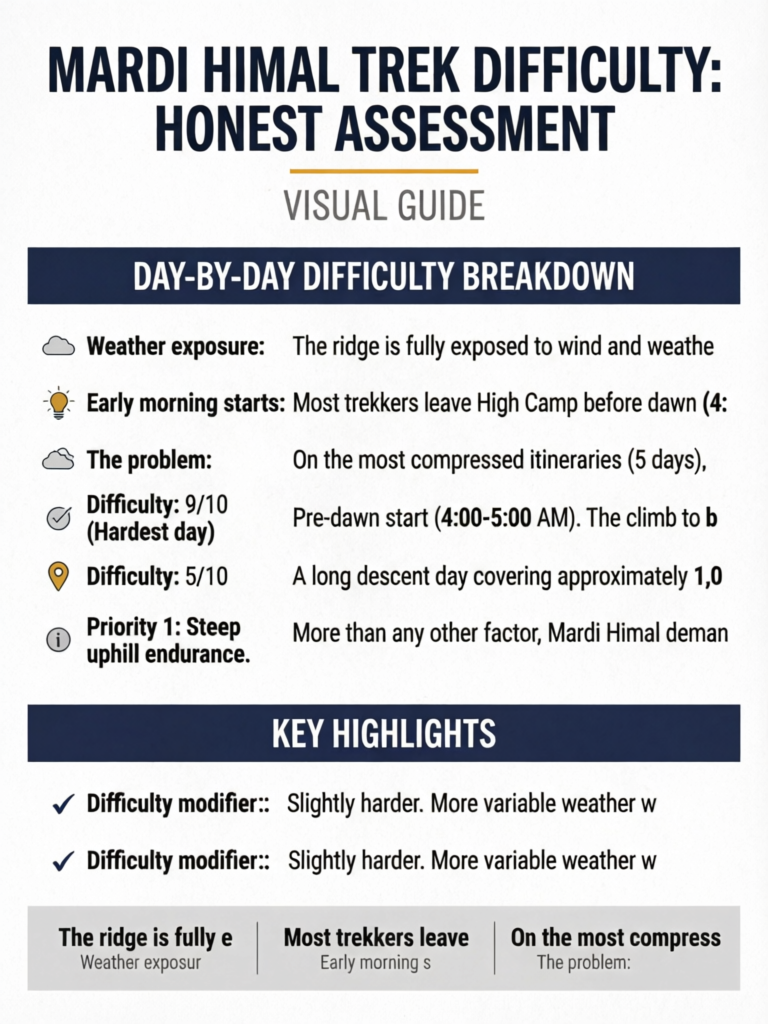
Weather exposure: The ridge is fully exposed to wind and weather. There is no shelter, no tree cover, and no escape from deteriorating conditions. If clouds move in (common in the afternoon), visibility can drop to near zero on the ridge, making navigation difficult and creating genuine safety concerns.
Terrain: The surface transitions from packed earth and grass at lower sections to loose rock and scree near base camp. Footing requires attention, particularly on the descent when tired legs and loose gravel combine to create slip hazards.
Early morning starts: Most trekkers leave High Camp before dawn (4:00-5:00 AM) to reach base camp for sunrise views of Machapuchare (Fishtail) and the Annapurna range. Walking a narrow ridge in the dark, even with a headlamp, adds difficulty and requires careful foot placement.
Factor 3: Rapid Altitude Gain
The Mardi Himal trek gains altitude quickly. A typical itinerary takes you from around 2,000 meters to 4,500 meters in three to four trekking days. This pace of ascent pushes the boundaries of safe acclimatization guidelines, which recommend gaining no more than 300-500 meters of sleeping altitude per day above 3,000 meters.
The problem: On the most compressed itineraries (5 days), trekkers sleep at approximately 2,000m on night one, 2,990m on night two, 3,580m on night three, and reach 4,500m on the morning of day four. That is a gain of 2,500 meters of sleeping altitude in three nights, with the highest day push reaching 920 meters above the previous night's camp.
Choose the 7-Day Itinerary Over the 5-Day
The 5-day Mardi Himal itinerary is advertised as ideal for time-pressed trekkers, but the rapid altitude gain significantly increases your risk of AMS. The 7-day version adds acclimatization time by including an extra night at Forest Camp or Low Camp. This small time investment dramatically improves your chances of reaching base camp feeling good rather than battling a headache and nausea. The shorter itinerary saves two days but may cost you the summit.
Factor 4: Fewer Tea Houses and Limited Facilities
Mardi Himal is a newer route, and the tea house infrastructure is less developed than on the Annapurna Circuit, ABC, or EBC. This affects difficulty in several practical ways.
Limited stopping points: On established routes, tea houses appear every 30-60 minutes, allowing you to rest, eat, and adjust your daily plan. On Mardi Himal, the gaps between tea houses are longer, particularly above Forest Camp. If you are struggling, there may not be a convenient place to stop short of your planned destination.
Basic facilities: Tea houses at High Camp are more basic than those at comparable altitudes on established routes. Expect shared rooms, basic menus, limited heating, and occasional water supply issues. While adequate for trekking needs, the comfort level is lower.
Food and water: Menu options narrow significantly at higher camps. Carry supplementary snacks and ensure you have water purification capability, as boiled or bottled water availability can be inconsistent at the higher camps.
Factor 5: Trail Condition Variability
The Mardi Himal trail is not as well-maintained as the Annapurna Circuit or EBC routes. Below Forest Camp, the trail passes through rhododendron forest on a clear path. Above Forest Camp, the trail becomes less defined in places, with some sections crossing open meadows where the path is marked by cairns or flags rather than a clear tread.
In wet conditions (particularly during or after rain, or in the early spring when snow is melting), sections become muddy and slippery. The steep gradient combined with wet conditions creates challenging footing that demands energy and attention.
Afternoon Cloud and Weather Risk on the Ridge
The Mardi Himal ridgeline above High Camp is notorious for rapid weather changes. Clear mornings frequently give way to afternoon cloud, and the ridge offers zero shelter. If you are still on the ridge when weather moves in, you face reduced visibility, cold wind, and potentially disorienting conditions. Always aim to complete the base camp section and return to High Camp before midday. Late starts on summit day are a common and serious mistake.
Day-by-Day Difficulty Breakdown
This uses a 6-day Mardi Himal itinerary, which provides a reasonable balance between acclimatization and time efficiency. Difficulty rated 1-10.
Day 1: Pokhara to Kande to Forest Camp (1,770m to 2,520m)
Difficulty: 5/10 Drive from Pokhara to Kande (approximately 45 minutes), then begin trekking. The trail climbs through beautiful rhododendron forest on a well-defined path. Approximately 750 meters of elevation gain over 5-6 hours. The climbing is steady and sustained. A solid introduction that tests your legs without being overwhelming.
Day 2: Forest Camp to Low Camp (2,520m to 2,990m)
Difficulty: 4/10 A shorter day with approximately 470 meters of elevation gain over 4-5 hours. The trail continues through forest before opening into alpine meadows with views of Machapuchare. The moderate distance allows your body to begin acclimatizing. An excellent day for photography and settling into the trekking rhythm.
Day 3: Low Camp to High Camp (2,990m to 3,580m)
Difficulty: 7/10 The difficulty steps up substantially. Approximately 590 meters of elevation gain through steep alpine terrain. The trail exits the forest and enters open meadows with exposed ridgeline sections. Walking time: 5-6 hours. The combination of altitude (now above 3,000m) and steepness makes this the first genuinely hard day. Views of the Annapurna range become progressively more dramatic.
Day 4: High Camp to Mardi Himal Base Camp and Return to High Camp (3,580m to ~4,500m and back)
Difficulty: 9/10 (Hardest day) Pre-dawn start (4:00-5:00 AM). The climb to base camp gains approximately 920 meters along the narrow ridgeline in 3-4 hours. At 4,500 meters, every step requires effort. The ridge is exposed and footing demands attention. After reaching base camp and taking in the views, descend back to High Camp (2-3 hours). Total walking time: 6-8 hours. This is the day the trek is won or lost.
Day 5: High Camp to Low Camp or Forest Camp (3,580m to 2,520m)
Difficulty: 5/10 A long descent day covering approximately 1,060 meters. The steep trail that was challenging on the ascent is equally punishing on tired knees during descent. Walking time: 5-6 hours. Trekking poles are essential. The lower altitude restores energy and appetite.
Day 6: Forest Camp to Kande to Pokhara (2,520m to 1,770m)
Difficulty: 3/10 Final descent through the forest to Kande, then drive back to Pokhara. Walking time: 3-4 hours. A gentle conclusion to the trek. Legs will be tired and sore, but the descent is manageable and the end is in sight.
Day 4 Is Everything
The summit day from High Camp to Base Camp is the crux of the Mardi Himal trek. It concentrates the altitude challenge, the ridgeline exposure, the weather risk, and the steepest climbing into a single effort. If you train for one day of the trek, train for this one. Everything before it is preparation; everything after is descent. If you are not feeling well at High Camp the evening before, it is better to rest an extra day than to push to base camp while symptomatic.
Mardi Himal Compared to Other Treks
Mardi Himal vs. Poon Hill
| Factor | Mardi Himal | Poon Hill |
|---|---|---|
| Maximum altitude | ~4,500m | 3,210m |
| Duration | 5-7 days | 4-5 days |
| Steepest day | ~920m gain at altitude | ~800m gain below 3,200m |
| Altitude challenge | Significant | Minimal |
| Trail exposure | Exposed ridgeline | Sheltered, well-marked |
| Tea house quality | Basic to good | Good to excellent |
| Technical difficulty | None (but exposed sections) | None |
| Overall difficulty | Moderate | Easy to moderate |
Key difference: Poon Hill is a well-established, fully-serviced route that stays well below serious altitude. Mardi Himal reaches 1,300 meters higher, includes exposed ridgeline walking, has fewer facilities, and demands substantially more fitness. If Poon Hill felt comfortable, Mardi Himal is the logical but significant step up. If Poon Hill was a struggle, you need more training before attempting Mardi Himal. For a detailed comparison, see our Mardi Himal vs Poon Hill guide.
Mardi Himal vs. Annapurna Base Camp (ABC)
| Factor | Mardi Himal | ABC |
|---|---|---|
| Maximum altitude | ~4,500m | 4,130m |
| Duration | 5-7 days | 7-12 days |
| Steepest sustained climb | Very steep, direct ascents | Long stone staircases |
| Trail character | Ridge, meadow, forest | River valley, stone steps |
| Altitude exposure days | 2-3 days above 3,500m | 2-4 days above 3,500m |
| Tea house availability | Limited | Abundant |
| Weather exposure | High (exposed ridgeline) | Moderate (valley-protected) |
| Overall difficulty | Comparable (harder per day, shorter duration) | Comparable (easier per day, longer duration) |
Key difference: Mardi Himal is steeper and more exposed than ABC but shorter in duration. ABC reaches a lower maximum altitude but involves more trekking days with relentless stone staircases. The difficulty profiles are different: Mardi Himal concentrates its challenge into a few hard days, while ABC spreads the difficulty across more days. Trekkers who prefer intense but brief tend to suit Mardi Himal. Those who prefer steady, moderate effort over longer periods tend to suit ABC.
Mardi Himal vs. Langtang Valley
| Factor | Mardi Himal | Langtang Valley |
|---|---|---|
| Maximum altitude | ~4,500m | 4,773m (Kyanjin Ri) |
| Duration | 5-7 days | 7-10 days |
| Trail character | Steep ridge, exposed meadows | Valley, forest, alpine |
| Steepest day | ~920m at altitude | ~1,100m (Tserko Ri) or ~1,100m (Day 3) |
| Weather exposure | Very high on ridge | Moderate |
| Overall difficulty | Moderate | Moderate |
Key difference: Both treks are moderate overall, but they challenge you differently. Mardi Himal is steeper, shorter, and more weather-exposed. Langtang is longer with more sustained walking but in a protected valley. Langtang reaches higher if you include the optional summits but offers a more gradual profile.
Mardi Himal as an EBC Preview
If you are planning EBC or the Annapurna Circuit but unsure about your altitude tolerance, Mardi Himal is an excellent test. Its 4,500-meter maximum altitude exposes you to meaningful altitude effects without the extreme heights and long duration of the bigger treks. If you reach Mardi Himal Base Camp feeling strong, you have solid evidence that your body handles altitude reasonably well. If you struggle significantly, you know you need more preparation (or a more conservative itinerary) for EBC.
Fitness Requirements for Mardi Himal
Minimum Fitness Benchmarks
You should be able to:
- Hike 5-6 hours over steep terrain with a 7-8 kg daypack
- Climb 700-800 meters of elevation in a single hike at a steady pace
- Recover overnight and hike again the next day with similar effort
- Walk briskly uphill for 30 minutes continuously without stopping
- Climb stairs for 20 minutes at a moderate pace
- Complete 2 consecutive days of 4-6 hour hikes on a weekend
Recommended Fitness Targets
For a comfortable experience rather than just survival:
- Hike 7-8 hours with a daypack including 1,000+ meters of elevation gain
- Complete 3 consecutive hiking days (4-5 hours each)
- Climb stairs for 30 minutes with a loaded pack
- Run, cycle, or do sustained cardio for 45-60 minutes
- Perform 25 squats, 15 lunges per leg, and hold a 45-second plank
Specific Training Focus for Mardi Himal
Priority 1: Steep uphill endurance. More than any other factor, Mardi Himal demands the ability to climb steeply for hours. Use stair climbing, incline treadmill (15%+ gradient), or hill repeats as your primary training method. See our cardiovascular fitness guide for Nepal trekking for structured cardio plans.
Priority 2: Downhill knee protection. The descent is steep and punishing. Train eccentric quad strength with slow downhill walking, step-downs, and backward walking on inclines. See our strength training guide for Nepal trekking for targeted exercises.
Priority 3: Balance and ankle stability. The ridgeline and loose terrain require good balance. Practice single-leg stands, walk on uneven surfaces, and strengthen ankles with wobble board exercises if available.
Do Not Underestimate the Descent
Trekkers overwhelmingly focus on the uphill challenge of Mardi Himal, but the descent is where most injuries occur. The steep trail combined with fatigued legs and loose terrain creates prime conditions for knee injuries, ankle sprains, and slips. Train your legs for downhill walking specifically. Slow, controlled descent with trekking poles protects your joints far better than rushing down. If your knees are a known weakness, consider knee braces or supports.
The Mental Challenge of Mardi Himal
Ridge Walking Psychology
Many trekkers find the ridgeline section above High Camp psychologically challenging even if they are physically capable. The combination of exposure (steep drops on both sides), early morning darkness, altitude-induced fatigue, and weather uncertainty creates a mental load that flat valley walking does not.
If you are comfortable with heights: The ridgeline adds excitement and drama to the trek. The views are extraordinary and the sense of achievement at base camp is amplified by the knowledge that you walked a narrow ridge to get there.
If you are uncomfortable with heights: The ridgeline may cause anxiety that compounds physical fatigue. Consider choosing a different trek (Langtang or ABC offer similar altitude without the exposure) or research the specific ridgeline sections with photos so you know exactly what to expect. Surprises increase anxiety; preparation reduces it.
Weather Decision-Making
The Mardi Himal ridgeline demands weather-aware decision-making that is not necessary on sheltered valley treks. You may need to decide at 4:00 AM whether conditions are safe to attempt the base camp push, or you may need to turn back mid-ridge if weather deteriorates. These decisions are stressful and require balancing ambition against safety.
The right approach: Set a turnaround time (typically 10:00-11:00 AM) and honor it regardless of how close to base camp you are. If clouds are building or wind is picking up on the ridge, turn back. The mountain will still be there. You will not be if you make a poor weather decision at 4,400 meters on an exposed ridge.
Check the Evening Sky from High Camp
The evening before your summit push, observe the sky carefully. A clear evening with stars visible typically precedes a good morning window. Heavy cloud buildup to the west (toward the Annapurna range) in the evening often means deteriorating conditions overnight. Ask your guide about the forecast and be prepared to delay your summit attempt by a day if conditions are poor. Having the flexibility to wait (7-day itinerary) is far better than forcing an attempt in bad weather (5-day itinerary).
Season and Weather Impact on Difficulty
October-November (Peak Autumn)
Difficulty modifier: Baseline. The driest, most stable weather. The ridge is at its safest. Cold but manageable temperatures. Best visibility for mountain views.
March-May (Spring)
Difficulty modifier: Slightly harder. More variable weather with afternoon cloud buildup. Possible snow on the ridge above High Camp in early spring. Wildflowers in the forest below. Warmer temperatures at lower elevations but colder with lingering snow at higher camps.
December-February (Winter)
Difficulty modifier: Significantly harder. Snow above Forest Camp makes the trail difficult and potentially dangerous. The ridge can be icy. Tea houses at higher camps may be closed. Cold is extreme at High Camp. Only for experienced trekkers with appropriate winter gear.
June-September (Monsoon)
Difficulty modifier: Not recommended. Heavy rain makes the steep trail dangerously slippery. Leeches in the forest below Forest Camp. Cloud obscures all views. The ridge is frequently enveloped in thick fog, eliminating both the views and the safe navigation.
Frequently Asked Questions: Mardi Himal Difficulty
General Difficulty Questions
Q: On a scale of 1-10, how hard is the Mardi Himal trek?
For a reasonably fit person with some hiking experience: 6/10. For someone with no specific preparation: 8/10. For experienced trekkers: 4/10. The compressed duration and steep climbing make it harder per day than many moderate treks, even though the total duration is short.
Q: Is Mardi Himal harder than Poon Hill?
Yes, significantly. Mardi Himal reaches 1,300 meters higher, involves exposed ridgeline walking, has fewer facilities, and demands more sustained steep climbing. Poon Hill is a comfortable 4-5 day trek; Mardi Himal is a genuine moderate-altitude challenge.
Q: Is Mardi Himal harder than ABC?
On a per-day basis, Mardi Himal is steeper and more exposed. Overall, ABC is longer and the cumulative effort is comparable. Most trekkers rate them as similar in overall difficulty, with Mardi Himal being more intense over fewer days and ABC being a longer, steadier grind.
Q: Can a beginner do the Mardi Himal trek?
A fit beginner with 6-8 weeks of specific training can complete the Mardi Himal trek. A completely sedentary beginner should start with Poon Hill and work up. The steep climbing and ridgeline sections demand a baseline of fitness and comfort on mountain terrain that raw beginners may not have.
Q: Is the ridgeline section scary?
It depends on your comfort with heights and exposure. The ridge is narrow in places with steep slopes on both sides, but it is walkable and not technical. People comfortable with mountain exposure find it thrilling. Those uncomfortable with heights may find it stressful. Most trekkers who were nervous beforehand report that the reality was manageable, though psychologically demanding.
Altitude Questions
Q: Will I get altitude sickness on Mardi Himal?
Mild symptoms (headache, slight fatigue beyond normal exertion) are possible above 3,500 meters. The relatively quick ascent profile of Mardi Himal makes proper acclimatization important. Choosing the 7-day itinerary, staying well-hydrated, and ascending at a measured pace significantly reduce your AMS risk. Severe AMS is less common on Mardi Himal than on EBC due to the shorter high-altitude exposure.
Q: Is 4,500 meters high enough to be dangerous?
Yes, 4,500 meters is high enough for altitude sickness to become serious if symptoms are ignored. HACE and HAPE can occur above 3,000 meters, though they are much more common above 4,500 meters. The key is recognizing symptoms early and descending if they worsen. From High Camp, you can descend to Low Camp (below 3,000m) in 3-4 hours, which resolves most altitude issues.
Q: How fast can I ascend safely?
The general guideline is no more than 300-500 meters of sleeping altitude gain per day above 3,000 meters. On a 5-day Mardi Himal itinerary, this guideline is stretched on the day you move from Low Camp to High Camp. The 7-day itinerary respects the guideline better.
Practical Questions
Q: Do I need trekking poles for Mardi Himal?
Strongly recommended, particularly for the steep descent and the ridgeline section. Poles provide critical stability on loose terrain and reduce knee impact by 25-30% on downhill sections.
Q: How cold is it at High Camp?
Night temperatures at High Camp (3,580m) typically range from minus 5 to minus 15 degrees Celsius in the trekking season, colder in winter. Tea houses provide blankets but a sleeping bag rated to minus 10 Celsius is essential. Morning starts to base camp at 4:00-5:00 AM are bitterly cold.
Q: Can I do Mardi Himal with a mandatory licensed guide?
Legally, yes. Practically, the trail above Forest Camp is less well-marked than established routes, and navigation on the ridge in poor visibility is genuinely difficult. A guide is strongly recommended, especially for the ridgeline section. For guide options, see our best trekking agencies for Mardi Himal.
Q: What if the weather is bad on my planned summit day?
If weather prevents a safe summit attempt, you have three options: wait a day and try again (possible on the 7-day itinerary), enjoy the views from High Camp and the lower ridge, or descend. The 7-day itinerary builds in flexibility for a weather day. The 5-day itinerary does not, which is another reason to choose the longer option.
Q: Is the trail well-marked?
Below Forest Camp, yes. Above Forest Camp, the trail becomes less defined in places. The ridgeline route is marked by cairns and occasional flags but can be confusing in cloud or darkness. In clear conditions, the route is visually obvious. In poor visibility, a guide or GPS track is valuable.
For seasonal timing advice, see best time to trek Mardi Himal. For a detailed comparison with other short treks, read our Mardi Himal vs Poon Hill guide. To find a reliable operator, check the best trekking agencies for Mardi Himal.