
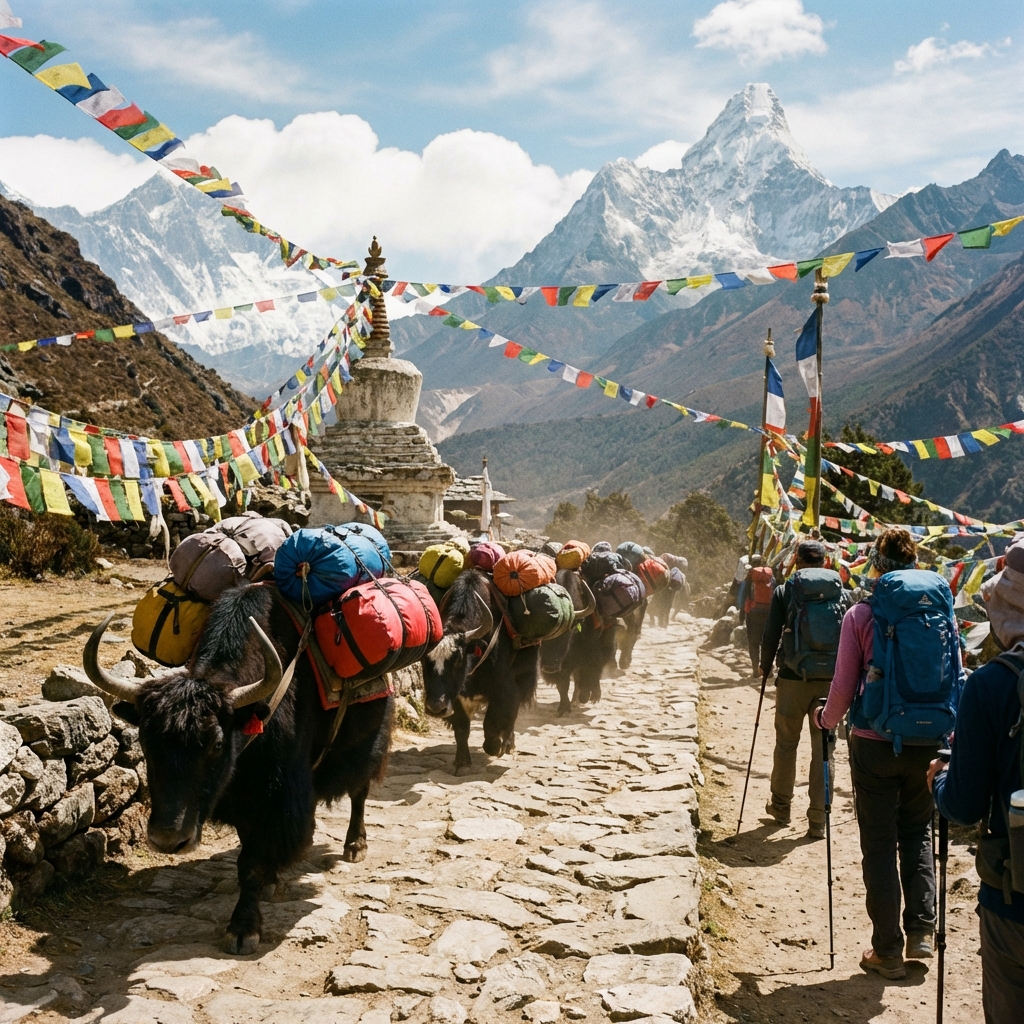
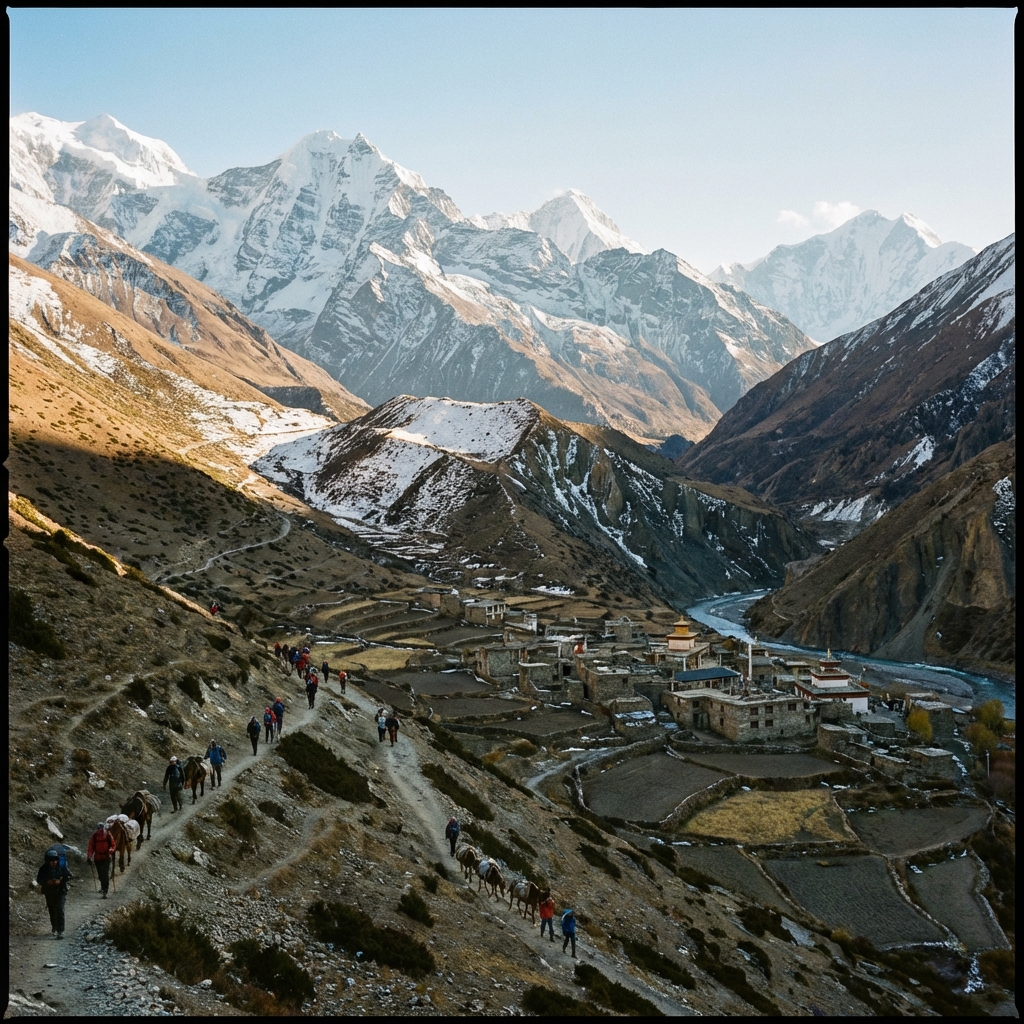
Cardiovascular fitness is the single most important physical factor in determining how comfortable and successful your Nepal trek will be. Not leg strength, not flexibility, not mental toughness. Cardio. Your heart and lungs determine how efficiently your body uses oxygen, and at altitude, oxygen is the resource in shortest supply.
This is not abstract physiology. At 5,000 meters, the air contains roughly 53% of the oxygen available at sea level. Your muscles need oxygen to function, your brain needs oxygen to think clearly, and your body needs oxygen to acclimatize. A trekker with strong cardiovascular fitness has a more efficient oxygen delivery system, acclimatizes faster, maintains higher energy levels, sleeps better at altitude, and enjoys the trek rather than merely surviving it.
This guide provides everything you need to build trek-ready cardiovascular fitness, whether you are starting from the couch or tuning up an already active lifestyle.
Why Cardiovascular Fitness Matters More Than Anything Else at Altitude
The Oxygen Equation
At sea level, every breath delivers a full complement of oxygen to your bloodstream. Your heart pumps this oxygen-rich blood to muscles and organs efficiently. Physical activity at sea level is limited primarily by muscular strength, energy stores, and technique.
At altitude, everything changes. The air pressure drops, and each breath delivers less oxygen. Your body compensates in several ways: breathing faster and deeper (increased ventilation), heart rate increases (pumping more blood per minute), and over days your body produces more red blood cells (acclimatization). These adaptations all depend on cardiovascular efficiency.
A trekker with high cardiovascular fitness:
- Extracts more oxygen per breath due to better lung efficiency
- Delivers oxygen to muscles more effectively via a stronger heart
- Acclimatizes faster because the body's compensation mechanisms work more efficiently
- Maintains a lower resting heart rate at altitude, meaning less cardiac strain
- Recovers faster between efforts (between hills, between days)
A trekker with low cardiovascular fitness:
- Reaches their cardiovascular ceiling sooner, meaning they hit exhaustion at lower effort levels
- The heart works harder for the same work output
- Acclimatization is slower and more symptomatic (more headaches, worse sleep, greater fatigue)
- Recovery between efforts is slower, leading to cumulative fatigue
- Altitude sickness symptoms are more pronounced because the body is already operating near its limit
VO2 Max: The Number That Predicts Trek Performance
VO2 max measures the maximum amount of oxygen your body can use during exercise. It is the single best predictor of aerobic performance at altitude. A VO2 max of 35 ml/kg/min is adequate for moderate treks (Poon Hill, Langtang). A VO2 max of 40-45 ml/kg/min is ideal for challenging treks (EBC, Annapurna Circuit). Above 45 ml/kg/min, you have excellent capacity for demanding routes (Three Passes, peak climbing). Most fitness watches provide VO2 max estimates. If you do not have a watch, a treadmill test at a sports medicine clinic provides an accurate measurement.
The Specific Demands of Trekking Cardio
Trekking cardio is fundamentally different from other forms of cardiovascular exercise. Understanding these differences allows you to train specifically and effectively.
Duration over intensity: A typical trekking day involves 5-8 hours of sustained moderate-intensity effort. This is not a 30-minute HIIT session. It is hours of continuous, moderate output. Your training must reflect this duration pattern.
Uphill sustained effort: Unlike flat running or cycling, trekking involves long, sustained climbs that elevate heart rate to 65-80% of maximum for extended periods. The ability to maintain this elevated heart rate without exhaustion is the core cardio requirement.
Variable intensity: Real trail conditions alternate between steep climbs (high heart rate), flat sections (moderate heart rate), and rest breaks (recovery). Your cardiovascular system needs to handle these transitions smoothly.
Consecutive days: The cardio demand is not a single peak effort but 7-21 consecutive days of sustained effort with limited recovery. Cardiovascular endurance for multi-day output is fundamentally different from single-session fitness.
The 'Conversation Pace' Test
The ideal training intensity for trekking preparation is what exercise physiologists call Zone 2: an effort level where you can maintain a conversation but not sing. If you are so breathless that you cannot speak in complete sentences, you are going too hard. If you can sing comfortably, you are going too easy. This conversation pace corresponds to approximately 60-75% of your maximum heart rate and is the intensity where your body builds the aerobic base that trekking demands. Train at this intensity for the majority (80%) of your cardio sessions.
The Best Cardio Training Methods for Trekking
Tier 1: Hiking Uphill (The Gold Standard)
Nothing replicates the demands of trekking better than hiking uphill. The movement patterns, muscle engagement, breathing demands, and psychological experience are identical to what you will encounter on the trek.
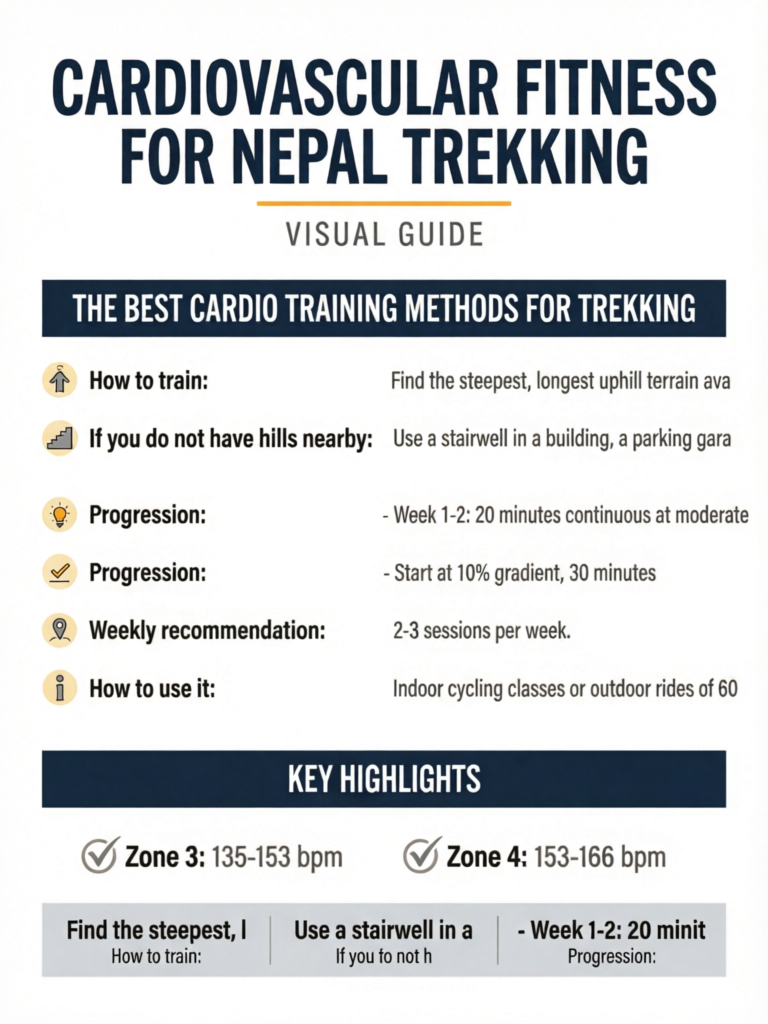
How to train: Find the steepest, longest uphill terrain available to you. Hike with a loaded pack (start with 5 kg, build to 10 kg). Focus on maintaining a steady pace that keeps your heart rate in the 60-75% zone. Begin with 1-2 hour hikes and progress to 3-5 hour sessions.
If you do not have hills nearby: Use a stairwell in a building, a parking garage, or stadium stairs. Walk up continuously for timed intervals, starting with 20 minutes and building to 45-60 minutes.
Weekly recommendation: 1-2 hill hiking sessions per week, including one long session (2-4 hours) on the weekend.
Tier 2: Stair Climbing / StairMaster
Stair climbing is the best gym-based simulation of uphill trekking. It targets the exact muscles and cardiovascular demands of sustained climbing.
How to train: Use a StairMaster, stair-climbing machine, or actual stairs. Maintain a moderate pace (equivalent to conversation pace) rather than sprinting. Add a loaded backpack once you can climb continuously for 30 minutes without difficulty.
Progression:
- Week 1-2: 20 minutes continuous at moderate pace
- Week 3-4: 30 minutes continuous, introduce loaded pack (5 kg)
- Week 5-6: 40 minutes continuous with pack
- Week 7-8: 45-60 minutes continuous with pack (8-10 kg)
Weekly recommendation: 2-3 sessions per week as a primary training method, or 1-2 sessions as a supplement to hiking.
Tier 3: Incline Treadmill Walking
For those without access to hills or stairs, an incline treadmill is an excellent alternative. The key is gradient, not speed.
How to train: Set the treadmill to a 10-15% gradient and walk at a pace that keeps your heart rate in the 60-75% zone (typically 4-5.5 km/h at steep inclines). Do not hold the handrails. This forces your body to balance and engage core muscles as it would on a trail.
Progression:
- Start at 10% gradient, 30 minutes
- Progress to 12% gradient, 40 minutes by week 4
- Build to 15% gradient, 45-60 minutes by week 8
- Add a loaded pack for the final 4 weeks
Weekly recommendation: 2-3 sessions per week.
Tier 4: Running / Jogging
Running builds excellent cardiovascular fitness but does not replicate the specific demands of trekking. It is a valuable supplement to hiking or stair training but should not be your only training method.
Why running helps: It is the most time-efficient way to build VO2 max and aerobic base. Runners typically have strong cardiovascular systems that transfer well to altitude.
Why running alone is insufficient: Running is flat and low-impact compared to loaded uphill hiking. It does not prepare your muscles for the sustained climbing or the eccentric demands of descending. Runners who only run often struggle with the muscular demands of trekking even though their cardiovascular fitness is excellent.
How to incorporate: Run 2-3 times per week for 30-60 minutes at conversation pace. Include one hilly run per week. Supplement with at least one weekly hiking or stair session.
Tier 5: Cycling
Cycling builds strong leg muscles and excellent cardiovascular fitness, particularly for sustained moderate effort.
How to use it: Indoor cycling classes or outdoor rides of 60-90 minutes at moderate intensity. Use high resistance/hilly routes to simulate the sustained climbing effort. Add interval segments where resistance is high and cadence is low to replicate uphill trekking heart rate.
Limitation: Cycling is non-weight-bearing. It does not prepare your joints, feet, or stabilizer muscles for the impact of walking. Cyclists who rely solely on cycling for trek preparation often experience joint and foot issues.
Weekly recommendation: 1-2 cycling sessions as supplement to hiking/stair training.
Tier 6: Swimming
Swimming provides excellent cardiovascular training with zero joint impact, making it valuable for trekkers with knee or ankle concerns.
Benefit for trekking: Swimming develops breathing efficiency and lung capacity in a way that transfers well to altitude breathing. The controlled breathing patterns in swimming train your respiratory muscles.
Limitation: Like cycling, swimming is non-weight-bearing and non-impact. It builds cardio fitness but not the specific musculoskeletal resilience that trekking demands.
Weekly recommendation: 1-2 sessions as supplement, particularly valuable for trekkers with joint issues.
HIIT Is Not Trekking Training
High-Intensity Interval Training (HIIT) is popular and effective for general fitness. It is not ideal for trekking preparation. HIIT trains your anaerobic system for short bursts of maximum effort. Trekking demands sustained aerobic effort for hours. A trekker who can do 30 seconds of burpees at maximum intensity but cannot walk uphill for 60 minutes at moderate intensity has trained the wrong energy system. Use HIIT sparingly (once per week maximum) and focus the majority of training on sustained, moderate-intensity effort.
Heart Rate Training Zones for Trekking
Understanding heart rate zones allows you to train at the right intensity. Estimate your maximum heart rate with the formula: 220 minus your age (this is approximate but sufficient for training purposes).
Zone 1: Recovery (50-60% of max HR)
Trekking equivalent: Walking flat trail, rest breaks, gentle downhill Training purpose: Active recovery between hard sessions Training time: 10% of total training
Zone 2: Aerobic Base (60-75% of max HR)
Trekking equivalent: Steady uphill walking at conversation pace, the majority of your trekking day Training purpose: Building the endurance engine that powers your trek Training time: 70-80% of total training (this is the most important zone)
Zone 3: Tempo (75-85% of max HR)
Trekking equivalent: Steep sustained climbs, high-altitude effort, carrying a heavy pack uphill Training purpose: Building threshold fitness for the hardest sections Training time: 10-15% of total training
Zone 4: Threshold / Hard (85-92% of max HR)
Trekking equivalent: The steepest climbs at high altitude, pass crossings, Kala Patthar ascent Training purpose: Simulating peak trek demands Training time: 5% or less of total training
Zone 5: Maximum (92-100% of max HR)
Trekking equivalent: Rarely reached while trekking (emergency sprint, perhaps) Training purpose: Not needed for trekking preparation Training time: Avoid
Example for a 40-year-old trekker (estimated max HR: 180 bpm):
- Zone 1: 90-108 bpm
- Zone 2: 108-135 bpm (primary training zone)
- Zone 3: 135-153 bpm
- Zone 4: 153-166 bpm
Use a Heart Rate Monitor, Not Perceived Effort
Perceived effort is unreliable for training. On a good day, you feel strong and push too hard. On a bad day, moderate effort feels terrible and you ease off too much. A basic chest strap or wrist-based heart rate monitor provides objective feedback that keeps you in the right zone. Zone 2 training often feels disappointingly easy, especially for fit people. That is correct. If it feels easy, you are building your aerobic base effectively. If every session feels hard, you are training too intensely for trekking purposes.
Three Sample Weekly Cardio Plans
Beginner Plan (Starting from Sedentary, 12-16 Weeks Before Trek)
Goal: Build basic cardiovascular fitness from minimal activity to trek-ready.
Weeks 1-4: Foundation
| Day | Activity | Duration | Intensity |
|---|---|---|---|
| Monday | Brisk walk (flat) | 30 min | Zone 1-2 |
| Tuesday | Rest | - | - |
| Wednesday | Stair climbing or incline treadmill | 15-20 min | Zone 2 |
| Thursday | Rest | - | - |
| Friday | Brisk walk (hilly if possible) | 30 min | Zone 2 |
| Saturday | Longer hike (gentle hills) | 60-90 min | Zone 1-2 |
| Sunday | Rest or gentle walk | 20-30 min | Zone 1 |
Weeks 5-8: Building
| Day | Activity | Duration | Intensity |
|---|---|---|---|
| Monday | Brisk walk or jog | 35-40 min | Zone 2 |
| Tuesday | Stair climbing | 25-30 min | Zone 2 |
| Wednesday | Rest or gentle activity | - | - |
| Thursday | Incline treadmill or hill walk | 35-40 min | Zone 2 |
| Friday | Rest | - | - |
| Saturday | Long hike with light pack (3-5 kg) | 2-3 hours | Zone 2 |
| Sunday | Easy walk or swim | 30 min | Zone 1 |
Weeks 9-12: Trek Simulation
| Day | Activity | Duration | Intensity |
|---|---|---|---|
| Monday | Stair climbing with pack (5 kg) | 30-35 min | Zone 2-3 |
| Tuesday | Brisk walk or jog (hilly) | 40-45 min | Zone 2 |
| Wednesday | Rest | - | - |
| Thursday | Incline treadmill with pack (5-7 kg) | 40 min | Zone 2-3 |
| Friday | Rest or gentle activity | - | - |
| Saturday | Long hike with pack (7-8 kg) | 3-4 hours | Zone 2 |
| Sunday | Easy walk | 30-40 min | Zone 1 |
Week 13-14 (if 16-week plan): Taper. Reduce volume by 30-40% while maintaining intensity. The goal is to arrive at your trek rested and fit, not exhausted from training.
Intermediate Plan (Regular Exerciser, 8-12 Weeks Before Trek)
Goal: Convert general fitness into trekking-specific cardiovascular endurance.
Weeks 1-4: Conversion
| Day | Activity | Duration | Intensity |
|---|---|---|---|
| Monday | Stair climbing or incline treadmill | 30-40 min | Zone 2 |
| Tuesday | Run or cycle (moderate) | 40-50 min | Zone 2 |
| Wednesday | Rest or cross-training | - | - |
| Thursday | Hill hike or stair climbing with pack (5-7 kg) | 40-50 min | Zone 2-3 |
| Friday | Easy run or swim | 30 min | Zone 1-2 |
| Saturday | Long hike with pack (7-8 kg) | 3-4 hours | Zone 2 |
| Sunday | Rest or gentle activity | - | - |
Weeks 5-8: Peak Training
| Day | Activity | Duration | Intensity |
|---|---|---|---|
| Monday | Stair climbing with pack (8-10 kg) | 40-50 min | Zone 2-3 |
| Tuesday | Run or cycle (with hill intervals) | 50-60 min | Zone 2-3 |
| Wednesday | Rest | - | - |
| Thursday | Incline treadmill (15% grade) with pack | 45-50 min | Zone 2-3 |
| Friday | Easy cardio (swim, walk, gentle cycle) | 30 min | Zone 1 |
| Saturday | Long hike with pack (8-10 kg), seek 600m+ elevation gain | 4-5 hours | Zone 2 |
| Sunday | Back-to-back: Shorter hike or stair session | 2-3 hours | Zone 2 |
Weeks 9-10 (if 12-week plan): Taper. Reduce volume by 30% week 9, 50% week 10. Maintain intensity.
Advanced Plan (Experienced Hiker/Athlete, 8 Weeks Before Trek)
Goal: Fine-tune already strong fitness for specific high-altitude demands.
Weeks 1-4: Intensity and Volume
| Day | Activity | Duration | Intensity |
|---|---|---|---|
| Monday | Stair climbing with pack (10 kg), tempo effort | 45-60 min | Zone 2-3 |
| Tuesday | Hill run or trail run | 50-60 min | Zone 2-3 |
| Wednesday | Easy cross-training (swim, yoga, cycle) | 30-45 min | Zone 1 |
| Thursday | Incline treadmill intervals: 5 min at 15% grade / 2 min at 5% grade | 50-60 min | Zone 2-4 |
| Friday | Rest or very easy activity | - | - |
| Saturday | Long mountain hike with pack (10-12 kg), seek 800m+ elevation | 5-7 hours | Zone 2 |
| Sunday | Back-to-back: Mountain hike or long stair session | 3-4 hours | Zone 2 |
Weeks 5-6: Peak
Same as weeks 1-4 but increase Saturday hike to 6-8 hours and include one weekend with back-to-back hikes of 5+ hours each (Saturday and Sunday).
Weeks 7-8: Taper. Reduce volume by 40% while maintaining 2-3 quality sessions. Arrive at the trek rested and sharp, not over-trained.
The Taper Is Not Optional
Many dedicated trainers increase volume right up to departure, arriving at the trek already fatigued from training. This is counterproductive. Your body needs 7-14 days of reduced training volume before the trek to fully absorb the training adaptations. During the taper, maintain intensity (keep sessions at the same effort level) but reduce duration by 30-50%. Light activity the day before the trek starts is fine. A hard training session the day before is not.
Simulating Altitude at Low Elevation
If you train at sea level, you cannot fully replicate the altitude challenge. However, several techniques provide partial benefit.
Breathing Restriction (Limited Benefit)
Some trekkers train with elevation training masks that restrict airflow. Research shows these masks do not simulate true altitude (they restrict airflow, not oxygen concentration) but may strengthen respiratory muscles. The benefit is marginal and should not be relied upon as altitude preparation.
Altitude Tents and Generators (Moderate Benefit)
Sleeping in a hypoxic tent (altitude tent) that reduces oxygen concentration can trigger some acclimatization responses. These units are expensive (often over 2,000 USD to purchase, though rental is available) and require consistent use for 4-8 weeks. Benefit is real but modest for trekking altitudes.
High-Intensity Breathing During Training (Minimal Benefit)
Some coaches recommend exercises that create oxygen debt (such as breath-hold intervals) to simulate the sensation of altitude. While these can improve breathing efficiency, they do not replicate the chronic low-oxygen environment that actual altitude creates.
The Honest Assessment of Sea-Level Simulation
No sea-level training fully prepares you for altitude. What sea-level training does superbly is build the cardiovascular and muscular fitness that your body needs to cope with altitude stress. Think of it as building the engine that altitude will test. A powerful engine at altitude performs better than a weak engine at altitude, even if neither has been specifically altitude-conditioned. Focus your energy on building the strongest cardiovascular base possible rather than trying to simulate altitude with limited-benefit techniques.
The Arrive-Early Acclimatization Strategy
The most effective sea-level alternative to altitude training is arriving in Nepal early and spending 2-3 days in Kathmandu (1,400m) and potentially 1-2 days at a higher-elevation location (Nagarkot at 2,100m or Dhulikhel at 1,500m) before starting your trek. This gives your body a head start on acclimatization that no amount of sea-level training can replicate. If your schedule and budget allow it, arriving 3-5 days early is the single most effective altitude preparation strategy.
How to Test Your Cardiovascular Readiness
Before departing for your trek, verify your fitness with these practical tests.
Test 1: The 60-Minute Sustained Effort
Walk briskly or hike uphill for 60 minutes continuously without stopping, maintaining conversation pace. You should finish feeling tired but not exhausted.
Pass criteria: Complete 60 minutes in Zone 2 without needing to stop. Recover to normal breathing within 5 minutes.
What it tells you: Your aerobic base is sufficient for the sustained daily effort of trekking.
Test 2: The Stair Test
Climb stairs continuously for 30 minutes at a moderate pace (not racing but not dawdling) with a 7-8 kg pack.
Pass criteria: Complete 30 minutes without needing extended rest breaks. Heart rate stays in Zone 2-3.
What it tells you: Your cardiovascular and muscular systems can handle sustained uphill effort under load.
Test 3: The Back-to-Back Weekend
Hike 5-6 hours on Saturday with a loaded pack (7-10 kg) over hilly terrain with 500+ meters of elevation gain. Hike 4-5 hours on Sunday over similar terrain.
Pass criteria: Complete both days. Sunday feels harder than Saturday but is manageable. You are not destroyed by Sunday evening.
What it tells you: Your body can handle consecutive days of trekking effort, which is the fundamental requirement of any Nepal trek.
Test 4: The Recovery Check
After the back-to-back weekend, assess how you feel on Monday. Can you function normally at work? Are you sore but mobile, or are you in significant pain?
Pass criteria: Sore but functional. Able to walk normally. No sharp joint pain.
What it tells you: Your recovery capacity is adequate for multi-day trekking.
If you fail any of these tests, you need more training time. If you pass all four, your cardiovascular fitness is solid for moderate to challenging Nepal treks.
Common Cardio Training Mistakes
Mistake 1: Training Too Hard
The most common mistake is training at too high an intensity. Trekking is an endurance activity that uses your aerobic system. Training in Zone 4-5 (gasping, unable to speak) builds anaerobic fitness that has limited trekking application. Focus 80% of training time in Zone 2.
Mistake 2: Training Too Short
Thirty-minute gym sessions do not prepare you for 6-8 hour trekking days. Your long weekly session should eventually reach 3-5 hours to condition your body for sustained output. Short sessions are fine for midweek, but you need at least one weekly session that approaches the duration of a trekking day.
Mistake 3: Ignoring the Uphill Component
Flat running, flat cycling, and flat walking build cardiovascular fitness but miss the specific demand of sustained uphill effort. At least 50% of your cardio training should involve significant incline (stairs, incline treadmill, or hill hiking).
Mistake 4: Starting Too Late
Eight weeks is the minimum for active people. Twelve to sixteen weeks is better. Starting four weeks before departure is not enough time to build meaningful fitness gains. If your trek is in six months, start training now. If it is in four weeks and you have not started, adjust your expectations for the trek rather than trying to cram.
Mistake 5: Neglecting Consistency for Heroic Efforts
One massive 8-hour hike per month is less effective than three 2-hour sessions per week. Cardiovascular fitness is built through consistent, repeated stimulus. Your body adapts to regular moderate demands more effectively than to occasional extreme ones.
For complementary physical preparation, see our strength training guide for Nepal trekking. For trek-specific training plans, see the EBC training plan, the 8-week ABC training plan, or the 16-week beginner trekking training plan. For a comprehensive overview of all fitness factors, read the fitness requirements for Nepal trekking guide.
Frequently Asked Questions: Cardio Fitness for Trekking
Training Fundamentals
Q: How long does it take to build trekking-level cardiovascular fitness from scratch?
From sedentary to trek-ready for a moderate trek (Langtang, ABC): 12-16 weeks of consistent training. For a challenging trek (EBC, Annapurna Circuit): 16-20 weeks. For expert-level treks (Three Passes, peak climbing): 20-24 weeks. These timelines assume 3-5 sessions per week and no significant injuries.
Q: I already run regularly. Do I need additional cardio training for trekking?
Yes, but less. Running provides an excellent cardiovascular base, and regular runners are typically in the top percentile of trekking cardio fitness. However, you need to add uphill-specific training (stair climbing, incline treadmill, or hill hiking) and longer-duration sessions to convert running fitness to trekking fitness. Four to six weeks of supplementary training is usually sufficient for regular runners.
Q: Is it better to train for distance or speed?
Distance, without question. Trekking never requires speed but always requires sustained effort. A trekker who can walk at a moderate pace for 6 hours outperforms one who can sprint for 10 minutes but is spent after 2 hours. Train for duration at moderate intensity.
Q: Can I build adequate cardio fitness only on weekends?
Weekend-only training is better than nothing but suboptimal. Cardiovascular adaptations respond best to 3-5 sessions per week. If you can only hike on weekends, add 2-3 midweek sessions of stair climbing, incline treadmill, or cycling for 30-45 minutes each. These midweek sessions maintain and build on the fitness gained during weekend hikes.
Specific Training Questions
Q: What incline should I use on the treadmill?
Start at 10% and progress to 15%. Walking at 4.5-5 km/h on a 15% incline closely replicates the effort of sustained uphill trekking. If 15% is too steep to maintain conversation pace, reduce to 12% and work up. The gradient is more important than the speed.
Q: How much weight should I carry while training?
Start with no pack for the first 2-3 weeks. Add 5 kg at week 3-4. Progress to 8-10 kg by weeks 6-8. Never exceed 12 kg in training. On the trek, you will carry a 5-8 kg daypack (porters carry the rest), so training with 8-10 kg provides a safety margin.
Q: Should I train in the boots I will trek in?
Yes, for at least the last 4 weeks of training. Your boots need breaking in and your feet need to adapt to the specific pressure points. New boots on a Nepal trek guarantee blisters. Worn-in boots with conditioned feet are essential.
Q: How do I know if I am overtraining?
Warning signs: persistent fatigue that does not resolve with rest, elevated resting heart rate (more than 5 bpm above normal for more than 3 consecutive days), persistent muscle soreness that does not fade between sessions, irritability, poor sleep, and decreased motivation. If multiple signs appear, take 3-5 rest days before resuming at reduced volume.
Altitude-Specific Questions
Q: Will better cardio fitness prevent altitude sickness?
Better cardio fitness reduces the severity of altitude sickness symptoms and helps your body acclimatize faster. It does not guarantee immunity from AMS. Altitude sickness susceptibility is largely genetic. However, fit trekkers statistically experience milder symptoms and complete treks at higher rates than unfit trekkers.
Q: Can I do cardio training to make up for not acclimatizing on the trek?
No. Cardio fitness and acclimatization are different processes. Fitness makes your body more efficient at using available oxygen. Acclimatization changes your body's physiology to produce more red blood cells and breathe more efficiently at altitude. No amount of fitness replaces the need for gradual altitude gain and acclimatization days.
Q: I live at altitude (above 1,500m). Does that help?
Yes, meaningfully. Living above 1,500 meters provides a partial acclimatization advantage. Your body already operates with reduced oxygen. Trekkers who live at 1,500-2,500 meters typically acclimatize faster and experience fewer AMS symptoms than sea-level residents. This does not eliminate the need for cardio training, but it provides a genuine head start.
Q: I am over 50. Should I train differently?
Adjust intensity and allow more recovery time, but the fundamental approach is the same. Older trekkers benefit from slightly longer training periods (add 4 weeks to recommended timelines), more gradual progression, and additional recovery days between hard sessions. Cardiovascular fitness at any age improves dramatically with consistent training. Many trekkers in their 60s and 70s complete challenging treks successfully with proper preparation.
Q: What if I only have 4 weeks to prepare?
Four weeks is not enough to build significant cardiovascular fitness from a low base. If you are already active (exercising 3+ times per week), four weeks of trekking-specific training can sharpen your fitness. If you are sedentary, four weeks will provide minimal improvement, and you should either delay your trek or choose a shorter, lower-altitude route. Be honest with yourself about what four weeks can accomplish.
For complete trek-specific training, see the EBC training plan or the 8-week ABC training plan. For beginners starting from scratch, the 16-week beginner trekking training plan provides a gradual progression. For the complementary strength component, read the strength training guide for Nepal trekking. For overall fitness requirements, see fitness requirements for Nepal trekking.