
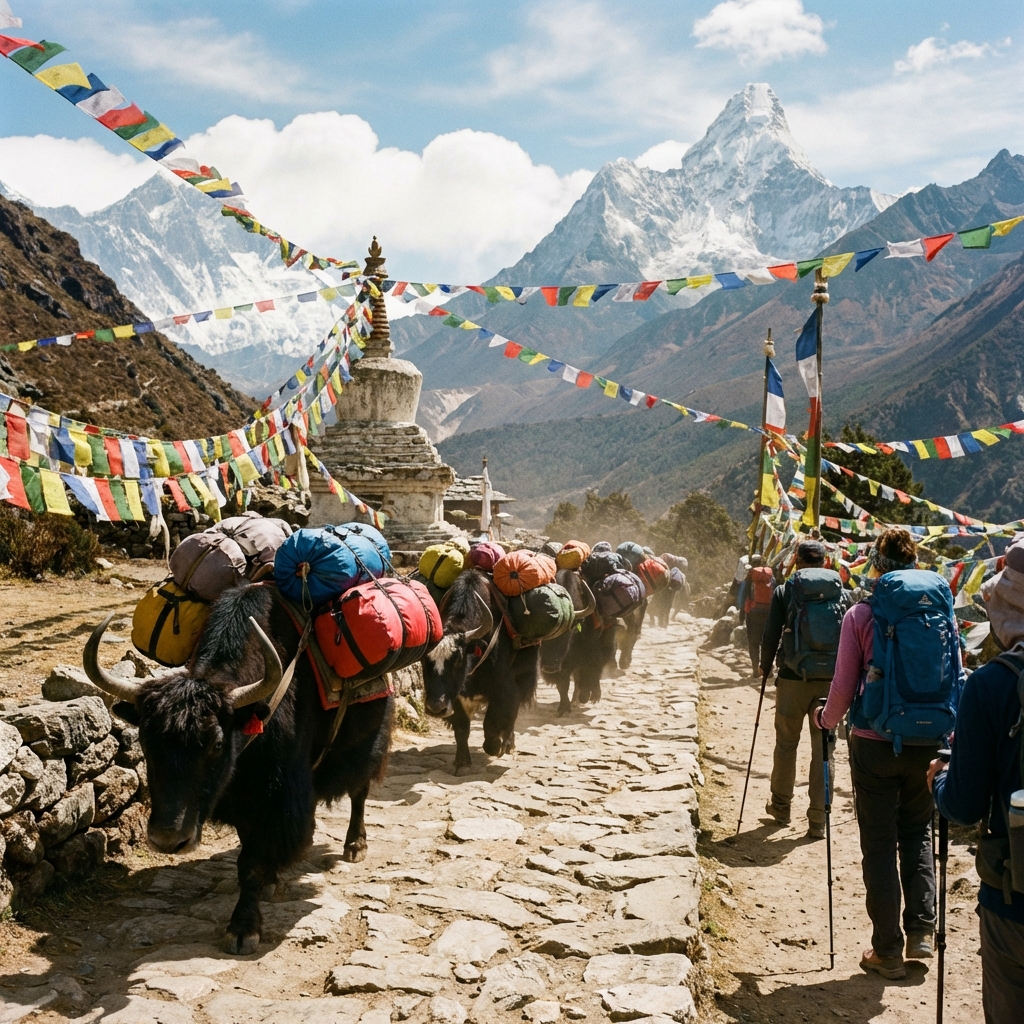
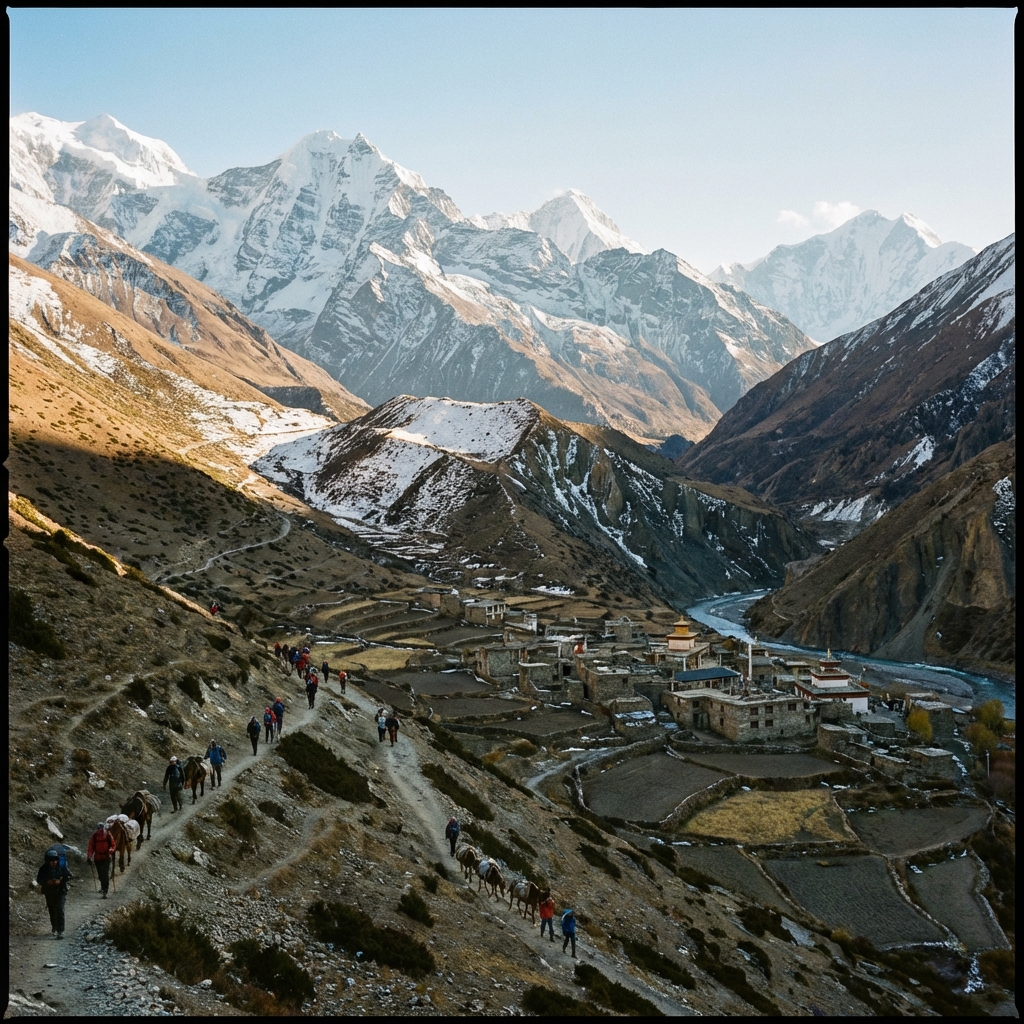
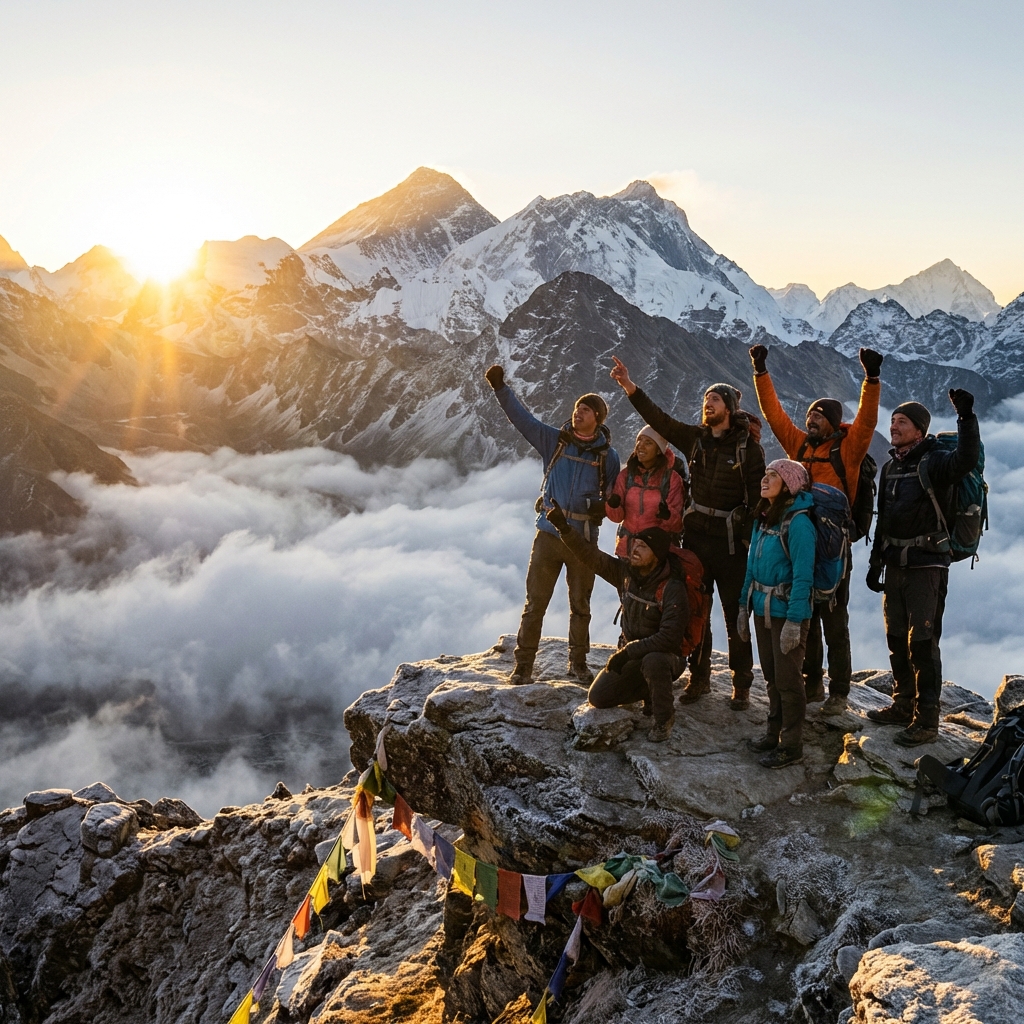
You've booked your Everest Base Camp trek. Now comes the critical question: are you physically ready for 12-16 days of 5-7 hour daily hiking at altitudes reaching 5,545 meters?
The truth? Most EBC aspirants underestimate the physical demands. The trek isn't technically difficult—no climbing skills required—but it demands cardiovascular endurance, leg strength, mental toughness, and the ability to hike consecutive days while your body struggles with reduced oxygen. Poor preparation is the #1 predictor of early descent, altitude sickness struggles, and misery on what should be a bucket-list adventure.
This guide provides a structured 12-week training plan designed by trekking professionals and adapted from programs used by commercial EBC operators. Whether you're currently sedentary or moderately fit, this plan builds the specific fitness required for EBC success: hiking endurance, leg strength, cardiovascular capacity, and mental resilience.
What this plan delivers: By week 12, you'll comfortably hike 6-8 hours with a weighted pack, handle 1,000+ meters of elevation gain, and possess the leg strength and cardiovascular fitness to tackle EBC's demands.
Time commitment: 4-7 hours per week initially, building to 7-10 hours per week in peak training (weeks 9-11).
Let's transform you from EBC dreamer to EBC-ready trekker.
Why Specific Training Matters for EBC Success
"Can't I just show up? I'm generally active."
No. Here's why EBC-specific training is non-negotiable:
The Reality of EBC Physical Demands
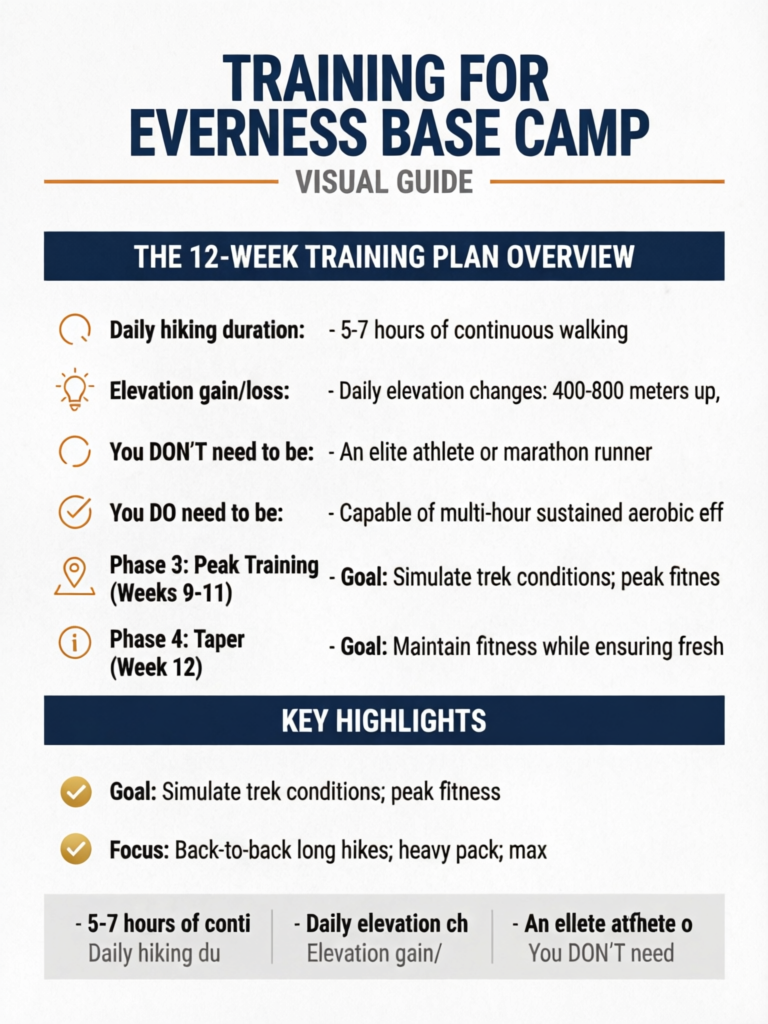
Daily hiking duration:
- 5-7 hours of continuous walking
- 10-12 consecutive days of trekking
- No "rest days" except designated acclimatization days (where you still hike) -累Total: 60-80+ hours of hiking over 12-14 days
Altitude's impact on performance: At Everest Base Camp (5,364m), your body operates at approximately 50-60% of sea-level capacity. Every step requires more effort, your heart rate spikes on gentle inclines, and recovery takes longer.
Elevation gain/loss:
- Daily elevation changes: 400-800 meters up, often similar down
- Cumulative ascent over trek: 4,000+ meters
- Descents are brutal on knees, quads, and stabilizer muscles
Pack weight: Your daypack (8-12 kg) becomes heavier as the day progresses and altitude increases. Shoulders, back, and core take sustained loads for 5-7 hours daily.
What Happens Without Proper Training
Statistics from commercial operators:
- 15-20% of inadequately trained trekkers turn back before reaching EBC
- 40-50% report the trek was "much harder than expected"
- 60%+ experience preventable injuries (knee pain, blisters, muscle strains)
Common struggles of untrained trekkers:
- Unable to maintain pace with group (feeling rushed, constant pressure)
- Severe muscle soreness compounding daily (no recovery time)
- Mental breakdown from cumulative fatigue
- Increased altitude sickness risk (exhaustion amplifies AMS symptoms)
- Missing the experience (too tired to enjoy surroundings)
The Training Reality
If you cannot currently hike 6-8 hours with 600+ meters elevation gain while carrying 10 kg, you are not ready for EBC. The trek won't accommodate your fitness level—you must arrive prepared for its demands.
Benefits of Following This 12-Week Plan
Physical benefits:
- Cardiovascular system adapted to sustained effort
- Leg muscles conditioned for uphill and downhill loads
- Core strength to support pack weight
- Injury-resistant joints and connective tissue
- Improved oxygen efficiency (even at sea level training)
Mental benefits:
- Confidence from knowing you're prepared
- Mental toughness from long training hikes
- Understanding your body's limits and capabilities
- Reduced anxiety about physical demands
On-trek benefits:
- Enjoy the scenery instead of suffering through it
- Keep pace comfortably with your group
- Faster recovery each evening
- Lower altitude sickness risk (less physical stress)
- Actually remember the experience (not in survival mode)
Pro Tip
The best investment you can make in your EBC trek isn't expensive gear—it's the 4-7 hours per week over 12 weeks to arrive properly trained. This training plan has 10x ROI on your trek experience quality.
Fitness Requirements for EBC: Honest Assessment
Let's establish realistic baselines. What fitness level does EBC actually require?
The Minimum Standard
Cardiovascular endurance:
- Ability to sustain moderate-intensity aerobic exercise for 60+ minutes continuously
- Heart rate in Zone 2-3 (60-75% max heart rate) for extended periods
- Comfortable hiking/walking 15-20 km at sea level without exhaustion
Leg strength:
- Perform 30+ bodyweight squats without rest
- Climb 500+ stair steps without stopping (equivalent to 30+ flights)
- Hike 3-4 hours with 500m elevation gain comfortably
Core and upper body:
- Hold plank position for 60+ seconds
- Carry 10 kg backpack for 2+ hours without back/shoulder pain
- Functional upper body strength for using trekking poles effectively
Consecutive day capacity:
- Ability to repeat moderate exercise 3-4 consecutive days without debilitating soreness
- Recovery within 24 hours from moderate exertion
Fitness Level Self-Assessment
Complete Beginner / Sedentary (Office worker, minimal exercise):
- Current activity: <2 hours exercise per week, mostly sitting
- Recommendation: 16-20 week training plan (extend this plan by 4-8 weeks at foundation phase)
- Risk level: High if following 12-week plan without base fitness
Moderately Active (Recreational exerciser):
- Current activity: 3-5 hours exercise per week (gym, jogging, sports)
- Can hike 2-3 hours comfortably
- Recommendation: This 12-week plan is designed for you
- Risk level: Low with plan adherence
Very Active / Fit (Regular hiker, athlete):
- Current activity: 5-8 hours exercise per week, including hiking
- Can already hike 4-6 hours with elevation
- Recommendation: 8-week condensed plan or maintenance program
- Risk level: Very low
Run/hike 45+ min continuously
30 bodyweight squats, 60-sec plank
3-4 hours with 500m elevation gain
12-16 weeks for moderate fitness level
4-7 hours (weeks 1-4) → 7-10 hours (weeks 9-11)
95%+ complete trek comfortably
How Fit Do You Need to Be? Real Talk
You DON'T need to be:
- An elite athlete or marathon runner
- Young (successful EBC trekkers range from teens to 70s+)
- Naturally athletic or coordinated
- Experienced at high altitude (fitness matters more than altitude experience)
You DO need to be:
- Capable of multi-hour sustained aerobic effort
- Comfortable with consecutive days of exercise
- Strong enough in legs and core to handle loaded hiking
- Mentally prepared for cumulative fatigue
The standard: "Fit for purpose" EBC requires trekking-specific fitness. A gym bodybuilder might struggle more than a regular hiker. A marathon runner might find uphills easier but suffer on technical descents. The ideal EBC candidate has:
- Cardiovascular endurance (runner/cyclist level)
- Functional leg strength (hiker/climber level)
- Durability (multi-day capacity)
This 12-week plan builds exactly that combination.
The 12-Week Training Plan Overview
This program follows periodization principles: progressive overload, specificity, and strategic recovery.
Training Phases
Phase 1: Foundation Building (Weeks 1-4)
- Goal: Establish cardiovascular base and basic strength
- Focus: Volume before intensity; injury prevention; habit formation
- Key workouts: 3-4 cardio sessions, 2 strength sessions, 1 weekend hike
- Expected progress: Comfortable with training schedule, minimal soreness
Phase 2: Building Endurance (Weeks 5-8)
- Goal: Increase hiking duration and elevation gain; build strength endurance
- Focus: Longer weekend hikes; weighted pack introduction; sustained efforts
- Key workouts: 4-5 cardio sessions, 2 strength sessions, 1 long hike (4-6 hours)
- Expected progress: Noticeable fitness gains, handling 800m+ elevation, 10 kg pack comfortable
Phase 3: Peak Training (Weeks 9-11)
- Goal: Simulate trek conditions; peak fitness
- Focus: Back-to-back long hikes; heavy pack; maximum elevation gain
- Key workouts: 4-5 intense sessions, 2 strength sessions, 1-2 long hikes (6-8 hours)
- Expected progress: Confidence in fitness, comfortable with trek-level demands
Phase 4: Taper (Week 12)
- Goal: Maintain fitness while ensuring fresh legs for trek
- Focus: Reduced volume, maintain intensity, recovery emphasis
- Key workouts: 2-3 moderate cardio, 1 light strength, 1 moderate hike
- Expected progress: Feeling fresh, rested, eager to trek
Training Components
Each week includes:
1. Cardiovascular Training (3-5 sessions/week)
- Stair climbing, hiking, incline treadmill, running, cycling
- Builds aerobic base and hiking-specific endurance
2. Strength Training (2 sessions/week)
- Legs (quads, glutes, hamstrings, calves)
- Core (abdominals, lower back, obliques)
- Upper body (shoulders, back for pack carrying)
3. Weekend Long Hike (1 session/week)
- Progressive distance and elevation
- Weighted backpack
- Trek-specific simulation
4. Rest Days (2 days/week)
- Active recovery (stretching, walking, yoga)
- Complete rest as needed
- Critical for adaptation and injury prevention
Weekly Time Commitment
| Training Phase | Weekly Hours | Longest Session | Intensity Level |
|---|---|---|---|
| Weeks 1-4 (Foundation) | 4-7 hours | 2-3 hour hike | Moderate |
| Weeks 5-8 (Endurance) | 6-9 hours | 4-6 hour hike | Moderate-High |
| Weeks 9-11 (Peak) | 7-10 hours | 6-8 hour hike | High |
| Week 12 (Taper) | 3-5 hours | 3-4 hour hike | Moderate |
Pro Tip
Consistency beats intensity. It's better to complete all 12 weeks at 80% intensity than to burn out at 100% effort in week 6. This is endurance training, not sprint training.
Cardiovascular Training: Building Your Aerobic Engine
EBC is primarily a cardiovascular challenge. Your heart, lungs, and oxygen delivery system must function efficiently for 5-7 hours daily at altitude.
Primary Cardio Training Methods
1. Hiking with Elevation Gain (BEST for EBC specificity)
Why it's best: Direct carryover—you're training the exact movement pattern, muscle groups, and energy systems used on EBC.
How to train:
- Find local hills, trails, or mountains
- Focus on time on feet (duration) more than distance
- Gradually increase elevation gain each week
- Include both uphill and downhill (downhill trains eccentric strength and knee stability)
Progression:
- Weeks 1-4: 2-3 hour hikes, 300-500m elevation gain
- Weeks 5-8: 4-6 hour hikes, 600-1000m elevation gain
- Weeks 9-11: 6-8 hour hikes, 1000-1500m elevation gain
Weighted pack:
- Weeks 1-4: No pack or light (3-5 kg)
- Weeks 5-8: 8-10 kg
- Weeks 9-11: 10-12 kg (trek weight)
2. Stair Climbing (EXCELLENT altitude simulation)
Why it works: Builds leg strength, cardiovascular endurance, and simulates sustained uphill effort.
Training options:
- Stair machine (StairMaster) at gym
- Office/apartment building stairs
- Stadium stairs
- Public stairways (if available in your city)
How to train:
- Maintain steady pace for sustained duration
- Don't hold railings (forces proper leg engagement)
- Add weighted vest or backpack for progression
- Target 30-60 minutes continuous
Progression:
- Weeks 1-4: 20-30 minutes, moderate pace
- Weeks 5-8: 30-45 minutes, add 5-8 kg pack
- Weeks 9-11: 45-60 minutes, 8-10 kg pack
Workout variations:
- Steady state: Consistent pace for full duration
- Intervals: 5 min hard / 2 min easy, repeat 4-6 times
- Step-ups: Include lateral movements for variety
3. Incline Treadmill Walking
Why it works: Controlled environment; precise elevation simulation; weather-independent.
Recommended protocol:
- 12-15% incline (simulates sustained uphill)
- 3.0-4.5 km/h pace (trekking speed)
- 45-90 minute duration
- Gradually add weighted vest/backpack
Sample workouts:
- Steady climb: 15% incline, 3.5 km/h, 60 minutes
- Variable terrain: Alternate 10% (5 min) / 15% (5 min) / 8% (3 min)
- Power intervals: 15% incline, 4.5 km/h (3 min) / 3.0 km/h (2 min), repeat 8-10 times
4. Running (Moderate carryover)
Why it helps: Excellent cardiovascular conditioning; time-efficient; builds mental toughness.
Limitations: Different movement pattern than hiking; higher impact; less specific to EBC demands.
How to incorporate:
- Use for midweek cardio sessions (not replacing weekend hikes)
- Focus on longer, slower runs (60-90 minutes at conversational pace)
- Include hill repeats for leg strength
- Trail running better than road running (more EBC-specific)
Sample running workouts:
- Long run: 90 minutes easy pace
- Hill repeats: Find 400m hill, run up hard (3-4 min), jog down, repeat 6-8 times
- Tempo run: 45 minutes at comfortably hard pace
5. Cycling (Good alternative)
Why it helps: Low-impact cardiovascular training; builds leg endurance; joint-friendly.
Limitations: Sitting position; different muscle emphasis; less specificity to hiking.
How to incorporate:
- Longer rides: 90-120 minutes
- Hill climbing emphasis
- Indoor cycling classes for intensity
- Can supplement hiking, not replace it
Target Heart Rate Zones
Understanding intensity is critical. Most EBC training should occur in Zone 2-3.
Zone 1 (50-60% max HR): Active recovery
- Conversational pace
- Use for rest days or warm-up/cool-down
- Feels very easy
Zone 2 (60-70% max HR): Base endurance ⭐ Primary EBC training zone
- Can hold conversation with some effort
- Sustainable for hours
- "All day" pace
- Where you'll trek most of EBC
Zone 3 (70-80% max HR): Tempo / Sustained effort
- Conversation difficult but possible
- Comfortably hard
- Sustainable for 30-90 minutes
- Steep uphill sections on EBC
Zone 4 (80-90% max HR): Threshold
- Speaking in short phrases only
- Hard effort
- Use sparingly in training (interval work)
Zone 5 (90-100% max HR): Maximum effort
- Not used in EBC training (except occasional short bursts)
Calculate your max heart rate: Simple formula: 220 - age = estimated max HR More accurate: 208 - (0.7 × age)
Example: 40-year-old
- Max HR: ~180 bpm
- Zone 2 (primary training): 108-126 bpm
- Zone 3 (tempo): 126-144 bpm
Pro Tip
Invest in a basic heart rate monitor ($30-100) or use a fitness watch. Training by feel works, but HR data ensures you're not going too hard (most common mistake) or too easy (insufficient stimulus).
Weekly Cardio Schedule by Phase
Weeks 1-4 (Foundation):
- Monday: 30-45 min Zone 2 (treadmill/stairs)
- Wednesday: 30-45 min Zone 2-3 (run/cycle/hike)
- Friday: 30-45 min Zone 2 (stairs/treadmill)
- Saturday: 2-3 hour hike, 300-500m elevation
Weeks 5-8 (Building Endurance):
- Monday: 45-60 min Zone 2 (stairs with light pack)
- Tuesday: 30-45 min Zone 3 (intervals or tempo)
- Thursday: 45-60 min Zone 2 (incline treadmill)
- Friday: 30-40 min easy Zone 2
- Saturday: 4-6 hour hike, 600-1000m elevation, 8-10 kg pack
Weeks 9-11 (Peak Training):
- Monday: 60 min Zone 2-3 (stairs with pack)
- Tuesday: 45 min Zone 3 intervals
- Thursday: 60-75 min Zone 2 (long incline)
- Friday: 30-45 min easy Zone 2
- Saturday: 6-8 hour hike, 1000-1500m elevation, 10-12 kg pack
- Optional Sunday: 3-4 hour moderate hike (back-to-back training)
Strength Training: Building Trek-Ready Muscles
Cardiovascular fitness gets you up the mountain. Strength training keeps you injury-free and comfortable.
Why Strength Training is Non-Negotiable
Injury prevention:
- Strong quads protect knees on descents (eccentric loading)
- Glute strength stabilizes hips and prevents IT band issues
- Core strength supports pack weight and prevents back pain
- Ankle strength reduces sprain risk on uneven terrain
Performance benefits:
- Stronger legs = less fatigue on uphills
- Core endurance = comfortable pack carrying all day
- Upper body strength = effective trekking pole use (reduces leg load by 20-25%)
Altitude adaptation:
- Muscle tissue has high oxygen demand
- Well-conditioned muscles use oxygen more efficiently
- Critical at altitude where oxygen is limited
Key Muscle Groups for EBC
Primary (70% of focus):
- Quadriceps (front thigh): Uphill power, downhill braking
- Glutes (butt): Hip extension, uphill power, stability
- Hamstrings (back thigh): Uphill propulsion, downhill control
- Calves: Ankle stability, propulsion, all-terrain adaptability
Secondary (20% of focus):
- Core (abs, obliques, lower back): Pack support, balance, injury prevention
- Hip stabilizers (glute medius, abductors): Lateral stability, knee tracking
Tertiary (10% of focus):
- Upper back and shoulders: Pack carrying comfort
- Lats and arms: Trekking pole effectiveness
Essential Exercises with Progression
LEGS: Quadriceps and Glutes
1. Squats (King of leg exercises)
- Target: Quads, glutes, hamstrings, core
- Progression:
- Week 1-2: Bodyweight squats, 3×15-20 reps
- Week 3-4: Goblet squats (hold weight), 3×12-15 reps
- Week 5-8: Weighted squats (barbell or dumbbells), 3×10-12 reps
- Week 9-11: Heavy squats or split squats, 4×8-10 reps
Form cues:
- Feet shoulder-width apart
- Chest up, core tight
- Descend until thighs parallel to ground
- Drive through heels to stand
- Knees track over toes (not caving inward)
2. Lunges (Hiking-specific movement)
- Target: Quads, glutes, balance, unilateral strength
- Progression:
- Week 1-2: Bodyweight lunges, 3×10/leg
- Week 3-4: Walking lunges, 3×12/leg
- Week 5-8: Weighted lunges (dumbbells), 3×10/leg
- Week 9-11: Bulgarian split squats (rear foot elevated), 3×8-10/leg
Variations:
- Forward lunges: Standard
- Reverse lunges: Easier on knees
- Walking lunges: Dynamic, functional
- Lateral lunges: Strengthens adductors/abductors
3. Step-Ups (Most hiking-specific exercise)
- Target: Quads, glutes, hiking movement pattern
- Equipment: Bench, box, or stairs (30-50 cm high)
- Progression:
- Week 1-2: Bodyweight step-ups, 3×12/leg
- Week 3-4: Weighted step-ups (light), 3×12/leg
- Week 5-8: Moderate weight, 3×10-12/leg
- Week 9-11: Heavy weight or high box, 3×8-10/leg
Form cues:
- Step up with full foot on box
- Drive through front leg (minimal push from back leg)
- Stand fully upright at top
- Control descent (eccentric training)
4. Calf Raises (Ankle strength and endurance)
- Target: Gastrocnemius, soleus (calf muscles)
- Progression:
- Week 1-4: Bodyweight, 3×20 reps
- Week 5-8: Weighted, 3×15-20 reps
- Week 9-11: Single-leg calf raises, 3×12-15/leg
Variations:
- Straight leg (gastrocnemius emphasis)
- Bent knee (soleus emphasis)
- Explosive (power development)
5. Romanian Deadlifts (RDL) (Hamstring and glute strength)
- Target: Hamstrings, glutes, lower back
- Equipment: Barbell or dumbbells
- Progression:
- Week 1-4: Light weight, 3×12-15 reps
- Week 5-8: Moderate weight, 3×10-12 reps
- Week 9-11: Heavy weight, 3×8-10 reps
Form cues:
- Slight knee bend maintained
- Hinge at hips (not rounding back)
- Lower until feeling hamstring stretch
- Drive hips forward to stand
CORE: Stability and Endurance
6. Planks (Core endurance foundation)
- Target: Entire core, shoulders
- Progression:
- Week 1-2: Standard plank, 3×30-45 sec
- Week 3-4: 3×45-60 sec
- Week 5-8: 3×60-90 sec or add weight on back
- Week 9-11: 3×90+ sec or complex variations
Variations:
- Standard plank: Forearms and toes
- Side plank: Lateral core (obliques)
- Plank with arm/leg lift: Stability challenge
- Walking plank: Dynamic core engagement
7. Dead Bugs (Anti-extension core control)
- Target: Deep core, coordination
- Sets: 3×10-12 reps per side
- Great for pack stability while hiking
8. Russian Twists (Rotational core strength)
- Target: Obliques, rotational stability
- Progression: 3×20 reps → weighted 3×15 reps
9. Weighted Carries (Most functional core exercise)
- Target: Entire core, grip, shoulders (simulates pack carrying)
- Exercise: Farmer's carry (weight in each hand, walk 50-100m)
- Progression:
- Week 1-4: Light weight, 3×50m
- Week 5-8: Moderate weight, 3×75m
- Week 9-11: Heavy weight, 3×100m
UPPER BODY: Pack Carrying and Pole Use
10. Rows (Upper back for pack support)
- Target: Lats, rhomboids, traps
- Options: Dumbbell rows, barbell rows, cable rows, inverted rows
- Sets: 3×10-12 reps
11. Overhead Press (Shoulder endurance)
- Target: Deltoids, triceps
- Sets: 3×10-12 reps
- Helps with lifting pack, reaching overhead
12. Push-Ups (Functional upper body)
- Target: Chest, shoulders, triceps, core
- Progression: 3×10 → 3×20 → 3×25+ or add weight
Full Strength Training Sessions
Session A: Leg Focus
- Squats: 3×10-12 reps
- Lunges: 3×10/leg
- Romanian Deadlifts: 3×10-12 reps
- Calf Raises: 3×15-20 reps
- Plank: 3×45-60 sec
- Dead Bugs: 3×10/side
Duration: 45-60 minutes
Session B: Functional Full Body
- Step-Ups: 3×12/leg
- Bulgarian Split Squats: 3×10/leg
- Weighted Carries: 3×75m
- Rows: 3×12 reps
- Overhead Press: 3×10-12 reps
- Side Plank: 3×30-45 sec/side
- Russian Twists: 3×20 reps
Duration: 45-60 minutes
Weekly Strength Schedule:
- Monday or Tuesday: Session A
- Thursday or Friday: Session B
- Minimum 48 hours between sessions for recovery
Strength Training for Hiking
EBC doesn't require maximum strength—it requires strength endurance. Focus on moderate weights with 10-15 rep ranges. You should finish each set feeling like you could do 2-3 more reps. Save the muscle-building max-effort sets for bodybuilders.
Injury Prevention Exercises
IT Band and Hip Strengthening:
- Clamshells: 3×15/side
- Hip abduction: 3×15/side
- Monster walks (resistance band): 3×20 steps
Ankle Stability:
- Single-leg balance: 3×30 sec/leg
- Single-leg deadlift: 3×10/leg
- Bosu ball exercises (if available)
Knee Protection:
- Terminal knee extensions: 3×15/leg
- Wall sits: 3×45-60 sec
- Backwards walking on treadmill: 10 min
Include 1-2 injury prevention exercises as warm-up or cool-down in each strength session.
Week-by-Week Training Schedule: 12-Week Plan
Here's your complete day-by-day training plan. Adjust days based on your schedule, but maintain workout sequence and rest days.
PHASE 1: Foundation Building (Weeks 1-4)
WEEK 1: Establishing Base
Monday: Strength Session A
- Focus on form over weight
- Don't be sore; find sustainable starting point
Tuesday: REST or easy 20-min walk
Wednesday: Cardio - 30 min Zone 2
- Stair climbing or incline treadmill (12%)
- Focus: Comfortable sustained pace
Thursday: REST
Friday: Cardio - 30 min Zone 2
- Running, cycling, or hiking
- Keep it conversational
Saturday: Weekend Hike #1
- Duration: 2-3 hours
- Elevation gain: 300-400m
- Pack weight: None or light (3-5 kg)
- Goal: Get comfortable with sustained hiking
Sunday: REST or easy stretching/yoga
Weekly totals: 4.5-5.5 hours
WEEK 2: Incremental Increase
Monday: Strength Session B
- Increase weight slightly if Week 1 felt easy
Tuesday: REST
Wednesday: Cardio - 35 min Zone 2
- Stairs: 30-35 min continuous
- Goal: Build stair climbing endurance
Thursday: REST or easy 20-min walk
Friday: Cardio - 35 min Zone 2-3
- Include 3×5 min intervals at Zone 3
- 2 min easy between intervals
Saturday: Weekend Hike #2
- Duration: 2.5-3 hours
- Elevation gain: 350-450m
- Pack weight: 5 kg
- Goal: Practice sustained pace uphill
Sunday: REST or active recovery (light yoga, stretching)
Weekly totals: 5-6 hours
WEEK 3: Building Consistency
Monday: Strength Session A
- Add 2-5 kg to primary lifts (squats, lunges)
Tuesday: REST
Wednesday: Cardio - 40 min Zone 2
- Incline treadmill: 15% grade, 3.5 km/h
- Simulate sustained uphill
Thursday: Cardio - 30 min easy Zone 2
- Active recovery cardio (cycling or flat walking)
Friday: REST
Saturday: Weekend Hike #3
- Duration: 3-3.5 hours
- Elevation gain: 400-500m
- Pack weight: 5-7 kg
- Goal: Maintain comfortable pace; practice downhill technique
Sunday: REST or 30-min easy walk
Weekly totals: 5.5-6.5 hours
WEEK 4: Foundation Consolidation
Monday: Strength Session B
- Focus on form perfection
- Practice step-ups with weight
Tuesday: REST
Wednesday: Cardio - 40 min Zone 2-3
- Stairs with light pack (3-5 kg)
- 40 min continuous
Thursday: REST
Friday: Cardio - 35 min Zone 2
- Easy maintenance cardio
- Focus on recovery
Saturday: Weekend Hike #4
- Duration: 3-4 hours
- Elevation gain: 500-600m
- Pack weight: 7-8 kg
- Goal: Test foundation fitness; should feel achievable
Sunday: REST (prepare for Phase 2 increase)
Weekly totals: 5.5-6.5 hours
Phase 1 Assessment: By end of Week 4, you should:
- Complete 3-hour hikes comfortably
- Handle 500m elevation gain without excessive fatigue
- Carry 7-8 kg pack without discomfort
- Recover within 24 hours from training sessions
If not yet meeting these markers, repeat Week 3-4 before progressing to Phase 2.
PHASE 2: Building Endurance (Weeks 5-8)
WEEK 5: Volume Increase
Monday: Strength Session A
- Increase weight on all exercises
- Add 4th set to primary lifts
Tuesday: Cardio - 45 min Zone 2-3
- Interval workout: 5 min hard / 3 min easy, 5 rounds
Wednesday: REST
Thursday: Cardio - 50 min Zone 2
- Incline treadmill or stairs
- Sustained effort, pack optional (3-5 kg)
Friday: Cardio - 30 min easy Zone 2
- Recovery cardio
Saturday: Weekend Hike #5
- Duration: 4-5 hours
- Elevation gain: 600-800m
- Pack weight: 8-10 kg (approaching trek weight)
- Goal: Build hiking endurance; practice nutrition/hydration strategy
Sunday: REST or light 30-min walk (active recovery)
Weekly totals: 7-8 hours
WEEK 6: Consolidating Endurance
Monday: REST
Tuesday: Strength Session B
- Focus on Bulgarian split squats and weighted carries
- These translate directly to hiking
Wednesday: Cardio - 50 min Zone 2
- Long sustained effort
- Stairs with 5 kg pack ideal
Thursday: REST
Friday: Cardio - 40 min Zone 3
- Tempo workout: Comfortably hard sustained pace
Saturday: Weekend Hike #6
- Duration: 5-6 hours
- Elevation gain: 700-900m
- Pack weight: 10 kg
- Goal: Extended time on feet; mental toughness practice
Sunday: REST (full recovery day)
Weekly totals: 7.5-8.5 hours
WEEK 7: Peak Endurance Building
Monday: Strength Session A
- Heavy leg day
- Focus on eccentric control (downhill simulation)
Tuesday: Cardio - 45 min Zone 2-3
- Hill repeats: Find 5-7 min climb, repeat 4-5 times
Wednesday: REST or easy 30-min walk
Thursday: Cardio - 50 min Zone 2
- Long incline treadmill or sustained stairs
- 10 kg pack optional
Friday: REST
Saturday: Weekend Hike #7
- Duration: 5-6 hours
- Elevation gain: 800-1000m
- Pack weight: 10-12 kg (full trek weight)
- Goal: Simulate trek day; practice breaks, nutrition
Sunday: Active recovery - 60-90 min easy flat walk
- Optional: Test back-to-back hiking days
Weekly totals: 8-9.5 hours
WEEK 8: Endurance Consolidation
Monday: Strength Session B
- Moderate intensity (not maxing out)
- Focus on volume and endurance
Tuesday: REST
Wednesday: Cardio - 50 min Zone 2
- Comfortable sustained effort
- Stairs or incline treadmill with pack
Thursday: Cardio - 30 min easy Zone 2
- Active recovery intensity
Friday: REST
Saturday: Weekend Hike #8
- Duration: 6 hours
- Elevation gain: 900-1100m
- Pack weight: 10-12 kg
- Goal: Comfortable with full-day hiking; confidence builder
Sunday: REST (prepare for peak phase)
Weekly totals: 7.5-8.5 hours
Phase 2 Assessment: By end of Week 8, you should:
- Complete 5-6 hour hikes comfortably
- Handle 800-1000m elevation gain with 10 kg pack
- Recover well between training sessions
- Feel confident in base fitness for EBC
PHASE 3: Peak Training (Weeks 9-11)
WEEK 9: Entering Peak Phase
Monday: Strength Session A
- Focus on power and strength endurance
- Explosive movements (jump squats, box jumps)
Tuesday: Cardio - 60 min Zone 2-3
- Sustained hard effort
- Stairs with 8-10 kg pack
Wednesday: REST or easy 30-min walk
Thursday: Cardio - 50 min Zone 2
- Long incline session
- Mental toughness focus
Friday: Cardio - 30 min easy Zone 2
- Recovery session
Saturday: Weekend Hike #9
- Duration: 6-7 hours
- Elevation gain: 1000-1300m
- Pack weight: 12 kg
- Goal: Full EBC simulation day
Sunday: REST or optional 2-3 hour easy hike
- Test back-to-back days if feeling strong
Weekly totals: 9-10.5 hours
WEEK 10: Peak Week
Monday: REST (recovery from big weekend)
Tuesday: Strength Session B
- Maintain strength without excessive fatigue
- Focus on quality reps
Wednesday: Cardio - 60 min Zone 2-3
- Interval or tempo session
- Push comfort zone
Thursday: REST or easy 20-min walk
Friday: Cardio - 40 min Zone 2
- Moderate intensity
- Prepare legs for weekend
Saturday: Weekend Hike #10 - BIGGEST TRAINING DAY
- Duration: 7-8 hours
- Elevation gain: 1200-1500m
- Pack weight: 12 kg
- Goal: Maximum confidence builder; prove you're ready
Sunday: Active Recovery Hike
- Duration: 3-4 hours
- Elevation gain: 400-600m
- Pack weight: 8-10 kg
- Goal: Test consecutive big days (EBC pattern)
Weekly totals: 10-12 hours
WEEK 11: Peak Consolidation
Monday: REST (full recovery)
Tuesday: Strength Session A
- Moderate intensity
- Avoiding injury in final push
Wednesday: Cardio - 50 min Zone 2-3
- Sustained effort
- Pack work
Thursday: REST
Friday: Cardio - 40 min Zone 2
- Easy to moderate
Saturday: Weekend Hike #11
- Duration: 6-7 hours
- Elevation gain: 1000-1200m
- Pack weight: 12 kg
- Goal: Confidence and enjoyment; you should feel READY
Sunday: REST or optional easy 2-hour hike
Weekly totals: 8.5-10.5 hours
Phase 3 Assessment: By end of Week 11, you should:
- Complete 7-8 hour hikes comfortably
- Handle 1200+ meter elevation gain with full pack
- Recover quickly (feeling good next day)
- Feel confident and excited for EBC (not anxious about fitness)
PHASE 4: Taper (Week 12)
WEEK 12: Freshening for Trek
Monday: Strength Session B (Light)
- 50% of normal volume
- Focus: Movement patterns, not fatigue
- 30 minutes total
Tuesday: REST
Wednesday: Cardio - 40 min Zone 2
- Comfortable sustained effort
- Keep legs fresh
Thursday: REST
Friday: Cardio - 30 min easy Zone 2
- Very easy maintenance
- Stretch well
Saturday: Final Training Hike
- Duration: 3-4 hours
- Elevation gain: 500-700m
- Pack weight: 10 kg
- Goal: Keep legs active but not fatigued; enjoy the hike
Sunday: REST
Remainder of Week:
- Light walking only (20-30 min/day)
- Stretching and mobility
- Hydration focus
- Mental visualization
Weekly totals: 3-4.5 hours
By Week 12, you are READY for EBC.
Pro Tip
The taper is not optional. Your body builds fitness during recovery, not during training. Week 12's reduced volume allows supercompensation—you'll arrive at EBC stronger than Week 11 because you're fully recovered.
Hiking Training Specifics: Weekend Long Hikes
The weekend long hike is your most important weekly training session. This is where you build trek-specific fitness.
Finding Training Terrain
Ideal training locations:
- Mountains or hills with sustained elevation gain
- Trail systems with 600-1500m cumulative elevation
- Terrain similar to EBC (rocky, uneven, mix of uphill/downhill)
If you lack mountains:
- Repeat smaller hills multiple times (stair-stepping up elevation)
- Use stadium stairs or parking garage ramps
- Treadmill incline walking (less ideal but functional)
- Combine flatter trails with weighted pack (increase weight to compensate)
What to look for:
- Access to continuous trails (avoiding road crossings)
- Elevation gain/loss capabilities
- Variety of terrain (smooth, rocky, technical)
- Safe to hike solo or with partners
Elevation Gain Targets
These are cumulative elevation gains (total uphill over the hike).
| Training Phase | Target Elevation Gain | Example |
|---|---|---|
| Weeks 1-4 | 300-600m | 2-3 moderate climbs |
| Weeks 5-8 | 600-1000m | 1 long sustained climb or multiple climbs |
| Weeks 9-11 | 1000-1500m | Full mountain day, multiple peaks, or repeated loops |
| Week 12 (Taper) | 500-700m | Easy final hike |
EBC context: Most EBC days involve 400-800m elevation gain. Training with 1000-1500m in weeks 9-11 provides safety margin.
Weighted Backpack Progression
Gradually increase pack weight to match trek conditions.
What to carry:
- Water bottles (easy to adjust weight)
- Weightlifting plates wrapped in towel
- Filled water bladder
- Sandbag or weight vest
- Actual trek gear (practice packing)
Don't exceed trek weight: EBC daypack typically 8-12 kg:
- Water (2L): 2 kg
- Snacks and lunch: 0.5 kg
- Extra layers: 1-2 kg
- Rain gear: 0.5 kg
- Camera and electronics: 1-2 kg
- First aid and essentials: 1 kg
- Guide/porter may carry remaining items
| Training Phase | Pack Weight | Purpose |
|---|---|---|
| Weeks 1-4 | 0-7 kg | Focus on form and endurance first |
| Weeks 5-8 | 8-10 kg | Introduce load, build tolerance |
| Weeks 9-11 | 10-12 kg | Match or slightly exceed trek weight |
| Week 12 | 8-10 kg | Maintain without excessive fatigue |
Pack Weight Caution
Don't start with heavy pack immediately. Build to it progressively. Jumping to 12 kg pack in Week 1 is a recipe for shoulder, back, and hip injuries. Your body needs time to adapt to load.
Training Hike Structure
Warm-up (15-20 minutes):
- Easy flat walking
- Dynamic stretching (leg swings, arm circles)
- Gradual pace increase
- Put on pack after warm-up
Main hiking (80-85% of time):
- Maintain consistent uphill pace
- Practice "pressure breathing" (forceful exhale)
- Monitor heart rate (stay mostly in Zone 2-3)
- Take planned breaks every 60-90 minutes (5-10 min)
- Practice nutrition and hydration
Downhill practice (critical!):
- Don't rush downhills
- Focus on knee control and eccentric quad engagement
- Use trekking poles if you'll use them on EBC
- Practice foot placement on uneven terrain
Cool-down (10-15 minutes):
- Easy flat walking
- Static stretching (quads, hamstrings, calves, hip flexors)
- Refuel immediately (protein + carbs)
What to Practice During Training Hikes
1. Pacing strategy:
- Find your sustainable "all-day" pace
- Learn to walk slower than instinct suggests (critical at altitude)
- Practice consistent breathing rhythm
2. Nutrition and hydration:
- Eat small snacks every 60-90 minutes (don't wait until hungry)
- Drink 500-750 ml per hour of activity
- Test foods that work for you (what digests well while hiking)
- Practice electrolyte supplementation
3. Gear testing:
- Break in hiking boots (critical! Do NOT arrive at EBC with new boots)
- Test sock combinations (find what prevents blisters)
- Adjust pack fit (hip belt positioning, shoulder strap tension)
- Test trekking poles (wrist strap adjustment, length for uphill/downhill)
- Practice layering (when to add/remove layers)
4. Trekking pole technique:
- Uphill: Shorten poles, plant ahead for pull
- Downhill: Lengthen poles, plant ahead for stability
- Flat: Natural walking rhythm
- Practice weight transfer to poles (reduces leg load 20-25%)
5. Mental training:
- Practice positive self-talk during hard sections
- Develop mantras or focus techniques
- Build comfort with cumulative fatigue
- Test podcast/music vs. silence
6. Break strategy:
- Practice 5-10 min breaks every 60-90 min (EBC pattern)
- Learn efficient pack on/off
- Stretch during breaks (hip flexors, calves)
Simulating EBC Conditions
Consecutive day training (Weeks 9-11):
- Hike Saturday (6-8 hours, big day)
- Hike Sunday (3-4 hours, moderate day)
- Teaches body to recover and perform while tired
- Simulates EBC's consecutive trekking days
Early starts:
- Begin hikes at 6-7 AM (EBC start times)
- Practice breakfast-then-hike pattern
- Learn what pre-hike meal works for you
Temperature variation:
- Train in cold if possible (EBC is cold at high altitude)
- Practice layering strategy
- Test glove and hat systems
Terrain variety:
- Rocky trails (ankle stability)
- Technical sections (balance and attention)
- Stream crossings if available
- Sandy/loose terrain (mimics moraine)
Pro Tip
Your training hikes should feel like "mini EBC days" by weeks 9-11. Practice everything you'll do on the real trek: pacing, breaks, nutrition, pole use, gear management. The trek is NOT the time to figure out what works.
Altitude Simulation: Training at Sea Level
The #1 question: "Can I train for altitude at sea level?"
Short answer: You cannot replicate altitude's physiological effects at sea level, but you CAN prepare your body to perform efficiently with available oxygen—which is the key to success.
The Altitude Reality
What happens at altitude:
- Reduced atmospheric pressure = fewer oxygen molecules per breath
- At EBC (5,364m): ~50% of sea-level oxygen
- Your cardiovascular and muscular systems must work harder for same effort
- Acclimatization is time-dependent (can't be rushed)
What training does: Training at sea level improves:
- Oxygen utilization efficiency (mitochondrial density)
- Cardiovascular capacity (stronger heart, more capillaries)
- Muscular endurance (muscles fatigue less quickly)
- Mental toughness (coping with discomfort)
What training doesn't do:
- Increase red blood cell count (altitude-specific adaptation)
- Trigger hypoxic ventilatory response (altitude-specific)
- Create acclimatization (only time at altitude does this)
The takeaway: Arriving at EBC extremely fit means your body uses oxygen efficiently. You'll still face altitude challenges, but a fit body handles hypoxia better than an unfit body.
Altitude Masks: Not Recommended
What they actually do: Altitude masks restrict airflow (not oxygen concentration). They train respiratory muscles and increase breathing difficulty, but they don't simulate altitude.
Why they don't work for EBC:
- Don't reduce oxygen percentage
- Don't trigger altitude adaptations
- Can cause improper breathing patterns
- Uncomfortable and limit training quality
Bottom line: Skip altitude masks. Invest time in quality cardio training instead.
High-Altitude Training (If Available)
If you live at or can access altitude:
Training at 1,500-2,500m:
- Provides mild altitude stimulus
- Enhances red blood cell production (slight increase)
- Improves oxygen efficiency
- Practice hiking at this altitude
Training at 2,500-3,500m:
- Significant altitude benefit
- Good acclimatization practice
- Teaches you how your body responds to altitude
- Sleep at this altitude for maximum benefit
Living High, Training Low (ideal protocol if accessible):
- Sleep at 2,500-3,000m
- Train at lower elevation (1,500-2,000m)
- Best of both worlds: adaptation + quality training
Most trekkers don't have high-altitude access: Focus on maximizing sea-level fitness instead.
Pre-Acclimatization Strategies
Arriving in Kathmandu (1,400m):
- Spend 2-3 days before flying to Lukla
- Gentle walking and hiking
- Hydration and rest
- Allows initial adjustment
Acclimatization in Namche (3,440m):
- Mandatory rest day for all EBC treks
- Acclimatization hikes to higher altitude, return to sleep
- Your fitness makes these hikes comfortable
Proper itinerary:
- 12-16 day itineraries include built-in acclimatization
- Don't rush: "Climb high, sleep low" protocol
- Extra rest days if needed (fitness ≠ altitude immunity)
Diamox (Acetazolamide) Consideration
What it does:
- Speeds acclimatization process
- Reduces AMS symptoms
- Increases breathing rate (more oxygen intake)
Who should consider:
- History of altitude sensitivity
- Rapid ascent schedules
- Extra insurance for peace of mind
Typical protocol:
- 125 mg twice daily
- Start 1-2 days before ascending above 3,000m
- Continue until above 4,000m or descending
Side effects:
- Increased urination (stay hydrated)
- Tingling fingers/toes (harmless)
- Carbonated drinks taste flat
Important: Discuss with doctor before trek. Diamox is preventive, not treatment for serious AMS.
Fitness vs. Acclimatization
Fitness and acclimatization are separate. Elite athletes get altitude sickness. Sedentary people sometimes don't. However, fitness dramatically improves your comfort level at altitude and reduces physical stress that can worsen AMS symptoms. Train hard, but respect altitude's demands.
Breathing Techniques for Altitude
Pressure breathing:
- Forceful exhale through pursed lips
- Increases oxygen delivery to bloodstream
- Practice during hard training efforts
- Use at altitude when feeling breathless
Rest step technique:
- Pause briefly with each step (lock back leg)
- Allows heartbeat to catch up
- Reduces cumulative fatigue
- Practice during training hikes
Breathing rhythm:
- Match breathing to steps (e.g., inhale 2 steps, exhale 3 steps)
- Creates meditative rhythm
- Increases oxygen intake efficiency
Training for Different Starting Points
Not everyone starts from the same fitness baseline. Here's how to adapt this plan.
Beginner / Sedentary (Currently <2 hours exercise/week)
Your challenge: You need more time to build foundational fitness before starting the main 12-week plan.
Recommended approach: 16-20 week plan
Pre-Program (4-8 weeks):
- Weeks -4 to -1: Base building
- Walk 30-45 minutes, 3-4 days/week
- Bodyweight strength training (squats, lunges, planks), 2 days/week
- Goal: Build habit and baseline fitness
Then follow standard 12-week plan starting at Week 1.
Key adjustments:
- Don't skip the pre-program (injury risk is high otherwise)
- Take extra rest days if needed
- Extend each phase by 1-2 weeks if struggling
- Consider working with trainer for first month
Red flags to watch:
- Excessive soreness (>48 hours)
- Joint pain (knees, hips, ankles)
- Complete exhaustion after workouts
- If experiencing these: slow down, don't quit
Starting from Sedentary
If you currently don't exercise regularly, 12 weeks is aggressive. Most trainers recommend 16-20 weeks for true beginners. Either book your EBC trek 20+ weeks out, or accept that you'll need to push hard (with increased injury risk) to meet 12-week timeline.
Moderately Active (Currently 3-5 hours exercise/week)
Your situation: You exercise regularly but not specifically for hiking/endurance. Maybe gym workouts, recreational sports, jogging.
Recommended approach: Standard 12-week plan
This plan is designed for you. Follow it as written with these tips:
Leverage your existing fitness:
- If you're a runner: You'll excel at cardio, focus on strength and weighted pack hiking
- If you lift weights: You'll excel at strength, focus on cardiovascular endurance and hiking volume
- If you do CrossFit/HIIT: Excellent cardio base, focus on sustained Zone 2 efforts and hiking specificity
Adjustments:
- May progress faster through Phase 1 (Weeks 1-4) if already comfortable with 3-hour exercise sessions
- Don't skip strength training even if you lift weights (hiking-specific exercises differ from typical gym routines)
- Focus on weakness: If cardio is easy, push strength. If strength is easy, add cardio volume.
Your advantage: Exercise habit already established. You understand training consistency, recovery, and nutrition fundamentals.
Very Active / Already Fit (Currently 5-8+ hours exercise/week)
Your situation: You're an athlete, regular hiker, or very active person. You already have strong cardio and strength base.
Recommended approach: 8-week condensed plan OR maintenance + hiking focus
Option 1: 8-week condensed plan
- Weeks 1-2: Combine Foundation weeks 1-4 into 2 weeks
- Weeks 3-5: Follow Endurance phase (Weeks 5-8) as written
- Weeks 6-7: Follow Peak phase (Weeks 9-11), compressed
- Week 8: Taper
Option 2: Maintenance + specificity focus
- Maintain current fitness base
- Add weekly long hikes (4-8 hours) with progressive elevation and weight
- Add weighted stair/hill training 1x/week
- Focus on hiking-specific strength (step-ups, split squats, weighted carries)
- 8-week timeline: 6 weeks building, 2 weeks taper
Your advantage: High baseline fitness means lower injury risk, faster recovery, ability to handle higher training volumes.
Watch out for:
- Overconfidence (altitude doesn't care about your marathon PR)
- Neglecting hiking specificity (cycling fitness ≠ hiking fitness)
- Insufficient taper (very fit athletes often undertaper)
Testing fitness: By Week 6-7, do a test hike:
- 6-8 hours
- 1200+ m elevation gain
- 12 kg pack
- If comfortable: You're ready
- If struggling: Add 2-4 weeks of focused hiking training
Age-Specific Modifications
Training in Your 40s-50s:
Advantages:
- Life experience and mental toughness
- Better pacing discipline than younger trekkers
- Financial resources for better gear and preparation
Adjustments needed:
- Longer recovery time: Consider extra rest days between hard sessions
- Injury prevention priority: Don't skip warm-ups or stretching
- More focus on mobility and flexibility work
- May need 14-16 weeks instead of 12 weeks for full adaptation
Specific considerations:
- Knee health: Emphasize eccentric quad strengthening
- Joint supplements: Glucosamine, omega-3s (consult doctor)
- Trekking poles: Non-negotiable (reduce joint stress 20-25%)
40s-50s modification:
- Add 5-10 min mobility work daily
- Extra rest day per week (5 workouts instead of 6)
- Focus on consistency over intensity
Training in Your 60s+:
You CAN do EBC in your 60s and 70s: Many successful EBC trekkers are 60+. Age is less relevant than fitness and health.
Requirements:
- Medical clearance from doctor (cardiac stress test recommended)
- 16-20 week training timeline (longer adaptation needed)
- Focus on injury prevention above all else
- Consider hiring personal trainer for first month
Adjustments needed:
- Lower intensity, higher volume (more time at lower heart rates)
- Longer recovery periods (48-72 hours between hard sessions)
- Emphasis on joint health and flexibility
- More frequent easier sessions vs. fewer hard sessions
Weekly structure modification:
- 4-5 workout sessions (not 6)
- 2-3 rest/active recovery days
- Gentle progression (don't rush phases)
Strength training emphasis:
- Balance and stability exercises crucial
- Functional movements over heavy weights
- Core strength to prevent falls
- Work with trainer familiar with senior fitness
Mental advantage: 60+ trekkers often have superior mental toughness and better pacing discipline than younger trekkers. Leverage this.
Pro Tip
Age is a factor, not a barrier. Proper training and smart pacing allow 60+ trekkers to successfully complete EBC. The oldest person to summit Everest was 80 years old (Yuichiro Miura). Your goal is far more achievable.
Mental Preparation: The Unseen Training Component
Physical fitness gets you to EBC. Mental strength gets you through the hard moments.
Building Mental Toughness
What is mental toughness for EBC:
- Continuing when physically uncomfortable (but not injured/sick)
- Maintaining positive attitude through cold, fatigue, altitude headaches
- Accepting slow pace and discomfort as normal
- Not quitting when motivation drops (around Day 7-8)
How to train mental toughness:
1. Embrace discomfort in training:
- Don't always cut workouts short when tired
- Practice finishing the planned workout even when not feeling it
- Occasionally train in bad weather (cold, rain)
- Learn that discomfort is temporary and manageable
2. Long training hikes build mental endurance:
- Hour 5 of a 7-hour hike is mental, not physical
- Practice staying positive when tired
- Develop coping strategies for boredom/fatigue
3. Visualization practice:
- 10 minutes daily during final month
- Visualize successful trek completion
- Imagine handling difficult moments (cold morning starts, headaches, fatigue)
- See yourself at Kala Patthar watching sunrise over Everest
4. Mantras and self-talk: Develop personal mantras to use during low moments:
- "One step at a time"
- "I trained for this"
- "Discomfort is temporary, memories are forever"
- "Slow and steady"
5. Practice gratitude: When training gets hard, remind yourself:
- You're healthy enough to train for EBC
- You have resources to attempt this trek
- You're preparing for an extraordinary adventure
- Millions dream of this; you're doing it
Dealing with the Mental Challenges of EBC
The Day 7-8 slump: Most trekkers hit psychological low around Day 7-8. You're tired, still days from Base Camp, novelty has worn off. This is normal.
Preparation:
- Know it's coming
- Remind yourself everyone experiences this
- Focus on that day's destination only (not Base Camp)
- Trust your training
Dealing with altitude headaches: Mild headaches are normal at altitude. They don't mean you're failing or need to descend (unless severe).
Preparation:
- Expect discomfort
- Practice accepting mild pain without catastrophizing
- Hydration and ibuprofen help
- Distinguish normal altitude discomfort from dangerous AMS
Managing pace frustration: At altitude, your pace will be painfully slow. This frustrates Type-A personalities.
Preparation:
- Practice slow pacing during training (slower than feels necessary)
- Remind yourself: slow pace = successful acclimatization
- Focus on breathing rhythm, not speed
- "Pole, pole" (Swahili for "slowly, slowly")
Handling cold and discomfort: Early morning starts are cold. High-altitude camps are cold. You'll be uncomfortable sometimes.
Preparation:
- Train in cold conditions if possible
- Practice positive reframing ("this is part of the adventure")
- Focus on hot tea waiting at teahouse
- Remember: cold is temporary
Visualization Protocol (Final 4 Weeks)
Spend 10 minutes daily visualizing your trek:
Week 9-10:
- See yourself hiking comfortably at high altitude
- Visualize breathing rhythm and steady pace
- Imagine beautiful scenery and sense of accomplishment
- Feel the emotions of standing at Base Camp
Week 11:
- Visualize specific challenging moments and handling them well:
- Cold morning start: you dress in layers, start hiking, warm up
- Steep uphill: you slow pace, breathe steadily, reach top
- Altitude headache: you hydrate, take ibuprofen, continue safely
- Fatigue on Day 8: you draw on mental strength, keep going
Week 12 (Taper):
- Visualize complete successful trek
- See yourself at Kala Patthar watching Everest sunrise
- Feel pride and accomplishment
- Imagine telling the story after
Visualization works: Your brain encodes visualized experiences as pseudo-memories, giving you confidence that you've "done this before."
The Power of Mental Training
Research on endurance athletes shows mental training improves performance by 15-20%. Your mind will want to quit before your body actually needs to. Train both.
Common Training Mistakes: What to Avoid
Mistake #1: Too Much Too Soon
The mistake: Week 1: Attempting 5-hour hikes with 15 kg pack because you're excited and motivated.
Why it fails:
- Injury risk skyrockets (tendons, joints haven't adapted)
- Burnout before trek
- Excessive soreness prevents consistent training
- Motivation crashes after 3-4 weeks
The fix:
- Follow progressive plan as written
- Resist urge to do more than prescribed
- Remember: training is long game (12 weeks), not sprint
Mistake #2: Neglecting Rest and Recovery
The mistake: Training 6-7 days per week with no rest days because "more is better."
Why it fails:
- Fitness improves during recovery, not during training
- Cumulative fatigue leads to injury or illness
- Overtraining syndrome (elevated resting heart rate, insomnia, irritability)
- Arriving at EBC exhausted before starting
The fix:
- Respect rest days (2 per week minimum)
- Listen to your body: if genuinely exhausted, take extra rest
- Sleep 7-9 hours nightly
- Active recovery (easy walking, yoga, stretching) is better than nothing
Mistake #3: Wrong Type of Training
The mistake: Focusing only on gym workouts (weights, spin classes) without hiking-specific training.
Why it fails:
- Gym fitness ≠ hiking fitness
- Missing hiking-specific adaptations (stabilizers, balance, sustained duration)
- Pack carrying biomechanics different from gym movements
The fix:
- Weekend long hikes are non-negotiable (most important session)
- Prioritize stair climbing and incline work over flat cardio
- Include weighted pack training
Mistake #4: Overconfidence or Undertraining
The mistake: "I'm generally active, I'll be fine without specific training."
Why it fails:
- EBC demands exceed "generally active" fitness
- Altitude amplifies fitness gaps
- Cumulative fatigue of multi-day trekking is unique challenge
The fix:
- Even fit individuals need EBC-specific training (hiking volume, weighted pack, consecutive days)
- Complete at least 8 weeks of focused training
- Test yourself with 6-8 hour training hike in Week 9-10
Mistake #5: No Gear Testing
The mistake: Buying boots 2 weeks before trek, not testing pack, never using trekking poles in training.
Why it fails:
- Blisters from unbroken boots ruin treks
- Pack discomfort becomes agony over 12 days
- Poor pole technique = no benefit
The fix:
- Break in boots during ALL training hikes (starting Week 1)
- Test pack fit and adjustment during weighted hikes
- Practice pole technique (rhythm, wrist straps, length adjustment)
Mistake #6: Training Only Uphill
The mistake: Focusing exclusively on climbing strength, neglecting downhill training.
Why it fails:
- Downhills destroy untrained quads and knees
- Most knee injuries occur on descent, not ascent
- EBC has massive cumulative descent (4,000+ meters)
The fix:
- Every training hike must include downhill
- Practice eccentric quad control (slow descent, not rushed)
- Strength train with eccentric emphasis (slow lowering phase)
- Use trekking poles on all downhills
Mistake #7: Ignoring Nutrition and Hydration
The mistake: Training fasted or with no hydration/nutrition strategy.
Why it fails:
- Poor fueling limits training quality
- You don't practice what works for you
- Arrival at EBC without tested nutrition plan
The fix:
- Eat 2-3 hours before long hikes
- Practice on-trail nutrition (what digests well while moving)
- Drink 500-750 ml per hour
- Test electrolyte supplements
Mistake #8: No Testing or Assessment
The mistake: Following plan blindly without testing if you're actually ready.
Why it fails:
- You might need more time but don't realize it
- Arriving at EBC underprepared despite "completing" plan
The fix:
- Week 9-10: Do test hike (6-8 hours, 1000+ m elevation, 12 kg pack)
- Assessment: Should feel challenging but achievable
- If struggling significantly: add 2-4 weeks of focused training before trek
Pro Tip
The most common mistake is starting training too late. If you're booking EBC trek, start training IMMEDIATELY—even if trek is 6+ months away. You can always maintain fitness, but you can't compress adaptation.
Injury Prevention: Staying Healthy Through Training
Injury during training is the worst outcome—derails preparation and jeopardizes trek. Prevention is everything.
Common Trekking Injuries
1. Runner's Knee (Patellofemoral Pain Syndrome)
- Symptoms: Pain around or behind kneecap, especially downhill
- Cause: Weak quads, overuse, poor biomechanics
- Prevention: Quad strengthening, gradual progression, proper descent technique
2. IT Band Syndrome
- Symptoms: Sharp pain on outside of knee
- Cause: Weak hip abductors, overuse, poor biomechanics
- Prevention: Hip strengthening (clamshells, side planks), foam rolling, gradual mileage increase
3. Plantar Fasciitis
- Symptoms: Heel pain, especially morning first steps
- Cause: Tight calves, improper footwear, overuse
- Prevention: Calf stretching, proper boots, gradual volume increase
4. Ankle Sprains
- Symptoms: Ankle pain and instability
- Cause: Weak stabilizers, uneven terrain, inattention
- Prevention: Balance training, ankle strengthening, hiking on technical trails
5. Lower Back Pain
- Symptoms: Pain in lumbar spine, especially with pack
- Cause: Weak core, improper pack fit, poor posture
- Prevention: Core strengthening, proper pack adjustment, posture awareness
6. Blisters
- Symptoms: Fluid-filled skin bubbles on feet
- Cause: Friction (poor-fitting boots, wet socks)
- Prevention: Well-fitted boots broken in, moisture-wicking socks, foot powder, early blister treatment
Injury Prevention Strategies
1. Progressive Overload (Most Important)
- Never increase volume/intensity >10% per week
- Allow body time to adapt to new stresses
- Don't skip phases of training plan
2. Proper Warm-Up
- 10-15 minutes before every training session
- Dynamic stretching (leg swings, arm circles, walking lunges)
- Gradual intensity increase
- Never start cold, especially in weight training
3. Strength Training for Injury Resistance
- Eccentric quad strengthening (prevents knee issues)
- Hip strengthening (prevents IT band, knee problems)
- Core strength (prevents back pain)
- Ankle stability work (prevents sprains)
4. Mobility and Flexibility
- Daily stretching (10 minutes minimum)
- Focus on: hip flexors, quads, hamstrings, calves, IT band
- Yoga or dedicated flexibility session weekly
- Foam rolling (IT band, quads, calves)
5. Proper Gear
- Well-fitted, broken-in hiking boots
- Quality moisture-wicking socks (no cotton)
- Properly adjusted backpack (hip belt carries weight, not shoulders)
- Trekking poles (reduce joint stress 20-25%)
6. Rest and Recovery
- 2 rest days per week minimum
- Sleep 7-9 hours nightly
- Listen to your body: fatigue vs. pain (pain = stop)
- Ice after hard sessions if joint soreness
7. Cross-Training
- Vary training modalities (hiking, running, cycling, stairs)
- Reduces repetitive stress injuries
- Maintains motivation
8. Nutrition for Recovery
- Protein for muscle repair (1.6-2.0 g per kg bodyweight daily)
- Anti-inflammatory foods (omega-3s, fruits, vegetables)
- Adequate calories (don't diet while training hard)
- Hydration (2-3 liters daily, more on training days)
Stretching and Mobility Routine (Daily, 10-15 minutes)
Essential stretches:
1. Hip Flexor Stretch
- 2×30 seconds per side
- Critical for hiking (prevents lower back pain)
2. Quad Stretch
- 2×30 seconds per side
- Hold foot behind you, pull heel to glutes
3. Hamstring Stretch
- 2×30 seconds per side
- Straight leg, toe pulled toward shin
4. Calf Stretch
- 2×30 seconds per side
- Both straight leg and bent knee versions
5. IT Band Stretch/Foam Roll
- 2×30 seconds per side stretch
- Or 2-3 minutes foam rolling per side
6. Pigeon Pose (hip opener)
- 2×60 seconds per side
- Excellent for hip flexibility
7. Cat-Cow (spinal mobility)
- 10-15 reps
- Warms up spine, improves back health
Best time to stretch:
- After workouts (muscles are warm)
- Evening before bed (improves recovery)
- Morning (gentle wake-up for body)
Recovery Strategies
Active recovery days:
- Easy 20-30 minute walk
- Gentle yoga or stretching
- Swimming (if available)
- Keeps blood flowing without stress
Post-workout nutrition:
- Within 30 minutes: Protein + carbs
- Example: Protein shake with banana
- Example: Chicken and rice
- Speeds recovery, reduces soreness
Ice baths or cold showers:
- After very hard sessions (optional)
- 10-15 minutes in cold water
- Reduces inflammation and soreness
Massage or foam rolling:
- Weekly self-massage session
- Professional massage monthly (if budget allows)
- Foam roll IT bands, quads, calves after hard sessions
Sleep optimization:
- 7-9 hours nightly (non-negotiable during training)
- Consistent sleep schedule
- Dark, cool room
- Avoid screens 30 min before bed
Pain vs. Discomfort
Learn the difference between training discomfort (normal) and injury pain (stop immediately).
Normal training discomfort: Muscle fatigue, breathlessness, general tiredness, mild muscle soreness next day.
Injury pain: Sharp pain, pain in specific joint, pain that worsens during activity, pain that doesn't improve with rest, swelling.
If injury pain: STOP. Rest 2-3 days. If not improving, see doctor/physiotherapist. Don't train through injury.
Training Gear & Equipment: What You Need Now
Essential Training Gear (Buy Immediately)
1. Hiking Boots (Most Important)
- Price: $150-300
- Why now: Need 50-100+ km of breaking in before trek
- What to buy: Ankle support, waterproof, Vibram soles, proper fit (try on in afternoon with thick socks)
- Brands: Salomon, Scarpa, La Sportiva, Lowa, Merrell
Breaking in protocol:
- Weeks 1-2: Wear around house and short walks (2-3 hours total)
- Weeks 3-4: Short hikes (2-3 hours)
- Weeks 5+: All training hikes
- By Week 8: Should feel completely comfortable
- If blisters persist after Week 4: Try different socks or boot model
Pro Tip
Never—NEVER—show up at EBC with new boots. This is the #1 preventable disaster. Break in boots during all training. If boots aren't comfortable by Week 8, buy different boots immediately.
2. Trekking Poles (Highly Recommended)
- Price: $50-150
- Why now: Need to develop proper technique
- What to buy: Adjustable length, comfortable grips, carbide tips, shock absorption optional
- Brands: Black Diamond, Leki, REI
Learning to use poles:
- Weeks 1-4: Practice on flat ground (rhythm and wrist strap adjustment)
- Weeks 5-8: Use on all training hikes (uphill and downhill)
- Weeks 9-11: Poles become automatic extension of arms
Pole technique:
- Wrist straps: Hand comes up through strap, creates support without gripping
- Uphill: Plant ahead, pull body forward
- Downhill: Plant ahead, take weight off knees (reduces knee stress 25%)
3. Backpack (30-40L daypack)
- Price: $100-200
- Why now: Need to test fit and carry weighted pack
- What to buy: Hip belt (critical!), adjustable torso length, water bladder compatible
- Brands: Osprey, Gregory, Deuter, Arc'teryx
Fit is everything:
- Hip belt should sit on hip bones (not waist)
- 80% of weight on hips, 20% on shoulders
- Adjust during training hikes until perfect
4. Moisture-Wicking Hiking Socks
- Price: $15-25 per pair (buy 3-4 pairs)
- Why now: Test which prevent blisters for you
- What to buy: Merino wool, cushioned, height above boot collar
- Brands: Darn Tough, Smartwool, Icebreaker
Testing socks:
- Rotate through different brands/models in training
- Find which stays comfortable on long hikes
- Identify any hot spots (friction points)
- Bring your proven sock model to EBC (not new socks)
5. Base Layers and Hiking Clothes
- Why now: Test layering system, ensure comfort
- What to buy: Moisture-wicking (no cotton), layerable, quick-dry
- Start with: 2 synthetic/merino t-shirts, 1 long-sleeve base layer, 1 hiking pants
Optional Training Gear (Nice to Have)
Heart Rate Monitor or Fitness Watch
- Price: $50-400
- Benefits: Train in correct heart rate zones, track progress, motivation
- Options: Chest strap HRM ($50), Fitness watch (Apple Watch, Garmin, Polar)
Weight Vest or Weighted Backpack Inserts
- Price: $40-150
- Benefits: Easier to adjust weight for training
- Alternative: Use water bottles or sandbags in regular backpack
Foam Roller
- Price: $20-40
- Benefits: Self-massage, IT band rolling, recovery
- Essential for injury prevention
Treadmill Gym Membership (if no hiking access)
- Price: $30-80/month
- Benefits: Incline training, weather-independent cardio
- Worth it if local terrain is flat
Gear You DON'T Need for Training
Altitude mask: Doesn't work for EBC preparation (see Altitude Simulation section)
Expensive technical clothing: Basic moisture-wicking is sufficient for training; save premium gear purchases for closer to trek
Expedition-level gear: Don't buy -40°C sleeping bag or 8000m down suit for training; standard 3-season hiking gear is fine
Mountaineering equipment: EBC is trekking, not climbing; no need for crampons, ice axes, harnesses in training
Altitude Training Camps: Worth It?
What are they:
- Organized training programs at altitude (usually 2,500-4,000m)
- 1-2 week duration
- Include guided hikes, acclimatization training, education
Popular locations:
- Colorado (USA): 2,500-3,500m
- Nepal pre-trek: Langtang Valley (3,000-4,000m)
- Peru: Cusco region (3,000-4,000m)
- European Alps: Various locations (2,000-3,500m)
Benefits:
- Experience altitude response (how your body reacts)
- Practice hiking at altitude
- Some acclimatization benefit (temporary)
- Gear testing at altitude
- Professional instruction
- Confidence building
Limitations:
- Expensive ($1,000-3,000+ for 1-2 weeks)
- Acclimatization is temporary (lost 1-2 weeks at sea level)
- Not necessary for EBC success (millions succeed without camps)
- Time commitment (in addition to 12-week training)
Who should consider:
- Anxiety about altitude (camp provides experience and confidence)
- Never been above 3,000m (camp shows you can handle it)
- Budget allows (camp is supplemental, not required)
- Extra time available (4+ months before EBC)
Who doesn't need camps:
- Already done high-altitude trekking
- Focused on maximizing training time (better ROI from 12-week plan)
- Budget-conscious (money better spent on quality gear or extra days in Nepal)
Bottom line: Altitude camps are NOT necessary for EBC success. Proper sea-level training is more important. If you have unlimited time and budget, camps provide valuable experience. Otherwise, invest in consistent training execution.
Pro Tip
If considering altitude camp, timing matters: Do it 6-8 weeks before EBC (not 3 months before—acclimatization will fade). Or arrive in Nepal early and do 5-7 day acclimatization trek (Langtang Valley, Helambu) before EBC—similar benefit at lower cost.
Testing Your Fitness: Are You Ready?
By Week 9-10, you should test whether your training is on track.
The EBC Readiness Test Hike
Timing: Week 9 or 10 of training
Parameters:
- Duration: 6-8 hours continuous hiking
- Elevation gain: 1,000-1,200 meters cumulative
- Pack weight: 12 kg (full trek weight)
- Terrain: Mix of uphill, flat, downhill on trails
What you're testing:
- Physical capacity (can you complete it?)
- Comfort level (are you suffering or managing?)
- Recovery (how do you feel next day?)
- Mental state (enjoying it or hating it?)
- Gear (any issues with boots, pack, clothing?)
Assessment Criteria
GREEN LIGHT - You're Ready:
- Complete 6-8 hours without stopping early
- Heart rate mostly in Zone 2-3 (not redlining constantly)
- Can hold conversation during moderate sections
- Some fatigue but not completely destroyed
- Next day: Sore but mobile, recover within 24-36 hours
- Mental state: Tired but positive, felt accomplishment
Action: Continue training plan as written, proceed to Peak Phase
YELLOW LIGHT - More Work Needed:
- Struggle to complete 6 hours (but finish)
- Heart rate in Zone 4-5 frequently (gasping, can't talk)
- Severe fatigue, questioning ability
- Next day: Significant soreness, slow movement, need 48+ hours recovery
- Mental state: Relief it's over, dreading EBC
Action:
- Extend training by 2-4 weeks
- Repeat Endurance Phase (Weeks 5-8) before Peak Phase
- Retest in 3-4 weeks
- Consider adjusting trek itinerary to allow extra acclimatization days
RED LIGHT - Not Ready:
- Cannot complete 4 hours without stopping
- Physical distress (nausea, extreme breathlessness)
- Injury or pain during hike
- Next day: Unable to walk normally, severe pain
- Mental state: Cannot imagine doing this for 12 days
Action:
- DO NOT proceed to EBC yet
- Options:
- Postpone trek by 6-8 weeks, restart training cycle
- Switch to lower-altitude trek (ABC, Poon Hill, Langtang)
- Work with trainer/physiotherapist to identify issues
- Retest after extended training period
Red Flags You Need More Time
Physical red flags:
- Persistent joint pain (knees, ankles, hips)
- Cannot carry 10 kg pack for 4+ hours comfortably
- Heart rate above 160 bpm on moderate uphills (if under 60 years old)
- Severe breathlessness on moderate inclines
- Inability to hike 3 consecutive days without debilitating soreness
Training completion red flags:
- Skipped >20% of planned workouts
- Never completed 5+ hour training hike
- Haven't trained with weighted pack
- Boots still causing blisters in Week 10+
Mental/lifestyle red flags:
- Dreading training (not just challenging, but genuinely hating it)
- No time for training (work/life prevents consistency)
- Injury forcing time off (>2 weeks missed training)
If showing red flags by Week 10:
- Seriously consider postponing trek
- EBC isn't going anywhere—it will wait for you to be properly ready
- An underprepared trek is miserable; a well-prepared trek is magical
Honest Self-Assessment
This is not the time for ego. If you're not ready by Week 10, you won't magically become ready in Week 12. Listen to your body. It's better to postpone 2 months than to suffer through EBC or risk altitude sickness, injury, or needing to turn back.
Tapering Before Your Trek: Final 2 Weeks
You've trained hard for 10-11 weeks. Now comes the counterintuitive part: reduce training volume significantly.
Why Tapering is Critical
The physiology:
- Training creates fatigue + adaptation stimulus
- Fitness improvements happen during RECOVERY, not during training
- Reduced volume in Week 12 allows full recovery while maintaining adaptations
- Result: You arrive at EBC fresher and stronger than Week 11
What research shows:
- Proper taper improves performance 3-5%
- Over-tapered athletes lose fitness
- Under-tapered athletes arrive fatigued
- Sweet spot: 40-60% volume reduction, maintain intensity
Week 12: Taper Week Protocol
Overall principle:
- Volume (duration): Reduce 40-50%
- Intensity (effort level): Maintain (still include some Zone 3 efforts)
- Frequency: Slightly reduced (4-5 workouts instead of 6)
Sample Week 12:
Monday: Light Strength Session
- 30-40 minutes (not 60 minutes)
- 50% of normal volume (2 sets instead of 3-4)
- Maintain movement patterns, reduce weight/reps
Tuesday: REST
Wednesday: Moderate Cardio - 40 min Zone 2-3
- Include some intensity (not all easy)
- Example: 30 min Zone 2 + 4×2 min Zone 3 intervals
Thursday: REST
Friday: Easy Cardio - 30 min Zone 2
- Very comfortable pace
- Keep legs loose
Saturday: Final Training Hike
- 3-4 hours (not 6-8 hours)
- Moderate elevation (500-700m)
- 10 kg pack
- Goal: Shake out legs, test all gear one final time
Sunday: REST
Week 13+ (If Trek Doesn't Start Immediately)
If you have 1-2 weeks between training end and trek start:
Maintenance principle:
- 2-3 short cardio sessions (30-40 min)
- 1 moderate hike (3-4 hours)
- 1 light strength session
- Focus on rest, hydration, nutrition
Don't:
- Try to "squeeze in" extra training
- Do one last "big" hike
- Start new exercises
- Make up for missed training (too late)
Do:
- Light walking daily (20-30 min)
- Stretching and mobility
- Test/retest gear
- Rest and sleep
Final Week Before Departure
3-5 days before departure:
- No workouts beyond easy 20-30 min walks
- Focus on logistics (packing, documents, insurance)
- Hydration (3+ liters daily)
- Carbohydrate loading (increase carbs to 60% of calories)
- Sleep (8-9 hours nightly)
Common taper mistakes:
- "I feel great, I'll do one more hard workout" → Arrives fatigued
- "I feel sluggish from less training, I'll add volume" → Over-training syndrome
- Complete cessation of activity → Lose sharpness
Trust the taper: It feels weird to reduce training when trek approaches. Your instinct says "train more!" Science says "rest now." Trust science.
Pro Tip
The taper feels uncomfortable—you'll feel sluggish, question your fitness, worry you're losing conditioning. This is normal. The taper works even when it doesn't "feel" like it's working. Trust the process.
Pre-Trek Final Checklist
Fitness confirmation:
- ✓ Completed test hike successfully (6-8 hours, Week 9-10)
- ✓ Can carry 12 kg pack comfortably for 6+ hours
- ✓ Boots fully broken in (no blisters in final 4 weeks)
- ✓ Comfortable with consecutive hiking days
Gear confirmation:
- ✓ All gear tested during training
- ✓ Boots waterproofed and ready
- ✓ Pack fit dialed in perfectly
- ✓ Trekking poles technique mastered
- ✓ Layering system tested
Health confirmation:
- ✓ No injuries or pain
- ✓ No illness in final week
- ✓ Dental check-up complete (tooth problems at altitude are miserable)
- ✓ Medical clearance if over 60 or have health conditions
Mental readiness:
- ✓ Excited (not anxious) about trek
- ✓ Confident in preparation
- ✓ Realistic expectations (prepared for discomfort)
- ✓ Flexible mindset (ready to adapt to conditions)
You are ready.
Training at Different Ages: 40s, 50s, 60s+
Age affects training but doesn't prevent EBC success. Here's how to adapt.
Training in Your 40s-50s: The Sweet Spot
Advantages:
- Mental maturity and discipline
- Better pacing than younger trekkers (less ego-driven rushing)
- Life experience handling adversity
- Often better financial resources for training (gym, gear, coach)
- Proven work ethic from career success
Physical realities:
- Recovery takes 48-72 hours (not 24 hours like 20s)
- Injury risk higher (joints, tendons have more wear)
- Flexibility decreases (stretching becomes critical)
- May need longer base-building phase (16 weeks instead of 12)
Training modifications for 40s-50s:
1. Extra Recovery Time
- 2-3 rest days per week (not just 2)
- 48-72 hours between hard sessions (not 48 hours)
- Sleep 8-9 hours (non-negotiable)
2. Injury Prevention Priority
- Never skip warm-up (10-15 minutes every session)
- Daily stretching/mobility (15 minutes, no shortcuts)
- Foam rolling after every workout
- Listen to body: persistent soreness = rest day
3. Strength Training Emphasis
- Critical for joint protection
- Focus on functional movements
- Moderate weights, higher reps (12-15 reps, not 6-8)
- Include balance and stability work
4. Progression Conservatism
- Add volume/intensity 5% per week (not 10%)
- If sore, repeat previous week's workload
- Extend foundation phase (Weeks 1-4 becomes Weeks 1-6)
5. Joint Supplements (Discuss with Doctor)
- Glucosamine/chondroitin for joint health
- Omega-3 fatty acids (anti-inflammatory)
- Collagen supplements for connective tissue
- Curcumin/turmeric (natural anti-inflammatory)
Weekly structure for 40s-50s (Modified):
Monday: Strength Session A (60 min)
Tuesday: REST (not cardio—full rest)
Wednesday: Moderate Cardio - 45 min Zone 2 (stairs or incline)
Thursday: REST or very easy 20-min walk
Friday: Strength Session B (60 min)
Saturday: Long Hike (progressive per phase)
Sunday: Active recovery - stretching, yoga, light 30-min walk
Total weekly workouts: 4-5 (instead of 6)
Success stories: 40s-50s trekkers often have higher success rates than 20s-30s because better discipline, pacing, and preparation offset physical disadvantages.
Training in Your 60s and 70s: Wisdom Over Youth
You CAN do EBC in your 60s-70s:
- Oldest person to summit Everest: 80 years old (Yuichiro Miura, 2013)
- Thousands of 60+ trekkers complete EBC annually
- Age is factor, not barrier
Advantages:
- Superior mental toughness (lived through hardships)
- Excellent pacing discipline (no ego racing)
- Time flexibility (often retired or semi-retired)
- Appreciation for experience (not just achievement)
Physical realities:
- Longer recovery periods required (72-96 hours between hard sessions)
- Higher injury risk (decades of joint wear)
- Cardiovascular screening essential (heart health priority)
- May need 20-24 weeks training (not 12 weeks)
Medical clearance (Non-negotiable for 60+):
- Full physical exam
- Cardiac stress test (EKG under exertion)
- Blood pressure assessment
- Discuss with doctor: altitude risk for your specific health
- Medication review (how do they interact with altitude)
Training modifications for 60s+:
1. Extended Training Timeline
- 16-24 weeks recommended (not 12 weeks)
- Longer foundation phase (6-8 weeks building base)
- More gradual progression (5% increases, not 10%)
2. Lower Intensity, Higher Volume
- More time in Zone 1-2 (60-70% max HR)
- Less time in Zone 3+ (reduced hard intervals)
- Focus on sustainable "all day" pace
- Total volume matters more than intensity
3. Frequent But Shorter Sessions
- 4-5 sessions per week (30-60 minutes each)
- Better than 3 long sessions (joint stress management)
- Example: 5×45 min instead of 3×90 min
4. Comprehensive Strength & Balance Training
- 2-3 strength sessions per week (critical for fall prevention)
- Include balance exercises every session:
- Single-leg stands: 3×30 sec/leg
- Bosu ball work (if available)
- Tandem walking (heel-to-toe)
- Core strength (prevents falls, protects back)
5. Joint-Friendly Exercise Selection
- Avoid high-impact (running less, hiking/cycling more)
- Swimming/water aerobics (excellent cardio, zero impact)
- Elliptical machine (lower impact than running)
- Hiking with trekking poles (reduces joint stress 25%)
6. Recovery Emphasis
- 3 rest days per week minimum
- Active recovery preferred over complete rest
- Massage or physical therapy monthly
- Sleep 8-9 hours non-negotiable
Weekly structure for 60s+ (Modified):
Monday: Strength & Balance Session (45-60 min)
Tuesday: REST or easy 20-min walk
Wednesday: Cardio - 40-50 min Zone 2 (incline walk or stairs)
Thursday: REST
Friday: Strength & Balance Session (45-60 min)
Saturday: Long Hike (progressive, starting 2-3 hours → building to 6 hours by Week 20)
Sunday: Active recovery - gentle yoga, stretching, 20-30 min easy walk
Total weekly workouts: 4-5 moderate sessions
Adjustments during training:
- If excessive soreness (>48 hours): Take extra rest day
- If joint pain: See physiotherapist immediately
- If unusual fatigue: Check with doctor (could indicate health issue)
Smart 60+ trekking strategies:
- Book longer itinerary (16-18 days for EBC, more acclimatization days)
- Consider slower pace groups or private trek
- Budget for helicopter evacuation insurance (increased risk with age)
- Hire personal porter (carry all gear, not just overnight bags)
- Consider lower-altitude alternatives if health concerns arise (ABC tops at 4,130m)
Age-Related Success
Studies show 60+ trekkers who train properly have similar EBC completion rates to younger trekkers. The difference: older trekkers who succeed take training seriously, progress conservatively, and listen to their bodies. Don't let age deter you—let it inform your preparation.
For First-Time High-Altitude Trekkers
If EBC is your first time above 3,000-4,000m, here's what you need to know about combining fitness training with altitude unknowns.
Understanding Altitude Sickness Risk
The reality:
- 40-50% of EBC trekkers experience some AMS symptoms
- Fitness doesn't prevent AMS (but reduces severity)
- Proper acclimatization + fitness = best combination
How fitness helps:
- Fit body uses oxygen more efficiently (critical at altitude)
- Lower resting heart rate = better altitude performance
- Faster recovery from daily exertion
- Physical stress is lower (stress worsens AMS symptoms)
How fitness doesn't help:
- Doesn't increase red blood cell count (altitude-specific)
- Doesn't guarantee altitude tolerance (genetics play role)
- Can create overconfidence (fit people push too hard)
The lesson: Train hard, but respect altitude. Slow pace, proper acclimatization, and listening to your body matter as much as fitness.
Your First High-Altitude Experience
What to expect:
At 3,000-3,500m (Namche Bazaar):
- Mild breathlessness on exertion
- Possible light headache (especially night 1)
- Slight insomnia (periodic breathing at altitude)
- Takes 2-3 days to adjust
At 4,000-4,500m (Dingboche/Lobuche):
- Significant breathlessness (climbing stairs feels hard)
- Headaches more common (mild to moderate)
- Appetite may decrease
- Sleep disrupted
- Takes 3-5 days to adjust
At 5,000-5,545m (Gorak Shep/Kala Patthar):
- Everything takes more effort (walking, eating, thinking)
- Headaches frequent (ibuprofen helps)
- Breathlessness on minimal exertion
- You're operating at 50-60% of sea-level capacity
- This is temporary—you descend after summit day
What's normal vs. concerning:
NORMAL altitude discomfort:
- Mild headache (resolves with ibuprofen + hydration)
- Breathlessness during exertion (not at rest)
- Slight nausea, loss of appetite
- Difficulty sleeping, periodic breathing
- Fatigue
CONCERNING AMS symptoms (discuss with guide):
- Severe headache (doesn't respond to ibuprofen)
- Nausea/vomiting (can't keep food/water down)
- Ataxia (loss of coordination, stumbling)
- Confusion or altered mental state
- Breathlessness at rest
- Coughing pink/frothy sputum (HAPE—medical emergency)
Action for concerning symptoms: STOP ascending. Rest at current altitude. If not improving in 12-24 hours: DESCEND. If severe: descend immediately.
The Golden Rule
"Above 3,000m, any symptom is altitude sickness until proven otherwise."—Wilderness Medicine maxim. Don't attribute headaches to "dehydration" or "didn't sleep well." Treat as altitude issue first.
Training Can't Simulate Altitude, But It Prepares Your Response
What your training provides:
1. Cardiovascular Efficiency
- Your heart pumps blood more effectively
- Capillary density increased (oxygen delivery)
- Muscles extract oxygen better
- Result: You handle hypoxia (low oxygen) better than unfit person
2. Mental Toughness
- Training teaches you discomfort is temporary
- You've practiced continuing when tired/uncomfortable
- You know you can push through hard moments
- Critical for altitude (everyone suffers some—fitness helps you manage it)
3. Physical Reserve
- Fit body has extra capacity (buffer above minimum required)
- When altitude reduces capacity 40-50%, you're still functional
- Unfit person at 50% capacity may be non-functional
4. Recovery Ability
- Fit bodies recover faster overnight
- Critical for multi-day trekking
- Compounding effect: Day 1 recovery affects Day 2 performance
First-Timer Altitude Strategy
1. Choose longer itinerary (16-18 days, not 12-14 days)
- More acclimatization days built in
- Less daily elevation gain
- Buffer for feeling bad 1-2 days
2. Ascend slowly (even if you feel great)
- Follow "climb high, sleep low" protocol religiously
- Don't skip acclimatization days (tempting if feeling good)
- Slower ascent = higher success rate
3. Hydration obsession
- 3-5 liters fluid daily above 3,000m
- Clear/pale urine = good hydration
- Dehydration worsens AMS symptoms
4. Consider Diamox (discuss with doctor)
- Speeds acclimatization
- Reduces AMS symptoms
- Typical: 125mg twice daily, start at Namche
5. Listen to your body ruthlessly
- Don't push through severe symptoms
- Ego is enemy at altitude
- Descending 500m solves most AMS issues
6. Trust your guide
- They've seen hundreds of altitude reactions
- They know normal vs. concerning
- If they recommend rest or descent: LISTEN
Testing Altitude Response (If Possible)
Best test: Do shorter high-altitude trek before EBC
Options:
- Langtang Valley Trek (Nepal, 7-10 days, 4,984m max): Tests altitude response, similar conditions to EBC
- Annapurna Base Camp (Nepal, 10-14 days, 4,130m): Lower altitude but good test of multi-day trekking
- Colorado 14ers (USA, day hikes to 4,300m+): If you live near Rocky Mountains
- Mt. Kilimanjaro (Tanzania, 5-9 days, 5,895m): Higher than EBC, excellent test
What you learn:
- How your body responds to altitude (headaches? nausea? insomnia?)
- Whether Diamox helps you
- Your acclimatization rate
- Confidence (or realistic concern)
If test trek goes well: Confidence boost for EBC
If test trek struggles: Valuable data for EBC planning (slower ascent, Diamox, or reconsider)
The Bottom Line for First-Timers
- Fitness is necessary but not sufficient (need fitness + acclimatization)
- Train hard for 12+ weeks (you're doing this—excellent)
- Choose conservative itinerary (16+ days, extra acclimatization)
- Respect altitude (slow pace, hydration, listening to body)
- Trust the process (properly trained trekkers have 90%+ success rate)
You're training correctly. You're taking it seriously. You'll respect altitude. You'll succeed.
Frequently Asked Questions: Training for EBC
Training Timeline Questions
Q: I only have 8 weeks before my trek. Is that enough time to train?
A: Depends on current fitness. If you're already very active (5+ hours exercise weekly, can hike 4+ hours), 8 weeks with focused training can work. If sedentary or minimally active, 8 weeks is risky—consider postponing trek or accept increased struggle/risk. Minimum truly safe timeline for beginners: 12-16 weeks.
Q: I have 6 months before EBC. Should I start training now or wait?
A: Start immediately. Use 8-12 weeks for base building (longer foundation phase), 12 weeks for this program, 2-4 weeks taper. Extra time allows for:
- More gradual progression (lower injury risk)
- Recovery from any setbacks (injury, illness)
- Testing different training approaches
- Building bigger fitness buffer
Q: Can I maintain EBC fitness year-round?
A: Yes, but inefficient. Better approach: 12-week focused training before trek, then maintenance program (2-3 cardio + 1-2 strength weekly) until next adventure. You don't need peak fitness 365 days/year—just when it matters.
Workout-Specific Questions
Q: I don't have access to mountains or hills. Can I still train effectively?
A: Yes, with adaptations:
- Primary: Stair machine or building stairs (excellent substitute)
- Secondary: Incline treadmill at 12-15% (long sessions)
- Tertiary: Flat hiking with heavy pack (increase weight to compensate)
- Supplemental: Cycling, running (builds cardio even without elevation)
Less ideal than real mountains, but thousands of flat-land residents successfully complete EBC using these methods.
Q: Should I train in my hiking boots or running shoes?
A: Weekend long hikes: Always hiking boots (breaking them in is critical) Midweek cardio: Running shoes or trainers are fine (stairs, treadmill, gym) By Week 12, you should have 50-100+ km in your hiking boots.
Q: How important is strength training? Can I skip it and just hike?
A: Don't skip strength training. While hiking builds hiking fitness, strength training:
- Prevents injuries (knee issues, back pain)
- Builds power for steep uphills
- Protects joints on downhills (eccentric strength)
- Improves pack-carrying capacity
Minimum: 2 strength sessions weekly. These are your injury insurance.
Q: I'm following a marathon training plan simultaneously. Can I do both?
A: Not recommended. Different training stresses, different adaptations, high injury risk. Choose one:
- Option A: Train for marathon, maintain hiking (1 long hike weekly), then do focused 4-week EBC prep after marathon
- Option B: Train for EBC, postpone marathon
- Option C: Do both at 70% intensity (compromise approach, higher injury risk)
Best: Prioritize EBC training, postpone marathon.
Injury and Recovery Questions
Q: I developed knee pain during training. Should I push through?
A: NO. Knee pain is red flag. Stop training that causes pain. See physiotherapist. Common causes:
- IT band syndrome (hip weakness)
- Runner's knee (quad weakness, overuse)
- Improper footwear or biomechanics
Fix the issue, then resume training. "Pushing through" turns minor injury into trek-ending disaster.
Q: How sore is too sore after workouts?
A: Normal: Muscle soreness (dull ache) that improves within 24-48 hours. Tight muscles that stretch well.
Too much: Sharp pain, soreness lasting 72+ hours, pain that worsens with activity, joint pain, inability to walk normally.
If "too much": Take extra rest, reduce training intensity, consider rest week.
Q: I got sick and missed 2 weeks of training. Am I doomed?
A: Not doomed, but need to adjust.
- Fitness loss: ~10% after 2 weeks off
- Return protocol: Resume at 60-70% of previous volume, build back over 2 weeks
- Impact on schedule: Extends overall training by 3-4 weeks total
If more than 2 weeks from trek: Extend training phases If less than 2 weeks from trek: Do your best, adjust expectations, focus on acclimatization during trek
Altitude and Trek-Specific Questions
Q: Will training at sea level prepare me for altitude?
A: Training prepares your body to use oxygen efficiently—critical at altitude. But training doesn't simulate altitude's physiological effects. Think of it as: training maximizes your physical capacity; altitude reduces that capacity by 40-50%. Arriving fit means your reduced capacity is still functional.
Q: Should I try to lose weight while training?
A: Moderate approach: If significantly overweight, yes—easier trekking at lower bodyweight. BUT don't aggressive diet while training hard (compromises recovery and adaptation).
Approach: Small calorie deficit (300-500 cal/day), focus on protein intake (1.6-2.0 g per kg bodyweight), accept slow weight loss. Priority is training quality, not rapid weight loss.
Q: Do I need to train at altitude or use altitude tent?
A: Not necessary for vast majority of trekkers. Expensive, logistically challenging, minimal benefit for EBC (vs. Everest summit, where altitude camps matter).
Best ROI: Invest time in consistent sea-level training, arrive at EBC early (2-3 days in Kathmandu for adjustment), choose proper itinerary with acclimatization days.
Q: How do I know if I'm altitude-tolerant?
A: You don't until you experience altitude. Fitness, age, gender don't predict altitude tolerance. Only test: Go to altitude.
If concerned: Do shorter altitude trek beforehand (Langtang, ABC) to test response. If goes well: Confidence for EBC. If struggles: Valuable data for planning (slower ascent, Diamox, realistic expectations).
Gear and Logistics Questions
Q: When should I buy my hiking boots?
A: NOW. Week 1 of training. You need 50-100 km of breaking in before trek. Don't wait—boots are critical and take longest to break in properly.
Q: Can I rent trekking gear in Nepal instead of buying?
A: Some items yes (down jacket, sleeping bag), but NOT boots or pack (must be broken in and fitted to you). Rent items you don't need for training; buy items you'll use weekly during training.
Q: Should I train with the exact gear I'll bring on trek?
A: Yes for: Boots, pack, trekking poles, hiking clothes (including layering system) Not necessary for: Down jacket, sleeping bag, extreme cold weather gear (can test in final weeks, but won't use in most training)
Miscellaneous Questions
Q: I'm over 50. Am I too old for EBC?
A: No. Thousands of 50+ trekkers complete EBC annually. Oldest: 80 years old. Age is factor, not barrier. Requirements:
- Medical clearance (especially cardiac)
- Longer training (16-20 weeks recommended)
- Conservative progression
- Proper gear (especially trekking poles)
Q: Can I drink alcohol during training?
A: Moderate consumption OK (1-2 drinks, 2-3 times/week). Avoid:
- Heavy drinking (impairs recovery)
- Drinking night before long hike (dehydration)
- Drinking night before strength training (compromises performance)
Ideal: Minimize alcohol during training—provides zero performance benefit and can impair recovery.
Q: My fitness tracker says I'm ready, but I don't feel ready. Who's right?
A: Trust your body over tracker. Fitness trackers measure metrics (heart rate, VO2 max estimates) but don't measure:
- Hiking-specific fitness
- Weighted pack comfort
- Altitude tolerance
- Mental readiness
- Accumulated fatigue
Do the test hike (6-8 hours, 1000m gain, 12 kg pack). That's the true assessment.
Q: What's the #1 training mistake people make?
A: Starting too late. Most EBC trekkers underestimate required preparation timeline and start training 4-6 weeks before departure—inadequate for building required fitness. Second biggest: No hiking-specific training (just gym workouts without weighted pack hiking).
Solution: Start NOW (regardless of trek date), prioritize weekend long hikes, follow progressive plan.
Q: If I have to choose between cardio or strength training, which matters more?
A: Cardio (but don't skip strength entirely). EBC is primarily cardiovascular challenge—you need sustained aerobic capacity. Strength prevents injuries and improves comfort.
Minimum acceptable: 4-5 cardio sessions + 1 long hike weekly, 1 strength session. Better: 3-4 cardio + 1 long hike weekly, 2 strength sessions (as written in plan).
Q: I completed the 12-week plan but still feel nervous. Is that normal?
A: Completely normal. Pre-trek nerves are universal—even experienced mountaineers feel them. Difference between productive nervousness (motivating preparation) vs. anxiety (signals unpreparedness):
Productive nerves:
- Excited but nervous
- Confident in preparation
- Worried about altitude (unknown)
- Eager to start
Anxiety indicating unpreparedness:
- Dreading trek
- Genuinely feel physically unprepared
- Failed test hike
- Significant injuries/pain
If you followed plan, completed test hike successfully, and feel physically ready: Your nerves are normal pre-adventure anxiety. You're ready. Trust your preparation.
Your Path to EBC Success
You now have everything needed to arrive at Everest Base Camp properly prepared: a comprehensive 12-week training plan, exercise progressions, injury prevention strategies, altitude guidance, and age-specific modifications.
What separates successful EBC trekkers from those who struggle:
- Consistent training execution (not perfect, but consistent)
- Hiking-specific preparation (not just gym fitness)
- Respect for altitude (fitness + acclimatization)
- Mental preparation for discomfort
- Properly broken-in gear
You're investing 4-7 hours weekly for 12 weeks: That's 50-80 hours of training. Your EBC trek is 60-80+ hours of hiking over 12-14 days. You're training 1 hour for every hour of trekking—appropriate preparation for the challenge.
The commitment: This isn't casual preparation. Week 9-11 training hikes (6-8 hours) will be challenging. Strength training twice weekly demands discipline. Early Saturday morning hikes require sacrifice. But every hard training hour pays dividends with interest on the trail.
The reward: Standing at Kala Patthar (5,545m) watching sunrise illuminate Everest's summit pyramid. Walking into Base Camp knowing you're standing among climbing legends. Completing 12-16 days of Himalayan trekking and returning with "I did it" certainty. These moments—and the lifelong memories—are worth every training hour.
Your next step: Week 1, Day 1 starts today. Schedule your workouts. Buy those hiking boots. Find your training trails. Begin the journey.
EBC awaits. Your training starts now.
Related Essential Reading
Route Planning:
- Everest Base Camp Complete Guide—detailed itinerary, costs, daily breakdown
- EBC vs ABC Comparison—choosing between Nepal's two iconic base camp treks
- Best Time to Trek Everest Region—seasonal guide for EBC
Safety and Health:
- Altitude Sickness Signs and Turnaround Rules—critical AMS information
- Travel Insurance for Nepal Trekking—coverage requirements and recommendations
Gear and Preparation:
- Nepal Trekking Packing List—complete gear checklist
- How to Choose Trekking Agency—vetting operators, red flags, questions to ask
Region Overview:
- Everest Region Guide—all Khumbu treks, logistics, culture
This training guide is maintained by HimalayanNepal's editorial team with input from certified trainers, high-altitude guides, and sports medicine professionals. Last updated January 2026.
Sources: