
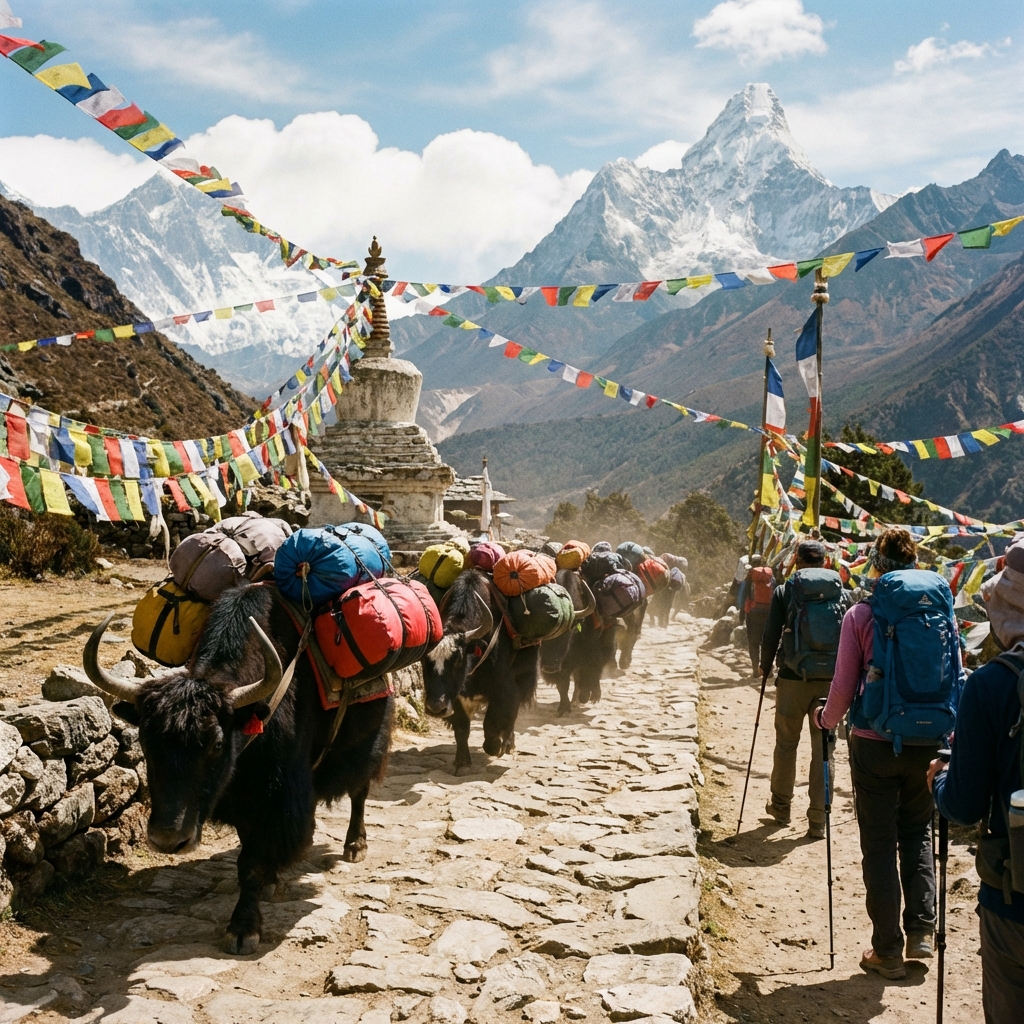
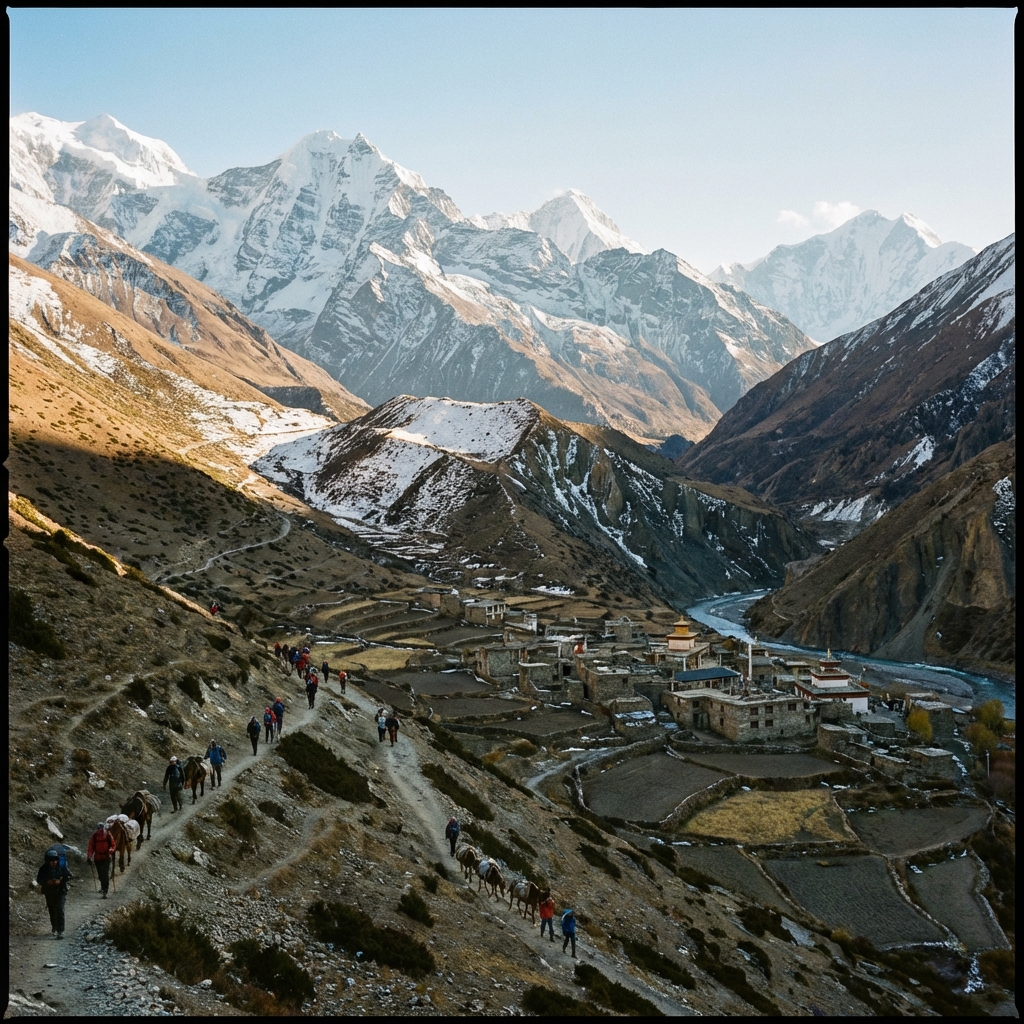
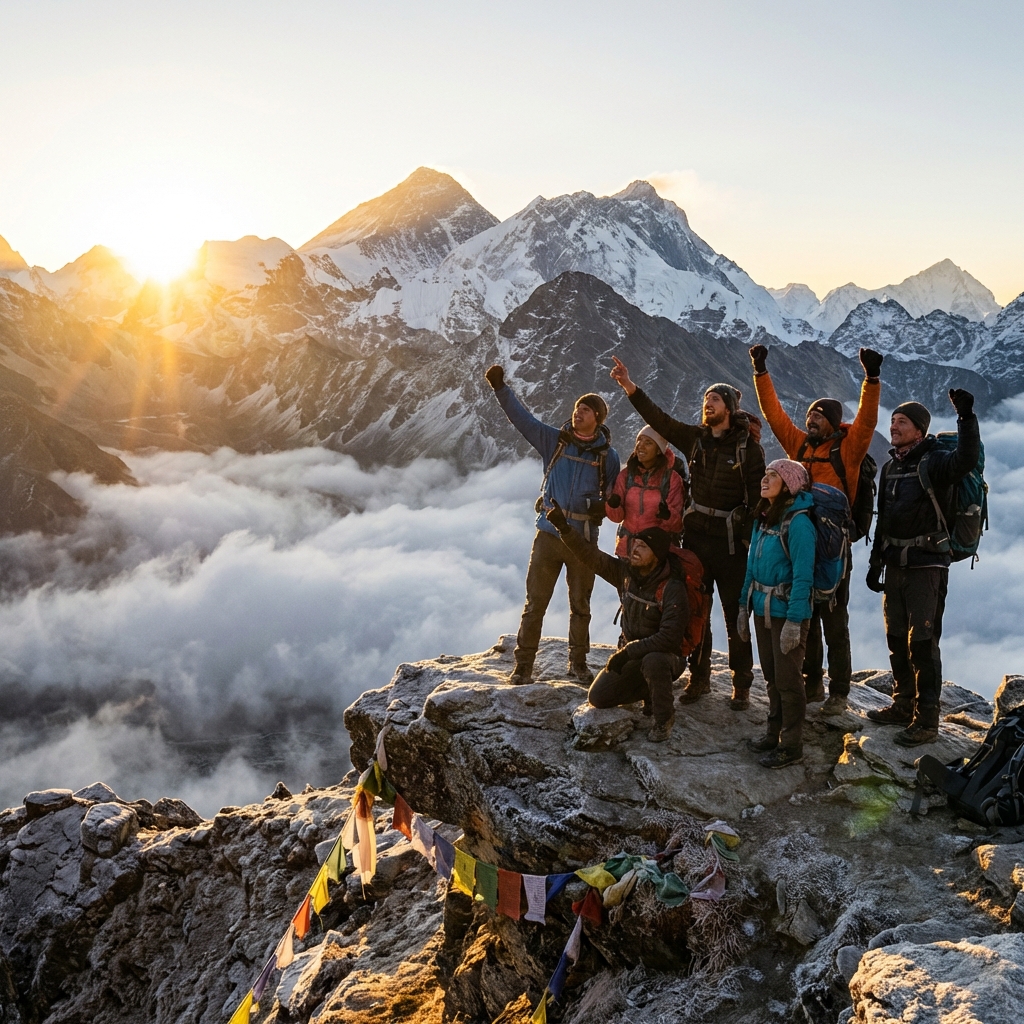
Imagine stepping off the popular Annapurna Circuit into a hidden valley where medieval Tibetan villages perch on cliff faces, prayer flags stretch across dramatic canyons, and the only sound is wind against ancient stone walls. That is the Nar Phu Valley -- one of Nepal's most extraordinary restricted area treks, hidden in plain sight just north of the bustling Annapurna Circuit.
Nar Phu was completely closed to foreigners until 2003. Even now, fewer than 1,500 trekkers visit annually, compared to tens of thousands on the adjacent Annapurna Circuit. The restricted area permit requirement, mandatory guide regulation, and challenging terrain create a natural filter that preserves the valley's authenticity. For trekkers willing to pay the permit fee and accept rougher conditions, Nar Phu delivers a Tibetan cultural experience rivaling Upper Mustang at a fraction of the permit cost.
This guide covers everything you need to plan a Nar Phu Valley trek: standalone itineraries, integration with the Annapurna Circuit, permit details, cultural highlights, and practical logistics.
7-10 days from Koto/Meta
18-24 days total
5,322m (Kang La Pass)
4,110m
4,080m
Difficult (Kang La); Moderate without pass
Sept-Nov, Apr-May
$100/week (first), $15/day after
Yes - mandatory
2 trekkers (restricted area)
Basic teahouses and homestays
Koto or Meta on Annapurna Circuit
Why Trek the Nar Phu Valley?
A Time Capsule Off the Beaten Path
The Nar Phu Valley occupies a unique position in Nepal's trekking landscape. Geographically, it branches north from the Annapurna Circuit near the village of Koto (2,600m), penetrating deep into the rain shadow of the Annapurna and Manaslu ranges. This northern position creates a landscape and culture far more Tibetan than Nepali.
The twin villages of Nar (4,110m) and Phu (4,080m) are extraordinary places. Phu, in particular, looks like a Tibetan fortress village transplanted from another century. Stone houses stack up a cliff face beneath a ruined fortress (dzong), with a prominent monastery perched above. Nar sits in a wider valley surrounded by cultivated fields (barley, buckwheat) and grazing yaks, with its own ancient gompa and a recently restored chorten field.
Key Attractions
1. Authentic Tibetan Buddhist Culture Nar and Phu are ethnically Tibetan communities with deep religious traditions. Monasteries in both villages contain centuries-old murals, thangka paintings, and ritual objects. Monks and nuns practice daily prayers. The annual Phoksumdo and Loshar festivals are profound cultural events. Unlike more tourist-oriented cultural displays elsewhere, Nar Phu's spiritual life is genuinely for the community, not for visitors.
2. Dramatic Landscape The approach to Nar Phu follows the Nar Khola through a deep, narrow canyon that feels almost subterranean in places. The trail passes beneath massive overhanging cliff faces, through wind-sculpted rock formations, and across narrow bridges spanning roaring river gorges. Emerging into the broad valley at Nar is a revelation: suddenly, wide open spaces, golden-brown terrain, snow peaks on every horizon.
3. Kang La Pass (5,322m) For experienced trekkers, the Kang La Pass connects Nar to Ngawal on the Annapurna Circuit, creating a spectacular high-altitude crossing. The pass offers panoramic views of Annapurna II, Gangapurna, Tilicho Peak, and the entire Manang Valley below. Crossing Kang La eliminates backtracking and creates an elegant circuit combining Nar Phu with the Annapurna Circuit.
4. Minimal Crowds With fewer than 1,500 annual visitors, you will likely share the trail with only a handful of other trekking groups. In the villages, you may be the only foreign visitors. This level of solitude is increasingly rare in Nepal.
Pro Tip
The Nar Phu Valley can be added to an Annapurna Circuit trek for only 5-7 extra days, transforming a popular route into a genuinely unique experience. If you are already planning the Annapurna Circuit, the Nar Phu extension is one of the best upgrades available in Nepal trekking.
Route Options: Three Ways to Trek Nar Phu
Option 1: Nar Phu as Annapurna Circuit Side Trip (Most Popular)
This is the most common approach: trek the Annapurna Circuit and detour into Nar Phu Valley from Koto, returning via Kang La Pass to Ngawal on the circuit.
Duration: 18-24 days total (circuit + side trip) Route: Besisahar ... Koto ... Meta ... Phu ... Nar ... Kang La (5,322m) ... Ngawal ... Thorong La ... Muktinath ... Jomsom
Advantages:
- Most efficient use of time
- No backtracking (Kang La connects to circuit)
- Combines two incredible experiences
- Better acclimatization for Thorong La (5,416m)
Option 2: Standalone Nar Phu Trek (Out-and-Back)
Trek directly into Nar Phu from Koto/Meta and return the same way, without continuing on the Annapurna Circuit.
Duration: 7-10 days Route: Besisahar ... Koto ... Meta ... Phu ... Nar ... return to Koto ... Besisahar
Advantages:
- Shorter time commitment
- No high pass crossing required (if you skip Kang La)
- Feasible for trekkers who have already done the Annapurna Circuit
- Less physically demanding without Kang La
Option 3: Nar Phu with Kang La Only (No Full Circuit)
Enter Nar Phu from Koto, cross Kang La to Ngawal, and exit to Manang without completing the full Annapurna Circuit.
Duration: 10-14 days Route: Besisahar ... Koto ... Meta ... Phu ... Nar ... Kang La ... Ngawal ... Manang ... Besisahar or Chame
Advantages:
- Experience both Nar Phu and Kang La
- Moderate time commitment
- Ends in Manang, easy exit options
Recommended Option
For most trekkers, Option 1 (combining with the Annapurna Circuit) provides the best overall experience. The Nar Phu detour adds only 5-7 days to a standard circuit trek, and crossing Kang La serves as excellent acclimatization for Thorong La. You get two world-class experiences on a single trek.
Detailed Itinerary: Nar Phu with Annapurna Circuit (21 Days)
| Day | Route | Altitude | Hours | Notes |
|---|---|---|---|---|
| 1 | Kathmandu to Besisahar | 760m | 7-8 hrs drive | Gateway town for Annapurna Circuit |
| 2 | Besisahar to Dharapani | 1,960m | 5-6 hrs | Jeep or trek; through terraced hillsides |
| 3 | Dharapani to Chame | 2,670m | 5-6 hrs | Pine forests; first Annapurna views |
| 4 | Chame to Koto/Meta | 2,600m | 3-4 hrs | Short day; prepare for Nar Phu entry |
| 5 | Koto to Meta to Dharmasala | 3,230m | 6-7 hrs | Enter Nar Phu canyon; permit checked |
| 6 | Dharmasala to Phu | 4,080m | 5-6 hrs | Dramatic canyon; arrive at fortress village |
| 7 | Rest Day at Phu | 4,080m | - | Explore monastery, dzong ruins, village |
| 8 | Phu to Nar | 4,110m | 5-6 hrs | Cross between the twin valleys |
| 9 | Rest Day at Nar | 4,110m | - | Explore gompa, chorten field, village life |
| 10 | Nar to Kang La Base Camp | 4,600m | 4-5 hrs | Approach the high pass |
| 11 | Cross Kang La (5,322m) to Ngawal | 3,660m | 7-8 hrs | Demanding pass day; rejoin circuit |
| 12 | Ngawal to Manang | 3,540m | 3-4 hrs | Easy walk; explore Manang |
| 13 | Rest Day in Manang | 3,540m | - | Acclimatization; Himalayan Rescue Assn. talk |
| 14 | Manang to Yak Kharka | 4,018m | 3-4 hrs | Gradual ascent |
| 15 | Yak Kharka to Thorong Phedi | 4,525m | 3-4 hrs | Base of Thorong La |
| 16 | Cross Thorong La (5,416m) to Muktinath | 3,760m | 7-8 hrs | Highest point; long descent |
| 17 | Muktinath to Jomsom | 2,720m | 5-6 hrs | Through Kali Gandaki valley |
| 18 | Jomsom to Pokhara | 820m | Flight or jeep | 25-min flight or 8-10 hr drive |
| 19 | Rest Day in Pokhara | 820m | - | Recovery; lakeside relaxation |
| 20 | Pokhara to Kathmandu | 1,400m | Flight or bus | 25-min flight or 7-8 hr drive |
Pro Tip
The transition from Nar Phu to the Annapurna Circuit via Kang La Pass is one of the most effective acclimatization strategies in Nepal trekking. After spending several days at 4,000-4,100m in Nar and Phu, crossing Kang La at 5,322m, and then descending to Ngawal at 3,660m, your body will be exceptionally well-prepared for the Thorong La crossing at 5,416m a few days later.
Permits and Costs
Required Permits
| Permit | Cost | Where to Obtain | Notes |
|---|---|---|---|
| Nar Phu Restricted Area Permit | $100/week (first week); $15/day additional | Department of Immigration, Kathmandu | Must be obtained through registered agency |
| ACAP (Annapurna Conservation Area Permit) | NPR 3,000 (~$23) | Nepal Tourism Board or Besisahar checkpoint | Required for all Annapurna region trekking |
| TIMS Card | NPR 2,000 (~$15) | Nepal Tourism Board, Kathmandu | Trekkers' Information Management System |
Permit Requirements
- Minimum 2 trekkers: You cannot obtain a Nar Phu restricted area permit as a solo trekker
- Licensed guide: A registered trekking guide is mandatory for the restricted area
- Agency processing: The restricted area permit must be applied for through a registered trekking agency
- Processing time: Allow 3-5 business days in Kathmandu for permit processing
- Permit check points: Your restricted area permit will be verified at Koto/Meta on entry and at any check posts within the valley
For a complete overview of Annapurna region permits, see our ACAP permit guide.
Total Permit Cost Calculation
For a typical 7-day Nar Phu detour combined with the Annapurna Circuit:
| Permit | Cost |
|---|---|
| Nar Phu RAP (1 week) | $100 |
| ACAP | ~$23 |
| TIMS | ~$15 |
| Total Permits | ~$138 |
Nar Phu vs Upper Mustang: Permit Value Comparison
The Nar Phu restricted area permit at $100/week offers outstanding value compared to Upper Mustang (USD 50/day). Both deliver comparable Tibetan cultural experiences, but Nar Phu costs one-fifth the permit price and can be seamlessly combined with the Annapurna Circuit. For budget-conscious trekkers seeking restricted area cultural experiences, Nar Phu is the clear winner.
Cost Breakdown: Nar Phu with Annapurna Circuit
Per-Person Budget (21-Day Combined Trek)
| Category | Budget Range | Notes |
|---|---|---|
| Transport (KTM-Besisahar, Jomsom-Pokhara-KTM) | $80-200 | Bus/jeep + flight or bus |
| All Permits | $130-150 | RAP + ACAP + TIMS |
| Guide (21 days) | $420-630 | $20-30/day licensed guide |
| Porter (21 days) | $295-420 | $14-20/day |
| Accommodation | $105-210 | $5-10/night |
| Meals (21 days) | $315-525 | $15-25/day |
| Contingency | $150-250 | Tips, extras, emergencies |
| Total (Independent with Guide) | $1,495-2,385 | Budget to mid-range |
| Total (Agency Package) | $2,500-4,000 | All-inclusive |
Nar Phu Standalone (10-Day) Budget
| Category | Budget Range | Notes |
|---|---|---|
| Transport | $60-120 | Bus/jeep to Besisahar and return |
| All Permits | $130-150 | Same permit requirements |
| Guide (10 days) | $200-300 | Licensed guide mandatory |
| Porter (10 days) | $140-200 | Optional but recommended |
| Accommodation & Meals | $200-350 | Basic teahouses |
| Contingency | $100-150 | Buffer |
| Total | $830-1,270 | Independent with guide |
Accommodation and Teahouses
Nar Phu Valley teahouse infrastructure has developed significantly since 2010 but remains basic compared to the main Annapurna Circuit.
What to Expect
| Location | Accommodation Type | Quality | Meals | Notes |
|---|---|---|---|---|
| Koto/Meta | Standard teahouse | Moderate | Good variety | Last comfortable lodging before Nar Phu |
| Dharmasala/Along canyon | Basic teahouse | Basic | Dal bhat, noodles | Limited options; one or two lodges |
| Phu Village | Homestay/basic lodge | Basic | Dal bhat, potatoes, tea | Authentic village experience |
| Nar Village | Homestay/basic lodge | Basic | Dal bhat, tsampa, tea | Community-run guesthouses |
| Kang La Base Camp | Camping | None (bring own) | Self-catered | No permanent structures |
Accommodation Tips
- Bring a sleeping bag: Blankets at basic lodges may not be warm enough at 4,000m+
- Expect shared rooms: Private rooms are not always available in Nar and Phu
- Meals are simple: Dal bhat is the reliable option; do not expect Western food variety
- Carry snacks: Limited food options between stops; energy bars and trail mix are essential
- Water: Bring purification tablets or a filter; bottled water is scarce and expensive in the valley
Pro Tip
Homestays in Nar and Phu provide a far more authentic experience than lodges. Families serve traditional Tibetan meals (tsampa, butter tea, thukpa noodle soup) and you share living space with the household. This is the best way to experience daily life in these remarkable villages. Ask your guide to arrange homestay accommodation.
The Kang La Pass: Detailed Crossing Guide
The Kang La Pass (5,322m) is the highlight and the most challenging element of a Nar Phu trek. Understanding the crossing helps you prepare adequately.
Pass Profile
| Aspect | Details |
|---|---|
| Altitude | 5,322m (17,461 ft) |
| Approach Camp | Kang La Phedi (~4,600m) |
| Descent To | Ngawal (3,660m) on Annapurna Circuit |
| Crossing Duration | 7-8 hours total |
| Technical Difficulty | Non-technical but steep; snow possible |
| Season Viability | Sept-Nov, Apr-May (snow blocks in winter) |
| Glacier | Small glacier section near top; crampons rarely needed |
Crossing Day Timeline
- 4:00-5:00 AM: Wake up at Kang La Phedi base camp
- 5:30 AM: Begin ascent on steep moraine trail
- 6:30-7:30 AM: Traverse glacier section (if snow present)
- 8:00-9:00 AM: Reach Kang La summit (5,322m); panoramic views
- 9:00-11:00 AM: Steep descent on loose scree toward Ngawal
- 12:00-1:00 PM: Arrive Ngawal (3,660m)
What You Need for Kang La
- Warm layers including down jacket (temperatures can reach minus 15 degrees Celsius at dawn)
- Sturdy trekking boots with ankle support
- Trekking poles (essential for the steep descent)
- Headlamp (pre-dawn start)
- Sunglasses and sunscreen (intense UV at altitude)
- At least 2 liters of water (no water sources on the pass)
- Energy food for 6-8 hours
Kang La Pass Conditions
Kang La can become impassable after heavy snowfall, particularly in late November through March. Fresh snow makes the glacier section dangerous without proper equipment. Your guide should assess conditions from Nar village and make the call on whether the crossing is safe. If Kang La is not feasible, the alternative is to return to Koto via the approach route, adding 2-3 days to your itinerary. Always have this contingency plan.
Tibetan Buddhist Culture in Nar and Phu
Phu Village: The Cliff Fortress
Phu (4,080m) is one of Nepal's most visually striking villages. Stone houses climb a steep cliff face beneath the ruins of a centuries-old fortress (dzong) that once guarded the valley from Tibetan raiders. Above the village, Tashi Lakhang Gompa contains ancient Buddhist murals and a resident monastic community.
Key cultural features:
- Tashi Lakhang Monastery: Active gompa with daily prayers; visitors welcome (remove shoes, ask permission for photos)
- Dzong ruins: Dramatic fortress remains above the village; accessible by a steep trail
- Mani walls: Extensive carved prayer stones line the approach to the village
- Sky burial site: Sacred cremation/burial area above the village (do not approach without invitation)
Nar Village: The Wide Valley
Nar (4,110m) occupies a broader valley with terraced fields, grazing yaks, and views toward the Annapurna and Manaslu ranges. The village has a more pastoral feel than the dramatic cliff-perched Phu.
Key cultural features:
- Nar Gompa: Ancient monastery undergoing restoration; important religious center
- Chorten field: Extensive collection of Buddhist chortens and prayer flags below the village
- Seasonal life: Many Nar residents practice transhumance, moving between seasonal settlements for yak grazing
- Tsampa and butter tea: Traditional staple foods still central to daily life
Cultural Etiquette
- Always walk clockwise around mani walls, chortens, and monasteries (keeping them to your right)
- Remove shoes before entering any religious building
- Ask permission before photographing people, especially monks and nuns
- Do not sit on or touch mani stones, prayer wheels, or religious objects
- Accept offered tea or food with both hands as a sign of respect
- Dress modestly in villages, covering shoulders and knees
Altitude Profile and Acclimatization
Altitude Progression
| Day | Location | Altitude | Gain/Loss |
|---|---|---|---|
| Entry (Koto) | 2,600m | - | - |
| Dharmasala | 3,230m | +630m | Moderate gain |
| Phu | 4,080m | +850m | Significant; rest day needed |
| Nar | 4,110m | +30m | Lateral; rest day ideal |
| Kang La BC | 4,600m | +490m | High camp |
| Kang La Summit | 5,322m | +722m | Pass crossing; descend same day |
| Ngawal | 3,660m | -1,662m | Major descent |
Acclimatization Strategy
The Nar Phu trek requires careful acclimatization, especially for the Kang La crossing:
- Spend 2+ nights at Phu (4,080m): This is your primary acclimatization stop. Use the rest day for a hike toward higher ground (gaining 300-400m and returning to sleep at Phu)
- Spend at least 1 night at Nar (4,110m): Reinforces acclimatization at 4,000m+
- Ascend gradually to Kang La BC (4,600m): Only after 3+ nights above 4,000m
- Hydrate aggressively: 3-4 liters per day above 3,000m
- Monitor symptoms: Headache, nausea, dizziness, and poor sleep are early warning signs
- Carry Diamox: As a prophylactic option (consult your doctor before the trek)
Pro Tip
If you are combining Nar Phu with the Annapurna Circuit, the days spent at 4,000m+ in the Nar Phu Valley provide excellent pre-acclimatization for Thorong La (5,416m). Trekkers who complete the Nar Phu detour before Thorong La consistently report easier crossings compared to those who skip it. Consider this a significant side benefit beyond the cultural experience.
For comprehensive altitude sickness prevention strategies, see our detailed acclimatization guide.
Best Season for Nar Phu Valley
Season Comparison
| Season | Months | Weather | Kang La Status | Crowds | Rating |
|---|---|---|---|---|---|
| Autumn | Sep-Nov | Clear skies; cold nights above 4,000m | Open (usually) | Very Low | Best |
| Spring | Apr-May | Warming; some haze; wildflowers | Open (snow possible early April) | Very Low | Very Good |
| Early Winter | Dec | Clear but very cold | Risky; snow possible | Almost None | Fair |
| Winter | Jan-Mar | Extreme cold; heavy snow | Closed (impassable) | None | Not Recommended |
| Monsoon | Jun-Aug | Rain in approach; drier in valley (partial rain shadow) | Open but risky | None | Not Recommended |
Optimal window: Mid-September through mid-November provides the best balance of clear weather, open passes, and comfortable (if cold) temperatures.
Combining Nar Phu with the Annapurna Circuit
The integration of Nar Phu into an Annapurna Circuit trek is seamless and highly recommended.
How the Integration Works
The Annapurna Circuit passes through Koto (2,600m) after Chame. At Koto, instead of continuing directly to Upper Pisang and Manang, you turn north into the Nar Phu Valley. After exploring Phu and Nar (5-7 days), you cross Kang La Pass and rejoin the circuit at Ngawal, just before Manang. You then continue the standard circuit over Thorong La to Muktinath and Jomsom.
Advantages of Combining
- Zero backtracking: Kang La connects directly to the circuit
- Superior acclimatization: Days at 4,000m prepare you for Thorong La
- Cultural contrast: Experience both mainstream Annapurna villages and remote Tibetan culture
- Unique bragging rights: Most Annapurna Circuit trekkers never enter Nar Phu
- Modest time addition: Only 5-7 extra days for a dramatically enhanced experience
Logistics Consideration
Your restricted area permit must be arranged before leaving Kathmandu. You cannot decide to detour into Nar Phu spontaneously from Koto. Plan ahead and have the permit processed before starting the circuit.
Choosing an Agency
Since Nar Phu requires a registered agency for the restricted area permit, choosing the right one matters.
What to Prioritize
- Nar Phu specific experience: Ask how many times the agency has operated in Nar Phu specifically
- Guide quality: Your guide should speak some Tibetan/local dialect for cultural interaction
- Kang La competence: Verify the guide has successfully crossed Kang La multiple times
- Flexible itinerary: The agency should accommodate weather-related changes (especially for Kang La)
- Group size: Smaller groups (2-4 trekkers) provide a better experience in these intimate villages
Solo Trekker Workaround
If you are traveling alone and need a second person for the restricted area permit requirement, some agencies can pair you with another solo trekker. Alternatively, some agencies count the guide as the second member for permit purposes, though this interpretation varies. Confirm this arrangement explicitly with the Department of Immigration through your agency before departure.
Frequently Asked Questions
Can I trek Nar Phu Valley without crossing Kang La Pass?
Yes. You can trek to Phu and Nar and return the same way via Koto without crossing Kang La. This reduces the difficulty significantly (no pass above 5,000m) and is a good option for trekkers uncomfortable with high passes or traveling outside the optimal Kang La season.
How difficult is the Kang La Pass compared to Thorong La?
Kang La (5,322m) is slightly lower than Thorong La (5,416m) but is steeper on both sides, has a small glacier section, and lacks the well-maintained trail of Thorong La. Kang La is considered more technically demanding, though neither requires mountaineering skills. If you can handle Thorong La, you can handle Kang La with proper acclimatization.
Is Nar Phu worth the extra permit cost?
Overwhelmingly yes, according to trekkers who have done both the standard Annapurna Circuit and the Nar Phu extension. The $100 permit fee buys access to one of Nepal's most authentic Tibetan cultural experiences and a dramatically different landscape from the main circuit. Many trekkers describe Nar Phu as the highlight of their entire Nepal trip.
How cold does it get in Nar and Phu?
In the peak autumn season (October-November), nighttime temperatures at Nar and Phu (approximately 4,100m) drop to minus 5 to minus 10 degrees Celsius. Daytime temperatures in sunshine are pleasant (5-15 degrees Celsius). At Kang La summit on a pre-dawn crossing, expect minus 10 to minus 20 degrees Celsius with wind chill.
Can I visit Nar Phu independently without an agency?
No. The restricted area permit requires processing through a registered trekking agency, a licensed guide, and a minimum of 2 trekkers. Independent trekking in Nar Phu is not legally permitted.
What food is available in Nar and Phu?
Basic dal bhat (rice, lentils, vegetables) is the staple. Tsampa (roasted barley flour), butter tea, and thukpa (noodle soup) are traditional Tibetan foods you may also be offered. There is no Western food variety. Bring supplementary snacks for the entire Nar Phu portion.
How many days should I spend in the Nar Phu Valley?
A minimum of 5 days (Koto to Phu to Nar to Kang La to Ngawal) is needed, but 7 days allows rest days in both villages for proper acclimatization and cultural exploration. Rest days in Phu and Nar are strongly recommended and significantly enhance the experience.
Is there phone signal in Nar Phu Valley?
No. Mobile phone coverage ends before Dharmasala in the canyon. There is no phone signal or WiFi in Phu, Nar, or anywhere in the upper valley. Plan for 5-7 days without any communication. Your agency in Kathmandu can serve as an emergency relay via satellite phone if your guide carries one.
When does Kang La close for the season?
Kang La typically becomes impassable from late November or December through March due to snow accumulation. Early April crossings may also be blocked by residual winter snow. The reliable season is mid-April through mid-November, with October-November being optimal.
Can I hire a porter in Nar Phu?
Porters can be arranged through your agency from Besisahar or Kathmandu. Local porters from the Nar Phu Valley itself are sometimes available but not guaranteed. Since the restricted area requires an agency, porter arrangements are typically included in the package or easily added.
How does Nar Phu compare to Upper Mustang for cultural experience?
Both offer extraordinary Tibetan Buddhist cultural experiences. Upper Mustang has grander architecture (Lo Manthang's walled city) and a longer history of tourism infrastructure. Nar Phu is rawer, more intimate, and far less visited. The key difference is cost: Nar Phu's $100/week permit versus Upper Mustang's USD 50/day makes Nar Phu dramatically more affordable for a comparable cultural depth.
What if bad weather prevents the Kang La crossing?
Your guide will assess conditions from Nar village. If Kang La is unsafe (deep snow, white-out conditions, extreme cold), the contingency is to return to Koto via the approach route, adding 2-3 days. You would then continue the Annapurna Circuit from Koto rather than Ngawal, missing only the Kang La crossing itself. This is a manageable alternative, though disappointing.
Final Thoughts
The Nar Phu Valley represents one of Nepal trekking's best-kept secrets -- a restricted area experience that delivers extraordinary cultural immersion and dramatic landscapes at a fraction of the cost of other restricted areas like Upper Mustang or Upper Dolpo. Whether you add it as a 7-day side trip to the Annapurna Circuit or explore it as a standalone adventure, the twin villages of Nar and Phu will redefine your understanding of what "remote trekking" means in Nepal.
The restricted area status and mandatory guide requirement may feel like bureaucratic obstacles, but they are precisely what preserve Nar Phu's authenticity. These regulations ensure that the villages remain living communities rather than trekking museums, and that the fragile high-altitude environment is protected. The $100 weekly permit fee is not an expense -- it is an investment in one of the most genuinely rewarding trekking experiences in the Himalayas.
For those planning an Annapurna Circuit trek, adding Nar Phu should not be a question of "if" but "how." The extra days and modest additional cost transform an already magnificent trek into something truly exceptional.