
NPR 3,000 (~$23 USD)
NPR 200 (~$1.50 USD)
Free
7,629 sq km (largest conservation area in Nepal)
1986
NTNC (not government national park)
TIMS card (separate permit)
Kathmandu, Pokhara, trailhead checkpoints, or via agency
The Annapurna Conservation Area Permit -- universally known as ACAP -- is one of the most commonly needed trekking permits in Nepal. If you are planning to trek anywhere in the Annapurna region, from the classic Annapurna Base Camp (ABC) trek to the legendary Annapurna Circuit, the popular Poon Hill loop, or the increasingly trendy Mardi Himal trek, you need an ACAP permit.
The Annapurna Conservation Area is not a national park. This distinction matters because it is managed differently, with a unique community-based conservation model that has become a globally recognized success story. Your ACAP fee directly funds conservation programs, community development, and sustainable tourism initiatives that benefit both the environment and the local people.
This guide covers everything about the ACAP permit for 2026: which treks require it, current costs, where to get it, what documents you need, checkpoint information, and what your fee supports.
What Is the Annapurna Conservation Area?
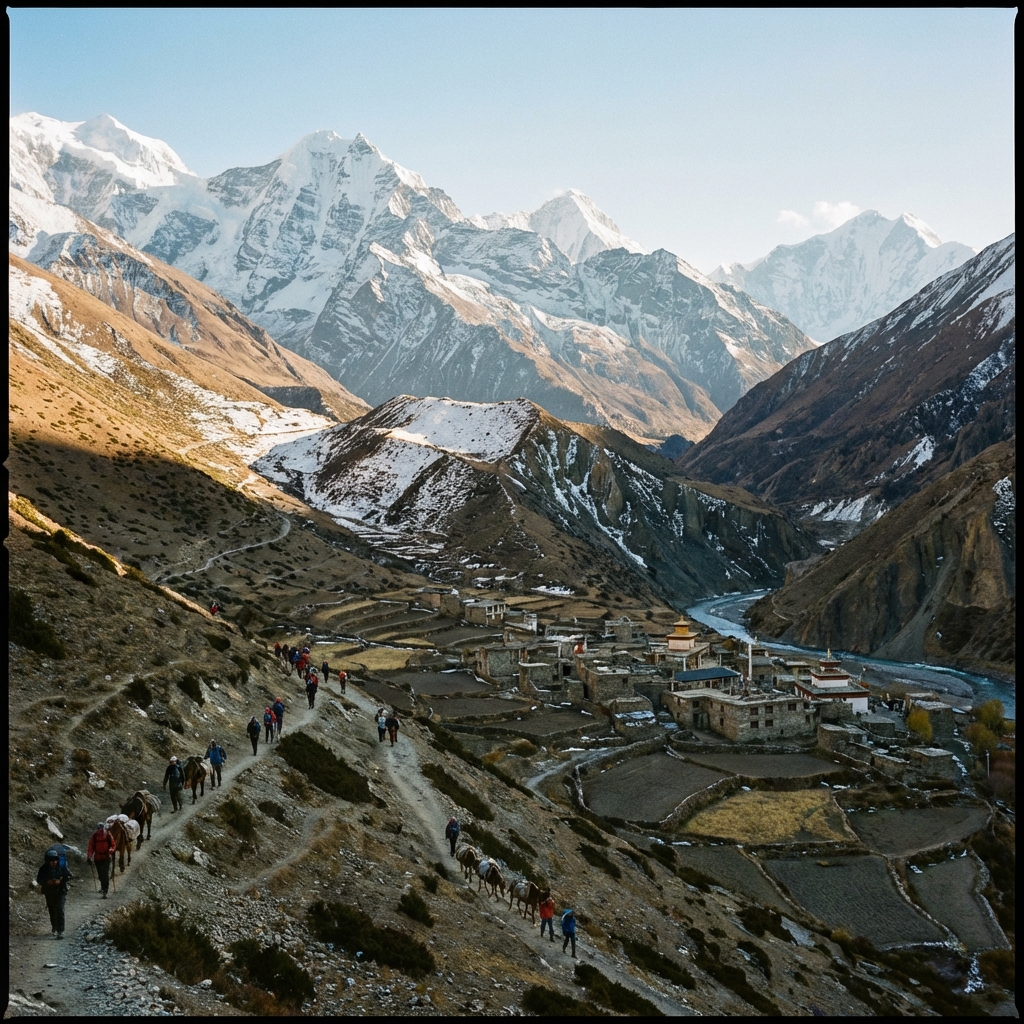
The Annapurna Conservation Area (ACA) is the largest protected area in Nepal, covering 7,629 square kilometers in the western-central part of the country. It was established in 1986 as a pioneering experiment in community-based conservation -- the first protected area in Nepal to integrate conservation with sustainable community development.
Key Facts
- Established: 1986
- Total Area: 7,629 sq km (2,946 sq miles)
- Altitude Range: 790m to 8,091m (Annapurna I summit)
- Districts Covered: Kaski, Myagdi, Mustang, Manang, and Lamjung
- Population Within Area: Approximately 100,000 people in 57 Village Development Committees
- Annual Visitors: Over 150,000 trekkers per year (one of the most visited trekking regions in the world)
- Managing Authority: National Trust for Nature Conservation (NTNC) through the Annapurna Conservation Area Project (ACAP)
What Makes It Different from a National Park?
This is an important distinction that affects how the area is managed and how your permit fee is used:
| Feature | National Park (e.g., Sagarmatha) | Conservation Area (Annapurna) |
|---|---|---|
| Managing body | Department of National Parks (Government) | NTNC (Semi-autonomous trust) |
| Human habitation | Restricted or prohibited | Communities live within the area |
| Revenue use | Government treasury, then allocated | Directly reinvested in local communities |
| Decision-making | Centralized government control | Community-based management committees |
| Resource use | Strictly prohibited (hunting, logging) | Sustainable use permitted with regulation |
| Philosophy | Preservation (protect from humans) | Conservation (protect with humans) |
The ACAP model recognizes that the Annapurna region has been home to diverse ethnic communities -- Gurung, Thakali, Magar, and others -- for centuries, and that conservation must work with these communities, not against them.
Notable Peaks and Geography
The Annapurna Conservation Area contains some of the most dramatic geography on Earth:
| Peak/Feature | Elevation | Significance |
|---|---|---|
| Annapurna I | 8,091m | 10th highest mountain in the world |
| Annapurna II | 7,937m | Dominates the skyline from Manang |
| Annapurna III | 7,555m | Stunning from ABC and Mardi Himal |
| Annapurna IV | 7,525m | Visible from much of the Circuit |
| Machapuchare (Fish Tail) | 6,993m | Sacred mountain, climbing prohibited |
| Dhaulagiri I | 8,167m | 7th highest (visible from Poon Hill, borders the ACA) |
| Kali Gandaki Gorge | -- | Deepest gorge in the world (between Annapurna and Dhaulagiri) |
| Tilicho Lake | 4,919m | One of the highest lakes in the world |
Which Treks Require the ACAP Permit?
Every trek that enters the Annapurna Conservation Area requires an ACAP permit. This includes all of the following popular routes:
Major Treks Requiring ACAP
- Annapurna Base Camp (ABC) -- The classic trek to the heart of the Annapurna Sanctuary
- Annapurna Circuit -- The legendary loop crossing Thorong La Pass (5,416m)
- Poon Hill / Ghorepani -- Nepal's most popular short trek with stunning sunrise views
- Mardi Himal -- Increasingly popular alternative to ABC with dramatic ridge walking
- Khopra Ridge / Mohare Danda -- Emerging off-the-beaten-path route with spectacular Dhaulagiri views
- Sikles Trek -- Short, cultural trek through Gurung villages
- Royal Trek -- Easy, low-altitude trek named after Prince Charles's 1980 visit
Treks Requiring ACAP Plus Additional Permits
Some routes within the conservation area also require separate restricted area permits:
- Upper Mustang -- ACAP + Restricted Area Permit (USD 50 per person per day (no minimum days required), $50 each additional day)
- Nar Phu Valley -- ACAP + Restricted Area Permit ($90 per week in peak season)
- Tilicho Lake (if accessed via restricted routes) -- ACAP + may require additional local permits
ACAP Is Not Enough for All Annapurna Treks
While ACAP is required for all Annapurna region treks, some routes require additional permits beyond ACAP and TIMS. Upper Mustang, Nar Phu Valley, and certain restricted areas have separate fees and requirements. See our comprehensive permits guide for details on restricted area permits.
2026 ACAP Permit Fees
The current ACAP permit fees for 2026 are:
| Category | Fee | Approximate USD |
|---|---|---|
| Foreign nationals | NPR 3,000 | ~$23 |
| SAARC nationals (India, Pakistan, Bangladesh, Sri Lanka, Maldives, Bhutan, Afghanistan) | NPR 200 | ~$1.50 |
| Nepali citizens | Free | Free |
| Children under 10 (all nationalities) | Free | Free |
Payment methods:
- Nepali Rupees (cash) accepted at all locations
- The NTNC/ACAP offices in Kathmandu and Pokhara may accept major foreign currencies
- Credit card payment may be available at the Pokhara ACAP office, but do not count on it -- bring cash
Pro Tip
Where to Obtain the ACAP Permit
You have several options, listed from most to least convenient:
Option 1: Through Your Trekking Agency (Most Convenient)
If you are using a registered trekking agency -- required under current Nepal trekking regulations for most routes -- your agency will typically obtain the ACAP permit as part of their service.
What to provide: Passport copy and two passport-sized photos What to verify: Confirm the ACAP fee is included in your package price. Ask to see the permit before departure. Advantage: Zero hassle -- the agency handles everything
Option 2: NTNC/ACAP Office in Pokhara (Best for Self-Arranging)
Since most Annapurna treks begin from Pokhara, this is the most logical place to get your permit if arranging independently.
Primary Office Location: ACAP Headquarters, Hariyo Kharka, Pokhara
Tourist-Friendly Office: Near the Tourist Service Center in Lakeside, Pokhara. This is more convenient for trekkers staying in the Lakeside area.
Hours: Sunday-Friday, approximately 9:00 AM - 5:00 PM (may close earlier on Fridays). Closed Saturdays and public holidays.
Process:
- Bring your passport, two passport-sized photos, and cash
- Fill out the application form
- Submit documents and pay the fee
- Receive your ACAP permit card (usually same day, within 30-60 minutes)
Pro Tip
Option 3: Nepal Tourism Board (NTB) Office in Kathmandu
If you are arranging permits before traveling to Pokhara, you can get ACAP at the NTB office in Kathmandu.
Location: Pradarshani Marg, Bhrikutimandap, Kathmandu
Hours: Sunday-Thursday 10:00 AM - 5:00 PM, Friday 10:00 AM - 3:00 PM
Advantage: Convenient if you are also getting permits for other regions (e.g., TIMS card, Sagarmatha permit for a future Everest trek)
Option 4: Trailhead Checkpoints
If you forgot to get your ACAP permit in Pokhara or Kathmandu, you can obtain one at the first ACAP checkpoint on the trail:
- Birethanti (1,025m) -- Main checkpoint for treks starting from Naya Pul toward ABC, Poon Hill, or the western side of the Annapurna Circuit
- Bhulbhule/Besisahar area -- For treks starting from the eastern side of the Annapurna Circuit
- Dharapani -- Secondary checkpoint on the northern section of the Circuit
Disadvantages of getting ACAP at the trailhead:
- Cash only (NPR)
- Must have passport photos ready
- Can cause delays if there is a queue
- Limited hours -- if you arrive late, you may have to wait until the next morning
Always Get Your Permit Before the Trek If Possible
While trailhead checkpoints can issue ACAP permits, we strongly recommend obtaining yours in Pokhara or Kathmandu before your trek begins. Arriving at a checkpoint without a permit, without cash, or without passport photos creates unnecessary stress and potential delays at the start of your trek.
Application Requirements
To obtain your ACAP permit, you need:
- Valid passport -- Original with at least 6 months remaining validity
- Two passport-sized photographs -- Recent, standard 35mm x 45mm, white or light background
- Cash payment -- NPR 3,000 for foreign nationals (NPR 200 for SAARC nationals)
- Completed application form -- Available at the issuing office
The application form asks for:
- Full name (as on passport)
- Nationality and passport number
- Trekking route (e.g., "Annapurna Base Camp" or "Annapurna Circuit")
- Entry and exit dates (estimated)
- Emergency contact information
- Travel insurance details
- Trekking agency name and guide details (if applicable)
Application Process Step by Step
At the ACAP Office in Pokhara
- Visit the ACAP office near the Tourist Service Center in Lakeside (or the main ACAP headquarters in Hariyo Kharka)
- Request the ACAP application form at the counter
- Fill out the form completely -- all fields should be completed
- Attach one passport photo to the form and provide the second separately
- Submit the form with your passport for verification
- Pay the fee -- NPR 3,000 for foreign nationals
- Wait for processing -- typically 15-30 minutes
- Receive your ACAP permit card -- a printed card with your photo and details
- Verify all details before leaving -- check your name, passport number, dates, and route
At the NTB Office in Kathmandu
The process is identical to the above, just at a different location. You can obtain both ACAP and TIMS at the NTB office in a single visit.
Through Your Agency
- Provide your passport copy and photos to your agency when booking
- The agency submits the application on your behalf
- Your guide carries the permit for the group
- Verify your details on the permit before departure
Permit Validity
- Single entry: One entry into the Annapurna Conservation Area during your specified period
- Duration: Valid for the dates listed on your permit
- No daily fee: The one-time entry fee covers your entire stay within the conservation area
- Not transferable: Linked to your passport number
- Not extendable: If your trek runs significantly over schedule, you may need to explain the situation at checkpoints. Rangers are generally understanding about legitimate delays.
Checkpoints Where Your ACAP Permit Is Checked
Your ACAP permit will be inspected at multiple checkpoints throughout your trek. The specific checkpoints depend on your route:
Annapurna Base Camp (ABC) and Poon Hill Routes
- Birethanti (1,025m) -- The main ACAP checkpoint near Naya Pul. This is where most trekkers enter the conservation area for ABC and Poon Hill treks.
- Ghandruk (1,940m) -- If taking the Ghandruk route to ABC
- Chhomrong (2,170m) -- Checkpoint before entering the Annapurna Sanctuary
- Jhinu Danda -- Occasional checks
Annapurna Circuit Route
- Birethanti (if starting from Naya Pul) or Besisahar/Bhulbhule (if starting from the east)
- Dharapani (1,860m) -- Major checkpoint on the northern section
- Chame (2,670m) -- District headquarters, permits often checked here
- Manang (3,540m) -- Checkpoint before the Thorong La pass section
- Kagbeni/Muktinath area -- Checkpoints on the western descent
Mardi Himal Route
- Kande or Australian Camp area -- Initial checkpoint
- Various checkpoints along the Mardi Himal ridge trail
Pro Tip
Combining ACAP with TIMS
You need both ACAP and a TIMS card for all Annapurna region treks. These are completely separate documents:
| Document | Purpose | Managed By | Cost (Foreign) |
|---|---|---|---|
| ACAP | Conservation area entry and funding | NTNC | NPR 3,000 |
| TIMS | Trekker registration and safety tracking | Nepal Tourism Board / TAAN | NPR 1,000-2,000 |
Total minimum permit cost for Annapurna treks: NPR 4,000-5,000 (~$30-38 USD) for foreign nationals.
Both can be obtained at the same office (NTB Kathmandu or Tourist Service Center Pokhara), making it easy to handle in one visit.
For some routes, additional permits are also required:
- Upper Mustang: ACAP + TIMS + Restricted Area Permit
- Nar Phu Valley: ACAP + TIMS + Restricted Area Permit
See our complete permits guide for route-specific permit requirements.
What ACAP Fees Fund
Your NPR 3,000 ACAP fee is not just a bureaucratic formality -- it directly funds programs that have made the Annapurna Conservation Area a globally recognized model for sustainable conservation. Here is where the money goes:
Conservation Programs
- Forest conservation and reforestation -- Community forestry programs that have reversed decades of deforestation. Over 1,000 hectares of degraded forest have been restored.
- Wildlife protection -- Anti-poaching patrols, habitat monitoring, and human-wildlife conflict management
- Snow leopard conservation -- Camera trap surveys, prey population monitoring, and community-based livestock insurance programs
- Biodiversity monitoring -- Regular surveys of flora and fauna, including rare orchids, medicinal plants, and endangered species
Alternative Energy Projects
One of ACAP's most impactful programs has been reducing dependency on firewood for cooking and heating:
- Solar water heating systems installed in over 2,000 households and lodges
- Micro-hydro power projects providing electricity to remote villages
- Improved cooking stoves that use 50% less fuel than traditional methods
- Kerosene depots at strategic locations to provide alternatives to firewood
These programs have dramatically reduced deforestation pressure on the conservation area's forests.
Community Development
- School funding -- Support for over 100 schools within the conservation area
- Health post operations -- Funding for medical facilities in remote villages
- Skill training programs -- Tourism hospitality training, guide certification, and handicraft skills
- Women's empowerment initiatives -- Microfinance programs and women's cooperative support
- Scholarship programs for students from conservation area communities
Environmental Education
- Conservation awareness programs in schools
- Waste management education for lodge owners and trekkers
- Sustainable tourism training for local businesses
- Environmental campaigns promoting minimal-impact trekking
Trail and Facility Maintenance
- Trail repair and maintenance after monsoon damage
- Bridge construction and repair
- Signage installation -- Direction markers, safety information, and distance indicators
- Public toilet construction at key locations along trekking routes
- Waste collection and management -- Including the clean-up of trekking routes
Conservation Success Stories
The ACAP model has produced measurable, impressive results since its establishment in 1986:
Forest Recovery
Before ACAP was established, the Annapurna region was losing forest at an alarming rate due to firewood harvesting for lodges, household use, and construction. ACAP's community forestry program has:
- Established over 200 community forest user groups
- Brought more than 50,000 hectares of forest under community management
- Reduced firewood consumption by an estimated 40% through alternative energy programs
- Restored degraded forest areas, with visible regrowth noted across the conservation area
Wildlife Recovery
- Snow leopard sightings have increased as habitat improves and poaching declines
- Himalayan tahr populations have recovered in many areas
- Red panda monitoring shows stable populations in bamboo forest habitats
- Bird diversity has increased as forest quality improves
Community Benefits
- Over 60% of ACAP revenue is reinvested in local community development
- Tourism income has lifted communities out of poverty while maintaining cultural integrity
- The Thakali, Gurung, and Magar communities have maintained traditional practices while benefiting from tourism
International Recognition
The ACAP model has been studied and replicated in conservation areas around the world. It has received recognition from UNESCO, the World Wildlife Fund, and numerous international conservation organizations as a successful example of community-based conservation.
Environmental Rules in the ACAP Area
When trekking in the Annapurna Conservation Area, you agree to follow these guidelines:
Waste Management
- Carry a waste bag and pack out all non-biodegradable waste
- Do not burn plastic -- many lodges burn waste, but you should not contribute to this practice
- Use designated waste collection points where available
- Minimize single-use plastics -- Bring a reusable water bottle and use water purification methods. See our water purification guide
- Toilet use: Use lodge toilets where available. When in open areas, bury human waste 30+ cm deep, at least 30m from water sources
Cultural Respect
- Walk clockwise around mani walls, chortens, and prayer wheels (always keep them to your right)
- Ask permission before photographing people or religious ceremonies
- Dress modestly especially in villages and at religious sites
- Remove shoes before entering monasteries and temples
- Do not touch religious artifacts or climb on sacred structures
Environmental Protection
- Stay on marked trails -- Do not create shortcuts or new paths
- Do not pick flowers, collect plants, or remove natural objects
- Do not feed wildlife -- It alters natural behavior
- Keep noise to a minimum -- Especially near wildlife habitats
- Respect campfire regulations -- Open fires are restricted; use lodge heating and cooking facilities
See our cultural etiquette guide for comprehensive guidance.
Planning Your Annapurna Trek: Season Considerations
The best time for most Annapurna treks is during the autumn (October-November) and spring (March-May) seasons. Your ACAP permit is valid for any time of year.
| Season | Conditions | Best For |
|---|---|---|
| Autumn (Oct-Nov) | Clear skies, stable weather, moderate temperatures | All Annapurna treks, best overall season |
| Spring (Mar-May) | Warming weather, rhododendron blooms, good views | ABC, Poon Hill (flowers), Annapurna Circuit |
| Winter (Dec-Feb) | Cold at altitude, possible snow, fewer trekkers, some passes closed | Poon Hill, lower-altitude treks |
| Monsoon (Jun-Sep) | Heavy rain, leeches, clouds, trail damage | Not recommended for most treks |
See our detailed guides on the best time to trek Nepal and specific route timing.
Frequently Asked Questions
Do I need ACAP for the Poon Hill trek?
Yes. The Poon Hill / Ghorepani trek is entirely within the Annapurna Conservation Area. You need both an ACAP permit and a TIMS card.
Is ACAP the only permit I need for ABC?
No. You need ACAP and a TIMS card for the Annapurna Base Camp trek. Both are required and both will be checked at multiple points. If you are trekking with an agency (required under current regulations), the agency will typically handle both permits.
Can I use one ACAP permit for multiple treks?
No. ACAP is a single-entry permit valid for one trekking period. If you plan to do the Annapurna Circuit and then return for the ABC trek on a separate trip, you need two separate ACAP permits. However, if your continuous itinerary includes both (for example, Circuit with an ABC side trip), a single ACAP should suffice since you remain within the conservation area.
What is the difference between ACAP and the Annapurna Circuit permit?
There is no separate "Annapurna Circuit permit." The ACAP permit covers all treks within the conservation area, including the Annapurna Circuit. You need ACAP + TIMS for the Circuit. The only additional permits needed are for restricted areas like Upper Mustang or Nar Phu Valley.
Can I get ACAP online?
As of early 2026, online application for ACAP is being developed but may not be fully operational. The most reliable methods remain in-person application at ACAP offices or through your trekking agency. Check the NTNC website for the latest information on online applications.
What if I lose my ACAP permit on the trek?
Report the loss to the nearest ACAP checkpoint. Rangers can look up your entry records. A replacement may be issued, potentially for an additional fee. Having a photo of your permit on your phone greatly simplifies the replacement process.
How is ACAP different from a national park permit?
ACAP is managed by the National Trust for Nature Conservation (NTNC), a semi-autonomous organization, not the government. Unlike national parks, the conservation area allows communities to live within its boundaries and participate in management decisions. Revenue is reinvested directly in local communities and conservation. The practical difference for trekkers is minimal -- you still need a permit and must follow rules -- but the philosophical and management differences are significant.
Do I need ACAP for Mardi Himal?
Yes. The Mardi Himal trek is within the Annapurna Conservation Area. You need both ACAP and TIMS.
Are there any discounts for longer stays?
No. ACAP is a flat-rate, single-entry fee regardless of how many days you spend in the conservation area. Whether your trek is 3 days (Poon Hill) or 21 days (full Annapurna Circuit), the fee is the same NPR 3,000.
What currency should I bring?
Nepali Rupees are accepted at all ACAP offices and checkpoints. The offices in Kathmandu and Pokhara may accept USD or EUR, but this is not guaranteed. Trailhead checkpoints accept NPR only. Bring cash -- card payment is unreliable.
Summary
The ACAP permit is a mandatory, straightforward requirement for every Annapurna region trek. At NPR 3,000 (~$23 USD), it is an affordable investment that directly supports one of the most successful conservation programs in the developing world. The easiest approach is to let your trekking agency handle it, but independent arrangement at the Pokhara Tourist Service Center is simple and quick.
Remember that ACAP alone is not sufficient -- you also need a TIMS card, and certain routes within the conservation area require additional restricted area permits.
For a complete overview of all permits needed for trekking in Nepal, see our comprehensive permits guide. For specific trek planning, see our guides to Annapurna Base Camp, the Annapurna Circuit, Poon Hill, and Mardi Himal.