
2,000-4,000 words with photos
Google Reviews (most viewed)
500-2,000+ over a 14-day trek
85% of travelers check reviews
5,000-50,000 for quality content
Google Photos (free, shareable albums)
10-40 hours for polished 15-20 min video
Each review influences 50-100+ future bookings
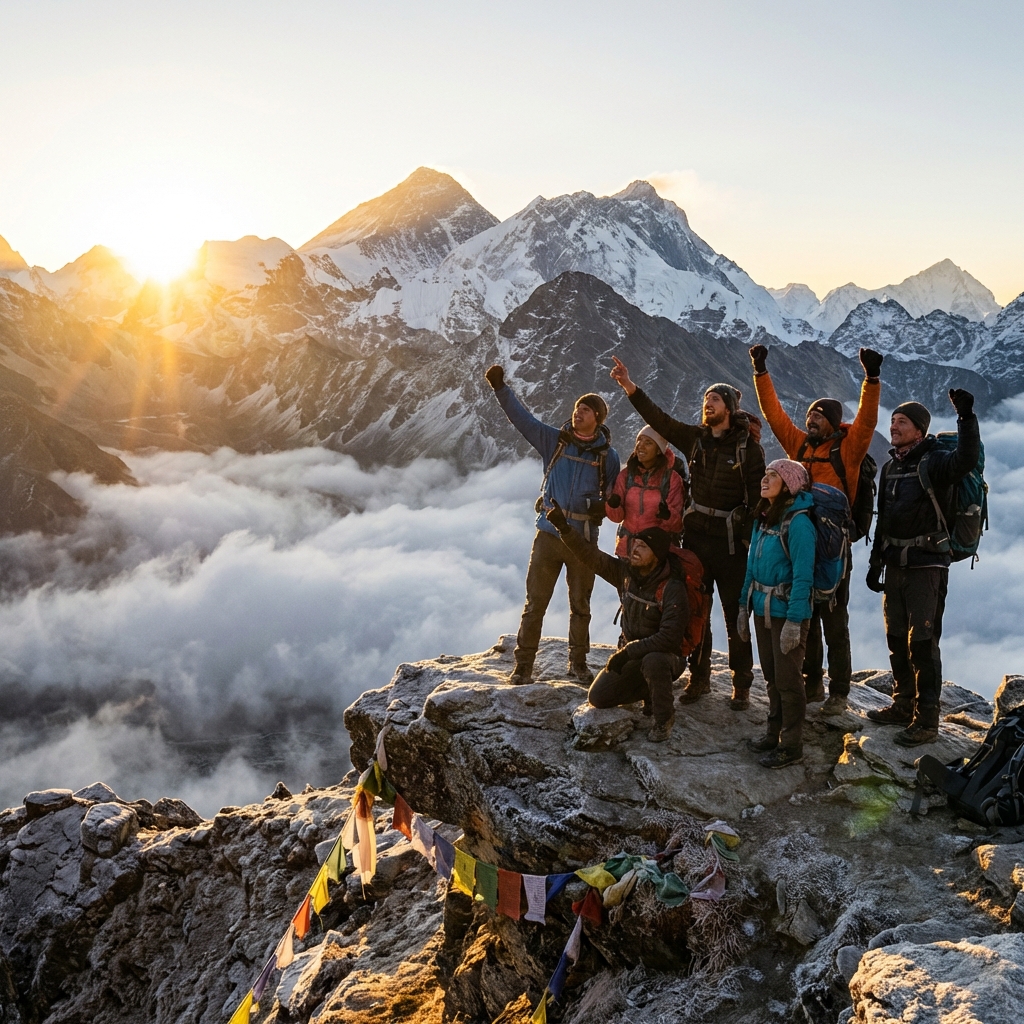
You have just completed one of the most extraordinary experiences of your life. You trekked through the Himalayas, witnessed sunrises over 8,000-meter peaks, shared dal bhat with fellow trekkers from around the world, and pushed your body and mind beyond limits you did not know you had. Now you are sitting in a Kathmandu hotel room or back home on your couch, and the question arises: what do you do with this experience?
The answer is simple and important: share it. Not just with friends and family over dinner (though you should do that too), but in a structured way that helps future trekkers plan their adventures. The trekking community runs on shared information. Every trail condition report, every agency review, every honest account of what a trek really involves helps someone else make better decisions. The trip reports and reviews you read before your trek were written by people who were once sitting exactly where you are now.
This guide covers everything: how to write a trek report that is genuinely useful, the best platforms for sharing your experience, organizing and sharing your photos and videos, writing constructive agency reviews, creating video content, and building a personal blog if the writing bug catches you. Whether you want to write a quick 500-word review or produce a cinematic YouTube documentary, this guide will help you do it well.
For guidance on your physical and mental recovery during this period, see our post-trek recovery guide.
Why Sharing Your Experience Matters
For the Trekking Community
Every piece of honest, detailed information you share helps future trekkers:
- Trail conditions: Your report on a washed-out bridge, a newly opened route, or unexpected snow helps trekkers plan safely
- Cost information: Real, recent cost data helps people budget accurately instead of relying on outdated estimates
- Agency accountability: Honest reviews keep agencies honest and help good agencies grow
- Expectation setting: Your description of how difficult the trek actually was helps people prepare appropriately
- Cultural context: Your observations about local customs, etiquette, and interactions enrich others' preparation
For You Personally
Writing about your experience is also deeply beneficial for you:
- Memory consolidation: The act of writing about an experience strengthens and clarifies your memories of it
- Processing: Writing helps process the complex emotions of a major trek, including post-trek blues
- Reflection: Reviewing your photos and notes prompts reflection on what the experience meant to you
- Community connection: Sharing online connects you with fellow trekkers and maintains the social bonds that form on the trail
- Creative satisfaction: Producing a quality trip report, photo essay, or video is a creative achievement in its own right
Writing a Trek Report That Actually Helps People
The Essential Structure
The most useful trek reports follow a consistent structure that readers can navigate easily. Here is the framework:
1. Quick Summary (Top of Report)
- Trek name and route variation
- Dates (month and year at minimum)
- Duration (number of trekking days)
- Solo or guided, agency name if applicable
- Overall difficulty assessment (your honest opinion)
- Total cost (approximate)
- One-sentence recommendation
2. Preparation and Logistics
- How you booked (agency, independent, online)
- Permits obtained and cost
- Transportation to/from trailhead
- Gear notes (what worked, what you wish you had brought)
- Physical preparation and whether it was sufficient
3. Day-by-Day Account
- Each day's route and distance
- Accommodation (name of tea house/lodge, quality assessment)
- Food quality and options
- Trail conditions
- Weather
- Highlights and challenges
- Photos from that day
4. Costs Breakdown
- Detailed cost table (permits, accommodation, food, guide/porter, transportation, tips, extras)
- Currency used and exchange rate at time of travel
- What was included in agency package (if applicable)
- Unexpected expenses
5. Practical Advice
- What you would do differently
- What surprised you
- Tips for future trekkers
- Recommended gear changes
- Best and worst moments
6. Agency Review (if applicable)
- Agency name and contact details
- What was promised vs. what was delivered
- Guide quality
- Value for money
- Would you book with them again?
Writing Tips for Effective Trek Reports
Be specific, not general. Instead of "the views were amazing," write "from Kala Patthar at 5,545m, we had clear views of Everest, Nuptse, Changtse, and Pumori. The morning we summited (October 15) had zero cloud cover, which our guide said was unusual even in peak season."
Include dates and costs. Prices and conditions change. Dating your report helps readers assess relevance. Write "In October 2026, a single room at Namche's Khumbu Lodge cost NPR 500 per night" rather than "rooms in Namche are cheap."
Be honest about difficulty. If the trek was harder than you expected, say so and explain why. If it was easier, say that too. Include your fitness level for context. "I'm a regular runner (30-40 km per week) and found the uphill sections manageable, but the knee-pounding descents were brutal" is far more useful than "moderate difficulty."
Mention what went wrong. Problems, mistakes, and failures are often the most valuable information in a trip report. Did you get sick? Did the weather force a route change? Was the tea house overbooked? Future trekkers need this information more than they need another description of a beautiful sunrise.
Pro Tip
Best Platforms for Sharing
Trekking Forums and Communities
| Platform | Audience | Best For | Effort Level |
|---|---|---|---|
| TrekBuddy/Lonely Planet Thorn Tree | International trekkers | Detailed trip reports | Medium-High |
| Reddit r/Nepal, r/hiking, r/backpacking | Younger, international | Quick reports, Q&A | Low-Medium |
| Facebook Groups ("Trekking in Nepal") | Mixed demographic | Real-time updates, Q&A | Low |
| TripAdvisor Forum (Nepal) | Research-oriented travelers | Detailed reports with reviews | Medium |
| iOverlander | Overlanders and budget travelers | Practical info, GPS points | Low |
| Personal Blog | Your own audience | Full control, detailed content | High |
Review Platforms (For Agency and Service Reviews)
| Platform | Impact | Who Sees It | Notes |
|---|---|---|---|
| Google Reviews | Very High | Anyone searching for the agency | Most widely seen, directly affects Google ranking |
| TripAdvisor | High | Research-phase travelers | Detailed review structure, photo uploads |
| Trustpilot | Medium | Verification-oriented travelers | Trusted platform, verified reviews |
| Facebook Page Reviews | Medium | Social media users | Easy to leave, visible to friends |
| Agency's Own Website | Low-Medium | People already on the agency site | Some agencies feature testimonials |
The Power of Your Review
A single detailed, honest review on Google or TripAdvisor can influence 50-100 or more future booking decisions. Agencies know this, which is why good agencies actively request reviews from satisfied clients. Your review is not just a nice gesture -- it is a significant contribution to the accountability and quality of Nepal's trekking industry.
Social Media Platforms
| Platform | Content Type | Audience | Lifespan of Content |
|---|---|---|---|
| Photos, Reels, Stories | Visual-oriented travelers | Stories: 24 hrs; Posts: permanent | |
| YouTube | Long-form video | Trip planners, adventure seekers | Permanent, evergreen |
| TikTok | Short video clips | Younger demographic | Short-lived but high reach |
| Photos, albums, trip updates | Friends and family, groups | Medium lifespan | |
| X (Twitter) | Quick thoughts, thread stories | News-oriented travelers | Short lifespan |
Reviewing Your Trekking Agency
Why Agency Reviews Matter
Nepal has over 3,000 registered trekking agencies and an unknown number of unregistered ones. Quality varies enormously. Your honest review helps:
- Good agencies grow: Positive reviews attract more clients to agencies that deserve them
- Bad agencies improve or lose business: Negative reviews create accountability
- Future trekkers make informed decisions: Reviews are the primary decision-making tool for agency selection
- Industry standards rise: When agencies know reviews are public and permanent, they maintain higher standards
What to Include in an Agency Review
The essential elements:
- Trek name and dates: Specify exactly what trek and when
- What was included in your package: Transportation, permits, accommodation, meals, guide, porter
- Guide quality: Name (first name is sufficient), English ability, knowledge, attitude, safety awareness
- Porter quality: Professionalism, reliability
- Accommodation quality: Were the lodges as described? Were rooms pre-booked or was it a scramble?
- Food: Was food included? Quality and variety?
- Value for money: What you paid vs. what you received
- Communication: How responsive was the agency before, during, and after the trek?
- Problems and how they were handled: This is critical. Every trek has issues -- what matters is how the agency responds.
- Would you book with them again?: The ultimate summary question.
Writing Constructive Negative Reviews
If your experience was poor, your review is especially important. Here is how to write a negative review that is fair, constructive, and useful:
- Be factual: State what happened, not how you felt about it. "The guide arrived 2 hours late on day 3 with no explanation" is more powerful than "the guide was terrible."
- Be specific: Vague complaints ("it was disorganized") are less useful than specific ones ("our permits were not arranged in advance, causing a 4-hour delay at the checkpoint").
- Be proportionate: Distinguish between minor inconveniences and genuine failures. A lost lunch reservation is different from inadequate safety equipment.
- Acknowledge positives: Even in a negative review, mention what went well. This increases credibility.
- Suggest improvement: "The guide should carry a more comprehensive first aid kit" is more constructive than "the first aid kit was pathetic."
- Avoid personal attacks: Criticize actions and systems, not individuals.
Writing Honest but Fair Reviews
Your review has real consequences for real people. In Nepal's trekking industry, a series of negative reviews can destroy a small agency's livelihood. This does not mean you should sugarcoat problems -- honest criticism is essential for accountability. But ensure your review is factual, specific, and proportionate. If you had a genuinely terrible experience, say so clearly. If your experience was mixed, reflect that nuance.
Writing Positive Reviews That Are Useful
Positive reviews are important too, but "it was great, 5 stars" is nearly useless. A useful positive review:
- Explains specifically what was good and why
- Mentions the guide by name (helps them professionally)
- Includes relevant details (trek dates, group size, cost)
- Notes any minor issues alongside the positives (no trek is perfect; acknowledging minor issues increases credibility)
- Describes who the agency is best suited for (families, solo trekkers, budget travelers, luxury seekers)
Pro Tip
Photo Organization and Sharing
The Photo Overload Problem
A 14-day trek generates 500-2,000+ photos (more if you are a photography enthusiast). The challenge is not taking photos -- it is organizing, curating, and sharing them in a way that is actually enjoyable for both you and your audience.
Step 1: Backup Immediately
Before organizing, ensure your photos are backed up. Cameras break, phones get stolen, and memory cards corrupt.
Backup strategy:
- Cloud upload: Upload to Google Photos, iCloud, or Amazon Photos as soon as you have reliable WiFi in Kathmandu or Pokhara. Thamel hotels typically have decent WiFi for this purpose.
- Local backup: Copy to a portable hard drive or USB stick as a secondary backup.
- Multiple sources: If you shot on both camera and phone, ensure both are backed up.
Step 2: Cull and Curate
The brutal truth: Nobody wants to see 1,500 photos. Not even you, in six months' time. Curate ruthlessly.
Culling process:
- First pass: Delete obvious failures (blurry, accidental shutter, duplicate, poorly exposed). This typically removes 30-40% of photos.
- Second pass: From the remaining photos, select the 100-200 best images that tell the story of your trek. Delete or archive the rest.
- Third pass: From those 100-200, select 30-50 "hero" images that represent the highlights. These are your sharing images.
Step 3: Basic Editing
You do not need to be a professional photographer to improve your images. Basic edits make a significant difference:
| Edit | What It Does | Tool |
|---|---|---|
| Crop | Remove distracting elements, improve composition | Any photo app |
| Straighten | Fix tilted horizons | Any photo app |
| Exposure/Brightness | Correct under or over-exposed images | Lightroom, Snapseed, Photos app |
| Contrast | Make images pop without looking unnatural | Lightroom, Snapseed |
| Saturation (subtle) | Enhance colors slightly | Lightroom, Snapseed |
| Sharpen | Improve detail (do not overdo it) | Lightroom, Snapseed |
Free editing apps: Google Snapseed (mobile), Apple Photos (built-in editing), GIMP (desktop). Adobe Lightroom Mobile has a generous free tier.
For detailed photography advice, see our trekking photography guide.
Step 4: Organize Into Albums
Suggested album structure:
- Full album (100-200 photos): Complete chronicle for your personal archive
- Highlights album (30-50 photos): The best images for sharing
- Family/friends album (15-25 photos): Curated for non-trekkers (less mountain, more people and culture)
- Social media selects (10-15 photos): The very best for Instagram/Facebook
Step 5: Sharing Platforms
| Platform | Best For | Photo Limit | Quality |
|---|---|---|---|
| Google Photos | Shared albums, family sharing | Unlimited at "storage saver" quality | Good (slight compression) |
| iCloud Shared Albums | Apple ecosystem users | 5,000 per album | Good |
| Flickr | Photography enthusiasts | 1,000 free, unlimited paid | Original quality |
| Visual sharing, wider audience | No limit (one at a time or carousel) | Compressed | |
| Facebook Album | Friends and family | 1,000 per album | Compressed |
| SmugMug | Professional quality sharing | Unlimited (paid) | Original quality |
Pro Tip
Creating Video Content
GoPro and Action Camera Footage
If you brought a GoPro or similar action camera, you likely have hours of raw footage. Turning this into watchable content requires editing discipline.
Essential footage to capture (if you have not trekked yet, bookmark this):
- Establishing shots of each major location (wide angle, 10-15 seconds each)
- Walking shots (first-person perspective, brief clips only)
- Time-lapses (sunrise, sunset, cloud movement, camp activity)
- Reactions and emotions (reaching a summit, first view of Everest, crossing a pass)
- Cultural moments (prayer flags, monasteries, local life)
- Camp and tea house life
- Fellow trekkers and guides (with their permission)
Video Editing Basics
Free editing software:
- iMovie (Mac/iOS): Simple, intuitive, produces quality results
- DaVinci Resolve (Windows/Mac/Linux): Professional-grade, free version is extremely capable
- CapCut (Mobile/Desktop): Popular for social media content, easy to learn
- YouTube Editor: Basic editing directly in YouTube
Editing principles for trek videos:
- Keep it short: A 15-20 minute video is the sweet spot for YouTube trek content. Anything longer than 30 minutes loses most viewers.
- Start with the hook: Open with your most dramatic footage (summit, pass crossing, spectacular view), then go back to the beginning of the story.
- Cut ruthlessly: If a clip does not add to the story, remove it. Walking footage should be brief -- a few seconds to establish movement, then cut.
- Music matters: Background music sets the tone. Use royalty-free music from YouTube Audio Library, Epidemic Sound, or Artlist. Match the music to the mood of each section.
- Include information: Add text overlays for location names, elevations, day numbers, and key information. This makes the video useful as well as entertaining.
- Pacing: Alternate between fast-paced action sequences and slower, contemplative moments. Mirror the rhythm of the trek itself.
- Audio: Include natural sounds (wind, rivers, prayer flags flapping, tea house chatter) alongside music. Real audio creates immersion.
YouTube Trek Vlog Guide
If you want to create a more polished YouTube trek vlog:
Pre-production (before/during trek):
- Plan what you want to capture each day
- Do brief daily "pieces to camera" talking about the day's experience
- Capture establishing shots at each new location
- Film the mundane as well as the spectacular (packing, eating, tea house life)
Post-production:
- Allow 10-40 hours of editing for a polished 15-20 minute video
- Color grade for consistency (altitude light changes dramatically throughout the day)
- Add maps and route graphics to help viewers follow the journey
- Include a title card, chapter markers, and end screen
Publishing:
- Write a detailed video description with trek dates, costs, route, and tips
- Add tags (nepal trek, everest base camp, annapurna, trekking nepal, etc.)
- Create an eye-catching thumbnail (the #1 factor in whether someone clicks)
- Respond to comments -- the YouTube algorithm rewards engagement
YouTube Monetization Potential
Quality Nepal trek videos can reach significant audiences. The YouTube trekking niche is growing, and well-produced content with useful information regularly reaches 10,000-100,000+ views. At YouTube's standard monetization thresholds (1,000 subscribers and 4,000 watch hours), trek content can generate modest ad revenue. More importantly, it connects you with a global community of trekkers and outdoor enthusiasts.
Starting a Trek Blog
Is a Blog Worth the Effort?
A personal trek blog gives you complete creative control and a permanent home for your content. It requires more effort than posting on social media but offers benefits:
- Full ownership: You control the content, design, and platform
- SEO potential: Well-written blog posts can rank in Google and reach trekkers planning their trips
- Creative expression: No character limits, no algorithm decisions, no platform restrictions
- Portfolio: If you are interested in writing, photography, or travel, a blog is a portfolio piece
- Community building: Regular blogging attracts a readership of like-minded adventurers
Quick-Start Blog Options
| Platform | Cost | Difficulty | Best For |
|---|---|---|---|
| WordPress.com | Free-$25/month | Low | Non-technical bloggers |
| Medium | Free | Very Low | Writers who want built-in audience |
| Substack | Free | Very Low | Newsletter-style content |
| WordPress.org (self-hosted) | $5-20/month hosting | Medium | Full control and customization |
| Squarespace | $12-33/month | Low | Visual-focused bloggers |
Blog Post Types That Perform Well
Based on search data and reader engagement in the trekking niche:
- Detailed trek reports (with day-by-day itinerary and photos): High search value, evergreen content
- Cost breakdowns: Extremely popular with trip planners ("How much does EBC cost in 2026?")
- Gear reviews: What worked and what did not work on the trail
- Comparison posts: Trek A vs. Trek B, Agency X vs. Agency Y
- Mistake/lesson posts: "What I wish I knew before trekking Nepal"
- Photo essays: Curated photo collections with narrative
- Practical guides: Visa, permits, transportation, packing
Writing for Social Media: Platform-Specific Tips
- Carousel posts: Tell a mini-story across 10 slides (day-by-day highlights)
- Reels: 30-90 second video highlights with trending audio get maximum reach
- Captions: Write substantive captions with useful information, not just emoji. People searching for trek info value detailed captions.
- Hashtags: Use a mix of broad (#nepaltrekking, #himalayas, #everestbasecamp) and specific (#ebctrek2025, #khumbuvalley, #annapurnacircuit)
- Geotags: Tag specific locations for discoverability
- Groups: "Trekking in Nepal," "Nepal Backpackers," and trek-specific groups (e.g., "Everest Base Camp Trek") are active communities where trip reports are valued
- Albums: Create a photo album with captions for each key location
- Stories: Share highlights in story format for casual updates
- r/Nepal: Local context and practical questions
- r/hiking and r/backpacking: Trip reports welcome, follow subreddit formatting rules
- r/solotravel: If you trekked solo, this community appreciates detailed reports
- Format: Reddit values substance over style. Detailed, honest text posts with embedded photos perform best.
Pro Tip
Trip Report Template
Use this template as a starting point for your trek report. Copy it and fill in the details:
## [Trek Name] Trip Report - [Month Year]

### Quick Summary
- **Route**: [Exact route variation]
- **Dates**: [Start date to end date]
- **Duration**: [X trekking days + X rest days]
- **Guided/Independent**: [Agency name or independent]
- **Group size**: [Number of people]
- **Total cost**: [Approximate total per person in USD]
- **Difficulty**: [Your honest assessment, 1-10 scale and description]
- **Recommendation**: [One sentence - would you do it again?]

### Preparation
- [How you booked, how far in advance]
- [Physical training before the trek]
- [Gear notes - what worked, what you wish you had]
- [Permits needed and cost]
- [Getting to the trailhead]

### Day-by-Day Account
**Day 1: [Start point] to [End point]**
- Distance: [km/hours]
- Elevation: [start to end, with gain/loss]
- Accommodation: [Lodge name, rating, cost]
- Food: [What was available, quality, cost]
- Weather: [Conditions]
- Trail conditions: [Description]
- Highlights: [Best moments]
- Challenges: [What was difficult]
- Photos: [Your best images from this day]

[Repeat for each day]

### Cost Breakdown
| Category | Amount (NPR) | Amount (USD) |
|----------|-------------|-------------|
| Permits | | |
| Flights/Transport | | |
| Accommodation | | |
| Food | | |
| Guide fee | | |
| Porter fee | | |
| Tips | | |
| Gear purchased/rented | | |
| Insurance | | |
| Extras | | |
| **Total** | | |

### Tips for Future Trekkers
1. [Your most important advice]
2. [What you wish you knew]
3. [What to bring that guides don't mention]
4. [What you can skip]
5. [Best and worst parts]

### Agency Review (if applicable)
- Agency: [Name]
- Guide: [First name]
- Package cost: [What you paid]
- Included: [What was in the package]
- Rating: [1-5 stars and explanation]
- Would book again: [Yes/No and why]
Reviewing Your Guide and Porter
Guide Reviews
Your guide's livelihood depends partly on their reputation. A positive mention by name can directly help their career.
What to mention:
- Their English (or other language) ability
- Mountain knowledge and experience
- Safety awareness and decision-making
- Personality and group management
- Flexibility when plans changed
- Cultural knowledge and interpretation
- Photography help (many guides take excellent photos for their clients)
Porter Reviews
Porters are the unsung heroes of Nepal trekking. Mentioning them by name and acknowledging their contribution is both ethical and helpful.
What to mention:
- Reliability and professionalism
- Care with your belongings
- Physical capability
- Friendliness and communication
For more on ethical porter treatment and fair tipping, read our guide on hiring guides and porters in Nepal.
Privacy Considerations
Always ask permission before publishing someone's full name and photo online, particularly for guides and porters. Most are happy to be mentioned (it helps their career), but some may prefer privacy. A first name and photo (with permission) is standard practice. Never share someone's contact details publicly without their explicit consent.
Building a Personal Trek Archive
Beyond public sharing, creating a personal archive ensures your experience is preserved for yourself.
Physical Options
- Photo book: Services like Shutterfly, Blurb, and Apple Books create beautiful printed books from your photos. A 40-60 page photo book costs $30-80 and is a lasting keepsake.
- Printed journal: If you kept a handwritten trek journal, preserve it. These become priceless over time.
- Framed photos: Select 2-3 standout images for framing and display.
Digital Options
- Google Photos album: Organized, dated, searchable, backed up
- Personal cloud folder: Organized by date and location, with raw files preserved
- Digital journal: Combine photos and text in a document, PDF, or blog post for personal archiving
- GPS tracks: If you recorded your route on your phone or GPS device, save the GPX file. You can overlay it on Google Earth for a striking visualization.
Archiving Your GPS Data
If you used apps like AllTrails, Maps.me, or a dedicated GPS device during your trek:
- Export your route as a GPX file
- Upload to Google Earth for 3D visualization
- Share on Strava or AllTrails to contribute to the trail database
- Keep the raw data -- it becomes increasingly valuable over time as you build a collection of trekking routes
Pro Tip
Connecting with the Trekking Community
Online Communities Worth Joining
- Facebook: "Trekking in Nepal": The largest Nepal-specific trekking group, active and helpful
- Reddit: r/Nepal, r/hiking: Regular trek-related discussions
- Lonely Planet Thorn Tree Forum: Long-running travel forum with Nepal-specific threads
- WhatsApp/Telegram groups: Many trekking agencies maintain alumni groups where past clients share updates and advice
In-Person Connections
- Keep in touch with your guide: Many guides use WhatsApp and Facebook. Maintaining the relationship supports them professionally and enriches your connection to Nepal.
- Fellow trekker contacts: Exchange contact information with people you met on the trail. These friendships often endure and can lead to future trekking partnerships.
- Local hiking clubs: Join hiking or mountaineering clubs in your home area. Fellow members often have Nepal experience and provide community.
Planning Your Next Trek
The best time to plan your next Nepal trek is while the current experience is fresh. Start researching routes, timing, and agencies. Read our guide to planning your second Nepal trek for comprehensive advice on choosing your next adventure.
Frequently Asked Questions
When should I write my trek report?
Within 2 weeks of completing the trek, ideally. Details fade quickly -- specific prices, lodge names, trail conditions, and emotional nuances become vague within a month. If you cannot write a full report immediately, at least jot down bullet-point notes for each day while the details are fresh, then expand into a full report when you have time.
How long should my trek report be?
The most useful reports are 2,000-4,000 words with photos. This is long enough to include meaningful detail but short enough that people will actually read it. For a forum or Reddit post, 1,000-2,000 words is appropriate. For a personal blog, 3,000-5,000 words with extensive photos is ideal.
Should I review my agency even if the experience was average?
Yes. Average reviews (3 out of 5 stars) are actually the most useful for future trekkers because they tend to be the most balanced and honest. An "it was fine, here are the pros and cons" review helps readers more than extreme positive or negative reviews. Include specific details about what was good and what could be improved.
What platform should I post my trek report on?
For maximum impact, post on multiple platforms: a Google review of your agency, a detailed report on Reddit (r/Nepal, r/hiking, or r/backpacking), and optionally a personal blog post. Each platform reaches a different audience. If you only have time for one, make it a Google review with a few paragraphs of detail.
How do I organize 1,500+ trek photos?
Start by deleting obvious failures (blurry, duplicate, poorly exposed). This typically removes 30-40%. Then select the 100-200 best photos that tell the story. From those, select 30-50 "hero" images for sharing. Use Google Photos, Lightroom, or your phone's built-in tools to create albums organized by day or location.
Is it worth creating a YouTube video of my trek?
If you enjoy video editing, absolutely. Trek videos on YouTube reach large audiences and have long shelf lives -- a well-made EBC trek video can accumulate views for years. However, video editing is time-intensive (expect 10-40 hours for a polished 15-20 minute video). If you do not enjoy editing, your time is better spent writing a detailed report and sharing curated photos.
Should I name my guide and porter in my review?
Yes, with their permission. For guides, a positive mention by name directly helps their career. For porters, acknowledgment validates their essential contribution. Use first names only for privacy. If your experience was negative, you can still mention the agency without naming individual staff members unless the issue was specifically caused by that person's behavior.
How do I take better trek photos for sharing?
See our comprehensive trekking photography guide for detailed advice. The quick version: shoot during golden hours (sunrise and sunset), include people for scale, use the rule of thirds, keep your lens clean (dusty trails are a constant challenge), and shoot both landscape and detail shots.
Can I monetize my trek content?
Potentially. YouTube videos can earn ad revenue once you meet monetization thresholds (1,000 subscribers, 4,000 watch hours). Blog posts can earn through affiliate marketing (linking to gear on Amazon, booking platforms, etc.) and display ads. However, most trek content creators do it for passion rather than profit. A realistic expectation for a first-time creator is modest returns -- think "covers hosting costs" rather than "quit my job."
What if my agency asks me to remove a negative review?
You are under no obligation to remove an honest review. If the agency contacts you about a negative review, this can actually be productive -- they may offer to resolve the issue. However, do not remove honest criticism in exchange for compensation or pressure. If you feel the review was unfair after reflection, you can update it, but never remove honest feedback under pressure.
How do I share my experience with people who are not interested in trekking?
Keep it brief and relatable. Non-trekkers do not want a day-by-day account or gear discussion. Share 5-10 of your best photos, tell one or two compelling stories (the funniest moment, the most challenging day, the most beautiful view), and relate the experience to universal themes (pushing limits, connecting with nature, encountering different cultures). Save the detailed accounts for trekking communities who want that level of detail.
Should I write in English even if it is not my first language?
The majority of the online trekking community operates in English, so writing in English reaches the widest audience. However, trip reports in other languages are valuable too -- there are active trekking communities in German, French, Spanish, Japanese, Korean, Chinese, and many other languages. Write in whichever language allows you to express yourself most naturally, and consider posting in both your native language and English if you are able.