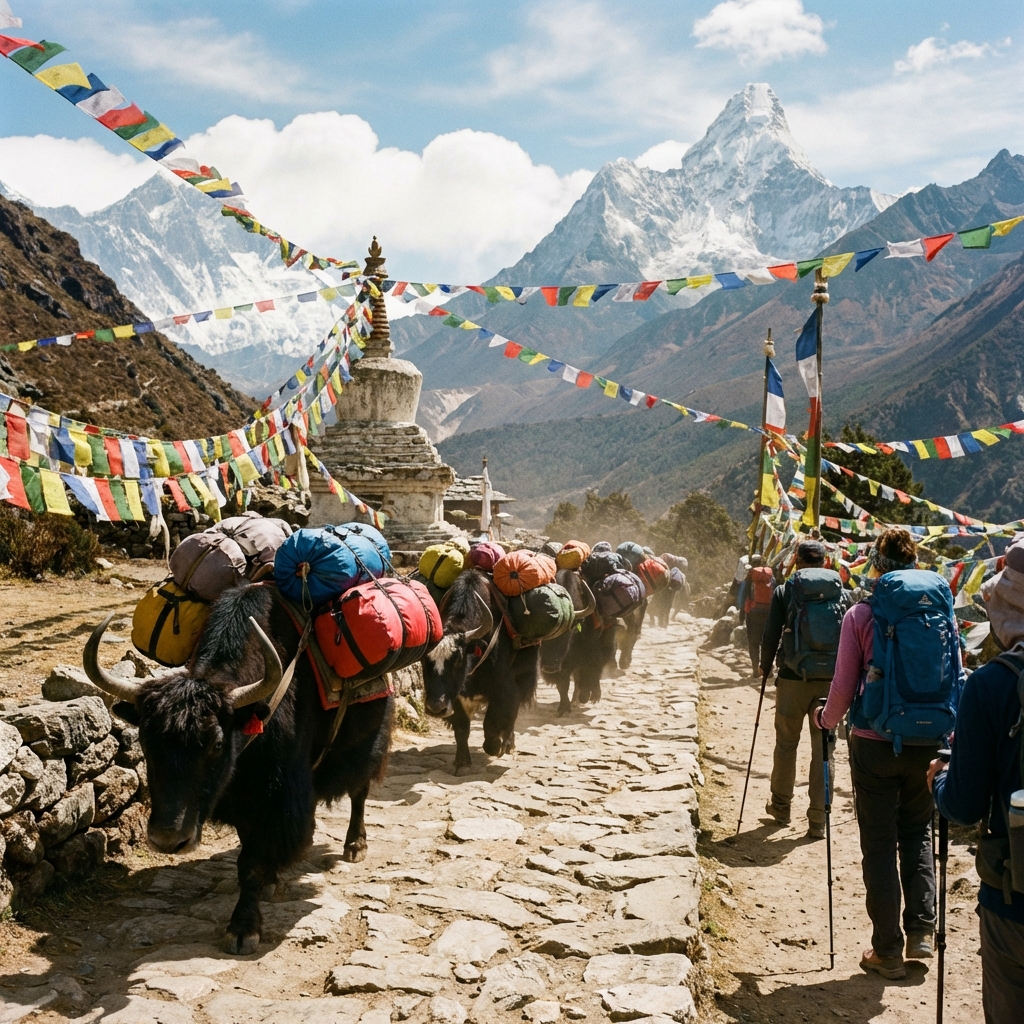
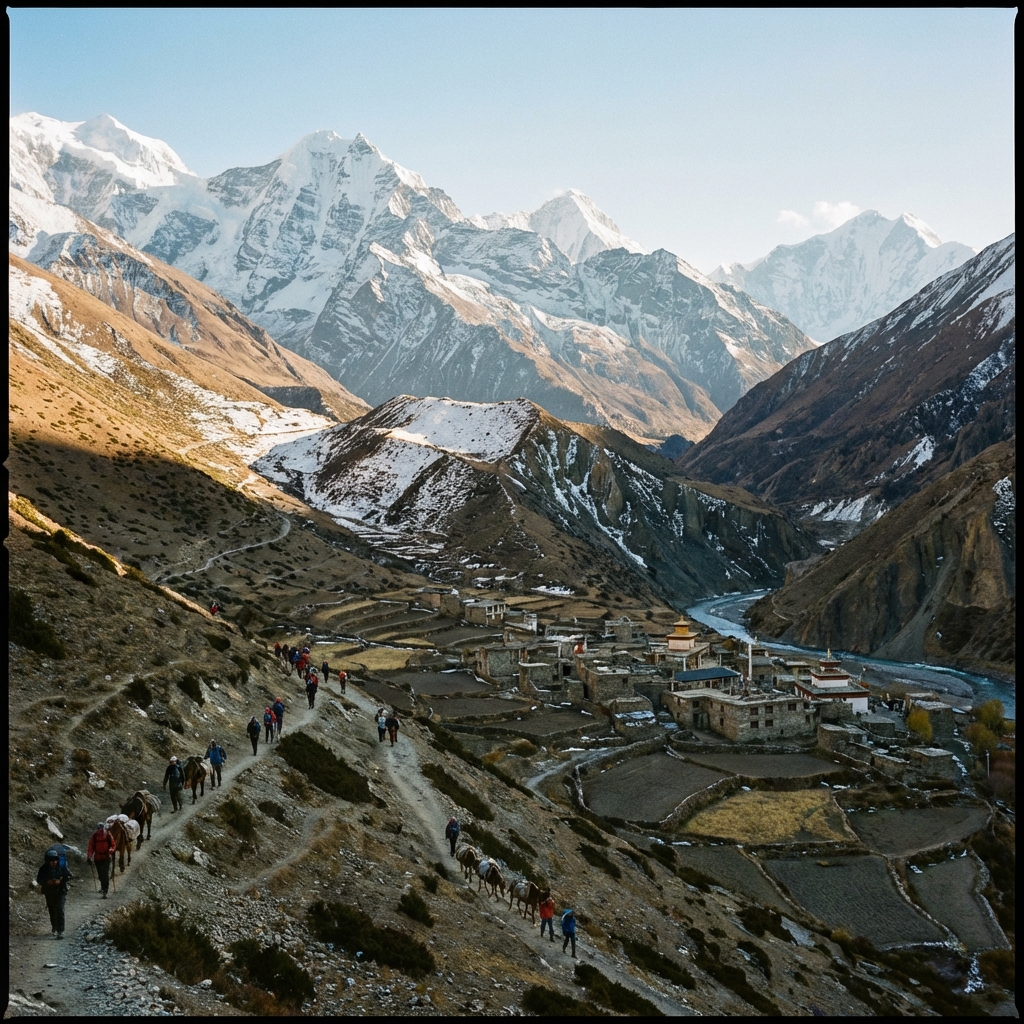
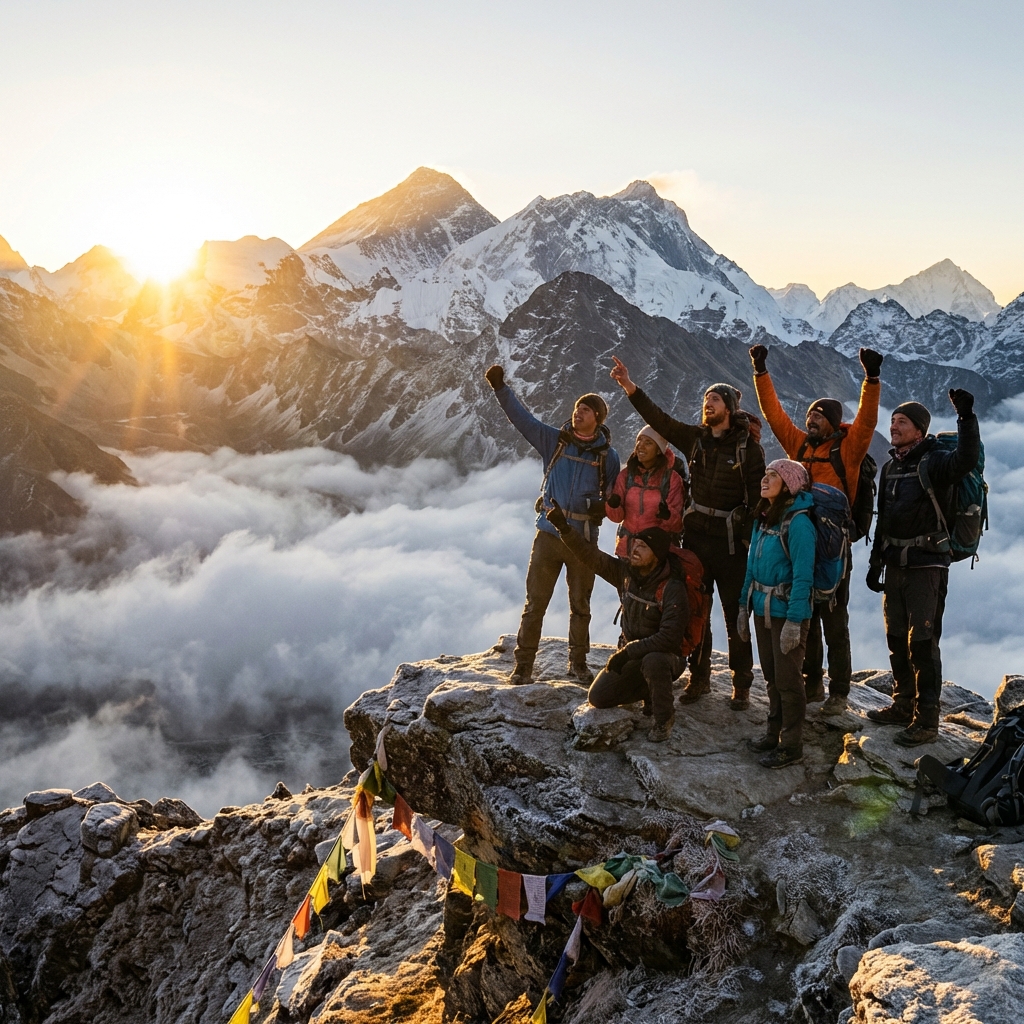
The Himalayas present some of Earth's most spectacular photography opportunities—and some of its most challenging shooting conditions. Crystal-clear 8,000-meter peaks at sunrise. Prayer flags dancing against impossible blue skies. Weathered faces of Sherpa porters. Monasteries shrouded in incense smoke at dawn.
But capturing these moments while trekking at altitude introduces unique challenges: extreme cold draining batteries in minutes, dust infiltrating camera bodies, condensation fogging lenses when entering warm tea houses, and the physical burden of carrying gear while hiking 6-8 hours daily at elevations where every kilogram feels doubled.
This comprehensive guide draws from professional trekking photographers, equipment tests conducted at altitude, and real-world experience on Nepal's major treks. Whether you're shooting with a smartphone, a mirrorless camera, or a full DSLR kit, you'll learn how to capture stunning Himalayan images while managing the practical challenges of high-altitude photography.
What you'll master: Camera settings for mountain landscapes, the best photo locations on major treks, protecting gear from extreme conditions, ethical cultural photography, lightweight packing strategies, and the specific techniques that work in the Himalayas.
Reality check: Great trekking photography isn't about having the most expensive gear—it's about understanding light, composition, and the unique conditions you'll face. A photographer with a basic mirrorless camera who understands Himalayan light will outshoot someone with $10,000 in gear who doesn't.
Let's transform your Nepal trek from a collection of snapshots into a portfolio of images that capture the majesty, culture, and raw beauty of the Himalayas.
Why Himalayan Photography Is Different
Shooting in the Himalayas isn't just regular landscape photography at higher elevation. The conditions, challenges, and opportunities are fundamentally unique.
The Unique Opportunities
Scale beyond comprehension: The Himalayas offer subjects that simply don't exist elsewhere—8,000-meter peaks rising 4,000+ meters above your position, glaciers the size of cities, valleys carved by millennia of erosion. Capturing this scale requires different compositional approaches than standard landscape photography.
Exceptional light quality:
- Thin atmosphere at altitude creates incredibly crisp, clear light
- Minimal air pollution in remote areas (especially compared to Kathmandu)
- Deep blue skies from reduced atmospheric scattering
- Dramatic shadows from intense sunlight
- Stunning alpenglow on peaks at sunrise/sunset
Cultural richness: Prayer flags, mani stones, monasteries, stupas, Sherpa villages, porter culture, Buddhist ceremonies—the cultural photography opportunities rival the natural landscapes.
Dynamic weather: Clouds forming in real-time, storms building over peaks, fog clearing to reveal mountains—weather that would frustrate other photography becomes an asset for dramatic Himalayan shots.
The Unique Challenges
Extreme cold impacts:
- Batteries lose 50-70% capacity below -10°C
- LCD screens slow or freeze
- Condensation when moving between cold exterior and warm tea houses
- Fingers too cold to operate small buttons and dials
- Memory cards become brittle
Altitude effects on gear:
- Sealed lenses can expand/contract, affecting focus accuracy
- Lubricants in mechanical components thicken
- You're physically slower—changing lenses or settings takes more effort
- Mental sharpness decreases (you'll miss shots you'd normally nail)
Environmental hazards:
- Dust on trails infiltrates camera bodies during lens changes
- Snow and moisture during weather events
- Extreme UV exposure (can affect sensors over extended periods)
- Physical impact risk on rocky trails
Weight constraints: Every gram matters when hiking 6-8 hours daily at altitude. That 2kg camera body + 3 lenses that feels fine in your studio will devastate you at 4,500 meters.
Limited charging opportunities:
- Tea houses typically offer 1-2 hours of charging time (if power available)
- Solar charging unreliable in cloudy conditions or narrow valleys
- No second chances—dead batteries mean missed shots
The Altitude Photography Reality
Professional photographers report that at 5,000+ meters, even simple camera operations—checking settings, reviewing images, changing modes—take 2-3x longer due to reduced oxygen and cold-numbed fingers. Plan for your performance degradation, not your sea-level capabilities.
What Actually Matters
After analyzing thousands of trekking images and interviewing professional Himalayan photographers, here's what separates exceptional images from average snapshots:
Not about megapixels: A 24MP camera is more than sufficient. Files above 30-40MP are overkill for trekking photography and create storage/backup headaches.
Not about exotic lenses: 90% of great trekking shots are captured with focal lengths between 16-70mm. That 400mm telephoto stays in your bag.
About understanding light: Knowing when and where golden hour hits specific peaks, how to expose for high-contrast mountain scenes, working with harsh midday light.
About being present: The photographer who has their camera ready when weather breaks, when a porter pauses on a ridge, when light hits a peak—beats the one fumbling with settings.
About composition: Using foreground elements, showing scale, leading lines, layering—these fundamentals matter more than any gear advantage.
Pro Tip
The single best investment for trekking photography isn't a new camera—it's arriving in shape to enjoy the trek, so you have energy to seek out compositions, wait for light, and stay mentally sharp at altitude.
Camera Equipment: What to Actually Bring
Let's cut through the gear obsession and focus on practical, tested recommendations for different budgets and photography goals.
Camera Body Recommendations
Best Overall: Mirrorless Crop Sensor (APS-C)
- Examples: Sony a6400/a6600, Fuji X-T4/X-T5, Canon R7/R10
- Why it's ideal: Excellent balance of image quality, weight (400-600g), battery efficiency, weather sealing (on higher models)
- Real weight: 500g body + 2 lenses = 1.2-1.5kg total
- Who it's for: Serious enthusiasts, semi-pro work, anyone wanting DSLR quality without the bulk
Best Budget: Advanced Smartphone
- Examples: iPhone 14/15 Pro, Samsung S23/S24 Ultra, Google Pixel 8 Pro
- Why it works: Zero additional weight, computational photography handles high-contrast scenes, always accessible, excellent for social media
- Limitations: Limited low-light performance, less control, no telephoto reach
- Who it's for: Casual photographers, social media focused, ultralight packers
Best for Professionals: Full-Frame Mirrorless
- Examples: Sony a7IV/a7RV, Canon R5/R6, Nikon Z6III/Z8
- Why pros choose it: Maximum image quality, best low-light performance, professional features
- Real cost: Weight (650-850g body), battery consumption, price
- Who it's for: Professional photographers, those printing large, serious photography as primary trek goal
Not Recommended: DSLR
- Why: Heavier than mirrorless equivalents, no advantage at altitude, more bulk
- Exception: If you already own one and can't justify new purchase
The Lens Strategy
Forget bringing 5 lenses. Here's the proven approach:
Single-Lens Strategy (Minimum Weight):
- Best choice: 18-55mm kit lens (crop sensor) or 24-70mm (full frame)
- Weight: 200-400g
- Coverage: Wide enough for landscapes, long enough for peaks
- Limitation: No ultra-wide for big vistas, no telephoto for distant peaks
Two-Lens Strategy (Optimal Balance):
- Wide zoom: 10-24mm (crop) or 16-35mm (full frame) for landscapes, villages, interiors
- Standard zoom: 18-55mm or 24-70mm for everything else
- Total weight: 600-900g for both lenses
- What this covers: 95% of trekking photography situations
Three-Lens Strategy (Maximum Versatility):
- Wide: 10-24mm / 16-35mm
- Standard: 18-55mm / 24-70mm
- Telephoto: 55-200mm / 70-200mm for distant peaks, wildlife, tight portraits
- Total weight: 1,200-1,800g
- Trade-off: Significant weight, more lens changes in dusty conditions
24-35mm equivalent
16-20mm (wide)
<15% of shots
85% prefer zooms for trekking
Prime Lens Consideration: If minimizing weight is critical, consider a single high-quality prime:
- Crop sensor: 23mm f/1.4 or 35mm f/1.4 (roughly 35mm or 50mm equivalent)
- Full frame: 35mm f/1.4 or 50mm f/1.8
- Advantages: Lighter (200-400g), better low-light, forces creative composition
- Disadvantages: Zero flexibility, you can't "zoom" when composition demands it
Tested Camera Kits by Weight Class
Ultralight Kit (600-800g total):
- Smartphone as primary camera
- Compact mirrorless (Sony RX100 series) as backup
- Total investment: $1,000-1,500
Lightweight Kit (1.2-1.5kg total):
- Crop sensor mirrorless body (500g)
- 18-55mm kit lens (250g)
- 10-24mm wide lens (400g)
- Total investment: $1,500-2,500
Standard Kit (1.8-2.2kg total):
- Crop sensor or full-frame mirrorless (500-700g)
- 16-35mm wide lens (500g)
- 24-70mm standard lens (700g)
- Total investment: $2,500-4,500
Professional Kit (2.5-3.5kg total):
- Full-frame mirrorless body (700g)
- 16-35mm f/2.8 (600g)
- 24-70mm f/2.8 (900g)
- 70-200mm f/4 (800g)
- Total investment: $6,000-10,000
Pro Tip
Rent, don't buy, if this is a one-time trek. Renting a $3,000 camera body + lenses costs $200-400 for 2-3 weeks. You'll have professional gear without the investment, and return it without worrying about long-term durability after altitude exposure.
Weather Sealing: How Much Matters?
The truth about weather sealing: Modern mid-range cameras (even without official "weather sealing") handle Himalayan conditions better than you'd expect. Dust is a bigger threat than moisture on most treks.
Protection priorities:
- Dust: Happens daily on trails—minimize lens changes, use protective bag
- Cold: Happens every morning—keep batteries warm, protect LCD
- Moisture: Happens occasionally—rain cover, plastic bag backup
- Condensation: Happens every tea house entry—biggest seal threat
Practical approach:
- Mid-range weather sealing (like Sony a6400, Fuji X-T4) is sufficient for 95% of trekking conditions
- Professional sealing (a7IV, OM-1) provides peace of mind but isn't mandatory
- Any camera survives with proper protection techniques (covered in Weather Challenges section)
Essential Photography Gear Beyond the Camera
The camera is just the start. Here's what else you actually need (and what you don't).
Memory Cards: Capacity and Redundancy
Capacity planning:
- RAW files: 25-40MB per image (mirrorless), 20-30MB (crop sensor)
- Daily shooting: 200-400 images for active photographers
- Daily storage needed: 5-15GB
- Total trek storage: 70-200GB for 12-14 day trek
Card strategy:
- Recommended: Multiple 64GB cards rather than single 256GB
- Reasoning: If one card fails/corrupts, you don't lose entire trek
- Minimum: 2x 64GB cards
- Optimal: 3x 64GB or 2x 128GB cards
Card type matters:
- Minimum spec: UHS-I, U3 rating (95MB/s write speed)
- Better: UHS-II for faster write speeds (if camera supports)
- Brands: SanDisk Extreme Pro, Lexar Professional (proven cold-weather reliability)
Cold Weather Card Behavior
Memory cards become brittle in extreme cold. Don't force insertion/removal if resistance occurs—warm the card and camera first. Cracked cards can corrupt entire shoots.
Batteries: The Altitude Challenge
Battery consumption reality:
- Cold reduces lithium battery capacity by 50-70%
- Mirrorless cameras with EVF consume more power than DSLRs
- Reviewing images on LCD drains batteries faster at altitude
- You'll get 200-400 shots per charge (vs 600-800 at sea level)
Battery strategy:
- Minimum: 3 batteries for multi-day treks
- Recommended: 4-5 batteries for 12-14 day treks
- Storage: Keep spare batteries in inside jacket pocket (body warmth maintains charge)
- Charging: Charge every night at tea houses, even if showing 50% (tomorrow might lack power)
Third-party vs OEM batteries:
- OEM (Sony, Canon, Fuji): More reliable in cold, better longevity, higher cost
- Third-party (Wasabi, Newmowa): Acceptable as backups, 60-70% of OEM cold performance
- Recommendation: 2 OEM + 2-3 third-party for budget balance
Filters: What's Actually Useful
Polarizing Filter (CPL) - Essential:
- Purpose: Deepen blue skies, reduce glare on snow/ice, enhance contrast
- When to use: Midday shots, snow-covered landscapes, reducing haze on peaks
- Size: Match your largest lens diameter (step-up rings for smaller lenses)
- Brand: Hoya, B+W, or budget option: Tiffen
- Effect strength: 1-2 stops of light reduction—plan exposure accordingly
UV/Clear Protective Filter - Recommended:
- Purpose: Protects front lens element from dust, scratches, impacts
- Real benefit: Easier to clean than lens element, replaceable if damaged
- Controversy: Purists claim it degrades image quality (true for cheap filters)
- Recommendation: High-quality multi-coated filter (B+W, Hoya HD) has negligible impact
Neutral Density (ND) Filters - Optional:
- Purpose: Allows longer exposures for motion blur in waterfalls, clouds
- Reality: Limited use in trekking photography
- Verdict: Skip unless you specifically want creative long exposures
Graduated ND - Skip:
- Why: Modern cameras have enough dynamic range for high-contrast scenes
- Alternative: Bracket exposures and blend in post-processing if needed
Lens Cleaning and Protection
Essential cleaning kit:
- Lens cloth: Microfiber, multiple backups (you'll lose them)
- Air blower: Giottos Rocket Blower for removing dust without touching lens
- Lens pen: Carbon-coated tip removes smudges, fingerprints
- Lens wipes: Pre-moistened wipes for stubborn dirt (use sparingly)
What to skip:
- Cleaning fluid bottles (too much weight, risk of leaking)
- Brush (accumulates oils, can scratch)
Daily cleaning reality: Expect to clean lenses 2-4 times daily on dusty trails. Dust infiltration is constant—normalize it, don't fight it.
Camera Bag and Protection
Bag strategy for trekking: Forget dedicated camera backpacks. Your trekking backpack with camera insert/cube is more practical.
Recommended approach:
- Main pack: Your regular trekking backpack (35-45L)
- Camera storage: Padded camera cube/insert (fits inside main pack)
- Quick access: Small sling bag or chest pouch for camera body
- Examples: Peak Design Camera Cube, Tenba BYOB inserts, f-stop ICU
Quick-access solutions:
- Peak Design Capture Clip: Mounts camera to shoulder strap or belt—instant access without digging through pack
- Cotton Carrier StrapShot: Similar concept, broader weight distribution
- Chest pouch: Small zippered pouch on backpack chest strap for camera body
Rain/dust protection:
- Primary: Rain cover for entire backpack (usually included with pack)
- Secondary: Plastic bags for camera and lenses inside pack
- Active shooting: Disposable rain sleeve for camera (or DIY plastic bag with hole)
Tripod Considerations
The weight dilemma: A sturdy tripod weighs 1.5-2.5kg—significant burden when hiking at altitude.
Do you actually need one?
- Yes if: Shooting astrophotography, long exposures, self-portraits, serious landscape work
- No if: Primarily shooting during day, handheld fast enough, prioritizing weight reduction
Lightweight tripod options:
- Carbon fiber travel tripod: 1.0-1.5kg (Sirui, MeFoto, Peak Design Travel Tripod)
- Ultralight option: Gorilla Pod for emergency stability (300g)
- Alternative: Use rocks, walls, backpack as improvised support
Practical reality: Most trekkers who bring tripods use them 3-5 times over 12 days (sunrise/sunset shots, camp photography). Ask yourself if 1.5kg is worth those 3-5 shots.
Pro Tip
If you're unsure about tripod, skip it for first trek. You'll learn whether you actually missed it or just felt FOMO from seeing other photographers using them. Most trekkers regret bringing it.
Power Banks and Solar Charging
Power bank strategy:
- Capacity: 20,000-30,000 mAh for 12-14 day trek
- Weight: 350-500g for quality unit
- Purpose: Backup for days when tea house power fails, charging phone + secondary batteries
- Brands: Anker PowerCore, RAVPower, Nitecore
Solar charging reality:
- Marketing vs reality: Solar panels work, but slowly and unreliably
- Challenges: Cloudy days, narrow valleys block sun, need to face panel toward sun while trekking
- Verdict: Not primary solution, okay as supplement
- If bringing: Goal Zero Nomad or BigBlue panels (200-400g)
Tea house charging:
- Availability: Most tea houses above 3,500m have electricity (solar or generator)
- Cost: 200-500 NPR per device per charge
- Reliability: Expect 1-2 hours of power in evening/morning
- Strategy: Charge all devices every available opportunity
Smartphone as Backup/Primary Camera
Modern smartphone advantages:
- Computational photography: HDR processing handles high-contrast Himalayan scenes
- Always accessible: In pocket, not buried in pack
- Video stabilization: Gimbal-like stabilization for trekking footage
- Immediate sharing: Edit and post to social media same day
- Navigation backup: Offline maps if GPS fails
Smartphone limitations at altitude:
- Battery drain: Cold reduces capacity just like camera batteries
- Touchscreen: Difficult to operate with gloves, in cold
- Image quality: Falls behind dedicated cameras in low light, zoomed shots
- Storage: Limited compared to camera + multiple cards
Smartphone accessories worth bringing:
- Phone chest mount: Clipped to backpack strap for quick access
- Portable charger/cable: Keep it charged
- Waterproof case: Protects from rain, dust (though adds bulk)
Sunrise and Sunset Photography: Best Locations by Region
Himalayan sunrise and sunset create the most stunning photography opportunities—alpenglow transforming peaks from white to gold, pink, orange, and deep crimson. Here's where and when to position yourself.
Understanding Himalayan Light
Alpenglow timing:
- Sunrise alpenglow: 15-30 minutes before sunrise, peaks light up before sun clears horizon
- Sunset alpenglow: 10-20 minutes after sunset, peaks glow as lowlands darken
- Duration: Brief windows (10-15 minutes of peak color)
- Temperature: Coldest photography you'll do—dress warmly, batteries drain fastest
Best conditions:
- Clear skies: Essential for clean alpenglow
- Light clouds: Can enhance colors if positioned correctly
- Post-storm: Often produces most dramatic light
Light direction:
- Sunrise: East-facing peaks illuminate first (Everest, Ama Dablam from Khumbu)
- Sunset: West-facing peaks hold light longest (Annapurna range from circuit viewpoints)
Everest Region Sunrise/Sunset Locations
Kala Patthar (5,545m) - The Classic EBC Sunrise
- What you'll shoot: Everest (8,849m), Nuptse (7,861m), Pumori (7,161m) bathed in dawn light
- Timing: Start hiking 5:00-5:30am (1.5 hour ascent from Gorak Shep in dark)
- Challenge: Hiking at altitude in darkness with frozen fingers
- Settings: ISO 400-800, f/8-11, 1/60-1/250s as light builds
- ProTip: Scout composition afternoon before—too dark to explore compositions at 5am
- Crowd factor: 50-100 photographers on peak season mornings
Gokyo Ri (5,357m) - Less Crowded Alternative
- What you'll shoot: Cho Oyu (8,188m), Gyachung Kang (7,952m), Everest (distant), turquoise Gokyo Lakes below
- Timing: 1 hour ascent from Gokyo village, start 5:30am
- Advantage: Fewer crowds than Kala Patthar, equally stunning
- Composition: Include Gokyo Lakes in foreground for layered shots
- Settings: ISO 400-640, f/8-11, expose for peaks (let lakes go dark)
Tengboche Monastery (3,867m) - Ama Dablam Sunset
- What you'll shoot: Ama Dablam (6,812m) perfectly framed, monastery stupas in foreground
- Timing: Sunset light 5:30-6:00pm (Oct/Nov), position yourself by 5:00pm
- Composition: Use monastery buildings, prayer flags, stupas as foreground elements
- Challenge: Balancing exposure between bright peak and shaded monastery
- Settings: ISO 200-400, bracket exposures (-1, 0, +1 EV)
- Alternative: Sunrise also spectacular, less crowded
Hotel Everest View (3,880m) - Luxury Sunrise Option
- What you'll shoot: Everest, Lhotse, Ama Dablam from heated hotel terrace
- Timing: Sunrise from 6:30-7:00am (no hiking in cold darkness)
- Cost: Stay at hotel ($200+ per night) or hike up for breakfast
- Advantage: Shoot in comfort, professional vantage point
- Disadvantage: Less dramatic than high-altitude viewpoints
Everest Base Camp (5,364m) - Overrated for Photography
- Reality: EBC itself offers limited mountain views (Khumbu Icefall blocks Everest)
- Better option: Shoot EBC as destination achievement, do sunrise from Kala Patthar instead
- What works: Wide shots of camp with Nuptse backdrop, prayer flags
Annapurna Region Sunrise/Sunset Locations
Poon Hill (3,210m) - The Most Accessible Himalayan Sunrise
- What you'll shoot: Dhaulagiri (8,167m), Annapurna I (8,091m), Machapuchare (6,993m)—massive 180° panorama
- Timing: 45-60 minute pre-dawn hike from Ghorepani, start 5:00am
- Crowd factor: 200-500 people on peak season mornings (Oct/Nov)
- Strategy: Arrive early for front-row positions, use foreground humans for scale
- Settings: ISO 400-800, f/11-16 for depth of field across range
- ProTip: Shoot panorama sequence before alpenglow peaks—you'll run out of time if waiting
Annapurna Base Camp (4,130m) - The Amphitheater Sunrise
- What you'll shoot: 360° mountain amphitheater—Annapurna I, Machapuchare, Hiunchuli, Annapurna South
- Timing: Walk outside lodge at 6:00am (no hiking required)
- Advantage: Peaks surround you—multiple compositions as light changes
- Challenge: Deciding which direction to shoot first (choose Annapurna I)
- Settings: ISO 400-640, f/8-11, expose for peaks (foreground will be dark)
- Night option: Star photography with peaks under Milky Way
Thorong Phedi/High Camp (4,450-4,880m) - Pre-Pass Sunrise
- What you'll shoot: Annapurna range from high camp before Thorong La crossing
- Timing: 6:30-7:00am before starting pass ascent
- Reality: Most trekkers too focused on pass ahead to stop for photos
- Opportunity: Exactly why it's uncrowded and special
- Settings: ISO 400-800, fast shutter (1/250+) as you'll be cold and rushing
Muktinath (3,710m) - Sunset Over Mustang
- What you'll shoot: Dhaulagiri massif, Nilgiri peaks, Mustang valley below
- Timing: 5:30-6:30pm depending on season
- Composition: Include Muktinath temples, 108 water spouts as foreground
- Advantage: Relatively warm altitude, leisurely shooting after completing pass
Tilicho Lake (4,919m) - Sunrise at Highest Lake
- What you'll shoot: Tilicho Peak (7,134m), Nilgiri (7,061m) reflected in turquoise glacial lake
- Timing: 6:00-6:30am, camping required for sunrise (day-hike won't work)
- Challenge: Multi-day side trek from main circuit, camping at extreme altitude
- Reward: One of Nepal's most photographed lakes, stunning reflections
- Settings: ISO 200-400, f/11-16, polarizer to control reflections
Langtang Region Sunrise/Sunset Locations
Kyanjin Ri (4,773m) - Langtang Valley Panorama
- What you'll shoot: Langtang Lirung (7,227m), Langshisa Ri, Ganjala Pass peaks
- Timing: 2-3 hour pre-dawn ascent (more challenging than Poon Hill)
- Advantage: Uncrowded, authentic experience
- Composition: Include Langtang village in valley below for scale
- Settings: ISO 400-800, f/8-11
Tserko Ri (4,984m) - Higher Alternative
- What you'll shoot: Extended Langtang range, Tibetan border peaks
- Timing: 3-4 hour ascent, more demanding
- When: Better for fit trekkers, less crowded than Kyanjin Ri
Laurebina La Pass (4,610m) - Gosainkunda Sunrise
- What you'll shoot: Sacred Gosainkunda Lake with Langtang Himal backdrop
- Timing: Sunrise from high camp near pass
- Cultural element: Pilgrimage site adds depth to landscape shots
Manaslu Circuit Sunrise/Sunset Locations
Larkya La Pass (5,160m) - The Crossing Light
- What you'll shoot: Manaslu (8,163m), Himlung Himal (7,126m), Cheo Himal at sunrise
- Timing: Start crossing at first light (6:00-6:30am)
- Reality: Shooting while crossing pass in cold—challenging
- Strategy: Stop at high point for 10-15 minute photo session before descending
Samdo Village Viewpoint (3,860m) - Sunset Over Manaslu
- What you'll shoot: Manaslu massif from Tibetan border village perspective
- Timing: Evening light 5:00-6:00pm
- Advantage: Relatively warm, comfortable shooting position
Upper Mustang Sunrise/Sunset Locations
Lo Manthang (3,810m) - Sunrise Over Forbidden Kingdom
- What you'll shoot: Walled city, Tibetan landscapes, Nilgiri backdrop
- Timing: 6:30-7:30am from city walls
- Unique factor: Desert-like landscapes unlike typical Nepal trekking
Chhoser Cave Viewpoint - Sunset Desert Light
- What you'll shoot: Massive cave monastery complex, Mustang desert valleys
- Timing: Golden hour 5:00-6:00pm creates warm desert tones
Pro Tip
The 20 minutes after alpenglow fades are when most photographers pack up—but stick around. "Blue hour" light creates ethereal, haunting mountain shots with deep blue skies and subtle peak illumination that's often more interesting than peak alpenglow.
Sunrise/Sunset Photography Settings Guide
Pre-sunrise (deep blue hour):
- ISO 1600-3200
- f/2.8-5.6 (wider apertures for available light)
- 1/30-1/125s (use tripod or stabilization)
- White balance: 4500-5500K
Early alpenglow:
- ISO 400-800
- f/8-11 (closing down for depth of field)
- 1/60-1/250s (light building rapidly)
- White balance: 5000-6000K
Peak alpenglow:
- ISO 200-400
- f/8-16 (maximize sharpness across frame)
- 1/125-1/500s
- White balance: 5500-6500K
Post-sunrise (blue hour):
- ISO 800-1600
- f/8-11
- 1/30-1/125s
- White balance: 6000-7000K (cooler tones)
Exposure strategy:
- Expose for peaks (let foreground go dark)—peaks are the story
- Underexpose by 1/3-2/3 stop to preserve highlight detail in bright snow
- Bracket if unsure (most cameras have auto-bracketing)
- Check histogram—if blinking highlights on peaks, you've overexposed
Mountain Photography Techniques
Shooting massive Himalayan peaks requires different approaches than standard landscape photography. Here's how to capture the scale, drama, and majesty.
Capturing Scale and Grandeur
The scale problem: That peak towering 3,000 meters above you looks flat and small in photos. Why? Telephoto compression removes depth cues, and lack of reference points eliminates scale sense.
Solutions for showing scale:
1. Include foreground elements:
- Trekkers on trail
- Mani stones, prayer flags, stupas
- Vegetation (rhododendrons, shrubs)
- Rock formations
- Effect: Creates layering—foreground, middle ground, peak—restoring depth perception
2. Use wide-angle lenses (16-24mm):
- Why: Exaggerates distance between foreground and background
- Technique: Get low, place interesting element 1-2 meters from lens, peak in background
- Example: Prayer flags 2 meters away with Ama Dablam behind—flags appear large, peak appears appropriately massive
3. Human elements for scale:
- Single trekker on ridge with vast peak behind
- Porter carrying load with mountain backdrop
- Group at viewpoint (shows how small humans are)
- ProTip: Brightly colored jackets stand out against snow/rock
4. Shoot from elevated positions:
- Viewpoints above tree line
- Ridgelines with valleys below and peaks above
- Effect: Shows elevation changes that reveal scale
Composition Strategies for Peaks
Rule of thirds with mountains:
- Place horizon on lower third (emphasize sky and peaks)
- Position main peak on left or right third (not centered)
- Exception: Symmetrical peaks (Ama Dablam, Machapuchare) work centered
Leading lines:
- Trails leading toward peaks
- River valleys directing eye upward
- Ridge lines converging on summit
- Prayer flag lines creating diagonal leads
Layering for depth:
- Near ridge (dark silhouette)
- Middle ridge (partial light)
- Distant peaks (full illumination)
- Sky
- Effect: Creates depth through tonal variation and atmospheric haze
Framing peaks:
- Through monastery windows/doors
- Between prayer flags
- Using rock formations as natural frames
- Tree branches (lower elevations)
Dealing with Harsh Midday Light
The midday problem: Overhead sun creates harsh shadows, flat lighting, washed-out skies—typically worst time for mountain photography.
Strategies when forced to shoot midday:
1. Use polarizing filter:
- Deepens blue skies by 1-2 stops
- Reduces glare on snow/ice
- Enhances cloud definition
- Effect: Rotation angle matters—90° to sun for maximum polarization
2. Shoot high-contrast scenes:
- Sunlit peaks against dark shadows
- Snow fields with rock outcrops
- Accept and embrace the contrast rather than fighting it
3. Focus on details instead:
- Macro shots of flora
- Cultural elements (mani stones, prayer wheels)
- Portrait photography (harsh light for environmental portraits can work)
- Rest and save battery for golden hour
4. Convert to black and white:
- High contrast works better in B&W
- Dramatic shadows become asset
- Snow textures pop in monochrome
5. Embrace silhouettes:
- Backlit peaks against bright sky
- Trekker silhouettes on ridges
- Settings: Expose for bright background, let foreground go black
Exposure for Snow and Ice
The snow exposure challenge: Camera meters see bright snow and underexpose to make it "middle gray"—resulting in dingy gray snow instead of white.
Solutions:
1. Exposure compensation:
- Add +1/3 to +1 EV for snow-covered scenes
- More compensation for all-white scenes
- Less for mixed snow and rock
2. Spot metering:
- Meter on area you want properly exposed (rock face, not snow)
- Lock exposure, recompose
- More control than matrix/evaluative metering
3. Check histogram:
- Snow should push toward right side (bright) without clipping
- "Expose to the right" (ETTR) for maximum detail
- Blinking highlights on LCD show overexposure
4. Bracket exposures:
- Shoot -1, 0, +1 EV sequence
- Choose best in post or blend for HDR
- Insurance against exposure errors
White balance for snow:
- Auto white balance often too warm (yellow snow)
- Try "Cloudy" preset (5600-6000K) for cleaner whites
- Or shoot RAW and adjust in post-processing
Shooting Reflections in Lakes
High-altitude glacial lakes: Gokyo Lakes, Tilicho Lake, Gosainkunda—turquoise waters reflecting massive peaks are iconic Himalayan shots.
Reflection photography technique:
1. Timing is critical:
- Early morning before wind picks up
- Late evening after wind dies down
- 5-10 minute window of mirror-still water
- One gust of wind destroys reflection
2. Composition:
- Include lake shore as foreground anchor
- Horizon line at center (break rule of thirds for reflections)
- Shoot vertical for full peak + reflection
- Consider including only reflection (abstract approach)
3. Polarizing filter control:
- Rotating CPL can enhance or reduce reflections
- Experiment with rotation angle
- Sometimes you want to reduce surface glare to see underwater detail
4. Settings:
- Small aperture (f/11-16) for sharpness across entire frame
- Focus 1/3 into scene for maximum depth of field
- ISO 100-200 for cleanest water tones
- Tripod essential for tack-sharp reflections
Glacial lake color:
- Turquoise color from glacial silt—unique to these lakes
- Underexpose slightly (-1/3 EV) to saturate color
- Polarizer deepens turquoise tones
HDR and Exposure Blending
When to use HDR: Himalayan scenes often have 8-10 stops of dynamic range (bright snow peaks + dark valleys)—beyond what single exposure captures.
Bracketing approach:
- Shoot 3-5 frame bracket (-2, -1, 0, +1, +2 EV)
- Keep camera steady (tripod ideal, or continuous shooting handheld)
- Merge in post (Lightroom, Photoshop, or dedicated HDR software)
Natural vs. over-processed HDR:
- Goal: Preserve detail in shadows AND highlights naturally
- Avoid: Over-saturated, glowing, unnatural "HDR look"
- Subtlety: Most viewers shouldn't recognize it's HDR
Single-shot alternative: Modern cameras (especially mirrorless) have 12-14 stops dynamic range in RAW files—often you can recover shadows/highlights from single exposure without bracketing.
Shadow/highlight recovery in post:
- Shoot RAW (essential for recovery headroom)
- Underexpose slightly (easier to lift shadows than recover blown highlights)
- Use graduated adjustment in Lightroom to balance sky/land
The Histogram Is Your Friend
At altitude, you're mentally slower and more prone to exposure errors. Check your histogram after each shot—especially sunrise/sunset when light changes rapidly. Blinking highlights = overexposed. Bunched on left = underexposed. Centered with spread = usually good.
Village and Cultural Photography
The cultural richness of Sherpa, Gurung, Tamang, and Tibetan communities rivals the natural landscapes. Here's how to photograph people and culture respectfully and effectively.
The Ethics of Cultural Photography
Permission is non-negotiable:
- Always ask before photographing people directly
- "Photo? Namaste?" with gesture usually works
- Respect "no" without argument or persuasion
- Children: ask parents/guardians, not children themselves
Monastery and religious site rules:
- Many prohibit interior photography (respect this absolutely)
- Never photograph monks without permission
- No flash photography during ceremonies
- Some sites charge photography fees (pay them)
- Remove shoes, hats when entering
Cultural sensitivity:
- Avoid photographing people during bathing, private moments
- Don't photograph poverty for "poverty porn"
- Consider: would I want a stranger photographing me in this situation?
- When in doubt, ask or skip the shot
Giving back:
- Offer to send photos if possible (email, social media tag)
- Some trekkers carry small instant cameras to give portraits immediately
- Support communities you photograph (buy tea, hire local guides)
- Never offer money for photos (creates exploitative dynamic)
Portrait Photography Techniques
Environmental portraits: The most powerful Himalayan portraits show subjects in their environment—porter with load and mountain backdrop, monk at monastery, lodge owner in kitchen.
Technique:
- Use wider apertures (f/2.8-5.6) to separate subject from background
- Include contextual elements (tools, workplace, mountains)
- Natural light from windows, doorways
- Focal length: 35mm-85mm equivalent works well
Close-up portraits: Weathered faces tell trekking stories—porters, elderly villagers, lodge owners.
Technique:
- 50mm-85mm focal length for flattering perspective
- f/2.8-5.6 for shallow depth of field (sharp eyes, soft background)
- Focus on eyes (critical focus point)
- Catchlights in eyes from natural light
- ProTip: Overcast light or open shade is more flattering than harsh sun
Group shots: Trekking groups, village gatherings, monastery monks.
Technique:
- f/8-11 for depth of field to keep everyone sharp
- Arrange people on multiple depth planes (not single line)
- Watch for closed eyes—shoot 5-6 frames
- Consider candid approach vs. posed
Action portraits: Porter carrying load, women at market, yak herders, prayer wheel spinning.
Technique:
- Faster shutter speeds (1/250s+) to freeze motion
- Continuous autofocus mode
- Anticipate action peak moments
- ProTip: Shoot both action and moments of rest
Low-Light Interior Photography
Tea house kitchens: Dark, smoky interiors lit by fire and small windows—challenging but atmospheric.
Settings:
- ISO 1600-6400 (embrace noise for atmosphere)
- Widest aperture available (f/1.8-2.8)
- Slow shutter speeds (1/30-1/60s)—brace camera or increase ISO
- No flash (destroys atmosphere, annoys subjects)
Monastery interiors: When permitted, capture butter lamps, prayer halls, murals.
Settings:
- ISO 3200-6400
- f/2.8-4
- 1/15-1/30s (tripod or stable surface)
- Long exposures on tripod for blur-free shots (if time permits)
Balancing window light: Interior scenes with bright windows create exposure challenges.
Solutions:
- Expose for interior (let windows blow out)
- Wait for overcast days (lower window contrast)
- Bracket and blend in post
- Position subjects away from direct window backlight
Capturing Daily Life and Culture
Authentic moments: The best cultural shots are unposed, natural moments.
Situations to watch for:
- Morning village routines (water collection, livestock)
- Marketplace interactions
- Prayer flag hanging, mani stone carving
- Children playing
- Elderly spinning prayer wheels
- Porters resting on trail
- Lodge cooking, meal preparation
Technique:
- Longer focal length (70-100mm) to shoot from distance without intrusion
- Silent shutter mode if available (reduces camera-awareness)
- Patience—observe scene before shooting
- Shoot many frames—wait for peak moments
Respectful distance: Balance getting "the shot" with respecting privacy—if you feel you're intruding, you probably are.
Prayer Flags, Mani Stones, and Religious Elements
Prayer flags: Vibrant, colorful, everywhere—perfect cultural symbols.
Composition ideas:
- Backlit by sun (colors glow)
- Framing peaks through flags
- Close-up detail of weathered flags
- Wind creating motion (slower shutter for blur)
Settings:
- f/8-11 for sharpness across multiple flag planes
- 1/250-1/500s to freeze motion or 1/30-1/60s for blur
- Polarizer deepens blue sky behind flags
Mani stones: Carved Buddhist mantras stacked along trails.
Approach:
- Detail shots of carving
- Stacks with peak backgrounds
- Prayer wheels in motion (slow shutter for spin blur)
Stupas and monasteries: Iconic architectural subjects.
Techniques:
- Shoot during golden hour for warm light
- Include context (village, peaks, pilgrims)
- Symmetry works for stupas
- Look for unique angles (not just straight-on)
Portrait Camera Settings Summary
Outdoor portraits (daylight):
- Aperture priority mode (Av/A)
- f/2.8-5.6 (subject isolation)
- ISO 100-400
- Spot or center-weighted metering
- Continuous autofocus
Indoor portraits (low light):
- Manual mode or aperture priority
- f/1.8-2.8 (widest available)
- ISO 1600-6400
- Single-point autofocus on eyes
- RAW for shadow recovery
Action portraits:
- Shutter priority mode (Tv/S)
- 1/250-1/500s minimum
- ISO auto (let camera adjust)
- Continuous drive mode
- Continuous autofocus
Pro Tip
The "delete later" approach works well for cultural photography—shoot more than you think you need, especially action and candid moments. You can curate ruthlessly later, but you can't recreate missed moments.
Landscape Composition: Making Himalayas Look Massive
Great Himalayan landscape photos require more than just pointing at mountains. Here's how to compose images that convey scale, depth, and grandeur.
Foreground, Middle Ground, Background Layers
The layering principle: Strong landscape compositions have distinct layers creating depth.
Three-layer structure:
- Foreground (1-5 meters): Rock, flower, prayer flag, trekker—creates immediate engagement
- Middle ground (50-500 meters): Valley, village, ridge—establishes context and scale
- Background (1-5+ km): Peaks, sky—the hero subject
Why it works: Human vision processes depth through layering. Photos are flat—layering techniques restore depth perception that makes scenes feel three-dimensional.
Practical application:
- Get low (knee-level or lower) to emphasize foreground
- Use wide-angle lenses (16-24mm) to exaggerate depth
- Ensure all layers have visual interest
- f/11-16 for sharp focus across all layers
Example composition:
- Foreground: Rhododendron flowers 2m from camera
- Middle ground: Namche Bazaar village on hillside
- Background: Ama Dablam peak
- Result: Depth, color, scale, context—all in one frame
Using Leading Lines
What are leading lines: Visual elements (trails, rivers, ridges, walls) that direct viewer's eye through image toward main subject.
Himalayan leading line opportunities:
- Trekking trails: Winding uphill toward peaks
- Rivers and streams: Flowing from glaciers toward viewer
- Ridge lines: Converging on summit
- Prayer flag lines: Diagonal leads across frame
- Stone walls: Bordering fields, directing to villages
How to use effectively:
- Position lines to start at image corners and lead inward
- Diagonal lines are more dynamic than horizontal
- Converging lines create strong pull toward subject
- S-curves are particularly elegant (rivers, trails)
Composition technique:
- Wide-angle lenses emphasize leading lines
- Low camera position strengthens foreground line
- Place subject where lines converge (peak, village, monastery)
Achieving Depth and Dimension
Atmospheric perspective: Natural haze creates tonal separation between distances—foreground is darker/more saturated, background is lighter/hazier.
Emphasizing it:
- Underexpose slightly to deepen foreground tones
- Contrast adjustment in post (darken foreground, lighten background)
- Shoot during hazy conditions (adds to effect)
Light and shadow:
- Side-lighting creates shadows that reveal terrain texture
- Avoid flat frontal lighting
- Morning/evening sidelight is ideal
Overlapping elements:
- Ridge in front of ridge in front of peak
- Creates depth through overlap
- Look for positions where ridges overlap
Wide-Angle Lens Distortion and Perspective
Wide-angle advantages:
- Exaggerated depth perception
- Massive foreground impact
- Include more of scene
- Dynamic, dramatic feel
Wide-angle challenges:
- Distortion at edges (stretching)
- Empty, boring skies if not composed carefully
- Requires close foreground element (or image feels empty)
Using distortion creatively:
- Lean into it—exaggerate scale differences
- Place foreground very close (1-2m) to maximize effect
- Keep important elements (people, structures) near center to minimize distortion
Wide-angle composition mistakes:
- No foreground interest (vast empty space at bottom)
- Sky taking up 70% of frame with nothing interesting
- Everything too small (peak looks tiny because you're too far away)
Telephoto Compression for Peaks
Compression effect: Telephoto lenses (70-200mm) compress distance—background appears closer to foreground than reality.
When to use:
- Stacking multiple peaks to show range depth
- Making distant peaks appear large and prominent
- Isolating single peak without surrounding distractions
- Capturing ridgeline silhouettes
Technique:
- Shoot from distance (telephoto needs working distance)
- f/8-11 for peak sharpness
- Tripod or fast shutter (1/500s+) to avoid camera shake
- Clear atmospheric conditions (haze reduces impact)
Composition with telephoto:
- Minimal foreground (doesn't work with telephoto)
- Tight cropping on subject (peak, ridge, specific mountain feature)
- Layers of peaks creating depth through compression
Vertical vs Horizontal Framing
When to shoot vertical (portrait):
- Single dominant peak rising vertically
- Waterfalls, narrow valleys
- Foreground element close + peak above
- Reflections (lake + peak + reflection all in frame)
When to shoot horizontal (landscape):
- Panoramic mountain ranges
- Wide valley vistas
- When emphasizing breadth over height
- Multiple peaks across frame
The both approach: For hero compositions, shoot both orientations—decision-making is easier later with options.
Rule of Thirds (and When to Break It)
Standard rule of thirds:
- Place horizon on lower or upper third line
- Position main subject on left/right third intersection
- Why: Creates more dynamic composition than centered subjects
When to break it:
- Symmetrical subjects (Ama Dablam, Machapuchare)—centered can work
- Reflections—horizon in center to balance reflection
- Dramatic foreground that deserves 2/3 of frame
Grid application:
- Turn on grid overlay in camera
- Use it as guide, not rigid rule
- Main subject near intersection points
Golden Hour Composition Strategy
First 15 minutes of alpenglow:
- Shoot tight on peaks (alpenglow is the subject)
- Telephoto to compress and emphasize
- Expose for peak highlights
- Bracket for insurance
Next 20-30 minutes (post-alpenglow):
- Wider compositions including foreground/context
- Light is more balanced across scene
- Easier to expose properly
- Include sky color, clouds
Blue hour (post-sunset):
- Silhouettes work beautifully
- Cooler color palette
- Lower-thirds compositions (interesting sky)
Pro Tip
Spend 10 minutes BEFORE golden hour scouting compositions. Identify 3-4 different framing options so when light arrives, you execute rather than hunt. Those 20 minutes of peak light pass quickly—don't waste them wandering.
Common Composition Mistakes
Mistake 1: Boring, centered peaks with no foreground
- Fix: Add foreground interest, apply rule of thirds
Mistake 2: Too much empty sky
- Fix: Lower horizon line, emphasize landscape
Mistake 3: Cluttered frame with no clear subject
- Fix: Simplify, zoom in, isolate primary subject
Mistake 4: Horizon not level
- Fix: Use electronic level, fix in post if needed
Mistake 5: Distracting elements in frame (trash, poles, people)
- Fix: Change angle, crop tighter, wait for clear frame
Low-Light Photography Challenges
Trekking photography often happens in extremely low light—pre-dawn ascents, monastery interiors, tea house evenings, star photography. Here's how to handle it.
Night Sky and Star Photography
Himalayan advantages for astrophotography:
- Minimal light pollution above 3,500m
- Thin atmosphere (less atmospheric distortion)
- Dry air in pre/post-monsoon (clearer skies)
- Massive foreground subjects (peaks silhouetted against stars)
Milky Way photography settings:
- ISO: 3200-6400
- Aperture: f/1.8-2.8 (widest available)
- Shutter speed: 15-25 seconds (longer creates star trails)
- Focus: Manual focus on infinity (use live view zoom to verify)
- White balance: 3200-4000K for natural night sky color
The 500 rule (avoiding star trails):
- Formula: 500 / (focal length × crop factor) = max shutter speed
- Example: 20mm lens on full-frame: 500 / 20 = 25 seconds max
- Example: 16mm lens on crop sensor (1.5× crop): 500 / 24 = 20 seconds max
- Beyond this, stars start showing motion trails
Composition for night sky:
- Include silhouetted peaks, stupas, monasteries as foreground
- Milky Way core (brightest section) from March-October in Nepal
- Shoot facing south for Milky Way core
- Use headlamp with red filter to light foreground (10-second exposure during longer shot)
Focus technique:
- Autofocus doesn't work in darkness
- Switch to manual focus
- Use live view, zoom to 10×, focus on bright star
- Focus on infinity mark (but verify—infinity marks can be off)
- Tape focus ring in position (prevents accidental shift)
Equipment needs:
- Sturdy tripod (essential—no handheld for 15+ second exposures)
- Remote shutter release or 2-second timer (eliminate camera shake)
- Fast lens (f/2.8 or wider)—kit lenses (f/3.5-5.6) struggle
- Extra batteries (cold drains them, long exposures consume power)
Best trek locations for star photography:
- Annapurna Base Camp (4,130m)—amphitheater of peaks
- Everest Base Camp (5,364m)—Milky Way over Khumbu Icefall
- Gokyo Lakes (4,790m)—reflections with stars
- Any high camp above tree line with clear horizons
Altitude and Star Photography
Setting up for star photography at 4,500-5,500m is physically demanding—tripod setup, focusing, composition all require mental acuity you might not have. Scout locations during day, pre-plan compositions, have everything ready before dark.
Tea House Interior Photography
The lighting challenge: Tea house common rooms are lit by small windows, dim solar lights, or occasional fire—creating 6-8 stop contrast between windows and interior.
Natural light approach:
- Position near windows for ambient light
- Shoot during overcast days (lower contrast)
- ISO 1600-6400
- f/1.8-2.8
- 1/30-1/60s (brace camera on table or wall)
Flash photography (when appropriate):
- Bounce flash off ceiling (if available) for soft light
- Never direct flash at subjects (harsh, unflattering)
- Reduces ISO requirement to 400-800
- Ask permission before using flash
Capturing atmosphere:
- Embrace grain/noise—it adds to cozy tea house feel
- Include glowing windows as compositional elements
- Candlelight and lamp-lit faces
- Steam rising from dal bhat, tea cups
Settings for tea house meals:
- ISO 3200-6400
- f/1.8-2.8
- 1/60s minimum to avoid motion blur from people moving
- RAW for shadow recovery in post
Monastery Interior Photography
When photography is allowed: Many monasteries prohibit interior photography—respect this absolutely. When permitted:
Available light technique:
- Butter lamps, windows as only light sources
- ISO 3200-6400
- f/1.8-2.8
- Long exposures on tripod (1-4 seconds)
- No flash (disturbs atmosphere, damages artifacts)
Composition:
- Butter lamps creating warm glow
- Prayer hall symmetry
- Murals and thangka paintings (if permitted)
- Monks during ceremonies (with explicit permission)
Challenges:
- Very dark conditions (even at ISO 6400)
- Mixed color temperatures (daylight from windows + warm lamp light)
- Motion blur if people moving during long exposure
- Respect vs. getting the shot (prioritize respect always)
White balance:
- Auto white balance struggles with mixed lighting
- Shoot RAW to adjust in post
- Warm tone (3200-4000K) often enhances atmosphere
Headlamp and Artificial Lighting
Pre-dawn hiking: Hiking to sunrise viewpoints in darkness requires headlamp—which affects photography.
Using headlamp as fill light:
- Brief headlamp illumination on foreground during long exposure
- Creates separation between foreground and background
- 5-10 seconds of light during 20-30 second exposure
- Red filter on headlamp for less harsh light
Light painting:
- Intentionally "painting" subject with headlamp during exposure
- Works for tents, stupas, trekkers as foreground
- Requires practice to avoid over-lighting
Avoiding headlamp contamination:
- During star photography, one person's headlamp ruins entire group's shots
- Turn off headlamps during exposures
- Coordinate with other photographers
High ISO Noise Management
Modern cameras and noise: Current cameras (2020+) produce usable images at ISO 6400, acceptable at ISO 12800.
In-camera noise reduction:
- High ISO NR: Set to low or off (too aggressive destroys detail)
- Long exposure NR: Useful for star photography (takes second dark-frame exposure)
- Trade-off: Long exposure NR doubles shot time (20s exposure = 20s processing)
Post-processing noise reduction:
- Lightroom/Camera RAW: Noise reduction slider (25-40 usually optimal)
- Specialized software: Topaz DeNoise AI, DxO PureRAW (excellent results)
- Strategy: Apply selectively—reduce noise in sky, preserve detail in peaks
Embracing noise: Himalayan low-light shots with visible grain often look better than over-processed, smoothed images. Grain adds texture and authenticity to night, tea house, and monastery shots.
Battery Life in Cold and Low Light
Why low-light destroys batteries:
- Long exposures drain power
- Cold temperatures reduce capacity
- Live view/EVF on constantly for composition
- Image review after each shot
Strategies:
- Start with fully charged batteries
- Keep spares in inside pocket (body warmth maintains charge)
- Swap cold battery for warm one when capacity drops
- Minimize chimping (reviewing images constantly)
- Turn off camera between shots (don't leave on for minutes)
Focus in Low Light
Autofocus struggles: When light drops below certain level, autofocus hunts or fails.
Solutions:
- Use center AF point (most sensitive)
- Focus on high-contrast edge (building corner, bright star)
- Switch to manual focus
- Use focus peaking if available (highlights in-focus areas)
- Pre-focus during better light and lock focus
Manual focus techniques:
- Live view with 10× magnification
- Focus on bright star or distant light
- Focus at hyperfocal distance for landscapes (1/3 into scene)
- Tape focus ring to prevent shifts
Pro Tip
For pre-dawn ascents, bring small flashlight (separate from headlamp) to illuminate foreground subjects for autofocus lock. Once focused, lock focus and don't change it—reduces focus-hunting in darkness.
Weather and Environmental Challenges
Himalayan weather creates some of photography's harshest conditions—snow, rain, extreme cold, intense UV, dust storms. Here's how to protect gear and keep shooting.
Protecting Gear from Cold
What cold does to cameras:
- Batteries lose 50-70% capacity below -10°C
- LCD screens slow response time or freeze
- Lubricants in mechanical parts thicken (slower autofocus)
- Lens coatings can crack with extreme temperature changes
- Memory card plastic becomes brittle
Keeping cameras warm:
- Inside jacket: Store camera inside jacket between shots
- Hand warmers: Attach to battery compartment exterior (not inside—moisture risk)
- Insulated camera wrap: Neoprene or fleece wrap
- Avoid: Burying camera in snow, leaving exposed to wind
Battery management:
- Keep 2-3 spare batteries in inside pocket (body heat maintains charge)
- Swap batteries every 30-60 minutes in extreme cold
- "Dead" batteries recover when warmed—don't discard
- Charge all batteries overnight even if showing 40% charge
Pre-dawn shooting routine:
- Start with fresh, warm battery from inside pocket
- Keep camera inside jacket until ready to shoot
- Shoot quickly, return camera to jacket
- Expect 100-200 shots vs 600-800 in normal temps
Condensation: The Real Killer
When condensation occurs:
- Entering warm tea house with cold camera
- Removing camera from cold pack in warm room
- Breath moisture on viewfinder/LCD in extreme cold
Why it's dangerous:
- Moisture inside camera body = corrosion, electrical damage
- Condensation on sensor requires professional cleaning
- Lens element fogging ruins shots
- Freezing condensation creates ice inside camera
Prevention strategies:
1. The plastic bag method (most effective):
- Before entering tea house, seal camera in plastic bag
- Condensation forms on outside of bag, not camera
- Wait 20-30 minutes for camera to warm to room temp
- Then remove from bag—no condensation
2. Gradual temperature transition:
- Enter tea house vestibule (if available) for 5 minutes
- Then main room—slower temp change = less condensation
- Keep camera in bag during initial entry
3. Keep camera cold:
- Don't bring camera into warm areas
- Store in unheated vestibule or outside entrance
- Only bring inside when wrapped and sealed
- Trade-off: Can't review images or charge batteries
4. Silica gel packets:
- Place in camera bag to absorb moisture
- Limited effectiveness but helps
- Replace when saturated
If condensation occurs:
- Don't try to wipe internal condensation
- Remove battery and memory card
- Leave camera at room temp with compartments open (4-6 hours)
- Let moisture evaporate naturally
- Don't turn on camera until completely dry
Dust and Particle Protection
Where dust comes from:
- Dry trails (especially in pre-monsoon season)
- Yak trains kicking up dust
- Windy conditions at high altitude
- Helicopter landings (massive dust clouds)
Dust infiltration points:
- Lens changes (biggest risk)
- Camera ports (USB, mic, HDMI)
- Around buttons and dials
- Lens zoom/focus rings
Minimizing dust exposure:
1. Minimize lens changes:
- Use single zoom lens when possible
- Change lenses in sheltered areas (inside tent, tea house)
- Have next lens ready before removing current one
- Turn camera off and face down during change (reduces sensor static attracting dust)
2. Protective strategies:
- Clear filter on all lenses (protects front element)
- Rear lens cap on removed lens immediately
- Body cap on camera immediately after removing lens
- UV filter sacrificial (easier to clean than lens element)
3. Daily cleaning routine:
- Brush dust off camera body before opening
- Use air blower on lens (don't touch with cloth first—scratches)
- Check sensor for spots (shoot white sky at f/16, review for spots)
- Clean LCD screen daily (dust affects visibility)
4. Storage:
- Camera bag fully closed when not accessing gear
- Stuff sack or dry bag inside main backpack
- Seal camera in plastic bag during dust storms
Rain and Moisture Protection
Rain frequency by season:
- Pre-monsoon (March-May): Occasional afternoon showers
- Monsoon (June-August): Daily heavy rain (avoid trekking)
- Post-monsoon (Sept-Nov): Rare rain, mostly dry
- Winter (Dec-Feb): Dry but snow at high altitude
Rain protection levels:
Level 1 - Light rain/mist:
- No special protection for weather-sealed cameras
- Non-sealed: camera inside jacket, shoot quickly then cover
- Lens hood sheds water from front element
Level 2 - Moderate rain:
- Rain sleeve or camera raincoat (Peak Design, OpTech)
- DIY option: Plastic bag with hole for lens
- Keep lens pointed down when not actively shooting
Level 3 - Heavy rain:
- Don't shoot (unless capturing storm itself)
- Pack camera in dry bag
- Wait for weather to clear
After rain exposure:
- Wipe down camera exterior before opening compartments
- Check for water intrusion around seals
- Dry camera at room temperature
- Check for internal moisture (condensation on LCD interior = problem)
Snow Photography Challenges
Snow in frame:
- Falling snow at slow shutter (1/60s): Visible streaks
- Falling snow at fast shutter (1/500s+): Frozen flakes (more interesting usually)
- Choose shutter speed based on desired effect
Snow on gear:
- Brush off before it melts (dry snow is harmless, wet snow is dangerous)
- Use lens hood to keep snow off front element
- Protect camera with rain sleeve in heavy snow
Exposure with falling snow:
- Camera underexposes snow (sees white as too bright)
- Add +1/3 to +1 EV compensation
- Check histogram to ensure snow isn't clipped to pure white
UV Protection: UV radiation 30-50% stronger at altitude—can damage sensors with extended exposure.
Protection:
- UV filter provides some protection
- Avoid leaving camera pointed at bright sun for extended periods
- Use lens cap when camera not actively shooting
Altitude Effects on Camera Gear
Air pressure changes:
- Sealed lenses can expand slightly
- Some zoom lenses become stiff
- Unsealed cameras equalize pressure through vents (allows dust in)
What actually breaks: Very little. Modern cameras handle altitude well.
Reported issues (rare):
- Zoom creep (lens extends under own weight)—use zoom lock
- Slow autofocus (cold + lubricant thickening)—usually still functional
- Battery compartment difficult to open (air pressure)—apply more force
User effects (common):
- You're slower, less mentally sharp
- Forget settings, miss focus, blow exposures
- Drop gear due to cold numb fingers
- Solution: Checklist approach, review settings before each shot
The Most Important Weather Protection
A $20 plastic rain cover protects a $3,000 camera perfectly. Don't overthink weatherproofing—basic protection measures (bag when not shooting, rain cover in weather, minimize lens changes) handle 99% of situations.
Best Photography Spots by Major Trek
Each major trek offers signature photography locations. Here's your shot-by-shot guide to the best vantage points.
Everest Base Camp Trek Photography Locations
Day 1-2: Lukla to Namche Bazaar
- Lukla Airport (2,860m): Hilarious/terrifying runway shots, mountain backdrop
- Phakding suspension bridges: Classic shot with prayer flags and river
- Hillary Bridge before Namche: Long suspension bridge with gorge below—use wide-angle from midpoint
Day 3-4: Namche Bazaar
- Everest View Hotel (3,880m): Everest, Lhotse, Ama Dablam panorama
- Namche viewpoint above town: Entire horseshoe valley with Kongde Ri backdrop
- Saturday market: Cultural shots, portraits, colorful goods
- Settings: ISO 100-400 (daylight), f/8-11 for landscapes
Day 5: Tengboche to Dingboche
- Tengboche Monastery (3,867m): Ama Dablam perfectly framed—best at sunset
- Trail above Tengboche: Rhododendron forests (spring), mani stones with Ama Dablam
- Dingboche stone walls: Foreground element with Lhotse, Island Peak background
Day 6-7: Dingboche to Lobuche
- Dingboche ridge walk (4,600m): Acclimatization hike, 360° mountain views
- Memorial stupas to Thukla: Poignant cultural/historical shots
- Thukla to Lobuche trail: Khumbu Glacier views, Pumori massif
Day 8-9: Gorak Shep, EBC, Kala Patthar
- Kala Patthar sunrise (5,545m): THE Everest shot—alpenglow on Everest, Nuptse, Pumori
- Settings: ISO 400-800, f/8-11, 1/60-1/250s as light builds
- Arrive: 5:00-5:30am for position
- ProTip: Bring extra batteries (extreme cold at 5,545m)
- Everest Base Camp: Khumbu Icefall foreground, prayer flags, trekker celebration shots
- Gorak Shep to EBC trail: Glacial moraine textures, ice formations
Descent Days:
- Tengboche sunrise: Ama Dablam alpenglow without crowds (most trekkers already descended)
- Namche from above on descent: Different perspective than ascent
Instagram-worthy EBC spots:
- Kala Patthar summit marker with Everest background
- EBC sign with Khumbu Icefall
- Hillary Bridge long exposure (show motion blur)
- Ama Dablam from Tengboche at sunset
- Prayer flag close-up backlit by sun
Annapurna Base Camp Trek Photography Locations
Day 1-2: Nayapul to Chhomrong
- Rice terraces: Terraced farming landscapes, especially beautiful during planting (June) or harvest (Oct)
- Modi Khola river gorge: Deep valley shots from trail above
- Chhomrong village: Traditional Gurung architecture with Annapurna South backdrop
Day 3-4: Chhomrong to Deurali
- Bamboo/Dovan forest: Moss-covered rhododendron forest (mystical feel)
- Himalayan Hotel bridges: Suspension bridges with river rapids below
- Machapuchare Base Camp (3,700m): First stunning views of "Fish Tail" peak
- Best time: Late afternoon/sunset
- Settings: f/8-11, ISO 100-400, expose for peak
Day 5: Annapurna Base Camp (4,130m)
- ABC amphitheater (sunrise): 360° mountain bowl—shoot panorama sequence
- Annapurna I (8,091m): South and southeast
- Machapuchare (6,993m): North
- Hiunchuli, Annapurna South: West
- Settings: ISO 400-640, f/8-11, bracket exposures
- Strategy: Decide primary direction before sunrise (Annapurna I recommended)
- Prayer flags at ABC: Close-up with mountain backdrop, backlit by morning sun
- Glacial moraine textures: Abstract shots of ice, rock, patterns
Day 6+: Descent via Jhinu Danda
- Hot springs: Cultural/lifestyle shots (if appropriate)
- Lower elevation villages: Green landscapes contrast with high-altitude barrenness
Instagram-worthy ABC spots:
- ABC sign at sunrise with full amphitheater
- Prayer flags with Machapuchare behind
- Tent with Annapurna I towering above
- Silhouette of trekker against alpenglow peaks
- Milky Way over ABC amphitheater (requires overnight, tripod)
Annapurna Circuit Photography Locations
Eastern Section: Besisahar to Manang
- Marsyangdi River valley: Waterfalls, suspension bridges, deep gorges
- Pisang/Ghyaru villages (3,300m): Traditional villages with Annapurna II backdrop
- Manang valley (3,540m): Tibetan culture, monasteries, valley opening to massive peaks
- Ice Lake acclimatization hike: Turquoise glacial lake with Gangapurna reflection
- Settings: ISO 100-200, f/11-16, polarizer, tripod for reflections
Thorong La Pass Section
- High Camp (4,880m) sunrise: Annapurna range before pass crossing
- Thorong La Pass (5,416m): Prayer flags, sign, 360° mountain views
- Reality: Too cold and windy for extended photography
- Strategy: 10-15 minutes maximum, pre-planned shots, fast execution
- Settings: ISO 400-800 (hands shaking from cold), fast shutter 1/500+
Western Section: Muktinath to Jomsom/Tatopani
- Muktinath temples (3,800m): 108 water spouts, religious site with Dhaulagiri backdrop
- Kagbeni village (2,800m): Tibetan architecture, apple orchards, desert landscapes
- Jomsom valley: Wind-swept barren landscapes, different aesthetic than lush eastern section
- Marpha village: White-washed houses, narrow alleys, architectural photography
Southern Route via Ghorepani
- Poon Hill sunrise (3,210m): See Annapurna Region Sunrise section above
- Ghorepani rhododendron forests (spring): Flowering rhododendrons with peak backdrop
Instagram-worthy Circuit spots:
- Thorong La prayer flags with pass marker
- Ice Lake reflection of Gangapurna
- Muktinath 108 water spouts with pilgrims
- Kagbeni Tibetan village architecture
- Poon Hill sunrise panorama (Dhaulagiri to Machapuchare)
Gokyo Lakes Trek Photography Locations
Ascent via Gokyo Valley
- Dole to Machhermo trail: Yak pastures with Cho Oyu backdrop
- Machhermo valley (4,470m): Wide valley opening, multiple peaks visible
- First, Second, Third Gokyo Lakes: Progressive shots showing chain of lakes
Third Gokyo Lake (Dudh Pokhari) - 4,790m
- Reflection shots: Best early morning before wind
- Subjects: Cho Oyu (8,188m), Gyachung Kang (7,952m) reflected
- Settings: ISO 100-200, f/11-16, polarizer (adjust for reflection control)
- Timing: 6:00-7:00am before wind picks up
- Lakeside prayer flags: Colorful flags with turquoise water
- Ngozumpa Glacier: Massive glacier textures from viewpoints above lake
Gokyo Ri Summit (5,357m)
- Sunrise panorama: Less crowded alternative to Kala Patthar
- Subjects: Cho Oyu, Everest (distant but visible), Lhotse, Makalu, Gokyo Lakes below
- Settings: ISO 400-640, f/8-11, expose for peaks
- Strategy: Arrive 30 minutes before sunrise for setup
- Gokyo Lakes from above: Unique bird's-eye view of turquoise chain
- 360° panorama: Comprehensive range views
Fourth and Fifth Gokyo Lakes
- Extended trek option: Fewer trekkers, pristine wilderness photography
- Cho Oyu base perspectives: Closer views of 8,188m peak
Instagram-worthy Gokyo spots:
- Gokyo Ri sunrise with four peaks over 8,000m visible
- Third Gokyo Lake perfect reflection (glassy morning water)
- Prayer flags with turquoise lake foreground
- Ngozumpa Glacier ice formations
- Chain of lakes from Gokyo Ri summit
Langtang Valley Trek Photography Locations
Lower Langtang Valley
- Bamboo/Riverside forest: Lush temperate forest, bridges, waterfalls
- Lama Hotel area (2,380m): Red panda habitat (rare sighting opportunity)
- Langtang village (3,430m): Rebuilt after 2015 earthquake—cultural resilience story
Upper Langtang Valley
- Kyanjin Gompa (3,870m): Monastery with Langtang Lirung (7,227m) backdrop
- Best light: Early morning or late afternoon
- Cultural: Monks, yak herds, cheese factory
- Kyanjin Ri summit (4,773m): Valley panorama with Langtang range
- Ascent time: 2-3 hours pre-dawn for sunrise
- Settings: ISO 400-800, f/8-11
- Tserko Ri (4,984m): Higher alternative, more challenging, better views
Side Trips
- Langshisa Kharka: Extended valley trek, wilderness photography
- Yala Peak base: Glacial landscapes, ice formations
Instagram-worthy Langtang spots:
- Kyanjin Gompa monastery with Langtang Lirung towering behind
- Kyanjin Ri sunrise panorama
- Yak herds with valley backdrop
- Prayer flags on Kyanjin Ri summit
- Langtang village (post-earthquake rebuilding story)
Manaslu Circuit Photography Locations
Lower Circuit: Arughat to Philim
- Subtropical forests: Lush greenery, waterfalls, terraced fields
- Budi Gandaki gorge: Deep river gorge, suspension bridges
- Traditional villages: Gurung culture before entering Tibetan areas
Middle Circuit: Philim to Samagaon
- Entering Nubri valley: Landscape transitions to Tibetan aesthetic
- Lho village (3,180m): Ribung Gompa monastery with Manaslu backdrop
- Samagaon (3,530m): Large Tibetan village, monasteries, Manaslu base views
- Pungyen Gompa: Monastery perched on ridge—dramatic architecture shots
- Manaslu Base Camp side trek: Glacier shots, close peak views
Upper Circuit: Samdo to Thorong La
- Samdo village (3,860m): Tibetan border village, yak trains, trading culture
- Larkya La approach: High-altitude landscapes, glacial moraine
Larkya La Pass (5,160m)
- Pass crossing at sunrise: Dramatic mountain panorama
- Subjects: Manaslu (8,163m), Himlung Himal (7,126m), Cheo Himal, Annapurna II
- Reality: Extremely cold, fast shooting required
- Settings: ISO 640-1600, f/8-11, 1/500+ (shaking from cold)
- ProTip: Scout compositions from high camp day before
Descent: Bimthang to Dharapani
- Bimthang meadows (3,720m): Valley views, pastoral landscapes
- Tilije village: Dramatic location on cliff edge
- Descending forests: Return to greenery after high-altitude barrenness
Instagram-worthy Manaslu spots:
- Larkya La prayer flags with Manaslu massif
- Pungyen Gompa monastery architecture
- Manaslu reflection in glacial pond (if conditions allow)
- Lho village with Ribung Gompa and Manaslu
- Yak trains crossing Larkya La
Pro Tip
The "money shot" on each trek usually happens during 20-30 minute windows at specific locations (Kala Patthar sunrise, ABC amphitheater, Gokyo Ri dawn). Scout compositions the evening before, have settings ready, and execute confidently when light arrives. These aren't moments to fiddle with menus.
Storage and Backup Strategies
Losing images from a once-in-a-lifetime Himalayan trek is devastating. Here's how to ensure your photos make it home safely.
Memory Card Strategy
The multi-card approach:
- Why: If single 256GB card fails, you lose entire trek
- Better: Multiple 64GB cards—card failure loses only 2-3 days
- Optimal: Swap card every 2-3 days, store filled cards separately from camera
Card capacity planning:
- RAW files: 25-40MB per image (varies by camera)
- Daily shooting: 200-400 images (active photographer)
- Daily storage: 5-15GB
- Total trek: 70-200GB for 12-14 days
Recommended card setup (12-14 day trek):
- Option 1: 4× 64GB cards (256GB total)
- Option 2: 3× 128GB cards (384GB total)
- Option 3: 2× 128GB + 2× 64GB (384GB total, mixed capacity)
Card brands and reliability:
- Tier 1 (most reliable): SanDisk Extreme Pro, Lexar Professional, Sony Tough
- Tier 2 (acceptable): Samsung Pro, Kingston Canvas React
- Avoid: Generic Amazon brands, counterfeit cards (test before trek)
Card testing before trek:
- Fill card completely, verify all files readable
- Format in camera (not computer)
- Run diagnostic software (h2testw for SD cards)
Backup Devices for Trekking
Option 1: Laptop (Most versatile, heaviest)
- Weight: 1-2kg
- Pros: Full editing capability, large storage, multiple backup copies
- Cons: Weight, fragile, charging requirements, cold-sensitive
- Who it's for: Professional photographers, those doing client work
Option 2: Tablet + Card Reader (Balanced)
- Weight: 400-600g
- Pros: Lighter than laptop, can review/edit, backup capability
- Cons: Smaller screen, limited processing power
- Setup: iPad/Android tablet + Lightning/USB-C card reader
- Who it's for: Enthusiasts wanting edit capability without laptop weight
Option 3: Dedicated Photo Backup Device (Optimal for most)
- Devices: WD My Passport Wireless (discontinued but available used), Gnarbox 2.0
- Weight: 200-400g
- Pros: Dedicated purpose, rugged, long battery, no-computer workflow
- Cons: Expensive ($300-500), limited availability
- Who it's for: Serious trekking photographers prioritizing weight savings
Option 4: Phone + Card Reader (Ultralight)
- Weight: ~50g (just reader)
- Pros: Zero additional device weight, can view/edit on phone
- Cons: Limited storage unless phone has large capacity, slow transfer speeds
- Setup: Lightning/USB-C SD card reader + phone with 256GB+ storage
- Who it's for: Ultralight packers, those shooting less volume
Option 5: No backup (Not recommended)
- Risk: Card failure = lost images
- When acceptable: Short treks (3-5 days), smartphone-only photography, low-risk tolerance
- Mitigation: Use multiple cards, swap regularly
Cloud Backup at Altitude
The reality: Internet connectivity at altitude is slow, expensive, and unreliable—cloud backup isn't practical primary solution.
Where internet exists:
- Namche Bazaar and below (Everest): Slow but functional WiFi at tea houses
- Manang and below (Annapurna): Limited WiFi availability
- Cost: $5-10 per hour typical
- Speeds: 256 kbps - 2 Mbps (very slow for large RAW files)
Cloud backup strategy:
- Upload selects only (20-30 best images, not full 400/day)
- JPEGs instead of RAW (smaller files)
- Overnight uploads while sleeping (long transfer times)
- Purpose: Insurance against catastrophic loss, not full backup
Practical approach:
- Primary backup: Physical device (laptop, backup drive, second card set)
- Secondary backup: Cloud upload of selects at lower-elevation villages
- Tertiary backup: Keep filled memory cards separate from camera/primary backup
Organizational System While Trekking
Daily workflow:
- End of day: Import day's images to backup device
- Quick cull: Delete obvious failures (closed eyes, missed focus, duplicates)
- Star/flag best 10-20 images
- Backup to second location if possible
- Format card only after confirmed successful backup
Folder organization:
- By day: "Day 01 - Lukla to Phakding"
- By location: "Namche Bazaar", "Tengboche", "Kala Patthar"
- Consistent naming scheme (easier to find images later)
Backup verification:
- Don't just copy files—verify they're readable
- Open 3-5 random images to confirm integrity
- Check file count matches (original card = backup)
Memory card management:
- After backing up, keep filled card as tertiary backup
- Don't reformat until you have 2+ backup copies
- Label cards to track which contains which days
The Cardinal Rule
Never format a memory card until you have at least TWO separate, verified backups of its contents. Hard drive failures happen. "I backed up once" isn't insurance—"I have two copies in different locations" is.
Charging Solutions and Power Management
Electricity at altitude is limited, expensive, and unreliable. Here's how to keep gear charged.
Tea House Charging Reality
What to expect:
- Availability: Most tea houses above 3,500m have electricity (solar or generator)
- Hours: Typically 6:00-9:00pm (evening), sometimes 6:00-8:00am (morning)
- Reliability: Weather-dependent for solar, fuel-dependent for generators
- Cost: 200-500 NPR ($1.50-4) per device per charge
- Outlets: Shared among all trekkers—arrive early for charging spots
Peak season reality:
- 30-50 trekkers competing for 3-4 outlets
- Your 2-hour charging window shrinks to 45 minutes
- "First-come, first-charged" system
- Some lodges charge by hour instead of full charge
Charging strategy:
- Start charging as soon as power available
- Charge highest-priority device first (camera batteries)
- Set phone alarm to check charging progress
- Don't leave devices charging unattended for hours (overcharging, theft risk)
Power Banks for Camera Batteries
The challenge: Most power banks can't directly charge camera batteries—they charge USB devices (phones, tablets).
Solutions:
Option 1: USB-C powered cameras (modern mirrorless)
- Cameras: Sony a7IV, Canon R6II, Fuji X-T5 (many 2020+ models)
- Charge directly from power bank via USB-C cable
- Advantages: No separate charger needed, charge while trekking
- Disadvantages: Slow charging (3-4 hours per battery)
Option 2: Spare batteries + tea house charging
- Bring 4-5 batteries
- Rotate through them
- Charge batteries in-camera at tea houses
- Advantages: Simpler setup, reliable
- Disadvantages: Dependent on tea house power
Option 3: External USB battery charger
- Devices: Nitecore ULM9, Watson Duo (if available for your camera)
- Charges camera batteries via USB from power bank
- Advantages: Charge batteries independent of camera
- Disadvantages: Additional device to carry (100-150g)
Option 4: Inverter power bank (rare)
- Power banks with AC outlets (Jackery, RAVPower)
- Use camera's original AC charger
- Disadvantages: Heavy (500g+), expensive, overkill for trekking
Recommended setup for most trekkers:
- 4-5 camera batteries
- 20,000 mAh power bank for phone/tablet
- Charge camera batteries at tea houses
- Reserve power bank for phone (navigation, communication, backup photos)
Solar Charging: Reality vs Marketing
The promise: Unlimited free power from the sun while trekking—charge everything via solar panel.
The reality: Solar charging works but with significant limitations.
Challenges:
- Narrow valleys: Mountains block sun for much of day
- Cloudy weather: Common in shoulder seasons
- Trekking movement: Panel must face sun—difficult while hiking
- Slow charging: 5-7W panels take 6-8+ hours for 20,000 mAh power bank
- Weight: 300-500g for quality panels
When solar works:
- Multi-day camping above tree line (Manaslu, Upper Mustang)
- Clear weather, wide valleys
- Stationary camps (rest days, base camps)
- Supplementing tea house charging, not replacing
Solar panel options:
- Small (5-7W): Goal Zero Nomad 5, Anker PowerPort Solar—phone charging only
- Medium (14-21W): BigBlue 28W, Goal Zero Nomad 20—power bank charging
- Weight: 300-500g
- Cost: $50-150
Verdict: Solar is supplemental, not primary solution. Useful for extended camping treks, less practical for standard tea house treks.
Battery Life Conservation Strategies
Camera settings to extend battery:
- Turn off camera between shots (don't leave on standby)
- Reduce LCD brightness (still visible but less drain)
- Minimize image review (chimping drains power)
- Disable Wi-Fi, GPS, and unused features
- Use optical viewfinder if available (vs. electronic viewfinder)
- Airplane mode on phone when not needed
Physical strategies:
- Keep spare batteries in inside jacket pocket (body warmth maintains charge)
- Don't store batteries in cold backpack exterior
- Swap to fresh battery before current one fully depleted (dead battery in cold won't recharge as well)
Shooting strategies:
- Batch your shooting (vs. camera on constantly)
- Shoot less in midday (conserve for golden hour)
- Use burst mode selectively (not for every shot)
Cold weather specifics:
- Accept 50% reduced battery life below freezing
- Always carry 2-3x the batteries you'd need at sea level
- Warm "dead" batteries in pocket—often recover charge
Charging Checklist for Each Village
Daily routine:
- Arrive at tea house
- Immediately plug in highest-priority devices
- Set phone alarm for 1-hour check
- Rotate devices if limited time
- Retrieve before bed (prevent theft, overcharging)
Priority order:
- Camera batteries (primary mission)
- Phone (navigation, communication, safety)
- Power bank (secondary charging)
- Tablet/laptop (if brought)
- Headlamp, GPS, other accessories
Bring from home:
- Multi-device charging cables (3-in-1 cables reduce clutter)
- Universal adapter (UK-style plugs common in Nepal)
- Small power strip (plug multiple devices into single outlet—share with lodge)
Pro Tip
A 6-outlet power strip weighs 200g but makes you popular at tea houses—plug your devices AND share outlets with other trekkers. Lodge owners appreciate less outlet-fighting among guests.
Instagram-Worthy Locations: The Ultimate Shot List
Here are 25+ specific locations that consistently produce stunning, shareable images.
Everest Region Instagram Spots
1. Kala Patthar Summit Sign with Everest
- Location: 5,545m summit marker
- Best time: Sunrise (6:30-7:00am)
- Composition: Sign foreground, Everest background, alpenglow light
- Settings: ISO 640-1000, f/8, 1/125-1/250s
2. Hillary Suspension Bridge
- Location: Between Jorsalle and Namche Bazaar
- Best time: Morning (10:00-11:00am) for good light
- Composition: Midpoint of bridge looking back, prayer flags, gorge below
- Settings: Wide-angle 16-20mm, f/8-11, ISO 100-200
3. Everest View Hotel Terrace
- Location: 3,880m, above Namche
- Best time: Sunrise or late afternoon
- Composition: Everest, Lhotse, Ama Dablam panorama from terrace
- Settings: f/8-11, ISO 100-400, panorama sequence
4. Tengboche Monastery with Ama Dablam
- Location: Monastery courtyard, 3,867m
- Best time: Sunset (5:30-6:00pm)
- Composition: Stupa/monastery foreground, Ama Dablam background
- Settings: f/8-11, ISO 100-400, bracket exposures
5. EBC Sign with Khumbu Icefall
- Location: Everest Base Camp, 5,364m
- Best time: Mid-morning (9:00-10:00am) after sunrise crowds disperse
- Composition: Sign in foreground, icefall and prayer flags behind
- Settings: f/8-11, ISO 200-400, wide-angle
Annapurna Region Instagram Spots
6. Poon Hill Sunrise Panorama
- Location: 3,210m summit platform
- Best time: Sunrise (6:00-6:30am)
- Composition: Dhaulagiri to Machapuchare 180° panorama
- Settings: Panorama sequence, ISO 400-800, f/11-16
7. ABC Amphitheater Sunrise
- Location: Annapurna Base Camp, 4,130m
- Best time: Sunrise (6:15-6:45am)
- Composition: Prayer flags foreground, Annapurna I and Machapuchare background
- Settings: f/8-11, ISO 400-640, bracket
8. Machapuchare from MBC
- Location: Machapuchare Base Camp, 3,700m
- Best time: Late afternoon/sunset
- Composition: "Fish Tail" peak framed, tight telephoto shot
- Settings: 70-200mm range, f/8, ISO 100-200
9. Chhomrong Stone Steps with Annapurna South
- Location: Chhomrong village, 2,170m
- Best time: Morning (8:00-10:00am)
- Composition: Stone stairway leading up, Annapurna South backdrop
- Settings: Wide-angle, f/11, ISO 100-200
10. Thorong La Pass Prayer Flags
- Location: 5,416m summit marker
- Best time: Mid-morning during crossing (9:00-11:00am)
- Composition: Dense prayer flags with mountain backdrop
- Settings: f/8-11, ISO 400-800 (cold, fast shooting)
Gokyo Lakes Instagram Spots
11. Third Gokyo Lake Reflection
- Location: Dudh Pokhari shoreline, 4,790m
- Best time: Early morning (6:00-7:00am, before wind)
- Composition: Cho Oyu reflected in turquoise water
- Settings: f/11-16, ISO 100-200, polarizer, tripod
12. Gokyo Ri Summit with Four 8000m Peaks
- Location: 5,357m summit
- Best time: Sunrise (6:30-7:15am)
- Composition: Everest, Lhotse, Makalu, Cho Oyu visible simultaneously
- Settings: ISO 400-640, f/8-11, panorama
13. Prayer Flags Over Gokyo Village
- Location: Above Third Gokyo Lake, near village
- Best time: Afternoon (2:00-4:00pm)
- Composition: Backlit prayer flags, turquoise lake below, peaks behind
- Settings: f/8-11, ISO 100-200, expose for flags (let background overexpose slightly)
14. Ngozumpa Glacier from Above
- Location: Gokyo Ri or trail above Fourth Lake
- Best time: Morning or late afternoon
- Composition: Massive glacier textures, patterns, crevasses
- Settings: Telephoto (70-200mm), f/8, ISO 100-200
Langtang Region Instagram Spots
15. Kyanjin Gompa Monastery with Langtang Lirung
- Location: Kyanjin Gompa village, 3,870m
- Best time: Early morning or late afternoon
- Composition: Red monastery building, Langtang Lirung (7,227m) towering behind
- Settings: f/8-11, ISO 100-400
16. Kyanjin Ri Sunrise Panorama
- Location: 4,773m summit
- Best time: Sunrise (6:00-6:45am)
- Composition: 360° valley panorama, multiple peaks
- Settings: Panorama sequence, ISO 400-800, f/8-11
17. Yak Herds in Langtang Valley
- Location: Between Kyanjin Gompa and Langshisa
- Best time: Morning or afternoon
- Composition: Yak herds grazing, mountains behind, environmental context
- Settings: f/5.6-8, ISO 100-400, telephoto 70-100mm
Manaslu Circuit Instagram Spots
18. Larkya La Pass Crossing
- Location: 5,160m summit
- Best time: Early morning crossing (7:00-9:00am)
- Composition: Prayer flags, sign, Manaslu massif background
- Settings: ISO 640-1600, f/8-11, fast shutter (cold)
19. Pungyen Gompa Monastery
- Location: Above Samagaon, 3,850m
- Best time: Afternoon
- Composition: Monastery perched on ridge, dramatic architecture
- Settings: f/8-11, ISO 100-200
20. Manaslu Massif from Samdo
- Location: Samdo village, 3,860m
- Best time: Sunset
- Composition: Manaslu range from Tibetan border village perspective
- Settings: f/8-11, ISO 100-400, telephoto
Cultural and Atmospheric Shots
21. Namche Bazaar Horseshoe Valley
- Location: Viewpoint above Namche, 3,950m
- Best time: Late afternoon
- Composition: Entire horseshoe valley, village, Kongde Ri backdrop
- Settings: Wide-angle, f/11-16, ISO 100-200
22. Prayer Wheel Motion Blur
- Location: Any monastery (Tengboche, Namche, Kyanjin, etc.)
- Best time: Any time with good light
- Composition: Hand spinning prayer wheel, motion blur showing rotation
- Settings: f/8-11, 1/15-1/30s, ISO 100-400, pan with motion
23. Sherpa Porter with Load
- Location: Any trail, capture respectfully with permission
- Best time: Morning or afternoon with good light
- Composition: Porter with massive load, mountain backdrop showing context
- Settings: f/5.6-8, ISO 100-400, 1/250s+
24. Tea House Cozy Interior
- Location: Any traditional tea house common room
- Best time: Evening
- Composition: Glowing fire, tea cups, trekkers gathered, cozy atmosphere
- Settings: ISO 1600-6400, f/1.8-2.8, 1/30-1/60s, no flash
25. Milky Way Over Base Camp
- Location: ABC (4,130m) or EBC (5,364m)
- Best time: Clear night, new moon phase
- Composition: Milky Way core, silhouetted peaks, tents/camp
- Settings: f/1.8-2.8, ISO 3200-6400, 15-25s, tripod, manual focus infinity
26. Rhododendron Forests (Spring)
- Location: 2,500-3,500m elevation forests (EBC: Namche to Tengboche, ABC: Chhomrong to Dovan)
- Best time: March-April (rhododendron season)
- Composition: Flowering rhododendrons with peaks background
- Settings: f/5.6-8, ISO 100-200
27. Turquoise Glacial Rivers
- Location: Modi Khola (ABC), Dudh Koshi (EBC), Marsyangdi (Annapurna Circuit)
- Best time: Overcast light (reduces glare)
- Composition: River rapids, glacial milky-turquoise color, rocks
- Settings: f/11-16, 1/500+ to freeze motion or 1-4s for silky blur, polarizer
Pro Tip
The most Instagram-worthy images often aren't the "hero" mountain shots—they're cultural moments, atmospheric tea house scenes, and unique perspectives most trekkers miss while rushing to viewpoints. Slow down, observe, capture stories not just peaks.
Editing Photos on the Trail
You can't carry a full editing suite at altitude, but basic post-processing enhances images significantly.
Mobile Editing Apps
Adobe Lightroom Mobile (Best Overall)
- Pros: Full RAW editing, presets, selective adjustments, syncs with desktop Lightroom
- Cons: Subscription required ($10/month), resource-intensive
- Key features: Exposure, shadows/highlights, graduated filters, color grading
- Who it's for: Serious enthusiasts who edit on desktop anyway
Snapseed (Best Free Option)
- Pros: Free, powerful, selective editing, user-friendly
- Cons: No RAW support on all devices, doesn't sync with desktop workflow
- Key features: Healing tool, HDR, structure enhancement, perspectives
- Who it's for: Budget-conscious editors, casual photographers
VSCO (Best for Aesthetic)
- Pros: Beautiful film-emulation presets, social platform
- Cons: Many features paywalled, less technical control
- Key features: Analog film presets, subtle color grading
- Who it's for: Instagram-focused photographers wanting consistent aesthetic
Photoshop Express (Mobile)
- Pros: Familiar Adobe interface, free basic version
- Cons: Limited compared to desktop Photoshop, some features require subscription
- Who it's for: Photoshop users wanting mobile extension
RNI Films (Analog Film Look)
- Pros: Authentic film emulations (Kodak, Fuji, Ilford), excellent for Himalayan landscapes
- Cons: Paid ($20), iOS only
- Who it's for: Film aesthetic enthusiasts
Basic Editing Workflow on Phone/Tablet
Step 1: Import and Cull
- Transfer selects from memory card to phone/tablet (25-50 best images per day, not all 400)
- Delete obvious failures
- Flag/star best 5-10 images for posting
Step 2: Global Adjustments
- Exposure: Brighten shadows (Himalayan scenes often have deep shadows)
- Contrast: Increase slightly (altitude haze reduces contrast)
- Clarity/Structure: +10 to +20 (enhances mountain textures)
- Vibrance: +5 to +15 (deepens blues, enhances prayer flag colors)
- Saturation: Leave at 0 or +5 (too much looks unnatural)
Step 3: Targeted Adjustments
- Graduated filter on sky: Deepen blue, reduce exposure if overblown
- Graduated filter on foreground: Lift shadows if too dark
- Selective adjustments: Brighten faces in portraits, enhance specific peaks
Step 4: Color Grading
- Himalayan color palette: Deep blues, warm earth tones, vibrant prayer flags
- Avoid: Over-saturated, over-processed "HDR look"
- Goal: Enhance natural beauty, don't create artificial aesthetic
Step 5: Sharpening and Noise Reduction
- Sharpening: +30 to +50 (makes peaks crisp)
- Noise reduction: 20-40 for high ISO images (don't overdo—destroys detail)
Step 6: Crop and Straighten
- Horizons: Level them (use app's straighten tool)
- Crop: Remove distracting edges, strengthen composition
- Aspect ratio: 4:5 for Instagram (vertical), 16:9 for landscapes
Presets for Himalayan Photography
Creating consistent look: Develop 2-3 presets that enhance Himalayan characteristics—one for sunrise/sunset, one for midday, one for cultural/people shots.
Sample "Himalayan Sunrise" preset:
- Exposure: +0.3
- Contrast: +15
- Highlights: -20
- Shadows: +30
- Clarity: +20
- Vibrance: +15
- Saturation: +5
- Temp: +5 (slightly warmer)
- Tint: 0
- Blues: Saturation +20, Luminance -10 (deepens sky)
- Oranges: Saturation +10 (enhances alpenglow)
Sample "Himalayan Blue Sky" preset:
- Exposure: +0.2
- Contrast: +20
- Highlights: -30
- Shadows: +40
- Clarity: +25
- Vibrance: +20
- Blues: Saturation +30, Hue -5 (deeper, richer blue)
- Greens (lower elevations): Saturation +10
Sample "Cultural/People" preset:
- Exposure: +0.3
- Contrast: +10
- Shadows: +50 (lift dark interiors)
- Clarity: +5 (less harsh on faces)
- Vibrance: +10
- Saturation: +5
- Warmth: +10 (adds warmth to skin tones)
- Noise reduction: 30-40 (interiors often high ISO)
When to Edit: Daily vs. Post-Trek
Daily editing (on trek):
- Pros: Share images immediately, stay engaged with photos, cull while fresh
- Cons: Uses device battery, takes time when tired, processing compromised at altitude
- Recommended: Edit 5-10 selects per day for sharing, leave full editing for home
Post-trek editing:
- Pros: Full computer power, proper color-calibrated monitor, mental clarity, better decisions
- Cons: Delayed sharing, removed from experience
- Recommended: Full RAW editing workflow after returning
Balanced approach:
- On trek: Mobile editing of selects for social media (JPEGs)
- Post-trek: Proper RAW editing of portfolio images on computer
Editing at Altitude: Mental Clarity Challenge
The reality: At 4,500-5,500m, your judgment is impaired. What looks "amazing" at altitude often looks over-processed at sea level.
Strategies:
- Edit conservatively: Subtle adjustments, not dramatic transformations
- Re-edit at lower elevation: What you edited at ABC will likely need revision in Kathmandu
- Presets: Use saved presets rather than making decisions from scratch
- Ask others: Show to fellow trekkers for feedback (they're also impaired, but second opinion helps)
The 50% Rule
At altitude, whatever adjustment feels "perfect" is usually twice as strong as necessary. Dial it back 50%. When you review at sea level, you'll thank yourself for restraint.
Photography Etiquette and Cultural Sensitivity
Respectful photography honors the people and cultures you're documenting. Here are the non-negotiable rules.
Asking Permission: How and When
Always ask before photographing:
- Portraits (direct shots of people's faces)
- People at work (porters, farmers, shop owners)
- Religious ceremonies or rituals
- Inside private homes or businesses
- Children (ask parents, not children)
How to ask:
- Language: "Photo? Namaste?" with camera gesture usually sufficient
- Body language: Point to camera, gesture toward subject, questioning expression
- Respect "no": Don't persist, argue, or try to sneak shot
- Gratitude: "Dhanyabad" (thank you) whether they agree or decline
When permission isn't required:
- Wide landscape shots that happen to include distant people
- Public gatherings (markets, festivals) shot from distance
- Street scenes where people aren't primary subjects
Grey areas:
- People in background of your friend's portrait (considerate to ask if clearly visible)
- Workers who are "performing" for tourists (still courteous to ask)
Monastery and Religious Site Photography Rules
Common restrictions:
- Interior photography prohibited: Many monasteries ban photos inside prayer halls
- Ceremony photography: Usually prohibited, sometimes allowed from back without flash
- Monks: Always ask individual monks before photographing
- Religious artifacts: Some specific items (certain thangkas, statues) prohibited
How to know:
- Signs at entrance (respect them absolutely)
- Ask monk or caretaker before entering
- If uncertain, don't shoot—ask
When photography is allowed:
- No flash: Damages artifacts, disrupts atmosphere
- Remove shoes: Standard temple etiquette
- Donation: Consider donating to monastery if you photograph extensively
- Silence: Don't disrupt mediation, prayer, ceremonies
Exterior photography:
- Usually unrestricted
- Monasteries from distance always acceptable
- Architectural shots generally fine
Paying for Photos: The Ethics
Should you pay for portraits? Controversial topic with valid perspectives on both sides.
Arguments against paying:
- Creates expectation (locals start demanding payment)
- Commercializes authentic cultural interactions
- Disproportionately affects children (reinforces begging)
- Turns people into tourist attractions
Arguments for compensating:
- You're benefiting (professional use, portfolio, social media)
- Subjects are contributing to your work
- Time has value (you're interrupting their day)
- Cultural exchange: you benefit, they should too
Recommended approach:
- Candid/incidental: No payment (they didn't pose, you captured moment)
- Requested portrait: Offer to buy tea, share photo via email, support their business (buy from their shop)
- Professional/commercial use: Compensation appropriate (especially if extensive time)
- Never for children: Reinforces begging, exploitation concerns
Better than money:
- Send photos via email (give them copies)
- Buy tea/food from their tea house
- Hire them as guide/porter (actual employment)
- Purchase their goods at fair price
- Instant camera photos (give immediately—they love these)
Respecting Privacy and Dignity
Don't photograph:
- Bathing, changing, private moments
- Poverty for exploitation (degrading shots)
- Without permission in villages where community has requested no photos
- Sacred ceremonies you've been asked not to document
"Poverty porn" considerations:
- Ask: Am I showing dignity or degradation?
- Avoid: "Isn't it sad" framing of normal life
- Context: Hardship exists, but so does joy, community, richness
- Purpose: Are you documenting culture or exploiting struggle?
Children photography ethics:
- Always ask parents: Not the children themselves (can't meaningfully consent)
- No gifts for posing: Creates exploitative dynamic
- Avoid: Photos emphasizing poverty, dirt, sadness
- Better: Joyful, playful, dignified images
- Sharing: Be mindful of posting children's images publicly (privacy concerns)
Cultural Dress and Modesty
Photographing people:
- Bathing sites: Prohibited (obvious privacy violation)
- Women in traditional dress: Ask first (some cultures restrictive)
- Religious clothing: Respectful context (not mocking or exoticizing)
Your own dress while photographing:
- Modest clothing when photographing in villages, monasteries
- No overly revealing clothing (tank tops, short shorts)
- Remove shoes at religious sites, even just for photography
Drone Photography Restrictions
As of 2026, drone regulations in Nepal:
- Permit required: Nepal Civil Aviation Authority (NCAA) permit mandatory
- Protected areas: Prohibited in National Parks (Sagarmatha, Annapurna, Langtang, Manaslu)
- Fines: Substantial penalties for illegal drone use
- Confiscation: Drones confiscated at trailheads entering parks
Reality:
- Most trekking routes are in National Parks—drones effectively banned
- Some trekkers fly anyway and get caught (fines $500-2000+, confiscation)
- Not worth the risk
Legal alternatives:
- Viewpoints outside park boundaries: Some high vantage points offer aerial-like perspectives
- Helicopter tours: Licensed operators (expensive but legal)
- Pole-mounted cameras: Not drones, extended reach for unique angles
If you insist on bringing drone:
- Research specific regulations for your trek route
- Obtain proper permits in Kathmandu before trek
- Respect all restrictions
- Understand risk of confiscation and fines
Pro Tip
The 5-minute rule: If you're spending more than 5 minutes trying to get someone to agree to a photo they clearly don't want to take, you've crossed from photographer to harasser. Move on. There will be other shots.
Giving Back to Communities
Beyond photography:
- Hire local: Guides, porters from communities you photograph
- Support businesses: Buy from lodges, shops of people you photograph
- Share images: Email copies to subjects (they rarely have photos of themselves)
- Donate: To schools, monasteries, community projects
- Respect: This matters more than any photo—treat people with dignity
Lightweight Packing: Balancing Quality vs. Weight
Every gram matters at altitude. Here's how to optimize your kit.
Weight Budget for Photography Gear
Total pack weight targets:
- Full pack (including photography): 8-12kg for tea house trekking
- Photography gear allocation: 2-4kg (15-30% of total pack weight)
Weight categories:
Ultralight photography (1.5-2kg):
- Smartphone as primary camera
- Compact backup (Sony RX100 series)
- No additional lenses, minimal accessories
- Trade-off: Limited creative control, focal length flexibility
Lightweight photography (2.5-3.5kg):
- Crop sensor mirrorless + 1-2 lenses
- Essential accessories only
- Example: Sony a6400 (400g) + 18-55mm (200g) + 10-24mm (300g) = 900g camera kit + accessories
Standard photography (3.5-5kg):
- Full-frame mirrorless or crop sensor + 3 lenses
- Full accessory complement
- Example: Sony a7IV (650g) + 16-35mm (500g) + 24-70mm (700g) = 1,850g + accessories
Professional/heavy photography (5-8kg):
- Full-frame + multiple lenses + tripod + laptop
- Only for: Professional photographers where photography is primary trek purpose
What to Leave Home
Unnecessary items most trekkers bring:
- Third (or fourth) lens: 90% of shots happen with 2 lenses
- Heavy tripod: Unless committed to astrophotography, skip or bring ultralight
- Laptop: Tablet sufficient for most editing/backup needs
- Prime lenses: If bringing zoom, prime is redundant weight
- Flash/external lighting: Natural light works better for trekking photography
- Lens cleaning kit: Bring basics only (cloth, blower, pen—skip fluid bottles)
- Filters beyond CPL: UV/protective enough, skip ND/graduated ND
- Backup camera body: (Unless professional) memory card backup more important
Controversial cuts:
- Telephoto lens (70-200mm): Used <15% of time, heavy (700-1200g), consider leaving
- Ultra-wide lens (10-16mm): If budget one lens, 16-35mm more versatile
Multi-Use Gear Strategies
Items serving dual purposes:
- Smartphone: Camera + navigation + communication + entertainment + backup photos
- Power bank: Phone + tablet + emergency camera charging (if USB-compatible)
- Stuff sack: Camera protection + compression sack for clothes
- Trekking pole: Monopod for camera (with adapter)
- Headlamp: Camera light painting + hiking light + camp light
Renting vs. Owning
Rent for one-time treks:
- Cost: $200-500 to rent $3,000+ body + lenses for 2-3 weeks
- Advantages: Professional gear without investment, return without worry about damage
- Services: LensRentals, BorrowLenses, local camera shops
- Insurance: Usually included or available (covers altitude damage, loss)
When to rent:
- First major trek (test gear before buying)
- Upgrading from what you own temporarily
- Testing specific lens/body you're considering purchasing
When to buy:
- Regular trekking (rental costs add up)
- Already own usable gear
- Want familiarity with equipment before trek
Packing Configuration
Camera accessibility:
- Primary camera: Chest pouch or Capture Clip (instant access)
- Second lens: Top pocket of backpack (accessible without removing pack)
- Backup body/lenses: Padded cube in main backpack compartment
Protection layers:
- Camera bag/cube (padding)
- Backpack rain cover (weather)
- Plastic bags for individual items (moisture/dust)
Weight distribution:
- Heavy items (camera body) high and close to back
- Lighter items (lenses) in accessible locations
- Keep balanced (don't load one side only)
The Honesty Question
Before your trek, ask yourself: "Would I enjoy this trek without my camera?" If the answer is "barely" or "no," you might be over-invested in photography vs. experience. If "absolutely," then you've got the right balance—photography enhances the trek, doesn't define it.
Frequently Asked Questions
General Photography Questions
Q: Can I bring a DSLR to altitude or should I only use mirrorless? A: You can bring DSLR—altitude won't damage it. The issue is weight (DSLRs heavier than equivalent mirrorless) and bulk. If you already own DSLR, it works fine. If buying new, mirrorless is better choice for trekking.
Q: How much can I trust auto mode in the Himalayas? A: Auto mode struggles with high-contrast scenes (bright snow + dark rocks), exposure compensation scenarios, and creative intent. Learn aperture priority at minimum—it handles 90% of situations with your control where needed.
Q: Will my camera break from altitude? A: Unlikely. Modern cameras handle altitude well. Real risks are cold (batteries die), dust infiltration (lens changes), and condensation (tea house entries). Protect against these specifically.
Q: Should I shoot RAW or JPEG? A: RAW for serious photography (maximum editing flexibility, shadow/highlight recovery). JPEG for casual shooting (smaller files, less storage, simpler workflow). Compromise: RAW+JPEG (get both, delete JPEGs later if unwanted).
Gear-Specific Questions
Q: Is my phone camera good enough or do I need a real camera? A: Modern smartphones (iPhone 14+, Samsung S23+, Pixel 8+) produce excellent images for social media and casual use. Limitations: low-light performance, zoom quality, manual control. If photography is important but not primary goal, phone works. If photography is major trek purpose, dedicated camera recommended.
Q: What's the minimum camera I should bring? A: Crop sensor mirrorless with 18-55mm kit lens covers 85% of trekking photography needs. Add 10-24mm wide lens for 95% coverage. This setup (1.2-1.5kg) is sweet spot of quality vs. weight.
Q: Do I really need a tripod? A: Only if committed to astrophotography, long exposures, or self-portraits. Most trekkers who bring tripods use them 3-5 times over 12 days. If uncertain, skip it—you won't miss it as much as you'll resent carrying 1.5kg.
Q: How many memory cards should I bring? A: Minimum 2× 64GB cards. Recommended: 3× 64GB or 2× 128GB for 12-14 day trek. Multiple smaller cards better than single large card (card failure doesn't lose entire trek).
Q: Can I buy camera gear in Kathmandu? A: Basic gear available (memory cards, batteries, simple accessories) but often counterfeit or overpriced. Specialized items unreliable. Bring critical gear from home.
Battery and Power Questions
Q: How many camera batteries do I need? A: Minimum 3, recommended 4-5 for multi-day treks. Cold reduces capacity by 50-70%—you'll get 100-200 shots per charge vs. 600-800 at sea level.
Q: Can I charge camera batteries every night? A: Most nights, yes—tea houses above 3,500m usually have electricity. But reliability varies (weather, generator fuel), and charging costs 200-500 NPR per device. Plan for occasional nights without power.
Q: Will solar panels keep my gear charged? A: Supplementally, yes. As primary solution, no. Himalayan valleys block sun, weather is unpredictable, and charging is slow. Solar works best as backup to tea house charging.
Q: What size power bank do I need? A: 20,000-30,000 mAh sufficient for 12-14 day trek (primarily for phone, emergency camera charging). Weight: 350-500g. Higher capacity = heavier.
Shooting Conditions Questions
Q: What do I do about condensation when entering warm tea houses? A: Seal camera in plastic bag BEFORE entering tea house. Condensation forms on bag exterior, not camera. Wait 20-30 minutes for temp equalization before removing from bag.
Q: How do I keep my camera warm in extreme cold? A: Store inside jacket between shots, keep spare batteries in inside pocket (body warmth), use hand warmers attached to camera exterior (not inside—moisture risk). Accept reduced battery life.
Q: What about dust getting in my camera? A: Minimize lens changes, change lenses in sheltered areas, use protective filters, keep camera bagged when not shooting. Dust is inevitable—clean regularly with air blower.
Q: Can I shoot in the rain? A: Light rain/mist: yes with weather-sealed camera or rain sleeve. Heavy rain: pack camera away unless capturing storm specifically. Moisture is less common threat than dust/cold on most treks.
Photography Technique Questions
Q: Best camera settings for mountain landscapes? A: Aperture priority mode, f/8-11 (sharpness + depth of field), ISO 100-400 (daylight), spot metering or center-weighted. Expose for peaks (let foreground go darker), check histogram, bracket if uncertain.
Q: How do I make mountains look huge instead of small? A: Include foreground elements for scale (people, rocks, prayer flags), use wide-angle lens (16-24mm) with close foreground, shoot from elevated positions showing valley + peaks, use layering (near ridge + middle ridge + distant peak).
Q: Why do my sunrise photos look dull? A: Likely shooting too late (after peak alpenglow), underexposing (snow fools meter), or missing color temperature (set white balance warmer). Shoot during alpenglow (15-30 minutes before sunrise), expose for peaks (+1/3 to +1 EV), bracket exposures.
Q: Settings for photographing stars/Milky Way? A: Manual mode, f/1.8-2.8 (widest aperture), ISO 3200-6400, 15-25 seconds shutter (longer creates trails), manual focus on infinity. Requires tripod, remote release, clear skies.
Cultural and Ethics Questions
Q: Is it rude to photograph locals without asking? A: For portraits and direct shots, yes—always ask first. For wide scenes where people are incidental elements, asking isn't required but is courteous if they're clearly visible.
Q: Should I pay people for taking their photo? A: Nuanced. For candid shots, no. For requested formal portraits, offering tea/supporting their business/sending photos is better than cash (cash creates exploitative dynamic). Never pay children (reinforces begging).
Q: Can I use drone on treks? A: Effectively no—most trekking routes are in National Parks where drones are prohibited. Permits theoretically available for areas outside parks, but enforcement is strict with substantial fines and confiscation. Not worth risk.
Q: Can I photograph inside monasteries? A: Only if explicitly permitted. Many prohibit interior photography. Always ask, respect "no," never use flash if allowed, and consider donating to monastery.
Practical Trek Questions
Q: When is the best time to photograph in Himalayas? A: Sunrise and sunset (golden hour + alpenglow). Midday light is harsh and flat. Pre-dawn ascents to viewpoints (Kala Patthar, Poon Hill, Gokyo Ri) produce best images but require hiking in darkness.
Q: How do I backup photos without laptop? A: Tablet + card reader, dedicated photo backup device (Gnarbox, WD My Passport Wireless), or phone + card reader. Cloud backup unreliable (slow internet, expensive). Multiple memory cards as tertiary backup.
Q: Should I edit on trek or wait until home? A: Edit 5-10 selects per day on phone for social media sharing. Leave serious RAW editing for post-trek when you have proper monitor, computer, and mental clarity (altitude impairs judgment).
Q: What's the most important photography tip for trekking? A: Arrive physically fit. Sounds unrelated, but exhausted trekkers pack cameras away by day 3. Well-conditioned trekkers have energy to seek compositions, wait for light, and enjoy photography throughout trek. Fitness is photography's foundation.
Q: Will I regret bringing too much camera gear? A: Probably. Most trekkers who bring 3+ lenses use one 80% of time and regret extra weight. Start conservative—you can always bring more next trek, but you can't uncarry weight on current trek.
Q: What if I drop/break my camera on the trek? A: Bring camera insurance or check if your travel insurance covers gear (usually with limits). Accept that gear can be replaced—photos can't. Back up religiously. Consider less expensive/older camera body for trek (save new flagship for home shoots).
Post-Trek Questions
Q: How do I get my photos off the mountain? A: Carry memory cards and backup device in pack (never porter bags). Upload selects to cloud at lower villages if possible. Most important: multiple backups before leaving Kathmandu (external drive, cloud, keep cards until confirmed copied).
Q: What do I do with all the photos (400/day × 12 days = 4,800 images)? A: Cull ruthlessly. First pass: delete failures (focus, exposure). Second pass: keep only best of similar shots. Third pass: star absolute best (50-100 from entire trek). These become portfolio. Rest are archived.
Q: Should I print my trek photos? A: Absolutely. Digital viewing doesn't honor Himalayan grandeur like physical prints. Print 20-30 best images, create album or wall gallery. You'll engage with printed images far more than digital files on hard drive.
Q: How do I share photos with porters/guides I photographed? A: Get email addresses or WhatsApp contacts, send them selections. They rarely have photos of themselves working and treasure these. Follow through—don't just promise and forget.
Q: Can I sell my trek photos? A: Stock photography market saturated with Himalayan images, so unlikely to generate significant income. Better value: personal portfolio, blog posts, social media content, prints for yourself. If pursuing sales, focus on unique perspectives/moments, not generic peak shots.
Final Thoughts: Experience First, Photography Second
The Himalayas offer photography opportunities that exist nowhere else on Earth—8,000-meter peaks bathed in alpenglow, prayer flags dancing against impossible blue skies, Sherpa culture unchanged for generations. But here's the truth professional trekking photographers learn eventually: the best images emerge when you're fully present in the experience, not anxiously chasing shots.
The paradox: Obsessing over perfect compositions means missing moments. Putting the camera down means missing shots. Balance lives somewhere between—engaged enough to capture beauty, detached enough to experience it directly.
What to remember:
- Fitness enables photography (exhaustion kills creativity)
- Simple gear used well beats complex gear used poorly
- Respect and ethics matter more than any shot
- Backup everything (hard drives fail, memories remain)
- Share images with subjects (give back)
- The trek experience outlasts any photograph
Your Himalayan trek will produce stunning images if you understand light, protect gear from altitude challenges, and position yourself at the right places at the right times. But your memories—the exhaustion of Kala Patthar's predawn ascent, dal bhat shared with porters in smoky tea houses, the moment Everest emerged from clouds—transcend any photograph.
Bring your camera. Learn these techniques. Capture the majesty. But don't let the quest for perfect images eclipse the experience that brought you to the Himalayas in the first place.
The mountains will photograph beautifully. Make sure you're present enough to see them with your own eyes, not just through a viewfinder.
Related Guides:
- Complete Nepal Trekking Packing List - Full gear recommendations including camera equipment
- Everest Base Camp 14-Day Itinerary - Detailed photo locations for EBC trek
- Annapurna Base Camp Trek Guide - ABC photography opportunities and timing
- Best Time to Trek Everest Region - Seasonal light and weather for photography
- Altitude Sickness Prevention - Stay healthy to keep shooting
- Solo Trekking Nepal Safety - Photography considerations for independent trekkers
- Hiring Guides and Porters - Free up energy for photography
- Tea House Trekking Explained - Charging and backup logistics
- Annapurna Circuit Complete Guide - Circuit-specific photo locations
- Gokyo Lakes Trek Guide - Reflection photography masterclass
- Training for EBC - Fitness enables better photography
- Budget Trekking in Nepal - Affordable camera gear strategies
- Best Beginner Treks - Less demanding treks for photography focus
- Everest vs Annapurna Regions - Comparing photography opportunities
- Lukla Flight Guide - Protecting gear during flights