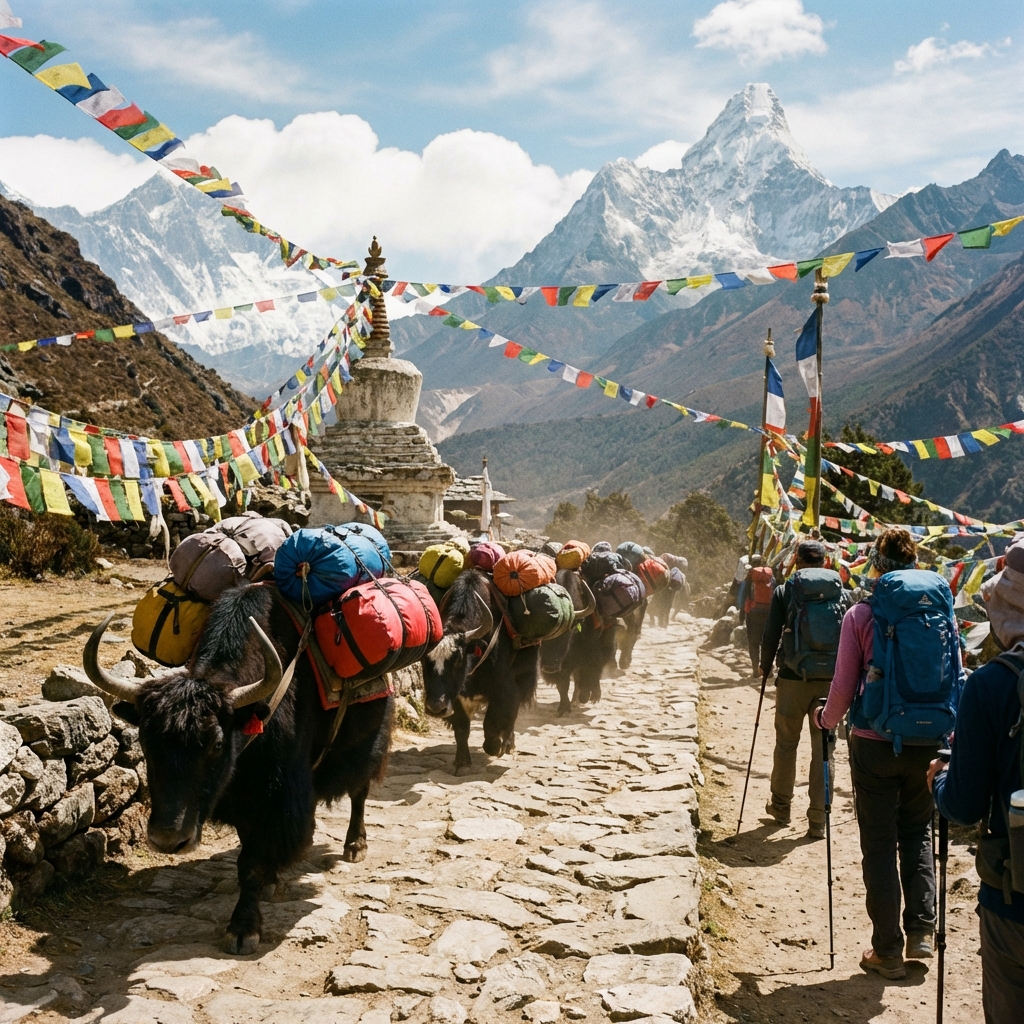
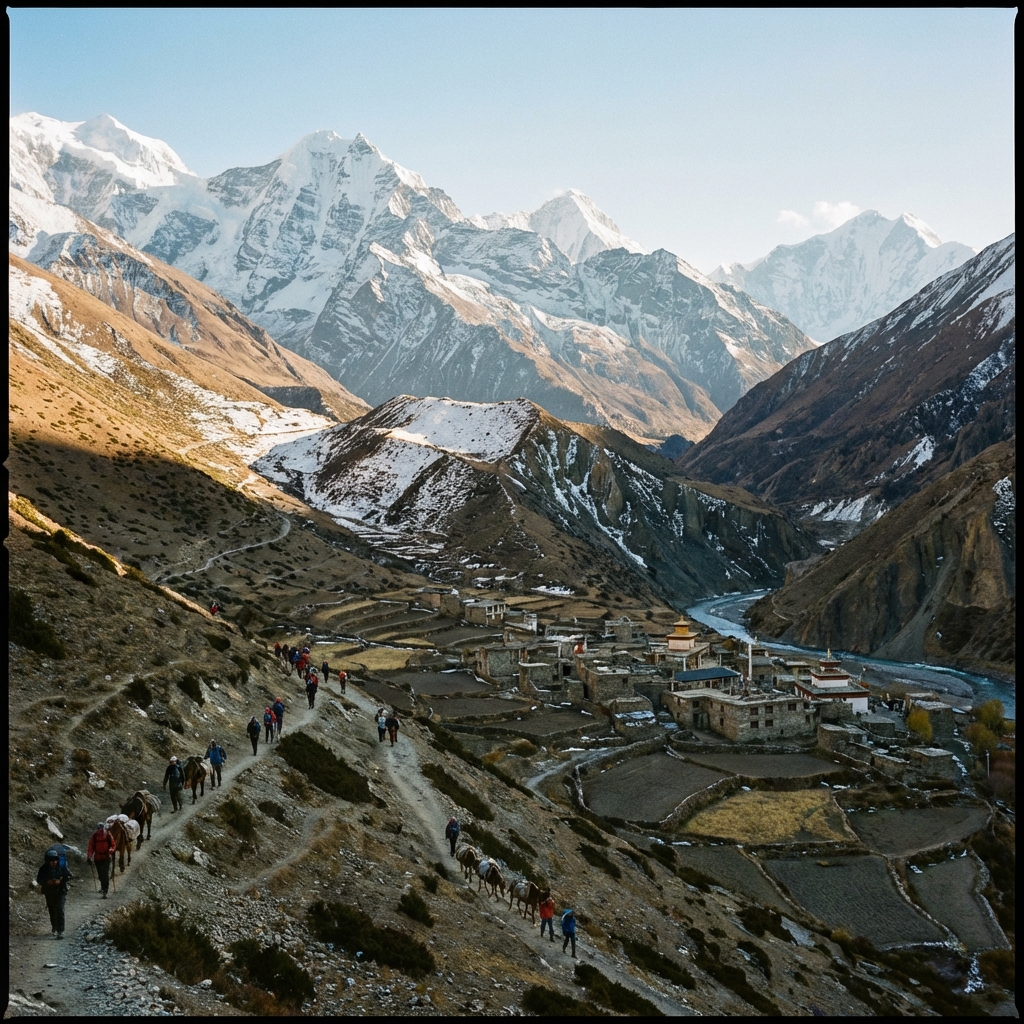
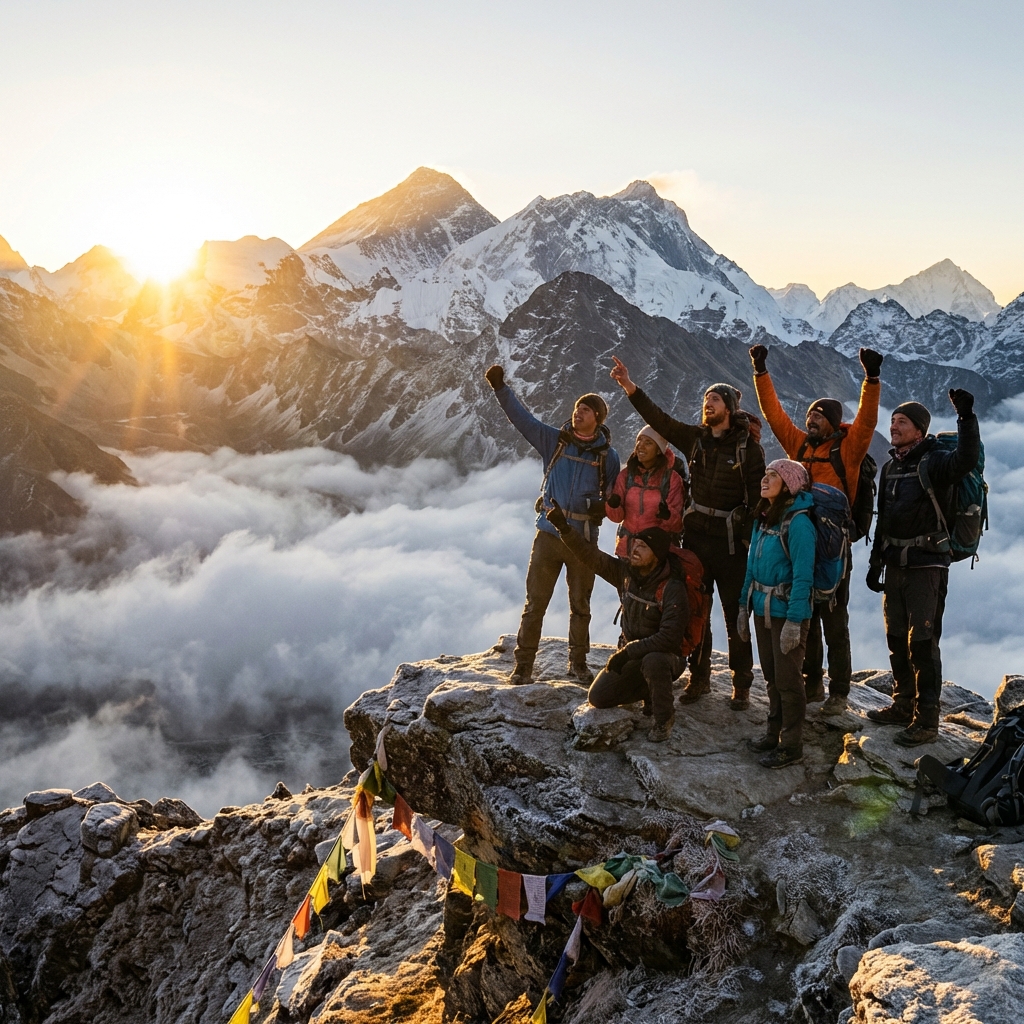
Your first Nepal trek changed something. Maybe it was watching the sun hit Annapurna South from the base camp amphitheater. Maybe it was the view from Kala Patthar as Everest turned gold at dawn. Maybe it was the quiet conversation with a Sherpa family in a Khumbu teahouse, or the simple satisfaction of walking for days through the world's highest mountains.
Whatever sparked it, you know you are going back. The question is no longer whether, but where, when, and how to push yourself further.
This guide is specifically for trekkers who have completed at least one Nepal trek and want to plan their next step. We cover everything from choosing a route that builds meaningfully on your first experience, to the progression pathways that lead from standard treks to restricted areas and eventually to peak climbing. We address the practical questions: how much harder should your second trek be, how long should you wait between treks, whether you need additional skills, and how to budget for return trips.
Your first trek taught you what Nepal trekking is. Your second trek is where you discover what it can become.
Progress in one dimension at a time (altitude, duration, or technical difficulty)
No minimum if fitness maintained; most return within 1-3 years
Poon Hill → ABC → EBC → Three Passes or Manaslu
After 2-3 treks above 5,000m with good altitude tolerance
Upper Mustang, Tsum Valley, Manaslu, Dolpo
Often 15-25% less (you own gear, know the system)
Guides required in national parks; experience helps you choose better
Basic first aid, altitude management, navigation, photography
18-30 days combining two treks is increasingly popular
You know what to expect, reducing anxiety and increasing enjoyment
The Psychology of the Second Trek
What You Already Know
Your first trek gave you something that no amount of reading can provide: visceral understanding of what Nepal trekking feels like. You now know:
- How your body responds to altitude
- What trekking days actually involve (the rhythm, the fatigue, the recovery)
- How teahouse accommodation works in practice
- What your gear does and does not do
- How your mental game holds up under sustained physical challenge
- Whether you prefer solitude or companionship on the trail
- What you photographed obsessively and what you wish you had captured
- The balance of costs and how to manage a trekking budget
This experiential knowledge is enormously valuable. It transforms your second trek from an uncertain adventure into a calibrated progression toward specific goals.
What Changes the Second Time
Reduced Anxiety: First-time trekkers carry significant mental load: will I get altitude sick, will I be fit enough, what if I hate the food, will the teahouses be okay? You have answered all of these questions. Your second trek unfolds with confidence rather than worry, freeing mental energy for deeper engagement with the experience.
Better Decision-Making: You know how to pace yourself, when to push and when to rest, how to choose a teahouse room, when to take altitude medication, and how to manage your energy across a multi-week trek. These micro-decisions, which consumed significant bandwidth on your first trek, become automatic.
Higher Expectations: The flip side of experience is that you want more. The standard teahouse trek that thrilled you the first time may not be enough the second time. This is healthy and drives the progression that makes Nepal trekking a lifelong pursuit.
Deeper Cultural Appreciation: With the logistical stress of a first trek behind you, your second trek allows you to engage more deeply with the cultural dimensions: noticing monastery details, understanding village social structures, asking more informed questions, and building more meaningful connections with local people.
Pro Tip
Use your first trek experience to create a specific wish list for your second. Did you wish you had reached higher altitude? Spent more time in villages? Had better photography opportunities? Experienced more solitude? Wanted a longer adventure? These preferences, refined by actual experience, should drive your second trek choice more than any external ranking or recommendation.
Progression Pathways: Where to Go Next
The question of "what next" depends largely on what you did first. Here are the most logical and rewarding progression pathways based on common first treks.
Pathway 1: After Poon Hill or Short Annapurna Trek
What you proved: You can handle multi-day trekking at moderate altitude (up to 3,210m). You are comfortable in teahouse environments. You know the Annapurna region.
Recommended Next Steps (in order of progression):
Option A: Annapurna Base Camp (ABC)
- Steps up altitude from 3,210m to 4,130m
- Extends duration from 3-5 days to 7-12 days
- Introduces more sustained daily walking
- Delivers one of Nepal's most iconic mountain viewpoints
- Stays in the familiar Annapurna region
- Difficulty increase: Moderate (manageable for most who completed Poon Hill comfortably)
Option B: Mardi Himal
- Altitude increase to 4,500m (from 3,210m)
- Duration: 5-7 days
- Introduces ridge walking and more exposed terrain
- Less crowded than ABC with equally stunning views
- A good stepping stone between Poon Hill and ABC
Option C: Langtang Valley
- Similar altitude range (up to 4,773m if climbing Kyanjin Ri)
- Changes region (Langtang vs. Annapurna), providing new cultural exposure
- Introduces Tamang culture (different from Gurung culture of Annapurna)
- Accessible from Kathmandu without flights
The One-Dimension Rule
The safest progression approach is to increase challenge in only one dimension at a time. If you are stepping up altitude, keep duration similar. If you are extending duration, keep altitude moderate. If you are moving to more remote terrain, choose a route at comfortable altitude and duration. This prevents the compounding of challenges that can overwhelm even experienced trekkers.
Pathway 2: After Annapurna Base Camp
What you proved: You can handle altitude up to 4,130m, sustain 7-12 days of trekking, and manage the physical demands of significant daily elevation gain and loss.
Recommended Next Steps:
Option A: Everest Base Camp
- Significant altitude step-up (4,130m to 5,364m at EBC, 5,545m at Kala Patthar)
- Introduces the Khumbu region and Sherpa culture
- Duration increase to 12-14 days
- Requires Lukla flights (new logistical dimension)
- The "classic progression" that most trekkers follow
- Difficulty increase: Moderate to Significant (altitude is the main new challenge)
Option B: Annapurna Circuit
- Steps up duration dramatically (14-21 days vs. 7-12)
- Introduces high pass crossing (Thorong La at 5,416m)
- Provides landscape and cultural diversity unmatched by ABC
- Stays in the Annapurna region but covers vastly more ground
- Difficulty increase: Moderate (duration is the main challenge; altitude is one big push)
Option C: Manaslu Circuit
- Similar to Annapurna Circuit but more remote and less crowded
- Restricted area permit adds an adventure dimension
- Larkya La Pass (5,160m) is a serious high-pass challenge
- Introduces Tibetan Buddhist culture of the Nubri people
- Difficulty increase: Moderate to Significant
Option D: Upper Mustang (for cultural progression rather than altitude)
- Altitude is lower than ABC (maximum 3,850m)
- Focus shifts from physical challenge to cultural immersion
- Introduces restricted-area trekking
- Dramatically different landscape (high-altitude desert)
- Difficulty increase: Low physically, High culturally and logistically
Pathway 3: After Everest Base Camp
What you proved: You can handle sustained altitude above 5,000m, manage 12-14 day treks, cope with the logistics of Lukla flights, and endure cold conditions at high altitude.
Recommended Next Steps:
Option A: Three Passes Trek (Khumbu)
- Stays in the familiar Everest region but adds three major pass crossings
- Altitude: Three passes between 5,360m and 5,535m
- Duration: 18-21 days (major step up from standard EBC)
- Introduces pass-crossing technique (some steep sections, possible snow)
- The natural "next level" for EBC graduates
- Difficulty increase: Significant
Option B: Annapurna Circuit
- Changes region entirely (Annapurna vs. Khumbu)
- Thorong La Pass (5,416m) is a single high pass rather than three
- Much greater cultural diversity than EBC
- Duration: 14-21 days
- Difficulty increase: Moderate (altitude similar to EBC, but with a pass crossing)
Option C: Manaslu Circuit
- Remote, restricted, and culturally rich
- Larkya La Pass (5,160m) is similar altitude to EBC high points
- Fewer trekkers, more authentic experience
- Requires organized group (minimum 2 trekkers plus guide)
- Difficulty increase: Moderate (similar altitude, more remote)
Option D: Island Peak or Mera Peak (Peak Climbing)
- The biggest step up: from trekking to mountaineering
- Island Peak (6,189m) adds 800m of altitude above EBC and introduces rope work
- Mera Peak (6,476m) is Nepal's most popular trekking peak with moderate technical difficulty
- Requires mountaineering training (basic crampon, rope, ice axe skills)
- Often combined with EBC or Three Passes itinerary
- Difficulty increase: Very Significant
Pathway 4: After Annapurna Circuit
What you proved: You can handle 14-21 day treks, high pass crossings (5,416m), diverse climate zones, and sustained daily walking.
Recommended Next Steps:
Option A: Manaslu Circuit
- Similar format (circuit with high pass) but more remote and culturally different
- Larkya La (5,160m) is slightly lower than Thorong La but equally challenging
- Restricted area adds exclusivity
- Natural progression for circuit trekkers
- Difficulty increase: Low to Moderate (similar challenge, more remote)
Option B: Three Passes Trek (Everest Region)
- Steps up the pass-crossing challenge (three passes instead of one)
- Changes to Khumbu region
- Higher maximum altitude (5,535m Kongma La)
- More sustained high-altitude exposure
- Difficulty increase: Moderate to Significant
Option C: Upper Mustang or Dolpo
- Changes the experience entirely: cultural immersion in restricted areas
- Altitude is lower than Thorong La but cultural depth is extraordinary
- Dolpo is one of Nepal's most remote trekking regions
- Difficulty increase: Low (physically), High (logistically, Dolpo is truly remote)
Option D: Great Himalaya Trail Sections
- The ultimate progression for circuit trekkers
- Sections of the GHT connect Nepal's major trekking regions
- Duration: 25-40 days for major sections
- Combines camping, teahouse, and village-stay modes
- Difficulty increase: Very Significant (duration, remoteness, logistical complexity)
Pro Tip
After completing the Annapurna Circuit, many trekkers feel ready for anything. This can lead to overconfidence. The Three Passes Trek, while at similar altitude, involves three separate high-pass crossings in rapid succession, each with different challenges (glacier on Cho La, steep scramble on Kongma La). Treat each new challenge with the respect it deserves, regardless of your track record.
How to Level Up: The Three Dimensions of Trekking Difficulty
Understanding the three independent dimensions of trekking difficulty helps you plan progressions that challenge you without overwhelming you.
Dimension 1: Altitude
| Level | Maximum Altitude | Examples |
|---|---|---|
| Introductory | Below 3,500m | Poon Hill, Nagarkot-Dhulikhel |
| Moderate | 3,500-4,500m | ABC, Langtang, Mardi Himal |
| Challenging | 4,500-5,500m | EBC, Annapurna Circuit, Manaslu |
| Advanced | 5,500-6,000m | Three Passes, high viewpoints |
| Mountaineering | Above 6,000m | Island Peak, Mera Peak |
Altitude Progression Tips:
- Each step up should allow for proper acclimatization
- Your previous altitude tolerance is a good but not guaranteed predictor of future tolerance
- Adding 500-1,000m to your previous maximum per trek is a sensible progression rate
- Above 5,500m, the body's response changes significantly - this is the transition zone to mountaineering
Dimension 2: Duration
| Level | Duration | Examples |
|---|---|---|
| Short | 3-5 days | Poon Hill, Nagarkot |
| Standard | 7-10 days | ABC, Langtang |
| Extended | 12-16 days | EBC, Upper Mustang |
| Long | 17-21 days | Annapurna Circuit, Three Passes, Manaslu |
| Ultra-Long | 22 days or more | Multi-trek combinations, GHT sections |
Duration Progression Tips:
- Longer treks require better gear (things wear out), more robust health management, and stronger mental game
- The psychological challenge of a 21-day trek is qualitatively different from a 10-day trek, not just quantitatively
- Physical conditioning for long treks should emphasize endurance over strength
- Budget increases significantly with duration (not just proportionally but also because longer treks tend to go to more remote, expensive areas)
Dimension 3: Technical Difficulty and Remoteness
| Level | Characteristics | Examples |
|---|---|---|
| Standard | Well-marked trails, full teahouse infrastructure | Poon Hill, ABC, EBC |
| Moderate | Some route-finding, variable lodge quality | Manaslu, Langtang extensions |
| Challenging | Pass crossings with snow possible, basic scrambling | Annapurna Circuit (Thorong La), Three Passes |
| Advanced | Remote areas, camping sections, limited infrastructure | Dolpo, Kanchenjunga, Makalu |
| Mountaineering | Rope work, crampons, ice axe, glacier travel | Island Peak, Mera Peak |
Technical Progression Tips:
- Moving from teahouse to camping treks requires different gear, different logistics, and different mental preparation
- Pass crossings introduce weather-dependent decision-making that standard treks do not require
- Remote areas mean limited rescue options - self-sufficiency becomes genuinely important
- Mountaineering requires specific training that trekking alone does not provide
When to Try Restricted Areas
Nepal's restricted areas offer some of the most rewarding trekking experiences in the country. They are restricted primarily to protect cultural heritage and control tourism impact, not because they are necessarily more dangerous (though remoteness can add risk).
What "Restricted" Means
- Special permits required (higher cost than standard permits)
- Must trek with a registered agency and licensed guide
- Minimum group size (usually 2 trekkers)
- Specific rules about behavior, photography, and cultural interaction
- These restrictions protect unique cultures and environments
The Restricted Area Treks
| Area | Permit Cost | Minimum Group | Best After | Key Appeal |
|---|---|---|---|---|
| Upper Mustang | $50/day (no minimum days) | 2 trekkers | Any 1-2 treks | Medieval Tibetan kingdom |
| Manaslu Circuit | $100/week (peak) | 2 trekkers | ABC or Annapurna Circuit | Remote circuit, Tibetan culture |
| Tsum Valley | $35/week (peak) | 2 trekkers | Any trek | Sacred Buddhist valley |
| Lower Dolpo | $10/day | 2 trekkers | EBC + Annapurna Circuit | Remote western Nepal |
| Upper Dolpo | USD 50/day | 2 trekkers | Extensive experience | Extreme remoteness |
| Nar-Phu Valley | $100/week (peak) | 2 trekkers | Annapurna Circuit | Hidden valley off AC |
| Kanchenjunga | $10/day | 2 trekkers | Multiple high-altitude treks | Eastern Nepal wilderness |
Who Should Try Restricted Areas
Upper Mustang and Tsum Valley: Suitable after any first trek. Altitude is moderate. The main requirement is cultural interest and willingness to follow group trekking rules. These are excellent second or third trek choices for cultural enthusiasts.
Manaslu Circuit: Best after at least one trek above 4,500m (EBC, ABC, or Annapurna Circuit). The Larkya La Pass at 5,160m requires altitude tolerance and stamina.
Nar-Phu Valley: Often combined with the Annapurna Circuit. Best after experience with the Circuit itself, as Nar-Phu adds altitude and remoteness to an already challenging trek.
Lower and Upper Dolpo: Best after significant trekking experience (3 or more treks including high-altitude and long-duration routes). Upper Dolpo, in particular, is one of Nepal's most remote destinations and requires robust self-sufficiency.
Kanchenjunga: Best for experienced trekkers comfortable with long duration (20-25 days), high altitude (above 5,000m), and remote conditions. This is not a second trek.
When to Consider Peak Climbing
Peak climbing represents the ultimate progression in Nepal trekking. The transition from trekker to mountaineer is a significant step that requires specific skills, training, and mindset.
The Trekking Peaks
Nepal designates certain peaks as "trekking peaks," which are accessible to experienced trekkers with basic mountaineering training. Despite the name, these are real mountains requiring real climbing skills.
| Peak | Altitude | Technical Difficulty | Duration (Inclusive) | Best After | Permit Cost |
|---|---|---|---|---|---|
| Island Peak | 6,189m | Moderate (PD+) | 16-20 days (with EBC) | EBC + high-altitude trek | $250 (autumn) |
| Mera Peak | 6,476m | Low-Moderate (PD) | 14-18 days | Any trek above 5,000m | $250 (autumn) |
| Lobuche East | 6,119m | Moderate-Difficult (AD-) | 16-20 days (with EBC) | EBC + mountaineering course | $250 (autumn) |
| Pisang Peak | 6,091m | Moderate (PD+) | 14-18 days (with AC) | Annapurna Circuit | $250 (autumn) |
| Chulu West | 6,419m | Moderate-Difficult (AD) | 18-22 days (with AC) | Annapurna Circuit + experience | $250 (autumn) |
PD = Peu Difficile (Not Very Difficult), AD = Assez Difficile (Fairly Difficult) - these are Alpine Grading System ratings
Are You Ready for Peak Climbing?
Answer honestly:
- Have you trekked comfortably above 5,000m? (If not, you are not ready)
- Have you spent multiple nights above 4,500m without significant altitude issues? (Essential)
- Are you comfortable with sustained cold? Nights on peaks can reach -25C or colder
- Have you used crampons, an ice axe, or a climbing harness before? (Training is available, but some exposure helps)
- Can you commit to 16-20 days or more? Peak climbing is combined with the approach trek
- Are you physically fit enough for a summit day that may start at 1:00 AM and last 12-16 hours? (Different from trekking fitness)
- Can you afford the additional cost? Peak climbing adds $1,000-3,000 or more to a trek budget for climbing permits, guides, and gear rental
If you answered yes to all seven: You are a reasonable candidate for Mera Peak or Island Peak, ideally with a pre-trip mountaineering skills course.
If you answered no to any of the first three: More trekking experience is needed before attempting peaks.
Peak Climbing Is Real Mountaineering
The term "trekking peak" is misleading. Island Peak involves climbing a 45-degree ice face with fixed ropes. Mera Peak requires glacier travel with crevasse rescue skills. People have died on every trekking peak in Nepal. These are serious mountains that demand respect, proper training, qualified guides, and the willingness to turn back if conditions or your fitness dictate. The summit is optional; returning safely is mandatory.
For detailed guides: Island Peak climbing guide, Mera Peak climbing guide, and Peak climbing comprehensive guide.
Multi-Trek Combination Ideas
One of the great pleasures of return trips to Nepal is combining two or more treks into a single extended adventure. This maximizes your time in the mountains and provides contrasting experiences within one trip.
Classic Combinations
EBC + Gokyo Lakes (via Cho La) - 18-21 days The most popular combination. Trek to EBC, summit Kala Patthar, then cross Cho La Pass to Gokyo Lakes. Or reverse the route. This provides both the iconic EBC experience and the stunning Gokyo panorama.
- Difficulty: Challenging (high pass with potential snow/ice)
- Best for: EBC graduates who want the Gokyo perspective
- Season: October-November only (Cho La can be dangerous in other months)
Annapurna Circuit + Poon Hill - 18-22 days Complete the full Annapurna Circuit, then add the Poon Hill loop from Tatopani or Beni. This provides the circuit's diversity plus the Poon Hill sunrise panorama.
- Difficulty: Moderate-Challenging (duration is the main challenge)
- Best for: Trekkers wanting comprehensive Annapurna coverage
- Season: October-November or March-May
Langtang Valley + Tamang Heritage Trail - 12-14 days Combine mountain grandeur with cultural immersion. Trek Langtang first (mountain focus), then do the Tamang Heritage Trail (culture focus) on the return.
- Difficulty: Moderate
- Best for: Trekkers who want both mountain and cultural experiences
- Season: October-November or March-May
Langtang Valley + Helambu - 12-15 days Cross from Langtang to Helambu via the Laurebina Pass and Gosainkunda Lakes. A classic route that transitions from Tamang to Hyolmo Sherpa cultural zones.
- Difficulty: Moderate (pass crossing at approximately 4,600m)
- Best for: Culture-focused trekkers near Kathmandu
- Season: October-November or April-May
Manaslu Circuit + Tsum Valley - 20-25 days The ultimate restricted-area combination. Start with Tsum Valley for cultural immersion, then continue to the Manaslu Circuit for the Larkya La crossing.
- Difficulty: Challenging (duration plus high pass)
- Best for: Experienced trekkers seeking remote cultural experiences
- Season: October-November
EBC + Island Peak - 18-22 days The classic trek-to-peak combination. Complete EBC (excellent acclimatization), then climb Island Peak (6,189m) from Chukhung.
- Difficulty: Very Challenging (mountaineering skills required)
- Best for: Trekkers ready to transition to peak climbing
- Season: October-November or April-May
Pro Tip
When combining treks, build in at least one full rest day between major sections. Your body needs time to recover from accumulated fatigue, and your mind benefits from a day of relaxation in a comfortable lodge town (Namche, Manang, etc.) before launching into the next segment. Do not underestimate accumulated fatigue on combinations longer than 18 days.
For more combination ideas: multi-week trek combinations guide.
Comparing Difficulty Step-Ups
This table helps you understand exactly how much harder your second trek will be compared to your first.
| From → To | Altitude Increase | Duration Increase | New Challenge | Overall Step-Up |
|---|---|---|---|---|
| Poon Hill → ABC | +920m (3,210 to 4,130) | +3-7 days | Sustained altitude | Moderate |
| Poon Hill → Langtang | +1,563m (3,210 to 4,773) | +3-5 days | Higher altitude, longer | Moderate-Significant |
| ABC → EBC | +1,234m (4,130 to 5,364) | +3-5 days | Serious altitude, flights | Significant |
| ABC → Annapurna Circuit | +1,286m (4,130 to 5,416) | +7-10 days | High pass, long duration | Significant |
| EBC → Three Passes | +171m (5,364 to 5,535) | +5-7 days | Three passes, longer trek | Moderate-Significant |
| EBC → Island Peak | +825m (5,364 to 6,189) | +4-6 days | Mountaineering skills | Very Significant |
| Annapurna Circuit → Manaslu | -256m (5,416 to 5,160) | Similar | More remote, restricted | Low-Moderate |
| Any → Upper Mustang | Variable (max 3,850m) | Variable | Cultural focus, restricted | Low (physical), High (cultural) |
Timeline Between Treks
How Long Should You Wait?
There is no mandatory minimum time between Nepal treks. Some trekkers return the following season; others wait years. The key factors are:
Physical Recovery: Most trekkers need 2-4 weeks of rest after a major trek before resuming intense exercise. Full physiological recovery (including subtle altitude adaptations returning to baseline) takes 4-8 weeks. For back-to-back treks in the same season, a minimum of 1-2 weeks rest in Kathmandu or Pokhara between treks is advisable.
Fitness Maintenance: If you maintain good cardiovascular fitness between treks (running, cycling, hiking, swimming), your body retains much of the trekking-specific conditioning. Trekkers who let fitness lapse between trips essentially start from scratch.
Financial Planning: A return trip typically costs 15-25% less than a first trip (you already own most gear, you know how to avoid unnecessary spending, you can make more targeted choices). Budget for the specific trek you want rather than generic "Nepal trekking" costs.
Life Logistics: Most trekkers need 2-4 weeks away from work and family responsibilities. This is often the binding constraint rather than physical or financial readiness.
Common Return Patterns
| Pattern | Typical Trekker | Advantage |
|---|---|---|
| Annual (same season each year) | Dedicated trekkers, retirees | Continuous skill and altitude progression |
| Every 2-3 years | Most return trekkers | Allows anticipation and planning, sustainable budget |
| Multi-trek single trip | Those with limited travel windows | Maximum mountain time per trip |
| Different seasons each return | Experienced trekkers | Sees Nepal in different conditions |
Building on Experience: Skills Worth Developing
Between Treks
Altitude Knowledge: Study altitude physiology beyond the basics. Understanding acclimatization profiles, recognizing subtle AMS symptoms, and knowing the pharmacology of Diamox and dexamethasone makes you a safer and more confident trekker.
Navigation: Learn to read topographic maps and use a GPS device or phone app. While your guide handles route-finding, understanding the terrain yourself enhances your engagement and provides a safety backup.
Photography: Invest time in learning photography between treks. The difference in image quality between a first-time trekker taking snapshots and a returning trekker who has studied composition and light is dramatic.
Basic First Aid: A wilderness first aid course (16-20 hours) teaches skills that can save lives on the trail: wound care, fracture management, altitude illness treatment, and emergency protocols. See our first aid guide.
Language: Learning basic Nepali (or even Sherpa/Tamang phrases) transforms your cultural interactions. Even simple greetings and thank-yous in the local language open doors that English cannot.
Fitness Training: Targeted trekking fitness (stair climbing with a loaded pack, long hikes, altitude simulation if available) is more effective than generic gym workouts. See our fitness requirements guide.
On Your Second Trek
Carry less. First-time trekkers almost always overpack. Your experience tells you exactly what you used and what you hauled for 14 days without touching. Reduce your pack weight by 20-30%.
Walk slower. Counterintuitive but true. Experienced trekkers walk at a more sustainable pace, take fewer breaks, and arrive less fatigued than fast first-timers who burn out by mid-afternoon.
Engage more. With logistics on autopilot, invest your attention in cultural observation, conversation with locals and fellow trekkers, journaling, and photography. The second trek is when Nepal's depth reveals itself.
Try something new. If your first trek was guided, consider whether your second could be with a guide only (no porter). If you used an agency, try a different one to broaden your perspective. If you carried a heavy camera, try shooting phone-only. Small changes in approach yield fresh experiences on familiar terrain.
Budget for Return Trips
Return trekkers typically spend less than first-timers because the major one-time investments (gear) are already made and they make more efficient spending decisions.
Where You Save
| Category | First Trek | Second Trek | Savings |
|---|---|---|---|
| Gear (purchased) | $500-1,500 | $100-300 (replacements only) | $400-1,200 |
| Gear (rented) | $100-200 | $50-100 (you know what you need) | $50-100 |
| Agency fees | Standard | Potentially lower (return client discounts, better negotiation) | 5-15% |
| On-trek spending | Often excessive (first-timer uncertainty) | More targeted | 10-20% |
| Kathmandu pre/post days | Often 3-5 days (exploration, shopping) | 1-2 days (efficient) | $100-300 |
Where You May Spend More
- More challenging treks often cost more (restricted area permits, longer durations, peak climbing fees)
- Better gear: Having done a trek, you may upgrade specific items (better sleeping bag, better boots)
- Photography equipment: If your first trek sparked a photography interest
- Extended combinations: Multi-trek itineraries are proportionally more expensive
Sample Budgets for Second Treks
| Trek | Budget Range | Notes |
|---|---|---|
| ABC (10 days, guided) | $800-1,500 | Return trekker with own gear |
| EBC (14 days, guided) | $1,200-2,200 | Including Lukla flights |
| Annapurna Circuit (18 days, guided) | $1,200-2,500 | Full circuit |
| Manaslu Circuit (16 days, guided) | $1,800-3,500 | Restricted permit adds cost |
| Three Passes (20 days, guided) | $1,800-3,000 | Long duration |
| Upper Mustang (14 days, guided) | $2,500-4,000 | High permit cost |
| EBC + Island Peak (20 days) | $3,000-5,000 | Climbing equipment and guide |
Guide vs. Independent Progression
As of current regulations, Nepal requires licensed guides for all national park and conservation area treks. This effectively means all major treks require a guide. However, the nature of your guide relationship can evolve with experience.
First Trek: Full Package
Most first-time trekkers book comprehensive packages: guide, porter, all logistics handled by the agency. This is appropriate and recommended.
Second Trek: Informed Choices
With experience, you can make more specific decisions:
- Guide only (no porter): Carry your own pack, which is lighter now that you know what you actually need. Save porter fees. Gain independence.
- Different agency: Try a smaller, local agency rather than a large operation. You know what good service looks like and can evaluate better.
- Specify your guide: Ask for a guide with specific expertise (photography, culture, high-altitude experience) rather than accepting whoever is assigned.
- Custom itinerary: Rather than following a standard itinerary, work with your agency to create a route tailored to your interests and experience level.
Advanced: Maximum Autonomy Within the Rules
Experienced trekkers can minimize agency involvement to the legal minimum (licensed guide) while handling everything else independently: booking teahouses, managing logistics, choosing daily routes. This requires strong Nepal knowledge and confidence but provides maximum flexibility.
For detailed comparison: independent vs. guided trekking guide.
Frequently Asked Questions
How much harder should my second trek be?
A good rule of thumb is to step up one difficulty level in one dimension (altitude, duration, or technical challenge) while keeping the others similar. Going from ABC (4,130m, 10 days, standard trails) to EBC (5,364m, 14 days, standard trails) is a solid step-up in altitude and modest step-up in duration. Going from ABC directly to Three Passes (5,535m, 20 days, pass crossings) would be a triple step-up and is too aggressive for most second-time trekkers.
Can I do a harder trek if I trained more?
Better fitness helps but does not override altitude physiology. You can walk faster and farther with better fitness, but altitude sickness affects fit and unfit people alike. Training helps with the physical dimension (endurance, strength) but not with the altitude dimension. Progress altitude gradually regardless of fitness level.
Should I return to the same region or try somewhere new?
Both approaches have merit. Returning to the same region (e.g., doing EBC after Poon Hill) lets you build on existing familiarity with the culture and logistics. Trying a new region (e.g., doing Langtang after an Annapurna trek) broadens your Nepal experience. There is no wrong answer. Follow your interest.
How do I find trekking partners for restricted areas?
Restricted areas like Manaslu and Upper Mustang no longer no longer requires a minimum group size (solo trekkers allowed with licensed guide). If you are solo, most agencies maintain "join a group" lists where solo trekkers are matched with compatible partners. Online trekking forums and social media groups (TrekTalk Nepal, Lonely Planet Thorn Tree) also connect solo trekkers. Your agency should be able to arrange group matching.
Is it worth doing the same trek twice?
Yes, especially if the conditions differ. Doing EBC in October and then again in February reveals two completely different faces of the same route. A Poon Hill trek in October and again in April (for rhododendron blooms) provides contrasting visual experiences. Returning to familiar terrain with greater knowledge often reveals details you missed the first time.
When should I start considering peak climbing?
After completing at least 2-3 treks that include sustained time above 5,000m, and after honestly assessing your altitude tolerance, cold tolerance, and willingness to commit to basic mountaineering training. Most trekkers who progress to peak climbing have done 3-5 treks over 2-5 years before attempting their first summit.
Can I combine treks in different regions in one trip?
Yes, but budget transition time. Moving from the Everest region to the Annapurna region requires at least 1-2 days (flight from Lukla, overnight in Kathmandu, travel to Pokhara or Besisahar). A 30-day trip could include a 14-day Khumbu trek and a 10-day Annapurna trek with 4-6 days of travel and rest between.
How do I know if I am ready for the Three Passes Trek?
If you completed EBC comfortably (no serious altitude issues above Namche, strong energy levels at Gorak Shep, enjoyable Kala Patthar sunrise), you are a good candidate. If you struggled significantly at Base Camp altitude, consider another intermediate trek (Gokyo Lakes without the passes, or Manaslu) before attempting Three Passes. Each pass adds a dimension that EBC does not: steep ascent/descent, potential snow and ice, and the psychological challenge of crossing multiple high points in succession.
Should I use the same agency for my second trek?
If you had a good experience, returning to the same agency provides continuity (they know your preferences), potential return-client discounts, and reduced administrative friction. If your experience was mediocre, your second trek is an excellent time to try a different agency with informed comparison. See our agency selection guide.
What is the Great Himalaya Trail and is it a realistic goal?
The Great Himalaya Trail (GHT) traverses the entire length of Nepal through the high Himalaya, covering approximately 1,700 km over 150 or more days. The full GHT is an expedition-level undertaking attempted by only a handful of trekkers each year. However, individual sections of the GHT can be done as standalone treks (many of the treks in this guide are GHT sections). The GHT is a realistic long-term goal for dedicated trekkers who progress through 5-8 major treks over several years.
How does altitude tolerance change between treks?
Previous altitude exposure does not create permanent acclimatization (this wears off within 2-3 weeks of returning to low altitude). However, experienced trekkers often acclimatize faster than first-timers, possibly because they manage their ascent more effectively (better pacing, hydration, and recognition of early symptoms). Some individuals also appear to have improved altitude tolerance with repeated exposure, though this is not guaranteed and should not lead to complacency.
What if my second trek is with a different companion?
This is common and sometimes requires careful trek selection. If your first trek was with a fit partner and your second is with a less experienced companion, choose a route that is appropriate for the less experienced person. A trek that works for both of you creates a better shared experience than one where one person is struggling while the other is bored. The stronger trekker can add challenges (side trips, viewpoint extensions) while on a route that suits both.
Final Thoughts
The most important thing about your second Nepal trek is that you are doing it. Nepal has a way of drawing people back. The mountains, the culture, the people, and the incomparable feeling of walking for days through the highest landscape on Earth create an experience that deepens with repetition rather than diminishing.
Your first trek answered the question "Can I do this?" Your second trek answers "What else can I do?" And the answer, in Nepal, is always: more than you imagine.
Progress thoughtfully. Build on your experience. Choose routes that challenge you in new dimensions without overwhelming you. And remember that the best trek is not always the hardest one; it is the one that matches your current abilities, interests, and aspirations.
The Himalayas are patient. They will be there when you are ready for whatever comes next.
For foundational planning: best beginner treks | short trek options | Island Peak guide | Mera Peak guide
Ready to plan your return trip? Start with our top trekking agencies directory and how to choose a trekking agency guide to find the right partner for your next adventure.