Island Peak Climbing Guide: Complete Guide to Nepal's Most Popular Trekking Peak (6,189m)
Island Peak—known locally as Imja Tse—stands as Nepal's gateway to Himalayan mountaineering. Rising to 6,189 meters (20,305 feet) in the heart of the Khumbu region, this elegant summit offers aspiring mountaineers their first taste of technical climbing in the shadow of Mount Everest. For thousands of trekkers each year, Island Peak represents that pivotal transition: the point where the trekking trail ends and the world of ropes, crampons, and ice axes begins.
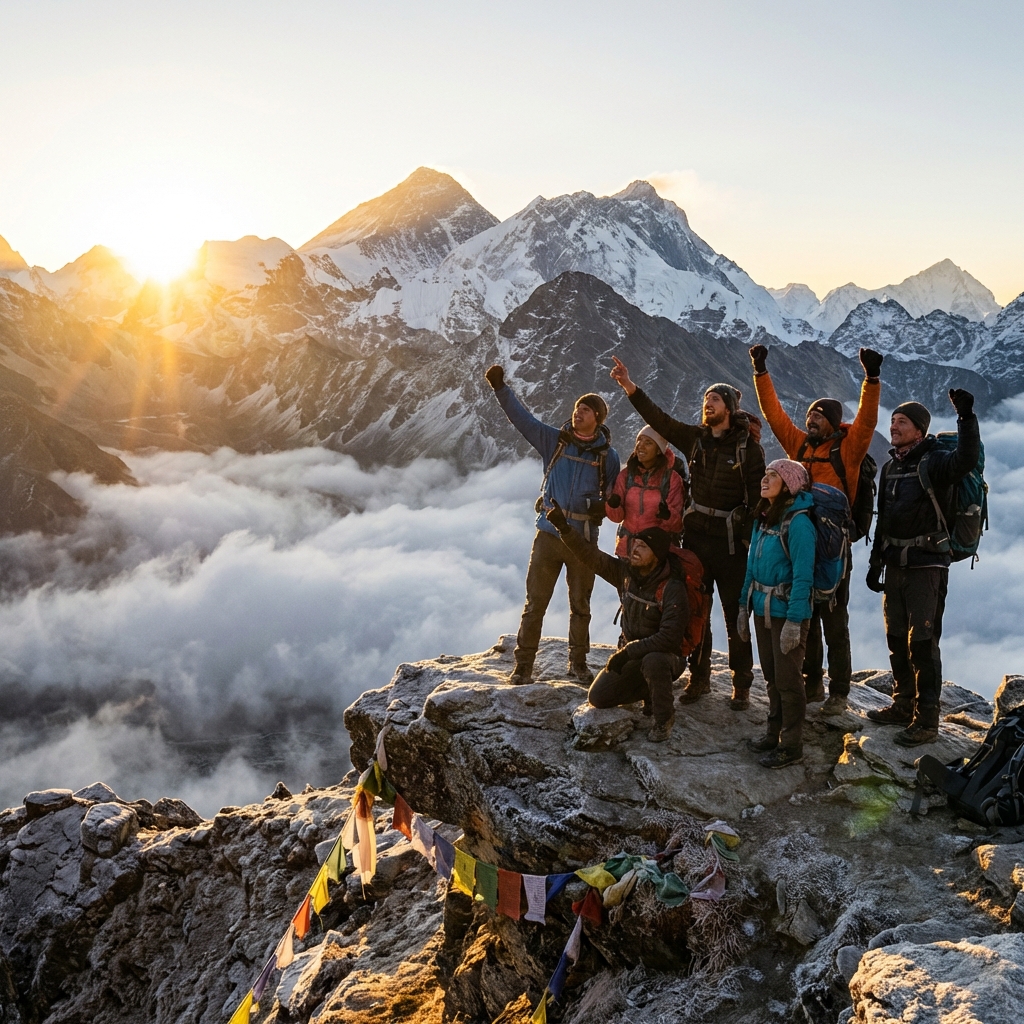
What makes Island Peak so special isn't just its accessibility—though the fact that it's achievable with moderate experience certainly contributes to its popularity. It's the complete package: a challenging trek through the legendary Everest region, a genuine climbing experience requiring technical skills, and a summit that delivers one of the most spectacular panoramas in the Himalayas. Standing on top, you're eye-to-eye with Lhotse, Makalu, and Ama Dablam, while Everest looms to the north, its distinctive plume streaming from the summit pyramid.
This comprehensive guide covers everything you need to know about climbing Island Peak. From the technical requirements and training programs to detailed itineraries and cost breakdowns, from choosing the right agency to understanding what summit day truly demands—consider this your complete manual for tackling Nepal's most popular trekking peak.
6,189m (20,305 ft)
PD+ (Alpine Grading System)
16-18 days from Kathmandu
10-14 hours round trip
$350 USD (autumn season)
$2,500-$4,500 with agency
October-November, April-May
60-75% depending on conditions
5,087m (16,689 ft)
Prior high-altitude trekking, basic crampon/rope skills
What is Island Peak and Why is it So Popular?
Island Peak, officially named Imja Tse, was christened "Island Peak" by Eric Shipton's 1951 Everest reconnaissance expedition because, when viewed from the Dingboche area, the peak appears as an island rising from a sea of ice—the Lhotse and Imja glaciers that surround its base.
The mountain was first climbed in 1953 by Tenzing Norgay, Charles Evans, Alf Gregory, and Charles Wylie as part of their acclimatization for the historic first ascent of Everest. Since then, it has become the most climbed trekking peak in Nepal, with over 1,000 summit attempts each peak season.
Why Climbers Choose Island Peak
The Perfect First 6,000m Peak: Island Peak represents an ideal stepping stone between high-altitude trekking and serious mountaineering. The climb requires technical skills—crampon use, fixed rope techniques, and basic glacier travel—but doesn't demand the advanced expertise of more challenging 6,000-meter peaks like Ama Dablam or Mera Peak's technical routes.
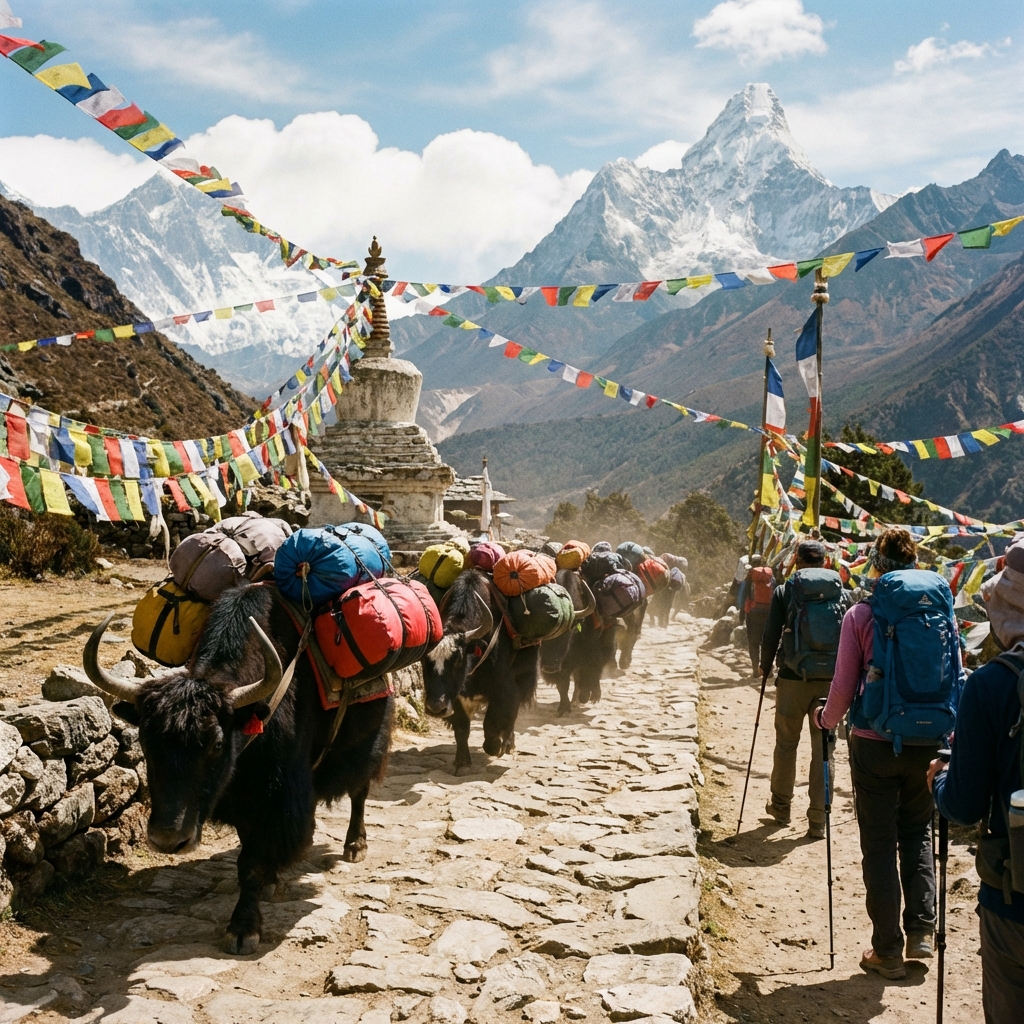
Everest Region Immersion: The approach trek follows the classic Everest Base Camp route through iconic Sherpa villages—Namche Bazaar, Tengboche, Dingboche, and Chukhung. You experience all the cultural richness and spectacular scenery of the Khumbu, then go beyond where most trekkers turn back.
Manageable Logistics: Unlike remote peaks requiring lengthy approaches, Island Peak's Base Camp is a relatively short walk from Chukhung village (4,730m), where warm meals, comfortable lodges, and even internet connectivity are available. This accessibility simplifies logistics and reduces expedition complexity.
Stunning Summit Views: Few mountains offer a summit panorama to match Island Peak. You stand in the inner sanctum of the Khumbu, surrounded by four of the world's fourteen 8,000-meter peaks: Everest (8,849m), Lhotse (8,516m), Makalu (8,485m), and Cho Oyu (8,188m). Ama Dablam's perfect pyramid and the massive bulk of Baruntse complete the visual feast.
Achievable for Fit Beginners: With proper preparation, training, and guidance, Island Peak is achievable for climbers without prior mountaineering experience—though high-altitude trekking experience and dedicated physical training are essential.
Official Name and Classification
The Nepal Mountaineering Association officially lists the peak as "Imja Tse" (6,189m) and classifies it as a "trekking peak" or "NMA peak." The term "trekking peak" is somewhat misleading—these peaks still require permits, qualified guides, and technical climbing skills. The classification primarily refers to the simplified permit process compared to major expedition peaks.
Technical Requirements: What Skills Do You Need?
Island Peak is not a walk-up. While it doesn't demand advanced mountaineering expertise, it requires specific technical skills that must be learned before or during your expedition.
Essential Technical Skills
Crampon Technique: You'll spend 6-8 hours in crampons on summit day, climbing steep snow slopes, traversing icy ridges, and ascending near-vertical sections. You must be comfortable walking, climbing, and turning in crampons without catching points.
Fixed Rope Ascent (Jumar Technique): The steepest sections of Island Peak feature fixed ropes installed by climbing teams. You'll use a mechanical ascender (jumar) and a safety sling to climb these sections efficiently and safely. Practice is essential—you'll be doing this while exhausted at altitude.
Basic Rappelling: While the descent primarily uses fixed ropes for security, knowing how to rappel and use a figure-eight or ATC device is important for safety.
Rope Management: Understanding rope systems—tying in, managing slack, moving together on a rope team—is fundamental to safe glacier travel and summit climbing.
Ice Axe Self-Arrest: Though not frequently needed on the standard route, the ability to self-arrest with an ice axe is a critical safety skill for any glaciated peak.
Glacier Travel: The approach to High Camp crosses the Imja Glacier. Basic glacier travel skills—route finding, crevasse awareness, rope team travel—are necessary.
Fitness Requirements
Island Peak demands a high level of physical fitness. Summit day involves 10-14 hours of continuous effort at extreme altitude, including technical climbing sections.
Cardiovascular Endurance: You should be able to hike for 8+ hours with a 10-15kg pack at moderate to steep inclines. Heart rate training in Zone 2-3 is essential.
Leg Strength: The combination of altitude and technical climbing puts enormous stress on legs. Squats, lunges, step-ups, and downhill training are essential.
Core Stability: Balance on crampons, glacier travel, and rope work all require solid core strength.
Upper Body Strength: Jumar ascending, ice axe use, and rope management require functional upper body fitness.
Mental Toughness: Summit day pushes you to your limits. Cold, fatigue, altitude, and technical challenges combine to test your mental resolve.
Pro Tip
The best indicator of Island Peak readiness is your performance on high-altitude treks. If you've completed Everest Base Camp or a similar 5,000m+ trek without significant altitude problems and felt you had energy to spare, you're likely physically ready for Island Peak with proper technical training.
Experience Requirements
Minimum Recommended Experience:
- Completed at least one high-altitude trek above 4,500m
- Comfortable with multi-day trekking in challenging conditions
- Basic familiarity with mountaineering equipment
- Ability to camp in cold conditions
Ideal Prior Experience:
- Everest Base Camp or similar trek completed successfully
- Previous crampon/ice experience (even indoor ice climbing helps)
- Mountaineering course or climbing gym experience
- Winter hiking or backpacking experience
No Experience Required If:
- You book with an agency offering comprehensive pre-climb training
- You're willing to invest significant time in preparation
- You're honest about your fitness level and limitations
- You commit to the training program seriously
Training Program: 3-6 Months of Preparation
Proper preparation dramatically increases your chances of summit success and ensures a safer, more enjoyable experience. Begin training 3-6 months before your departure date.
Phase 1: Base Building (Months 1-2)
Goals: Establish aerobic base, build general fitness, begin strength training
Cardiovascular Training:
- 4-5 sessions per week, 45-60 minutes each
- Activities: running, cycling, swimming, stair climbing, rowing
- Intensity: mostly Zone 2 (conversational pace), one Zone 3 session weekly
- Weekly target: 6-8 hours of cardio activity
Strength Training:
- 2-3 sessions per week
- Focus areas: legs (squats, lunges, step-ups), core (planks, dead bugs), back (rows, pull-ups)
- Rep range: 12-15 reps, 3-4 sets
- Don't neglect flexibility: incorporate yoga or stretching sessions
Hiking:
- One long hike per week (3-5 hours)
- Begin carrying a loaded pack (8-10kg)
- Seek hilly terrain when possible
Phase 2: Building Intensity (Months 2-4)
Goals: Increase training intensity, begin altitude-specific preparation, introduce longer efforts
Cardiovascular Training:
- Maintain 5-6 sessions per week
- Increase duration to 60-90 minutes
- Add interval training: one session per week with hill repeats or stair intervals
- Incorporate back-to-back training days to build fatigue resistance
Strength Training:
- Increase weight, decrease reps (8-10 reps, 4 sets)
- Add single-leg exercises: Bulgarian split squats, single-leg deadlifts
- Emphasize eccentric (lowering) movements for downhill strength
- Continue core work with added complexity
Hiking and Climbing:
- Two hiking sessions per week when possible
- Increase pack weight to 12-15kg
- Seek elevations gain of 800-1,200m per hike
- Begin practicing with trekking poles
Technical Skills:
- Enroll in a mountaineering basics course if available
- Practice with crampons on any available ice (ice climbing gyms, winter hikes)
- Learn rope systems and knots
Phase 3: Peak Training (Month 5)
Goals: Maximum training load, technical skill refinement, simulate expedition demands
Cardiovascular Training:
- Peak volume: 8-10 hours per week
- Include one very long effort per week (4-6 hours)
- Back-to-back training days to simulate trek fatigue
- Maintain one rest day per week
Strength Training:
- Reduce volume but maintain intensity
- Focus on power and explosiveness
- Continue core work
Simulation Training:
- Complete at least one overnight backpacking trip with full gear
- Practice camping in cold conditions if possible
- Do a multi-day hike with significant elevation gain
- Train with your actual expedition boots and gear
Technical Skills:
- Review and practice all rope techniques
- Ensure crampon comfort
- Practice ice axe self-arrest if snow is available
Phase 4: Taper (Final 2-3 Weeks)
Goals: Rest, recover, finalize preparations, arrive fresh
Training:
- Reduce volume by 40-50%
- Maintain some intensity to stay sharp
- Focus on light activity: easy hiking, stretching, yoga
- Prioritize sleep and nutrition
Preparation:
- Finalize gear and packing
- Review itinerary and logistics
- Mental preparation: visualization, studying the route
- Ensure travel documentation is complete
Don't Skip the Training
Summit success rates correlate directly with preparation. Climbers who follow a structured training program have significantly higher success rates and lower rates of altitude-related illness. Island Peak is not a casual extension of a trek—it's a genuine mountaineering objective that requires mountaineering-level preparation.
Complete Gear List for Island Peak
Island Peak requires both trekking equipment (for the approach) and technical climbing gear (for summit day). Quality matters at altitude—this is not the place to cut corners.
Clothing Layers
Base Layers:
- 2-3 synthetic or merino wool base layer tops
- 2 pairs base layer bottoms
- 4-5 pairs merino or synthetic socks (medium and heavy weight)
- Sports bras (women)
Insulation Layers:
- Lightweight fleece jacket
- Midweight fleece or softshell jacket
- Puffy down or synthetic jacket (minimum 600-fill down)
- Summit down parka (minimum 700-fill, hood essential)
- Lightweight down or synthetic pants for summit day
Outer Layers:
- Waterproof/breathable hardshell jacket (Gore-Tex or equivalent)
- Waterproof hardshell pants with full side zips
- Softshell pants for trekking
Extremities:
- Sun hat with brim
- Warm beanie (fleece or wool)
- Balaclava or neck gaiter
- Liner gloves (for dexterity)
- Insulated mountaineering gloves
- Expedition mittens (for summit day cold)
- Gaiters
Footwear
- Trekking boots: broken-in, waterproof, ankle support (for approach trek)
- Mountaineering boots: crampon-compatible, insulated (plastic or leather double boots recommended)
- Camp shoes/sandals
- Boot liners (if using double boots)
Technical Climbing Equipment
Provided by Most Agencies:
- Fixed ropes on the mountain
- Group climbing equipment
Personal Equipment (You Provide or Rent):
- Climbing harness (adjustable for layering)
- Mechanical ascender (jumar) with sling
- Figure-eight descender or ATC
- 2 locking carabiners
- 2 non-locking carabiners
- 2 personal slings/prusik loops
- Ice axe (50-60cm, general mountaineering type)
- Crampons (matched to your boots)
- Climbing helmet
Trekking Equipment
- Backpack: 50-65L for trekking, 30-40L summit pack
- Sleeping bag: rated to -20°C minimum
- Sleeping pad: closed-cell foam for insulation
- Trekking poles (collapsible)
- Headlamp with spare batteries (two headlamps recommended for summit)
- Water bottles (2L capacity minimum, insulated)
- Water purification (tablets or UV)
- Sunglasses (Category 4) with side shields or glacier glasses
- Ski goggles (for wind/snow on summit day)
Personal Items
- Sunscreen (SPF 50+, high altitude formula)
- Lip balm with SPF
- Personal first aid kit
- Toiletries
- Camera and batteries
- Power bank
- Snacks (energy bars, nuts, dried fruit)
- Thermos for summit day
- Hand and toe warmers
- Personal medications
Documents and Money
- Passport (with visa)
- Trek permits (obtained through agency)
- Travel insurance documents
- Cash (USD and NPR)
- Credit card for emergencies
- Passport photos (for permits)
Pro Tip
Rent technical gear in Kathmandu or Namche Bazaar if you don't own quality equipment. Mountaineering boots, crampons, ice axes, and down suits can all be rented affordably. Rental shops in Thamel offer full packages, and the gear quality has improved significantly in recent years. Just test everything before leaving town.
Detailed 16-Day Itinerary: Lukla to Summit and Back
The standard Island Peak climbing itinerary combines the classic Everest Base Camp approach with a summit attempt. This 16-day schedule provides adequate acclimatization while keeping the expedition compact.
Day 1: Fly to Lukla (2,840m), Trek to Phakding (2,610m)
Duration: 3-4 hours trekking Elevation Change: -230m
Early morning flight from Kathmandu to Lukla's famous Tenzing-Hillary Airport—the world's most exciting (and sometimes nerve-wracking) aviation experience. The 25-minute flight offers stunning views of the Himalayan range before the dramatic landing on Lukla's short, sloped runway.
After landing, meet your full trekking team, organize equipment, and begin the gentle descent to Phakding along the Dudh Kosi river. This easy first day allows adjustment to the mountain environment.
Accommodation: Teahouse in Phakding
Day 2: Phakding to Namche Bazaar (3,440m)
Duration: 5-6 hours Elevation Gain: +830m
The trek's first significant climbing day. Cross the famous Hillary Suspension Bridge and begin the steep switchback climb to Namche Bazaar, the Khumbu's bustling capital. The first glimpse of Everest appears near the top of the climb.
Namche Bazaar offers everything from bakeries and coffee shops to gear stores and hot showers. Stock up on any forgotten items and enjoy the amenities before venturing higher.
Accommodation: Teahouse in Namche Bazaar
Day 3: Acclimatization Day in Namche Bazaar (3,440m)
Duration: 4-5 hours for acclimatization hike Elevation: Hike to approximately 3,800-4,000m, return to sleep at 3,440m
Critical acclimatization day following the "climb high, sleep low" principle. Popular options include hiking to the Everest View Hotel (3,880m) for stunning mountain panoramas, visiting the Sherpa Museum, or exploring Khumjung village.
Use this day to assess how your body handles altitude. Mild headache and fatigue are normal; severe symptoms require attention.
Accommodation: Teahouse in Namche Bazaar
Day 4: Namche Bazaar to Tengboche (3,860m)
Duration: 5-6 hours Elevation Gain: +420m
A scenic traverse through rhododendron forests with constant mountain views. The trail passes through Sanasa and Phungi Thanga before climbing to Tengboche, home to the Khumbu's largest monastery.
Afternoon visit to Tengboche Monastery (Thyangboche Gompa) for evening prayers is highly recommended. The monastery setting, with Ama Dablam and Everest as backdrops, is unforgettable.
Accommodation: Teahouse in Tengboche
Day 5: Tengboche to Dingboche (4,410m)
Duration: 5-6 hours Elevation Gain: +550m
Descend through forest to Debuche, cross the Imja River, and begin the climb to Dingboche through increasingly barren terrain. The transition from forest to high-altitude desert is dramatic.
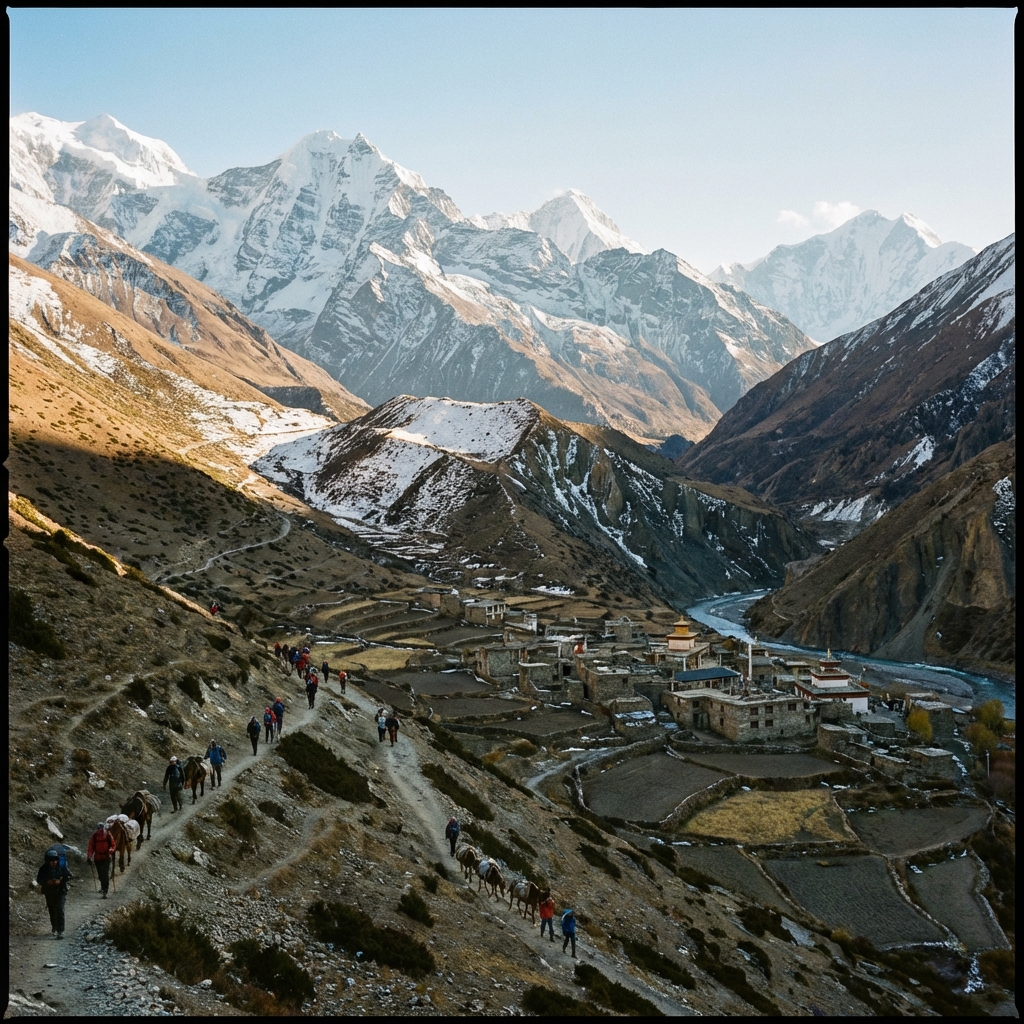
Dingboche sits in a wide valley with spectacular views of Ama Dablam, Island Peak, and the Lhotse-Nuptse wall. You're now entering the high Himalaya.
Accommodation: Teahouse in Dingboche
Day 6: Acclimatization Day in Dingboche (4,410m)
Duration: 3-4 hours for acclimatization hike Elevation: Hike to Nangkartshang Hill (5,083m), return to sleep at 4,410m
Second critical acclimatization day. The hike to Nangkartshang Hill provides superb views and pushes you above 5,000m for the first time—ideal preparation for the higher camps ahead.
Alternatively, hike toward Chukhung to preview the Island Peak approach. Listen to your body and communicate with your guide about any altitude symptoms.
Accommodation: Teahouse in Dingboche
Day 7: Dingboche to Chukhung (4,730m)
Duration: 3-4 hours Elevation Gain: +320m
Short but spectacular day to Chukhung, the last permanent settlement before Island Peak. The trail follows the Imja Valley with Island Peak's summit pyramid visible ahead.
Chukhung is a small collection of lodges catering primarily to climbers. Rest, check gear, and receive a briefing on the climbing plan. This is your last night in relative comfort.
Accommodation: Teahouse in Chukhung
Day 8: Chukhung to Island Peak Base Camp (5,087m)
Duration: 3-4 hours Elevation Gain: +357m
Trek across moraines and the Imja Glacier to Island Peak Base Camp. The terrain becomes increasingly rugged, with the final approach requiring boulder-hopping and careful navigation.
Base Camp is a collection of tents on rocky ground at the foot of Island Peak's southwest ridge. Settle into tents, receive detailed briefing on the climb, review technical skills, and rest.
Accommodation: Tent at Base Camp
Day 9: Base Camp to High Camp (5,600m) and Technical Training
Duration: 3-4 hours climbing Elevation Gain: +513m
Morning technical training session covering crampon technique, fixed rope ascent, and rope team travel. Afternoon climb to High Camp on a rocky shoulder of the mountain.
High Camp offers limited flat ground; tents are perched on small platforms. The views are extraordinary, but conditions are harsh. Early dinner and attempt to sleep before the 1-2am wake-up call.
Accommodation: Tent at High Camp
Day 10: Summit Day - Island Peak (6,189m) and Descent to Chukhung
Duration: 10-14 hours total Elevation: +589m to summit, then -1,459m to Chukhung
The day you've trained for. Wake around 1-2am, depart by 2-3am. Climb through the darkness using headlamps, navigating the technical crux sections before dawn. Summit by 6-9am for clear views. Descend all the way to Chukhung, celebrating your achievement.
This is an extremely demanding day requiring everything you've prepared. Full details in the Summit Day section below.
Accommodation: Teahouse in Chukhung
Day 11: Rest Day in Chukhung or Trek to Dingboche
Duration: Rest or 3-4 hours Elevation Change: 0 or -320m
Well-deserved rest day or easy trek to Dingboche, depending on energy levels and itinerary flexibility. Most climbers are exhausted and appreciate the recovery time in Chukhung.
Accommodation: Teahouse in Chukhung or Dingboche
Day 12: Trek to Tengboche (3,860m)
Duration: 5-6 hours Elevation Loss: -870m (from Chukhung) or -550m (from Dingboche)
Begin the return journey, descending through familiar terrain with new appreciation for the landscape. The lower altitude feels remarkably easy after your summit experience.
Accommodation: Teahouse in Tengboche
Day 13: Tengboche to Namche Bazaar (3,440m)
Duration: 4-5 hours Elevation Loss: -420m
Continue descent to Namche Bazaar. Final opportunities for gear shopping, souvenir hunting, and farewell meals in the Khumbu's capital.
Accommodation: Teahouse in Namche Bazaar
Day 14: Namche Bazaar to Lukla (2,840m)
Duration: 6-7 hours Elevation Loss: -600m
Long final trekking day combining the descent from Namche and the trek to Lukla. The trail is largely downhill but covers significant distance. Arrive in Lukla for celebration and final team dinner.
Accommodation: Teahouse in Lukla
Day 15: Fly Lukla to Kathmandu
Duration: 25-minute flight (when weather permits)
Early morning flight back to Kathmandu, weather permitting. Lukla flights are notorious for delays due to weather—this is why Day 16 exists as a buffer.
Accommodation: Hotel in Kathmandu
Day 16: Buffer Day / Departure
This day exists specifically to account for Lukla flight delays, which occur frequently. If your flight operated smoothly on Day 15, use this day for Kathmandu sightseeing, gear shopping, or relaxation.
Lukla Flight Delays
Lukla flights cancel or delay frequently due to weather conditions. Never book an international departure within 48 hours of your scheduled return flight from Lukla. The buffer day built into this itinerary provides protection, but delays of 2-3 days are not uncommon during peak season or bad weather periods.
Summit Day: What to Expect
Summit day on Island Peak is the culmination of your preparation and the most demanding day of the expedition. Understanding what awaits helps you prepare mentally and physically.
Timeline
1:00-2:00 AM: Wake-up call at High Camp. The cold is intense—temperatures typically range from -15°C to -25°C. Force yourself to eat breakfast (hot drinks, porridge, biscuits) even if appetite is low.
2:00-3:00 AM: Final preparations. Layer up completely (you'll be cold at rest but will warm while climbing). Double-check crampons, harness, headlamp, and personal gear. Fill water bottles with warm water.
3:00 AM: Depart High Camp. Begin climbing by headlamp in the darkness. The first section traverses rocky terrain mixed with snow patches to reach the glacier.
4:00-5:00 AM: Reach the crampon point. Strap on crampons and rope up for glacier travel. Cross the Imja Glacier, navigating around crevasses under your guide's direction.
5:00-6:00 AM: Reach the base of the headwall. The 45-50 degree snow/ice slope rises above you, fixed ropes visible snaking up the face. This is where the real climbing begins.
6:00-8:00 AM: Ascend the headwall using jumar technique on fixed ropes. This 200-300m section is physically and technically demanding. The angle eases as you approach the summit ridge.
7:00-9:00 AM: Summit ridge traverse. The knife-edge ridge leading to the true summit is exposed and requires careful footwork. Fixed ropes provide security, but concentration is essential.
6:00-9:00 AM: Summit! Arrive at the small summit area of Island Peak (6,189m). Clear weather reveals one of the Himalaya's greatest panoramas: Everest, Lhotse, Makalu, Cho Oyu, Ama Dablam, and countless other giants.
Time on summit: typically 15-30 minutes maximum. Take photos, absorb the views, but don't linger—descent is equally challenging.
9:00-11:00 AM: Descend the summit ridge and headwall. Rappelling or down-climbing on fixed ropes requires concentration despite fatigue.
11:00 AM-2:00 PM: Cross the glacier and return to High Camp. Briefly rest, pack tents, then continue descent.
2:00-5:00 PM: Descend to Base Camp, then continue to Chukhung. Total elevation loss of 1,459m. Arrive exhausted but elated.
Technical Challenges
The Headwall: The 45-50 degree snow/ice slope is the technical crux. Using a jumar ascender efficiently while tired at altitude requires practice. Fixed ropes ensure safety, but the climbing is genuine.
The Summit Ridge: A knife-edge ridge with significant exposure on both sides. Width varies from 1-2 meters in places. Fixed ropes provide security, but mental focus is crucial. The ridge can be corniced in places.
Crevasse Navigation: The Imja Glacier has numerous crevasses, some hidden under snow bridges. Roped travel and following your guide exactly are essential.
Cold and Wind: Pre-dawn temperatures regularly reach -20°C, and wind chill can push effective temperatures much lower. The summit ridge is fully exposed to wind. Proper layering and protecting extremities are critical.
Why Climbers Don't Summit
Understanding common causes of summit failure helps you prepare:
Altitude Sickness: Despite acclimatization, some climbers experience significant AMS symptoms at High Camp or during the climb. Severe symptoms mandate descent.
Physical Exhaustion: Poor fitness preparation results in climbers too exhausted to continue, particularly on the demanding headwall section.
Technical Difficulty: Climbers uncomfortable with crampon technique or fixed rope ascent may move too slowly to summit within safe timeframes.
Weather: High winds, heavy snowfall, or poor visibility can force turnarounds for safety. Weather windows are critical.
Turnaround Times: Guides enforce strict turnaround times (typically 9-10 AM). If you haven't reached the summit by this time, you must descend regardless of proximity—afternoon weather deterioration makes late descents dangerous.
Cold Injuries: Frostbite risk is real. Climbers with inadequate clothing or poor circulation may need to descend to prevent serious cold injury.
Pro Tip
The difference between summit success and failure often comes down to the first 2-3 hours. Climbers who can't get out of their sleeping bags, who fumble with crampons, or who struggle in the initial darkness often lose the time margin that would have allowed them to summit. Prepare your gear meticulously the night before, practice putting on crampons in the dark, and commit to starting strong.
Cost Breakdown: What Island Peak Really Costs
Understanding the full cost of an Island Peak expedition helps you budget accurately and compare agency offerings.
Permit Fees (2026 Rates)
Nepal Mountaineering Association (NMA) Peak Permit:
- Autumn Season (September-November): $350 per person
- Spring Season (March-May): $350 per person
- Winter Season (December-February): $250 per person
- Summer Season (June-August): $125 per person
Sagarmatha National Park Entry Fee: $30 per person
TIMS Card: $20 per person
Garbage Deposit: $250 per expedition (refundable if garbage properly disposed)
Agency Package Costs
Island Peak climbing packages vary significantly based on inclusions, group size, and service level.
Budget Packages ($2,000-$2,800):
- Larger group sizes (8-12 climbers)
- Basic teahouse accommodation
- Less experienced guides
- Minimal climbing support on summit day
- Limited inclusions (may exclude gear rental, tips, etc.)
Standard Packages ($2,800-$3,500):
- Medium group sizes (4-8 climbers)
- Good teahouse accommodation
- Experienced guides with summit experience
- 1:2 guide-to-client ratio on summit day
- Most essentials included
Premium Packages ($3,500-$4,500+):
- Small group sizes (2-4 climbers)
- Best available lodges throughout
- Highly experienced UIAGM/IFMGA certified guides
- 1:1 guide-to-client ratio option
- All inclusions, comprehensive support
- Satellite communication devices
- Enhanced safety protocols
What's Typically Included
- Airport transfers in Kathmandu
- Domestic flights Kathmandu-Lukla-Kathmandu
- All teahouse accommodation on trek
- All meals during trek (breakfast, lunch, dinner)
- Camping equipment at Base Camp and High Camp
- Group climbing equipment (ropes, etc.)
- Experienced climbing guide and assistant guides
- Porters for equipment transport
- All permits and fees
- Sagarmatha National Park entry fee
- TIMS card
- First aid kit and oxygen for emergencies
What's Typically NOT Included
- International flights to Nepal
- Nepal visa fee
- Travel insurance (required)
- Personal climbing gear (or rental)
- Personal trekking gear
- Meals in Kathmandu
- Extra nights due to flight delays
- Hot showers on trek ($2-5 each)
- Charging electronic devices ($2-$7 per charge)
- Alcoholic and soft drinks
- Tips for guides, porters, and staff
- Personal expenses and souvenirs
- Emergency evacuation costs (covered by insurance)
Additional Costs to Budget
Gear Rental in Kathmandu:
- Mountaineering boots: $120-$280 for expedition
- Crampons: $30-50
- Ice axe: $20-30
- Harness: $15-25
- Down suit: $80-120
- Full package: $150-250
Tips (Recommended):
- Lead climbing guide: $150-200
- Assistant guides: $100-150 each
- Porters: $50-80 each
- Cook/kitchen staff: $50-80 each
Contingency Fund:
- Extra nights in Kathmandu: $50-100/night
- Emergency expenses: $200-500
- Hot showers, charging, extras: $100-150
Total Budget Estimate
| Category | Budget | Standard | Premium |
|---|---|---|---|
| Agency Package | $2,000-$2,800 | $2,800-$3,500 | $3,500-$4,500 |
| Gear Rental | $150-250 | $150-250 | $0-150 |
| Tips | $300-400 | $350-500 | $400-600 |
| Contingency | $200-300 | $300-400 | $400-500 |
| Total | $2,650-$3,750 | $3,600-$4,650 | $4,300-$5,750 |
Note: Does not include international flights or Nepal visa
Price vs. Value
The cheapest expedition is rarely the best value. Key differentiators include guide experience and certification, guide-to-client ratios on summit day, accommodation quality, safety protocols, and group size. An extra $500-1,000 spent on a higher-quality expedition often translates to better summit chances and a safer, more enjoyable experience.
Best Season for Island Peak
Island Peak has two primary climbing seasons, each with distinct characteristics.
Autumn Season (October-November)
Peak Months: Late October to mid-November
Advantages:
- Most stable weather conditions
- Clear, crisp visibility for views
- Post-monsoon conditions mean established snow/ice routes
- Busiest season means maximum infrastructure support
- Warm daytime temperatures at lower elevations
Disadvantages:
- Coldest summit temperatures (can reach -30°C with wind chill)
- Most crowded period
- Higher permit and agency costs
- Potential queues on fixed ropes
- Higher lodge prices
Weather Expectations:
- Daytime temperatures: 10-15°C at lower elevations, -5 to -15°C at High Camp
- Nighttime temperatures: -5°C at lodges, -15 to -25°C at High Camp
- Generally clear skies with occasional afternoon clouds
- Low precipitation
- Potential high winds at altitude
Spring Season (April-May)
Peak Months: Mid-April to mid-May
Advantages:
- Warmer temperatures overall
- Rhododendron blooms enhance trek scenery
- Pre-monsoon stability after April 15
- Slightly less crowded than autumn
- More snow coverage (aesthetically beautiful)
Disadvantages:
- Less predictable weather
- More afternoon cloud buildup
- Fresh snow can complicate route conditions
- Higher avalanche risk early in season
- Haze can reduce visibility
Weather Expectations:
- Daytime temperatures: 15-20°C at lower elevations, 0 to -10°C at High Camp
- Nighttime temperatures: 5°C at lodges, -10 to -20°C at High Camp
- Increasing cloud cover in afternoons
- Potential for precipitation
- Generally moderate winds
Off-Season Climbing
Winter (December-February):
- Possible but extremely cold (summit temperatures below -30°C)
- Very few other climbers
- Reduced lodge services
- Discounted permits
- Only for experienced cold-weather mountaineers
Summer/Monsoon (June-September):
- Not recommended due to precipitation, poor visibility, and avalanche risk
- Heavily discounted permits but dangerous conditions
- Very few successful climbs
Pro Tip
The optimal window within autumn season is the last week of October through the first two weeks of November. This period typically offers the best combination of stable weather, established routes, and manageable crowds. In spring, target the first two weeks of May for similar conditions.
Choosing the Right Agency
Selecting the right expedition operator significantly impacts your safety, summit chances, and overall experience.
Essential Criteria
Registration and Licensing:
- Licensed by the Nepal Tourism Board
- Member of the Nepal Mountaineering Association
- Member of TAAN (Trekking Agencies' Association of Nepal)
- Proper insurance coverage for staff and clients
Guide Qualifications:
- Experienced climbing guides with Island Peak summits
- Preferably UIAGM/IFMGA certified guides (international standard)
- First aid and wilderness medicine training
- Fluent English communication
Safety Protocols:
- Clear altitude sickness protocols and monitoring
- Emergency evacuation procedures
- Satellite communication devices
- Supplemental oxygen for emergencies
- Comprehensive first aid capabilities
Climbing Support:
- Favorable guide-to-client ratios (1:2 or better on summit day)
- Fixed rope installation and maintenance
- Adequate support staff for logistics
- Quality climbing equipment
Questions to Ask Agencies
- What is the guide-to-client ratio on summit day?
- Are your climbing guides certified? What are their qualifications?
- How many times have your guides summited Island Peak?
- What happens if weather prevents summit attempt?
- What altitude sickness protocols do you follow?
- Do you carry emergency oxygen and communication devices?
- What is included/not included in your package price?
- What is your summit success rate?
- Do you provide pre-climb technical training?
- What is your cancellation and refund policy?
Red Flags to Avoid
- Unusually low prices (often indicate compromised safety)
- Vague answers about guide qualifications
- No clear altitude sickness protocols
- Large group sizes (more than 8-10 climbers)
- Limited communication responsiveness
- No physical office in Nepal
- No verifiable reviews or references
- Pressure tactics or unrealistic promises
- No clear cancellation policy
Recommended Agency Types
Large Established Operators:
- More resources and backup options
- Consistent quality across expeditions
- Higher prices but comprehensive service
- Examples: Adventure Consultants, Himalayan Experience
Reputable Local Agencies:
- Often better value
- Strong local knowledge
- Personal service
- Verify credentials carefully
- Check reviews extensively
Boutique/Premium Operators:
- Highest guide-to-client ratios
- Most experienced guides
- Maximum flexibility
- Premium pricing
Island Peak vs. Mera Peak: How They Compare
Mera Peak (6,476m) is Island Peak's main competitor for climbers seeking a first 6,000m peak. Understanding the differences helps you choose the right objective.
Comparison Overview
| Factor | Island Peak (6,189m) | Mera Peak (6,476m) |
|---|---|---|
| Elevation | 6,189m | 6,476m |
| Technical Difficulty | PD+ (more technical) | PD (less technical) |
| Physical Difficulty | Moderate-High | High (longer approach) |
| Duration | 16-18 days | 18-21 days |
| Summit Day | 10-14 hours, technical | 8-12 hours, straightforward |
| Fixed Ropes | Yes, extensive | Minimal |
| Crampon Skills Needed | Advanced | Basic |
| Trek Scenery | Everest region (spectacular) | Remote Hinku Valley (wild) |
| Crowds | Moderate-High | Low |
| Cost | $2,500-$4,500 | $2,800-$5,000 |
| Success Rate | 60-75% | 70-85% |
Choose Island Peak If You:
- Want technical climbing experience
- Prefer the famous Everest trek approach
- Have limited time (16-18 days vs. 18-21)
- Want to develop rope and crampon skills
- Enjoy the energy of popular trails
- Plan future technical climbing objectives
Choose Mera Peak If You:
- Prioritize summit success over technical challenge
- Want the highest trekking peak in Nepal
- Prefer remote, uncrowded trails
- Have limited technical experience
- Enjoy wilderness solitude
- Have the extra days required
Combining Both Peaks
Some climbers combine Island Peak and Mera Peak in a single expedition (the "Mera-Island Peak Traverse"). This 21-25 day itinerary offers extraordinary value for those with sufficient time and fitness, crossing the Amphu Laptsa Pass between the two peaks.
Success Rates and Safety Considerations
Understanding success rates and safety factors helps set realistic expectations.
Success Rate Statistics
Overall Success Rate: 60-75% depending on season and conditions
Factors Affecting Success Rate:
- Weather conditions: 20-25% of failures
- Altitude sickness: 25-30% of failures
- Physical exhaustion: 15-20% of failures
- Technical difficulty: 10-15% of failures
- Turnaround time enforcement: 10-15% of failures
How to Maximize Your Chances:
- Train rigorously for 3-6 months
- Acclimatize properly (don't rush the trek)
- Choose a reputable agency with experienced guides
- Be honest about symptoms and limitations
- Travel in optimal weather windows
- Start summit day strong and maintain pace
Safety Considerations
Altitude Sickness (AMS): The primary risk on Island Peak. Symptoms include headache, nausea, fatigue, and loss of appetite. Severe forms (HACE, HAPE) are life-threatening. Key prevention: gradual ascent, proper acclimatization, and immediate descent if symptoms worsen.
Cold Injury: Frostbite and hypothermia risks are real, particularly on summit day. Proper layering, extremity protection, and recognizing early symptoms are essential.
Falls: Technical terrain creates fall risk. Fixed ropes, proper technique, and concentration minimize danger, but the consequence of an unroped fall is severe.
Crevasse Falls: The Imja Glacier has crevasses, some hidden. Roped travel and following your guide's exact path are mandatory.
Weather: Rapid weather changes can create dangerous conditions. Guides monitor forecasts and make critical decisions about climb timing.
Emergency Protocols
Quality agencies maintain:
- Satellite phone or radio communication
- Emergency oxygen supply
- First aid equipment and trained personnel
- Helicopter evacuation protocols
- Insurance verification for all clients
Travel Insurance is Mandatory
Island Peak climbing requires travel insurance with helicopter rescue coverage up to at least 6,500m and comprehensive medical coverage. Verify your policy specifically covers mountaineering activities and helicopter evacuation from altitude. Most standard travel policies do not cover climbing activities. Obtain appropriate coverage before departure.
Frequently Asked Questions
Conclusion: Is Island Peak Right for You?
Island Peak offers an extraordinary introduction to Himalayan mountaineering—a genuine climbing achievement that rewards proper preparation with one of the world's great summit experiences. Standing atop Imja Tse, surrounded by the giants of the Khumbu, you'll understand why this peak has launched so many mountaineering careers.
But Island Peak demands respect. This is not a simple extension of the Everest Base Camp trek. It requires technical skills, serious physical fitness, proper acclimatization, and the mental fortitude to push through challenging conditions. Climbers who underestimate these demands often find themselves turning back, frustrated and unfulfilled.
If you're ready to invest 3-6 months in proper training, book with a reputable agency, take the time to acclimatize properly, and approach the mountain with appropriate humility and preparation, Island Peak can be yours. The summit is achievable for dedicated, fit individuals with the right support—and the memory of standing there, breathless in both senses of the word, will stay with you forever.
Your first 6,000-meter summit awaits. Prepare well, choose your partners wisely, and embrace the challenge. The mountain will take care of the rest.