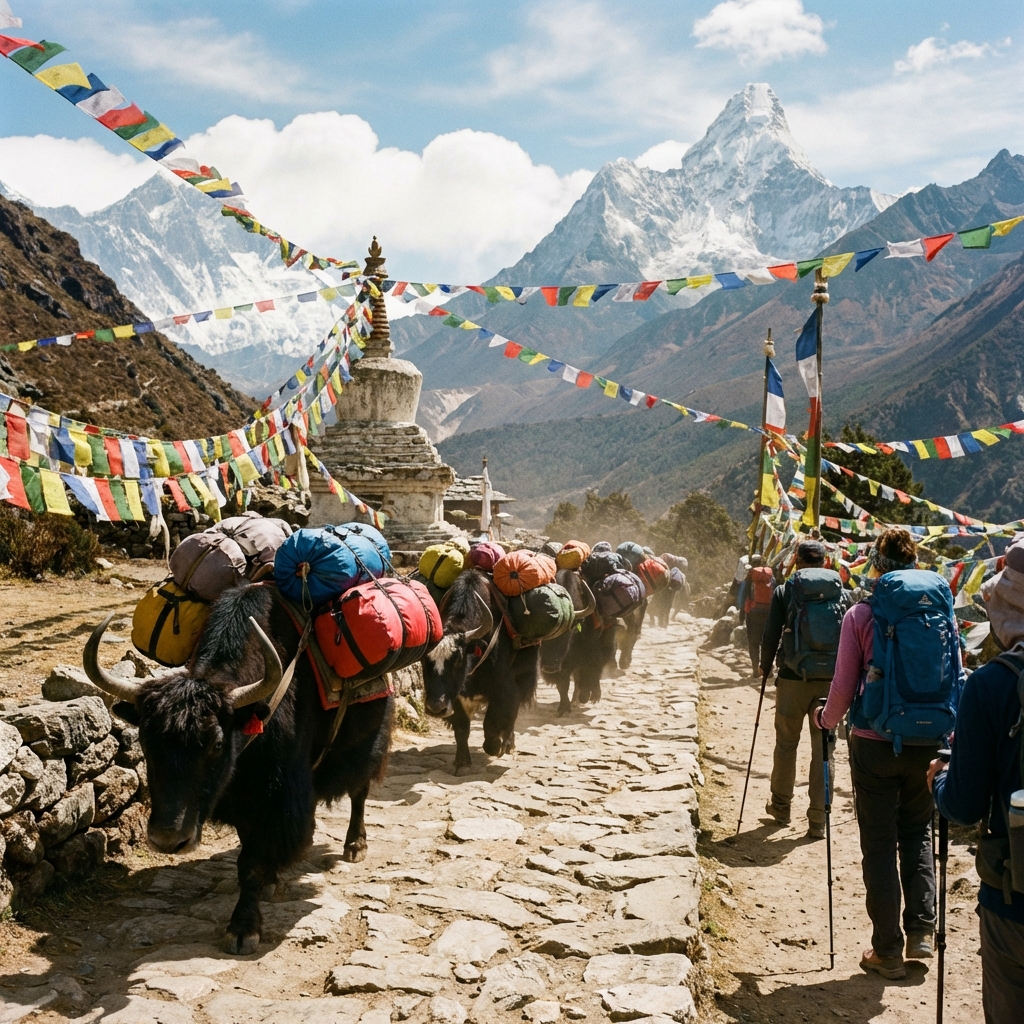
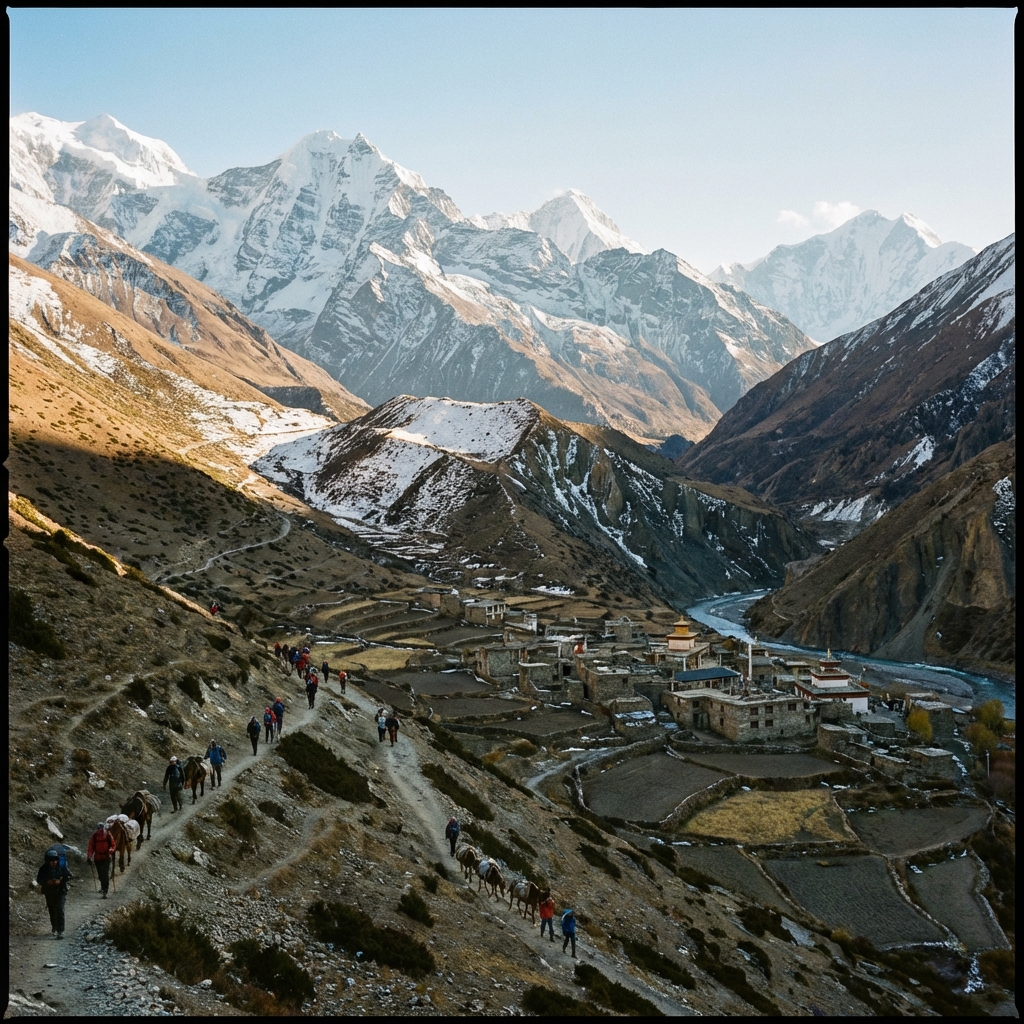
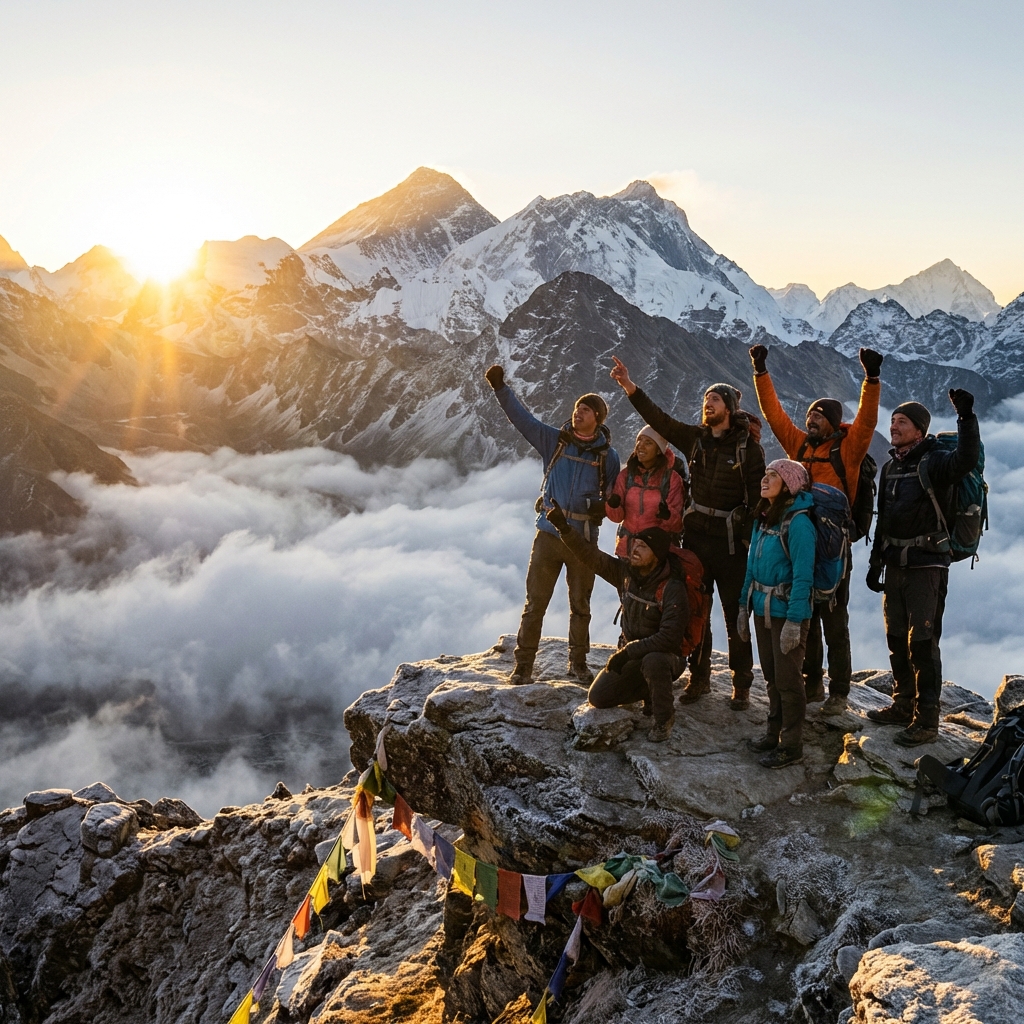
Nepal offers the world's most concentrated collection of high-altitude trekking routes, and for those with the time, fitness, and ambition, combining multiple treks into extended multi-week adventures creates experiences that transcend typical Himalayan journeys. These combination treks transform your Nepal visit from a vacation into an expedition-style adventure that fundamentally changes how you experience the mountains.
This comprehensive guide covers everything you need to plan extended trekking adventures in Nepal: proven combination itineraries from 3 to 6 weeks, logistics for connecting different trekking regions, acclimatization strategies for sustained high-altitude exposure, realistic budget planning, and the physical preparation required for these demanding journeys.
The essential truth about multi-week treks: These extended adventures aren't simply about adding more days—they create a different relationship with the mountains. You move from being a visitor to becoming, temporarily, a resident of the high Himalaya. Your body adapts, your mind settles, and the mountains reveal depths that short treks never expose.
Quick Facts: Multi-Week Trekking Overview
EBC+Gokyo, Annapurna Circuit+ABC, Langtang+Helambu
Three Passes, EBC+Island Peak, Full Annapurna
Great Himalaya Trail, Manaslu+Annapurna, Multi-Peak
October-November, March-May
$2,000-8,000+ depending on combination
High to Very High
Multiple permits required for different regions
Mandatory for most combinations
Why Combine Treks? The Case for Extended Adventures
The Acclimatization Advantage
Single treks in Nepal often end just as your body reaches peak altitude adaptation. After 12-14 days, your cardiovascular system, hemoglobin levels, and breathing efficiency have optimized for high altitude—and then you descend and fly home. Multi-week combinations capitalize on this hard-won acclimatization.
The physiological reality: After 2-3 weeks at altitude, your body operates significantly more efficiently than during the first week. Red blood cell production has increased, your breathing patterns have adapted, and you can perform physical tasks that would have been impossible during initial acclimatization. This means your second and third treks feel easier than your first, despite potentially being more challenging on paper.
Deeper Cultural Immersion
Extended time in Nepal's mountain communities reveals cultural depths invisible to two-week visitors. You begin recognizing faces in villages, understanding local rhythms, picking up Nepali phrases naturally, and experiencing festivals and daily life rather than just passing through.
What changes after three weeks:
- Tea house owners remember your preferences
- You understand the economics of mountain life
- Local guides share stories they don't tell short-term visitors
- You witness the full moon, weather cycles, and seasonal changes
- The mountains become familiar friends rather than distant spectacles
Value for International Travel
For trekkers traveling from distant countries—North America, Europe, Australia—the significant investment in international flights, visas, and travel time becomes more worthwhile when spread across 3-6 weeks rather than 2. The cost-per-day of your Nepal adventure drops substantially with extended trips.
Cost efficiency calculation:
- International flights: $1,200-2,500 regardless of trip length
- Nepal visa: $125 for 90 days (same as 30-day multiple entry)
- Travel insurance: Marginal increase for longer trips
- Result: 4-week trip costs roughly 1.4x a 2-week trip, not 2x
The Transformation Factor
There's something that happens to trekkers around the three-week mark that shorter trips never deliver. The transformation is difficult to articulate but universally reported: a mental clarity, a recalibration of priorities, a sense of accomplishment that requires sustained effort to achieve.
The Three-Week Threshold
Experienced trekkers consistently report that around day 18-21, something shifts. The daily rhythm of trekking becomes natural rather than effortful. You stop counting days until completion and start living fully in the mountain present. This mental shift is one of the greatest rewards of extended trekking—and it's impossible to achieve in shorter trips.
Quick Overview of Popular Combinations
Before diving into detailed itineraries, here's how the major combinations compare:
| Combination | Duration | Difficulty | MaxAltitude | BestFor |
|---|---|---|---|---|
| EBC + Gokyo via Cho La | 18-21 days | Challenging | 5,545m | Everest completionists |
| Annapurna Circuit + ABC | 21-25 days | Moderate-Challenging | 5,416m | Diverse experiences |
| Langtang + Gosainkunda + Helambu | 18-21 days | Moderate | 4,610m | First extended trek |
| Three Passes Trek | 18-21 days | Very Challenging | 5,535m | Adventure seekers |
| EBC + Island Peak | 20-24 days | Mountaineering | 6,189m | Peak-baggers |
| Annapurna Circuit + Tilicho + ABC | 25-30 days | Challenging | 5,416m | Complete Annapurna |
| Manaslu + Annapurna Circuit | 30-35 days | Very Challenging | 5,416m | Ultimate circuit |
| Great Himalaya Trail Sections | 35-90 days | Expedition | 5,800m+ | Serious trekkers |
3-Week Itineraries: The Sweet Spot
Three weeks represents the sweet spot for many trekkers—long enough to combine meaningful experiences, short enough to fit within generous vacation allowances or sabbaticals. These combinations deliver exceptional value and memories.
EBC + Gokyo Lakes via Cho La Pass (18-21 Days)
This combination trek delivers the complete Everest region experience, combining the iconic Everest Base Camp journey with the ethereal turquoise lakes of Gokyo Valley, connected by the dramatic Cho La Pass crossing.
Why this combination works: The EBC trek provides excellent acclimatization for the Cho La crossing and Gokyo exploration. You tackle the most technical section (Cho La) when your body is at peak adaptation. The contrasting experiences—busy EBC trail versus quieter Gokyo—create a perfect narrative arc.
Route Overview:
| Day | Route | Altitude | Hours | Notes |
|---|---|---|---|---|
| 1 | Kathmandu - Lukla - Phakding | 2,610m | 3-4 | Flight + easy trek |
| 2 | Phakding - Namche Bazaar | 3,440m | 5-6 | Steep climb to Namche |
| 3 | Namche Acclimatization | 3,440m | 4-5 | Hotel Everest View hike |
| 4 | Namche - Tengboche | 3,860m | 5-6 | Monastery visit |
| 5 | Tengboche - Dingboche | 4,410m | 5-6 | Enter high valley |
| 6 | Dingboche Acclimatization | 4,410m | 4-5 | Nagarjun Hill hike |
| 7 | Dingboche - Lobuche | 4,940m | 5-6 | Memorial cairns |
| 8 | Lobuche - Gorak Shep - EBC | 5,364m | 7-8 | Base Camp day |
| 9 | Gorak Shep - Kala Patthar - Dzongla | 4,830m | 8-9 | Sunrise, long day |
| 10 | Dzongla - Buffer Day | 4,830m | - | Weather contingency |
| 11 | Dzongla - Cho La - Gokyo | 4,790m | 8-10 | Technical pass crossing |
| 12 | Gokyo Rest/Gokyo Ri | 5,357m | 4-5 | Sunrise at Gokyo Ri |
| 13 | Gokyo - Fifth Lake Excursion | 4,790m | 5-6 | Optional exploration |
| 14 | Gokyo - Dole | 4,200m | 5-6 | Descending |
| 15 | Dole - Namche | 3,440m | 6-7 | Long descent |
| 16 | Namche - Lukla | 2,860m | 6-7 | Final trekking day |
| 17 | Lukla - Kathmandu | - | - | Flight out |
| 18 | Buffer Day | - | - | Flight delay contingency |
Key Logistics:
- Permits Required: Sagarmatha National Park (NPR 3,000), Khumbu Pasang Lhamu Municipality (NPR 2,000), TIMS (NPR 1,000 with registered agency)
- Cho La Considerations: Pass may close due to weather. Build in buffer day at Dzongla. Crampons essential October-May.
- Gokyo Lakes: Numbered First through Fifth. Most visitors reach Third Lake (where village is) and optionally Fourth or Fifth.
Cho La Crossing Strategy
Always have a backup plan if Cho La is closed. The alternative is returning to Namche and taking the Gokyo Valley approach from Dole—adding 2-3 days. Communicate with guides about conditions before committing to Dzongla. Most closures last 1-3 days, so patience usually rewards.
Budget Estimate:
- Budget: $1,800-2,500
- Mid-range: $2,500-3,500
- Premium: $4,000-5,500
Annapurna Circuit + Annapurna Base Camp (21-25 Days)
This ambitious combination traverses the legendary Annapurna Circuit with its diverse landscapes and crosses Thorong La Pass, then adds the Annapurna Base Camp trek for a complete exploration of Nepal's most varied trekking region.
Why this combination works: The Circuit provides excellent high-altitude acclimatization before the ABC trek, and the contrasting experiences—arid Mustang-influenced terrain versus lush sanctuary approach—showcase the region's extraordinary diversity. You'll see more of Nepal's ecological and cultural variety than almost any other combination.
Route Overview:
| Day | Route | Altitude | Hours | Notes |
|---|---|---|---|---|
| 1 | Kathmandu - Pokhara - Chame | 2,710m | 9-10 | Long drive day |
| 2 | Chame - Pisang | 3,200m | 5-6 | Pine forests |
| 3 | Pisang - Manang | 3,540m | 5-6 | Upper Pisang option |
| 4 | Manang Acclimatization | 3,540m | 4-5 | Ice Lake hike |
| 5 | Manang - Yak Kharka | 4,050m | 4-5 | Gradual gain |
| 6 | Yak Kharka - Thorong Phedi | 4,540m | 3-4 | Pre-pass camp |
| 7 | Thorong La - Muktinath | 5,416m pass | 8-10 | Major pass day |
| 8 | Muktinath - Jomsom | 2,720m | 5-6 | Dramatic descent |
| 9 | Jomsom - Pokhara | 820m | - | Flight (weather permitting) |
| 10 | Pokhara Rest Day | - | - | Recovery and preparation |
| 11 | Pokhara - Nayapul - Ghandruk | 1,940m | 5-6 | ABC trek begins |
| 12 | Ghandruk - Chomrong | 2,170m | 5-6 | Classic Gurung village |
| 13 | Chomrong - Bamboo | 2,310m | 4-5 | Stone stairs descent |
| 14 | Bamboo - Deurali | 3,230m | 4-5 | Through bamboo forest |
| 15 | Deurali - ABC | 4,130m | 4-5 | Sanctuary arrival |
| 16 | ABC - Bamboo | 2,310m | 6-7 | Long descent |
| 17 | Bamboo - Jhinu Danda | 1,780m | 4-5 | Hot springs! |
| 18 | Jhinu - Nayapul - Pokhara | 820m | 4-5 | Trek end + drive |
| 19 | Pokhara - Kathmandu | - | 7-8 | Bus or flight |
| 20 | Buffer Day | - | - | Contingency |
Key Logistics:
- Permits Required: ACAP (NPR 3,000), TIMS (NPR 2,000 with guide)
- Circuit Start: Many variations exist. Starting from Chame saves time; purists begin from Besisahar.
- Thorong La Timing: Cross early (5-6 AM departure from Phedi) for best conditions.
- Jomsom Flight: Weather-dependent. Have backup overland option ready.
- Rest Day Critical: The Pokhara rest day between treks is essential for recovery.
Thorong La to ABC Transition
The transition from 5,416m Thorong La to sea-level equivalent Pokhara, then back up to 4,130m ABC within 5-6 days is significant. Your body will partially de-acclimatize in Pokhara and Jomsom's low altitude. Take the ABC ascent steady—you're not as adapted as you think after the descent.
Budget Estimate:
- Budget: $1,500-2,200
- Mid-range: $2,200-3,200
- Premium: $3,500-5,000
Langtang + Gosainkunda + Helambu (18-21 Days)
This combination creates a grand loop through the Langtang region, incorporating the stunning Langtang Valley, sacred Gosainkunda Lakes, and the beautiful Helambu cultural corridor—all connected without returning to Kathmandu.
Why this combination works: All three areas connect naturally, allowing a continuous journey without backtracking. The route provides excellent altitude progression, diverse scenery (glaciated valleys, sacred lakes, terraced hillsides), and rich cultural experiences across Tamang and Sherpa communities. It's also more accessible than Everest or Annapurna combinations, starting directly from Kathmandu.
Route Overview:
| Day | Route | Altitude | Hours | Notes |
|---|---|---|---|---|
| 1 | Kathmandu - Syabrubesi | 1,550m | 7-8 | Scenic mountain drive |
| 2 | Syabrubesi - Lama Hotel | 2,380m | 5-6 | Entering the valley |
| 3 | Lama Hotel - Langtang Village | 3,430m | 5-6 | Yak pastures |
| 4 | Langtang - Kyanjin Gompa | 3,870m | 3-4 | Monastery, cheese factory |
| 5 | Kyanjin Acclimatization | 3,870m | 4-6 | Tserko Ri (4,984m) optional |
| 6 | Kyanjin - Langshisa Kharka | 4,084m | 4-5 | Optional extension |
| 7 | Return to Langtang Village | 3,430m | 4-5 | Back through valley |
| 8 | Langtang - Thulo Syabru | 2,210m | 6-7 | Descending |
| 9 | Thulo Syabru - Sing Gompa | 3,330m | 5-6 | Toward Gosainkunda |
| 10 | Sing Gompa - Gosainkunda | 4,380m | 4-5 | Sacred lakes arrival |
| 11 | Gosainkunda - Laurebina La - Ghopte | 4,610m pass | 6-7 | High pass crossing |
| 12 | Ghopte - Kutumsang | 2,470m | 5-6 | Helambu begins |
| 13 | Kutumsang - Chisapani | 2,215m | 5-6 | Ridge walking |
| 14 | Chisapani - Sundarijal | 1,460m | 4-5 | Trek conclusion |
| 15 | Sundarijal - Kathmandu | - | 1-2 | Short drive to city |
| 16 | Buffer Day | - | - | Contingency |
Key Logistics:
- Permits Required: Langtang National Park (NPR 3,000), TIMS (NPR 2,000 with guide)
- Langtang Earthquake Recovery: The valley was devastated in 2015 but has rebuilt beautifully. Trekking supports ongoing recovery.
- Gosainkunda Timing: The sacred lakes are pilgrimage destinations during Janai Purnima (August). Consider timing for cultural experience.
- Helambu Exit: Sundarijal is on Kathmandu's Ring Road—you can take a taxi directly to Thamel.
Why It's Great for First Extended Trek:
- Maximum altitude (4,610m) is more moderate than Everest or Annapurna combinations
- Continuous route without flight connections or long drives between sections
- Close to Kathmandu for easier logistics
- Excellent tea house infrastructure throughout
- Less crowded than Everest/Annapurna regions
Budget Estimate:
- Budget: $1,200-1,800
- Mid-range: $1,800-2,500
- Premium: $3,000-4,000
4-Week Itineraries: Full Immersion
Four weeks allows for the most challenging combinations and provides time for proper acclimatization, rest days, and weather contingencies. These itineraries deliver transformative experiences.
Three Passes Trek Complete (18-21 Days Trekking + Travel)
The legendary Three Passes Trek circumnavigates the Khumbu region, crossing Kongma La (5,535m), Cho La (5,420m), and Renjo La (5,360m)—arguably the ultimate Everest region challenge.
Why this is the ultimate Everest trek: The Three Passes route takes everything iconic about the Everest region and amplifies it. You visit both EBC and Gokyo, cross three challenging high passes, and circumnavigate the entire Khumbu. It's the definitive Everest experience for experienced trekkers.
Approximately 150 km
8,000m+ cumulative
5,535m (Kongma La)
3 high passes, glacier crossings
70-80% (weather dependent)
Counter-clockwise (most common)
Route Overview (Counter-clockwise):
| Day | Route | Altitude | Hours | Notes |
|---|---|---|---|---|
| 1 | Kathmandu - Lukla - Phakding | 2,610m | 3-4 | Flight + easy trek |
| 2 | Phakding - Namche Bazaar | 3,440m | 5-6 | Steep climb |
| 3 | Namche Acclimatization | 3,440m | 4-5 | Explore Namche |
| 4 | Namche - Tengboche | 3,860m | 5-6 | Monastery |
| 5 | Tengboche - Dingboche | 4,410m | 5-6 | Valley views |
| 6 | Dingboche - Chukhung | 4,730m | 4-5 | Side valley |
| 7 | Chukhung Acclimatization | 4,730m | 4-5 | Chukhung Ri optional |
| 8 | Kongma La - Lobuche | 5,535m pass | 8-10 | First pass, hardest |
| 9 | Lobuche - Gorak Shep - EBC | 5,364m | 7-8 | Base Camp! |
| 10 | Kala Patthar - Dzongla | 4,830m | 7-8 | Sunrise, traverse |
| 11 | Dzongla Buffer Day | 4,830m | - | Weather contingency |
| 12 | Cho La - Gokyo | 5,420m pass | 8-10 | Second pass, glacier |
| 13 | Gokyo - Gokyo Ri | 5,357m | 4-5 | Sunrise viewpoint |
| 14 | Gokyo Rest/Fifth Lake | 4,790m | 5-6 | Optional exploration |
| 15 | Renjo La - Lungden | 5,360m pass | 7-8 | Third pass! |
| 16 | Lungden - Thame | 3,820m | 5-6 | Sherpa village |
| 17 | Thame - Namche | 3,440m | 4-5 | Familiar territory |
| 18 | Namche - Lukla | 2,860m | 6-7 | Final descent |
| 19 | Lukla - Kathmandu | - | - | Flight out |
| 20-21 | Buffer Days | - | - | Flight contingency |
Critical Planning Notes:
- Pass Order: Counter-clockwise (Kongma-Cho-Renjo) tackles the hardest pass (Kongma La) when you're freshest but least acclimatized. Clockwise reverses this trade-off.
- Kongma La: The most challenging—steep, exposed, requires scrambling. Many trekkers skip it and cross only Cho La and Renjo La.
- Weather Windows: Each pass requires a clear weather day. Budget 3-4 buffer days total for potential closures.
- Fitness Requirement: This is significantly harder than standard EBC trek. Train extensively.
Three Passes Commitment Level
The Three Passes Trek has approximately 20-30% abandonment rate, primarily due to altitude sickness, injury, or underestimating difficulty. Honest self-assessment is essential. If you struggle significantly on day 8 (Kongma La), consider whether continuing to two more passes is wise. There's no shame in completing a modified route.
Budget Estimate:
- Budget: $2,500-3,500 (very tight)
- Mid-range: $3,500-5,000
- Premium: $5,500-8,000
EBC + Island Peak Climbing (20-24 Days)
This combination adds genuine mountaineering to the EBC trek, with an ascent of Island Peak (Imja Tse, 6,189m)—Nepal's most popular trekking peak and an achievable first 6,000m summit.
Why add Island Peak: For trekkers curious about mountaineering, Island Peak provides an accessible introduction without requiring extensive technical skills. The climb uses the same acclimatization as EBC, and the summit delivers views that even Kala Patthar can't match.
6,189m (20,305 ft)
PD (Peu Difficile) - Basic mountaineering
2-3 days from Chukhung
Crampon technique, fixed rope ascent
65-75% (weather/fitness dependent)
$250 for climbing permit
Route Overview:
| Day | Route | Altitude | Hours | Notes |
|---|---|---|---|---|
| 1-9 | Standard EBC Trek | Various | - | As detailed above |
| 10 | Gorak Shep - Dingboche | 4,410m | 5-6 | Return and rest |
| 11 | Dingboche - Chukhung | 4,730m | 4-5 | Island Peak base |
| 12 | Chukhung Rest/Training | 4,730m | 3-4 | Crampon practice |
| 13 | Chukhung - Island Peak BC | 5,087m | 4-5 | Base camp |
| 14 | BC - High Camp | 5,600m | 3-4 | Preparation |
| 15 | Summit Day - Chukhung | 6,189m | 10-14 | Summit + descent |
| 16 | Chukhung - Tengboche | 3,860m | 6-7 | Long descent |
| 17 | Tengboche - Namche | 3,440m | 5-6 | Continuing down |
| 18 | Namche - Lukla | 2,860m | 6-7 | Final trek day |
| 19 | Lukla - Kathmandu | - | - | Flight |
| 20-21 | Buffer Days | - | - | Contingency |
Island Peak Technical Requirements:
- Skills: Basic crampon use, ascending fixed ropes with jumar, glacier travel
- Gear: Mountaineering boots, crampons, harness, helmet, jumar, ice axe (usually provided by agency)
- Training: Most agencies include a crampon and rope training session at Chukhung
- Guide Ratio: Typically 1 guide per 2-3 climbers
Who Should Consider This:
- Trekkers interested in mountaineering but without technical experience
- Those who want to test themselves beyond trekking
- Anyone curious about the expedition climbing world
- Fit trekkers seeking a genuine summit achievement
Island Peak Agency Selection
Choose an agency with strong climbing credentials, not just trekking experience. Ask about guide certifications (UIAGM or equivalent), summit success rates, and client-to-guide ratios. The difference between a professional climbing operation and a trekking agency attempting peaks is significant and safety-critical.
Budget Estimate:
- Basic climbing package: $3,500-4,500
- Mid-range with better equipment: $4,500-6,000
- Premium (lower ratios, better gear): $6,500-9,000
Annapurna Circuit + Tilicho Lake + ABC (25-30 Days)
The ultimate Annapurna experience combines the complete Circuit with a side trip to Tilicho Lake (the world's highest large lake at 4,919m) and follows with the Annapurna Base Camp sanctuary—a comprehensive exploration of Nepal's most diverse trekking region.
Why this is the complete Annapurna: No other combination captures the full range of Annapurna's offerings. You experience sub-tropical lowlands, alpine pastures, the high desert of Mustang, the sacred lake of Tilicho, the dramatic Thorong La crossing, and the intimate amphitheater of ABC. It's Annapurna in its entirety.
Route Overview:
| Day | Route | Altitude | Hours | Notes |
|---|---|---|---|---|
| 1 | Kathmandu - Pokhara | 820m | 7-8 | Bus or flight |
| 2 | Pokhara - Bhulbhule | 840m | 5-6 | Jeep to trailhead |
| 3 | Bhulbhule - Jagat | 1,300m | 6-7 | River valley |
| 4 | Jagat - Dharapani | 1,960m | 5-6 | Entering Manang |
| 5 | Dharapani - Chame | 2,710m | 5-6 | Apple orchards |
| 6 | Chame - Upper Pisang | 3,300m | 5-6 | High route option |
| 7 | Upper Pisang - Manang | 3,540m | 5-6 | Spectacular views |
| 8 | Manang Acclimatization | 3,540m | 4-5 | Ice Lake option |
| 9 | Manang - Khangsar | 3,734m | 4-5 | Tilicho route |
| 10 | Khangsar - Tilicho Base Camp | 4,150m | 4-5 | Approaching lake |
| 11 | Tilicho Lake - Khangsar | 4,919m | 8-10 | Lake visit + return |
| 12 | Khangsar - Yak Kharka | 4,050m | 5-6 | Rejoin main circuit |
| 13 | Yak Kharka - Thorong Phedi | 4,540m | 3-4 | Pre-pass camp |
| 14 | Thorong La - Muktinath | 5,416m pass | 8-10 | The big pass |
| 15 | Muktinath - Jomsom | 2,720m | 5-6 | Dramatic descent |
| 16 | Jomsom - Pokhara | 820m | - | Flight |
| 17 | Pokhara Rest Day | - | - | Recovery essential |
| 18 | Pokhara - Nayapul - Ghorepani | 2,860m | 6-7 | ABC begins |
| 19 | Ghorepani - Poon Hill - Tadapani | 2,630m | 6-7 | Sunrise viewpoint |
| 20 | Tadapani - Chomrong | 2,170m | 5-6 | Stone stairs |
| 21 | Chomrong - Himalaya Hotel | 2,920m | 5-6 | Sanctuary approach |
| 22 | Himalaya Hotel - ABC | 4,130m | 5-6 | Sanctuary arrival |
| 23 | ABC - Bamboo | 2,310m | 6-7 | Long descent |
| 24 | Bamboo - Jhinu - Nayapul | 1,070m | 6-7 | Hot springs option |
| 25 | Nayapul - Pokhara | 820m | 2-3 | Trek complete |
| 26 | Pokhara - Kathmandu | - | 7-8 | Return |
| 27-28 | Buffer Days | - | - | Contingency |
Key Logistics:
- Tilicho Lake Detour: Adds 2-3 days to standard Circuit. The lake at 4,919m is spectacular but requires proper acclimatization. Don't rush this section.
- Jomsom Flight Risk: Weather cancellations common. Have backup plan for overland return (bus to Pokhara via Beni, adds 10-12 hours).
- ABC Start Point: You can begin from Nayapul (classic) or Phedi (shorter). Ghorepani/Poon Hill route is more scenic.
The Pokhara Rest Day Isn't Optional
After descending from Thorong La (5,416m) to Jomsom (2,720m) and then Pokhara (820m), your body will be confused. The massive pressure change, reintroduction to oxygen-rich air, and accumulated fatigue require genuine rest. Resist the temptation to start ABC immediately—a proper rest day reduces injury risk and improves ABC enjoyment.
Budget Estimate:
- Budget: $2,000-3,000
- Mid-range: $3,000-4,500
- Premium: $5,000-7,000
5-6 Week Itineraries: Epic Journeys
These extended itineraries require significant time commitment and represent the pinnacle of Nepal trekking experiences. They're designed for sabbaticals, career breaks, or dedicated adventurers.
Great Himalaya Trail Sections (35-60 Days)
The Great Himalaya Trail (GHT) traverses the entire length of Nepal, from Kanchenjunga in the east to Humla in the west. While the complete high route takes 150+ days, section hiking allows accessible experiences of this legendary route.
Understanding the GHT: The GHT exists as two variants: the High Route (mostly above 4,000m, requiring camping and technical skills) and the Cultural Route (lower, using tea houses where available). Most multi-week trekkers choose 2-4 sections of the Cultural Route or shorter High Route segments.
Popular GHT Section Combinations:
Eastern Sections (35-45 days): Kanchenjunga BC - Makalu BC - Three Passes - Gokyo
This epic traverse connects Nepal's third and fifth highest peaks before entering the Everest region for the Three Passes circuit.
| Section | Duration | Highlights | Difficulty |
|---|---|---|---|
| Kanchenjunga BC | 18-22 days | Remote, authentic villages | Challenging |
| Makalu BC | 14-18 days | Wild valley, dramatic peaks | Very Challenging |
| Three Passes | 18-21 days | Ultimate Khumbu | Very Challenging |
Central Sections (30-40 days): Langtang - Manaslu - Annapurna
Crosses from near Kathmandu through restricted Manaslu and into the Annapurna region.
| Section | Duration | Highlights | Difficulty |
|---|---|---|---|
| Langtang + Gosainkunda | 14-16 days | Sacred lakes, recovery valley | Moderate |
| Manaslu Circuit | 1No minimum (solo OK with guide)-16 days | Remote, traditional villages | Challenging |
| Annapurna Circuit | 12-18 days | Diverse terrain, Thorong La | Challenging |
GHT Logistics Reality
GHT section hiking requires camping equipment for remote sections (Kanchenjunga, Makalu, far western regions) and experienced guides with local knowledge. Don't underestimate the logistical complexity—food caches, porter arrangements, and permit timing require months of advance planning. Work with agencies specializing in GHT treks.
Budget Estimate (6-week section):
- Mid-range: $8,000-12,000 (including camping logistics)
- Premium: $15,000-25,000 (full support, emergency contingencies)
Manaslu Circuit + Annapurna Circuit (30-35 Days)
This combination connects two of Nepal's great circuits, creating an epic journey through contrasting landscapes—from the remote traditional villages of Manaslu to the diverse terrain of Annapurna.
Why this combination is special: Manaslu and Annapurna represent different faces of Nepal trekking. Manaslu remains restricted and relatively quiet, with authentic Tibetan-influenced culture. Annapurna offers more infrastructure and ecological diversity. Together, they provide the most comprehensive circuit trekking experience in Nepal.
Route Overview:
Phase 1: Manaslu Circuit (14-16 Days)
| Day | Route | Altitude | Notes |
|---|---|---|---|
| 1 | Kathmandu - Soti Khola | 730m | Long drive (8-9 hours) |
| 2 | Soti Khola - Machha Khola | 930m | River valley |
| 3 | Machha Khola - Jagat | 1,410m | Entering restricted area |
| 4 | Jagat - Deng | 1,860m | Tibetan influence begins |
| 5 | Deng - Namrung | 2,660m | Beautiful forest |
| 6 | Namrung - Samagaon | 3,530m | Manaslu views |
| 7 | Samagaon Acclimatization | 3,530m | Birendra Lake option |
| 8 | Samagaon - Samdo | 3,875m | Tibetan culture |
| 9 | Samdo Acclimatization | 3,875m | Border area exploration |
| 10 | Samdo - Dharamsala | 4,460m | High camp |
| 11 | Larkya La - Bimthang | 5,160m pass | Major pass crossing |
| 12 | Bimthang - Tilije | 2,300m | Long descent |
| 13 | Tilije - Dharapani | 1,960m | Circuit complete |
Transition Day:
| Day | Route | Notes |
|---|---|---|
| 14 | Dharapani Rest | Recovery, permit arrangements |
Phase 2: Annapurna Circuit (14-18 Days)
| Day | Route | Altitude | Notes |
|---|---|---|---|
| 15 | Dharapani - Chame | 2,710m | Familiar territory |
| 16 | Chame - Pisang | 3,200m | Different valley |
| 17 | Pisang - Manang | 3,540m | Upper route option |
| 18 | Manang Acclimatization | 3,540m | Ice Lake |
| 19 | Manang - Tilicho BC (optional) | 4,150m | 2-day Tilicho option |
| 20 | Tilicho Lake - Yak Kharka | 4,919m/4,050m | Lake and return |
| 21 | Yak Kharka - Thorong Phedi | 4,540m | Pre-pass |
| 22 | Thorong La - Muktinath | 5,416m pass | Second major pass |
| 23 | Muktinath - Jomsom | 2,720m | Descent |
| 24 | Jomsom - Pokhara | 820m | Flight |
| 25 | Pokhara - Kathmandu | - | Return |
| 26-28 | Buffer Days | - | Flight contingencies |
Key Logistics:
- Manaslu Permit: Restricted area requiring special permit ($215/week Sept-Nov, $75 other months) plus MCAP and TIMS. Two-person minimum with licensed agency required.
- Dharapani Connection: The circuits connect at Dharapani (1,960m). This is the natural linking point and allows a rest day before beginning Annapurna.
- Double Pass Challenge: Crossing both Larkya La (5,160m) and Thorong La (5,416m) within 10-12 days is demanding. The Manaslu acclimatization helps, but don't underestimate fatigue.
Restricted Area Regulations
Manaslu requires organized trekking with a licensed agency—independent trekking is not permitted. Your agency must file your itinerary with the government, and you'll encounter checkposts verifying permits. Ensure all documentation is in order before departure from Kathmandu.
Budget Estimate:
- Mid-range: $4,500-6,500
- Premium: $7,000-10,000
EBC + Gokyo + Island Peak + Mera Peak (35-40 Days)
The ultimate Khumbu challenge combines comprehensive trekking with two trekking peaks, creating an expedition-style adventure that tests every limit.
Why attempt two peaks: For serious mountaineers-in-training, combining Island Peak (6,189m) and Mera Peak (6,476m) provides invaluable experience on contrasting terrain. Island Peak is technical but short; Mera Peak is less technical but requires glacier travel and stamina. Together, they create a comprehensive 6,000m education.
6,189m - Technical, fixed ropes
6,476m - Glacier trek, less technical
50-60% both summits
Crampon, rope, glacier travel
SNP + Island Peak + Mera Peak
Previous high altitude trekking
Route Overview:
| Phase | Days | Activity | Notes |
|---|---|---|---|
| Phase 1 | 1-9 | EBC Trek | Acclimatization |
| Phase 2 | 10-15 | Island Peak | First summit |
| Phase 3 | 16-17 | Transfer to Mera | Via Lukla-Khare |
| Phase 4 | 18-24 | Mera Approach | Crossing Zatrwa La |
| Phase 5 | 25-28 | Mera Summit | High camp + summit |
| Phase 6 | 29-32 | Descent | Via Lukla |
| Phase 7 | 33-35 | Buffer/Return | Flight contingencies |
Critical Considerations:
- Fitness Peak: Your body will reach maximum adaptation around day 20-25. Time the Mera summit attempt accordingly.
- Weather Windows: Both peaks require clear weather. Having two summit objectives increases chances of at least one success.
- Fatigue Management: After Island Peak, take genuine rest days before beginning Mera approach. The cumulative fatigue is significant.
- Technical Preparation: Train extensively before departure. Both peaks require competent crampon and rope work.
Budget Estimate:
- Quality expedition package: $8,000-12,000
- Premium (better gear, lower ratios): $12,000-18,000
Logistics Between Treks
Rest Days: The Non-Negotiable
Between major trek components, rest days aren't optional—they're essential for both physical recovery and mental reset. Here's what rest days accomplish:
Physical benefits:
- Muscle recovery from sustained effort
- Reduction of inflammation in joints
- Restoration of glycogen stores
- Immune system recovery
- Sleep quality improvement
Practical benefits:
- Laundry and gear maintenance
- Permit arrangements for next section
- Communication with family/work
- Food variety (recovering from dal bhat monotony)
- Medical check if needed
Recommended rest duration by combination:
- Same region continuation (e.g., EBC to Gokyo): 0 days (continuous)
- Same region, different trek (e.g., Manaslu to Annapurna): 1-2 days
- Different regions (e.g., Everest to Annapurna): 2-3 days
- After major peak climb: 3-5 days
Transport Between Regions
Kathmandu Hub Model: Most combinations route through Kathmandu between treks, using the capital for rest, resupply, and transport connections.
Key transport routes:
- Kathmandu to Lukla: Daily flights ($215-200 each way), departing early morning
- Kathmandu to Pokhara: Tourist bus (6-7 hours, $10-$25 (tourist bus $15, VIP $20-25)) or flight (25 min, $215-150)
- Kathmandu to Soti Khola (Manaslu): Private jeep (8-9 hours, $150-250 per vehicle)
- Kathmandu to Syabrubesi (Langtang): Bus or jeep (7-8 hours, $20-50)
Direct connections (avoiding Kathmandu):
- Jomsom to Pokhara: Flight (20 min) or jeep/bus (10-12 hours via Beni)
- Dharapani serves both Manaslu and Annapurna circuits
- Sundarijal (Helambu end) connects directly to Kathmandu by taxi
Buffer for Lukla Flights
Lukla flights have approximately 30-40% delay rate due to weather. Always budget 2 buffer days when Lukla flights are involved. Missing an international connection due to Lukla weather is expensive and stressful. Consider helicopter backup ($400-500) if schedule is critical.
Permits: Planning Multiple Regions
Different regions require different permits. Here's the complete breakdown:
Everest Region:
- Sagarmatha National Park: NPR 3,000
- Khumbu Pasang Lhamu Municipality: NPR 2,000
- TIMS: NPR 2,000 (with licensed guide)
Annapurna Region:
- ACAP (Annapurna Conservation Area): NPR 3,000
- TIMS: NPR 2,000 (with licensed guide)
Manaslu Region:
- Manaslu Conservation Area Permit (MCAP): NPR 3,000
- Restricted Area Permit: $100/week (Sept-Nov), $75/week (other months)
- TIMS: NPR 2,000 (with licensed guide)
- Minimum 2 people with licensed agency required
Langtang Region:
- Langtang National Park: NPR 3,000
- TIMS: NPR 2,000 (with licensed guide)
Climbing Permits (in addition to trekking permits):
- Island Peak: $250
- Mera Peak: $250
- Plus agency fees for climbing support
Total permit cost for major combinations:
- EBC + Gokyo: Approximately $50
- Annapurna Circuit + ABC: Approximately $30
- Manaslu + Annapurna: Approximately $130-230 (depending on season)
- Three Passes + Peak: Approximately $300
Acclimatization Strategies for Extended Trips
The Extended Trek Advantage
Multi-week treks offer acclimatization advantages unavailable to shorter trips:
Progressive adaptation: Your body continues adapting throughout the trek. After three weeks, your hemoglobin levels, breathing efficiency, and cardiovascular performance reach near-optimal levels for altitude.
Recovery capacity: On short treks, any acclimatization problem can end your trip. On extended treks, you have time to descend, recover, and retry.
Learning your body: Extended exposure teaches you to recognize your personal altitude signals—early warning signs that short trips don't reveal.
Strategic Altitude Progression
Week 1 (Days 1-7): Foundation Building
- Don't exceed 3,500m sleeping altitude
- Include 1-2 rest days
- Hydration focus (3-4 liters daily)
- No rushing—slower than you think necessary
Week 2 (Days 8-14): Altitude Pushing
- Can sleep up to 4,500m
- "Climb high, sleep low" actively
- Include acclimatization days before major passes
- Monitor symptoms carefully
Week 3+ (Days 15+): Peak Performance
- Body approaching maximum adaptation
- Can handle repeated high-altitude days
- Still respect altitude—never complacent
- Watch for accumulated fatigue masking symptoms
Recognizing Trouble
Even well-acclimatized trekkers can develop problems. Warning signs include:
Mild AMS (continue with caution):
- Mild headache (responds to ibuprofen)
- Slight appetite loss
- Disturbed sleep
- Mild fatigue
Moderate AMS (stop ascending, consider descent):
- Persistent headache despite medication
- Nausea or vomiting
- Significant fatigue
- Poor balance or coordination
Severe AMS (descend immediately):
- Confusion or altered mental state
- Ataxia (unable to walk straight line)
- Breathlessness at rest
- Coughing blood or pink sputum (HAPE)
The Accumulated Fatigue Trap
On extended treks, accumulated fatigue can mask altitude symptoms. You may attribute headaches and lethargy to tiredness rather than AMS. After three weeks, maintain vigilance—your body is working hard even when symptoms seem manageable. Never push through warning signs with the justification that "you're just tired."
Cost Planning for Multi-Week Adventures
Budget Categories
Daily on-trail costs:
- Budget: $30-50/day (basic tea houses, dal bhat, no extras)
- Mid-range: $50-80/day (decent lodges, varied meals, some extras)
- Premium: $80-150/day (best available lodges, all extras, comfort focus)
Fixed costs (regardless of duration):
- International flights: $1,200-2,500
- Nepal visa (90-day): $125
- Travel insurance (adventure coverage): $200-400
- Pre/post trek accommodation: $200-500
- Gear (if not owned): $300-1,000
Per-region costs:
- Permits: $120-$280 per region
- Guide (per day): $25-50
- Porter (per day): $20-35
- Internal flights (Lukla, Jomsom): $100-400 each
Sample Budget Breakdowns
3-Week Trek (EBC + Gokyo): Mid-Range Budget
| Category | Cost |
|---|---|
| International flights | $1,800 |
| Visa (90-day) | $125 |
| Travel insurance | $250 |
| Kathmandu hotels (4 nights) | $200 |
| Lukla flights | $215 |
| Permits | $50 |
| Guide (18 days @ $35) | $630 |
| Porter (18 days @ $25) | $450 |
| On-trail costs (18 days @ $60) | $1,080 |
| Tips (guide + porter) | $300 |
| Contingency (10%) | $530 |
| Total | $5,815 |
4-Week Trek (Manaslu + Annapurna): Mid-Range Budget
| Category | Cost |
|---|---|
| International flights | $1,800 |
| Visa (90-day) | $125 |
| Travel insurance | $300 |
| Kathmandu/Pokhara hotels (6 nights) | $300 |
| Internal transport | $300 |
| Permits (including Manaslu restricted) | $230 |
| Guide (28 days @ $40) | $1,120 |
| Porter (28 days @ $28) | $784 |
| On-trail costs (28 days @ $55) | $1,540 |
| Tips | $400 |
| Contingency (10%) | $690 |
| Total | $7,589 |
5-Week Trek with Peak (EBC + Island Peak + Mera Peak): Premium Budget
| Category | Cost |
|---|---|
| International flights | $2,200 |
| Visa (90-day) | $125 |
| Travel insurance (mountaineering) | $500 |
| Kathmandu hotels (5 nights) | $300 |
| Lukla flights (x2) | $215 |
| Permits (trekking + peaks) | $550 |
| Climbing package (guide, equipment, support) | $4,500 |
| On-trail costs (35 days @ $70) | $2,450 |
| Tips (guide, climbing sherpa, porters) | $700 |
| Contingency (15%) | $1,820 |
| Total | $13,945 |
The Contingency Fund
Extended treks have more potential for unexpected costs: weather delays, equipment replacement, medical needs, itinerary changes. Budget 10-15% contingency for multi-week trips. This fund often goes unused, but when needed, it prevents stressful decisions about whether you can afford to continue or handle an emergency.
Physical Preparation for Long Treks
Training Timeline
6 months before:
- Begin cardio base building (running, cycling, swimming)
- Start strength training focusing on legs and core
- Establish consistent exercise habit (4-5 days/week)
3-4 months before:
- Add hiking with loaded pack (start 10kg, build to 15kg)
- Include hill training or stair climbing
- Begin longer weekend hikes (6-8 hours)
- Increase overall training volume
1-2 months before:
- Peak training intensity
- Include back-to-back hiking days
- Practice with actual trekking gear
- Simulate altitude with breath restriction exercises
2 weeks before:
- Reduce volume, maintain intensity
- Focus on rest and recovery
- Address any minor injuries
- Mental preparation
Specific Training Focus
Cardiovascular endurance: The primary demand of extended trekking is sustained cardiovascular output at reduced oxygen levels. Training focus:
- Long slow runs (2+ hours at conversational pace)
- High-altitude simulation (mask training, altitude tent if available)
- Interval training for peak capacity
Lower body strength: Descending is often harder than climbing. Training focus:
- Squats and lunges (high repetition)
- Step-ups with weight
- Eccentric training (controlled lowering)
- Calf raises for ankle stability
Core stability: Balance on uneven terrain requires core engagement. Training focus:
- Planks and side planks
- Single-leg exercises
- Stability ball work
- Loaded carries
Back-to-back training: The ability to perform day after day is crucial. Include:
- Consecutive day hiking (at least once monthly)
- Recovery walks between hard sessions
- Listening to your body's fatigue signals
Recovery During Trek
Daily recovery practices:
- Stretching before bed (15-20 minutes)
- Elevation of legs against wall
- Self-massage (bring a tennis ball)
- Adequate hydration (3-4 liters daily)
- Sleep prioritization (8+ hours when possible)
Weekly recovery practices:
- Full rest day every 5-7 days
- Epsom salt foot soaks (if available)
- Gentle yoga or stretching sessions
- Reduced food intake if stomach issues
When to Book and Flexibility Needed
Booking Timeline
6-12 months before:
- Research and select combinations
- Choose trekking agency (especially for restricted areas)
- Book international flights
- Purchase travel insurance
3-6 months before:
- Finalize itinerary with agency
- Arrange any required permits (especially Manaslu)
- Book significant internal flights (Lukla, Jomsom)
- Begin gear acquisition
1-3 months before:
- Confirm all arrangements
- Final gear testing
- Medical checkup
- Communicate itinerary to emergency contacts
2 weeks before:
- Final permit verification
- Gear packing
- Currency exchange arrangements
- Leave detailed itinerary with family
Built-in Flexibility
Extended treks require flexibility that short trips don't. Build these into your planning:
Weather contingencies:
- 2-3 days buffer for each major pass
- 2 days buffer for each internal flight (Lukla, Jomsom)
- Alternative routes identified in advance
Health contingencies:
- Rest day capacity every 5-7 days
- Knowledge of descent options from every point
- Emergency evacuation insurance in place
Itinerary flexibility:
- Don't book post-trek activities too tightly
- International departure with 3+ day buffer after planned trek end
- Willingness to modify objectives based on conditions
The Flexibility Mindset
The most successful extended trekkers adopt a different relationship with time. Rather than counting down days until completion, they remain present-focused with awareness that the mountains dictate pace. Weather delays become rest opportunities. Itinerary changes become new adventures. This mindset shift is as important as physical preparation.
Frequently Asked Questions
Related Resources
Final Thoughts: Embracing the Extended Journey
Multi-week trekking in Nepal isn't simply about covering more ground or checking more destinations off a list. These extended journeys create a different category of experience—one that changes how you relate to the mountains, to walking, and often to yourself.
The transformation happens somewhere around week three. The daily rhythm of waking, packing, walking, arriving becomes as natural as breathing. Your mind, freed from the constant stimulation of modern life, settles into a clarity that shorter trips rarely achieve. The mountains, initially overwhelming in their scale, become familiar companions.
This isn't to romanticize what is genuinely difficult physical and mental work. Multi-week treks demand serious preparation, significant resources, and sustained commitment. They involve discomfort, uncertainty, and occasional frustration. Weather doesn't cooperate, bodies complain, and the finish line remains distant for most of the journey.
But for those drawn to extended mountain time, the rewards are proportional to the investment. You'll return home fundamentally changed—fitter, certainly, but also carrying something less tangible. A recalibration of what matters. A relationship with mountains that feels like friendship rather than tourism. Memories that deepen rather than fade with time.
The Himalaya offers what no other mountain range can: the infrastructure to support extended lodge-to-lodge travel through the world's highest terrain, combined with cultural richness that makes every valley distinct. Nepal's combination of peaks, passes, and welcoming communities creates the world's premier destination for multi-week trekking.
If you have the time, the fitness, and the desire, these extended adventures await. The mountains are patient. They'll be there when you're ready.
This guide is maintained by the HimalayanNepal editorial team with data from verified agencies, Nepal Tourism Board, and extensive field research. Last updated February 2026. For corrections or suggestions, contact our editorial team.