Mera Peak stands apart in Nepal's climbing landscape. At 6,476 meters (21,247 feet), it holds the distinction of being the highest trekking peak in Nepal -- a title that simultaneously attracts and intimidates aspiring mountaineers. Yet the reality of Mera Peak is more nuanced than its altitude suggests. This is not a technically demanding climb. There is no headwall to scale, no exposed knife-edge ridge to traverse, no vertical ice to conquer. What Mera Peak demands instead is something equally formidable: the physical endurance to trek for days through one of Nepal's most remote valleys, the mental fortitude to push through exhaustion at extreme altitude, and the discipline to respect a mountain that punishes the unprepared.
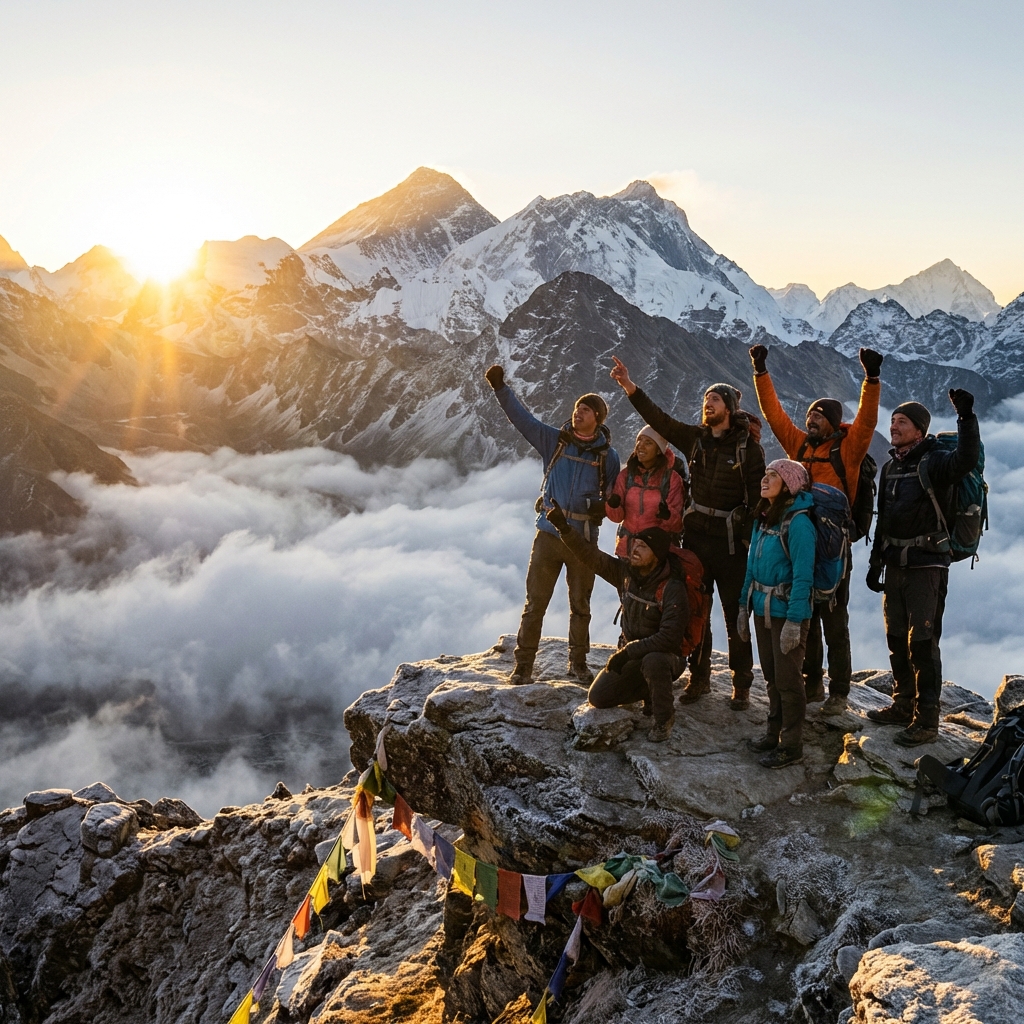
The reward for those who reach the summit is extraordinary. From Mera's broad, glaciated top, you stand in the presence of five of the world's six highest mountains -- Everest, Kangchenjunga, Lhotse, Makalu, and Cho Oyu -- their immense flanks arrayed across the horizon in a panorama that no photograph can adequately capture. It is, by many accounts, the finest summit view achievable without advanced mountaineering skills.
This guide covers everything you need to plan, prepare for, and successfully climb Mera Peak. From the remote approach through the Hinku Valley to the glacier crossing on summit day, from the 16-week training program to the detailed equipment checklist, from permit logistics to choosing the right expedition operator -- consider this your comprehensive manual for Nepal's highest trekking peak.
6,476m (21,247 ft)
PD (Peu Difficile) - Alpine Grade
18-20 days from Kathmandu
6-9 hours round trip from high camp
$350 USD (spring/autumn)
$2,500-$4,500 with agency
October-November, April-May
75-85% in good conditions
5,800m (19,029 ft)
High-altitude trekking experience, basic crampon skills
Why Climb Mera Peak?
The Ultimate Summit Panorama
The single most compelling reason to climb Mera Peak is the view from the top. Standing on the summit, you are surrounded by an amphitheater of giants:
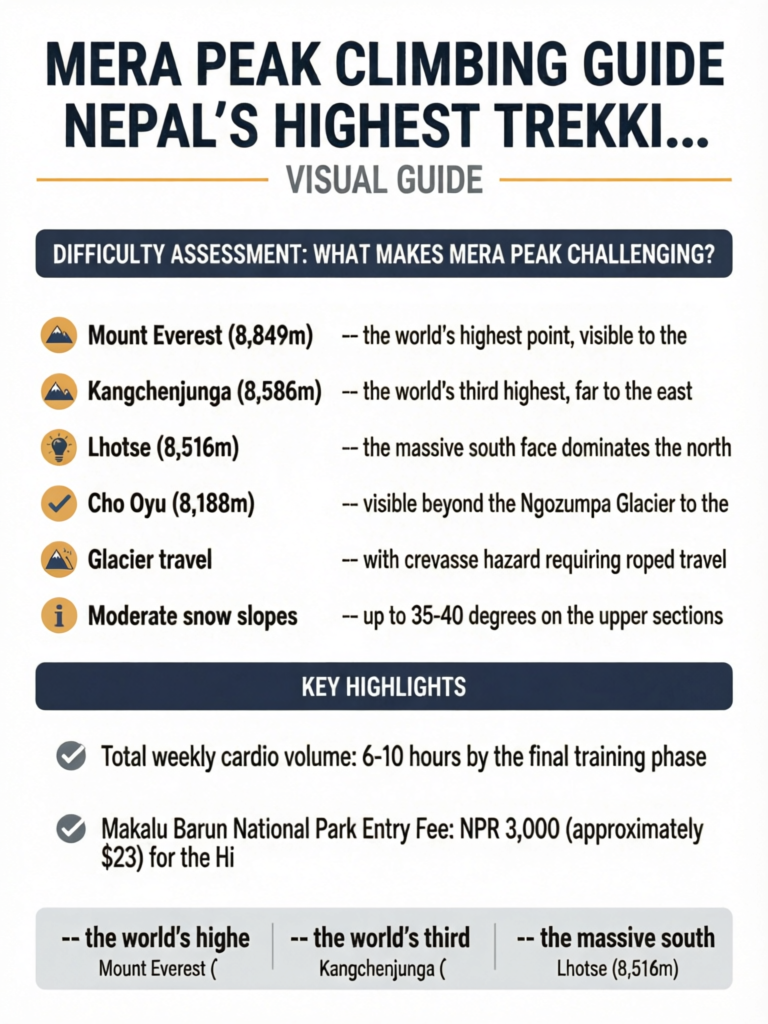
- Mount Everest (8,849m) -- the world's highest point, visible to the north
- Kangchenjunga (8,586m) -- the world's third highest, far to the east
- Lhotse (8,516m) -- the massive south face dominates the northern skyline
- Makalu (8,485m) -- the world's fifth highest, strikingly close to the northeast
- Cho Oyu (8,188m) -- visible beyond the Ngozumpa Glacier to the northwest
Five of the world's six highest peaks. No other trekking peak in Nepal offers this caliber of summit panorama. Island Peak delivers exceptional close-up views of the Khumbu giants, but Mera's additional 287 meters of altitude and more central location in the eastern Himalaya create an unmatched 360-degree experience.
Achievable Without Advanced Technical Skills
Unlike more technical objectives such as Ama Dablam or Lobuche East, Mera Peak does not require ice climbing, lead climbing, or advanced rope work. The standard route follows a glaciated slope at moderate angles, requiring only basic crampon technique and the ability to walk roped on a glacier. For fit trekkers with high-altitude experience who want to step into mountaineering, Mera Peak is perhaps the most logical first 6,000-meter summit.
The Remote Hinku Valley Approach
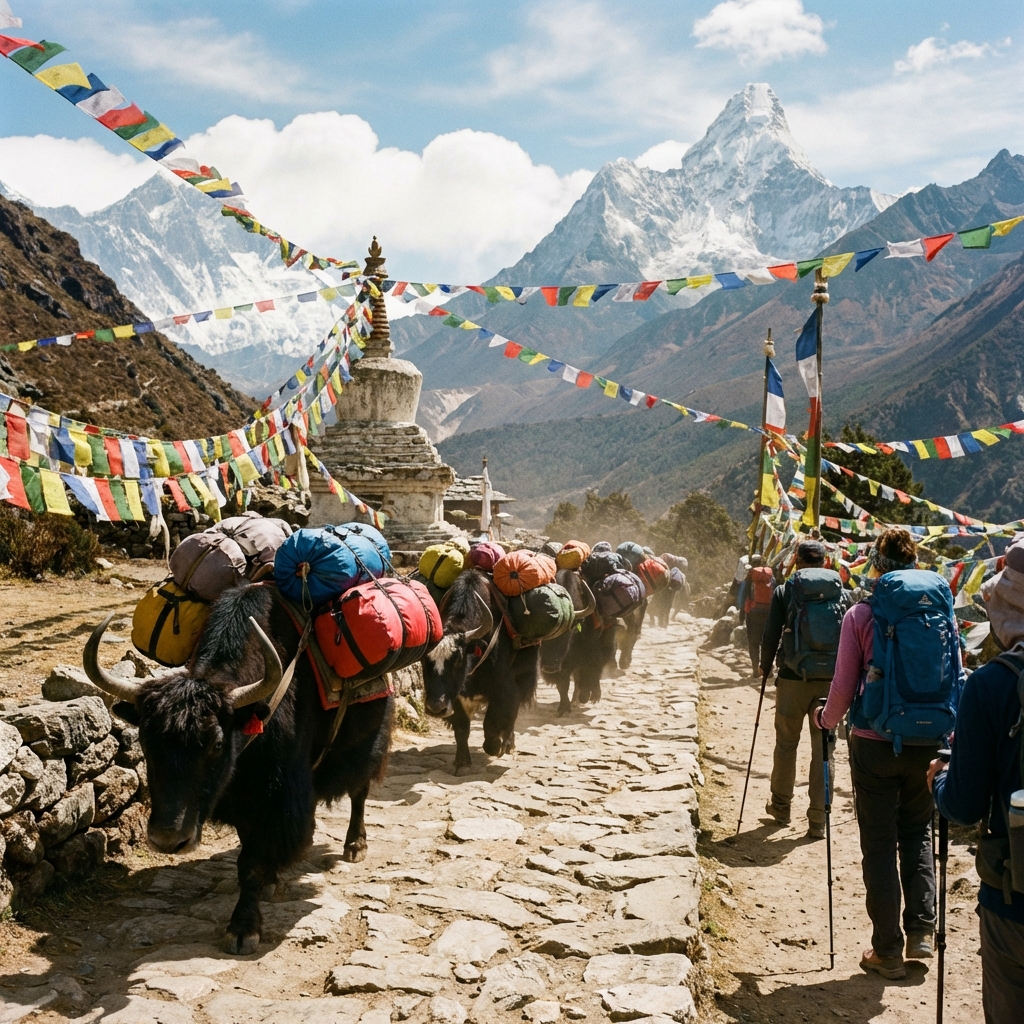
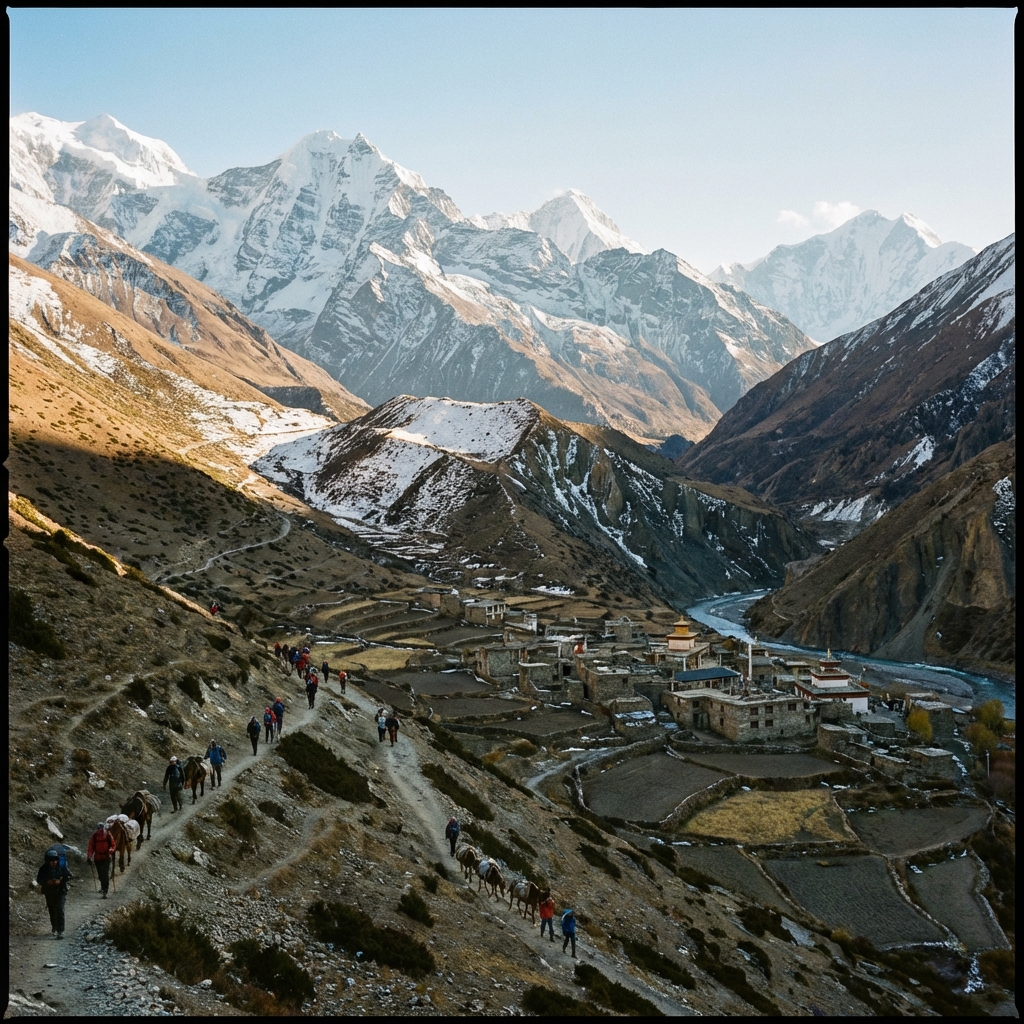
While the Everest Base Camp trail has become a highway of trekkers, the approach to Mera Peak through the Hinku Valley remains beautifully remote. You will trek through rhododendron forests, cross the 4,610-meter Zatrwa La pass, and walk through traditional Rai and Sherpa settlements that see a fraction of the traffic found in the Khumbu. The approach trek itself is a rewarding journey -- a multi-day immersion in one of Nepal's least-visited trekking corridors.
High Success Rate
With a success rate of 75-85% in good conditions, Mera Peak is one of the most reliably summitable 6,000-meter peaks in Nepal. Compare this with Island Peak's 60-75% success rate, which is lower due to its more technical summit day. Mera's non-technical nature means that weather and altitude are the primary barriers to success, not technical skill.
Pro Tip
Difficulty Assessment: What Makes Mera Peak Challenging?
Alpine Grading: PD (Peu Difficile)
Mera Peak is graded PD (Peu Difficile, or "slightly difficult") on the International French Adjectival System (IFAS) used for alpine climbing. This places it below Island Peak's PD+ rating and well below technical peaks like Ama Dablam (D+) or Lobuche East (PD+/AD-).
In practical terms, a PD grade on Mera Peak means:
- Glacier travel with crevasse hazard requiring roped travel
- Moderate snow slopes up to 35-40 degrees on the upper sections
- Basic crampon technique needed for ascending and descending snow and ice
- No vertical ice climbing -- no headwall, no ice pitch
- No exposed ridges comparable to Island Peak's summit ridge
- Route finding on glacier can be challenging in poor visibility
The Real Challenge: Altitude and Endurance
Make no mistake -- Mera Peak is a serious undertaking. The difficulty lies not in technical climbing but in the cumulative physical demands:
Altitude: At 6,476m, you are well into the zone where supplemental oxygen is sometimes used on expedition peaks. The air contains roughly 47% of the oxygen available at sea level. Every step requires deliberate effort. Thinking becomes slower. Sleep is disrupted. Appetite vanishes. These are the realities of extreme altitude that no amount of technical skill can overcome -- only proper acclimatization and physical conditioning.
Duration: The 18-20 day itinerary includes 5-7 days of strenuous trekking just to reach the climbing area. By the time you begin the actual ascent, you have already been walking for a week. Summit day then demands 6-9 hours of climbing at extreme altitude, often starting at 2:00 or 3:00 AM in temperatures as low as -20 to -30 degrees Celsius.
Remoteness: The Hinku Valley approach means you are far from major rescue infrastructure. While helicopter evacuation is possible, response times are longer than in the Khumbu. The nearest significant settlement with medical resources is Lukla, several days' walk away.
Altitude Is the Primary Risk
More Mera Peak attempts fail due to altitude-related issues than any other factor. Acute Mountain Sickness (AMS), High Altitude Pulmonary Edema (HAPE), and High Altitude Cerebral Edema (HACE) are real risks above 5,000m. Read our complete altitude sickness prevention guide before committing to this climb. If you have never been above 5,000m, consider a preparatory trek first.
What Mera Peak Does NOT Require
It is equally important to understand what Mera Peak does not demand:
- No ice climbing (vertical or near-vertical ice)
- No lead climbing or placing protection
- No rappelling (standard route)
- No jumar/ascender use on fixed lines (unlike Island Peak)
- No rock climbing
- No bivouacking (proper camps with tents)
- No previous mountaineering summit (though high-altitude trekking is essential)
Technical Requirements
Skills You Must Have
Basic Crampon Technique: You will wear crampons for the glacier approach and the entire summit push. You must be comfortable walking flat-footed (French technique) on moderate angles and using front-pointing on steeper sections. Most expedition operators include a crampon training session at base camp or high camp.
Roped Glacier Travel: The Mera Glacier has crevasses, some visible and some hidden beneath snow bridges. You will travel roped to your climbing guide and must understand basic rope team protocols: maintaining tension, stopping if a team member falls, self-arrest with an ice axe.
Ice Axe Self-Arrest: A critical safety skill. If you slip on the glacier slope, you must be able to arrest your fall using your ice axe before gaining speed. Practice this before your expedition.
Fixed Line Use: While Mera Peak does not require jumar ascending like Island Peak, some sections may have fixed lines installed. You should know how to clip into a fixed rope with a carabiner and sling for security.
Skills That Are Helpful But Not Essential
- Prior experience above 5,000m (strongly recommended)
- Snow camping experience
- Navigation in whiteout conditions (your guide handles this, but understanding helps)
- Basic knot tying (figure-eight, clove hitch)
Pre-Trip Training With Your Agency
Reputable agencies include 1-2 days of skills training at Khare (base camp area) or at the edge of the Mera Glacier. This covers crampon fitting and walking, rope team protocols, ice axe arrest practice, and basic glacier safety. However, arriving with zero crampon experience is risky -- practice beforehand if at all possible.
Pro Tip
Fitness and Training Requirements
The 12-16 Week Training Program
Mera Peak is not a climb you can wing. A dedicated training program of 12-16 weeks is the minimum for someone with a reasonable base fitness level. If you are starting from a sedentary baseline, allow 20-24 weeks.
Cardiovascular Endurance (Priority #1)
This is the single most important fitness component for Mera Peak. Your body's ability to deliver oxygen to working muscles at altitude depends directly on your cardiovascular conditioning at sea level.
Weekly Targets:
- 4-5 cardio sessions per week
- 2-3 sessions of sustained low-intensity effort (Zone 2 heart rate, 60-70% max HR) for 60-90 minutes
- 1-2 sessions of higher-intensity interval work (hill repeats, stair climbing, cycling intervals)
- Total weekly cardio volume: 6-10 hours by the final training phase
Best Activities:
- Hiking with a loaded pack (10-15kg) on hilly terrain -- the gold standard
- Stair climbing (stadium stairs, StairMaster, tall buildings)
- Trail running
- Cycling (especially hilly routes)
- Swimming (for lung capacity and whole-body endurance)
Leg Strength (Priority #2)
Days of trekking on uneven terrain followed by steep glacier climbing demands exceptional leg strength and endurance.
Key Exercises:
- Squats and weighted squats (3 sets of 12-15, progressing to heavier weight)
- Lunges and walking lunges (3 sets of 12 each leg)
- Step-ups with weight on a 40-50cm box (3 sets of 15 each leg)
- Single-leg deadlifts (balance and hamstring strength)
- Calf raises (critical for crampon work)
- Wall sits (endurance under sustained load)
Core and Upper Body
Core Work: Planks, side planks, Russian twists, dead bugs -- 15-20 minutes, 3 times per week. Core stability is essential for balance on glaciers and during roped travel.
Upper Body: Push-ups, pull-ups or lat pulldowns, rows, shoulder press. You do not need bodybuilder-level strength, but you must be able to manage your ice axe, manage ropes, and self-arrest effectively.
Training Schedule Overview
| Week | Cardio Volume | Strength | Special Focus |
|---|---|---|---|
| 1-4 | 4-6 hrs/week | 2x/week full body | Build base, assess fitness |
| 5-8 | 6-8 hrs/week | 3x/week legs focus | Introduce loaded hiking (8-10kg) |
| 9-12 | 8-10 hrs/week | 3x/week | Long hikes (4-6 hrs) with 12-15kg pack |
| 13-16 | 8-10 hrs/week | 2x/week maintenance | Back-to-back long days, altitude simulation if available |
Altitude Experience
If you have never been above 4,000 meters, strongly consider a preparatory trek before attempting Mera Peak. Excellent options include:
- Everest Base Camp (5,364m) -- the classic Khumbu acclimatization experience
- Annapurna Base Camp (4,130m) -- shorter but provides altitude exposure
- Langtang Valley with Tserko Ri (4,984m) -- good altitude test
- Kilimanjaro (5,895m) -- excellent altitude gauge before attempting a 6,000m peak
For a comprehensive fitness preparation plan, see our EBC training guide and adapt it for the longer, higher demands of Mera Peak.
Standard Itinerary: 18-20 Days
The Mera Peak expedition follows a trek-and-climb format: roughly 8-10 days of approach trekking through the Hinku Valley, followed by 2-3 days of climbing, and 5-7 days for the return journey.
Day-by-Day Itinerary
Day 1: Kathmandu to Lukla (2,860m), Trek to Paiya (2,730m) Fly from Kathmandu to Lukla on the legendary mountain airstrip. Unlike EBC trekkers who head north toward Namche, Mera Peak climbers turn south/southeast toward the Hinku Valley. Trek approximately 3-4 hours to the village of Paiya (also spelled Chutanga in some itineraries). This first day is deliberately short to allow adjustment after the flight.
Day 2: Paiya to Pangom (2,846m) A moderate trekking day through forests and small settlements. The trail descends to the Kari Khola before climbing to Pangom. Duration: 5-6 hours.
Day 3: Pangom to Ningsow (Zatrwa La approach, 3,050m) Continue ascending through rhododendron and bamboo forests. The trail gradually gains altitude as you approach the Zatrwa La pass. Duration: 5-6 hours.
Day 4: Ningsow to Zatrwa La (4,610m) to Thuli Kharka (4,300m) The first major challenge. You cross the Zatrwa La pass at 4,610 meters -- a significant altitude gain that serves as your first real test. The pass offers stunning views of Mera Peak and the Hinku Valley below. Descend to Thuli Kharka for the night. Duration: 7-8 hours.
Day 5: Thuli Kharka to Kothe (3,600m) Descend through beautiful forest into the Hinku Valley. Kothe is a small settlement with basic lodges at the valley floor. The descent is welcome relief after the previous day's exertion. Duration: 5-6 hours.
Day 6: Kothe to Tangnag (4,350m) A steady ascent up the Hinku Valley with Mera Peak increasingly visible ahead. Tangnag is a small cluster of tea houses and the last significant settlement before the climbing begins. Duration: 5-6 hours.
Day 7: Acclimatization Day at Tangnag A critical rest day. Take a short hike to higher ground (toward the Sabai Tsho glacial lake at approximately 4,800m) and return to sleep at Tangnag. This day is essential for proper acclimatization before pushing higher.
Pro Tip
Day 8: Tangnag to Khare / Mera La Base Camp (5,045m) A steep climb to the base camp area at Khare, also known as Mera La Base Camp. The trail crosses moraine and scree as the landscape transitions from alpine meadow to glacial terrain. Duration: 4-5 hours.
Day 9: Khare -- Skills Training and Acclimatization Your climbing guide conducts crampon fitting, ice axe practice, rope team protocols, and basic glacier safety instruction. You may also take a short acclimatization hike to Mera La (5,415m) and return to Khare.
Day 10: Khare to Mera La (5,415m) to High Camp (5,800m) Cross the Mera La pass and traverse the Mera Glacier to establish High Camp at approximately 5,800 meters. The glacier crossing requires roped travel and crampon use. Duration: 5-6 hours.
Day 11: Summit Day -- High Camp to Summit (6,476m) and Return to Khare The summit push begins between 2:00 AM and 4:00 AM, depending on conditions. You ascend the Mera Glacier on moderate snow slopes, navigating around crevasses by headlamp. The final summit ridge is broad and relatively gentle. Total summit time from High Camp is 4-6 hours. After summit photographs and celebration, descend to High Camp and continue down to Khare. Total day: 10-14 hours.
Day 12: Khare to Tangnag Descend from Khare to Tangnag for the night. A welcome return to lower altitude and warmer temperatures. Duration: 3-4 hours.
Days 13-17: Return Trek to Lukla Retrace the approach route through the Hinku Valley, over Zatrwa La, and back to Lukla. Most itineraries allow 5 days for the return, with comfortable daily distances.
Day 18: Lukla to Kathmandu Fly from Lukla to Kathmandu. Always allow a buffer day in case of flight cancellations due to weather -- Lukla flights are notoriously unreliable.
Weather Day Buffer
Build at least 1-2 extra days into your itinerary for weather delays. Lukla flights are cancelled frequently during poor weather, and summit attempts may need to be postponed. A 20-day itinerary provides a comfortable buffer over the minimum 18-day schedule.
Alternative Routes and Extensions
Mera Peak via Arun Valley: An alternative approach from the southeast that avoids the Zatrwa La pass crossing. Less commonly used but offers different scenery.
Mera Peak + Island Peak Crossing: The ultimate Nepal climbing expedition. After summiting Mera Peak, cross the Amphu Laptsa pass (5,845m) to Chukhung and then climb Island Peak (6,189m). This 25-30 day expedition demands exceptional fitness and is suitable for experienced climbers. The Amphu Laptsa crossing is a serious mountaineering undertaking in itself.
Mera Peak + EBC: Combine the Mera Peak climb with a trek to Everest Base Camp. After descending from Mera, trek north through the Khumbu to Gorak Shep and EBC. This adds 5-7 days to the itinerary. See our guide on multi-week trek combinations.
Equipment List
Mountaineering-Specific Gear
| Equipment | Details | Rent or Buy? |
|---|---|---|
| Mountaineering boots (B2/B3 rated) | Crampon-compatible, insulated for extreme cold | Buy (must be broken in) |
| Crampons (12-point) | Steel, semi-automatic or automatic binding | Rent in Kathmandu ($3-5/day) or bring own |
| Ice axe (55-65cm) | Standard mountaineering axe with leash | Rent in Kathmandu ($2-3/day) |
| Climbing harness | Adjustable, fits over down suit layers | Rent or bring own |
| Helmet | Climbing-rated, lightweight | Rent or bring own |
| Carabiners (2-3 locking) | HMS/pear shape for belaying and clipping | Buy |
| Slings/runners (2-3) | 120cm nylon or Dyneema | Buy |
| Ascender/jumar | For emergency fixed line use | May be provided by agency |
| Down suit or down jacket + pants | Essential for summit day at -20 to -30C | Rent in Kathmandu ($8-15/day) |
Trekking Gear
- Trekking boots (broken in, waterproof, ankle support)
- Trekking poles (adjustable, with snow baskets)
- Backpack (30-40L for summit day, 50-65L for trek if not using porters)
- Sleeping bag rated to -20C minimum (-30C preferred)
- Sleeping bag liner (silk or thermal)
- Headlamp with extra batteries (cold drains batteries rapidly)
- Trekking gaiters
Clothing System
Base Layer: Merino wool or synthetic tops and bottoms (2-3 sets) Mid Layer: Fleece jacket and/or lightweight down jacket Outer Layer: Hardshell waterproof jacket and pants (Gore-Tex or equivalent) Summit Layer: Down suit or expedition-weight down jacket + insulated pants Extremities: Liner gloves, insulated gloves, expedition mitts; warm hat, balaclava, sun hat; trekking socks (4-5 pairs), summit socks (thick wool/synthetic)
Personal Items
- Sunglasses (Category 3-4) and glacier goggles
- Sunscreen SPF 50+ and lip balm with SPF
- Water bottles (2x 1L, wide-mouth for cold conditions) or insulated hydration system
- Water purification (tablets or filter)
- Personal first aid kit
- Camera and spare batteries
- Stuff sacks and dry bags
Pro Tip
Costs Breakdown
Expedition Cost Summary
| Component | Budget | Mid-Range | Premium |
|---|---|---|---|
| Agency package (guide, permits, logistics) | $2,500-3,000 | $3,000-3,800 | $3,800-4,500+ |
| Kathmandu-Lukla flights | $215-350 | $215-350 | $180-350 |
| Travel insurance (with rescue coverage) | $150-300 | $150-300 | $150-300 |
| Gear rental (Kathmandu) | $100-200 | $50-150 | $0 (own gear) |
| Tips for guide and porters | $150-250 | $200-350 | $300-500 |
| Personal expenses (snacks, drinks, charging) | $100-200 | $150-300 | $200-400 |
| Kathmandu hotels (pre/post trek) | $50-100 | $100-200 | $200-500 |
| Total Estimated Cost | $3,230-4,400 | $3,830-5,450 | $4,830-7,050 |
What Should Be Included in Your Agency Package
A reputable Mera Peak package should include:
- Mera Peak climbing permit ($350 NMA fee)
- Sagarmatha National Park entry fee (if entering via Lukla)
- Makalu Barun National Park fee (if applicable for your route)
- Experienced climbing guide (UIAGM/IFMGA certified preferred)
- Assistant guide or high-altitude porter for summit push
- Porters for approach trek
- All meals during the trek and climb
- Tea house accommodation on approach, tents at high camps
- Group climbing equipment (ropes, snow stakes, etc.)
- Basic first aid kit and oxygen for emergencies
What Is Typically NOT Included
- International flights to Kathmandu
- Kathmandu-Lukla domestic flights ($180-350 round trip)
- Travel insurance (mandatory -- see our insurance guide)
- Personal climbing gear rental
- Tips for staff
- Alcoholic beverages, snacks, personal items
- Extra tea house charges (hot showers, charging, WiFi)
- Emergency helicopter evacuation (covered by insurance)
- Nepal visa fee ($50 for 30 days)
Always Verify Permit Inclusion
Some budget agencies advertise low prices but exclude the $350 NMA climbing permit from their quoted cost. Always confirm in writing exactly what is included before booking. The permit alone is a significant expense that can dramatically change the true cost comparison between agencies.
Permit Requirements
Nepal Mountaineering Association (NMA) Permit
Mera Peak is classified as an NMA trekking peak, which means the permit process is simpler and cheaper than for expedition peaks managed by the Ministry of Tourism.
Permit Fees (2026):
| Season | Fee (per climber) |
|---|---|
| Spring (March-May) | $350 USD |
| Autumn (September-November) | $350 USD |
| Winter (December-February) | $250 USD |
| Summer (June-August) | Not recommended |
Important: The NMA permit must be arranged through a registered Nepali trekking/expedition agency. Individual climbers cannot obtain the permit independently. Your agency handles the paperwork, but you should budget the fee into your overall costs.
Additional Permits and Fees
- Makalu Barun National Park Entry Fee: NPR 3,000 (approximately $23) for the Hinku Valley approach
- TIMS Card: Trekker's Information Management System card required for the trekking portion
- Sagarmatha National Park Fee: Only if your route enters the park boundary (primarily relevant for Mera + EBC combinations)
Is Mera Peak in a Restricted Area?
No. Unlike Upper Mustang or Manaslu, the Mera Peak approach through the Hinku Valley is not a restricted area. You do not need a special restricted area permit or minimum group size. However, the NMA climbing permit requires an agency arrangement, so fully independent climbing is not possible.
Success Rates and When They Drop
Overall Success Rate: 75-85%
Mera Peak has one of the highest success rates among Nepal's popular 6,000-meter trekking peaks. The non-technical nature of the route means that the primary obstacles are weather, altitude acclimatization, and physical fitness -- factors that can be managed with proper planning.
Success Rate by Factor:
| Factor | Impact on Success |
|---|---|
| Proper acclimatization schedule | +20% (most important factor) |
| Adequate fitness preparation | +15% |
| Good weather window | +15% |
| Experienced guide and agency | +10% |
| Prior altitude experience | +10% |
| Adequate gear and equipment | +5% |
When Success Rates Drop
- Poor acclimatization: Rushing the approach trek is the number one cause of failure. Climbers who skip acclimatization days at Tangnag and Khare summit at rates 30-40% lower than those who follow proper protocols.
- Weather: Storms can pin teams at High Camp for days. In bad seasons, summit windows may be limited to a few days out of the entire autumn or spring season.
- Physical exhaustion: The long approach trek depletes energy reserves. Climbers who arrive at High Camp already fatigued have significantly lower success rates.
- Altitude sickness: Even with proper acclimatization, some climbers simply do not perform well above 6,000m. There is a genetic component to altitude tolerance that training alone cannot overcome.
- Poor visibility and route finding: The Mera Glacier is relatively featureless in poor visibility. Whiteout conditions can make route finding extremely difficult, even for experienced guides. Teams may turn back when visibility drops below safe levels.
Best Seasons for Climbing Mera Peak
Primary Season: October-November (Autumn)
The post-monsoon autumn season is the premier time for Mera Peak. The monsoon retreats by late September, leaving behind clear skies, stable weather, and excellent visibility. Temperatures are cold but manageable, and the glacier conditions are generally good.
October: The best month overall. Clear skies, stable weather patterns, good snow coverage on the glacier, temperatures at High Camp around -15 to -25C at night. This is peak season -- expect to share the route with other teams.
November: Excellent early November. Clear and cold. Later in November, temperatures drop significantly and winds increase. By late November, conditions become harsh and some teams cancel attempts.
Secondary Season: April-May (Spring)
The pre-monsoon spring season offers warmer temperatures and longer daylight hours, but less reliable weather patterns as the monsoon approaches.
April: Warming temperatures make for more comfortable trekking and camping. The Hinku Valley approach is particularly beautiful with rhododendrons blooming at lower elevations. Weather can be less stable than October, with more cloud development in the afternoons.
May: Early May is viable, but the approaching monsoon brings increasing cloud cover and precipitation risk. Late May is generally too risky due to storm activity. Warmer temperatures at High Camp (a welcome change from the bone-chilling October nights) but softer snow conditions can slow progress.
Off-Season: December-February and June-September
Winter (December-February): Possible but demanding. Extreme cold at High Camp (-30 to -40C), limited daylight, and increased wind. Reduced permit fees ($250 instead of $350) and virtually no crowds. Only for experienced mountaineers with winter climbing experience.
Monsoon (June-September): Not recommended. Heavy precipitation, zero visibility, dangerous glacier conditions, and high avalanche risk on snow-loaded slopes.
Risks and Challenges
Crevasses on the Mera Glacier
The Mera Glacier contains crevasses, some visible and some hidden beneath snow bridges. This is the most significant objective hazard on the climb. Roped glacier travel is mandatory. Snow bridges are strongest in the early morning when temperatures are coldest, which is one reason summit pushes start before dawn.
Weather and Wind
At 6,476 meters, Mera Peak is exposed to powerful winds and rapid weather changes. Storms can develop quickly, particularly during the afternoon. High winds at the summit ridge can create dangerous conditions even when the sky appears clear. Your guide's ability to read weather patterns and make go/no-go decisions is critical.
Altitude-Related Illness
The progression from Lukla (2,860m) to Mera's summit (6,476m) -- a gain of 3,616 meters -- must be managed carefully. The standard acclimatization protocol (climb high, sleep low; no more than 300-500m altitude gain per sleeping elevation per day above 3,000m) must be followed rigorously. See our comprehensive altitude sickness guide for prevention strategies and signs and turnaround rules.
Remoteness and Evacuation
The Hinku Valley is remote. Helicopter evacuation is possible but depends on weather conditions and daylight. Response times are longer than on the standard EBC route. Carry comprehensive travel insurance with helicopter rescue coverage -- this is non-negotiable.
Cold Injuries
Frostbite is a real risk on summit day. Temperatures at High Camp and on the summit ridge can drop to -25 to -35C with wind chill. Proper extremity protection (expedition mitts, insulated boots, balaclava) is essential. Know the early signs of frostbite and do not hesitate to turn back if you lose feeling in fingers or toes.
Summit Day Turnaround Time
Establish a firm turnaround time with your guide before summit day. A common protocol is to turn back by 10:00 AM or 11:00 AM regardless of how close you are to the top. Descending in deteriorating afternoon weather or fading daylight is extremely dangerous. The mountain will always be there for another attempt.
Mera Peak vs Island Peak: Quick Comparison
If you are deciding between Nepal's two most popular trekking peaks, here is a high-level comparison. For the full detailed analysis, see our comprehensive Island Peak vs Mera Peak comparison guide.
| Factor | Mera Peak (6,476m) | Island Peak (6,189m) |
|---|---|---|
| Altitude | 6,476m -- higher | 6,189m -- lower |
| Technical difficulty | PD -- less technical | PD+ -- more technical |
| Key technical challenge | Glacier travel, altitude | Headwall, exposed ridge, fixed ropes |
| Duration | 18-20 days | 16-18 days |
| Total cost | $2,500-4,500 | $2,000-4,000 |
| Success rate | 75-85% | 60-75% |
| Approach | Hinku Valley (remote) | EBC route (popular) |
| Summit views | 360-degree panorama, 5 x 8,000m peaks | Khumbu giants close-up |
| Best for | First 6,000m peak, altitude seekers | Technical skills development |
| Combine with | Island Peak crossing, Arun Valley | EBC trek (natural extension) |
Choosing an Agency for Mera Peak
What to Look For
Mera Peak requires a climbing permit arranged through a registered agency, so choosing the right operator is not optional -- it is essential. Key factors to evaluate:
Climbing Guide Credentials: Your climbing guide should hold NMA certification at minimum. UIAGM/IFMGA certification is the gold standard. Ask specifically about your guide's Mera Peak summit experience -- how many times have they summited? Do they have experience managing altitude emergencies?
Guide-to-Client Ratio: The ideal ratio is 1 guide per 2 climbers for Mera Peak. Some budget operators use ratios of 1:4 or worse, which compromises safety on the glacier.
Safety Equipment: The agency should carry a satellite phone or GPS communicator, emergency oxygen, a comprehensive medical kit, and a detailed evacuation plan. Ask about their protocols for altitude illness and turnaround decisions.
Acclimatization Philosophy: Be wary of agencies that advertise "fast" itineraries of 15-16 days. Proper acclimatization requires 18-20 days minimum. An agency that rushes the schedule is prioritizing profit over your safety.
Client References: Ask for references from previous Mera Peak clients. Speak to them directly about their experience, especially regarding guide competence, safety management, and overall organization.
For general guidance on evaluating Nepal trekking agencies, see our comprehensive agency selection guide and the TAAN verification guide.
Pro Tip
Combining Mera Peak With Other Objectives
Mera Peak + Island Peak Crossing (25-30 Days)
The ultimate Nepal trekking peak expedition. After summiting Mera Peak, cross the challenging Amphu Laptsa pass (5,845m) to Chukhung in the Khumbu, then climb Island Peak (6,189m). This combination requires:
- Exceptional fitness (summit two 6,000m peaks with a serious pass crossing between them)
- Prior high-altitude and mountaineering experience
- Budget of $4,500-7,000+ with a premium agency
- 25-30 days minimum
- Strong weather windows for both summits and the pass
The Amphu Laptsa crossing itself is a serious mountaineering undertaking -- it is steeper and more technical than anything on either peak's standard route.
Mera Peak + Everest Base Camp (25-28 Days)
A more accessible combination. After descending from Mera Peak, trek north through the Hinku Valley and cross into the Khumbu to reach Everest Base Camp. This allows you to experience both the remote Hinku and the legendary EBC trail in a single trip. The additional altitude exposure from Mera Peak actually enhances your acclimatization for the EBC portion.
Mera Peak + Makalu Base Camp
For those seeking serious remoteness, combine Mera Peak with a trek to Makalu Base Camp in the neighboring Makalu Barun National Park. This is a 30+ day expedition through some of Nepal's most pristine and least-visited mountain terrain. See our guide on peak climbing in Nepal for more multi-objective options.
Frequently Asked Questions
How difficult is Mera Peak compared to Everest Base Camp?
Mera Peak is significantly more challenging than the Everest Base Camp trek. While EBC is a high-altitude trek with no technical climbing, Mera Peak involves glacier travel with crampons, roped climbing, altitude above 6,000m, and summit conditions that include extreme cold and potential crevasse hazard. EBC is achievable for fit beginners; Mera Peak is best suited for experienced trekkers making the transition to mountaineering.
Can I climb Mera Peak with no mountaineering experience?
Yes, with caveats. Mera Peak is considered an entry-level mountaineering objective. You do not need prior summits or advanced climbing skills. However, you absolutely need high-altitude trekking experience (having been to at least 4,500-5,000m previously), excellent physical fitness, and the willingness to learn crampon and rope skills during the pre-climb training sessions. Arriving with zero outdoor experience is not advisable.
How long does it take to climb Mera Peak?
The standard itinerary is 18-20 days from Kathmandu to Kathmandu. This includes 8-10 days of approach trekking through the Hinku Valley, 2-3 days of climbing (base camp to high camp to summit), and 5-7 days for the return trek to Lukla plus the flight to Kathmandu. Budget an extra 1-2 days for weather contingencies.
What is the success rate for Mera Peak?
The success rate ranges from 75-85% in good conditions during the primary seasons (October-November and April-May). This is higher than Island Peak's 60-75% due to Mera Peak's less technical nature. The main factors affecting success are acclimatization, weather conditions, and physical preparation.
How cold does it get on Mera Peak?
Summit day temperatures can range from -15C to -30C at High Camp (5,800m), with wind chill potentially dropping effective temperatures to -35C or colder. A down suit or heavy down jacket with insulated pants is essential. Daytime temperatures during the approach trek are mild (5-15C at lower elevations) but drop below freezing above 4,000m at night.
Do I need supplemental oxygen for Mera Peak?
No, supplemental oxygen is not standard for Mera Peak. At 6,476m, you are below the altitude where supplemental oxygen is typically used (generally above 7,000-7,500m for most climbers). However, your agency should carry emergency oxygen as a safety measure for altitude emergencies.
Can I climb Mera Peak independently with a mandatory licensed guide?
No. The NMA climbing permit for Mera Peak requires arrangement through a registered Nepali trekking/mountaineering agency. A licensed climbing guide must accompany your expedition. This is both a regulatory requirement and a safety necessity -- the glacier terrain, crevasse hazard, and remote location make unguided climbing genuinely dangerous.
Is Mera Peak harder than Island Peak?
It depends on how you define "harder." Mera Peak is higher (6,476m vs 6,189m), has a longer approach trek, and presents greater altitude challenges. However, Island Peak is more technically demanding -- it has a steep headwall, an exposed summit ridge, and requires more advanced fixed rope skills. Most climbers find Island Peak more intimidating on summit day but Mera Peak more exhausting over the full expedition duration.
What happens if I cannot summit due to weather?
Weather is the most common reason for missed summits. Your guide will monitor conditions and make the go/no-go decision. If weather prevents a summit attempt, most itineraries allow 1-2 extra days for a second attempt. If the summit is not possible within your schedule, you will still have completed a remarkable trek through the Hinku Valley. Climbing permits are not refundable, but some agencies offer partial refunds or discounted rebooking for weather-cancelled summits.
Can I do Mera Peak in winter?
Yes, but winter climbing (December-February) is significantly more demanding. Temperatures at High Camp can drop to -35C or lower, daylight hours are limited, and some tea houses on the approach route may be closed. The NMA offers a reduced winter permit fee of $250. Winter attempts should only be undertaken by experienced climbers comfortable with extreme cold conditions.
What if I experience altitude sickness during the climb?
Your guide is trained to recognize and respond to altitude illness. Mild AMS (headache, nausea, fatigue) is managed with rest, hydration, and medication (Diamox/acetazolamide). Moderate to severe symptoms require immediate descent -- this is non-negotiable. If descent alone does not resolve symptoms, helicopter evacuation may be necessary. Ensure your travel insurance covers helicopter rescue up to at least $100,000.
How do I train for Mera Peak if I live at sea level?
Sea-level residents can prepare effectively with a dedicated 12-16 week program focusing on cardiovascular endurance (hiking, stair climbing, running), leg strength training, and back-to-back long days under load. The key adaptation your body needs -- acclimatization to altitude -- can only happen at altitude, which is why the approach trek through the Hinku Valley is designed as a progressive altitude gain. Altitude simulation masks or hypoxic tents can provide some benefit but are not essential. See our EBC training plan for a structured program adaptable to Mera Peak preparation.
Final Thoughts
Mera Peak occupies a unique place in Himalayan climbing. It is the highest summit available to trekkers without advanced mountaineering skills, yet it demands respect, preparation, and humility. The combination of altitude, remoteness, and glacier travel creates an experience that is genuinely transformative -- not just a longer version of a trek, but a fundamentally different relationship with the mountains.
The climbers who succeed on Mera Peak are not necessarily the strongest or most skilled. They are the ones who prepare thoroughly, acclimatize patiently, listen to their bodies and their guides, and understand that reaching the summit is optional but returning safely is mandatory.
If the panorama from Mera's summit -- five of the world's six highest mountains spread across the horizon in an unbroken arc of ice and rock -- calls to you, begin your preparation now. Train consistently, choose your agency carefully, respect the altitude, and embrace the journey through the Hinku Valley as part of the experience rather than merely the approach to it.
The mountain will reward those who come prepared.