Two peaks dominate the conversation whenever aspiring mountaineers discuss their first 6,000-meter climb in Nepal. Island Peak (6,189m), the country's most climbed trekking peak, and Mera Peak (6,476m), the highest trekking peak in Nepal. Both are classified as NMA trekking peaks, both are achievable without advanced mountaineering experience, and both deliver extraordinary Himalayan experiences. Yet they are fundamentally different mountains -- in character, in challenge, and in what they demand from the climber.
Choosing between them is not simply a question of which is "easier" or "better." It is a question of what kind of experience you want, what skills you bring to the table, how much time and money you can invest, and what you hope to gain from standing on a Himalayan summit for the first time.
This comprehensive comparison examines every dimension of these two climbs -- technical difficulty, physical demands, approach treks, costs, success rates, summit experiences, and more -- to help you make an informed decision. Whether you are a fit trekker stepping into mountaineering for the first time or an experienced climber choosing your next objective, this guide provides the clarity you need.
6,189m (20,305 ft)
6,476m (21,247 ft) -- 287m higher
PD+ (slightly difficult, upper range)
PD (slightly difficult)
16-18 days from Kathmandu
18-20 days from Kathmandu
60-75%
75-85%
$2,000-$4,000
$2,500-$4,500
Island Peak is more technical; Mera Peak is higher and more remote
Side-by-Side Comparison Table
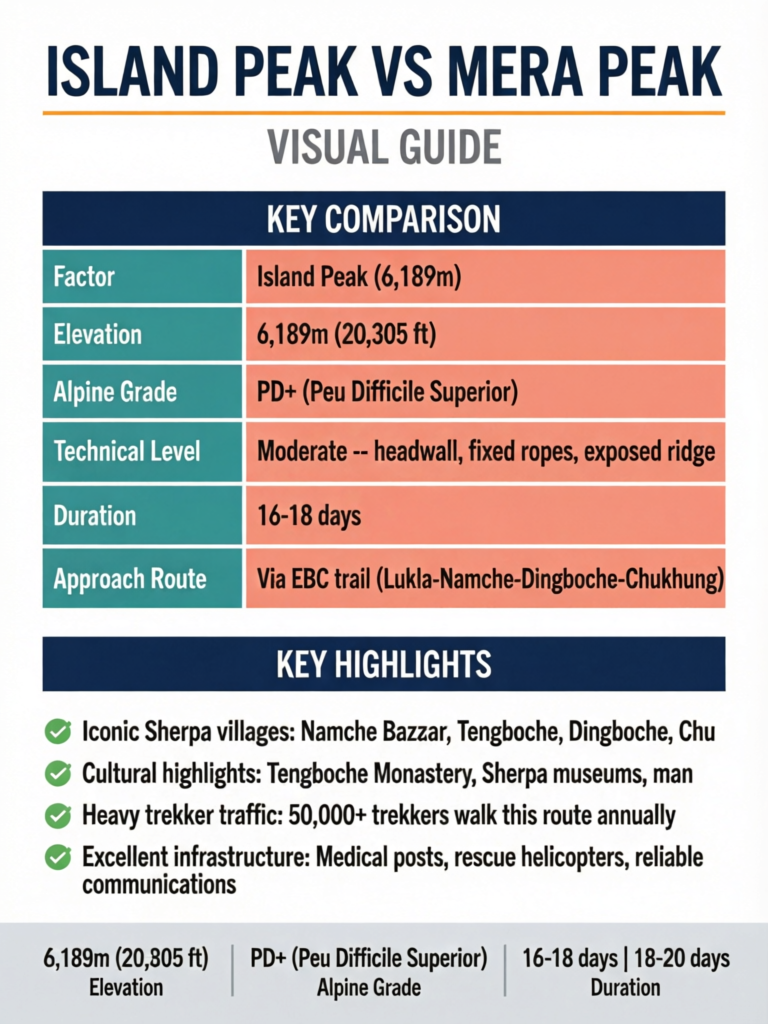
| Factor | Island Peak (6,189m) | Mera Peak (6,476m) |
|---|---|---|
| Elevation | 6,189m (20,305 ft) | 6,476m (21,247 ft) |
| Alpine Grade | PD+ (Peu Difficile Superieur) | PD (Peu Difficile) |
| Technical Level | Moderate -- headwall, fixed ropes, exposed ridge | Low-Moderate -- glacier walk, basic crampons |
| Duration | 16-18 days | 18-20 days |
| Approach Route | Via EBC trail (Lukla-Namche-Dingboche-Chukhung) | Via Hinku Valley (Lukla south to Tangnag-Khare) |
| Success Rate | 60-75% | 75-85% |
| Total Cost | $2,000-$4,000 | $2,500-$4,500 |
| NMA Permit Fee | $350 (autumn) | $350 (autumn) |
| Summit Day Length | 10-14 hours | 6-9 hours (from high camp) |
| Key Technical Skills | Crampon technique, jumar ascending, fixed rope work | Basic crampon walking, roped glacier travel |
| Required Gear | Full technical kit (jumar, descender, harness, etc.) | Basic mountaineering kit (crampons, axe, harness) |
| Approach Trail Crowds | Heavy (shares EBC route) | Light (remote Hinku Valley) |
| Best Seasons | October-November, April-May | October-November, April-May |
| Combine With | EBC trek (natural extension) | Island Peak crossing, EBC extension |
| Summit Views | Khumbu giants close-up (Lhotse, Everest, Makalu, Ama Dablam) | 360-degree panorama of 5 x 8,000m peaks |
| Base Camp Comfort | Lodge at Chukhung, tent at BC | Lodge at Khare, tent at High Camp |
| Remoteness | Moderate (well-established EBC infrastructure) | High (remote Hinku Valley, limited infrastructure) |
Altitude Comparison
Mera Peak stands 287 meters higher than Island Peak -- 6,476m versus 6,189m. On paper, this makes Mera the more altitude-challenging objective. In practice, the difference is significant but nuanced.
Why Mera's Extra Altitude Matters
At 6,476m, the air contains approximately 47% of sea-level oxygen. At Island Peak's 6,189m, it is roughly 49%. While a 2% difference seems trivial, at extreme altitude every percentage point matters. The body is operating at its physiological limits, and the additional 287 meters of altitude translates to:
- More pronounced AMS symptoms in the days before the summit
- Slower movement on summit day
- Greater fatigue during the climb
- Longer recovery after the summit push
- Higher risk of HAPE/HACE at High Camp and above
Why Island Peak's Lower Altitude Does Not Make It "Easier"
Island Peak's lower summit does not automatically make it the easier climb. The summit day on Island Peak involves 10-14 hours of sustained effort including technical climbing sections that are far more demanding than anything on Mera Peak. The headwall alone requires focused jumar ascending at altitude -- an intensely draining activity. Many climbers report that Island Peak's summit day is more physically and mentally exhausting than Mera Peak's, despite the lower altitude.
The Acclimatization Advantage
Here is a critical practical difference: Island Peak's approach via the EBC trail provides superior acclimatization. Trekkers pass through Namche Bazaar (3,440m), Tengboche (3,860m), Dingboche (4,410m), and often take acclimatization hikes to Chukhung Ri (5,550m) or Nangkartshang Peak (5,083m). By the time they reach Island Peak Base Camp, they have spent 10-12 days progressively adapting to altitude.
Mera Peak's approach through the Hinku Valley is shorter and involves crossing the 4,610m Zatrwa La pass relatively early in the trek, followed by a descent to 3,600m at Kothe before climbing again. This roller-coaster profile is less optimal for acclimatization, and the jump from Khare (5,045m) to High Camp (5,800m) to Summit (6,476m) is steep. Poor acclimatization on Mera Peak is the number one cause of failed summit attempts.
Pro Tip
Technical Difficulty: The Core Difference
This is where the two peaks diverge most dramatically. Technical difficulty is the single most important factor in choosing between them.
Island Peak: More Technical, More Intimidating
Island Peak's standard route involves several distinct technical challenges:
The Glacier Approach: From Base Camp (5,087m) to High Camp (5,600m), you cross the crevassed Imja Glacier. This requires roped travel, crampon use, and awareness of hidden crevasses beneath snow bridges.
The Headwall: The defining feature of Island Peak. A steep, 150-200 meter wall of snow and ice at angles of 45-60 degrees. Fixed ropes are installed, and climbers ascend using jumar (mechanical ascender) technique. This is physically exhausting -- pulling yourself up steep fixed lines at 6,000m while wearing crampons, harness, and heavy clothing. For many first-time climbers, the headwall is the most intimidating section.
The Summit Ridge: After the headwall, a narrow, exposed ridge leads to the summit. The ridge is corniced on one side and drops steeply on the other. Fixed ropes provide security, but the exposure is genuine -- a fall from the ridge would be serious. You clip along the fixed line, moving carefully on crampon points, with dramatic drops on either side.
The Descent: Coming back down the headwall requires controlled rappelling or fixed-rope descent techniques. When fatigued after the summit push, this descent demands focus and discipline.
Mera Peak: Less Technical, More About Endurance
Mera Peak's standard route is fundamentally a glacier walk:
The Glacier Approach: From Khare (5,045m), you cross the Mera La (5,415m) and traverse the Mera Glacier to High Camp (5,800m). The glacier is crevassed and requires roped travel and crampon use, similar to Island Peak's glacier approach.
The Summit Slope: From High Camp, the route ascends moderate snow slopes at angles of 25-40 degrees. There is no headwall, no fixed rope sections, and no exposed ridge. You simply walk upward on crampons, roped to your guide, navigating around crevasses.
The Summit: Mera's summit is broad and gentle -- a rounded snow dome rather than a pointed peak. There is minimal exposure, and the final steps to the highest point feel like arriving at a plateau rather than clinging to a knife-edge.
The Descent: Straightforward down-climbing on moderate slopes. No rappelling required.
Technical Skills Comparison
| Skill | Island Peak | Mera Peak |
|---|---|---|
| Basic crampon walking | Essential | Essential |
| Steep crampon technique (front-pointing) | Essential (headwall, 45-60 degrees) | Minimal (slopes rarely exceed 40 degrees) |
| Jumar/ascender use | Essential (headwall and ridge) | Not required |
| Fixed rope clipping and travel | Essential (extensive fixed lines) | Minimal (some sections may have fixed lines) |
| Rappelling/fixed rope descent | Essential (headwall descent) | Not required |
| Roped glacier travel | Essential | Essential |
| Ice axe self-arrest | Essential | Essential |
| Belaying | Helpful (not required on standard route) | Not required |
| Rock scrambling | Some sections | Minimal |
What PD vs PD+ Actually Means
In the International French Adjectival System (IFAS), PD means "Peu Difficile" (slightly difficult) and PD+ is the upper range of this grade. The "+" on Island Peak reflects the headwall's steepness and the ridge exposure. Both grades indicate routes suitable for experienced trekkers with basic mountaineering training, but the technical gap between PD and PD+ is meaningful -- particularly when you are exhausted at 6,000m and the headwall looms above you.
Physical Demands Compared
Island Peak: Intense Summit Day
Island Peak's physical challenge is concentrated in a brutal summit day. The 10-14 hour push from High Camp (5,600m) to the summit (6,189m) and back involves:
- Waking at 1:00-2:00 AM after minimal sleep at altitude
- Crossing the glacier in complete darkness by headlamp
- Climbing the headwall on fixed ropes (1-3 hours of sustained vertical effort)
- Traversing the exposed summit ridge (1-2 hours)
- Descending the headwall and glacier (3-5 hours)
The approach trek via the EBC route is well-paced over 10-12 days with established tea houses, good meals, and relatively manageable daily distances. The trek itself is not significantly more demanding than any other moderate Himalayan trek.
Mera Peak: Cumulative Endurance
Mera Peak's physical challenge is distributed across the entire expedition:
- 7-8 days of approach trekking through the remote Hinku Valley, with the 4,610m Zatrwa La pass crossing early in the trek
- Multiple days above 5,000m at Khare and High Camp before the summit push
- Summit day of 6-9 hours -- less intense than Island Peak but at higher altitude
- 5-7 days of return trekking on tired legs
The cumulative fatigue of Mera Peak's longer expedition is a different kind of challenge than Island Peak's single-day intensity. Climbers often report that they feel strong on any individual day of the Mera Peak expedition, but the accumulated days of trekking at altitude slowly deplete their reserves.
Which Is More Physically Demanding Overall?
This depends on your strengths:
- If you are strong in sustained endurance (marathon runners, long-distance hikers, multi-day adventurers): Mera Peak's cumulative approach is well-suited to your strengths. The summit day is less intense but requires deep reserves after days of trekking.
- If you are strong in intense bursts (climbers, sprinters, CrossFit athletes): Island Peak's concentrated summit day challenge may match your fitness profile, and the approach trek is manageable for anyone with moderate fitness.
Required Skills and Experience
For Island Peak
Minimum recommended experience:
- Prior high-altitude trekking to 4,500-5,000m (EBC, ABC, or equivalent)
- Basic familiarity with crampon use and ice axe handling
- Comfort with exposure and heights
- Experience using fixed ropes or willingness to learn during pre-climb training
- Strong cardiovascular fitness (ability to sustain 10+ hours of effort)
Ideal background:
- Previous mountaineering course or glacier skills training
- Experience on Via Ferrata or fixed protection routes
- Prior crampon use on snow/ice terrain
- Altitude experience above 5,000m
For Mera Peak
Minimum recommended experience:
- Prior high-altitude trekking to 4,500-5,000m
- Basic fitness for multi-day trekking with 5-7 hours daily
- Willingness to learn basic crampon and rope skills during the expedition
- Mental fortitude for extended time in remote conditions
Ideal background:
- Prior altitude experience above 5,000m
- Multi-day trekking or backpacking experience (5+ consecutive days)
- Basic crampon experience (even a single training day helps)
- Cold weather camping experience
Pro Tip
Training Requirements Compared
Island Peak Training Focus
The emphasis for Island Peak training should be on:
- Upper body and grip strength -- for jumar ascending on the headwall (pull-ups, rope climbing, grip trainers)
- Cardiovascular endurance -- for the 10-14 hour summit day (zone 2 training, 60-90 minute sessions)
- Leg strength -- for the approach trek and technical climbing (squats, lunges, step-ups)
- Core stability -- for balance on exposed terrain (planks, Russian twists)
- Mental preparation -- for exposure on the summit ridge and headwall
Recommended training period: 12-16 weeks
Mera Peak Training Focus
The emphasis for Mera Peak training should be on:
- Cardiovascular endurance -- the primary requirement for sustained altitude performance (zone 2 training, 60-120 minute sessions, building to 6-8 hour training hikes)
- Leg endurance -- for day after day of trekking (high-rep squats, walking lunges, stair climbing with pack)
- Back-to-back training days -- simulating the cumulative fatigue of the expedition (weekend double-days with loaded pack)
- Core stability -- for glacier balance
- Cold tolerance -- training in cold weather when possible
Recommended training period: 12-16 weeks (16+ if starting from low fitness base)
For a detailed training program applicable to both peaks, see our EBC training plan, which provides an excellent foundation that can be augmented with peak-specific exercises.
Equipment Differences
Gear Needed for Both Peaks
- Mountaineering boots (B2 or B3 rated, crampon-compatible)
- 12-point crampons (semi-automatic or automatic)
- Ice axe (55-65cm)
- Climbing harness
- Climbing helmet
- Locking carabiners (2-3)
- Slings/runners (2-3 x 120cm)
- Down jacket or down suit for summit
- Sleeping bag rated to -20C or colder
- Standard trekking gear and clothing
Additional Gear for Island Peak
- Ascender/jumar -- essential for the headwall (most agencies provide)
- Descender/belay device (ATC or figure-eight) -- for rappelling the headwall
- Prusik loops -- backup ascension cords
- More technical harness -- with multiple gear loops for clipping
Mera Peak Can Get Away With Less
Mera Peak's non-technical route means you can climb with a simpler gear setup. No jumar, no descender, fewer carabiners and slings. This reduces weight, reduces cost (rental fees), and reduces the technical complexity of summit day. For first-time mountaineers, this simplicity is a significant advantage -- fewer things to manage means more mental bandwidth for dealing with altitude, cold, and fatigue.
Itinerary Comparison
Island Peak: 16-18 Days
| Days | Island Peak Itinerary |
|---|---|
| Day 1 | Fly Kathmandu to Lukla (2,860m) |
| Day 2-3 | Trek to Namche Bazaar (3,440m) with acclimatization day |
| Day 4 | Trek to Tengboche (3,860m) |
| Day 5 | Trek to Dingboche (4,410m) |
| Day 6 | Acclimatization day at Dingboche |
| Day 7 | Trek to Chukhung (4,730m) |
| Day 8 | Acclimatization hike to Chukhung Ri (5,550m) |
| Day 9 | Trek to Island Peak Base Camp (5,087m) |
| Day 10 | Skills training and move to High Camp (5,600m) |
| Day 11 | Summit day and return to Chukhung |
| Day 12-16 | Return trek to Lukla (4-5 days) |
| Day 17-18 | Fly Lukla to Kathmandu (+ buffer day) |
Approach trek highlight: The Everest Base Camp route through Namche Bazaar, Tengboche Monastery, and the stunning Imja Valley to Chukhung. Well-established, excellent tea houses, iconic scenery, heavy trekker traffic.
Mera Peak: 18-20 Days
| Days | Mera Peak Itinerary |
|---|---|
| Day 1 | Fly Kathmandu to Lukla, trek to Paiya (2,730m) |
| Day 2-3 | Trek through forests toward Zatrwa La |
| Day 4 | Cross Zatrwa La (4,610m), descend to Thuli Kharka (4,300m) |
| Day 5 | Descend to Kothe (3,600m) in the Hinku Valley |
| Day 6 | Trek to Tangnag (4,350m) |
| Day 7 | Acclimatization day at Tangnag |
| Day 8 | Trek to Khare / base camp area (5,045m) |
| Day 9 | Skills training and acclimatization at Khare |
| Day 10 | Cross Mera La (5,415m) to High Camp (5,800m) |
| Day 11 | Summit day (6,476m) and descend to Khare |
| Day 12 | Descend to Tangnag |
| Day 13-17 | Return trek to Lukla (5 days) |
| Day 18-20 | Fly Lukla to Kathmandu (+ buffer days) |
Approach trek highlight: The remote Hinku Valley -- rhododendron forests, the dramatic Zatrwa La pass, traditional Rai and Sherpa villages, and a fraction of the crowds found on the EBC trail. Authentic, wild, and beautiful.
Key Itinerary Differences
- Mera Peak is 2-4 days longer due to its more remote approach and return
- Island Peak's approach doubles as the EBC trek -- you get two iconic experiences for the effort of one trip
- Mera Peak's approach is more remote and less comfortable -- tea houses are simpler, fewer food options, less reliable communication
- Island Peak has better acclimatization opportunities due to the well-paced EBC route with established acclimatization stops
Cost Comparison
Detailed Cost Breakdown
| Cost Component | Island Peak | Mera Peak |
|---|---|---|
| Agency package (guide, permits, food, accommodation) | $2,000-$3,500 | $2,500-$4,000 |
| NMA climbing permit | $350 | $350 |
| National park entry | $30-50 | $23-50 |
| Kathmandu-Lukla flights | $215-350 | $215-350 |
| Travel insurance | $150-300 | $150-300 |
| Gear rental (Kathmandu) | $100-250 | $80-200 |
| Tips (guide + porters) | $150-300 | $150-300 |
| Personal expenses | $100-200 | $100-200 |
| Kathmandu accommodation | $50-200 | $50-200 |
| Total Range | $3,110-$5,500 | $3,280-$5,950 |
Why Mera Peak Typically Costs More
- Longer expedition duration -- more days means more food, fuel, porter wages, and guide fees
- Remote logistics -- transporting supplies into the Hinku Valley is more expensive than the well-supplied EBC route
- Fewer economies of scale -- less trekker traffic means less competition among providers
- Higher altitude camps -- tent-based camps at 5,800m require more equipment than Island Peak's closer-to-lodge approach
Where Island Peak Offers Better Value
Island Peak's approach via the EBC trail means you effectively complete the world's most famous trek as part of your climbing expedition. If you would have done EBC anyway, the marginal cost of adding Island Peak is relatively low -- primarily the climbing guide supplement, permit, gear rental, and the extra days from Dingboche to Chukhung and back.
Budget-Conscious Decision
If budget is a primary concern, Island Peak generally offers more value per dollar. The approach doubles as an EBC experience, the total duration is shorter (fewer days of expenses), and the well-established infrastructure keeps costs competitive. However, the cheapest option is not always the best -- cutting costs on your climbing guide or agency quality is a false economy on any peak.
Success Rates: Why They Differ
Island Peak: 60-75% Success Rate
Island Peak's lower success rate is primarily driven by its technical challenges:
- Headwall difficulty: The steep, fixed-rope section is the crux of the climb. Climbers who lack jumar experience or upper body strength may be unable to complete the ascent.
- Summit ridge exposure: Some climbers turn back due to fear of the exposed ridge, even if they physically can continue.
- Bottlenecks: In peak season, multiple teams converge on the headwall at the same time, creating long waits in extreme cold. Climbers who spend hours waiting at the base of the headwall may be too cold and fatigued to continue.
- Weather sensitivity: The exposed summit ridge is particularly vulnerable to wind. Conditions that would be manageable on Mera's broad summit can be dangerous on Island Peak's narrow ridge.
- Technical failures: Crampon malfunctions, rope issues, or equipment problems at critical moments on the headwall can force turnarounds.
Mera Peak: 75-85% Success Rate
Mera Peak's higher success rate reflects its non-technical nature:
- No technical bottleneck: There is no headwall or exposed section that creates a single point of failure.
- Broader weather tolerance: Mera's summit can be reached in conditions that would close Island Peak's ridge.
- Simpler skills required: Basic crampon walking and roped travel can be learned in 1-2 training sessions.
- Altitude is the main variable: Proper acclimatization -- which is fully within the climber's control -- is the primary determinant of success.
When Success Rates Converge
In bad weather years, both peaks see reduced success rates. When storms limit summit windows to 1-2 days in an entire season, even Mera Peak's success rate can drop below 60%. Conversely, in ideal weather years, Island Peak's success rate can exceed 80%.
The Summit Experience
From the Top of Island Peak
The summit of Island Peak is a small, exposed point. You arrive after the technical challenge of the headwall and ridge, and the view is an intimate, close-up panorama of the Khumbu:
- Lhotse's massive south face fills the northern sky, its 3,000-meter wall of ice and rock impossibly close
- Everest's summit pyramid peeks above Lhotse's west ridge
- Makalu stands proud to the east
- Ama Dablam -- the iconic peak of the Khumbu -- presents its perfect pyramid to the southwest
- Baruntse looms massive to the south
- The Imja Glacier spreads below you, a frozen river of ice
The feeling on Island Peak's summit is one of hard-earned achievement. You have climbed something real -- a genuine mountaineering challenge that required technical skill, physical endurance, and mental toughness.
From the Top of Mera Peak
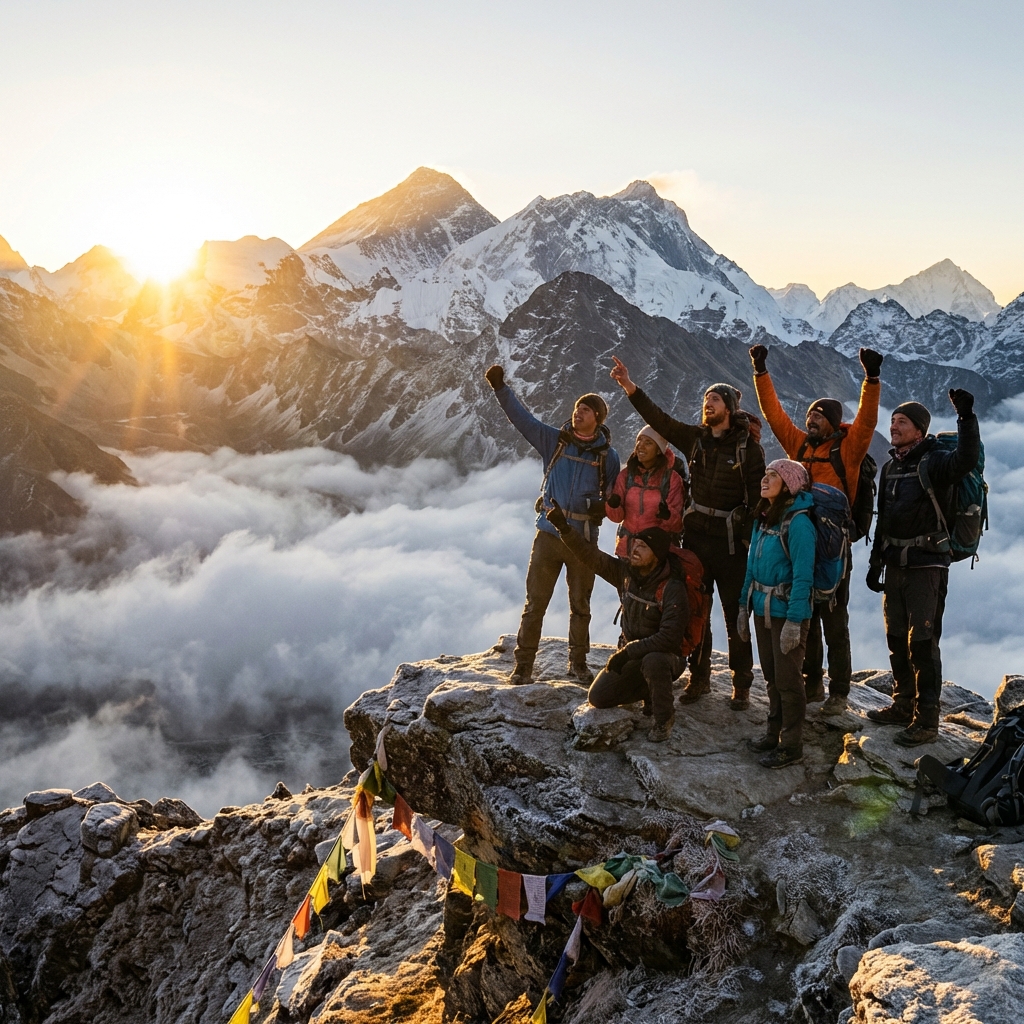
Mera Peak's summit is a broad, rounded snow dome. You arrive after a sustained glacier walk, and the view is a sweeping, panoramic spectacle:
- Five of the world's six highest mountains are visible: Everest, Kangchenjunga, Lhotse, Makalu, and Cho Oyu
- The panorama extends 360 degrees, from the eastern Himalaya to the Khumbu and beyond
- Makalu's dramatic east face is strikingly close
- The sense of space and elevation is extraordinary -- you are genuinely in the heart of the highest mountains on Earth
The feeling on Mera Peak's summit is one of profound altitude. You stand at 6,476 meters -- higher than the summit of Kilimanjaro, higher than any point in the Americas, Europe, or Oceania. The physical sensation of being at extreme altitude, combined with the visual impact of the panorama, creates an experience that is more contemplative and awe-inspiring than Island Peak's more adrenaline-driven achievement.
Approach Trek Comparison
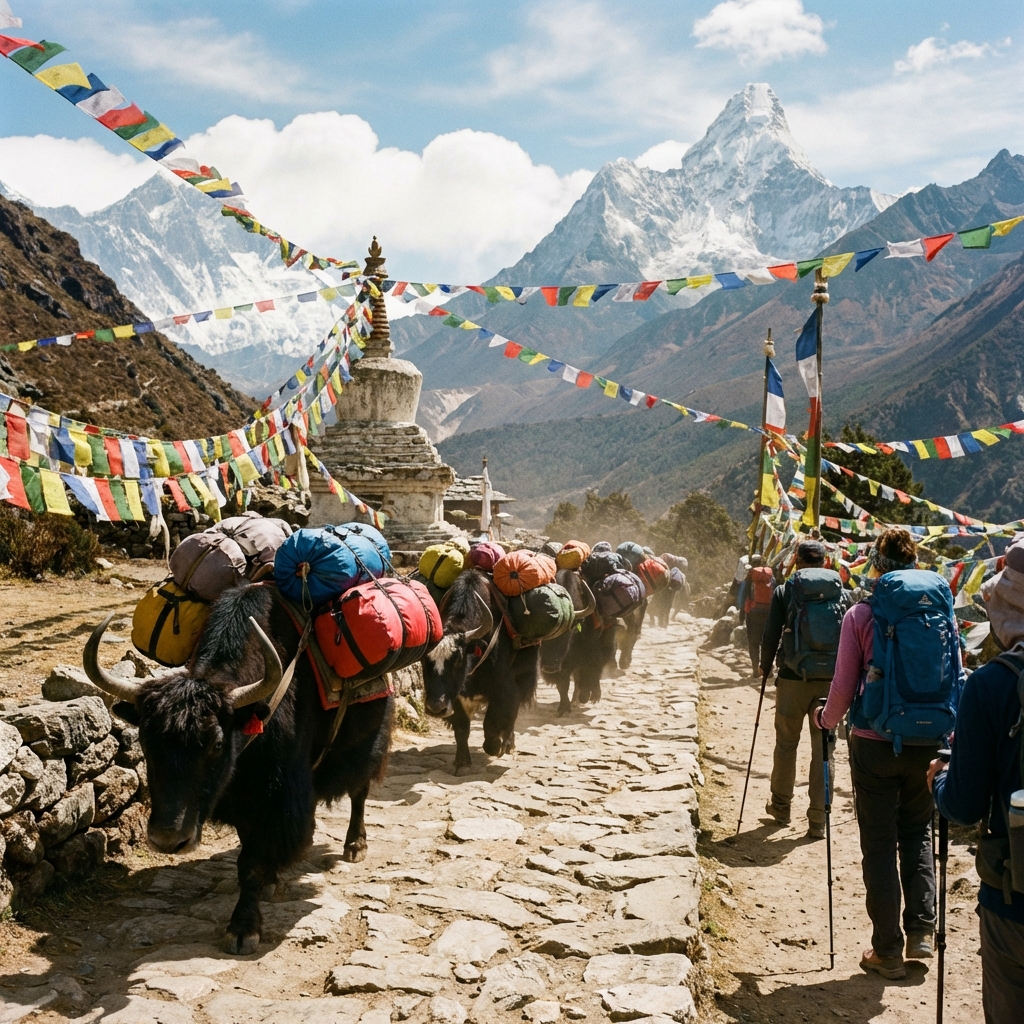
Island Peak: The Khumbu Classic
Island Peak's approach follows the legendary Everest Base Camp route. This means:
- World-class tea houses with hot meals, warm rooms, WiFi, and charging stations
- Iconic Sherpa villages: Namche Bazaar, Tengboche, Dingboche, Chukhung
- Cultural highlights: Tengboche Monastery, Sherpa museums, mani walls and stupas
- Heavy trekker traffic: 50,000+ trekkers walk this route annually
- Excellent infrastructure: Medical posts, rescue helicopters, reliable communication
- Well-established acclimatization schedule
If you have never done the EBC trek, combining it with Island Peak gives you two extraordinary experiences in one trip. If you have already trekked to EBC, the approach may feel familiar.
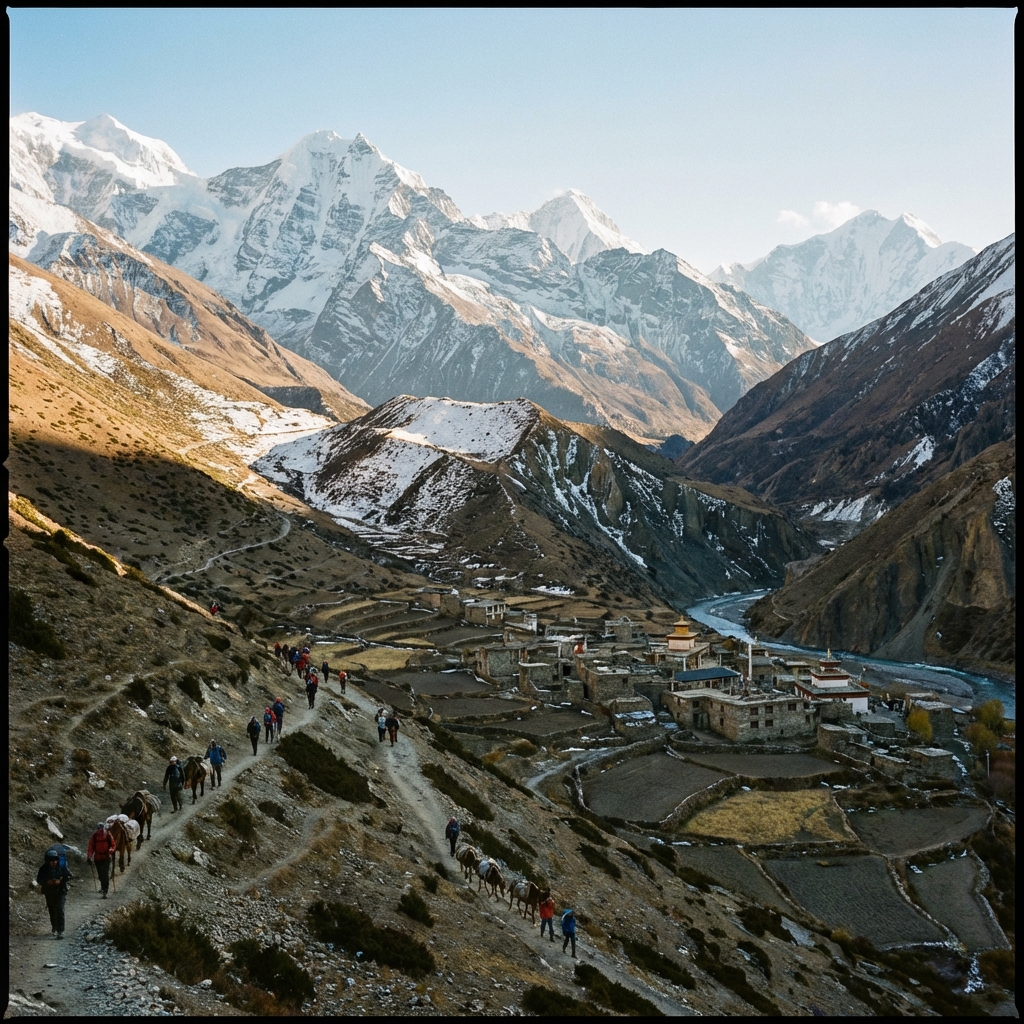
Mera Peak: The Hinku Valley Adventure
Mera Peak's approach through the Hinku Valley offers a completely different experience:
- Remote and uncrowded -- you may see only a handful of other trekking groups in the entire valley
- Basic tea houses at Kothe and Tangnag (simple rooms, limited menus, intermittent electricity)
- Dramatic scenery -- the Zatrwa La pass crossing, dense rhododendron forests, the wild Hinku Valley
- Cultural authenticity -- traditional Rai and Sherpa communities with minimal tourist infrastructure
- Adventure feel -- this is not a beaten path but a genuine wilderness trek
- Less reliable communication -- satellite phones recommended, cell coverage limited
- More demanding logistics -- fewer resupply options, longer distances between settlements
For trekkers who find the EBC trail too crowded and commercialized, Mera Peak's approach through the Hinku Valley is a compelling draw in itself.
Pro Tip
Which Peak Is Harder?
Island Peak is technically harder despite being 287m lower. The summit day involves 10-14 hours of sustained effort including a steep headwall requiring jumar ascending, fixed rope work, and an exposed ridge traverse. Mera Peak is a glacier walk requiring only basic crampon technique with a 6-9 hour summit day. Island Peak's success rate (60-75%) reflects the technical challenge, while Mera's higher success rate (75-85%) reflects its non-technical nature. Check our peak climbing equipment guide for required gear.
Which Peak Is Cheaper?
Island Peak is slightly cheaper at $2,000-4,000 vs Mera Peak's $2,500-4,500. Both require NMA permits ($350 in autumn). The cost difference comes from Mera's longer approach trek (18-20 days vs 16-18 days) through the remote Hinku Valley, which requires more supplies and logistics. Both require the Lukla flight and comprehensive travel insurance with helicopter evacuation coverage.
Which Peak Has Better Summit Views?
Mera Peak's summit (6,476m) offers the more comprehensive panorama: a 360-degree view of five 8,000m peaks including Everest, Kangchenjunga, Lhotse, Makalu, and Cho Oyu. Island Peak's summit (6,189m) provides closer, more intimate views of the Khumbu giants -- Lhotse's massive south face, Ama Dablam, and Makalu. For sheer breadth, Mera wins. For dramatic proximity, Island Peak wins. See our best time to trek Nepal for optimal climbing windows.
Which Peak Should You Climb FIRST?
This is the critical question. Here is a decision framework based on five key factors.
1. Based on Your Technical Experience
Choose Island Peak if:
- You have prior climbing, mountaineering, or Via Ferrata experience
- You have used crampons and ice axes before
- You are comfortable with heights and exposure
- You want to develop technical mountaineering skills for future objectives
Choose Mera Peak if:
- You have no prior mountaineering or technical climbing experience
- You are primarily a trekker or hiker wanting to step up to a summit
- You prefer to minimize technical complexity and focus on the altitude challenge
- Heights and exposure make you uncomfortable
2. Based on Your Fitness Level
Choose Island Peak if:
- You are strong in short, intense bursts of effort
- You can sustain 10-14 hours of hard physical activity in a single day
- Your upper body and grip strength are good
- You have trained specifically for the summit day demands
Choose Mera Peak if:
- You are strong in sustained, multi-day endurance
- You are comfortable with day-after-day trekking for 2+ weeks
- Your cardiovascular endurance is excellent but you may lack upper body power
- You prefer a less intense summit day but can handle the cumulative expedition fatigue
3. Based on Your Time Available
Choose Island Peak if:
- You have 16-18 days (minimum)
- You want to combine the climb with the EBC trek experience
- You have limited vacation time and need efficiency
Choose Mera Peak if:
- You have 18-22 days available
- You are comfortable with a longer expedition timeline
- You value the journey (approach trek) as much as the destination (summit)
4. Based on Your Budget
Choose Island Peak if:
- Your budget is $3,000-4,500
- You want to combine EBC trek + peak climb for maximum value
- You prefer the more competitive pricing of the well-established EBC route
Choose Mera Peak if:
- Your budget is $3,500-6,000
- You are willing to pay more for remoteness and a less crowded experience
- The higher success rate justifies the additional cost to you
5. Based on What You Want From the Experience
Choose Island Peak if:
- You want a genuine technical mountaineering challenge
- You value the EBC trek and Khumbu cultural experience
- You want to test yourself against a headwall and exposed ridge
- You plan to continue into more serious mountaineering (Ama Dablam, Manaslu, etc.)
- You want close-up views of Lhotse, Everest, and Ama Dablam
Choose Mera Peak if:
- You want the highest trekking peak summit in Nepal
- You value panoramic views of multiple 8,000m giants
- You prefer a remote, uncrowded approach trek
- You want the highest probability of summit success
- You value altitude achievement over technical achievement
- You want a transformative wilderness experience
Combining Both Peaks: The Ultimate Expedition
For those who cannot choose -- or who want the ultimate Nepal trekking peak experience -- the Mera Peak to Island Peak crossing is the answer. This 25-30 day expedition combines both summits with the challenging Amphu Laptsa pass (5,845m) crossing between them.
The Route
- Fly to Lukla, trek to the Hinku Valley
- Climb Mera Peak (6,476m)
- Cross the Amphu Laptsa pass (5,845m) -- a serious mountaineering undertaking involving steep ice and fixed ropes
- Descend to Chukhung in the Khumbu
- Climb Island Peak (6,189m)
- Return via the EBC trail to Lukla
Requirements
- Exceptional fitness -- two 6,000m summits and a 5,845m pass in a single expedition
- Prior mountaineering experience -- the Amphu Laptsa crossing is more technical than either peak's standard route
- Extended time -- 25-30 days minimum
- Higher budget -- $4,500-7,000+ with a premium agency
- Strong weather windows -- you need good conditions for all three major objectives
Is the Combination Right for You?
This combination is best suited for climbers who have already completed at least one of the two peaks or who have equivalent high-altitude mountaineering experience. It is not recommended as a first-time climbing expedition due to the Amphu Laptsa crossing's difficulty and the cumulative physical demands.
For more multi-peak and combination expedition options, see our comprehensive peak climbing guide and multi-week trek combinations guide.
Frequently Asked Questions
Which peak is better for a complete beginner?
Mera Peak is generally the better choice for someone with no mountaineering experience. Its non-technical summit route, higher success rate, and ability to learn necessary skills during a 1-2 day base camp training session make it more accessible to first-time climbers. Island Peak's headwall and ridge exposure require more technical competence that is harder to acquire quickly. That said, both peaks require high-altitude trekking experience and excellent physical fitness -- neither is suitable for someone with zero hiking experience.
Can I climb both peaks in one trip?
Yes, via the Mera Peak to Island Peak crossing. This is a 25-30 day expedition that includes the Amphu Laptsa pass (5,845m) crossing between the two peaks. It requires exceptional fitness, prior altitude experience, and a higher budget ($4,500-7,000+). It is not recommended for first-time climbers.
Which peak has better views from the summit?
Both offer extraordinary views, but they are different in character. Mera Peak provides the wider panorama -- five of the world's six highest mountains in a 360-degree sweep. Island Peak offers more intimate, close-up views of the Khumbu giants, particularly Lhotse's massive south face and Ama Dablam. If panoramic scope is your priority, choose Mera. If close-up drama is your preference, choose Island Peak.
Is Island Peak more dangerous than Mera Peak?
The objective hazards are somewhat different. Island Peak's technical sections (headwall, exposed ridge) carry fall risk that Mera Peak's gentle slopes do not. However, Mera Peak's higher altitude increases the risk of altitude-related illness, and its more remote location means longer evacuation times. Statistically, serious accidents are rare on both peaks when climbed with competent guides.
Do I need a guide for both peaks?
Yes. Both peaks require NMA climbing permits that can only be obtained through registered Nepali trekking/expedition agencies. A licensed climbing guide must accompany all expeditions. See our agency selection guide for choosing a reputable operator.
Can I do Island Peak after EBC and then Mera Peak separately?
Many climbers do exactly this: combine Island Peak with their EBC trek as a first mountaineering experience, then return for Mera Peak on a subsequent trip (or vice versa). Having completed one peak gives you valuable altitude and mountaineering experience that makes the second peak significantly easier to plan and execute.
How far in advance should I book?
For autumn season (October-November), book 4-6 months in advance for either peak. The best climbing guides and optimal summit dates fill early. Spring season (April-May) can sometimes be booked with shorter lead time (2-4 months) due to lower demand.
What is the age limit for these climbs?
There is no official upper age limit for NMA trekking peaks. Climbers in their 60s and occasionally 70s have successfully summited both peaks. Physical fitness and altitude tolerance matter far more than age. Climbers under 18 may need parental consent and agency approval.
Which peak is better preparation for bigger mountains?
Island Peak is the better stepping stone to more technical objectives (Ama Dablam, Lobuche East, Manaslu, etc.) because it develops fixed rope, jumar, and exposed ridge skills. Mera Peak is better preparation for altitude-focused objectives (higher 6,000m peaks, 7,000m peaks) because it develops altitude endurance without technical complexity. Ideally, climbing both peaks provides the most comprehensive preparation for larger Himalayan objectives.
What if I fail on one peak -- can I easily switch to the other?
Not easily. The two peaks are in different valleys with different permit requirements. Switching mid-expedition would require additional permits, different logistics, and potentially a new agency arrangement. If weather or altitude prevents your summit on one peak, the practical option is usually to attempt a second summit window on the same peak rather than switching to the other.
Our Recommendation
There is no universally "better" peak -- only the peak that is better for you. Here is our summary guidance:
Choose Island Peak if you want a technical mountaineering experience, value the EBC trek as part of the journey, are comfortable with heights and exposure, and plan to continue developing climbing skills for bigger objectives.
Choose Mera Peak if you want the highest trekking peak in Nepal, prefer a remote and uncrowded approach, want the best chance of summit success, and prioritize altitude achievement and panoramic views over technical challenge.
Choose both if you have the time, budget, and experience to tackle the Mera-Island Peak crossing -- it is one of the finest trekking peak expeditions in Nepal.
Whichever you choose, proper preparation, a reputable agency, and respect for the mountain will serve you well. Both Island Peak and Mera Peak offer transformative Himalayan experiences that go far beyond a checkmark on a summit list. They are gateways to a deeper relationship with the mountains -- and with yourself at altitude.
For comprehensive preparation guidance, see our EBC training plan, travel insurance guide, and peak climbing in Nepal comprehensive guide.