
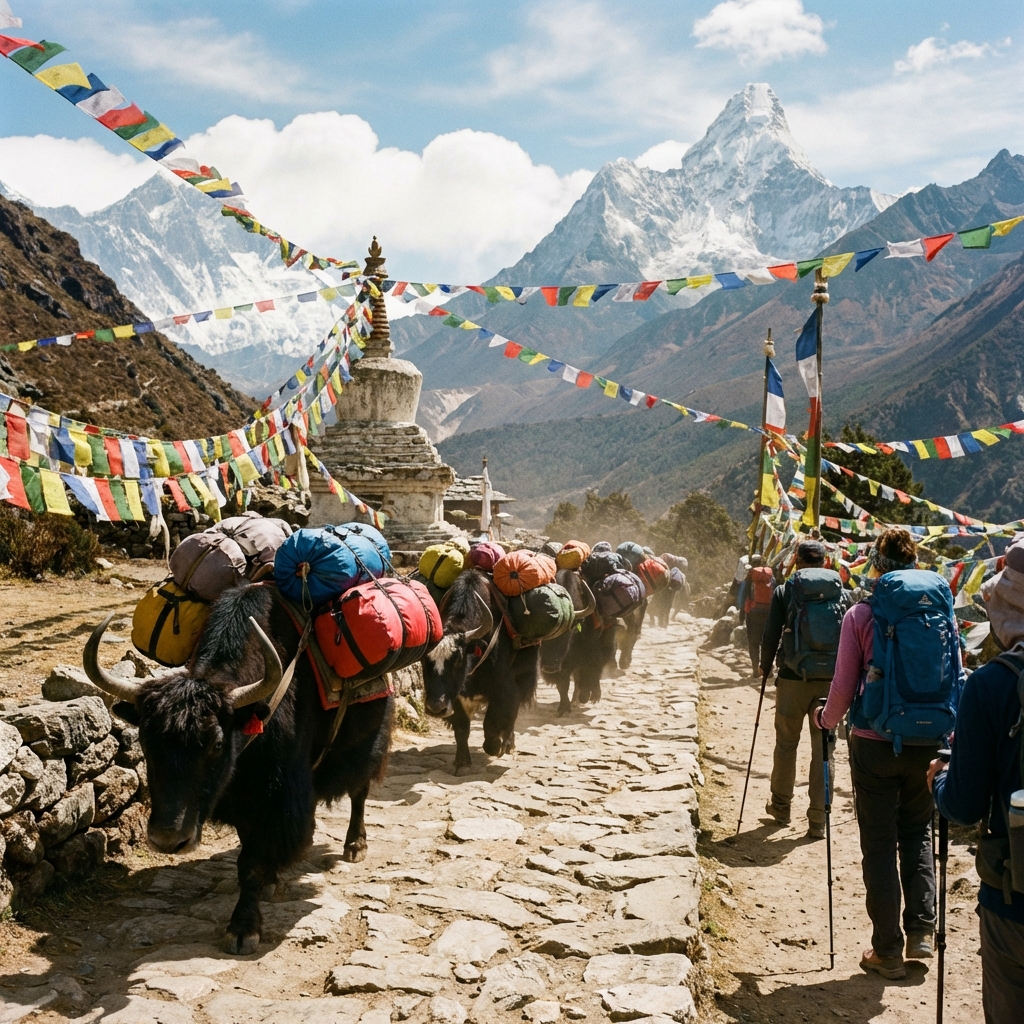
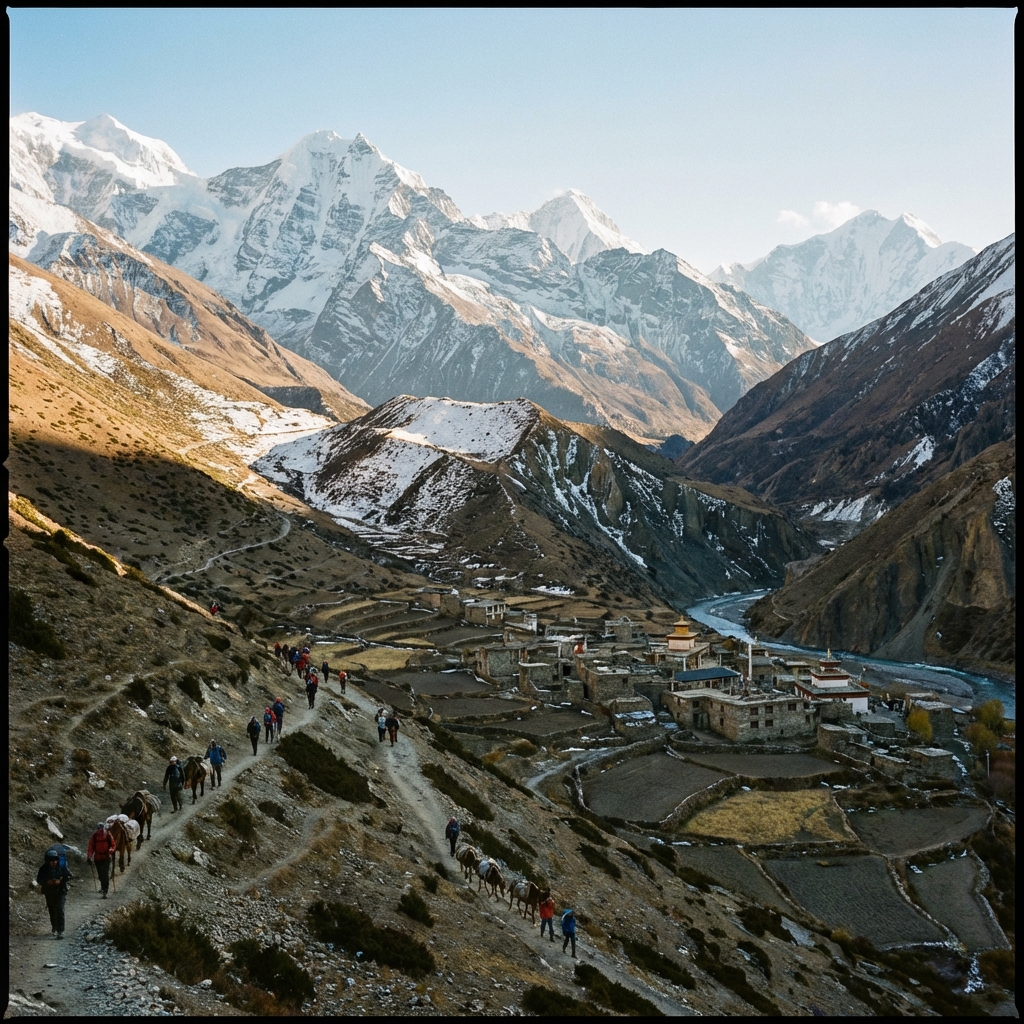
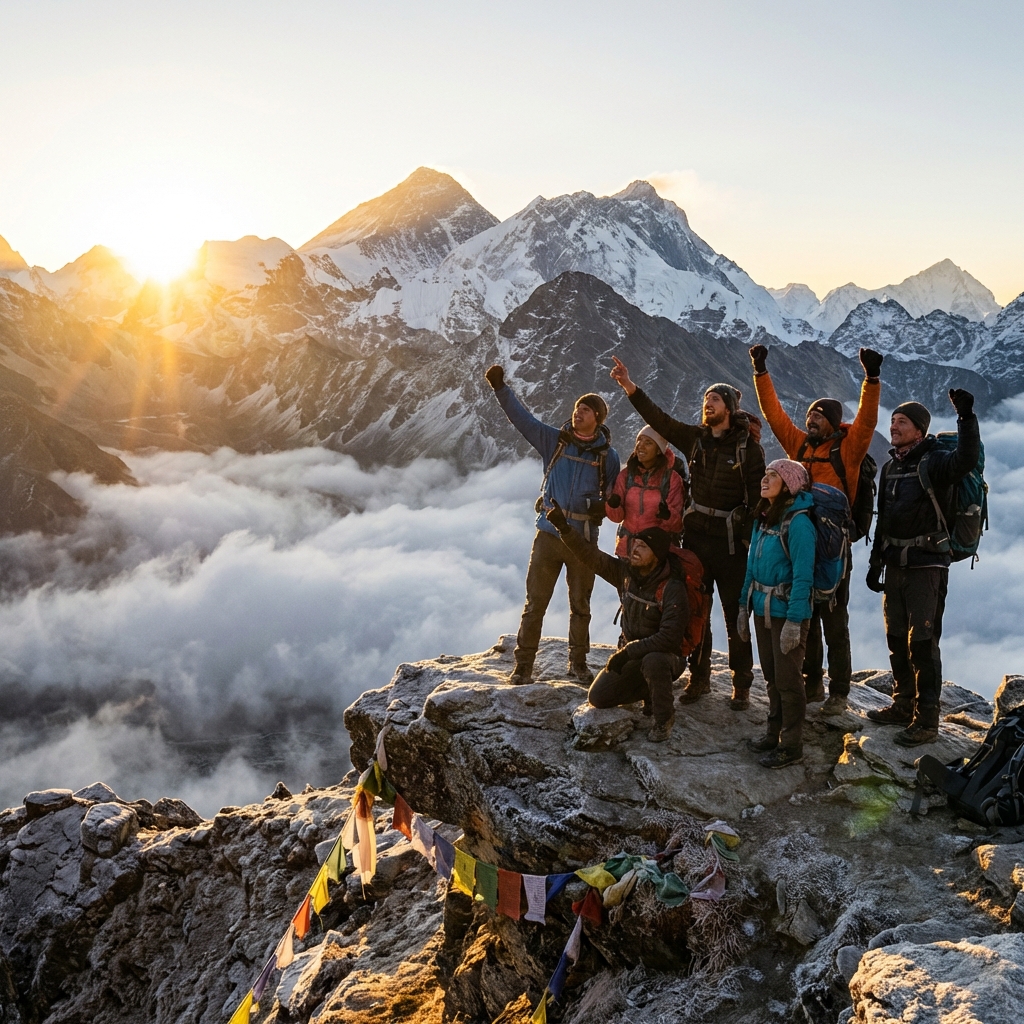
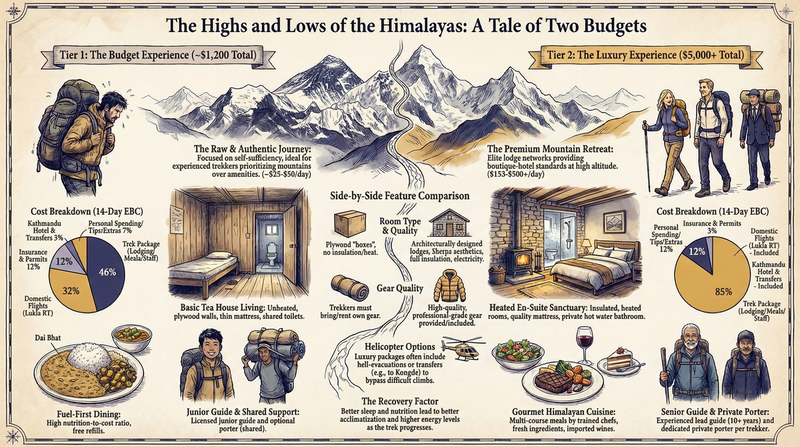
The mountains do not change. From Kala Patthar's summit, the view of Everest is identical whether you paid $25 or $300 for your day. The same golden light strikes the same summit pyramid. The same thin air fills every trekker's lungs equally. Yet between the $25/day budget trek and the $300/day luxury experience lies a vast spectrum of comfort, service, food quality, and logistical support that dramatically shapes your journey through the Himalayas.
Nepal is one of the few places on earth where both approaches deliver genuinely world-class experiences. Budget trekking here is not a compromised version of something better. It is a legitimate, deeply rewarding way to experience the mountains, chosen by thousands of experienced trekkers annually. Luxury trekking is not mere indulgence. It provides comforts that can transform a challenging physical endeavor into a sustainable, enjoyable journey accessible to a wider range of ages and fitness levels.
This guide compares every aspect of budget, mid-range, and luxury trekking in Nepal. We provide real cost breakdowns with itemized budgets, explain exactly what the extra money buys (and what it does not), profile the luxury lodge networks, and give you a clear decision framework for choosing the level that matches your priorities.
Who should read this guide:
- Trekkers deciding how much to spend on their Nepal trek
- Budget trekkers curious about what they are missing (or not missing)
- Those considering luxury lodge treks and wanting honest assessment
- Groups with mixed budgets trying to find common ground
- Anyone comparing agency packages across price ranges
Quick Comparison: Three Trekking Tiers
$25-$40 /day. Basic tea house rooms, dal bhat meals, shared guide, optional porter.
$50-100/day. Better lodges, included meals, experienced guide, personal porter.
$150-300+/day. Premium lodges or luxury networks, gourmet meals, private guide, full service.
Yes. The views, trails, altitude, and fundamental trekking experience are identical at every price point.
Where you sleep, what you eat, and how much logistical burden you carry. Not what you see.
Minimal between mid-range and luxury. Budget can have safety gaps if guide quality is compromised.
Yeti Mountain Home (Everest), Ker and Downey lodges (Annapurna), luxury community lodges on select routes.
Independent trek with local guide on shoulder-season dates.
Luxury lodge networks that include premium accommodation in the package price.
Yes. Start budget, upgrade to better lodges for a few key nights. Or do a mid-range trek with one luxury lodge splurge.
Side-by-Side Comparison Table
| Factor | Budget ($25-$40 per day/day) | Mid-Range ($50-100/day) | Luxury ($150-300+/day) |
|---|---|---|---|
| Daily cost | $25-50 | $50-100 | $150-300+ |
| 14-day trek total | $350-700 | $700-1,400 | $2,100-4,200+ |
| Accommodation | Basic tea house room | Better rooms, pre-booked | Premium lodges or luxury network |
| Room quality | Thin walls, basic bed, shared toilet | Better insulation, cleaner facilities | Private bathroom, heating, hot water |
| Meals | Self-selected from menu; dal bhat focus | Included; wider selection | Gourmet; multi-course, curated |
| Guide | Licensed guide (may be junior) | Experienced, English-speaking | Senior guide, often 1:2 ratio or private |
| Porter | Optional ($10-15/day shared) | Included (1 per 2 trekkers) | Included (1 per trekker) |
| Group size | Variable (may be solo + guide) | 4-10 trekkers | 2-6 trekkers (intimate) |
| Itinerary flexibility | Maximum (you decide daily) | Moderate (pre-planned but adjustable) | Moderate-high (customizable) |
| Safety standards | Adequate if guide is reputable | Good; agency has protocols | Excellent; comprehensive safety net |
| Gear | Bring or rent your own | Some items included/provided | High-quality gear provided or included |
| Pre-trip support | Minimal; self-organized | Good; briefings, checklist | Comprehensive; from visa to departure |
| Post-trek support | None | Certificate, photos | Full gallery, trip report, follow-up |
1. The Budget Experience ($25-50/day)
What Your Money Buys
Budget trekking in Nepal remains one of the world's great travel bargains. For $25-50 per day, you receive:
Accommodation: A private room in a basic tea house with a bed, thin foam mattress, and (sometimes) a pillow. Walls are plywood or stone. Rooms are unheated. Shared squat or Western toilet down the hall. No hot shower included (available for $3-5 extra).
Food: You order from the standard trekking menu and pay per item. Budget trekkers gravitate toward dal bhat (lentils, rice, vegetable curry, pickles) for its unlimited refills and superior nutrition-to-cost ratio. Expect $4-8 per meal at altitude. Tea and basic drinks add $1-3 per day.
Guide: A licensed trekking guide accompanies you, as required by Nepali law since 2026. Budget guides are often younger and less experienced but know the routes well. English proficiency varies. A good budget guide costs $25-$35 per day.
Porter (optional): Many budget trekkers carry their own pack to save money. Those who hire porters share one between two trekkers, paying $10-15 per day per person.
Itemized Budget Trek: 14-Day EBC Example
| Item | Total Cost | Daily Cost |
|---|---|---|
| Tea house rooms (12 nights, $2-5/night) | $24-60 | $2-5 |
| Breakfast (12 days, $4-6) | $48-72 | $4-6 |
| Lunch (12 days, $5-8) | $60-96 | $5-8 |
| Dinner (12 days, $5-8) | $60-96 | $5-8 |
| Tea and drinks | $24-36 | $2-3 |
| Hot showers (6 times, $4) | $24 | $2 |
| Charging (10 times, $3) | $30 | $2.50 |
| Guide (12 days, $28/day shared between 2) | $168 | $14 |
| Guide tips | $40-60 | $3-5 |
| Trek subtotal | $478-642 | $34-53 |
| Lukla flights (round-trip) | $215-400 | |
| Permits (SNP + municipal) | $38-45 | |
| Travel insurance | $100-150 | |
| Kathmandu accommodation (3 nights, $10-15) | $30-45 | |
| Grand total | $996-1,282 |
What Budget Trekking Feels Like
The budget experience is raw, authentic, and deeply rewarding. You manage your own logistics. You choose your lunch stop based on what looks appealing as you pass. You negotiate occasionally. You share dining halls with an eclectic mix of trekkers, from first-timers to veterans on their tenth Nepal trek.
The limitations are real but manageable. Your room is cold; you live in your sleeping bag after sundown. The menu becomes repetitive by day eight. Hot showers are a luxury you ration. Charging your phone costs money. WiFi is slow and expensive.
But the mountains are the same. The trail is the same. The sense of achievement at reaching your destination is, if anything, enhanced by the knowledge that you earned it on a shoestring.
Budget trekking is best for:
- Young travelers and gap-year trekkers
- Experienced trekkers who prioritize the trek over the comfort
- Extended trips where daily costs compound over weeks
- Trekkers who value independence and self-sufficiency
- Those who actively prefer the rawer, less curated experience
Pro Tip
The single best budget strategy is choosing dal bhat for every meal. At $5-7, you get unlimited rice and curry refills, providing 2,000-3,000 calories per sitting. Compare this to fried rice ($6-8, single portion, approximately 800 calories) or pizza ($8-12, questionable quality at altitude). Dal bhat is not a compromise; it is the most nutritious and cost-effective meal on the mountain.
2. The Mid-Range Experience ($50-100/day)
What Your Money Buys
Mid-range trekking is where most agency packages operate. It is the sweet spot that balances comfort, cost, and convenience for the majority of international trekkers.
Accommodation: Pre-booked rooms at better tea houses. Your agency has relationships with specific lodges and reserves rooms in advance. This means you get better rooms (corner positions, window views, less noise), guaranteed availability, and occasionally upgraded facilities.
Food: Meals included in your package. Breakfast and dinner at your lodge; lunch at a designated stop. The menu is the same as budget trekkers see, but your agency may negotiate wider selection or special preparation. Some mid-range packages include unlimited tea and hot drinks.
Guide: An experienced, English-speaking guide with certification and multiple years of leading treks. Your guide handles all logistics: lodge check-in, meal ordering, permit management, health monitoring, weather assessment, and emergency coordination.
Porter: Included. Typically one porter per two trekkers, carrying your duffel bag (15-20 kg each). You walk with only a daypack.
Group: 4-10 trekkers. Enough for social interaction; small enough for personal attention from your guide.
Itemized Mid-Range Trek: 14-Day EBC Example
| Item | Total Cost | Notes |
|---|---|---|
| Agency package (12 trek days, all-inclusive) | $1,400-2,000 | Includes guide, porter, rooms, meals, permits |
| Lukla flights | Usually included | Or $215-400 if separate |
| Travel insurance | $100-150 | Your responsibility |
| Hot showers and extras | $50-80 | Not always included |
| Snacks, drinks, tips | $100-200 | Personal spending |
| Kathmandu hotel (3 nights, $25-50) | $75-150 | Sometimes partially included |
| Grand total | $1,725-2,580 | $40-$60 /day average |
What Mid-Range Trekking Feels Like
Mid-range trekking removes the logistical burden. You wake up, eat breakfast that is already arranged, trek with your daypack while your guide handles route decisions, arrive at a lodge where your room is already reserved, eat dinner without worrying about the bill, and repeat. You focus entirely on the experience.
The comforts are modest but meaningful. Your room is still basic, but it is pre-booked and often better positioned. Meals are included, so you order freely without mental arithmetic. Your guide speaks good English and provides cultural context, historical information, and genuine safety expertise.
The limitations mirror budget trekking in kind if not degree. Rooms remain cold and basic. Food is the same menu (just paid for). Hot showers still cost extra at many lodges. But the mental freedom of having logistics handled is valuable, especially for first-time trekkers navigating unfamiliar terrain and altitude.
Mid-range trekking is best for:
- First-time Nepal trekkers wanting reliable support
- Trekkers who value convenience over either extreme frugality or luxury
- Groups of friends wanting a balanced experience
- Those with moderate budgets who want everything handled
- Trekkers who want a competent guide for safety and cultural enrichment
3. The Luxury Experience ($150-300+/day)
What Your Money Buys
Luxury trekking in Nepal occupies a tier that many trekkers do not know exists. Beyond the standard tea house experience, a network of premium lodges and operators offers heated rooms, private bathrooms, multi-course gourmet meals, premium wines, and service standards comparable to boutique mountain hotels.
Accommodation: Premium lodges with features unimaginable in standard tea houses: private bathrooms with hot water, room heating (wood stove or hydroelectric), quality mattresses and bedding, insulated walls, and architectural design that integrates Sherpa cultural aesthetics with modern comfort.
Food: Multi-course meals prepared by trained chefs. Breakfast with fresh-baked bread, eggs to order, fruit, cereals, and quality coffee. Lunch with soup, salad, main course, and beverages. Dinner with appetizer, main course (often locally sourced yak steak, fresh vegetables, pasta with quality sauces), dessert, and wine or beer. Dietary requirements handled expertly.
Guide: Senior guide with 10 or more years of experience, often with mountaineering credentials and deep cultural knowledge. Private guide (1:1 or 1:2 ratio) who provides interpretive experiences beyond simple route guidance.
Porter: One porter per trekker, ensuring your duffel receives individual care.
Extras:
- Pre-trip concierge service (visa support, equipment advice, fitness preparation)
- Airport transfers in Kathmandu
- Premium Kathmandu hotel before and after the trek
- Spa and massage services at luxury lodges
- Professional photography or drone footage
- Post-trip photo gallery and trip report
Luxury Lodge Networks in Nepal
Yeti Mountain Home (Everest Region)
The most established luxury lodge network in Nepal's trekking regions. Properties at Lukla, Phakding, Namche Bazaar, and Kongde (with helicopter access) offer:
- Ensuite bathrooms with hot showers
- Heated rooms with quality bedding
- Restaurant with multi-course meals and bar
- Library and common room with panoramic windows
- Sherpa architectural design with modern amenities
- Solar-powered electricity
- Rates: $200-400/night per person including meals
Ker and Downey Nepal (Annapurna Region)
Luxury safari-style lodges providing premium accommodation on the Annapurna approach:
- Spacious rooms with private facilities
- Gourmet dining with local and international cuisine
- Cultural programming and guided experiences
- Spa services at select properties
- Rates: $250-500/night per person including meals and activities
Community Luxury Lodges (Various Regions)
Emerging network of community-owned premium lodges:
- Locally built and operated, supporting community development
- Higher standards than standard tea houses (private bathrooms, better insulation)
- Not true luxury but a significant upgrade from basic tea houses
- Rates: $40-80/night including meals
Itemized Luxury Trek: 14-Day EBC Example
| Item | Total Cost | Notes |
|---|---|---|
| Luxury agency package | $4,500-7,000 | All-inclusive: guide, porter, premium lodges, meals, permits, flights |
| Kathmandu premium hotel (3 nights) | Included | 4-5 star property |
| Airport transfers | Included | Private vehicle |
| Travel insurance | $150-250 | Comprehensive coverage |
| Personal spending, tips | $200-400 | Generous tipping expected |
| Pre/post-trek experiences | $200-500 | Optional: helicopter tours, cultural tours |
| Grand total | $5,050-8,150 | $180-290/day average |
What Luxury Trekking Feels Like
The luxury trek is a fundamentally different emotional experience. You arrive at a lodge after a challenging day of trekking and step into a warm room with a real bed, clean private bathroom, and hot shower that works reliably. Dinner is three courses with wine. Your muscles ache the same as any trekker's, but the recovery environment transforms the overnight experience.
At altitude, this matters more than people expect. Sleeping in a warm, comfortable room at 3,500m instead of a freezing box makes the difference between waking refreshed and waking exhausted. Better food provides better nutrition for demanding daily effort. The cumulative effect over a 12-14 day trek is significant: luxury trekkers often maintain higher energy levels and enjoy the experience more sustainably.
The guide-to-trekker ratio matters too. A private guide provides personalized pace management, cultural interpretation tailored to your interests, and attentive health monitoring. At altitude, having someone focused solely on your wellbeing provides genuine safety value.
Luxury trekking is best for:
- Older trekkers or those with physical limitations who need comfort to sustain the effort
- Professionals with limited vacation time who want the best possible experience in available days
- Couples celebrating milestone occasions (honeymoons, anniversaries, retirement trips)
- Those who can afford it and see no reason to be uncomfortable when the option exists
- Trekkers bringing non-trekking partners who need comfort incentives
- Photography-focused trekkers who want maximum energy for dawn and dusk shoots
4. Same Trek, Three Price Points: EBC Comparison
To illustrate the real difference between levels, here is the same Everest Base Camp trek at three price points.
Day 6: Namche Bazaar (3,440m) - Acclimatization Day
Budget ($35 for the day):
- Wake at 6:30 AM in a cold room. Put on every layer you own.
- Walk to the dining hall. Order two eggs and toast ($5) and a cup of tea ($1).
- Acclimatization hike to Everest View Hotel viewpoint with your guide. The views are spectacular.
- Return for lunch: dal bhat ($6). Eat in the same dining hall with 15-20 other trekkers.
- Afternoon: explore Namche's shops. Charge your phone ($3). Consider a hot shower ($4) but decide to save money.
- Dinner: vegetable noodle soup and garlic bread ($8). Sit by the stove with fellow trekkers sharing stories.
- Retire to your room at 8 PM. The walls do not block conversation next door. You are asleep by 8:30.
Mid-Range ($75 for the day):
- Wake at 7:00 AM in a pre-booked room at one of Namche's better lodges.
- Breakfast included: eggs, toast, fruit, coffee, porridge. No decisions needed.
- Acclimatization hike with your experienced guide who explains Sherpa trading history and points out peaks.
- Lunch included at a lodge with good mountain views.
- Afternoon: your guide takes you to the Sherpa museum and local monastery. Hot shower at the lodge.
- Dinner included: choose freely from the menu. Your guide shares stories of past treks.
- Room is still cold, but better insulated. Sleep by 8:30.
Luxury ($220 for the day):
- Wake at 7:30 AM in a heated room at Yeti Mountain Home. Private bathroom; hot shower before breakfast.
- Breakfast: fresh-baked bread, eggs benedict, seasonal fruit, French press coffee. Table by the panoramic window overlooking the valley.
- Acclimatization hike with your private guide. He has summited Island Peak twice and explains the climbing history of every visible mountain.
- Return for lunch: three-course meal with soup, yak steak, and apple pie. A glass of wine if you wish.
- Afternoon: cultural tour of Namche including monastery visit and local artisan workshop. Return for afternoon tea.
- Dinner: four courses with paired beverages. The chef has prepared a special menu reflecting local Sherpa cuisine.
- Retire to your heated room. Read a book from the lodge library. Sleep deeply on a quality mattress.
The View from Namche Is the Same
All three trekkers stood at the same viewpoint above Namche Bazaar. All three saw the same breathtaking panorama of Everest, Lhotse, and Ama Dablam. All three experienced the same thin air and the same sense of wonder. The mountain experience is identical. What differs is everything surrounding it: the quality of rest, the depth of cultural engagement, the comfort of recovery, and the overall sustainability of the effort over 12-14 days.
5. What the Extra Money Actually Buys
Understanding where the cost difference goes helps you decide whether the premium is worth it for your priorities.
Accommodation ($5/night vs $200/night)
Budget lodge room: Plywood walls, thin foam mattress, shared toilet, no heating, no private bathroom. Functional and adequate. You spend 8-10 hours here but are sleeping for most of them.
Luxury lodge room: Insulated walls, quality mattress with real bedding, private bathroom with hot water, room heating, thoughtful design. You spend the same 8-10 hours but your sleep quality is dramatically better. At altitude, better sleep translates directly to better acclimatization, more energy, and greater enjoyment.
Is the upgrade worth it? For trekkers who sleep poorly in cold, uncomfortable conditions: absolutely. For trekkers who sleep well anywhere: less critical. The altitude effect is the key variable. At 2,500m, the difference is minor. At 4,500m, where cold and altitude combine to disrupt sleep, a warm room with a good mattress can be transformative.
Food ($15/day vs $60/day)
Budget meals: Dal bhat, fried rice, fried noodles, soup. Nutritionally adequate. Repetitive by day seven. Prepared by lodge kitchen staff of varying skill.
Luxury meals: Multi-course meals with fresh ingredients, diverse preparation, professional presentation. Dietary requirements accommodated. Wine and beer available. Fresh bread and real coffee.
Is the upgrade worth it? For food-oriented trekkers and those with dietary needs: yes. Nutrition quality directly affects energy and recovery at altitude. For trekkers who view food purely as fuel: the budget menu is fine. The gap is most noticeable on treks longer than 10 days, where menu fatigue becomes real.
Guide Quality ($25/day vs $60/day)
Budget guide: Licensed, knows the route, handles basic logistics. May be younger with less experience. English proficiency varies. Adequate for safety.
Premium guide: Senior, extensively experienced, culturally knowledgeable, excellent English. Provides interpretive experience (history, culture, ecology, mountaineering context). Better at reading altitude symptoms. Stronger emergency response skills.
Is the upgrade worth it? This is often the single most valuable upgrade. A great guide transforms a trek from a physical challenge into a rich cultural journey. Consider upgrading your guide quality even on a budget trek. The daily cost difference ($25 vs $45-60) is modest compared to the experience enhancement.
Safety Net
Budget safety: Your guide monitors you. Emergency response depends on your guide's initiative and your own preparation. Evacuation is your insurance company's concern.
Luxury safety: Comprehensive safety infrastructure. Agency monitors your trek remotely. Guide carries satellite communication. Emergency protocols are established and practiced. Some luxury operators include helicopter evacuation in the package price. Medical briefings before and during the trek are standard.
Is the upgrade worth it? For trekkers with pre-existing health conditions, older trekkers, or first-timers nervous about altitude: the safety premium provides genuine peace of mind. For fit, experienced trekkers: budget-level safety (competent guide plus good insurance) is adequate.
Pro Tip
If you are trekking on a budget but want to upgrade one thing, upgrade your guide. The difference between a $25/day guide and a $40/day experienced guide is $150-200 over a 10-14 day trek. That investment buys better safety, richer cultural context, and a more engaging overall experience. It is the highest-impact upgrade in Nepal trekking.
6. Luxury Lodge Networks: Detailed Profiles
Yeti Mountain Home (Everest Region)
Overview: The pioneering luxury lodge network in Nepal's trekking regions. Founded by a prominent Sherpa family, Yeti Mountain Home properties combine traditional Sherpa architecture with modern mountain lodge comfort.
Properties:
- Lukla (2,860m): Starting point lodge with comfortable rooms, restaurant, and garden
- Phakding (2,610m): Riverside property near the trail
- Namche Bazaar (3,440m): The flagship property with panoramic views, heated rooms, full bar and restaurant
- Kongde (4,250m): Accessible by helicopter; stunning isolated position with Everest views
Room features:
- Private bathroom with hot water
- Room heating (wood stove or hydroelectric)
- Quality mattress with real bedding (duvets, not sleeping bags)
- Sherpa-inspired design with modern amenities
- Some rooms with mountain views
Dining:
- Multi-course meals featuring local and international cuisine
- Bar with imported and local beverages
- Fresh-baked bread and pastries
- Quality coffee and tea selection
- Dietary requirements accommodated
Pricing: $200-400 per person per night, typically sold as part of a 12-14 day all-inclusive package ranging from $4,000-6,000.
What Luxury Lodges Cannot Do
Even at $300/night, certain realities of high-altitude trekking remain:
- You still feel altitude. No amount of room comfort prevents altitude sickness. AMS affects luxury trekkers and budget trekkers equally.
- The trail is still challenging. You walk the same path, gain the same elevation, and face the same physical demands regardless of where you sleep.
- Weather is weather. Cloud, wind, rain, and snow affect everyone equally. Luxury does not buy clear skies.
- Lukla flights still get delayed. Premium passengers wait alongside budget trekkers when weather grounds flights.
- Above certain altitudes, luxury does not exist. Gorak Shep at 5,164m has no luxury lodges. The highest camps on any route are basic regardless of budget.
Luxury Does Not Replace Preparation
The most common mistake luxury trekkers make is assuming that premium service substitutes for physical preparation and altitude acclimatization. It does not. Luxury trekkers who skip training, ignore acclimatization schedules, or assume money protects against AMS face the same altitude risks as everyone else. A warm room helps recovery but does not prevent altitude sickness. Prepare properly regardless of your budget level.
7. The Mid-Range Sweet Spot
For many trekkers, the mid-range ($50-100/day) offers the optimal balance:
What you get that budget misses:
- Pre-booked rooms (no scrambling for beds in peak season)
- Included meals (no daily budgeting anxiety)
- Experienced guide (better safety and cultural enrichment)
- Porter included (daypack-only trekking from day one)
- Agency support (logistics handled, emergency protocols in place)
What you save versus luxury:
- $100-200/day savings (that is $1,400-2,800 over a 14-day trek)
- Same trail, same views, same fundamental experience
- Cold rooms at altitude, but you have a good sleeping bag
- Standard menu, but dal bhat is excellent nutrition
- Shared guide, but experienced and attentive
The honest assessment: Mid-range trekking delivers 90% of the luxury experience at 40-50% of the cost. The remaining 10% is heated rooms, gourmet food, and the polish of premium service. Whether that 10% is worth doubling your budget depends entirely on how you value comfort versus cost.
Which Trekking Style Is Safer?
Safety varies more by guide quality than by budget level. Luxury treks offer satellite communication, agency monitoring, and senior guides with 10+ years of experience. Budget treks with a reputable licensed guide provide adequate safety for fit, experienced trekkers. The single most impactful safety upgrade is hiring a better guide ($40-50/day vs $25/day). All trekkers regardless of budget need comprehensive travel insurance with helicopter evacuation coverage. See our EBC route guide and Annapurna Circuit route guide for route-specific safety information.
Which Style Gives the Best Experience?
Mid-range trekking ($50-100/day) delivers 90% of the luxury experience at 40-50% of the cost. You get an experienced guide, included meals, porter service, and pre-booked rooms. Budget trekking ($25-50/day) offers the most authentic, unfiltered mountain experience. Luxury ($150-300+/day) adds heated rooms, gourmet meals, and private guides that become genuinely valuable at high altitude where sleep quality affects acclimatization. Pack appropriately using our complete trekking gear list.
Is Luxury Trekking Worth the Price?
For trekkers where comfort at altitude determines enjoyment versus endurance, the luxury premium is well spent. Better sleep in heated rooms at 3,500m+ translates to better acclimatization and sustained energy over 12-14 days. However, luxury does not prevent altitude sickness, guarantee clear weather, or change the trail difficulty. The views from Kala Patthar or Poon Hill are identical at every price point.
8. Decision Framework: Which Level Suits You?
Choose Budget If:
- You are a fit, experienced trekker who views comfort as secondary to the mountain experience
- You are traveling on a genuine budget (students, gap-year travelers, extended travel)
- You have done tea house trekking before and know what to expect
- Independence and flexibility are more important than convenience
- You enjoy the raw, unpolished authenticity of basic mountain accommodation
- Your trek is longer than 14 days (the savings compound significantly)
Choose Mid-Range If:
- This is your first Nepal trek and you want reliable support without overspending
- You value convenience (logistics handled, meals included, porter provided)
- You want a competent guide who adds cultural depth to the trek
- Your budget is moderate and you want to maximize value
- You are trekking with a group of friends and want a shared, organized experience
- You prefer to focus on trekking rather than logistics
Choose Luxury If:
- Comfort significantly affects your ability to sustain multi-day physical effort
- You are older or have physical limitations that make recovery comfort essential
- Budget is not a primary constraint and you see no reason to be uncomfortable
- You are celebrating a special occasion (honeymoon, milestone birthday, retirement)
- You are bringing a partner who needs comfort incentives to enjoy the trek
- You want the richest possible cultural and culinary experience alongside the trek
- Sleep quality at altitude is a known concern for you
The Hybrid Approach
Many smart trekkers mix levels within a single trek:
- Budget base with luxury splurge: Trek on a budget but book one or two nights at a luxury lodge (Namche, for example) for a mid-trek treat
- Mid-range with guide upgrade: Book a standard agency package but request (and pay extra for) a senior guide
- Luxury start, mid-range finish: Start at luxury lodges in the lower elevations where they exist, transition to the best available standard lodges at higher altitudes where luxury options end
9. Safety Considerations Across Price Points
Safety deserves separate treatment because it varies more by guide quality than by overall budget level.
| Safety Factor | Budget | Mid-Range | Luxury |
|---|---|---|---|
| Guide altitude experience | Variable (1-5 years) | Good (3-10 years) | Excellent (10+ years) |
| Guide first aid training | Basic | Standard wilderness first aid | Advanced; some with WFR certification |
| Emergency communication | Guide's mobile phone | Satellite phone with agency | Satellite phone + agency monitoring |
| Evacuation coordination | You + insurance company | Agency assists with coordination | Agency manages entire evacuation |
| Health monitoring | Guide checks in daily | Guide checks vitals, asks specific AMS questions | Pulse oximeter monitoring, detailed daily assessment |
| Weather assessment | Basic guide experience | Good; guide adjusts plans proactively | Excellent; agency provides weather forecasts |
| Group size safety | Varies (could be solo + guide) | Moderate groups (safety in numbers) | Small groups with maximum attention |
Pro Tip
Regardless of your budget level, two non-negotiable safety investments apply: (1) Purchase comprehensive travel insurance with high-altitude helicopter evacuation coverage and no altitude exclusion. Budget: $100-200. This is identical at every price point. (2) Hire a guide you trust. Meet them before the trek. Ask about their altitude experience, first aid training, and emergency protocols. A great guide at $35/day is worth more than a mediocre guide at $60/day.
Frequently Asked Questions
Is budget trekking in Nepal safe?
Yes, provided you hire a reputable, licensed guide and carry comprehensive travel insurance. The trails are well-established, lodges are safe structures, and the trekking infrastructure has been refined over decades. Safety risks at any budget level come from altitude sickness (universal, not budget-related), weather events (universal), and guide competence (variable at lower prices). The key is not spending more overall but investing in a competent guide.
Can I really trek in Nepal for $25 per day?
On the trail, yes. $25/day covers a basic room ($2-5), dal bhat meals ($12-18), and tea ($2-3). However, your total trip cost includes non-daily expenses: guide wages (shared, $12-18/day per person), Lukla flights ($215-400), permits ($38-45), travel insurance ($215-150), and Kathmandu accommodation. A realistic total budget for a 14-day EBC trek at the lowest level is $1,000-1,300 including everything.
Are luxury lodge treks worth the price?
For the right person, absolutely. If comfort at altitude makes the difference between enjoying the trek and enduring it, the premium is well spent. If you sleep well anywhere and view discomfort as part of the adventure, the premium buys marginal improvement in an already excellent experience. There is no universal answer. Know yourself and your priorities.
Do luxury trekkers see different scenery or routes?
No. Luxury trekkers walk the same trails, visit the same viewpoints, and see the same mountains as budget trekkers. The routes are identical. What differs is the accommodation, food, and service surrounding the trekking experience. One exception: some luxury operators include helicopter transfers to remote viewpoints (Kongde, for example) that are not on standard trekking itineraries.
What is the best value upgrade from budget to mid-range?
Hiring a better guide. Upgrading from a $25/day junior guide to a $40-50/day experienced guide costs $150-300 over a 14-day trek. This single upgrade improves safety, cultural depth, logistical smoothness, and overall experience more than any other investment at the same price point.
Can I mix budget and luxury on one trek?
Yes. Book luxury lodges for specific nights (Namche is the best candidate on the EBC route) and stay in standard tea houses for the rest. Your guide can arrange this. Expect to pay $200-350 for the luxury night versus $5-15 for standard nights. Some trekkers book luxury for the first two nights (adjustment period) and the last night (celebration), with standard accommodation in between.
Do luxury trekkers get altitude sickness less often?
No. Altitude affects all humans equally regardless of accommodation quality. Better sleep in a warm room may slightly improve overnight acclimatization, but the fundamental physiology of altitude exposure is identical. Luxury trekkers who assume money protects against AMS are dangerously mistaken. Proper acclimatization, hydration, and ascent rate matter. Room temperature does not.
How far in advance should I book a luxury trek?
For peak season (October-November, March-April), book luxury lodge treks 3-6 months in advance. Properties like Yeti Mountain Home have limited capacity and sell out. Mid-range agency packages should be booked 2-4 months ahead for peak season. Budget independent treks can be arranged 2-4 weeks ahead, even in peak season, though guide availability tightens.
Is there a luxury option above Namche Bazaar on the EBC route?
Yeti Mountain Home operates properties up to Namche (3,440m). Above Namche, accommodation reverts to standard tea houses for all trekkers regardless of budget. The best available lodges at Tengboche, Dingboche, Lobuche, and Gorak Shep are "good" tea houses, not luxury properties. This is a fundamental reality of high-altitude infrastructure.
What about luxury camping treks?
Yes, premium camping treks exist for remote routes. These feature higher-quality tents (4-season, spacious), superior camp furniture, dedicated wash facilities, professional chef with extensive menu, and more support staff. Costs range from $200-400/day per person. This is the premium option for routes like Upper Dolpo and Makalu Base Camp where no lodges exist.
Are there budget options for the Annapurna Circuit?
The Annapurna Circuit is one of Nepal's most budget-friendly major treks. No expensive flights are required (road access from both ends), permits are affordable, and the tea house network is competitive (many lodges, driving prices down). A budget Annapurna Circuit costs $500-800 for 14-18 days on trail, plus guide, permits, and transport.
Related Resources
- Budget Trekking Nepal: Complete Guide
- Luxury Trekking Agencies in Nepal
- Nepal Trekking Costs: Complete Price Guide
- Best Budget Trekking Agencies
- Best Lodges in the Everest Region
Final Verdict: The Mountains Are Free
Here is the truth at the heart of this comparison: the mountains do not charge admission. The sunrise from Kala Patthar, the first glimpse of Annapurna South from Poon Hill, the turquoise waters of Gokyo's sacred lakes, the prayer flags snapping in the wind at Thorong La, the weathered face of a Sherpa elder smiling as you pass, the crystalline silence of a Himalayan dawn -- these cost nothing, and they are available equally to every trekker.
What you pay for is everything around these moments: the warmth of your bed, the quality of your meals, the expertise of your guide, and the smoothness of your logistics. These matter. They shape your comfort, energy, and enjoyment. But they do not change the mountains.
Budget trekking offers the most authentic, unfiltered Himalayan experience at a fraction of the cost. It is not a compromise. It is a philosophy that prioritizes the trek itself over everything surrounding it.
Mid-range trekking provides the optimal balance for most people. Good guides, handled logistics, included meals, and reliable comfort at a reasonable price.
Luxury trekking transforms the supporting experience into something exceptional. For those who value comfort, who need it to sustain the physical effort, or who simply prefer the finest version of every experience, it delivers.
Choose the level that lets you focus on why you came: the mountains.
Last updated: February 2026. All pricing verified against current 2026-2026 season rates from licensed agencies and luxury lodge operators. Costs are estimates and vary by agency, season, and group size. Always request detailed cost breakdowns from agencies before booking.