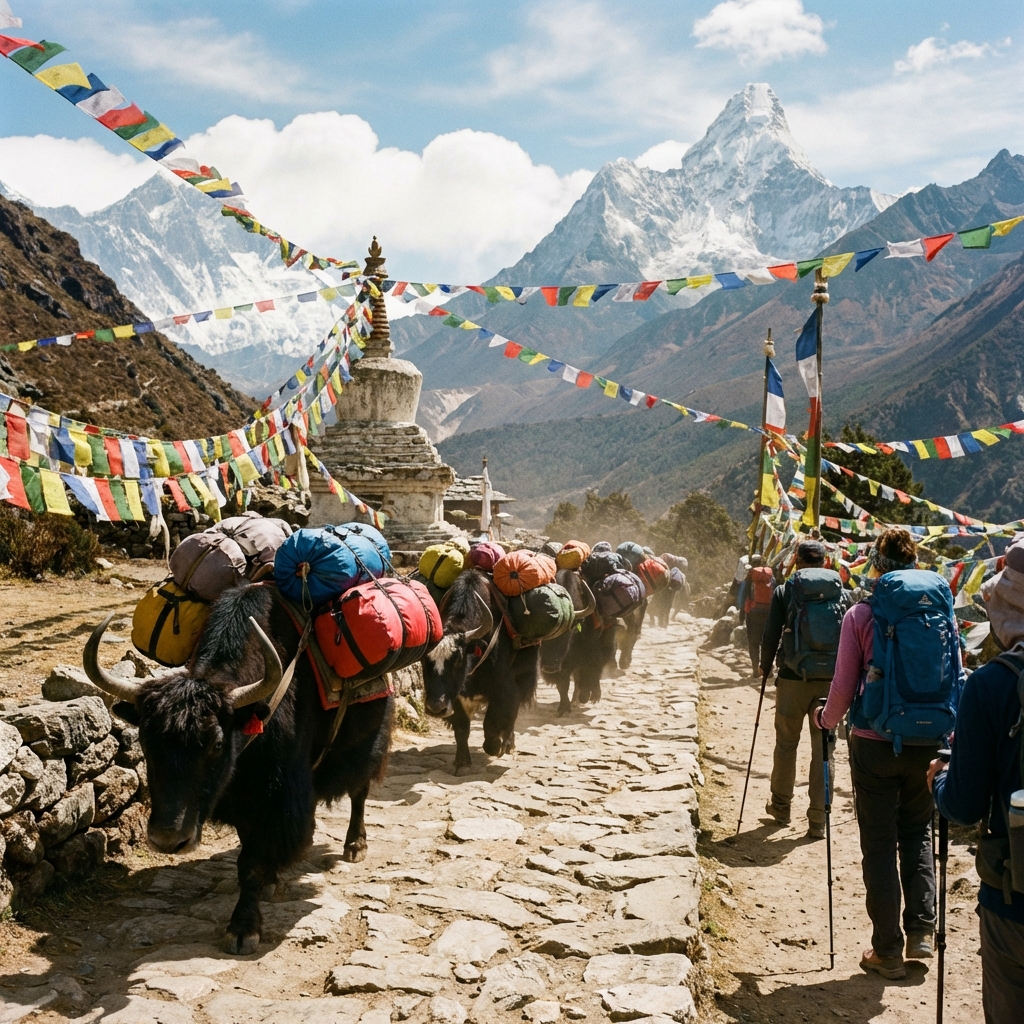
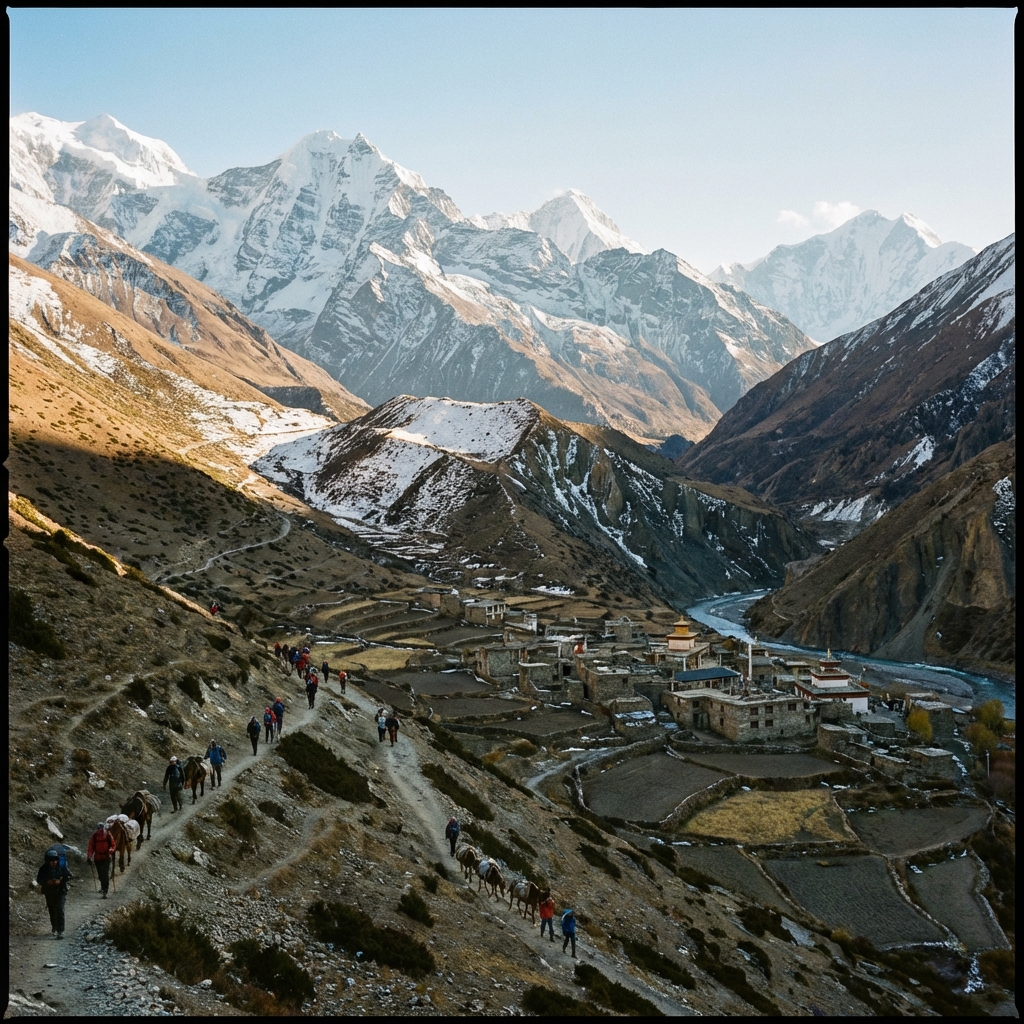
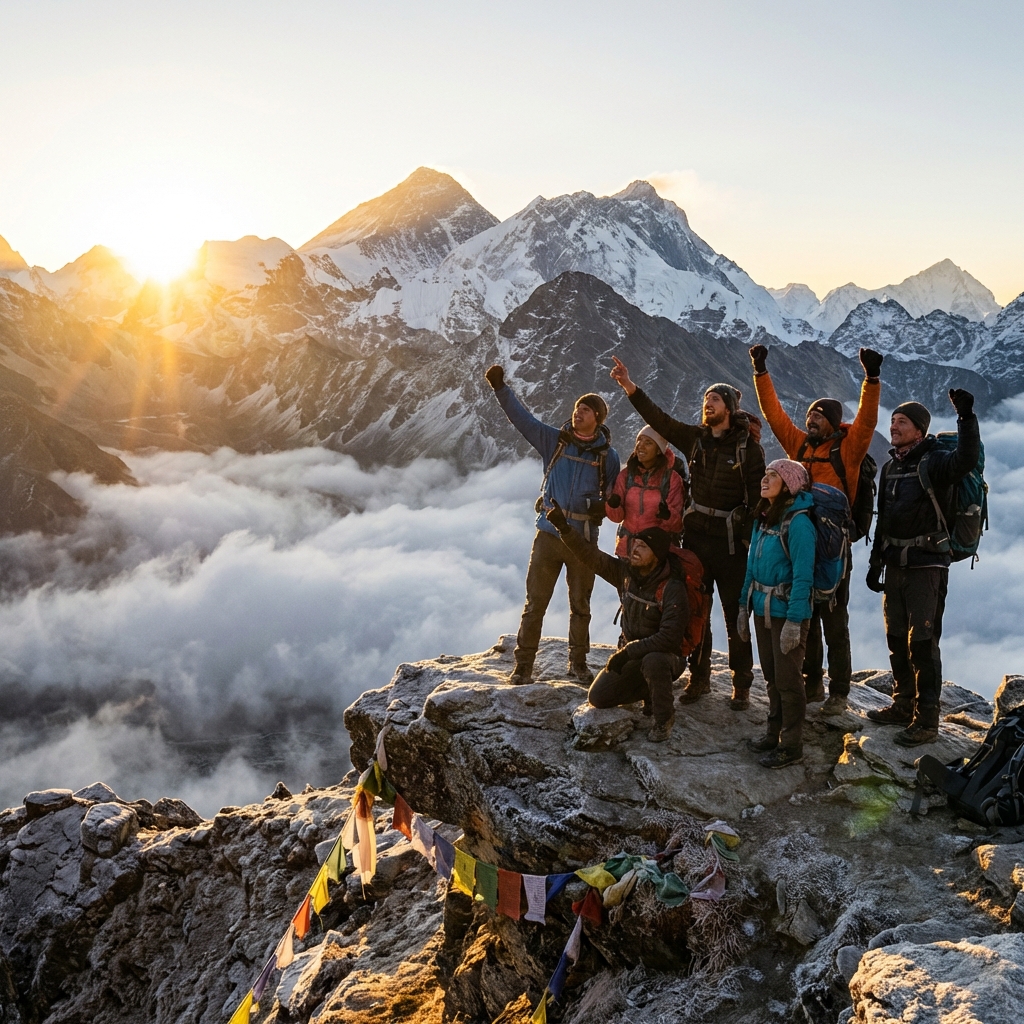
How much does it cost to trek in Nepal? The honest answer ranges from around $800 for a short budget tea house trek to $5,000+ for a premium guided expedition with helicopter transfers. This enormous range reflects the diversity of routes, travel styles, and personal choices available in Nepal's trekking landscape. A budget backpacker doing Poon Hill independently will spend a fraction of what a guided Everest Base Camp trek with a reputable agency costs, which in turn is a fraction of a luxury Upper Mustang or Island Peak expedition.
This comprehensive guide breaks down every cost category, provides detailed price comparisons across Nepal's most popular treks, and gives you realistic budgets at three spending levels (budget, mid-range, and luxury). Whether you are a cash-conscious backpacker or prefer premium comfort, this guide will help you plan accurately and avoid the financial surprises that catch many first-time Nepal trekkers off guard.
$25-$40 /day on trail
$40-$60 /day on trail
$150-300+/day on trail
$1,000-1,500 (independent)
$1,800-2,800 (guided)
$3,500-6,000+
$500-800 (Poon Hill, budget)
$5,000-8,000+ (Upper Mustang luxury)
Understanding Nepal Trekking Costs: Why the Huge Range?
Before diving into specific numbers, it helps to understand the factors that create such wide cost variation:
- Route choice: A 4-day Poon Hill trek costs a fraction of a 21-day Upper Mustang expedition
- Independent vs. guided: Hiring an agency adds significant cost but provides logistics, safety, and comfort
- Season: Peak season (October-November) costs 20-40% more than off-season
- Travel style: Tea house budget trekking vs. luxury lodge treks represent entirely different price categories
- Permits: Range from $30 for basic trekking to $500+ for restricted areas
- Transportation: Lukla flights for Everest region add $215-400; Annapurna treks may need no flights
- Duration: Longer treks obviously cost more overall, though the daily rate may be similar
- Group size: Larger groups share guide/porter costs and may get agency discounts
Complete Cost Categories: Everything You Will Pay For
Every Nepal trek involves spending across these categories. The table below provides ranges across all major treks:
| Cost Category | Budget Range | Notes |
|---|---|---|
| International flights | $500-1,500+ | To/from Kathmandu; varies enormously by origin |
| Nepal visa | $50 (30 days) | On arrival at Tribhuvan Airport |
| Permits | $30-500+ | Varies dramatically by route |
| Domestic flights | $0-400 | Lukla flights for Everest; optional for Annapurna |
| Ground transport | $5-60 | Buses, jeeps, taxis |
| Accommodation | $3-150/night | Basic tea house to luxury lodge |
| Food on trek | $215-50/day | Tea house meals to premium dining |
| Guide | $25-50/day | Licensed trekking guide |
| Porter | $15-25/day | Carries 25-30kg of your gear |
| Tips | $5-15/day total | For guide and porter combined |
| Gear | $0-500+ | Buy, rent, or bring from home |
| Insurance | $50-200 | Must cover altitude and helicopter rescue |
| Kathmandu/Pokhara days | $20-100/day | Hotels, meals, sightseeing pre/post trek |
| Miscellaneous on trail | $5-20/day | WiFi, charging, hot showers, snacks, drinks |
Trek-by-Trek Cost Comparison: 2026 Prices
This comparison table covers total costs including permits, transportation, accommodation, food, and guide/porter fees for the trek portion. International flights and pre/post trek city days are excluded.
| Trek | Duration | Budget (Independent) | Mid-Range (Guided) | Luxury (Premium) |
|---|---|---|---|---|
| Poon Hill | 4-5 days | $300-500 | $500-900 | $1,200-2,000 |
| Langtang Valley | 7-10 days | $500-800 | $800-1,400 | $1,800-3,000 |
| Mardi Himal | 5-7 days | $350-600 | $600-1,000 | $1,400-2,200 |
| Annapurna Base Camp | 8-12 days | $600-1,000 | $1,000-1,800 | $2,500-4,000 |
| Everest Base Camp | 12-14 days | $1,000-1,500 | $1,800-2,800 | $3,500-6,000 |
| Annapurna Circuit | 12-18 days | $800-1,300 | $1,300-2,200 | $3,000-5,000 |
| Manaslu Circuit | 14-18 days | N/A (guide required) | $1,800-2,800 | $3,500-5,500 |
| Gokyo Lakes | 12-14 days | $1,000-1,500 | $1,800-2,800 | $3,500-5,500 |
| Three Passes | 18-21 days | $1,400-2,000 | $2,500-3,800 | $5,000-7,500 |
| Upper Mustang | 12-16 days | N/A (guide required) | $2,500-3,500 | $4,000-8,000 |
| Island Peak + EBC | 18-21 days | N/A (guide required) | $3,500-5,000 | $6,000-10,000+ |
Note: Manaslu Circuit, Upper Mustang, and peak climbing treks require mandatory guides and restricted area permits, making independent budget trekking impossible.
Most Cost-Effective Treks
For the best value (stunning scenery per dollar spent), Poon Hill, Langtang Valley, and Mardi Himal stand out. These shorter treks avoid expensive Lukla flights, require only basic permits, and deliver spectacular experiences at a fraction of the cost of Everest or Annapurna Circuit treks. The Langtang Valley trek is particularly strong value: no flights needed, moderate permit fees, fewer crowds, and outstanding mountain scenery.
Budget Trekking: $25-$40 /Day on Trail
Budget trekking in Nepal remains possible in 2026, though it requires discipline and willingness to accept basic comfort levels. Here is what budget trekking looks like in practice.
What $25-40/Day Gets You
Accommodation ($3-8/night):
- Basic tea house room with twin beds and thin mattress
- Shared bathroom (squat toilet, cold water)
- No heating in room
- Expectation to eat dinner and breakfast at the lodge (commonly required for cheap room rates)
Food ($12-20/day):
- Dal bhat (Nepali staple meal) for lunch and dinner: $4-8 each with unlimited refills
- Breakfast: chapati with egg, porridge, or toast: $3-5
- Tea: $1-2 per cup
- Water purification instead of buying bottled water: saves $3-5/day
No Guide or Porter:
- Self-navigation on established routes (EBC, ABC, Poon Hill, Langtang)
- Carrying your own pack (10-12kg recommended maximum)
- Saving $40-70/day compared to hiring both guide and porter
Where Budget Trekking Works Best
Budget trekking is most practical on:
- Poon Hill: Short, well-marked, many teahouses
- Langtang Valley: Clear trail, no flights needed
- Annapurna Base Camp: Well-established tea house network
- Everest Base Camp: Very clear trail, many lodges, lots of other trekkers
Budget Savings Strategies
- Eat dal bhat: It is the cheapest, most filling, and most nutritious meal on the menu. Unlimited refills mean better value than Western food. One plate of dal bhat typically costs $4-7 and includes rice, lentil soup, vegetables, pickles, and papadum.
- Purify your own water: Buy purification tablets ($5 for a trip supply) rather than bottled water ($2-5 per liter at altitude). This saves $50-100 over a two-week trek.
- Charge devices strategically: Charge everything fully in Kathmandu/Pokhara. Carry a 20,000mAh power bank ($15-25). Avoid paying $3-5 per charge at altitude lodges.
- Skip the hot shower above 3,500m: hot shower costs $2-$10 depending on altitude at higher lodges. Use wet wipes and save showering for lower altitudes.
- Trek in shoulder season: March, early April, late November, and December offer lower prices on accommodation, food, guides, and porters.
- Share rooms: If trekking with a partner, twin rooms cost the same as single occupancy in most tea houses.
For a complete guide to budget strategies, see our budget trekking Nepal guide.
Pro Tip
The most effective single budget strategy is eating dal bhat for every lunch and dinner. At higher altitudes, a plate of dal bhat with unlimited refills costs $5-8, while a pizza or burger costs $8-12 with no refill. Over 14 days, this saves $60-120. Dal bhat also provides the best energy for trekking: carbohydrates from rice, protein from lentils, and vegetables for micronutrients.
Mid-Range Trekking: $40-$60 /Day on Trail
Mid-range trekking represents the sweet spot for most international trekkers: comfortable enough to enjoy the experience, affordable enough to not feel extravagant.
What $50-80/Day Gets You
Accommodation ($5-15/night):
- Better tea house rooms (larger, cleaner, possibly with attached bathroom at lower elevations)
- Still basic at high altitude but priority room selection
- Arranged by your guide in advance
Food ($15-25/day):
- Mix of dal bhat and Western-style meals
- Morning coffee/tea, snacks between meals
- Occasional treats (apple pie, chocolate, Snickers bars)
Licensed Trekking Guide ($25-40/day):
- Route navigation and logistics management
- Cultural interpretation and local knowledge
- Safety management and altitude monitoring
- Emergency coordination
- Permit handling and checkpoint facilitation
Porter ($15-22/day):
- Carries your main duffel (up to 25-30kg shared between two trekkers)
- You carry only a day pack (5-8kg)
- Dramatically more enjoyable trekking experience
Mid-Range Agency Packages
Most international trekkers book an all-inclusive agency package, typically including:
- Airport transfers
- Hotel in Kathmandu/Pokhara (pre/post trek)
- All permits
- Guide and porter
- All accommodation on trek
- All meals on trek (some agencies include city meals too)
- Domestic transportation (Lukla flights, buses, jeeps)
Not typically included: International flights, travel insurance, personal gear, tips, drinks/snacks beyond meals, WiFi charges, hot showers, emergency costs.
Agency package prices (2026):
| Trek | Mid-Range Agency Package |
|---|---|
| Poon Hill (5 days) | $500-900 |
| Langtang Valley (8 days) | $700-1,200 |
| ABC (10 days) | $900-1,500 |
| EBC (14 days) | $1,500-2,500 |
| Annapurna Circuit (14 days) | $1,200-2,000 |
| Manaslu Circuit (16 days) | $1,800-No minimum (solo OK with guide),800 |
For guidance on selecting a reputable agency, see our how to choose a trekking agency guide.
Luxury Trekking: $150-300+/Day on Trail
Nepal's luxury trekking segment has grown significantly, with premium lodge networks in the Everest and Annapurna regions offering an entirely different experience from standard tea house trekking.
What Luxury Trekking Looks Like
Premium Lodge Accommodation ($50-200/night):
- Private rooms with attached heated bathrooms
- Hot showers with reliable water pressure
- Heated common areas and sometimes heated rooms
- Premium bedding (duvets, quality mattresses)
- Electricity and charging in rooms
- WiFi included
- Some lodges have spa services
Fine Dining at Altitude ($30-50/day):
- Multi-course meals with diverse menus
- Quality ingredients transported by porter teams
- Wine and cocktail lists at some premium lodges
- Professional kitchen staff
Premium Guide Service ($40-60/day):
- Highly experienced, multilingual guides
- Often certified in wilderness first aid or emergency medicine
- Personal attention (low guide-to-client ratios)
- Comprehensive cultural and natural history interpretation
Helicopter Options ($1,500-5,000):
- Helicopter return from EBC or ABC (saves 3-4 days of walking)
- Scenic mountain flights
- Emergency evacuation priority
Premium Lodge Networks
Everest Region:
- Yeti Mountain Home (Lukla to Kongde) -- Boutique lodges along the EBC trail
- Everest Summit Lodges -- Premium accommodation at key stops
Annapurna Region:
- Ker & Downey -- Luxury camping/lodge treks
- Tiger Mountain Pokhara Lodge -- Pre/post trek luxury base
For detailed luxury options, see our luxury trekking agencies guide.
Permit Costs: 2026 Detailed Breakdown
Permits are a mandatory cost for all Nepal treks. The permit system can be confusing, so here is a complete breakdown of 2026 fees.
TIMS Card (Trekkers' Information Management System)
| TIMS Type | Cost | Who Needs It |
|---|---|---|
| Through Agency (Green) | $10 | Trekkers with registered agency |
| Individual/FIT (Blue) | $20 | Independent trekkers |
Note: TIMS requirements have changed multiple times. As of 2026, TIMS is required for most standard trekking areas. Check current requirements with the Nepal Tourism Board or your agency.
For complete TIMS information, see our TIMS card guide.
National Park and Conservation Area Permits
| Park/Area | Foreigner Fee | SAARC Nationals |
|---|---|---|
| Sagarmatha National Park (Everest) | $34 (NPR 3,000) | NPR 1,500 |
| Annapurna Conservation Area | $34 (NPR 3,000) | NPR 200 |
| Langtang National Park | $34 (NPR 3,000) | NPR 1,500 |
| Manaslu Conservation Area | $34 (NPR 3,000) | NPR 200 |
| Makalu Barun National Park | $34 (NPR 3,000) | NPR 1,500 |
| Kanchenjunga Conservation Area | $34 (NPR 3,000) | NPR 200 |
| Shey Phoksundo National Park (Dolpo) | $34 (NPR 3,000) | NPR 1,500 |
Restricted Area Permits
| Area | Permit Cost | Requirements |
|---|---|---|
| Upper Mustang | $500 (first 10 days) + $50/extra day | Minimum 2 trekkers, mandatory guide, agency booking |
| Manaslu Circuit | $100 (Sep-Nov), $75 (Dec-Aug) | no minimum group size (solo trekkers allowed with licensed guide since 2023), mandatory guide, agency booking |
| Upper Dolpo | $500 (first 10 days) + $50/extra day | Minimum 2 trekkers, mandatory guide |
| Lower Dolpo | $20/week | Mandatory guide |
| Nar-Phu Valley | $100 (Sep-Nov), $75 (Dec-Aug) | Minimum 2 trekkers, mandatory guide |
| Tsum Valley | $100 (Sep-Nov), $75 (Dec-Aug) | Minimum 2 trekkers, mandatory guide |
Peak Climbing Permits
| Peak | Height | Permit Cost (per person) |
|---|---|---|
| Island Peak (Imja Tse) | 6,189m | $250 (spring), $125 (autumn) |
| Mera Peak | 6,476m | $250 (spring), $125 (autumn) |
| Lobuche East | 6,119m | $250 (spring), $125 (autumn) |
| Pisang Peak | 6,091m | $250 (spring), $125 (autumn) |
Note: Peak climbing permits also require a mountaineering liaison officer fee and other mandatory costs that increase total expedition expense significantly.
For a comprehensive permit overview, see our Nepal trekking permits explained guide.
Permit Prices Change
Nepal's permit fees are subject to change by the government, sometimes with short notice. The prices listed here are accurate as of early 2026, but always confirm current fees with your agency or the Nepal Tourism Board before finalizing your budget. Significant increases have been proposed for several restricted areas.
Transportation Costs
International Flights to Kathmandu
This is typically the single largest expense and varies enormously by origin:
| Origin | Typical Range (Round Trip) |
|---|---|
| India | $150-400 |
| Southeast Asia | $300-600 |
| Middle East | $400-800 |
| Europe | $600-1,200 |
| North America | $800-1,500 |
| Australia/NZ | $700-1,300 |
Savings Tips:
- Book 3-6 months ahead for best prices
- Consider flying into Delhi and connecting to Kathmandu (sometimes cheaper from Western countries)
- Shoulder season flights (March, December) often cheaper than October
Domestic Flights
| Route | One-Way Cost | Notes |
|---|---|---|
| Kathmandu-Lukla | $180-400 | Price varies by airline and season; essential for Everest treks |
| Kathmandu-Pokhara | $80-130 | 25 minutes vs. 7 hours by bus |
| Pokhara-Jomsom | $100-150 | For Upper Mustang/Jomsom treks |
| Kathmandu-Tumlingtar | $150-250 | For Makalu/Kanchenjunga |
Lukla Flight Reality: The Kathmandu-Lukla flight is notoriously weather-dependent. Budget for 1-2 buffer days in Kathmandu in case of delays. Some trekkers opt for the helicopter alternative ($300-500 one-way) for more reliable scheduling.
For complete Lukla flight information, see our Kathmandu to Lukla flights guide.
Ground Transportation
| Route | Bus | Tourist Bus | Jeep/Private Car |
|---|---|---|---|
| Kathmandu-Pokhara | $8-12 | $15-25 | $80-150 |
| Kathmandu-Syabrubesi (Langtang) | $8-12 | N/A | $60-100 |
| Kathmandu-Sotikhola (Manaslu) | $10-15 | N/A | $80-140 |
| Pokhara-Nayapul (Annapurna) | $3-5 | N/A | $25-40 |
| Pokhara-Besisahar (Annapurna Circuit) | $5-8 | N/A | $40-70 |
Guide and Porter Costs
Guide Rates (2026)
| Guide Type | Daily Rate | Notes |
|---|---|---|
| Licensed trekking guide | $25-$35 /day | Standard for most treks |
| Senior/experienced guide | $35-50/day | For technical routes, peak climbing |
| English-fluent premium guide | $40-60/day | Luxury treks, small group specialists |
| Mountaineering guide | $50-80/day | Peak climbing, technical routes |
What a guide provides:
- Route navigation and logistics
- Permit handling and checkpoint assistance
- Tea house booking and food ordering
- Cultural interpretation
- Altitude sickness monitoring and emergency response coordination
- Companionship and local knowledge
Porter Rates (2026)
| Porter Type | Daily Rate | Carry Weight |
|---|---|---|
| Standard porter | $20-$30 /day | Up to 25-30kg |
| Guide-porter (combined role) | $28-38/day | Up to 15-20kg |
Porter Ethics: Ensure your porter has adequate clothing, insurance, and reasonable loads. See our porter ethics and responsible trekking guide for important guidelines.
Tipping Expectations
Tipping is customary and important in Nepal's trekking industry. Guides and porters depend on tips as a significant portion of their income.
| Role | Recommended Tip | Notes |
|---|---|---|
| Guide | $3-5/day per trekker | Based on service quality |
| Porter | $2-3/day per trekker | Given at end of trek |
| Cook (camping treks) | $2-3/day per trekker | If applicable |
| Kitchen crew | $1-2/day per trekker | If applicable |
Example for 14-day EBC: Guide tip $42-70, Porter tip $28-42. Total tipping budget: $70-112.
For comprehensive hiring advice, see our guide to hiring guides and porters.
Food Costs on Trek
Tea House Menu Prices (2026)
Prices increase steadily with altitude. Here are typical ranges:
Breakfast ($3-8):
| Item | Low Altitude | Mid Altitude | High Altitude |
|---|---|---|---|
| Tibetan bread with honey | $2-3 | $3-4 | $4-6 |
| Porridge/oatmeal | $2-3 | $3-4 | $4-5 |
| Pancakes | $3-4 | $4-5 | $5-7 |
| Eggs (fried/scrambled) | $2-4 | $4-5 | $5-7 |
| Toast with jam | $2-3 | $3-4 | $4-5 |
Lunch/Dinner ($4-12):
| Item | Low Altitude | Mid Altitude | High Altitude |
|---|---|---|---|
| Dal bhat (with refills) | $4-5 | $5-7 | $7-10 |
| Fried rice/noodles | $4-5 | $5-7 | $7-9 |
| Mo:mo (dumplings) | $3-5 | $5-7 | $7-9 |
| Pizza | $5-7 | $7-9 | $9-12 |
| Pasta | $4-6 | $6-8 | $8-11 |
| Soup | $2-4 | $3-5 | $4-7 |
Drinks ($1-5):
| Item | Low Altitude | Mid Altitude | High Altitude |
|---|---|---|---|
| Black tea | $0.50-1 | $1-2 | $2-3 |
| Milk tea | $1-2 | $2-3 | $3-4 |
| Coffee | $2-3 | $3-4 | $4-5 |
| Soft drinks | $1-2 | $2-3 | $3-5 |
| Beer | $3-5 | $5-7 | $7-10 |
Daily Food Budget Estimates:
- Budget (dal bhat, tea, minimal extras): $12-18/day
- Mid-range (mixed menu, coffee, some snacks): $18-28/day
- Generous (varied menu, treats, drinks): $25-40/day
Pro Tip
Many tea houses offer a deal: if you eat dinner and breakfast at the lodge, your room rate is discounted (sometimes free). This is standard practice throughout Nepal and represents the best value. Ordering from the same lodge where you sleep also builds goodwill with the lodge owner and supports the local economy directly.
Accommodation Costs
Tea House Lodges (Standard)
| Altitude Zone | Room Rate | Room Quality |
|---|---|---|
| Lower (1,500-2,500m) | $3-8/night | Basic twin room, sometimes attached bathroom |
| Mid (2,500-3,500m) | $5-10/night | Basic twin room, shared bathroom |
| High (3,500-4,500m) | $5-12/night | Basic room, shared bathroom, no heating |
| Very High (4,500m+) | $5-15/night | Very basic, shared bathroom, cold |
Standard tea house reality:
- Thin plywood walls, minimal sound insulation
- Two single beds with thin foam mattresses
- Blankets provided but bring your own sleeping bag
- Shared squat toilets (sometimes Western-style at lower altitudes)
- Dining hall heated by yak dung or kerosene stove (rooms are unheated)
- Electricity usually available (solar or micro-hydro) but unreliable at high altitude
Premium/Luxury Lodges
| Lodge Type | Room Rate | Available Regions |
|---|---|---|
| Upgraded tea houses | $15-30/night | Main routes at popular stops |
| Premium lodge networks | $50-100/night | Everest, Annapurna main corridors |
| Luxury lodges | $100-200+/night | Select locations only |
Hidden Costs: What Most Guides Do Not Warn You About
These smaller expenses add up significantly over a multi-week trek. Budget an additional $5-20/day for these items.
On-Trail Extras
| Item | Cost | Frequency |
|---|---|---|
| WiFi | $2-5/session | Daily if staying connected |
| Device charging | $2-5/device | Every 1-2 days |
| Hot shower | $3-7 | Every 2-3 days |
| Laundry | $3-5/load | Weekly |
| Bottled water (1L) | $1-5 | Daily (or purify your own) |
| Snacks (chocolate, chips) | $2-5 | Daily temptation |
| Toilet paper (if not provided) | $0.50-1 | Occasional |
| Battery purchase (cold drains fast) | $2-5 | Occasional |
Often-Forgotten Costs
- Kathmandu/Pokhara buffer days: Flight delays, especially to Lukla, can add 1-3 unexpected city days at $105+ for foreigners/day
- Gear you forgot: Buying that extra fleece or renting a sleeping bag in Thamel adds $5-50
- SIM card and data: $5-15 for a local Ncell or NTC SIM with data package
- Tips for city services: Airport pickups, hotel staff, restaurant servers
- Excess baggage fees: Lukla flights have strict 15kg luggage limits; excess charged at $1.50-3/kg
- Currency exchange losses: ATM fees ($4-6 per withdrawal) and unfavorable exchange rates at airports/hotels
- Altitude sickness medication: Diamox over-the-counter in Nepal ($3-5); other medications from pharmacies
- Post-trek celebrations: Most trekkers splurge on a nice Kathmandu/Pokhara meal and drinks after their trek
- Souvenirs and shopping: Thamel is dangerously tempting for pashmina, singing bowls, and trekking gear
- Photography prints or album: Preserving your trek memories
For a deep dive into hidden costs, see our hidden costs of Nepal trekking guide.
Gear Costs: Buy, Rent, or Bring
Bringing Gear from Home
If you already own trekking gear, this is the cheapest option. However, flying with bulky gear (sleeping bag, down jacket, trekking poles) has implications for luggage weight and space.
Renting Gear in Kathmandu/Pokhara
Kathmandu's Thamel district has dozens of gear rental shops. This is an excellent option if you do not own gear or do not want to fly with it.
| Item | Daily Rental | Deposit |
|---|---|---|
| Sleeping bag (-15°C) | $1-2/day | $50-100 |
| Down jacket | $1-2/day | $30-60 |
| Trekking poles (pair) | $0.50-1/day | $15-25 |
| Trekking boots | $1-2/day | $30-50 |
| Fleece jacket | $0.50-1/day | $15-25 |
| Crampons/microspikes | $1-2/day | $25-50 |
| Daypack | $0.50-1/day | $15-25 |
14-day rental total (sleeping bag + jacket + poles): $35-70
Important: Inspect rental gear carefully before leaving Kathmandu. Test zippers, check insulation loft, verify sleeping bag temperature rating. Negotiate prices -- rental shops expect bargaining.
For complete rental information, see our gear rental in Kathmandu guide.
Buying Gear in Kathmandu
Thamel sells both genuine branded gear and quality copies at significantly lower prices than Western countries:
| Item | Copy/Unbranded | Genuine Brand |
|---|---|---|
| Down jacket | $20-50 | $80-200 |
| Fleece jacket | $10-25 | $40-80 |
| Trekking pants | $10-20 | $30-60 |
| Sleeping bag | $30-80 | $100-300 |
| Daypack | $15-30 | $40-100 |
| Trekking boots | $30-60 | $80-200 |
Quality Reality: Kathmandu copies vary enormously. Some are excellent value; others fall apart on the trail. For critical items (boots, sleeping bags), genuine or well-tested copies are worth the extra investment.
Insurance Costs
Travel insurance that covers high-altitude trekking and helicopter rescue is non-negotiable for Nepal trekking. Standard travel insurance does NOT cover trekking above 2,500m or helicopter evacuation.
What to Look For
| Coverage Requirement | Minimum | Recommended |
|---|---|---|
| Altitude coverage | Your max trek altitude | 6,000m+ (covers all treks) |
| Helicopter rescue | $100,000 | $200,000+ |
| Medical treatment | $100,000 | $250,000+ |
| Repatriation | Included | Included |
| Trip cancellation | Optional | Recommended |
Insurance Cost Estimates
| Provider Type | Cost (2-4 week trip) | Notes |
|---|---|---|
| Budget specialist | $50-100 | May have altitude/activity limits |
| Mid-range adventure | $100-150 | Good altitude coverage |
| Comprehensive premium | $150-250 | Full coverage, higher limits |
Popular providers used by Nepal trekkers:
- World Nomads
- Global Rescue
- IMG (International Mountain Guides) insurance
- Ripcord Rescue Travel Insurance
For comprehensive insurance guidance, see our travel insurance for Nepal trekking guide.
Insurance Is Not Optional
Helicopter rescue from Everest Base Camp costs $4,000-6,000. Medical treatment in Kathmandu for serious altitude illness can exceed $10,000. Without insurance, you pay out of pocket. Several trekkers each year face financial devastation from uninsured emergencies. Budget $100-200 for proper insurance -- it is the most important money you will spend on your entire trip.
Money Management in Nepal
Currency
- Nepalese Rupee (NPR): 1 USD = approximately 130-135 NPR (2026)
- Cash is king on the trail. No credit cards, no digital payments above Namche/Manang
- Carry sufficient NPR cash before starting your trek
ATMs and Cash
In Kathmandu/Pokhara:
- ATMs widely available (Nabil, Himalayan, Standard Chartered)
- Per-withdrawal limit: NPR 25,000-35,000 ($185-260)
- ATM fees: $4-6 per withdrawal (your bank + Nepal bank)
- Multiple withdrawals may be needed for a 2-week trek
On Trail:
- ATMs exist in Namche Bazaar (Everest region) and Jomsom (Annapurna) -- but reliability is inconsistent
- Do NOT rely on trail ATMs. Carry all needed cash from Kathmandu/Pokhara.
How Much Cash to Carry
| Trek | Budget | Mid-Range | Notes |
|---|---|---|---|
| Poon Hill (5 days) | $200-300 | $100-200 (pre-paid agency) | Short trek, less cash needed |
| ABC (10 days) | $400-600 | $200-350 | Food extras, tips |
| EBC (14 days) | $500-800 | $250-450 | Higher altitude = higher prices |
| Manaslu (16 days) | N/A | $300-500 | Guide required; some costs pre-paid |
Tip: Carry a mix of large notes (NPR 1,000) for lodge payments and small notes (NPR 50, 100, 500) for snacks, drinks, and tips. Breaking large notes above Namche/Manang can be difficult.
Sample Detailed Budget: 14-Day EBC Trek at Three Price Levels
Budget Independent EBC ($1,100-1,500 total)
| Category | Cost |
|---|---|
| Lukla round-trip flight | $360-400 |
| Sagarmatha NP permit | $34 |
| TIMS card | $20 |
| Accommodation (12 nights) | $60-96 ($5-8/night) |
| Food (14 days) | $210-280 ($15-20/day) |
| On-trail extras (WiFi, charging, showers) | $50-80 |
| Tips (none if independent, or minimal for lodge staff) | $20-30 |
| Kathmandu hotel (2 nights buffer) | $30-50 |
| Kathmandu meals (2 days) | $20-30 |
| Taxi/transport in Kathmandu | $15-25 |
| Miscellaneous | $30-50 |
| Total | $849-1,061 |
| With gear rental (sleeping bag + jacket) | $1,000-1,250 |
| With insurance ($100-150) | $1,100-1,400 |
Mid-Range Guided EBC ($1,800-2,800 total)
| Category | Cost |
|---|---|
| Agency package (guide, porter, accommodation, food, permits, Lukla flights) | $1,500-2,200 |
| Tips (guide + porter, 14 days) | $215-120 |
| On-trail extras (WiFi, charging, showers, snacks, drinks) | $80-150 |
| Kathmandu hotel (2 nights, mid-range) | $60-100 |
| Kathmandu meals (2 days) | $30-50 |
| Taxi/transport in Kathmandu | $15-25 |
| Insurance | $100-150 |
| Miscellaneous | $50-80 |
| Total | $1,905-2,875 |
Luxury EBC ($3,500-6,000+ total)
| Category | Cost |
|---|---|
| Premium agency package (premium lodges, experienced guide, porter, all meals, permits, flights) | $3,000-5,000 |
| Helicopter return from Gorak Shep (optional) | $1,000-2,000 |
| Tips (guide + porter, premium) | $100-200 |
| On-trail treats and drinks | $100-200 |
| Luxury Kathmandu hotel (2 nights) | $150-400 |
| Kathmandu dining and experiences | $80-150 |
| Premium insurance | $150-250 |
| Total | $3,580-6,200+ |
For the complete EBC cost breakdown, see our EBC trek cost breakdown guide.
Tips for Saving Money Without Sacrificing Safety
-
Never cut costs on insurance. This is the one area where saving money can be catastrophic. Budget $100-200 for comprehensive coverage.
-
Never with a mandatory licensed guide on restricted area treks or technical routes. Guides are mandatory for Manaslu, Upper Mustang, and peak climbing for good reason.
-
Do save on food by eating dal bhat. It is genuinely the best food for trekking and the most affordable.
-
Do purify your own water. Bring purification tablets or a SteriPEN. The savings over 14 days are significant and it reduces plastic waste.
-
Do rent gear you will only use once. If this is your only Nepal trek, renting a sleeping bag and down jacket saves $100-300 compared to buying quality items at home.
-
Do trek in shoulder season. March, early April, late November, and December offer 15-30% savings across all categories with still-good conditions.
-
Consider Langtang or Poon Hill instead of EBC. Eliminating the Lukla flight alone saves $215-400 round trip, and these treks are shorter, reducing daily costs proportionally.
-
Share a guide and porter with another trekker. If you find a compatible trek partner, splitting guide/porter costs halves this significant expense.
-
Negotiate in shoulder season. Guides, porters, and even lodge owners are more flexible on pricing outside October-November.
-
Buy snacks in Kathmandu, not on trail. Granola bars, chocolate, and dried fruit cost 50-70% less in Kathmandu supermarkets than at altitude shops.
Frequently Asked Questions
How much does it cost to trek to Everest Base Camp in 2026?
A complete EBC trek costs approximately $1,100-1,500 for budget independent trekking, $1,800-2,800 for mid-range guided trekking, and $3,500-6,000+ for luxury trekking. These figures include permits, Lukla flights, accommodation, food, guide/porter (for guided options), tips, and on-trail expenses but exclude international flights and insurance. See our detailed EBC cost breakdown.
What is the cheapest trek in Nepal?
The Poon Hill trek (4-5 days) is the most affordable major trek, costing $300-500 for a budget independent trekker. No flights are needed (starts from Pokhara), permits are minimal ($34 ACAP), the trail is short, and lower-altitude tea houses are the cheapest. Langtang Valley (7-10 days, $500-800 budget) is the best value for a longer trek.
Can I trek Nepal on $25 per day?
Yes, $25/day on the trail is achievable on established routes (Poon Hill, Langtang, ABC, EBC) if you trek independently with a mandatory licensed guide/porter, eat dal bhat for most meals, purify your own water, skip hot showers and WiFi at altitude, and stay in the cheapest tea house rooms. This excludes permits, transportation, and gear, which are separate one-time costs.
Do I need to tip my guide and porter?
Tipping is customary and expected in Nepal's trekking industry. Standard tips are $3-5/day for guides and $2-3/day for porters. For a 14-day trek, budget $70-112 total for tips. Tips are given at the end of the trek, preferably in NPR cash.
How much cash should I carry on the trek?
For independent budget trekking, carry $500-800 equivalent in NPR for a 14-day trek. For agency-guided treks where most costs are pre-paid, carry $250-450 for extras (snacks, drinks, WiFi, hot showers, tips). Always carry more than you think you need -- ATMs on the trail are unreliable.
Are credit cards accepted on the trek?
No. Above Namche Bazaar (Everest region) or Manang (Annapurna Circuit), all transactions are cash only in NPR. Some Namche lodges and shops accept cards with a 3-5% surcharge, but do not rely on this. Always carry sufficient cash.
How much does a trekking guide cost per day?
Licensed trekking guides charge $25-$35 /day for standard routes in 2026. Senior or specialized guides charge $25-$35 /day. These rates are the guide's salary; you also cover their food and accommodation (some agencies include this in the package). Tips of $3-5/day are expected additionally.
How much do permits cost for Nepal trekking?
Basic trekking permits (TIMS + conservation area) cost $44-54 per person. Restricted area permits add $75-500 depending on the area. Peak climbing permits add $125-250. A full EBC permit set costs approximately $54, while a Manaslu Circuit permit set costs approximately $134-160.
Is it cheaper to book a trek in Nepal or from home?
Booking directly with a Nepal-based agency (either online before arrival or in person in Kathmandu/Pokhara) is typically 30-50% cheaper than booking through a Western travel agent who acts as an intermediary. However, booking through a reputable international agent provides added consumer protection and accountability. Our agency selection guide helps you evaluate options.
How much does the Lukla flight cost in 2026?
The Kathmandu to Lukla one-way flight costs $215-200 for foreigners on standard airlines (Tara Air, Summit Air). Round trip: $360-400. Helicopter alternatives cost $300-500 one-way and are more weather-reliable. Book in advance during peak season (October-November, March-April).
What hidden costs should I budget for?
The most commonly overlooked costs include: WiFi ($2-5/session daily), device charging ($2-5), hot showers ($3-7), altitude-inflated food/drink prices, Kathmandu buffer days for flight delays ($30-80/day), tips, and post-trek celebrations. Budget an additional $100-200 for a 14-day trek to cover these extras. See our hidden costs guide.
How much does helicopter rescue costs $1,800-$5,000 depending on location (EBC to Lukla $1,800-$2,500, EBC to Kathmandu $4,500-$5,000) depending on altitude, location, and number of passengers. Annapurna rescues are similar. Without insurance, you pay this out of pocket. With proper travel insurance covering helicopter evacuation, the insurance company pays directly or reimburses you. This is why adequate insurance is absolutely essential.
Final Thoughts: Planning Your Nepal Trek Budget
Nepal remains one of the world's great trekking value destinations. Where else can you walk through the world's highest mountains, stay in family-run lodges, eat hearty local food, and be guided by experienced mountaineers for $50-80 a day? Even at the budget level, a Nepal trek delivers an experience that far exceeds its cost.
The key to financial planning is honesty about your travel style and priorities. If you need a guide for safety (first-time trekker, solo trekker, restricted area), budget for one -- it is not the place to cut costs. If you can eat dal bhat happily for two weeks, your food budget drops dramatically. If you want the comfort of a warm room and hot shower every night, budget for premium lodges.
Whatever your budget, Nepal rewards preparation. Understand the costs before you arrive, carry adequate cash, invest in proper insurance, and save your splurges for the experiences that matter most to you -- whether that is a helicopter flight over Everest or an extra plate of apple pie at 5,000 meters.
Start planning with our trek-specific cost guides: