Every year, tens of thousands of trekkers fly to Lukla and walk the same trail to Everest Base Camp. It is the world's most famous trek, and deservedly so. But a growing number of experienced travelers are asking a different question: is there a trek that delivers comparable Himalayan grandeur without the crowds, the expensive Lukla flight, and the two-week time commitment?
The answer is the Langtang Valley Trek -- and it is sitting in plain sight, just 30 kilometers north of Kathmandu.
Langtang Valley is Nepal's third most popular trekking region, but it sees a fraction of EBC's traffic. It offers towering 7,000-meter peaks, authentic Tamang and Tibetan culture, cheese factories built by Swiss development projects, and a maximum altitude of 4,984m at Kyanjin Ri that rivals EBC's altitude challenge. All of this from a trailhead you can reach by a seven-hour bus ride from Kathmandu -- no expensive flights, no weather delays, no airport dramas.
The comparison between these two treks is not simply "popular vs unpopular." It is a comparison between two fundamentally different trekking philosophies: the bucket-list iconic experience versus the discerning traveler's choice. This guide examines every dimension to help you decide which philosophy suits you.
Who should read this guide:
- Trekkers deciding between Langtang and EBC for their Nepal trip
- Experienced trekkers seeking an alternative to overcrowded Everest trails
- Budget-conscious trekkers evaluating cost differences
- Travelers with limited time looking for the best trek accessible from Kathmandu
- Anyone curious about Langtang Valley's post-earthquake status and recovery
7-12 days from Kathmandu
12-16 days from Kathmandu
4,984m (Kyanjin Ri) or 5,033m (Tserko Ri)
5,545m (Kala Patthar) or 5,364m (Everest Base Camp)
$500-$1,500 (no flights needed)
$1,500-$3,500 (includes Lukla flights)
Low to moderate (50-150 daily in peak season)
High to very high (300-500+ daily in peak season)
7-8 hour bus/jeep from Kathmandu (no flights)
35-minute flight to Lukla ($215-400 round trip)
EBC has the name; Langtang has the value and authenticity
Side-by-Side Comparison Table
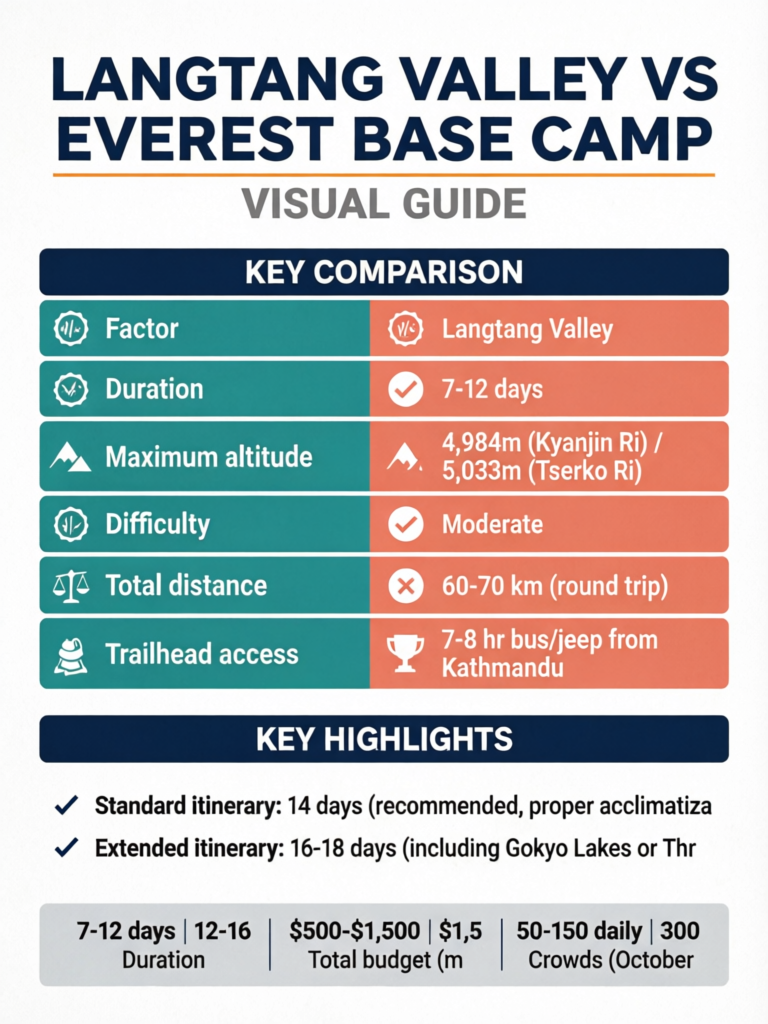
| Factor | Langtang Valley | Everest Base Camp | Advantage |
|---|---|---|---|
| Duration | 7-12 days | 12-16 days | Langtang (more flexible) |
| Maximum altitude | 4,984m (Kyanjin Ri) / 5,033m (Tserko Ri) | 5,545m (Kala Patthar) / 5,364m (EBC) | Depends on goals |
| Difficulty | Moderate | Moderate-Challenging | Langtang (slightly easier) |
| Total distance | 60-70 km (round trip) | 130 km (round trip) | Langtang (shorter) |
| Trailhead access | 7-8 hr bus/jeep from Kathmandu | 35 min flight to Lukla (weather dependent) | Langtang (reliable, cheap) |
| Transport cost | $15-30 bus/jeep each way | $350-400 Lukla flight round trip | Langtang (vastly cheaper) |
| Permit cost | $215 (LNP) + $20 (TIMS) | $38-45 (SNP + municipal) | Similar |
| Total budget (mid-range) | $500-$1,500 | $1,500-$3,500 | Langtang |
| Crowds (October) | 50-150 daily | 300-500+ daily | Langtang |
| Cultural experience | Tamang/Tibetan culture, cheese factory, monasteries | Sherpa culture, Tengboche monastery, Namche Bazaar | Tie (different character) |
| Mountain views | Langtang Lirung (7,227m), Ganesh Himal, Dorje Lakpa | Everest (8,849m), Lhotse, Ama Dablam, Nuptse | EBC (world's highest peaks) |
| Tea house quality | Good (rebuilt post-earthquake, modern) | Very good to excellent | EBC (slightly better) |
| Trail variety | Bamboo forest to glacial valley | Sherpa highlands, river valleys, moraine | Langtang (more diverse lower sections) |
| Wildlife | Red panda habitat, Himalayan tahr, langur monkeys | Limited large wildlife, abundant birds | Langtang |
| Altitude sickness risk | Moderate (gradual ascent profile) | Moderate-High (higher max altitude) | Langtang (slightly lower risk) |
| Independent trekking | Very feasible (well-marked, good infrastructure) | Very feasible (well-marked, excellent infrastructure) | Tie |
| "Bragging rights" | Moderate -- lesser-known among non-trekkers | Very high -- globally recognized name | EBC |
| Post-earthquake status | Fully rebuilt, modern tea houses | Not affected | N/A |
| Best for | Value seekers, culture lovers, repeat Nepal visitors | Bucket-list trekkers, altitude seekers, first-time big trek | Depends on priorities |
The Langtang Earthquake Story: What You Need to Know
On April 25, 2015, a 7.8-magnitude earthquake Langtang Village was devastated by the 2015 earthquake but has been fully rebuilt with earthquake-resistant structures on a site ~100m higher than the original village. Trails and teahouses are fully restored and safe for trekking the Langtang Valley. The village of Langtang was destroyed by a massive avalanche-landslide that killed over 350 people, including local residents, trekkers, and guides. It was one of the worst single-site disasters in Nepal's trekking history.
The Remarkable Recovery
The Langtang Valley's recovery has been extraordinary. By 2018, the main trail was fully reopened, and by 2020, virtually all tea houses along the route had been rebuilt -- many to a higher standard than before. The rebuilt structures use reinforced construction techniques, and the new Langtang village sits on slightly different ground, away from the most vulnerable slide zones.
Today, in 2026:
- All tea houses along the main route are operational from Syabrubesi to Kyanjin Gompa
- Trail quality is excellent, with improvements made during reconstruction
- Safety assessments have been conducted, and the route is considered safe for trekking
- New tea houses have been built at several locations, improving accommodation options
- The memorial at Langtang village is a poignant stopping point that adds emotional depth to the trek
Supporting Langtang's Recovery Through Tourism
Trekking in Langtang Valley is one of the most direct ways to support the community's ongoing recovery. Tourism is the primary income source for the rebuilt villages, and every trekker who stays in a local tea house contributes directly to the economy that sustained devastating losses. The community welcomes trekkers warmly, and many tea house owners will share their experiences of the earthquake and rebuilding process with visitors who ask respectfully.
Is Langtang Safe to Trek?
Yes. Geological assessments conducted by Nepali and international experts have evaluated the rebuilt trail and settlements. While no mountain environment is entirely risk-free (earthquakes, avalanches, and landslides are inherent to Himalayan trekking), the Langtang Valley is no more hazardous than any comparable trek in Nepal. The rebuilt infrastructure actually incorporates lessons learned from the disaster, making some structures more resilient than their predecessors.
The Scenery Showdown: World's Highest vs Intimate Valley
EBC: The Crown Jewels of the Himalayas
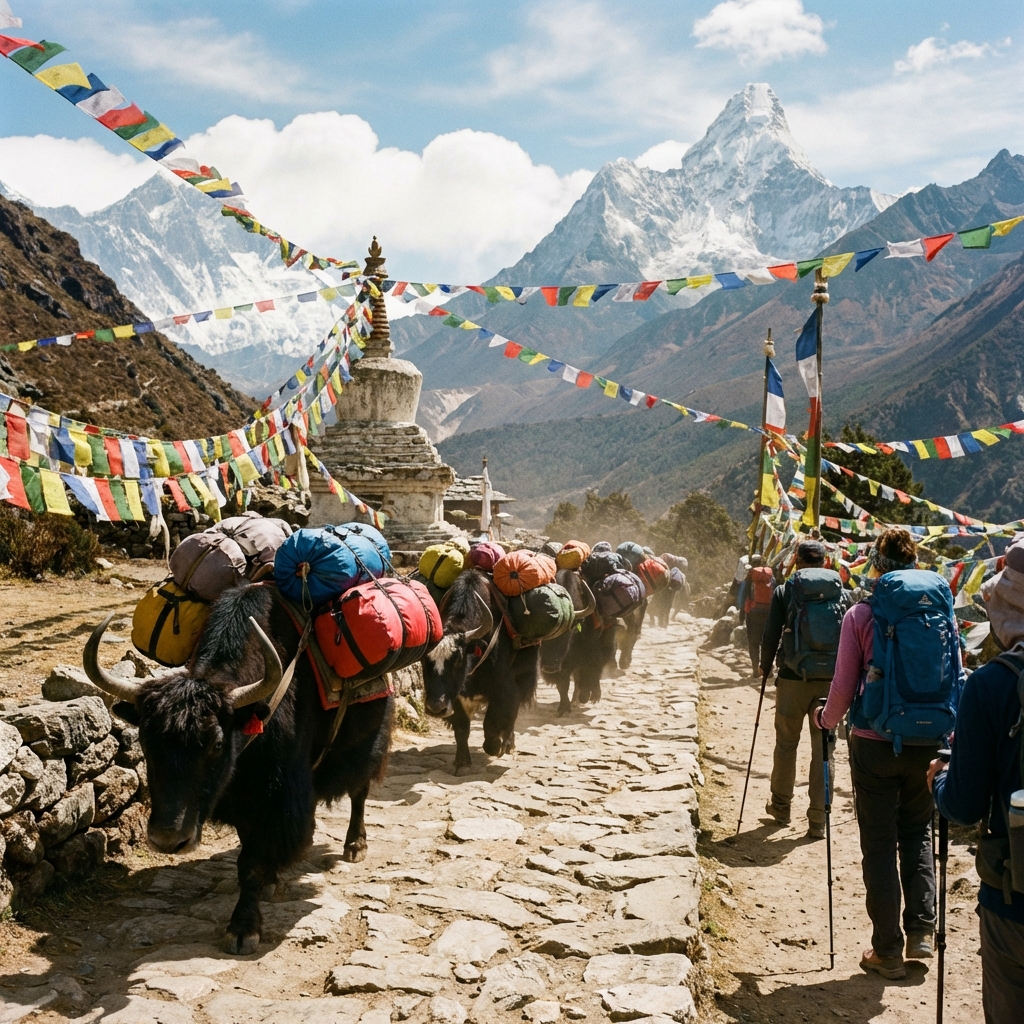
There is no getting around it -- the Everest region contains the most famous mountains on Earth. The EBC trek puts you in the presence of:
- Mount Everest (8,849m) -- visible from multiple points, most dramatically from Kala Patthar
- Lhotse (8,516m) -- the world's fourth-highest mountain, looming over EBC
- Ama Dablam (6,812m) -- widely considered the most beautiful mountain in the Himalayas
- Nuptse (7,861m) -- forming the dramatic wall above Base Camp
- Cho Oyu (8,188m) -- visible from higher viewpoints
- Makalu (8,485m) -- visible from Kala Patthar in clear conditions
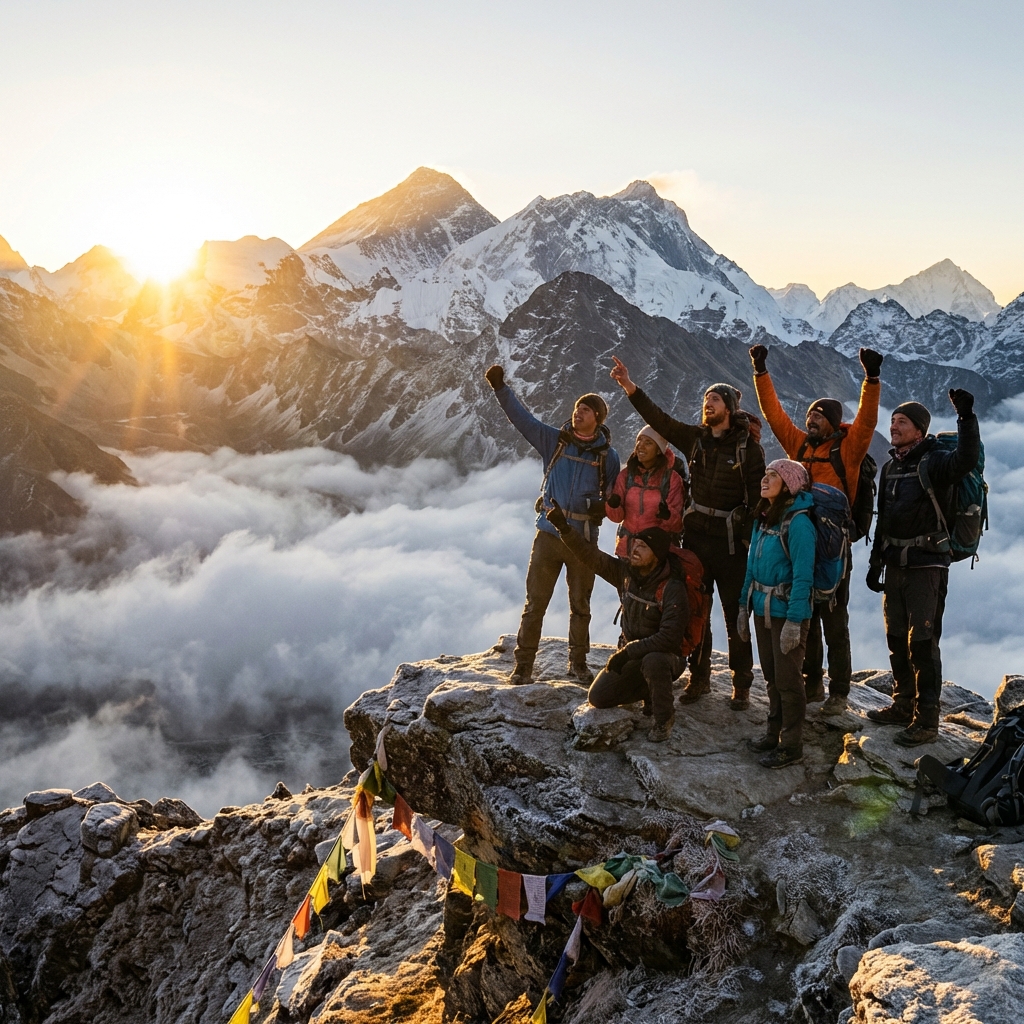
The Kala Patthar sunrise -- watching first light strike Everest's summit while you stand at 5,545m in the bitter cold -- is one of the most iconic moments in adventure travel. Nothing in Langtang matches the raw emotional power of standing at the foot of the world's highest mountain.
Langtang: The Intimate Mountain Theater
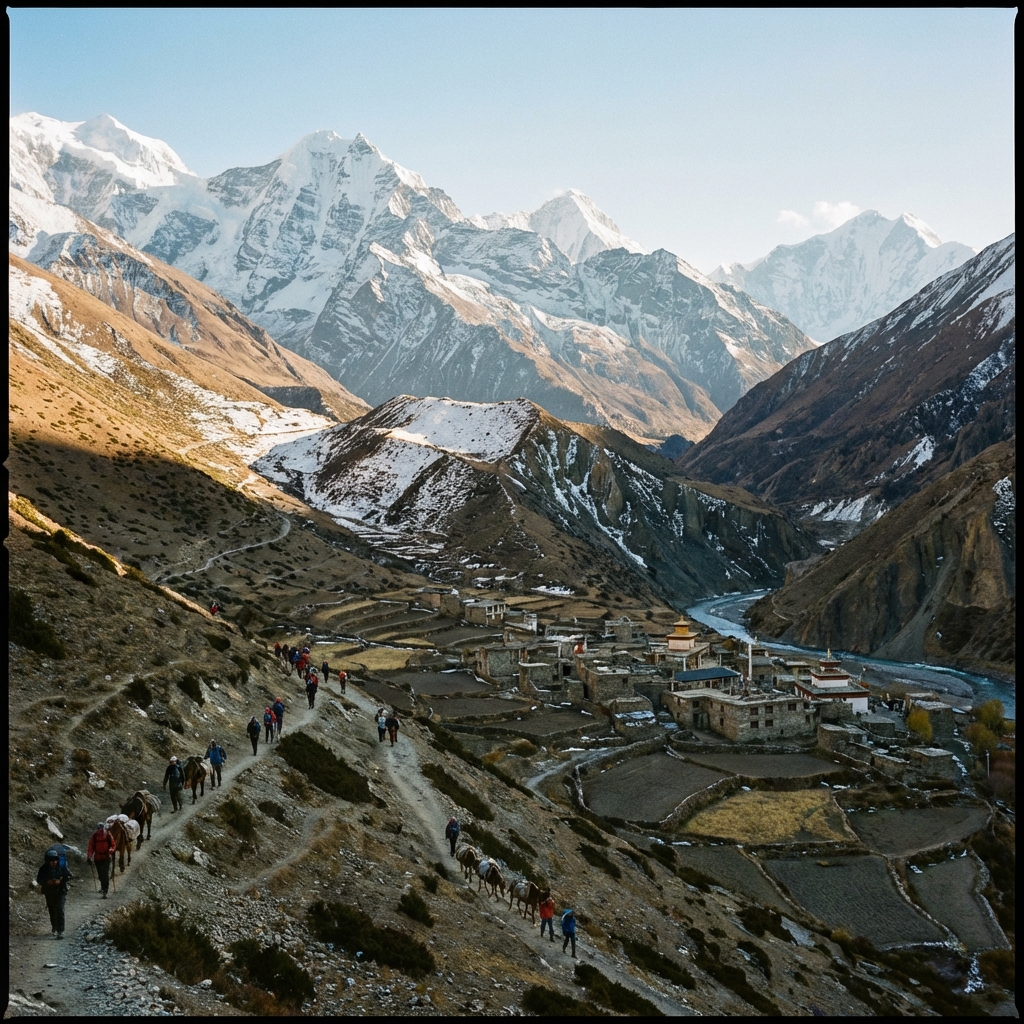
Langtang Valley offers a different kind of mountain experience -- one that emphasizes intimacy over celebrity. The valley is a glacial U-shape flanked by mountains on both sides, creating an enclosed, immersive feeling that is unlike the open vistas of the Everest region.
Key mountain views include:
- Langtang Lirung (7,227m) -- the dominant peak of the valley, frequently visible and strikingly beautiful
- Ganesh Himal range (7,422m) -- visible on the approach and from higher viewpoints
- Dorje Lakpa (6,966m) -- an elegant peak at the valley's head
- Langtang II (6,571m) and Langtang Ri (7,205m) -- framing the upper valley
- Yala Peak (5,520m) -- a popular trekking peak accessible from Kyanjin Gompa
From Kyanjin Ri (4,984m) or Tserko Ri (5,033m), the 360-degree panorama encompasses a sea of peaks stretching to the Tibetan border. The views are genuinely world-class, even if the individual peaks lack Everest's name recognition.
The honest comparison: EBC's mountains are taller and more famous. Langtang's mountains are beautiful and feel closer, more personal. If the name "Everest" carries deep significance for you, EBC wins this category decisively. If you care about the quality of the mountain experience rather than the name on the map, Langtang competes strongly.
Pro Tip
Cost Comparison: Where Langtang Truly Shines
The cost difference between these two treks is substantial, and it is the single factor that most consistently tips the decision toward Langtang for budget-conscious trekkers.
Detailed Cost Breakdown
| Cost Category | Langtang Valley (10 days) | EBC Trek (14 days) |
|---|---|---|
| Trailhead transport | $30-60 (bus/jeep Kathmandu-Syabrubesi round trip) | $350-400 (Lukla flights round trip) |
| Permits | $215 (LNP $30 + TIMS $20) | $43-50 (SNP $30 + municipal fee $13-20) |
| Accommodation (per night) | $3-8 | $3-10 |
| Food (per day) | $15-25 | $20-35 (higher prices at altitude) |
| Hot showers (total) | $10-20 | $15-30 |
| WiFi (total) | $10-15 | $15-25 |
| Charging (total) | $5-10 | $10-20 |
| Guide (optional, per day) | $25-35 | $25-35 |
| Porter (optional, per day) | $20-25 | $20-25 |
Total Budget Estimates
| Budget Level | Langtang Valley (10 days) | EBC (14 days) | Savings with Langtang |
|---|---|---|---|
| Ultra-budget (independent) | $400-600 | $1,200-1,800 | $800-1,200 |
| Mid-range (independent, comfortable) | $600-1,000 | $1,600-2,500 | $1,000-1,500 |
| Guided (with guide) | $800-1,300 | $2,000-3,000 | $1,200-1,700 |
| Full package (guide + porter) | $1,000-1,600 | $2,500-3,500 | $1,500-1,900 |
The critical difference is the Lukla flight. At $350-400 round trip, it is the single largest expense on the EBC trek and adds zero value to the trekking experience itself -- it is purely a logistics cost. The Langtang trailhead at Syabrubesi is reachable by a $15-30 bus or jeep ride, which is itself an interesting journey through terraced hillsides and river gorges.
The Hidden Cost of Lukla Flight Delays
The Lukla flight is weather-dependent, and delays are common. If your flight is cancelled due to weather (which happens frequently during monsoon edges and winter), you may need additional nights in Kathmandu or Lukla, potentially missing connecting international flights. Budget an extra 1-2 days as buffer. This hidden cost -- both financial and temporal -- does not exist with the Langtang bus journey, which runs regardless of weather.
Pro Tip
Duration and Logistics Comparison
Langtang: Flexible and Accessible
The Langtang Valley trek is remarkably flexible in duration:
- Minimum itinerary: 7 days (Kathmandu-Syabrubesi-Kyanjin Gompa and back)
- Standard itinerary: 9-10 days (including Tserko Ri or Kyanjin Ri side trips)
- Extended itinerary: 12-14 days (including Gosaikunda lakes extension)
Getting to the trailhead:
- Bus from Kathmandu to Syabrubesi: 7-8 hours, $10-15
- Private jeep: 6-7 hours, $150-200 (can be split among a group)
- The road is scenic, passing through terraced farmland and river valleys
- No weather-dependent flights, no airport waits, no cancellation risk
EBC: The Two-Week Commitment
The EBC trek requires a more significant time commitment:
- Minimum itinerary: 12 days (tight, limited acclimatization)
- Standard itinerary: 14 days (recommended, proper acclimatization)
- Extended itinerary: 16-18 days (including Gokyo Lakes or Three Passes)
Getting to the trailhead:
- Flight from Kathmandu to Lukla: 35 minutes, $350-400
- The flight is famously unreliable -- weather delays of 1-3 days are common
- Must buffer schedule for potential delays on both ends
- Helicopter alternative: $300-400 per person one way (more reliable but expensive)
Time-Efficient Nepal Trekking
If you have 10 days or fewer for trekking, Langtang Valley is one of your best options in Nepal. You can fly into Kathmandu, bus to Syabrubesi the next day, complete a satisfying 7-8 day trek to Kyanjin Gompa and back, and be back in Kathmandu with time to spare. The same 10 days on the EBC trail would barely get you past Namche Bazaar before you needed to turn around.
Difficulty and Altitude Comparison
Langtang: Gradual and Manageable
The Langtang Valley trek follows a classic glacial valley profile with a gradual, steady ascent:
- Day 1-2: Syabrubesi (1,460m) to Lama Hotel (2,380m) -- through bamboo forest and oak woodland
- Day 3-4: Lama Hotel to Langtang Village (3,430m) -- alpine transition, widening valley
- Day 5-6: Langtang Village to Kyanjin Gompa (3,870m) -- open glacial valley, yak pastures
- Day 7 (optional): Kyanjin Ri (4,984m) or Tserko Ri (5,033m) -- day trip from Kyanjin Gompa
The altitude gain is spread across multiple days, creating a natural acclimatization profile. Most trekkers adjust well because the highest sleeping altitude (Kyanjin Gompa, 3,870m) is reached gradually. The day trips to Kyanjin Ri or Tserko Ri follow the "climb high, sleep low" principle perfectly.
Altitude sickness risk: Moderate. Most trekkers experience no significant symptoms because the ascent profile is gradual. Those attempting Tserko Ri (5,033m) may feel mild symptoms (headache, fatigue) at the summit, but these resolve upon descent to Kyanjin Gompa.
EBC: Higher Altitude, More Demanding
The EBC trek reaches significantly higher altitudes and maintains them for longer:
- Highest sleeping altitude: 5,164m (Gorak Shep) -- substantially higher than Langtang
- Summit experience: 5,545m (Kala Patthar) -- a serious altitude challenge
- Multiple nights above 4,000m: 4-5 nights compared to Langtang's 2-3 nights
- Acclimatization days required: 2-3 mandatory rest days (typically at Namche and Dingboche)
EBC's altitude challenge is real. At 5,545m on Kala Patthar, the air contains roughly 50% of sea-level oxygen. The summit push typically begins at 4:30 AM in freezing temperatures, and the combination of altitude, cold, and exertion creates genuine physical demands. A significant percentage of trekkers experience altitude sickness symptoms serious enough to affect their experience, and some do not reach Kala Patthar.
Altitude sickness risk: Moderate to high. The extended time at extreme altitude (multiple nights above 5,000m) increases cumulative risk. Proper acclimatization, adequate hydration, and willingness to descend if symptoms worsen are essential.
Pro Tip
Cultural Experience Comparison
EBC: Sherpa Heartland
The EBC trek passes through the homeland of the Sherpa people, Nepal's most famous mountain community. Cultural highlights include:
- Namche Bazaar: The Sherpa capital, a thriving town with a weekly market, museum, and stunning amphitheater setting
- Tengboche Monastery: One of the most important Tibetan Buddhist monasteries in Nepal, with spectacular mountain backdrop
- Traditional Sherpa villages: Khumjung, Phortse, and Pangboche offer authentic Sherpa architecture and lifestyle
- Mountaineering history: The trail is steeped in Everest expedition history, from Hillary's 1953 route to modern climbing operations
The Sherpa cultural experience on the EBC trek is genuine and profound, though it is increasingly mixed with tourism infrastructure. Namche Bazaar, in particular, has evolved into a cosmopolitan mountain town with bakeries, coffee shops, and gear stores alongside traditional homes.
Langtang: Tamang and Tibetan Heritage
The Langtang Valley offers a different cultural palette, centered on Tamang and Tibetan-influenced communities:
- Tamang villages: The lower valley passes through traditional Tamang settlements with distinctive round houses and prayer flags
- Tibetan border culture: The upper valley has strong Tibetan cultural connections, visible in monastery architecture, prayer wheels, and religious practices
- Kyanjin Gompa monastery: A small but authentic Tibetan Buddhist monastery at the head of the valley, with regular prayer ceremonies
- Yak cheese factory: Established by a Swiss development project in the 1950s, the cheese factory at Kyanjin Gompa produces yak cheese that you can buy and sample -- a unique cultural-culinary intersection
- Earthquake memorial: The rebuilt Langtang village includes a memorial to the 2015 disaster that adds emotional depth to the trek
- Fewer tourists means more authentic interaction: With fewer trekkers, Langtang tea house owners have more time and inclination for genuine conversation
The cultural comparison: EBC's Sherpa culture is world-famous and deeply compelling. Langtang's Tamang culture is less well-known but equally authentic and often more accessible because there are fewer tourists competing for attention. Both offer meaningful cultural engagement, but Langtang's slower pace and smaller crowds create more natural opportunities for connection.
Best Season Comparison
Langtang Valley: Seasonal Conditions
| Season | Conditions | Crowd Level | Rating |
|---|---|---|---|
| Oct-Nov | Clear skies, excellent views, cool temperatures | Moderate | Best |
| March-April | Clear skies, warming temperatures, rhododendrons blooming | Moderate | Excellent |
| May | Warm lower, cool upper, increasing afternoon cloud | Low-Moderate | Good |
| Dec-Feb | Cold, clear skies, possible snow above 3,500m, few trekkers | Very Low | Good (cold) |
| Jun-Sep | Monsoon rain, leeches in lower sections, cloudy, landslide risk on road | Very Low | Not recommended |
EBC: Seasonal Conditions
| Season | Conditions | Crowd Level | Rating |
|---|---|---|---|
| Oct-Nov | Clear skies, cold at altitude, ideal conditions | Very High | Best |
| March-May | Warming, clear, some afternoon cloud | High | Excellent |
| December | Cold, clear, quiet | Low-Moderate | Good (very cold above 4,000m) |
| Jan-Feb | Very cold, clear skies, few trekkers, some tea houses close | Very Low | Challenging |
| Jun-Sep | Monsoon, cloudy, rain at lower altitudes, Lukla flights unreliable | Very Low | Not recommended |
Key seasonal difference: Langtang is more accessible in winter than EBC because its maximum sleeping altitude is lower (3,870m vs 5,164m). Winter temperatures at Kyanjin Gompa are cold but manageable, while Gorak Shep in winter is brutally cold and some tea houses close. Langtang also avoids the Lukla flight gamble, which becomes even more uncertain in winter weather.
Which Trek Is Harder?
EBC is harder than Langtang Valley. EBC reaches 5,545m at Kala Patthar with 12-16 days of continuous trekking and requires the weather-dependent Lukla flight. Langtang maxes at 4,984m (Kyanjin Ri) over 7-12 days with road access from Kathmandu. EBC's higher sleeping altitude at Gorak Shep (5,164m) creates more altitude sickness risk. See our EBC difficulty assessment for preparation details.
Which Trek Is Cheaper?
Langtang is dramatically cheaper. A mid-range Langtang trek costs $500-1,500 vs EBC's $1,500-3,500. The biggest saving is eliminating the Lukla flight ($215-400 round-trip) -- Langtang's trailhead is a $10-15 bus ride from Kathmandu. Permits are also cheaper. For budget trekkers, Langtang at $400-700 total represents Nepal's best value major trek. See our Nepal trekking permits guide for permit costs.
Which Trek Has Better Views?
EBC delivers the world's most famous mountain views: Everest, Lhotse, Ama Dablam, and the Kala Patthar sunrise panorama. Langtang offers intimate views of Langtang Lirung (7,227m) and surrounding peaks from Kyanjin Ri and Tserko Ri, with 60-80% fewer trekkers sharing the viewpoints. EBC wins on iconic status; Langtang wins on value and solitude. Prepare with our complete gear list.
Choose Langtang Valley If...
- Budget is a significant factor -- you want a world-class trek without the $350-400 Lukla flight cost
- You have 7-10 days rather than the 14+ days needed for EBC
- Crowds bother you and you want a quieter, more intimate trail experience
- Cultural authenticity matters -- you want genuine interactions, not tourism-polished encounters
- Access reliability is important -- no weather-dependent flights, no cancellation anxiety
- You are on your first high-altitude trek and want a gradual introduction to altitude
- You want to support earthquake recovery through direct tourism spending
- You are planning a second Nepal trek after already doing EBC or ABC
- You value wildlife potential -- Langtang has better chances of seeing Himalayan tahr and possibly red panda
- You want to combine treks -- Langtang can be extended to Gosaikunda Lakes or combined with Helambu
- Time efficiency matters -- less travel overhead means more trekking days per trip day
Choose EBC If...
- Standing at the foot of Everest is a lifelong dream -- no substitute will satisfy this desire
- You want the iconic experience that everyone recognizes and respects
- Maximum altitude achievement matters -- reaching 5,545m at Kala Patthar is a significant milestone
- Sherpa culture specifically interests you -- their mountaineering heritage is unique
- You have 14+ days for trekking and are comfortable with the time commitment
- Tea house quality is a high priority -- EBC's infrastructure is among Nepal's best
- You want to combine with peak climbing -- Island Peak or Lobuche East are natural EBC extensions
- Namche Bazaar and its bustling mountain town atmosphere appeal to you
- Tengboche Monastery and the Everest mountaineering history trail are on your wish list
- You plan to do this once and want the most globally recognized Himalayan experience
The Verdict: Our Recommendation
For first-time Nepal trekkers with budget constraints or limited time: Choose Langtang Valley. It delivers 90% of the Himalayan trekking experience at 50% of the cost and 70% of the time. The mountains are magnificent, the culture is authentic, and the sense of achievement at Kyanjin Ri is genuine. You will not feel like you "settled" for a lesser trek.
For bucket-list trekkers with adequate time and budget: Choose EBC. Despite the crowds and cost, standing at the foot of Mount Everest remains one of the world's great adventure travel experiences. The name carries weight, the views are extraordinary, and the Sherpa cultural immersion is unmatched. If you can afford the time and money, it is worth doing at least once.
For experienced trekkers on their second or third Nepal trip: Choose Langtang. If you have already done EBC or ABC, Langtang offers a genuinely different experience. The lower crowds, the Tamang culture, and the post-earthquake recovery story add dimensions that the more popular treks cannot match. The optional Gosaikunda Lakes extension adds a stunning high-altitude lake circuit to the trek.
The honest truth: Langtang Valley is Nepal's most underrated trek. It offers extraordinary value, genuine cultural experiences, and spectacular mountain scenery at a fraction of EBC's cost and time commitment. The only thing it lacks is the five letters that spell "Everest." For many trekkers, that name is worth the premium. For discerning travelers who care more about the quality of the experience than its Instagram recognition, Langtang is the smarter choice.
Road Conditions to Syabrubesi
The road from Kathmandu to Syabrubesi passes through mountainous terrain and is subject to landslides during and after monsoon season (June-September). During the trekking season (October-May), the road is generally in good condition, but sections can be rough. Private jeeps handle the conditions better than buses. Allow for possible delays of 1-2 hours due to road conditions, and avoid traveling this route during active monsoon season.
Pro Tip
Frequently Asked Questions
Is Langtang Valley safe after the 2015 earthquake?
Yes. The Langtang Valley trek is fully reopened and considered safe for trekking. All tea houses have been rebuilt, many with improved construction techniques. Geological assessments have been conducted, and the trail route has been adjusted in areas where necessary. While no mountain environment is entirely risk-free, Langtang is no more hazardous than any comparable trek in Nepal.
How does Langtang compare to EBC in terms of views?
Langtang offers stunning views of Langtang Lirung (7,227m), Ganesh Himal, and surrounding peaks, particularly from Kyanjin Ri and Tserko Ri. EBC offers views of Everest, Lhotse, and Ama Dablam, which are higher and more famous. The quality of the mountain experience is comparable -- the difference is primarily in peak altitude and name recognition. Langtang's advantage is that you often enjoy these views in near-solitude.
Can I do Langtang Valley trek independently?
Absolutely. Langtang is one of Nepal's most independent-trekker-friendly routes. The trail is well-marked, tea houses are regularly spaced, and navigation is straightforward -- you essentially follow the valley floor. a licensed guide is mandatory (since April 2023) for the standard route, though a guide adds cultural context and companionship. See our independent trekking guide for detailed advice.
How crowded is EBC compared to Langtang?
During October peak season, the EBC trail sees 300-500+ trekkers daily, with some bottleneck points (like the suspension bridges) creating significant congestion. Langtang sees 50-150 trekkers daily during the same period. The difference is most noticeable at viewpoints and in tea houses -- Langtang rarely feels crowded, while EBC can feel like a mountain highway.
Which trek is better for a first-time trekker?
Both are suitable for first-time trekkers with reasonable fitness. Langtang is slightly easier due to lower maximum altitude and more gradual ascent profile. It is also shorter, cheaper, and logistically simpler. EBC offers a more dramatic altitude experience but requires more time, budget, and altitude awareness. If budget and time are limited, Langtang is the better first trek. If you have 14+ days and adequate budget, EBC is also an excellent first major trek.
What is the best time to trek Langtang Valley?
October and November offer the best conditions -- clear skies, moderate temperatures, and excellent visibility. March and April are also excellent, with the added bonus of rhododendron blooms in the lower sections. See our complete Langtang Valley best time guide for month-by-month analysis.
Can I extend the Langtang trek to include Gosaikunda Lakes?
Yes, and it is an excellent extension. The Gosaikunda Lakes are a series of sacred alpine lakes at 4,380m, connected to the Langtang Valley via the Laurebina La pass (4,610m). This extension adds 3-5 days to the trek and introduces a different landscape and cultural dimension (the lakes are sacred to both Hindus and Buddhists). The route from Gosaikunda can descend to Helambu, creating a point-to-point trek ending near Kathmandu.
How cold does it get on each trek?
At Kyanjin Gompa (3,870m) in October-November, overnight temperatures typically range from -5 to 5 degrees Celsius. At Gorak Shep on the EBC trek (5,164m), overnight temperatures during the same period range from -10 to -15 degrees Celsius, with wind chill making it feel significantly colder. EBC requires warmer sleeping bags and more insulating layers.
Is there phone signal and WiFi on both treks?
Both treks have intermittent mobile phone signal at various points along the trail. WiFi is available at most tea houses on both routes, typically for $2-5 per day. WiFi reliability and speed decrease with altitude on both treks. Langtang's WiFi quality has improved significantly with the post-earthquake rebuilding, as many tea houses installed new equipment.
Which trek has better food?
Both treks offer standard Nepali tea house menus: dal bhat, fried rice, noodle soup, pasta, pancakes, and momos. EBC's more established infrastructure means slightly more variety and larger portions at lower altitudes (particularly in Namche Bazaar). Langtang has a unique culinary attraction -- yak cheese from the Kyanjin Gompa cheese factory, which you can buy fresh and enjoy with crackers. The cheese is genuinely excellent and unlike anything available elsewhere on Nepal's trekking trails.
Can I see Everest from Langtang?
No. Langtang Valley is approximately 100 km west of the Everest region, and Mount Everest is not visible from the Langtang trail or its viewpoints. From Tserko Ri, you can see Shishapangma (8,027m) across the Tibetan border, which is an 8,000-meter peak, but it is not Everest.
Do I need a guide for EBC or Langtang?
Neither trek strictly requires a guide. Both have well-marked trails, regularly spaced tea houses, and excellent waymarking. However, a guide adds value through cultural interpretation, logistics support, and altitude sickness awareness. On EBC, guides are more common due to the longer duration and higher altitude. On Langtang, many trekkers go independently. See our guide hiring guide for detailed advice.
What permits do I need for each trek?
Langtang: Langtang National Park permit ($30 for foreigners) and TIMS card ($20 for independent trekkers). Both are available in Kathmandu at the Nepal Tourism Board office or at the park entrance. EBC: Sagarmatha National Park permit ($30 for foreigners) plus Khumbu Pasang Lhamu Rural Municipality fee ($13-20). The SNP permit is available in Kathmandu or at the park entrance in Monjo. See our permits guide for complete details.
Which trek is better for photography?
Both offer exceptional photography opportunities. EBC's advantage is the sheer fame and dramatic scale of its subjects -- sunrise on Everest from Kala Patthar is one of the world's most photographed mountain scenes. Langtang's advantage is better light conditions (fewer trekkers means more time to compose shots without crowds) and more varied landscapes (forest, valley, glacial moraine). For serious photographers, Langtang often provides more satisfying conditions because you can work without time pressure from crowds. Read our trekking photography guide for technique tips.