
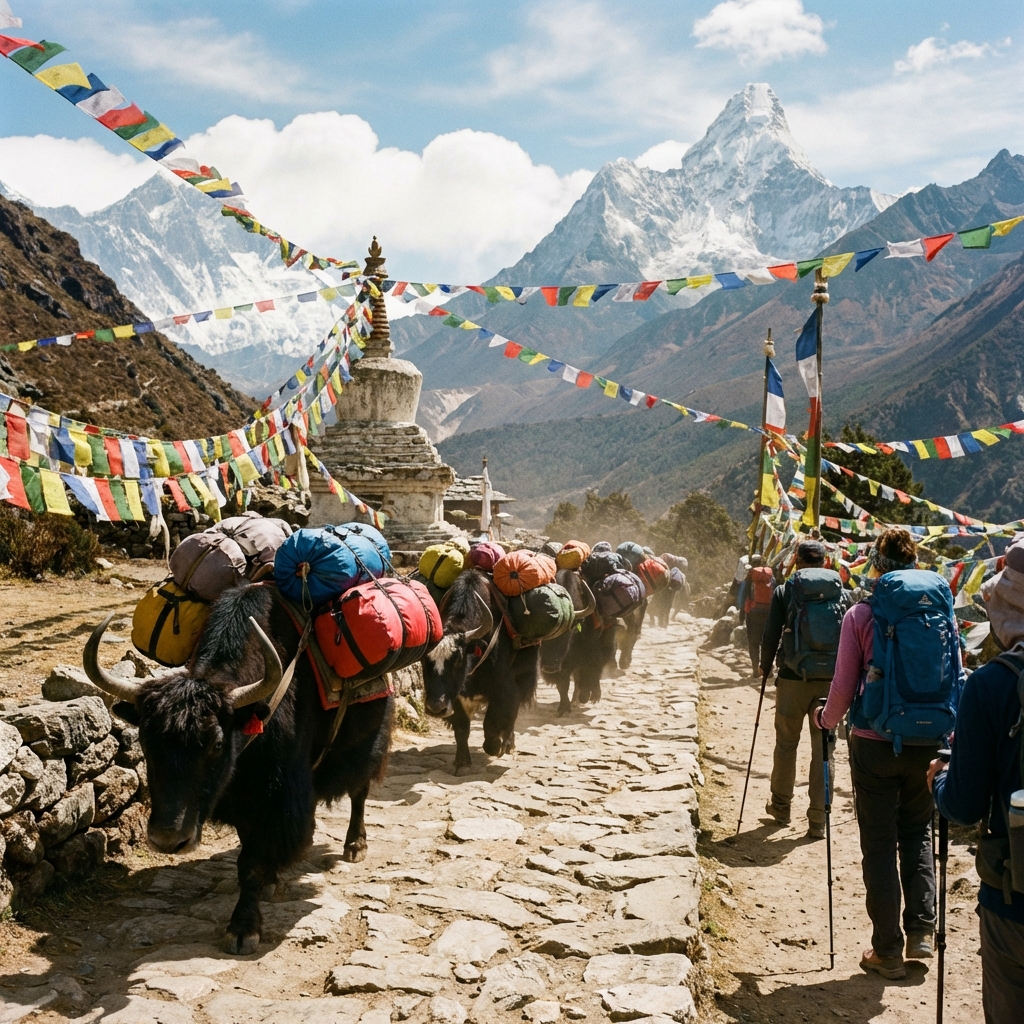
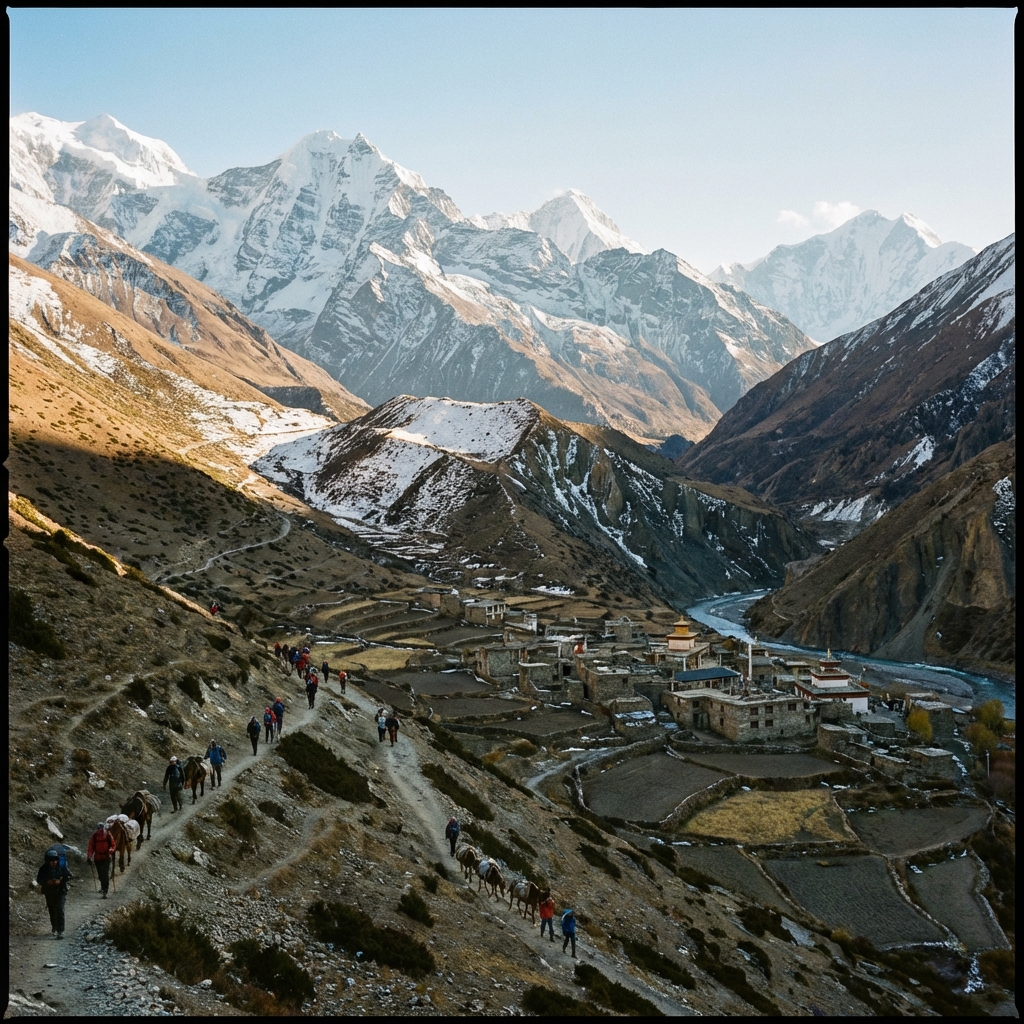
Hiring a trekking guide in Nepal can transform your Himalayan adventure from a challenging hike into an enriching cultural journey. But with thousands of guides operating across Nepal, from licensed professionals to unlicensed freelancers, how do you choose the right one? This comprehensive guide covers everything you need to know about hiring trekking guides in Nepal, from understanding qualifications and costs to navigating the hiring process and ensuring a successful trek.
Why Hire a Trekking Guide in Nepal?
Nepal's trekking routes range from well-marked teahouse trails to remote wilderness paths. While some treks can theoretically be done independently, hiring a guide offers numerous advantages that go far beyond simple navigation.
What Professional Trekking Guides Actually Do
A quality trekking guide is much more than a person who knows the trail. Here's what you can expect from a professional guide in Nepal:
Navigation and Route Planning
- Select optimal daily itineraries based on weather, your fitness level, and acclimatization needs
- Navigate trail junctions, especially during snow or fog
- Adjust routes to avoid avalanche danger, landslides, or other hazards
- Know alternate routes when primary trails are blocked
- Time daily stages to reach accommodations before dark
Cultural Interpretation
- Explain Hindu and Buddhist religious sites, customs, and etiquette
- Translate local languages (Nepali, Sherpa, Tamang, Gurung, etc.)
- Facilitate authentic interactions with local communities
- Share knowledge of local flora, fauna, and geography
- Provide historical context for monasteries, stupas, and villages
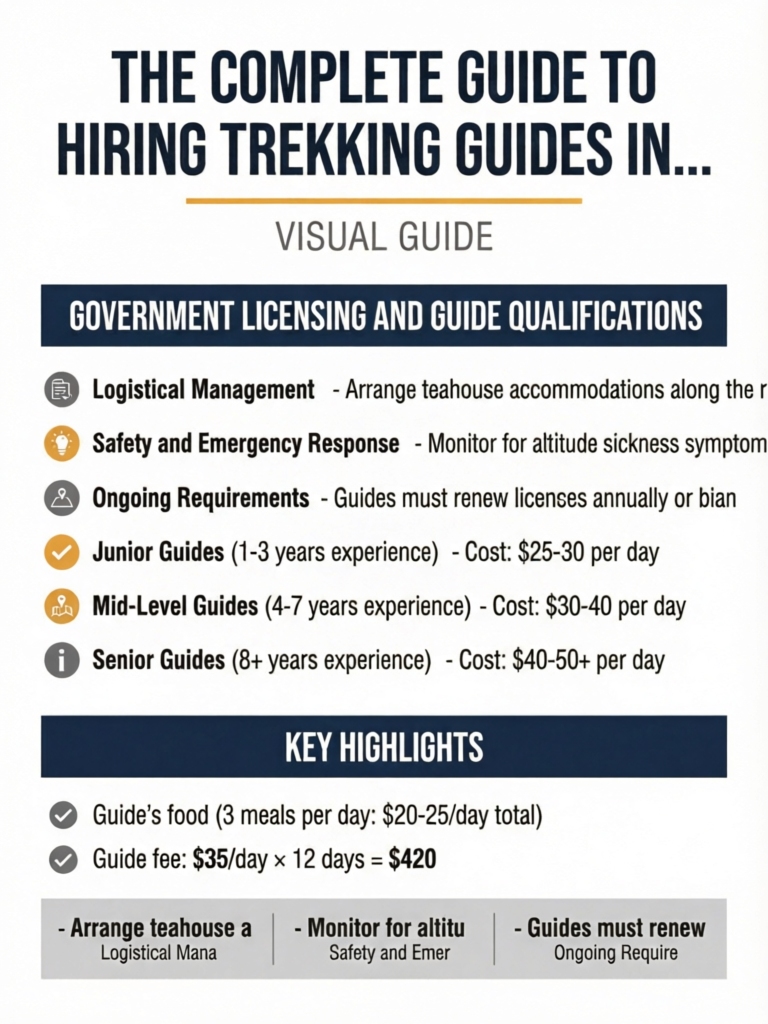
Logistical Management
- Arrange teahouse accommodations along the route
- Order meals and ensure proper nutrition
- Handle permit checks and documentation
- Negotiate fair prices for services
- Manage porter coordination if applicable
Safety and Emergency Response
- Monitor for altitude sickness symptoms
- Make acclimatization decisions based on your health
- Provide first aid and coordinate medical evacuations if needed
- Communicate with rescue services and helicopter operators
- Carry emergency communication devices (satellite phone or emergency beacon)
Cultural Buffer and Problem Solving
- Resolve disputes or misunderstandings with teahouse owners
- Navigate cultural sensitivities and etiquette
- Handle unexpected situations (strikes, weather delays, trail closures)
- Advocate for you when needed while respecting local communities
For solo trekkers especially, guides provide invaluable companionship during long days on the trail. Many trekkers form lasting friendships with their guides, who often serve as ambassadors for Nepali culture and hospitality.
Government Licensing and Guide Qualifications
Nepal's government has established a licensing system for trekking guides to ensure minimum standards of training and competence. Understanding these qualifications helps you hire a legitimate professional.
Official Guide License Requirements
The Nepal Tourism Board (NTB) and Nepal Academy of Tourism and Hotel Management (NATHM) issue official trekking guide licenses. To obtain a license, guides must:
Government-Certified Guide Training Course
- Complete a 30-day intensive training program
- Study first aid, altitude sickness recognition, and emergency response
- Learn route navigation, weather interpretation, and risk management
- Receive instruction in English communication and customer service
- Pass practical field tests and written examinations
Minimum Experience Requirements
- Often requires 2+ years working as a porter or assistant guide before qualifying for training
- Must demonstrate knowledge of specific trekking regions
- Some advanced certifications require 5+ years guiding experience
Ongoing Requirements
- Guides must renew licenses annually or biannually
- Many attend refresher courses on wilderness first aid
- Top guides pursue advanced certifications (wilderness EMT, avalanche safety, etc.)
Verification Always ask to see your guide's license card. It should include:
- Photo ID
- License number
- Issue and expiration dates
- Official NTB or NATHM seal
Reputable guides carry laminated license cards and readily show them. If a guide hesitates or claims to have "lost" their license, this is a red flag.
Experience Levels and Specializations
Not all licensed guides have the same level of experience. Here's how to evaluate guide expertise:
Junior Guides (1-3 years experience)
- Cost: $25-30 per day
- Suitable for popular teahouse treks (Annapurna Circuit, Everest Base Camp)
- May have basic English skills
- Enthusiastic but less experienced with emergencies
- Good choice for budget-conscious trekkers on standard routes
Mid-Level Guides (4-7 years experience)
- Cost: $30-40 per day
- Solid experience across multiple regions
- Good English communication skills
- Confident handling minor emergencies and altitude issues
- Best value for most trekkers
Senior Guides (8+ years experience)
- Cost: $40-50+ per day
- Extensive knowledge of multiple trekking regions
- Fluent English, possibly other languages (French, German, Japanese, Korean)
- Advanced certifications (wilderness first responder, high-altitude guide)
- Excellent for challenging treks, older trekkers, or those with health concerns
Specialized Guides Some guides specialize in particular areas:
- Sherpa guides: Specialized in Everest region, high-altitude expertise
- Cultural guides: Deep knowledge of Buddhist/Hindu traditions, often former monks
- Photography guides: Skilled at identifying optimal photo locations and timing
- Climbing guides: Certified for technical climbing on peak climbing permits
- Female guides: Increasing numbers of women guides, important for solo female trekkers
Professional Guide Associations
Several professional associations set standards and provide oversight for Nepal's trekking industry:
TAAN (Trekking Agencies Association of Nepal)
- Nepal's premier trekking industry association
- Over 1,300 member agencies
- Enforces codes of conduct and quality standards
- Mediates disputes between trekkers and agencies
- Agency TAAN membership is a positive indicator
NMA (Nepal Mountaineering Association)
- Governs trekking peak climbing and mountaineering
- Issues climbing permits
- Certifies high-altitude and climbing guides
- Relevant if your trek includes peak climbing
NTHOA (Nepal Trekking and Hiking Operators Association)
- Represents trekking operators and guides
- Focuses on sustainable tourism practices
- Provides training and professional development
KGEU (Khumbu Guides and Equipment Union)
- Represents guides in the Everest region
- Sets standards for Sherpa guides
- Provides support for guide families
Guides affiliated with these organizations generally maintain higher professional standards, though many excellent independent guides operate outside these associations.
Understanding Guide Costs and Budgeting
Trekking guide costs in Nepal are remarkably reasonable compared to Western guide services, but understanding what's included helps you budget accurately.
Daily Guide Rates
Standard Daily Rates (2026)
Guide Daily Rate Comparison
| Name | Price | Features |
|---|---|---|
| Junior Licensed Guide | $25-30 | 1-3 years experienceBasic EnglishPopular routes onlyStandard safety trainingGood for budget treks |
| Mid-Level Licensed Guide | $30-40 | 4-7 years experienceGood EnglishMultiple regionsSolid emergency skillsBest value option |
| Senior Licensed Guide | $40-50+ | 8+ years experienceFluent EnglishAdvanced certificationsExpert route knowledgePremium service |
| Porter-Guide Combo | $30-35 | Carries up to 15kgBasic guiding dutiesVariable EnglishCost-effective solo optionLimited cultural knowledge |
Peak Season Premiums During high season (March-April, October-November), demand exceeds supply for top guides. Expect:
- 10-20% premium for experienced guides
- Limited availability without advance booking
- Higher rates for last-minute hiring
Off-Season Discounts During monsoon (June-August) and winter (December-February), rates may drop:
- 10-15% discount possible through negotiation
- Greater availability of senior guides
- More flexibility in hiring arrangements
What's Included in Guide Fees
Understanding what guide fees cover prevents surprises:
Included in Standard Guide Fee:
- Guide's professional service for specified trek duration
- Navigation and route planning
- Cultural interpretation and translation
- Basic safety monitoring and first aid
- Permit check-in assistance
- Meal ordering and accommodation arrangement
NOT Included - Trekker's Responsibility:
- Guide's food (3 meals per day: $25-$35 /day total)
- Guide's accommodation (usually provided free by teahouses when you book rooms)
- Guide's insurance (you should verify guide has insurance; you don't pay for it)
- Guide's trekking permits (guides need their own TIMS card)
- Guide's transportation to/from trailhead
- Tips (15-20% of total guide fee is standard)
Cost Calculation Example - 12-Day Everest Base Camp Trek:
- Guide fee: $25-$35 /day × 12 days = $420
- Guide's meals: $22/day × 12 days = $264
- Guide's TIMS permit: $20
- Guide's transportation (Kathmandu-Lukla roundtrip): $60
- Subtotal: $764
- Recommended tip (17.5%): $74
- Total guide cost: $838
Your own costs (permits, accommodation, food, flights) are separate and typically run $800-1,200 for the same trek.
Guide vs Porter-Guide vs Guide+Porter Combinations
Different staffing models suit different needs and budgets:
Solo Guide Only
- Best for: Experienced trekkers, light packers (carrying own pack)
- Cost: $25-50/day + meals
- Pros: Personal attention, lower cost, simpler logistics
- Cons: You carry your own pack (limiting gear options)
Porter-Guide (One Person, Dual Role)
- Best for: Solo budget trekkers wanting assistance
- Cost: $25-$40 /day + meals
- Carries: Up to 15kg of your gear
- Pros: Cost-effective, combines services
- Cons: May have limited English, less cultural knowledge, divided attention
Guide + Separate Porter
- Best for: Those wanting full guide attention plus pack carrying
- Cost: $50-65/day total ($30-40 guide + $20-25 porter) + meals for both
- Carries: Porter handles up to 30kg for two trekkers
- Pros: Guide focuses entirely on guiding, porter specializes in load carrying
- Cons: Higher cost, more complex logistics, feeding two staff members
Guide + Porter for Two Trekkers
- Best for: Couples or friends trekking together
- Cost per person: $35-45/day + meals
- Arrangement: One guide and one porter shared between two trekkers
- Pros: Cost-efficient, social dynamics, porter carries both packs
- Cons: Requires compatible trekking partners with similar pace
Hiring Strategy for Different Treks
- Everest Base Camp/Annapurna Circuit: Mid-level guide ($30-40/day) is sufficient; trails are well-marked
- Manaslu/Upper Mustang: Senior guide ($40-50/day) recommended; restricted areas with complex navigation
- Off-the-beaten-path treks: Experienced guide essential; trails may be unmarked
- First-time Himalayan trekkers: Invest in experienced guide for safety and learning
- Seasoned trekkers: Junior guide acceptable on popular routes to save costs
Solo Trekker Requirements and Recommendations
Nepal's regulations regarding independent trekking have evolved significantly. Understanding current requirements helps you plan appropriately.
Mandatory Guide Requirements for Restricted Areas
Since April 2023, Nepal requires guides for solo trekkers in certain areas:
Restricted Areas Requiring Licensed Guide (Solo Trekkers):
- Manaslu Circuit and Tsum Valley
- Upper Mustang
- Kanchenjunga Base Camp
- Dolpo and Upper Dolpo
- Makalu Base Camp
- All areas requiring Restricted Area Permits (RAP)
Requirements:
- Must hire government-licensed guide
- Cannot trek alone even with permit
- Minimum 2 people total (you + guide satisfies this)
- Guide must have license valid for that specific region
Unrestricted Popular Routes (Guide Recommended but Optional):
- Everest Base Camp and Gokyo Lakes
- Annapurna Circuit and Sanctuary
- Langtang Valley and Gosaikunda
- Poon Hill and Mardi Himal
- Upper Helambu
While guides aren't legally required for these treks, strong recommendations exist:
Why Solo Trekkers Should Consider Guides Even When Optional
Safety Considerations:
- Solo trekking offers no backup if you become injured or ill
- Altitude sickness can impair judgment; guides provide objective assessment
- Communication difficulties in emergencies without local language skills
- Trail navigation challenges during weather events
- No assistance available if you become lost or separated from trail
Practical Advantages:
- Guides negotiate better accommodation rates, often securing free rooms
- Cultural mediation prevents misunderstandings
- Local knowledge identifies superior food options and safer water sources
- Companionship reduces psychological challenges of solo long-distance trekking
- Problem-solving assistance when things go wrong
When Independent Trekking Makes Sense:
- Experienced high-altitude trekkers comfortable with self-rescue
- Trekking popular routes during peak season (more safety in numbers)
- Those who specifically seek solitude as part of the experience
- Trekkers with strong Nepali language skills
- Former guides or locals returning to familiar areas
Many solo trekkers find the guide cost ($400-600 for typical 2-week trek) provides tremendous value in enhanced experience, safety margin, and cultural access.
Where and How to Hire Trekking Guides
Multiple channels exist for hiring guides in Nepal, each with distinct advantages and considerations.
Hiring Through Trekking Agencies
Process:
- Research agencies online (TripAdvisor, Google Reviews, agency websites)
- Contact 3-5 agencies with your trek details
- Compare quotes, included services, and guide qualifications
- Ask for specific guide profiles (experience, languages, specializations)
- Book and pay deposit (typically 20-30% upfront)
- Meet guide day before trek; switch if incompatible
- Pay balance after trek completion
Advantages of Agency Hiring:
- Professional vetting of guide credentials
- Insurance and licensing verification handled
- Agency backup if guide becomes ill or emergency arises
- Formalized complaint process if issues occur
- Clear written contracts outlining services
- Agency handles all permit applications
- Often includes airport pickup, hotel nights, and city tours
- Easier to arrange comprehensive packages (flights, porters, etc.)
Disadvantages:
- Higher cost (agency markup typically 15-30%)
- Less personal connection with guide before trek
- May get assigned different guide than expected
- Less flexibility to customize itinerary
- Agency takes portion of guide's earnings
Reputable Agency Indicators:
- TAAN membership (verify on TAAN website)
- Physical office address in Kathmandu/Pokhara
- Established online presence with verified reviews
- Clear pricing structure and written contracts
- Responsive communication before booking
- Willingness to provide guide references
Hiring Independent Freelance Guides
Process:
- Find guides through personal referrals, online forums, or Facebook groups
- Verify guide license and credentials directly
- Check references from previous clients
- Negotiate rate and services directly
- Agree on terms in writing (simple contract or email confirmation)
- Meet in person before trek to ensure compatibility
- Pay directly to guide (often 50% upfront, 50% after)
Advantages of Independent Hiring:
- Lower cost (no agency markup)
- Direct relationship with guide from start
- More personal service and attention
- Greater flexibility in itinerary customization
- Guide receives full payment (ethical consideration)
- Often more authentic, personal experience
Disadvantages:
- You must verify credentials yourself
- No agency backup if guide cancels or issues arise
- You handle all logistics (permits, etc.)
- Higher risk of scams or unlicensed guides
- No formal complaint process
- Finding quality independent guides requires more research
Where to Find Independent Guides:
- Personal referrals (most reliable)
- Online forums (r/Nepal, TripAdvisor forums, LonelyPlanet Thorn Tree)
- Facebook groups ("Trekking in Nepal," "Nepal Trekking Guides")
- Guide websites and social media profiles
- Hotel recommendations in Kathmandu/Pokhara
- Previous trekker recommendations on blogs
Red Flags for Independent Guides:
- Cannot or will not show license card
- Refuses to provide references
- Requests full payment upfront
- Significantly undercuts market rates
- Poor or no online presence/reviews
- Vague about specific trek experience
- Pressure tactics or urgency to book
Hiring at the Trailhead
Some trekkers hire guides at trail starting points (Lukla, Jomsom, Besisahar, etc.).
Advantages:
- Ultimate flexibility
- Meet guide in person before commitment
- Can negotiate rates face-to-face
- Sometimes find guides looking for return work (discounted rates)
Disadvantages:
- Significant risk during peak season (no guides available)
- Unable to verify credentials thoroughly
- Higher likelihood of unlicensed guides
- Language barriers in negotiation
- Pressure to hire quickly
- May settle for lower-quality guide due to limited options
Recommendation: Only consider trailhead hiring if:
- Traveling during off-season with guide surplus
- Experienced enough to evaluate guide competence
- Trekking popular routes where guide knowledge less critical
- Comfortable accepting some risk
- Have backup plans if suitable guide unavailable
Using Guide Recommendation Networks
An increasingly popular middle-ground approach:
How It Works:
- Trek with highly-rated guide
- Ask guide to recommend colleague for future trek or for friend
- Guides stake reputation on referrals, ensuring quality
- Direct hire but with semi-verified credentials
- Often guides collaborate in informal networks
Advantages:
- Personal recommendation carries weight
- Still direct hire (no agency markup)
- Guide network provides informal backup
- Builds long-term relationships
- Supports ethical tourism (guides support each other)
This approach works well for repeat Nepal trekkers building long-term guide relationships.
English Proficiency and Communication
Language skills significantly impact your trekking experience. Understanding proficiency levels helps set appropriate expectations.
English Proficiency Levels
Basic English (Common in Junior Guides):
- Vocabulary: 500-1,000 words
- Can communicate simple logistics (food, accommodation, timing)
- Limited ability to explain cultural concepts
- May struggle with abstract discussions
- Fine for navigation and basic needs
- Less valuable for cultural interpretation
Conversational English (Mid-Level Guides):
- Vocabulary: 2,000-3,000 words
- Can discuss cultural topics, history, and local life
- Explains religious sites and traditions
- Comfortable with general conversation
- Most common level for established guides
- Adequate for meaningful cultural exchange
Fluent English (Senior Guides, Guides with International Experience):
- Vocabulary: 4,000+ words
- Nuanced cultural explanations
- Can discuss abstract topics (philosophy, politics, etc.)
- Reads and understands English trekking resources
- May have studied or worked abroad
- Commands premium rates
Other Language Skills
Many experienced guides speak additional languages:
- Japanese: Common among guides who've worked for Japanese agencies
- Korean: Increasingly common due to Korean tourism growth
- French/German/Spanish: Senior guides with European client base
- Chinese/Mandarin: Growing due to Chinese tourism expansion
If English isn't your first language, specifically requesting a guide with your language skills is worthwhile, though may cost more.
Communication Expectations
Daily Briefings: Professional guides provide:
- Morning briefing on day's route, elevation gain, estimated timing
- Weather assessment and adjustments
- Afternoon briefing on next day's plan
- Evening check-in on your health and comfort
Cultural Questions: Don't hesitate to ask questions about:
- Religious practices and sites
- Local customs and etiquette
- Agriculture and livelihoods
- Political and social issues
- Guide's personal background and family
Most guides enjoy these discussions and appreciate curious trekkers.
Emergency Communication: Ensure your guide:
- Carries a working phone with local SIM
- Has emergency contacts programmed (rescue services, agency, etc.)
- Knows how to communicate your home country emergency contacts if needed
- Carries written medical information (allergies, conditions, medications)
Guide vs Porter-Guide vs Guide+Porter: Detailed Comparison
Choosing the right support model depends on your budget, trekking style, and physical capabilities.
Understanding Each Role
Licensed Trekking Guide (Guide Only):
- Primary responsibility: Your safety, navigation, and experience
- Does NOT carry your pack
- Carries own small daypack with personal items and some emergency gear
- Focuses entirely on guiding duties
- Higher English proficiency and cultural knowledge
- More expensive but provides richer experience
Porter-Guide (Dual Role):
- Combines porter and guide responsibilities
- Carries your main pack (up to 15kg maximum)
- Provides basic guiding, navigation, and safety
- Often younger guides building experience
- May have limited English and cultural knowledge
- Budget-friendly option for solo trekkers
- Divided attention between carrying and guiding
Porter (Carrying Only):
- Sole responsibility: Carrying loads (typically up to 30kg for two trekkers)
- No guiding duties or expectations
- Minimal English usually
- Much lower cost ($20-25/day)
- Often combined with separate guide for optimal arrangement
Optimal Configurations for Different Situations
Solo Budget Trekker:
- Best: Porter-guide ($25-$40 /day)
- Alternative: Guide only, pack your own ($25-30/day)
- Avoid: Guide + separate porter (too expensive for one person)
Solo Comfort-Focused Trekker:
- Best: Mid-level guide + porter ($50-60/day total)
- Provides: Guide's full attention, no pack weight, comprehensive service
- Worth it if: Budget allows and you value comfort and learning
Couple/Two Friends:
- Best: Guide + porter shared ($35-45/day per person)
- Provides: One guide for both, one porter carrying both packs
- Most cost-effective configuration for two trekkers
Group of 3-4:
- Best: One senior guide + one porter per two trekkers ($30-40/day per person)
- Alternative: Two guides (one senior, one junior) + porter ($35-45/day per person)
- Ensures: Adequate supervision and support for group size
Family with Children:
- Best: Experienced guide + sufficient porters for all packs ($40-60/day total)
- Ensures: Children carry minimal weight, guide focuses on family safety
- Consider: Female guide if daughters present
Older Trekkers (60+):
- Best: Senior experienced guide + porter ($55-70/day)
- Provides: Guide with extensive altitude sickness recognition, porter for all pack weight
- Safety priority justifies higher investment
Porter Welfare Considerations
If hiring porters, ensure ethical treatment:
Proper Equipment:
- Porter has appropriate footwear (not flimsy sandals)
- Weather-appropriate clothing
- Sunglasses at high altitude
- Proper backpack or doko basket
Load Limits:
- Maximum 30kg for double porter (two trekkers' gear)
- Maximum 15kg for single porter arrangement
- Weigh packs to verify compliance
Equal Treatment:
- Porter eats same quality food as you (not cheaper options)
- Porter stays in same teahouse (staff quarters provided)
- Porter provided warm tea and proper rest
- Medical care if porter becomes ill or injured
Ethical Agencies and Guides:
- Hire through organizations committed to porter welfare
- IPPG (International Porter Protection Group) certified agencies
- Guides who advocate for porter rights and welfare
Many guides work their way up from porter positions and maintain strong porter welfare ethics.
Women Trekkers and Female Guides
Female trekkers have specific considerations when hiring guides, and female guides offer unique perspectives and comfort.
Availability of Female Guides
Current Landscape:
- Female guides remain minority (approximately 10-15% of licensed guides)
- Numbers growing as tourism industry modernizes
- Primarily based in Kathmandu and Pokhara
- Most specialize in popular routes (Everest, Annapurna, Langtang)
- Growing presence in remote area guiding
How to Find Female Guides:
- Request specifically through trekking agencies
- "3 Sisters Adventure Trekking" (female-run and focused)
- "Empowering Women of Nepal" (female guide training program)
- Nepal Mountaineering Association women's division
- Facebook groups dedicated to female guides
- Book well in advance (high demand, limited supply)
Advantages of Female Guides for Women Trekkers
Cultural Comfort:
- Easier navigation of gender dynamics in conservative areas
- More comfortable discussing feminine health issues
- Shared understanding of women's trekking challenges
- Can facilitate access to women-only spaces and conversations
Practical Considerations:
- May be more attentive to bathroom/privacy needs
- Understanding of menstruation challenges at altitude
- Shared accommodation concerns and solutions
- Female perspective on packing and gear
Safety Perception:
- Reduced concern about solo female trekker-male guide dynamics
- More comfortable for those uneasy with male guides
- Family members less concerned about arrangements
Empowerment Support:
- Hiring female guides supports women's economic empowerment in male-dominated industry
- Female guides often passionate about encouraging women's outdoor participation
- Mentorship potential for aspiring female trekkers
Male Guides for Female Trekkers
Professional Standards:
- Professional male guides maintain appropriate boundaries
- Established guides understand and respect Western cultural norms
- Agencies brief guides on cultural sensitivity
Ensuring Comfort:
- Request experienced guide (more professional)
- Check reviews specifically mentioning solo female trekkers
- Discuss accommodation arrangements upfront (separate rooms standard)
- Communicate boundaries clearly from start
- Trust your instincts during initial meeting
Red Flags:
- Guide suggests sharing accommodation
- Inappropriate personal questions
- Excessive personal compliments or attention
- Requests for social media friendship before trek
- Dismissive attitude toward your concerns
Most female trekkers report entirely professional experiences with male guides. Issues are rare but worth awareness.
Guide Tipping Standards and Practices
Tipping guides appropriately shows appreciation while supporting Nepal's tourism economy. Understanding standards helps you budget and tip fairly.
Standard Tipping Guidelines
General Rule of Thumb:
- 15-20% of total guide fee (not including food/accommodation costs)
- Higher percentage for exceptional service
- Lower percentage acceptable for significant service issues
Calculation Examples:
12-Day Trek, $8-$15 /day Guide Fee:
- Total guide fee: $420
- Standard tip (17.5%): $74
- Range: $63-84
16-Day Trek, $40/day Senior Guide:
- Total guide fee: $640
- Standard tip (17.5%): $112
- Range: $96-128
Week-Long Trek, $30/day Junior Guide:
- Total guide fee: $210
- Standard tip (17.5%): $37
- Range: $32-42
When to Tip More (20-25%)
Consider generous tipping when:
- Guide goes significantly beyond normal duties
- Emergency situation handled exceptionally well
- Guide makes major personal sacrifices for your benefit
- Exceptional cultural insights and teaching
- Personalizes experience beyond expectations
- You develop genuine friendship and connection
- Guide accommodates difficult requests or changes
When to Tip Less (10-15%)
Reduced tipping may be appropriate when:
- Significant service shortcomings (chronic lateness, poor planning)
- Communication issues despite adequate English claims
- Safety concerns not properly addressed
- Unprofessional behavior
- Agreed-upon services not delivered
Note: Even with issues, some tip is customary unless service was truly egregious.
Tipping Mechanics
Timing:
- Tip at trek conclusion, final evening or morning
- Private moment preferable to public tipping
- If guide accompanies you back to Kathmandu, tip after arrival
Method:
- Cash in Nepali Rupees preferred
- USD acceptable for larger amounts (guide can exchange easily)
- New, clean bills (damaged/torn notes difficult to exchange)
- Avoid credit cards or promises to send money later
Porter Tipping: If you have porter in addition to guide:
- Porter receives separate tip
- Typical: 10-15% of porter's total fee
- Can give porter tip to guide to distribute OR tip directly
Ceremony and Recognition: If trekking with multiple guides/porters:
- Small farewell ceremony common
- Acknowledge each person individually
- Brief speech expressing appreciation appropriate
- Khata (ceremonial scarf) presentation meaningful addition (purchase in Kathmandu)
Cash Planning for Tips
Carry tip cash separately from daily spending money. ATMs are unavailable on most treks after Lukla/Besisahar/trailheads. Calculate expected tips before departure and carry appropriate Rupee amounts plus 20% buffer for potential bonus tipping. Clean 1,000 Rupee notes are easiest for substantial tips.
Tipping vs Fair Wages
Philosophical Consideration: Some trekkers feel tipping culture masks inadequate base wages. Valid points:
- Guides should receive fair wages regardless of tips
- Tipping creates income uncertainty
- Cultural pressure can make tipping feel obligatory
Current Reality:
- Guide wages remain modest ($25-50/day)
- Tips constitute expected and significant income portion (20-30% of annual earnings)
- Industry structure relies on tipping model
- Refusing to tip penalizes individual guide, not system
Best Approach:
- Hire through agencies paying fair wages AND tip appropriately
- Support organizations advocating for guide wage improvements
- Tip based on service quality, not obligation
- Recognize that tips significantly impact guide livelihood
Daily Routine and What to Expect
Understanding typical daily patterns helps set realistic expectations for guide interactions.
Standard Trekking Day Schedule
5:30-6:30 AM - Morning Wake-Up:
- Guide knocks or calls morning greeting
- Bed tea delivered (if teahouse offers)
- Weather assessment begins
6:30-7:30 AM - Breakfast:
- Guide reviews day's plan over breakfast
- Discusses route, elevation gain, estimated timing
- Weather conditions and necessary adjustments
- Packs checked and preparation completed
7:30-8:00 AM - Departure:
- Prompt departure typically (makes altitude, beats weather)
- Group photo at significant locations
- Trail briefing before leaving
8:00 AM-12:00 PM - Morning Trekking:
- Guide sets sustainable pace
- Frequent breaks at scenic viewpoints
- Cultural/natural history interpretation
- Photo opportunities at guide's suggestion
12:00-1:00 PM - Lunch Stop:
- Guide selects lunch teahouse (based on quality, timing, price)
- Orders food for both of you
- 45-60 minute rest
- Afternoon plan discussion
1:00-4:00 PM - Afternoon Trekking:
- Shorter afternoon session typical
- Altitude-dependent pacing
- Weather monitoring (afternoon storms common)
- Arrival at accommodation with daylight remaining
4:00-6:00 PM - Afternoon at Teahouse:
- Check-in and room arrangement
- Personal time (rest, wash, explore village)
- Guide handles logistics (dinner orders, next day planning)
- Late afternoon tea and snacks
6:00-7:30 PM - Dinner:
- Group dinner in common room
- Cultural conversation and story sharing
- Guide reviews next day's plan in detail
- Health check-in
7:30-9:00 PM - Evening:
- Personal time for reading, journaling, socializing
- Early bedtime typical (high altitude, physical exhaustion)
- Guide available for questions or concerns
Guide's Evening Duties:
- Confirms next day's accommodation
- Checks weather forecasts
- Coordinates with porters if applicable
- Plans route adjustments if needed
Interaction Patterns
Constant Interaction Guides: Some guides prefer continuous engagement:
- Walk together throughout day
- Constant cultural teaching and conversation
- Shared meals and evening time
- Very personal, intensive experience
Moderate Interaction Guides: Most common pattern:
- Walk together periodically, some independent sections
- Scheduled briefings and discussions
- Shared meals, some independent evening time
- Balanced companionship and privacy
Independent Style Guides: Some guides prefer professional distance:
- Walk separately, meet at rest stops
- Brief logistics-focused discussions
- Separate dinner tables sometimes
- More formal professional relationship
Setting Expectations: Discuss preferred interaction level during initial meeting:
- Do you want companionship or space?
- Continuous conversation or quiet trekking?
- Shared meals or independent dining option?
- Cultural teaching focus or minimal narration?
Good guides adapt to your preferences, but communication prevents misunderstandings.
What If You Don't Click With Your Guide?
Despite best efforts, personality mismatches sometimes occur. Knowing how to address this prevents trek-ruining frustration.
Common Compatibility Issues
Pacing Conflicts:
- Guide walks too fast or slow for your comfort
- Insufficient breaks or excessive stopping
- Different acclimatization philosophies
Communication Gaps:
- English proficiency lower than advertised
- Different communication styles (direct vs indirect)
- Minimal cultural interpretation despite expectations
Personality Differences:
- Energy level mismatches (introverted/extroverted)
- Humor and social style incompatibility
- Different professionalism expectations
Service Level Disagreements:
- Guide providing less proactive service than expected
- Different standards for accommodation/food
- Varying urgency around logistics
Addressing Issues Early
Day 1-2 Conversations: If concerns emerge early, address immediately:
- Private, respectful conversation
- Specific, actionable feedback ("I'd prefer more frequent breaks" vs "you walk wrong")
- Ask guide's perspective (may be cultural misunderstanding)
- Attempt adjustment period
Agency-Hired Guides:
- Contact agency if direct conversation unsuccessful
- Request guide change if incompatibility significant
- Reputable agencies accommodate reasonable requests
- Switch typically possible in Kathmandu/Pokhara or major trail towns
Independent Guides:
- More complicated without agency mediation
- Honest conversation essential
- Consider partial payment and amicable separation
- Hire replacement guide at next major town
Point of No Return: After 2-3 days on trail:
- Guide change logistically difficult
- May need to complete trek with existing guide
- Adjust expectations and make the best of situation
- Focus on safety and basic service rather than perfect experience
Prevention Strategies
Pre-Trek Meeting: Always meet guide day before trek departure:
- Assess personality compatibility in person
- Request different guide if serious concerns
- Easier to change in Kathmandu than on trail
Clear Communication:
- Discuss expectations explicitly
- Share trekking style preferences
- Clarify interaction level desired
- Review daily routine expectations
Realistic Expectations: Remember:
- Guides are professionals, not automatically best friends
- Cultural differences exist in communication and service styles
- Perfect compatibility unlikely but mutual respect achievable
- Focus on guide's competence more than personality match
Most trekker-guide relationships work well despite minor differences. Flexibility and cultural awareness go far.
Agency vs Independent Guide: Comprehensive Comparison
The agency versus independent guide debate has no universal answer. Each approach suits different trekker profiles.
Agency vs Independent Guide Comparison
| Name | Price | Features | Highlighted |
|---|---|---|---|
| Agency Arranged | $800-1,500 full package | All logistics handled professionallyInsurance and licensing verifiedAgency backup for emergenciesComplaint process availableHigher cost (agency markup)Less personal connection initiallyWritten contracts and guaranteesComprehensive packages available | |
| Independent Guide | $500-900 direct hire | Lower cost (no markup)Direct relationship from startGreater flexibilityGuide receives full paymentYou verify credentials yourselfNo backup if issues ariseMore research requiredInformal agreements | - |
When Agency Hiring Makes Sense
First-Time Nepal Trekkers:
- Unfamiliar with local systems and expectations
- Benefit from comprehensive support
- Peace of mind worth markup cost
- Learning experience for future independent treks
Limited Pre-Trek Time:
- Arriving in Nepal with minimal buffer days
- Want immediate trek start without research/arrangements
- Willing to pay for convenience
Complex Logistics:
- Multi-region treks requiring various permits
- Domestic flight coordination
- Large group arrangements
- Peak climbing combined with trekking
Risk-Averse Trekkers:
- Prefer institutional backup
- Want clear accountability
- Appreciate formal complaint channels
- Value written contracts
Comprehensive Packages:
- Desire all-inclusive arrangements
- Want hotels, transfers, sightseeing included
- Prefer single payment covering everything
- Appreciate coordinated logistics
When Independent Hiring Makes Sense
Experienced Nepal Trekkers:
- Familiar with systems and culture
- Comfortable with informal arrangements
- Know what to look for in quality guides
Budget-Conscious Trekkers:
- Can't afford agency markups
- Comfortable handling own logistics
- Willing to invest research time for savings
Flexibility Prioritizers:
- Want maximum itinerary adaptability
- Prefer spontaneous decision-making
- Enjoy organic travel experiences
Relationship-Focused:
- Value direct guide connection
- Want to support guides directly
- Prefer personal to institutional relationships
Long-Term Nepal Engagement:
- Building ongoing guide relationships
- Planning multiple return treks
- Developing local network
Hybrid Approaches
Agency Booking, Direct Future Contact:
- First trek through agency (vetted, safe)
- Build relationship with assigned guide
- Hire same guide independently for future treks
- Maintains guide relationship while ensuring initial quality
Agency Permit Services, Independent Guide:
- Hire guide independently
- Pay agency just for permit processing
- Lower cost than full package
- Professional permit handling without full markup
Consultant Approach:
- Hire Nepal-based trekking consultant for advice
- Get guide recommendations and vetting
- Book independently based on consultant guidance
- Pay modest consulting fee instead of full markup
Red Flags and Warning Signs
Protecting yourself from unqualified guides and scams requires awareness of warning signs.
Unlicensed Guide Red Flags
Documentation Issues:
- Cannot produce license card on request
- Claims license is "being renewed" or "in Kathmandu"
- Shows photocopy instead of original laminated card
- License appears homemade or altered
- Expiration date has passed
Verification Resistance:
- Defensive when asked about credentials
- Unwilling to provide references
- No verifiable online presence or reviews
- Vague about specific trek experience
- Can't name previous clients or agencies
Suspicious Pricing:
- Dramatically undercuts market rates (40%+ below standard)
- Unclear about what's included in pricing
- Requests full payment upfront with no deposit option
- Cash only, no receipt provided
Service Quality Red Flags
Communication Problems:
- English significantly worse than advertised
- Unresponsive to messages before trek
- Doesn't answer direct questions clearly
- Communication only through third parties
Professionalism Concerns:
- Arrives late to meetings repeatedly
- Appears intoxicated or unprofessional
- Makes inappropriate personal comments
- Pressure tactics to book immediately
- Promises unrealistic itineraries or services
Safety Red Flags:
- Dismissive about altitude sickness concerns
- No first aid kit visible
- No emergency communication device
- Rushes acclimatization schedule
- Encourages unsafe behavior
Logistics Warning Signs:
- Unclear about permit requirements
- Hasn't arranged necessary documentation
- No confirmed accommodation plan
- Porter arrangement vague if promised
- Insurance status unclear or unverified
Agency Red Flags
Organizational Concerns:
- No physical office address (only email)
- Not TAAN registered (verify on official TAAN website)
- New company with no track record
- No verifiable reviews or all reviews suspiciously perfect
- Website with poor English or obvious errors
- Uses copied content or photos from other agencies
Financial Red Flags:
- Requests full payment upfront
- No deposit refund policy
- Payment only to personal accounts (not company account)
- No written contract or invoice
- Prices significantly below market (30%+ cheaper than competitors)
- Hidden fees appearing after booking
Service Warning Signs:
- Vague about which guide you'll receive
- Can't provide guide profiles or experience
- No pre-trek meeting offered
- Communication stops after payment
- No emergency contact provided
- Unclear cancellation or change policies
During-Trek Red Flags
Issues emerging during trek require immediate attention:
Immediate Safety Concerns:
- Guide drunk or impaired on duty
- Reckless altitude gain ignoring acclimatization
- Dismissing your serious health symptoms
- Inadequate response to emergencies
Action Required:
- Contact agency immediately if agency-hired
- Consider ending trek and returning if safety compromised
- Document issues with photos/notes for potential complaints
- Seek assistance from other guides/trekkers if necessary
Service Failures:
- Guide frequently lost or unsure of route
- No accommodation arranged, scrambling each day
- Unprofessional behavior toward locals
- Disappears for extended periods
- Constant requests for money or loans
Response:
- Document specific incidents
- Attempt direct conversation first
- Contact agency if applicable
- Consider guide change at next major town
- Reduce tip accordingly for service failures
Insurance Verification and Requirements
Guide insurance protects both you and your guide in emergency situations. Verification is essential.
Required Guide Insurance
Comprehensive Trekking Guide Insurance Should Include:
Medical Coverage:
- Guide's medical treatment for trek-related injuries
- Hospital care in Kathmandu if needed
- Coverage amount minimum $10,000-20,000
Evacuation Coverage:
- Helicopter rescue from high altitude
- Emergency evacuation to Kathmandu
- International medical evacuation if necessary
Accident and Disability:
- Accidental death benefit
- Permanent disability coverage
- Lost income compensation
Liability Coverage:
- Protection if guide's negligence causes client injury
- Legal defense costs
- Minimum $50,000 coverage recommended
Verifying Guide Insurance
Before Trek Departure:
Request Insurance Documentation:
- Ask to see insurance certificate or policy
- Verify coverage dates include your trek period
- Confirm coverage amounts are adequate
- Check that policy is active (premium paid)
Agency Responsibility: Reputable agencies:
- Provide insurance for all guides and porters
- Show proof upon request
- Include insurance confirmation in contract
- Maintain updated policies
Independent Guide Verification:
- More challenging to verify independently
- Request insurance company contact information
- Call insurance company to confirm active policy
- Some guides have government-mandated insurance
What If Guide Lacks Insurance?
Don't Proceed:
- Hiring uninsured guide creates liability risk
- If guide injured, you may feel morally obligated to pay medical costs
- No legal obligation but ethical pressure
Alternatives:
- Provide guide with insurance premium funds to purchase policy
- Find different insured guide
- Accept limited liability release (not recommended)
Your Own Travel Insurance
Essential Coverage for Nepal Trekking:
Medical and Evacuation:
- Minimum $100,000 medical coverage
- Helicopter evacuation specific coverage
- Covers altitudes up to your maximum (5,500m+ for EBC)
- 24/7 emergency assistance hotline
Trip Interruption:
- Covers trek cancellation for medical reasons
- Lost deposits if you must return home
- Additional accommodation costs from delays
Recommended Providers:
- World Nomads (popular with trekkers)
- IMG Global (high altitude coverage)
- Battleface (adventure travel focus)
- Travel Guard (comprehensive coverage)
Policy Verification:
- Confirm Nepal coverage specifically included
- Verify altitude limits exceed your trek maximum
- Understand evacuation procedure and payment
- Share policy details with guide and agency
References, Reviews, and Reputation Research
Thorough research prevents most guide hiring problems. Multiple verification sources provide confidence.
Online Review Platforms
TripAdvisor:
- Most comprehensive trekking agency reviews
- Look for consistent patterns across multiple reviews
- Recent reviews (last 6-12 months) most relevant
- Verify reviewer profiles (established accounts more credible)
- Look for specific guide names in reviews
Google Reviews:
- Often shows physical office location
- Photos of agency office/staff
- Response rate to reviews (responsive agencies better)
- Range of review dates (established history)
Facebook:
- Agency and guide personal pages
- Client photos and testimonials
- Real-time updates and communication
- Join Nepal trekking groups for recommendations
Reddit:
- r/Nepal and r/Trekking communities
- Detailed trip reports with guide information
- Honest, anonymous feedback
- Ask specific questions to community
LonelyPlanet Thorn Tree:
- Experienced traveler community
- Detailed discussions of specific guides/agencies
- Long posting histories indicate credibility
Requesting Direct References
Contacting Previous Clients:
What to Ask:
- "Would you hire this guide again?"
- "Any unexpected issues during trek?"
- "How was English communication?"
- "Would you recommend to family/friends?"
- "Safety concerns or professional issues?"
Red Flags in References:
- Guide provides only email references (easily faked)
- All references are from same country/region (limited experience)
- Generic recommendations without specifics
- References can't recall guide name or specific trek details
Best Reference Indicators:
- Mix of recent and older references
- International client diversity
- Specific memorable details about guide
- Enthusiastic, detailed recommendations
Verification Databases
TAAN Member Verification:
- Visit TAAN website: www.taan.org.np
- Search member agency database
- Verify membership status and standing
- Contact TAAN directly if questions
Nepal Tourism Board:
- Can verify licensed guide status
- Check for complaints or license suspensions
- Confirm guide certification authenticity
Guide Licensing Verification:
- License number should be verifiable
- Contact Nepal Academy of Tourism and Hotel Management (NATHM)
- Legitimate guides have traceable license histories
Social Media Due Diligence
Guide/Agency Facebook Presence:
- Established account (3+ years old)
- Regular posts showing treks and clients
- Tagged photos from clients
- Engagement with followers
- Professional yet personal presentation
Instagram Verification:
- Active account with trek documentation
- Client testimonials in captions
- Tagged client accounts you can verify
- Geographic diversity in posts
Red Flags:
- Recently created accounts
- Stock photos or copied content
- No client testimonials or tags
- Inconsistent information across platforms
Communication Expectations and Cultural Considerations
Understanding communication norms prevents misunderstandings and enhances your experience.
Pre-Trek Communication
Response Time Expectations:
Email Communication:
- Initial response: 24-48 hours typical
- Established agencies: faster response during business hours
- Time zone awareness (Nepal is UTC+5:45)
WhatsApp/Messaging:
- Faster response typical (same day)
- Many guides prefer WhatsApp to email
- Voice messages common in Nepali culture
Video Calls:
- May be requested for complex discussions
- Internet quality variable (expect interruptions)
- Good opportunity to assess English and personality
Red Flags:
- No response after 72 hours to initial inquiry
- Vague, copy-paste responses
- Communication stops after payment
- Inconsistent information across messages
Cultural Communication Differences
Nepali Communication Norms:
Indirect Communication:
- Nepali culture often favors harmony over directness
- "Maybe" or "we'll try" may mean "probably not"
- Criticism or refusal often softened or avoided
- "No problem" doesn't always mean no problem
Western Adaptations:
- Experienced guides understand Western direct communication
- May still default to indirect style under stress
- Cultural misunderstandings possible despite good intentions
Optimism and Assurances:
- Cultural tendency toward optimistic projections
- "Easy" trek may still be challenging by Western standards
- Time estimates often optimistic
- Weather predictions may be hopeful rather than realistic
How to Navigate:
- Ask specific, direct questions requiring concrete answers
- Verify understanding by requesting details
- Accept some ambiguity as cultural norm
- Clarify critical information multiple times
Setting Communication Boundaries
During Trek Communication:
Reasonable Expectations:
- Morning and evening briefings
- Immediate communication for safety concerns
- Available for questions throughout day
- Emergency 24/7 availability
Unreasonable Expectations:
- Constant conversation during entire trek
- Guide available for personal chat during off-hours
- Immediate responses to non-urgent questions
- Social media posting on your behalf
Personal Space:
- Guides appreciate personal time too
- Evenings after dinner often personal time
- Respect guide's need for rest and privacy
- Don't treat guide as 24/7 entertainer
Emergency Communication
Critical Information:
- Guide should have your emergency contacts (home country)
- You should have guide's emergency contact (family/agency)
- Embassy contact information shared
- Insurance emergency hotline numbers exchanged
Satellite Communication:
- Many guides carry satellite phones or devices
- Emergency use only (expensive)
- Test before departure when possible
- Understand how to activate in emergency
Specialized Guide Services and Certifications
Beyond basic guiding, specialized certifications indicate advanced skills for specific trek types.
Advanced Guide Certifications
Wilderness First Responder (WFR):
- 70-80 hour intensive medical training
- Advanced wilderness emergency care
- Improvisation with limited equipment
- Particularly valuable for remote treks
Wilderness EMT (Emergency Medical Technician):
- Even more advanced than WFR
- Can administer medications and advanced interventions
- Rare in Nepal but increasingly available
- Essential for serious medical history trekkers
Avalanche Safety Certification:
- Understanding avalanche terrain and conditions
- Risk assessment and route selection
- Rescue techniques
- Important for winter trekking and high passes
Technical Climbing Certification:
- Required for trekking peaks (Island Peak, Mera Peak, etc.)
- Rope work, anchor building, glacier travel
- Issued by Nepal Mountaineering Association
- Separate from basic guide license
High Altitude Physiology Training:
- Advanced understanding of AMS, HACE, HAPE
- Recognition of subtle altitude symptoms
- Optimal acclimatization strategies
- Some guides complete university courses
Specialty Guide Services
Photography Guides:
- Extensive knowledge of optimal photo locations
- Understanding of lighting conditions in mountains
- Timing arrivals for best light
- Technical photography knowledge helpful
What to Expect:
- Early starts for sunrise photography
- Extended stops at scenic locations
- Route modifications for photo opportunities
- Higher cost for specialty service ($45-60/day)
Cultural Specialist Guides:
- Deep knowledge of Buddhism, Hinduism, local religions
- Often former monks or extensive monastery training
- Superior understanding of religious art and architecture
- Excellent for cultural-focused treks
What to Expect:
- Extensive monastery and temple explanations
- Religious ceremony attendance arranged
- Introduction to monks and local practitioners
- Slower pace allowing cultural immersion
Birding and Wildlife Guides:
- Specialized in Himalayan flora and fauna
- Bird identification expertise
- Understanding of wildlife behavior and habitat
- Binocular and field guide equipped
What to Expect:
- Early morning wildlife observation sessions
- Route selection optimizing wildlife encounters
- Detailed natural history interpretation
- Focus on national parks and conservation areas
Family/Children Specialist Guides:
- Experience trekking with children
- Patient, engaging communication style
- Understanding of child safety and pacing
- Flexible to family needs
What to Expect:
- Child-appropriate explanations and games
- Flexible scheduling for child energy levels
- Extra attention to child safety and comfort
- Higher cost for specialized skill ($45-55/day)
Medical History Accommodations
Guides for Health Concerns:
Asthma and Respiratory Conditions:
- Guides with advanced altitude training essential
- Understanding of altitude effects on respiratory conditions
- Ability to recognize dangerous situations
- Conservative acclimatization strategies
Cardiac Conditions:
- Medical clearance required before trek
- Guide with WFR or EMT certification recommended
- Satellite communication essential
- Conservative itinerary planning
Diabetes:
- Guide understanding blood sugar management at altitude
- Meal timing and carbohydrate monitoring
- Recognition of hypoglycemia symptoms
- Emergency food supply management
Age Considerations (60+ trekkers):
- Patient, experienced senior guide recommended
- Conservative pacing and acclimatization
- Understanding of age-related challenges
- Evacuation planning and preparation
Disclosure: Always fully disclose medical conditions to guide and agency before trek. This isn't to discriminate but to ensure proper preparation and safety.
FAQ: Everything Else You Need to Know
Related Resources and Next Steps
Now that you understand guide hiring comprehensively, explore related topics to complete your trek planning:
Essential Pre-Trek Planning
- Complete Nepal Trekking Permit Guide 2026 - Understand TIMS cards, National Park permits, and Restricted Area Permits
- Everest Base Camp Trek Complete Guide - Detailed itinerary, costs, and preparation for Nepal's most popular trek
- Annapurna Circuit Trekking Guide - Everything about the classic circumnavigation trek
- Nepal Trekking Season Guide - Month-by-month weather, crowds, and optimal timing
- Altitude Sickness Prevention and Treatment - Critical health information for high-altitude trekking
Logistics and Preparation
- Nepal Trekking Gear Checklist - Complete equipment list for different seasons and treks
- Kathmandu Arrival Guide - Navigate airport, accommodation, and pre-trek logistics
- Teahouse Trekking Guide - Understanding accommodation, food, and teahouse culture
- Nepal Trekking Costs Breakdown - Budget every aspect of your trek
- Physical Training for Nepal Treks - Prepare your body for high-altitude hiking
Cultural Preparation
- Nepali Culture and Etiquette for Trekkers - Respect local customs and traditions
- Basic Nepali Phrases for Trekkers - Essential communication for the trail
- Understanding Buddhism in Nepal - Deepen appreciation of monasteries and religious sites
- Responsible Trekking in Nepal - Minimize environmental and cultural impact
Alternative Routes
- Manaslu Circuit Trek Guide - Remote alternative to Annapurna Circuit
- Langtang Valley Trek - Beautiful shorter trek near Kathmandu
- Upper Mustang Trek - Restricted area trek to ancient Tibetan kingdom
- Kanchenjunga Base Camp - Remote eastern Nepal adventure
Support and Community
- Nepal Trekking Forums and Communities - Connect with fellow trekkers and ask questions
- Recommended Trekking Agencies in Nepal - Vetted agency recommendations
- Solo Female Trekking in Nepal - Specific guidance for women trekkers
Final Thoughts
Hiring a trekking guide in Nepal is one of the most important decisions you'll make for your Himalayan adventure. The right guide transforms a trek from a physical challenge into a rich cultural journey, providing safety, companionship, and insights that independent trekking cannot match.
Whether you choose an agency or independent guide, junior or senior, male or female, the most important factors are:
Proper licensing and credentials - Never compromise on verified qualifications Clear communication - Establish expectations before departure Fair compensation - Pay appropriate rates and tip generously for good service Mutual respect - Treat guides as skilled professionals and cultural ambassadors Safety priority - Choose guides who prioritize your wellbeing over schedule adherence
The guide-trekker relationship is unique. Over days on the trail, sharing meals and challenges, many trekkers develop genuine friendships with their guides that endure long after the trek ends. Your guide becomes your window into Nepali culture, your safety advocate, and often your trail family.
Invest time in finding the right guide, communicate clearly, treat them with respect, and your Nepal trek will be immeasurably enriched by their presence.
Namaste, and happy trekking!