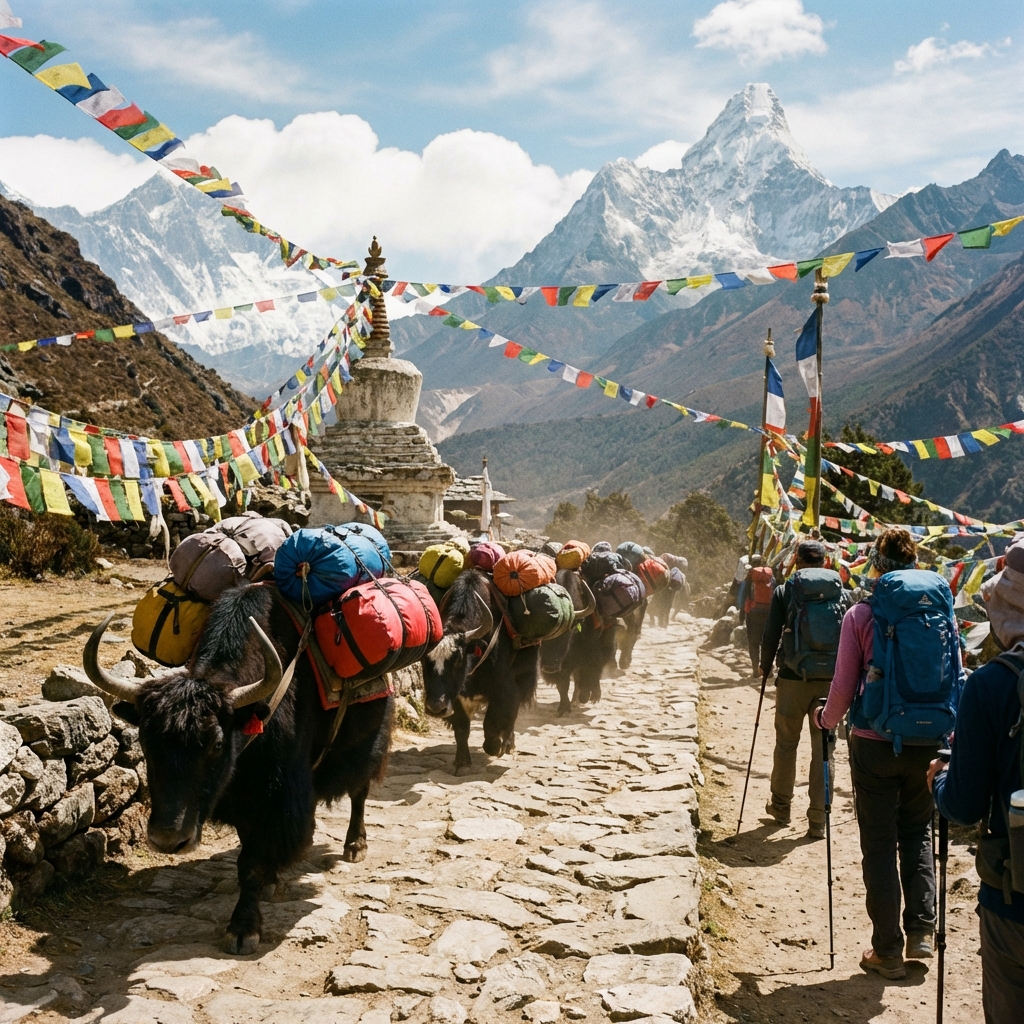
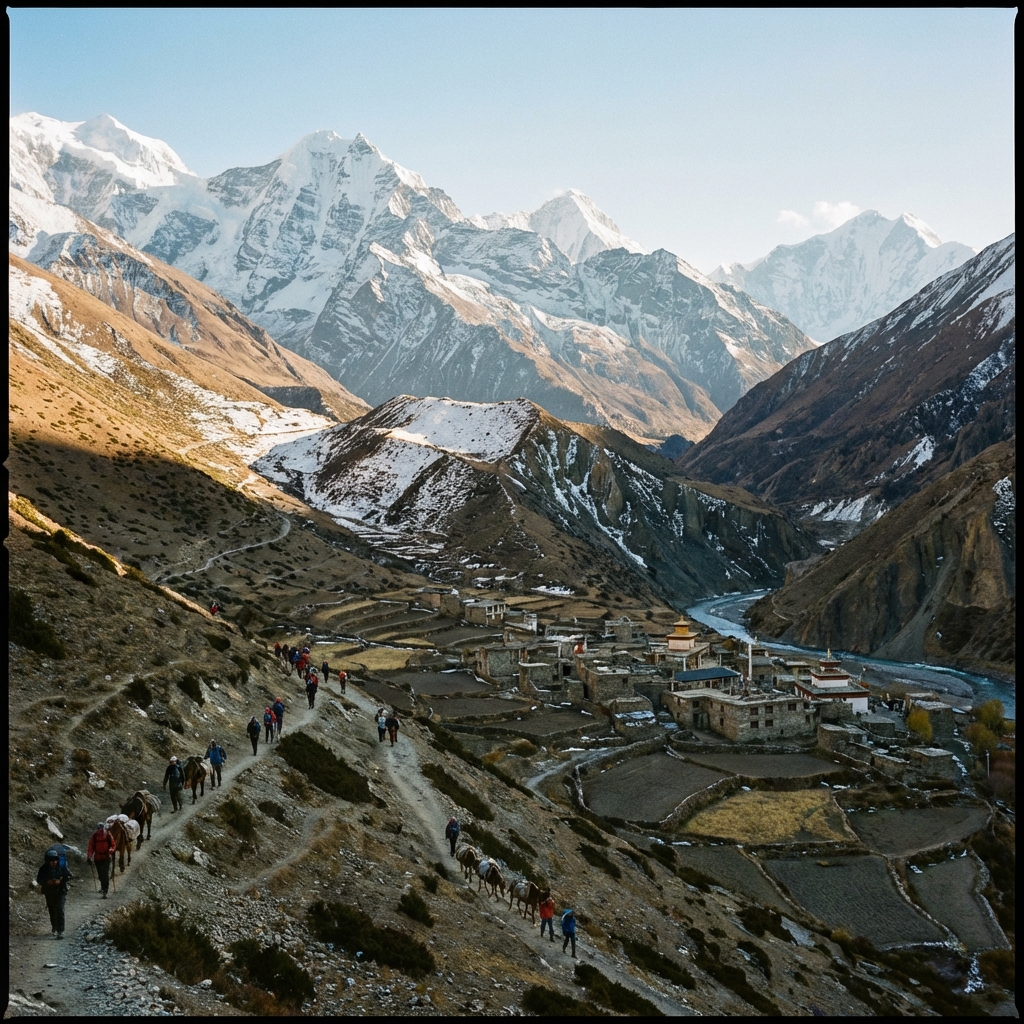
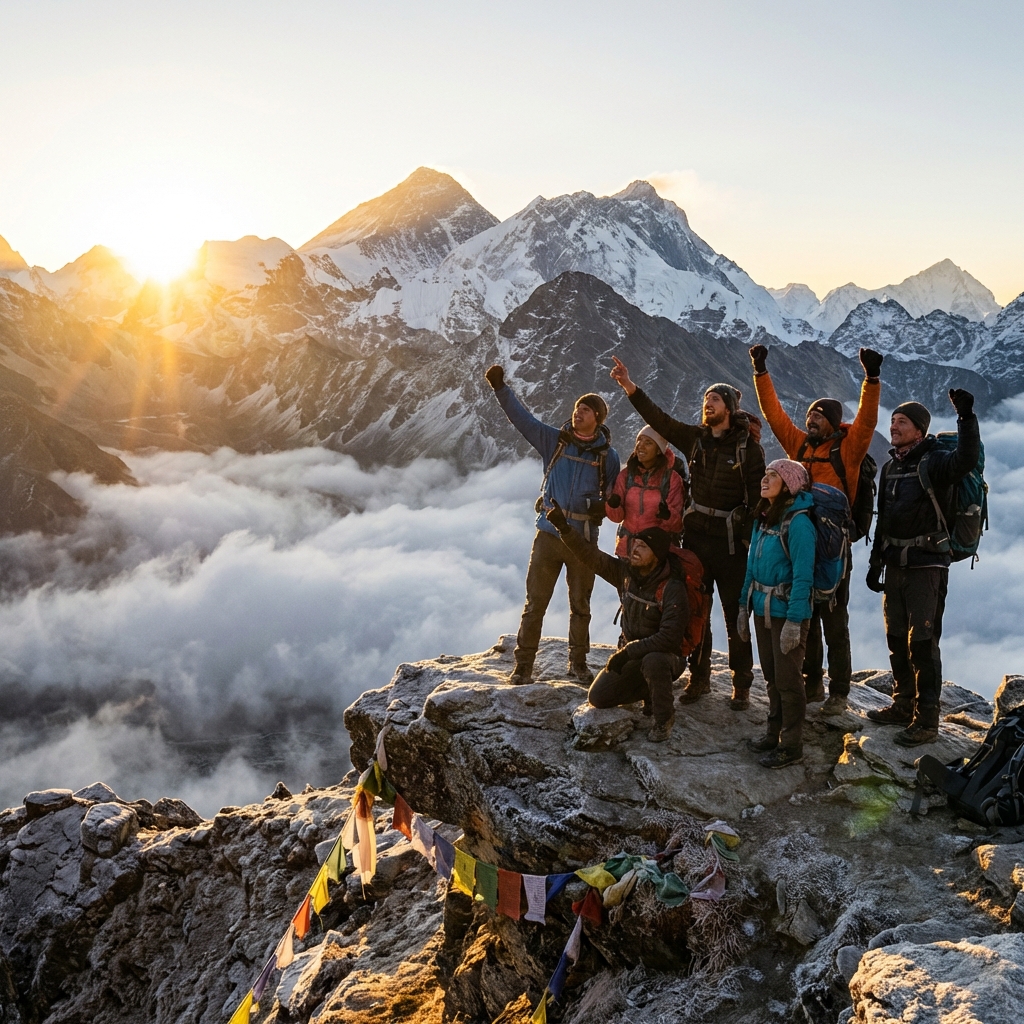
The Langtang Valley trek is Nepal's most accessible major Himalayan experience. Just a 7-8 hour bus ride from Kathmandu, this 7-day itinerary takes you through lush rhododendron forests, traditional Tamang villages, and into the spectacular Langtang Valley -- a glacial corridor framed by 7,000m peaks that Tilman famously described as "one of the most beautiful valleys in the world."
This compact itinerary is ideal for trekkers with limited time who still want an authentic Himalayan experience. You will walk through landscapes Langtang Village was devastated by the 2015 earthquake but has been fully rebuilt with earthquake-resistant structures on a site ~100m higher than the original village. Trails and teahouses are fully restored and safe for trekking and rebuilt after the 2015 earthquake, witness resilient Tamang culture, and stand beneath Langtang Lirung (7,227m) without needing two weeks of vacation time.
Key highlights of the 7-day route: Compact schedule perfect for limited holidays, close proximity to Kathmandu with no flights required, rich Tamang Buddhist culture, stunning views of Langtang Lirung and Ganesh Himal, optional summit of Kyanjin Ri (4,773m) or Tserko Ri (4,984m), and fewer crowds than Everest or Annapurna regions.
Quick Facts: 7-Day Langtang Valley Trek
7 days (8 with travel day)
5 days on trail + 1 exploration day
4,984m (Tserko Ri) / 4,773m (Kyanjin Ri)
Syabrubesi (1,460m)
65km round trip
Moderate
March-May, September-November
$25-40 per day on trail
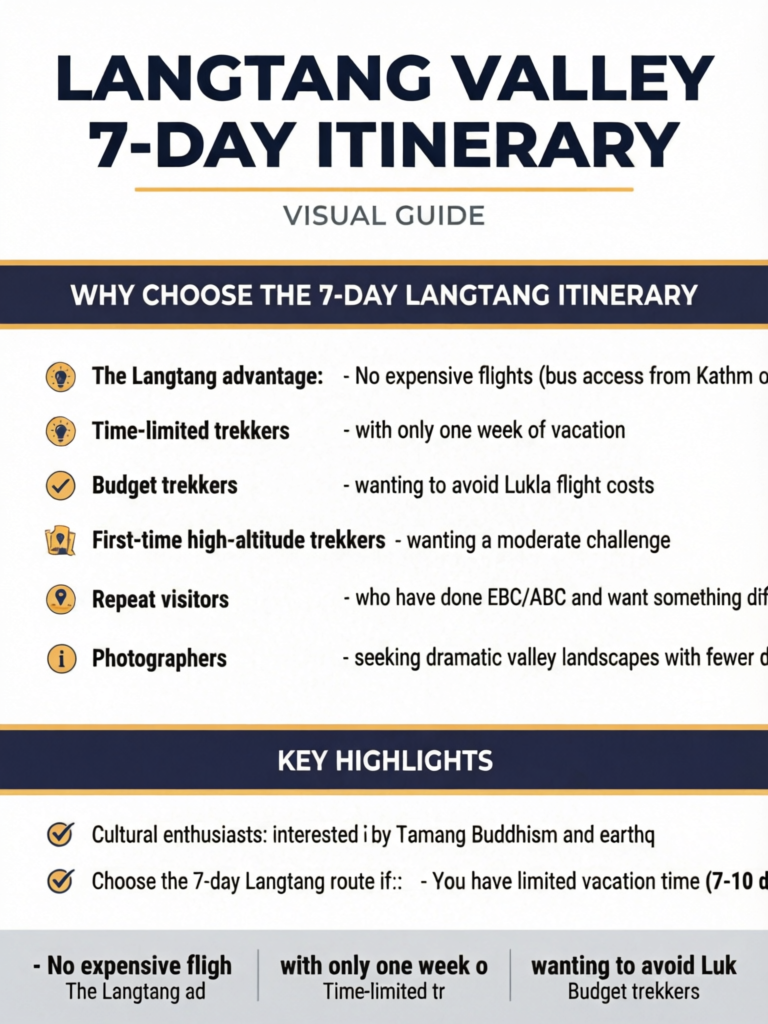
Why Choose the 7-Day Langtang Itinerary
The Langtang Valley trek offers something no other major Nepal trek can match: a complete Himalayan experience in just one week. While the Everest and Annapurna regions demand 10-14 days minimum, Langtang delivers dramatic mountain scenery, cultural immersion, and genuine wilderness in a fraction of the time.
Comparison with Other Short Treks
| Trek | Duration | Max Altitude | Access | Crowds | Cultural Experience |
|---|---|---|---|---|---|
| Langtang Valley | 7 days | 4,984m | Bus from KTM (7-8hr) | Low-Moderate | Tamang villages, monasteries |
| Poon Hill | 3-4 days | 3,210m | Bus from Pokhara (2hr) | High | Gurung villages |
| Mardi Himal | 5-6 days | 4,500m | Jeep from Pokhara (2hr) | Moderate | Limited |
| Ghorepani Loop | 5 days | 3,210m | Bus from Pokhara (2hr) | High | Gurung villages |
The Langtang advantage:
- No expensive flights (bus access from Kathmandu)
- Higher altitude experience than Poon Hill or Mardi Himal
- Significantly fewer trekkers than Annapurna region short treks
- Deep cultural immersion in Tamang Buddhist communities
- Post-earthquake rebuilding story adds emotional depth
- Gateway to extensions (Gosainkunda, Helambu)
Who Is This Trek For?
The 7-day Langtang itinerary is ideal for:
- Time-limited trekkers with only one week of vacation
- Budget trekkers wanting to avoid Lukla flight costs
- First-time high-altitude trekkers wanting a moderate challenge
- Repeat visitors who have done EBC/ABC and want something different
- Photographers seeking dramatic valley landscapes with fewer crowds
- Cultural enthusiasts interested in Tamang Buddhism and earthquake resilience
Pro Tip
The Langtang Valley is the closest major trekking destination to Kathmandu. If your Lukla flight gets cancelled and you are stuck in Kathmandu, Langtang makes an excellent backup plan. Many trekkers have pivoted to Langtang at the last minute and found it equally rewarding.
Complete Day-by-Day Itinerary
Day 1: Syabrubesi to Lama Hotel (2,380m) -- 6-7 Hours
Starting Elevation: 1,550m (Syabrubesi) Ending Elevation: 2,380m (Lama Hotel) Elevation Gain: +830m Distance: 14km Difficulty: Moderate
Getting to Syabrubesi
Most trekkers take the early morning bus from Kathmandu to Syabrubesi. The journey takes 7-8 hours via the Trisuli Highway, passing through Dhunche (the Langtang National Park headquarters where you check your permits). Private jeeps take 5-6 hours and cost $120-150.
Bus departure: 7:00-7:30 AM from Machhapokhari bus park in Kathmandu Cost: NPR 800-1,000 ($6-8) for local bus; NPR 1,200-1,500 ($9-12) for tourist bus Arrival: 2:00-4:00 PM in Syabrubesi
Many trekkers arrive the afternoon before Day 1 and spend a night in Syabrubesi to start fresh the next morning. This is the recommended approach.
Trail Description
The trail begins by crossing the Bhote Kosi river on a suspension bridge and then climbing through subtropical forest along the Langtang Khola. The path is well-marked but involves steady uphill hiking through dense forest. You will pass through a mix of bamboo groves, oak forests, and occasional clearings with views up the valley.
Key waypoints:
- Syabrubesi to Bamboo (1,960m): 2-3 hours through forest, relatively gradual
- Bamboo to Rimche (2,200m): 1.5-2 hours, steeper climbing through dense forest
- Rimche to Lama Hotel (2,380m): 1-1.5 hours, final push through rhododendron forest
What to Expect
The forest trail is lush and shaded, which is welcome on warm days but can feel enclosed. You may spot langur monkeys, Himalayan birds, and if extremely fortunate, red pandas in the bamboo groves. The trail is occasionally shared with mule trains carrying supplies to upper villages.
Lama Hotel is not actually a hotel but a cluster of tea houses at a forest clearing. Despite the modest name, it is a pleasant overnight stop with reliable accommodation.
Accommodation at Lama Hotel
| Lodge | Room Cost | Hot Shower | WiFi | Notes |
|---|---|---|---|---|
| Hotel Langtang View | NPR 500-800 | NPR 300 | NPR 300 | Popular, book early in season |
| Lama Hotel Guest House | NPR 400-600 | NPR 300 | NPR 300 | Basic but clean |
| Riverside Lodge | NPR 500-700 | NPR 300 | Limited | Quieter location |
Daily costs: Accommodation $4-6, Meals $10-15, Extras $3-5. Total: $17-26
Landslide Risk
The trail between Syabrubesi and Lama Hotel follows a narrow river valley that is prone to landslides, especially during and immediately after monsoon season (June-September). Always check trail conditions with your lodge host or guide before departing. After heavy rain, wait for conditions to improve rather than pushing through.
Day 2: Lama Hotel to Langtang Village (3,430m) -- 5-6 Hours
Starting Elevation: 2,380m (Lama Hotel) Ending Elevation: 3,430m (Langtang Village) Elevation Gain: +1,050m Distance: 11km Difficulty: Moderate-Challenging
Trail Description
Day 2 is the biggest elevation gain day of the trek. The trail continues climbing through forest before emerging into more open terrain with the first dramatic mountain views. You will pass through Ghodatabela (3,020m), where there is a Langtang National Park checkpoint, and continue ascending to Langtang Village.
Key waypoints:
- Lama Hotel to Ghodatabela (3,020m): 2-2.5 hours, gradual climb through thinning forest
- Ghodatabela to Langtang Village (3,430m): 2.5-3 hours, open terrain with valley views
The Earthquake Story
Langtang Village was completely destroyed by a massive landslide triggered by the April 2015 earthquake. The entire village of over 50 stone houses was buried, and 175 people lost their lives -- the single deadliest site of the earthquake. The village has been rebuilt approximately 300 meters from the original site.
Walking through the rebuilt Langtang Village is a profoundly moving experience. Memorial stupas and prayer flags mark the site of the original village. The Tamang community has shown remarkable resilience, rebuilding their homes, lodges, and lives. Spending a night here supports this ongoing recovery.
What to Expect
As you climb above 3,000m, the forest gives way to alpine meadows and yak pastures. The valley opens dramatically, revealing Langtang Lirung (7,227m) towering above. The air noticeably thins, and you may feel the first effects of altitude -- a slight headache or shortness of breath on steep sections.
Wildlife possibilities: Himalayan tahr, musk deer (rare), eagles, lammergeier vultures, and pikas (small rodents that live in rock fields).
Accommodation at Langtang Village
The rebuilt lodges in Langtang Village are modern and comfortable by trekking standards. Most were constructed with earthquake-resistant techniques.
| Lodge | Room Cost | Hot Shower | WiFi | Notes |
|---|---|---|---|---|
| Hotel Yala Peak | NPR 600-1,000 | NPR 400 | NPR 400 | Well-built, great views |
| Langtang Guest House | NPR 500-800 | NPR 400 | NPR 400 | Friendly family-run |
| Hotel Mountain View | NPR 500-800 | NPR 400 | Limited | Quieter end of village |
Daily costs: Accommodation $4-8, Meals $12-18, Extras $3-5. Total: $19-31
Pro Tip
Spend some time exploring the memorial area near the original Langtang Village site. The community welcomes respectful visitors, and hearing local stories about the earthquake and rebuilding provides powerful context for the rest of your trek. A small donation to the community rebuilding fund is appreciated.
Day 3: Langtang Village to Kyanjin Gompa (3,870m) -- 3-4 Hours
Starting Elevation: 3,430m (Langtang Village) Ending Elevation: 3,870m (Kyanjin Gompa) Elevation Gain: +440m Distance: 7km Difficulty: Easy-Moderate
Trail Description
Day 3 is intentionally short to aid acclimatization. The trail follows the Langtang Khola through open meadows and yak pastures, with increasingly spectacular views of the surrounding peaks. This is one of the most scenic walking days of the entire trek.
Key waypoints:
- Langtang Village to Mundu (3,543m): 1-1.5 hours, gentle climb through scattered settlements
- Mundu to Sindum (3,650m): 30-45 minutes, flat walking along the valley floor
- Sindum to Kyanjin Gompa (3,870m): 1-1.5 hours, gradual ascent to the monastery settlement
Kyanjin Gompa
Kyanjin Gompa is the highest permanent settlement in the Langtang Valley and the base for exploring the upper valley. The small monastery (gompa) dates back centuries and is still active. The settlement also houses a cheese factory established with Swiss development assistance in the 1950s -- try the locally produced yak cheese.
Things to do in the afternoon (acclimatization):
- Visit the Kyanjin Gompa monastery (free entry, donations welcome)
- Explore the yak cheese factory ($1-2 for cheese tasting)
- Short acclimatization walk toward Langtang Glacier (1-2 hours round trip)
- Photography of Langtang Lirung and the surrounding amphitheater of peaks
Accommodation at Kyanjin Gompa
Kyanjin Gompa has the best lodge selection in the upper valley. Book early during October peak season as capacity is limited.
| Lodge | Room Cost | Hot Shower | WiFi | Notes |
|---|---|---|---|---|
| Kyanjin Gompa Guest House | NPR 800-1,200 | NPR 500 | NPR 500 | Best location, near monastery |
| Hotel Yala Peak View | NPR 700-1,000 | NPR 500 | NPR 500 | Popular with groups |
| Langtang Lirung Guest House | NPR 600-1,000 | NPR 500 | Limited | Quieter, good views |
Daily costs: Accommodation $5-9, Meals $12-18, Extras $5-8. Total: $22-35
Kyanjin Cheese Factory
The Kyanjin cheese factory was established in 1956 as a Swiss-Nepali development project and still produces yak cheese daily. You can visit the factory, watch the cheese-making process, and buy fresh cheese for around NPR 800-1,000 per kg. The hard cheese makes excellent trail snacks for the return journey.
Day 4: Explore Kyanjin Ri (4,773m) or Tserko Ri (4,984m) -- 5-8 Hours
Base Elevation: 3,870m (Kyanjin Gompa) Summit Options: 4,773m (Kyanjin Ri) or 4,984m (Tserko Ri) Elevation Gain: +903m (Kyanjin Ri) or +1,114m (Tserko Ri) Distance: 4-6km round trip (Kyanjin Ri) or 8-10km round trip (Tserko Ri) Difficulty: Challenging (Kyanjin Ri) or Very Challenging (Tserko Ri)
Option A: Kyanjin Ri (4,773m) -- Recommended for Most Trekkers
Kyanjin Ri is the rocky hill directly behind Kyanjin Gompa. The ascent takes 2-3 hours up and 1.5-2 hours down. The trail is steep but non-technical, following a well-worn path with some scrambling near the summit.
Route description:
- First hour: Moderate climb on clear trail behind the settlement
- Second hour: Steeper ascent, loose rock and scree, some scrambling required
- Final section: Ridge walk to the summit with panoramic views
Summit views from Kyanjin Ri:
- Langtang Lirung (7,227m) -- dominant view to the north
- Ganesh Himal range (7,422m) -- to the west
- Dorje Lakpa (6,966m) -- to the east
- Langtang Glacier and the upper valley below
- Tibet/China border peaks in the distance
Option B: Tserko Ri (4,984m) -- For Strong Trekkers
Tserko Ri offers the most spectacular viewpoint in the Langtang Valley but demands significantly more effort. The round trip takes 6-8 hours with a strenuous ascent.
Route description:
- Hours 1-2: Follow the trail northeast from Kyanjin Gompa through yak pastures
- Hours 2-3: Steep grassy slopes give way to rocky terrain
- Hours 3-4: Final push through scree and boulders to the summit ridge
Summit views from Tserko Ri:
- Everything visible from Kyanjin Ri, plus:
- Shishapangma (8,027m) -- an 8,000m peak visible across the Tibet border
- The full extent of the Langtang Glacier
- 360-degree panorama of the central Himalayan range
Altitude Warning for Tserko Ri
Tserko Ri reaches nearly 5,000m, and you will have had only two nights of acclimatization above 3,000m. Watch carefully for AMS symptoms: persistent headache, nausea, dizziness, or extreme fatigue. If symptoms worsen during the ascent, descend immediately. Tserko Ri is optional -- do not push beyond your limits. Kyanjin Ri provides excellent views at a more manageable altitude.
Choosing Between Kyanjin Ri and Tserko Ri
| Factor | Kyanjin Ri (4,773m) | Tserko Ri (4,984m) |
|---|---|---|
| Time required | 3-5 hours round trip | 6-8 hours round trip |
| Difficulty | Moderate-Challenging | Very Challenging |
| AMS risk | Lower | Higher |
| Views | Excellent | Spectacular |
| Physical demand | Manageable for most | Requires strong fitness |
| Best for | Most trekkers | Experienced hikers |
Pro Tip
Start your summit attempt early -- by 5:30-6:00 AM. Morning light on Langtang Lirung is spectacular, clouds typically build by noon, and you want to be back at Kyanjin Gompa by early afternoon. For Tserko Ri, a pre-dawn start at 5:00 AM is advisable to allow sufficient time.
Daily costs: Same as Day 3 (based at Kyanjin Gompa). Total: $22-35
Day 5: Kyanjin Gompa to Lama Hotel (2,380m) -- 6-7 Hours
Starting Elevation: 3,870m (Kyanjin Gompa) Ending Elevation: 2,380m (Lama Hotel) Elevation Loss: -1,490m Distance: 18km Difficulty: Moderate (descending)
Trail Description
Day 5 combines the ascent days 2 and 3 into a single long descent. The trail retraces your steps from Kyanjin Gompa through Langtang Village and Ghodatabela back to Lama Hotel. This is a significant day of downhill walking that will test your knees.
Key waypoints:
- Kyanjin Gompa to Langtang Village: 1.5-2 hours
- Langtang Village to Ghodatabela: 2-2.5 hours
- Ghodatabela to Lama Hotel: 2-2.5 hours
Descent Tips
Long descents put enormous strain on knees and quadriceps. To manage this:
- Use trekking poles: They absorb 20-30% of impact on your knees
- Take small steps: Shorter steps reduce impact force
- Tighten boot laces: Prevents toe banging on the front of your boots
- Stretch at breaks: Focus on quadriceps and calf stretches
- Consider knee braces: If you have a history of knee issues
The trail will feel different going down. You will notice views and details you missed on the way up. Take time to appreciate the changing vegetation zones as you descend from alpine meadow back into thick forest.
Accommodation at Lama Hotel
Same lodges as Day 1. You may want to book the same room or try a different lodge for variety.
Daily costs: Accommodation $4-6, Meals $10-15, Extras $3-5. Total: $17-26
Pro Tip
The descent day is when most trekking injuries occur -- not from altitude but from tired legs, loose rocks, and inattention. Stay focused, especially in the final hours when fatigue sets in. Many trekkers rush the descent and twist ankles or strain knees. Better to arrive 30 minutes later than to spend days recovering from an injury.
Day 6: Lama Hotel to Syabrubesi (1,460m) -- 5-6 Hours
Starting Elevation: 2,380m (Lama Hotel) Ending Elevation: 1,550m (Syabrubesi) Elevation Loss: -830m Distance: 14km Difficulty: Easy-Moderate (descending)
Trail Description
The final trekking day reverses Day 1, descending through forest to Syabrubesi. The trail is straightforward and mostly downhill, following the Langtang Khola through bamboo and rhododendron forest.
Key waypoints:
- Lama Hotel to Rimche: 1-1.5 hours
- Rimche to Bamboo: 1-1.5 hours
- Bamboo to Syabrubesi: 2-2.5 hours
Arrival in Syabrubesi
Most trekkers arrive in Syabrubesi by early afternoon. Options for the evening:
- Stay in Syabrubesi: Rest and celebrate with a good meal. Several lodges offer hot showers and cold beer -- both welcome after the trek.
- Take afternoon bus/jeep: If you arrive early enough (before 1pm), some afternoon buses return to Kathmandu. However, the road journey in the dark is not recommended.
- Relax at hot springs: Tatopani hot springs are accessible from Syabrubesi (about 1 hour walk or short drive). A perfect post-trek reward.
Accommodation in Syabrubesi
| Lodge | Room Cost | Hot Shower | WiFi | Notes |
|---|---|---|---|---|
| Hotel Tibet | NPR 500-1,000 | Included | NPR 200 | Popular with trekkers |
| Langtang View Guest House | NPR 400-800 | Included | NPR 200 | River views |
| Hotel Mountain View | NPR 500-1,000 | Included | Free | Best food options |
Daily costs: Accommodation $4-8, Meals $10-15, Extras $3-5. Total: $17-28
Day 7: Syabrubesi to Kathmandu -- 7-8 Hours (Drive)
Starting Elevation: 1,550m (Syabrubesi) Ending Elevation: 1,400m (Kathmandu) Mode: Bus or private jeep
Transport Options
| Option | Duration | Cost | Departure | Notes |
|---|---|---|---|---|
| Local bus | 8-9 hours | NPR 800-1,000 ($6-8) | 6:30-7:00 AM | Basic, crowded, stops frequently |
| Tourist bus | 7-8 hours | NPR 1,200-1,500 ($9-12) | 7:00 AM | More comfortable, fewer stops |
| Private jeep | 5-6 hours | $120-150 total | Flexible | Most comfortable, can stop for photos |
| Shared jeep | 6-7 hours | NPR 2,000-2,500 ($15-20) | When full (early AM) | Faster than bus, cheaper than private |
The Road Journey
The drive from Syabrubesi to Kathmandu follows the Trisuli River valley, passing through Dhunche, Trisuli Bazaar, and Nuwakot before reaching the Kathmandu Valley. The road is paved but winding, with occasional rough patches.
What to expect:
- The first 2 hours to Dhunche are the roughest road section
- Lunch stop in Trisuli Bazaar (good local restaurants)
- Entry into Kathmandu Valley through suburban sprawl
- Arrival in Thamel by 2:00-4:00 PM (bus) or 1:00-2:00 PM (jeep)
Daily costs: Transport $6-150 (depending on choice), Meals en route $5-10. Total: $11-160
Road Conditions and Delays
The Syabrubesi-Kathmandu road is vulnerable to landslides during monsoon season and can be blocked for hours or even days. During the dry season (October-May), the road is generally reliable. Always check road conditions before departing, and build a buffer day into your schedule if you have an international flight within 24 hours of your planned return.
Altitude Profile: Visualizing the 7-Day Route
The Langtang Valley trek follows a classic up-and-back pattern with a steady ascent over three days, one exploration day at the highest point, and a two-day descent.
| Day | Location | Sleep Altitude | Day High Point | Elevation Change |
|---|---|---|---|---|
| 1 | Lama Hotel | 2,380m | 2,380m | +830m |
| 2 | Langtang Village | 3,430m | 3,430m | +1,050m |
| 3 | Kyanjin Gompa | 3,870m | 3,870m | +440m |
| 4 | Kyanjin Gompa | 3,870m | 4,773-4,984m | +903 to +1,114m (day hike) |
| 5 | Lama Hotel | 2,380m | 3,870m | -1,490m |
| 6 | Syabrubesi | 1,550m | 2,380m | -830m |
| 7 | Kathmandu | 1,400m | 1,550m | -150m (drive) |
Key acclimatization notes:
- Day 3 is intentionally short (only +440m) to help your body adjust after the big Day 2 gain
- Day 4 follows the "climb high, sleep low" principle -- you summit Kyanjin Ri or Tserko Ri but sleep at 3,870m
- The total elevation gain spread over 3 days averages 773m per day, which is within safe acclimatization guidelines
Permits and Costs
Required Permits
| Permit | Cost (Foreigners) | Cost (SAARC) | Where to Obtain |
|---|---|---|---|
| Langtang National Park Entry Permit | NPR 3,000 ($23) | NPR 1,500 ($12) | Dhunche checkpoint or Kathmandu NTB office |
| TIMS Card | NPR 2,000 ($15) | NPR 1,000 ($8) | Kathmandu NTB office or TAAN office |
For detailed permit information, see our Langtang National Park permit guide.
Total Trek Budget
Budget Trekker ($25-$40 /day on trail):
- Accommodation: $4-6/night
- Meals: Dal bhat for all meals ($10-15/day)
- No WiFi, minimal charging
- 5 trail nights = $125-150
- Transport (bus both ways): $12-16
- Permits: $38
- Grand total: $175-204
Standard Trekker ($35-45/day on trail):
- Mid-range lodges: $5-8/night
- Mixed Nepali and Western food ($15-20/day)
- WiFi and charging: $5-8/day
- 5 trail nights = $175-225
- Transport (shared jeep/tourist bus): $20-40
- Permits: $38
- Guide hire: $25-$35 /day = $175-245
- Grand total: $408-548
Comfort Trekker ($45-60/day on trail):
- Best available lodges: $8-12/night
- Varied food choices ($18-25/day)
- All amenities ($8-12/day)
- 5 trail nights = $225-300
- Transport (private jeep both ways): $240-300
- Permits: $38
- Guide + porter: $50-65/day = $350-455
- Grand total: $853-1,093
Best Seasons for the 7-Day Langtang Trek
Autumn (October-November) -- Peak Season
Pros: Clearest skies, best mountain views, stable weather, dry trails Cons: Most crowded (though still far less crowded than EBC/ABC), accommodation can fill up in October Temperatures: Day 10-18°C at lower elevations, 0-8°C at Kyanjin Gompa; Night -5 to -10°C at Kyanjin Gompa
Spring (March-May) -- Second Best
Pros: Rhododendron blooms (March-April) are spectacular, warmer than autumn, fewer trekkers than October Cons: Occasional afternoon clouds and rain, dustier views pre-monsoon Temperatures: Day 12-20°C at lower elevations, 2-10°C at Kyanjin Gompa; Night -3 to -8°C at Kyanjin Gompa
Winter (December-February) -- Quiet Season
Pros: Crystal clear views, virtually no other trekkers, lower costs Cons: Very cold at night (below minus 15°C at Kyanjin Gompa), some lodges may close, shorter daylight hours, possible snow above 3,500m Recommendation: Suitable for experienced trekkers with proper cold-weather gear
Monsoon (June-September) -- Not Recommended
Pros: Lush green landscapes, dramatic waterfalls Cons: Daily rain, leeches on trail below 3,000m, clouds obscure mountain views, landslide risk, trail conditions deteriorate
For more detailed seasonal information, see our Langtang Valley best time guide.
What to Pack for 7 Days
The Langtang Valley trek requires standard Nepal trekking gear. Key items specific to this trek:
Essential Clothing
- Layering system: Base layers, fleece mid-layer, down jacket, waterproof shell
- Trekking pants: 2 pairs (1 worn, 1 spare)
- Warm hat, gloves, buff: Essential for Kyanjin Gompa and summit days
- Trekking boots: Broken-in, ankle-supporting boots with good tread
- Camp shoes: Sandals or light shoes for evenings
Essential Gear
- Sleeping bag: Rated to minus 10°C minimum for spring/autumn, minus 20°C for winter
- Trekking poles: Highly recommended for steep descent days
- Headlamp: Essential for early morning summit attempts
- Water purification: Tablets or filter (saves money vs. buying bottles)
- Power bank: 10,000-20,000mAh (fewer charging options than Everest region)
- Sunglasses: Category 3-4 UV protection
- Sunscreen: SPF 50+ (UV intensity increases with altitude)
First Aid Essentials
- Altitude sickness medication (Diamox -- consult your doctor)
- Ibuprofen for headaches
- Blister care (Compeed or moleskin)
- Oral rehydration salts
- Anti-diarrhea medication
- Personal prescriptions
For a complete packing list, see our trekking gear guide.
Difficulty Assessment
The Langtang Valley 7-day itinerary is rated Moderate overall. Here is how each day breaks down:
| Day | Route | Difficulty | Why |
|---|---|---|---|
| 1 | Syabrubesi to Lama Hotel | Moderate | Sustained uphill through forest |
| 2 | Lama Hotel to Langtang Village | Moderate-Challenging | Biggest elevation gain day (+1,050m) |
| 3 | Langtang Village to Kyanjin Gompa | Easy-Moderate | Short day, gentle gradient |
| 4 | Kyanjin Ri or Tserko Ri | Challenging to Very Challenging | Steep, high altitude, scrambling |
| 5 | Kyanjin Gompa to Lama Hotel | Moderate | Long descent, knee strain |
| 6 | Lama Hotel to Syabrubesi | Easy-Moderate | Downhill through forest |
| 7 | Drive to Kathmandu | Easy | Sitting in a vehicle |
Physical requirements:
- Ability to walk 5-7 hours per day on uneven terrain
- Comfortable with 800-1,050m elevation gain in a single day
- No technical climbing skills needed (except minor scrambling on Kyanjin Ri summit)
- Moderate cardiovascular fitness
For a detailed assessment, see our Langtang Valley difficulty guide.
Extending Your Trek
The 7-day Langtang itinerary can be extended in several ways:
Gosainkunda Lakes Extension (+3-4 days)
From Syabrubesi, instead of returning directly to Kathmandu, trek south to the sacred Gosainkunda Lakes (4,380m). This alpine lake pilgrimage site is particularly significant during the Janai Purnima festival (August). The extension adds 3-4 days and crosses Laurebina Pass (4,610m).
Helambu Extension (+3-5 days)
Continue from Gosainkunda over Laurebina Pass and descend through the Helambu region, ending in Sundarijal on the outskirts of Kathmandu. This creates a 12-14 day Langtang-Gosainkunda-Helambu circuit, one of Nepal's classic long treks.
Tamang Heritage Trail Extension (+4-5 days)
Before or after the Langtang Valley trek, explore the Tamang Heritage Trail, which loops through traditional villages between Syabrubesi and Gatlang. This cultural extension showcases authentic Tamang life, historic monasteries, and stunning ridgeline trails with views of Ganesh Himal.
Tips for Independent Trekkers
The Langtang Valley trek is one of Nepal's most independent-trekker-friendly routes. Here are tips for going guideless:
- Navigation is straightforward: The trail is well-marked and follows a single valley with no confusing junctions
- Accommodation is available: Tea houses are plentiful and you rarely need to book ahead (except peak October)
- Cell coverage: Nepal Telecom has signal at most points along the trail, including Kyanjin Gompa
- Maps: Download offline maps (Maps.me or AllTrails) before departing Kathmandu
- Safety net: Register with your embassy and share your itinerary with someone at home
Guide Requirement Update
As of 2026, Nepal requires foreign trekkers to hire a licensed guide for all national park treks. Enforcement varies by region, and Langtang National Park checkpoints may ask for guide documentation. Check current regulations before planning an independent trek. Even if enforcement is lax, a local guide significantly enhances the cultural experience in Tamang villages.
Langtang Region Resources
For complete information about the Langtang region, explore these guides:
- Langtang Region Overview -- comprehensive guide to all treks in the area
- Langtang Valley Best Time to Trek -- seasonal breakdown
- Langtang Valley Difficulty Assessment -- fitness requirements
- Langtang National Park Permit Guide -- permit details and costs
Frequently Asked Questions: 7-Day Langtang Valley Itinerary
Final Thoughts: Is the 7-Day Langtang Itinerary Right for You?
The 7-day Langtang Valley trek is the ideal choice for trekkers who want a meaningful Himalayan experience without the time commitment and cost of longer treks. In one week, you will walk through diverse ecosystems from subtropical forest to alpine meadow, experience the warmth and resilience of Tamang culture, and stand beneath some of Nepal's most dramatic peaks.
Choose the 7-day Langtang route if:
- You have limited vacation time (7-10 days total including travel)
- You want to avoid expensive domestic flights
- You prefer fewer crowds and a quieter trekking experience
- You are drawn to cultural experiences and community stories
- This is your first high-altitude trek and you want a moderate challenge
- You are on a tighter budget
Consider alternatives if:
- You want to reach higher altitudes (above 5,000m) -- consider EBC
- You want iconic mountain viewpoints like Kala Patthar -- consider Everest region
- You prefer very easy trekking -- consider Poon Hill (3-4 days)
- You want a longer, more immersive experience -- consider Langtang-Gosainkunda-Helambu circuit
The Langtang Valley may not have the name recognition of Everest or Annapurna, but it delivers an experience every bit as powerful. The combination of stunning scenery, rich culture, earthquake resilience story, and accessibility makes it one of Nepal's most rewarding treks.
Train moderately, pack wisely, respect the altitude, and enjoy every moment of this magnificent valley.
Namaste, and safe trekking!
Sources:
This guide was researched using data from:
- Nepal Tourism Board -- Langtang Region Statistics 2026/2027
- Langtang National Park Authority -- Trail and Permit Information
- Local lodge networks and pricing surveys 2026/2027
- Himalayan Rescue Association -- Altitude Sickness Guidelines
- Post-earthquake reconstruction reports -- Langtang Valley Rehabilitation Committee