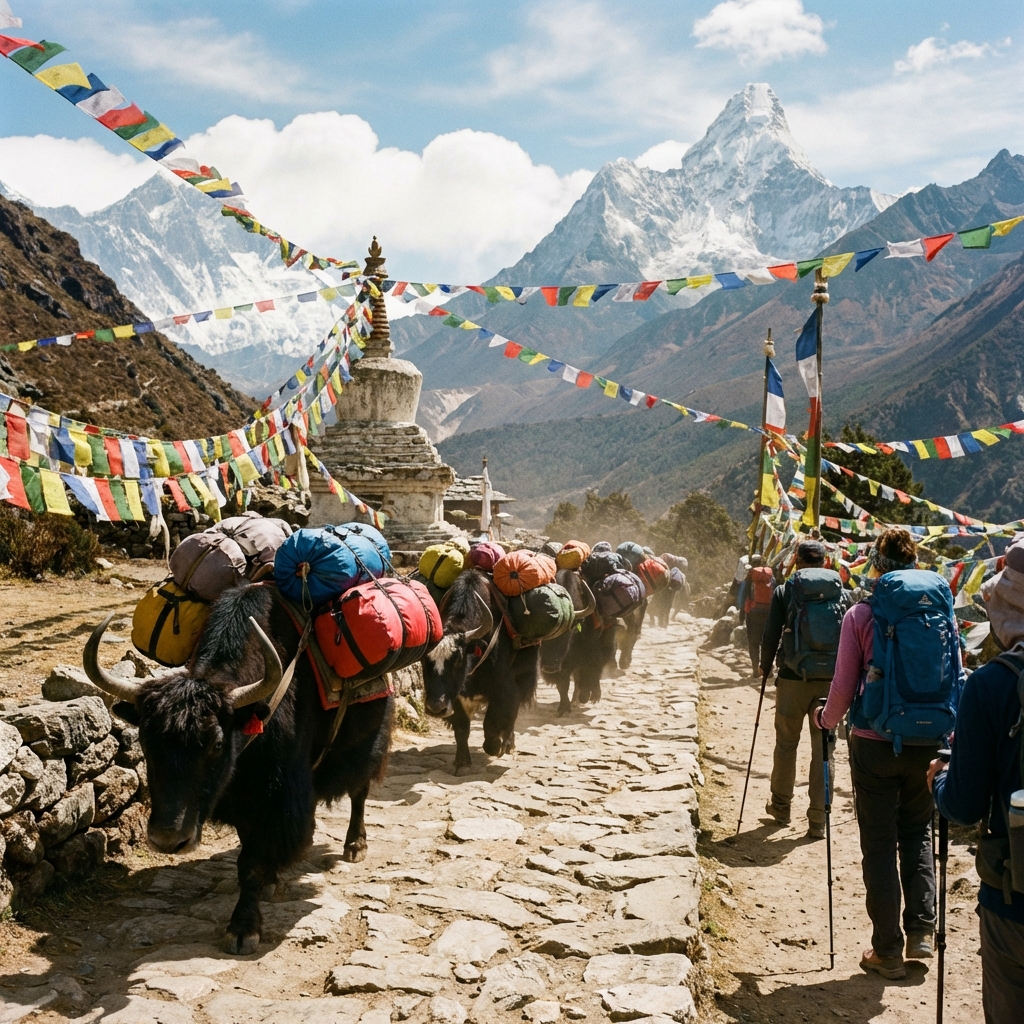
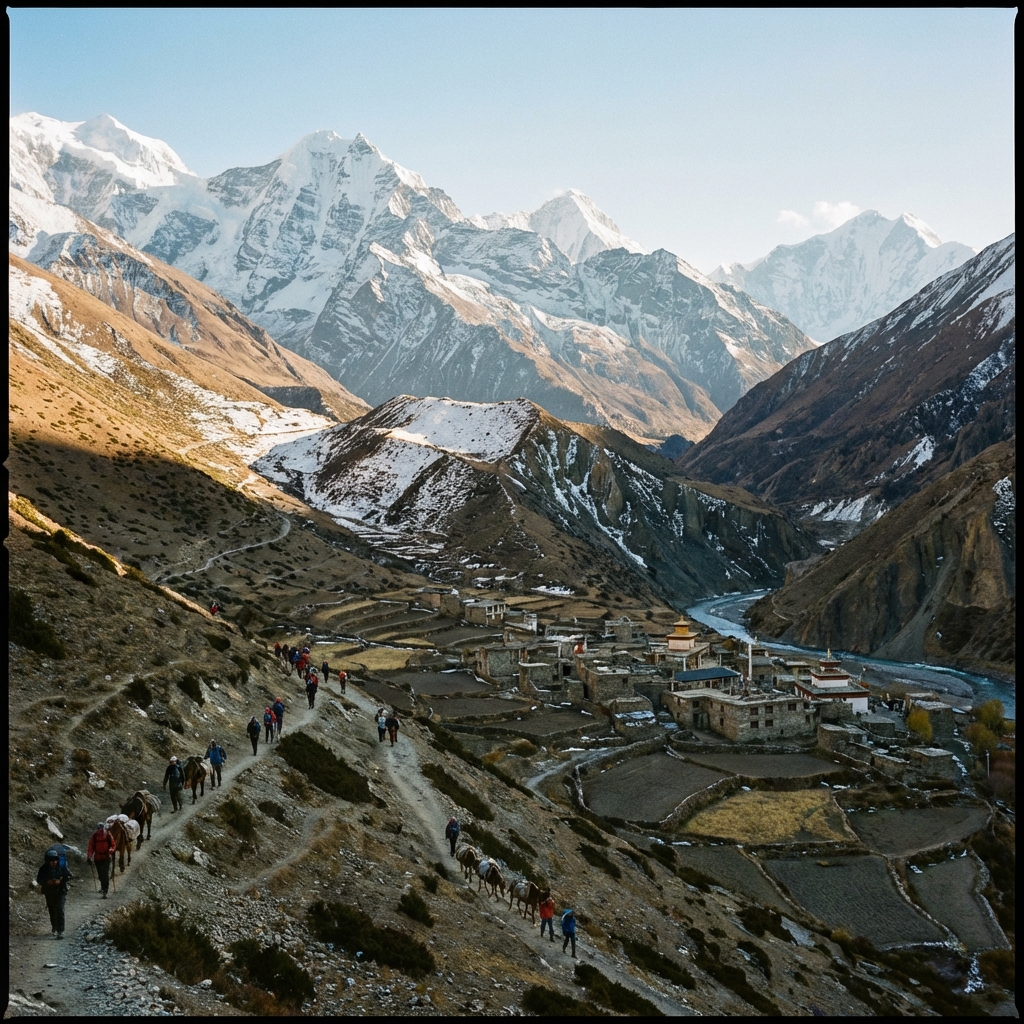
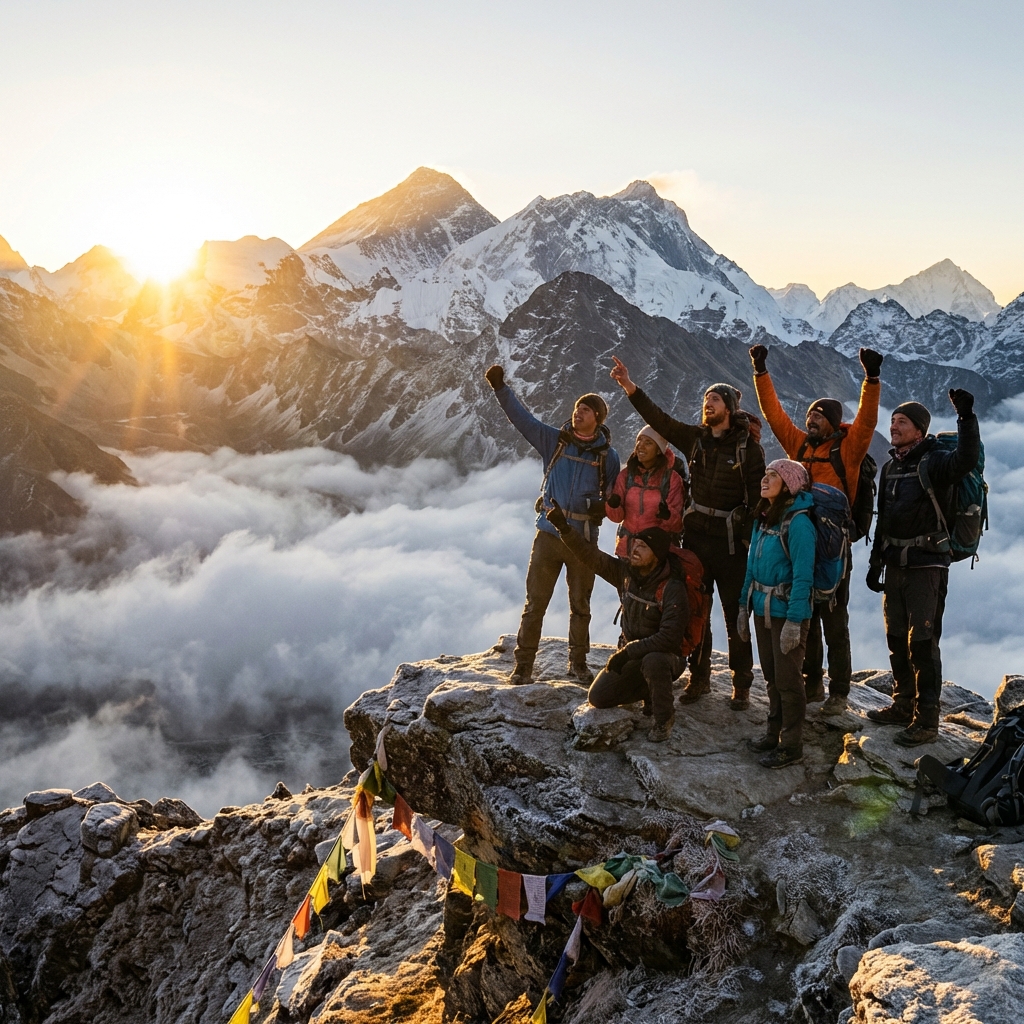
The Langtang Valley trek sits in an unusual position in the Nepal trekking hierarchy. It is easier than the marquee treks like Everest Base Camp and the Annapurna Circuit, but substantially harder than beginner routes like the Poon Hill trek. This middle ground makes it both appealing and confusing for trekkers trying to assess whether they are ready for it.
Marketing materials often describe Langtang as "moderate" and "suitable for anyone with basic fitness." That is half true. The trail is non-technical, the altitude is lower than EBC, and the duration is shorter. But the valley still takes you above 4,700 meters, involves consecutive days of significant elevation gain, and demands genuine physical preparation. People who treat it as a casual walk because it is not Everest often find themselves humbled.
This assessment gives you the honest picture. If you are considering Langtang Valley as your first serious Himalayan trek or as a step up from Poon Hill, this is what you actually need to know.
What Actually Makes Langtang Difficult
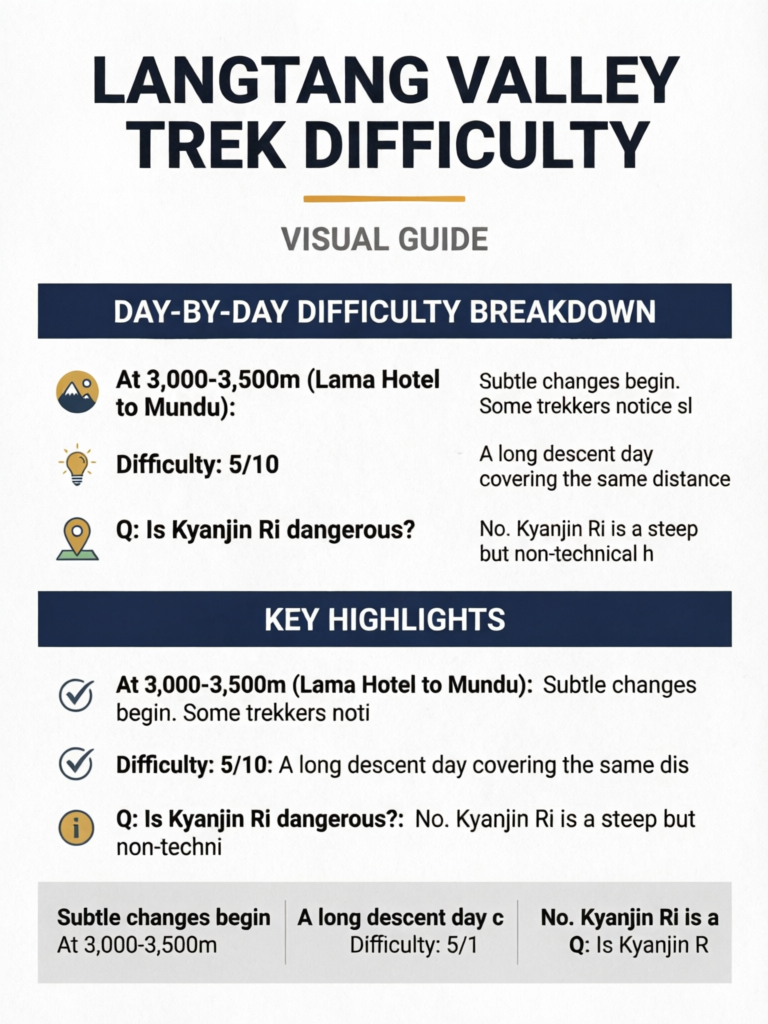
Langtang Valley is not a technical trek. There are no glaciers to cross, no narrow ridgelines, no exposed scrambles on the main trail. The difficulty comes from a combination of factors that accumulate over the course of a week.
Factor 1: Altitude, the Defining Challenge
The Langtang Valley trek takes you from Syabrubesi at 1,550 meters to Kyanjin Gompa at 3,870 meters, with optional summits of Kyanjin Ri (4,773m) and Tserko Ri (4,984m). The altitude profile is what separates this from a standard hill trek.
Below 3,000m (Syabrubesi to Lama Hotel): You are essentially hill trekking. The air is thick, breathing is easy, and the only challenge is the physical effort of climbing. Most trekkers feel strong and confident in this zone.
At 3,000-3,500m (Lama Hotel to Mundu): Subtle changes begin. Some trekkers notice slightly heavier breathing on steep sections. Energy levels remain good for most people. Appetite is normal. Sleep is generally unaffected.
At 3,500-3,870m (Mundu to Kyanjin Gompa): Altitude effects become noticeable. Walking pace slows on inclines. Mild headaches may appear, particularly in the evening. Sleep quality may dip. Most trekkers acclimatize well at this range if they have taken a gradual approach.
At 4,000-4,984m (Kyanjin Ri and Tserko Ri summits): This is where Langtang gets genuinely challenging. If you push to Tserko Ri at nearly 5,000 meters, you are in the same altitude band as upper sections of the EBC trek. Breathing is labored, pace drops significantly, and the thin air makes every uphill meter feel three times harder than it would at sea level.
Tserko Ri Changes the Difficulty Rating
The main Langtang Valley trek to Kyanjin Gompa (3,870m) is a solid moderate trek. Adding the Tserko Ri summit (4,984m) pushes the difficulty firmly into challenging territory. Tserko Ri involves over 1,100 meters of elevation gain from Kyanjin Gompa in a single day at high altitude, with some steep and loose sections near the summit. If you plan to include Tserko Ri, train and prepare as you would for a challenging trek, not a moderate one.
Factor 2: Steep, Sustained Climbing on Days 1-2
The opening days of the Langtang trek involve significant elevation gain through dense forest on steep, sometimes rough trails. The climb from Syabrubesi (1,460m) to Lama Hotel (2,380m) on day one includes roughly 830 meters of ascent over 6-7 hours. Day two continues climbing to around 3,430 meters.
Unlike EBC, where the steep climb to Namche is a single hard effort within an otherwise gradual profile, the Langtang Valley demands sustained climbing right from the start. Your legs feel the effort immediately and fatigue begins accumulating from day one.
Factor 3: Trail Conditions Post-Earthquake
The 2015 earthquake Langtang Village was devastated by the 2015 earthquake but has been fully rebuilt with earthquake-resistant structures on a site ~100m higher than the original village. Trails and teahouses are fully restored and safe for trekking the Langtang Valley, and while the trail has been rebuilt and is fully operational, some sections remain rougher than the well-maintained EBC or Annapurna trails. Landslide areas have been rerouted, certain sections cross rocky debris fields, and the trail surface varies from smooth packed earth to loose rock.
These conditions do not make the trek dangerous, but they add to physical fatigue. Uneven terrain demands more from your ankles, knees, and stabilizer muscles than a smooth, well-graded path.
Factor 4: Fewer Acclimatization Options
On EBC, the standard itinerary includes dedicated acclimatization days at Namche Bazaar and Dingboche. The Langtang Valley's shorter duration and different altitude profile mean acclimatization is managed differently. Most itineraries include one rest day at Kyanjin Gompa, but the rapid gain from 1,550m to 3,870m in four days means your body has less time to adjust compared to the more gradual EBC profile.
Add a Night at Mundu for Better Acclimatization
Many standard Langtang itineraries go directly from Lama Hotel to Kyanjin Gompa, gaining over 1,400 meters in a single day. A smarter approach is to stop at Mundu (3,543m) and split this into two days. The extra night allows your body to acclimatize more gradually and significantly reduces the risk of altitude sickness at Kyanjin Gompa. This is especially important if you have not been above 3,500 meters before.
Day-by-Day Difficulty Breakdown
This uses a standard 8-day Langtang Valley itinerary including the Kyanjin Ri summit. Difficulty rated 1-10.
Day 1: Kathmandu to Syabrubesi (1,460m) by Bus
Difficulty: 2/10 (Travel day) The 7-8 hour bus journey from Kathmandu is winding and rough, particularly the final section. No trekking required, but the journey is tiring. Arrive, rest, and prepare for the trek ahead.
Day 2: Syabrubesi to Lama Hotel (1,550m to 2,380m)
Difficulty: 5/10 A full day of trekking through subtropical and temperate forest along the Langtang Khola river valley. The trail climbs steadily with some steep sections, gaining approximately 830 meters. Walking time: 6-7 hours. The trail is well-defined but rugged in places. Your legs will feel this first day, especially if you are not accustomed to sustained uphill hiking.
Day 3: Lama Hotel to Mundu (2,380m to 3,543m)
Difficulty: 6/10 A big climbing day with over 1,100 meters of elevation gain. The trail continues up through forest before emerging into the wider Langtang Valley. The landscape transitions from dense rhododendron forest to alpine meadows. Walking time: 6-7 hours. The altitude begins to be a factor for some trekkers, particularly in the final hour of the climb.
Day 4: Mundu to Kyanjin Gompa (3,543m to 3,870m)
Difficulty: 3/10 A relatively easy and scenic day with modest elevation gain. The trail opens up into the broad Langtang Valley with stunning views of Langtang Lirung (7,227m) and surrounding peaks. Walking time: 3-4 hours. This shorter day allows your body to adjust to the altitude. Spend the afternoon exploring the village and cheese factory.
Day 5: Kyanjin Gompa Rest Day with Kyanjin Ri Summit (3,870m to 4,773m and back)
Difficulty: 7/10 The summit day for Kyanjin Ri. The climb gains approximately 900 meters from Kyanjin Gompa to the summit over 2-3 hours. The trail is steep but non-technical, following a clear ridge path. At 4,773 meters, altitude significantly affects your pace and breathing. The summit offers panoramic views of Langtang Lirung, Dorje Lakpa, and the surrounding glacier system. Descend back to Kyanjin Gompa for the night. Total walking time: 5-6 hours.
Day 6 (Optional): Tserko Ri Summit (3,870m to 4,984m and back)
Difficulty: 9/10 (Hardest day if included) The ascent of Tserko Ri is the single hardest day of the Langtang trek. Over 1,100 meters of elevation gain from Kyanjin Gompa, reaching nearly 5,000 meters. The lower section follows a clear trail, but the upper portion becomes steep and loose with some route-finding required. At this altitude, every step is labored. The climb takes 3-4 hours up and 2-3 hours down. Total walking time: 6-8 hours. This day is optional and should only be attempted by those feeling well-acclimatized with no altitude sickness symptoms.
Day 7: Kyanjin Gompa to Lama Hotel (3,870m to 2,380m)
Difficulty: 5/10 A long descent day covering the same distance that took two days on the way up. Approximately 1,500 meters of descent over 6-7 hours. The downhill is relentless and punishing on knees and quadriceps. Bring trekking poles and prepare for sore legs. The lower altitude restores energy and appetite noticeably.
Day 8: Lama Hotel to Syabrubesi (2,380m to 1,550m)
Difficulty: 4/10 The final trekking day with approximately 830 meters of descent over 5-6 hours. Tired legs and trail fatigue make this feel harder than the numbers suggest. The subtropical heat at lower elevations is a surprising contrast to the cool mountain air above.
The Two Critical Days
Day 3 (climb to Mundu) and Day 5 or 6 (summit day) define the Langtang experience. Day 3 is the biggest sustained climb, and the summit day exposes you to the highest altitude. If you manage these two days well, the rest of the trek is comfortable. If you are struggling significantly on Day 3, the summit days will be harder still. Use Day 3 as your honest benchmark.
Langtang Difficulty Compared to Other Treks
Understanding where Langtang sits relative to other popular Nepal treks helps you gauge whether it matches your experience and fitness level.
Langtang Valley vs. Everest Base Camp
| Factor | Langtang Valley | EBC |
|---|---|---|
| Maximum altitude | 4,773m (Kyanjin Ri) or 4,984m (Tserko Ri) | 5,364m (EBC) / 5,545m (Kala Patthar) |
| Duration | 7-10 days | 12-14 days |
| Consecutive high-altitude days | 2-4 days above 3,500m | 7-9 days above 3,500m |
| Cumulative elevation gain | ~3,200m | ~4,000m+ |
| Trail difficulty | Moderate (some rough sections) | Moderate (well-maintained) |
| Acclimatization challenge | Moderate | High |
| Facilities quality | Good (fewer options) | Excellent (well-established) |
| Overall difficulty | Moderate | Challenging |
Key difference: EBC keeps you above 4,000 meters for significantly longer, creating greater cumulative altitude stress. Langtang gets you high but returns you to lower elevations faster. The sustained altitude exposure on EBC is the primary reason it is harder overall.
Langtang Valley vs. Annapurna Base Camp
| Factor | Langtang Valley | ABC |
|---|---|---|
| Maximum altitude | 4,773m (Kyanjin Ri) | 4,130m |
| Duration | 7-10 days | 7-12 days |
| Trail character | Forest, valley, alpine | Stone stairs, forest, moraine |
| Steepest sections | Days 2-3 | Stone stairways throughout |
| Altitude challenge | Higher maximum | Lower but still significant |
| Physical demand | Sustained climbing | Repeated stairs (knee-punishing) |
| Overall difficulty | Comparable (slightly harder altitude, easier trail) | Comparable (easier altitude, harder trail) |
Key difference: Langtang reaches higher altitude but has fewer of the relentless stone staircases that make ABC physically punishing. ABC tops out at a lower altitude. The treks are roughly comparable in overall difficulty, with the difference coming down to whether altitude or stairway-induced leg fatigue is harder for you personally.
Langtang Valley vs. Poon Hill
| Factor | Langtang Valley | Poon Hill |
|---|---|---|
| Maximum altitude | 4,773m+ | 3,210m |
| Duration | 7-10 days | 4-5 days |
| Altitude challenge | Significant | Minimal |
| Physical demand | Moderate to high | Low to moderate |
| Technical difficulty | None | None |
| Overall difficulty | Moderate | Easy |
Key difference: Poon Hill stays well below the altitude where most people experience symptoms. Langtang goes substantially higher and for longer. If you have completed Poon Hill comfortably, Langtang is the logical next step, but it represents a significant increase in challenge.
The Poon Hill Graduate
If you completed Poon Hill and want to step up to Langtang, add 6-8 weeks of focused training beyond whatever you did for Poon Hill. Specifically, you need to build cardio endurance for sustained climbing at altitude and train your legs for consecutive big days. The jump from 3,210m to 4,773m (or 4,984m) is a meaningful increase that your body needs preparation for.
Fitness Requirements for Langtang Valley
Minimum Fitness for the Main Trek (to Kyanjin Gompa with Kyanjin Ri)
You should be able to:
- Hike 5-6 hours with a 7-8 kg daypack over hilly terrain
- Climb 800-1,000 meters of elevation in a single day
- Recover overnight and repeat a similar effort the next day
- Walk briskly for 45 minutes without stopping
- Climb stairs continuously for 20 minutes at a steady pace
- Complete 2 consecutive days of 5-6 hour hikes on a weekend
Enhanced Fitness for Tserko Ri Addition
If you plan to summit Tserko Ri, increase your benchmarks:
- Hike 7-8 hours with a daypack including 1,000+ meters of elevation gain
- Complete 3-4 consecutive hiking days (5-6 hours each)
- Climb stairs continuously for 30-40 minutes with a loaded pack
- Run or walk briskly for 60 minutes without stopping
For structured physical preparation, see our fitness requirements guide for Nepal trekking and the EBC training plan, which can be scaled down for Langtang preparation.
Do Not Skip Leg Training
The Langtang Valley trek front-loads its climbing. Days 2 and 3 involve consecutive sustained ascents totaling nearly 2,000 meters of elevation gain. If your legs are not prepared for back-to-back climbing days, you will be struggling before you even reach the altitude challenge. Specifically train for uphill endurance using stairs, incline treadmill, or hillside hikes in the 6-8 weeks before your trek.
What Makes Langtang Easier Than You Might Expect
Despite the altitude and climbing, several factors make Langtang more approachable than the big-name treks.
Shorter Duration Reduces Cumulative Fatigue
Seven to ten days of trekking is significantly less taxing than twelve to eighteen days. Your body accumulates less fatigue, your muscles have less time to break down, and the psychological challenge of consecutive days is more manageable. Most trekkers still feel relatively strong on their summit day because they have not been grinding for two weeks.
Road Access Eliminates Lukla-Style Uncertainty
Unlike EBC (which requires a flight to Lukla) or Manaslu (which requires driving to remote trailheads), Langtang begins from Syabrubesi, reachable by bus or jeep from Kathmandu in a single day. This eliminates the weather-dependent flight uncertainty that adds stress and potential delays to other treks.
Lower Maximum Sleeping Altitude
Your highest sleeping altitude on Langtang is Kyanjin Gompa at 3,870 meters. On EBC, you sleep at Lobuche (4,940m) and Gorak Shep (5,164m). The difference in sleeping altitude is enormous for acclimatization. Sleeping below 4,000 meters while climbing to summits above is a much more body-friendly approach than sleeping at extreme altitude for multiple nights.
Proximity to Kathmandu for Evacuation
If altitude sickness or injury occurs, Kyanjin Gompa is only 2-3 days walk from the road at Syabrubesi, and helicopter evacuation can reach the valley quickly. This proximity provides a safety margin that more remote treks like Manaslu or Upper Dolpo cannot match.
What Makes Langtang Harder Than You Might Expect
The Earthquake-Altered Landscape
The 2015 earthquake and subsequent landslide destroyed the original village of Langtang and altered the valley landscape. While the trail is rebuilt and safe, sections cross rocky debris fields and landslide zones that make walking more physically demanding than a smooth trail. The emotional weight of the memorial sites also adds a psychological dimension unique to this trek.
Fewer Tea House Options at Higher Elevations
While Kyanjin Gompa has adequate facilities, the tea house options between Lama Hotel and Kyanjin Gompa are fewer and more spread out than on the EBC or Annapurna routes. This limits your flexibility to shorten or lengthen days. If you are moving slowly due to fatigue or altitude effects, there may not be a convenient stopping point short of your planned destination.
The Descent is Steeper Than EBC's
Langtang gains and loses altitude more abruptly than EBC. The descent from Kyanjin Gompa to Syabrubesi drops over 2,300 meters in two days, on trails that are steeper and rougher than EBC's descent through the Khumbu. This punishes knees and quadriceps severely.
Trekking Poles Are Essential, Not Optional
Given the steep descent profile of the Langtang trek, trekking poles transform from a convenience to a necessity. They reduce knee impact by 25-30% on descents, provide stability on rough trail sections, and help with balance on loose terrain. If you do not own poles, rent them in Kathmandu or Syabrubesi. Your knees will thank you on days 7 and 8.
Best Training Approach for Langtang
Six-Week Minimum Plan
Weeks 1-2: Build a base. Hike 2-3 times per week for 1-2 hours on hilly terrain. Include one longer hike (3-4 hours) on weekends. Add stair climbing sessions of 15-20 minutes.
Weeks 3-4: Increase duration and intensity. Hike 3-4 times per week, with mid-week sessions of 1.5-2 hours and weekend hikes of 4-5 hours with a loaded pack (7-8 kg). Add leg strengthening exercises: squats, lunges, step-ups. For detailed strength work, see our strength training guide for Nepal trekking.
Weeks 5-6: Peak training and test. Complete at least one back-to-back weekend where you hike 5-6 hours both days. Include one hike with 800+ meters of elevation gain. Maintain cardiovascular fitness with 3-4 cardio sessions per week.
Readiness Test
You are ready for Langtang if you can:
- Hike 6 hours over hilly terrain with a 7-8 kg pack and feel tired but functional at the end
- Hike again the next day for 4-5 hours without being destroyed
- Climb 800 meters of elevation in a single hike without needing to stop every few minutes
Who Should Choose Langtang Valley
Ideal Candidates
- Trekkers with some multi-day hiking experience looking to step up from beginner routes
- Those who have completed Poon Hill, Ghorepani, or similar lower-altitude treks and want a higher altitude challenge
- EBC or Annapurna Circuit aspirants who want to test themselves at moderate altitude first
- Trekkers with limited time (7-10 days versus 14+ for EBC)
- Anyone who wants a genuine Himalayan high-altitude experience without the extreme duration and altitude of EBC
- Fit beginners who commit to proper training (6-8 weeks minimum)
People Who Should Reconsider
- Complete beginners with no hiking experience and no time to train (start with Poon Hill instead)
- Anyone who struggled significantly at 3,000 meters on a previous trek (Langtang goes substantially higher)
- Trekkers with uncontrolled medical conditions (consult a doctor experienced in altitude medicine)
- Those expecting resort-level comfort (Langtang tea houses are more basic than EBC or Annapurna)
For a comprehensive overview of the Langtang region, see our Langtang Region guide. For seasonal timing advice, see best time to trek Langtang Valley. To find a reliable operator, check our best trekking agencies for Langtang Valley.
Frequently Asked Questions: Langtang Difficulty
General Difficulty Questions
Q: On a scale of 1-10, how hard is the Langtang Valley trek?
For someone who exercises regularly and has done some multi-day hiking: 5/10 (main trek) or 7/10 (with Tserko Ri). For a sedentary person with no preparation: 8/10. For an experienced Himalayan trekker: 3-4/10. The rating depends entirely on your fitness and altitude experience.
Q: Is Langtang a good first trek in Nepal?
It is an excellent first serious trek for people with reasonable fitness and some hiking background. It is not ideal as a first-ever multi-day hike. If you have never trekked for more than two consecutive days, consider Poon Hill first, then Langtang. If you have weekend hiking experience and train properly, Langtang is achievable as a first Nepal trek.
Q: Can I do Langtang Valley with a mandatory licensed guide?
Yes. Langtang is a TIMS-card area (not restricted), and the trail is well-marked. However, post-earthquake trail changes and limited tea house signage above Lama Hotel make a guide valuable for navigation and logistics. independent trekking with a mandatory licensed guide is no longer permitted (mandatory guide rule since April 2023)ly permitted but a guide significantly improves the experience, particularly for first-time Nepal trekkers.
Q: How does Langtang compare to the Annapurna Circuit in difficulty?
The Annapurna Circuit is harder. It is longer (12-18 days), reaches a higher pass (Thorong La at 5,416m), and includes the challenging Thorong La crossing which is the hardest single day on any standard Nepal trek. Langtang is shorter, lower, and more approachable. If Langtang feels like a big challenge, you are not ready for the Annapurna Circuit.
Altitude Questions
Q: Will I get altitude sickness on the Langtang trek?
Mild AMS symptoms (headache, slight nausea, reduced appetite) are common above 3,500 meters and affect perhaps 30-50% of trekkers. Severe AMS is less common on Langtang than on EBC because the sleeping altitude is lower and the exposure is shorter. Proper acclimatization, adequate hydration, and a conservative pace minimize the risk significantly.
Q: Is Kyanjin Ri dangerous?
No. Kyanjin Ri is a steep but non-technical hike. The trail is clear and the footing is stable. The main risk is altitude sickness from going too high too fast. If you feel well at Kyanjin Gompa and ascend at a steady pace, Kyanjin Ri is safe for most trekkers.
Q: Is Tserko Ri dangerous?
Tserko Ri involves more risk than Kyanjin Ri. The upper section is steeper with loose rock and some route-finding needed. At nearly 5,000 meters, altitude effects are significant. It is not technically a climb (no ropes or equipment needed), but falls on the loose upper section could cause injury. Only attempt Tserko Ri if you are well-acclimatized and comfortable on steep terrain. Turn back if conditions deteriorate or you feel unwell.
Q: Should I take Diamox for the Langtang trek?
For the main trek to Kyanjin Gompa, most healthy trekkers who follow a gradual ascent profile do not need Diamox. If you are adding Tserko Ri or have a history of altitude sickness, discuss prophylactic Diamox with your doctor before departure. Diamox is not a substitute for proper acclimatization but can help your body adjust more efficiently.
Physical Preparation Questions
Q: How long should I train before Langtang?
Minimum 6 weeks for moderately fit people. Eight weeks is ideal. If you are starting from low fitness, allow 10-12 weeks. Focus on hiking endurance, stair climbing, and leg strength.
Q: I only have weekends to train. Is that enough?
Weekend-only training works if you make it count. Hike both Saturday and Sunday, with at least one long hike (4-6 hours) and one shorter session (2-3 hours). Add 2-3 mid-week stair climbing or cardio sessions of 20-30 minutes each. Six weekends of this pattern provides adequate preparation.
Q: Do I need to be able to run to do Langtang?
No. Running builds cardiovascular fitness, which helps, but the trek itself is walking, not running. If you dislike running, substitute with brisk walking, cycling, swimming, or stair climbing. The key is sustained moderate-intensity cardio for 45-60 minutes, not speed.
Practical Questions
Q: Can I shorten the trek if it is too hard?
Yes. From Kyanjin Gompa, you can return to Syabrubesi in 2 days. If you need to cut the trek short earlier, you can turn back at any point and reach Syabrubesi within 1-2 days. Helicopter evacuation is also available from the valley if needed. The proximity to road access makes Langtang one of the safest treks for early exit.
Q: Is the bus journey from Kathmandu to Syabrubesi difficult?
The bus journey is long (7-8 hours) and the road is winding, rough, and sometimes nerve-wracking. Motion sickness is common. Consider taking motion sickness medication if you are prone to it. The journey is tiring but not physically demanding.
Q: Are trekking poles necessary?
Strongly recommended, bordering on essential. The steep descent days will punish your knees without them. Even on the ascent, poles help maintain rhythm and reduce leg fatigue on sustained climbs.
For full region details, see our Langtang Region overview. For seasonal advice, read best time to trek Langtang Valley. To find a guide or agency, check the best trekking agencies for Langtang Valley.