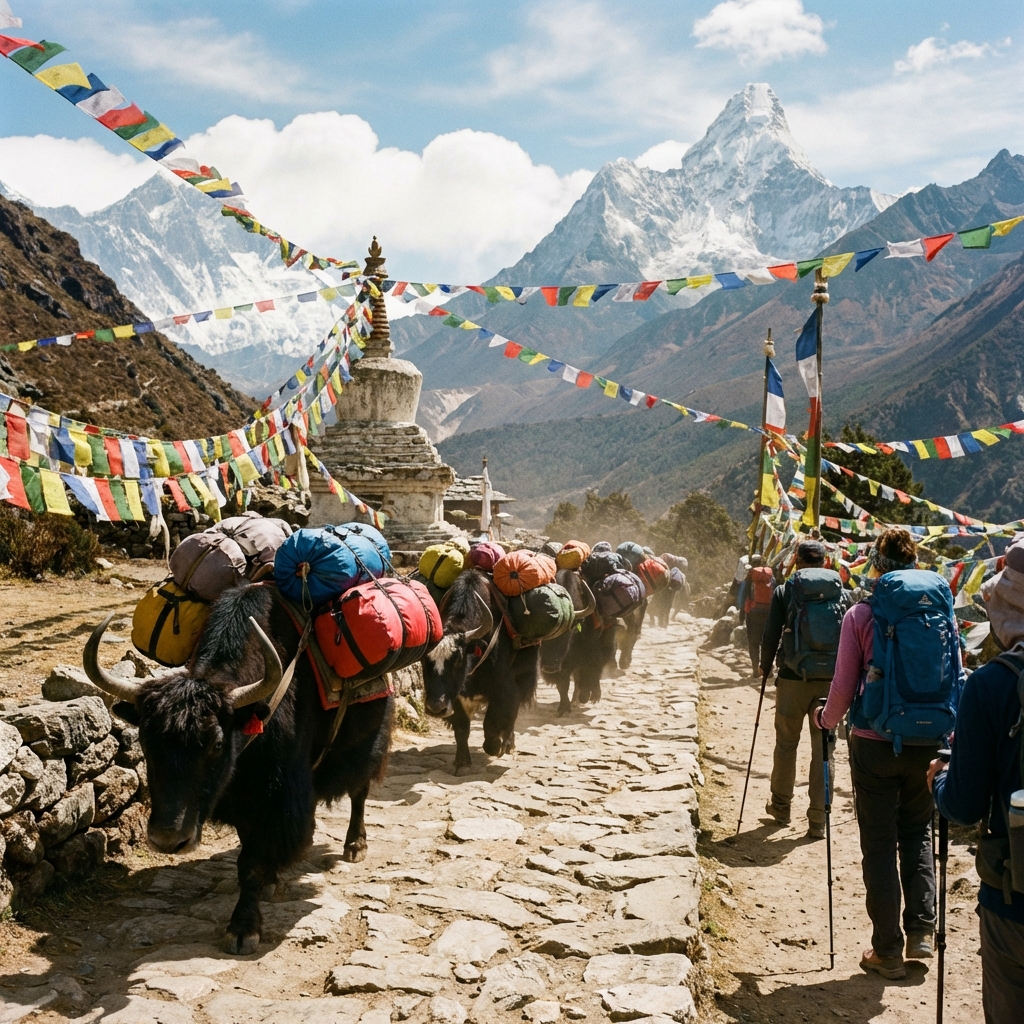
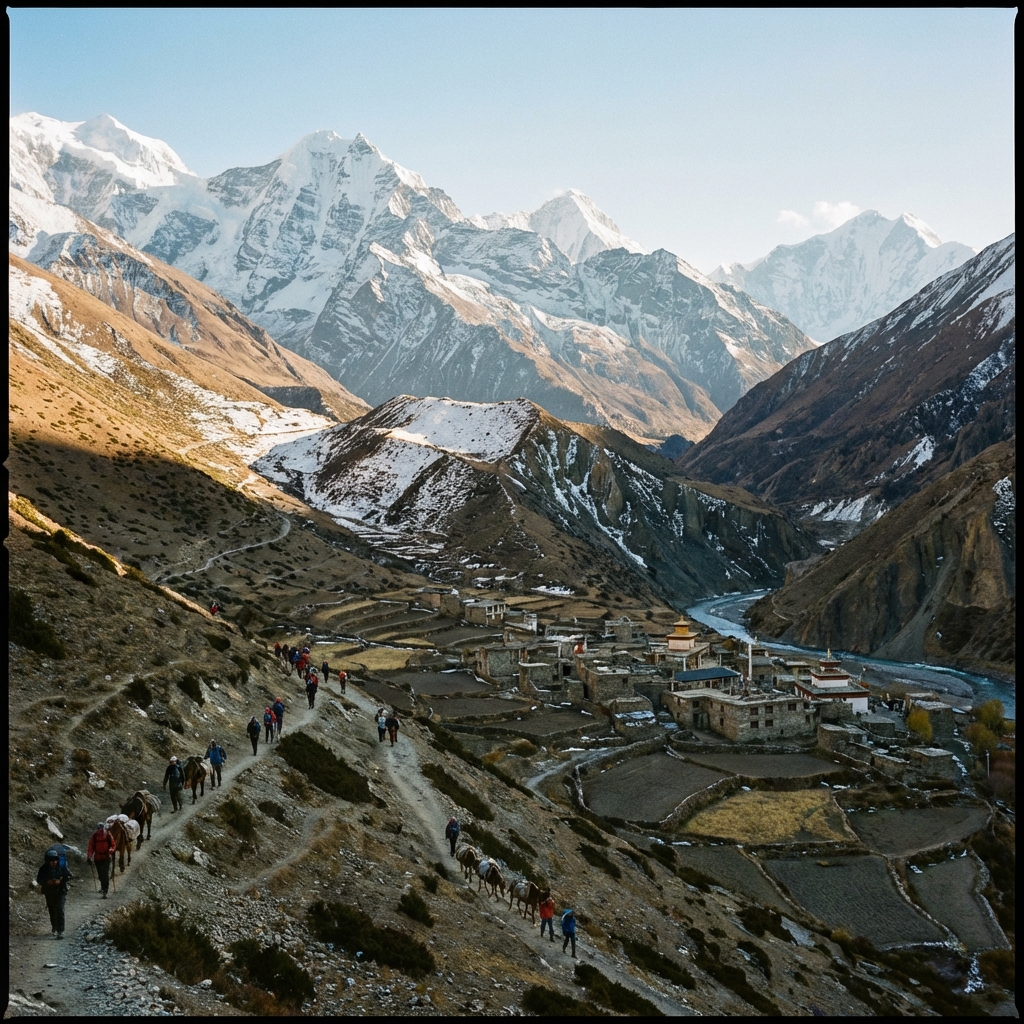
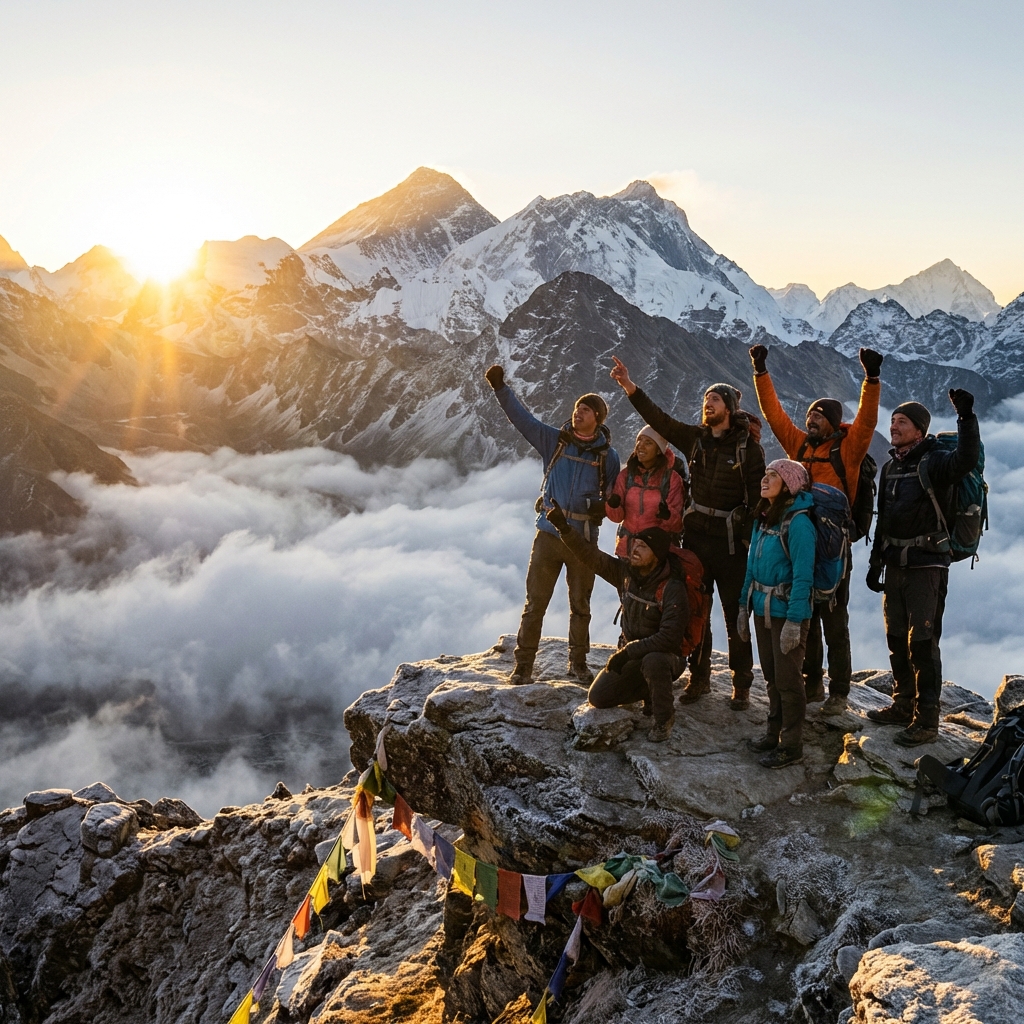
Nepal is one of the most photogenic countries on Earth. Snow-capped peaks piercing cobalt skies, prayer flags snapping in mountain winds, weathered faces of Sherpa elders, monks in maroon robes walking past whitewashed stupas, terraced rice paddies cascading down impossibly steep hillsides—the visual riches are inexhaustible. It is no wonder that trekkers often describe Nepal as a photographer's paradise.
But here is what that phrase often obscures: you are not walking through a photograph. You are walking through people's homes, their workplaces, their places of worship, their communities. The villages along trekking routes are not sets designed for your Instagram feed. The monks meditating in monasteries are not performers awaiting your camera. The porters carrying loads up mountain trails are not "content" for your travel blog. They are real people living real lives, and the camera in your hand carries both creative power and ethical responsibility.
This guide covers the photography etiquette that every trekker should understand before pointing a lens at Nepal: how to photograph people respectfully, the rules around monasteries and religious sites, Nepal's drone regulations, trail photography courtesy, and how to create meaningful images that honor rather than exploit the subjects and places you encounter.
For gear recommendations, see our photography gear guide. For shooting techniques and composition tips for mountain landscapes, see our trekking photography guide.
Always ask permission before photographing people
"Photo khichna huncha?" (May I take a photo?)
Ask permission; no flash; some interiors are forbidden
Permits required; banned in national parks
Extra sensitivity required; never photograph without parental consent
Respect their dignity; do not photograph struggle for content
Prayer flags, mani stones, stupas OK to photograph respectfully
Engage first, photograph second
Why Photography Etiquette Matters
You Are Walking Through People's Lives
Trekking routes in Nepal pass directly through inhabited villages, past family homes, through sacred sites, and alongside working people. Unlike a national park trail in the West where you might encounter only wilderness, a Nepal trek is fundamentally a journey through human communities. The people you photograph are not tourist attractions. They are farmers, herders, monks, shopkeepers, parents, and elders going about their daily lives.
The Power Dynamic Is Real
When a well-equipped foreign trekker points an expensive camera at a rural Nepali villager, there is an inherent power imbalance. The trekker has financial resources, technological advantages, and the ability to share images globally. The subject often has none of these things. They may not fully understand how or where their image will be used. They may feel unable to refuse because of cultural norms around hospitality toward guests. Being aware of this dynamic is the starting point for ethical photography.
Photography Shapes Perception
The images trekkers share shape how the world perceives Nepal and its people. Photographs that emphasize poverty, exoticize cultural differences, or reduce complex people to stereotypical "characters" do real harm. Conversely, thoughtful, respectful photography that captures the dignity, beauty, and complexity of Nepali life can foster genuine cross-cultural understanding.
Photographing People: The Complete Guide
The Cardinal Rule: Always Ask Permission
Before photographing any person in Nepal, ask their permission. This is not just etiquette—it is fundamental respect.
How to ask in Nepali:
- "Photo khichna huncha?" (May I take a photo?) - This is the essential phrase
- "Tapai ko photo khichna sakchu?" (Can I take your photo?) - More formal
- "Photo?" accompanied by a gesture toward your camera and a questioning expression - Sometimes sufficient when language is a barrier
How to ask through body language:
- Make eye contact
- Smile genuinely
- Point to your camera
- Raise your eyebrows in a questioning gesture
- Wait for a clear response before raising the camera
Accept "No" Graciously
If someone declines to be photographed, respect their decision immediately and completely:
- Lower your camera
- Smile and say "dhanyabad" (thank you)
- Do not ask again
- Do not try to sneak a photo when they are not looking
- Do not express disappointment or frustration
- Move on without making the person feel guilty
No Means No
Some trekkers interpret a reluctant or uncertain response as permission. It is not. If someone does not give a clear, enthusiastic "yes," treat it as a "no." Elderly people, in particular, may feel pressured by the social expectation of hospitality toward foreign guests. A hesitant nod after repeated asking is not genuine consent. Respect uncertainty as refusal.
After Taking the Photo: Show It Back
One of the most rewarding aspects of photography in Nepal is sharing the result with your subject. After taking a portrait:
- Turn your camera screen toward them and show the image
- Most people genuinely enjoy seeing their photograph
- This moment of sharing creates connection and transforms the interaction from extractive to mutual
- Their reaction to seeing themselves is often a beautiful candid moment in itself
The "Engage First, Photograph Second" Approach
The best travel photographers know that the best portraits come from genuine human connection, not from quick shots taken on the move. Consider this approach:
- Greet the person - "Namaste" with hands together, a genuine smile
- Spend time - Even a few minutes of conversation (through a guide, through gestures, through shared tea) creates a relationship
- Show genuine interest - Ask about their life, their work, their family
- Then, if appropriate, ask to take their photo - The resulting image will be far more authentic and meaningful
- Show the result and share the moment
Pro Tip
Some of the most powerful photographs from Nepal treks happen when the camera is put away. Spend 20 minutes sharing tea with an elderly woman in a village, chatting with your guide translating, learning about her life. Then, at the natural end of the conversation, ask if you might take her portrait. The image you capture will be one of genuine connection, not a stolen moment. And you will have gained an experience that matters far more than any photograph.
Offering to Send Photos
If you take portraits, consider offering to send the images:
- Ask your guide if there is a way to get photos to the subject (guides often return to the same villages)
- Some trekkers print photos in Kathmandu after their trek and mail them back through the agency
- Email addresses are increasingly common even in mountain villages
- A printed photograph is a meaningful gift in communities where personal photos are rare
The "Photo of Your Camera" Approach
In some areas, particularly lower-altitude villages and towns, people may ask for money in exchange for being photographed. This is their right, and you can choose to pay (typically NPR 100 to 200) or politely decline. The commercialization of portrait photography is a natural response to decades of tourists photographing freely, and it is not unreasonable.
Photographing Children: Extra Sensitivity Required
Photographing children in Nepal requires additional care and ethical consideration.
Key Principles
- Always get parental consent before photographing children, not just the child's agreement. Children cannot meaningfully consent to having their image captured and potentially shared globally
- Do not encourage children to perform or pose for the camera. This teaches children that foreigners are a source of attention and potentially money
- Never give money or candy in exchange for photos of children. This creates begging behavior and exploits children
- Do not photograph children bathing, in states of undress, or in situations that could be exploitative in any context
- Be especially careful about sharing photos of children on social media - Consider whether you would want a stranger posting photos of your children online
The "Cute Kids" Problem
It is natural to want to photograph the adorable children you encounter in mountain villages. But consider the cumulative effect: a village might see hundreds of trekkers per day during peak season, many of them pointing cameras at children. This constant photographic attention normalizes the idea that foreigners are an audience and that performing for them is rewarding. It can also make children more vulnerable to exploitation by adults who recognize the commercial value of children's interactions with tourists.
A Better Approach with Children
Instead of photographing children and moving on, engage with them genuinely. Play a game, teach them a few words in your language while learning theirs, draw pictures together. If you want a photograph, ask the parents, explain you will show the children the image, and make the interaction about the connection rather than the camera. The resulting photographs will be more authentic, and the experience will be more meaningful for everyone.
Monastery and Religious Site Photography
Nepal's monasteries, temples, stupas, and religious sites are among the most photographed locations in the country. They are also among the most sacred, and photography rules vary significantly between sites. For comprehensive guidance on monastery behavior beyond photography, see our monastery etiquette guide.
General Rules for Religious Sites
- Always ask before entering any monastery, temple, or religious building
- Look for posted signs about photography rules
- Ask monks, nuns, or caretakers about photography permission
- Never use flash in religious buildings (it damages artwork and disturbs meditation)
- Turn off shutter sounds if possible
- Maintain silence while photographing, even if photography is permitted
Monastery Photography Specifics
Usually permitted:
- Exterior architecture and courtyards
- General views of prayer halls from designated areas
- Monks or nuns who give specific permission
- Prayer wheels, exterior decorations, and architectural details
Often restricted or forbidden:
- Interior sanctuaries and shrines
- Specific statues or thangka paintings (some are considered too sacred)
- Active ceremonies, pujas, or rituals
- Monks and nuns during prayer or meditation
- The inner chambers of gonpas (monastery temples)
Always forbidden:
- Photography during specific restricted ceremonies
- Photography after being explicitly told "no"
- Climbing on structures or repositioning objects for better photos
Hindu Temple Specifics
- Non-Hindus may not be allowed to enter some temples (notably Pashupatinath's main temple in Kathmandu)
- Cremation photography at Pashupatinath: technically permitted from the viewing area, but exercise extreme sensitivity. You are watching families grieve. Ask yourself whether you would want a tourist photographing your family's funeral
- During worship (puja): be discreet and avoid disrupting the devotional atmosphere
Tips for Respectful Religious Photography
- Use a long lens rather than approaching closely
- Do not walk through prayer or meditation areas to get a better angle
- Do not move religious objects for better composition
- Photograph quickly and move on rather than lingering with your camera
- If a monk or nun is meditating, do not photograph them (even from a distance where they might not notice)
Pro Tip
The most powerful photographs of religious sites often capture atmosphere rather than details: light streaming through a monastery window, incense smoke curling upward, the weathered texture of prayer wheels, the empty silence of a meditation hall. These images convey the spiritual quality of the space without requiring you to intrude upon it.
Drone Regulations in Nepal
Drone photography has exploded in popularity among trekkers, and Nepal has responded with increasingly strict regulations. Understanding these rules before you fly is essential—the consequences of violating them range from equipment confiscation to substantial fines.
Current Regulations (as of 2026)
Permits are required:
- All drone flights in Nepal require a permit from the Civil Aviation Authority of Nepal (CAAN)
- Additional permits may be required from the Department of National Parks and Wildlife Conservation for flights in protected areas
- Film permits may be required if footage is for commercial use
Banned zones:
- National parks including Sagarmatha National Park (Everest region) and all areas above the park boundary
- Conservation areas including the Annapurna Conservation Area (ACA)—this effectively covers the entire Annapurna trekking region
- Within 5 kilometers of airports including Lukla (Tenzing-Hillary Airport) and any other mountain airstrips
- Over military installations and government buildings
- Kathmandu Valley has restricted drone use near heritage sites
Practical Implications for Trekkers
The ban on drones in national parks and conservation areas effectively means:
- No drones on the Everest Base Camp trek (Sagarmatha National Park)
- No drones on any Annapurna trek (Annapurna Conservation Area)
- No drones in Langtang National Park
- No drones in Manaslu Conservation Area
This covers the vast majority of trekking routes in Nepal.
Drone Enforcement Is Increasing
While enforcement was historically inconsistent, Nepal has significantly increased drone enforcement since 2026. Army and police checkpoints along major trekking routes now specifically check for drones. Drones found without permits are confiscated, and fines can be substantial (up to NPR 100,000 or more). Several trekkers have had their drones permanently confiscated in recent years. The risk is not worth it.
When and Where Drones Might Be Acceptable
- Outside national parks and conservation areas with proper CAAN permits
- Private land with the landowner's permission and CAAN permit
- Kathmandu Valley in unrestricted areas with permits
- Commercial shoots with full permitting through a production company
The Ethical Dimension Beyond Legality
Even where drones are technically permitted, consider:
- Noise pollution: Drones are loud and disruptive in otherwise peaceful mountain environments
- Wildlife disturbance: Drones stress birds and animals, particularly at altitude where energy conservation is critical
- Privacy: Drone cameras can photograph people and homes from positions that are normally inaccessible
- Other trekkers: The buzzing of a drone disrupts the mountain experience for everyone in the vicinity
Alternatives to Drone Photography
- Elevated viewpoints: Climb to ridgelines and high points for aerial-feeling perspectives
- Wide-angle lenses: A 14-24mm wide-angle creates sweeping views without leaving the ground
- Telephoto compression: Long lenses can create stunning mountain-stacking effects
- Time-lapse photography: Captures the movement of clouds, light, and shadows across mountain landscapes
- Panoramic stitching: Multiple overlapping shots combined in post-processing create ultra-wide images
Photographing Porters: A Sensitive Topic
Nepal's porters are the backbone of the trekking industry, carrying everything from food and equipment to building materials along mountain trails. The question of how to photograph porters is fraught with ethical complexity.
The Problem with "Struggle Photography"
Social media is flooded with photographs of Nepali porters carrying enormous loads, their bodies bent under impossible weight, faces strained with effort. These images are often captioned with admiring language ("amazing strength!" or "incredible people!") but they fundamentally reduce human beings to objects of spectacle.
Consider:
- Would you want a stranger photographing you at the most physically demanding moment of your workday and posting it online?
- Does the photograph convey the porter's full humanity, or does it reduce them to their labor?
- Is the photograph taken for genuine documentation, or for social media engagement?
Respectful Approaches
- Ask permission, just as you would with anyone else
- Photograph porters in their full context - resting at tea houses, chatting with friends, sharing meals, celebrating festivals. They are complete human beings, not just carriers of loads
- If you photograph working porters, ensure the image conveys dignity rather than reducing them to objects of pity or amazement
- Never photograph a porter in distress (struggling, injured, clearly suffering) without their knowledge and consent
- Engage with porters as people - Learn their names, share tea, hear their stories. If a relationship develops, a portrait taken with permission carries genuine meaning
The Instagram Problem
The most popular trekking photographs on social media often feature porters carrying massive loads with dramatic mountain backdrops. These images generate engagement precisely because they reduce complex people to dramatic spectacle. Before posting such an image, ask yourself: does this photograph honor the person, or does it use them as a prop in my travel narrative? The answer should guide your decision.
Trail Photography Etiquette
Beyond photographing people, there are practical courtesies around photography on the trail itself.
Do Not Block the Trail
Nepal's trekking trails are often narrow, particularly in steep sections, river crossings, and suspension bridges. When stopping to photograph:
- Step completely off the trail
- Be aware of trekkers behind you who may be walking at a faster pace
- Never block a suspension bridge for photos (these are functional crossings, not photo stages)
- Let pack animal trains pass before positioning yourself for photos
Be Mindful of Other Trekkers
- Do not walk in front of someone else's photograph without acknowledgment
- If someone is clearly composing a shot, wait briefly or take an alternative path
- Ask before including identifiable trekkers in your photographs
- Do not monopolize popular viewpoints during sunrise or sunset
Early Morning in Villages
Sunrise is often the best photography light, but it is also when village residents are beginning their day—washing, using outdoor facilities, performing morning rituals. Exercise extra sensitivity during these hours:
- Do not photograph people during their morning routines without permission
- Keep your distance from homes in the early morning
- Be quiet and unobtrusive
- Remember that people in their homes deserve privacy
Night Photography Considerations
Astrophotography is spectacular in Nepal's mountain environment, but:
- Do not use bright flashlights or headlamps that disturb other trekkers or residents
- Do not set up tripods in shared spaces (dining halls, dormitories) while others are sleeping
- Be mindful of light pollution from your equipment near tea houses
Pro Tip
The golden hours (sunrise and sunset) provide the best mountain photography light, but also the times when villages are most private. A good compromise: photograph the mountains and landscapes during golden hours from viewpoints away from villages, and photograph village life during the middle of the day when people are active, social, and more likely to engage positively with photographers.
Sacred Objects: Prayer Flags, Mani Stones, and Stupas
Nepal's landscape is adorned with sacred objects that are among the most photographed elements of any trek. These items are generally fine to photograph, but understanding what they represent helps you do so respectfully.
Prayer Flags
Prayer flags (lung ta) are printed with mantras and symbols that are believed to spread blessings and compassion through the wind. They are hung at passes, monasteries, bridges, and homes.
- Photographing prayer flags is generally welcome - They are meant to be seen
- Do not remove, reposition, or touch prayer flags for better photographs
- Faded, tattered flags are not "ugly" - They are fulfilling their purpose as the wind carries the mantras
- Be careful not to step on fallen prayer flags
Mani Stones
Carved stones inscribed with Buddhist mantras, most commonly "Om Mani Padme Hum." They are placed along trails, at passes, and around monasteries.
- Photographing mani walls and stones is fine
- Always walk clockwise around mani walls (keep the wall on your right)
- Never move, take, or sit on mani stones
- Do not stack other stones on top of carved mani stones
Stupas and Chortens
Buddhist monuments that symbolize the Buddha's mind and contain sacred relics.
- Photography of exteriors is generally permitted
- Walk clockwise around stupas
- Do not climb on stupas for photos
- Some stupas have interior chapels with restricted photography
Other Sacred Elements
- Prayer wheels - Fine to photograph, and you may spin them clockwise while walking past
- Butter lamps - Can be photographed but do not blow them out or move them
- Offering bowls - Present on altars; photograph without touching
- Thangka paintings - Some can be photographed, but many in monasteries cannot. Always ask
Commercial Use Considerations
If you plan to use your Nepal photographs commercially (publishing, selling prints, stock photography, advertising), additional ethical and legal considerations apply.
Model Releases
- Nepal does not have a comprehensive model release law equivalent to Western countries, but ethical practice demands written consent for commercial use of identifiable portraits
- Model releases are difficult to obtain on trek due to language barriers and the transient nature of encounters
- Without a model release, identifiable portraits should not be used for commercial purposes, regardless of legality
- Editorial use (journalism, education) has different standards than advertising or commercial licensing
Cultural Sensitivity in Commercial Use
- Do not use images of religious practices or sacred sites for commercial purposes that could be considered disrespectful (advertising products, for example)
- Avoid using images that reinforce stereotypes or reduce Nepali people to exotic "other"
- Consider how the subject would feel about the commercial use if they could see it
Working with Local Photographers
Nepal has a growing community of talented local photographers. Consider:
- Hiring a local photographer for professional shoots
- Supporting Nepali photography organizations
- Crediting local guides and fixers who facilitate photography opportunities
- Purchasing prints from Nepali photographers rather than competing with them
Sharing Photos with Local Communities
One of the most meaningful things you can do with your Nepal photographs is share them with the communities you documented.
Methods for Sharing
- Print photos in Kathmandu after your trek and have your agency send them to villages
- Give digital copies to your guide who can distribute them on future trips
- Email photos to tea house owners (many have email addresses now)
- Create a photo book and donate it to a community library or school
- Post in Facebook groups used by specific communities (your guide can help identify these)
Why Sharing Matters
- In remote mountain communities, personal photographs are rare. A printed portrait may be the only photograph a family possesses
- Sharing photographs transforms the relationship from extractive (you taking) to reciprocal (you giving back)
- It demonstrates that you valued the person, not just their appearance
- It creates goodwill for future trekkers
Pro Tip
Carry a small portable photo printer (like the Canon Selphy or Fuji Instax) on your trek. Printing photos on the spot and handing them to subjects is one of the most rewarding things you can do with a camera in Nepal. The expressions of delight when people receive a printed photograph of themselves are worth more than any landscape shot in your portfolio. Just be thoughtful about where and when you offer this, as it can create expectations and crowds.
Frequently Asked Questions
Do I need to ask permission to photograph people in Nepal?
Yes, always. While there is no law requiring it for non-commercial photography, asking permission is fundamental respect. Use the phrase "Photo khichna huncha?" (May I take a photo?) and accept "no" graciously. Many Nepali people are happy to be photographed, but the choice should be theirs.
Can I take photos inside monasteries in Nepal?
It depends on the specific monastery. Some allow photography freely, some allow it without flash, some restrict photography to exterior areas, and some prohibit it entirely. Always ask a monk, nun, or caretaker before photographing inside any monastery. Never use flash, as it damages artwork and disturbs meditation.
Are drones allowed on Nepal treks?
Drones require permits from the Civil Aviation Authority of Nepal and are banned in national parks and conservation areas, which covers virtually all major trekking routes including Everest, Annapurna, Langtang, and Manaslu. Enforcement has increased significantly, and unauthorized drones are confiscated with substantial fines. Check current regulations before bringing a drone.
How should I photograph porters on Nepal treks?
Treat porters with the same respect you would any person: ask permission, engage with them as individuals, and ensure your photographs convey their dignity rather than reducing them to spectacle. Avoid photographing porters in moments of struggle or distress for social media content. The best porter photographs come from genuine relationships formed over shared meals and conversations.
Is it okay to photograph children in Nepal?
Photograph children only with parental consent. Never give money or candy in exchange for photos. Do not encourage children to perform or pose. Be especially cautious about sharing photos of children on social media. Consider the cumulative effect of hundreds of tourists photographing village children daily and whether your photography contributes positively or negatively to that dynamic.
What should I do if someone asks for money to be photographed?
This is their right. You can choose to pay (typically NPR 100 to 200), politely decline, or simply move on. The commercialization of portrait photography is a natural response to decades of tourists photographing freely. Do not become angry or attempt to photograph secretly if you decline to pay.
Can I photograph cremation ceremonies at Pashupatinath?
Photography from the designated viewing areas at Pashupatinath is technically permitted. However, exercise extreme sensitivity—you are watching families in grief. Ask yourself whether you would want tourists photographing your family's funeral. If you do photograph, do so discreetly, from the viewing area, without drawing attention to yourself, and never approach grieving families.
What is the best lens for respectful portrait photography in Nepal?
A moderate telephoto (70-200mm or 85mm prime) allows you to capture portraits from a comfortable distance after receiving permission, without being invasively close. A 35mm or 50mm is ideal for environmental portraits that show context. Avoid using extreme telephoto lenses to photograph people who have not given consent, as this is ethically equivalent to photographing without permission.
How do I handle the "tourist with camera" fatigue that some locals feel?
In popular trekking villages, residents may be weary of constant photography. Respect this by: not photographing everyone you see, engaging with people beyond the camera, supporting local businesses, showing genuine interest in culture beyond visual consumption, and understanding that some people simply do not want to participate in your visual documentation of their home.
Should I share my Nepal photos on social media?
Sharing photographs is fine and can raise awareness of Nepal's beauty and culture. However, consider: are your subjects identifiable without their knowledge? Do your captions reduce people to stereotypes? Are you sharing struggle or poverty as "content"? Would your subjects be comfortable with how they are presented? Thoughtful sharing that respects subjects and provides context is valuable. Exploitative sharing is not.
What are the best photography opportunities that do not involve people?
Nepal offers extraordinary photography that does not raise ethical questions about human subjects: mountain panoramas, sunrise and sunset over the Himalayas, dramatic cloud formations, prayer flags against blue sky, detailed shots of mani stones and monastery architecture, wildlife, wildflowers, terraced landscapes, river valleys, and star trails over mountain peaks. See our trekking photography guide for technique tips.
Can I photograph Sherpa culture and traditions?
Sherpa culture is rich and photogenic, and many Sherpa people are proud of their traditions. As always, ask permission for portraits. For cultural events and ceremonies, ask your guide whether photography is appropriate. Some religious ceremonies welcome observers; others are private. Your guide, especially if they are Sherpa, is your best source of guidance on what is and is not appropriate to photograph.
The camera is a tool for connection or extraction. In Nepal, where the subjects of your photography are the very people who welcome you into their communities, cook your food, carry your bags, and share their mountains with you, the choice to photograph respectfully is not just about etiquette—it is about basic human decency. Engage first. Ask always. Accept "no" gracefully. And when you do raise your camera, make sure the resulting image honors the person and place in front of you.
For more on cultural sensitivity while trekking, see our cultural etiquette guide, monastery etiquette guide, and Sherpa culture guide.