
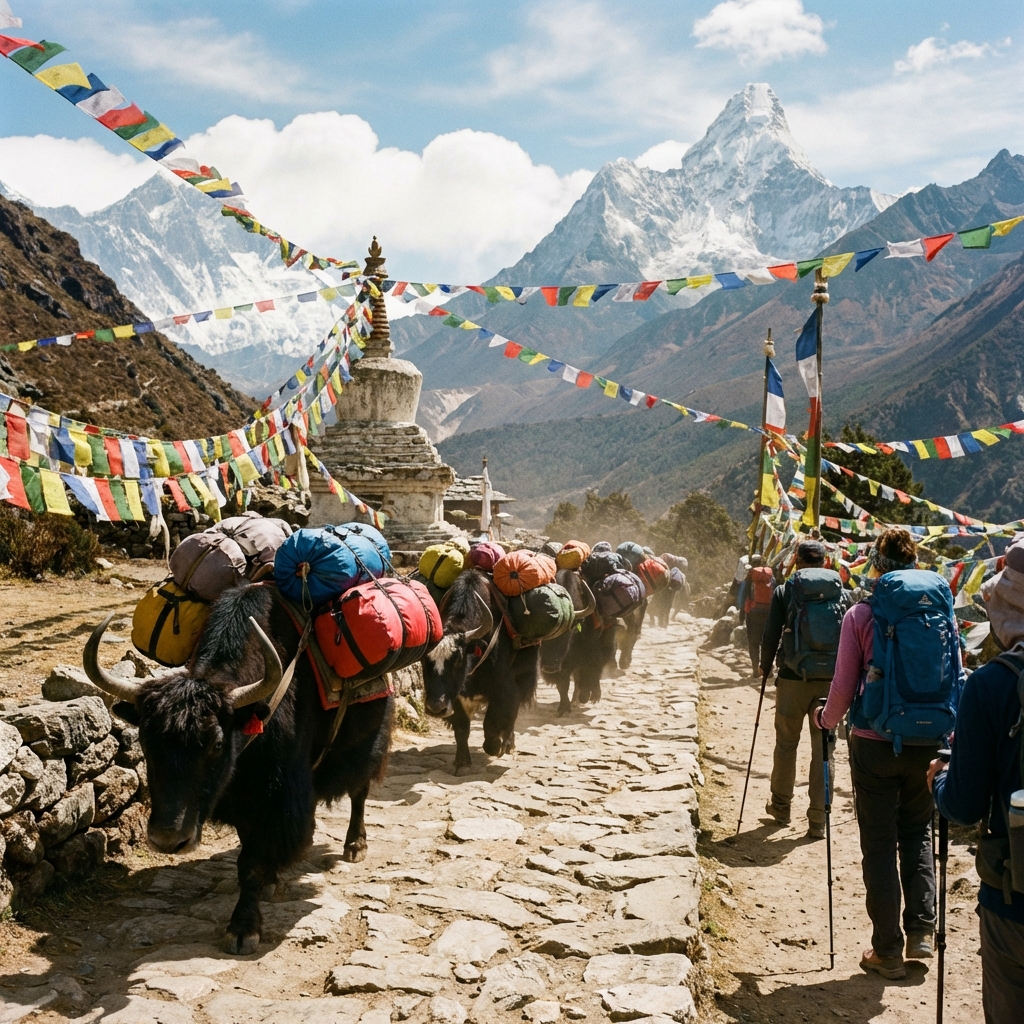
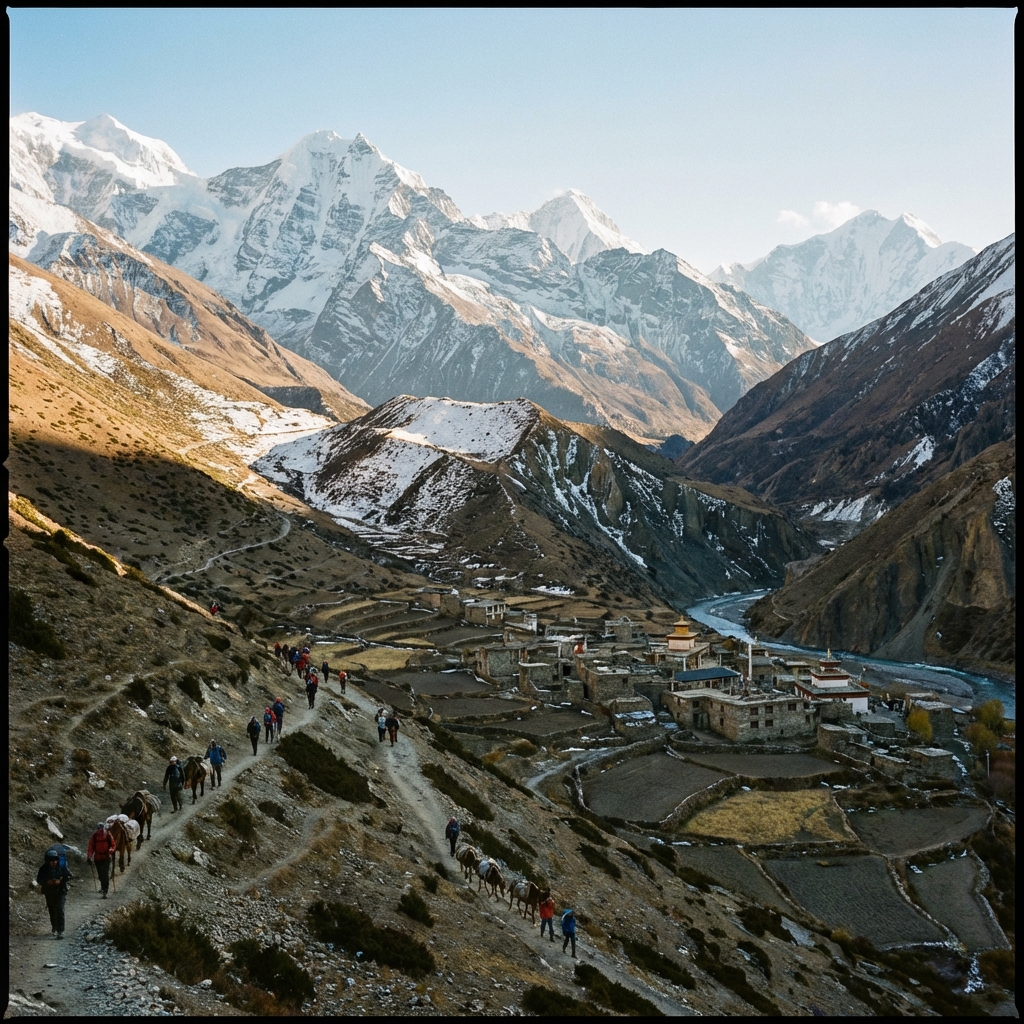
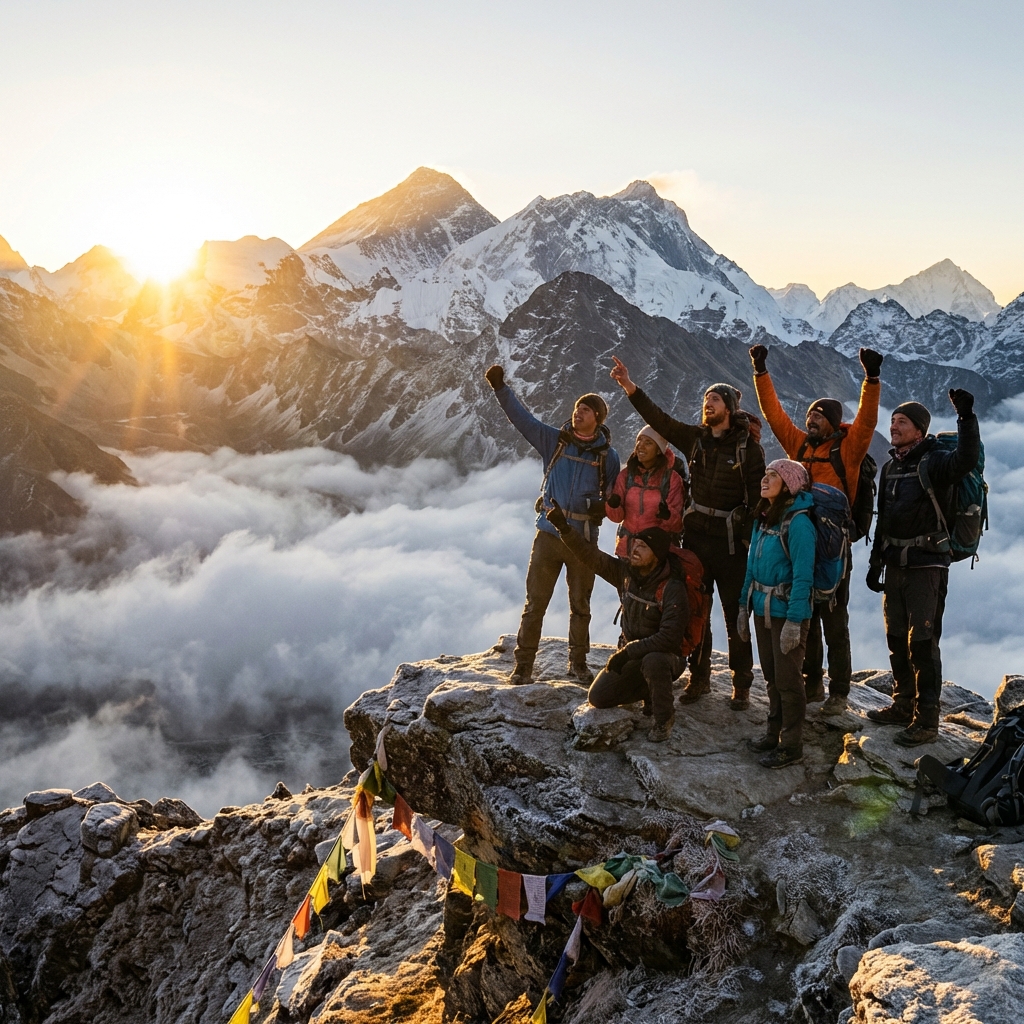
Trekking to Everest Base Camp in winter is a fundamentally different experience from the standard autumn or spring trek. With approximately 90% fewer trekkers on the trail, crystal-clear Himalayan skies, and an eerie silence broken only by wind and creaking glaciers, winter EBC offers the most authentic and challenging version of Nepal's most iconic trek.
But winter EBC is not for everyone. Temperatures plunge to minus 25 degrees Celsius and beyond at higher camps, tea houses above Pangboche operate on skeleton schedules or close entirely, Lukla flights face increased cancellation risk, and daylight hours are limited. This guide covers everything specific to a winter EBC trek -- what makes it extraordinary, what makes it dangerous, and how to prepare for both.
This is NOT a general winter trekking guide (see our complete winter trekking Nepal guide for that). This guide is exclusively focused on the EBC route during December, January, and February.
Key highlights of winter EBC: Crystal-clear visibility (best of any season), 90% fewer trekkers, dramatically lower costs, pristine snow-covered landscapes, profound solitude in the Khumbu, and a genuine sense of adventure that peak-season treks cannot replicate.
Quick Facts: Winter EBC Trek
December 1 - February 28
Minus 15 to minus 25°C at night
90% fewer trekkers than autumn
70-75% (vs 85-90% in peak season)
16-18 days (extra buffer)
Limited above Pangboche
60-70% on schedule
Expedition-grade cold weather
Why Trek EBC in Winter?
Most trekking guides discourage winter EBC, and the statistics support caution -- the success rate drops by 15-20% compared to peak season. But for well-prepared trekkers, winter offers rewards that no other season can match.
The Case for Winter EBC
1. Unmatched Visibility
Winter skies in the Khumbu are the clearest of any season. The monsoon moisture has completely dissipated, pre-monsoon haze has not yet begun, and the cold, dry air creates razor-sharp visibility. Photographers who have trekked EBC in all seasons consistently rate winter views as the best.
From Kala Patthar on a winter morning, you can see peaks that are invisible in other seasons due to haze or clouds. The detail on Everest's ridges and Nuptse's face is extraordinary. Stars at night are among the most spectacular anywhere on Earth -- the Milky Way is visible with the naked eye from Gorak Shep.
2. Solitude
In October, the trail between Namche and Gorak Shep can feel like a highway, with hundreds of trekkers at each tea house and long waits for meals. In January, you may walk for hours without seeing another trekker. Tea houses that accommodate 40-50 people in autumn may have 2-3 guests. This solitude transforms the experience from a popular trek into a genuine wilderness expedition.
3. Lower Costs
Lodge owners, guides, and porters all offer discounted rates in winter. Flight costs may also be lower. A winter EBC trek can cost 20-30% less than the same trip in October.
| Cost Category | Autumn (Oct-Nov) | Winter (Dec-Feb) | Savings |
|---|---|---|---|
| Guide (per day) | $35-45 | $25-35 | 20-30% |
| Lodge rooms | $10-25 | $5-15 | 30-50% |
| Meals | Standard pricing | Same or slightly less | 0-10% |
| Agency packages | $1,500-2,500 | $1,000-1,800 | 25-35% |
4. Snow-Covered Landscapes
The Khumbu above 4,000m is often blanketed in fresh snow during winter, transforming the grey-brown moonscape of autumn into a pristine white wonderland. Frozen waterfalls, ice-covered trails, and snow-dusted prayer flags create photographic opportunities unique to this season.
5. Personal Achievement
Completing EBC in winter is a genuine accomplishment that few trekkers can claim. The challenge adds a layer of personal achievement beyond the standard trek.
The Case Against Winter EBC
1. Extreme Cold
This is the single biggest challenge. Temperatures at the higher camps are brutally cold, especially at night and before dawn.
| Location | Elevation | Day Temp (Winter) | Night Temp (Winter) |
|---|---|---|---|
| Lukla | 2,840m | 5-10°C | -2 to 2°C |
| Namche | 3,440m | 2-8°C | -5 to -2°C |
| Tengboche | 3,860m | 0-5°C | -8 to -4°C |
| Dingboche | 4,410m | -2 to 3°C | -12 to -8°C |
| Lobuche | 4,940m | -5 to 0°C | -18 to -12°C |
| Gorak Shep | 5,164m | -8 to -3°C | -22 to -15°C |
| Kala Patthar (pre-dawn) | 5,545m | -20 to -15°C | -28 to -20°C |
The Kala Patthar sunrise experience, which takes 3-4 hours in temperatures reaching minus 20 to minus 28 degrees Celsius, is the coldest part of any Nepal trek.
2. Tea House Closures
Above Pangboche (3,985m), many tea houses close for winter or operate with skeleton staff. This is the most significant logistical challenge.
| Location | Winter Availability | Notes |
|---|---|---|
| Lukla | Fully open | Town functions year-round |
| Namche | Mostly open | 60-70% of lodges operate |
| Tengboche | Partially open | 2-3 lodges, monastery open |
| Pangboche | Partially open | 2-3 lodges, last reliable stop |
| Dingboche | Limited | 1-2 lodges may open, not guaranteed |
| Lobuche | Very limited | 0-1 lodges, often closed in January |
| Gorak Shep | Very limited | 0-1 lodges, may be closed entirely |
Critical: Tea House Closures Above Pangboche
Do NOT assume lodges above Pangboche will be open in winter. In January, there have been reports of all lodges in Gorak Shep and Lobuche being closed simultaneously. Your guide must verify lodge openings by phone or radio before you ascend past Pangboche. Arriving at a village with no open lodges at minus 15 degrees Celsius is a life-threatening situation. Some winter trekkers carry emergency camping gear (lightweight tent and stove) as backup above Pangboche.
3. Shorter Daylight Hours
In December-January, the sun rises around 6:30-7:00 AM and sets by 5:00-5:30 PM, giving roughly 10-11 hours of daylight compared to 12-13 hours in spring/autumn. This means colder mornings, later starts, and earlier arrivals needed at lodges.
4. Lukla Flight Reliability
Winter weather patterns bring fog and cloud more frequently in the early morning, which is precisely when Lukla flights operate. While severe weather (monsoon) is absent, visibility issues from temperature inversions and fog can delay flights.
Winter flight reliability by month:
- December: 65-75% on schedule (morning fog common)
- January: 60-70% on schedule (coldest month, more fog)
- February: 70-80% on schedule (conditions improving)
5. Trail Conditions
Snow and ice on the trail above 4,000m can make sections slippery and slow. While the main EBC trail is well-worn and manageable, sections between Lobuche and Gorak Shep may require microspikes. The Kala Patthar ascent can be icy and potentially dangerous without traction devices.
6. Lower Success Rate
The combination of extreme cold, limited accommodation, and increased physical demands reduces the winter success rate to approximately 70-75%. Most turnarounds occur due to cold-related discomfort rather than altitude sickness.
Winter EBC Itinerary: Recommended 16-Day Schedule
A winter EBC trek should allow 2-3 extra days compared to the standard 14-day itinerary. This provides buffer for weather delays, slower trail conditions, and the reality that everything takes longer in extreme cold.
Day-by-Day Overview
| Day | Route | Altitude | Distance | Time | Notes |
|---|---|---|---|---|---|
| 0 | Arrive Kathmandu | 1,400m | -- | -- | Gear check, permits |
| 1 | Kathmandu prep day | 1,400m | -- | -- | Final gear, confirm flight |
| 2 | Fly Lukla, trek to Phakding | 2,610m | 8km | 3-4hr | Easy start |
| 3 | Phakding to Namche | 3,440m | 11km | 5-6hr | Steep climb |
| 4 | Namche acclimatization | 3,440m | 5km | 3-4hr | Hike to Everest View |
| 5 | Namche to Tengboche | 3,860m | 10km | 5-6hr | Monastery visit |
| 6 | Tengboche to Dingboche | 4,410m | 11km | 5-6hr | Enter high altitude zone |
| 7 | Dingboche acclimatization | 4,410m | 4km | 3-4hr | Hike toward Nangkartshang |
| 8 | Dingboche to Lobuche | 4,940m | 8km | 4-5hr | Confirm lodge openings |
| 9 | Lobuche to Gorak Shep | 5,164m | 5km | 3-4hr | Short day, extreme cold |
| 10 | EBC and Kala Patthar | 5,545m | 13km | 10-12hr | The big day |
| 11 | Gorak Shep to Pheriche | 4,371m | 13km | 5-6hr | Descend to warmth |
| 12 | Pheriche to Namche | 3,440m | 20km | 6-8hr | Long descent |
| 13 | Namche to Lukla | 2,840m | 19km | 6-7hr | Final trek day |
| 14 | Fly to Kathmandu | 1,400m | -- | 35min | Weather permitting |
| 15 | Buffer day 1 | 1,400m | -- | -- | Flight delay buffer |
| 16 | Buffer day 2 / Depart | 1,400m | -- | -- | Extra buffer or departure |
Key Differences from Standard 14-Day Itinerary
- Extra preparation day (Day 1): Winter gear requires more careful checking and the flight situation needs monitoring
- Extra buffer days (Days 15-16): Winter flights have higher cancellation rates; two buffer days are essential
- No changes to acclimatization schedule: The same rest days at Namche and Dingboche are critical regardless of season
- Potentially faster descent: Cold conditions above 4,500m motivate faster descent, and most trekkers are eager to reach warmer elevations
For the complete standard itinerary details (waypoints, trail descriptions, accommodation), see our EBC 14-Day Itinerary guide. This winter guide supplements that information with season-specific details.
Pro Tip
Consider combining Day 10 differently in winter. Instead of the standard afternoon EBC visit followed by pre-dawn Kala Patthar the next morning, some winter trekkers do Kala Patthar first (if weather permits) and EBC in the afternoon. This is because Gorak Shep nights are so brutally cold that spending two nights there (as the standard itinerary requires) is extremely unpleasant in winter. Discuss timing flexibility with your guide based on weather conditions.
Winter EBC Gear: What You Must Bring
Winter EBC requires a significant gear upgrade from standard peak-season equipment. This is not optional -- inadequate gear in winter Khumbu can be fatal.
Critical Gear Upgrades for Winter
| Item | Peak Season | Winter EBC | Why |
|---|---|---|---|
| Sleeping bag | Rated to minus 10°C | Rated to minus 25°C (4-season) | Lodge rooms reach minus 15°C at Gorak Shep |
| Down jacket | Standard down (600-700 fill) | Expedition down (800+ fill, below-knee length) | Must withstand minus 25°C wind chill |
| Gloves | Liner + insulated | Liner + expedition mittens + heated hand warmers | Frostbite risk at Kala Patthar |
| Footwear | Standard trekking boots | Insulated winter trekking boots + microspikes | Ice on trail, cold feet risk |
| Head protection | Beanie + sun hat | Balaclava + expedition beanie + face mask | Exposed skin freezes in minutes |
| Base layers | Lightweight merino | Heavyweight merino or expedition-weight thermal | Core warmth critical |
| Trekking pants | Standard hiking pants | Insulated softshell + wind-blocking over-pants | Legs exposed to wind |
| Water system | Bottles or bladder | Insulated bottles ONLY (bladder hoses freeze) | Water freezes above 4,000m in winter |
Complete Winter EBC Gear Checklist
Clothing:
- 2 x heavyweight thermal base layer tops (merino wool or synthetic)
- 2 x heavyweight thermal base layer bottoms
- 1 x fleece mid-layer jacket (200-300 weight)
- 1 x expedition down jacket (800+ fill power, below knee)
- 1 x hardshell waterproof jacket (wind protection critical)
- 1 x insulated softshell pants
- 1 x waterproof/windproof over-pants
- 4-5 x wool underwear
- 4-5 x wool trekking socks (wear two pairs above 4,500m)
- 2 x liner socks
- 1 x balaclava
- 1 x expedition beanie
- 1 x face mask or buff (cover exposed skin)
- 1 x liner gloves (for dexterity)
- 1 x insulated expedition mittens
- Chemical hand warmers (10+ pairs)
- Chemical toe warmers (10+ pairs)
Footwear:
- Insulated trekking boots (rated to minus 20°C or lower)
- Microspikes or light crampons
- Camp shoes with warm socks for lodge evenings
- Gaiters (essential for snow sections)
Gear:
- 4-season sleeping bag (rated minus 25°C comfort)
- Sleeping bag liner (silk or fleece for extra warmth)
- Insulated water bottles (wide-mouth Nalgene, kept inside jacket)
- Thermos for hot water (essential above 4,500m)
- Headlamp with lithium batteries (alkaline batteries fail in cold)
- Power bank (keep inside clothing; cold drains batteries)
- Sunglasses Category 4 (snow reflection intensifies UV)
- Trekking poles with snow baskets
- 20,000mAh power bank (kept warm inside clothing)
- First aid kit with cold-injury supplies
For a complete gear guide, see our trekking gear list.
Frostbite Risk Is Real
Frostbite is the most serious winter-specific risk on the EBC trail. At Kala Patthar before dawn, wind chill can push effective temperatures below minus 30 degrees Celsius. Exposed skin (nose, cheeks, ears, fingers) can develop frostbite within 10-15 minutes. Cover ALL exposed skin, use chemical warmers in gloves and boots, and continuously check extremities for numbness or white patches. Descend immediately if you suspect frostbite. See our frostbite and hypothermia prevention guide for detailed information.
Winter-Specific Challenges and Solutions
Challenge 1: Frozen Water Sources
Above 4,000m in winter, water sources freeze overnight and may not thaw until midday. This affects both drinking water and lodge water supplies.
Solutions:
- Carry two insulated wide-mouth bottles inside your jacket (body heat prevents freezing)
- Ask your lodge to fill a thermos with hot water each evening
- Keep a bottle in your sleeping bag overnight
- Budget extra for hot drinks at lodges (tea, hot lemon water)
- Never use hydration bladder hoses -- they freeze solid in minutes
Challenge 2: Cold Lodge Rooms
Lodge rooms above Dingboche are unheated, and interior temperatures match exterior conditions at night. At Gorak Shep, rooms routinely reach minus 15 to minus 20 degrees Celsius.
Solutions:
- Sleep in full thermal layers inside your sleeping bag
- Use a sleeping bag liner for 5-10 degrees additional warmth
- Place chemical warmers inside your sleeping bag at feet and core
- Keep water bottles inside your bag to prevent freezing
- Request a room that shares a wall with the dining room (heated by stove)
- Spend as much evening time as possible in the heated dining room
Challenge 3: Battery Life
Cold temperatures devastate battery life. Phone batteries that last all day in autumn may die in 2-3 hours in winter.
Solutions:
- Keep power bank inside your jacket, against your body
- Keep phone in an interior pocket when not in use
- Use airplane mode to conserve power
- Bring lithium batteries for headlamp (perform better in cold than alkaline)
- Charge everything overnight inside your sleeping bag (your body heat helps)
- Bring more backup battery capacity than you think you need
Challenge 4: Motivation and Mental Challenge
Winter EBC is as much a mental challenge as a physical one. Waking up in a frozen room at 4:00 AM, putting on stiff boots with numb fingers, and walking in minus 15 degree Celsius temperatures requires genuine determination.
Solutions:
- Set clear daily goals and celebrate reaching them
- Travel with a compatible partner or group for mutual motivation
- Your guide is your most important asset -- hire someone experienced in winter treks
- Remember that the reward (solitude, views, achievement) justifies the discomfort
- Break the cold days into segments -- "just get to the next tea house"
Pro Tip
The dining room stove is your best friend in winter. Most lodges fire up the yak-dung stove around 5:00-6:00 PM and keep it burning until 8:00-9:00 PM. This is the warmest room in the building and where all social activity happens. Arrive at lodges early enough (by 3:00-4:00 PM) to claim a seat near the stove. The premium spots go fast on the rare occasions other trekkers are present.
Month-by-Month Winter Breakdown
December: The Transition Month
Weather: Early December can feel like late autumn with manageable cold. By late December, full winter conditions set in above 4,000m. Snow is possible but usually light. Crowds: Still some trekkers in early December (tail end of autumn season). By Christmas, trail is very quiet. Lodge openings: Most lodges open through mid-December. Closures begin above Lobuche by late December. Lukla flights: 65-75% on schedule. Morning fog increases as the month progresses. Recommendation: Early December (first two weeks) offers the best winter compromise -- cold but manageable conditions with most lodges still open. Late December is significantly harder.
January: Peak Winter
Weather: The coldest month in the Khumbu. Clear skies but extreme cold at all elevations above 3,500m. Snow accumulation is possible above 4,500m, though heavy snowfall is rare. Crowds: Fewest trekkers of the entire year. You may be the only guest at lodges for days. Lodge openings: Most limited availability. Lobuche and Gorak Shep lodges may close for weeks. Only 1-2 lodges in Dingboche. Lukla flights: 60-70% on schedule. Extended closures (2-3 days) more likely than other months. Recommendation: Only for experienced winter trekkers with proper gear and flexible schedules. The experience is extraordinary but the challenges are real.
February: The Warming Month
Weather: Temperatures begin rising from mid-February. Late February can feel like early spring at lower elevations. High altitude remains very cold but marginally less extreme than January. Crowds: Increasing toward month end as spring season approaches. Early February is still very quiet. Lodge openings: Lodges begin reopening by mid-to-late February in preparation for spring season. Lukla flights: 70-80% on schedule. Improving reliability as days lengthen. Recommendation: Late February offers the best overall winter experience -- still quiet trails and low costs, but with improving conditions and lodge availability. This is the "sweet spot" of winter trekking.
Pro Tip
If you can be flexible with dates, the last two weeks of February offer the ideal winter EBC experience. You get most of the winter benefits (solitude, clear skies, lower costs) with fewer of the extreme challenges (most lodges reopening, slightly warmer temperatures, better flight reliability). It is technically still winter but with spring beginning to soften the edges.
Safety Considerations for Winter EBC
Hypothermia Prevention
Hypothermia (dangerous drop in core body temperature) is the primary winter EBC risk, more so than altitude sickness. Prevention strategies:
- Layer management: Adjust layers frequently to avoid sweating (wet clothes = rapid heat loss)
- Caloric intake: Eat more in winter. Your body burns significantly more calories maintaining body temperature. Order extra portions and carry high-calorie snacks (chocolate, nuts, energy bars)
- Hydration: Dehydration accelerates heat loss and increases AMS risk. Drink 3-4 liters daily
- Recognize early signs: Shivering, confusion, slurred speech, clumsiness. If you or someone else shows these signs, get warm immediately
- Buddy system: Never trek alone in winter. Monitor your partner and have them monitor you
Altitude Sickness in Winter
AMS risk is the same in winter as other seasons -- altitude does not change with the calendar. However, winter adds complications:
- Cold-induced dehydration (you do not feel as thirsty in cold air but still lose moisture through breathing)
- Reluctance to drink cold water (carry a thermos)
- AMS symptoms can be masked by or confused with hypothermia symptoms
- Evacuation is harder in winter due to flight reliability and trail conditions
Emergency Evacuation in Winter
Helicopter evacuation is available year-round but may be delayed by weather in winter. Key considerations:
- Helicopter companies require clear weather windows for rescue flights
- Winter fog can delay rescue by 24-48 hours
- Carry emergency satellite communication (Garmin inReach or similar)
- Travel insurance covering helicopter rescue to at least $100,000 is mandatory
- Your guide's satellite phone or radio is your primary emergency communication tool
Mandatory Winter Safety Requirements
Do NOT attempt winter EBC without: (1) An experienced local guide who has done winter EBC before, (2) Travel insurance covering emergency helicopter evacuation to at least $100,000, (3) Expedition-grade cold weather gear rated to minus 25 degrees Celsius minimum, (4) A satellite communication device (Garmin inReach, SPOT, or similar), and (5) A flexible schedule with at least two buffer days for weather delays. Attempting winter EBC without any of these is risking your life.
Advantages of Winter EBC: What Makes It Worth It
Despite the challenges, winter EBC trekkers consistently report some of the most meaningful trekking experiences in Nepal.
The Photography
Winter light in the Khumbu is extraordinary. The low sun angle creates dramatic shadows on mountain faces, the snow-covered landscape reflects brilliant light, and the absence of atmospheric haze means every detail is sharp. The pre-dawn sky at Kala Patthar on a clear winter morning -- stars giving way to golden light on Everest's summit pyramid -- is described by photographers as one of the top Himalayan experiences.
The People
With so few trekkers around, your interactions with lodge owners, guides, and Sherpa villagers become deeper and more meaningful. You are not one of 50 guests competing for attention -- you may be the only foreigner in the village. Conversations are longer, meals are shared, and cultural exchange is genuine.
The Achievement
Ask any trekker who has done winter EBC whether they would do it again, and the answer is almost universally yes. The challenge amplifies the achievement. Standing at Kala Patthar in minus 20 degree wind with the entire Khumbu Valley silent and white below you is an experience that stays with you forever.
The Cost Savings
A winter EBC trek typically costs 20-30% less than autumn. For budget-conscious trekkers, this is significant:
| Expense | Autumn Cost | Winter Cost |
|---|---|---|
| Agency package (14-16 days) | $1,500-2,500 | $1,000-1,800 |
| Independent guide (per day) | $35-45 | $25-35 |
| Lodge rooms (average) | $10-25 | $5-15 |
| Total typical savings | -- | $300-700 |
Who Should NOT Trek EBC in Winter
Winter EBC is not appropriate for:
- First-time trekkers with no high-altitude experience
- Trekkers on tight schedules who cannot accommodate weather delays
- Budget trekkers without proper gear (cold-weather gear investment is significant)
- Solo trekkers with a mandatory licensed guides (too dangerous in winter conditions)
- Trekkers with cold sensitivity or Raynaud's syndrome
- Trekkers over 65 unless with extensive winter mountain experience
- Anyone without comprehensive travel insurance
Alternative: Early December or Late February
If full winter EBC sounds too extreme but you want the quieter trail experience, consider the shoulder periods: early December (first two weeks) or late February (last two weeks). These transitional periods offer significantly fewer crowds than peak season, manageable cold, most lodges still open (or reopening), and many of the visual benefits of winter with reduced risk.
Frequently Asked Questions: Winter EBC Trek
Related Planning Resources
- EBC 14-Day Itinerary -- the standard itinerary (all route details applicable to winter)
- Best Winter Treks in Nepal -- other winter trekking options
- Complete Trekking Gear List -- standard gear checklist
- Frostbite and Hypothermia Prevention -- critical winter safety
- Travel Insurance for Nepal Trekking -- coverage requirements
- Kathmandu to Lukla Flights -- flight logistics
Final Thoughts: Is Winter EBC Right for You?
Winter EBC is the purist's trek. It strips away the convenience and social atmosphere of peak season and replaces them with raw challenge and profound reward. The Khumbu in winter is not trying to be tourist-friendly -- it is simply being the Himalaya at its most authentic.
Choose winter EBC if:
- You have previous high-altitude trekking experience (ideally EBC or similar in peak season)
- You have proper expedition-grade cold weather gear or budget to rent it
- You have a flexible schedule with buffer days for weather
- You are motivated by solitude, challenge, and authentic wilderness
- You are physically fit and mentally resilient
- You have an experienced winter-trek guide lined up
- You carry comprehensive travel insurance
Choose a different season if:
- This is your first major Himalayan trek
- You are on a rigid schedule with no buffer days
- You dislike extreme cold or have cold sensitivity
- You prefer the social atmosphere of shared trekking experiences
- You are unwilling to invest in winter-specific gear
The Khumbu in winter belongs to the mountains, the Sherpas, and the few trekkers bold enough to visit. If you are one of those trekkers, you will be rewarded with an experience that transcends the standard EBC narrative -- one of ice, silence, crystal clarity, and hard-earned achievement.
Bundle up, stay safe, and enjoy the magnificent solitude.
Sources:
This guide was researched using data from:
- Nepal Tourism Board -- Winter Trekking Statistics 2026/2027
- Sagarmatha National Park Authority -- Winter Operations Data
- Himalayan Rescue Association -- Cold Injury Prevention Guidelines
- Khumbu Lodge Network -- Winter Opening Schedules 2026/2027
- Weather data from National Hydrological and Meteorological Service, Nepal
- Winter trek reports and expedition logs 2023-2026