
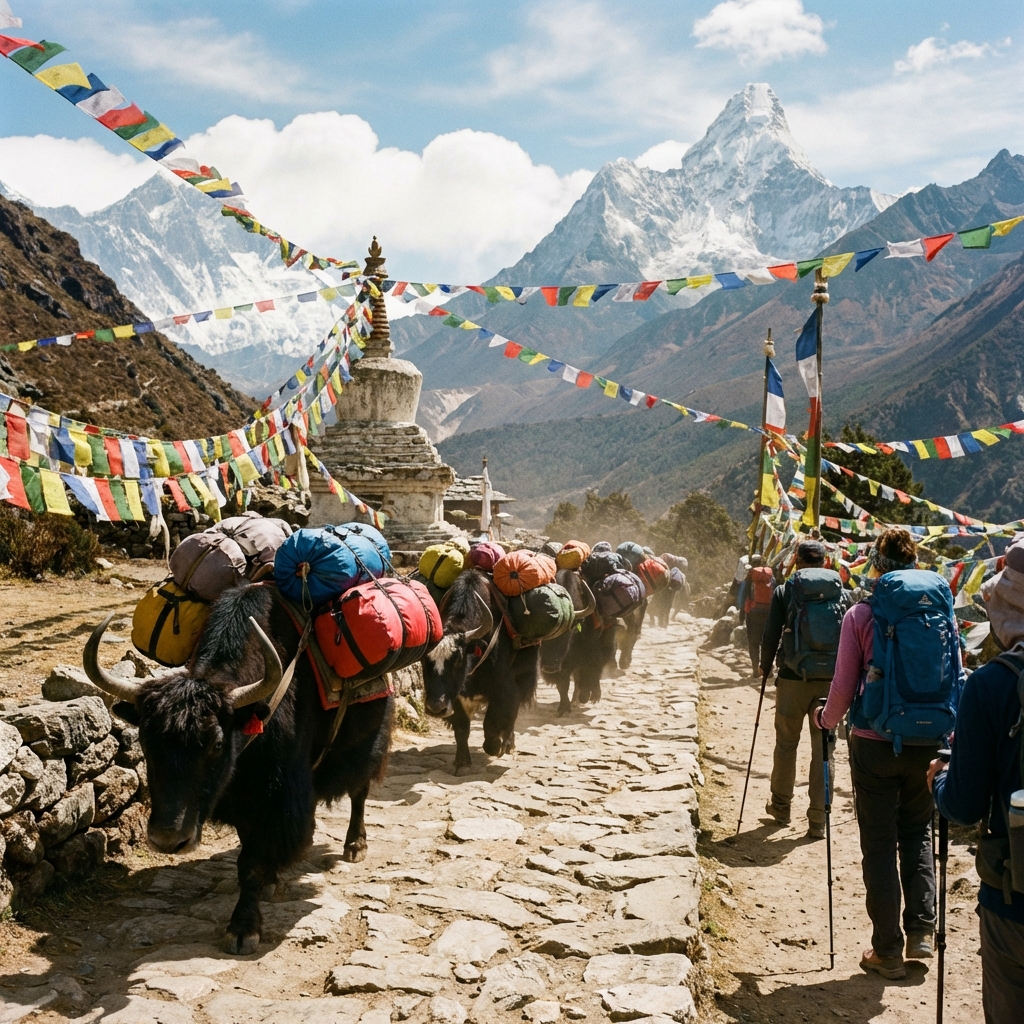
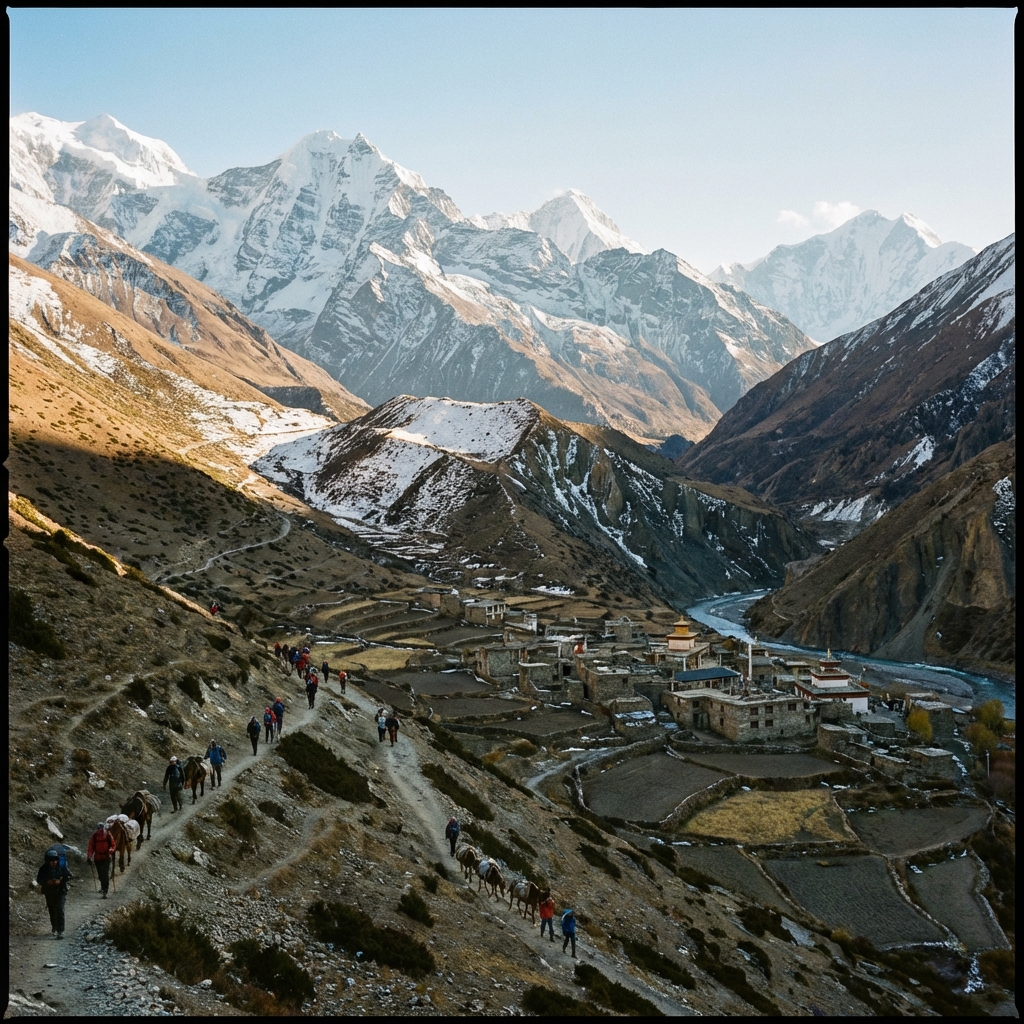
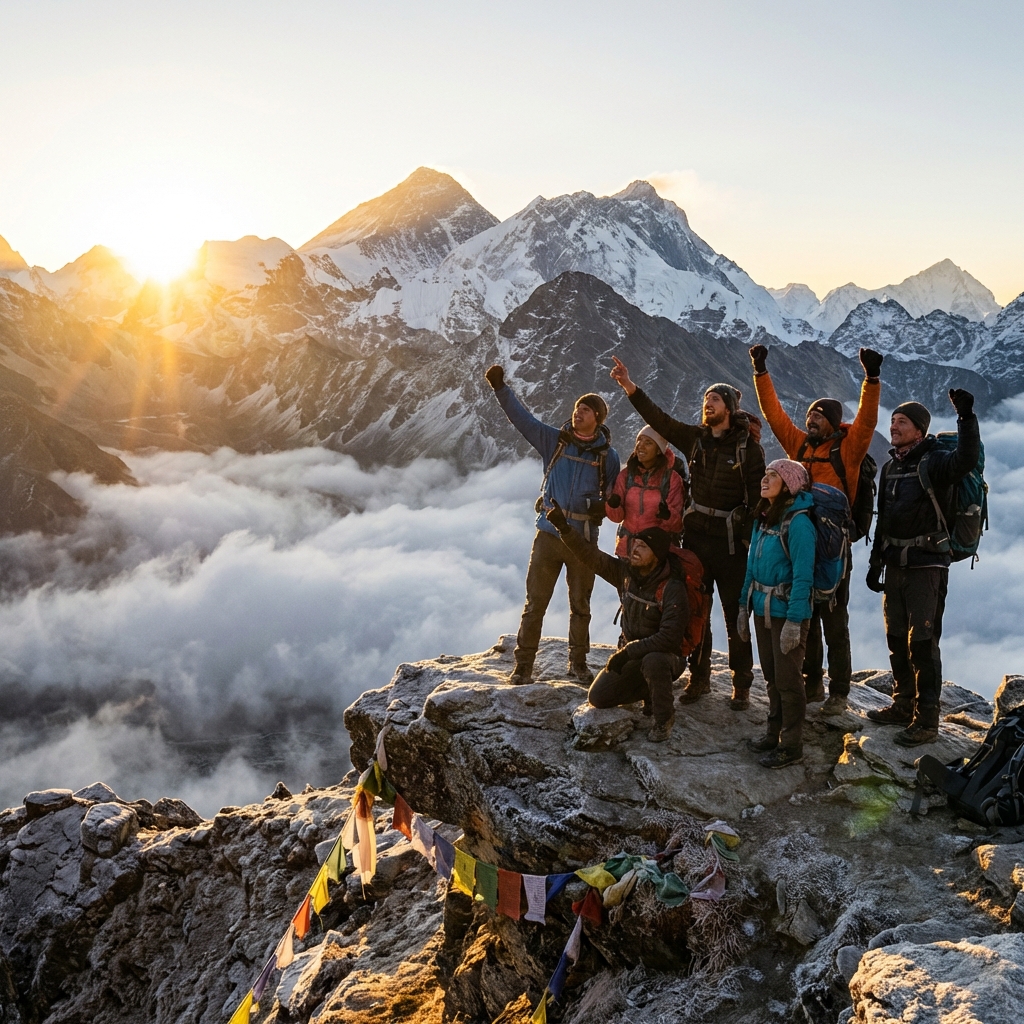
Makalu Base Camp is one of the last great wilderness treks remaining in Nepal. Sitting at the foot of the world's fifth highest mountain (8,485m), this 18-20 day journey through eastern Nepal delivers raw Himalayan grandeur without the crowds, commercial tea house chains, or Instagram-fueled foot traffic that define the Everest and Annapurna regions. If you are the kind of trekker who values solitude, genuine wilderness, and the satisfaction of earning every view, Makalu Base Camp belongs on your shortlist.
The trek begins in the subtropical Arun Valley, one of Nepal's deepest river gorges, and climbs through lush rhododendron forests, alpine meadows carpeted with wildflowers, and barren glacial moraines before arriving at the base camp itself at approximately 4,870m. Along the way, you pass through Rai and Sherpa villages that see only a handful of foreign trekkers each year, traverse terrain rich with rare wildlife including red pandas and Himalayan black bears, and witness mountain panoramas that rival anything in the more famous regions.
This is not a trek for beginners. The remoteness, the sustained high altitude, the lack of established tea house infrastructure on upper sections, and the sheer length of the journey make Makalu Base Camp a genuinely challenging undertaking. But for experienced trekkers seeking something beyond the ordinary, it is one of Nepal's most rewarding adventures.
Quick Facts
18-20 days (trek only)
4,870m (Makalu Base Camp)
Shipton La / Tutu La (~4,127m)
Challenging (Grade 4 of 5)
Oct-Nov and Apr-May
Tumlingtar (flight from Kathmandu) or Num (road access)
Makalu Barun National Park Entry + Restricted Area Permit
$2,200-4,500 (guided)
Tea houses (lower) + Camping (upper)
Under 1,000
Why Trek to Makalu Base Camp?
The Fifth Highest Mountain in the World
Makalu (8,485m) is not just another eight-thousander. Its near-perfect pyramidal shape makes it one of the most aesthetically striking peaks in the Himalayas. Unlike Everest, which is often obscured by surrounding ridges from its own base camp, Makalu reveals its full profile from the base camp in staggering detail. You see the entire mountain from base to summit, including the notorious southeast ridge that has challenged elite mountaineers for decades.
The base camp sits in a wide glacial bowl at the head of the Barun Valley, surrounded by a horseshoe of peaks exceeding 7,000m. On clear days, the view extends to Everest, Lhotse, and Kangchenjunga, placing you at the visual center of four of the world's five highest mountains.
Genuine Remoteness
Makalu Base Camp receives fewer than 1,000 trekkers per year. Compare that to Everest Base Camp, which sees over 50,000. On most days during your trek, you will encounter zero other foreign trekkers. The trail belongs to you, the porters, and the occasional yak train. This level of solitude is becoming exceedingly rare in Nepal trekking, and it transforms the entire experience. Without the social dynamics of a crowded trail, you connect more deeply with the landscape, with your crew, and with the rhythms of mountain travel.
Extraordinary Biodiversity
The Makalu Barun National Park and Conservation Area covers 2,330 square kilometers and spans an elevation range from 435m in the Arun Valley to 8,485m at the summit of Makalu. This extreme vertical range creates one of the richest biodiversity corridors in the Himalayas. On a single trek, you pass through tropical forest, temperate broadleaf forest, subalpine birch and rhododendron forest, alpine meadows, and arctic glacial zones.
Wildlife you may encounter includes:
- Red panda (especially in bamboo forests between 2,500-3,500m)
- Himalayan black bear
- Himalayan tahr
- Musk deer
- Snow leopard (extremely rare but present above 4,000m)
- Over 400 bird species, including the Himalayan monal and blood pheasant
During spring (April-May), the rhododendron forests between 3,000-4,000m erupt in spectacular blooms of red, pink, and white that rank among the most vivid natural displays in all of Nepal.
Spring Rhododendron Window
The best rhododendron bloom along the Makalu trail typically occurs between mid-April and mid-May. The forests between Tashigaon and Mumbuk are particularly spectacular. If timing your trek for the flowers, aim for an April 15-20 departure from Kathmandu. You will hit the bloom zone during peak flowering while still having good weather for the higher sections.
Route Overview: Arun Valley to Makalu Base Camp
The standard Makalu Base Camp trek follows a route from the roadhead at Num (or from Tumlingtar airstrip) through the Arun Valley, over the Shipton La pass, and into the Barun Valley leading to base camp. The route can be divided into three distinct phases.
Phase 1: Arun Valley Approach (Days 1-5)
The first phase takes you from the starting point through the deep Arun Valley and up to the ridge village of Tashigaon. This section is characterized by subtropical and temperate forests, suspension bridge crossings over the Arun River, and Rai and Limbu villages where traditional culture remains largely intact.
Key stops:
- Num (1,490m): Starting village perched on a ridge above the Arun River. Road access from Tumlingtar or Khandbari
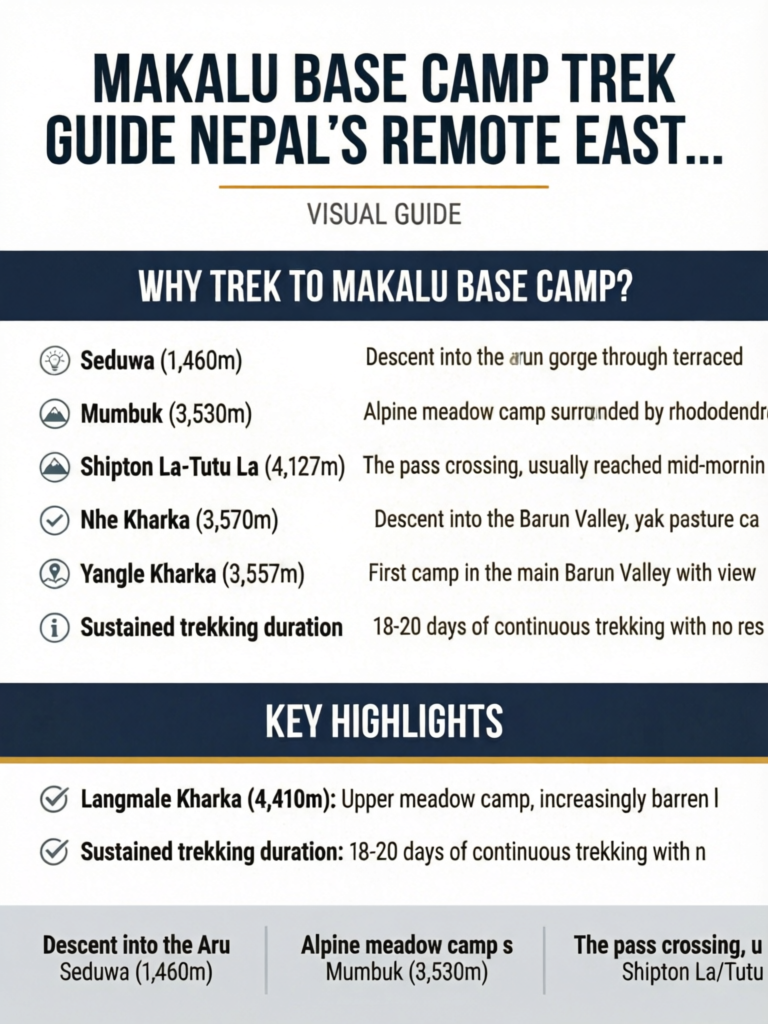
- Seduwa (1,460m): Descent into the Arun gorge through terraced farmland
- Tashigaon (2,100m): Last permanent village, Sherpa settlement with basic tea houses. Stock up on any supplies here
The Arun Valley approach involves significant elevation gain and loss, with the trail repeatedly climbing ridges and dropping into river valleys. Daily elevation changes of 800-1,200m are common. The heat and humidity in the lower valley can be intense, particularly in spring.
Leeches in the Arun Valley
During spring and early autumn, the lower Arun Valley sections between 1,000-2,500m are leech territory. Tuck your pants into your socks, apply salt or DEET around your ankles and boot tops, and check yourself at every rest stop. Gaiters help significantly. Leeches are not dangerous but can be distressing for those unprepared for them. The leech zone typically ends above Tashigaon.
Phase 2: High Forest and Alpine Zone (Days 6-10)
Above Tashigaon, the trail climbs steeply through dense rhododendron and birch forest, crossing the Shipton La (also called Tutu La) at approximately 4,127m before descending into the Barun Valley. This transition zone is where the character of the trek changes fundamentally. Villages disappear, and you enter genuine wilderness.
Key stops:
- Khongma Danda (3,500m): Ridge camp with views into both the Arun and Barun valleys
- Mumbuk (3,530m): Alpine meadow camp surrounded by rhododendron forest
- Shipton La/Tutu La (4,127m): The pass crossing, usually reached mid-morning
- Nhe Kharka (3,570m): Descent into the Barun Valley, yak pasture camp
- Yangle Kharka (3,557m): First camp in the main Barun Valley with views of Makalu
The Shipton La crossing is the trek's first significant altitude milestone. While not technically difficult, the steep climb from the forest into exposed terrain above the treeline can be tiring, especially if you are not yet well acclimatized. Plan for a slow, steady ascent.
Khongma Danda Acclimatization
If you are feeling the altitude at Khongma Danda (3,500m), add an extra night here before crossing the Shipton La. The camp sits on a beautiful ridge with outstanding views, and spending a second night significantly improves your performance on the pass crossing the following day. This flexibility is one of the great advantages of having a camping crew.
Phase 3: Barun Valley to Base Camp (Days 11-15)
The final phase traverses the wild Barun Valley, following the Barun River upstream through progressively more dramatic glacial scenery to the base camp. This is the most remote section of the trek, with no settlements, no tea houses, and no infrastructure. You are entirely dependent on your camping crew.
Key stops:
- Langmale Kharka (4,410m): Upper meadow camp, increasingly barren landscape
- Shershon (4,615m): Also called Makalu Base Camp South, a flat area near a glacial lake
- Makalu Base Camp (4,870m): The final destination in the glacial bowl beneath Makalu's south face
The Barun Valley is one of Nepal's most impressive alpine environments. The valley walls rise steeply on both sides, and as you progress upstream, the peaks of Peak 4 (6,720m), Peak 3 (6,477m), and Chamlang (7,321m) appear in increasingly dramatic fashion. The base camp itself sits on moraine terrain with the Barun Glacier flowing below and Makalu's south face towering directly above.
Weather Windows at Base Camp
Makalu Base Camp at 4,870m is exposed to sudden weather changes. Afternoon clouds and snow are common even during the trekking season. Plan to reach base camp by early afternoon and have your camp established before weather moves in. The best panoramic views are typically between sunrise and 10:00 AM. If you have a spare day, use it at base camp to maximize your chances of clear conditions.
Day-by-Day Itinerary Summary
The following is a standard 18-day trek itinerary. Depending on your pace, acclimatization needs, and exploration interests, you may want 19-20 days.
| Day | Route | Altitude | Hours | Notes |
|---|---|---|---|---|
| 1 | Fly Kathmandu to Tumlingtar, drive to Num | 1,490m | 6-7h total | Scenic flight + jeep ride |
| 2 | Num to Seduwa | 1,460m | 5-6h | Steep descent into Arun Valley |
| 3 | Seduwa to Tashigaon | 2,100m | 5-6h | Last village, stock up |
| 4 | Tashigaon to Khongma Danda | 3,500m | 6-7h | Steep climb through forest |
| 5 | Khongma Danda to Mumbuk | 3,530m | 4-5h | Rhododendron forest traverse |
| 6 | Mumbuk to Nhe Kharka via Shipton La | 3,570m | 6-7h | Pass crossing at 4,127m |
| 7 | Nhe Kharka to Yangle Kharka | 3,557m | 5-6h | Enter the Barun Valley |
| 8 | Yangle Kharka - rest/acclimatization day | 3,557m | Half day | Short hike for acclimatization |
| 9 | Yangle Kharka to Langmale Kharka | 4,410m | 5-6h | Scenic valley approach |
| 10 | Langmale to Shershon | 4,615m | 4-5h | Glacial terrain begins |
| 11 | Shershon to Makalu Base Camp | 4,870m | 3-4h | Arrive at base camp |
| 12 | Makalu Base Camp exploration day | 4,870m | Half day | Explore glacial views, photography |
| 13 | Makalu Base Camp to Yangle Kharka | 3,557m | 7-8h | Long descent day |
| 14 | Yangle Kharka to Mumbuk | 3,530m | 6-7h | Return via Barun Valley |
| 15 | Mumbuk to Tashigaon via Shipton La | 2,100m | 7-8h | Pass re-crossing and descent |
| 16 | Tashigaon to Seduwa | 1,460m | 5-6h | Retracing Arun Valley route |
| 17 | Seduwa to Num | 1,490m | 5-6h | Final trek day |
| 18 | Drive Num to Tumlingtar, fly to Kathmandu | - | 6-7h total | Return journey |
Add a Buffer Day
Weather delays on the Tumlingtar flight are common, especially in spring when afternoon thunderstorms build rapidly. Always add at least one buffer day to your itinerary. The best place for this is either at Yangle Kharka (for acclimatization on the way up) or at Tumlingtar on the return (in case of flight cancellations). Missing an international connection because of a delayed domestic flight is an expensive and avoidable problem.
Difficulty Assessment
Physical Demands
Makalu Base Camp earns its Grade 4 (Challenging) difficulty rating through a combination of factors rather than any single extreme element. The trek involves:
- Sustained trekking duration: 18-20 days of continuous trekking with no rest-day towns
- Significant daily elevation changes: Multiple days with 1,000m+ of cumulative gain and loss
- Maximum altitude: 4,870m requires proper acclimatization
- Trail conditions: Sections above Tashigaon can be rough, muddy, and poorly marked
- Remote location: The nearest hospital is several days away from the upper sections
- Weather exposure: Above the treeline, there is no shelter from storms
How It Compares to Other Treks
| Factor | Makalu Base Camp | EBC | ABC | Manaslu Circuit |
|---|---|---|---|---|
| Duration | 18-20 days | 12-14 days | 10-12 days | 14-16 days |
| Max altitude | 4,870m | 5,364m | 4,130m | 5,160m |
| Daily difficulty | High | Moderate-High | Moderate | Moderate-High |
| Trail quality | Poor to moderate | Good | Good | Moderate |
| Remoteness | Very high | Low | Low | Moderate |
| Rescue access | Limited | Good | Good | Moderate |
| Crowds | Almost none | Heavy | Moderate | Light |
| Infrastructure | Minimal | Excellent | Good | Moderate |
Fitness Requirements
You should be able to:
- Hike 8-10 hours per day on steep, uneven terrain for consecutive days
- Carry a 6-8 kg daypack comfortably at altitude
- Handle sustained climbs of 1,000m+ in a single day
- Function effectively at altitudes above 4,500m
Prior high-altitude trekking experience is strongly recommended. If this is your first trek above 4,000m, consider completing a trek like Everest Base Camp or Manaslu Circuit first to understand how your body responds to altitude.
Permits and Regulations
Makalu Barun National Park Entry Permit
All trekkers must obtain a Makalu Barun National Park entry permit. As of 2026, the fee structure is:
- Foreign trekkers: NPR 3,000 (approximately $23)
- SAARC nationals: NPR 1,500
- Nepali citizens: NPR 100
This permit can be obtained at the park entrance gate at Seduwa or arranged in advance through your trekking agency in Kathmandu.
Restricted Area Permit (Historical Context)
Makalu Base Camp was previously classified as a restricted area requiring a special permit and mandatory guide. As of recent regulatory changes, the restricted area classification has been lifted for the standard Makalu Base Camp route, making it technically possible to trek without a restricted area permit. However, several important caveats apply:
- Regulations change frequently: Always verify current permit requirements before your trek
- Guide is still strongly recommended: The remote nature of the route makes an experienced guide essential for safety
- Local municipality fees: Additional local fees may apply at various checkpoints along the route
Current Permit Status
Nepal's permit regulations for Makalu Base Camp have changed multiple times in recent years. While the standard route no longer requires the expensive restricted area permit, this status could change. Contact the Nepal Tourism Board or a licensed trekking agency for the most current requirements before finalizing your plans. The cost difference between restricted and open status can be several hundred dollars.
TIMS Card
A TIMS (Trekkers' Information Management System) card is required. This can be obtained in Kathmandu at the Nepal Tourism Board office or through your trekking agency. Individual trekkers pay NPR 2,000, while those trekking through an agency pay NPR 1,000.
Best Season for the Makalu Base Camp Trek
Autumn (October-November) - Prime Season
Autumn is the best time for the Makalu Base Camp trek. You get:
- Stable weather with clear skies and excellent visibility
- Comfortable temperatures at lower elevations
- Manageable cold at base camp (nighttime temperatures around -10 to -15 degrees Celsius)
- The trail is typically dry and well-defined
- Post-monsoon freshness with clean air and vivid mountain views
October is generally considered the single best month, with late October offering the most stable weather and the clearest mountain views. By mid-November, increasing cold at altitude and shorter days make the trek less comfortable but still feasible.
Spring (April-May) - Excellent Alternative
Spring brings warmer temperatures but slightly less stable weather than autumn:
- Spectacular rhododendron blooms in the 3,000-4,000m zone
- Warmer nights at altitude (still cold, but more manageable)
- Longer daylight hours for photography
- Slightly higher chance of afternoon cloud and precipitation
- Lush, green valley landscapes
Late April is the sweet spot for spring trekking, balancing flower season with weather stability.
Seasons to Avoid
- Monsoon (June-September): Heavy rain makes the Arun Valley trail dangerous with landslide risk. Leeches are extreme. The upper sections can be foggy for days. Not recommended
- Winter (December-February): Heavy snow can block the Shipton La pass entirely. Night temperatures at base camp drop below -25 degrees Celsius. Some years the trail is impassable. Only for very experienced winter trekkers with proper equipment
Cost Breakdown
The Makalu Base Camp trek is more expensive than standard tea house treks due to its remote location and the need for camping support on the upper sections. Here is what to budget:
Guided Trek Cost Estimate
| Expense | Budget Range | Notes |
|---|---|---|
| Trekking agency (all-inclusive) | $1,800-3,500 | Guide, porters, food, camping gear, permits |
| Kathmandu-Tumlingtar flights | $250-350 return | Prices vary by season and demand |
| National Park permit | $23 | NPR 3,000 for foreign trekkers |
| TIMS card | $8-16 | Depends on individual or agency arrangement |
| Personal gear rental | $50-150 | If renting sleeping bag, down jacket, etc. |
| Tips for guide and porters | $150-300 | Standard tipping for 18-20 day trek |
| Personal expenses | $100-200 | Snacks, drinks, charging, personal items |
| Travel insurance | $80-200 | Must cover helicopter evacuation above 5,000m |
| Total Estimated Cost | $2,500-4,700 | Excluding international flights to Nepal |
Cost-Sharing Strategy
Because the camping crew costs (cook, kitchen helpers, porters, equipment) are largely fixed regardless of group size, trekking with 3-4 people significantly reduces per-person costs. A group of four can often negotiate agency rates 25-35% lower per person compared to solo or couple pricing. The logistics of finding compatible trekking partners for Makalu are easier through specialized forums and Facebook groups focused on off-beaten-path Nepal treks.
Why It Costs More Than EBC or ABC
Several factors drive up the cost of the Makalu trek:
- Remote access: Domestic flights to Tumlingtar or long jeep rides add transportation costs
- Camping equipment: The agency must provide tents, kitchen equipment, and dining shelter for the upper sections
- Larger crew: A cook, kitchen helper, and additional porters for camping gear are needed beyond the guide
- Longer duration: More days means more food, wages, and logistics
- Limited competition: Fewer agencies operate in this region, reducing price competition
Flora and Fauna of the Makalu Barun Region
Vegetation Zones
The Makalu trek passes through more ecological zones than almost any other single trek in Nepal:
- Subtropical zone (500-1,500m): Sal forests, tropical vegetation in the Arun Valley
- Lower temperate zone (1,500-2,500m): Oak, maple, and alder forests with thick understory
- Upper temperate zone (2,500-3,500m): Rhododendron, birch, and hemlock forests
- Subalpine zone (3,500-4,000m): Dwarf rhododendron, juniper, and alpine shrubs
- Alpine zone (4,000-5,000m): Alpine meadows, mosses, and lichens
Wildlife Highlights
The Makalu Barun National Park is one of Nepal's most important wildlife corridors. Key species include:
- Red panda: The bamboo forests between 2,500-3,500m support a healthy population. Early morning and late afternoon offer the best sighting chances
- Himalayan black bear: Active in the temperate forests, especially during spring when food sources are abundant
- Snow leopard: Present but extremely elusive above 4,000m. Tracks and scat are sometimes found near base camp
- Musk deer: These small, solitary deer inhabit the rhododendron forests
- Danphe (Himalayan monal): Nepal's national bird, with its iridescent plumage, is frequently spotted in the 3,000-4,000m zone
Bird Photography Paradise
The Makalu Barun region has been identified as one of Nepal's most important bird areas, with over 400 recorded species. The transition from subtropical to alpine habitats creates exceptional birding diversity. Serious bird photographers should consider adding 2-3 extra days to the itinerary for dedicated birding stops in the temperate forest zone. Spring is particularly rewarding, with breeding plumage displays and territorial calls making species easier to locate.
The Arun Valley Approach: A Trek Within a Trek
The Arun Valley approach to Makalu is itself a remarkable journey. The Arun River, one of Nepal's major river systems, has carved a gorge that drops to just 435m elevation, making it one of the lowest points in the Himalayan range. This creates a unique topographical situation where the river flows between two 8,000m peaks (Makalu and Kangchenjunga) at an elevation lower than many cities in the Nepali middle hills.
Cultural Encounters in the Arun Valley
The lower valley is home to Rai and Limbu communities whose agricultural traditions, animist-influenced religious practices, and unique cuisine offer genuine cultural encounters. Unlike the Everest region, where Sherpa culture has been extensively documented and commercialized, the Rai villages along the Makalu approach remain authentic and unselfconscious.
You may encounter:
- Tongba: Traditional millet beer served in wooden containers with hot water poured over fermented millet
- Dhiki: Hand-operated rice-pounding devices still in daily use
- Mundhum: Rai oral tradition and ritual practices
- Terraced farming: Spectacular rice and millet terraces cascading down valley walls
Transitioning from Valley to Mountain
One of the most dramatic aspects of the Makalu trek is the rapid transition from subtropical valley to alpine mountain. In the space of 3-4 trekking days, you climb from banana trees and rice paddies to snow-dusted rhododendron forests. This transition is visually stunning and ecologically fascinating, but it also means rapid altitude gain that requires careful acclimatization management.
Gear and Preparation
Essential Gear Beyond Standard Trekking Equipment
In addition to standard Nepal trekking gear, the Makalu trek requires:
- Four-season sleeping bag: Rated to at least -20 degrees Celsius for base camp. Most agencies provide this
- Insulated sleeping pad: Essential at base camp where ground temperature saps warmth
- Gaiters: For leeches in lower sections and snow in upper sections
- Waterproof bags/dry sacks: Protecting gear during river crossings and rain
- Extra batteries/power banks: No charging facilities for 10+ days in the upper section
- Water purification: No safe water sources at altitude, and boiling is slow at base camp elevation
For a comprehensive packing approach, refer to our EBC packing list and add the Makalu-specific items above. The Makalu trek demands a more robust equipment setup due to the camping requirement and the lack of resupply options.
Power Management
There are no charging facilities above Tashigaon (Day 3) until you return. That means 12-15 days without access to electricity. Bring at least two 20,000mAh power banks and put your phone in airplane mode when not actively using it for photos. A small solar panel can supplement charging on rest days but is unreliable in the frequently cloudy upper valley. Charge everything fully in Tashigaon before heading up.
Physical Training
Start training at least 12-16 weeks before your trek. Focus on:
- Cardiovascular endurance: Long hikes (4-6 hours) with a loaded pack, at least 3-4 times per week
- Leg strength: Stairs, squats, lunges, and step-ups with pack weight
- Core stability: Essential for balance on rough terrain
- Back-to-back training: Practice consecutive long hiking days to condition your body for the sustained effort
See our fitness requirements guide for detailed training programs adaptable to the Makalu trek.
Logistics: Getting to the Trailhead
Option 1: Fly to Tumlingtar
The most common approach is flying from Kathmandu to Tumlingtar airstrip (30-40 minute flight), then taking a jeep to the trailhead at Num (4-5 hours by road). The road from Tumlingtar to Num has been progressively improved but remains rough, unpaved, and subject to landslide damage during monsoon season.
Advantages: Saves 2-3 days compared to road-only access Disadvantages: Flights are frequently delayed or cancelled due to weather, limited seat availability
Option 2: Drive from Kathmandu
It is possible to drive from Kathmandu to Num via Hile and Khandbari. This takes approximately 18-22 hours of driving over two days, covering roughly 600km. The last section from Khandbari to Num (about 3-4 hours) is on rough mountain roads.
Advantages: More reliable than flights, allows early start Disadvantages: Long, tiring drive, particularly the section from Hile to Num
Option 3: Fly to Tumlingtar via Biratnagar
An alternative is to fly Kathmandu to Biratnagar (a larger, more reliable airport), then take a connecting flight or drive to Tumlingtar. This adds complexity but can be a useful backup if direct Tumlingtar flights are not operating.
Do Not Underestimate the Approach
Getting to and from the Makalu trailhead is one of the most logistically challenging aspects of this trek. Flight cancellations, road conditions, and jeep availability can all cause delays. Build a minimum of one extra day into both your approach and return schedules. Many trekkers have missed international flights home because they did not account for approach logistics. Your trekking agency should handle these logistics, but confirm their contingency plans before departing.
Combining Makalu with Other Treks
Makalu to Everest Base Camp Traverse
For exceptionally fit and experienced trekkers, it is possible to traverse from Makalu Base Camp to Everest Base Camp via the Sherpani Col (6,146m) and West Col (6,190m). This is a full mountaineering expedition rather than a trek, requiring technical climbing skills, roped glacier travel, and 4-6 additional days. It is one of the most challenging traverses in Nepal.
Makalu with Arun Valley Extension
A more accessible extension is to add 3-4 days exploring the lower Arun Valley on either side of the trek. The valley has excellent birdwatching, rafting potential, and Rai cultural experiences that complement the high-altitude mountain sections.
Responsible Trekking in the Makalu Region
The Makalu Barun region's ecological sensitivity demands responsible trekking practices. Because the area has minimal infrastructure, the environmental impact of camping treks can be significant without proper management.
Key principles:
- Pack out all waste: There are no waste management facilities anywhere on the upper route
- Use designated campsites: Camping on virgin meadows damages fragile alpine vegetation
- Minimize campfire impact: Use kerosene stoves exclusively above the treeline
- Respect wildlife: Do not feed animals or leave food waste accessible
- Cultural sensitivity: Ask before photographing local people, especially in Rai villages
Frequently Asked Questions
Is Makalu Base Camp harder than Everest Base Camp?
In terms of maximum altitude, Makalu Base Camp (4,870m) is actually lower than Everest Base Camp (5,364m). However, the overall trek is harder due to longer duration, poorer trail conditions, greater remoteness, less infrastructure, and more demanding daily stages. EBC has excellent tea houses, well-marked trails, and rescue helicopter access. Makalu has none of these comforts for the upper section.
Do I need a guide for Makalu Base Camp?
While a guide may no longer be legally mandatory (check current regulations), trekking Makalu without an experienced guide would be extremely risky. The trail above Tashigaon is poorly marked in places, weather conditions can deteriorate rapidly, and the nearest medical help is days away. A guide is not optional in practical terms.
Can I do the Makalu trek independently (without an agency)?
The lower section to Tashigaon can be done independently with basic navigation skills. Above Tashigaon, independent trekking is not realistic for most people because you need camping equipment, food supplies, and route knowledge that only a support crew provides. Even experienced independent trekkers hire at minimum a guide-porter for the upper sections.
How many days do I need for acclimatization?
The standard itinerary includes at least one dedicated acclimatization day at Yangle Kharka (3,557m). Most trekkers also benefit from a slow day at base camp. If you have not trekked above 4,000m before, consider adding an extra acclimatization day at Khongma Danda. Read our acclimatization guide for detailed protocols.
What is the best month for the Makalu Base Camp trek?
Late October is generally the best single month, offering stable weather, clear views, and comfortable (if cold) temperatures. Late April is the best spring option, combining good weather with rhododendron blooms.
Is there mobile phone signal on the trek?
You will have intermittent mobile signal (Nepal Telecom) at Num, Seduwa, and possibly Tashigaon. Above Tashigaon, there is no mobile signal until you return. Satellite communication (InReach, spot tracker) is recommended for emergency contact capability.
What if I get sick on the trek?
Medical evacuation from the upper Makalu route is extremely difficult. Helicopter rescue is possible but may be delayed by weather or the remoteness of landing zones. Carry a comprehensive first-aid kit, know the symptoms of altitude sickness, and have a clear descent plan. Travel insurance covering helicopter evacuation above 5,000m is absolutely essential.
Can I see Everest from Makalu Base Camp?
Yes. On clear days, Everest (8,849m), Lhotse (8,516m), and several other major peaks are visible from Makalu Base Camp and from various points along the upper Barun Valley. However, Makalu itself dominates the panorama.
How does Makalu compare to other off-beaten-path treks?
Makalu is more remote and demanding than the Manaslu Circuit but less extreme than Upper Dolpo. It offers better mountain scenery than most alternative treks, with the possible exception of Kangchenjunga. For a comprehensive comparison of remote Nepal treks, see our guide to off-beaten-path treks.
What is the maximum group size for Makalu?
There is no official maximum group size, but practically, groups of 4-8 trekkers work best. Larger groups require more porters and camping space, which becomes logistically challenging in the narrow Barun Valley. Smaller groups move faster and have less environmental impact.
Is the trek suitable for someone in their 50s or 60s?
Age alone is not a limiting factor, but fitness and prior high-altitude experience are. Trekkers in their 50s and 60s with strong fitness, relevant trekking experience, and good health complete Makalu Base Camp regularly. The key is honest self-assessment, adequate training, and willingness to add extra acclimatization days. See our camping treks guide for more on expedition-style trekking demands.
Final Thoughts
Makalu Base Camp is not a trek you stumble into. It demands planning, fitness, commitment, and a genuine appetite for remote mountain travel. But for trekkers who have graduated from the classic Nepal routes and want something deeper, wilder, and more personally challenging, Makalu delivers in a way that few treks anywhere in the world can match.
The combination of the Arun Valley's subtropical richness, the extraordinary biodiversity of the Makalu Barun National Park, and the raw grandeur of the base camp beneath the world's fifth highest peak creates a trekking experience that stays with you long after you have returned to sea level. This is Nepal trekking at its most authentic, for those ready to earn it.
Related guides: