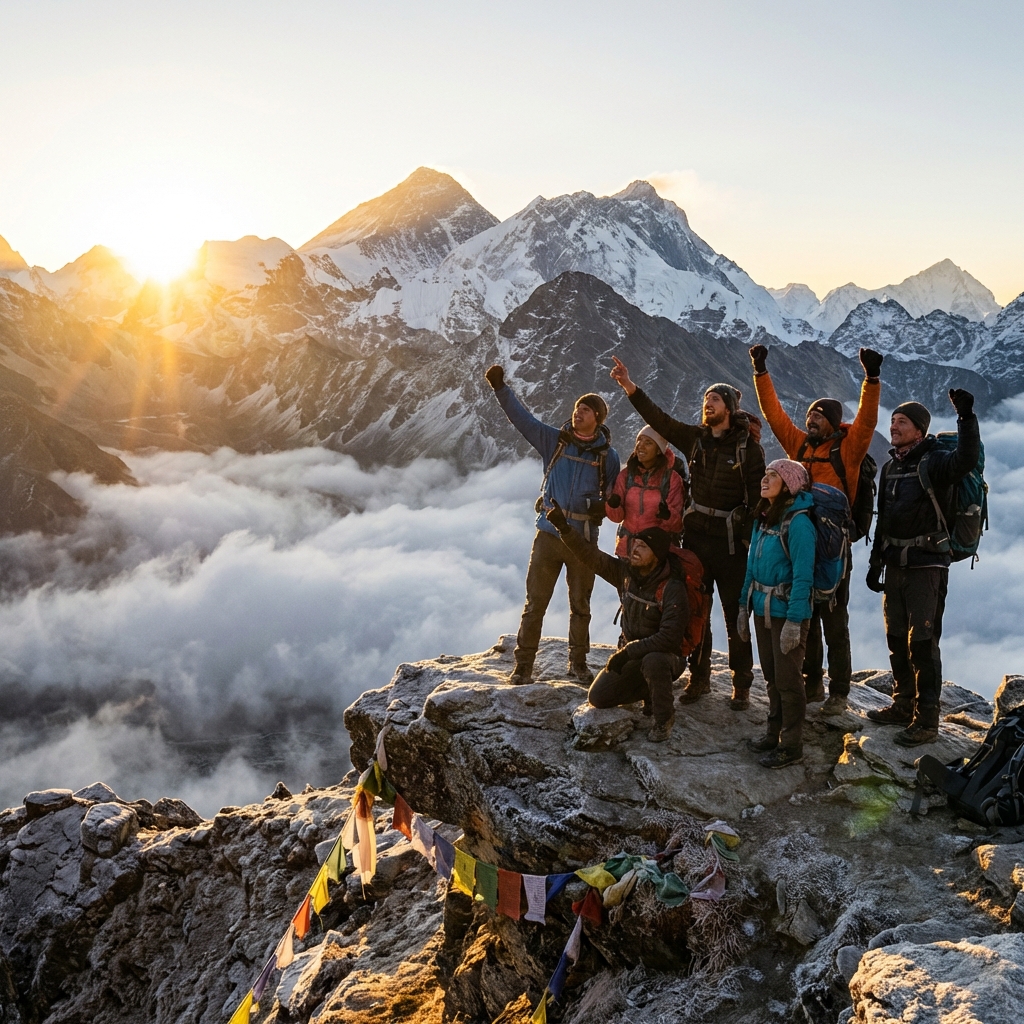
Renjo La Pass (5,360m/17,585ft) stands as the western gateway to Gokyo Valley, offering what many experienced trekkers consider the finest panoramic view in the Everest region. While Cho La and Kongma La receive more attention in Three Passes Trek discussions, Renjo La delivers an extraordinary visual reward that rivals anything the Himalaya can offer: a sweeping vista that encompasses Everest, Lhotse, Makalu, Cho Oyu, and the entire turquoise chain of Gokyo Lakes spread below.
This comprehensive guide covers everything you need to successfully cross Renjo La Pass, whether you're approaching it as part of the complete Three Passes Trek or using it as an alternative route to reach Gokyo Valley from Namche Bazaar. You'll learn the optimal routes, timing considerations, weather windows, difficulty factors, and practical logistics that separate a successful crossing from a challenging ordeal.
5,360m (17,585ft)
8-10km (depending on route)
7-9 hours (full day)
Strenuous/Challenging
Non-technical but demanding
Oct-Nov, Mar-May
Lungden (4,380m) or Thame (3,820m)
Gokyo (4,790m)
Sagarmatha National Park + TIMS
Mandatory for foreign trekkers
Why Choose Renjo La Pass?
Among the three high passes of the Everest region, Renjo La offers distinct advantages that make it the preferred choice for many experienced trekkers:
The View Factor
The summit of Renjo La delivers what many consider the single best viewpoint in the entire Everest region. Unlike Kala Patthar or Gokyo Ri, which require additional side trips, Renjo La's summit is part of your trekking route—the spectacular panorama comes included in the crossing.
From the pass, you'll witness:
To the East:
- Mount Everest (8,849m) rising prominently above the Ngozumpa Glacier
- Lhotse (8,516m) appearing as Everest's dramatic south face neighbor
- Nuptse's imposing rock walls
- The complete Gokyo Lakes chain stretching below
- Ngozumpa Glacier—the longest glacier in Nepal
To the South:
- Thamserku (6,623m) dominating the middle distance
- Kangtega (6,782m) showing its distinctive profile
- Ama Dablam (6,812m) appearing on clear days
To the West and North:
- Cho Oyu (8,188m), the world's sixth-highest peak, appearing remarkably close
- Gyachung Kang (7,952m)
- The Tibetan Plateau stretching beyond the border
Fewer Crowds
Renjo La sees significantly less traffic than the main Everest Base Camp trail or even Cho La Pass. While October mornings at Cho La can feel congested with trekking groups, Renjo La often offers solitude. You might share the pass with only a handful of other trekkers, creating a more intimate mountain experience.
Western Approach Benefits
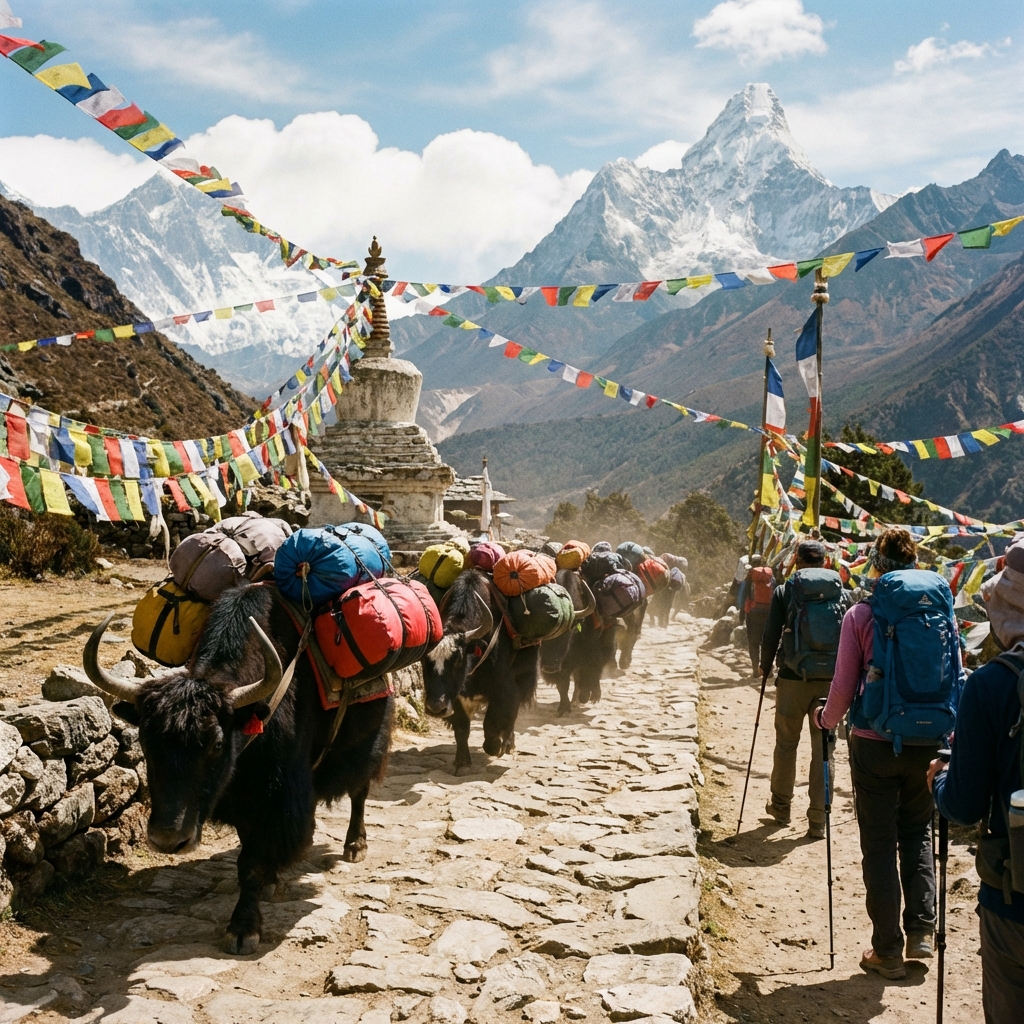
Coming from Thame and Lungden provides cultural immersion often missed on the standard EBC route. Thame village remains authentically Sherpa, less affected by tourism than Namche. The monastery at Thame hosts important religious ceremonies and offers genuine insight into Buddhist mountain culture.
Acclimatization Advantages
For Three Passes trekkers starting from Namche and heading west first, Renjo La serves as an excellent first high pass. After acclimatizing in Namche (3,440m) and spending time at Thame (3,820m), the gradual approach to Lungden (4,380m) prepares your body well before attempting 5,360m.
Pro Tip
If you're attempting all three passes, consider doing Renjo La first. Starting west from Namche provides better acclimatization progression than the more common counter-clockwise route. You'll arrive at Cho La and Kongma La better adapted to altitude.
Understanding the Routes to Renjo La
Route 1: Namche to Thame to Lungden (Recommended)
This is the standard and most popular approach, offering the best acclimatization profile and teahouse accommodation throughout.
Day-by-Day Breakdown:
Namche Bazaar (3,440m) to Thame (3,820m)
- Distance: 10km
- Time: 4-5 hours
- Elevation gain: 380m
- Trail character: Gentle gradient following the Bhote Koshi river valley
The trail from Namche initially descends before contouring along the hillside above the river. You'll pass through Thamo Og, a small settlement with basic teahouses, before continuing through rhododendron and juniper forests. The path remains well-defined and relatively easy—an excellent acclimatization day.
Thame village sits in a wide valley surrounded by 6,000m peaks. The famous Thame Monastery, perched on a ridge above the village, is worth the 30-minute climb for sunset views and spiritual atmosphere. Tenzing Norgay, the first person to summit Everest with Edmund Hillary, was born in a village near Thame.
Thame (3,820m) to Lungden (4,380m)
- Distance: 8km
- Time: 4-5 hours
- Elevation gain: 560m
- Trail character: Valley floor walking, gradual ascent
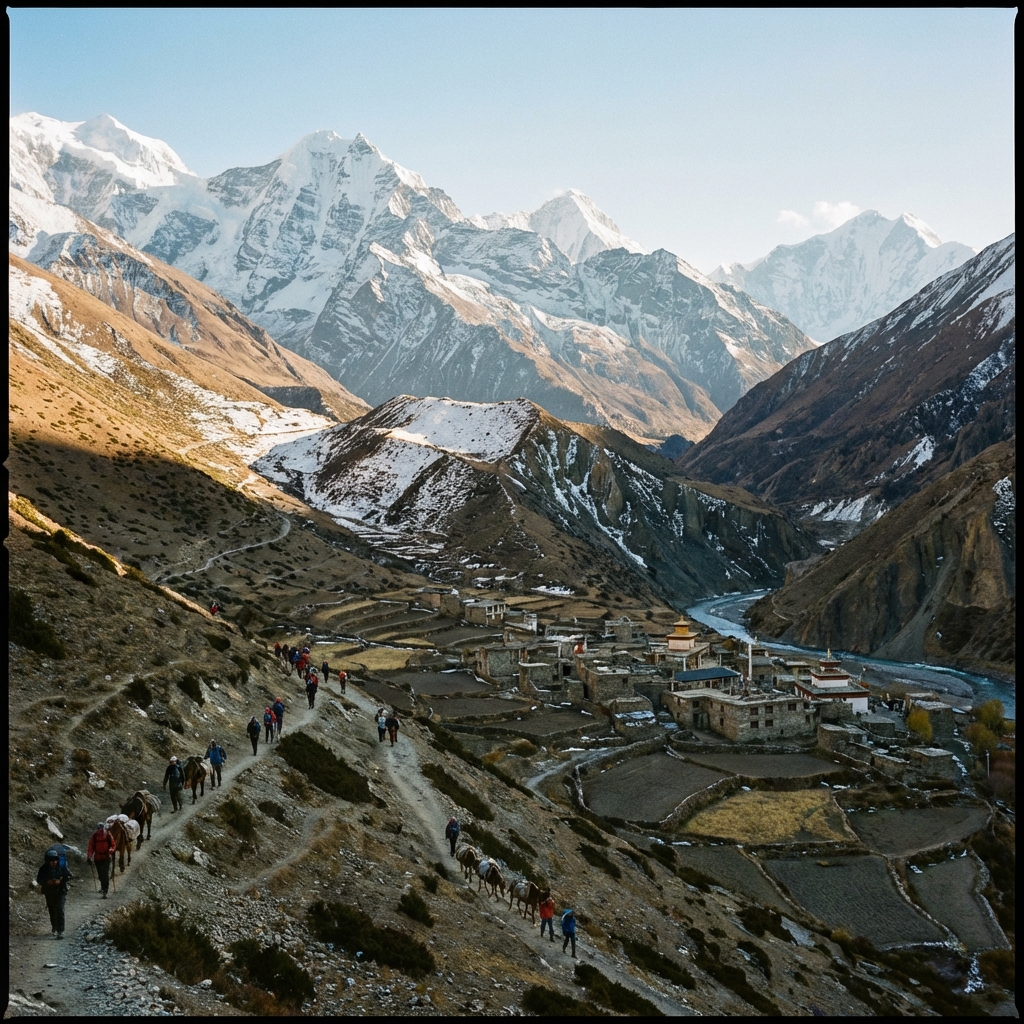
From Thame, the trail continues up the Bhote Koshi valley toward the Tibetan border. The landscape becomes increasingly stark and beautiful—fewer trees, more moraines, bigger views. You'll pass Marulung, a seasonal yak herding settlement, before reaching Lungden (also spelled Lundin or Lumding).
Lungden offers basic but adequate teahouse accommodation. Expect:
- Simple twin rooms
- Common dining area with heating stove
- Basic dal bhat and noodle dishes
- Limited electricity (solar)
- No hot showers
- Pit toilets
Lungden Logistics
Lungden has only 2-3 lodges that operate seasonally (primarily October-November and March-May). During off-season months, you may find accommodation closed. Always confirm lodge availability with your guide or agency before attempting this route. Some trekkers camp here using guide-arranged equipment.
Lungden (4,380m) to Gokyo (4,790m) via Renjo La (5,360m)
- Distance: 10km
- Time: 7-9 hours
- Elevation gain to pass: 980m
- Elevation loss to Gokyo: 570m
- Trail character: Steep rocky climb, technical descent
This is the big day. Most trekkers depart Lungden at 4:00-5:00 AM to cross the pass during optimal morning conditions. The trail climbs steeply through moraines and boulder fields before reaching the prayer flag-adorned summit. The descent to Gokyo follows a similarly steep path down to the fourth Gokyo Lake, then along the lakeshore to Gokyo village.
Route 2: Direct from Thame (Longer Day)
Some very fit, well-acclimatized trekkers skip Lungden and cross directly from Thame in a single long day.
Thame to Gokyo via Renjo La
- Distance: 18km
- Time: 10-12 hours
- Elevation gain to pass: 1,540m
- Net elevation gain: 970m
This route requires:
- Excellent fitness
- Previous high-altitude experience
- Perfect weather conditions
- Early departure (2:00-3:00 AM)
- Strong acclimatization (at least 4-5 nights above 3,500m)
Direct Route Warning
The direct Thame to Gokyo route is only suitable for experienced, exceptionally fit trekkers who are thoroughly acclimatized. Most people attempting this route suffer from altitude-related symptoms or fail to complete the crossing before afternoon weather deteriorates. The standard two-day approach via Lungden is strongly recommended for the vast majority of trekkers.
Route 3: Gokyo to Lungden/Thame (Reverse Crossing)
Some Three Passes trekkers cross Renjo La east to west, approaching from Gokyo after climbing Gokyo Ri and exploring the valley.
Gokyo to Lungden via Renjo La
- Distance: 10km
- Time: 8-10 hours
- Elevation gain to pass: 570m
- Elevation loss to Lungden: 980m
The reverse direction presents different challenges:
- Less steep initial ascent but longer climb
- More technically challenging descent (loose rock, steeper sections)
- Afternoon light not optimal for Everest views
- Arrives at smaller village with basic accommodation
Advantages of reverse crossing:
- Already well-acclimatized from Gokyo Ri climb
- Can combine with Gokyo exploration before crossing
- Less crowded timing (most trekkers go west to east)
The Crossing Day: What to Expect
Pre-Dawn Departure
Plan to leave Lungden between 4:00-5:00 AM. Early departure ensures:
- Crossing before afternoon clouds roll in
- Frozen moraine surfaces (easier walking than softened afternoon snow)
- Maximum daylight buffer for unexpected delays
- Best photography light at the summit
Prepare the night before:
- Pack your daypack completely
- Lay out all clothing layers
- Fill water bottles (they may freeze overnight)
- Charge headlamp and bring spare batteries
- Set multiple alarms
- Eat a substantial dinner
Section 1: Lungden to Moraine (1-2 hours)
The initial trail from Lungden follows the valley floor before beginning its ascent. Walking in darkness with headlamps, you'll navigate a relatively clear path through sparse vegetation and rocky terrain. This section allows your body to warm up before the steep climbing begins.
As dawn breaks, you'll reach the base of the main moraine. Pause here to:
- Switch off headlamps
- Remove a layer (you'll be warming up)
- Drink water before the hard climbing
- Take photos of the emerging peaks
Section 2: Moraine Ascent (2-3 hours)
This is the most physically demanding section. The trail climbs steeply through loose rock, boulder fields, and occasional snow patches. There is no defined path in many areas—follow cairns (stone markers) and your guide's lead.
Physical challenges:
- Altitude making each step harder
- Loose footing requiring careful placement
- Steep grade demanding sustained effort
- Cold temperatures until sun hits the slope
Navigation notes:
- Cairns mark the general route but can be obscured by snow
- Multiple paths exist through the boulder field—all lead to the pass
- False summits will test your patience
- The actual pass is marked by prayer flags visible from distance
Pro Tip
Employ the "rest step" technique during the steep ascent. With each step, briefly lock your downhill knee while your weight transfers, giving your muscles micro-rest. This technique, used by mountaineers worldwide, can extend your endurance significantly at altitude.
Section 3: Final Approach and Summit (30-60 minutes)
The final approach to Renjo La's summit crosses occasional snow fields depending on season. In October-November, expect patchy snow. In spring (March-May), more snow may be present but usually not requiring crampons.
At the Summit (5,360m):
Expect to spend 15-30 minutes at the pass:
- Prayer flags flutter in persistent wind
- Small cairn marks the highest point
- Panoramic view in all directions (weather permitting)
- Cold temperatures require down jacket even in sunshine
- Photograph opportunity of a lifetime
The view from Renjo La is extraordinary. On clear mornings, you'll see:
- Everest, Lhotse, and Makalu appearing as a mountain trinity to the east
- The Ngozumpa Glacier sprawling below, Nepal's longest ice river
- All six Gokyo Lakes visible as turquoise jewels
- Cho Oyu dominating the northern skyline
- Distant Tibetan peaks beyond the border
Section 4: Descent to Gokyo (3-4 hours)
The descent to Gokyo is steeper and more technical than the ascent. Trekking poles are essential for stability on the loose rock and occasional ice.
Descent stages:
Upper descent (1-1.5 hours): Very steep, loose rock, careful foot placement required. This section demands full concentration—more injuries occur on descent than ascent.
Fourth Lake approach (1-1.5 hours): The gradient eases as you approach the fourth Gokyo Lake (Thonak Tsho). The turquoise water provides excellent photo opportunities with Everest reflected in calm morning conditions.
Lake path to Gokyo (1 hour): A pleasant walk along the lake shores to Gokyo village. You'll pass the third lake (Dudh Pokhari) before reaching your destination.
Arrival in Gokyo: Most trekkers arrive between 1:00-3:00 PM, allowing time to:
- Secure accommodation
- Eat a substantial meal
- Rest before potential Gokyo Ri climb the following day
- Celebrate a successful crossing
When to Cross Renjo La: Timing and Weather
Best Months
October-November (Autumn):
- Clearest skies and best visibility
- Stable weather patterns
- Cold but manageable temperatures
- Trail generally snow-free
- Highest number of trekkers (though still fewer than main EBC trail)
March-May (Spring):
- Good visibility, especially March-early April
- Warmer temperatures during crossing
- More snow on the pass (may need caution)
- Rhododendron blooms in lower elevations
- Slightly fewer trekkers than autumn
Shoulder Season Considerations
Early September:
- Monsoon ending, weather improving
- Some rain possible
- Fewer trekkers
- Lodges in Lungden may just be opening
December:
- Cold but often clear
- Less snow than you'd expect
- Very few trekkers
- Some lodges may close
January-February:
- Very cold, especially at night (-20°C to -30°C at Lungden)
- Generally clear days
- Minimal trekker presence
- Some lodges closed—confirm availability
Daily Weather Patterns
Regardless of season, Himalayan weather follows predictable daily patterns:
5:00-9:00 AM: Generally clearest conditions, ideal for summit photography and safe crossing
9:00 AM-12:00 PM: Clouds begin forming in valleys, rising up slopes
12:00-3:00 PM: Clouds often obscure views, precipitation possible
3:00-6:00 PM: Clouds typically clear somewhat before sunset
Planning implication: Always aim to cross the pass before noon. Early departure is not optional—it's essential for safety and views.
Weather Red Flags
Do not attempt Renjo La crossing if: significant snow fell overnight, clouds obscure the pass in early morning, strong winds are present at your lodge, your guide advises against crossing, or visibility is less than 100 meters. Weather-related retreats are a normal part of high-altitude trekking—never risk your life for a schedule.
Difficulty Assessment: Is Renjo La Hard?
Physical Demands
Renjo La is classified as "strenuous" or "challenging" among the three Everest region passes. Here's how it compares:
Renjo La (5,360m):
- Longest sustained climb of the three passes
- More gradual approach than Cho La
- Less technical than Kongma La
- Longer total crossing time
- Well-defined (if rough) trail throughout
Cho La (5,420m):
- Higher altitude
- Shorter but steeper approach
- More technical (glacier crossing, potential ice)
- May require crampons in some conditions
Kongma La (5,535m):
- Highest of the three
- Most technical approach and descent
- Less frequently crossed
- Most demanding overall
Fitness Requirements
To successfully cross Renjo La, you should be able to:
- Trek 8-10 hours in a single day
- Climb 1,000m of elevation gain at altitude
- Navigate loose rocky terrain for several hours
- Function effectively at 5,000m+ altitude
- Carry a 5-8kg daypack throughout
Recommended preparation:
- Regular cardio exercise (running, cycling, swimming) for 2-3 months before trek
- Hiking with elevation gain, preferably at altitude if accessible
- Core and leg strength training
- Prior trekking experience, ideally above 4,000m
Technical Requirements
Renjo La is non-technical in mountaineering terms—no ropes, ice axes, or specialized climbing skills required. However, you'll need:
- Confidence on steep, loose terrain
- Comfort with exposure (some sections have steep drop-offs)
- Ability to follow cairns in poor visibility
- Basic navigation awareness
Gear requirements:
- Sturdy trekking boots (ankle support essential)
- Trekking poles (highly recommended)
- Warm layers (temperatures at pass can be -10°C to -20°C even in October)
- Headlamp for pre-dawn departure
- Sunglasses and sunscreen (snow reflection intense)
- Gaiters helpful for occasional snow sections
Altitude Considerations
At 5,360m, Renjo La puts you firmly in the high-altitude zone where Acute Mountain Sickness (AMS) is a real risk.
Before attempting Renjo La, ensure you have:
- Spent at least 3-4 nights acclimatizing above 3,500m
- No current symptoms of AMS (headache, nausea, dizziness)
- Properly hydrated (3-4 liters daily in preceding days)
- Slept well at altitude (fatigue increases AMS risk)
Recommended acclimatization schedule:
- Kathmandu (1,400m) - 1-2 nights
- Namche Bazaar (3,440m) - 2 nights (with acclimatization day)
- Thame (3,820m) - 1-2 nights
- Lungden (4,380m) - 1 night
- Cross to Gokyo (4,790m)
This schedule provides 5-7 days of altitude exposure before attempting the pass—generally adequate for most trekkers.
Pro Tip
Consider adding an extra acclimatization day in Thame. The village is culturally fascinating, and an extra night at 3,820m significantly improves your body's adaptation before pushing to Lungden's 4,380m.
Camping Options
While most trekkers use teahouse accommodation at Lungden, camping is an option for those who prefer or require it.
Why Camp?
- Teahouses full (possible in peak October)
- Teahouses closed (off-season)
- Preference for camping experience
- Flexibility in timing
- Part of organized camping trek
Camping Logistics
Camping on the Renjo La route requires:
Equipment (arranged through trekking agency):
- 4-season tent rated for high altitude
- Sleeping bag (-20°C rating minimum)
- Sleeping pad with high R-value
- Cooking equipment and fuel
- Food supplies
Common camping spots:
Lungden area (4,380m): Flat areas near the teahouses, water available from stream
Renjo La approach (4,800-5,000m): Emergency bivouac only—exposed and cold, no water sources
Above fourth Gokyo Lake (4,700m): Alternative to crowded Gokyo village, spectacular setting
Camping Considerations
Camping Realities
Camping at high altitude in the Himalaya is significantly more challenging than teahouse trekking. Temperatures drop to -15°C to -25°C at night, wind exposure is constant, water must be carried or melted, and altitude effects are amplified by physical exertion of camp setup. Only attempt camping if properly equipped and experienced.
Alternative Routes and Options
Alternative 1: Gokyo via Machhermo (Skip Renjo La)
If weather prevents Renjo La crossing or you prefer a less challenging route, you can reach Gokyo via the standard trail from Namche:
Namche → Dole → Machhermo → Gokyo
This route:
- Avoids high pass entirely
- Takes 3 days from Namche
- Follows well-established teahouse trail
- Less scenic but more reliable
- Good fallback option if weather deteriorates
Alternative 2: Combine with Cho La
Many Three Passes trekkers combine Renjo La with Cho La Pass for a complete Gokyo-Everest circuit:
Common itinerary:
- Namche to Thame
- Thame to Lungden
- Lungden to Gokyo (via Renjo La)
- Gokyo acclimatization (climb Gokyo Ri)
- Gokyo to Thagnak
- Thagnak to Dzongla (via Cho La)
- Continue to EBC
This combination provides two high passes with excellent views and a comprehensive Everest region experience.
Alternative 3: Return Same Way
If conditions prevent onward travel from Renjo La summit (weather deteriorating, injury, altitude sickness), you can always return to Lungden. This is a legitimate decision, not a failure. The mountains will still be there for another attempt.
Practical Logistics
Permits Required
Sagarmatha National Park Entry Permit: $30 USD, obtained in Kathmandu (Nepal Tourism Board office) or at Monjo checkpoint
TIMS Card (Trekkers' Information Management System): NPR 2,000 when arranged through registered trekking agency
Khumbu Pasang Lhamu Rural Municipality Fee: $20 USD, payable at Lukla or Monjo
Guide Requirements
As of 2026, Nepal requires foreign trekkers to hire a licensed guide or porter for treks in national parks, including the entire Everest region. Solo trekking is no longer permitted.
For Renjo La specifically, a guide is especially valuable for:
- Navigation in poor visibility
- Weather assessment and safety decisions
- Emergency response if altitude sickness occurs
- Local knowledge of trail conditions
Accommodation Booking
Thame: Multiple teahouses, booking usually not necessary except peak October
Lungden: Only 2-3 basic lodges. In peak season, your guide should call ahead to confirm availability. Off-season, lodges may be closed.
Gokyo: Numerous teahouses of varying quality. Peak season may require early arrival to secure rooms.
Cost Considerations
Budget for the Renjo La section of your trek:
| Item | Cost (USD) |
|---|---|
| Thame teahouse | $5-8/night |
| Lungden teahouse | $10-15/night |
| Meals in Thame | $15-20/day |
| Meals in Lungden | $20-25/day |
| Guide daily rate | $25-35/day |
| Porter (optional) | $20-25/day |
Total Namche-Gokyo via Renjo La (3 days): $150-250 USD depending on choices
Emergency Information
Nearest medical facilities:
- Kunde Hospital (near Namche): Basic medical care, altitude expertise
- Kathmandu: Full medical facilities (helicopter evacuation required)
**helicopter rescue costs $1,800-$5,000 depending on location (EBC to Lukla $1,800-$2,500, EBC to Kathmandu $4,500-$5,000) USD from Gokyo/Renjo La area
Insurance requirement: Ensure your travel insurance covers trekking to 6,000m and helicopter evacuation. Verify altitude coverage before departing home country.
Himalayan Rescue Association
Altitude sickness expertise and advice
CIWEC Clinic (Kathmandu)
Western-standard medical care
Nepal Police Tourist Division
24-hour tourist emergency line
Sagarmatha National Park HQ
Park emergencies and information
Helicopter evacuation cost: $5,000-8,000 from Renjo La/Gokyo area
Travel insurance with helicopter evacuation and 6,000m altitude coverage is mandatory. Verify your policy covers high-altitude trekking before departure.
Frequently Asked Questions
Is Renjo La harder than Cho La?
Renjo La is generally considered slightly easier than Cho La. While both reach similar altitudes (5,360m vs 5,420m), Cho La involves a glacier crossing that can be technical when icy, and its steep descent requires more care. Renjo La has a longer, more gradual approach and descent on rocky terrain throughout—challenging but less technical.
Can I cross Renjo La with a mandatory licensed guide?
Legally, no. Nepal requires foreign trekkers to have a licensed guide or porter for treks in national parks as of 2026. Practically, attempting Renjo La with a mandatory licensed guide is inadvisable due to navigation challenges in poor visibility and the remote location if problems arise.
What if weather prevents crossing?
Wait in Lungden for improvement (if lodges open) or return to Thame. Your guide will make weather assessments each morning. If multiple bad weather days occur, consider the alternative route to Gokyo via Machhermo. Flexibility in scheduling is essential for high pass trekking.
How cold is it at Renjo La summit?
Expect temperatures between -5°C to -15°C at the pass in October-November, potentially colder in winter months. Wind chill can make it feel significantly colder. Dress in layers with a down jacket accessible for the summit stop.
Is there phone signal on Renjo La?
Generally no. Phone signal is unreliable above Thame and non-existent at the pass. Inform family of crossing day timing before departing areas with connectivity. Your guide should carry emergency communication equipment.
Can I cross Renjo La in monsoon (June-August)?
Not recommended. Monsoon brings cloud, rain, snow at altitude, and significantly increased risk. Visibility is typically poor, trails can be dangerous, and the experience is compromised. Wait for post-monsoon (late September onward) for safe crossing.
Should I climb Gokyo Ri after crossing Renjo La?
Take a rest day in Gokyo before attempting Gokyo Ri. Crossing Renjo La and climbing Gokyo Ri on consecutive days is exhausting and increases altitude sickness risk. Most itineraries include a full acclimatization day in Gokyo specifically for the Gokyo Ri climb.
Final Preparation Checklist
Before crossing Renjo La, confirm:
- Acclimatization adequate (3-4 nights above 3,500m)
- Weather forecast favorable (check morning before departure)
- Guide confirms trail conditions acceptable
- All warm layers packed and accessible
- Headlamp charged with spare batteries
- Water bottles filled (at least 2 liters)
- Snacks packed for crossing day
- Trekking poles ready
- Sunglasses and sunscreen packed
- Camera charged (keep batteries warm)
- No AMS symptoms present
- Emergency contact notified of crossing day
- Gokyo Lakes Trek Complete Guide
- Three Passes Trek Itinerary
- Altitude Sickness: Signs and Turnaround Rules
- Best Time to Trek Everest Region
- Everest Region Complete Guide
- Cho La Pass Crossing Guide
- Hiring Guides and Porters in Nepal
- Travel Insurance for Nepal Trekking
- What to Wear Trekking in Nepal
- Best Trekking Agencies for Gokyo Lakes
Plan Your Renjo La Crossing
Connect with verified trekking agencies experienced in Three Passes and Gokyo Lakes routes. Get expert guidance, proper acclimatization schedules, and safety support for your high pass adventure.
Renjo La Pass rewards those who seek it out. While requiring significant physical effort and proper preparation, the crossing delivers an experience that many trekkers describe as the highlight of their entire Nepal journey. The view from 5,360m—Everest, Lhotse, and Makalu rising above the turquoise Gokyo Lakes—is a moment that justifies every challenging step of the approach.
Approach Renjo La with respect for the altitude, prepare thoroughly, and remain flexible with your schedule. The mountain will show you its beauty when conditions align. And when they do, you'll understand why experienced Himalayan trekkers consider this pass one of the region's finest achievements.