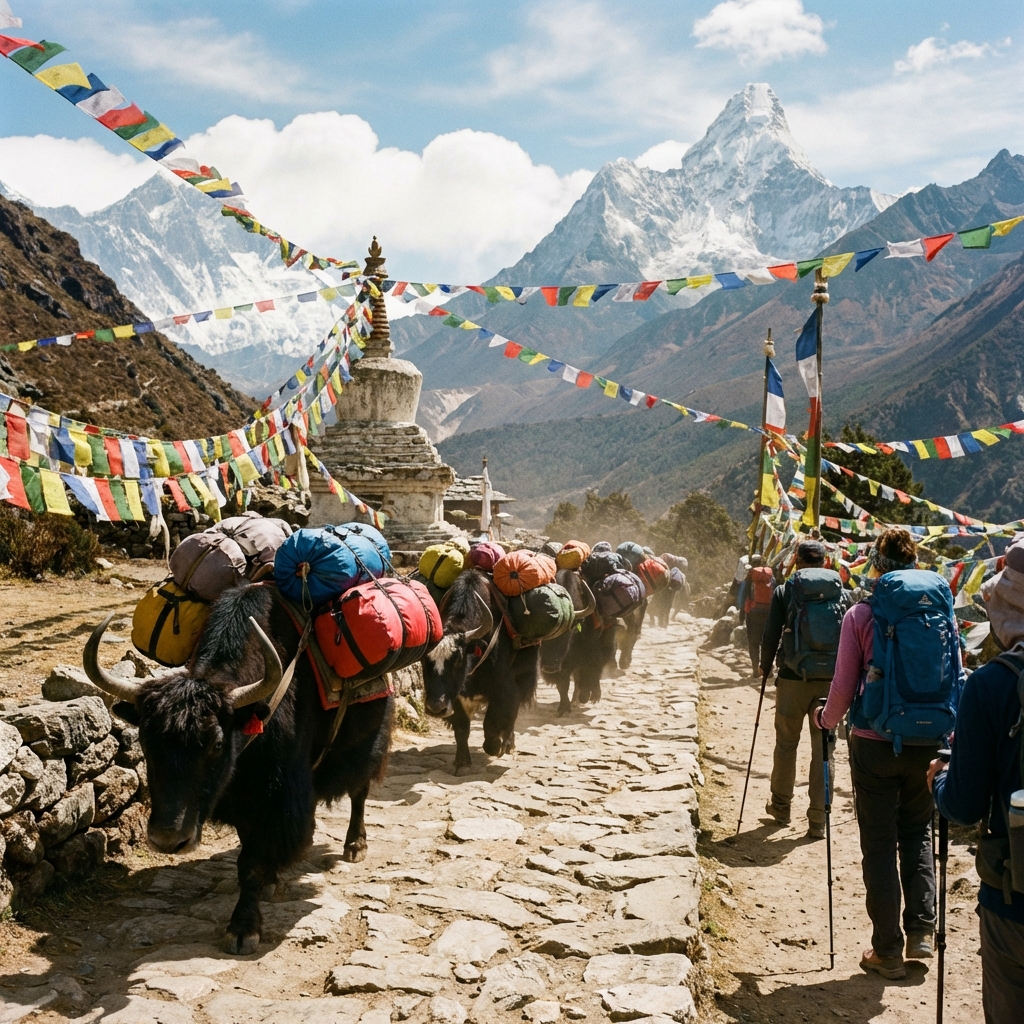
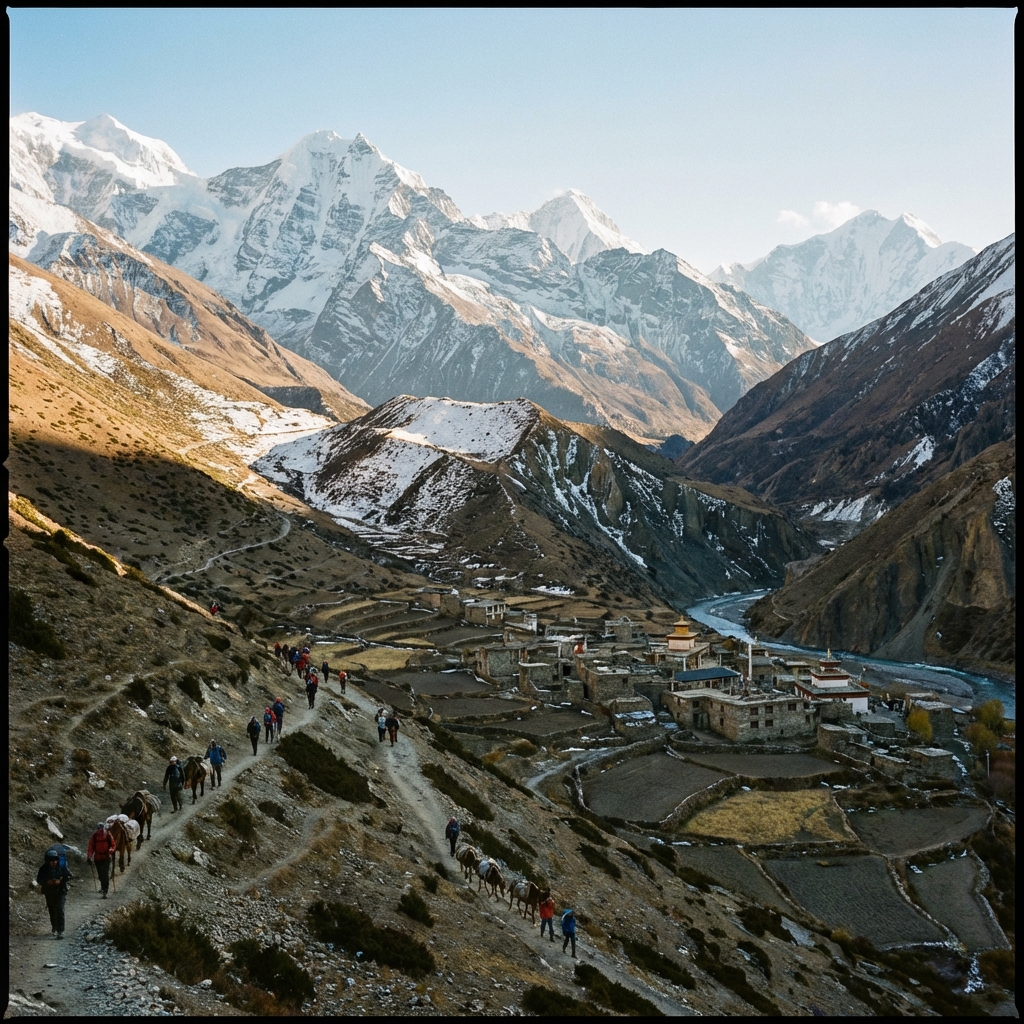
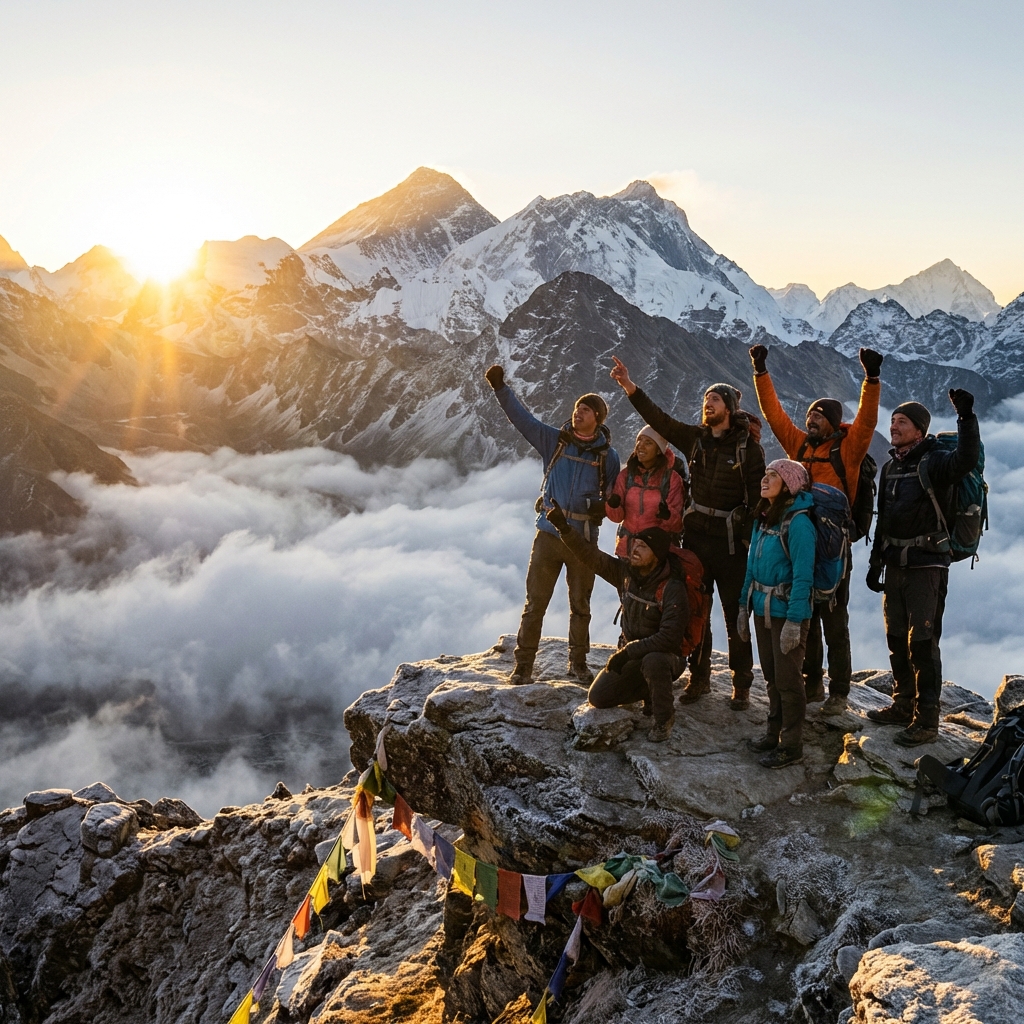
The Three Passes Trek is one of Nepal's most demanding non-technical treks. It crosses three high passes in the Khumbu region, each above 5,300 meters, links the major valleys of the Everest region, and typically includes visits to both Everest Base Camp and Gokyo Lakes. It is the trek that experienced Himalayan trekkers graduate to after completing routes like EBC or the Annapurna Circuit.
There is no point in softening the assessment: this is a hard trek. Not hard in the "it is harder than you expect" way that applies to EBC. Hard in the "this requires serious fitness, high-altitude experience, mental resilience, and potentially some basic mountaineering skills" way. The Three Passes Trek has lower completion rates than any standard Nepal trek, and the reasons are physical, technical, and environmental.
If you are considering this trek, you need to know exactly what you are getting into.
Why the Three Passes Trek Is in a Different Category
The Three Passes Trek is not just a harder version of EBC. It is fundamentally different in the type and magnitude of challenge it presents. Understanding this distinction is critical for anyone considering the route.
The Altitude Exposure Is Extreme and Sustained
On a standard EBC trek, you spend 7-9 days above 4,000 meters and cross above 5,000 meters on two days (EBC day and Kala Patthar day). On the Three Passes Trek, you spend 14-16 days above 4,000 meters and cross above 5,000 meters on at least six separate days (three pass crossings plus EBC, Kala Patthar, and potentially Gokyo Ri).
This sustained exposure at extreme altitude creates cumulative physiological stress that goes well beyond what a standard EBC trek demands. Your body never fully recovers between high-altitude efforts. Sleep quality remains poor for weeks. Appetite suppression is persistent. Weight loss of 3-5 kilograms over the course of the trek is common even with conscious effort to eat.
At 5,000 meters (a daily occurrence on this trek): Oxygen availability is approximately 53% of sea level. Walking pace is reduced to roughly half of what you would manage at lower elevation. Every pass crossing is an extended effort at this level or above.
At 5,535 meters (Kongma La summit): Oxygen availability is approximately 50% of sea level. Rest breaks are frequent and necessary. Cognitive function is measurably impaired. Simple tasks take disproportionate effort.
Cumulative Altitude Stress Is the Real Challenge
The Three Passes Trek's difficulty is not any single day in isolation. It is the accumulation of weeks at extreme altitude. By the time you reach the third pass (Renjo La), your body has been operating at half capacity for over two weeks. Fatigue, sleep debt, and caloric deficit compound every subsequent effort. Trekkers who completed EBC comfortably sometimes fail on the Three Passes Trek not because any individual day exceeds their capacity, but because the sustained duration at altitude exceeds their body's ability to cope.
Technical Demands Exceed Standard Trekking
Unlike EBC, the Annapurna Circuit, or Langtang, the Three Passes Trek includes sections that require more than basic walking skills.
Kongma La (5,535m): The most technical of the three passes. The approach from the Khumbu Valley side involves scrambling over large boulders and rocky terrain. The descent on the far side includes steep, loose scree sections. In snow or ice conditions, the route can require crampons and an ice axe. Basic scrambling ability and confidence on exposed terrain are necessary.
Cho La (5,420m): The pass includes a glacier crossing on the descent toward Gokyo. The glacier section is relatively short (30-45 minutes) but involves walking on ice. In good conditions with a well-established trail across the glacier, it is manageable. In poor conditions (fresh snow obscuring crevasses, ice without a clear path), it becomes genuinely dangerous. Crampons are recommended, and a guide with glacier experience is essential.
Renjo La (5,360m): The least technical of the three passes. The approach and descent are steep but non-technical. In clear conditions, it is a hard walk rather than a technical challenge. In snow, the steep descent can be treacherous.
Cho La Glacier Is Not a Walk in the Park
The glacier crossing on Cho La is the most technically demanding section of the Three Passes Trek. While commercial operators and guides navigate it safely thousands of times per season, the glacier presents real hazards: hidden crevasses after fresh snow, slippery ice surface, and steep sections that require careful foot placement. Trekkers without any glacier or snow travel experience should have a guide and should carry or be provided with crampons. Multiple fatalities have occurred on the Cho La glacier, almost always involving unguided trekkers attempting the pass in poor conditions.
Duration Creates Psychological and Physical Endurance Demands
Eighteen to twenty-one days of consecutive trekking at high altitude is a fundamentally different psychological challenge than eleven to fourteen days on EBC. The additional week amplifies every difficulty factor.
Physical fatigue: Muscles have more time to break down and less recovery time. Joint stress, particularly on knees and ankles, accumulates. Blisters, minor injuries, and general soreness that would be manageable on a shorter trek become chronic issues over three weeks.
Mental fatigue: The novelty and excitement of Himalayan trekking sustain motivation for approximately seven to ten days. After that, the routine of cold mornings, long walking days, basic food, and physical discomfort requires genuine mental toughness to push through. The Three Passes Trek demands this sustained effort for nearly three weeks.
Illness probability: The probability of encountering gastrointestinal illness, respiratory infection, or other health issues increases with trip duration. On a two-week trek, you might stay healthy. Over three weeks at altitude with basic sanitation, the odds of at least one illness episode increase significantly.
Pass-by-Pass Difficulty Analysis
Pass 1: Kongma La (5,535m) - The Technical One
Approach side: Khumbu Valley (from Chukhung, 4,730m) Exit side: Lobuche (4,940m) Elevation gain from camp: Approximately 805 meters Elevation loss after pass: Approximately 595 meters Crossing time: 8-10 hours (full day) Technical rating: The most technical of the three passes
The climb: From Chukhung, the trail ascends steeply through moraine and rocky terrain. The upper section involves scrambling over large boulders, with some route-finding required. The final approach to the pass is steep and loose. In snow or ice conditions, the difficulty increases substantially, potentially requiring crampons and ice axe.
The summit: A narrow saddle at 5,535 meters with views of Everest, Lhotse, and Makalu. The oxygen is thin and rest is necessary before beginning the descent.
The descent: Steep scree descent toward the Khumbu Glacier. The loose footing demands concentration and good balance. The trail eventually reaches the lateral moraine and follows it to Lobuche.
Who finds it hardest: Trekkers uncomfortable with scrambling and exposure. The boulder sections require using hands for balance and occasionally pulling yourself up. Those with a fear of heights may find the exposed sections stressful.
Kongma La Direction Matters
Most itineraries cross Kongma La from Chukhung to Lobuche (east to west). This direction puts the technical scrambling on the ascent, where you can see your route and use your hands effectively. Crossing in the opposite direction puts the scrambling on the descent, which is harder and more dangerous on loose terrain. If your operator offers the reverse direction, ask why and consider whether it is the right choice.
Pass 2: Cho La (5,420m) - The Glacier One
Approach side: Dzongla (4,830m) Exit side: Dragnag/Gokyo side (4,700m) Elevation gain from camp: Approximately 590 meters Elevation loss after pass: Approximately 720 meters Crossing time: 7-9 hours (full day) Technical rating: Moderate (glacier crossing)
The climb: From Dzongla, the trail ascends through rocky moraine toward the pass. The final section steepens considerably with some rocky sections. The approach is physically demanding but non-technical.
The summit and glacier: The pass itself is a rocky saddle. The descent immediately encounters the Cho La glacier, a relatively small but active glacier that must be crossed. The glacier section takes 30-45 minutes in good conditions. The surface varies from snow-covered ice to exposed blue ice depending on season and recent weather. A well-established trail across the glacier exists in peak season, marked by footprints and occasionally by flags.
The descent: After the glacier, a steep moraine descent leads to the Gokyo Valley. The terrain is rough and demands attention.
Who finds it hardest: Trekkers with no ice or snow travel experience. The glacier, while short, is unforgiving of mistakes. Slipping on ice at 5,400 meters with a heavy pack can result in serious injury. Those who have never worn crampons or walked on ice should practice before attempting the trek.
Pass 3: Renjo La (5,360m) - The Endurance One
Approach side: Gokyo (4,790m) Exit side: Thame side (various camps around 4,300-4,500m) Elevation gain from camp: Approximately 570 meters Elevation loss after pass: Approximately 860-1,060 meters Crossing time: 7-9 hours (full day) Technical rating: Non-technical (steep hiking only)
The climb: From Gokyo, the trail ascends steeply through rocky terrain to the pass. The path is clear in good conditions but steep and demanding. There is no scrambling or glacier travel.
The summit: Renjo La offers extraordinary views of Everest, Lhotse, Makalu, Cho Oyu, and the turquoise Gokyo Lakes below. Many trekkers consider this the most scenic pass of the three.
The descent: Long, steep descent toward Thame. The trail drops substantially and the extended downhill is punishing on exhausted legs. The descent can take 4-5 hours and crosses through several small settlements.
Who finds it hardest: Everyone, by this point. Renjo La is the least technical pass, but it comes after two weeks of high-altitude trekking. Cumulative fatigue makes even this "straightforward" pass feel extraordinarily difficult. Trekkers who found Kongma La and Cho La manageable often rate Renjo La as their subjectively hardest day simply because their bodies are depleted.
The Third Pass Is Always the Hardest
Regardless of the objective difficulty rating of each pass, the third one you cross will be the most challenging because your body is at its most fatigued. Plan your itinerary so that the day before and after the third pass include adequate rest. If you are on a counterclockwise route (the most common direction), Renjo La is your final pass. Budget your energy accordingly and do not assume that because it is the lowest of the three, it will be the easiest.
Day-by-Day Difficulty Overview
This uses a standard 20-day counterclockwise itinerary. Difficulty rated 1-10.
| Day | Route | Altitude | Difficulty |
|---|---|---|---|
| 1 | Lukla to Phakding | 2,610m - 2,652m | 3/10 |
| 2 | Phakding to Namche Bazaar | 2,652m - 3,440m | 5/10 |
| 3 | Namche acclimatization | 3,440m (day hike to 3,880m) | 3/10 |
| 4 | Namche to Tengboche | 3,440m - 3,867m | 4/10 |
| 5 | Tengboche to Dingboche | 3,867m - 4,410m | 6/10 |
| 6 | Dingboche acclimatization | 4,410m (day hike to ~4,800m) | 4/10 |
| 7 | Dingboche to Chukhung | 4,410m - 4,730m | 5/10 |
| 8 | Kongma La crossing to Lobuche | 4,730m - 5,535m - 4,940m | 9/10 |
| 9 | Lobuche to Gorak Shep to EBC | 4,940m - 5,164m - 5,364m | 8/10 |
| 10 | Gorak Shep (Kala Patthar) to Dzongla | 5,164m - 5,545m - 4,830m | 8/10 |
| 11 | Cho La crossing to Dragnag | 4,830m - 5,420m - 4,700m | 9/10 |
| 12 | Dragnag to Gokyo | 4,700m - 4,790m | 3/10 |
| 13 | Gokyo (Gokyo Ri day hike) | 4,790m (day hike to 5,357m) | 7/10 |
| 14 | Rest day at Gokyo | 4,790m | 2/10 |
| 15 | Renjo La crossing to Lungden | 4,790m - 5,360m - 4,380m | 8/10 |
| 16 | Lungden to Thame | 4,380m - 3,820m | 4/10 |
| 17 | Thame to Namche Bazaar | 3,820m - 3,440m | 3/10 |
| 18 | Namche Bazaar to Lukla | 3,440m - 2,860m | 4/10 |
The Three Hardest Consecutive Days
Days 8-11 (Kongma La, EBC, Kala Patthar/Cho La) represent the crux of the entire trek. Four consecutive days rated 8/10 or 9/10, all above 4,700 meters sleeping altitude, with two pass crossings and two peak-altitude destinations. This four-day stretch is as demanding as anything in Nepal trekking outside of technical mountaineering. If you can get through these four days, the remainder of the trek, while still hard, is psychologically downhill.
Three Passes Compared to Other Trek Challenges
Three Passes vs. Standard EBC Trek
| Factor | Three Passes Trek | Standard EBC |
|---|---|---|
| Duration | 18-21 days | 12-14 days |
| Maximum altitude | 5,535m (Kongma La) | 5,545m (Kala Patthar) |
| Days above 5,000m | 6+ days | 2 days |
| Days above 4,000m | 14-16 days | 7-9 days |
| Technical sections | Scrambling, glacier | None |
| Cumulative elevation gain | ~8,500-9,000m | ~4,000m |
| Pass crossings | 3 (all above 5,300m) | 0 |
| Overall difficulty | Very challenging / Expert | Challenging |
Key difference: The Three Passes Trek roughly doubles the altitude exposure, duration, and cumulative effort of standard EBC. It adds technical elements that EBC lacks entirely. Standard EBC is a challenging trek. Three Passes is an expedition-grade undertaking.
Three Passes vs. Annapurna Circuit
| Factor | Three Passes Trek | Annapurna Circuit |
|---|---|---|
| Duration | 18-21 days | 12-18 days |
| Maximum altitude | 5,535m | 5,416m (Thorong La) |
| Pass crossings | 3 | 1 |
| Days above 4,000m | 14-16 | 3-5 |
| Technical difficulty | Moderate (glacier, scrambling) | None |
| Sustained altitude stress | Very high | Moderate (one big day) |
| Overall difficulty | Very challenging | Challenging |
Key difference: The Annapurna Circuit has one hard day (Thorong La crossing) with the rest at moderate altitude. The Three Passes Trek has three hard pass days plus multiple other high-altitude days, creating a fundamentally different and harder challenge.
Fitness Requirements: This Is Not Optional
Absolute Minimum Requirements
You must be able to:
- Hike 8-10 hours with a 10 kg daypack over steep, rough terrain
- Complete 5-6 consecutive days of 6-8 hour hikes without significant physical breakdown
- Climb 800-1,000 meters of elevation in a single day and repeat similar efforts on consecutive days
- Scramble over large boulders using hands and feet with confidence
- Walk on uneven, loose terrain (scree, moraine) for extended periods
- Function mentally and physically after multiple nights of poor sleep
Recommended Fitness Targets
- Complete a multi-day trek of 7+ days at altitude (EBC, Annapurna Circuit, or equivalent) prior to attempting the Three Passes
- Hike 10+ hours with a pack over rugged terrain
- Complete 7 consecutive hiking days during a training block
- Run or sustain cardio for 90 minutes
- Perform strength training focused on legs and core 3 times per week for at least 12 weeks
- Have experience with basic scrambling or via ferrata
Required Experience
The Three Passes Trek is not a first Himalayan trek. You should have:
Previous high-altitude experience: Successfully trekked above 5,000 meters, ideally on EBC, the Annapurna Circuit (including Thorong La), or Manaslu Circuit. You need to know how your body responds to extreme altitude.
Multi-day trekking endurance: Completed a trek of 10+ days. The physical and psychological demands of three weeks of trekking are qualitatively different from one week.
Comfort on exposed terrain: The Kongma La scramble and Cho La glacier require confidence on non-trail terrain. If you panic on exposed ridgelines or cannot maintain composure on loose rock, this trek will be miserable and potentially dangerous.
For detailed physical preparation, follow our EBC training plan with added intensity, supplemented by our cardiovascular fitness guide and strength training guide.
Do EBC First, Then Come Back for Three Passes
The single best preparation for the Three Passes Trek is to have completed the standard EBC trek. EBC teaches you how your body handles altitude, gives you experience with the Khumbu region logistics, and builds the specific endurance base that the Three Passes Trek demands. Trekkers who attempt Three Passes as their first Himalayan trek have significantly lower completion rates than those who have prior high-altitude experience. Consider EBC as your prerequisite course.
Equipment Differences from Standard Treks
The Three Passes Trek requires gear beyond what standard EBC or Annapurna Circuit trekkers carry.
Crampons: Lightweight trekking crampons (microspikes at minimum) for the Cho La glacier. Your guide may provide these, but confirm in advance.
Gaiters: The scree and snow conditions on multiple passes make gaiters valuable for keeping debris out of boots and providing warmth in snow.
Technical layering: You will spend more time above 5,000 meters than on any standard trek. A comprehensive layering system rated for extended exposure at extreme altitude is essential, not optional.
Emergency bivouac gear: The passes are long crossings. If weather or injury delays you, you may need to bivouac above 5,000 meters. Carry an emergency shelter (bivvy bag or space blanket as a minimum).
A Guide Is Not Optional on This Trek
While experienced trekkers can navigate standard EBC or the Annapurna Circuit independently, the Three Passes Trek demands a guide. Cho La glacier navigation, Kongma La route-finding in poor visibility, and weather-dependent pass crossing decisions require local expertise. The cost of a competent high-altitude guide is small compared to the risk of navigating technical terrain at extreme altitude without one. Multiple deaths on the Three Passes route have involved unguided trekkers making poor decisions on passes.
Weather Windows and Timing
Pass crossings are weather-dependent. A clear day makes each pass manageable. Bad weather can make them dangerous or impossible.
Optimal timing: Early October to mid-November offers the most stable weather windows. Spring (late March to May) is the second-best option.
Pass closure risk: Any of the three passes can be closed by snow, ice, or severe weather for 1-3 days at a time. Your itinerary must include buffer days for weather delays. Rigid schedules with no flexibility are recipes for dangerous decision-making.
Early morning crossings: All three passes should be crossed as early as possible (pre-dawn starts) to avoid afternoon weather deterioration. Cloud and wind typically build after midday at these altitudes.
For detailed route planning, see our Three Passes Trek itinerary guide. For individual pass information, see the Kongma La Pass guide, Cho La Pass guide, and Renjo La Pass guide.
Frequently Asked Questions: Three Passes Difficulty
General Difficulty Questions
Q: On a scale of 1-10, how hard is the Three Passes Trek?
For an experienced trekker who has completed EBC and trains specifically: 8/10. For someone attempting it as a first major trek: it should not be attempted. This is consistently rated among the top 5 hardest non-technical treks in Nepal.
Q: What is the hardest single day on the Three Passes Trek?
Kongma La crossing day (Day 8 on the itinerary above) is typically rated the hardest due to the technical scrambling at extreme altitude. However, many trekkers subjectively rate the Kala Patthar/Cho La consecutive days (Days 10-11) as harder because the cumulative fatigue compounds the physical demands.
Q: Can I skip one pass and still do the trek?
Technically, yes. You can cross two passes and use alternative valley routes to connect sections. However, this defeats the purpose of the Three Passes Trek. If the difficulty of one pass concerns you, the trek may not be appropriate for your current experience level.
Q: How does Three Passes compare to Manaslu Circuit difficulty?
The Manaslu Circuit is challenging but involves one pass (Larkya La, 5,160m) and is predominantly walking on non-technical terrain. The Three Passes Trek has three higher passes with technical elements. Most experienced trekkers rate Three Passes as significantly harder than Manaslu. However, Manaslu's remoteness and limited rescue options add a different type of difficulty.
Q: What is the completion rate for the Three Passes Trek?
Reliable statistics are limited, but experienced operators report completion rates (all three passes) of approximately 60-75% for guided groups. The most common reason for incomplete crossings is weather closing a pass, followed by altitude sickness and exhaustion.
Altitude and Safety Questions
Q: How many days am I above 5,000 meters?
On a standard itinerary, you cross above 5,000 meters on six or more separate days: Kongma La, EBC day, Kala Patthar, Cho La, Gokyo Ri, and Renjo La. You sleep above 4,700 meters for approximately 5-7 nights.
Q: Should I take Diamox for the Three Passes Trek?
Many experienced trekkers and guides recommend prophylactic Diamox for the Three Passes Trek, starting 24-48 hours before ascending above 3,500 meters. The sustained altitude exposure and multiple high-altitude efforts make altitude sickness management critical. Discuss with a doctor experienced in altitude medicine.
Q: What if I get altitude sickness on the trek?
Descent is the primary treatment for AMS. From most points on the Three Passes route, you can descend to Namche Bazaar within 1-2 days. Helicopter evacuation is available from multiple locations in the Khumbu, weather permitting. Carry comprehensive travel insurance covering helicopter evacuation to at least 6,000 meters.
Q: Has anyone died on the Three Passes Trek?
Yes. Fatalities occur, primarily from falls on technical pass sections, altitude-related illness (HACE/HAPE) when symptoms were ignored, and exposure/hypothermia from being caught on passes in deteriorating weather. These deaths are almost always preventable with competent guiding, conservative decision-making, and willingness to turn back.
Preparation Questions
Q: How long should I train for the Three Passes Trek?
Minimum 12 weeks of specific training for experienced trekkers who already have a fitness base. Sixteen or more weeks for those building fitness from a moderate level. Training should include long hiking days, back-to-back weekend efforts, strength training, and ideally some scrambling practice.
Q: Do I need mountaineering experience?
No formal mountaineering experience is required, but you need comfort and competence on non-trail terrain. Scrambling over boulders, walking on glacier ice with crampons, and navigating loose scree at altitude are part of the trek. If these descriptions make you uncomfortable, gain experience on easier terrain first.
Q: Can I train at sea level for a trek that reaches 5,535 meters?
Yes, but with limitations. You can build the cardiovascular fitness, muscular endurance, and mental toughness at sea level. You cannot simulate altitude physiology. If you live at sea level, your body will still need to acclimatize on the trek. What sea-level training does is ensure your body is strong enough that altitude is the only limiting factor rather than one of several.
Q: What is the best previous trek to prepare for Three Passes?
The standard EBC trek is the ideal prerequisite. It exposes you to the Khumbu region, altitude above 5,000 meters, multi-day trekking logistics, and the specific environment you will encounter on the Three Passes. The Annapurna Circuit with Thorong La is the second-best preparation. Either of these should be completed within the 1-2 years before your Three Passes attempt.
Q: Should I hire a porter in addition to a guide?
Yes. Carrying a heavy pack over three 5,000-meter passes dramatically increases difficulty and injury risk. A porter allows you to carry a light daypack (5-7 kg) while your main gear is carried separately. This weight reduction meaningfully increases your chances of completing all three passes comfortably.
For the complete route plan, see our Three Passes Trek itinerary. For individual pass preparation, read the Kongma La guide, Cho La guide, and Renjo La guide. For physical preparation, follow the EBC training plan with added intensity and duration.