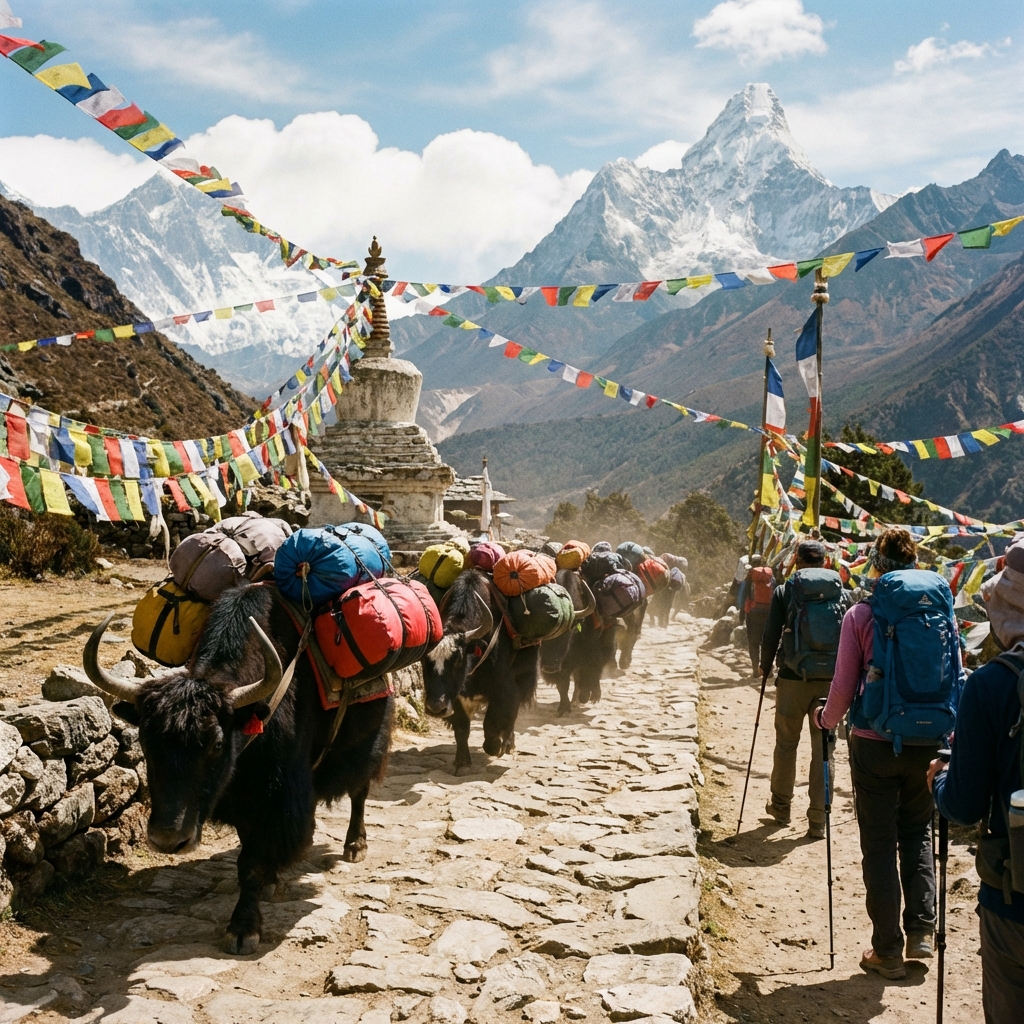
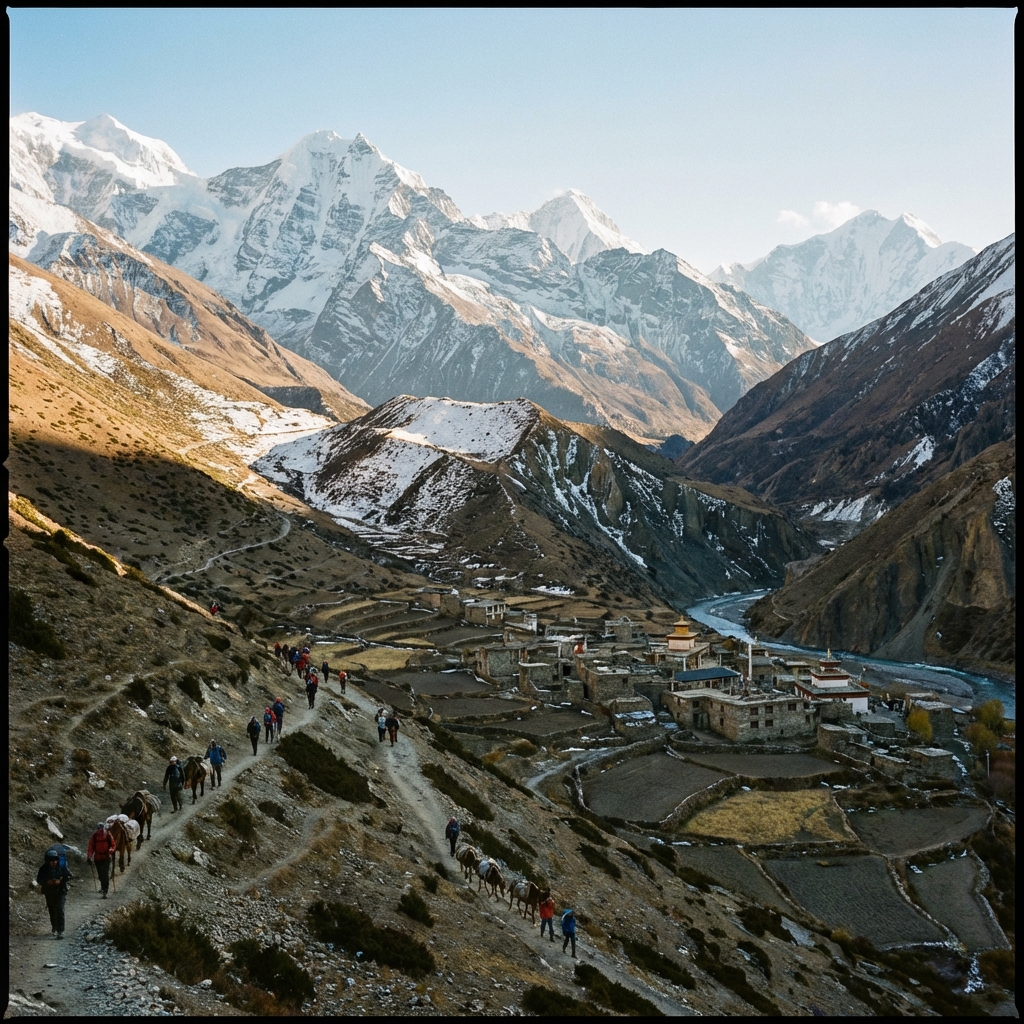
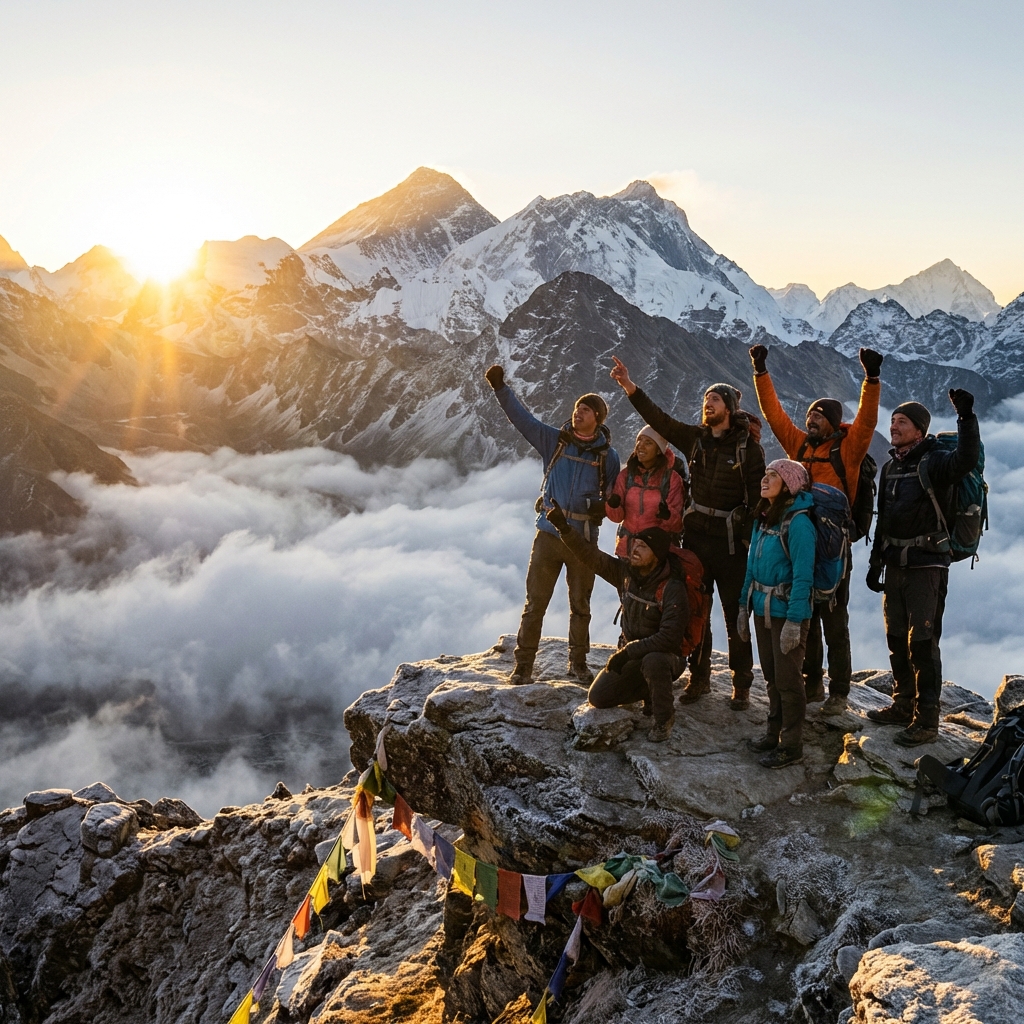
Tucked behind the towering massifs of the Ganesh and Sringi Himal ranges, Tsum Valley is one of Nepal's most extraordinary hidden treasures. This U-shaped glacial valley in northern Gorkha district remained closed to foreign visitors until 2008, preserving a way of life that has remained largely unchanged for centuries. Even today, fewer than 2,000 trekkers visit each year, making it one of the quietest and most culturally rich trekking destinations in the entire Himalaya.
The name "Tsum" derives from the Tibetan word "Tsombo," meaning vivid. And vivid it is: ancient monasteries perched on cliff edges, prayer flags strung across deep gorges, mani walls stretching hundreds of meters along the trail, and villagers who still live by the rhythms of Tibetan Buddhist tradition. This is not a trek you do for the physical challenge alone. You come to Tsum Valley for a journey into a living, breathing culture that few outsiders have ever witnessed.
This comprehensive guide covers everything you need to plan your Tsum Valley trek in 2026, from permits and costs to day-by-day itineraries and cultural etiquette. Whether you are combining Tsum with the Manaslu Circuit or exploring it as a standalone destination, you will find all the practical information you need right here.
Why Tsum Valley Is Special
A Beyul: The Sacred Hidden Valley
In Tibetan Buddhist tradition, certain valleys are designated as "beyul" or hidden sacred lands, places of refuge blessed by Guru Rinpoche (Padmasambhava) in the 8th century. Tsum Valley is one of these rare beyul. The concept is not merely symbolic. For centuries, the valley's geographic isolation, hemmed in by passes above 5,000 meters and narrow river gorges, genuinely kept it hidden from the outside world.
The spiritual significance of this designation permeates daily life. Violence and the taking of life, including hunting and fishing, are strictly prohibited in the valley. You will notice that even insects are treated with care. This ethos of non-violence creates an atmosphere of extraordinary peace and tranquility that visitors consistently describe as unlike anywhere else they have trekked.
Preserved Tibetan Buddhist Culture
While Nepal's more accessible regions have inevitably evolved with tourism, Tsum Valley's late opening and continued low visitor numbers have preserved its cultural heritage to a remarkable degree. The valley's residents are ethnic Tsumba people with deep Tibetan roots. They speak a Tibetan dialect, practice Tibetan Buddhism, and maintain customs including polyandry (multiple husbands sharing a wife), a practice that has largely disappeared elsewhere in Nepal.
Minimal Tourism Impact
Even in the peak season months of October and November, you will encounter very few other trekking groups on the trail. This is partly because Tsum Valley requires a restricted area permit, which adds cost and logistical complexity, and partly because the valley has received far less marketing attention than routes like Everest Base Camp or the Annapurna Circuit. For trekkers seeking genuine solitude and authentic cultural interaction, this low-traffic environment is a major draw.
Tsum Valley vs. Upper Mustang
Tsum Valley is sometimes compared to Upper Mustang, another restricted Tibetan Buddhist enclave in Nepal. However, there are important differences. Upper Mustang's restricted area permit costs USD 50 per person per day (no minimum days required) (compared to roughly $35 per week for Tsum). Upper Mustang also receives significantly more tourists. Tsum Valley offers a similar cultural depth at a fraction of the cost and with far fewer visitors.
Quick Trek Overview
5-7 days (extension), 14-18 days (with Manaslu)
3,700m (Mu Gompa)
Moderate
March-May, September-November
Restricted Area Permit + MCAP
$1,200-$2,500 (guided trek)
Yes (mandatory for restricted area)
Basic tea houses and homestays
Tsum Valley Itinerary Options
Tsum Valley can be trekked as a standalone destination or, more commonly, as an extension to the Manaslu Circuit trek. The valley branches north from the main Manaslu Circuit trail at the village of Lokpa (also spelled Lho-kpa or Chumling junction).
Option 1: Tsum Valley as Manaslu Extension (14-18 Days)
This is the most popular approach. You trek the standard Manaslu Circuit route from Soti Khola (or Arughat), detour north into Tsum Valley for 5-7 days, then rejoin the Manaslu Circuit and continue over the Larkya La (5,160m) to complete the full circuit.
Sample Combined Itinerary:
| Day | Route | Altitude | Hours |
|---|---|---|---|
| 1 | Kathmandu to Soti Khola (drive) | 730m | 7-8 hrs drive |
| 2 | Soti Khola to Machha Khola | 870m | 6-7 hrs |
| 3 | Machha Khola to Jagat | 1,340m | 6-7 hrs |
| 4 | Jagat to Lokpa (Tsum junction) | 1,860m | 5-6 hrs |
| 5 | Lokpa to Chhekampar | 2,850m | 6-7 hrs |
| 6 | Chhekampar to Nile | 3,360m | 4-5 hrs |
| 7 | Nile to Mu Gompa (day trip) | 3,700m | 5-6 hrs round trip |
| 8 | Nile to Chhokang Paro | 3,010m | 4-5 hrs |
| 9 | Chhokang Paro exploration day | 3,010m | 3-4 hrs |
| 10 | Chhokang Paro to Lokpa | 1,860m | 6-7 hrs |
| 11 | Lokpa to Namrung | 2,630m | 5-6 hrs |
| 12 | Namrung to Samagaon | 3,530m | 6-7 hrs |
| 13 | Samagaon rest/acclimatization day | 3,530m | Optional hikes |
| 14 | Samagaon to Samdo | 3,860m | 4-5 hrs |
| 15 | Samdo to Dharamsala (Larkya BC) | 4,460m | 4-5 hrs |
| 16 | Dharamsala to Bimthang via Larkya La | 3,590m | 8-10 hrs |
| 17 | Bimthang to Tilije | 2,300m | 5-6 hrs |
| 18 | Tilije to Besisahar (drive to Kathmandu) | 760m | Drive |
Option 2: Tsum Valley Only (10-12 Days)
For trekkers focused exclusively on the cultural experience, a dedicated Tsum Valley trek avoids the high-altitude challenge of the Larkya La pass. This option is ideal for those with limited time or who prefer a moderate-altitude cultural immersion.
Sample Tsum-Only Itinerary:
| Day | Route | Altitude | Hours |
|---|---|---|---|
| 1 | Kathmandu to Soti Khola (drive) | 730m | 7-8 hrs drive |
| 2 | Soti Khola to Machha Khola | 870m | 6-7 hrs |
| 3 | Machha Khola to Jagat | 1,340m | 6-7 hrs |
| 4 | Jagat to Lokpa | 1,860m | 5-6 hrs |
| 5 | Lokpa to Chhekampar | 2,850m | 6-7 hrs |
| 6 | Chhekampar to Nile | 3,360m | 4-5 hrs |
| 7 | Nile to Mu Gompa and back | 3,700m | 5-6 hrs round trip |
| 8 | Nile to Chhokang Paro | 3,010m | 4-5 hrs |
| 9 | Chhokang Paro exploration | 3,010m | 3-4 hrs |
| 10 | Chhokang Paro to Lokpa | 1,860m | 6-7 hrs |
| 11 | Lokpa to Jagat | 1,340m | 5-6 hrs |
| 12 | Jagat to Soti Khola, drive to Kathmandu | 730m | Trek + drive |
Timing Your Tsum Detour
If combining with the Manaslu Circuit, enter Tsum Valley on the way up rather than the way down. Your body will be better acclimatized for the Larkya La pass after spending several days at 3,000-3,700m in Tsum. Many trekkers who skip this acclimatization opportunity struggle more at the pass.
Key Villages and Cultural Highlights
Chhekampar (2,850m)
Chhekampar is the first major settlement as you enter Tsum Valley proper, and it immediately signals that you have crossed into a different world. The village sits on a broad, grassy plateau surrounded by dramatic peaks. Stone houses with flat roofs and prayer flags line narrow lanes. The Milarepa Gompa, associated with the legendary 11th-century Tibetan yogi Milarepa, is the primary cultural attraction. According to local tradition, Milarepa meditated in a cave near the gompa, and you can visit the cave site.
What to see:
- Milarepa Gompa and meditation cave
- Ancient mani walls (some exceeding 100 meters in length)
- Traditional Tsumba stone houses with intricate wood carvings
- Local school where children learn both Tibetan script and Nepali
Mu Gompa (3,700m)
Mu Gompa (also written as Mu Monastery) is the spiritual crown jewel of Tsum Valley and the highest settlement in the region. This active monastery, home to approximately 100 nuns, sits in a stunning amphitheater of peaks near the Tibetan border. The monastery complex includes ancient scriptures, Buddhist paintings, and a meditation retreat center. The surrounding landscape is stark, high-altitude terrain dotted with yak herds.
What to see:
- The nunnery and its ancient Buddhist texts
- Panoramic views of Ganesh Himal and Sringi Himal
- Yak pastures and high-altitude grasslands
- Border area views toward Tibet
Visiting Mu Gompa
Most trekkers visit Mu Gompa as a day trip from Nile. Start early in the morning, as afternoon clouds often roll in and obscure the mountain views. Bring a small offering for the monastery (a kata scarf, a small cash donation, or packaged food items are all appropriate). Always ask permission before photographing nuns or religious ceremonies.
Nile (3,360m)
Nile is the base from which most trekkers explore upper Tsum Valley, including the day trip to Mu Gompa. The village has a more developed feel than other Tsum settlements, with several lodges and a small health post. The Rachen Gompa, set dramatically against a cliff face, is one of the most photogenic monasteries in the entire Himalaya.
What to see:
- Rachen Gompa (cliff monastery)
- Traditional weaving demonstrations
- Himalayan views from the village viewpoint
- Ancient trade route markers and chortens
Chhokang Paro (3,010m)
Often called the "twin villages," Chhokang Paro consists of two settlements separated by a river. This is an excellent base for understanding daily Tsumba life. The village has an ancient gompa, extensive mani walls, and residents who are particularly welcoming to visitors. The surrounding fields, terraced up the hillsides, are planted with barley, buckwheat, and potatoes.
What to see:
- Twin village layout and connecting bridge
- Ancient gompa with historical Buddhist artwork
- Longest mani wall in Tsum Valley (estimated at over 150 meters)
- Traditional agricultural practices and seasonal festivals
Ripchet and Lar (2,200-2,400m)
These lower valley settlements are your first taste of Tsum culture as you enter from the Manaslu trail junction. The trail passes through dense forests with increasingly dramatic narrow gorge sections. The villages here are smaller and more basic but provide authentic homestay experiences.
Respect the Beyul
Tsum Valley is a sacred beyul. Visitors are expected to respect this by not killing any animals or insects, not collecting plants or flowers, not playing loud music, walking clockwise around all mani walls, chortens, and prayer wheels, and dressing modestly. Removing any artifacts, stones from mani walls, or religious objects is strictly prohibited and deeply offensive to local residents.
Permits and Regulations
Tsum Valley falls within the Manaslu Conservation Area and is classified as a restricted trekking area. This means you need two separate permits, and independent trekking is not allowed.
Required Permits
1. Manaslu Conservation Area Permit (MCAP)
- Cost: NPR 3,000 (approximately $23) for the first week, NPR 3,000 per additional week
- Obtained through your trekking agency in Kathmandu
- Processing time: 1-2 working days
2. Restricted Area Permit (RAP)
- Cost: $35 per person per week (September-November), $25 per person per week (December-August)
- Must be arranged through a licensed trekking agency
- Requires a no minimum group size (solo allowed with guide) trekkers (you and at least one other person)
- A licensed guide is mandatory
For more details on the restricted area permit process, see our Manaslu Restricted Area Permit guide.
Mandatory Guide and Group Requirements
Unlike popular trekking routes in the Annapurna and Everest regions, Tsum Valley cannot be trekked independently. You must:
- Book through a registered Nepal trekking agency
- Have a licensed trekking guide accompany your group
- Trek with at least 2 people in your group (solo trekkers must find a trekking partner or pay for a "phantom" second trekker's permit)
Finding a Trekking Partner
If you are traveling solo and need to form a group of two, ask your trekking agency if they have other solo trekkers looking for partners. Several online forums and Facebook groups (such as "Nepal Trekking Partners" and "Manaslu Circuit Trekkers") are also excellent resources for connecting with potential trekking companions. Agencies often combine solo trekkers at no extra charge during peak season.
Permit Checkpoints
Your permits will be checked at multiple points along the trek:
- Jagat (entry to Manaslu Conservation Area)
- Lokpa/Chumling junction (entry to Tsum Valley restricted area)
- Various checkpoints within Tsum Valley
- Any point where police or army checkpoints are established
Always carry original permits and multiple photocopies. Your guide will typically handle the checkpost formalities.
Costs and Budget Breakdown
Tsum Valley treks are more expensive than standard Annapurna or Langtang treks because of the mandatory guide and agency requirements, plus the additional permit fees. Here is a realistic cost breakdown for 2026.
Budget Breakdown (per person, 14-16 day Manaslu + Tsum Combined)
| Category | Budget | Mid-Range | Comfortable |
|---|---|---|---|
| Agency fee (guide, permits, transport) | $800-$1,000 | $1,200-$1,600 | $1,800-$2,500 |
| Accommodation (tea houses) | Included | Included | Included |
| Meals (tea house meals) | $15-$20/day | $20-$25/day | $25-$35/day |
| MCAP + Restricted Area Permits | $60-$90 | $60-$90 | $60-$90 |
| Porter (optional) | $15-$20/day | $15-$20/day | Included |
| Tips (guide + porter) | $100-$150 | $150-$250 | $250-$400 |
| Insurance | $80-$150 | $80-$150 | $80-$150 |
| Total (approximate) | $1,200-$1,600 | $1,800-$2,500 | $2,500-$3,500 |
Cost-Saving Tips
- Travel in shoulder season (early September or late November) when some agencies offer discounts
- Join a larger group to split fixed costs like guide fees and transportation
- Book locally in Kathmandu rather than through international agencies to avoid markup
- Carry snacks from Kathmandu to reduce expensive tea house snack purchases on the trail
Best Season to Trek Tsum Valley
Peak Season: October to November
This is the optimal time for Tsum Valley. Skies are clear, temperatures are comfortable at lower altitudes (though cold at night above 3,000m), and the post-monsoon landscapes are green and lush. Visibility is excellent for mountain views. The harvest season also means you may witness traditional celebrations in the villages.
- Daytime temperatures: 10-20 degrees Celsius (depending on altitude)
- Nighttime temperatures: -5 to 5 degrees Celsius above 3,000m
- Precipitation: Very low
- Trail conditions: Excellent
Spring Season: March to May
Spring is the second-best season. Rhododendron forests bloom spectacularly in lower elevations, and the weather is generally stable. Late May can bring pre-monsoon afternoon clouds and occasional showers, but mornings are typically clear.
- Daytime temperatures: 12-22 degrees Celsius
- Nighttime temperatures: -3 to 8 degrees Celsius above 3,000m
- Precipitation: Low to moderate (increasing in May)
- Trail conditions: Good to excellent
Seasons to Avoid
Monsoon (June-August): Heavy rainfall makes trails dangerous with landslides and leeches. River crossings can become impassable. Not recommended.
Deep Winter (December-February): Extremely cold at altitude with potential heavy snowfall. Some lodges close. The trail through the gorge sections can be icy and dangerous. Only experienced winter trekkers should attempt this.
The Sweet Spot
The last two weeks of October offer the best combination of clear weather, comfortable temperatures, colorful landscapes, and relatively manageable crowd levels on the lower Manaslu Circuit sections. By the time you reach Tsum Valley, crowds are essentially a non-issue regardless of when you go.
Accommodation and Facilities
Tea Houses
Accommodation in Tsum Valley is basic compared to popular trekking regions. Expect:
- Rooms: Simple twin-bed rooms with thin mattresses and basic bedding. Bring a sleeping bag rated to at least -10 degrees Celsius.
- Bathrooms: Shared squat toilets. Hot showers are rare and, where available, may cost extra (NPR 300-500).
- Electricity: Limited to solar power in most lodges. Charging devices costs NPR 200-500 per device.
- Wi-Fi/Phone: Very limited connectivity. NTC mobile network has patchy coverage in some villages. Do not count on internet access.
- Food: Basic dal bhat (rice and lentils), noodle soups, pancakes, and Tibetan bread. Menu variety decreases as you go higher.
Homestays
In the upper Tsum Valley villages, particularly Chhokang Paro and Nile, homestay accommodation offers a more intimate cultural experience. You stay with a local family, eat their home-cooked meals, and gain insight into daily life. Homestay quality varies but is generally clean and welcoming.
Typical homestay costs:
- Room: NPR 300-500 per night
- Meals: NPR 400-600 per meal
- Total per day: Approximately $10-$15 per person
What to Bring
Because facilities are basic, pack the following essentials:
- Sleeping bag (comfort rating -10 degrees Celsius or lower)
- Headlamp with extra batteries
- Water purification tablets or filter
- Toilet paper and hand sanitizer
- Snacks and energy bars from Kathmandu
- Cash in small NPR denominations (no ATMs in Tsum Valley)
- Basic first aid kit including altitude sickness medication
Difficulty Assessment
Physical Difficulty: Moderate
The Tsum Valley trek itself (without the Manaslu Circuit extension over Larkya La) is a moderate trek suitable for reasonably fit adults. The maximum altitude of 3,700m at Mu Gompa is well below the threshold where serious altitude sickness typically occurs, and the daily walking distances are manageable.
Daily walking: 4-7 hours per day Elevation gain/loss: 400-1,000 meters per day Trail surface: Mix of established trails, rocky paths, and some exposed sections through gorges Technical difficulty: No technical climbing or rope work required
The Gorge Sections
The most challenging part of the trail is the approach through the narrow river gorge between Jagat and Lokpa. Sections of the trail are carved into cliff faces with steep drops to the river below. While not technically difficult, these exposed sections require steady footing and a head for heights. Trekking poles are strongly recommended.
Altitude Considerations
At a maximum altitude of 3,700m, serious altitude sickness is uncommon on the Tsum Valley trek. However, mild symptoms (headache, shortness of breath, difficulty sleeping) can occur above 2,500m. The gradual ascent profile of the standard itinerary allows for natural acclimatization.
If combining with the Manaslu Circuit and crossing the Larkya La (5,160m), altitude becomes a much more significant concern. See our Manaslu Circuit guide for detailed altitude management advice.
Gorge Trail Hazards
The trail through the Budhi Gandaki gorge below Tsum Valley follows narrow paths cut into steep cliffs. During and immediately after rainfall, rockfall and landslide risk increases significantly. Always follow your guide's instructions regarding trail conditions, and do not attempt to continue through gorge sections during heavy rain.
Cultural Etiquette for Tsum Valley
Tsum Valley is not just another trekking destination. It is a sacred space with living cultural traditions. Respecting local customs is not optional; it is essential for the preservation of this unique place.
Essential Guidelines
Walking Direction: Always walk clockwise around mani walls, chortens (Buddhist stupas), and prayer wheels. This is one of the most fundamental customs and violating it is considered deeply disrespectful.
Photography: Always ask permission before photographing people, especially monks, nuns, and during religious ceremonies. Some monasteries prohibit interior photography entirely.
Monasteries: Remove your shoes before entering a gompa. Do not point your feet toward religious images or altars. Sit cross-legged or kneel, never with legs extended. Walk clockwise inside monasteries as well. Do not touch religious texts, statues, or artwork.
Dress Code: Dress modestly, especially when visiting monasteries or attending ceremonies. Cover shoulders and knees. Avoid tight or revealing clothing.
Offerings: If invited to a ceremony or offered butter tea, it is polite to accept at least a sip. You may leave a small donation at the monastery altar.
Non-Violence: Do not kill insects, even mosquitoes. The beyul's non-violence ethic applies to all living creatures.
Learning Basic Phrases
While Nepali is understood, learning a few Tibetan phrases delights local residents:
| Phrase | Meaning |
|---|---|
| Tashi delek | Hello / Blessings |
| Thujeche | Thank you |
| Kale phe | Goodbye (to someone leaving) |
| Kale shu | Goodbye (to someone staying) |
Who Should Trek Tsum Valley?
Ideal For:
- Culture-focused trekkers who prioritize human connection and cultural immersion over summit views and altitude records
- Photographers seeking untouched Himalayan landscapes and authentic cultural subjects
- Repeat Nepal visitors who have already done the classic treks and want something deeper and less touristed
- Buddhist practitioners or those interested in Tibetan Buddhism who want to experience living Buddhist tradition
- Moderate-level trekkers looking for a meaningful experience without extreme altitude challenges
Not Ideal For:
- Independent budget trekkers who dislike the mandatory guide and group requirements
- Adrenaline seekers looking for extreme altitude or technical challenges (unless combined with Manaslu Circuit)
- Trekkers with very limited time (you need at least 10 days, ideally 14 or more for the combined trek)
- Those who require modern amenities like hot showers, Wi-Fi, and varied restaurant menus
How to Get There
Getting to the Trailhead
By road from Kathmandu:
- Kathmandu to Soti Khola: 7-8 hours by jeep (the most common starting point)
- Kathmandu to Arughat: 6-7 hours by bus or jeep (alternative starting point, adds 1-2 days of walking)
- Road conditions are rough, particularly the last section to Soti Khola. Four-wheel drive is essential.
Your trekking agency will arrange transportation as part of your package. Most agencies use private jeeps for groups or shared jeeps for budget treks.
Return Options
- Retrace to Soti Khola and drive to Kathmandu (if doing Tsum-only)
- Continue on the Manaslu Circuit, exit at Dharapani, and drive to Kathmandu via Besisahar
- Some trekkers fly from Jomsom if connecting to Annapurna region afterward (requires additional travel planning)
Combining Tsum Valley with Other Treks
Manaslu Circuit + Tsum Valley (Most Popular)
The most rewarding option for experienced trekkers. Adds 5-7 days to the standard 12-14 day Manaslu Circuit. You experience both the high-altitude drama of the Larkya La crossing and the deep cultural immersion of Tsum Valley.
See our complete Manaslu Circuit guide for full details on the main circuit.
Tsum Valley + Ganesh Himal
A less common combination that links Tsum Valley with the Ganesh Himal trek for a comprehensive exploration of the northern Gorkha region. This requires 18-21 days and is suitable for experienced trekkers comfortable with basic camping in some sections.
The Best-Kept Secret
Consider visiting during the Tibetan New Year (Losar) celebration in February or March. While winter conditions make the approach more challenging, witnessing Losar in Tsum Valley is an unforgettable cultural experience. Monasteries come alive with ceremonies, masked dances, and communal feasting. Confirm exact dates with your agency, as they vary annually based on the Tibetan calendar.
Environmental Responsibility
Tsum Valley's pristine environment is one of its greatest assets. Help preserve it:
- Pack out all trash. There is no waste management infrastructure in upper Tsum Valley.
- Use water purification instead of buying plastic bottles.
- Stick to established trails to prevent erosion.
- Do not collect plants, flowers, or geological specimens.
- Minimize fire use. Firewood is scarce at higher elevations. Use your sleeping bag for warmth instead of requesting a fire.
Frequently Asked Questions
Related Guides
Final Thoughts
Tsum Valley is not the trek for everyone. It lacks the dramatic high-altitude passes of the Annapurna Circuit, the iconic base camp endpoint of EBC, and the well-developed infrastructure of popular routes. What it offers instead is something increasingly rare in the trekking world: genuine cultural immersion in a community that has maintained its traditions not as a performance for tourists but as a living, breathing way of life.
When you sit in a Tsumba kitchen drinking butter tea while your host explains the meaning of the monastery paintings, when you walk along a mani wall older than most European cathedrals, when you watch nuns at Mu Gompa perform their evening prayers against a backdrop of snow-capped peaks, you understand why this valley was designated as a beyul, a place of spiritual refuge. For the right trekker, Tsum Valley is not just another trek. It is one of the most meaningful travel experiences Nepal has to offer.
Whether you combine it with the Manaslu Circuit for an epic 18-day adventure or visit it as a dedicated cultural immersion, Tsum Valley rewards those who make the effort to reach it with memories that last a lifetime.