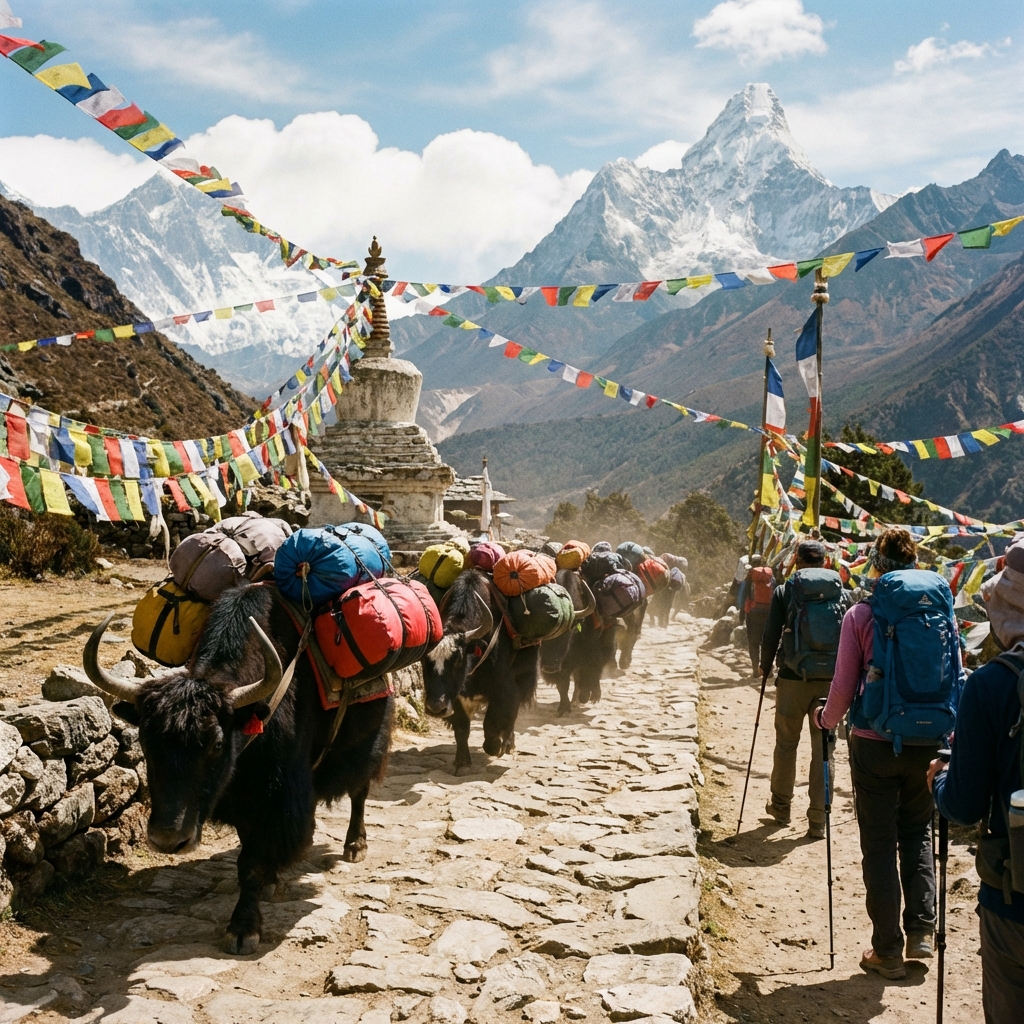
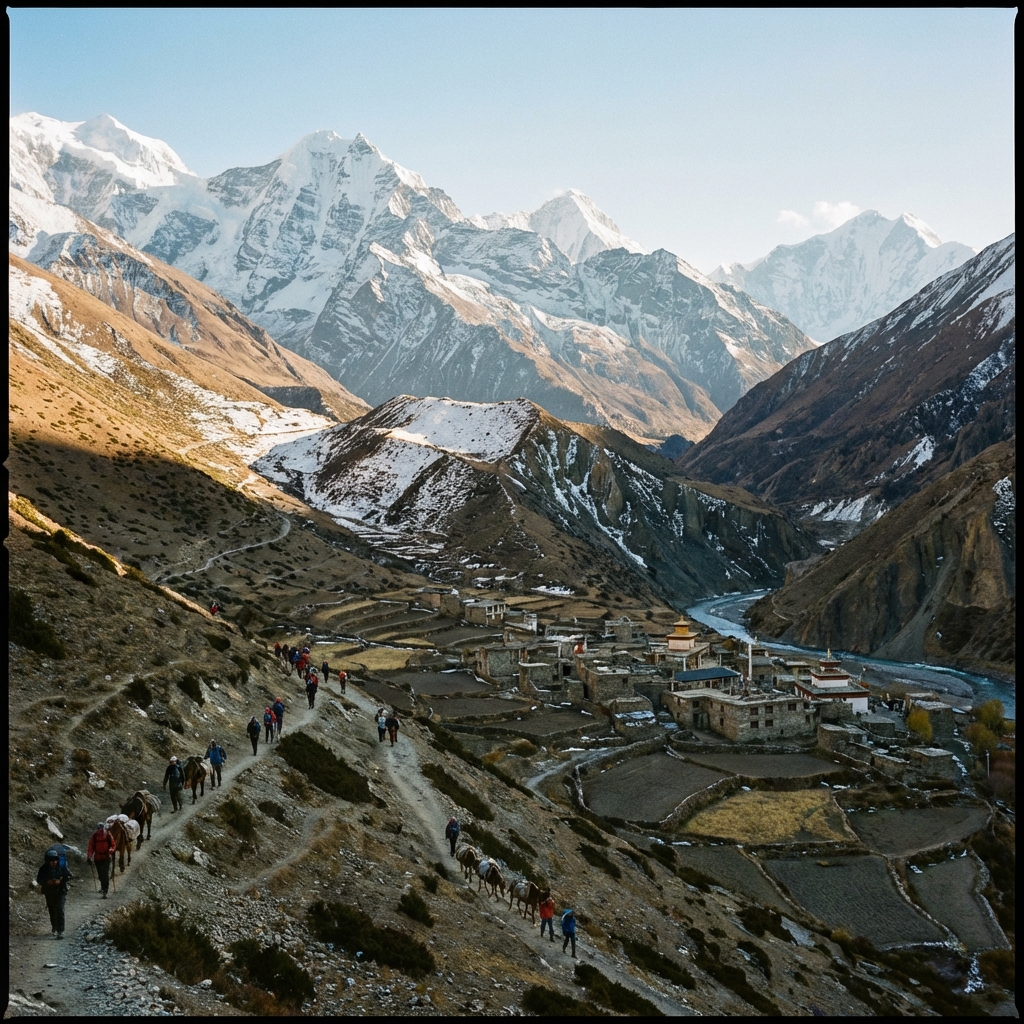
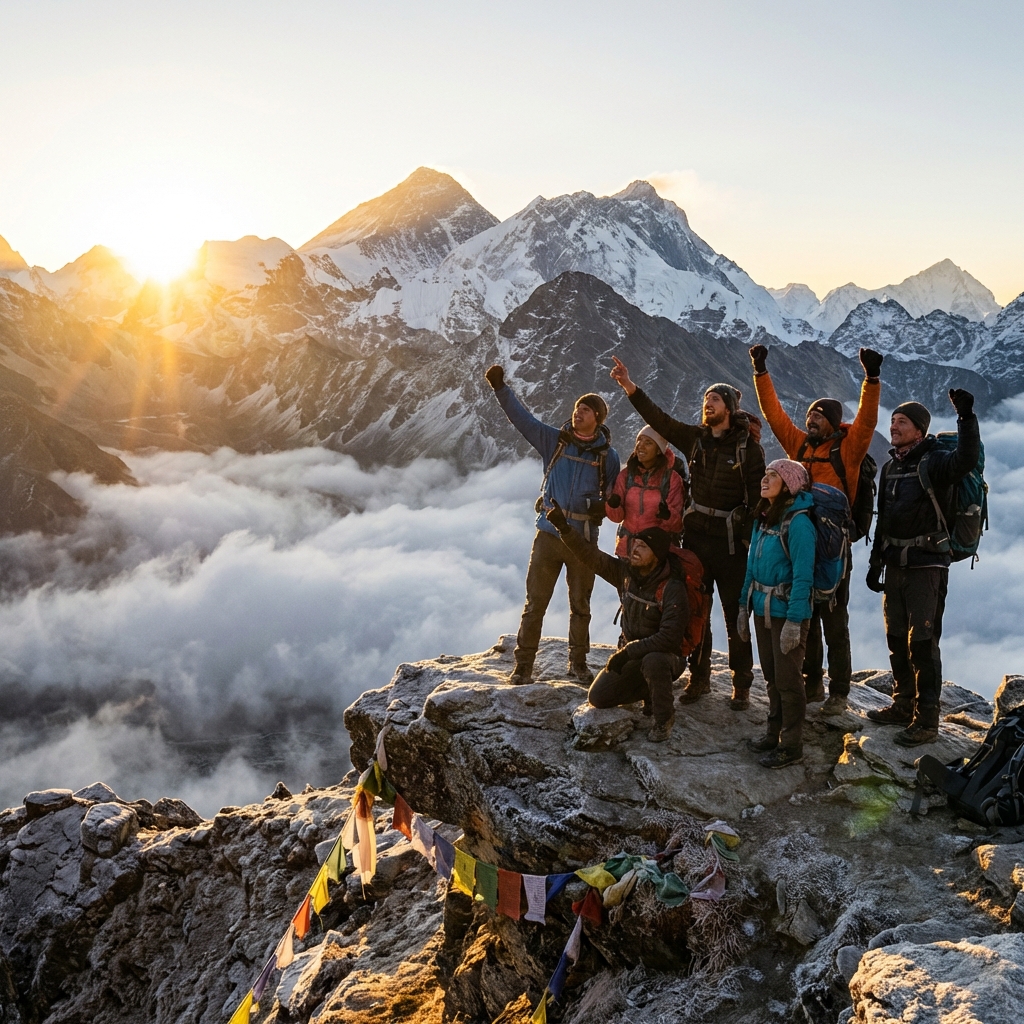
The Upper Mustang trek is unlike anything else in Nepal. Forget lush rhododendron forests and thundering glacial rivers. This is a journey through a Trans-Himalayan desert, a wind-carved landscape of red, ochre, and grey cliffs that looks more like the surface of Mars than the Himalayas. At its heart sits Lo Manthang, a medieval walled city where Tibetan Buddhist culture has survived virtually unchanged for centuries, shielded by geography and, until 1992, by a strict prohibition on outsiders.
This 12-day itinerary takes you from the gateway town of Kagbeni through the restricted area of Upper Mustang to Lo Manthang and back, covering the cultural and geological highlights of the ancient Kingdom of Lo. Unlike most Himalayan treks, this one is defined not by extreme altitude but by extreme landscape, culture, and wind.
Why Upper Mustang is special: It is one of the last places on Earth where traditional Tibetan Buddhist culture survives intact, untouched by the Chinese occupation of Tibet. The painted monasteries, sky caves, and walled city offer a window into a world that has largely vanished elsewhere.
Quick Facts: Upper Mustang Trek
12 trekking days (14-15 with travel)
3,850m (Lo Manthang)
Moderate (altitude moderate, terrain demanding)
170-180km round trip
March-November (best June-September)
USD 50/day (no minimum days) + $50/day extra
$2,500-4,000 (all inclusive)
Yes, mandatory in restricted area
Basic tea houses and guest houses
Lo Manthang, sky caves, painted monasteries
Why Trek Upper Mustang
The Landscape
Upper Mustang sits in the rain shadow of the Annapurna and Dhaulagiri massifs, creating a high-altitude desert landscape that is starkly different from the rest of Nepal. Wind and water have carved the soft sedimentary rock into dramatic formations: towering red cliffs, narrow canyons, fluted pinnacles, and vast eroded valleys that resemble the American Southwest transported to 3,500m.
The color palette alone makes this trek extraordinary. Deep reds, burnt oranges, pale yellows, and chalky whites layer across the cliffsides, changing with the light throughout the day. Photographers will find themselves stopping every few minutes.
The Culture
The Kingdom of Lo was an independent Tibetan kingdom for centuries, paying tribute to Nepal but maintaining its own king, laws, and culture. The last King of Mustang, Jigme Dorje Palbar Bista, ruled until 2008 when Nepal's monarchy was abolished. Despite this political change, the cultural fabric of Lo remains deeply traditional.
You will encounter:
- Four monasteries within Lo Manthang containing priceless medieval murals
- The Royal Palace of the former king, still occupied by the royal family
- Cave monasteries and dwellings dating back thousands of years, including the famous sky caves
- Traditional artisan workshops producing thangka paintings and religious artifacts
- Tiji Festival (May), one of Nepal's most spectacular cultural celebrations
- Tibetan Buddhist daily life essentially unchanged for centuries
The Exclusivity
Upper Mustang remains one of Nepal's restricted areas, requiring a special permit (USD 50 per person per day (no minimum days required)). This cost, combined with the mandatory guide requirement and the remote location, keeps visitor numbers relatively low. You will encounter far fewer trekkers here than on the Annapurna Circuit or EBC route, especially outside October-November.
Permit Requirements and Logistics
Permits Needed
-
Upper Mustang Restricted Area Permit: USD 50/day for the first 10 days, plus $50 per additional day. This is the main barrier to entry and must be arranged through a registered trekking agency. Individual trekkers cannot obtain this permit independently.
-
Annapurna Conservation Area Permit (ACAP): $30. Required for all treks in the Annapurna region, including Upper Mustang.
-
TIMS Card: $20. Trekkers' Information Management System card, standard for all treks in Nepal.
Mandatory Guide Requirement
Upper Mustang is a restricted area, and trekking without a licensed guide is not permitted. Your guide must be registered with a TAAN-affiliated agency, and your group must consist of at least two trekkers (or you pay for two permits if trekking solo with a guide).
For agency recommendations, see our best trekking agencies for Upper Mustang guide.
Getting to the Start
The trek begins in Jomsom, reached by a 20-minute flight from Pokhara or a long road journey. The Pokhara-Jomsom flight operates in the morning only (weather-dependent) and offers spectacular views of the Annapurna and Dhaulagiri ranges.
Flight backup: Jomsom flights are cancelled frequently due to afternoon winds. Budget an extra day in Pokhara in case of delays. Alternatively, a new road from Pokhara to Jomsom exists but takes 8-10 hours by jeep on rough terrain.
The Complete 12-Day Upper Mustang Itinerary
Day 1: Fly Pokhara to Jomsom (2,720m), Trek to Kagbeni (2,810m)
Distance: 11km | Duration: 3-4 hours | Elevation Change: +90m
The morning flight from Pokhara to Jomsom is one of Nepal's most scenic, threading between the Annapurna and Dhaulagiri massifs at close range. Upon landing at the windswept Jomsom airstrip, you begin trekking north along the broad Kali Gandaki river valley, the deepest gorge in the world.
Kagbeni is the gateway to Upper Mustang and where your restricted area permit is first checked. This atmospheric medieval town sits at the confluence of the Kali Gandaki and Jhong Khola rivers, its narrow mud-brick alleys adorned with chortens and prayer wheels. The crumbling fortress (dzong) above town is centuries old.
What to see in Kagbeni: The Kag Chode Thupten Samphel Ling Gompa (monastery), the medieval alleyways, and the views north into the forbidden zone. This is your last major supply point, so stock up on snacks, batteries, or any forgotten items.
Accommodation: Red House Lodge and Yak Donkey are popular options. Rooms $5-12/night. Solar-heated showers available.
Pro Tip
The wind in the Kali Gandaki valley is legendary. It builds from late morning and can reach gale force by afternoon. Always trek in the morning and plan to arrive at your destination by noon or early afternoon. This wind pattern holds for the entire Upper Mustang trek.
Day 2: Kagbeni to Chele (3,050m)
Distance: 13km | Duration: 5-6 hours | Elevation Change: +240m
You cross the Kali Gandaki on a suspension bridge and begin the trek into the restricted zone. The permit checkpoint is at the edge of Kagbeni; your guide will handle the formalities. The landscape changes almost immediately, the lush valley giving way to a stark, arid terrain.
The trail passes through Tangbe village (famous for its apple orchards and brandy) and Chhusang before reaching Chele, a small settlement clinging to the hillside at the mouth of a dramatic gorge.
Landscape highlight: The red and grey layered cliffs begin to dominate, and you get your first taste of the eroded canyon landscape that defines Upper Mustang. The Kali Gandaki narrows here, and the trail involves some steep sections.
Accommodation: Basic guest houses with simple rooms and meals. Expect shared facilities and limited electricity.
Day 3: Chele to Syangboche (3,475m)
Distance: 12km | Duration: 6-7 hours | Elevation Change: +425m
This is one of the more physically demanding days, involving two significant pass crossings. The trail climbs steeply out of Chele, crosses the Chele La, descends to the village of Samar, then crosses another pass before descending and climbing again to Syangboche.
The landscape becomes extraordinary on this day. Wind-eroded cliff formations tower above the trail in shades of red, rust, and cream. The villages perch on clifftops and in sheltered valleys, their flat-roofed mud buildings blending into the terrain. It feels like trekking through a different geological era.
Samar is a pleasant village for a lunch stop, with apple orchards and a monastery. The section from Samar to Syangboche crosses open, rolling terrain with expansive views of the Nilgiri and Dhaulagiri ranges to the south.
Accommodation: Very basic guest houses in Syangboche. Bring a warm sleeping bag; nights are cold.
Day 4: Syangboche to Ghami (3,520m)
Distance: 14km | Duration: 5-6 hours | Elevation Change: +45m (with intermediate climbs)
The trail crosses the Yamda La pass and descends through more dramatic canyon landscapes to the large village of Ghami. This is a relatively moderate day in terms of elevation, allowing you to absorb the scenery.
The highlight of the day is the longest mani wall in Nepal, located just outside Ghami. Stretching over 500 meters, this enormous stone wall is inscribed with thousands of prayer stones carved with the mantra "Om Mani Padme Hum." It is a deeply sacred site and one of the most impressive religious monuments in the region.
Ghami is one of the larger settlements in Upper Mustang, with a functioning school, a monastery, and relatively comfortable guest houses. The village's flat-roofed buildings cluster on a hillside with sweeping views of the surrounding desert landscape.
Photography Tip
The mani wall at Ghami is best photographed in the morning when the sun illuminates the carved stones. Always walk clockwise around mani walls and chortens, keeping them on your right, as is the Buddhist custom. Ask permission before photographing people or monastery interiors.
Accommodation: Several guest houses in Ghami offer rooms with attached bathrooms (basic). Hot water may be available by solar or firewood heating.
Day 5: Ghami to Tsarang (3,560m)
Distance: 10km | Duration: 4-5 hours | Elevation Change: +40m (with intermediate climbs and descents)
A shorter day that packs in major cultural highlights. The trail crosses the Nyi La pass (3,950m) with spectacular views before descending to Tsarang (also spelled Charang), once the second-most important settlement in the Kingdom of Lo.
Tsarang Monastery is one of Upper Mustang's finest, housing a remarkable collection of medieval murals, thangka paintings, and Buddhist scriptures. The monastery's prayer hall is adorned with wall paintings depicting the life of Buddha and various Tibetan Buddhist deities.
The Tsarang Dzong (fortress) sits above the village in dramatic ruin, its crumbling walls testament to the kingdom's turbulent history of internal conflicts and external threats. The fortress offers commanding views of the village and surrounding canyon.
The village itself is a window into traditional Lo culture. Flat-roofed mud buildings, narrow alleys, prayer wheels, and fluttering prayer flags create an atmosphere that feels medieval. Farmers work terraced fields irrigated by ancient channels, growing barley, buckwheat, and potatoes at this improbable altitude.
Accommodation: Several guest houses, with the Tsarang Guest House being a popular option. Rooms are basic but comfortable enough.
Pro Tip
Tsarang monastery may require a small donation for entry and photography. Carry small bills (100-500 NPR) for monastery donations throughout the trek. Flash photography is usually prohibited inside monasteries to protect ancient murals.
Day 6: Tsarang to Lo Manthang (3,810m)
Distance: 14km | Duration: 5-6 hours | Elevation Change: +250m
The culmination of the approach. The trail climbs to the Lo La pass (3,950m) and then descends across a wide plateau before the walled city of Lo Manthang comes into view. This is one of the great trekking moments in Nepal, as the white-and-red walled city materializes out of the desert landscape, backed by the snowy peaks of the Tibetan border ranges.
Lo Manthang is a medieval walled city of approximately 150 houses, four monasteries, and a royal palace, all enclosed within mud-brick walls that have stood for over 600 years. The city was founded in 1380 by Ame Pal, the first King of Lo.
Arriving at Lo Manthang is an emotional moment for most trekkers. The sense of remoteness, the unchanged medieval architecture, and the knowledge that this was forbidden to outsiders until 1992 all combine to create a profound arrival experience.
Your first evening: Wander the narrow lanes, visit the town square, and absorb the atmosphere. The late-afternoon light on the walls and surrounding cliffs is extraordinary.
Accommodation: Lo Manthang has several guest houses that are surprisingly comfortable for such a remote location. The Lotus Holiday Inn and Lo Manthang Guest House are well-regarded. Rooms $8-15/night with attached or shared bathrooms.
Day 7: REST DAY in Lo Manthang - Explore the Walled City
Full day exploration | Elevation: 3,810m
A full day to explore Lo Manthang and its treasures. Your guide will arrange monastery visits and, if possible, an audience with the royal family.
The four monasteries of Lo Manthang:
-
Jampa Gompa (Jampa Lhakhang): The oldest monastery, founded in 1447, containing a massive three-story statue of Maitreya (the future Buddha). The interior murals are among the finest surviving examples of 15th-century Tibetan art.
-
Thubchen Gompa: A grand assembly hall with towering pillars and wall paintings that rival anything in Tibet. This monastery was extensively restored by the American Himalayan Foundation and Luigi Fieni's conservation team.
-
Chode Gompa (Choede Monastery): The main community monastery, used for daily prayers and festivals. Contains fine murals and a collection of ancient texts.
-
Rongchung Cave Monastery: A small but significant monastery built into the cliff above town.
The Royal Palace: The former king's palace sits in the center of town. While the king's formal political role ended in 2008, the royal family remains deeply respected. Guided visits may be possible depending on the family's schedule.
Artisan workshops: Lo Manthang is home to skilled thangka painters and metalworkers. Visiting their workshops and watching traditional art being created is a highlight.
Tiji Festival (if timing aligns): Held annually in May (dates vary by Tibetan lunar calendar), Tiji is a three-day festival involving elaborate masked dances, rituals, and the entire community. It commemorates the victory of a deity over a demon that had caused water scarcity. If your trek coincides with Tiji, you are witnessing one of Nepal's most authentic and spectacular cultural events.
The Kingdom's History
The Kingdom of Lo dates to 1380 and maintained semi-independence for over 600 years. The last king, Jigme Dorje Palbar Bista (born 1930, died 2016), was formally deposed when Nepal abolished its monarchy in 2008. Despite this, the royal family remains the cultural and spiritual heart of Lo Manthang, and villagers still refer to the current heir as "Raja."
Day 8: Lo Manthang Excursion - Choser Caves, Sky Caves, and Ghar Gompa
Distance: 20km round trip | Duration: 6-8 hours | Elevation Change: Variable (rolling terrain)
A full-day excursion to the remarkable archaeological and spiritual sites north and west of Lo Manthang. This is the day that reveals Upper Mustang's most extraordinary secret: the sky caves.
Choser Caves: A complex of cave dwellings carved into the cliffsides, some dating back over 2,000 years. These vertical honeycomb formations in the cliff faces are one of the great archaeological mysteries of the Himalayas. Who carved them, how people accessed them (many are 50-100m above ground level), and their purpose remain debated.
Ghar Gompa (Luri Gompa): Considered the oldest monastery in the Mustang region, this cave monastery is carved into a dramatic cliff formation. The interior contains ancient murals and religious artifacts. The approach involves a slightly exposed trail that adds to the adventure.
The broader landscape around Lo Manthang on this excursion is breathtaking: wide plateaus, eroded canyons, distant views into Tibet, and the sense of being at the edge of the known world.
Pro Tip
Bring a strong flashlight (headlamp plus a separate torch) for cave exploration. The interiors are dark, and the ancient murals are only visible with direct illumination. Move carefully in the caves; some have unstable floors and low ceilings.
Day 9: Lo Manthang to Drakmar (3,810m)
Distance: 15km | Duration: 5-6 hours | Elevation Change: Minimal net (undulating terrain)
Begin the return journey, but via a different route than the approach. From Lo Manthang, the trail heads south toward Drakmar (also spelled Dhakmar), a small village nestled beneath dramatic red cliffs that give it its name (Drakmar means "red cliffs").
The red cliffs of Drakmar are the most photographed geological feature in Upper Mustang. Towering vertical walls of deep crimson and rust sedimentary rock rise directly behind the village, creating a backdrop that looks like a movie set. According to local legend, the red color comes from the blood of a demon slain by Guru Rinpoche.
Drakmar is a small, peaceful village with just a handful of guest houses. The atmosphere here is quieter and more intimate than Lo Manthang, and the evening light on the cliffs is spectacular.
Accommodation: Very basic guest houses. The setting more than compensates for the simplicity.
Day 10: Drakmar to Ghiling (3,570m)
Distance: 15km | Duration: 5-6 hours | Elevation Change: -240m (with intermediate climbs)
The trail continues south, ideally via the alternate eastern route (weather and conditions permitting; your guide will assess). This offers different scenery from the approach, crossing dry riverbeds and passing through small settlements not seen on the way up.
Ghiling is a large village with a monastery and relatively comfortable guest houses. The afternoon can be spent exploring the village and its surroundings or simply resting.
The alternate route option: If conditions allow, taking a different return route between Drakmar and Ghiling (via the eastern side of the valley) provides new scenery and avoids repeating the same trail. Discuss this with your guide in advance.
Accommodation: Several guest houses with basic rooms and meals.
Day 11: Ghiling to Kagbeni (2,810m)
Distance: 22km | Duration: 7-8 hours | Elevation Change: -760m
The longest day of the return, descending steadily from Ghiling through Samar and Chele back to Kagbeni. This retraces part of the approach route, but the downhill direction makes it faster. The dramatic canyon scenery is equally impressive in the opposite direction.
Returning to Kagbeni feels like crossing back between worlds, from the medieval, isolated kingdom of Lo to the connected, relatively modern Kali Gandaki valley.
Celebration dinner in Kagbeni: Most groups celebrate the completion of the Upper Mustang section with dinner in Kagbeni. The relief of being back at a lower altitude and in a town with better facilities is palpable.
Day 12: Kagbeni to Jomsom (2,720m), Fly to Pokhara
Distance: 11km to Jomsom | Duration: 3 hours | Flight: 20 minutes
An easy morning walk back to Jomsom along the Kali Gandaki, arriving in time for the afternoon flight to Pokhara (if available) or the next morning's flight.
Jomsom Flight Warning
Like Lukla, Jomsom flights are weather-dependent and frequently delayed or cancelled. The afternoon winds in the Kali Gandaki are among the strongest in Nepal, so flights only operate in the early morning. Always budget an extra day in case of delays. The road alternative to Pokhara takes 8-10 hours by jeep and is very rough but reliable.
The Unique Landscape of Upper Mustang
Upper Mustang's landscape deserves special attention because it is unlike anything most trekkers have encountered in Nepal or elsewhere in the Himalayas.
The Rain Shadow Effect
The Annapurna and Dhaulagiri ranges, both exceeding 8,000m, block the Indian monsoon from reaching Upper Mustang. This creates a rain shadow desert at 3,000-4,000m, with annual rainfall of only 250-300mm (compared to 3,000mm+ in Pokhara). The result is a barren, wind-sculpted terrain that looks more like Ladakh or the Tibetan Plateau than Nepal.
The Eroded Canyons
Millions of years of wind and occasional water have carved the soft sedimentary rock into dramatic formations. The canyons around Chele, Syangboche, and Drakmar feature towering cliff walls in layers of red, grey, yellow, and white, each layer representing a different geological epoch. The fluted pinnacles, mushroom rocks, and natural bridges rival any desert landscape in the world.
The Wind
Wind is Upper Mustang's defining weather feature. The Kali Gandaki funnels wind through the valley between the 8,000m peaks, creating afternoon gales that can reach 60-80 km/h. This wind shapes everything: the landscape, the architecture (flat roofs with heavy stones, buildings oriented away from the prevailing wind), and the trekking schedule (always move early, shelter by noon).
Best Season for Upper Mustang
Upper Mustang has a unique seasonal advantage: it is best trekked during the monsoon season (June-September), when the rest of Nepal is rain-soaked.
| Season | Conditions | Recommendation |
|---|---|---|
| March-May | Clear skies, cold mornings, moderate wind | Good (flowers in May) |
| June-September | Warm, occasional brief showers, green valleys | Best (rain shadow protection) |
| October-November | Clear skies, cold, heavy winds | Good (crowded elsewhere) |
| December-February | Extreme cold, some lodges closed | Not recommended |
Why Monsoon Season Works
While trekkers in the Annapurna and Everest regions endure rain, leeches, and clouds during June-September, Upper Mustang remains largely dry thanks to the rain shadow. You get warm temperatures, occasional dramatic cloud formations, green barley fields in the irrigated valleys, and virtually empty trails.
Pro Tip
If your travel dates fall during Nepal's monsoon (June-September) and you still want to trek, Upper Mustang is the ideal choice. You get the cultural experience without the rain, and the summer warmth makes the already-moderate altitude even more comfortable. Check our Nepal festivals and trekking calendar to potentially align with Tiji festival.
Accommodation and Food
Accommodation Reality
Accommodation in Upper Mustang has improved significantly in recent years but remains basic compared to the Annapurna Circuit or EBC route. Here is what to expect:
- Kagbeni and Jomsom: Best accommodation on the route. Private rooms with attached bathrooms, solar-heated water, charging facilities, and Wi-Fi.
- Chele to Tsarang: Basic guest houses with shared facilities. Rooms are clean but simple. Some have attached bathrooms. Solar or wood-heated water may or may not be available.
- Lo Manthang: Surprisingly comfortable, with several guest houses offering private rooms, attached bathrooms, and even Wi-Fi. This is a destination, not a waypoint, so facilities are better.
- Drakmar and Ghiling (return route): The most basic accommodation on the trek. Simple rooms with shared facilities.
Food
Meals are hearty and increasingly varied as tourism has grown. Standard fare includes:
- Dal bhat (lentils, rice, vegetables, pickles): The staple meal, available everywhere
- Thukpa: Tibetan noodle soup, perfect for cold days
- Momos: Tibetan dumplings (steamed or fried)
- Tingmo: Steamed Tibetan bread
- Tsampa: Roasted barley flour, a traditional Mustangi staple
- Yak butter tea: An acquired taste but genuinely warming and energizing at altitude
Vegetarian options are widely available. Vegan trekkers should bring supplements (protein bars, nuts) as options are more limited.
Water: Bring purification tablets or a filter. Some lodges sell treated water, but it is expensive ($2-4/liter at higher points).
Cost Breakdown
Upper Mustang is one of Nepal's more expensive treks due to the restricted area permit. Here is a realistic budget.
| Cost Category | Estimated Cost |
|---|---|
| Restricted Area Permit (10 days) | $500 |
| ACAP Permit | $30 |
| TIMS Card | $20 |
| Pokhara-Jomsom Flights (return) | $200-250 |
| Agency Fee (guide, meals, accommodation) | $1,200-2,500 |
| Porter (optional, recommended) | $200-350 |
| Personal Expenses (drinks, snacks, souvenirs) | $150-300 |
| Tips | $100-200 |
| Monastery Entrance Donations | $30-50 |
| Total | $2,500-4,000+ |
Budget vs comfort: The range depends primarily on the agency you choose and the level of service. Budget options at $2,500 include basic accommodation and meals. Premium options at $3,500-4,000+ include better lodges, more varied meals, and experienced guides with deep cultural knowledge.
Photography Opportunities
Upper Mustang is a photographer's paradise. Key opportunities include:
- The eroded cliff formations between Chele and Syangboche (best in morning side-light)
- The longest mani wall at Ghami (morning light)
- Tsarang Dzong and monastery (afternoon light on the fortress)
- Lo Manthang walled city from the approach (late morning, with mountains behind)
- Monastery interiors (bring a fast lens; flash prohibited, natural light only)
- The red cliffs of Drakmar (sunset and sunrise are extraordinary)
- The sky caves at Choser (midday when light enters the cave openings)
- Daily life in villages (always ask permission; locals are generally friendly)
- The wind patterns creating dust clouds across the desert landscape (afternoon)
Photography Ethics
Always ask permission before photographing people, especially monks and elderly villagers. In monasteries, photography may require a small donation and flash is always prohibited to protect ancient murals. When photographing children, be aware that offering payment or sweets encourages begging behavior and is discouraged by local communities.
Combining Upper Mustang with Other Treks
Upper Mustang can be combined with several other treks in the Annapurna region:
- Lower Mustang (Muktinath): Add 1-2 days to visit the sacred Muktinath temple from Kagbeni
- Annapurna Circuit: Complete the circuit and then add Upper Mustang from Kagbeni/Jomsom (+10-12 days)
- Jomsom-Muktinath trek: A short, easy trek that can serve as a warm-up before Upper Mustang
- Dhaulagiri region: For advanced trekkers, the Dhaulagiri Circuit can be linked from Jomsom
Health and Safety
Altitude Considerations
Upper Mustang is relatively low by Himalayan trekking standards, with a maximum sleeping altitude of 3,810m at Lo Manthang. Serious altitude sickness is uncommon but not impossible. The rapid gain from Jomsom (2,720m) to Lo Manthang (3,810m) over 5-6 days means some trekkers experience mild symptoms.
Mitigation: The gradual ascent profile helps. If you experience persistent headache or nausea, rest for an extra day at your current altitude before continuing.
Wind and Dust
The extreme afternoon winds carry fine dust and grit. Protect your eyes with wraparound sunglasses or goggles, use a buff or face mask, and keep camera gear sealed when not in use.
Sun Exposure
The high altitude and dry air mean intense UV radiation. Use SPF 50+ sunscreen, lip balm with UV protection, and wear a wide-brimmed hat. Dehydration happens faster than you expect in the dry climate; drink 3-4 liters daily.
Medical Facilities
There are no medical facilities in Upper Mustang beyond Lo Manthang (which has a basic health post). Carry a comprehensive first aid kit and ensure your travel insurance covers helicopter evacuation from the region. The nearest hospital is in Pokhara.
Frequently Asked Questions
Do I need a special permit for Upper Mustang?
Yes. Upper Mustang is a restricted area requiring a special permit costing USD 50 per person per day (no minimum days required) (plus $50 per additional day). This permit can only be obtained through a registered trekking agency and requires a minimum group of two trekkers. Solo trekkers must pay for two permits or find a trekking partner.
Can I trek Upper Mustang independently?
No. A licensed guide is mandatory in the restricted area. You cannot obtain the Upper Mustang permit as an individual; it must be arranged through a TAAN-registered agency.
Is Upper Mustang difficult?
Moderately difficult. The altitude is manageable (max 3,850m), but the terrain is rough, the wind can be exhausting, and some days are long. The biggest challenges are the wind, the dust, and the basic accommodation rather than extreme altitude or technical terrain.
What is the best time to trek Upper Mustang?
June to September (monsoon season) is actually the best time because Upper Mustang lies in a rain shadow and remains dry while the rest of Nepal is wet. March-May and October-November are also good. Avoid December-February when it is extremely cold and some lodges close.
How much does the Upper Mustang trek cost?
Budget $2,500-4,000 for a 12-day trek including the $500 restricted area permit, domestic flights, agency fees, accommodation, food, guide, and personal expenses.
Is there phone/internet service in Upper Mustang?
NCell has coverage in some areas, but service is spotty and unreliable above Kagbeni. Lo Manthang has some Wi-Fi at guest houses (slow). Bring a local SIM card (NCell recommended) but do not rely on connectivity.
Can I see Everest from Upper Mustang?
No. Upper Mustang faces north toward Tibet, away from the Everest range. The visible peaks are the Annapurna range, Dhaulagiri, Nilgiri, and the border peaks with Tibet.
How fit do I need to be?
Moderate fitness is sufficient. You should be comfortable walking 6-8 hours per day on uneven terrain with a light daypack. The altitude is moderate, and the daily ascent profile is gradual. The wind and rough terrain are more challenging than the altitude.
Is Upper Mustang suitable for older trekkers?
Yes, provided you are reasonably fit. The moderate altitude, lack of extreme passes, and relatively gradual daily profiles make this a good option for fit trekkers aged 55+. The cultural richness also appeals to those who value experience over extreme physical challenge.
Are there altitude problems at Lo Manthang?
Mild altitude effects (headache, slight breathlessness) are possible at 3,810m but serious altitude sickness is uncommon on this route. The gradual ascent over 6 days provides adequate acclimatization for most people. If you have previously been comfortable at 3,500-4,000m, you should be fine.
What about the Tiji Festival?
Tiji is held annually in May (exact dates follow the Tibetan lunar calendar and change each year). It is a three-day festival of masked dances and rituals in Lo Manthang. If you can align your trek with Tiji, it is an extraordinary experience, but book well in advance as agencies fill up months ahead. Check with your agency for current year dates.
Can I combine Upper Mustang with the Annapurna Circuit?
Yes. The most common combination is to trek the Annapurna Circuit first, ending at Jomsom, and then continue north into Upper Mustang. This requires additional permits and adds 10-12 days. It creates a 25-30 day mega-trek that covers both alpine and desert landscapes.
Final Thoughts
The Upper Mustang trek is not about conquering altitude or crossing deadly passes. It is about stepping into a different time and place, a preserved pocket of Tibetan Buddhist civilization in a landscape that defies expectation. The wind-sculpted canyons, the painted monasteries, the walled city, and the warmth of the Mustangi people combine to create what many experienced trekkers describe as the most culturally rewarding trek in Nepal.
The $500 permit fee keeps crowds manageable and contributes to local conservation. The mandatory guide requirement ensures that cultural sites are respected and that trekkers gain context for what they see. And the moderate altitude means that the Upper Mustang experience is accessible to a wider range of trekkers than the extreme high-altitude routes.
If you have done the classic EBC or Annapurna treks and want something fundamentally different, Upper Mustang is the answer.
Ready to explore the Forbidden Kingdom? Browse our Upper Mustang route guide for trail details, or compare the best trekking agencies for Upper Mustang to find an operator that matches your budget and style.