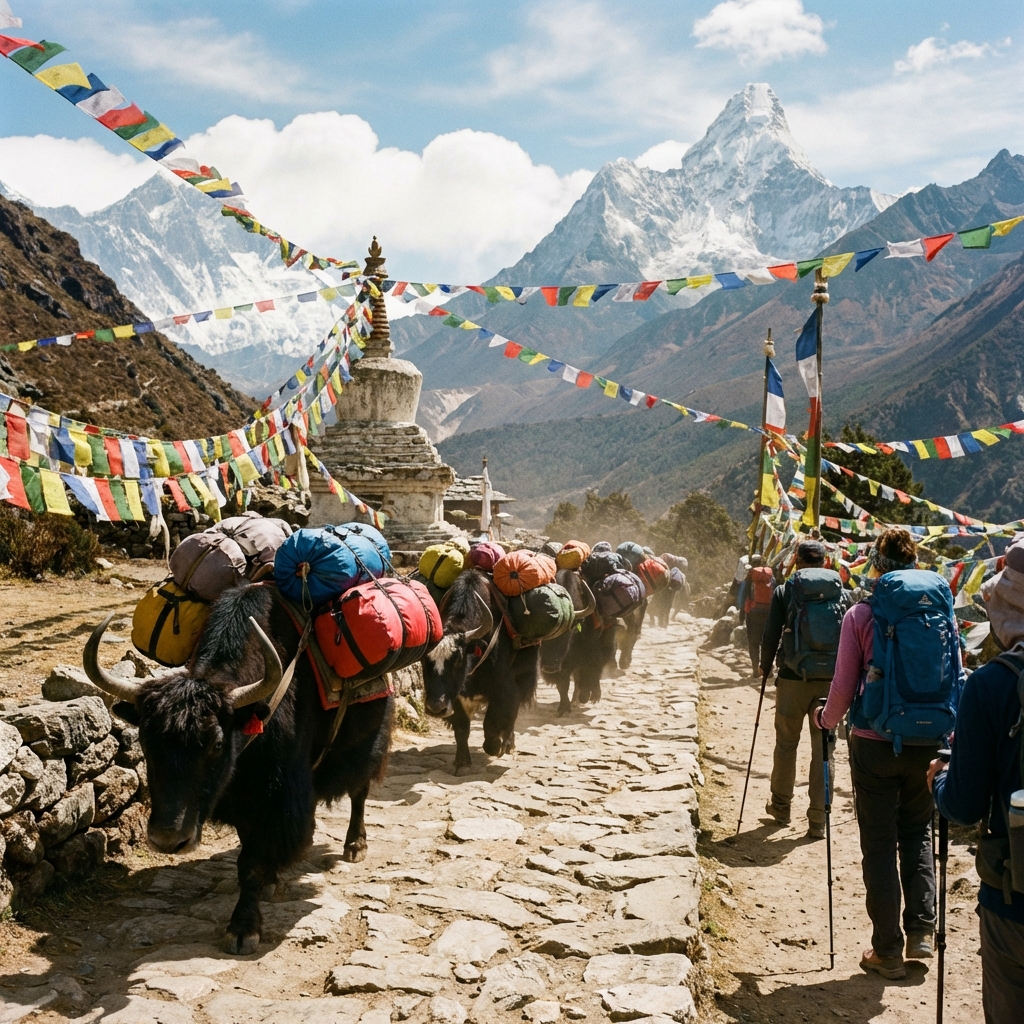
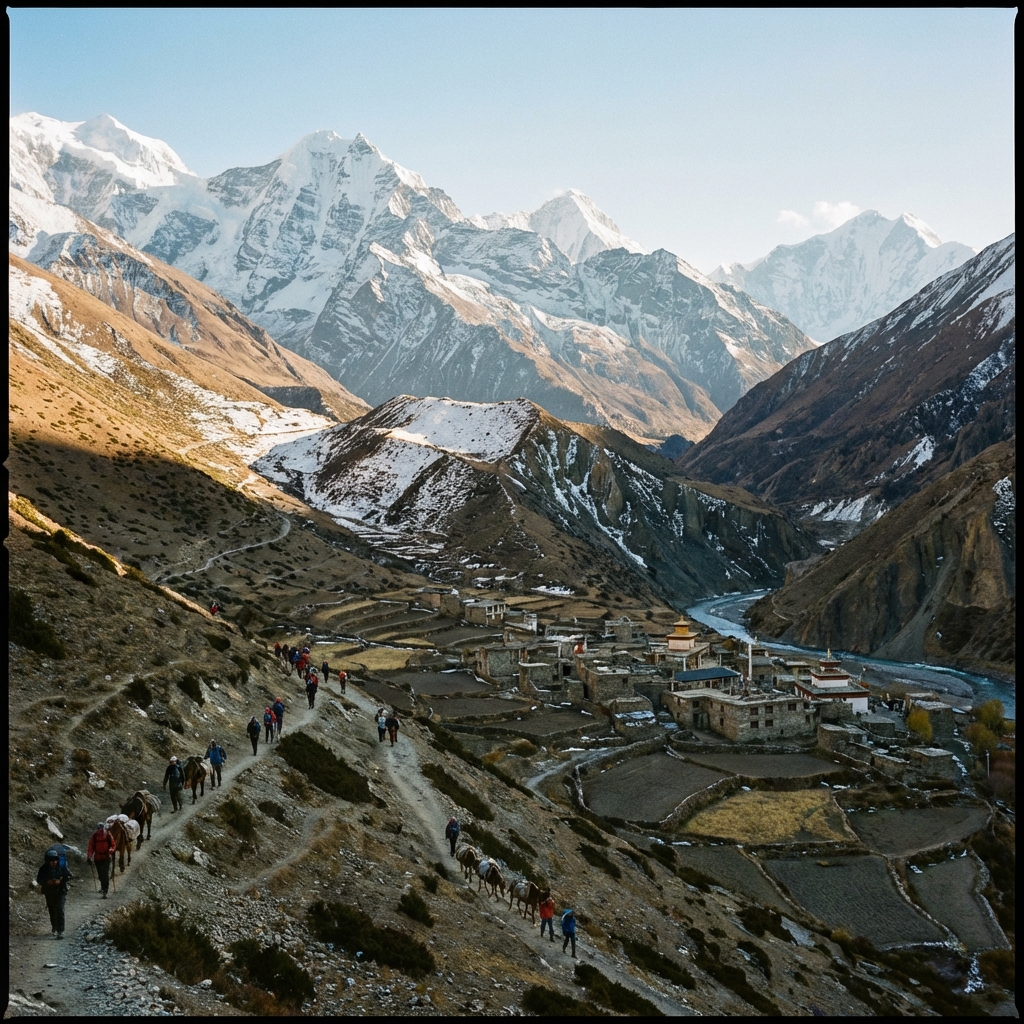
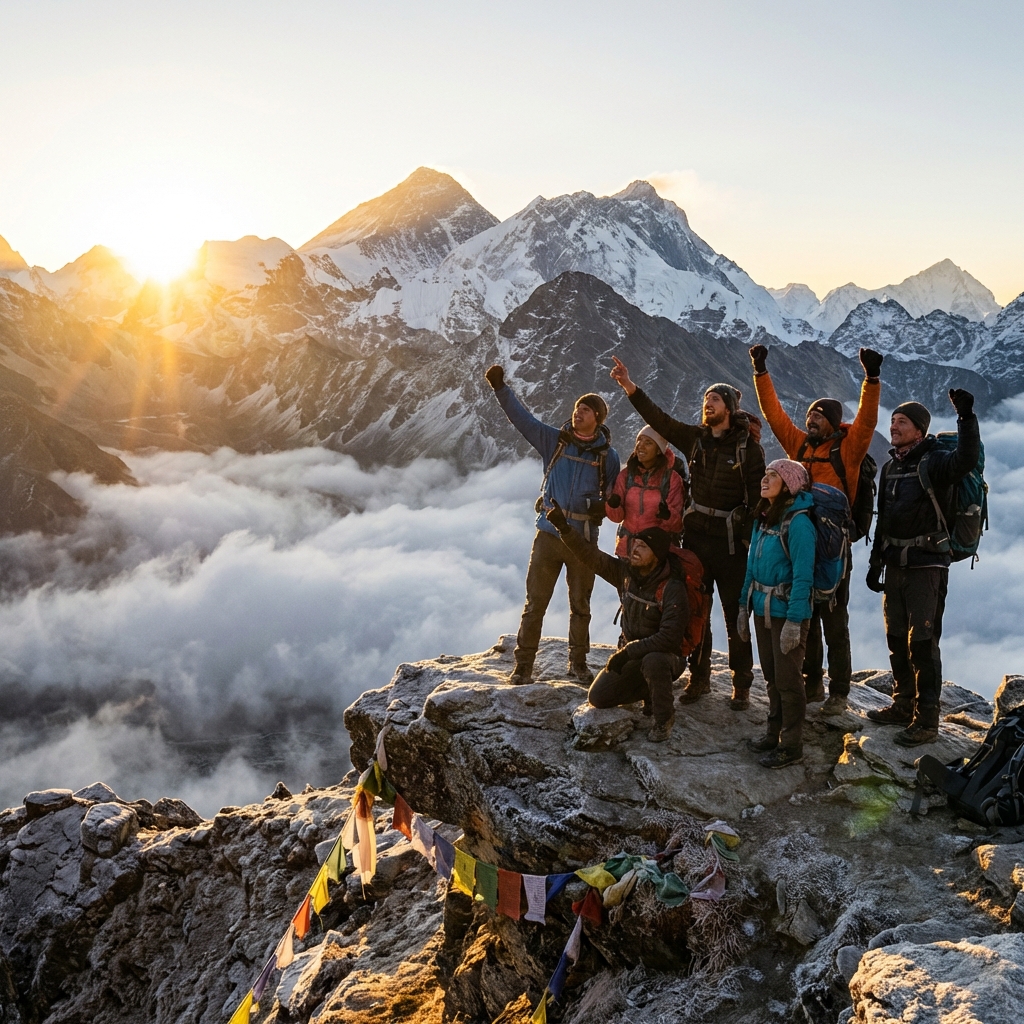
You have done the trek. You have stood at Everest Base Camp, watched sunrise over the Annapurna amphitheater, or crossed the Thorong La on the Annapurna Circuit. The experience was extraordinary -- and now a question is forming in your mind that many trekkers eventually ask: "What if I went higher? What if I actually stood on a summit?"
This is the crossroads between base camp trekking and peak climbing -- two related but fundamentally different activities that share geography but differ in almost every other dimension. Base camp treks are hiking: challenging, high-altitude, and demanding, but ultimately a matter of putting one foot in front of the other on a marked trail. Peak climbing is mountaineering: technical, equipment-intensive, rope-dependent, and governed by summit day conditions, climbing ability, and a different calculus of risk.
The leap from base camp trekking to peak climbing is not as large as most people imagine, but it is not trivial either. Nepal's "trekking peaks" -- a category of mountains between 5,500m and 6,500m designated by the Nepal Mountaineering Association -- are specifically designed as accessible mountaineering objectives for experienced trekkers. They require less technical skill than expedition peaks but more than any base camp trek demands.
This guide examines every dimension of this decision: technical requirements, training needs, gear differences, cost implications, risk assessment, and which peaks make the best first climbs. Whether you are seriously considering a peak or simply curious about what lies beyond base camp, this is your comprehensive comparison.
Who should read this guide:
- Experienced trekkers considering their first peak climb
- Base camp trek completers evaluating the next challenge
- Adventure travelers comparing the two types of Nepal Himalayan experience
- Anyone curious about what peak climbing in Nepal actually involves
- Trekkers planning a combined base camp trek and peak climbing trip
7-16 days (varies by route)
14-21 days (includes approach trek + climb)
4,130m (ABC) to 5,545m (Kala Patthar)
5,587m (Yala Peak) to 6,476m (Mera Peak)
$1,000-$3,500
$3,000-$7,000+
None required -- walking on trails
Crampon use, rope work, basic ice climbing (varies by peak)
90-95%+ (reaching base camp)
60-85% (varies by peak and conditions)
Low to moderate (altitude-related)
Moderate to high (altitude + technical hazards)
Side-by-Side Comparison Table
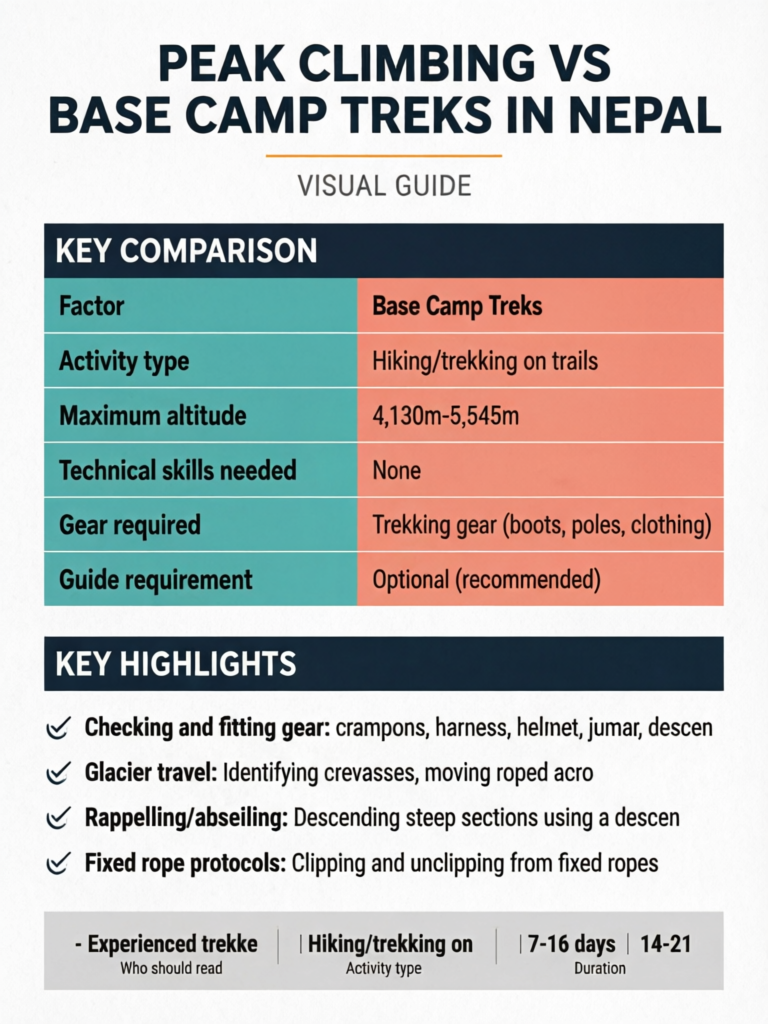
| Factor | Base Camp Treks | Peak Climbing | Key Difference |
|---|---|---|---|
| Activity type | Hiking/trekking on trails | Mountaineering with technical elements | Fundamental activity difference |
| Maximum altitude | 4,130m-5,545m | 5,587m-6,476m (trekking peaks) | 500-1,500m higher |
| Technical skills needed | None | Crampons, ice axe, rope work, jumar ascending | Significant skill gap |
| Gear required | Trekking gear (boots, poles, clothing) | Full mountaineering kit (crampons, harness, helmet, ice axe, etc.) | 10-15 additional items |
| Guide requirement | Optional (recommended) | Mandatory (NMA regulation for peak climbing) | Required vs optional |
| Agency requirement | Optional on open routes | Required (NMA climbing permit through agency) | Required vs optional |
| NMA climbing permit | Not needed | $250-350 per person (varies by peak/season) | Additional significant cost |
| Duration | 7-16 days | 14-21 days | Longer commitment |
| Daily physical demand | 5-7 hrs walking | 5-7 hrs walking + 8-14 hrs on summit day | Summit day is extreme |
| Training recommended | 4-8 weeks of cardio/hiking | 3-6 months including specific mountaineering training | Much more preparation |
| Previous experience needed | None to moderate | Previous high-altitude trek recommended | Progression required |
| Success rate | 90-95%+ | 60-85% (peak dependent) | Lower on climbs |
| Risk level | Low-Moderate (AMS main risk) | Moderate-High (falls, crevasses, AMS, weather) | Meaningfully higher |
| Cost range | $1,000-$3,500 | $3,000-$7,000+ | Roughly double |
| Sense of achievement | High (reaching base camp is meaningful) | Very high (summiting a Himalayan peak is extraordinary) | Amplified |
| Best for | All fitness levels, all experience levels | Fit trekkers seeking next-level challenge | Different audiences |
What Peak Climbing Actually Involves
Before comparing costs and logistics, it is essential to understand what peak climbing means in practice. Many trekkers imagine it as "harder trekking" -- which is partially true but significantly understates the differences.
The Approach Trek
Every peak climbing expedition in Nepal begins with an approach trek that is essentially identical to a base camp trek. For Island Peak, you walk the EBC trail to Chukhung. For Mera Peak, you trek through the Hinku Valley. For Lobuche East, you follow the EBC route to Lobuche village.
This approach phase is familiar territory for experienced trekkers: tea houses, dal bhat, stone trails, and gradually increasing altitude. It typically lasts 8-12 days and serves as both the journey to the mountain and the critical acclimatization period.
The Climbing Phase
The climbing phase begins at base camp and is fundamentally different from trekking:
Base Camp to High Camp:
- Moving from tea house/lodge accommodation to tents
- Carrying or having carried specialized climbing equipment
- Reviewing climbing plans and procedures with your guide
- Checking and fitting gear: crampons, harness, helmet, jumar, descender
- Typically 4-6 hours of climbing/walking over glacial terrain
Summit Day:
- Waking at 1:00-4:00 AM in a tent at high camp
- Putting on full climbing gear in the dark and cold
- Roping up with guide and team
- Ascending snow slopes, glacial terrain, and (on some peaks) ice walls using fixed ropes
- Spending 6-14 hours in continuous movement at extreme altitude
- Reaching the summit, taking photos, and beginning descent
- Returning to high camp or base camp exhausted
The key differences from trekking:
- You are roped to a guide and other climbers
- You use crampons on snow and ice (not walking on a trail)
- You may need to ascend fixed ropes using a jumar (mechanical ascender)
- You may cross crevassed glaciers where a fall could be fatal without the rope
- The summit day is 2-3 times longer and harder than the hardest day on any base camp trek
- Weather windows matter much more -- a summit attempt may be delayed or cancelled
Summit Day Reality Check
The summit day of a trekking peak is the single most physically and mentally demanding day most climbers will ever experience. On Island Peak, summit day involves 10-14 hours of sustained effort at 5,800-6,189m, including ascending a steep headwall on fixed ropes. On Mera Peak, summit day involves 6-9 hours of glacier walking at 5,800-6,476m in extreme cold. Both days start in darkness, involve prolonged exposure to altitude and cold, and require reserves of mental determination that trekking rarely demands. This is not an enhanced version of trekking -- it is a different activity.
Technical Skills Comparison
Base Camp Treks: No Technical Skills Needed
The technical skill requirement for base camp treks is effectively zero. You need to:
- Walk on uneven terrain (trails, stone steps, rocky paths)
- Use trekking poles (recommended but not essential)
- Navigate basic trails (well-marked on popular routes)
- Manage your own hydration and nutrition
- Recognize altitude sickness symptoms
That is it. Any reasonably fit person who can walk for 5-7 hours can complete most base camp treks with appropriate acclimatization.
Peak Climbing: Multiple Technical Skills Required
Peak climbing requires skills that must be learned before the expedition. The specific skills depend on the peak:
All trekking peaks require:
- Crampon technique: Walking on snow and ice with spiked metal frames attached to boots. Includes flat-footing on moderate slopes and French technique on steeper terrain
- Ice axe use: Self-arrest (stopping a fall using the axe), step-cutting, and balance
- Rope management: Walking while roped to others, managing rope drag, basic knots
- Glacier travel: Identifying crevasses, moving roped across glaciated terrain
- Harness and climbing hardware: Fitting a harness, using carabiners, attaching to fixed ropes
More technical peaks (Island Peak, Lobuche East) additionally require:
- Jumar ascending: Using a mechanical ascender to climb fixed ropes on steep terrain
- Rappelling/abseiling: Descending steep sections using a descender device
- Fixed rope protocols: Clipping and unclipping from fixed ropes at anchor points
- Basic ice climbing: Ascending short ice sections using front-point crampon technique
Less technical peaks (Mera Peak, Yala Peak) require fewer skills:
- Basic crampon walking on moderate snow slopes
- Roped glacier travel
- Use of ice axe for balance
- Less emphasis on jumar/rappelling (no significant fixed rope sections)
Pro Tip
Gear Comparison: What Extra Equipment Do You Need?
Base Camp Trek Gear
A complete base camp trek gear list includes:
- Trekking boots (ankle-height, broken in)
- Trekking poles
- Daypack (25-35 liters)
- Down jacket
- Layering system (base, mid, outer)
- Sleeping bag (rated to -10 to -15 degrees Celsius)
- Sun protection (glasses, hat, sunscreen)
- Headlamp
- Water purification
- First aid kit
- Personal items
Total additional gear cost: $200-800 if purchasing new (much can be rented in Kathmandu for $50-150)
Peak Climbing Gear (Additional to Trekking Gear)
Peak climbing requires all of the above PLUS:
| Item | Purpose | Buy Cost | Rent Cost (Kathmandu) |
|---|---|---|---|
| Mountaineering boots | Crampon-compatible, insulated for extreme cold | $300-600 | $10-20/day |
| Crampons | Traction on ice and snow | $100-250 | $5-10/day |
| Ice axe | Balance, self-arrest, climbing | $80-200 | $5-8/day |
| Climbing harness | Attachment to rope system | $50-100 | $3-5/day |
| Climbing helmet | Protection from rockfall and ice | $50-100 | $3-5/day |
| Jumar (ascender) | Ascending fixed ropes (technical peaks) | $60-120 | $3-5/day |
| Descender/belay device | Rappelling and rope management | $20-50 | $2-3/day |
| Carabiners (4-6) | Attachment points | $30-60 | Included with harness |
| Climbing slings/runners | Safety backup and anchor attachment | $20-40 | $2-3/day |
| Glacier goggles | High-altitude sun protection (Category 4) | $30-80 | $3-5/day |
| Expedition sleeping bag | Rated to -25 to -30 degrees Celsius | $200-500 | $5-10/day |
| Down suit or expedition jacket | Extreme cold protection for summit | $200-500 | $8-15/day |
| Gaiters | Snow protection for boots | $30-60 | $2-3/day |
Total additional gear cost (buy): $1,000-2,500 Total additional gear cost (rent in Kathmandu): $150-400 for 7-10 days of climbing
Renting vs Buying Climbing Gear in Kathmandu
Kathmandu's Thamel district has dozens of gear shops offering mountaineering equipment rental. For a first peak climb, renting is the smart financial choice -- you may not climb again, or you may want different equipment based on experience. Rental gear quality varies significantly. Inspect crampons for wear, test harness buckles, and check ice axe condition before accepting. Reputable agencies provide quality gear as part of their package; budget agencies may require you to rent separately. Our Nepal trekking gear guide includes rental shop recommendations.
Cost Comparison: The Financial Reality
The cost difference between base camp trekking and peak climbing is substantial and is often the deciding factor for trekkers considering the upgrade.
Base Camp Trek Costs
| Trek | Duration | Budget Range | Mid-Range | Guided/Premium |
|---|---|---|---|---|
| Everest Base Camp | 12-14 days | $1,200-1,800 | $1,800-2,500 | $2,500-4,000 |
| Annapurna Base Camp | 7-10 days | $600-1,000 | $800-1,400 | $1,200-2,000 |
| Annapurna Circuit | 12-18 days | $800-1,500 | $1,200-2,000 | $1,800-3,000 |
| Langtang Valley | 7-10 days | $400-800 | $600-1,000 | $800-1,500 |
For detailed breakdowns, see our EBC cost guide and ABC cost guide.
Peak Climbing Costs
| Peak | Duration | Budget Range | Mid-Range | Premium |
|---|---|---|---|---|
| Island Peak (6,189m) | 16-18 days | $2,500-3,500 | $3,500-5,000 | $5,000-7,000 |
| Mera Peak (6,476m) | 18-20 days | $2,800-4,000 | $4,000-5,500 | $5,500-7,500 |
| Lobuche East (6,119m) | 15-17 days | $2,500-3,500 | $3,500-5,000 | $5,000-6,500 |
| Yala Peak (5,520m) | 10-12 days | $1,800-2,500 | $2,500-3,500 | $3,500-5,000 |
| Pisang Peak (6,091m) | 16-18 days | $2,500-3,500 | $3,500-4,500 | $4,500-6,000 |
What Makes Peak Climbing More Expensive?
| Cost Factor | Base Camp Trek | Peak Climbing | Difference |
|---|---|---|---|
| NMA climbing permit | $0 | $250-350 | +$250-350 |
| Mandatory guide (climbing) | Mandatory ($25-$35/day) | Required ($50-80/day, specialized climbing guide) | +$300-800 |
| Climbing gear (rental) | $0 | $150-400 | +$150-400 |
| Additional days | N/A | 3-7 extra days for climbing phase | +$200-500 |
| High camp provisions | N/A | Tents, cooking, high-altitude food | +$100-300 |
| Agency margin | Optional | Required (higher for climbing ops) | +$200-500 |
| Climbing Sherpa/support | N/A | Often 1:1 or 1:2 ratio | +$200-600 |
Total typical cost premium of peak climbing over equivalent base camp trek: $1,500-3,500
Pro Tip
Risk Assessment: The Critical Difference
This is the most important section of this comparison. The risk profile of peak climbing is meaningfully different from base camp trekking, and anyone considering the upgrade must understand and accept this difference.
Base Camp Trek Risks
| Risk | Likelihood | Severity | Mitigation |
|---|---|---|---|
| Altitude sickness (AMS) | 30-50% (mild symptoms) | Low-Moderate (serious cases rare with proper acclimatization) | Gradual ascent, hydration, willingness to descend |
| Trail injury (ankle sprain, fall) | 5-10% | Low-Moderate | Proper footwear, trekking poles, careful walking |
| Gastrointestinal illness | 20-30% (mild) | Low | Water purification, food hygiene |
| Severe altitude illness (HAPE/HACE) | 1-3% | High (potentially fatal) | Acclimatization, recognition, immediate descent |
| Weather-related incident | Very rare | Variable | Weather monitoring, guide expertise |
| Fatal accident | Extremely rare (below 0.05%) | N/A | Standard precautions |
Peak Climbing Risks (Additional to Trek Risks)
| Risk | Likelihood | Severity | Mitigation |
|---|---|---|---|
| Severe AMS at summit altitude | 10-20% | High | Acclimatization, turn-around criteria |
| Fall on steep terrain | 2-5% (minor), 0.5-2% (serious) | Moderate-High | Rope technique, guide expertise, proper gear |
| Crevasse fall | 1-3% (minor), very rare (serious) | Moderate-High | Roped travel, crevasse rescue training |
| Frostbite | 3-8% (minor), rare (serious) | Moderate | Proper gear, weather windows, turn-around discipline |
| Rockfall/icefall | 1-3% | Moderate-High | Helmet, route selection, timing |
| Exhaustion/hypothermia | 5-10% | Moderate | Fitness, nutrition, turn-around discipline |
| Fatal accident | 0.3-1% per expedition (varies by peak) | N/A | Guide expertise, weather judgment, proper training |
Honest Risk Assessment
The fatality rate on Nepal's trekking peaks is low but not negligible. Island Peak sees 1-5 fatalities in a typical climbing season among approximately 1,500 climbers. Mera Peak sees fewer fatalities but similar incident rates proportional to climber numbers. These numbers are higher than base camp trek fatality rates by a factor of 5-10. The vast majority of incidents involve inadequate acclimatization, poor weather judgment, or insufficient technical skill. Choosing a reputable agency with experienced guides is the single most important risk mitigation decision you can make. See our peak climbing comprehensive guide for detailed safety information.
Success Rates: Managing Expectations
Base Camp Trek Success Rates
| Trek | Success Rate (reaching destination) | Primary Failure Reason |
|---|---|---|
| Poon Hill | 98%+ | Injury or illness |
| ABC | 92-95% | Altitude sickness, weather |
| EBC | 85-90% | Altitude sickness, fatigue |
| Langtang (Kyanjin Gompa) | 95%+ | Rarely fails |
| Annapurna Circuit (Thorong La) | 80-85% | Altitude, snow, weather |
Peak Climbing Success Rates
| Peak | Success Rate | Primary Failure Reasons |
|---|---|---|
| Mera Peak (6,476m) | 75-85% | Poor acclimatization, weather, snow conditions |
| Island Peak (6,189m) | 60-75% | Technical difficulty (headwall), altitude, weather |
| Lobuche East (6,119m) | 65-80% | Weather, altitude, technical sections |
| Yala Peak (5,520m) | 85-90% | Weather, altitude (minor technical) |
| Pisang Peak (6,091m) | 65-75% | Weather, altitude, remoteness |
The key insight: Base camp treks have success rates of 80-98%. Peak climbs have success rates of 60-85%. This means 15-40% of peak climbing attempts fail to reach the summit. The most common reason is not lack of ability but rather weather, snow conditions, or altitude effects that prevent a summit attempt. You must be psychologically prepared for the possibility that you spend $3,000-7,000 and 18 days and do not reach the summit. This possibility barely exists on base camp treks.
Pro Tip
Training Comparison: How to Prepare
Base Camp Trek Training (4-8 Weeks)
| Training Component | Weekly Volume | Purpose |
|---|---|---|
| Cardiovascular (walking, running, cycling) | 3-4 sessions, 45-60 min each | Aerobic endurance for altitude |
| Hiking with pack | 1-2 sessions, 2-4 hours | Trail-specific conditioning |
| Strength (legs, core) | 2 sessions, 30-45 min each | Descent strength, stability |
| Stretching/mobility | Daily, 10-15 min | Injury prevention |
Peak Climbing Training (3-6 Months)
| Training Component | Weekly Volume | Purpose |
|---|---|---|
| Cardiovascular (running, cycling, stair climbing) | 4-5 sessions, 45-90 min each | High aerobic capacity for altitude |
| Hiking with heavy pack (15-20 kg) | 1-2 sessions, 3-6 hours | Load-bearing endurance |
| Strength (legs, core, upper body) | 3 sessions, 45-60 min each | Climbing power, jumar ascending |
| Mountaineering skills course | 1-2 weekend courses | Technical skill acquisition |
| Mental preparation | Ongoing | Resilience for summit day conditions |
| Cold exposure training | Optional, 1-2 sessions/week | Acclimatization to cold conditions |
The training gap is significant. Base camp trek preparation is essentially "get fit for sustained walking." Peak climbing preparation requires getting fit to a higher standard AND learning technical skills that take dedicated training time. Most first-time peak climbers underestimate this gap, and insufficient preparation is a primary reason for summit failure.
Best First Peaks in Nepal
For trekkers making the transition from base camp treks to peak climbing, these five peaks represent the best entry points, ordered from least to most technically demanding:
1. Yala Peak (5,520m) -- The Gentlest Introduction
| Factor | Detail |
|---|---|
| Altitude | 5,520m |
| Duration | 10-12 days from Kathmandu |
| Technical grade | F+ (Easy, upper range) |
| Skills needed | Basic crampon walking, rope work |
| Approach trek | Langtang Valley to Kyanjin Gompa |
| Success rate | 85-90% |
| Cost | $1,800-3,500 |
| Best for | First-time climbers wanting minimal technical challenge |
Yala Peak is the easiest trekking peak in Nepal. The summit involves a snow and scree scramble with minimal technical difficulty. It can be combined naturally with the Langtang Valley trek, making it an efficient "taste" of peak climbing.
2. Mera Peak (6,476m) -- The High Walk
| Factor | Detail |
|---|---|
| Altitude | 6,476m (highest trekking peak) |
| Duration | 18-20 days from Kathmandu |
| Technical grade | PD (Slightly Difficult) |
| Skills needed | Crampon walking, roped glacier travel, ice axe use |
| Approach trek | Hinku Valley (remote, starting from Lukla) |
| Success rate | 75-85% |
| Cost | $2,800-5,500 |
| Best for | Fit trekkers wanting altitude achievement without extreme technical challenge |
Mera Peak is essentially a high-altitude glacier walk. The technical difficulty is low, but the altitude (6,476m -- higher than any base camp trek) is the main challenge. Excellent for trekkers who want to stand on a genuine Himalayan summit. See our Mera Peak climbing guide.
3. Pisang Peak (6,091m) -- The Annapurna Alternative
| Factor | Detail |
|---|---|
| Altitude | 6,091m |
| Duration | 16-18 days from Kathmandu |
| Technical grade | PD (Slightly Difficult) |
| Skills needed | Crampon technique, rope work, moderate snow climbing |
| Approach trek | Annapurna Circuit to Pisang |
| Success rate | 65-75% |
| Cost | $2,500-4,500 |
| Best for | Trekkers who want to combine peak climbing with the Annapurna Circuit |
4. Lobuche East (6,119m) -- The Technical Primer
| Factor | Detail |
|---|---|
| Altitude | 6,119m |
| Duration | 15-17 days from Kathmandu |
| Technical grade | PD+ (Slightly Difficult, upper range) |
| Skills needed | Crampon technique, fixed rope ascending, snow/ice climbing |
| Approach trek | EBC trail to Lobuche village |
| Success rate | 65-80% |
| Cost | $2,500-5,000 |
| Best for | Trekkers wanting technical experience before attempting larger objectives |
5. Island Peak (6,189m) -- The Classic First Summit
| Factor | Detail |
|---|---|
| Altitude | 6,189m |
| Duration | 16-18 days from Kathmandu |
| Technical grade | PD+ (Slightly Difficult, upper range) |
| Skills needed | Crampon technique, jumar ascending, fixed rope work, exposed ridge |
| Approach trek | EBC trail to Chukhung |
| Success rate | 60-75% |
| Cost | $2,500-5,000 |
| Best for | Trekkers who want a genuine mountaineering experience with technical challenge |
Island Peak is Nepal's most popular trekking peak, and for good reason: it combines with the EBC trek naturally, provides genuine technical mountaineering experience, and its summit day is memorably challenging. However, it has the lowest success rate among popular trekking peaks due to the demanding headwall section. See our Island Peak climbing guide.
Combining Base Camp Treks with Peak Climbing
The most efficient and cost-effective way to attempt a trekking peak is to combine it with a base camp trek. Island Peak naturally extends an EBC trek (add 3-4 days). Lobuche East also extends an EBC trek (add 2-3 days). Pisang Peak extends an Annapurna Circuit (add 3-4 days). Yala Peak extends a Langtang Valley trek (add 2-3 days). Mera Peak is typically a standalone expedition due to its remote approach through the Hinku Valley. These combinations save money on approach trek costs and provide excellent acclimatization.
Which Is Harder: Peak Climbing or Base Camp Treks?
Peak climbing is substantially harder. Base camp treks are hiking -- challenging and high-altitude, but on marked trails requiring no technical skills. Peak climbing adds fixed rope work, crampon technique, glacier travel, and summit days of 10-14 hours at extreme altitude. The physical demands, technical skills, and risk level are all significantly higher. See our peak climbing equipment guide for required technical gear.
Which Is More Expensive?
Peak climbing costs roughly double. A mid-range EBC trek costs $1,500-3,000, while climbing Island Peak (which includes the EBC approach) costs $3,000-5,000+. The extra cost covers NMA climbing permits ($350), specialized guide fees, technical equipment rental, and additional expedition logistics. See our Nepal trekking permits guide for permit breakdowns.
Which Has Better Summit Views?
Peak climbing offers views unavailable from any base camp trek. Standing on Mera Peak (6,476m), you see five 8,000m peaks simultaneously. Island Peak's summit (6,189m) puts you face-to-face with Lhotse's massive south face. These perspectives are genuinely different from what you see at base camp altitude (4,000-5,500m). However, the Kala Patthar sunrise and the ABC amphitheater are themselves world-class viewpoints that rival many summit panoramas.
Choose Base Camp Treks If...
- This is your first trip to Nepal -- base camp treks provide the foundation experience
- You have no mountaineering experience and do not want to invest in training courses before your trip
- Budget is a primary concern -- base camp treks cost roughly half of peak climbing expeditions
- You prefer guaranteed outcomes -- 85-98% success rates versus 60-85% for peaks
- Risk tolerance is low -- you want adventure within a well-managed safety framework
- You enjoy the social tea house experience -- peak climbing's high camps are smaller, colder, and more spartan
- Cultural immersion is important -- base camp treks spend more time in villages and less in remote camps
- You want flexibility -- many base camp treks can be done independently without agency booking
- Physical fitness is moderate -- base camp treks accommodate a wider range of fitness levels
- Your available time is 7-14 days -- peak climbing typically requires 14-21 days minimum
Choose Peak Climbing If...
- You have completed at least one major base camp trek and want a greater challenge
- Standing on a Himalayan summit is a personal goal with deep significance
- You are willing to invest 3-6 months in specific training before the expedition
- You accept the 15-40% chance of not reaching the summit due to conditions beyond your control
- Your budget allows $3,000-7,000 for the expedition
- You want to learn mountaineering skills that will serve future climbing objectives
- Higher risk is acceptable given appropriate mitigation through guides and training
- Physical challenge and pushing personal limits drive your adventure choices
- You have 14-21 days available for the expedition
- You are considering future mountaineering (trekking peaks are the stepping stone to higher peaks)
The Verdict: Our Recommendation
If you have never trekked in Nepal: Do a base camp trek first. Always. No exceptions. The EBC trek, ABC trek, or Annapurna Circuit will give you the altitude experience, the fitness baseline, and the Nepal trekking knowledge needed to make an informed decision about peak climbing. Attempting a peak on your first Nepal trip is unwise -- you do not yet know how your body responds to altitude, how you handle tea house conditions, or whether the Himalayan environment suits you.
If you have completed one or more base camp treks: The peak climbing decision comes down to motivation and preparation. If standing on a Himalayan summit genuinely excites you -- not as a competitive achievement but as a personal goal -- then invest in proper training, choose an appropriate first peak, book with a reputable agency, and go for it. The experience of summiting a 6,000m peak is unlike anything else in adventure travel.
Our specific first-peak recommendations:
- If you want the highest success chance: Mera Peak (75-85% success rate, low technical difficulty, highest trekking peak)
- If you want maximum learning: Island Peak (60-75% success rate, genuine technical challenge, combines with EBC)
- If you want the easiest introduction: Yala Peak (85-90% success rate, minimal technical, combines with Langtang)
- If you want an Annapurna combination: Pisang Peak (combines with Annapurna Circuit)
The honest truth: Peak climbing in Nepal is one of the most rewarding adventure experiences available to non-professional mountaineers. The sense of achievement is extraordinary, the views from a summit are unlike anything visible from a base camp, and the skills you learn open doors to a lifetime of mountaineering. But it is not for everyone, and it should never be attempted without adequate preparation, quality guidance, and honest self-assessment of your abilities and motivations.
Read our comprehensive peak climbing guide for full expedition planning details.
Choosing the Right Agency for Peak Climbing
The quality of your climbing guide and agency is far more consequential for peak climbing than for base camp trekking. On a base camp trek, a mediocre guide is inconvenient; on a peak climb, a bad guide is dangerous. Look for agencies with TAAN licensing, NMA climbing operation experience, English-speaking climbing guides with multiple summit experience on your chosen peak, and a demonstrated safety record. The cheapest climbing package is rarely the best value -- it often means less experienced guides, shared equipment, and larger client-to-guide ratios. Your life may depend on your guide's judgment and competence on summit day.
Frequently Asked Questions
Do I need mountaineering experience to climb a trekking peak?
No formal mountaineering experience is strictly required, but it is strongly recommended. The NMA designates "trekking peaks" as accessible to experienced trekkers, meaning previous high-altitude trekking experience (above 4,000m) is expected. Prior exposure to snow, crampons, and basic rope work through a weekend mountaineering course dramatically improves both safety and summit chances.
How fit do I need to be for peak climbing?
Significantly fitter than for base camp trekking. You should be able to walk 8-10 hours with a pack, climb 1,000-1,500m of elevation in a single day, and sustain moderate effort for extended periods. Most climbing guides recommend 3-6 months of dedicated training including cardiovascular work, strength training, and ideally mountain-specific conditioning. See our EBC training plan as a starting point, then increase intensity.
What is the most dangerous trekking peak in Nepal?
Among the commonly climbed trekking peaks, Island Peak has the highest incident rate per climber due to its technical headwall section and the large number of inadequately prepared climbers who attempt it. However, risk on any peak is primarily determined by preparation, guide quality, and weather judgment rather than the mountain itself. Well-prepared climbers with experienced guides have very low incident rates on all trekking peaks.
Can I climb a peak without an agency?
No. NMA regulations require all peak climbing expeditions to be organized through a TAAN-licensed trekking agency. The agency processes the climbing permit, provides a licensed climbing guide, and takes responsibility for expedition logistics and safety. This regulation exists because peak climbing involves risks that require professional management.
How long is summit day on a typical trekking peak?
Summit day varies by peak: Island Peak typically takes 10-14 hours (round trip from high camp), Mera Peak takes 6-9 hours, Lobuche East takes 8-12 hours, and Yala Peak takes 5-8 hours. All summit days start in the early morning hours (1:00-4:00 AM) and involve sustained effort at extreme altitude.
What if I fail to summit?
Summit failure happens on 15-40% of trekking peak attempts, and it is not a personal failure. Weather, snow conditions, and altitude effects are beyond your control. Reputable agencies have clear turn-around protocols: if conditions are unsafe or a climber shows signs of severe altitude sickness, the guide will call the attempt off. This is a safety feature, not a limitation. The approach trek itself is a worthwhile experience, and many trekkers who fail to summit return to try again with better conditions.
Can I rent all climbing gear in Kathmandu?
Yes. Kathmandu's Thamel district has numerous shops offering mountaineering equipment rental. A full climbing gear set (crampons, ice axe, harness, helmet, jumar, descender, carabiners, gaiters) can be rented for approximately $10-25 per day. Quality varies -- inspect everything carefully, especially crampon adjustment and harness buckle function. Many agencies include gear rental in their package price.
Is peak climbing insurance different from trekking insurance?
Yes. Standard trekking travel insurance may not cover peak climbing above certain altitudes or activities classified as "mountaineering." You need a policy that specifically covers: mountaineering or peak climbing, helicopter rescue at the relevant altitude (up to 6,500m), and the specific peak you are attempting. Verify coverage details in writing before departure. Our travel insurance guide includes recommendations for policies that cover peak climbing.
Which peak offers the best views from the summit?
Mera Peak is widely considered to offer the best summit panorama among the popular trekking peaks. At 6,476m, it is the highest trekking peak, and clear conditions reveal five of the world's fourteen 8,000m peaks: Everest, Lhotse, Makalu, Cho Oyu, and Kanchenjunga. Island Peak's summit views are also extraordinary -- Lhotse's massive south face towers directly overhead, and Ama Dablam, Makalu, and the Khumbu peaks spread across the horizon.
How many days should I add to an EBC trek for Island Peak?
If you are combining Island Peak with an EBC trek, plan for 3-5 additional days beyond the standard EBC itinerary. This includes: 1 day trekking from Dingboche/Chukhung to Island Peak Base Camp, 1 training/preparation day, 1 summit day, and 1-2 buffer days for weather or acclimatization. A typical combined EBC + Island Peak expedition takes 18-22 days from Kathmandu.
What is the youngest/oldest age for peak climbing?
The NMA does not set a specific age limit for trekking peaks. In practice, most agencies accept climbers aged 16-65 with appropriate fitness and health clearance. Climbers over 55 are typically asked to provide a medical certificate confirming fitness for strenuous high-altitude activity. The youngest successful trekking peak summiteers are typically 16-18; the oldest are in their late 60s.
Can I climb a trekking peak in the monsoon or winter?
Technically yes, but conditions are significantly more challenging. Monsoon (June-August): Heavy snowfall above 5,000m, poor visibility, increased avalanche risk, and fewer agencies operating. Winter (December-February): Extreme cold (-30 to -40 degrees Celsius at summit altitude), high winds, and short weather windows. Both seasons have dramatically lower success rates. The best climbing seasons are pre-monsoon (April-May) and post-monsoon (October-November).