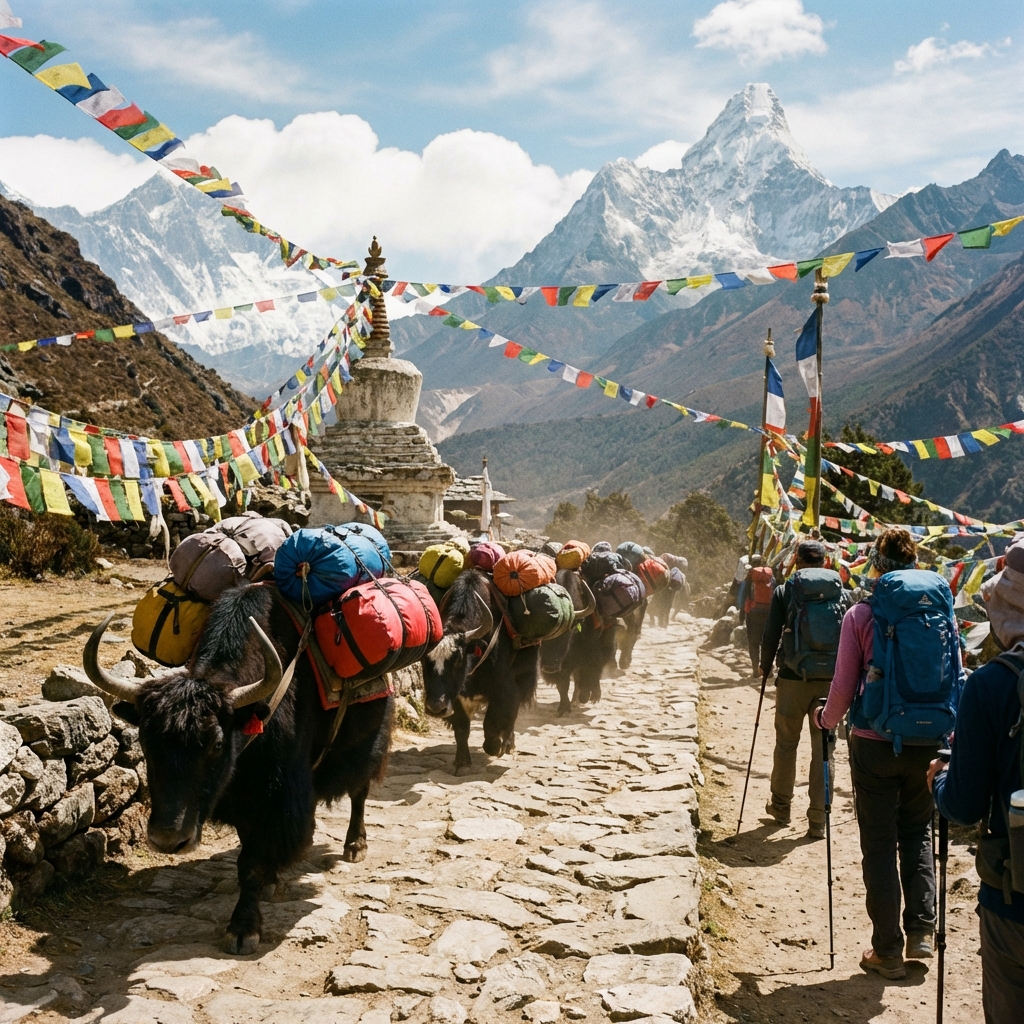
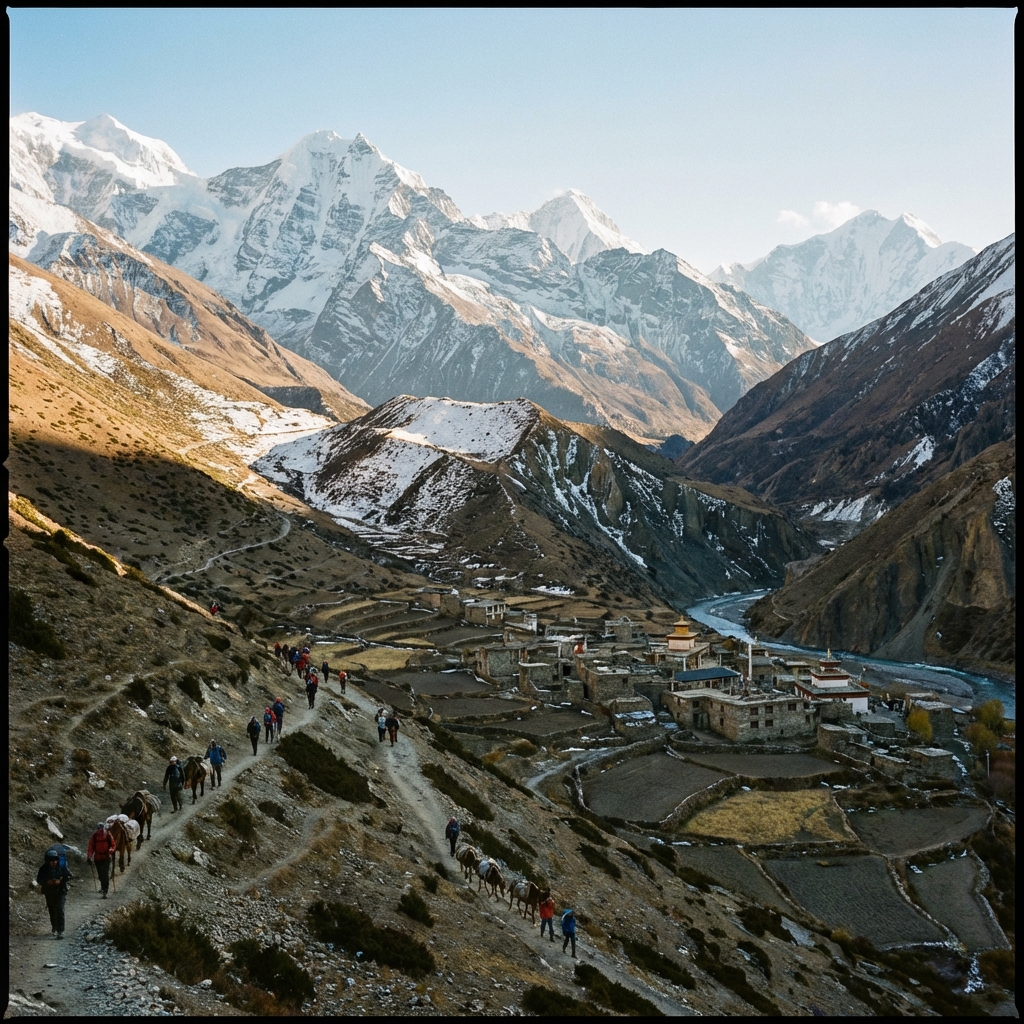
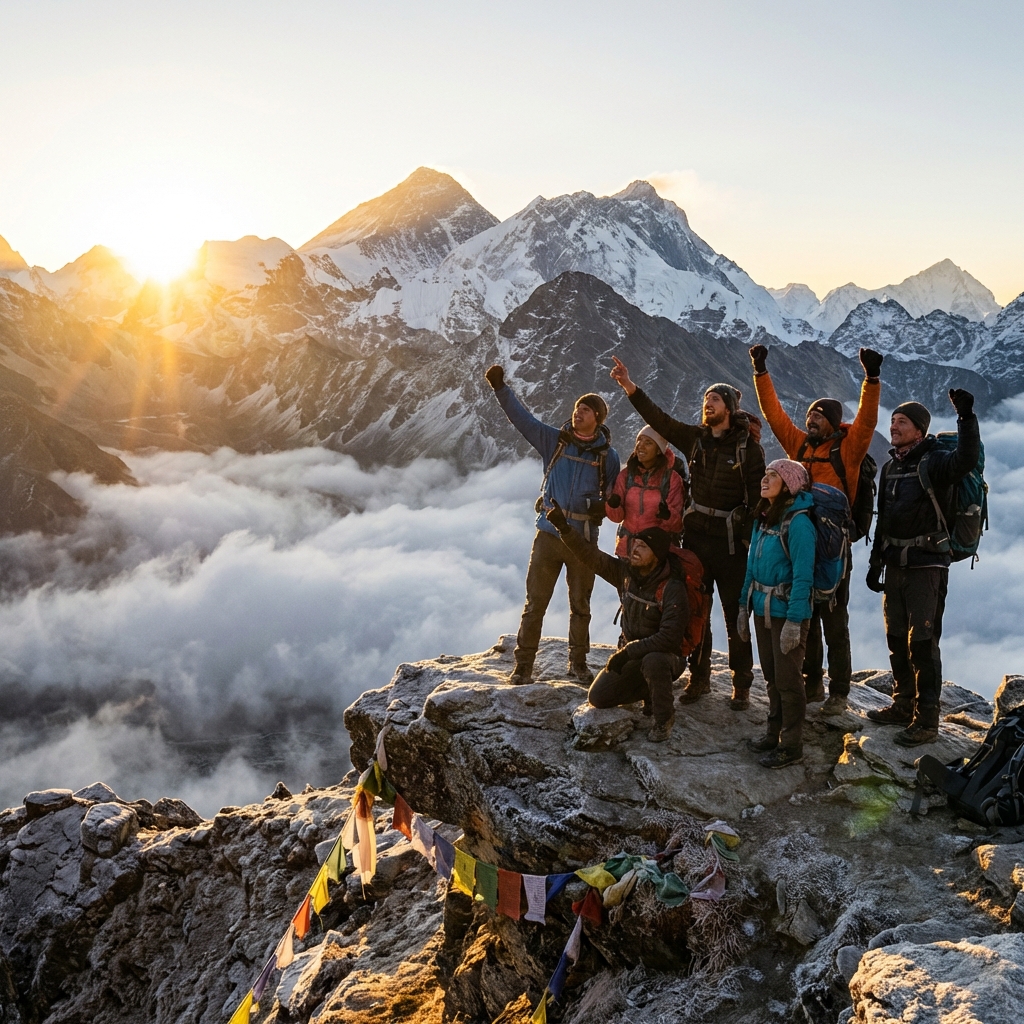
The question of whether to trek solo or join a group is one of the most personal decisions in Nepal trekking, and it shapes every aspect of the experience. Solo trekking offers complete freedom: you set your own pace, choose your own stops, change plans on impulse, and experience the mountains on your own terms. Group trekking offers companionship, shared costs, built-in safety, and the social dimension of tackling a major challenge alongside fellow adventurers.
This is not the same comparison as choosing between a group trek and a private guided trek with an agency. That decision (covered in our group vs private trek guide) is about agency service format. This guide addresses a more fundamental question: should you trek essentially on your own (with a guide if required, but setting your own itinerary and pace) or should you join a group of fellow trekkers on a fixed departure?
Both approaches have passionate advocates, and both have genuine advantages and trade-offs. The right choice depends on your personality, budget, experience level, goals, and the specific trek you are planning. This guide examines every relevant factor in detail.
Who should read this guide:
- Solo travelers deciding how to approach Nepal trekking
- Trekkers who have always trekked in groups and wonder about going solo
- Budget-conscious trekkers comparing cost structures
- First-time Nepal visitors unsure which format suits their personality
- Experienced trekkers evaluating options for specific routes
Quick Comparison: Side-by-Side Overview
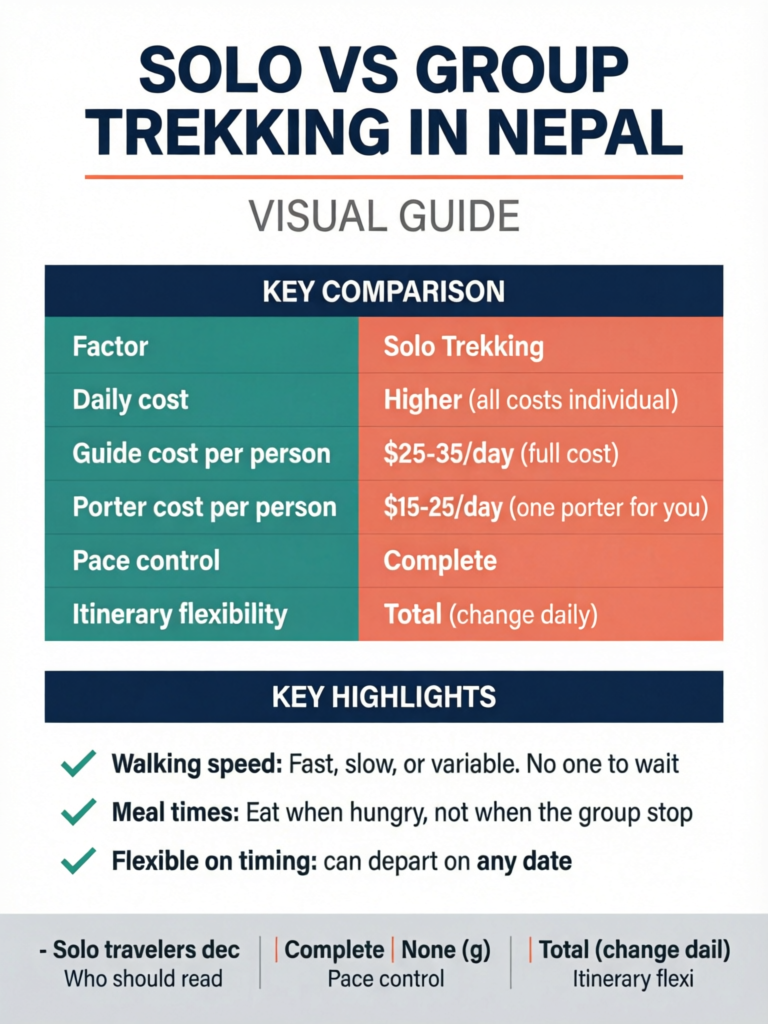
Solo: $1,800-3,500 (all costs individual). Group: $1,200-2,500 (shared guide/porter costs).
Solo: complete freedom. Group: fixed daily schedule.
Solo: meet people organically in tea houses. Group: built-in companions throughout.
Solo: more personal responsibility. Group: built-in buddy system.
Solo: change plans anytime. Group: fixed itinerary.
Solo: $25-$35 /day (not shared). Group: $5-10/day per person (shared).
Solo: all your choice. Group: consensus or guide decides.
Solo: any route, any time. Group: pre-set popular routes on fixed dates.
Solo: take when you need them. Group: scheduled by itinerary.
Solo: unlimited stops. Group: keep up with the group or fall behind.
Solo: possible, especially in remote areas. Group: minimal.
Solo: moderate-high recommended. Group: beginners welcome.
Master Comparison Table
| Factor | Solo Trekking | Group Trekking | Advantage |
|---|---|---|---|
| Daily cost | Higher (all costs individual) | Lower (shared guide, porter, transport) | Group |
| Guide cost per person | $25-$35 /day (full cost) | $5-10/day (shared among 4-8 people) | Group |
| Porter cost per person | $20-$30 /day (one porter for you) | $5-10/day (shared porters) | Group |
| Pace control | Complete | None (group pace) | Solo |
| Itinerary flexibility | Total (change daily) | Fixed (pre-set schedule) | Solo |
| Rest day flexibility | Take when needed | Scheduled by guide | Solo |
| Social interaction | Organic (tea house meetups) | Constant (same group daily) | Tie (preference-dependent) |
| Safety net | Guide + your own judgment | Group + guide + safety in numbers | Group |
| Decision autonomy | Complete | Shared or guide-driven | Solo |
| Photography freedom | Stop anywhere, any time | Keep group pace | Solo |
| Loneliness risk | Moderate (varies by route) | Very low | Group |
| Cultural immersion | Deeper (one-on-one with locals) | Shallower (group dynamic dominates) | Solo |
| Experience required | Moderate-high | Low-moderate | Group |
| Route availability | Any route, any date | Popular routes, fixed dates | Solo |
| Booking lead time | Short (days to weeks) | Moderate (weeks to months) | Solo |
| Gear sharing | Not possible | First aid, chargers, etc. shared | Group |
| Meal times | Eat when hungry | Group meal schedule | Solo |
| Trek cancellation risk | None (your own trip) | Possible if minimum not met | Solo |
| Post-trek friendships | Possible but random | Common (shared intense experience) | Group |
| Suitable for introverts | Excellent | Challenging | Solo |
| Suitable for extroverts | May feel isolating | Excellent | Group |
1. Cost Comparison: The Financial Reality
Cost is often the first factor trekkers consider, and the differences are significant.
Solo Trekking Costs
When you trek solo (or as a solo traveler hiring your own guide), you bear all costs individually:
| Cost Item | Solo Trekker (EBC, 14 days) |
|---|---|
| Guide (14 days x $30/day) | $420 |
| Porter (14 days x $20/day, optional) | $280 |
| Accommodation (14 nights x $5-20) | $70-280 |
| Food (14 days x $20-35) | $280-490 |
| Lukla flights | $215-400 |
| Permits | $38-45 |
| Tips (guide + porter) | $100-200 |
| Hot showers, charging, extras | $40-100 |
| Total on-trek cost | $1,578-2,215 |
The key cost difference for solo trekkers is that the guide and porter serve only you. You pay their full daily rate, whereas in a group, that cost is divided among multiple trekkers.
Group Trekking Costs
Group treks divide shared costs among participants, typically 4-12 trekkers:
| Cost Item | Group Trekker (EBC, 14 days, 6-person group) |
|---|---|
| Guide (shared: $30/day divided by 6) | $70 |
| Assistant guide (shared: $25/day divided by 6) | $58 |
| Porter team (shared among group) | $80-120 |
| Accommodation (14 nights x $5-20) | $70-280 |
| Food (14 days x $20-35) | $280-490 |
| Lukla flights | $215-400 |
| Permits | $38-45 |
| Tips (shared contribution) | $50-100 |
| Agency organization fee | $100-300 |
| Hot showers, charging, extras | $40-100 |
| Total on-trek cost | $1,136-1,863 |
Agency-organized group treks typically package all of the above into a single price: $1,200-2,500 for EBC (depending on agency quality and inclusions). This all-inclusive pricing simplifies budgeting and eliminates daily spending decisions.
Cost Verdict
Group trekking saves 20-40% compared to solo trekking at comparable service levels. The savings come primarily from shared guide and porter costs. On a 14-day EBC trek, a solo trekker pays approximately $400-700 more than a group trekker for guide services alone.
However, solo trekking offers more budget control. Solo trekkers can choose cheaper accommodation, eat more economically, skip porters, and reduce tips. A very budget-conscious solo trekker can undercut a mid-range group trek on total cost, but at the expense of comfort.
Pro Tip
If you are a solo traveler who wants group cost savings without sacrificing flexibility, look for "join a group" options offered by agencies in Kathmandu's Thamel district. Many agencies collect individual travelers and form groups of 4-8 for popular treks. You get shared guide costs while meeting fellow travelers. The trade-off is a fixed itinerary and departure date rather than your own schedule.
2. Pace and Flexibility: The Freedom Factor
This is where solo trekking's greatest advantage lies, and where group trekking's greatest frustration often emerges.
Solo Trekking Pace
When you trek solo (with your guide), the pace is entirely yours:
- Morning start time: Leave when you want. Early bird? Start at 6 AM. Night owl? Leave at 9 AM.
- Walking speed: Fast, slow, or variable. No one to wait for or keep up with.
- Stops: Photograph that sunrise for 30 minutes. Skip a tea house that does not interest you. Sit by a river for an hour. Your time is your own.
- Daily distance: Walk further than planned if you feel strong. Stop early if you are tired.
- Rest days: Take them when your body needs them, not when the itinerary schedules them.
- Route changes: Add a side trip to a viewpoint your guide suggests. Skip a section that does not interest you. Extend the trek by two days because you love it.
- Meal times: Eat when hungry, not when the group stops.
This flexibility transforms trekking from following a schedule into following your instincts. Many experienced trekkers consider this freedom the single most important factor in their trekking experience.
Group Trekking Pace
Group treks operate on fixed schedules that accommodate the entire group:
- Morning start time: Set by the guide, typically 7:30-8:30 AM. Everyone leaves together.
- Walking speed: Determined by the slowest member. Groups can only move as fast as their weakest participant.
- Stops: Scheduled by the guide at pre-determined tea houses. Photography stops are brief and shared.
- Daily distance: Fixed by itinerary. Cannot extend or shorten based on how you feel.
- Rest days: Pre-scheduled. You rest when the itinerary says, whether you need it or not.
- Route changes: Not possible without group consensus. The guide follows the booked itinerary.
- Meal times: Set by the group schedule. Breakfast, lunch, and dinner at scheduled times.
For some trekkers, this structure is reassuring and eliminates decision fatigue. For others, it is the primary frustration of group trekking.
The pace problem: In any group, fitness levels vary. The fastest walker may be done in 4 hours while the slowest takes 7 hours. This means either the fast walkers wait at every stop (boring) or the slow walkers feel pressured to move faster (stressful). Neither experience is ideal, and this tension is the most commonly cited complaint about group trekking.
The Speed Mismatch Reality
On a typical group trek of 6-8 people, expect a walking speed difference of 30-50% between the fastest and slowest members. On a day that takes the average member 6 hours, the fastest may finish in 4.5 hours and the slowest in 8 hours. Good guides manage this by splitting the group into faster and slower sub-groups with an assistant guide, but this partially defeats the purpose of group trekking. If you know you are significantly faster or slower than average, solo trekking may be a better match for your pace.
Flexibility Verdict
Solo trekking wins decisively on flexibility. The ability to change your mind, follow your energy, and adapt your itinerary daily is the defining advantage of solo trekking. If freedom matters to you, this factor alone may determine your choice.
Group trekking wins on structure. For trekkers who find too many choices stressful, or who appreciate having every day planned in advance, the fixed itinerary is a feature, not a bug. It removes daily decision-making and lets you focus entirely on walking and enjoying.
3. Safety: The Critical Comparison
Safety on Nepal's trails involves altitude sickness risk, trail hazards, weather, and the availability of help in emergencies. The solo vs group comparison matters here.
Solo Trekking Safety
Advantages:
- Your guide focuses exclusively on your health and condition
- You can descend immediately if you feel altitude sickness symptoms (no group negotiation needed)
- You move at your own pace, reducing overexertion risk
- Decision-making is faster in emergencies
Vulnerabilities:
- If your guide becomes incapacitated, you are alone
- No fellow trekkers to notice if your judgment is impaired by altitude (a common AMS symptom)
- Evacuations from remote areas require your guide to coordinate alone
- On less-trafficked routes, you may go hours without seeing other people
- If you become separated from your guide, navigation can be challenging
Group Trekking Safety
Advantages:
- Multiple people monitoring each other's condition (altitude sickness symptoms are often noticed by others before the affected person)
- Group first aid kit and shared emergency resources
- Guide plus assistant guide provides redundancy
- Multiple people to assist in an emergency (carrying, supporting, going for help)
- Safety in numbers on remote trail sections
- Group satellite phone or emergency communication shared
Vulnerabilities:
- Group pace may be too fast for the weakest member, increasing altitude sickness risk
- Group pressure ("everyone else is fine, I should keep going") can override individual caution
- Guide attention is divided among multiple trekkers
- Group decision-making in emergencies can be slower than individual decision-making
- If one person needs to descend, the group faces a difficult choice: split up or all descend
Safety Verdict
Group trekking is marginally safer for most situations. The buddy system, shared monitoring for altitude sickness symptoms, and redundant support provide a meaningful safety advantage. This is particularly important for first-time high-altitude trekkers who may not recognize AMS symptoms in themselves.
Solo trekking with an experienced guide is also very safe on popular routes. The guide's undivided attention compensates for the lack of group safety net. Solo trekking becomes riskier on remote routes where other trekkers are scarce and help is far away.
Solo Trekking Safety Requirements
If you trek solo in Nepal, take these safety measures seriously. Always trek with a licensed guide on routes above 4,000m. Carry a personal locator beacon or satellite communication device (Garmin inReach or similar). Share your detailed itinerary with someone at home and check in daily. Carry a comprehensive first aid kit including Diamox, ibuprofen, and oral rehydration salts. Learn to recognize altitude sickness symptoms in yourself, because there will be no group member to notice them for you. Purchase travel insurance that covers helicopter evacuation up to 6,000m.
4. Social Experience: Connection vs Solitude
The social dimension of trekking is deeply personal, and solo vs group trekking delivers fundamentally different social experiences.
Solo Trekking Social Life
Solo trekking is not necessarily lonely. On popular routes like EBC and the Annapurna Circuit, tea houses create natural social hubs where solo trekkers meet:
How solo trekkers connect:
- Tea house dining rooms: Everyone eats in the same communal room. Conversations start naturally over dal bhat and hot tea. You may meet a dozen different trekkers every evening.
- Trail encounters: Walking at your own pace, you naturally fall into conversation with trekkers walking at similar speeds.
- Rest day socializing: Namche Bazaar, Manang, and other rest day stops are social hubs where trekkers gather in cafes and lodges.
- Spontaneous trail companions: It is common for solo trekkers to walk together for a day or two, then part ways when their itineraries diverge.
The social character of solo trekking: You meet many people briefly rather than a few people deeply. Every evening brings new faces and new stories. The connections are wide but typically shallow, though some develop into lasting friendships.
The solitude element: Between social encounters, you walk in genuine solitude (or with just your guide). This quiet time is one of solo trekking's great gifts: hours of walking through extraordinary landscapes with your own thoughts. Many solo trekkers describe these solitary walking hours as the most valuable part of their experience.
Group Trekking Social Life
Group trekking provides a built-in social circle from day one:
How group trekking creates connection:
- Shared challenge: Tackling a major trek together creates bonds quickly. By day three, most groups have developed genuine camaraderie.
- Shared meals: Eating together three times a day for two weeks creates intimacy and running jokes.
- Shared suffering: Bad weather days, tough climbs, and altitude discomfort become bonding experiences.
- Shared triumphs: Reaching Base Camp or crossing a pass as a group creates powerful collective memories.
- Evening socializing: Cards, conversation, and storytelling in tea house dining rooms with the same companions every night.
The social character of group trekking: You develop deep connections with a small number of people. By the end of a two-week trek, you know your group members' life stories, fears, and dreams. Many lifelong friendships and relationships begin on group treks.
The social risks: Not every group dynamic works. Personality clashes, pace disagreements, and differing expectations can create tension. One difficult personality can affect the entire group's experience. You cannot choose who is in your group (unless booking as a pre-formed group of friends).
Social Verdict
Group trekking wins for guaranteed companionship. If social connection is important to your trekking experience, joining a group ensures you will never eat alone, walk alone, or face a challenge alone.
Solo trekking wins for social flexibility. You socialize when you want to and retreat into solitude when you need to. You meet a wider range of people and maintain the option of genuine alone time. For introverts who value control over their social energy, solo trekking is usually the better choice.
Pro Tip
The best social strategy for solo trekkers on popular routes like EBC: stay at the busier, well-known tea houses in each village. These are where other trekkers congregate. Ask your guide which lodge is the most popular with international trekkers. You will almost always find conversation partners in the dining room. On the trail, walk near other trekkers during the late morning hours when the trail is busiest, and let natural conversations develop.
5. Cultural Immersion: Depth vs Surface
Solo Trekking Cultural Experience
Solo trekkers (with their guide) often have deeper cultural interactions:
- Guide conversations: With only you to attend to, your guide becomes a personal cultural interpreter. Conversations about Nepali life, family, religion, politics, and mountain culture develop naturally over days of walking together.
- Tea house interactions: Arriving as a single trekker (not a group) makes tea house families more likely to engage personally. You may be invited to sit by the kitchen fire, help prepare dal bhat, or join family conversations.
- Village pace: Without a group schedule, you can linger in villages that interest you, visit monasteries at your own pace, and watch daily life unfold without time pressure.
- Language learning: Sustained one-on-one time with your guide allows you to pick up more Nepali words and phrases than group settings where English dominates conversation.
Group Trekking Cultural Experience
Group trekking provides a different cultural dynamic:
- Guide presentations: Good group guides give cultural briefings at monasteries, villages, and cultural sites, providing context that solo trekkers may miss.
- Group dynamic dominates: Conversations within the group tend to overshadow interactions with locals. The social energy stays within the group bubble.
- Scheduled cultural stops: Group itineraries include planned cultural visits (monastery visits, village walks) but these are time-limited and structured.
- Less spontaneous interaction: A group of 6-8 trekkers arriving at a tea house creates a different dynamic than a solo trekker. Local families interact with the group as a unit rather than as individuals.
Cultural Verdict
Solo trekking wins for cultural depth. The one-on-one relationship with your guide and the organic interactions with tea house families provide a more intimate cultural experience. This is a consistent finding in trekker feedback: solo trekkers report deeper cultural connections than group trekkers.
Group Trek Pace Mismatch Risk
The most common source of frustration and even danger on group treks is pace mismatch. If the group moves too fast for the slowest member, that person risks overexertion, dehydration, and increased altitude sickness susceptibility. If you are joining a group trek, honestly assess your fitness level and communicate it to your agency before departure. Ask about the expected daily pace and the fitness level of other group members. Agencies that match group members by fitness level produce significantly happier outcomes than those that assemble groups purely by departure date.
6. Best Routes for Each Style
Best Routes for Solo Trekking
These routes are well-suited to solo trekkers due to good infrastructure, clear trails, and regular tea house availability:
-
Everest Base Camp: Heavy trail traffic means you are never truly alone. Tea houses are plentiful. The well-marked trail is easy to follow. Lukla flights mean regular connections to civilization.
-
Annapurna Circuit: Multiple tea houses in each village provide options. The trail is well-established. The diverse cultural landscape rewards the flexibility that solo trekking allows.
-
Langtang Valley: Close to Kathmandu, well-maintained trail, regular tea houses. A shorter trek (7-10 days) that works well for solo trekkers new to Nepal.
-
Poon Hill/Ghorepani: The beginner-friendly trek with excellent infrastructure. Perfect for first-time solo trekkers testing their comfort level.
-
Mardi Himal: Short (5-7 days), relatively quiet, and stunning. Solo trekkers with a guide can enjoy genuine solitude with excellent views.
Best Routes for Group Trekking
These routes benefit from the group format due to remoteness, logistics, or cost-sharing advantages:
-
Manaslu Circuit: Restricted area requiring special permits and a minimum group size. Group trekking is essentially required by regulation and makes the permit costs manageable.
-
Upper Mustang: Restricted area with expensive permits (USD 50/day per person for 10 days). Group trekking shares these costs and provides companionship in a remote, sparsely populated area.
-
Upper Dolpo: Nepal's most remote trekking area. Safety in numbers is genuinely important here. Very few tea houses; camping is common. Group support is valuable.
-
Three Passes Trek: The technical difficulty and remote pass sections make group safety advantages more significant. Shared guide expertise across three high passes is valuable.
-
Everest Base Camp (for first-timers): While EBC works well solo, first-time high-altitude trekkers benefit from the safety net and shared experience of a group.
Pro Tip
For restricted area treks like Manaslu, Upper Mustang, and Dolpo, group trekking is not just recommended; it is often the only practical option. Restricted area permits require a booking requirements (solo trekkers now allowed with guide) and cost $50-500 per person depending on the area. Solo trekkers can sometimes pair with another solo traveler through an agency to meet minimum requirements, but this requires coordination and flexibility with dates.
7. The Personality Factor
Perhaps more than any objective factor, the solo vs group decision often comes down to personality.
Solo Trekking Personality Profile
Solo trekking tends to suit people who:
- Recharge through alone time (introverts or those who value solitude)
- Make decisions quickly and dislike committee processes
- Have a strong internal motivation that does not require external encouragement
- Enjoy photography and want unlimited time to compose shots
- Are experienced travelers comfortable with uncertainty and problem-solving
- Value depth over breadth in human connections
- Have specific pace preferences (very fast or very slow)
- Are journal writers, meditators, or reflective thinkers who value mental space
- Dislike compromising on daily plans and priorities
Group Trekking Personality Profile
Group trekking tends to suit people who:
- Thrive in social environments and draw energy from others
- Enjoy shared experiences and collective achievement
- Prefer having decisions made for them when they can relax and follow
- Want built-in accountability (the group expects you at breakfast)
- Are traveling specifically to meet people and build new relationships
- Feel anxious about being alone in unfamiliar environments
- Are competitive and enjoy the motivation of keeping up with others
- Value storytelling and want an audience for trail experiences
- Are first-time international trekkers who want a safety net
The Hybrid Approach
Some trekkers combine elements of both:
- Start with a group, finish solo: Join a group trek, and when comfortable with the trail and altitude, continue alone with your guide for the final days.
- Solo with spontaneous companions: Trek solo but naturally fall in with other solo trekkers for days at a time, separating and reconnecting as your paths cross.
- Small private group of friends: Trek with 2-4 friends, getting group cost savings and companionship without the dynamics of strangers.
8. Practical Considerations
Communication and Connectivity
Solo trekkers need to manage their own communication:
- Carry a personal satellite communicator (Garmin inReach or similar) for areas without cell coverage
- Purchase a Nepali SIM card (Ncell or NTC) for trail sections with coverage
- Establish check-in schedules with contacts at home
- Rely on your guide for local communication and emergency coordination
Group trekkers benefit from organized communication:
- Agency provides emergency communication (satellite phone)
- Guide handles all local logistics and communication
- Group members can share charging devices and connectivity
- Agency monitors group progress and provides backup support
Booking and Planning
Solo trekking requires more personal planning:
- Research routes, tea houses, and logistics independently (or pay an agency to do it)
- Book guide and porter directly or through an agency
- Arrange permits (guide can assist)
- Flexible on timing: can depart on any date
Group trekking requires advance commitment:
- Choose an agency and fixed departure date weeks or months in advance
- Pay deposit to secure spot
- Accept the set itinerary
- Risk of cancellation if minimum group size is not met
- Less flexibility to change dates once booked
Gear Differences
Solo trekkers need to be more self-sufficient:
- Complete personal first aid kit (no group kit to rely on)
- Personal navigation tools (map, compass, GPS device or phone app)
- Personal emergency shelter (lightweight bivvy bag for remote routes)
- All charging cables, adapters, and battery packs
Group trekkers can share some gear:
- Group first aid kit carried by guide
- Shared emergency communication
- Shared charging equipment possible
- Guide carries group navigation tools
Which Style Is Safer?
Group trekking is safer due to built-in buddy systems, shared guides with better ratios, and collective decision-making at altitude. Solo trekkers (with mandatory guide) carry more personal responsibility for health monitoring and emergency decisions. However, a competent licensed guide with good travel insurance provides adequate safety for either style. The key safety factor is guide quality, not group size. See our Nepal trekking permits guide for mandatory guide requirements.
Which Style Is Cheaper?
Group trekking is 20-40% cheaper due to shared guide and porter costs. On a 14-day EBC trek, a solo trekker pays $1,800-3,500 while a group member pays $1,200-2,500 for the same route. The savings come from splitting guide wages, porter fees, and sometimes lodge negotiations. For budget trekkers, joining an agency group departure is the most cost-effective option. See our budget vs luxury trekking guide.
Which Style Offers More Flexibility?
Solo trekking offers complete flexibility -- you set your own daily pace, choose lunch stops spontaneously, extend stays at villages you love, and adjust your itinerary daily. Group trekking follows a fixed schedule with set daily distances, predetermined stops, and group-pace walking. If independence and spontaneity define your travel philosophy, solo trekking on routes like the Annapurna Circuit or Langtang Valley is the better choice.
9. Decision Framework: Which Style Matches You?
Choose Solo Trekking If:
Freedom is your highest priority. If the thought of following someone else's schedule for two weeks makes you uncomfortable, solo trekking is your answer. The ability to change plans daily, walk at your own speed, and spend time however you choose is solo trekking's irreplaceable advantage.
You are an experienced trekker or traveler. If you have completed multi-day treks before and feel comfortable navigating unfamiliar environments, you have the skills to handle solo trekking's greater responsibility. Prior experience in developing countries is also valuable.
Cultural depth matters to you. If you travel to connect with local people and immerse yourself in local life, solo trekking's intimate scale facilitates deeper cultural interactions than group trekking's social bubble.
You are an introvert or value solitude. If two weeks of constant group interaction sounds exhausting rather than energizing, solo trekking lets you control your social engagement. You can be social in tea house dining rooms and solitary on the trail.
Budget is secondary to experience quality. Solo trekking costs more due to non-shared guide fees, but many trekkers consider the experience premium worth every dollar.
Photography is important to you. If you are a serious photographer who needs time to compose shots, wait for light, and explore compositions, solo trekking's unlimited stop time is essential. Group trekking's schedule does not accommodate extended photography.
Choose Group Trekking If:
Budget is a primary concern. If saving $400-700 on guide costs matters, group trekking is the financially smarter choice. The per-person costs are consistently lower.
You are new to high-altitude trekking. If this is your first trek above 4,000m, the safety net of a group, experienced guide, and fellow trekkers provides valuable support. Learning to recognize altitude sickness symptoms is easier when others are watching too.
Social connection is a trekking goal. If sharing the experience with others is fundamental to your enjoyment, group trekking delivers guaranteed companionship. The friendships formed on group treks are often cited as the highlight of the experience.
You prefer structure and simplicity. If you want someone else to handle all decisions, logistics, and daily planning so you can focus entirely on walking and enjoying, group trekking's fixed itinerary is a feature, not a limitation.
You are trekking a restricted area. If your target is Manaslu, Upper Mustang, or Dolpo, group trekking is effectively required by permit regulations and makes the high permit costs manageable.
You want accountability and motivation. If you know that having others expecting you at breakfast will get you out of bed more reliably than your own willpower, group trekking provides built-in accountability that solo trekking lacks.
The Compromise Option: Small Private Group
If you are traveling with 2-4 friends or family members, a private group trek offers the best of both worlds. You share guide and porter costs (group savings), trek with people you already know and like (no stranger dynamics), and maintain flexibility to adjust your itinerary (not locked into a fixed departure schedule). Most agencies in Kathmandu organize private group treks at competitive rates, and the per-person cost drops significantly compared to truly solo trekking.
Frequently Asked Questions
Is it safe to trek alone in Nepal?
Trekking with a licensed guide on popular routes like EBC, Annapurna Circuit, and Langtang is very safe. The trails are well-established, tea houses are regular, and other trekkers are present. As of 2026-2026, Nepal requires all trekkers to have a licensed guide, though enforcement varies by region. The primary safety concern for solo trekkers is altitude sickness, which is equally dangerous whether you trek solo or in a group. The key safety measures are having a competent guide, carrying emergency communication, and having proper travel insurance.
Can I join a group in Kathmandu at short notice?
Yes, many agencies in Thamel offer "join a group" options with weekly or bi-weekly departures during peak season. For popular treks like EBC and Annapurna Circuit, you can often join a group within 2-5 days of arriving in Kathmandu. Off-peak season and less popular routes may require longer waits. Check bulletin boards at hostels and agency offices for departure notices.
Will I be lonely as a solo trekker?
On popular routes (EBC, Annapurna Circuit, Langtang), loneliness is unlikely. Tea house dining rooms are social hubs where solo trekkers naturally connect. You will eat surrounded by fellow trekkers every evening. On remote routes (Upper Dolpo, Makalu), genuine solitude is more common, and some trekkers find this challenging after multiple days. Your guide provides constant companionship, which many solo trekkers underestimate in importance.
How do I find a good guide for solo trekking?
Use a TAAN-registered agency in Kathmandu. Meet your guide before departure and assess their English, experience, and personality. Ask about their experience on your specific route. Read agency reviews from solo trekkers specifically. A good solo trekking guide is part navigator, part cultural interpreter, part safety officer, and part companion. The guide-trekker relationship is more important for solo trekkers because it is your primary social interaction.
What is the ideal group size?
Most experienced trekkers and guides consider 4-6 people the ideal group size. Large enough for social variety and cost sharing, small enough for pace compatibility and personal attention from the guide. Groups of 8-12 are cost-efficient but increase the likelihood of pace conflicts and personality clashes. Groups above 12 rarely work well on Nepal's narrow trails.
Can I switch from solo to group or vice versa during a trek?
Not easily. Once you start a trek with a booked guide (solo) or a group, changing format mid-trek is logistically complex. However, solo trekkers naturally fall in with other trekkers on the trail, creating informal group dynamics without the formal structure. This spontaneous companionship is one of solo trekking's pleasant surprises.
How far in advance do I need to book a group trek?
For peak season (October-November): 2-4 months for popular agencies, 2-4 weeks for agencies with frequent departures. For shoulder season: 1-4 weeks is usually sufficient. Some budget agencies fill groups at short notice in Kathmandu. Premium agencies with fixed departures and guaranteed group sizes may sell out months ahead.
Is solo trekking actually "solo" if I have a guide?
No, and this distinction matters. "Solo trekking" in the Nepal context means trekking as an individual (not part of a group) with your own personal guide. You are not walking completely alone. Your guide is with you throughout, handling logistics, navigation, and safety. The "solo" aspect is about pace control, flexibility, and the absence of other group members, not about walking without any companion.
Which style is better for couples?
A private trek for two is often the best option. You share guide costs (less per person than truly solo), maintain flexibility, and trek at a shared pace without stranger dynamics. Most agencies offer private treks for pairs at rates that are 25-40% less per person than solo trekking but more flexible than group trekking.
What if I am a slow walker?
Solo trekking is generally better for slow walkers. You walk at your own pace without feeling like a burden on a group. Your guide adjusts the itinerary to your speed, potentially adding extra days if needed. In a group, slow walkers often feel pressured and self-conscious, which reduces enjoyment. If you know you are slower than average, communicate this clearly when booking and choose the format that accommodates your pace.
Are there women-only group treks in Nepal?
Yes, several agencies offer women-only group treks and women-only guides. These groups have become increasingly popular and provide a comfortable social dynamic for women who prefer to trek exclusively with other women. Check agencies like Three Sisters Adventure Trekking (Pokhara), which specializes in women-led trekking with women guides and women-only group options.
Related Resources
- Solo Trekking Nepal Safety Guide
- Best Treks for Solo Travelers Nepal
- Group vs Private Trek Nepal
- Independent vs Guided Trekking
- Budget vs Luxury Trekking Nepal
- Best Time to Trek Nepal
Final Verdict: Know Yourself, Choose Accordingly
The solo vs group trekking decision is ultimately a personality test disguised as a logistics question.
Solo trekking is freedom. It is the quiet joy of walking at your own pace through extraordinary landscapes, stopping when you want, changing plans when inspiration strikes, and developing a deep personal relationship with your guide and the mountain communities you pass through. It costs more, requires more experience, and demands more personal responsibility. But for those who value autonomy, it delivers a trekking experience that is profoundly personal and irreplaceable.
Group trekking is connection. It is the shared achievement of reaching Base Camp together, the evening laughter in tea house dining rooms, the mutual support on difficult days, and the friendships that outlast the trek. It costs less, provides a stronger safety net, and welcomes beginners. For those who draw energy from shared experiences, it transforms a trek from a personal achievement into a collective adventure.
Neither is objectively better. The best choice is the one that matches who you are, not who you think you should be. Introverts who force themselves into groups and extroverts who force themselves to trek solo both end up with diminished experiences.
Listen to your instincts. They already know the answer.
Last updated: February 2026. All data verified against Nepal Tourism Board records, TAAN agency reports, and extensive solo and group trekker feedback from the 2026/2027 season. Guide and porter rates reflect current market prices in Kathmandu and on-trail.