Nepal attracts tens of thousands of solo travelers every year, many of them heading straight for the mountains. Trekking solo in Nepal can be one of the most rewarding travel experiences on Earth: the freedom to set your own pace, the heightened sensory awareness that comes from walking alone, and the deeper connections you form with fellow trekkers and local people when you are not insulated by a group.
But solo trekking in Nepal also raises legitimate questions. Which routes are safest? Do you need a guide? Will you feel isolated? How do costs compare to traveling in a group? And what about the changing regulations around independent trekking that have been evolving over recent years?
This comprehensive guide answers all of these questions. We rank the best Nepal treks for solo-friendliness based on safety, social atmosphere, infrastructure, and logistics. We compare the costs of solo independent trekking versus hiring a guide-only setup. And we provide specific safety advice, including a dedicated section for women trekking solo.
Whether you are a confident independent traveler or a first-timer exploring Nepal alone, this guide will help you choose the right route and prepare properly.
Poon Hill / Annapurna Base Camp
Langtang Valley
Required on most routes (2026 regulations)
15-30% more than group rates
October-November (most other trekkers)
NTC SIM card recommended for all solo trekkers
Very easy on popular routes in peak season
All restricted areas (Manaslu, Upper Mustang, etc.)
Understanding Nepal's Solo Trekking Regulations (2026)
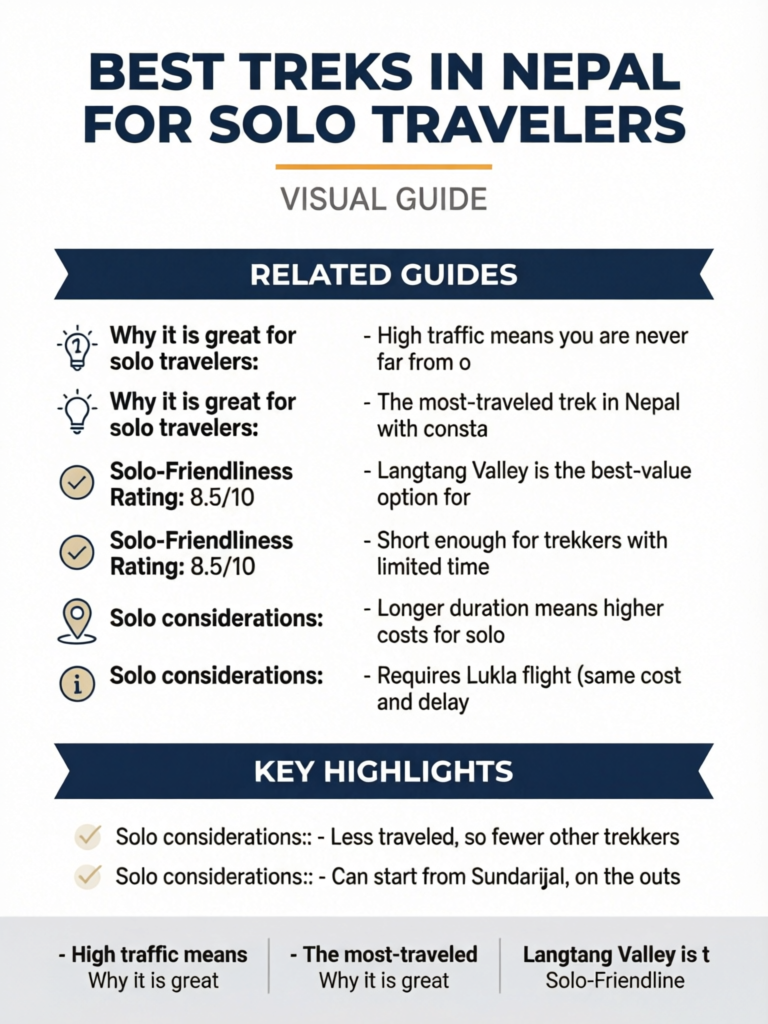
Before choosing your route, you need to understand the current regulatory landscape. Nepal's policies on independent and solo trekking have undergone significant changes.
Current Rules (as of February 2026)
Nepal has been tightening regulations around independent trekking following safety incidents. The key points:
- Guide requirement: As of the latest regulations, trekkers in most national park and conservation areas are required to hire a licensed guide. This applies to both solo and group trekkers. The rule has been enforced with varying consistency depending on the region.
- Restricted areas: Tsum Valley, Upper Mustang, Manaslu Circuit, Nar Phu Valley, Upper Dolpo, Kanchenjunga, and other restricted areas have always required a licensed guide, a registered agency, and minimum group sizes (usually 2 people).
- TIMS card: The Trekkers' Information Management System (TIMS) card or equivalent permit is required for all trekkers.
Regulations Change Frequently
Nepal's trekking regulations have changed multiple times in recent years, with varying enforcement levels across different regions. Before finalizing your plans, verify current requirements with the Nepal Tourism Board or a reputable local trekking agency. What was permitted last season may have changed.
What This Means for Solo Trekkers
Even with the guide requirement, solo trekking remains very much viable and popular. The practical reality is:
- Hiring a guide-only (no porter, no full agency package) is the most common setup for solo trekkers. Costs are reasonable ($25-$40 per day).
- Some trekkers still trek independently on popular routes where enforcement is inconsistent, though this carries a risk of being turned away at checkpoints.
- For restricted areas, you must book through an agency and may need to find a second trekker to meet the minimum group size.
For a comprehensive analysis of guided versus independent trekking options, see our independent vs. guided trekking guide.
The 10 Best Treks for Solo Travelers, Ranked
We ranked these treks based on five criteria critical for solo trekkers:
- Safety: Trail clarity, infrastructure, communication, and evacuation access
- Social atmosphere: Likelihood of meeting other trekkers on the trail and in lodges
- Infrastructure: Quality and availability of tea houses, food, and services
- Solo logistics: Ease of arranging the trek as a solo traveler
- Value: Cost-effectiveness for a single person
1. Poon Hill Trek (3-5 Days)
Solo-Friendliness Rating: 10/10
3-5 days
3,210m
Easy to Moderate
$200-$350
Very Easy
Good throughout
The Poon Hill trek is the undisputed champion for solo trekkers in Nepal. Short duration, well-marked trails, excellent tea house infrastructure, strong mobile phone coverage, proximity to Pokhara, and a constant stream of other trekkers make it as safe and sociable as solo trekking gets. The pre-dawn climb to Poon Hill viewpoint is a communal experience where solo trekkers naturally bond with others over the shared sunrise spectacle.
Why it is great for solo travelers:
- Very short duration means minimal time commitment and risk
- Ghorepani lodges are social hubs where solo trekkers easily meet others
- The trail is impossible to get lost on
- Strong phone signal for checking in with family and friends
- Close to Pokhara hospitals in case of emergency
- Budget-friendly even as a solo trekker
2. Annapurna Base Camp Trek (7-12 Days)
Solo-Friendliness Rating: 9/10
7-12 days
4,130m
Moderate
$500-$900
Very Easy
Good until MBC
The Annapurna Base Camp (ABC) trek is the most popular medium-length trek for solo travelers. The trail is well-established with tea houses at every stop, the trekking community is vibrant and welcoming, and the destination, the Annapurna Sanctuary amphitheater surrounded by 8,000-meter peaks, is spectacular. Solo trekkers consistently report making lifelong friends on this route.
Why it is great for solo travelers:
- High traffic means you are never far from other trekkers
- Lodge dining rooms are natural social spaces
- Trail is well-marked with clear directional signs
- Many other solo trekkers on this route
- Moderate altitude with manageable acclimatization needs
- Excellent tea house food and accommodation quality
3. Everest Base Camp Trek (12-14 Days)
Solo-Friendliness Rating: 8.5/10
12-14 days
5,364m
Moderate to Challenging
$800-$1,500
Very Easy
Available at most stops
The EBC trek is the most iconic trek in Nepal and draws a diverse international crowd that includes many solo travelers. The trail infrastructure is the best in the Himalaya, and the social atmosphere in Namche Bazaar and other major stops is excellent. The higher altitude and longer duration add complexity for solo trekkers, but the well-established route and abundant support services mitigate these challenges.
Why it is great for solo travelers:
- The most-traveled trek in Nepal with constant company
- World-class tea house infrastructure
- Namche Bazaar is one of the best social hubs in the Himalaya
- Many guide and porter services available in Lukla
- Strong trekker community in lodges
Solo considerations:
- Lukla flights add cost and potential delays for solo travelers
- Higher altitude requires careful acclimatization planning
- Longer duration means more days of solo expenses
4. Langtang Valley Trek (7-10 Days)
Solo-Friendliness Rating: 8.5/10
7-10 days
4,984m (Kyanjin Ri)
Moderate
$400-$700
Moderate to Good
Available in most villages
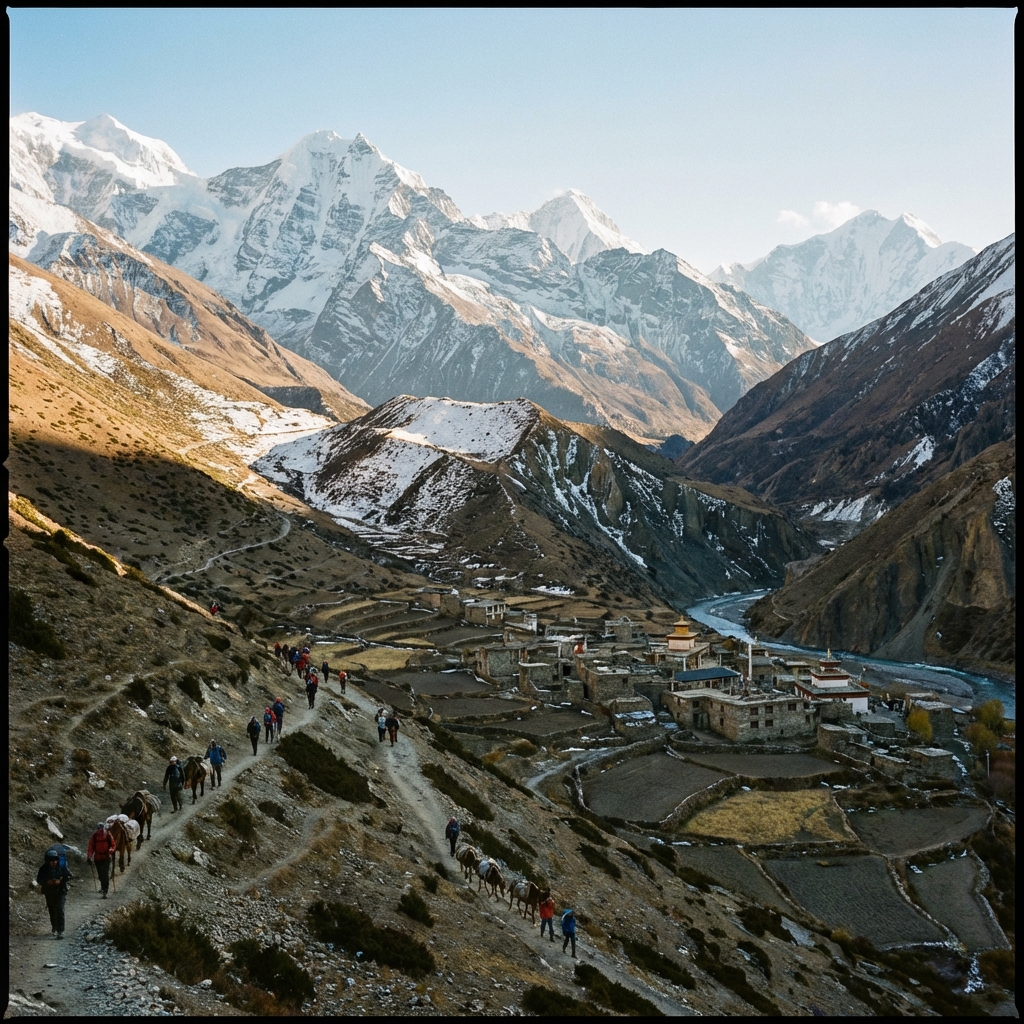
Langtang Valley is the best-value option for solo trekkers. No flights are needed (the trailhead at Syabrubesi is reachable by road from Kathmandu), the trail is well-established, and the cultural experience in Tamang villages is rich. The valley receives fewer trekkers than Annapurna and Everest routes, creating a more intimate atmosphere where you get to know other trekkers and local people more deeply.
Why it is great for solo travelers:
- No flights needed, reducing cost and logistical complexity
- Excellent value for money
- Strong Tamang culture and hospitality
- Less crowded than Annapurna and Everest, but enough trekkers for safety and social interaction
- Manageable duration and altitude profile
- Good trail infrastructure rebuilt after the 2015 earthquake
5. Mardi Himal Trek (5-7 Days)
Solo-Friendliness Rating: 8/10
5-7 days
4,500m
Moderate
$300-$550
Moderate
Patchy above High Camp
Mardi Himal has exploded in popularity in recent years as an alternative to the more crowded Annapurna routes. It offers dramatic close-up views of Machapuchare and the Annapurna range with a more adventurous, less-developed trail. Solo trekkers enjoy the balance between accessibility and a feeling of genuine wilderness.
Why it is great for solo travelers:
- Short enough for trekkers with limited time
- Growing trekker community but still quieter than ABC
- Dramatic mountain scenery without the two-week commitment
- Close to Pokhara for easy logistics
- The trail feels more adventurous than Poon Hill while remaining safe
6. Annapurna Circuit Trek (12-18 Days)
Solo-Friendliness Rating: 7.5/10
The classic Annapurna Circuit is a longer commitment, but the trail infrastructure is solid and the trekking community is international and social. The Thorong La pass (5,416m) is the major challenge, and having a guide provides important safety backup for this high-altitude crossing.
Solo considerations:
- Longer duration means higher costs for solo trekkers
- The Thorong La pass section benefits significantly from having a guide
- Some sections of the lower trail now follow a road, which is less appealing
- Finding walking companions is easy, especially approaching the pass
7. Gokyo Lakes Trek (12-14 Days)
Solo-Friendliness Rating: 7.5/10
The Gokyo Lakes trek in the Everest region offers an alternative to the standard EBC route with fewer trekkers and equally stunning scenery. The trail is well-established but quieter, providing a good balance of solitude and safety.
Solo considerations:
- Requires Lukla flight (same cost and delay risk as EBC)
- Fewer trekkers than EBC route, which some solo travelers prefer and others find isolating
- Gokyo Ri viewpoint is one of the best in Nepal
- Can be combined with EBC via Cho La pass for experienced trekkers
8. Khopra Ridge Trek (4-6 Days)
Solo-Friendliness Rating: 7/10
Khopra Ridge is an emerging alternative in the Annapurna region that offers mountain views comparable to Poon Hill with far fewer trekkers. The community-managed lodges and Khopra Danda viewpoint provide an excellent off-the-beaten-path experience while remaining accessible.
Solo considerations:
- Less traveled, so fewer other trekkers to meet
- Community lodges are well-run but basic
- Trail is less established than Poon Hill
- A guide is particularly valuable here for navigation
- Stunning views of Dhaulagiri and Annapurna
9. Pikey Peak Trek (5-7 Days)
Solo-Friendliness Rating: 7/10
Pikey Peak offers Everest views without the Lukla flight, making it a budget-friendly option for solo trekkers. The trail passes through Sherpa villages in the Solukhumbu district and reaches a viewpoint at 4,065m with panoramic views of Everest, Makalu, Kanchenjunga, and more.
Solo considerations:
- Very few other trekkers, which means true solitude but limited social interaction
- Community lodge accommodation is basic but adequate
- No flights needed (drive from Kathmandu to trailhead)
- Excellent value for money
- Requires a guide for navigation as trails are not always clear
10. Helambu Trek (5-7 Days)
Solo-Friendliness Rating: 7/10
The closest multi-day trek to Kathmandu, Helambu passes through beautiful Tamang and Sherpa villages below 3,700 meters. It is an excellent cultural trek with no extreme altitude challenges and easy access from the capital.
Solo considerations:
- Can start from Sundarijal, on the outskirts of Kathmandu
- Very affordable with no flight costs
- Fewer trekkers than Langtang or Annapurna routes
- Strong cultural immersion opportunities
- Can be combined with Gosaikunda for a longer itinerary
The Social Strategy for Solo Trekkers
If meeting other trekkers is important to you, choose popular routes during peak season (October-November). Stay at the busiest lodges in each village rather than the quietest ones. Eat dinner in the communal dining room rather than ordering to your room. The shared dining experience in Nepali tea houses is where most solo trekker friendships begin, often over shared dal bhat and stories of the day's trail.
Solo vs. Guide-Only vs. Full Package: Cost Comparison
Understanding the cost differences helps solo trekkers make informed decisions about how to structure their trek.
Cost Comparison: 10-Day Annapurna Base Camp Trek
| Expense | Solo Independent | Solo with Guide | Agency Package |
|---|---|---|---|
| Guide fee | $0 | $250-$350 | Included |
| Permits (ACAP + TIMS) | $38 | $38 | Included |
| Accommodation (10 nights) | $30-$80 | $30-$80 | Included |
| Meals (10 days) | $120-$180 | $120-$180 | Included |
| Guide meals/accommodation | $0 | $80-$120 | Included |
| Transport (Pokhara-trailhead) | $10-$20 | $10-$20 | Included |
| Porter (optional) | $0 | $150-$200 | Included |
| Agency margin | $0 | $0 | $100-$300 |
| Total | $200-$320 | $530-$840 | $600-$1,200 |
The Solo Premium
Solo trekkers typically pay 15-30% more per person than trekkers in a pair or group because:
- Single room supplement: Some lodges charge extra for single occupancy, though many do not on popular routes
- Guide cost is not split: A guide costs the same whether leading one or four trekkers
- Transport costs are not shared: Jeep and taxi fares are per vehicle, not per person
- No bulk agency discount: Agencies offer per-person discounts for larger groups
The Guide-Only Setup: Best Value for Solo Trekkers
Hiring a guide without a full agency package is the sweet spot for most solo trekkers. Benefits include:
- Safety backup and local knowledge
- Compliance with regulations
- Cultural interpretation and language assistance
- Flexibility to set your own pace and itinerary
- Lower cost than full agency packages
- Freedom to choose your own lodges and meals
For detailed advice on hiring guides, see our guide to hiring guides and porters in Nepal.
Negotiate Guide Rates in Kathmandu
Guide rates are negotiable, especially outside peak season. For a guide-only arrangement (no porter, no agency), expect to pay $25-$35 per day. This typically includes the guide's services only; you pay for their meals and accommodation separately (usually $8-$12 per day). Hiring directly through guide associations rather than agencies can save 20-30% but requires more research to verify credentials.
Safety Considerations for Solo Trekkers
General Safety Principles
1. Always inform someone of your plans Leave a detailed itinerary with your hotel in Kathmandu or Pokhara, a trusted contact back home, and your guide. Include planned routes, accommodation, and expected return dates. If trekking with a mandatory licensed guide, inform each lodge of your next destination.
2. Carry communication devices An NTC SIM card provides coverage on most popular routes. For remote treks, consider a satellite communication device (inReach, SPOT, or satellite phone). Always carry a fully charged phone and a portable power bank.
3. Register at TIMS checkpoints These checkpoints track your progress on the trail. If you fail to check out at the expected time, authorities can initiate a search.
4. Trek during daylight hours Start early and plan to reach your destination by 3:00-4:00 PM. Afternoon clouds, temperature drops, and fading light increase risks. Never trek after dark except for pre-dawn Poon Hill-style viewpoint hikes.
5. Trust your instincts If a trail section, weather condition, or personal interaction feels wrong, take the cautious option. Turn back, wait for better conditions, or seek help.
6. Carry comprehensive travel insurance Ensure your policy covers trekking at your planned maximum altitude and includes helicopter evacuation. Keep digital and physical copies of your policy. For detailed guidance, see our travel insurance guide.
Route-Specific Safety Notes
| Route | Key Solo Risk | Mitigation |
|---|---|---|
| Poon Hill | Minimal risk | Trail is crowded and well-marked |
| ABC | Avalanche risk in sanctuary | Stay on established trail, follow guide advice |
| EBC | Altitude sickness | Acclimatize properly, know AMS symptoms |
| Langtang | Landslide risk in valley | Check conditions, follow local advice |
| Annapurna Circuit | Thorong La weather | Guide essential for pass crossing |
| Mardi Himal | Trail less defined above camp | Guide recommended for upper sections |
| Remote routes | Isolation, navigation | Guide mandatory, satellite communicator essential |
Routes to Avoid Solo
The following routes should not be attempted by solo trekkers, even with a guide: any restricted area trek (Manaslu, Upper Mustang, Tsum Valley, Nar Phu, Upper Dolpo), any technical pass crossing without prior experience (Three Passes Trek, Dhaulagiri Circuit), and any remote route with limited tea house infrastructure where injury or illness could leave you stranded for days. These routes require group support for safety.
Women-Specific Safety Advice
Nepal is generally a safe country for women travelers, and thousands of women trek solo in Nepal every year with positive experiences. However, being informed and prepared reduces risk.
Practical Tips for Women Trekking Solo
1. Dress modestly on the trail Nepal is a conservative society. Clothing that covers shoulders and knees is appropriate and reduces unwanted attention. This also happens to be practical trekking attire.
2. Choose your guide carefully If hiring a guide, consider requesting a female guide through your agency. Female guides are less common but available and provide an additional layer of comfort for women trekking alone. Established agencies vet their guides for professionalism and conduct.
3. Share accommodation wisely Lock your room at night. Most tea house rooms have basic locks. If a lock is broken, ask to change rooms or use a lightweight portable door lock (available cheaply in Thamel).
4. Stay connected Carry an NTC SIM card and check in regularly with someone at home. Share your live location with a trusted contact when you have signal.
5. Trust the community Nepali tea house owners, particularly women lodge owners, are generally protective and supportive of solo women travelers. If you ever feel uncomfortable, lodge staff are your first line of support.
6. Join other trekkers strategically If you want company for a particular trail section, it is easy to join other trekkers at lodges. Many solo women trekkers report naturally falling in with groups for portions of the trek, then separating to enjoy solitude when desired.
For our comprehensive guide specifically for women, see our solo female trekking in Nepal guide. We also have a directory of women-only trek operators.
Female Guide Networks
Several organizations in Nepal specifically train and employ female trekking guides, including Three Sisters Adventure Trekking and Empowering Women of Nepal. Booking through these organizations supports women's employment in the trekking industry while providing solo female trekkers with a knowledgeable and empathetic guide. Ask your agency about female guide availability when booking.
Meeting Other Trekkers: The Social Side of Solo Trekking
One of the unexpected joys of solo trekking in Nepal is the social environment. Far from being isolating, solo trekking often leads to richer social interactions than group travel.
Where Solo Trekkers Connect
Tea house dining rooms: The communal dining room is the social heart of every tea house. Solo trekkers naturally gravitate toward shared tables, and conversations flow easily over shared meals and mountain stories.
Lodge common areas: Many lodges have a central wood-burning stove (bukhari) where trekkers gather in the evening. These intimate, firelit gatherings are where the best trail stories are told.
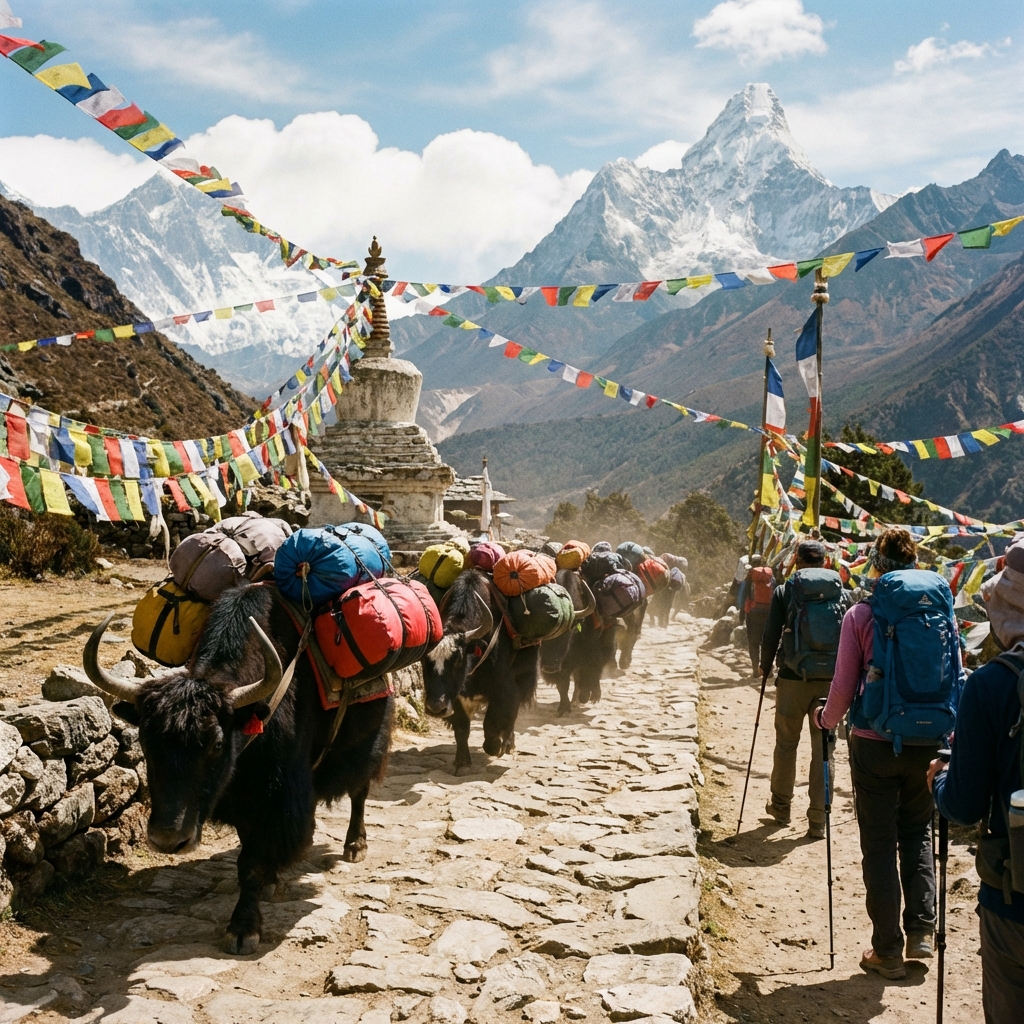
The trail itself: On popular routes, you will walk alongside the same people for days, naturally forming trail friendships. The shared physical challenge creates quick bonds.
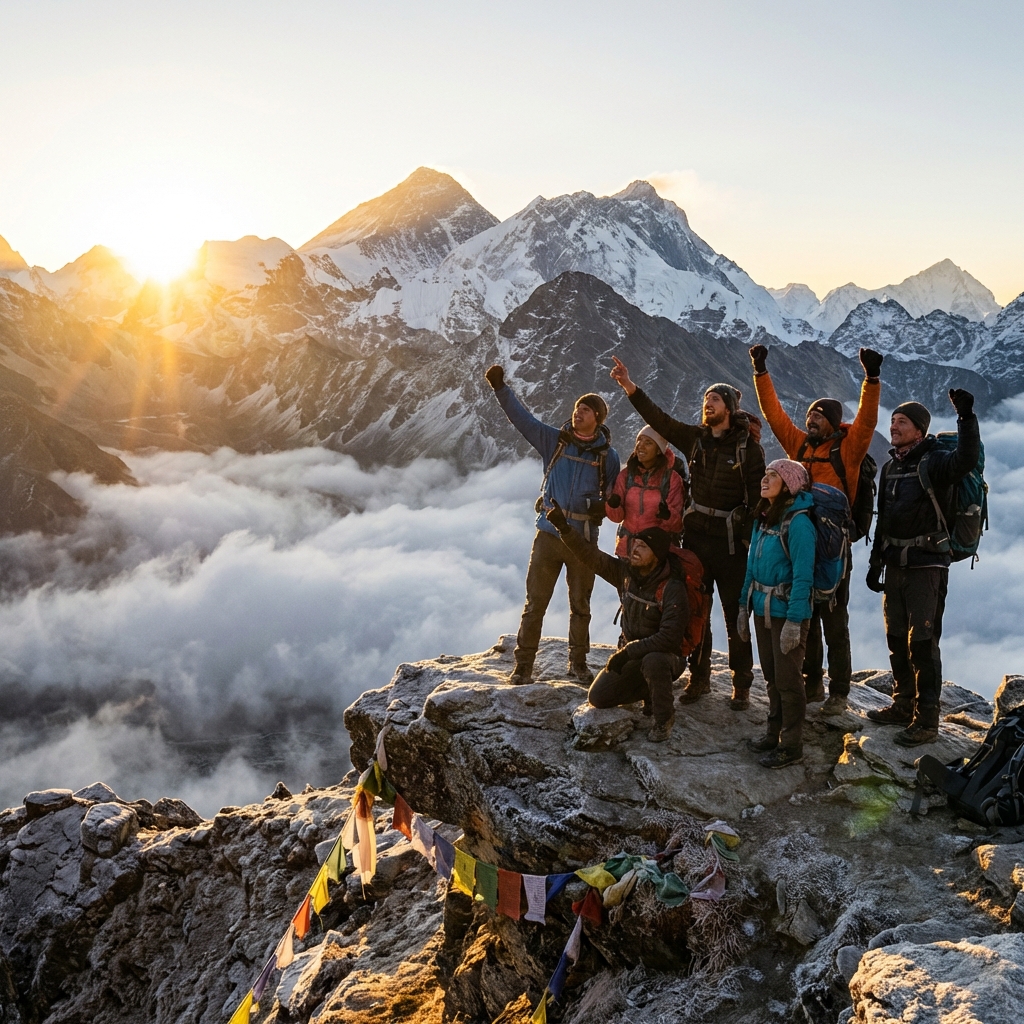
Viewpoints and rest stops: Shared moments of awe at viewpoints like Poon Hill, Kala Patthar, or ABC create instant connections between strangers.
Group Departure Options
If you prefer to start your trek with an established group rather than trekking truly solo:
- Agency group departures: Many agencies offer fixed-date group treks where solo travelers can join. These typically operate during peak season on popular routes. Costs are 20-40% lower per person than solo bookings.
- Online trekking communities: Facebook groups like "Nepal Trekking Partners," "Solo Trekkers Nepal," and "Kathmandu Trekking Meetup" connect solo travelers looking for companions.
- Hotel notice boards: Guesthouses and hostels in Thamel (Kathmandu) and Lakeside (Pokhara) often have notice boards where trekkers post seeking partners.
- Trekking agency bulletin boards: Agencies in Thamel sometimes have lists of solo trekkers looking to share costs.
Communication Tools for Solo Trekkers
Mobile Phones
NTC (Nepal Telecom) SIM card: Provides the best coverage on trekking routes. Available in Kathmandu and Pokhara for approximately NPR 300-500 with data packages. Covers most stops on popular routes up to and including Everest Base Camp and Annapurna Base Camp.
Ncell SIM card: Good in Kathmandu and Pokhara but generally weaker coverage on trekking trails than NTC.
For our complete guide, see Nepal SIM cards and Wi-Fi for trekking.
Satellite Communication
For remote treks or as a safety backup on any route:
- Garmin inReach: Two-way satellite messenger with SOS function. Subscription required.
- SPOT devices: One-way tracking and SOS. Simpler and cheaper than inReach.
- Satellite phones: Available for rent in Kathmandu (NPR 500-1,000 per day). Bulky but reliable.
Lodge Wi-Fi
Most tea houses on popular routes offer Wi-Fi for NPR 200-500 per session. Quality varies widely. Good enough for messaging but unreliable for calls or large uploads.
Registration and Check-In Practices
Solo trekkers should be particularly diligent about registration and check-in processes:
Before Your Trek
- Register your trip with your country's embassy in Kathmandu (optional but recommended)
- Leave a detailed itinerary with your hotel and a home contact
- Take photos of all your permits and identification documents
- Share your guide's phone number with your emergency contacts
During Your Trek
- Check in at all TIMS and national park checkpoints
- Inform each lodge where you plan to go next
- Check trail conditions with lodge staff each morning
- Keep your phone charged (carry a power bank with at least 10,000mAh capacity)
Emergency Check-In Protocol
Establish a regular check-in schedule with someone back home. For example, a daily text or WhatsApp message when you have signal, with an agreed protocol for what to do if a check-in is missed (for example, contact your trekking agency after 24 hours, contact the embassy after 48 hours).
The Buddy System Without a Buddy
Even if you want to trek solo for the independence and introspection, consider identifying other trekkers staying at the same lodges and walking similar routes. Informally knowing who else is on the trail, and having them know you are there, creates a safety network without sacrificing your solo experience. A simple conversation at dinner about tomorrow's plans provides mutual awareness.
Budget Tips for Solo Trekkers
Reducing the Solo Premium
- Negotiate single room rates: Many lodges offer rooms at the same rate for one or two people. Ask before accepting a higher single rate.
- Share a guide: If you meet another solo trekker in Kathmandu or Pokhara, consider sharing a guide to split the cost. Many guides are happy to lead two independent trekkers.
- Travel in shoulder season: Guide and agency rates are often 10-20% lower in early September, late November, and March.
- Book locally: Booking directly with a Kathmandu or Pokhara agency (rather than through an international booking platform) typically saves 30-50%.
- Eat dal bhat: Unlimited refills make it the best value meal on any trek. Western food items are always more expensive.
- Carry snacks from Kathmandu/Pokhara: Trail prices for snacks and chocolate bars are 2-3 times higher than city prices.
Solo Trekking is Not as Expensive as You Think
While solo trekkers pay more per person than groups, the premium is often smaller than expected. On popular routes like Poon Hill, the primary costs (accommodation and meals) are per-person regardless of group size. The main solo premium comes from guide fees ($25-$35 per day not shared) and transport costs. For a 5-7 day trek, this adds approximately $150-$250 compared to traveling as a pair, a modest amount for the freedom and flexibility of solo travel.
Frequently Asked Questions
Related Guides
Final Thoughts
Solo trekking in Nepal is not just viable; it is one of the most rewarding ways to experience the Himalaya. The combination of world-class mountain scenery, deep cultural traditions, welcoming tea house communities, and the personal growth that comes from self-reliant travel creates an experience that is genuinely transformative for many people.
The key to successful solo trekking is matching your route to your experience level, carrying the right communication tools, hiring a good guide (both for safety and regulatory compliance), and being open to the social connections that tea house culture naturally creates. Whether you are a first-timer on the Poon Hill trail or a veteran tackling the Annapurna Circuit for the third time, Nepal welcomes solo trekkers with open arms and unforgettable mountains.
Choose your route from our rankings, prepare with the practical advice in this guide, and step onto the trail. The mountains, and the people who live among them, are waiting.