
Poon Hill Trek 3 Days: Itinerary, Cost and Sunrise Guide
The Poon Hill trek 3 days is Nepal's most popular short trek: a Pokhara-based loop that climbs through Ghorepani and Tadapani to a 3,210m sunrise viewpoint over the Annapurna and Dhaulagiri ranges. You hike roughly 5-7 hours a day, sleep in tea houses, and spend $100-$450 total. No flights and no altitude sickness risk.
If you have only a few days in Nepal and want to experience the Himalaya on foot, this 3-day itinerary is your answer. It delivers one of the most iconic sunrise panoramas in the world, a 360-degree view of snow-capped giants including Dhaulagiri (8,167m), Annapurna I (8,091m), Annapurna South, Hiunchuli, and the unmistakable fishtail silhouette of Machapuchare, all from a viewpoint at just 3,210 meters where altitude sickness is essentially not a concern.
The Poon Hill trek is Nepal's most popular short trek for good reason. It packs an extraordinary amount of scenery, cultural experience, and physical achievement into a timeframe that fits even the tightest travel schedule. You can leave Pokhara on a Monday morning and be back for dinner on Wednesday, having trekked through rhododendron forests, stayed in traditional Gurung and Magar villages, climbed 3,300 stone steps, and watched the sun ignite the highest peaks on Earth.
This guide provides a detailed 3-day itinerary optimized for efficiency without sacrificing the experience, along with all the practical information you need: costs, permits, transport, what to pack, and options for extending to 4 or 5 days if you have extra time. For the full trail profile and map, see the Poon Hill route overview. If you are weighing it against another short trek in the region, our Mardi Himal vs Poon Hill comparison breaks down the differences.
3 days (4-5 days extended)
3,210m (Poon Hill)
Easy to Moderate
October-November, March-April
40-48 km
ACAP + TIMS (Guide)
$150-$400 total
Very Low (max 3,210m)
Why Poon Hill Is Perfect for Beginners (and Repeat Visitors)
No Altitude Sickness Risk
At a maximum elevation of 3,210 meters, Poon Hill sits well below the altitude where serious altitude sickness typically occurs (generally above 3,500-4,000m). While you may feel slightly breathless on the steep ascent to the viewpoint, genuine altitude sickness is extremely rare on this trek. This single factor makes it the safest high-mountain trekking experience in Nepal.
No Flights Required
Many Nepal treks begin with a domestic flight (Lukla for Everest, Jomsom for upper Annapurna), which adds cost, complexity, and the frustrating possibility of weather delays. The Poon Hill trek starts from Nayapul, just a 1.5 to 2-hour drive from Pokhara. You can start and finish on your own schedule without depending on Nepal's unpredictable mountain airlines.
World-Class Mountain Views
Despite its accessibility, Poon Hill delivers mountain views that rival far longer and harder treks. From the viewpoint, you see over 30 named peaks, including three 8,000-meter summits (Dhaulagiri, Annapurna I, and Manaslu on clear days). The sunrise panorama, with the peaks turning gold and pink against a deep blue sky, is legitimately one of the great mountain vistas on Earth.
Complete Tea House Infrastructure
The Poon Hill route has the best tea house infrastructure of any trek in Nepal. Lodges at every stop offer comfortable rooms, hot showers, Western and Nepali meals, Wi-Fi, and charging facilities. You can trek with just a daypack if you choose, as everything you need is available along the trail.
Who Is This Trek For?
The 3-day Poon Hill itinerary is ideal for first-time trekkers, travelers with limited vacation time, families with older children (age 10 and above), photography enthusiasts seeking Himalayan panoramas, and anyone wanting a taste of Nepal trekking without a major time or fitness commitment. It is also excellent for experienced trekkers looking for a quick mountain fix between longer adventures.
The 3-Day Itinerary
Day 1: Pokhara to Ghorepani (2,860m)
Drive: Pokhara to Nayapul (1.5-2 hours by jeep or taxi) Trek: Nayapul to Ghorepani (5-7 hours) Elevation gain: Approximately 1,800 meters total Key highlight: The famous stone staircase, rhododendron forests
Morning: Getting to the Trailhead
Start early. Leave your Pokhara hotel by 6:00-6:30 AM to maximize trekking daylight. The drive to Nayapul takes 1.5-2 hours depending on traffic and road conditions. You can arrange transport through your hotel, a local taxi (approximately NPR 3,000-4,000 for a private car), or your trekking agency. Some trekkers opt to start from Birethanti (10 minutes beyond Nayapul), where the ACAP checkpoint is located. Your permits will be checked here.
The Trek: Nayapul to Tikhedhunga (1,540m) -- 1.5-2 hours
The first section follows the Bhurungdi Khola river valley on a relatively flat, wide trail. You pass through small bazaars and cross several suspension bridges. This is a gentle warm-up for what comes next. Stop at Tikhedhunga for tea or a snack.
The Big Climb: Tikhedhunga to Ghorepani (2,860m) -- 3.5-5 hours
This is the defining physical challenge of the 3-day itinerary. From Tikhedhunga, the trail ascends 3,300 stone steps, gaining approximately 1,300 meters of elevation over roughly 4-5 kilometers. The steps are carved into the mountainside and climb relentlessly through the village of Ulleri (2,070m), where you can stop for lunch, and then through increasingly beautiful forest.
Above Ulleri, the trail enters dense rhododendron forest that, in spring (March-April), explodes in red, pink, and white blooms. Even outside the flowering season, the ancient, moss-draped trees create an enchanting atmosphere. The gradient eases slightly in the upper section, but the cumulative effect of the stairs makes this a genuinely tiring day.
Arrival at Ghorepani (2,860m)
Ghorepani is a sizable village with numerous lodges offering comfortable rooms, hot showers, and good food. Arrive, check in, enjoy a hot meal, and get to bed early. You need to wake before dawn for the Poon Hill sunrise.
The Staircase Strategy
The 3,300 steps from Tikhedhunga to Ghorepani are the most physically demanding section of this entire trek. Pace yourself by taking short, frequent breaks rather than long, infrequent ones. Trekking poles reduce knee and leg strain significantly on this section. If you are trekking in the afternoon heat, carry at least 2 liters of water. Stop for lunch at Ulleri, where multiple lodges serve excellent dal bhat to fuel the upper section.
Day 2: Poon Hill Sunrise, Trek to Tadapani (2,630m)
Pre-dawn: Ghorepani to Poon Hill summit (45-60 minutes) Morning: Poon Hill back to Ghorepani (30-45 minutes) Afternoon Trek: Ghorepani to Tadapani (4-5 hours) Key highlight: THE sunrise panorama
The Poon Hill Sunrise (Wake-Up Call: 4:00-4:30 AM)
Set your alarm for 4:00 AM (4:30 at the latest). The climb from Ghorepani to the Poon Hill viewpoint (3,210m) takes 45-60 minutes along a well-maintained stone path with steps. In peak season, you will be joined by dozens of other trekkers, all headlamps bobbing in the darkness. There is an entry fee of NPR 50 at the gate near the top.
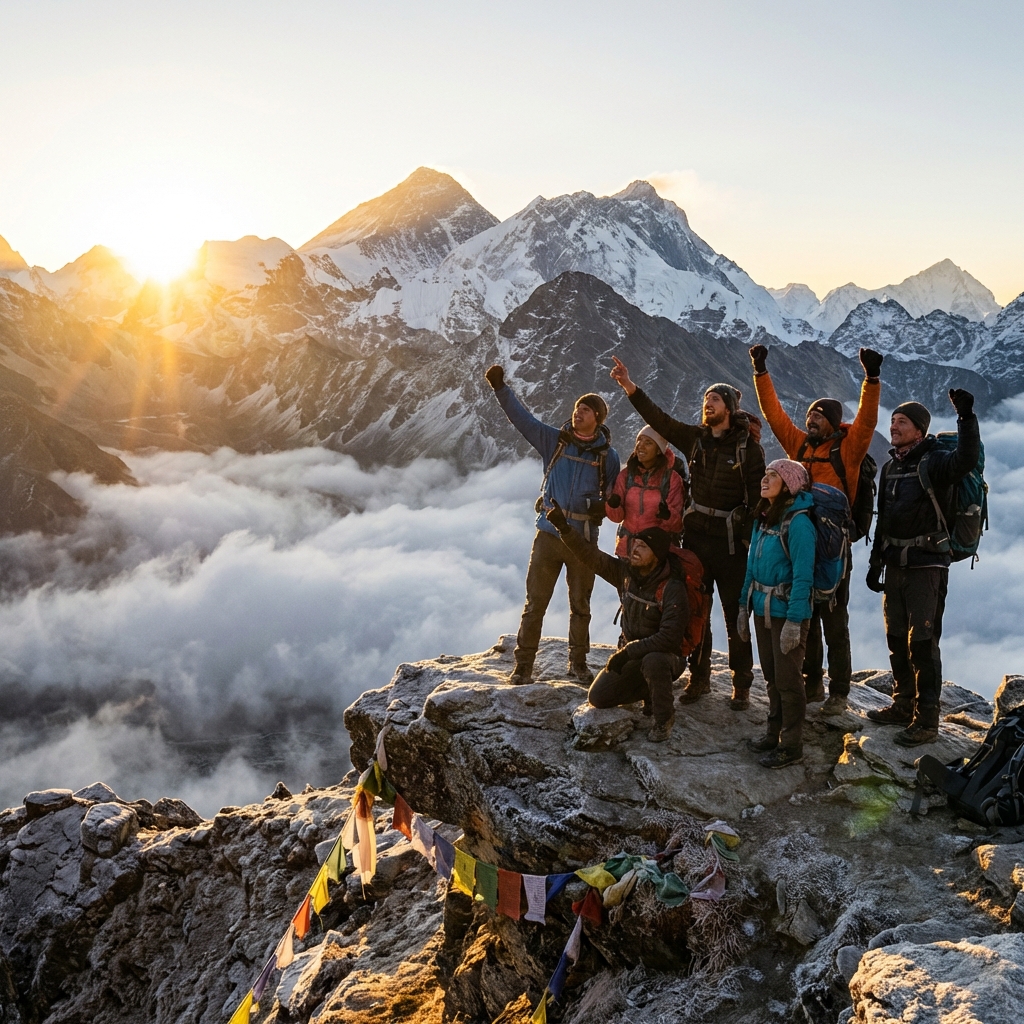
Arrive at the viewpoint at least 20-30 minutes before sunrise to secure a good position. The viewpoint has a stone watchtower with multiple levels, so even on crowded days everyone gets a view. As the sky lightens from deep purple to orange and gold, the Himalayan panorama slowly reveals itself.
What You Will See:
From left to right (facing north), the sunrise panorama includes:
- Dhaulagiri (8,167m): The seventh highest mountain on Earth, massive and unmistakable
- Tukuche Peak (6,920m): Between Dhaulagiri and the Annapurna range
- Nilgiri (7,061m): Striking triangular peak
- Annapurna I (8,091m): The tenth highest mountain in the world
- Annapurna South (7,219m): Dominating the center of the panorama
- Hiunchuli (6,441m): Sharp, dramatic peak
- Machapuchare (6,993m): The iconic fishtail peak, sacred and unclimbed
- Annapurna II, III, and IV: Visible on clear days to the right
- Lamjung Himal (6,983m): Rounding out the eastern view
- Manaslu (8,163m): Sometimes visible on exceptionally clear days, far to the east
The moment when the first rays of sun hit Dhaulagiri's summit, turning it from blue-grey to brilliant gold, is genuinely breathtaking. Allow at least 30-45 minutes at the viewpoint for the full light show.
Return to Ghorepani
Descend back to your lodge in Ghorepani for a well-earned breakfast. Pack up and prepare for the day's trek.
Ghorepani to Tadapani (2,630m) -- 4-5 hours
The trail from Ghorepani to Tadapani traverses through stunning rhododendron and oak forest at approximately 2,800-3,000 meters elevation. The route undulates gently with no major climbs, passing through the ridge-top area of Deurali (3,100m) before descending to Tadapani. Mountain views continue throughout the morning if skies are clear.
Tadapani is a smaller settlement than Ghorepani, with fewer but still comfortable lodges. The afternoon views of Machapuchare and Annapurna South from Tadapani are exceptional, and the sunset colors on the peaks rival the morning show at Poon Hill.
Photography at Poon Hill
Bring two things: a wide-angle lens (or phone with wide mode) for the full panorama, and a zoom lens for detailed mountain shots. The golden hour light lasts approximately 20-30 minutes as the sun rises. Arrive early to claim a spot on the upper level of the watchtower for unobstructed views. A lightweight tripod enables sharp long-exposure shots in the pre-dawn blue hour. Battery performance drops in cold, so keep your phone or camera warm inside your jacket until you need it.
Day 3: Tadapani to Nayapul, Drive to Pokhara
Trek: Tadapani to Nayapul (5-7 hours, mostly downhill) Drive: Nayapul to Pokhara (1.5-2 hours) Key highlight: Gurung village of Ghandruk (optional detour), waterfall views
Tadapani to Ghandruk (1,940m) -- 2-3 hours (optional route)
You have two options for the descent:
Option A (via Ghandruk -- recommended): Descend from Tadapani to Ghandruk, one of the most beautiful Gurung villages in Nepal. The trail passes through forest and terraced farmland before arriving at this picturesque village with slate-roofed stone houses, a Gurung museum, and spectacular views of Machapuchare and Annapurna South. This adds approximately 1-2 hours compared to the direct route but is well worth it for the cultural experience.
Option B (direct to Nayapul): A more direct descent through Banthanti and Tolka to the valley floor. Faster but less interesting.
Ghandruk to Nayapul (1,070m) -- 3-4 hours
The descent from Ghandruk follows stone steps and a jeep track down to Kimche, where you can catch a local jeep to Nayapul (NPR 300-500, 30 minutes), or continue walking to Nayapul (an additional 1-2 hours). Most trekkers take the jeep from Kimche to save their knees.
Nayapul to Pokhara -- 1.5-2 hours
Arrange a jeep or taxi back to Pokhara. If your trekking agency arranged your outbound transport, they will typically have a vehicle waiting. Otherwise, local jeeps are readily available.
You will arrive back in Pokhara by mid-afternoon, in time for a lakeside dinner, a well-deserved massage, and reflection on three days of unforgettable Himalayan trekking.
Extending to 4-5 Days
If your schedule allows, extending the Poon Hill trek by 1-2 days creates a more relaxed experience with additional cultural and scenic highlights.
4-Day Option: Add Ghandruk Overnight
Instead of rushing through Ghandruk on Day 3, spend a night there. This allows you to explore the village properly, visit the Gurung Museum, enjoy the sunset views, and descend to Nayapul at a leisurely pace on Day 4.
| Day | Route | Altitude | Hours |
|---|---|---|---|
| 1 | Pokhara to Nayapul, trek to Ghorepani | 2,860m | 5-7 hrs trek |
| 2 | Poon Hill sunrise, trek to Tadapani | 2,630m | 5-6 hrs |
| 3 | Tadapani to Ghandruk | 1,940m | 2-3 hrs |
| 4 | Ghandruk to Nayapul, drive to Pokhara | 1,070m | 3-5 hrs |
5-Day Option: The Complete Loop via Ghandruk
The 5-day itinerary is the most comfortable version, splitting the long Day 1 into two easier days and allowing full exploration of Ghandruk.
| Day | Route | Altitude | Hours |
|---|---|---|---|
| 1 | Pokhara to Nayapul, trek to Tikhedhunga | 1,540m | 2-3 hrs trek |
| 2 | Tikhedhunga to Ghorepani | 2,860m | 4-5 hrs |
| 3 | Poon Hill sunrise, trek to Tadapani | 2,630m | 5-6 hrs |
| 4 | Tadapani to Ghandruk | 1,940m | 2-3 hrs |
| 5 | Ghandruk to Nayapul, drive to Pokhara | 1,070m | 3-5 hrs |
Which Itinerary Should You Choose?
The 3-day itinerary works if you are reasonably fit and want to maximize your time in Nepal for other activities. Day 1 is demanding with the full ascent to Ghorepani. The 4-day itinerary is the sweet spot for most trekkers, adding Ghandruk without significantly extending the total time. The 5-day itinerary is ideal for families, older trekkers, or anyone who prefers a gentler pace. All three versions deliver the Poon Hill sunrise experience.
Transport from Pokhara
Getting to the Trailhead (Nayapul)
| Transport | Cost | Duration | Notes |
|---|---|---|---|
| Private jeep/taxi | NPR 3,000-5,000 | 1.5-2 hrs | Most convenient, door-to-door |
| Shared jeep | NPR 500-700 per person | 1.5-2 hrs | Depart from Baglung bus park |
| Local bus | NPR 200-300 per person | 2-3 hrs | Depart from Baglung bus park, crowded |
| Agency transport | Included in package | 1.5-2 hrs | Usually private jeep |
Departure point: Most transport to Nayapul leaves from the Baglung bus park area on the western side of Pokhara.
Timing: Leave by 6:00-7:00 AM to start trekking by 8:30-9:00 AM.
Returning to Pokhara (from Nayapul)
Same options in reverse. Private jeep or taxi is the most reliable for afternoon returns. Shared jeeps run until approximately 4:00-5:00 PM.
Permits Required
ACAP (Annapurna Conservation Area Permit)
- Cost: NPR 3,000 for foreigners (approximately $23)
- Where to get it: The Nepal Tourism Board counter in Pokhara (near the tourist bus park on Lakeside) or at the ACAP checkpoint in Birethanti/Nayapul
- Processing time: 15-30 minutes
- What you need: Passport, 2 passport-size photos, and cash
For complete permit details, see our Annapurna Conservation Area Permit guide.
TIMS Card (Trekkers' Information Management System)
- Cost: NPR 2,000 for organized trekkers (with guide/agency), NPR 2,000 for individual trekkers
- Where to get it: Tourism Board office in Pokhara or Kathmandu
- Note: As of 2026, individual trekking in the Annapurna region requires either a guide or TIMS card. Check current regulations with the tourism board, as policies have been evolving.
Get Permits in Pokhara, Not on the Trail
While it is technically possible to obtain your ACAP permit at the checkpoint in Birethanti, the process is faster and smoother at the tourism board office in Pokhara. Go the afternoon before your trek, bring your passport and photos, and you will be ready to start trekking without delays the next morning. Your trekking agency will handle all permits if you book a guided trek.
Complete Cost Breakdown
Independent Trekking (3 Days)
| Expense | Cost (NPR) | Cost (USD) |
|---|---|---|
| Transport: Pokhara to Nayapul (shared jeep) | 500-700 | $4-$5 |
| ACAP Permit | 3,000 | $23 |
| TIMS Card | 2,000 | $15 |
| Accommodation (3 nights) | 1,500-3,000 | $12-$23 |
| Meals (3 days) | 4,500-7,000 | $35-$55 |
| Poon Hill entry fee | 50 | $0.40 |
| Hot showers, charging | 600-1,000 | $5-$8 |
| Transport: Nayapul to Pokhara (shared jeep) | 500-700 | $4-$5 |
| Total | 12,650-17,450 | $100-$135 |
With a Guide (3 Days)
| Expense | Cost |
|---|---|
| Guide fee (3 days at $25-$35 /day) | $75-$105 |
| Guide's meals and accommodation | $30-$45 |
| All permits | $38 |
| Your accommodation and meals | $50-$80 |
| Transport | $10-$15 |
| Total | $200-$285 |
Full Agency Package (3 Days)
Trekking agency packages for 3-day Poon Hill treks typically cost $250-$450 per person and include all permits, guide, accommodation, meals, and transport. This is the simplest option and often the best value when you factor in the time and hassle of arranging everything independently.
See our best trekking agencies for Poon Hill for recommended operators.
What a Guided Package Includes (and Excludes)
When you book a 3-day Poon Hill package with a verified local agency, confirm exactly what is covered before paying. A typical package breaks down like this:
Usually included:
- Licensed English-speaking guide for all 3 days
- ACAP permit and TIMS card
- Round-trip private transport, Pokhara to Nayapul
- Tea house accommodation (2 nights, twin-share)
- Three meals per day on the trail (often breakfast, lunch, dinner)
- Guide's wages, meals, accommodation, and insurance
Usually excluded:
- Pokhara hotel before and after the trek
- Hot showers, Wi-Fi, and device charging at lodges
- Drinks beyond tea/coffee (beer, soft drinks, bottled water)
- Personal trekking gear and rentals
- Tips for your guide and porter (budget roughly $5-$10 per day, per the tipping guide)
- Travel insurance with trekking coverage
Budget Reality Check
The Poon Hill trek is one of the most affordable multi-day treks in Nepal. A budget-conscious independent trekker can complete the 3-day version for under $150 total (including permits, accommodation, meals, and transport). Even with a guide, the total rarely exceeds $300. This makes it accessible to almost any budget, which is part of its enduring popularity.
What to Pack for 3 Days
The beauty of Poon Hill's short duration and excellent infrastructure is that you do not need to overpack. Here is what you actually need:
Essential Gear
- Daypack (25-35L): Enough for your daily gear. Leave unnecessary items at your Pokhara hotel.
- Trekking boots or shoes: Sturdy, broken-in, with ankle support. Trail running shoes work for experienced hikers.
- Rain jacket: Lightweight waterproof layer. Useful even in dry season for wind protection at Poon Hill.
- Warm layer: Fleece jacket or light down jacket for the pre-dawn Poon Hill climb and evenings.
- Base layers: 2 moisture-wicking t-shirts, 1 long-sleeve shirt
- Trekking pants: 1-2 pairs of comfortable, quick-dry pants
- Hat and sunglasses: Essential for sun protection at altitude
- Headlamp: Critical for the pre-dawn Poon Hill climb
- Trekking poles: Highly recommended for the stone staircase sections (can rent in Pokhara for NPR 100-200/day)
- Water bottle: 1-2 liters. Refill at lodges. Purification tablets recommended.
- Sunscreen: SPF 30+ minimum
- Basic toiletries and personal medications
What You Do Not Need
- Sleeping bag (lodges provide warm blankets; only needed in the coldest winter months)
- Stove or cooking equipment
- Large quantities of snacks (excellent meals available at every stop)
- Down expedition jacket (a fleece or light insulated jacket is sufficient for 3,210m)
- Gaiters (trail is well-maintained)
Rent in Pokhara, Do Not Buy
If you do not own trekking poles, rain gear, or warm layers, rent them in Pokhara rather than buying. Lakeside has dozens of gear rental shops offering quality equipment at NPR 100-300 per item per day. This saves money and luggage space. Just inspect the equipment before renting and ensure poles have working locking mechanisms.
Season-by-Season Guide
Peak Season: October to November
The best time. Clear skies provide the sharpest mountain views at Poon Hill. Comfortable daytime temperatures (10-20 degrees Celsius at trekking altitude) and cold but manageable nights. This is also the busiest period, so lodges in Ghorepani can fill up. Book ahead or arrive early.
Spring: March to April
The second-best season, with the bonus of rhododendron blooms that transform the forests into tunnels of color. March can still have occasional snow above 2,800m, while April is generally warmer and drier. May is possible but increasingly hazy and warm.
Winter: December to February
Cold but often clear. Snow can cover the trail above Ghorepani, creating a magical winter landscape. Fewer trekkers mean quieter lodges. Temperatures at Poon Hill before dawn can drop to -10 degrees Celsius, so pack accordingly. Most lodges remain open year-round on this popular route.
Monsoon: June to September
Not recommended. Heavy rain, limited visibility, leeches on the trail, and slippery stone steps make this an unpleasant and potentially dangerous time. The mountain views that are the whole point of the trek are usually obscured by clouds.
No Altitude Sickness Risk
This deserves its own section because it is one of the most important factors for choosing Poon Hill.
At 3,210 meters, the Poon Hill viewpoint is well below the altitude at which acute mountain sickness (AMS) typically becomes a serious concern. The generally accepted threshold for significant AMS risk is above 3,500 meters, with the risk increasing substantially above 4,000 meters.
On the Poon Hill trek:
- You sleep at a maximum of 2,860m (Ghorepani)
- You briefly visit 3,210m (Poon Hill viewpoint) for 30-60 minutes
- You descend the same day
This profile means altitude sickness is virtually never an issue. You may feel slightly breathless during the steep climb to the viewpoint, particularly in the cold pre-dawn air, but this is normal exertion at elevation, not altitude sickness. No acclimatization days are needed, no altitude medication is required, and even people with no previous altitude experience can safely complete this trek.
This makes Poon Hill uniquely suitable for:
- First-time trekkers concerned about altitude
- Families with children
- Older travelers
- People with limited time who cannot afford acclimatization days
- Anyone who has experienced altitude sickness on previous treks and wants a safe option
For more information about safe beginner treks, see our best beginner treks in Nepal guide.
Food on the Trail
The Poon Hill route has some of the best tea house food in Nepal's trekking regions. Here is what to expect:
What Is Available
Dal Bhat: The Nepali staple of rice, lentil soup, vegetables, and usually pickles. Unlimited refills at most lodges. The best value meal on the trail (NPR 500-700).
Noodle dishes: Chow mein, thukpa (Tibetan noodle soup), and instant noodles. Good quick energy options.
Western food: Pancakes, French toast, fried eggs, pasta, fried rice, and pizza (of varying quality). Available at most lodges.
Tibetan bread and chapati: Delicious, filling, and inexpensive breakfast options.
Drinks: Tea, coffee, hot chocolate, soft drinks, and beer are available at all stops. Prices increase with altitude.
Sample Meal Costs (2026 estimates)
| Item | Approximate Cost (NPR) |
|---|---|
| Dal Bhat (with refills) | 500-700 |
| Fried rice/noodles | 350-500 |
| Pancakes or French toast | 250-400 |
| Tea or coffee | 100-200 |
| Bottled water (1L) | 150-250 |
| Beer (650ml) | 500-700 |
| Snickers/chocolate bar | 200-350 |
Gurung and Magar Culture Along the Trail
The Poon Hill trek passes through the heartland of two of Nepal's best-known ethnic communities. Ghorepani and the upper trail are predominantly Magar, while Ghandruk and Tadapani are classic Gurung villages, both groups long associated with the Gurkha regiments.
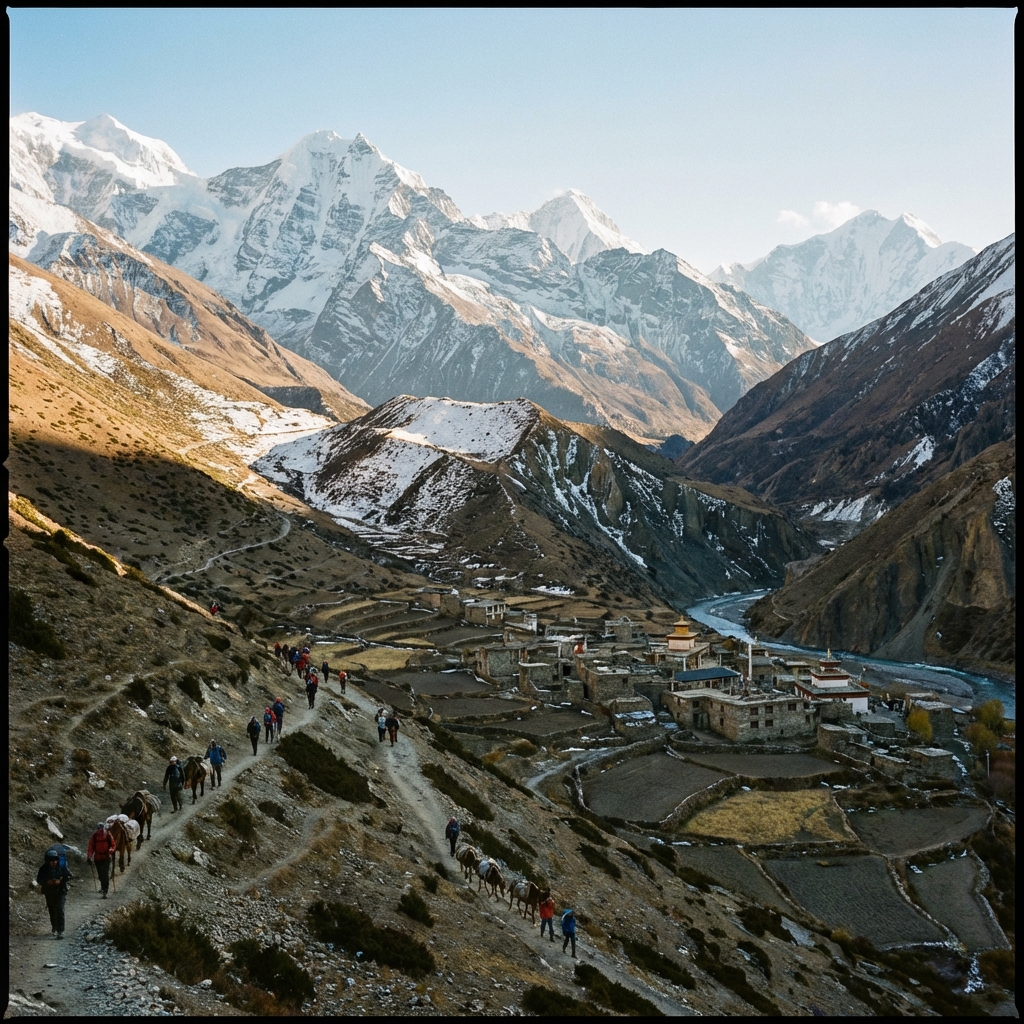
Expect stone houses with slate roofs, terraced fields, and small Buddhist shrines with prayer flags. Ghandruk is the cultural highlight: it has a small Gurung Museum showing traditional dress, tools, and household items, plus some of the best mountain views on the whole route. Hospitality is genuine here, and a homestay or family-run lodge is the easiest way to experience it.
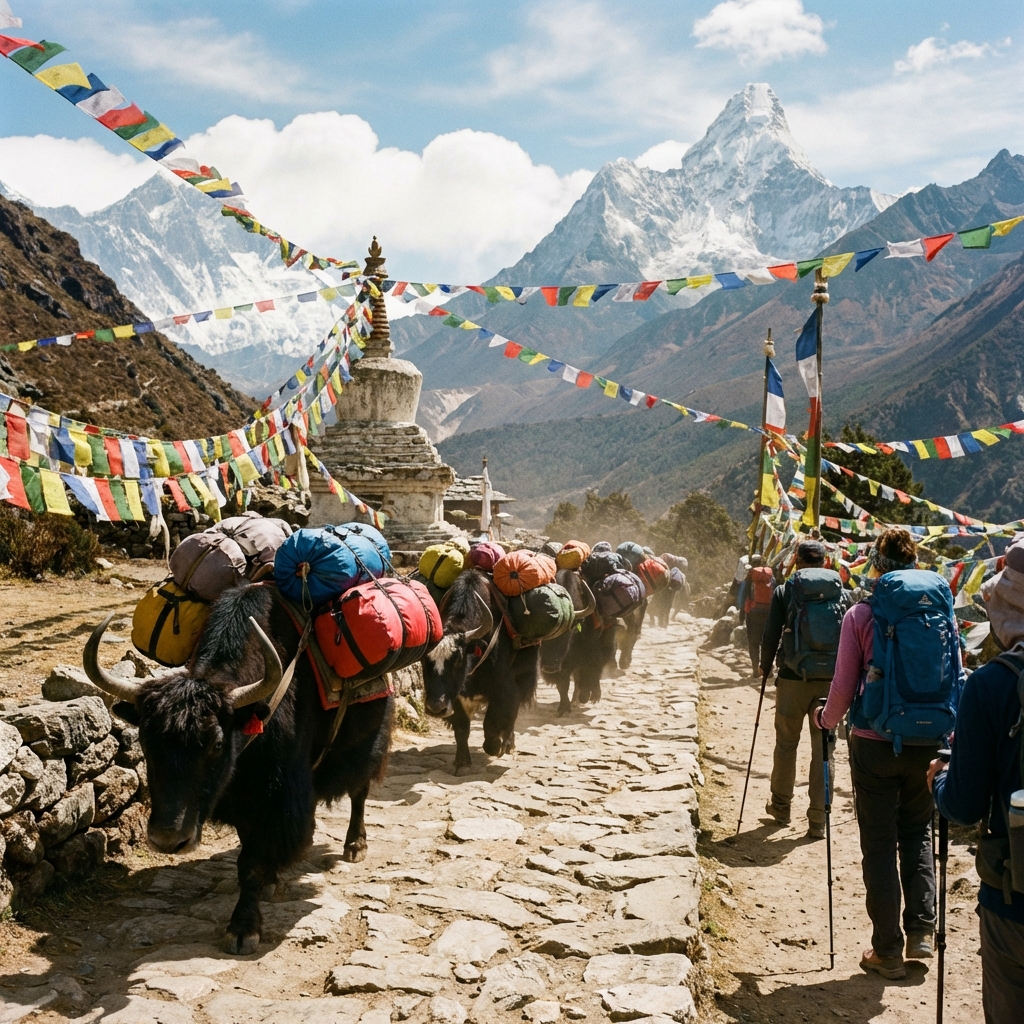
A few etiquette basics go a long way: ask before photographing people, walk clockwise around mani walls and stupas, remove shoes before entering a home or shrine, and learn a couple of Nepali phrases. For more depth, see our Gurung culture in the Annapurna region guide and Nepal trekking cultural etiquette.
Frequently Asked Questions
Ready to plan your 3-day Poon Hill trek?
Get a tailored 3-day itinerary and a transparent quote from a verified local agency. No flights, no altitude worries, just three days of Himalayan sunrise.
Related Guides
Final Thoughts
The Poon Hill trek proves that you do not need two weeks and a six-figure fitness level to experience the magic of Himalayan trekking. In three days, you climb through some of the most beautiful forests in Nepal, stay in welcoming mountain lodges, push yourself up 3,300 stone steps (and feel incredibly proud when you reach the top), and witness a sunrise that puts the peaks of Dhaulagiri and Annapurna in golden relief against the sky.
It is the trek that has introduced more people to Nepal trekking than perhaps any other. It is the trek that experienced mountaineers still love to revisit for its reliable beauty. And it is the trek that proves the Himalaya are accessible to anyone willing to put one foot in front of the other.
Whether this is your first trek ever or your fiftieth, whether you are 15 or 65, whether you have three days or five, Poon Hill delivers. Start early, climb slowly, look up often, and let the mountains do the rest.