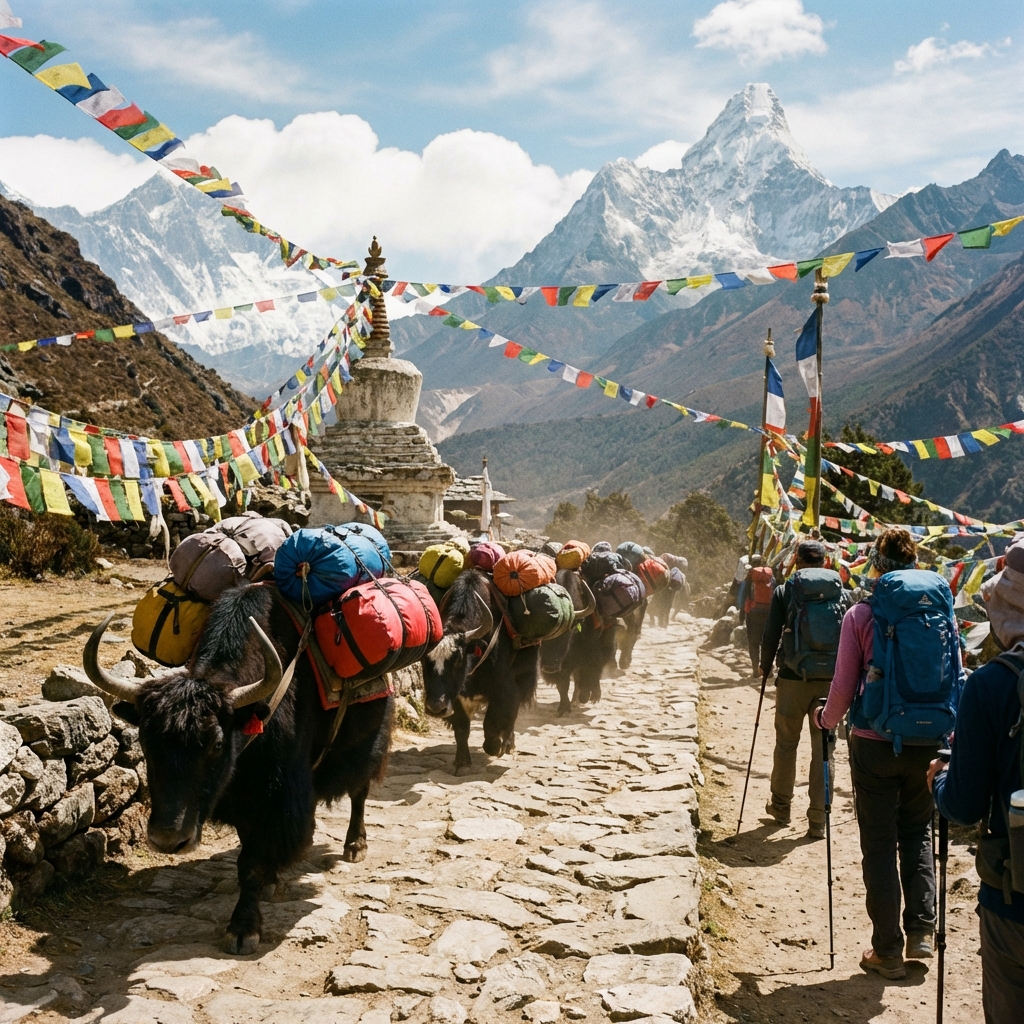
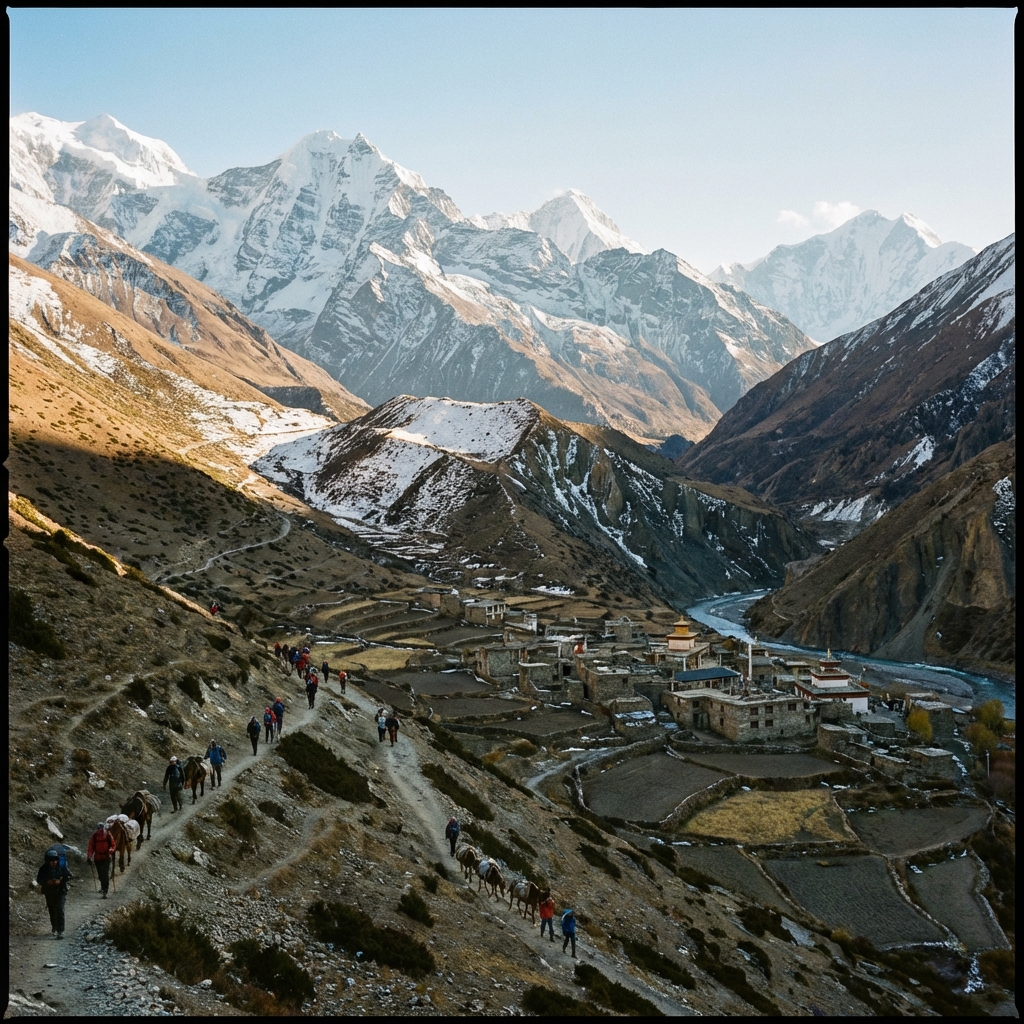
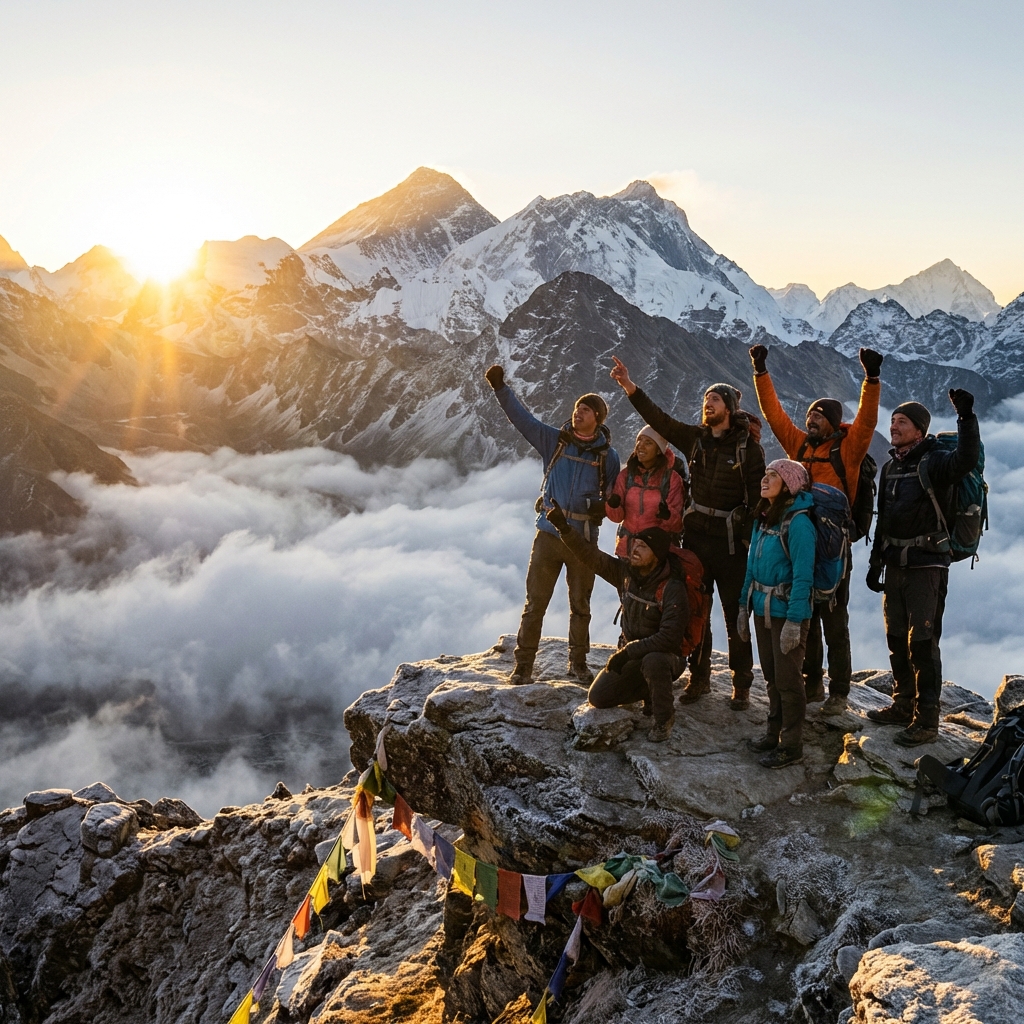
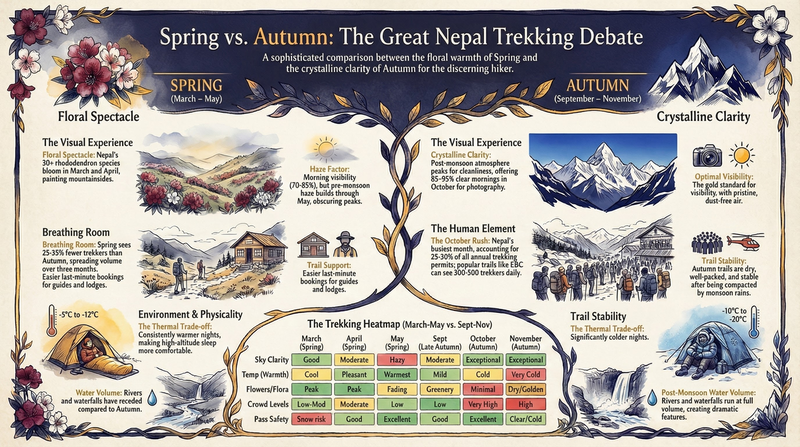
Nepal offers two primary trekking windows each year, separated by the monsoon and winter extremes: spring (March through May) and autumn (September through November). Both deliver world-class Himalayan experiences, but each has a distinct character that shapes everything from the wildflowers carpeting the trails to the clarity of the mountain panoramas, the price of your teahouse bed, and the number of fellow trekkers sharing the path with you.
Choosing between spring and autumn is not about picking a superior season. It is about matching a season to your priorities. Do you want the clearest possible mountain views, or do you want blooming rhododendron forests painting the hillsides crimson? Are you flexible on dates, or locked into a specific window? Does a crowded trail energize you or drain you?
This guide provides the data, analysis, and decision framework you need. We compare weather patterns month by month and altitude by altitude, crowd statistics, cost differences, trail conditions, scenery characteristics, festival calendars, and which specific treks perform best in each season. By the end, you will know exactly which season matches your trek.
Who should read this guide:
- First-time Nepal trekkers deciding when to book
- Experienced trekkers considering a different season than usual
- Photographers optimizing for scenery and light conditions
- Budget-conscious trekkers seeking the best value window
- Anyone comparing a March/April trip against an October/November trip
Quick Comparison: Spring vs Autumn at a Glance
March 1 - May 31 (peak: late March to mid-May)
September 15 - November 30 (peak: early October to mid-November)
Autumn wins: post-monsoon air is cleanest, 80-90% clear days in October. Spring good but haze builds through May.
Spring is warmer by 3-8 degrees Celsius at all altitudes. More comfortable sleeping.
Autumn is busier: October is Nepal's single busiest trekking month. Spring spreads trekkers across 3 months.
Spring dominates: rhododendrons bloom March-April below 4,000m. Autumn trails are brown and post-monsoon.
Spring: afternoon clouds and occasional showers increase through May. Autumn: very dry, especially October-November.
Identical in both seasons. No seasonal pricing for permits.
Autumn slightly better for mountain flights (Lukla, Jomsom). Spring mornings good, afternoons less reliable.
Autumn has Dashain (October) and Tihar (October-November). Spring has Holi (March) and Nepali New Year (April).
Spring only (April-May). EBC trekkers see expedition activity at base camp.
Autumn for views and dry weather. Spring for warmth, flowers, and fewer crowds on most routes.
Side-by-Side Comparison Table
| Factor | Spring (March-May) | Autumn (Sept-Nov) | Advantage |
|---|---|---|---|
| Sky Clarity | Good to very good; haze increases through May | Exceptional; post-monsoon air is pristine | Autumn |
| Mountain Visibility | 70-85% clear mornings | 85-95% clear mornings in October | Autumn |
| Daytime Temperature (3,500m) | 12-20 degrees Celsius | 8-15 degrees Celsius | Spring |
| Nighttime Temperature (4,500m) | Minus 5 to minus 12 degrees Celsius | Minus 10 to minus 20 degrees Celsius | Spring |
| Precipitation | Increasing; 30-80mm monthly | Very low; 10-30mm monthly | Autumn |
| Trail Conditions | Mostly dry, some muddy sections at lower altitudes | Excellent; dry and well-packed | Autumn |
| Crowds (Overall) | Moderate to high | High to very high | Spring |
| Crowds (October Peak) | N/A | Highest of the year | Spring |
| Wildflowers & Flora | Spectacular rhododendrons, magnolias, orchids | Minimal; post-monsoon brown and green | Spring |
| Autumn Colors | N/A | Some fall colors at lower altitudes | Autumn |
| Lodge Availability | Good; easier to find rooms without booking | Tight; pre-booking essential in October | Spring |
| Permit Costs | Standard rates | Standard rates | Tie |
| Guide/Porter Availability | Easier to hire last-minute | High demand; book early | Spring |
| Flight Reliability (Lukla) | Good mornings, afternoon clouds | Slightly better overall reliability | Autumn |
| Festivals | Holi, Nepali New Year, Buddha Jayanti | Dashain, Tihar | Tie |
| Everest Expeditions | Active (April-May) | Not active | Spring (for EBC atmosphere) |
| Snow on High Passes | More likely; late-season snow lingers | Less likely; passes generally clear | Autumn |
| Photography Light | Warm tones, cloud drama, flower foregrounds | Crystal clarity, sharp contrasts | Tie |
| Overall Trekking Days Available | ~90 days | ~75 days | Spring |
1. Weather Comparison: The Defining Difference
Weather is the single most important factor separating spring and autumn trekking, and it manifests differently at every altitude band.
Autumn Weather: The Gold Standard
Autumn, particularly October, is widely regarded as Nepal's finest trekking month. The monsoon retreats in September, leaving behind washed skies, dust-free air, and an atmosphere so clean that mountain visibility reaches its annual peak.
September (Late):
- The monsoon tapers off by mid-to-late September, though isolated showers remain possible through the month's end
- Trails can be muddy and leeches active below 3,000m during the first two weeks
- By the final week, conditions stabilize and the trekking season begins in earnest
- Crowds are minimal, making it an excellent window for those who tolerate residual rain risk
October:
- The crown jewel of Nepal's trekking calendar
- Average of 25-28 clear days per month at high altitude
- Humidity drops to 30-40%, creating razor-sharp mountain views
- Daytime temperatures comfortable for trekking: 10-18 degrees Celsius at 3,000-3,500m
- Nighttime temperatures drop significantly: minus 5 to minus 15 degrees Celsius above 4,000m
- Precipitation averages just 15-25mm for the entire month
- Wind speeds generally moderate, with occasional gusts on high passes
November:
- Remains excellent for the first two to three weeks
- Air clarity rivals October, sometimes exceeds it
- Temperatures drop further as winter approaches: daytime highs of 5-12 degrees Celsius at 3,500m
- Nights become genuinely cold above 4,000m: minus 15 to minus 25 degrees Celsius
- By late November, some higher lodges begin closing for winter
- Shorter daylight hours (sunrise around 6:15 AM, sunset around 5:15 PM)
Spring Weather: Warmer but Hazier
Spring offers warmer temperatures across all altitude bands, making it the more comfortable season for sleeping at high altitude. However, pre-monsoon moisture buildup means skies are not as consistently pristine as autumn.
March:
- Early March is transitional; lower elevations remain cool and skies clear
- By mid-March, temperatures at trekking altitudes become pleasant: 10-20 degrees Celsius at 3,000m
- Mountain views are good to excellent in early to mid-March
- Rhododendron forests begin blooming at lower altitudes (1,500-2,500m)
- Precipitation averages 25-40mm, mostly light afternoon showers
- Snow may still linger on high passes above 5,000m from winter
April:
- The heart of spring trekking season
- Warm days: 15-22 degrees Celsius at 3,000m, ideal for comfortable hiking
- Rhododendrons reach peak bloom at 2,500-3,500m, creating extraordinary color
- Morning mountain views excellent; afternoon clouds more frequent
- Haze begins building at lower altitudes, reducing long-range visibility compared to October
- Precipitation increases: 40-60mm monthly, primarily afternoon convective showers
- Everest climbing season begins, adding activity at EBC
May:
- Pre-monsoon conditions intensify
- Warmest trekking month: 18-25 degrees Celsius at 3,000m
- Afternoon clouds become almost daily, with occasional thunder
- Morning windows for mountain views remain good but shorter
- Haze at lower altitudes reduces clarity noticeably
- Precipitation increases further: 60-100mm monthly
- High passes (Thorong La, Cho La) generally snow-free
- By late May, monsoon approaches; experienced trekkers finish by mid-month
Weather by Altitude Band
| Altitude Band | Spring Daytime Temp | Autumn Daytime Temp | Spring Night Temp | Autumn Night Temp | Spring Precipitation | Autumn Precipitation |
|---|---|---|---|---|---|---|
| 1,500-2,500m | 18-28 degrees C | 15-22 degrees C | 8-15 degrees C | 5-10 degrees C | 40-100mm/month | 10-30mm/month |
| 2,500-3,500m | 12-22 degrees C | 8-15 degrees C | 2-8 degrees C | Minus 2 to 5 degrees C | 30-70mm/month | 10-25mm/month |
| 3,500-4,500m | 5-15 degrees C | 2-10 degrees C | Minus 5 to minus 12 degrees C | Minus 10 to minus 18 degrees C | 20-50mm/month | 5-15mm/month |
| 4,500-5,500m | 0-8 degrees C | Minus 3 to 5 degrees C | Minus 10 to minus 20 degrees C | Minus 15 to minus 25 degrees C | 15-40mm/month | 5-10mm/month |
Pro Tip
If mountain photography is your primary goal, autumn (especially October) is the clear winner. The post-monsoon atmosphere produces the sharpest, most contrast-rich mountain views of the year. If comfortable sleeping temperatures matter most, spring wins decisively. The 5 to 10 degree Celsius warmer nighttime temperatures above 4,000m make a tangible difference in sleep quality and overall enjoyment.
2. Crowd Analysis: When the Trails Get Busy
Autumn Crowds: October Is Peak Season
Autumn concentrates Nepal's largest trekker volumes into a narrow window. October alone accounts for roughly 25-30% of all annual trekking permits.
Autumn crowd data (2026/2027 season estimates):
- September: 15,000-20,000 trekkers (building)
- October: 55,000-65,000 trekkers (peak)
- November: 35,000-45,000 trekkers (declining)
- Autumn total: approximately 110,000-130,000 trekkers
What October crowds mean on popular routes:
- Everest Base Camp: 300-500 trekkers on trail daily; lodges fully booked; Kala Patthar sunrise packed
- Annapurna Circuit: 150-250 daily; Thorong La bottleneck; Manang lodges full
- Annapurna Base Camp: 200-300 daily; trail congestion above Chomrong
- Poon Hill: 100-200 daily; sunrise viewpoint extremely crowded
- Langtang Valley: 80-150 daily; moderate by comparison
October Lodge Availability
On the Everest Base Camp and Annapurna Circuit routes during October, pre-booking accommodation is essential. Walking in without a reservation above 3,500m risks finding no available beds, forcing you to share rooms, sleep in dining halls, or alter your itinerary. Book through your agency or directly with lodges at least 4-8 weeks ahead for October treks.
Spring Crowds: More Spread Out
Spring distributes trekkers across a longer window (March through May), reducing the intensity of any single week. March and April are busy but rarely reach October's density.
Spring crowd data (2026/2027 season estimates):
- March: 25,000-35,000 trekkers
- April: 35,000-45,000 trekkers (spring peak)
- May: 15,000-25,000 trekkers (declining)
- Spring total: approximately 75,000-105,000 trekkers
What spring crowds mean on popular routes:
- Everest Base Camp: 150-300 daily; busy but manageable; lodges available with moderate advance booking
- Annapurna Circuit: 80-150 daily; Thorong La less congested; Manang rooms usually available
- Annapurna Base Camp: 100-200 daily; less trail congestion than October
- Poon Hill: 60-120 daily; sunrise viewpoint busy but not overwhelming
- Langtang Valley: 40-100 daily; comfortable
The crowd advantage: Spring sees 25-35% fewer total trekkers than autumn. On any given day in April, expect roughly 40-60% of October's trail traffic on popular routes.
Pro Tip
If you want autumn-quality weather with spring-level crowds, target late November (first two weeks). Skies remain clear, temperatures are cold but manageable with proper gear, and crowds thin dramatically after mid-November. The trade-off is shorter days and some higher lodges beginning their winter closure.
3. Scenery Comparison: Flowers vs Crystal Clarity
This is where personal preference matters most. Spring and autumn deliver fundamentally different visual experiences.
Spring Scenery: The Rhododendron Show
Spring transforms Nepal's middle hills into one of the world's great wildflower displays. Nepal is home to over 30 species of rhododendron, and between March and May, they paint entire mountainsides in waves of red, pink, white, and magenta.
Rhododendron bloom timeline:
- Late February to mid-March: Lower altitudes (1,500-2,500m) begin blooming
- Mid-March to mid-April: Peak bloom at trekking altitudes (2,500-3,500m)
- Late April to May: Higher altitudes (3,500-4,000m) catch up; lower blooms fade
Where the flowers are most spectacular:
- Ghorepani / Poon Hill trail: Dense rhododendron forests between 2,500-3,200m
- Annapurna Circuit (Ghandruk to Chame section): Forests burst with color
- Langtang Valley approach: Rhododendrons line the trail to Lama Hotel
- Helambu: Lower altitude means earlier bloom (March)
- Mardi Himal: Stunning rhododendron ridgeline
Beyond rhododendrons: Spring also brings magnolias (white and pink, lower altitudes), wild orchids (30+ species in eastern Nepal), primulas, blue poppies (rare, above 4,000m in eastern regions), and countless wildflowers that carpet alpine meadows.
Spring scenery limitations:
- Afternoon cloud buildup obscures mountain views by 1-3 PM most days
- Lower-altitude haze reduces the crispness of distant peaks
- Green hillsides are lush but lack the golden quality of autumn light
- Rivers run lower than post-monsoon, reducing waterfall spectacle
Autumn Scenery: Post-Monsoon Perfection
Autumn does not offer the botanical drama of spring, but it compensates with the clearest mountain views of the year and a particular quality of light that photographers prize.
What autumn delivers:
- Post-monsoon atmosphere: dust particles washed out, visibility at annual peak
- Mountain views are sharper, higher contrast, and more detailed than any other season
- Morning light creates warm golden tones on snow peaks
- Harvested terraces and drying crops add texture to lower-altitude landscapes
- Rivers and waterfalls run at full volume from monsoon, creating dramatic features
- Some autumn color appears in deciduous trees at 2,000-3,000m (subtle, not dramatic)
Autumn scenery limitations:
- Trails below 3,000m are brown and post-monsoon green (not the vivid spring palette)
- No wildflower displays
- Grasslands are dry and golden rather than green
- The landscape feels harsher and more austere than spring
The Photography Verdict
| Photography Priority | Better Season | Why |
|---|---|---|
| Mountain portraits | Autumn | Clearest air, sharpest detail |
| Panoramic landscapes | Autumn | Maximum visibility, no haze |
| Wildflower foregrounds | Spring | Rhododendrons and alpine flowers |
| Dramatic cloud compositions | Spring | Afternoon cloud drama |
| Golden-hour warmth | Autumn | Low-angle autumn light |
| Waterfall and river shots | Autumn (early) | Post-monsoon water volume |
| Cultural and village life | Autumn | Harvest season activity, Dashain preparation |
| Sunrise from high viewpoints | Autumn | Higher probability of clear skies |
Pro Tip
For the ultimate Nepal photography trip, consider late March to mid-April. You get peak rhododendron bloom with still-reasonable mountain visibility. Morning shoots for peaks (before afternoon clouds build) and afternoon shoots for flower forests create a diverse portfolio. Bring a polarizing filter to cut through spring haze on mountain shots.
4. Cost Differences: Surprising Parity
Nepal's trekking costs do not fluctuate dramatically between spring and autumn. Permits, flights, and guide wages remain constant. The differences are marginal and context-dependent.
| Cost Category | Spring | Autumn | Notes |
|---|---|---|---|
| Trekking permits | Same | Same | No seasonal pricing |
| Lukla flights | $215-400 | $350-400 | Same pricing; autumn slightly harder to book |
| International flights to Kathmandu | Often 5-15% cheaper | Peak pricing | October is peak international demand |
| Lodge accommodation | Standard rates | Standard rates (premium at full lodges) | October lodges may charge more at capacity |
| Food on trail | Same | Same | Menu prices standardized |
| Guide daily rate | $25-35/day | $25-35/day | Same; autumn guides book up faster |
| Porter daily rate | $20-25/day | $20-25/day | Same |
| Kathmandu hotels | Standard | Premium (Dashain season) | October Kathmandu hotels 20-40% more expensive |
| Travel insurance | Same | Same | Based on coverage, not season |
| Gear rental | Same | Same | Kathmandu rental shops have fixed rates |
| Total Budget Impact | 5-10% cheaper overall | Baseline | Savings from international flights and Kathmandu hotels |
Where spring saves money:
- International flights to Kathmandu are typically 5-15% cheaper in March-April compared to October
- Kathmandu hotel prices are lower (October rates spike for Dashain festival season)
- Last-minute guide and porter availability means less pressure to book premium agencies
- Lodge availability means no premium charges for room scarcity
Where autumn may cost more:
- International airfares peak for October departures
- Kathmandu hotels charge festival-season premiums (Dashain week especially)
- Popular lodges on EBC and Annapurna circuits may charge premium rates when full
- Higher demand means less negotiating power with agencies
Budget Tip: Shoulder Season Value
The best budget windows are late September (monsoon ending, pre-autumn crowds) and early to mid-March (spring beginning, pre-peak). Both offer good trekking conditions with fewer crowds and better pricing on international flights and Kathmandu accommodation. You sacrifice some weather reliability for significant savings.
5. Trail Conditions: Surface, Snow, and Safety
Autumn Trail Conditions
Autumn delivers the best trail conditions of the year:
- Surface: Dry, well-packed, and stable. The monsoon's rain compacts trails and washes away loose debris
- Mud: Minimal above 2,500m; possible in the first two weeks of September at lower altitudes
- Snow: High passes (Thorong La, Cho La, Renjo La) are generally clear of snow through mid-November
- River crossings: Bridges intact; streams manageable (water levels dropping from monsoon peak)
- Leeches: Gone above 2,500m by October; minimal risk
- Landslide risk: Low; monsoon-triggered slides have settled by October
- Trail markers: Refreshed by agencies before the season; well-maintained
Spring Trail Conditions
Spring conditions are good but with more variability:
- Surface: Generally dry and stable; lower altitudes (below 2,500m) may have muddy sections after afternoon showers
- Mud: Possible in April-May on lower trail sections, especially in forested areas
- Snow: High passes may retain winter snow through March; by April, most are clear. Late-season snowfall occasionally closes passes temporarily (Thorong La, Larkya La)
- River crossings: Lower water levels than autumn; all bridges intact from previous season
- Leeches: Minimal in March; possible in May at lower altitudes as monsoon approaches
- Landslide risk: Very low; ground is dry and stable
- Trail markers: May be less fresh than autumn (agencies prioritize pre-October maintenance)
Spring High Pass Advisory
If your trek crosses passes above 5,000m (Thorong La, Cho La, Larkya La, Renjo La), March treks should confirm snow conditions with local agencies before departure. Winter snow can linger into early April on these passes, occasionally requiring crampons or microspikes. By mid-April, most passes are clear. Always check conditions within 48 hours of your pass crossing date.
6. Which Treks Are Better in Each Season
Not all treks perform equally across seasons. Here is a route-by-route recommendation.
Treks Better in Spring
| Trek | Why Spring Is Better |
|---|---|
| Annapurna Circuit | Warmer Thorong La crossing (less extreme cold); rhododendrons on approach; fewer crowds at Muktinath |
| Poon Hill / Ghorepani | Peak rhododendron bloom (late March to mid-April) transforms this trek into a flower spectacle |
| Mardi Himal | Rhododendron ridgeline in full bloom; warmer high camp nights |
| Helambu | Lower altitude means spring warmth is ideal; early bloom season |
| Mohare Danda | Community lodge trek through peak flower season |
| Everest Base Camp (April-May) | Expedition atmosphere at base camp; warmer nights at Gorak Shep; longer daylight |
Treks Better in Autumn
| Trek | Why Autumn Is Better |
|---|---|
| Everest Base Camp (Views) | Post-monsoon clarity makes Kala Patthar sunrise extraordinary |
| Gokyo Lakes | Lake reflections require calm, clear conditions; autumn delivers |
| Manaslu Circuit | Remote route benefits from driest weather; Larkya La consistently clear |
| Upper Mustang | Rain shadow region best accessed in October-November; autumn colors in apple orchards |
| Langtang Valley | Clear views of Langtang Lirung; ice-blue rivers post-monsoon |
| Kanchenjunga | Remote eastern trek requires maximum weather stability |
| Pikey Peak | Short trek optimized for mountain views; autumn clarity essential |
Treks Equally Good in Both Seasons
| Trek | Notes |
|---|---|
| Annapurna Base Camp | Spring flowers on approach vs autumn clarity at sanctuary; both excellent |
| Khopra Ridge | Views good both seasons; spring has flowers, autumn has clarity |
| Langtang + Gosainkunda | Spring wildflowers at lower altitudes; autumn lake clarity at Gosainkunda |
| Nagarkot to Dhulikhel | Low altitude makes both seasons comfortable |
Pro Tip
If the Annapurna Circuit is your target trek, spring is underrated. The Thorong La crossing is warmer and less intimidating in April than October's bitter cold, and the Manang-Jomsom corridor has fewer trekkers. The trade-off is slightly less mountain clarity, but the views from Thorong La are extraordinary in either season.
7. Month-by-Month Breakdown
Spring: Month by Month
March
- Weather: Warming trend; clear mornings, occasional afternoon clouds; 25-40mm precipitation
- Temperature: Pleasant at trekking altitudes; cold at night above 4,000m
- Crowds: Building but moderate; early March is quiet
- Flora: Rhododendrons beginning at lower altitudes; magnolias blooming
- Passes: Some winter snow may remain above 5,000m; check conditions
- Best for: Early spring wildflowers, moderate crowds, budget-conscious trekkers
- Avoid if: You need guaranteed snow-free high passes
- Recommended treks: Poon Hill, Helambu, lower Annapurna approaches, Langtang Valley
April
- Weather: Warm days, cool nights; morning clarity good; afternoon clouds increasing; 40-60mm precipitation
- Temperature: Most comfortable month for high-altitude sleeping
- Crowds: Peak spring month; busy but manageable
- Flora: Peak rhododendron bloom at 2,500-3,500m; alpine meadows flowering
- Passes: Most high passes clear of snow; excellent crossing conditions
- Best for: Rhododendron treks, Thorong La crossing, EBC with expedition atmosphere
- Avoid if: You demand the clearest possible mountain photography
- Recommended treks: Annapurna Circuit, Mardi Himal, Poon Hill, EBC, Manaslu Circuit
May
- Weather: Pre-monsoon buildup; mornings good, afternoons cloudy with showers; 60-100mm precipitation
- Temperature: Warmest trekking month; pleasant even at high altitude
- Crowds: Declining as season ends; good value
- Flora: High-altitude flowers peak; lower-altitude bloom fading
- Passes: Clear and warm; easiest pass crossing conditions of the year
- Best for: Budget trekkers, those avoiding crowds, warm-weather high-altitude preference
- Avoid if: You need all-day mountain visibility; monsoon-sensitive
- Recommended treks: EBC (late expedition season), high passes (warm conditions), Manaslu (before monsoon closes trails)
Autumn: Month by Month
Late September
- Weather: Monsoon retreat; improving daily; residual showers possible; 60-120mm precipitation
- Temperature: Mild; comfortable at all trekking altitudes
- Crowds: Building but still low; excellent value window
- Flora: Post-monsoon green; waterfalls at peak volume
- Passes: Open and generally snow-free
- Best for: Budget trekkers, crowd avoiders, waterfall photography
- Avoid if: You cannot tolerate occasional rain; need guaranteed dry conditions
- Recommended treks: Lower-altitude treks (Poon Hill, Helambu); start longer treks to peak in October
October
- Weather: Nepal's finest trekking month; 25-28 clear days; precipitation just 15-25mm
- Temperature: Comfortable days, cold nights above 4,000m; excellent hiking weather
- Crowds: Highest of the year; book everything in advance
- Flora: Post-monsoon green fading; minimal flowers
- Passes: Ideal conditions; clear, dry, generally snow-free
- Best for: Mountain photography, first-time trekkers wanting reliable weather, bucket-list treks
- Avoid if: You strongly dislike crowds; budget is very tight (peak pricing)
- Recommended treks: EBC, Annapurna Circuit, Gokyo Lakes, Manaslu, Langtang, Kanchenjunga
November
- Weather: Excellent through mid-month; cold increases; precipitation under 15mm
- Temperature: Cold; nighttime drops to minus 15 to minus 25 degrees Celsius above 4,500m
- Crowds: Declining sharply after first week; excellent balance of weather and solitude
- Flora: Dry, golden grasslands; stark beauty
- Passes: Open through mid-November; some accumulate snow by late November
- Best for: Cold-tolerant trekkers wanting autumn clarity without October crowds
- Avoid if: You have poor cold tolerance; trekking above 5,000m with limited cold-weather gear
- Recommended treks: EBC (quieter), Pikey Peak, Khopra Ridge, ABC, Langtang
8. Festival Calendar: Cultural Overlay
Trekking in Nepal during a major festival adds cultural richness but also creates logistical considerations.
Autumn Festivals
Dashain (October, 15 days)
- Nepal's biggest festival; government offices close for a week or more
- Domestic flights may be disrupted or fully booked as Nepalis travel home
- Trekking continues as usual on trails, but Kathmandu logistics may be affected
- Cultural opportunity: colorful celebrations visible in villages along trekking routes
- Impact on trekkers: Book domestic flights and Kathmandu hotels well in advance; expect transport delays
Tihar (October-November, 5 days)
- Festival of lights; houses decorated with oil lamps and marigold garlands
- Less disruptive to trekking than Dashain
- Beautiful evening celebrations in villages
- Impact on trekkers: Minimal; adds cultural atmosphere to village stops
Spring Festivals
Holi (March, 1 day)
- Festival of colors; celebrated enthusiastically in Kathmandu and Terai
- Less observed in mountain communities, so trail impact is minimal
- Impact on trekkers: Fun to experience in Kathmandu before/after your trek; minimal trail effect
Nepali New Year / Bisket Jatra (April 14)
- Celebrations vary by region; Bhaktapur's Bisket Jatra is spectacular
- Mountain communities celebrate modestly
- Impact on trekkers: Minimal on trail; worth experiencing in Kathmandu
Buddha Jayanti (May, full moon)
- Especially significant in Buddhist trekking communities (Sherpa, Tamang, Gurung regions)
- Monasteries host special ceremonies
- Impact on trekkers: Cultural enrichment; monasteries may be more active and welcoming
Pro Tip
If you want to combine trekking with a major cultural festival, time your Kathmandu arrival or departure to overlap with Dashain (October) or Tihar (October-November). The valley's celebrations are extraordinary. But book Kathmandu accommodation and domestic flights at least 6-8 weeks ahead during Dashain. Festival week transport can be chaotic.
Which Season Has Better Weather?
Autumn wins for sky clarity and reliability. Post-monsoon air delivers 80-90% clear days in October, the year's sharpest mountain views, and the driest trails. Spring is warmer (3-8 degrees Celsius at all altitudes) but brings increasing haze through May and more afternoon cloud buildup. For the absolute clearest conditions, trek in the first three weeks of October. See our trekking in October guide for detailed conditions.
Which Season Is Less Crowded?
Spring spreads trekkers across three months (March-May) while autumn concentrates them into October-November. October is Nepal's single busiest trekking month with peak crowds on the EBC and Annapurna Circuit. April sees roughly 30% fewer trekkers. For quieter trails, early March or late November offer the best ratio of decent weather to low crowds.
Which Season Has Better Scenery?
Autumn delivers crystal-clear mountain panoramas with golden-brown landscape tones and clean indigo skies. Spring brings rhododendron blooms (Nepal's national flower erupts in crimson, pink, and white below 4,000m), green valleys, and more dramatic cloud formations for photography. If mountain sharpness matters most, choose autumn. If botanical beauty and overall landscape vitality matter, choose spring. See our best time to trek Nepal guide and pack with our gear list.
9. Decision Framework: Matching Your Priorities
Choose Spring (March-May) If:
Your top priority is warmth and comfort:
- Warmer temperatures at every altitude band reduce the misery of cold nights at high camps
- Sleeping at 4,500-5,000m is significantly more comfortable in April than October
- Less extreme gear required; your sleeping bag rating can be less aggressive
You want to see wildflowers:
- Rhododendron bloom is genuinely spectacular and occurs only in spring
- If you are trekking below 4,000m (Poon Hill, Helambu, lower Annapurna), spring scenery is unmatched
- Photographers seeking foreground interest (flowers against peaks) must come in spring
You prefer fewer crowds:
- Spring sees 25-35% fewer total trekkers than autumn
- April crowds are busy but never reach October's density
- Lodge availability is easier; last-minute bookings more feasible
You want the Everest expedition atmosphere:
- April-May is Everest climbing season; EBC trekkers witness expedition preparations
- Base camp is active with tents, helicopters, and climbers; this atmosphere does not exist in autumn
You have flexibility on mountain clarity:
- Morning views are good to very good in March-April
- You accept that afternoons may cloud over
- You do not need all-day photography windows
Budget is a priority:
- International flights to Kathmandu are typically cheaper in March-April
- Kathmandu hotels are priced normally (no festival premium)
- Guides and porters are easier to book without peak-season premiums
Choose Autumn (September-November) If:
Mountain views are your top priority:
- Post-monsoon air clarity is unmatched; no other season comes close
- October provides 25-28 clear days per month at high altitude
- If you are traveling a long way specifically for Himalayan photography, autumn is essential
You want the driest conditions:
- October-November precipitation averages just 10-25mm per month
- Trails are bone-dry and stable; no mud concerns
- Rain gear is carried but rarely used
You prefer established infrastructure and peak-season support:
- All lodges are open and fully staffed
- Rescue services and medical posts at full capacity
- Trail maintenance is at its best (pre-season work completed)
- More fellow trekkers means better safety net in emergencies
You are doing a remote or high-pass trek:
- Manaslu Circuit, Kanchenjunga, Upper Mustang, and other remote routes benefit most from stable weather
- High passes are guaranteed clear through mid-November
- Less margin for error on remote routes makes dry, stable weather essential
Cultural festivals interest you:
- Dashain and Tihar provide extraordinary cultural experiences
- Village celebrations along trekking routes add authentic encounters
- Kathmandu's festival atmosphere is vibrant and memorable
You can handle cold temperatures:
- Autumn nights above 4,000m are significantly colder than spring
- If you have proper gear (minus 20 degrees Celsius sleeping bag, insulated layers), cold is manageable
- The clear skies and dry conditions compensate for thermal discomfort
The Compromise: Shoulder Windows
If neither pure spring nor pure autumn appeals, consider these optimal compromise windows:
Late March (March 20-31):
- Clear skies (pre-haze buildup), warming temperatures, early rhododendrons, moderate crowds
- Combines early spring warmth with late-winter clarity
Late September (September 20-30):
- Monsoon fading, improving skies, very few crowds, green landscapes, full waterfalls
- Combines late-monsoon drama with early autumn clearing
Early November (November 1-15):
- October clarity with dramatically fewer crowds, cold but manageable, all lodges still open
- Combines peak-season views with off-peak solitude
10. Regional Recommendations
Everest Region (Khumbu)
Best season: Autumn for views; Spring for EBC expedition atmosphere
October's crystal clarity at Everest Base Camp is legendary. Kala Patthar sunrise with pristine skies is the quintessential Nepal trekking moment. However, spring's warmer temperatures make sleeping at Gorak Shep (5,164m) significantly less miserable, and April-May brings expedition activity to base camp.
Annapurna Region
Best season: Spring for circuit; Autumn for ABC and Poon Hill views
The Annapurna Circuit benefits from spring's warmer Thorong La crossing and fewer crowds. ABC is excellent in both seasons. Poon Hill in late March-April with rhododendrons blooming is arguably the most photogenic short trek in Nepal in any season.
Langtang Region
Best season: Both equally good; spring for flowers, autumn for views
Langtang Valley performs well in both seasons. Spring brings wildflowers on the lower trail (below Lama Hotel), while autumn delivers clearer views of Langtang Lirung and the surrounding peaks. Gosainkunda Lakes benefit from autumn clarity for reflection photography.
Manaslu Region
Best season: Autumn (October-November)
Manaslu Circuit is remote enough that weather reliability matters enormously. October-November's dry, stable conditions reduce risk on the Larkya La crossing and provide better views throughout.
Far West and Remote Routes
Best season: Autumn (October-November)
Upper Dolpo, Kanchenjunga, Makalu, and other remote treks have limited infrastructure and rescue options. The driest, most stable weather of autumn minimizes risk.
Frequently Asked Questions
Is October really that much better than April for mountain views?
Yes, measurably. October delivers 85-95% clear mornings versus April's 70-85%. The post-monsoon atmosphere is demonstrably cleaner, with lower humidity and fewer suspended particles. The difference is visible to the naked eye and dramatic in photographs. That said, April mornings are still good to very good. The gap is real but does not make spring unacceptable.
Can I see rhododendrons in autumn?
No. Rhododendrons bloom exclusively in spring (March-May). By autumn, the flowering season is long past and the forests show post-monsoon green. If rhododendrons are important to you, you must trek in spring.
Which season has more flight cancellations to Lukla?
Both seasons experience Lukla flight disruptions, but for different reasons. Autumn disruptions come from high demand (too many flights) and occasional cloud. Spring disruptions come from afternoon weather buildup. Overall reliability is marginally better in autumn, but neither season is disruption-free. Always build one to two buffer days into any itinerary involving Lukla flights.
Is it worth trekking in September?
Late September (final 10-12 days) can be excellent for experienced trekkers who accept residual monsoon risk. Skies clear rapidly, crowds are minimal, and prices are lower. Early September remains monsoon-affected and is not recommended for most trekkers.
How cold does it get at Thorong La in autumn vs spring?
October Thorong La crossing temperatures can reach minus 15 to minus 25 degrees Celsius at the pre-dawn start time (4:00-5:00 AM). April crossing temperatures are more moderate at minus 5 to minus 15 degrees Celsius. This difference is significant and affects gear requirements, comfort, and safety. Spring's warmer crossing is one reason many experienced trekkers prefer the circuit in April.
Should I avoid trekking during Dashain?
Not necessarily, but plan for it. Dashain (October, 15 days) is Nepal's biggest holiday. Domestic flights sell out as Nepalis travel home; Kathmandu transport is chaotic; some government offices close. On the trail, trekking continues normally. Book domestic flights and Kathmandu hotels well in advance if your dates overlap Dashain. The cultural experience of witnessing Dashain celebrations in villages is actually a bonus.
Which season is safer for solo trekkers?
Neither season is inherently safer. Both require the mandatory licensed guide since 2026. Autumn's busier trails mean more people around in emergencies, but spring's better conditions (warmer, less extreme) reduce exposure risk. Safety depends far more on preparation, acclimatization discipline, and having a competent guide than on season choice.
Can I trek in both spring and autumn on the same year?
Yes, and some serious Nepal trekkers do exactly this. A spring trek (March-April) followed by an autumn trek (October-November) gives you the best of both worlds. Many trekkers do a shorter spring trek (Poon Hill, Mardi Himal) and a longer autumn trek (EBC, Annapurna Circuit), or vice versa.
Is May a good month for trekking?
May is viable but not ideal. Morning views remain decent, but afternoon clouds and showers are almost daily. The warmth is a genuine advantage at high altitude. Crowds are lower than April, and pricing may be slightly better. It works best for treks below 4,500m or for experienced trekkers who accept variable afternoon weather. By late May, the monsoon is approaching and most trekkers have finished.
Which season is better for the Annapurna Circuit specifically?
Both are excellent, but spring (particularly April) offers warmer Thorong La crossing conditions and peak rhododendron bloom on the lower circuit. Autumn (October) delivers clearer views of Dhaulagiri, Annapurna, and the surrounding ranges. If the pass crossing intimidates you, spring's warmth provides a psychological and physical advantage.
Do I need different gear for spring vs autumn?
The core gear list is identical. The key differences: (1) Autumn requires a warmer sleeping bag (rated to minus 20 or minus 25 degrees Celsius vs minus 10 to minus 15 for spring); (2) Spring benefits from a better rain jacket and pack cover (afternoon showers); (3) Spring may require microspikes for early-March high passes with residual snow. Overall, your base gear investment works for both seasons.
Is trekking insurance more expensive in one season?
No. Travel and trekking insurance is priced by coverage level, altitude ceiling, and duration, not by season. A policy covering helicopter evacuation above 5,000m costs the same whether you trek in March or October.
Related Resources
For deeper seasonal planning, explore these guides:
- Best Time to Trek Nepal: Complete Seasonal Guide
- Trekking Nepal in March: What to Expect
- Trekking Nepal in October: Peak Season Guide
- Everest Base Camp Trek: Complete Route Guide
- Annapurna Circuit Trek: Complete Route Guide
Final Verdict: There Is No Wrong Season
Both spring and autumn deliver world-class trekking in Nepal. The "right" choice depends entirely on your priorities:
Choose autumn if: Crystal-clear mountain views are your primary motivation. You want the driest, most stable weather. You do not mind crowds and cold nights. You are doing a remote route where weather reliability is critical. October is the gold standard for a reason.
Choose spring if: Warmer temperatures improve your comfort and enjoyment. Wildflower scenery excites you. You prefer fewer crowds on popular routes. You want the EBC expedition atmosphere. Budget is a consideration. April is spring's crown jewel and an underrated alternative to October.
The honest truth: If you have flexibility, October is the statistically superior trekking month. But statistical superiority means little if you are shivering through minus 20 degree nights, fighting for lodge space, and navigating crowded trails. For many trekkers, April's warmth, flowers, and relative calm deliver a more enjoyable overall experience despite slightly hazier skies.
The best season is the one that matches your priorities. Both will show you the Himalayas at their magnificent best.
Last updated: February 2026. Weather data verified against Nepal Meteorological Department records and trekking agency reports from 2026-2026 seasons. Crowd estimates based on Department of Immigration permit data. All conditions are averages and may vary year to year.