The Everest region offers two fundamentally different trekking experiences that share the same geography but diverge dramatically in ambition, difficulty, and reward. The Standard Everest Base Camp Trek is one of the world's most popular high-altitude treks, a 12-14 day journey following the classic route to the foot of the world's highest mountain. The Three Passes Trek is its advanced counterpart, an 18-21 day expedition that crosses three high passes above 5,300m while encompassing EBC, Gokyo Lakes, and the most remote corners of the Khumbu Valley.
Both treks begin with the legendary flight to Lukla. Both pass through Namche Bazaar, the Sherpa capital. Both reach Everest Base Camp at 5,364m. But where the standard route follows a single corridor to Base Camp and returns the same way, the Three Passes Trek weaves a massive loop through the entire Khumbu region, crossing Kongma La (5,535m), Cho La (5,420m), and Renjo La (5,360m) while visiting Gokyo Lakes, the Ngozumpa Glacier, and high valleys that standard EBC trekkers never see.
This comparison exists because the Three Passes Trek is increasingly popular among experienced trekkers who want more than the standard EBC experience. Understanding the real differences in difficulty, fitness requirements, cost, and reward is essential for making the right choice.
Who should read this guide:
- Trekkers who have done EBC and want to return for a bigger challenge
- First-time Nepal trekkers debating whether to attempt the advanced route
- Experienced high-altitude trekkers evaluating Khumbu options
- Anyone comparing itineraries and costs for the Everest region
- Fitness-focused trekkers seeking Nepal's most demanding tea house trek
Quick Comparison: Side-by-Side Overview
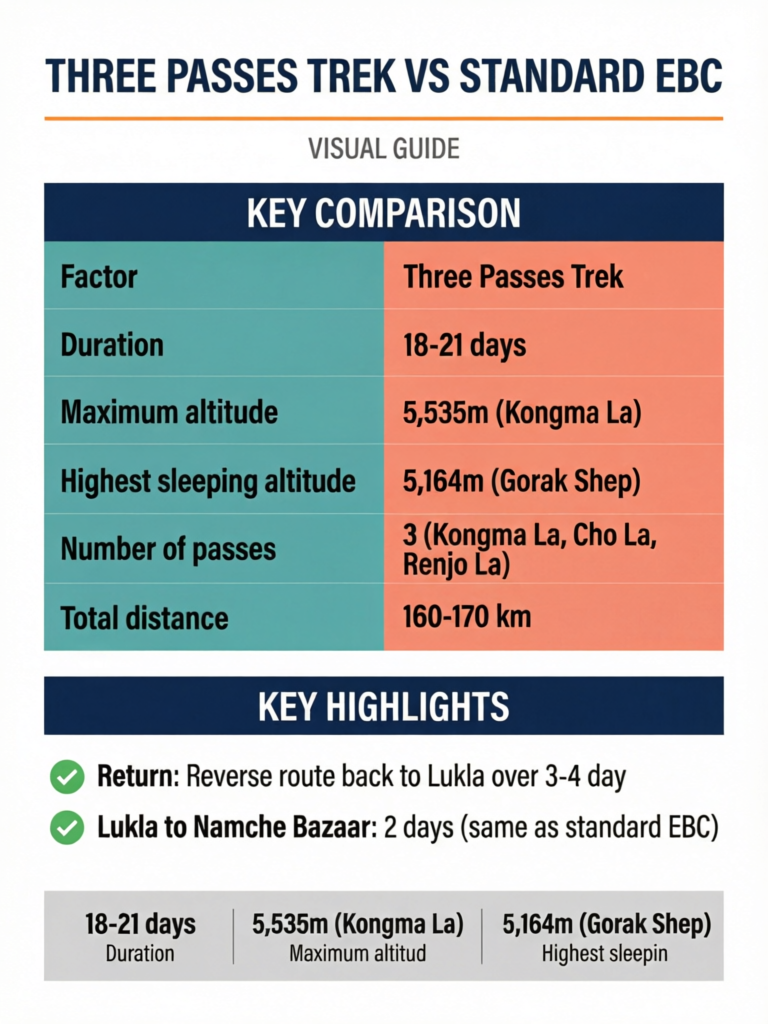
Three Passes: 18-21 days. Standard EBC: 12-14 days.
Three Passes: 5,535m (Kongma La). Standard EBC: 5,545m (Kala Patthar).
Three Passes: 3 passes above 5,300m. Standard EBC: 0 passes.
Three Passes: loop through Khumbu. Standard EBC: out-and-back on same trail.
Three Passes: Expert/Strenuous. Standard EBC: Moderate-Challenging.
Three Passes: 7-10 hours on pass days. Standard EBC: 5-7 hours.
Three Passes: scrambling, glacier crossing, route-finding. Standard EBC: none.
Three Passes: very low on pass sections. Standard EBC: high in peak season.
Three Passes: $2,500-4,500. Standard EBC: $1,800-3,500.
Three Passes: extraordinary (lakes, glaciers, multiple valleys). Standard EBC: focused on Everest approach.
Three Passes: 70-80%. Standard EBC: 85-90%.
Three Passes: strongly recommended (essential for safety). Standard EBC: recommended but optional.
Master Comparison Table
| Factor | Three Passes Trek | Standard EBC Trek | Advantage |
|---|---|---|---|
| Duration | 18-21 days | 12-14 days | EBC (shorter) |
| Maximum altitude | 5,535m (Kongma La) | 5,545m (Kala Patthar) | Tie |
| Highest sleeping altitude | 5,164m (Gorak Shep) | 5,164m (Gorak Shep) | Tie |
| Number of passes | 3 (Kongma La, Cho La, Renjo La) | 0 | Three Passes (more variety) |
| Total distance | 160-170 km | 130 km round-trip | EBC (shorter) |
| Daily walking hours | 7-10 hours on pass days, 5-7 otherwise | 5-7 hours | EBC (less demanding) |
| Difficulty rating | Expert/Strenuous | Moderate-Challenging | EBC (easier) |
| Technical requirements | Scrambling, glacier crossing, crampon use possible | None | EBC (accessible) |
| Fitness level needed | Very high (marathon-level endurance) | Moderate-high (regular hiking fitness) | EBC (lower bar) |
| Landscape variety | Extraordinary (3 valleys, lakes, glaciers) | Good (single corridor) | Three Passes |
| Mountain views | 360-degree panoramas from 3 summits | Everest-focused crescendo | Three Passes |
| Gokyo Lakes included | Yes | No (separate trek) | Three Passes |
| Crowds on trail | Very low on pass sections | High in peak season | Three Passes |
| Tea house availability | Limited near passes | Abundant | EBC |
| Guide necessity | Essential | Optional (recommended) | EBC (more independent) |
| Cost (mid-range) | $2,500-4,500 | $1,800-3,500 | EBC (cheaper) |
| Best season | October-November only (passes must be clear) | October-November, March-May | EBC (wider window) |
| Success rate | 70-80% | 85-90% | EBC (higher) |
| Backtracking | Minimal (loop route) | Significant (same trail both ways) | Three Passes |
| Bucket-list recognition | Niche (trekking enthusiasts) | Universal | EBC |
| Post-trek satisfaction | Extremely high among those who complete it | High | Three Passes |
1. The Route: Linear Corridor vs Grand Loop
Standard EBC: The Classic Corridor
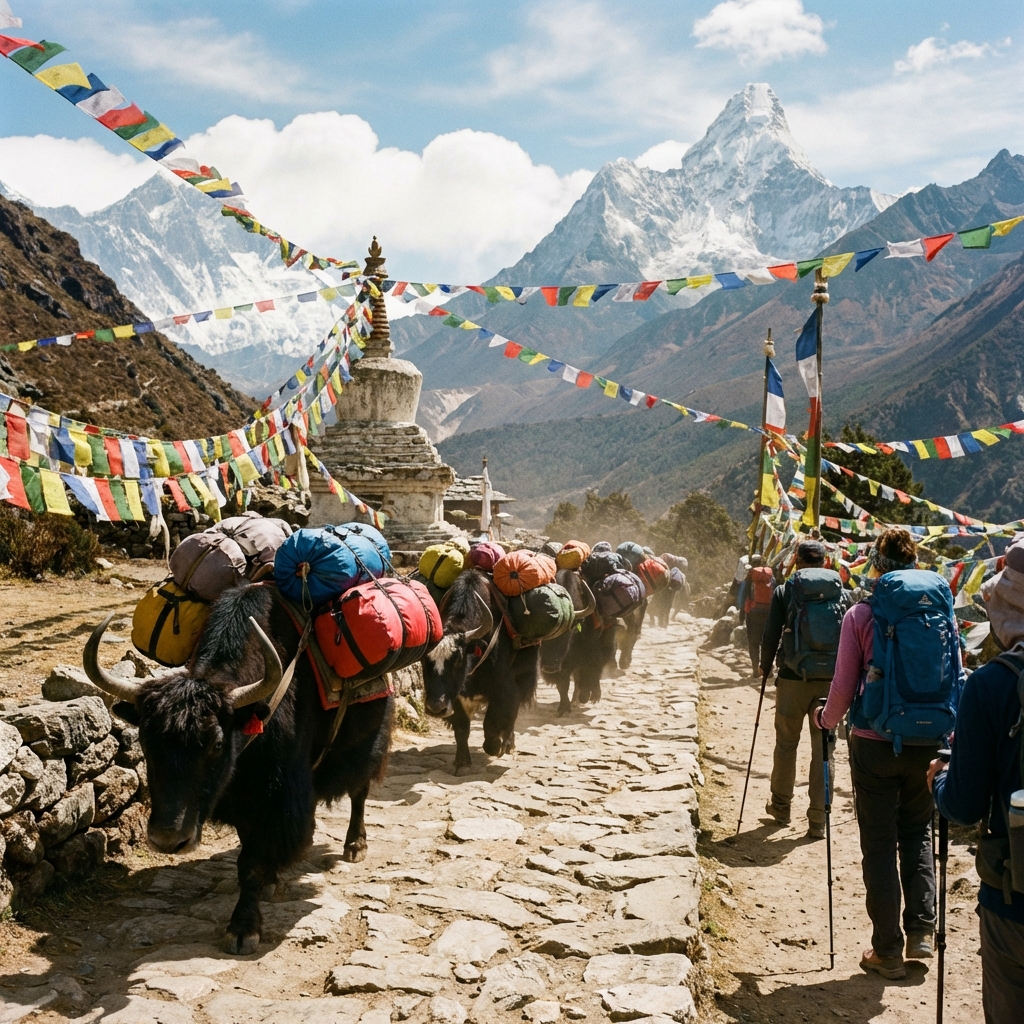
The standard Everest Base Camp trek follows a well-established route up the Khumbu Valley. It is an out-and-back journey, meaning you walk the same trail to reach Base Camp and return on the same trail to Lukla.
The route:
- Lukla (2,860m) to Namche Bazaar (3,440m): 2 days through forest and along the Dudh Kosi river
- Namche Bazaar rest day: Acclimatization, explore the Sherpa capital
- Namche to Tengboche (3,860m): 1 day through rhododendron forest with Ama Dablam views
- Tengboche to Dingboche (4,410m): 1-2 days ascending into alpine terrain
- Dingboche rest day: Acclimatization hike to Nagarjun Hill
- Dingboche to Lobuche (4,940m): 1 day along the lateral moraine
- Lobuche to Gorak Shep (5,164m): 1 day, then EBC or Kala Patthar
- Return: Reverse route back to Lukla over 3-4 days
The return journey is the standard trek's most commonly cited drawback. After the emotional high of reaching Base Camp and Kala Patthar, walking the same trail in reverse can feel anticlimactic. However, views that were behind you on the way up are now in front of you, offering a different perspective.
Three Passes Trek: The Grand Khumbu Loop
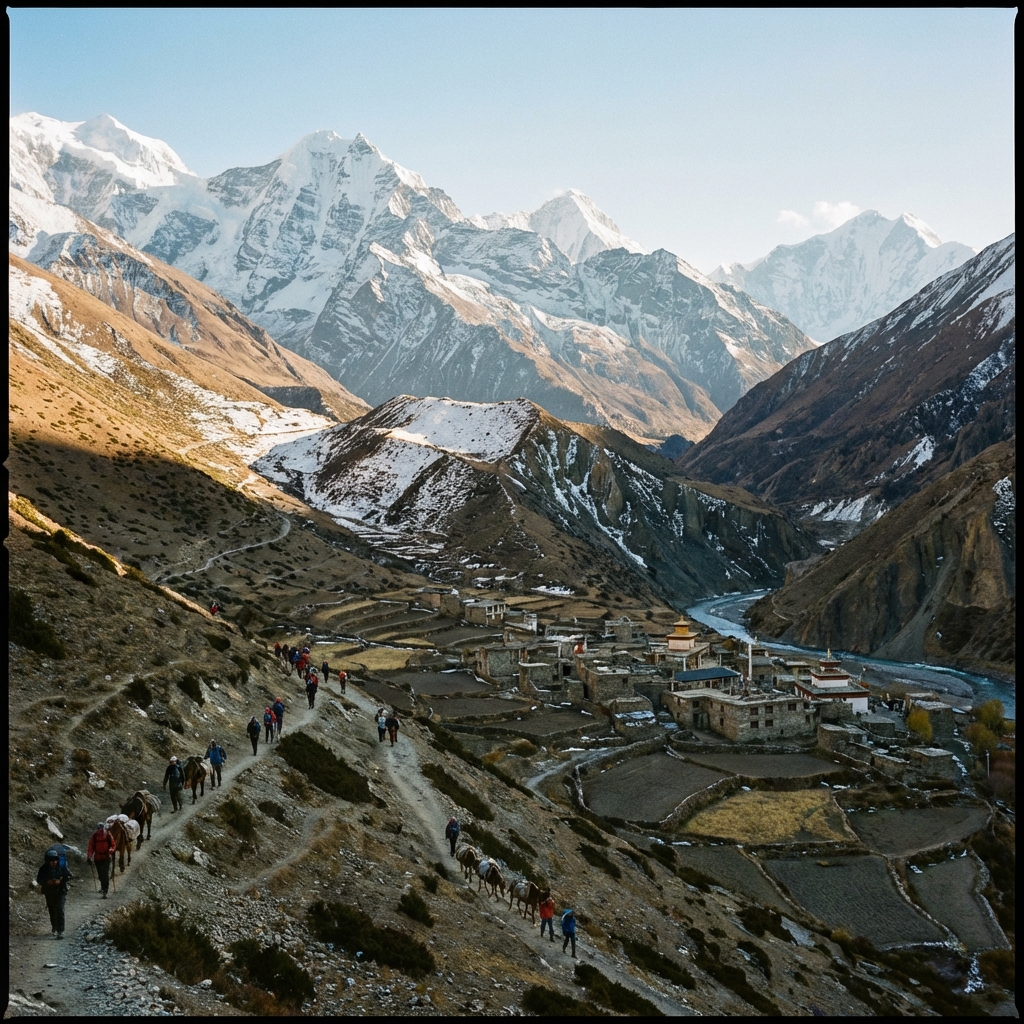
The Three Passes Trek transforms the linear EBC experience into a comprehensive exploration of the entire Khumbu region. Instead of returning the way you came, you cross high passes to connect different valleys, creating a loop that touches nearly every major destination in the Everest region.
The route (counterclockwise, most common):
- Lukla to Namche Bazaar: 2 days (same as standard EBC)
- Namche rest day: Acclimatization
- Namche to Tengboche to Dingboche: 2-3 days (same as standard EBC)
- Dingboche to Chukhung (4,730m): 1 day into the Imja Valley
- Kongma La crossing (5,535m): 1 day, the highest and most technical pass, descending to Lobuche
- Lobuche to Gorak Shep to EBC: 1-2 days (same as standard EBC)
- Gorak Shep, Kala Patthar, then to Dzongla (4,830m): 1-2 days
- Cho La crossing (5,420m): 1 day, glacier crossing involved, descending to Dragnag
- Dragnag to Gokyo (4,790m): 1 day along the Ngozumpa Glacier
- Gokyo exploration: 1-2 days (Gokyo Ri at 5,357m, Gokyo Lakes)
- Renjo La crossing (5,360m): 1 day, descending to Lumde or Thame
- Return to Namche and Lukla: 2-3 days
This route means you never retrace your steps from Base Camp onward. Every day after EBC brings entirely new terrain, new valleys, new lakes, and new mountain perspectives. The loop format is one of the Three Passes Trek's greatest selling points.
Pro Tip
The counterclockwise direction (Kongma La first, Renjo La last) is recommended for most trekkers. This order places the most technical pass (Kongma La) early when your energy is highest, and allows better acclimatization progression. The clockwise direction works but requires more careful altitude management and puts the hardest pass at the end of the trek.
2. Difficulty Comparison: A Different League
This is the most important comparison for potential Three Passes trekkers. The difficulty gap between these two treks is substantial and must not be underestimated.
Standard EBC Difficulty
The standard EBC trek is rated Moderate-Challenging. It requires:
- Cardiovascular fitness: Ability to walk 5-7 hours daily at altitude
- Altitude tolerance: Comfortable sleeping up to 5,164m with proper acclimatization
- No technical skills: The trail is well-marked, well-maintained, and requires no scrambling, climbing, or special equipment
- Mental endurance: 12-14 days of continuous trekking with challenging final days
- Prior experience: Beneficial but not required. Many first-time trekkers complete EBC successfully
The hardest days on standard EBC are the Gorak Shep night (sleeping at 5,164m) and the Kala Patthar pre-dawn ascent (5,545m). But these are walk-up challenges requiring endurance rather than technical ability.
Three Passes Trek Difficulty
The Three Passes Trek is rated Expert/Strenuous. It requires everything the standard EBC demands, plus significantly more:
Physical demands:
- Walking 7-10 hours on pass-crossing days (compared to 5-7 on standard EBC)
- Three consecutive high-pass crossings, each involving 800-1,200m of elevation gain and loss in a single day
- Sustained exertion at extreme altitude over 18-21 days (versus 12-14)
- Recovery between passes is limited; your body never fully rests
Technical demands:
- Kongma La (5,535m): Steep, rocky scrambling on both sides. Hands may be needed for sections. Route-finding can be challenging in poor visibility. Some exposure on narrow ridge sections.
- Cho La (5,420m): Glacier crossing on the descent. Crampons may be required in snowy conditions. Fixed ropes may be in place but cannot be relied upon. Crevasse awareness is necessary.
- Renjo La (5,360m): The least technical of the three, but still involves steep, loose scree on both sides. Exhaustion from the previous two passes makes this more challenging than its difficulty warrants.
Mental demands:
- Three major pass-crossing days, each starting before dawn in freezing conditions
- Extended time in remote areas with limited tea house options
- Weather windows for passes are narrower; delays are possible
- Cumulative fatigue by the third pass can be psychologically draining
Three Passes Fitness Requirements
The Three Passes Trek is not an upgraded version of EBC that any fit trekker can attempt. It requires a substantially higher fitness level. Trekkers should be capable of 8-10 hours of hiking with a pack over rough terrain at sea level before attempting this trek. Prior high-altitude experience above 4,500m is strongly recommended. Multiple trekkers turn back each season after underestimating the difficulty, particularly on Kongma La. If you have not trekked at high altitude before, do the standard EBC first.
Difficulty Verdict
The Three Passes Trek is approximately 50-70% more difficult than the standard EBC trek by most measures: longer duration, more elevation gain, technical terrain, glacier crossings, and sustained high-altitude exposure. Standard EBC is accessible to reasonably fit recreational trekkers. Three Passes requires serious mountaineering fitness and ideally prior high-altitude experience.
3. The Three Passes: What to Expect on Each
Understanding each pass individually helps trekkers evaluate whether they are ready for this challenge.
Kongma La (5,535m) - The Highest and Most Technical
Approach: From Chukhung (4,730m), ascending through rocky moraine terrain Elevation gain: 805m from Chukhung Crossing time: 8-10 hours (Chukhung to Lobuche) Technical difficulty: High
Kongma La is the trek's most demanding pass. The ascent involves scrambling over large boulders and navigating steep, rocky terrain that requires occasional hand placement. The summit offers extraordinary 360-degree views: Everest, Lhotse, Makalu, Ama Dablam, and the entire Imja Valley. The descent to Lobuche is steep and knee-punishing, dropping through moraine to reach the standard EBC trail.
Key challenge: Route-finding in poor visibility can be extremely difficult. The trail is marked by cairns but these can be obscured by snow. A guide who knows this pass intimately is essential.
Cho La (5,420m) - The Glacier Pass
Approach: From Dzongla (4,830m), ascending through rocky terrain to the glacier Elevation gain: 590m from Dzongla Crossing time: 7-9 hours (Dzongla to Dragnag) Technical difficulty: Moderate-High (glacier dependent)
Cho La's defining feature is the glacier crossing on the north side. In dry autumn conditions, the glacier may require careful walking on ice. In snowy conditions, crampons are necessary and crevasse awareness becomes critical. The glacier section is typically 30-60 minutes of careful walking, but conditions vary significantly by season and snowfall.
Key challenge: The glacier. Its condition is unpredictable and can change rapidly with weather. Guides must assess conditions on the morning of crossing and may delay or reroute if the glacier is too dangerous. Several serious accidents have occurred here.
Cho La Glacier Safety
Never attempt the Cho La glacier crossing without an experienced guide who has crossed it recently and can assess current conditions. Carry crampons (or ensure your guide has them available) from mid-November onward. If fresh snow has fallen, the crossing may be impossible until the snow consolidates. Your guide should have a satellite phone and be prepared to turn back. Do not cross in poor visibility, as route-finding on the glacier becomes extremely dangerous.
Renjo La (5,360m) - The Scenic Finale
Approach: From Gokyo (4,790m), ascending through scree and rock Elevation gain: 570m from Gokyo Crossing time: 6-8 hours (Gokyo to Lumde/Thame) Technical difficulty: Moderate
Renjo La is the least technical of the three passes but should not be underestimated. By this point, you have crossed two passes, spent nearly three weeks at altitude, and your body is running on diminishing reserves. The ascent is steep scree that feels harder than it should because of accumulated fatigue. The reward is a stunning view back over Gokyo Lakes and forward toward the Bhote Kosi valley.
Key challenge: Fatigue. The pass itself is straightforward, but your legs, lungs, and motivation have been tested for weeks. Many trekkers find Renjo La psychologically the hardest despite being technically the easiest.
4. Scenery Comparison: Focused vs Expansive
Standard EBC: The Crescendo
The standard EBC trek builds toward a single climactic moment: standing at the foot of Everest. The scenery escalates with altitude, and the final days deliver some of the world's most dramatic mountain views.
Scenic highlights:
- Namche Bazaar viewpoint: first panoramic view of Everest
- Tengboche Monastery: Ama Dablam framed against the sky
- Khumbu Glacier and Icefall from Base Camp
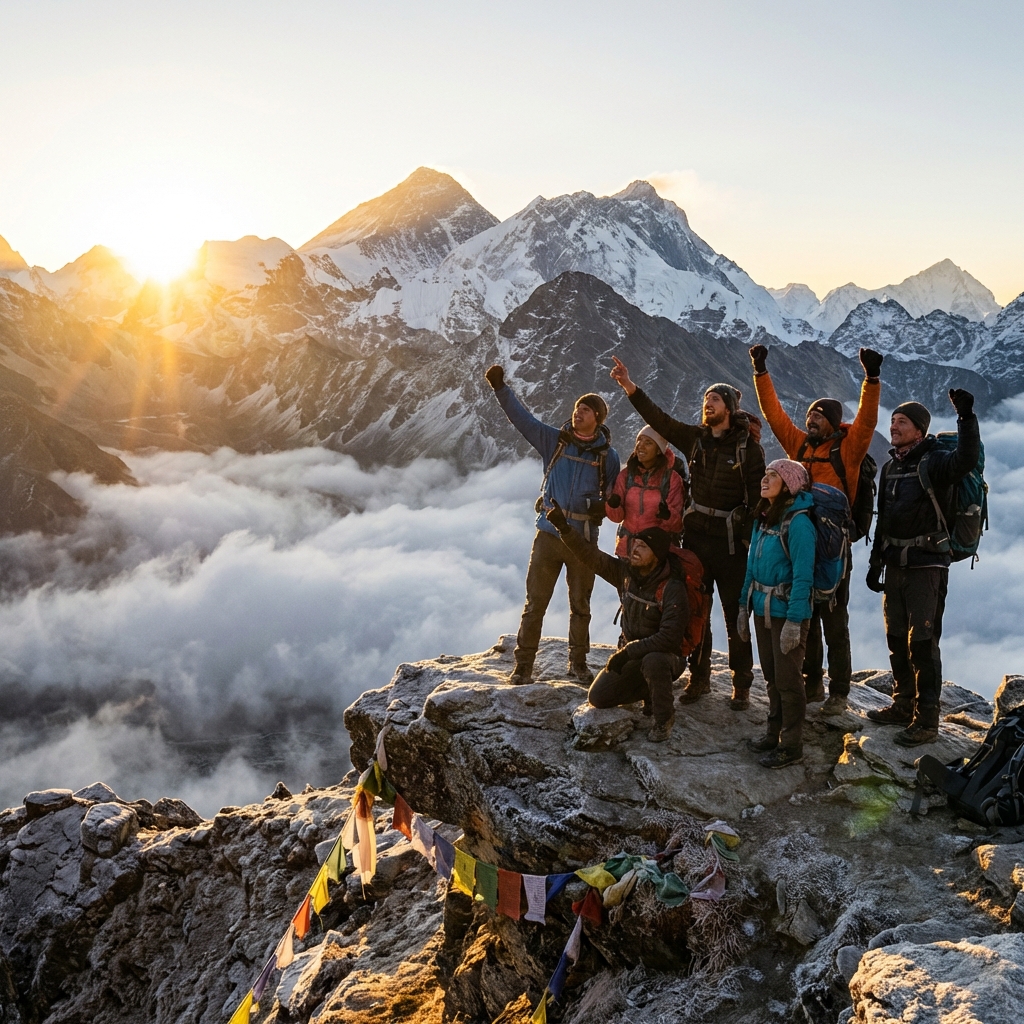
- Kala Patthar sunrise: Everest, Lhotse, and Nuptse lit gold at dawn
The standard route is undeniably dramatic, but it offers a single visual narrative: the approach to Everest. You see the same mountains from progressively closer and higher angles. This is powerful and emotionally satisfying, but it lacks the variety of the Three Passes route.
Three Passes: The Grand Tour
The Three Passes Trek includes everything the standard EBC offers, plus dramatically more:
Additional scenic highlights:
- Chukhung Valley: The serene Imja Valley with views of Island Peak and Lhotse's south face
- Kongma La summit: A 360-degree panorama that standard EBC trekkers never see, including Makalu, the world's fifth-highest peak
- Gokyo Lakes: Five emerald-turquoise lakes at the foot of the Ngozumpa Glacier (Nepal's longest)
- Gokyo Ri (5,357m): A viewpoint rivaling Kala Patthar, with Everest, Cho Oyu, Lhotse, and Makalu all visible, plus the entire Gokyo lake system below
- Ngozumpa Glacier: Walking along (and sometimes on) Nepal's longest glacier
- Cho La glacier: A unique high-altitude glacial crossing
- Renjo La views: A perspective of the Khumbu that few trekkers ever see
- Thame Valley: A quiet, traditional Sherpa valley rarely visited by standard EBC trekkers
The scenic verdict is clear: The Three Passes Trek delivers substantially more visual variety and more mountain viewpoints than the standard EBC. If your primary goal is seeing as much of the Khumbu as possible, the Three Passes Trek is the definitive route.
Pro Tip
Gokyo Ri at sunrise rivals Kala Patthar for the best mountain view in the Everest region. From its summit, you can see four of the world's six highest peaks (Everest, Lhotse, Makalu, Cho Oyu) plus the turquoise Gokyo Lakes stretching below. Many trekkers who have done both say Gokyo Ri is the more beautiful viewpoint, though Kala Patthar is closer to Everest.
5. Cost Comparison: Detailed Breakdown
| Cost Category | Three Passes Trek | Standard EBC Trek |
|---|---|---|
| Lukla flights | $215-400 | $350-400 |
| Permits | $38-45 (SNP + municipal) | $38-45 (SNP + municipal) |
| Accommodation (18-21 nights) | $72-525 ($4-25/night) | $48-350 ($4-25/night) |
| Food (18-21 days) | $270-735 ($15-35/day) | $180-490 ($15-35/day) |
| Guide (18-21 days) | $450-735 ($25-35/day) | $300-490 ($25-35/day) |
| Porter (optional) | $270-525 ($15-25/day) | $180-350 ($15-25/day) |
| Tips | $150-300 | $100-250 |
| Crampons/gear rental | $20-50 | $0 |
| Hot showers, charging | $50-120 | $40-100 |
| Travel insurance | $100-200 | $100-150 |
| Kathmandu hotels | $30-100 | $30-100 |
| Budget total | $1,600-2,800 | $1,200-2,200 |
| Mid-range agency total | $2,500-4,500 | $1,800-3,500 |
| Premium agency total | $4,000-6,500 | $3,000-5,500 |
The cost difference is primarily driven by the 6-7 additional days on the trail. Permit costs are identical (same national park), and Lukla flights are the same. The daily expenses of food, accommodation, guide, and porter simply accumulate over a longer period.
Pro Tip
If you are hiring a guide for the Three Passes Trek, invest in an experienced guide who has crossed all three passes multiple times, ideally in the same season. General trekking guides who have only done the standard EBC route may not know the pass routes well enough for safe navigation in poor conditions. Ask your agency specifically about the guide's Three Passes experience, and request references from previous clients who completed the trek.
6. Crowds: Solitude vs Company
Standard EBC Crowds
The standard EBC trail is one of the world's busiest trekking corridors. During peak season (October-November):
- Lukla to Namche: 200-400 trekkers daily
- Namche to Tengboche: 150-300 daily
- Dingboche to Gorak Shep: 100-200 daily
- Kala Patthar sunrise: 80-150 at the summit
- Total October trekkers: approximately 12,000-15,000 per month
The trail is busy, lodges fill up (especially Gorak Shep), and the social atmosphere is constant. This can be either comforting (safety, companionship) or frustrating (noise, crowding, full lodges) depending on your preference.
Three Passes Trek Crowds
The Three Passes Trek shares the standard EBC corridor for some sections but diverges into dramatically quieter terrain:
- Shared sections (Lukla-Namche-Tengboche-Dingboche): Same crowds as standard EBC
- Chukhung Valley: Much quieter, perhaps 20-40 trekkers daily
- Kongma La crossing: 5-15 trekkers on any given day
- Cho La crossing: 10-25 trekkers daily
- Gokyo area: 30-60 trekkers daily (popular but much less than main EBC trail)
- Renjo La crossing: 5-15 trekkers daily
On pass-crossing days, you may encounter fewer than 10 other trekkers all day. This solitude in spectacular mountain terrain is one of the Three Passes Trek's most appealing qualities. The contrast between the crowded standard EBC corridor and the empty pass routes is stark.
Tea House Availability on Pass Routes
The flip side of fewer crowds is fewer tea houses. On pass-crossing days, accommodation options are very limited. Dzongla (before Cho La) has only 2-3 lodges. Dragnag (after Cho La) has similarly few options. These lodges fill up quickly during peak season despite lower overall trekker numbers on the pass routes. Your guide should call ahead to reserve beds, or carry a tent as backup. Running out of accommodation options after a grueling pass crossing is a real concern.
7. Season and Weather Windows
Standard EBC Season
The standard EBC trek has a relatively wide seasonal window:
- Primary season: October-November (clear skies, cold nights, busy)
- Secondary season: March-May (warmer days, spring bloom, some afternoon cloud)
- Possible but challenging: December-February (very cold, fewer services, quiet)
- Not recommended: June-September (monsoon, poor visibility, leeches at lower altitudes)
Three Passes Trek Season
The Three Passes Trek has a narrower seasonal window because the passes must be snow-free and safe to cross:
- Optimal season: Mid-October to mid-November (passes clear, weather stable)
- Secondary season: April-May (passes usually clear by mid-April, but snow can linger)
- Marginal: Late March, late November (passes may be snowy and dangerous)
- Not recommended: December-February (passes frequently closed by snow), June-September (monsoon)
The narrower season is an important planning constraint. Standard EBC trekkers have more flexibility in scheduling. Three Passes trekkers must time their trek carefully and accept that pass closures due to unexpected snow are always possible.
Which Trek Is Harder?
The Three Passes Trek is dramatically harder than standard EBC. It crosses three passes above 5,300m (Kongma La 5,535m, Cho La 5,420m, Renjo La 5,360m) over 18-21 days, compared to EBC's 12-14 days with no pass crossings. The Three Passes Trek demands higher fitness, prior altitude experience, and mental resilience for consecutive high-altitude days. Standard EBC is achievable by most fit trekkers; Three Passes requires genuine trekking experience. See our trekking boots guide for footwear suited to technical terrain.
Which Trek Has Better Views?
The Three Passes Trek delivers superior overall views by combining EBC, Gokyo Lakes, and three high pass panoramas into one journey. You see everything standard EBC trekkers see plus the turquoise Gokyo Lakes, Gokyo Ri's 360-degree panorama of four 8,000m peaks, and views from three pass summits. Standard EBC concentrates its scenic power at Kala Patthar and Base Camp. For maximum Khumbu scenery, Three Passes is unbeatable. Check our Gokyo Lakes vs EBC comparison for details.
Which Trek Is More Expensive?
The Three Passes Trek costs 40-60% more due to its longer duration (18-21 vs 12-14 days), additional guide days, more food and accommodation, and sometimes a premium guide fee for the technical passes. A mid-range Three Passes Trek costs $2,500-4,500 vs $1,800-3,000 for standard EBC. Both require the same Lukla flights and Sagarmatha National Park permit.
8. Who Should Choose Which Trek
Choose the Standard EBC Trek If:
You are new to high-altitude trekking. The standard EBC is a challenging but accessible introduction to Himalayan trekking. It requires no technical skills, has excellent infrastructure, and provides a strong safety net of fellow trekkers and well-staffed lodges. If this is your first trek above 4,000m, the standard route is the appropriate choice.
Your available time is limited. At 12-14 days, the standard EBC fits into a three-week vacation (including travel days and Kathmandu time). The Three Passes Trek requires a minimum of 24-27 days total, which many working trekkers cannot accommodate.
The Everest achievement matters most. If your primary goal is standing at Everest Base Camp and watching sunrise from Kala Patthar, the standard route delivers this efficiently and reliably. The Three Passes Trek also includes EBC, but reaching Base Camp is one event among many rather than the singular climax.
Budget is a concern. The standard trek saves $700-1,200 compared to the Three Passes Trek at comparable service levels.
You prefer a social trekking experience. The standard EBC trail is lively, with fellow trekkers from around the world sharing lodges, meals, and stories every evening. If this social element enhances your experience, the standard route delivers it more consistently.
Choose the Three Passes Trek If:
You have significant high-altitude trekking experience. If you have completed EBC, the Annapurna Circuit, or similar treks and want a substantially more challenging next step, the Three Passes Trek is the natural progression. It rewards experience with terrain and views that standard trekkers never access.
Solitude and wilderness matter to you. The pass-crossing days offer genuine solitude in extraordinary mountain terrain. If crowded trails diminish your enjoyment, the Three Passes Trek provides the contrast you seek.
You want the most comprehensive Khumbu experience. The Three Passes Trek visits Chukhung, Gokyo, Thame, and three high passes in addition to the standard EBC route. If you want to see everything the Everest region offers in a single trek, this is the definitive itinerary.
You dislike out-and-back routes. The loop format means you never retrace your steps after leaving the standard EBC corridor. Every day from Chukhung onward brings new terrain, new views, and new valleys. If walking the same trail in reverse would frustrate you, the Three Passes loop solves this entirely.
You are physically very fit and want to be challenged. If you find standard treks insufficiently demanding and want a trek that will push your physical limits, the Three Passes Trek delivers. The three consecutive pass crossings at extreme altitude are among the most demanding challenges in tea house trekking.
You want the ultimate Everest region photography portfolio. Three summit panoramas (Kongma La, Cho La area, Renjo La) plus Gokyo Ri plus Kala Patthar plus the Gokyo Lakes provide a photographic range that standard EBC cannot match.
Pro Tip
Consider the "EBC plus Gokyo via Cho La" option as a middle ground. This 16-18 day itinerary follows the standard EBC route, then crosses Cho La to Gokyo Lakes before returning via Namche. You get one pass crossing and the Gokyo experience without the full difficulty of all three passes. This is an excellent intermediate option for trekkers who want more than standard EBC but are not ready for the full Three Passes challenge.
9. Preparation and Training Differences
Preparing for Standard EBC
Training timeline: 8-12 weeks before departure Weekly training: 4-5 days of activity
- 3-4 cardio sessions (running, cycling, stair climbing) of 45-60 minutes
- 1-2 day hikes with a loaded pack (10-12 kg)
- Regular stair climbing (equivalent of 50-80 floors per session)
- Build to one long hike per week (6-8 hours with elevation gain)
Prior experience needed: Day hiking experience with moderate elevation gain. No high-altitude experience strictly necessary, though it helps.
Preparing for Three Passes Trek
Training timeline: 16-24 weeks before departure Weekly training: 5-6 days of activity
- 4-5 cardio sessions of 60-90 minutes at high intensity
- 2-3 day hikes with a loaded pack (12-15 kg) including steep terrain
- Regular stair climbing (equivalent of 80-120 floors per session)
- Build to one long hike per week (8-10 hours with significant elevation gain)
- Include back-to-back long hiking days to simulate multi-day fatigue
- Add scrambling practice on rocky terrain if possible
Prior experience needed: At least one multi-day trek at high altitude (above 4,000m). Experience with scrambling and steep, loose terrain. Comfort with early morning starts in cold conditions. Ability to maintain performance when fatigued over multiple consecutive demanding days.
10. Gear Differences
The standard EBC trek requires standard high-altitude trekking gear: warm layers, a quality sleeping bag rated to minus 15-20 degrees Celsius, trekking poles, and good boots.
The Three Passes Trek requires all of the above, plus:
- Crampons or microspikes: Essential for Cho La glacier crossing, potentially needed on Kongma La in snowy conditions
- Gaiters: Useful for deep scree on Renjo La and early-season snow
- More robust sleeping bag: Nights before pass crossings can be extremely cold, especially at Dzongla and Dragnag, where lodges may not have heating
- Additional warm layers: Pass crossings start before dawn in temperatures potentially reaching minus 15-20 degrees Celsius at the summit
- Headlamp with extra batteries: Essential for pre-dawn pass starts
- Emergency shelter: A lightweight bivvy bag provides critical safety margin if forced to stop on a pass
Gear Rental in Namche Bazaar
If you do not want to carry crampons and gaiters from home, these can be rented in Namche Bazaar for approximately $2-5 per day. Quality varies; inspect rental gear carefully and test crampons for fit before leaving Namche. Your guide may also carry communal crampons for the group. Confirm gear arrangements with your agency before departure.
Frequently Asked Questions
Can I add the Three Passes to a standard EBC trek partway through?
Not advisable. The Three Passes Trek requires specific planning for acclimatization, lodge reservations on pass routes, and guide preparation. Deciding mid-trek to add passes creates acclimatization risks and logistical problems. Plan your route before departure and commit to it.
Is the Three Passes Trek dangerous?
More dangerous than the standard EBC, but manageable with proper preparation and an experienced guide. The primary risks are altitude sickness on three separate high passes, glacier hazards on Cho La, route-finding difficulties in poor visibility on Kongma La, and the cumulative fatigue that reduces decision-making quality over three weeks. Annual injury statistics show a higher incident rate on the Three Passes route compared to standard EBC, though fatalities remain rare.
How fit do I need to be for the Three Passes Trek?
Very fit. As a benchmark, you should be able to hike 25-30 km with 1,500m of elevation gain in a single day at sea level while carrying a 10 kg pack without excessive fatigue. If this sounds extreme, you should gain more fitness before attempting the Three Passes.
Can I do the Three Passes Trek with a mandatory licensed guide?
Legally, yes (as of 2026-2026 regulations, guides are required for all treks in Nepal, but enforcement varies). Practically, this is strongly discouraged. Route-finding on the passes, especially Kongma La in poor visibility, is genuinely dangerous without local knowledge. Cho La glacier conditions require experienced assessment. Solo trekkers who get into trouble on remote pass routes may wait hours or days for help. Hire a guide who knows these passes intimately.
Which direction should I do the Three Passes Trek?
Counterclockwise (Kongma La first, then Cho La, then Renjo La) is recommended for most trekkers. This places the most technical pass first when you are freshest, provides good acclimatization progression, and saves the scenic Gokyo Lakes for the second half of the trek. Clockwise is viable but puts Kongma La last when fatigue is highest.
What happens if a pass is closed due to snow?
You have three options: wait for conditions to improve (1-2 days may clear fresh snow), take an alternative lower route that bypasses the pass (possible for Cho La and Renjo La but not ideal for Kongma La), or return to the standard EBC corridor and complete the trek without the blocked pass. Your guide should have contingency plans for all three scenarios.
Is the Three Passes Trek the hardest tea house trek in Nepal?
It is among the top three most difficult tea house treks in Nepal, alongside the Manaslu Circuit (which is longer but less technical) and the Upper Dolpo Trek (which is more remote but at similar altitudes). The combination of three high-pass crossings, glacier terrain, and sustained altitude makes it the most technically demanding mainstream tea house trek.
Do I need to summit all three passes to "complete" the trek?
There is no official completion standard. Many trekkers cross two of three passes due to weather or fitness limitations and still consider the trek a success. However, the full Three Passes experience requires all three crossings. If one pass must be skipped, Renjo La is the most commonly omitted (it can be bypassed by trekking from Gokyo directly to Namche via Dole and Phortse).
When should I book the Three Passes Trek?
Book 3-6 months in advance for peak season (October-November). The limited lodge capacity on pass routes means that popular dates fill up quickly. Ensure your agency confirms lodge reservations at Dzongla, Dragnag, and any other critical pass-route stops.
Can I do the Three Passes Trek as my first Nepal trek?
This is not recommended. The Three Passes Trek is designed for experienced high-altitude trekkers who have already proven their ability to perform at extreme altitude over multiple days. Attempting it as a first Nepal trek significantly increases risk of altitude sickness, injury, and an unsuccessful outcome. Do the standard EBC or Annapurna Circuit first to build high-altitude experience.
How does the Three Passes Trek compare to the Annapurna Circuit?
Different challenges. The Annapurna Circuit is longer in distance but crosses only one pass (Thorong La, 5,416m). The Three Passes Trek is shorter in distance but crosses three passes, all above 5,300m. The Annapurna Circuit offers more landscape diversity (five climate zones). The Three Passes Trek offers more sustained high-altitude challenge and higher-altitude scenery. Both are world-class treks; the Three Passes is generally considered more physically demanding.
Related Resources
- Three Passes Trek Itinerary
- EBC 14-Day Itinerary
- Three Passes Trek Difficulty Assessment
- EBC Difficulty Assessment
- Gokyo Lakes vs EBC Comparison
- Everest Base Camp Route Guide
- Best Time to Trek Nepal
Final Verdict: Evolution, Not Replacement
The Three Passes Trek is not a "better" version of the standard EBC trek. It is a fundamentally different undertaking that happens to share the same geography. The standard EBC trek is one of the world's great adventures, accessible to committed recreational trekkers, and delivers the unmatched achievement of standing at the foot of Everest. The Three Passes Trek is an expert-level expedition that transforms the Khumbu into a three-week odyssey of passes, glaciers, lakes, and valleys.
For first-time Everest region visitors, the standard EBC trek is the right choice. It is a complete, satisfying experience that stands on its own merits. For those who have done EBC and want to return for a deeper, more demanding exploration of the Khumbu, the Three Passes Trek is the ultimate answer. It is the trek that experienced Everest region guides most often name as their personal favorite, and the one that delivers the most comprehensive understanding of this extraordinary mountain landscape.
Do the standard EBC first. Then, when the mountains call you back, do the Three Passes. You will see the Khumbu through entirely new eyes.
Last updated: February 2026. All data verified against Sagarmatha National Park records, TAAN licensed agency reports, and experienced Three Passes Trek guide interviews from the 2026/2027 season. Pass conditions vary annually; always confirm current status with your agency before departure.