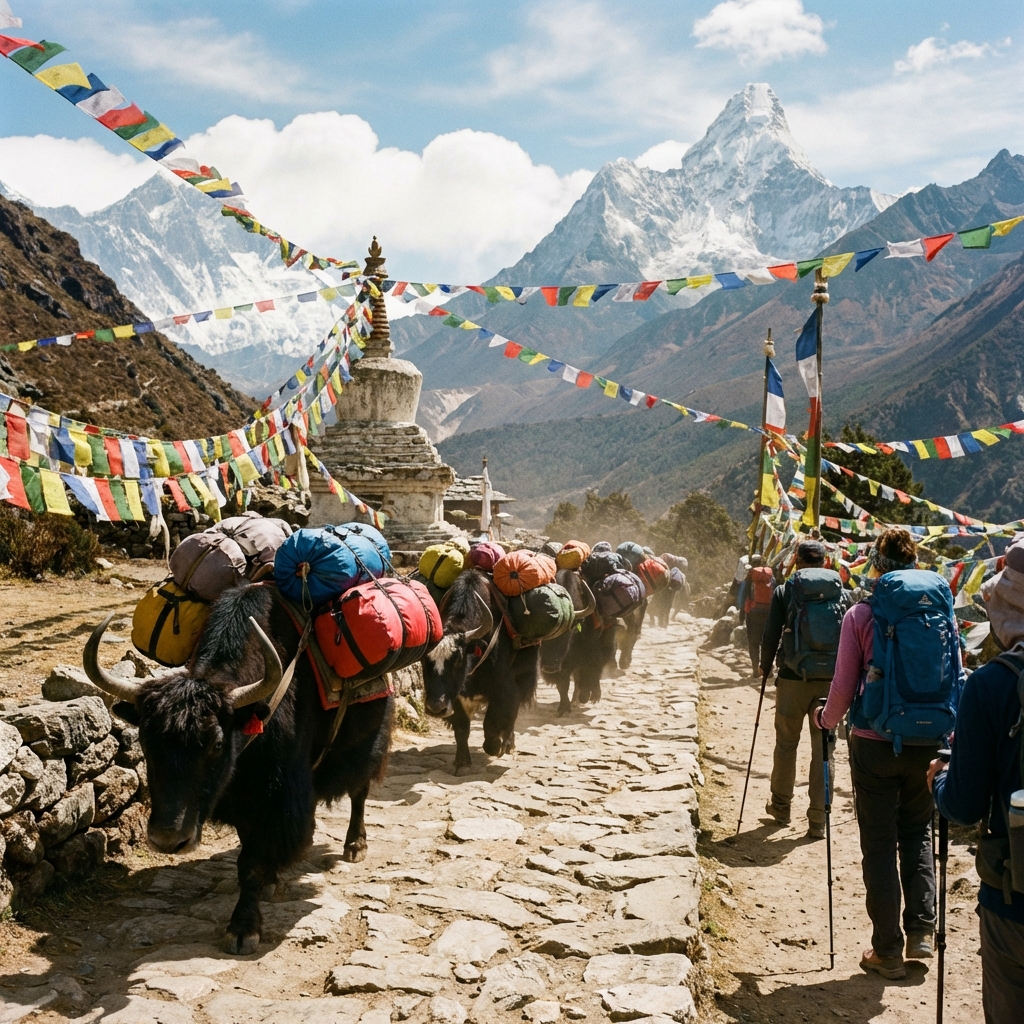
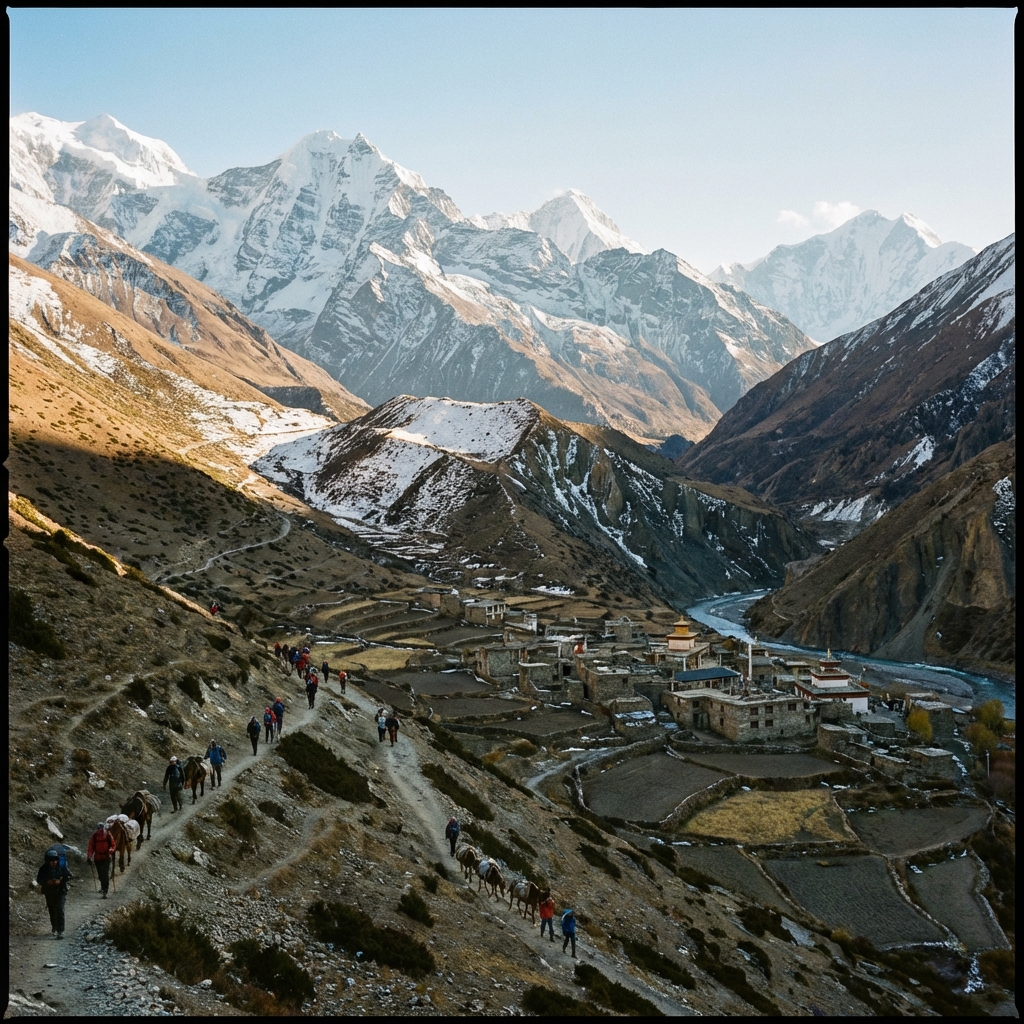
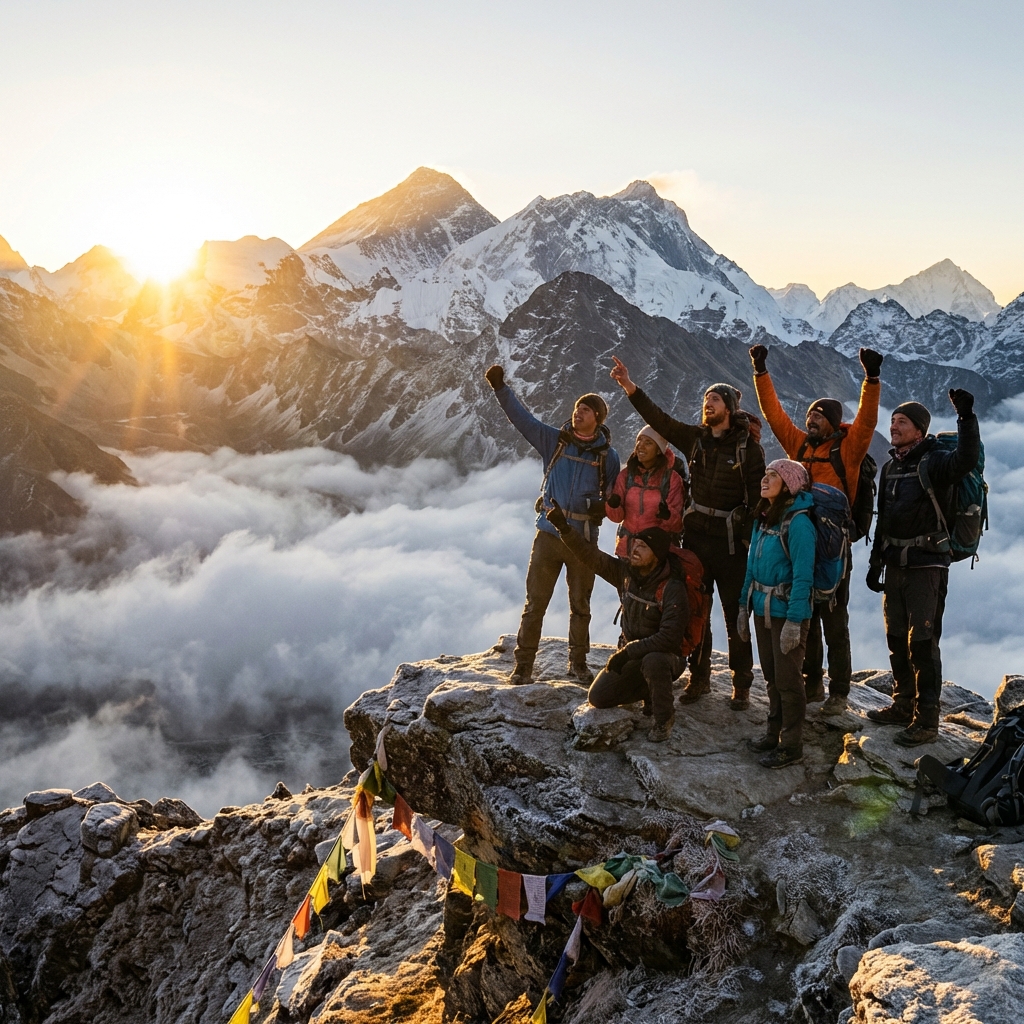
The Everest Base Camp trek is the most iconic trek in the world. It is also one of the most misunderstood in terms of difficulty. Marketing materials describe it as "moderate" or "suitable for anyone with reasonable fitness." Social media shows grinning trekkers at the base camp sign, creating the impression that reaching 5,364 meters is a straightforward walking holiday.
The reality is more nuanced. EBC is genuinely achievable for most healthy adults who prepare properly, but it is substantially harder than most people expect. The difficulty lies not in technical terrain (there is none) but in the relentless accumulation of altitude, consecutive hiking days, sleep disruption, appetite loss, and the psychological toll of operating at half your normal physical capacity for over a week.
This is the honest difficulty assessment that marketing brochures do not give you.
What Actually Makes EBC Hard
Let us separate fact from perception. The difficulty of EBC comes from specific, identifiable factors, and understanding them is the first step to managing them.
Factor 1: Altitude, Not Terrain (The Primary Challenge)
This is the single most important thing to understand about EBC difficulty: altitude is the challenge, not the walking.
The trail itself is a well-maintained hiking path. There are no technical sections, no scrambling, no exposed ridgelines, no river crossings requiring skill. A fit person at sea level could walk the EBC trail in half the time it takes at altitude. The terrain difficulty, in isolation, is moderate at most.
But you are not at sea level. Above 3,500 meters, your body enters a progressively hostile environment:
At 3,500m (Namche Bazaar): Oxygen availability is approximately 65% of sea level. You notice breathlessness on climbs. Sleep may be slightly disrupted. Most people feel fine at rest.
At 4,000m (Tengboche to Dingboche): Oxygen at roughly 60%. Sustained uphill walking becomes genuinely hard. Headaches are common. Appetite decreases. Energy levels drop noticeably. Easy tasks feel moderately difficult.
At 4,500m (Lobuche): Oxygen at roughly 55%. Walking speed drops significantly. Breathing is labored on any incline. Sleep is frequently disrupted. Headaches, nausea, and fatigue affect many trekkers. What was a moderate walk at sea level now feels like hard exercise.
At 5,364m (Everest Base Camp): Oxygen at approximately 50% of sea level. Every step requires conscious effort. Rest breaks are frequent. Simple actions like bending to tie boots cause breathlessness. Your body is working at maximum to perform activities that require minimal effort at lower elevations.
The Altitude Truth
At Everest Base Camp, your body is operating at roughly half its sea-level capacity. This means a person who can easily hike 8 hours at sea level might struggle with 4 hours at 5,000m. Physical fitness helps enormously, but it does not eliminate altitude's effects. Even elite athletes slow dramatically above 4,500m.
Factor 2: Consecutive Days Without Full Recovery
The EBC trek involves 11-14 days of hiking with only 2-3 rest days (acclimatization days, during which you still hike 3-4 hours). There are no days off. Fatigue accumulates daily.
Day 1-3: You feel fresh and strong. The scenery is incredible. You wonder why people say this is hard.
Day 4-6: Fatigue begins to build. Muscle soreness from daily hiking compounds. You sleep less well due to altitude. Appetite decreases, meaning you eat less while burning more. Energy levels dip.
Day 7-9: Cumulative fatigue peaks. You are at high altitude, sleeping poorly, eating less, and hiking daily. This is where mental toughness matters most. Many people who turn back do so in this window, not because of a single bad day but because of accumulated exhaustion.
Day 10-12: If you reached base camp on day 8-9, the descent provides relief. Altitude symptoms disappear rapidly as you descend. Energy returns. This phase is physically demanding on knees and quads but psychologically easier because you are heading down.
Factor 3: Sleep Disruption at Altitude
Above 3,500 meters, sleep quality degrades significantly. This is physiological, not a matter of willpower or tea house mattress quality (though those do not help either).
What happens: Periodic breathing during sleep (Cheyne-Stokes breathing) causes repeated micro-awakenings. You may wake feeling breathless. Many trekkers report sleeping only 4-5 hours per night above 4,000 meters despite being in bed for 8-9 hours. Cold temperatures in unheated rooms compound the problem.
Why it matters: Poor sleep impairs recovery, reduces energy, worsens altitude sickness symptoms, decreases motivation, and impairs judgment. After several consecutive nights of poor sleep, cognitive function and emotional resilience deteriorate noticeably.
Factor 4: Appetite Loss and Caloric Deficit
Altitude suppresses appetite. At the same time, you are burning 3,000-5,000 calories per day through hiking and thermoregulation (staying warm in cold conditions). The result is a caloric deficit that compounds daily fatigue.
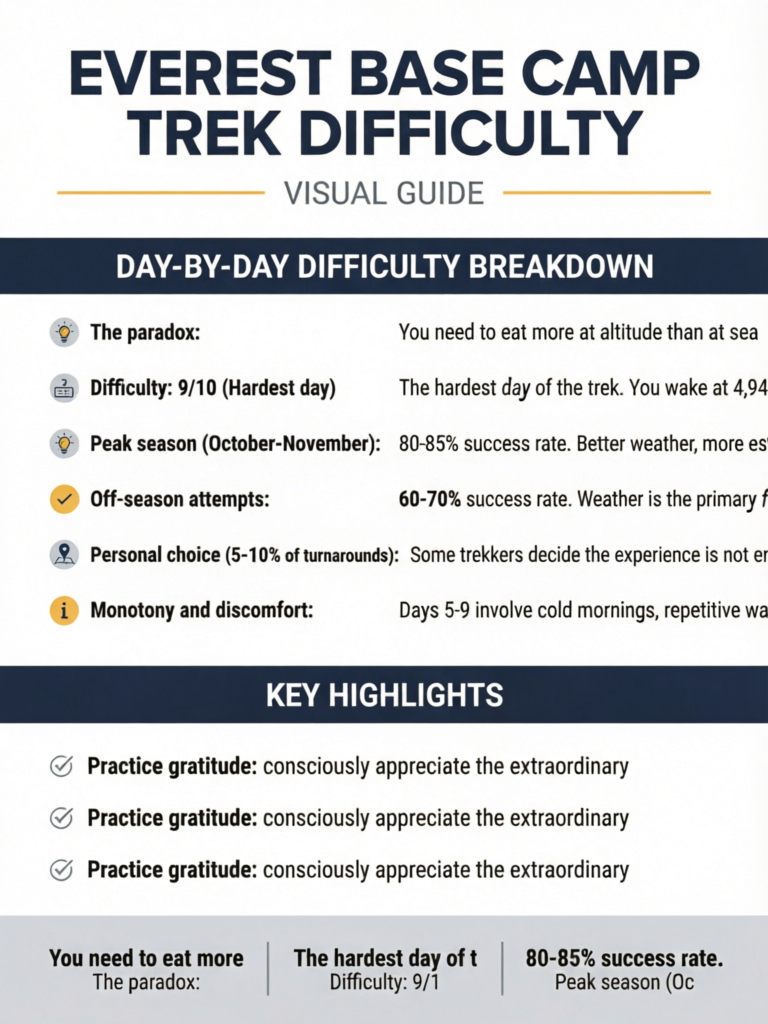
The paradox: You need to eat more at altitude than at sea level (because of increased energy expenditure), but your body wants to eat less. Forcing yourself to eat becomes a discipline challenge.
Factor 5: Cold and Environmental Exposure
Above Namche Bazaar, temperatures drop significantly, particularly at night. Tea houses are unheated above 3,500 meters in most cases. Morning temperatures inside lodges at Lobuche or Gorak Shep can be well below freezing.
Cold affects difficulty because:
- Cold muscles are more prone to injury
- Cold reduces finger dexterity (making tasks like packing frustrating)
- Cold drains energy (your body burns calories to stay warm)
- Cold disrupts sleep further
- Cold reduces motivation (getting out of a sleeping bag at 5 AM when the room is below freezing requires willpower)
The 'Easy' Perception Trap
The first three days of the EBC trek (Lukla to Namche Bazaar) are genuinely enjoyable and not particularly difficult. This creates a dangerous false confidence. Many trekkers post on social media from Namche saying "this is easier than I expected." The real difficulty begins above Namche when altitude effects compound with cumulative fatigue. Do not judge the trek's difficulty by its first three days.
Day-by-Day Difficulty Breakdown
This breakdown uses a standard 14-day EBC itinerary. Difficulty is rated 1-10 for each day.
Day 1: Lukla to Phakding (2,610m to 2,652m)
Difficulty: 3/10 A gentle introduction. Mostly flat or slightly downhill trail along the Dudh Koshi river. Walking time: 3-4 hours. The flight to Lukla is the scariest part of this day.
Day 2: Phakding to Namche Bazaar (2,652m to 3,440m)
Difficulty: 5/10 The steepest sustained climb of the trek: a 600-meter ascent over 2-3 hours from the river to Namche. Walking time: 5-6 hours. The climb is physically demanding but at relatively low altitude. Most trekkers handle it well.
Day 3: Namche Bazaar Acclimatization Day
Difficulty: 3/10 A rest day with an optional hike to the Everest View Hotel (3,880m) or Khumjung village. Walking time: 3-4 hours (optional). Altitude effects may begin: mild headaches, slight breathlessness on climbs.
Day 4: Namche to Tengboche (3,440m to 3,867m)
Difficulty: 4/10 Undulating trail with one significant climb to Tengboche monastery. Walking time: 5-6 hours. Views of Everest, Lhotse, and Ama Dablam are spectacular and serve as powerful motivation.
Day 5: Tengboche to Dingboche (3,867m to 4,410m)
Difficulty: 6/10 Crossing the 4,000-meter threshold. The trail climbs steadily through rhododendron forest and into the alpine zone. Walking time: 5-6 hours. Altitude effects become noticeable for most trekkers. Breathing is harder on climbs. Energy dips.
Day 6: Dingboche Acclimatization Day
Difficulty: 4/10 Hike to Nagarjun Hill (approximately 4,800m) for acclimatization. Walking time: 3-4 hours. Despite the short duration, the altitude makes this surprisingly tiring. This day is critical for acclimatization and should not be skipped.
Day 7: Dingboche to Lobuche (4,410m to 4,940m)
Difficulty: 7/10 The difficulty ramps up significantly. Five hundred meters of elevation gain at high altitude over 5-6 hours of walking. The trail passes the memorial cairns for fallen climbers, a sobering reminder of the environment's seriousness. Energy is notably lower. Breathing is labored on every incline. Cumulative fatigue from six consecutive trekking days compounds the altitude challenge.
Day 8: Lobuche to Gorak Shep to EBC (5,364m) to 5,164m to 5,364m)
Difficulty: 9/10 (Hardest day) The hardest day of the trek. You wake at 4,940 meters after a poor night of sleep. The walk to Gorak Shep (2-3 hours) crosses rocky, uneven moraine with deceptive ups and downs. After dropping bags at Gorak Shep, you continue to Everest Base Camp (2-3 hours each way). Total walking time: 7-8 hours at extreme altitude. Every step above 5,000 meters requires concentrated effort. The return to Gorak Shep in late afternoon, exhausted and altitude-affected, is the low point for many trekkers.
Day 9: Gorak Shep to Kala Patthar to Pheriche (5,164m to 5,545m to 4,371m)
Difficulty: 8/10 (Second hardest day) A pre-dawn start (4:00-4:30 AM) for the climb to Kala Patthar, the highest point of the trek at 5,545 meters. The 381-meter climb takes 1.5-2 hours in freezing darkness at extreme altitude. Many trekkers describe this as the hardest single physical effort of the trek. After descending to Gorak Shep, you continue the descent to Pheriche. Total walking time: 7-8 hours. The descent is a massive relief as breathing improves with every meter lost.
Day 10: Pheriche to Namche Bazaar (4,371m to 3,440m)
Difficulty: 5/10 A long descent day covering what took 3-4 days to ascend. Walking time: 6-7 hours. The trail is familiar and the lower altitude restores energy. Knees and quads take significant punishment on the prolonged descent.
Day 11: Namche Bazaar to Lukla (3,440m to 2,860m)
Difficulty: 4/10 Final trekking day. Walking time: 6-7 hours of mostly downhill and flat trail. Physical difficulty is low but tired legs, sore knees, and trail fatigue make it feel longer than it is.
The Two Hardest Days Tell the Story
Days 8 and 9 are where the trek is won or lost. On these two days, you are at maximum altitude, maximum cumulative fatigue, minimum sleep quality, and minimum appetite. If you can function through these two days, you will reach both Everest Base Camp and Kala Patthar. Everything before is preparation; everything after is descent.
Comparison to Other Physical Activities
To help you gauge EBC difficulty against familiar activities:
EBC vs. Running a Marathon
A marathon is 3-5 hours of intense effort followed by recovery. EBC is 11-14 days of 5-7 hours of moderate effort with minimal recovery, at altitude. Marathon fitness alone does not ensure EBC success. The marathon is harder per hour. EBC is harder in total.
EBC vs. Multi-Day Hiking (Sea Level)
A multi-day hiking trip at sea level (like the Camino de Santiago or the Tour du Mont Blanc) is the closest comparison. EBC adds the altitude factor, which multiplies all physical demands by approximately 1.5-2x above 4,500 meters. If you have completed a 7+ day trek at sea level with significant elevation changes, you have the endurance base for EBC but must add altitude preparation.
EBC vs. Gym Fitness
Gym fitness (weightlifting, CrossFit, HIIT) provides strength but not the specific endurance EBC requires. The trek demands sustained low-to-moderate intensity for extended periods, not short bursts of high intensity. Gym-fit individuals who do not train specifically for hiking endurance often struggle more than expected.
EBC vs. Cycling a Multi-Day Tour
Cycling builds excellent cardiovascular fitness and leg endurance. However, cycling is low-impact and non-weight-bearing. The constant impact of walking, combined with pack weight and uneven terrain, creates musculoskeletal demands that cycling does not prepare you for. Cyclists adapt well to EBC but need hiking-specific training for joints, feet, and stabilizer muscles.
EBC vs. Annapurna Base Camp Trek
ABC reaches 4,130m (compared to EBC's 5,364m). The altitude difference is significant: 1,200 meters represents substantially less oxygen, more severe altitude effects, and 3-5 additional trekking days. ABC is also steep with stone stairs, while EBC is more gradual but longer. EBC is harder overall, primarily due to altitude and duration.
Fitness Benchmarks: Are You Ready?
These benchmarks are based on data from commercial operators and experienced guides. They represent the minimum fitness for a comfortable (not miserable) EBC experience.
Minimum Fitness Requirements
You should be able to:
- Hike 6-8 hours with a 10 kg daypack over terrain with 600+ meters elevation gain
- Recover overnight and repeat a similar effort the next day
- Climb stairs continuously for 30 minutes at a steady pace
- Walk 15-20 km on undulating terrain without significant distress
- Complete 3 consecutive days of 5-6 hour hikes (test this on a long weekend)
Comfortable Fitness Targets (Recommended)
For an enjoyable EBC experience (not just surviving it):
- Hike 8+ hours with a 10 kg pack over varied terrain
- Complete 5 consecutive hiking days (even if shorter, 3-4 hours each)
- Climb stairs for 45 minutes with a loaded pack
- Run or walk briskly for 60 minutes without stopping
- Perform 30 squats, 20 lunges per leg, and a 60-second plank
For structured preparation, follow the EBC training plan.
The Back-to-Back Day Test
The single best predictor of EBC readiness is your ability to hike hard on two consecutive days. Schedule a weekend where you hike 5-6 hours on Saturday (with elevation gain and a loaded pack) and then hike 4-5 hours on Sunday. If you can complete both days without being destroyed, your endurance base is solid. If Sunday feels impossible after Saturday, you need more training.
Who Should Attempt EBC
Ideal Candidates
- Adults 18-65 who are in good general health
- People who exercise regularly (3-5 times per week) and enjoy endurance activities
- Those who have completed multi-day hikes or backpacking trips previously
- Individuals who can commit to 8-12 weeks of specific training before the trek
- People with mental resilience and patience (the trek requires both)
- Anyone who has trekked at moderate altitude (above 3,000m) previously
People Who Should Proceed With Extra Caution
- Complete beginners to hiking (achievable but requires extensive preparation)
- Those over 65 (absolutely possible but requires medical clearance and conservative itinerary)
- People with controlled asthma or respiratory conditions (consult a doctor experienced in altitude medicine)
- Individuals with a history of altitude sickness (consider Diamox prophylaxis and conservative itinerary)
- Those with heart conditions (require medical clearance and physician consultation)
Who Should Not Attempt EBC
- Anyone with uncontrolled high blood pressure, severe heart disease, or unstable respiratory conditions
- People who cannot commit to adequate training (arriving unfit is dangerous, not just uncomfortable)
- Individuals with severe anxiety about altitude who have not addressed it through preparation and education
- Anyone unwilling to turn back if altitude sickness becomes severe (ego kills on this trek)
- People recovering from major surgery or injury within the past 6 months (consult your surgeon)
Age Is Not the Barrier You Think
We regularly see trekkers in their 60s and 70s complete EBC successfully. Age itself is not a disqualifier. Fitness, preparation, and medical clearance are what matter. Conversely, unfit 25-year-olds fail more often than prepared 60-year-olds. Do not let age discourage you, and do not let youth make you complacent.
Success and Failure Rates: The Real Numbers
Overall Success Rate
Approximately 75-85% of trekkers who begin the EBC trek reach Everest Base Camp. This figure varies by season, operator, and itinerary length.
Peak season (October-November): 80-85% success rate. Better weather, more established trail conditions, and busier trail (social motivation helps).
Spring season (March-May): 75-80% success rate. More variable weather, some lingering snow at higher elevations, but fewer crowds.
Off-season attempts: 60-70% success rate. Weather is the primary factor reducing completion rates.
Kala Patthar Success Rate
Of those who reach Everest Base Camp, approximately 85-90% also summit Kala Patthar (5,545m). Those who skip it usually do so because of severe weather (high winds, whiteout conditions) rather than inability.
Common Reasons People Turn Back
Altitude sickness (40-50% of turnarounds): Acute Mountain Sickness that progresses despite rest and medication. This is the correct decision. Continuing with severe AMS risks HACE or HAPE, both life-threatening conditions.
Cumulative exhaustion (20-25% of turnarounds): Not a single event but progressive fatigue that makes continuing feel impossible. Often linked to poor training preparation.
Illness (15-20% of turnarounds): Gastrointestinal illness, respiratory infection, or other illness unrelated to altitude. Hygiene practices and physical resilience reduce but do not eliminate this risk.
Injury (10-15% of turnarounds): Knee injuries, ankle sprains, severe blisters. Almost always preventable with proper training, footwear, and gear preparation.
Personal choice (5-10% of turnarounds): Some trekkers decide the experience is not enjoyable enough to continue. There is no shame in this decision.
The Biggest Predictor of Failure
Data from commercial operators consistently shows that the number one predictor of trek failure is insufficient pre-trek training. Altitude sickness is the most common proximate cause of turning back, but poor fitness amplifies altitude sickness symptoms and reduces the body's ability to acclimatize. Fit trekkers acclimatize faster, suffer less, and complete the trek at higher rates.
The Mental Difficulty Factor
Physical difficulty is measurable. Mental difficulty is harder to quantify but equally important.
Mental Challenges on EBC
Monotony and discomfort: Days 5-9 involve cold mornings, repetitive walking, limited comfort, basic food, and increasing physical discomfort. The novelty of trekking wears off and is replaced by routine endurance.
Self-doubt: When breathing is labored and energy is low, the mind generates doubt. "Am I getting altitude sickness or just tired?" "Should I turn back?" "Can I really do this?" These questions arise for virtually every trekker above 4,500 meters.
Group dynamics: If trekking with a group, pace differences create stress. Faster trekkers feel held back. Slower trekkers feel rushed. This social pressure compounds physical fatigue.
Isolation from normal life: Limited internet, no phone signal in many areas, cold conditions, and basic amenities for two weeks. For people accustomed to connectivity and comfort, this adjustment is psychologically taxing.
Building Mental Resilience
- Accept that discomfort is part of the experience, not a sign of failure
- Set daily goals rather than focusing on the final destination
- Practice gratitude: consciously appreciate the extraordinary environment
- Build mental toughness during training by completing uncomfortable sessions
- Read accounts from other trekkers to calibrate expectations realistically
- Learn about acclimatization to distinguish between normal altitude effects and concerning symptoms
How EBC Difficulty Varies by Itinerary
Standard 14-Day Itinerary
The most common and recommended option. Includes two acclimatization days (Namche and Dingboche). Difficulty is well-distributed across days with gradual altitude gain. This is the itinerary we recommend for first-time Himalayan trekkers.
12-Day Fast Itinerary
Eliminates one acclimatization day, typically at Dingboche. Increases altitude gain rate and reduces recovery time. Difficulty increases by approximately 20% compared to the 14-day plan. Not recommended for first-time high-altitude trekkers.
16+ Day Extended Itinerary
Adds extra acclimatization days and may include side trips (Gokyo Lakes, Cho La Pass). Additional days reduce daily difficulty but increase cumulative fatigue. The altitude challenge is better managed with extra acclimatization time. Best for those prioritizing safety and enjoyment over speed.
Helicopter Return Option
Flying from Gorak Shep or Lukla eliminates 2-4 descent days. This reduces total trek difficulty by removing the knee-punishing descent but does not affect the ascending difficulty. A good option for those with knee concerns or limited time. See the helicopter return guide for details.
Difficulty by Season
October-November (Peak Autumn)
Weather difficulty: Low. Stable weather, clear skies, cold but manageable temperatures. Trail difficulty: Low to moderate. Well-maintained trails, no snow below 5,000m. Crowd difficulty: High. Popular lodges fill up. Trail can be congested. Overall: The easiest season weather-wise, which is why it is the most popular.
March-May (Peak Spring)
Weather difficulty: Moderate. More variable weather, afternoon clouds, occasional snow at higher elevations. Trail difficulty: Moderate. Some snow patches above 4,500m in early spring. Crowd difficulty: Moderate. Busy but less than autumn. Overall: Slightly harder than autumn but warmer temperatures at lower elevations.
December-February (Winter)
Weather difficulty: High. Extreme cold (minus 20-30 Celsius at night above 4,500m), possible snowfall blocking trails, shorter daylight hours. Trail difficulty: High. Snow and ice above 4,000m. Some lodges closed. Overall: Significantly harder. Only for experienced, well-equipped trekkers.
June-September (Monsoon)
Weather difficulty: Very high. Heavy rain, leeches at lower elevations, landslide risk, trails obscured by water, minimal mountain views. Trail difficulty: High. Slippery, muddy, river crossings can be dangerous. Overall: Not recommended. The difficulty increase is substantial with minimal reward (cloud-obscured views).
Frequently Asked Questions: EBC Difficulty
General Difficulty Questions
Q: On a scale of 1-10, how hard is EBC?
For a moderately fit person with proper training: 7/10. For someone with no specific preparation: 9/10. For an experienced high-altitude trekker: 5/10. The difficulty is heavily dependent on preparation and acclimatization. The number is meaningless without context of the individual.
Q: Is EBC harder than the Annapurna Circuit?
Different kinds of hard. The Annapurna Circuit is longer (12-18 days) with one very hard day (Thorong La Pass, 5,416m), but the rest is at lower altitude. EBC sustains high altitude (above 4,000m) for more days, creating greater cumulative stress. Most experienced trekkers rate EBC as slightly harder overall due to sustained altitude exposure, though the Annapurna Circuit's Thorong La day is harder than any single EBC day.
Q: Can a complete beginner do EBC?
Yes, with adequate preparation. "Complete beginner" means no hiking experience, which is different from "completely unfit." A beginner who commits to 12 weeks of structured training, studies the route and altitude, and follows a conservative itinerary can absolutely complete EBC. The key word is "adequate preparation." An unprepared beginner attempting EBC is setting themselves up for failure and potential danger.
Q: Is EBC dangerous?
The trek carries real risks, primarily altitude sickness (which can be fatal if ignored), but death on the EBC trek is rare. Fewer than 5 trekkers die annually on the EBC route, most from preventable causes: ignoring altitude sickness symptoms, inadequate insurance preventing evacuation, or pre-existing conditions exacerbated by altitude. With proper preparation, conservative pacing, and willingness to descend if symptomatic, EBC is as safe as any major trekking route.
Q: What is the single hardest moment on EBC?
For most trekkers, it is the pre-dawn climb to Kala Patthar (5,545m). You start at 4:00-4:30 AM in freezing darkness, climb 480 vertical meters at extreme altitude, and every step feels like running a sprint at sea level. The reward is a sunrise view of Everest from the best vantage point on the trek. It is hard, brief, and worth every labored breath.
Altitude Questions
Q: Do fit people still get altitude sickness?
Yes. Altitude sickness is largely genetic and not strongly correlated with fitness. Fit people acclimatize faster on average and handle the physical demands better, but they are not immune to AMS. Overconfident fit people sometimes ascend too fast, increasing their altitude sickness risk. Fitness helps. It does not guarantee immunity.
Q: What percentage of EBC trekkers get altitude sickness?
Mild AMS symptoms (headache, mild nausea, slight dizziness) affect 50-80% of trekkers above 4,000 meters. These symptoms are normal and manageable. Moderate-to-severe AMS that requires medication or descent affects 15-25% of trekkers. Serious conditions (HACE or HAPE) affect fewer than 2% of trekkers on properly paced itineraries.
Q: Can I take Diamox to prevent altitude sickness and make the trek easier?
Diamox (acetazolamide) helps your body acclimatize faster by stimulating breathing. It reduces AMS incidence by roughly 50%. It does not eliminate altitude effects entirely, and it has side effects (tingling extremities, increased urination, carbonated beverages taste flat). Many trekkers use it successfully. Discuss with your doctor before the trek. It is not a substitute for proper acclimatization and a conservative ascent rate.
Physical Preparation Questions
Q: How long should I train before EBC?
Minimum 8 weeks for moderately fit individuals. Ideally 12 weeks. For those starting from low fitness, 16 weeks or more. The EBC training plan provides a structured 12-week program. For complete beginners, start with the 16-week beginner plan.
Q: I run marathons. Am I automatically ready for EBC?
No. Marathon fitness provides an excellent cardiovascular base but does not address altitude adaptation, multi-day endurance, pack carrying, or sustained moderate effort (vs. peak effort). Marathon runners who add 4-6 weeks of hiking-specific training perform exceptionally well on EBC. Those who assume running fitness transfers directly often struggle with the different energy demands.
Q: What body weight or BMI should I be for EBC?
There is no specific requirement. However, every kilogram of body weight must be carried up thousands of meters of elevation. Trekkers at a healthy weight (BMI 18.5-25) have an easier time. Significantly overweight trekkers experience higher cardiovascular strain, more joint stress, and increased altitude sickness risk. This is not about appearance; it is about physics and physiology.
Practical Questions
Q: Can I bail out mid-trek if it is too hard?
Yes. Helicopter evacuation is available from multiple points along the route (weather permitting). You can also walk back to Lukla at any point. Ensure you have comprehensive travel insurance that covers helicopter evacuation up to 6,000 meters. The ability to evacuate should not be seen as a safety net for poor preparation, but it is reassuring to know the option exists.
Q: Does the Lukla flight add to the difficulty?
The Lukla flight (from Kathmandu) is not physically difficult but is psychologically intense. The runway is short, perched on a mountainside, and weather-dependent. Flight cancellations due to weather are common and can add 1-3 days to your trip. This logistical uncertainty is a form of difficulty that many trekkers do not anticipate. See the Kathmandu to Lukla flights guide for details.
Q: Is the descent harder than the ascent?
Different kind of hard. The ascent is cardiovascularly and altitude-challenging. The descent is muscularly punishing, particularly on knees and quadriceps. The long descending staircases and rocky trail sections create eccentric muscle loading that causes severe soreness in unprepared legs. Many trekkers say the descent is more painful than the ascent, even though breathing is easier.
Q: How does EBC difficulty compare to the Manaslu Circuit?
The Manaslu Circuit reaches a similar maximum altitude (Larkya La at 5,160m) with rougher trails, fewer facilities, more remote location, and limited rescue options. Most experienced trekkers rate Manaslu as harder than EBC due to the remoteness factor and trail conditions. See the Manaslu Circuit difficulty assessment for a detailed comparison.
For full route details, see our Everest Base Camp route guide. To prepare physically, follow the EBC training plan. For acclimatization guidance, read the acclimatization guide.