
Hiring a porter through a trekking agency is the straightforward route -- you pay the agency, they handle everything, and a porter shows up at your hotel on trek day. But what if you are trekking independently and want to hire a porter on your own? Maybe you are trying to save money, or you prefer the flexibility of direct arrangements, or you arrived in Nepal without an agency booking but your bag is heavier than you expected.
Hiring an independent porter -- directly, without an agency as intermediary -- is entirely possible and is done by thousands of trekkers every year. But it comes with responsibilities that agencies normally handle for you: insurance, fair pay verification, communication logistics, and contingency planning. This guide covers every aspect of the independent porter hiring process, from where to find porters to how much to pay, what your legal obligations are, and how to ensure an ethical and positive experience for both you and your porter.
This guide is specifically about hiring porters independently, as distinct from our general overview of guides and porters and our comprehensive guide hiring guide which focus on the agency-mediated process.
NPR 2,000-3,000 per day ($15-23 USD)
25-30 kg (including porter's personal gear)
Yes -- you must arrange it if hiring independently
Trailheads, Thamel notice boards, hostels, local contacts
50% advance, 50% at trek end (or daily)
Basic English common; Nepali phrases help enormously
You must cover porter's meals and accommodation
10-15% of total wages, or NPR 500-1,000 per week
Why Hire a Porter Independently?
Before diving into the how, let us understand the why. Trekkers choose to hire porters independently for several reasons:
Advantages of Independent Hiring
- Lower cost: Agencies charge a markup of 30-100% on porter services. Direct hiring can save $5-15 per day
- Flexibility: Choose your own porter, negotiate terms, and make changes without agency constraints
- Direct relationship: Your money goes directly to the porter and their family, not through an intermediary
- Spontaneous arrangements: You can hire a porter at the trailhead even if you did not plan ahead
- Cultural connection: Working directly with a local person creates a more authentic cultural exchange
Disadvantages of Independent Hiring
- Insurance logistics: You are responsible for arranging porter insurance (agencies handle this automatically)
- No backup: If your porter gets sick, injured, or does not show up, you have no agency support to send a replacement
- Language barrier: Communication can be challenging without agency-provided English-speaking coordination
- Trust building: You are hiring a stranger with no agency vetting or background check
- Payment disputes: Without an agency mediating, disagreements about payment or terms must be resolved between you
- Liability: If something happens to your porter on the trail, you bear the moral and potentially legal responsibility
Insurance Is Not Optional
When you hire a porter through an agency, the agency is legally required to provide accident insurance and emergency evacuation coverage. When you hire independently, this responsibility transfers to you. Trekking without porter insurance is not only unethical but leaves you liable if the porter suffers an injury or altitude sickness requiring helicopter evacuation. Arrange insurance before the trek starts. More on this below.
Where to Find Independent Porters
1. Trailhead Towns
The most common method for independent porter hiring. At major trailheads, local men (and increasingly women) seek porter work from arriving trekkers.
Best trailhead locations for finding porters:
| Trailhead | Trek | Porter Availability |
|---|---|---|
| Lukla | Everest Base Camp, Gokyo, Three Passes | High -- many local Sherpas available |
| Nayapul/Birethanti | ABC, Poon Hill, Ghorepani | High -- Gurung and Magar porters |
| Besisahar/Chame | Annapurna Circuit | Moderate -- some local porters available |
| Syabrubesi | Langtang Valley | Moderate -- Tamang porters available |
| Arughat/Sotikhola | Manaslu Circuit | Lower -- arrange in Kathmandu if possible |
| Jiri | Everest Classic Route | Moderate -- local Sherpa porters |
How it works at trailheads:
- Arrive at the trailhead town and inquire at your tea house
- The tea house owner often knows local porters seeking work
- Meet the porter, discuss the route, duration, and rate
- Agree on terms and start the next morning
Ask Your Tea House Owner
2. Kathmandu (Thamel District)
If you want to arrange your porter before reaching the trailhead, Kathmandu's Thamel district offers several options:
- Hostel notice boards: Popular hostels and backpacker lodges in Thamel often have bulletin boards where porters and trekkers connect. Check places like Alobar1000, Zostel Kathmandu, and other backpacker-frequented spots
- Thamel agency shops: Even small travel shops can arrange a porter for you without full agency booking. The cost is slightly higher than direct hire but includes basic vetting
- Word of mouth: Ask fellow trekkers who have recently returned -- they may recommend their porter
- Local contacts: If you know anyone in Kathmandu (hotel owner, restaurant staff, etc.), ask for a personal referral
3. Pokhara (Lakeside)
For Annapurna region treks:
- Lakeside hostels and cafes: Similar notice board system to Thamel
- Porter unions: Pokhara has informal porter groups near the tourist bus park
- Hotel staff connections: Lakeside hotel owners often employ or know porters during trekking season
4. Online and Social Media
Increasingly, porters and trekkers connect online:
- Facebook groups: Search for "Nepal Trekking" or "Independent Trekking Nepal" groups where porters advertise services
- Trekking forums: Platforms like TrekBuddy and Lonely Planet Thorn Tree have porter recommendation threads
- WhatsApp networks: Once you connect with one porter, they often know others available for different routes and dates
The 2026 Guide Requirement
Since 2026, Nepal has required all foreign trekkers to hire a licensed guide for treks in national parks and conservation areas. While enforcement has been inconsistent, this regulation means hiring a porter alone (with a mandatory licensed guide) may not technically comply with the law in some trekking regions. Some trekkers hire a "porter-guide" -- a porter who also serves as an informal guide -- to satisfy this requirement. Check the current enforcement status with your embassy or the Nepal Tourism Board before trekking.
How Much to Pay: The 2026 Rate Guide
Porter wages have increased significantly in recent years, reflecting both inflation and advocacy for fair pay by organizations like the IPPG (International Porter Protection Group).
Standard Daily Rates (2026)
| Region | Basic Porter | Experienced Porter | Porter-Guide |
|---|---|---|---|
| Everest Region | NPR 2,500-3,000/day | NPR 3,000-3,500/day | NPR 3,500-4,500/day |
| Annapurna Region | NPR 2,000-2,500/day | NPR 2,500-3,000/day | NPR 3,000-4,000/day |
| Langtang Region | NPR 2,000-2,500/day | NPR 2,500-3,000/day | NPR 3,000-3,500/day |
| Manaslu Region | NPR No minimum (solo OK with guide),500-3,000/day | NPR 3,000-3,500/day | NPR 3,500-4,500/day |
| Remote Regions (Dolpo, etc.) | NPR 2,500-3,500/day | NPR 3,000-4,000/day | NPR 4,000-5,000/day |
What Is Included in the Daily Rate
The daily rate covers the porter's labor -- carrying your bag from one tea house to the next. It does not include:
- Food: You must pay for your porter's meals (3 meals per day, typically NPR 500-800/day)
- Accommodation: You must pay for your porter's room (typically NPR 200-500/night, or free at many tea houses if they eat there)
- Insurance: You must arrange and pay for their insurance (see below)
- Equipment: Porters are expected to have their own basic clothing, but you may need to supplement for high altitude
Total Daily Cost of an Independent Porter
| Cost Component | Amount (NPR) | Amount (USD) |
|---|---|---|
| Daily wage | 2,000-3,000 | $15-23 |
| Porter's meals (3/day) | 500-800 | $4-6 |
| Porter's accommodation | 0-500 | $0-4 |
| Insurance (daily share) | 50-100 | $0.40-0.80 |
| Total per day | 2,550-4,400 | $20-34 |
Compare this to agency porter hire at $20-$30 /day (where everything is included), and the savings from independent hiring become clearer -- though at the cost of additional logistics.
Feed Your Porter Well
Insurance: Your Most Important Responsibility
When you hire a porter independently, their insurance becomes your responsibility. This is the single most critical aspect of independent porter hiring that distinguishes it from agency hire.
What Insurance Must Cover
A proper porter insurance policy should include:
- Accident coverage: Injury or death during the trek
- Emergency helicopter evacuation: From any point on the trail
- Altitude sickness treatment: Including emergency descent and medical care
- Hospitalization: Coverage for hospital treatment in Kathmandu
- Death benefit: Compensation to the porter's family in case of death
How to Arrange Porter Insurance
Option 1: Through a Kathmandu insurance broker
- Visit an insurance office in Thamel (several cater to trekking insurance)
- Policies for porters cost approximately NPR 1,500-3,000 for a 15-20 day trek
- Bring the porter's citizenship card number and details
Option 2: Through a trekking agency (insurance only)
- Some agencies sell porter insurance as a standalone product
- Cost: $15-30 for a standard trekking duration
- This is the easiest option if you want the logistics handled
Option 3: Through TAAN or porter organizations
- TAAN-affiliated insurance schemes exist for registered porters
- Ask your porter if they have existing coverage through TAAN
No Insurance = Huge Personal Liability
A helicopter evacuation from the Everest region costs $3,000-5,000 USD. If your porter develops severe altitude sickness at 5,000m and needs emergency evacuation, without insurance, you are personally liable for this cost. Hospital treatment for altitude-related pulmonary or cerebral edema can cost thousands more. Porter insurance at NPR 1,500-3,000 is not an expense -- it is essential protection for both your porter and yourself.
Weight Limits and Ethical Carrying Standards
The Ethical Maximum: 25-30 kg
The International Porter Protection Group (IPPG) sets the ethical maximum load at 30 kg including the porter's own personal gear. This means your load should not exceed approximately 25 kg to allow for the porter's own belongings.
How to Manage Weight
- Weigh your bag before the trek -- most hotel front desks have scales
- Carry your daypack yourself -- only the main duffel/trekking bag goes with the porter
- Leave non-essential items in Kathmandu hotel storage
- Share loads between two porters if your total gear exceeds 25 kg
What Overloading Looks Like
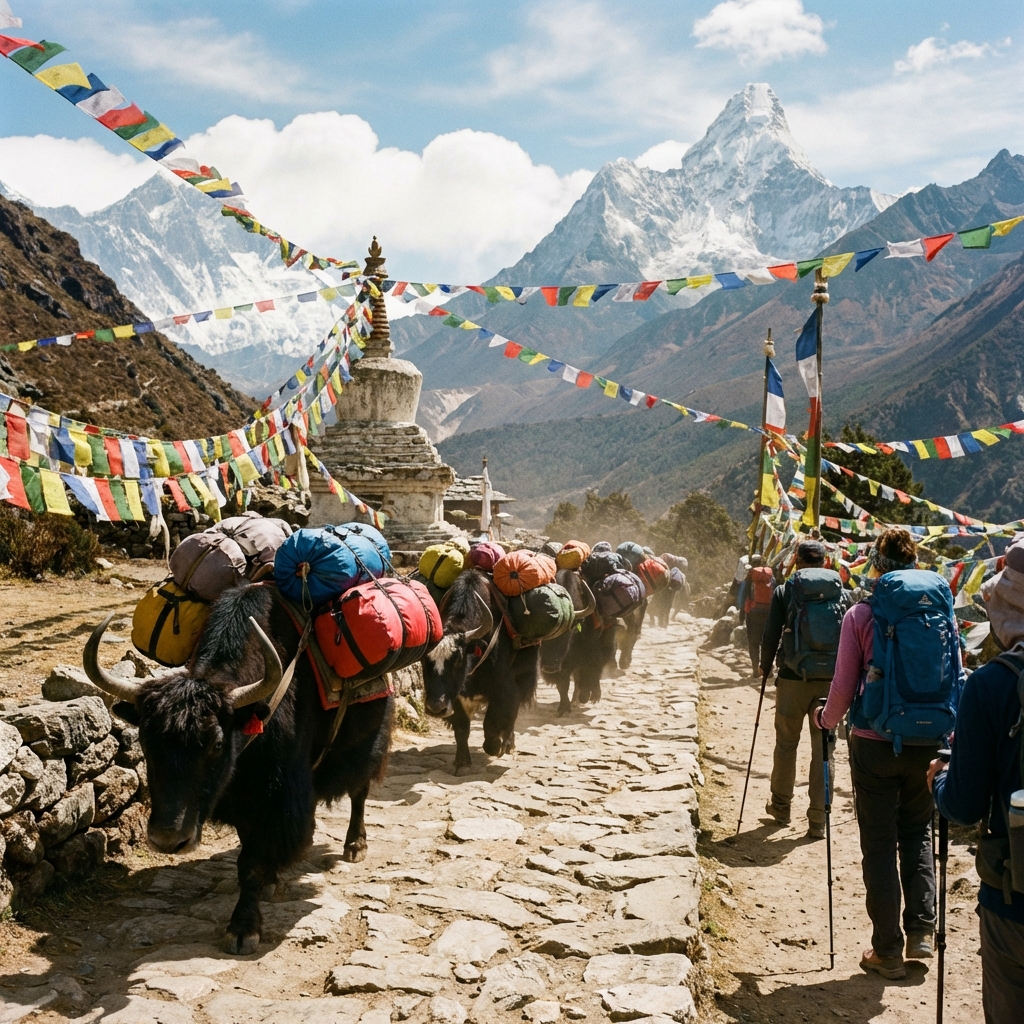
Overloaded porters are a distressingly common sight on Nepal's trails:
- Porters bent at extreme angles under towering loads
- Two duffel bags strapped together (often exceeding 50 kg for two trekkers)
- Porters wearing flip-flops and no warm clothing while carrying loads above 4,000m
- Porters falling behind the group, struggling on steep sections
Never Overload Your Porter
Overloading causes permanent spinal damage, muscle injuries, and dramatically increases the risk of falls on steep mountain trails. If your porter is carrying more than 30 kg, you are contributing to a practice that injures and kills porters every trekking season. If you have too much gear for one porter, hire two or reduce your load. There is no ethical shortcut.
Porter Equipment Standards
As the employer, you should ensure your porter has adequate equipment for the conditions:
| Item | Your Responsibility? | Notes |
|---|---|---|
| Warm jacket (above 3,500m) | Yes, if they lack one | Lend or provide a down jacket |
| Sunglasses | Yes, if above 4,000m | Snow blindness is a real danger |
| Proper footwear | Partial -- check they have sturdy shoes | Flip-flops above 3,000m are unacceptable |
| Rain gear | Yes, if trekking in monsoon | A poncho or rain jacket |
| Sleeping bag | Their own, but verify | Especially for camping sections or cold tea houses |
| Gloves and hat | Yes, if above 4,000m | Frostbite is preventable |
The Jacket Test
Communication and Expectations
Language Considerations
Most independent porters in popular trekking regions speak basic English:
- Everest region porters: Often speak functional English (tourism is their primary economy)
- Annapurna region porters: Variable English -- Gurung and Magar porters may have limited English
- Remote region porters: Minimal English -- learn Nepali basics or hire through someone who can translate
Essential Nepali Phrases for Porter Communication
| English | Nepali | Pronunciation |
|---|---|---|
| How are you? | Tapai lai kasto cha? | Ta-pie lie kas-toh cha? |
| Let's go | Jaam | Jahm |
| Stop/Wait | Roknu / Parkhanu | Rok-noo / Park-ha-noo |
| Slowly | Bistari | Bis-tar-ee |
| Thank you | Dhanyabad | Dhun-ya-bahd |
| How much? | Kati? | Ka-tee? |
| Is it far? | Tadha cha? | Ta-da cha? |
| Tea house | Bhatti | Bhat-tee |
| Water | Pani | Pa-nee |
| Good / Delicious | Ramro / Mitho | Ram-roh / Mi-toh |
Setting Clear Expectations
Before starting the trek, agree on:
- Daily wage -- confirm in writing if possible (a simple note works)
- Trek duration -- number of days, with flexibility for weather delays
- Route -- which trail, which stops, which destination
- Weight -- maximum load the porter will carry
- Meal arrangements -- who pays for meals, where they eat
- Rest days -- porter is paid for rest/acclimatization days too
- Return arrangements -- how the porter gets home after the trek ends
- Payment schedule -- when and how payments are made
- What happens if the trek is cut short -- fair pay for days worked
- Insurance -- confirm coverage is in place
Payment: How and When
Payment Schedule Options
Option 1: Daily payment
- Pay the agreed daily rate at the end of each trekking day
- Pros: Porter has cash for personal needs; you can end the arrangement if it is not working
- Cons: Requires carrying more cash; can feel transactional
Option 2: Half upfront, half at end
- Pay 50% of the estimated total before the trek starts, 50% on the final day
- Pros: Shows good faith; porter has initial cash for family; you retain leverage for the full trek
- Cons: Risk if porter abandons trek mid-way (rare but possible)
Option 3: Full payment at end
- Pay the complete amount on the last day of trekking
- Pros: Simple; you hold all leverage
- Cons: Porter may feel distrusted; they have no cash during the trek for personal expenses
Recommended approach: The 50/50 split is the most common and fairest arrangement. It shows trust while maintaining reasonable protection for both parties.
Tipping Your Porter
Beyond the daily wage, tipping is expected and important:
| Trek Duration | Suggested Tip | Notes |
|---|---|---|
| Under 7 days | NPR 500-1,000 total | Small gesture of appreciation |
| 7-14 days | NPR 1,000-2,000 total | Standard for a good porter |
| 14-21 days | NPR 2,000-3,500 total | Generous for extended service |
| 21+ days | NPR 3,000-5,000 total | For exceptional, long-term service |
When to tip more:
- The porter carried heavy loads without complaint
- Weather conditions were harsh (snow, rain, extreme cold)
- The porter went above and beyond (helped with cooking, translated, acted as an informal guide)
- The trek was particularly difficult or at very high altitude
Give the Tip Personally
Building Trust and a Good Working Relationship
The success of an independent porter arrangement depends largely on the human relationship between you and your porter. Unlike agency porters who have a professional structure to operate within, independent porters rely on personal trust.
Tips for a Good Relationship
- Learn and use their name -- it seems basic, but being called by name matters
- Share meals together when possible -- eating at the same table (even if ordering separately) builds connection
- Check on them during the day -- ask how they are feeling, especially at altitude
- Walk together sometimes -- do not always march ahead and leave your porter trailing behind
- Share trail snacks -- offering chocolate or fruit is a simple gesture of camaraderie
- Show interest in their life -- ask about their family, village, and experiences
- Respect their knowledge -- local porters often know the trail better than any guidebook
- Be flexible -- if they suggest a stop or detour, consider their local knowledge
- Do not treat them as a servant -- they are a human being carrying your belongings, not a pack animal
Many Porters Become Friends
One of the unexpected rewards of hiring an independent porter is the genuine friendship that can develop. Without an agency structure between you, the relationship is more personal. Many trekkers stay in touch with their porters for years, return to Nepal and hire them again, or even support their families. These connections are one of the most meaningful parts of trekking in Nepal.
What to Do When Things Go Wrong
Porter Gets Sick or Injured
- Stop immediately and assess the situation
- Do not send them ahead or behind alone -- stay with them or assign someone to accompany them
- Descend if altitude sickness is suspected -- even a few hundred meters can help
- Contact insurance for evacuation if the situation is serious
- Pay their wages in full for the trek days worked, including sick days
- Arrange their return to their home or to medical care in the nearest town
Porter Does Not Show Up
This is the main risk of independent hiring. If your porter fails to appear on trek day:
- Ask your hotel or tea house owner for an alternative porter
- Reduce your load to what you can carry yourself
- Hire at the trailhead -- porters are usually available at popular starting points
- Adjust your plans -- a one-day delay to find a porter is better than struggling with an overweight bag
Disagreements About Payment or Terms
- Refer to your written agreement (even a simple note with dates and amounts)
- Ask a neutral third party (tea house owner, other trekkers) to mediate
- Be fair -- if the porter worked the agreed days, they deserve the agreed pay
- Factor in weather delays -- porters should be paid for days they were available and ready to work, even if the weather prevented trekking
Independent Porter vs Agency Porter: Complete Comparison
| Factor | Independent Porter | Agency Porter |
|---|---|---|
| Daily cost | NPR 2,000-3,000 + meals + accommodation | $25-50/day all-inclusive |
| Insurance | You arrange | Agency provides |
| Vetting | Your own judgment | Agency screens and trains |
| Backup | None | Agency sends replacement |
| Communication | Variable English | Agency provides English speakers |
| Payment | Direct to porter | Through agency |
| Flexibility | High | Moderate (agency terms) |
| Ethical assurance | Your responsibility | Agency (hopefully) ensures standards |
| Cultural connection | Stronger direct relationship | Mediated through agency structure |
| Total cost (14-day trek) | ~$300-500 | ~$350-700 |
Ethical Considerations
Hiring a porter -- whether independently or through an agency -- carries ethical responsibilities. As the direct employer of an independent porter, these responsibilities fall squarely on you.
Your Ethical Obligations
- Pay a fair wage -- never negotiate below the standard regional rate
- Provide insurance -- non-negotiable
- Limit load weight -- maximum 30 kg including their personal gear
- Ensure adequate equipment -- supplement their clothing and gear for cold/altitude
- Pay for rest days and weather days -- they are available for you, even if not carrying
- Provide meals and accommodation -- these are basic necessities, not optional extras
- Monitor their health -- check for altitude sickness, fatigue, and injury
- Facilitate descent if they show altitude sickness symptoms
- Pay the full agreed amount -- do not withhold pay for minor grievances
- Arrange their return -- if your trek ends far from their home, cover return transport costs
Porters Are People, Not Pack Animals
Every trekking season, porters suffer injuries, frostbite, altitude sickness, and occasionally death -- almost always preventably. As an independent employer, you have a direct moral responsibility for the person carrying your gear. If your porter is shivering, struggling, or showing signs of altitude sickness, act immediately. No summit, no schedule, and no trek itinerary is worth a human life. When in doubt, descend.
Related Guides
- Hiring Guides and Porters in Nepal: Overview -- General overview of hiring options
- Porter Ethics and Responsible Trekking -- Deep dive into porter welfare
- Independent vs Guided Trekking -- Comparing trekking styles
- Budget Trekking in Nepal -- Cost-saving strategies
- Essential Nepali Phrases for Trekkers -- Communication on the trail
Frequently Asked Questions
Is it legal to hire a porter independently without an agency in Nepal?
Hiring a porter independently is not illegal. However, since 2026, Nepal has required foreign trekkers in national parks and conservation areas to be accompanied by a licensed guide. A porter alone may not satisfy this requirement. Some trekkers hire a "porter-guide" to meet both needs. Enforcement varies by region -- the Everest and Annapurna regions enforce the guide requirement more strictly than remote areas. Check current regulations before your trek.
How much should I pay a porter per day in 2026?
The standard daily rate for an independent porter in 2026 ranges from NPR 2,000-3,000 ($15-23 USD) depending on the region and the porter's experience. Everest and remote regions tend toward the higher end. This rate covers labor only -- you must additionally cover the porter's food (NPR 500-800/day) and accommodation (NPR 0-500/night). Total daily cost is approximately NPR 2,550-4,400 ($20-34 USD).
Do I have to provide insurance for an independently hired porter?
Yes. When hiring independently, you assume the employer's responsibility for insurance. A proper trekking insurance policy for your porter should cover accident, emergency helicopter evacuation, hospitalization, and death benefit. Policies cost approximately NPR 1,500-3,000 for a standard trek duration and can be arranged through insurance brokers in Thamel or through trekking agencies that sell standalone porter insurance.
Where is the best place to find an independent porter?
The best place is at the trailhead through a tea house owner referral. Trailhead towns like Lukla, Nayapul, Besisahar, and Syabrubesi have local porters seeking work, and tea house owners can vouch for their reliability. In Kathmandu, hostel notice boards in Thamel and word-of-mouth from other trekkers are the primary channels. Pokhara's Lakeside area offers similar options for Annapurna region treks.
What is the maximum weight a porter should carry?
The International Porter Protection Group (IPPG) standard is a maximum of 30 kg including the porter's own personal belongings. This means your load should not exceed approximately 25 kg. Overloading porters causes spinal injuries, muscle damage, and dramatically increases fall risk on steep mountain trails. If your gear exceeds 25 kg, hire a second porter or reduce your load.
What if my porter gets altitude sickness?
Descend immediately. Altitude sickness can be fatal if not treated. Take your porter to a lower altitude (descend at least 500m), ensure they are warm and hydrated, and contact your insurance provider for emergency advice. If symptoms are severe (confusion, inability to walk, persistent vomiting), arrange helicopter evacuation immediately. You are responsible for their safety -- never send an altitude-sick porter ahead or behind alone.
Should I pay the porter daily or at the end of the trek?
The most common and recommended approach is a 50/50 split: pay half the estimated total before the trek begins (showing good faith and giving the porter cash for family needs) and the remaining half plus tip on the final day. Some trekkers prefer daily payment for maximum flexibility. Full payment at the end is the least preferred option as it can feel distrustful to the porter.
Can I hire a porter at the trailhead on the day my trek starts?
Yes, at popular trailheads like Lukla, Nayapul, and Syabrubesi, finding a porter on the same day is usually possible during trekking season. However, during peak season (October-November), demand can exceed supply. For the most reliable arrangements, connect with a potential porter 1-2 days before you arrive at the trailhead. Your Kathmandu or Pokhara hotel can often facilitate this.
What is the difference between a porter and a porter-guide?
A basic porter carries your bag and walks the trail. They may not speak much English, may not know the route beyond their home region, and do not provide guiding services. A porter-guide carries a lighter load (typically 15-20 kg) and also serves as an informal guide -- navigating the trail, helping with tea house arrangements, translating, and providing basic route information. Porter-guides command a higher daily rate (NPR 3,000-5,000) but provide dual value.
How do I ensure I am hiring an ethical arrangement?
Ensure you pay at least the standard regional rate (do not bargain below market), arrange proper insurance, limit the load to 25 kg of your gear, check that the porter has adequate clothing and footwear for the conditions, pay for their meals and accommodation, pay for rest days and weather days, and monitor their health on the trail. Follow IPPG standards for porter welfare. If anything feels wrong during the trek (overloading, inadequate equipment on other trekkers' porters), report it to TAAN.
What happens if I need to end the trek early?
Pay the porter for all days worked plus reasonable compensation for the abrupt change. If you end a 14-day trek after 7 days, paying for 7 days plus 2-3 additional days as compensation is fair. The porter turned down other work to commit to your trek, and leaving them without expected income mid-season is harmful. Also cover their return transport to their home base.
Can a female trekker safely hire a male porter independently?
Many solo female trekkers hire male porters independently without issue. However, for added comfort and safety, consider hiring through a reputable tea house owner's recommendation rather than approaching strangers. Some organizations and agencies specialize in matching female trekkers with female porters or with vetted male porters. Trust your instincts, meet the porter before committing, and let your accommodation know the arrangement. For more on solo female trekking considerations, see our Solo Female Trekking in Nepal guide.
Do porters eat with trekkers at the tea house?
Porters typically eat at the same tea house but may eat separately from trekkers, often in the kitchen area or at a different time. This is largely by custom, not prohibition. If you invite your porter to eat with you in the dining room, most will appreciate the gesture. Sharing a meal together is one of the simplest ways to build a genuine connection. Pay for their meal as part of your obligation.